
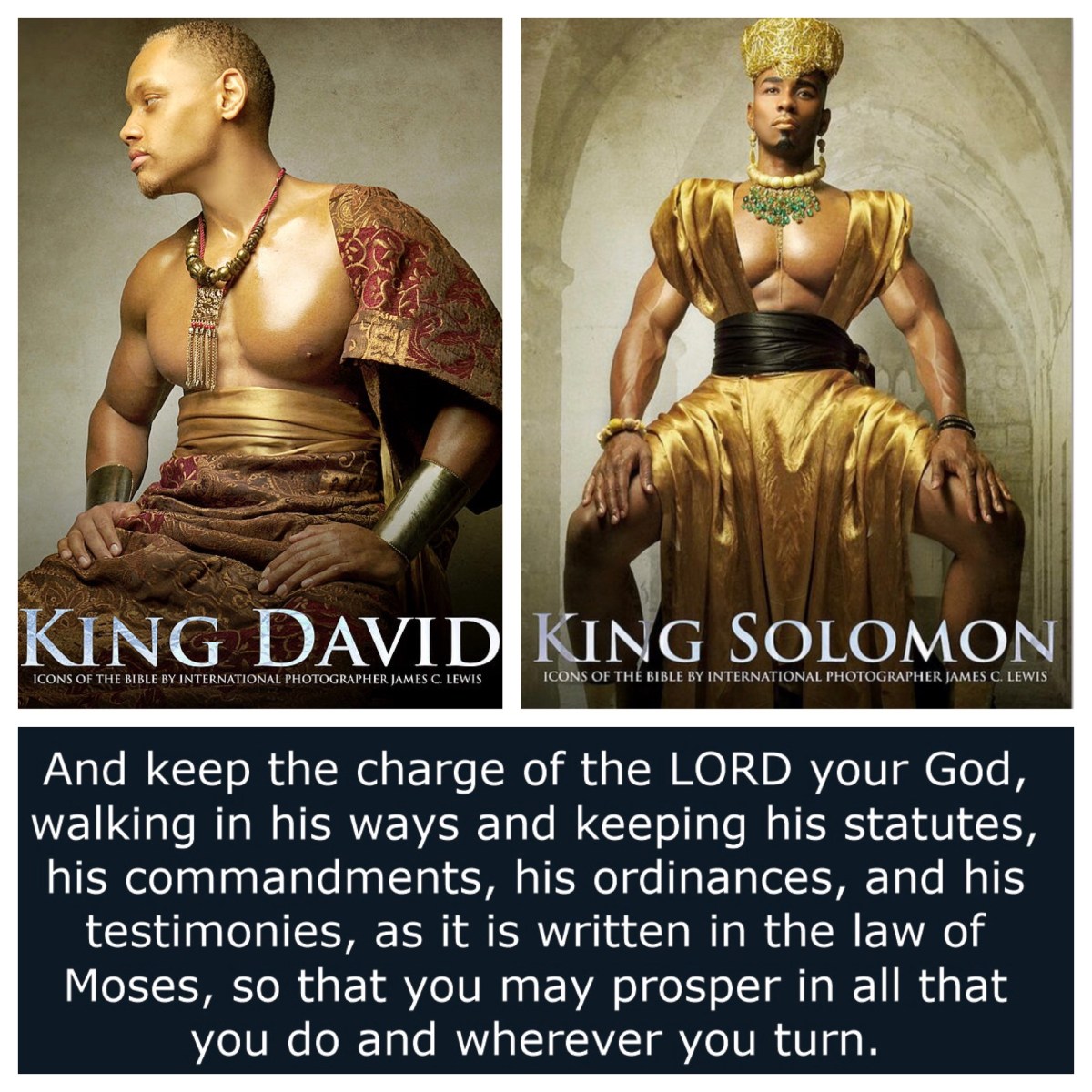
David had many sons—there are 19 who are named in the Bible, and two others unnamed. There are consolidated lists at 2 Sam 3:2–5 (those born at Hebron) and 2 Sam 5:13–15 (those born in Jerusalem). In following the story of 2 Samuel, we have already met Solomon, Absalom, and Amnon. We do not know how many daughters David had, except for Tamar (2 Sam 13:1). After travelling through the various incidents involving David that the lectionary has offered, today we come to the last days of the life of this famous king.
The passage offered by the lectionary this week (1 Ki 2:10–12, 3:3–14) portrays a smooth transition from David to his chosen son, Solomon. The narrator simply reports, “when David’s time to die drew near, he charged his son Solomon”, reporting the words he spoke to him; and then “David slept with his ancestors, and was buried in the city of David” (1 Ki 2:1, 10).
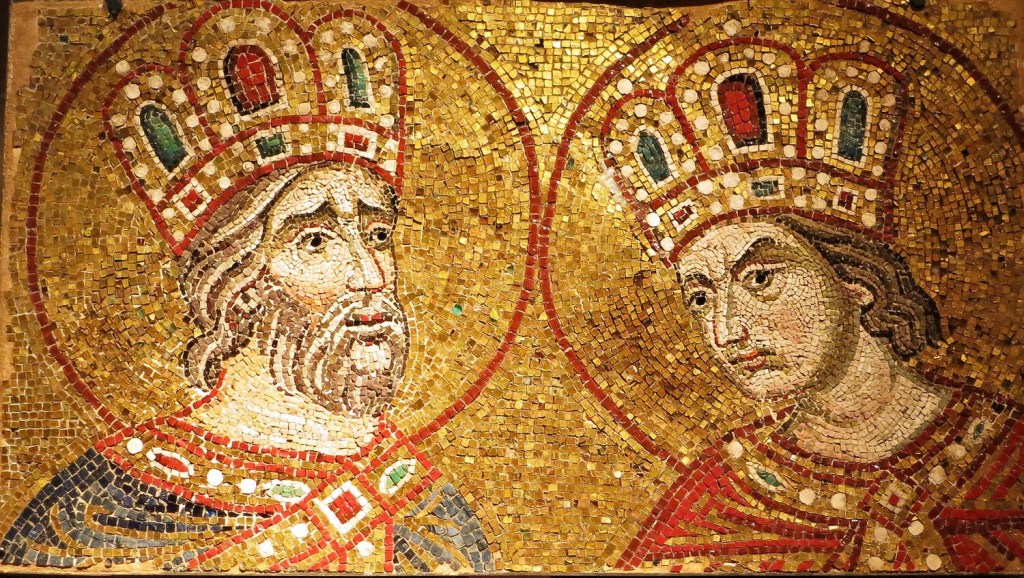
However, the previous chapter tells of the plotting by Adonijah, and the next part of the story reports that David authorised the murders of his son Adonijah, his nephew Joab, and Shimei, a relative of Saul, to ensure that Solomon could reign! It’s a nasty story. (In what follows, I am drawing in part from a sermon preached by my wife, Elizabeth Raine.)
Living in a democracy where leadership is determined by popular vote, this narrative feels particularly unpleasant and unjust to us. Paradoxically, David charges Solomon to adhere to “the statutes, commandments, ordinances, and testimonies” that God has decreed (2:3). Subsequently, Solomon sensibly prays for “an understanding mind to govern your people” (3:9).

In the later rewriting of this long narrative saga, the Chronicler has David instruct his chosen successor, his son, Solomon, “set your mind and heart to seek the Lord your God” (1 Chron 22:19). He reinforces that in a later address, telling Solomon to “know God and serve [the Lord] with single mind and willing heart” (1 Chron 28:9).
The book of Proverbs (attributed by tradition to Solomon) then advocates both attending to the mind (Prov 22:17; 23:12, 19) and “inclining your heart” towards God (Prov 2:2; 3:1–6; 4:4, 20–23; 6:21; 7:3) as integral parts of the life of faith. And of course, much later, Jesus picks this up when he extends the traditional commandment to “love the Lord your God with all your heart, and with all your soul, and with all your might” (Deut 6:5), adding “and with all your mind” (Mark 12:30).
A fully devoted heart (meaning, an all-of-person commitment) as well as an understanding mind (committed to critical reasoning about faith) is the essence of good leadership. It is a typical Hebraic parallelism that emphasises the importance of a whole-of-life commitment. See more on these terms at
However, it turns out that this is not really how Solomon lived in his life. His rule was littered with events that cast down on his great wisdom, and whether he did actually love God with all of his being.
Solomon was not first in line to ascend the throne; that would lie with the eldest of his brothers still living, Adonijah. Adonijah knows this; the first book of Kings opens with the revelation that, since “David was old and advanced in years … Adonijah son of Haggith exalted himself, saying, ‘I will be king’; he prepared for himself chariots and horsemen, and fifty men to run before him” (1 Ki 1:1,5).
However, Solomon plots with his mother Bathsheba and the palace prophet Nathan to arrange for the assassination of his older brother. In addition, a number of other people also had to be eliminated to establish Solomon’s firm grip on the monarchy, and to ensure there were no other possible legitimate claimants to the throne remaining. Such was the raw and vicious nature of “life at the top” those days. (Hastings anything much changed?)
In fairly quick succession, after Solomon had arranged for the death of his eldest brother Adonijah (2:13–25), he banished the high priest Abiathar who had supported Adonijah (2:26–27) and replaced him with another priest loyal to himself. Next he removed Joab, a cousin who was the commander in the former king’s army (2:28–34). He achieved this via a hit man, Benaniah, who became the general of his army (2:35).
Then, Solomon had Shimei, who was a relative of Saul, the king before David, killed (2:36–46). In this way all potential contenders for the throne and their powerful supporters were removed, mostly by violent means. As the narrator curtly comments, “so the kingdom was established in the hand of Solomon” (2:46b).
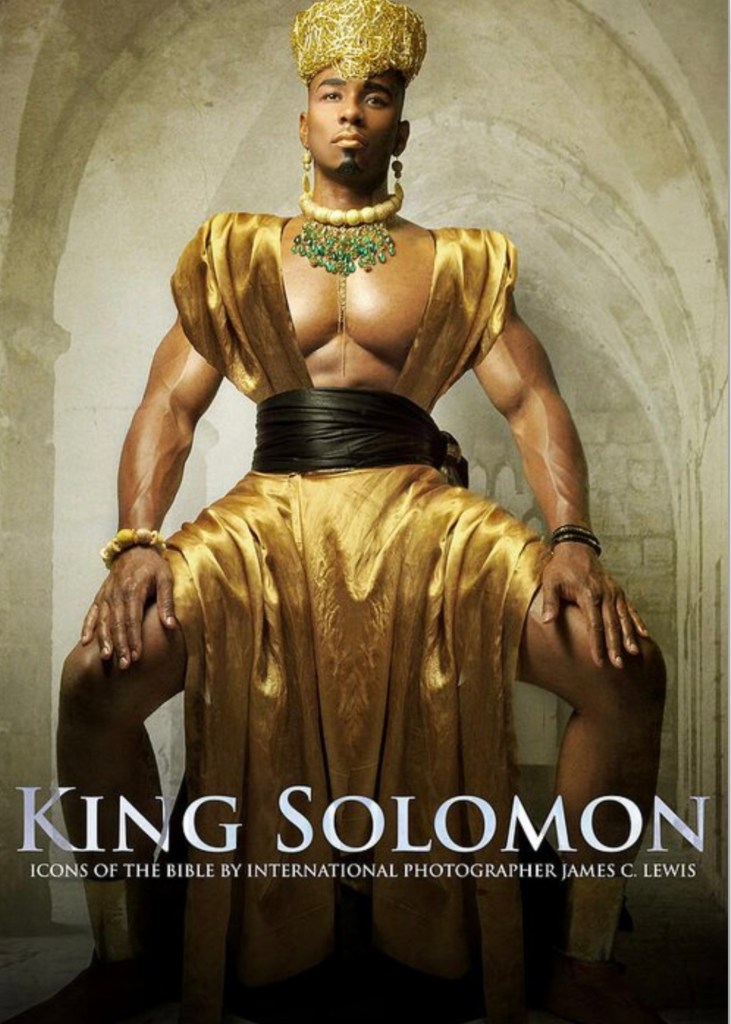
In fact, Solomon meets all the criteria of the sort of king who was described by the prophet Samuel as one who would oppress Israel. Years before, Samuel had warned the people, “This is what the king who will reign over you will claim as his rights: He will take your sons and make them serve with his chariots and horses, and they will run in front of his chariots. Some he will assign to be commanders of thousands and commanders of fifties, and others to plow his ground and reap his harvest, and still others to make weapons of war and equipment for his chariots.” (1 Sam 8:11–12).
More than this, Samuel advised, “He will take your daughters to be perfumers and cooks and bakers. He will take the best of your fields and vineyards and olive groves and give them to his attendants. He will take a tenth of your grain and of your vintage and give it to his officials and attendants. Your male and female servants and the best of your cattle and donkeys he will take for his own use. He will take a tenth of your flocks, and you yourselves will become his slaves.” (1 Sam 8:13–17).
So Samuel tells the people who were asking for a king, “when that day comes, you will cry out for relief from the king you have chosen, but the Lord will not answer you in that day” (1 Sam 8:18).
In addition to meeting these criteria, Solomon’s weakness for foreign women would lead him to abandon the God of Israel for other foreign gods. “Solomon loved many foreign women along with the daughter of Pharaoh: Moabite, Ammonite, Edomite, Sidonian, and Hittite women, from the nations concerning which the Lord had said to the Israelites, ‘You shall not enter into marriage with them, neither shall they with you; for they will surely incline your heart to follow their gods’; Solomon clung to these in love” (1 Ki 11:1–2).
Solomon ignored this command and “clung to these in love; among his wives were seven hundred princesses and three hundred concubines; and his wives turned away his heart—for when Solomon was old, his wives turned away his heart after other gods; and his heart was not true to the Lord his God, as was the heart of his father David” (1 Ki 11:2b-4).

Eventually, in the view of the narrator of this long saga, this engagement with foreigners and their religious customs would lead to the breakdown of kingdom and would end in Israel being conquered by Assyria (2 Ki 17:5–12, 20) and then Judah being defeated by Babylon (2 Ki 17:19; 24:18–20). Their exile was precisely because, as the Lord tells Ezekiel, “you are living in the midst of a rebellious house, who have eyes to see but do not see, who have ears to they are a rebellious house; therefore, mortal, prepare for yourself an exile’s baggage, and go into exile by day in their sight; you shall go like an exile from your place to another place in their sight—perhaps they will understand, though they are a rebellious house” (Ezek 12:1–3).

Diana Edelman notes in the Jewish Women’s Archive that “Foreign women were considered a potential source of trouble because they might not always adopt the culture and values of their husbands and their new place of residence. If they chose to continue to practice their native customs and cults, they would pass these on to their children and might also influence their husbands to adopt some non-Israelite practices as well. Loyalty to and identity with Israelite tradition would be threatened.” See https://jwa.org/encyclopedia/article/women-of-solomon-bible
The story of Solomon is actually a bloody and violent narrative of infidelity, oppression, and sin. The path to the throne was a bloody and ruthless one for Solomon. But most often, people remember a heavily sanitised version of Solomon, one of Israel’s most famous kings.
******
How could this great king who had spoken with God go on to worship false gods? How could someone credited with so much wisdom ignore the basic laws of justice that his God required of him? Perhaps we might consider this long history, not so much a glorious account of the people flourishing under wise and good leadership, but rather a tragic story of oppressive leadership, split kingdoms, rivalry, and war, leading to the civil war that swirled around the last days of Solomon and the consequent division of the kingdom, with Israel being ruled by Jeroboam while Rehoboam ruled Judah.
So in considering how Solomon lived, we find a king who ruthlessly removed rivals, taxed his people heavily, and thought nothing of removing thousands of men to be his soldiers and his labourers. He thought nothing of loving many women who brought their foreign customs into the heart of Israel. He thought nothing of using the children of Israel as miners to procure the precious metals to make his gold cups. He thought nothing of taking food off the tables of his people.
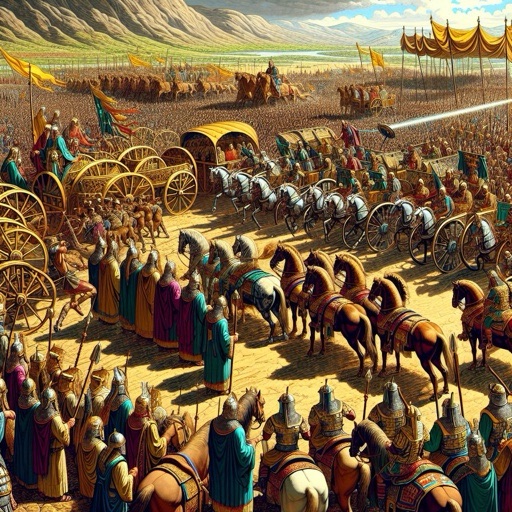
The narrator describes the daily provisions of Solomon in some detail: “thirty cors of the finest flour and sixty cors of meal, ten head of stall-fed cattle, twenty of pasture-fed cattle and a hundred sheep and goats, as well as deer, gazelles, roebucks and choice fowl” (1 Ki 4:23–24) and then claims that “during Solomon’s lifetime Judah and Israel, from Dan to Beersheba, lived in safety, everyone under their own vine and under their own fig tree” (4:25).
However, we know from Samuel’s earlier predictions that this is ‘spin’. How could such immense provisions and vast wealth be found in the ancient near east unless it was taken from the people? How would the families of those men who were taken for Solomon’s service fare, left to struggle on small land holdings without men to work the land?
While we might remember the wisdom and splendour of King Solomon’s rule to this day and admire it, we need to remember that there is another side to this story, that isn’t just or pretty or admirable. Solomon’s wisdom and rule was the wisdom and rule of the world. Solomon used his influence and power to acquire personal wealth and prestige. He thought nothing of splitting families, leaving women and children to struggle, and taking precious food resources for his own use. The mineral wealth of the land remained firmly under his control and he used it to decorate his vast palace – built at no expense by Hebrew men conscripted into what was essentially slavery. His immense army ensured he remained in power.
Who does this put you in mind of today? The Conversation has a page entitled “Articles on Dictatorship” which contains 81 articles—on Bangladesh, Venezuela, North Korea, Russia, Brazil, Argentina, Cambodia, Belarus, Saudi Arabia, China, Rwanda, Nicaragua, the Philippines, and more. Surely this is not the model of leadership that God desires? See https://theconversation.com/au/topics/dictatorship-1918
Writing in With Love to the World, Matthew Wilson reflects on this story. “Often our sense of justice is based more on retribution than on reconciliation. Mandatory sentencing, drug posession laws, racial profiling, and continuing failures in domestic violence and other abuse cases leave us wondering where justice really lies.”
He notes an anecdote of his father, “He who has the deepest pockets wins”, and comments that, whilst God has a quite different sense of justice, sadly, “the God who forgives, who shows grace and mercy is, nevertheless, rather absent in today’s reading. Solomon will go on to be gifted with, and praised for, his wisdom. Here, political wisdom and the grace of a forgiving God seem a long way apart. In the love of Christ and the power of the Spirit, have we the strength to be different, to be Christ-like?”
*****
Some material in this blog was included in THE WAY OF WISDOM by Elizabeth Raine and John Squires (self-published 2012)

With Love to the World is a daily Bible reading resource, written and produced within the Uniting Church in Australia, following the Revised Common Lectionary. It offers Sunday worshippers the opportunity to prepare for hearing passages of scripture in the week leading to that day of worship. It seeks to foster “an informed faith” amongst the people of God.
You can subscribe on your phone or iPad via an App, for a subscription of $28 per year. Search for With Love to the World on the App Store, or UCA—With Love to the World on Google Play. For the hard copy resource, for just $28 for a year’s subscription, email Trevor at wlwuca@bigpond.com or phone +61 (2) 9747-1369.
 An Informed Faith