Featured

Antisemitism: yes, it’s about legislation—but more, it’s about our culture

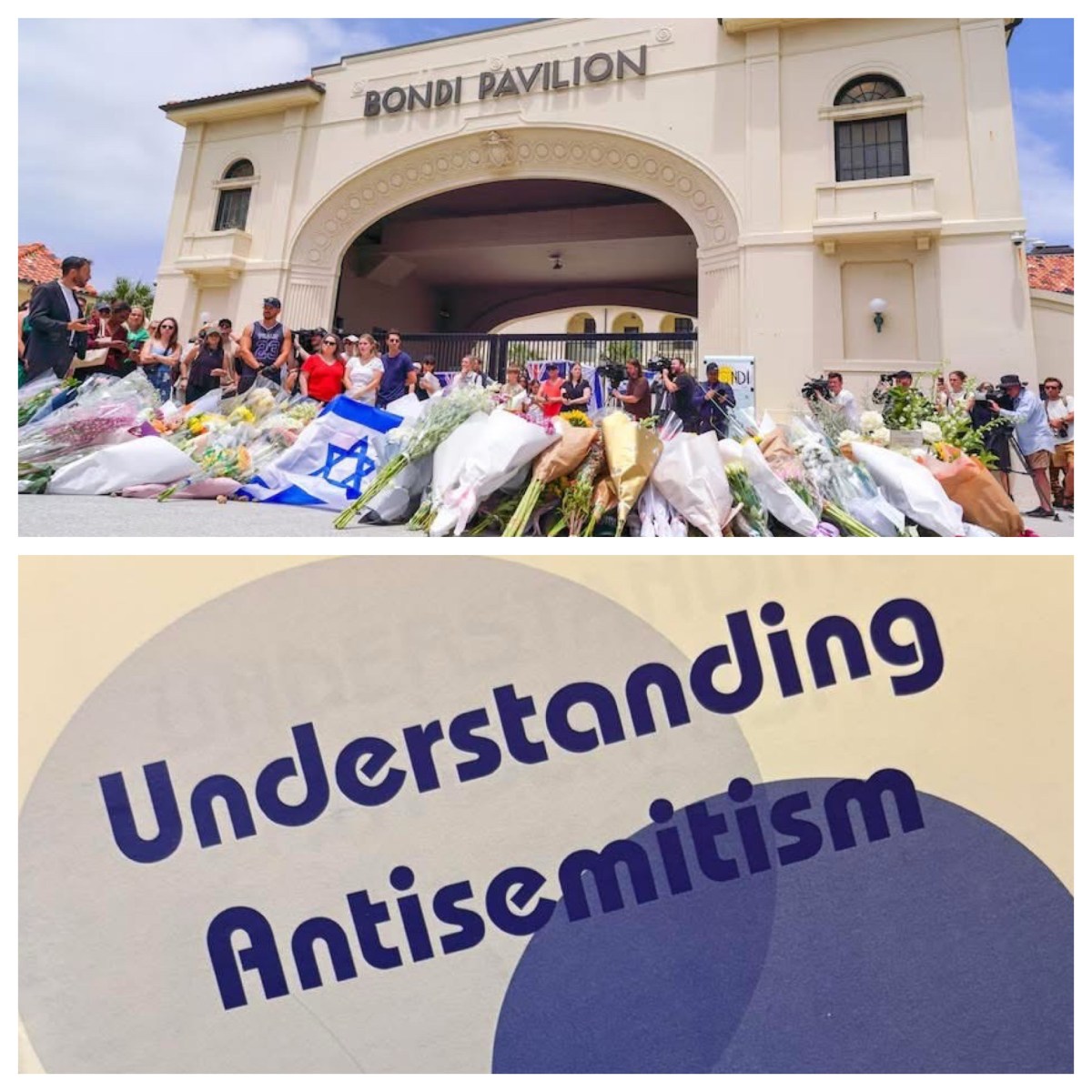
It’s less than a week since the tragic mass shooting at Bondi Beach. In the days since then, we have seen very public displays of shock, grief, fear, anger, blame, rage, and other strong emotions. So many comments rip over into recrimination and dehumanisation. It’s been savage. Alongside all of this, there has also been a deep admiration for those who attempted to stop the shooting by intervening—at the cost of their lives, in one instance, and incurring significant wounds, in another case. 

There have been all manner of suggestions about what should be done to address the reasons for this happening—even as the relevant authorities undertake their careful, methodical work of investigating who, how, and why this came to pass. The Federal Government has already flagged changes to the gun laws in force around the country, and more recently has signalled that legislation will be introduced to tighten the application of “hate speech” laws. These responses are important, and good. We can only hope that the parliaments concerned—Federal and State—all work cohesively to adopt them expeditiously.

But I don’t believe that a legislative response—as important, and necessary, as that is—will address the root cause of the issue that everyone is regarding as the villain in the situation. It’s about more than what our laws say. Laws are important; they set the bounds beyond which words and actions are deemed to be unacceptable in our society. Laws, put into place by legislation which parliaments enact, provide the outer framework of society. Our laws signal who we are as a society: what we value, what we disdain, what we will not tolerate. (That’s why politicians are necessary; they staff the parliaments that do this essential work on our behalf.)

But there is more to be said. Addressing antisemitism is not just a matter of legislation, or politics. It is a matter of culture; the features of our common life which are deeply embedded in who we are, and which are expressed in our attitudes, our words, and our actions. It is our culture which needs addressing.

1

We have heard widespread public rhetoric about “antisemitism”. It has, indeed, been a growing refrain since the events of 7 October 2023 in Gaza and Israel, but has been almost at saturation point since the tragic event at Bondi Beach on 14 December 2025. It is quite clear that there has been a significant rise in the number of antisemitic events since October 2023, culminating in the death of 15 Jews and significant injuries to another 40 or so at Bondi. 

A lot of that rhetoric seems to assume that the upsurge of antisemitism over the past two years has caught us by surprise; it is a shock, a terrible result of protests about what has been happening in Gaza in recent times, an unprecedented feature of Australian society as the politics of far away have infiltrated and impacted our domestic scene. But that is not the case. Whilst the number of intensity of these antisemitic events has indeed risen in that time, this is not a new experience for Jewish people in Australia.

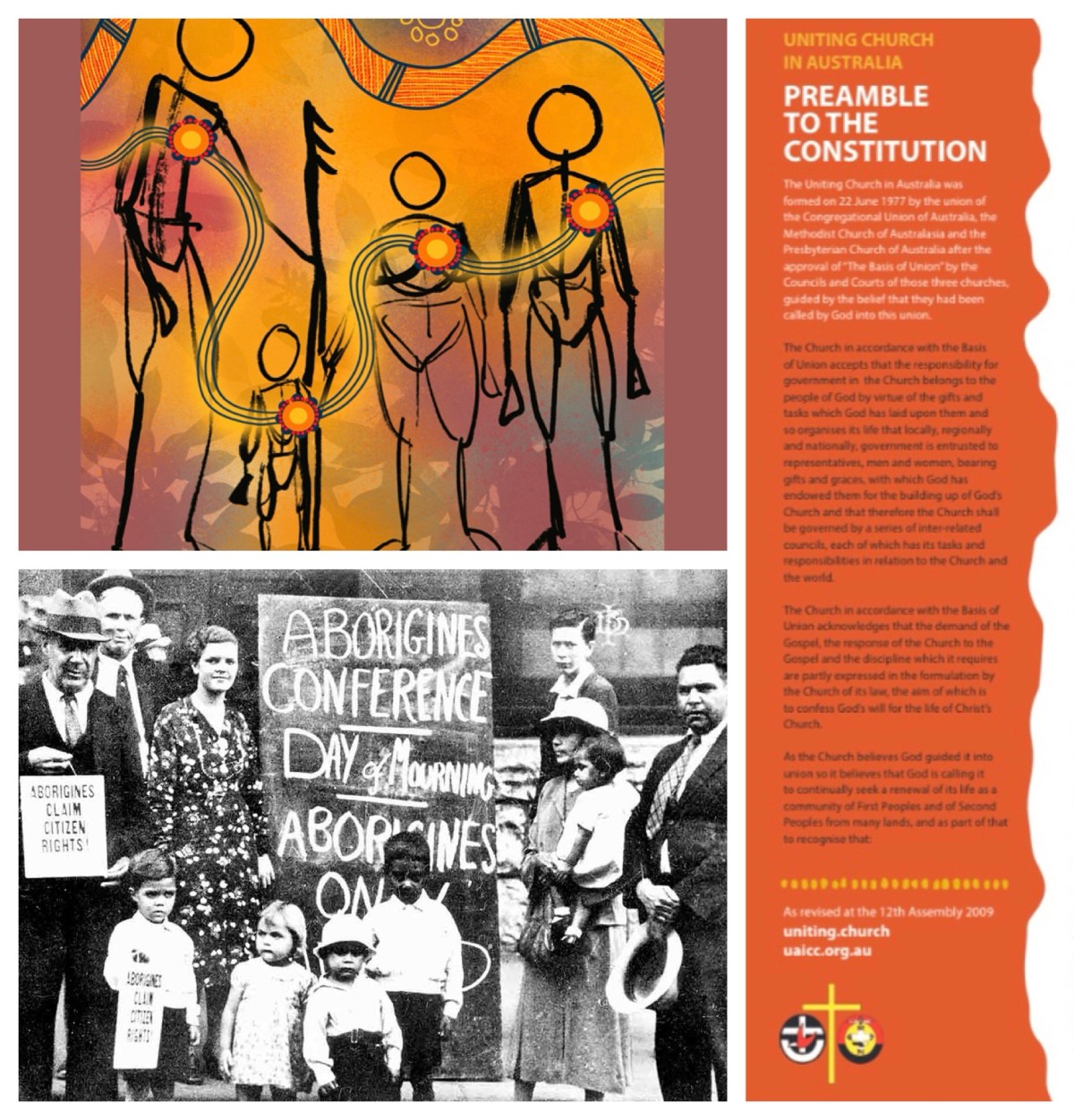
 Antisemitism has been present in Australian society for decades. For 12 years I was part of the Uniting Church National Dialogue with the Jewish Community (2000–2012). Elizabeth joined me as a member for the last six of those years. For some time, I was the UCA co-chair of the Dialogue. The Jewish co-chair was usually the late Jeremy Jones, a renowned advocate for Jews in Australia. See https://uniting.church/an-introduction-to-the-uca-jewish-dialogue/

Every six months when we met, Jeremy would report on the rates of antisemitic incidents. It was constant, distressing, and unacceptable. He had begun collating such incidents in 1989. In 2004, he published an article, entitled “Confronting Reality: Anti-Semitism in Australia Today”, in the Jewish Political Studies Review (vol.16 no.3/4, Fall 2004, pp.89–103). The thesis he developed was clear; despite the view that Australia has been “not only accepting but welcoming of Jews … In recent years, however, there has been a growing acknowledgment both of the presence of anti-Semitism in Australia, and that it is the responsibility of political and moral leadership to confront it.” See https://www.jstor.org/stable/25834606

A decade later, in a 2013 report on “Antisemitism in Australia” published by the Executive Council of Australian Jewry, he noted that “During the twelve months ending September 30, 2013, 657 reports were recorded of incidents defined by the Human Rights and Equal Opportunity Commission (now the Australian Human Rights Commission) as ‘racist violence’ against Jewish Australians.” The kinds of incidents that he tabulated “included physical assault, vandalism – including through arson attacks – threatening telephone calls, hate mail, graffiti, leaflets, posters and abusive and intimidatory electronic mail”. 

There can be no doubt that antisemitism was firmly ingrained in Australian society at that time. Indeed, as Jeremy Jones noted, the figures reflected “a twenty one per cent increase over the previous twelve month period, and sixty-nine percent above the average of the previous 23 years.” See https://www.ecaj.org.au/wordpress/wp-content/uploads/2019/03/2013-ECAJ-Antisemitism-Report.pdf

Indeed, I well recall what security measures were in place on those occasions when I visited a Jewish synagogue in the Eastern Suburbs of Sydney, starting almost 30 years ago. I was teaching a course entitled “The Partings of the Ways”, exploring how Christianity separated from Judaism. One element in the course was to attend Jewish worship, and meet with the rabbi for a question-and-answer session. Rabbi Jeffrey Kamins of Temple Emanuel was always very amenable to spending time with the class in this way. (He also came to North Parramatta to give a guest lecture in the class each year.)

Entry into the synagogue was through a security gate at the front, in the middle of a high, strong security fence that surrounded the building and grounds. A security guard checked each of us before permitting entry. Once inside, we received wonderfully warm hospitality; but the first impression was rather chilling. The reason for that, even back in the 1990s, was that Jewish synagogues recognised that they needed to implement these security measures to ensure the safety of worshippers. Antisemitic incidents—angry words, slogans painted on walls, and physical attacks—were being experienced by Jews on a regular basis. Antisemitism was, unfortunately, alive and well.

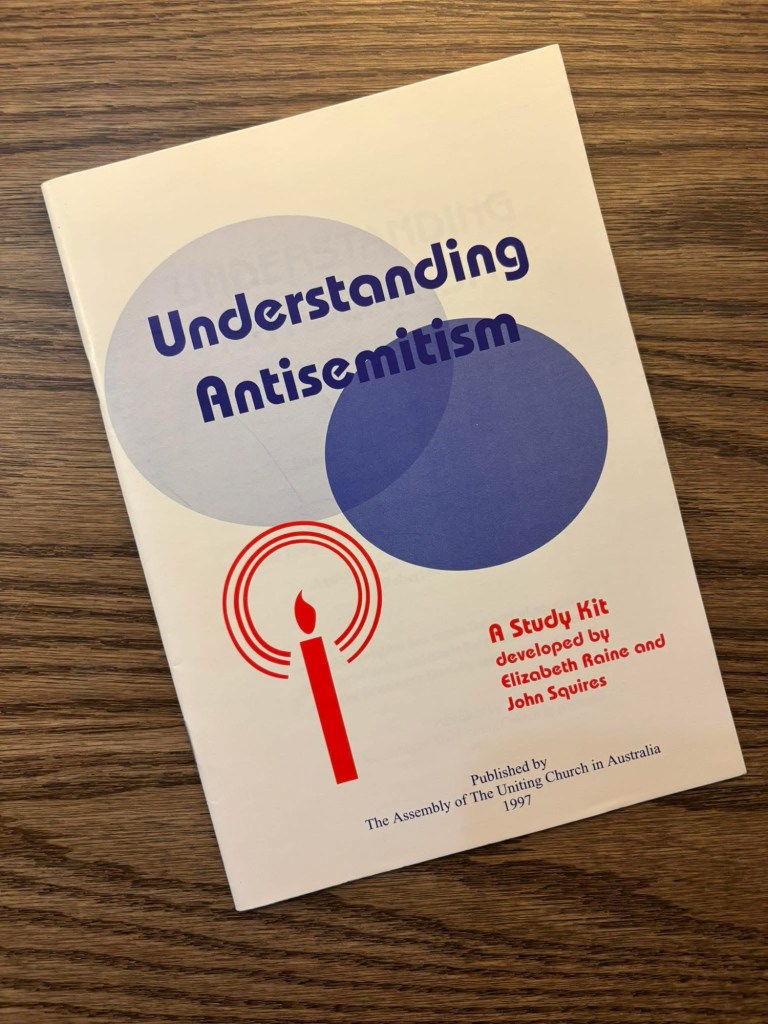
In fact, in 1997, the Uniting Church National Assembly had adopted a statement about our relationships with Jewish people, which explicitly included a rejection of antisemitism and encouraged church members to become informed about such matters.

In the course of preparing that statement, Elizabeth and I were charged with preparing a resource, which the Assembly published as a study with ten sessions, and which was disseminated across the church.

I wonder how many congregations made use of this resource? We certainly used many elements of it in our regular teaching over the years.

The resource is available online at https://illuminate.recollect.net.au/nodes/view/11763?

2

Some voices now, in 2025, are placing the responsibility for what happened at Bondi firmly on the shoulders of the Federal Government, arguing that they knew about the dangers of antisemitism but “did nothing”. Albanese should resign, they say. It was his fault that this tragedy happened. He has blood on his hands. It’s strong stuff.

I wonder. We have had many Prime Ministers over the past 25 years, since I first started hearing those regular reports about antisemitism from Jeremy Jones.  I wonder why other PMs have not been equally accused of inaction, like Albanese. What did John Howard do? Or Kevin Rudd? Or Julia Gillard? Or Tony Abbott? Or Malcolm Turnbull? Or Scott Morrison? 

All of these Prime Ministers did, in fact, the same as Albanese: recognising that antisemitism existed, they supported low level anti-racism programmes, and blithely went on with their political business of elections, budgets, legislation, and the argy-bargy of Question Time. Little has changed over all that time. Antisemitic incidents have continued to take place. And how many of the people now making loud noises about the Bondi Beach event had actually been agitating five, ten, or twenty years ago about antisemitism?

And it is not entirely clear that it was, in fact, antisemitism which fuelled the terrible events at Bondi Beach. Carrick Ryan, who spent years working as a Federal Agent from the NSW Joint Counter Terrorism Team, has written that he sees this as “an act of terrorism perpetrated by mad men possessed by a dangerous ideology”. 

His view is that “Jihadists do not have a political goal. They are inspired by a toxic interpretation of their faith that encourages them to die in an act of violence against any perceived enemy of their faith.” He argues that “it is simply absurd to suggest they have been influenced by pro-Palestinian university protesters, Greens politicians, or even ‘anti-Zionist’ conspiracy theorists.”

“The men who conducted these attacks”, he maintains, “would have despised those activists as much as anyone on the political right, and as I have tried to explain to many activists who have attempted to romanticise Hamas as heroic freedom fighters, the future they are aspiring to is very different.” It’s not about antisemitism, so much as it is it an expression of religious fanaticism.

See https://www.facebook.com/100045908673621/posts/pfbid0aiSGrfYkvvq9v9wznY71nwac3z3ep88T7XdVLvLfrTzVi7kRAvAEfWRqCkpfJ4fyl/

3

However, it is not only antisemitism which has been growing. Islamophobic incidents have increased consistently as the Muslim population of Australia has grown. Deakin and Monash Universities are collaborating to compile an annual Islamophobia Report, documenting such incidents since 2014. The latest report notes that the number of Islamophobic incidents has increased significantly since 7 October 2023. You can read the reports at https://islamophobia.com.au

There are numerous other incidents involving First Nations people, Afghanis, Asians, Sudanese, and all manner of diverse ethnic minorities which have all continued in the same period, spiking in numbers at particular times, with the same minimalist level of government response.  All Together Now is an independent not-for-profit organisation and registered charity, founded in 2010, that holds to a vision of a “racially equitable Australia”. They work towards this vision “by imagining and delivering innovative and evidence based projects that promote racial equity”. Their website declares “we are community driven, we utilise partnered approaches, and our work is intersectional”.

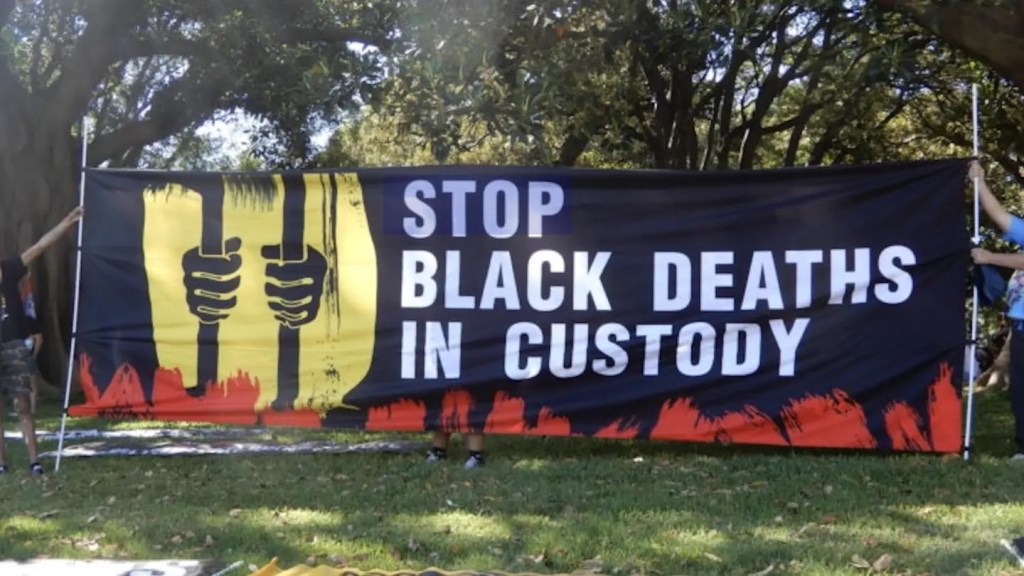
As All Together Now draws together a range of studies, it reports that “40% of children experience racism in schools … 43% of non-white Australian employees commonly experience racism at work …there is still a culture of systemic racism in Australian sports … studies have exposed systemic and structural forms of racism in policing, the justice system and child protection, leading to discrimination, violence and death of people of colour and First Nations People”. All the studies they cite are referenced and hyperlinked on their website at https://alltogethernow.org.au/racism/racism-in-australia/

Our society has fostered far too many intolerant, aggressively-hostile individuals who feel they have a right to speak and act in these ways.

4

The Bondi event and its repercussions are not simply a partisan political matter, as so many loud voices are currently proclaiming. It is a cultural phenomenon; the “right” to criticise, slander, marginalise, and attack Jews … and Muslims … and First Peoples … and other minorities … has been taken for granted by an increasing proportion of the population. They have, of course, been egged on by extremist politicians who seize every opportunity to foster racism.

Antisemitism, and Islamophobia, and all forms of racism, together form a deeply-embedded cultural phenomenon, for which we are all responsible. Politicians have a role to play (and wouldn’t it be good if a bipartisan approach could be consistently made) but all of us have things we can, and should, do, each and every day.

Calling out racist, islamophobic, or antisemitic language is one thing we could aim for. Intervening in low-level incidents is another, when it appears safe to do so. Supporting the education of children and young people with programmes which inculcate social responsibility, ethical behaviour, and respectful interactions with others is important. Joining groups which are advocating for justice for minority groups which are marginalised is something that people could do. Writing to state and federal members of parliament about issues of concern in these areas is also something that people could do. 

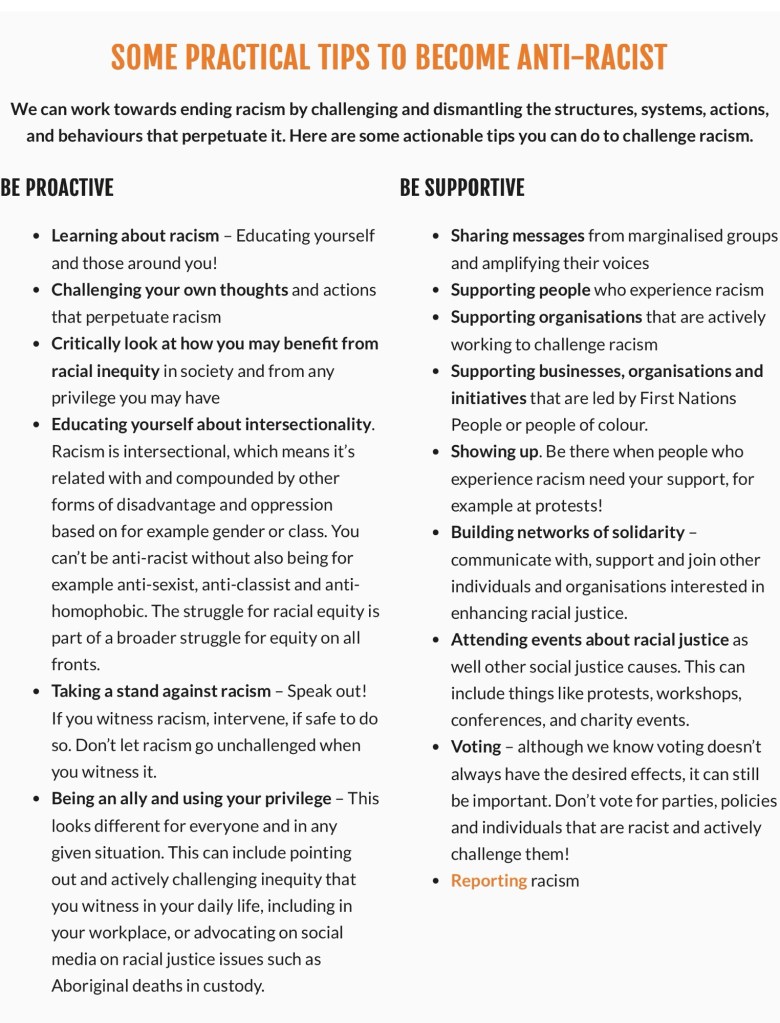
All Together Now has a helpful collection of “Practical Tips to Become Anti-Racist” as well as a useful guide with links to further resources. We would all do well to read, ponder, and implement the kinds of things that they advocate.

https://alltogethernow.org.au/wp-content/uploads/2023/09/Free-Resource-How-to-become-an-anti-racist.pdf

*****

For my earlier reflections on this tragic event, “They are part of the whole of us”, see

Featured

They are part of the whole of us

What has happened at Bondi Beach is a tragedy. Many are grieving, many are injured; many will be traumatised, many will be more anxious and more afraid of life in Australian society. Amongst other things, it might give us pause to consider who we are, together, as a society.

The black-clad figure on the bridge at Bondi Beach
in Sydney, Australia, shooting into Archer Park,
where a Hanukkah celebration was taking place

Jewish people are an integral part of contemporary Australian society. There was a handful of Jews on the ships of the First Fleet (estimates range from eight to sixteen people), arriving here in 1788. A Jewish burial society (Chevra Kadisha) was established in 1817. The first Jewish marriage took place in 1832. Jews have served as members of parliament, as justices in various courts, as Governor-Generals, as military officers, as surgeons and nurses and police officers, as actors and artists and journalists and business people, indeed in all areas of society. They have contributed in so many ways to making our society what it is today: diverse, welcoming, hardworking, tolerant. 

Muslims people are an integral part of contemporary Australian society. Muslims from Makassar (Sulawesi, Indonesia) had traded with the First Peoples of the northern part of the Australian continent for centuries before 1788. Some married First peoples and over time the Macassars contributed to the developing culture of the First Peoples. Muslims sailors and convicts came on ships in the early decades of British colonisation onwards. Muslims later came from India and Pakistan to provide transport, labour, and support in the building of essential infrastructure in the vast inland desert area of the continent like the Overland Telegraph Line and the Ghan Railway. Later Muslim migration occurred especially from Albania, Bosnia, Lebanon, Afghanistan, Iraq, Sudan, and Somalia. They have all brought their vibrant cultures with them and become an important part of contemporary Australian society.

I have known many Jews through my ministry in the eastern suburbs of Sydney and participation in the Uniting Church’s dialogue with the Jewish community. I have also known some Muslims through the relationships built between United Theological College and ISRA, the Islamic Studies organisation that, like UTC, is now an integrated part of Charles Sturt University. All of these Muslim people and these Jewish people are honest, ethical, law-abiding, dedicated, creative, intelligent, compassionate people. They would each be horrified at what has taken place at Bondi Beach yesterday. 

I know a number of Jewish people who are horrified at the policies of the current Israeli government, and who are working in various ways to find peace with justice in the fraught environment of Gaza, the West Bank, and the illegal settlements. What is happening in the Middle East is the result of distorted extremist fundamentalist views that are not held by the vast majority of Jews living in Israel, or Jews living in Diaspora around the world. Israeli government actions do not represent general Jewish viewpoints.

The best of who we are today as a society is because, in part, of the persistent, faithful, dedicated contribution of both Jews and Muslims over the centuries. They are part of the whole of us, and we are all interrelated to and interdependent on Jews and Muslims in so many positive ways. We should not let the scare tactics and dog whistling of marginal voices in our society blight our minds and lead us to snap judgements about “all Muslims” or “all Jews”. We would do best to stand with those who grieve and commit to working to ensure peace, safety, and respect in Australian society.


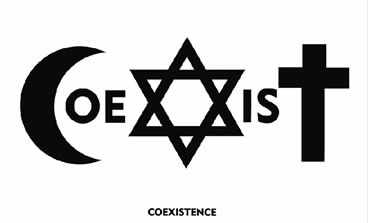
The Coexist image was created
by Polish graphic designer
Piotr Młodożeniec in 2000
Featured

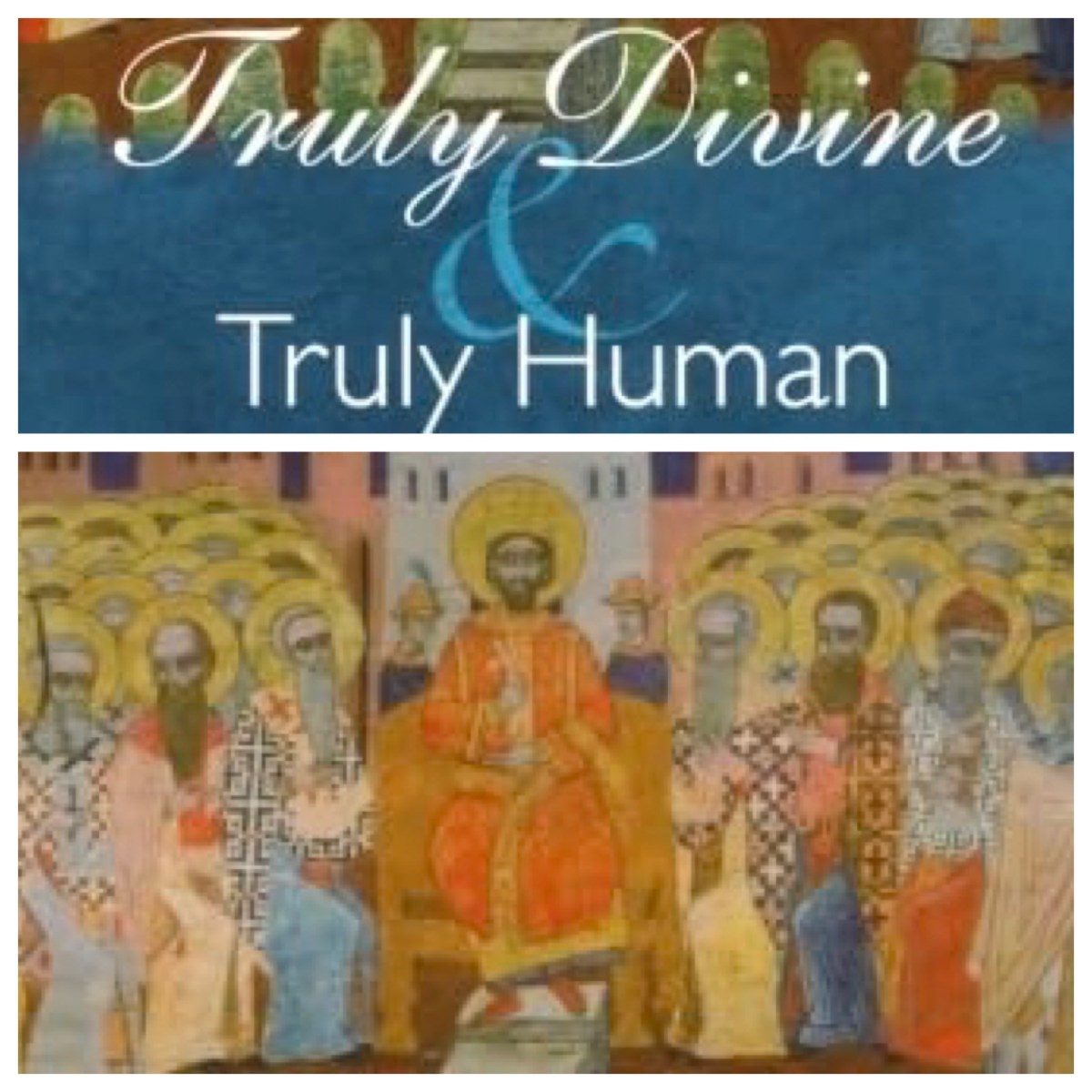
Truly God and truly human: the reason for the season

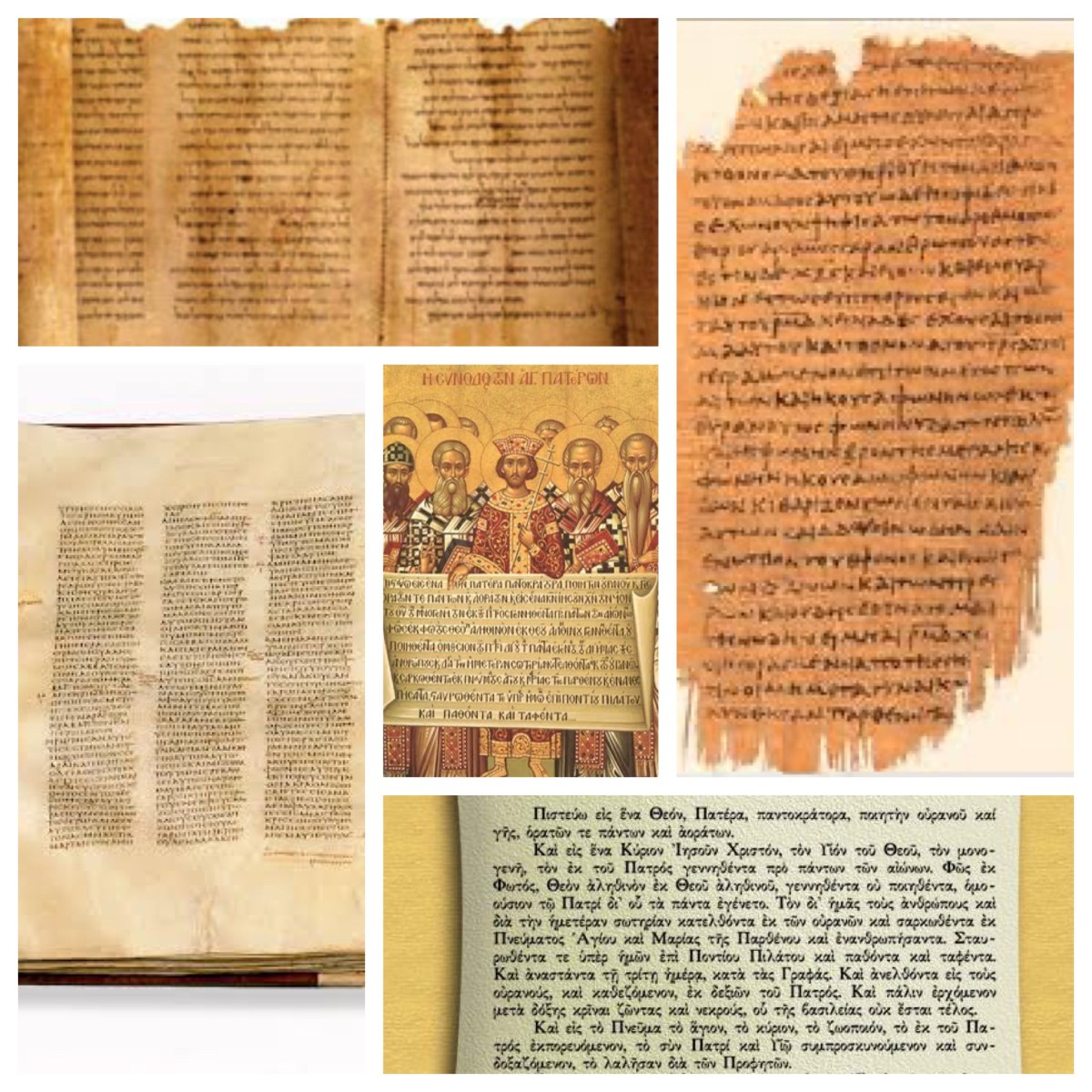
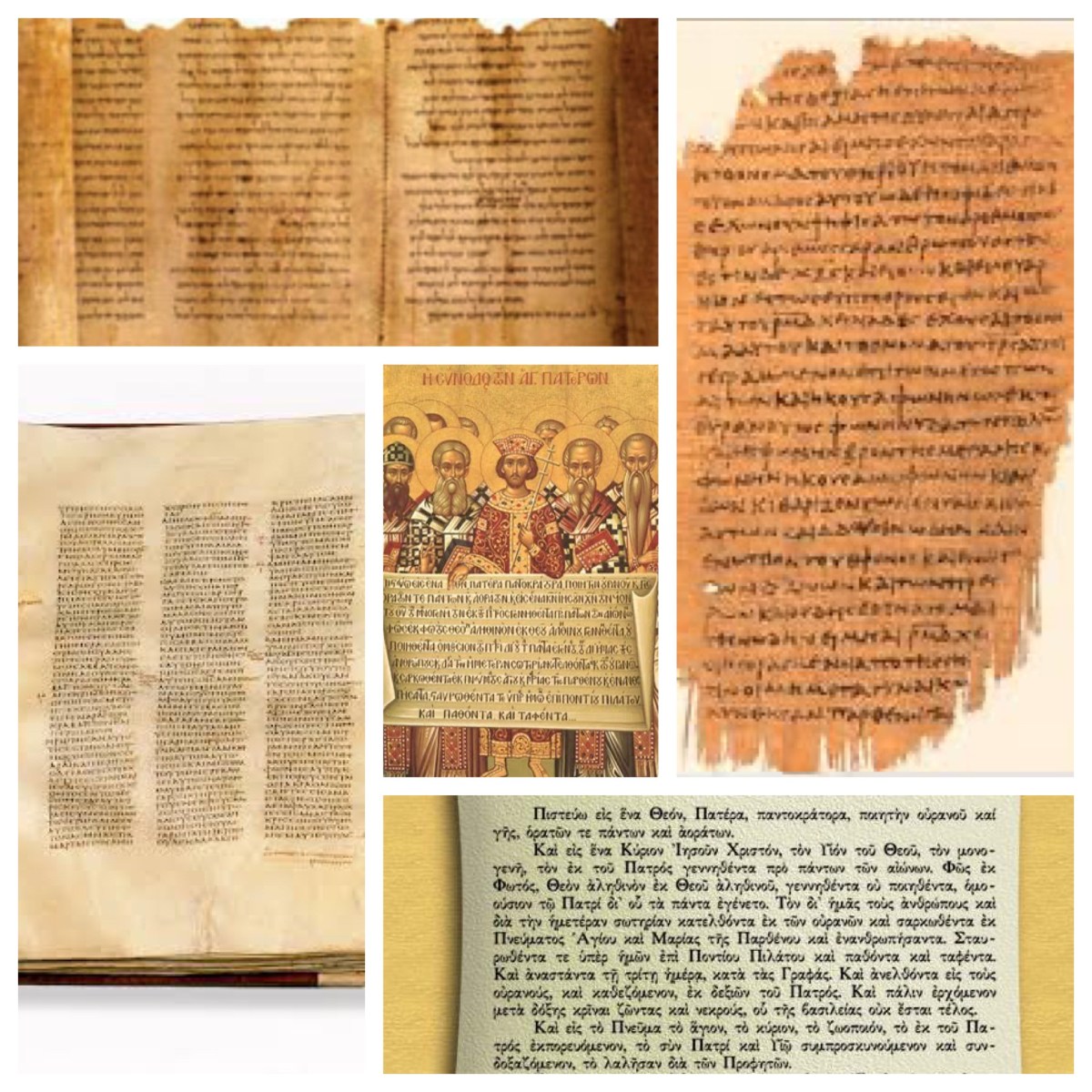
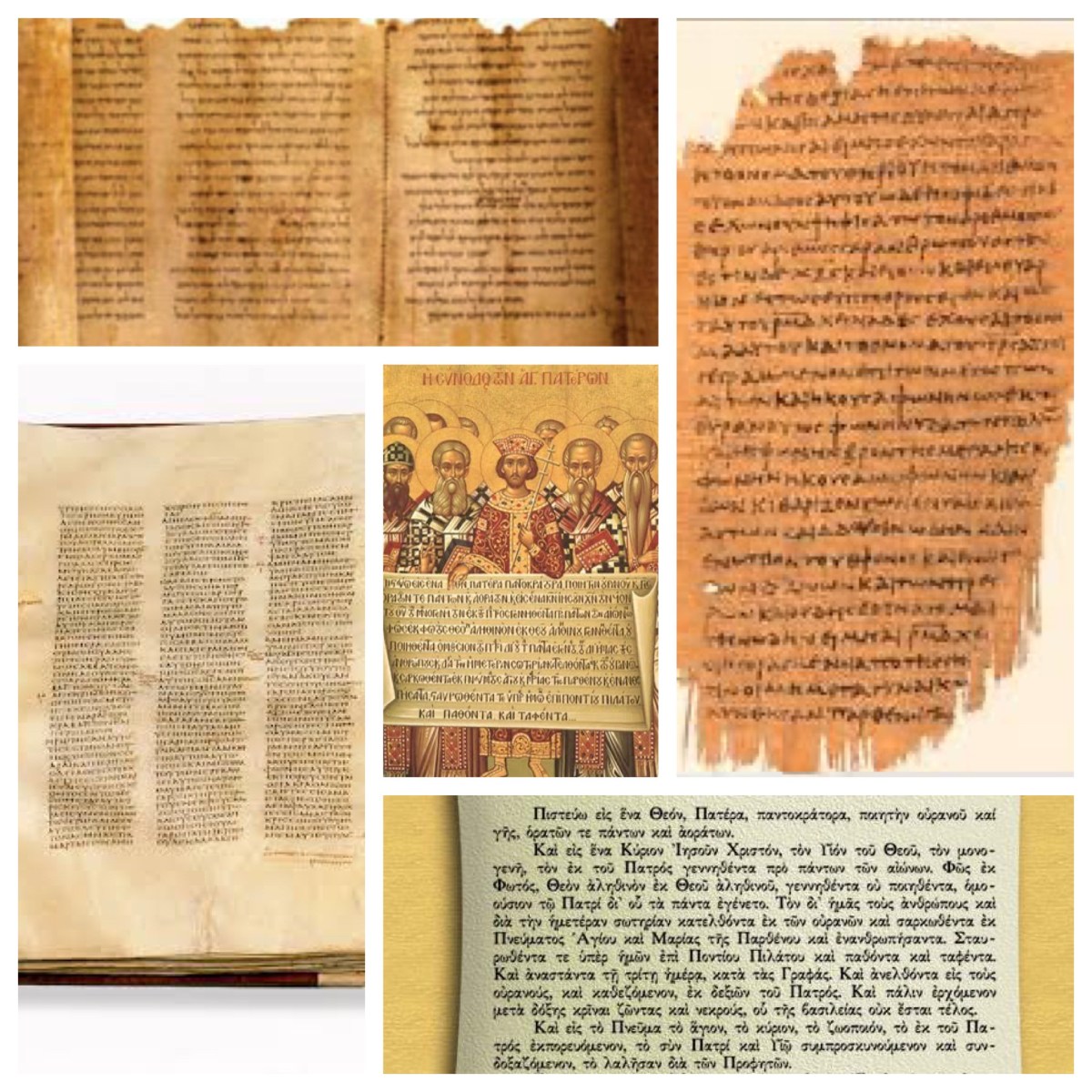
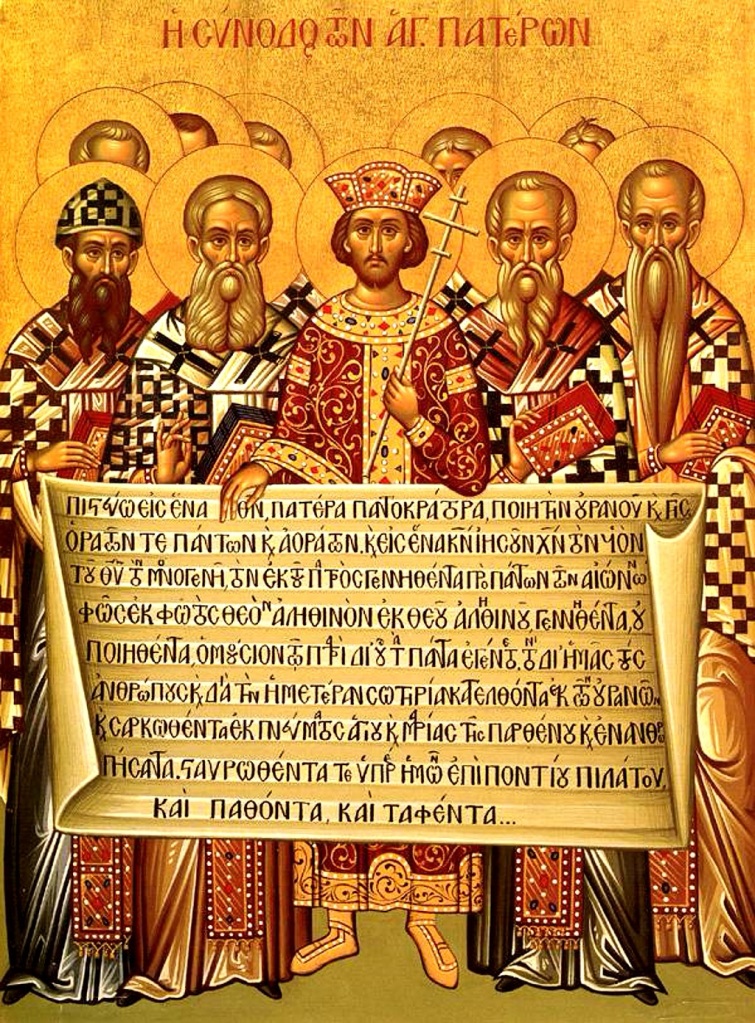
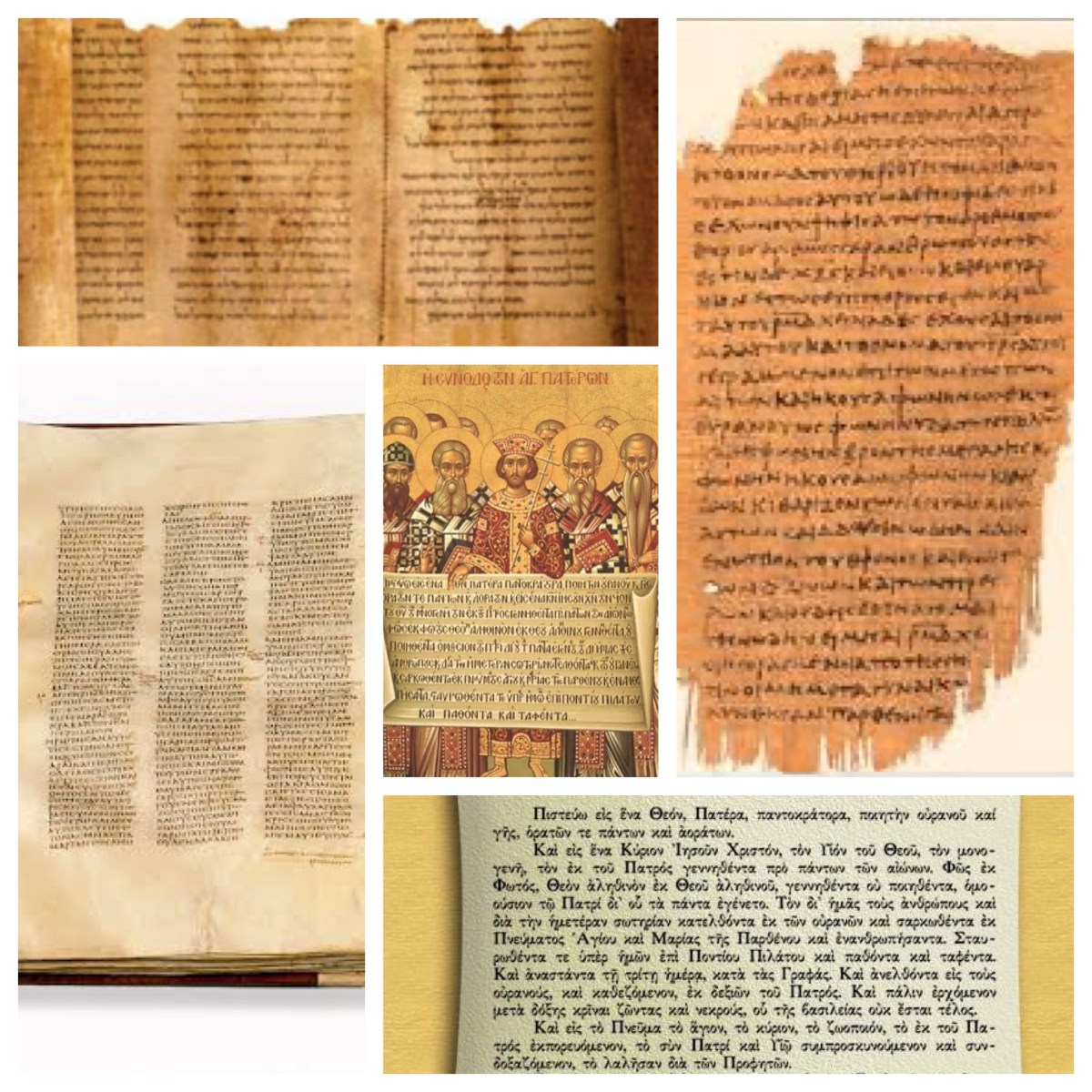
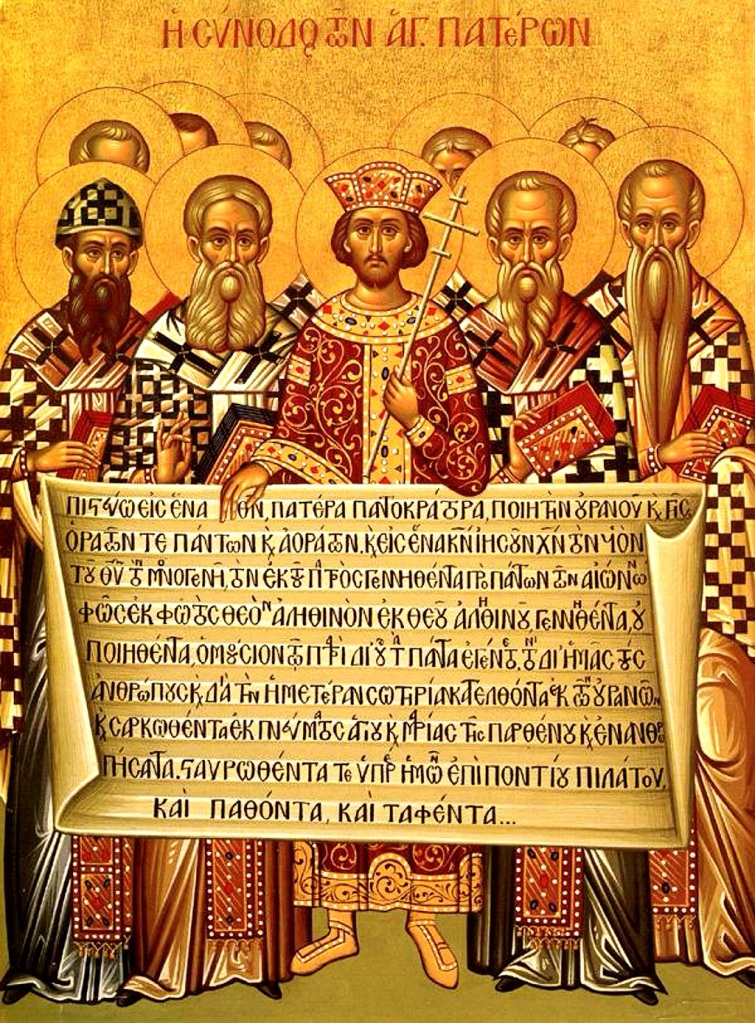
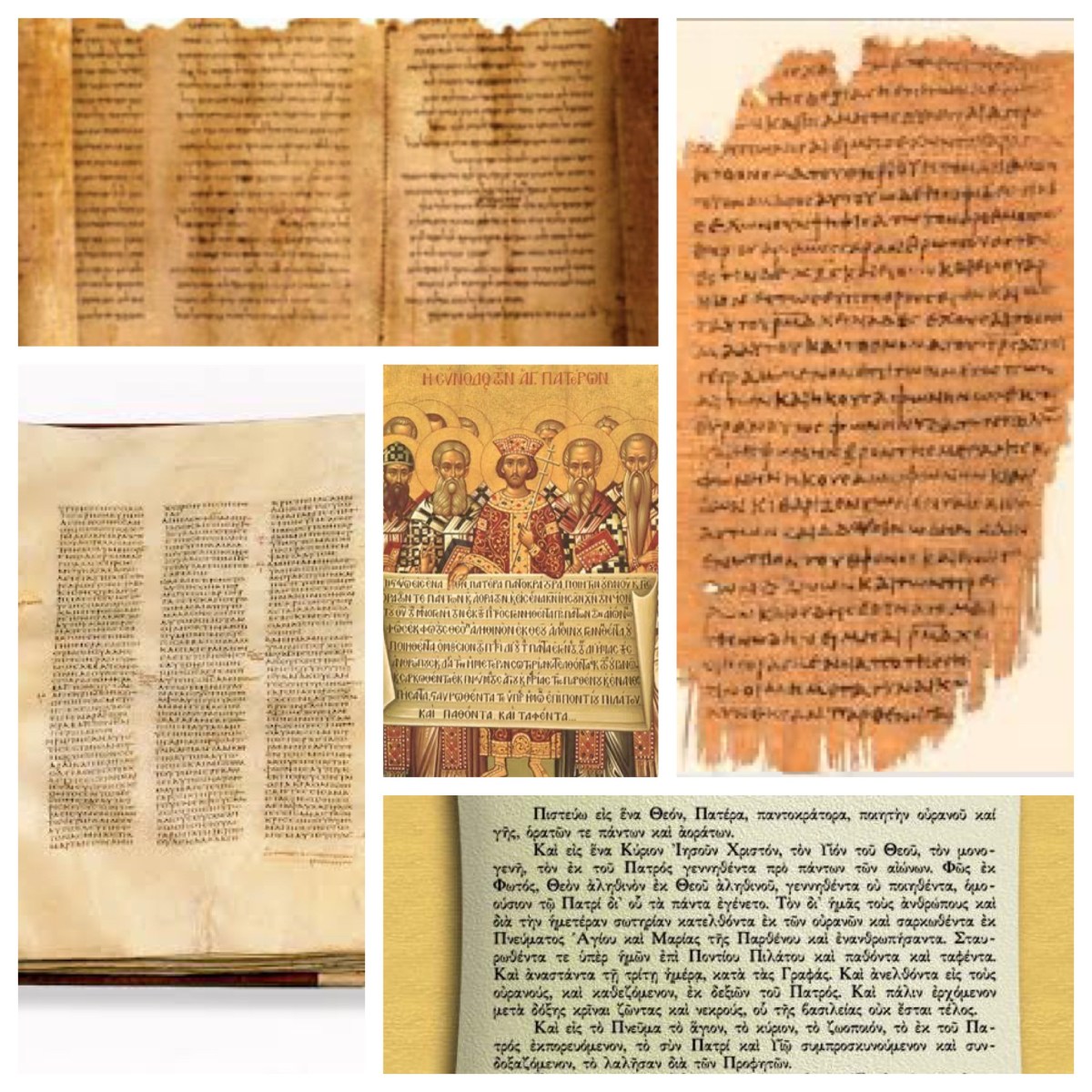
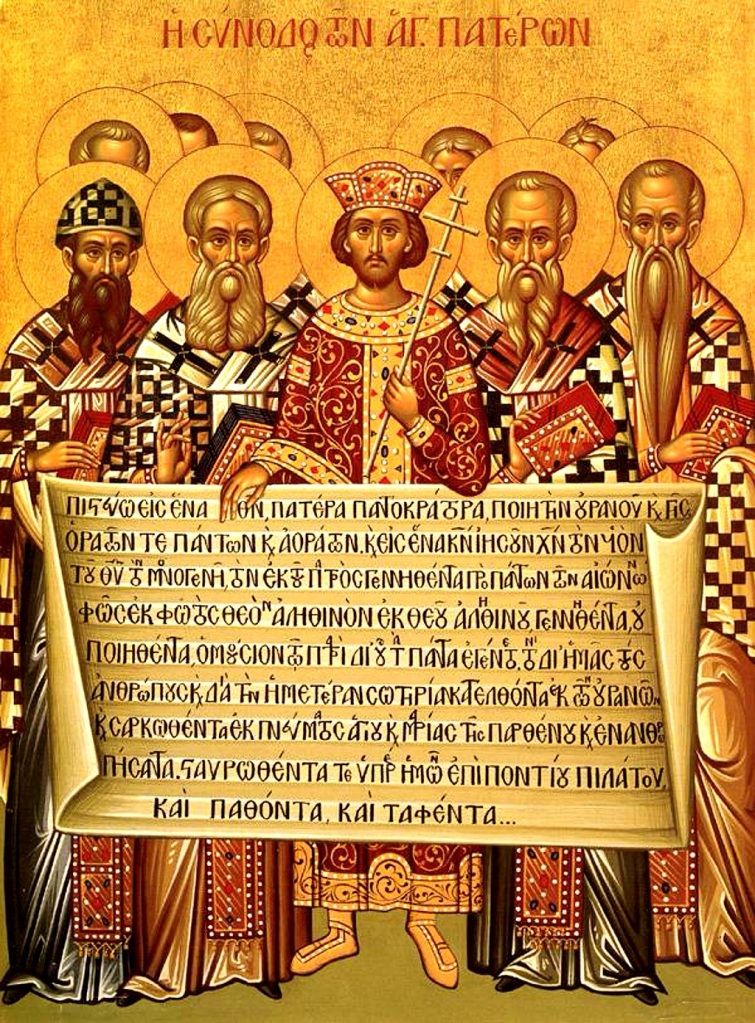
The Chalcedonian Creed was adopted at the Council of Chalcedon in 451 in Asia Minor as a response to certain heretical views concerning the nature of Christ. It sets forth a complex philosophical understanding of Jesus as incarnate Word of God, “truly God and truly [hu]man”.

This expression of the nature of Jesus, two-wrapped-into-one, is the theological understanding that underlies the story that is told and retold each Christmas season. This is the real “reason for the season”, surely.

In the light of this creed, and the clear admonitions that it offers, I present my contribution to Christmas caroling—to be sung to a very familiar tune, Hark the herald angels sing  (7.7.7.7.D and refrain). Perhaps if we sing this regularly, the complex concepts of orthodox theology might be more widely known??

1

God the Word, Lord Jesus Christ,

Perfect in the Godhead, he;

Truly God and truly human,

perfect in humanity.

Reasonable in body and soul,

consubstantial, present, whole:

First Begotten as Godhead,

now with us in faithfulness:

God, the Word, Lord Jesus Christ,

This is the one whom we confess.

2

Inconfusedly he came, 

pure, unchangeable, was he.

Indivisible he lives, 

quite inseparable is he.

Whilst distinct, his natures stand,

for each nature does retain

each their property unique;

mystery of God, filioque!

Both concur in one Person, 

One Subsistence, in the Son.

3

As the prophets have declared,

as the holy fathers say,

as the Lord himself has taught us,

so we faithfully do say:

God the Word, Lord Jesus Christ,

Perfect in the Godhead, thrice,

Truly God and truly man,

Perfect in humanity.

These two natures do concur,

One Subsistence, in the Son.

*** *** *** ***

Sing it, sisters and brothers!!

For another light-hearted take on the Chalcedonian theology, see 

The text of the Chalcedonian Creed (in English translation, reflecting the original gendered language, typical of the time) reads as follows:

We, then, following the holy Fathers, all with one consent, teach men to confess one and the same Son, our Lord Jesus Christ, the same perfect in Godhead and also perfect in manhood; truly God and truly man, of a reasonable soul and body; consubstantial with us according to the manhood; in all things like unto us, without sin; begotten before all ages of the Father according to the Godhead, and in these latter days, for us and for our salvation, born of the virgin Mary, the mother of God, according to the manhood; one and the same Christ, Son, Lord, Only-begotten, to be acknowledged in two natures, inconfusedly, unchangeably, indivisibly, inseparably; the distinction of natures being by no means taken away by the union, but rather the property of each nature being preserved, and concurring in one Person and one Subsistence, not parted or divided into two persons, but one and the same Son, and only begotten, God the Word, the Lord Jesus Christ, as the prophets from the beginning have declared concerning him, and the Lord Jesus Christ himself taught us, and the Creed of the holy Fathers has handed down to us. 

Featured

Expectations: a key theme for Advent

What follows is a piece that I wrote a few weeks back for Ruminations, the quarterly journal of Saltbush, which is a ministry that resources rural and regional Uniting Churches in the Synod of NSW and the ACT. I wrote it just at the time when “expectations” were swirling around the church; I’m publishing it now as the theme of Expectations seems to be most appropriate for the season of Advent.

*****

The Synod of NSW.ACT has recently met, and given consideration to “The Presbytery Project”, which has the subtitle “Future Directions for the People of God on the Way”. The expectations surrounding the move to the Three Presbyteries Model are no doubt clear: sharing of resources, mobilising of personnel, collaboration of teams, hope for the future.

Just after that meeting, the Synod of Victoria and Tasmania met and adopted their vision for the future, entitled the “Faithful Futures Project”. It is setting expectations in that Synod; it aims “to prepare the Uniting Church in Victoria and Tasmania for the next 10 to 15 years”. And, of course, right across Australia, the church has been pondering the outcomes of the 2024 Assembly, when the Act2 Project was received and its proposals adopted. Already newly-constituted Commissions are meeting, planning the steps ahead in their respective areas. No doubt they have expectations about what they will achieve.

Indeed, even in my small rural church, we have had a recent process in which people have shared “what I hope for this church”, learning about better ways to be welcoming, and setting out steps for mission in the local community. And the Presbytery in which I live has a neat slogan on its website, declaring that it seeks to “Live by Faith, be Known by Love, and be a Voice of Hope”.

Expectations abound at every level!

Jesus was no stranger to the basic human element of “expectations”. He didn’t know about the anticipatory joy of an expectant parent, looking to the birth of their child. He presumably was a stranger to the bubbling internal expectations that mount when you have just two months before you start that “dream job” that you have just been offered. And I am not sure that he ever took part in a day-long, facilitated workshop of setting forth the “purpose, mission, and values” of a faith community!

But Jesus knew about expectations. The earliest account of his adult life tells us that his first words in public were words of expectation: “the time is fulfilled, and the kingdom of God has come near” (Mark 1:15). In another account of his life, he is reported as saying “the kingdom of God is not coming with things that can be observed; … in fact, the kingdom of God is among you” ( Luke 17:20-21). That surely must have set his followers agog as they scurried to determine just how this expectation of the coming kingdom was, in fact, now present among them.

Indeed, Jesus lived at a time when expectations were running high amongst his people. This was not a new thing. In the foundational story of the Exodus from Egypt, it is said that Moses offered words of expectation to the people: “Do not be afraid, stand firm, and see the deliverance that the Lord will accomplish for you today; for the Egyptians whom you see today you shall never see again” (Exod 14:13).

The scrolls containing the words of the prophets, which faithful Jews would have known quite well, were full of words of expectation: “the days are coming when all that is in your house will be carried off to Babylon”, announced Isaiah (Isa 39:16); “the days are surely coming, says the Lord, when I will make a new covenant with the house of Israel and the house of Judah”, said Jeremiah, during that exile (Jer 31:31); “I am coming to gather all nations and tongues”, declared an anonymous prophet after the people had returned from Babylon (Isa 66:18). Each important step in the story of Israel had been prophetically signalled by a word of expectation. 

And by the time of Jesus, after centuries of continuing foreign rule, and after a series of uprisings, defeats, compromises, and plots to regain control, expectations continued to run amok amongst the Jewish population. For some, the expectation was that they would someday regain political control of their land (the zealots and political revolutionaries of the day). For others, the expectation took shape in a vision of “the sons of light” waging a final cataclysmic battle against “the sons of darkness” (as in one of the Dead Sea Scrolls). Still others held to the word of the Lord, “I am sending my messenger to prepare the way before me, and the Lord whom you seek will suddenly come to his temple” (Mal 3:1). 

It was this latter expectation that had gripped John, as he carried out his programme of calling people to repentance and baptising them in the river. And as he did so, the man from Nazareth came and submitted himself for baptism. “Behold the Lamb of God, who takes away the sin of the world!” one later writer claimed that he said (John 1:20).  His expectations had come to pass in ways that perhaps even he had not thought possible.

The followers of Jesus certainly had expectations about him. “Are you the one who is to come?”—the question that John had sent his followers to ask of Jesus (Matt 11:3; Luke 7:19)—soon became their question. Expectations about what Jesus would achieve abounded. “We had hoped that he was the one to redeem Israel”, two of his followers mused, soon after he had been put to death (Luke 24:21). That was some expectation, to be sure! 

Some of those not as enchanted by the way of Jesus also had expectations about him. “How long will you keep us in suspense? If you are the Messiah, tell us plainly”, they taunted him (John 10:24). Hovering somewhere around Jesus was the expectation that he might in fact be the figure long hoped-for, come to redeem Israel. And even as he hung in the cross, he was again mocked and taunted: “He saved others; he cannot save himself. Let the Messiah, the King of Israel, come down from the cross now, so that we may see and believe” (Mark 15:31–32). Again, that expectation that he was someone significant—or that he thought he was someone significant—is in play. Just what might we expect from this Galilean stirrer? 

The path that Jesus trod both met expectations, but also failed to meet expectations. He did achieve something significant; but he did not do so in the way that was most surely expected. He would redeem Israel; but only by giving his life. He would be shown to be Messiah; but not on the clouds of glory—rather, on a rough wooden cross. “Truly this man was God’s Son!”, the Roman soldier is claimed to have said as he witnessed this cruel death (Mark 15:39).

Perhaps Judas had unreasonably  high expectations about Jesus; he was one of the inner group that travelled with him, ate with him, learnt from him, and began to carry out the mission that Jesus had given them (Luke 9:1–6). And yet his expectations took a sharp turn; we don’t know what drove him to betray Jesus with a kiss, nor do we know what expectations he had about what would eventuate from that. His sad end (Matt 27:3–6; compare Acts 1:18–19) perhaps reflects his recognition—tragically, too late—that his expectations regarding Jesus were doomed to fail.

And let’s not get too caught up in the complexities of the apocalyptic expectations that swirled around at the time—expectations that Jesus addressed, and redefined, in one of his longer teaching sessions (Mark 13:5–37). On the one hand, he is clear that something unexpected and yet long yearned-for will indeed take place (“they will see ‘the Son of Man coming in clouds’ with great power”, Mark 13:26). The expectations people held in relation to him were justified, it would seem.

And yet, he warns his followers to “beware that no one leads you astray” with specific timetables (13:5), advising them that chaotic times of cosmic upheaval are nothing “but the beginning of the birth pangs” (13:8), there will be suffering that will need to be faced and endured (13:19), and insisting that “about that day or hour no one knows” (13:32), that “you do not know when the time will come” (13:33, 35). Expectations may be raised, hopes may be high; but resolution is not easily attained.

So how do we deal with expectations? “Managing expectations” has entered the language both of business practice and of personal psychology. We need to be wary of setting expectations too high. Thinking about how all nations will flock to Jerusalem is setting expectations too high. They didn’t, and they won’t (especially today, in the fiery political landscape of Israel and Palestine). So too is expecting that everyone will see clearly that Jesus, the Messiah, is the Son of God who is the one to perform miracles at will and the one to redeem all of Israel and all of the nations—that, too, is unrealistic. We haven’t seen this, and he hasn’t redeemed everyone at all. Life continues on despite the failure to meet such high expectations.

And in similar fashion, setting expectations too low is something we should avoid. The young adult comes home from their first attempt at sitting for a drivers license, and proudly announces “I got it!” Dad looks up, amazed, and responds, “Wow! I really didn’t think you’d get it this time”. The expectation was set low, the triumph evaporates all-so-quickly. We need to manage our expectations: not too high, not too low.

And what of expectations we might have for our church community? Have you talked together in your congregation or faith community about what you hope for? what you would love to see happen? what you could work together to try to achieve? what you can pray for, bringing reason and knowledge into your words of hope and expectation to God? 

We should have expectations; we should talk about our expectations; and most importantly, we should be working together to see how we might achieve those expectations, and make them become a reality. Sometimes that can be a hard thing to do. Nevertheless, it is central to our life together.

As for expectations in our own personal spiritual life: that’s another area to consider carefully. We all have our familiar daily or weekly practices. They may be shaped by years of loving care and devoted repetition; we may be growing into a particular spiritual practice as we return to it consistently over time; or we may be now just “trying something new” in our spiritual life. Whatever the case may be, we have expectations about what that spiritual practice will do for us, and how it will help nurture our life of discipleship. We should identify our personal expectations and see how we are moving towards achieving them.

At the end of three of the Gospels, there are words that Jesus is reported as saying as he appeared, after his resurrection, to his followers. These words set the expectations for his followers. Matthew reports his words, “make disciples of all nations, baptizing them in the name of the Father and of the Son and of the Holy Spirit, and teaching them to obey everything that I have commanded you” (Matt 28:19–20). In these words, Jesus offers a clear set of expectations. 

Luke reports that he said “you are witnesses of these things”, of all that he has told them, so he offers them a command which contains an expectation: “stay here in the city until you have been clothed with power from on high” (Luke 24:48–49). In the subsequent volume written by Luke, the expectation and the charge is clear: “you will receive power when the Holy Spirit has come upon you; and you will be my witnesses in Jerusalem, in all Judea and Samaria, and to the ends of the earth” (Acts 1:8).

Most simply of all, John has Jesus say to the disciples, “peace be with you … as the Father has sent me, so I send you … receive the Holy Spirit” (John 20:21–22). Whichever Gospel account we prioritise for ourselves, the charge is clear—and the sense of expectation is strong. And so may it be for us,  day after day, as we walk the way of Jesus, full of expectation!

Featured

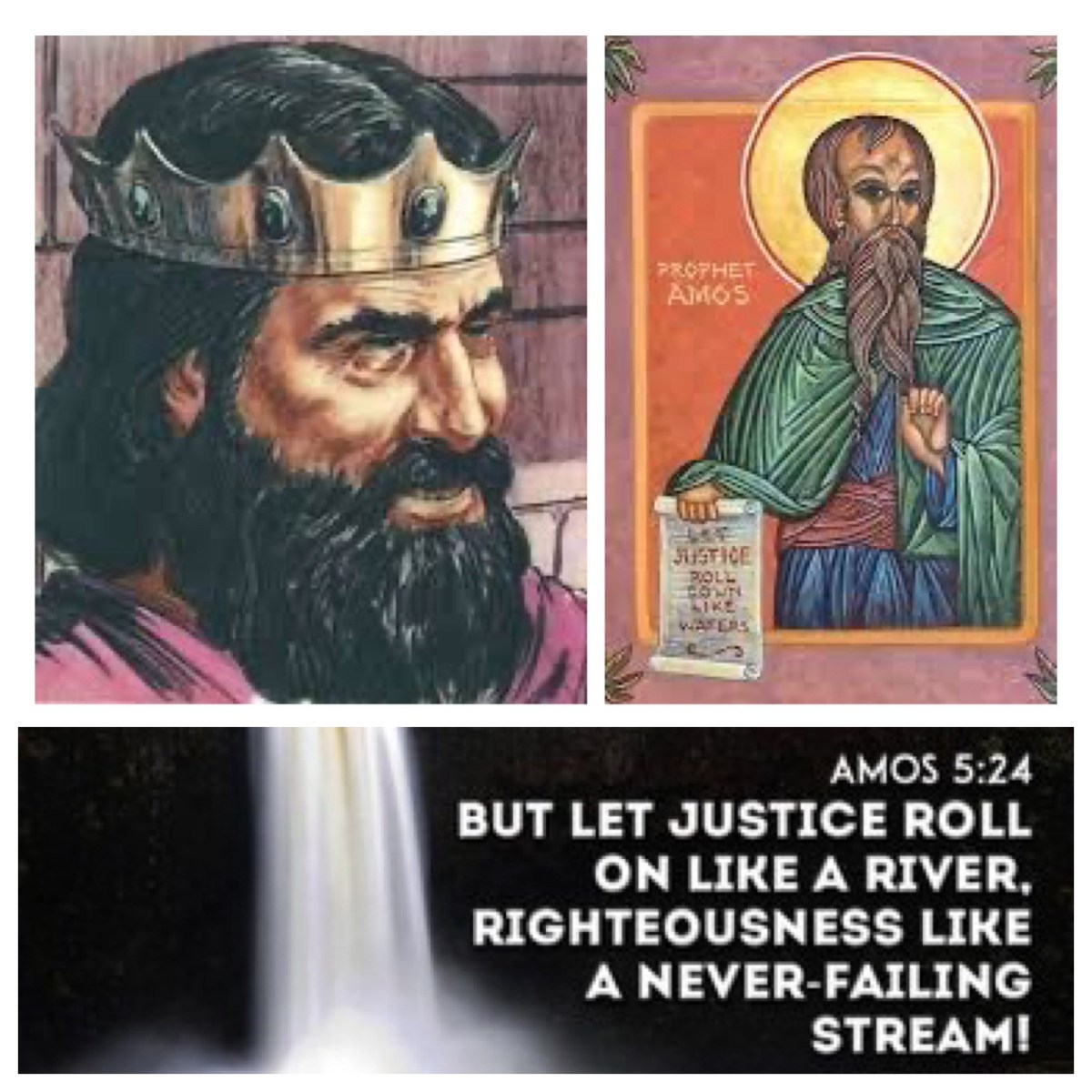
Justice rolling down like waters, righteousness like an ever-flowing stream (Amos 1, 5; Narrative Lectionary for Pentecost 22)

Discussion of the Narrative Lectionary passage from Amos

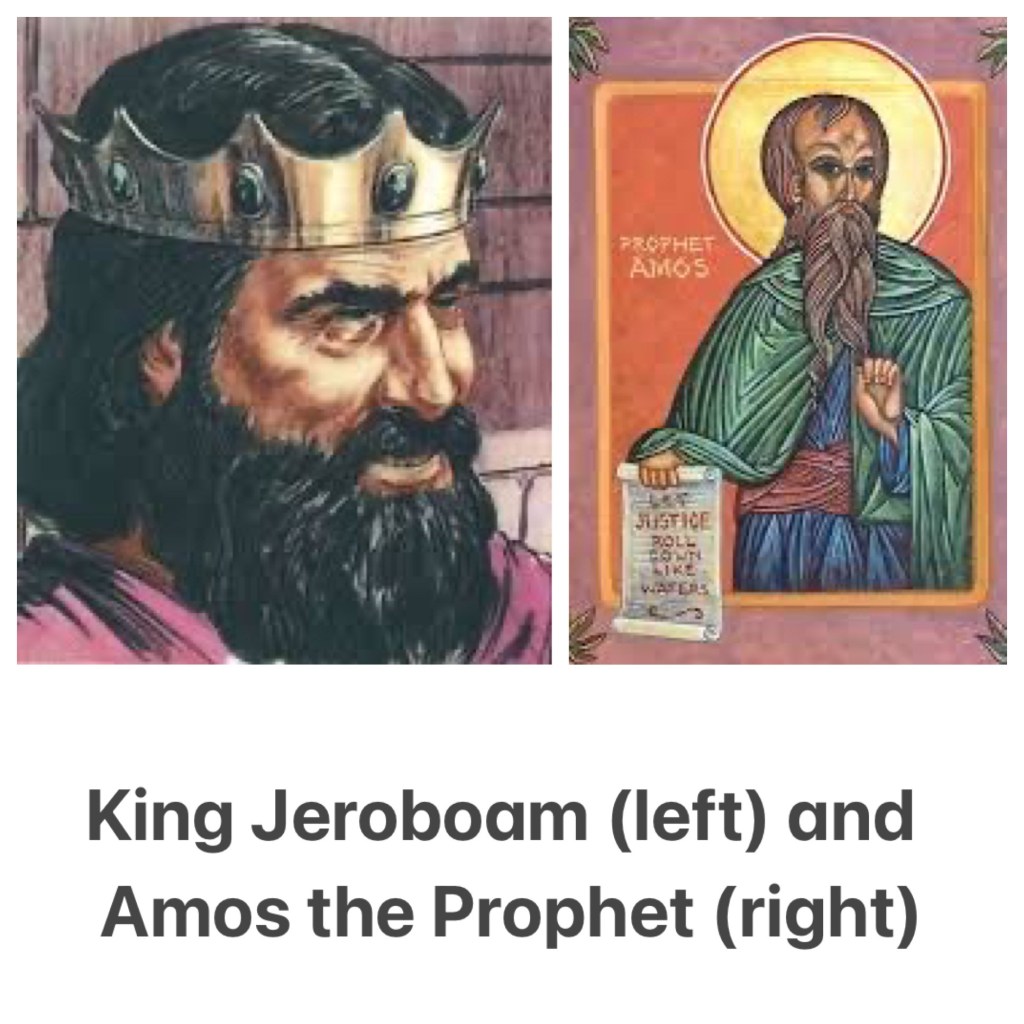
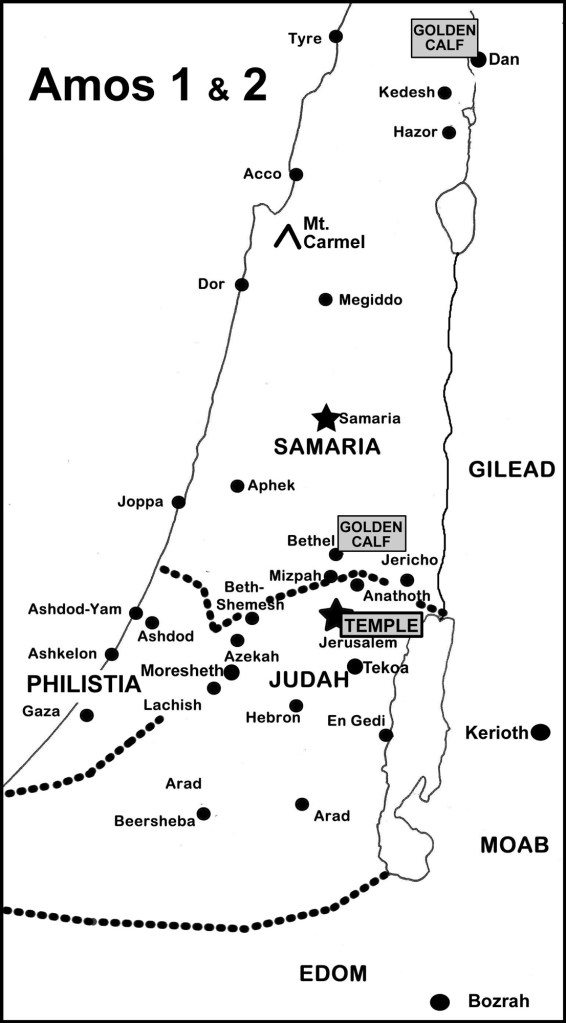
The prophet Amos lived in the northern kingdom of Israel during the reign of Jeroboam II, the thirteenth king of Israel, who reigned for four decades (786–746 BCE; see Amos 7:10). It was a time of prosperity, built on the trading of olive oil and wine with the neighbouring nations of Assyria to the north and Egypt to the south. Jeroboam, however, is remembered as a king who oversaw multiple acts of sinfulness during his years on the throne. 

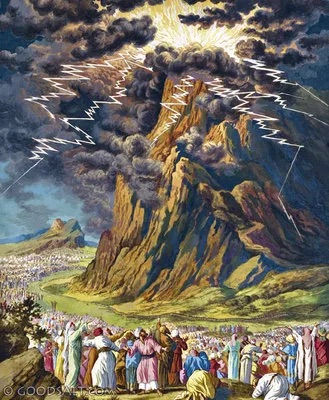
Most infamously, he replicated the sin of Aaron, who oversaw the creation of a golden calf during the time that the people of Israel were awaiting the return of Moses from his time on the top of Mount Sinai (Exod 32). Jeroboam had the city of Shechem built, as a direct challenge to the centrality of Jerusalem; and he had two golden claves built and installed, one at Bethel, the other at Dan (1 Ki 12:25–30). 

For these and other persistent sins during his 22 years as king, reported at 1 Ki 12:31–33 and 13:33–34, Jerobaom incurred the divine wrath, such that God determined that “ the house of Jeroboam [was to be] cut it off and destroyed from the face of the earth” (1 Ki 13:34). Later passages in this book refer to “the sins of Jeroboam” (1 Ki 14:16; 15:30; 16:2, 19, 31; 2 Ki 10:29, 31; 13:2, 6, 11; 14:24; 15:9, 18, 24, 28; 17:22) and “the way of Jeroboam … and the sins that he caused Israel to commit, provoking the Lord, the God of Israel, to anger by their idols” (1 Ki 16:26).

So although the Temple in Jerusalem was the focus for religious activity in the southern kingdom (Judah), Jeroboam had established a number of religious sites in the northern kingdom. Amos warns about the sites at Dan, Bethel, Gilgal and Beersheba (Amos 5:5; 8:14). At these places, not only was the Lord God worshipped, but idolatrous images were used in worship services (5:26). Amos is trenchant in his criticism of the worship that the people offer (5:21–27); embedded in this crisis is a doublet of poetry, words most often associated with Amos: “let justice roll down like waters, and righteousness like an ever-flowing stream” (5:24).

Indeed, it is the perpetration of social inequity within Israel that most causes him to convey the anger of divine displeasure. He admonishes the rich for the way that they mistreat the poor: “they sell the righteous for silver, and the needy for a pair of sandals—they who trample the head of the poor into the dust of the earth and push the afflicted out of the way” (2:6–7); “you trample on the poor and take from them levies of grain” (5:11). 

Again, Amos rails: “you trample on the needy and bring to ruin the poor of the land … buying the poor for silver and the needy for a pair of sandals, and selling the sweepings of the wheat” (8:4, 6). In a biting oracle, he criticises the “cows of Bashan who are on Mount Samaria” for the way they “oppress the poor, crush the needy” (4:1). 

Bashan was the mountainous area to the northeast of Israel (Ps 68:15), which rejoiced in majestic oaks (Isa 2:13) and extensive pasture lands (1 Chron 5:16). The luxurious lifestyle of these people can well be imagined. The reference to “winter houses … summer houses … houses of ivory … and great houses” (3:15) is telling. Luxury and opulence is evident amongst the wealthy.

So,  too, is the description of “those who lie on beds of ivory, and lounge on their couches, and eat lambs from the flock, and calves from the stall; who sing idle songs to the sound of the harp, and like David improvise on instruments of music; who drink wine from bowls, and anoint themselves with the finest oils” (6:4–6). The extravagance of the wealthy is obvious, juxtaposed against the plight of the poor, as we have noted.

Amos indicates that God had given Israel a number of opportunities to repent, “yet you did not return to me” (4:6, 8, 9, 10, 11). God pleads for Israel to “seek me and live” (5:4), “seek the Lord and live” (5:6), “seek good and not evil, that you may live” (5:14).

But this is all in vain; ultimately, the prophet insists, the Lord God will bring on the day of the Lord—a day of “darkness, not light, and gloom with no brightness in it” (5:18–20). God is determined; “the great house shall be shattered to bits, and the little house to pieces” (6:11); later, he insists again, “the dead bodies shall be many, cast out in every place” (8:3). 

In so many reports of prophetic activity, it is justice which is the heart of their message—God’s justice; the justice which God desires for the people of God; the justice which God speaks through the voice of the prophets; the justice that God calls for in Israel; the justice that provides the measure against which Israel will be judged, and saved, or condemned.

Moses himself was charged with ensuring that justice was in place in Israelite society. One story told of the time after the Israelites had escaped from Egypt places Moses as a judge. Whilst in the wilderness of Sin, being visited by his father-in-law Jethro, we learn that “Moses sat as judge for the people, while the people stood around him from morning until evening” (Exod 18:13). 

Noticing that Moses was overwhelmed by the volume of matters requiring adjudgment, Jethro suggested—and Moses adopted—a system whereby appointed men who “judged the people at all times; hard cases they brought to Moses, but any minor case they decided themselves” (Exod 18:14–16). The charge given to these men is clear: they are to give a fair hearing to every member of the community, and they “must not be partial in judging: hear out the small and the great alike; [do] not be intimidated by anyone, for the judgment is God’s” (Deut 1:16–17). 

Prophets coming after Moses thus inherited this responsibility to ensure that justice was upheld within society. The most famous prophetic word of Amos is, as we have noted, his call for “justice and righteousness” (Amos 5:22). Micah asks the question, “what does the Lord require of you but to do justice?” (Mic 6:8), while through the prophet Hosea, the Lord God promises to Israel, “I will take you for my wife in righteousness and in justice, in steadfast love, and in mercy” (Hos 2:19).

Isaiah ends his famous love-song of of the vineyard by declaring that God “expected justice” (Isa 5:7) and he tells the rebellious people of his day, “the Lord is a God of justice; blessed are all those who wait for him” (Isa 30:18). He proclaims God’s judgement on those who “turn aside the needy from justice … and rob the poor of my people, that widows may be your spoil, and that you may make the orphans your prey!” (Isa 10:1–2). 

Other prophets join their voices to Isaiah’s declaration. Ezekiel laments that “the sojourner suffers extortion in your midst; the fatherless and the widow are wronged in you” (Ezek 22:7). Jeremiah encourages the people of Jerusalem with a promise that God will allow them to continue to dwell in their land if they “do not oppress the sojourner, the fatherless, or the widow” (Jer 7:5–7). 

Second Isaiah foresees that the coming Servant “will bring forth justice to the nations” (Isa 42:1) and knows that God’s justice will be “a light to the peoples” (Isa 51:4). The words of Third Isaiah continue in this prophetic stream, for this anonymous prophet begins his words with a direct declaration, “maintain justice, and do what is right” (Isa 56:1). He goes on to articulate his mission as being “to bring good news to the oppressed, to bind up the brokenhearted, to proclaim liberty to the captives, and release to the prisoners” (Isa 61:1), thereby demonstrating that “I the Lord love justice” (Isa 62:8).

This commitment of Amos and many of the prophets resonates also with the psalmist, who praises “the God of Jacob … who executes justice for the oppressed; who gives food to the hungry … [who] sets the prisoners free, [who] opens the eyes of the blind, [who] lifts up those who are bowed down [and] loves the righteous, [who] watches over the strangers [and] upholds the orphan and the widow” (Ps 146:5, 7–9). See 

https://johntsquires.com/2023/05/14/father-of-orphans-and-protector-of-widows-psalm-68-easter-7a/

Featured

On remembering, celebrating, and contextualising (Halloween, All Saints, and All Souls) … and Samhain.

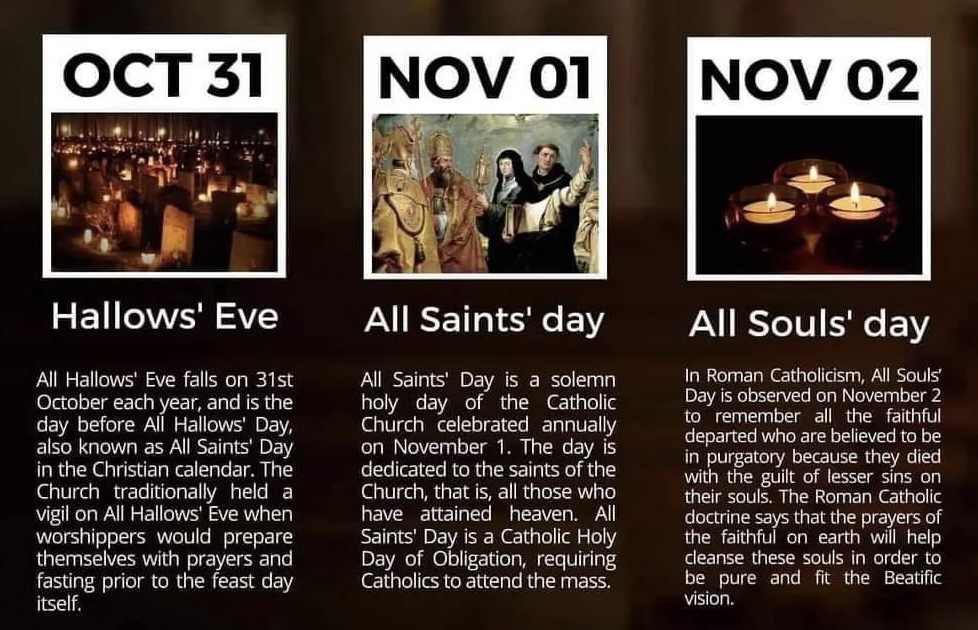
Today, 31 October, begins a special sequence of days, which in traditional Roman Catholic piety form a triduum (simply meaning, “three days”). There is one set of three days that is very well-known: the Great Three Days of Easter (Good Friday—Holy Saturday—Easter Sunday). This current sequence of three days is the “other” three days—standing in the shadow of those other three days. Whilst the three days of Easter celebrate new life (the Triduum of Life), this “other” set of three days has been called the Triduum of Death.

Why, death? Well, the explanation lies in the three particular days that are included: All Hallows’ Eve, All Saints’ Day, and All Souls’ Day. All three have to do with life beyond this life as we know it, in one form or another—that is, they are dealing with death and those who have died.

All Hallows’ Eve is best known to us as Halloween; it falls, every year, on 31 October, round about six months after Easter Sunday. Unlike Easter, however, this is not a “moveable feast”, following the pattern of the lunar cycle (which does not lineup with our solar-based calendar). Halloween falls, each and every year, on the very last day of October.

It needs to be said that the contemporary commercialised celebration of Halloween is a long way from its origins in medieval Christian piety. And so it also needs to be emphasised that Halloween is not a pagan festival. It has its origins deep in Christian history and tradition.

The English word ‘Halloween’ is a shortening of All Hallows’ Eve(n), which long ago began this series of three holy days, designed to enable the faithful to remember the saints of old (All Saints’ Day on 1 November) and the faithful who have died, “the souls of the faithful departed” (All Souls’ Day on 2 November). These three days, Halloween—All Saints’ Day—All Souls’ Day, belong together—as the “other” Christian triduum (like Good Friday—Holy Saturday—Easter Sunday).

How long ago this sequence began is not clear, as local customs varied. There is evidence that some days had been identified as the time to remember individual saints or groups of saints in some locations in the 7th to 9th centuries. By around 800, churches in Northumbria and Ireland apparently remembered “all saints” on 1 November.

In the online resources of the Northumbria Community, there is a good statement about the significance of this time: “The old belief was that there was danger and vulnerability at this time of transition, which was neither in one year nor the next. Spiritual barriers could be dissolved. Inevitably, looking back led to the remembrance of those who had died and gone before; and, as the dark, cold days were awaited, protection was sought against the evil spirits that were bound to be abroad until spring returned. These old beliefs were never quite eradicated by the coming of Christianity, but lingered as a persistent superstition, a residual folk memory.” See

https://www.northumbriacommunity.org/saints/celtic-new-year-all-hallows-eve-and-all-saints-tide-october-31stnovember-1st/

By the 12th century, All Saints’ and All Souls’ had become holy days of obligation in the medieval churches, and various rituals developed for each day. Baking and sharing cakes for the souls of baptised people is evidenced in some European countries in the 15th century; this may be the origins of trick-or-treat. Lighting candles in homes on these days was done in Ireland in the 19th century—another element which is reflected in current Halloween practices.

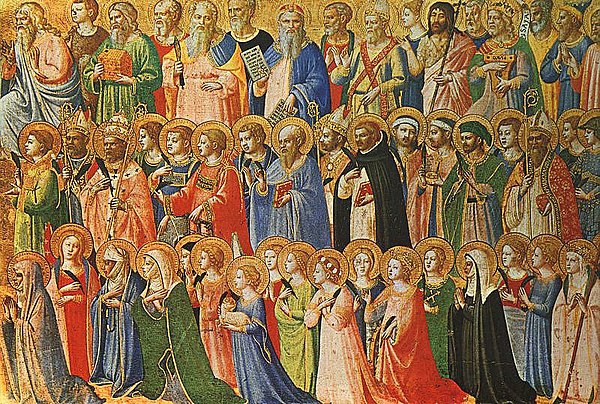
The Forerunners of Christ with Saints and Martyrs
by Fra Angelico (1395–1455)

I have had the experience, in churches today, of being caught up in a grand worship experience for All Saints’ Day, the middle of the three days (a number of these were memorable experiences where my wife Elizabeth Raine created and presided at the liturgy). We surrounded ourselves with the memory of saints of ancient and more recent times, and recalled with gratitude saints of the present times, particularly those important to the immediate locality or congregation.

In those times of worship, we joined in singing “for all the saints who from their labour rest—alleluia! alleluia!” (from a hymn by William Walsham How), and then “a world without saints forgets how to praise; in loving, in living, they prove it is true— their way of self-giving, Lord, leads us to you” (from a hymn by Jacob Friedrich).

It is sometimes claimed that Halloween originated as a response to existing pagan rituals—but we need some considered nuance as we reflect on this. A number of the current practices involved in Halloween certainly do show the strong influence of folk customs with pagan origins in a number of Celtic countries.

This is especially so in relation to Samhain in Ireland, marking the start of winter with a festival from sundown on 31 October to sundown on 1 November. This was a liminal time when the boundary between this world and the world beyond was thinned; at this time, it was thought, the spirits could more easily enter this world. The connection with the Christian days of All Saints’ and All Souls’ is thus clear to see.

However, this does not mean that we can simply (and simplistically) conclude that these days have pagan origins; rather, what we ought to recognise is that, like other Christian festivals, there has been a blurring of customs and practices and a linking of Christian patterns with pagan festivities.

This blurring and linking is a natural tendency that has taken place time after time in place after place. This is what historians and scholars of religion call syncretism—the merging and assimilating of traditions that were originally discrete, with separate origins. It can also be called eclecticism; but I prefer to see this more accurately as contextualisation, the shaping of a tradition in the light of the immediate social and cultural context.

For that is what Halloween did in the mists of the time when it was being created and shaped—existing practices of pagan neighbours were co-opted and adapted by faithful Christians. Then, the practices were extended with the introduction of days to remember All Saints and All Souls. (The same dynamic was at work in the ways that Easter was shaped, drawing on northern hemisphere Spring practices, and the way that Christmas also developed, drawing on northern hemisphere Winter Solstice practices—but these are stories for other times of the year!)

The same perspective can be applied to the ways that Halloween, in particular, is commemorated each year. Lamenting the commercialisation of a festival that was originally Christian is a poor strategy. (And, as noted, this commercialisation has already happened with Christmas—which is now peak selling period for so many businesses and peak holiday period for many families—and in a different way with Easter—which is now a second peak holiday period for so many families.)

This kind of commercialisation (Jack-o’-Lantern pumpkins, bright lanterns, all manner of costumes, the proliferation of sweets for Halloween, trick-or-treat, and more) is now well underway with Halloween. We won’t turn the clock back. People of faith can simply hold to Christian understandings and practices in the midst of the increasing changes being made in broader society. As we observe what is taking place around us, the best strategy, surely, is to inform ourselves of the origins of, and reasons for, the season, and to reflect on those matters that take us to the heart of our faith.

*****

To close, here is my poetic musing on this season in the life of the church:

Every year in the church we remember,

we remember the saints of old;

those who kept silence, those who spoke clearly,

monks and ascetics, sisters and nurses,

teachers and preachers, writers and poets,

mystics and prophets, all serving faithfully;

saints who were blessed in their lives,

saints who blessed others through their lives.

Every year in the church we remember,

we remember those souls now departed;

family, friends, acquaintances, strangers,

known and remembered, hallowed in death.

To commemorate all the faithful departed,

we mark this time as All Souls’ Day.

And the evening before All Saints’ Day,

it is best known as “Halloween”.

Hallowed, sanctified, sainted in memory,

recalled in remembrance, all saints and all souls.

Once in each year, that is our focus;

once in each year, year after year.

Featured

“We thank you for the ministry you have exercised”. A service of Closure of Ministry.

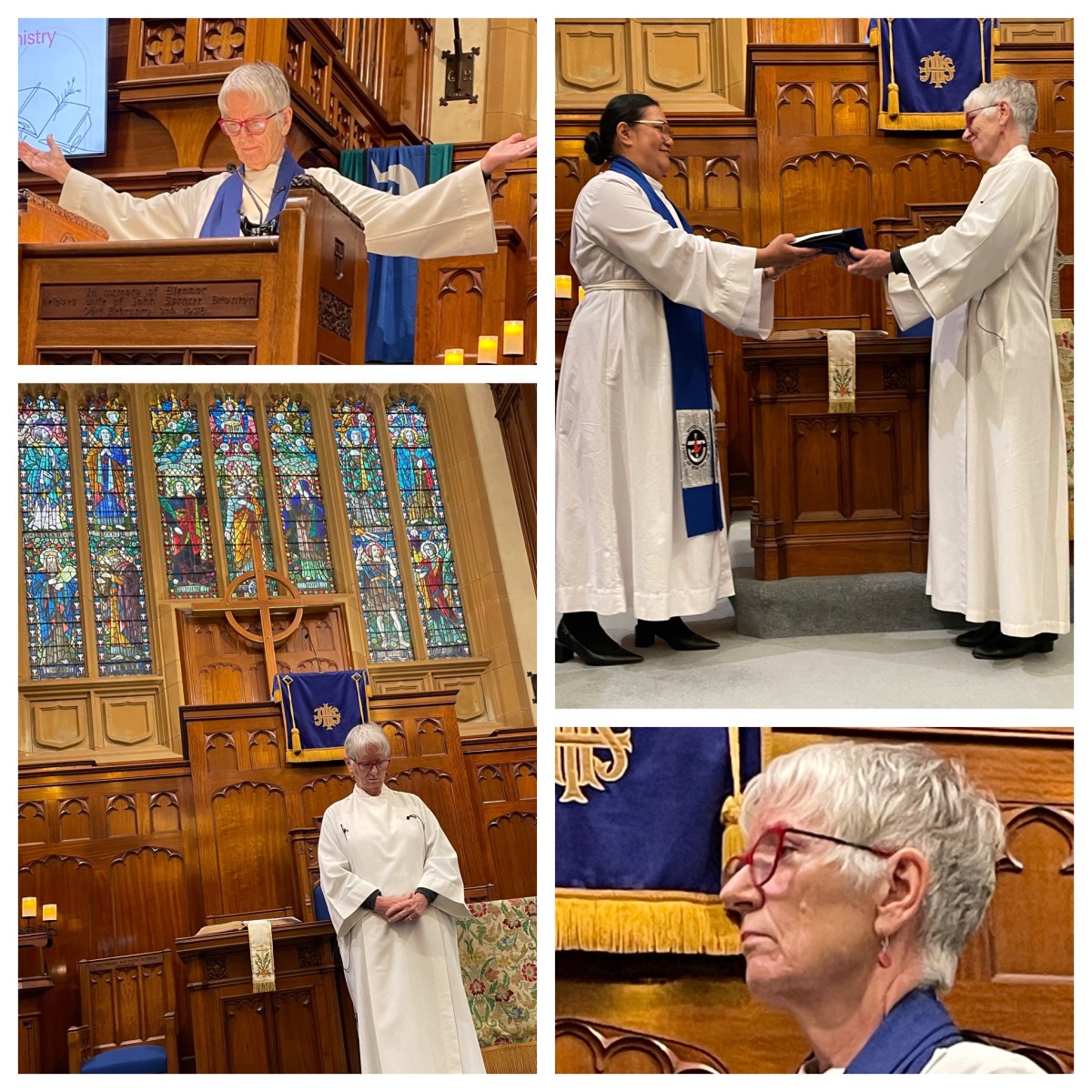
Elizabeth and I have just attended the Closure of Ministry service at which the Rev. Jane Fry concluded her years of service as the Secretary of the Synod of NSW.ACT—or, as Elizabeth referred to it, the Synod of the ACT and NSW (ever loyal to our time in the Canberra Region Presbytery!)

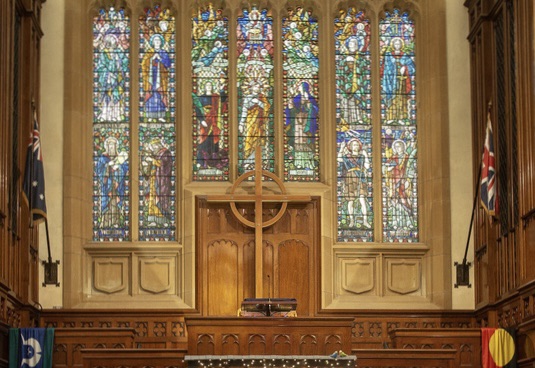
It was held in the impressive surroundings, dripping with signs and symbols of Christendom, in St Stephen’s Uniting Church in Macquarie Street, Sydney, directly opposite the NSW Houses of Parliament. The team from St Stephens, under the wise and gentle leadership of Ken Day, did a fine job in hosting the crowd of people who came for this important occasion.

Banks of wooden pews filled the large floor area of the church, with wooden panelling running around the walls. At the front, above the high central (typically Presbyterian) pulpit, stained glass windows reached up to the high vaulted ceiling—including various Hebrew prophets and early Christian saints (including, of course, St Stephen himself). Two flags from the glory days of Church and Empire hung high at the front—the Australian Blue Ensign on the left, the British Union Jack on the right—and the respective flags of Aboriginal and Torres Strait Islanders were draped over the railings running out from the high pulpit. Rich symbolism abounded.

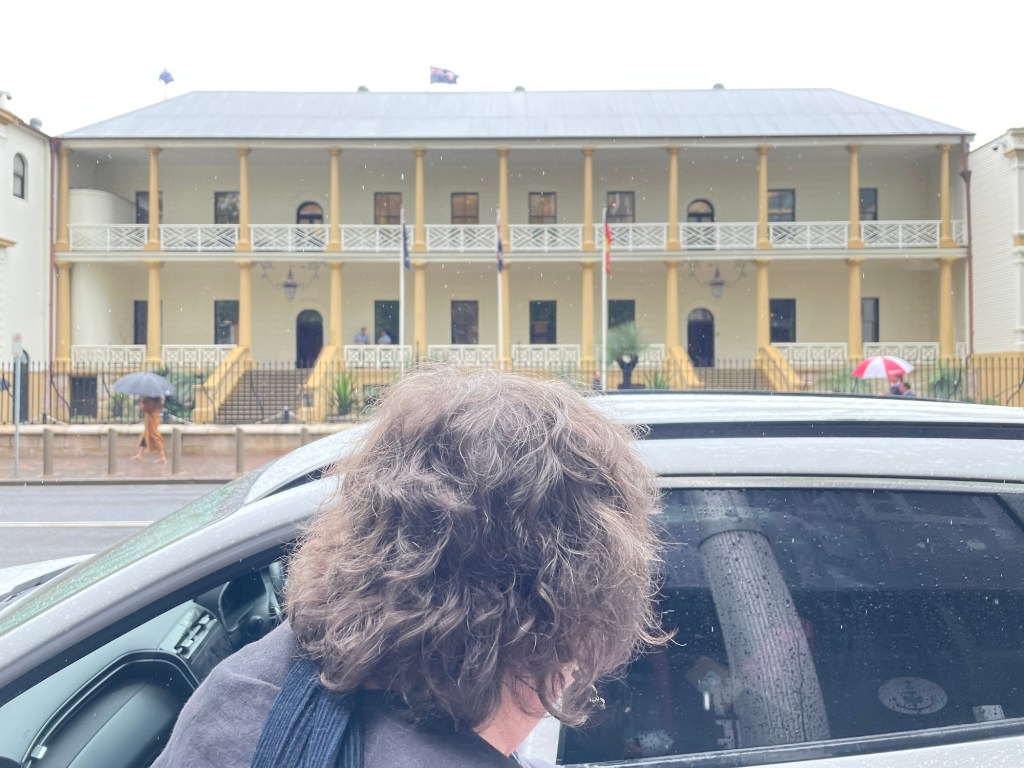
Our venturing all the way into the Sydney CBD for this event (170km, but who’s counting?) meant, on the one hand, that we had to endure the thick, turgid, stress-evoking traffic snarls of Sydney; nothing can be a stronger signal to Elizabeth and myself that we have made the right decision to retire in rural Dungog! Yet this visit also offered the welcome opportunity to celebrate and express gratitude for the gifts Jane has brought to this crucial leadership role, and to meet up with many people with faces and names familiar from past years (or decades)! It was good to reconnect in person with many who for some time now have been “Facebook friends”. The bonds of years past hold strong.

There were multiple conversations in the church’s Ferguson Hall in the time after worship, as we ate, drank, and caught up, under the watchful eye of the Rev. John Ferguson, after whom the hall is named. Ferguson was minister of St Stephen’s from 1894 to 1925, including a term as Moderator-General of the Presbyterian Church in Australia commencing in 1909. 

Alan Dougan writes in the Australian Dictionary of Biography that “his inaugural address, published as The Economic Value of the Gospel, raised a storm in Melbourne and praise from trade union leaders. Billy Hughes said ‘The new moderator preaches a gospel all sufficient, all powerful. He grapples with the problems of poverty … he insists on justice being done, though the heavens fall. I advise every citizen to read every word of it’.”

Ferguson was a most enlightened minister, it would seem; apparently he sought an audience with the Pope on a visit to Rome in 1914, “an action that evoked much hostile criticism in Sydney”, says Dougan. The tribalism in Sydney’s ecclesial life, clearly evident in this reaction, is sadly still alive and well in this city, where sectarian fundamentalism (“We Know The Truth, and Only We Have It!”) has an iron grip in some churches. Not in the Uniting Church, however!

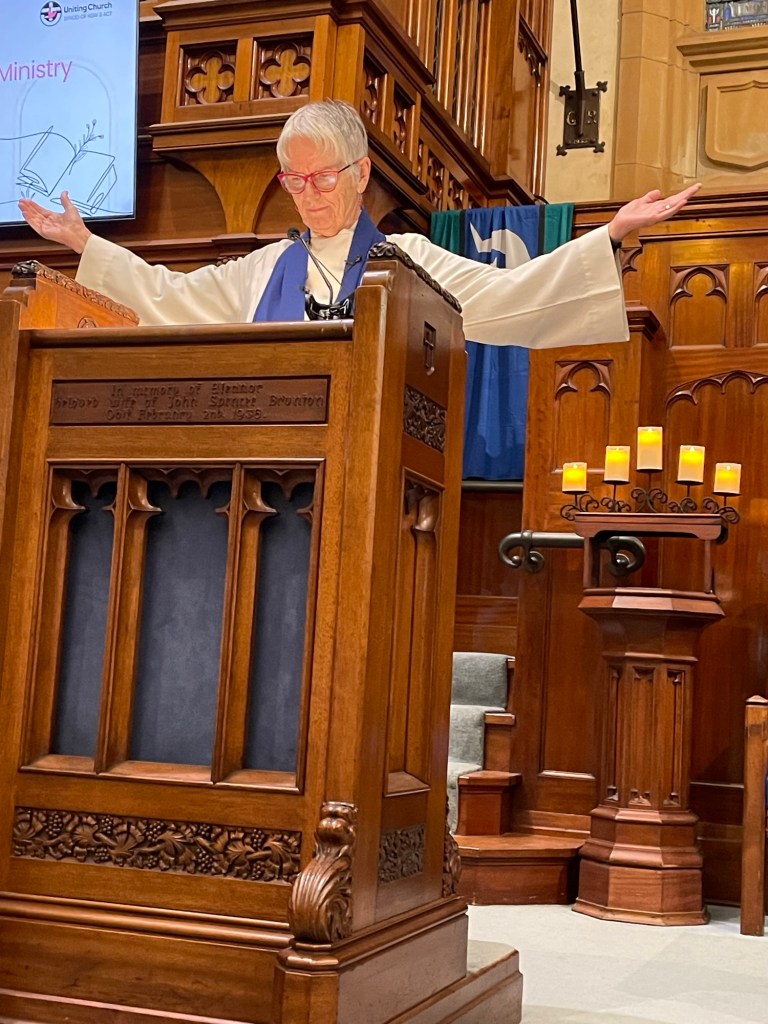
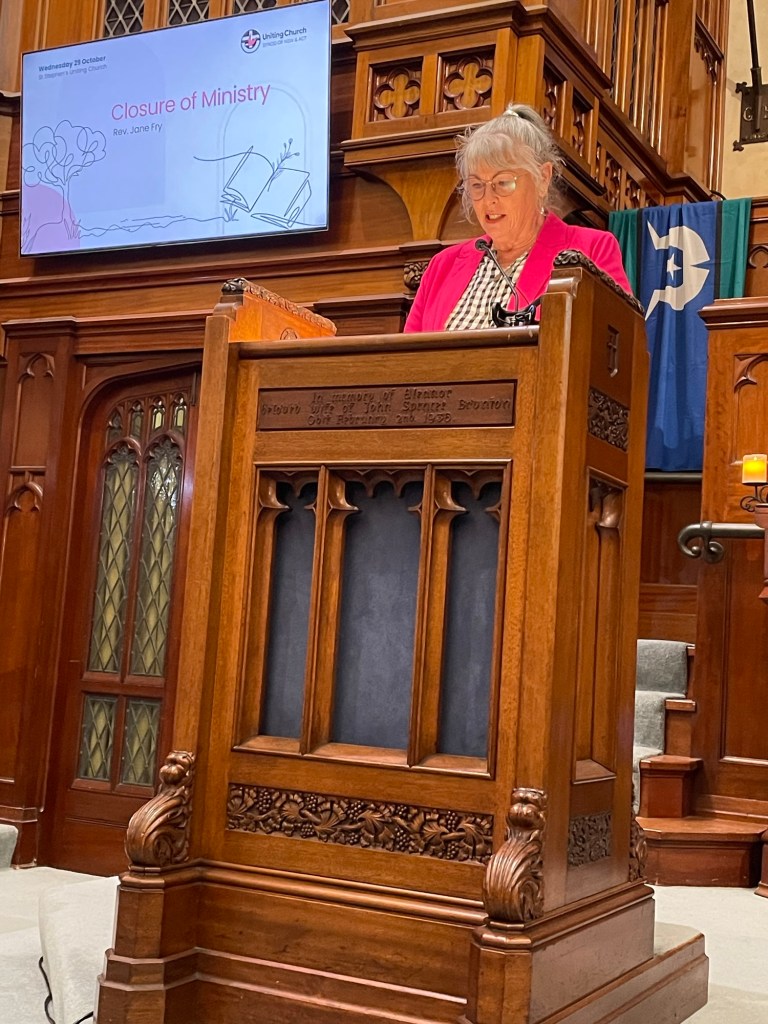
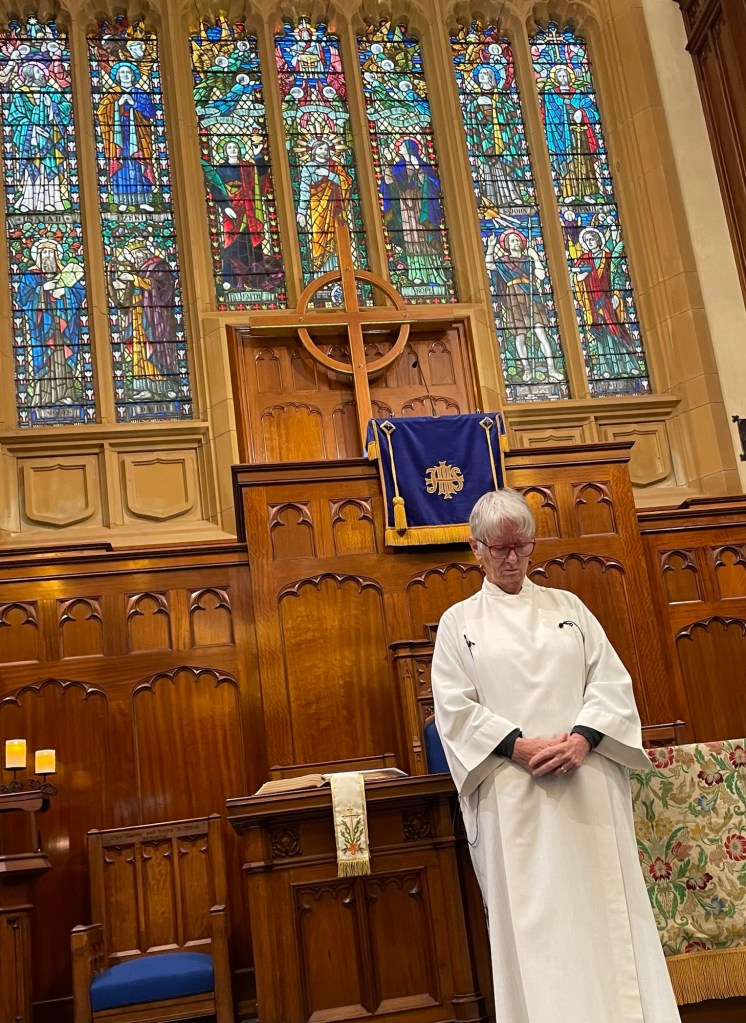
Jane Fry calling the people to worship

The church on this occasion held a full congregation when the service itself began, with Jane in characteristic pose, arms outstretched, as she called the people to worship: “Look! Listen!”, with a string of appropriate scripture sentence after each iteration. Nathan Tyson then acknowledged Country, giving thanks for the First Peoples who have cared for the land for millennia, and offering a gracious and warm welcome to the many Second Peoples (of multiple cultural heritages) who had gathered for the occasion.

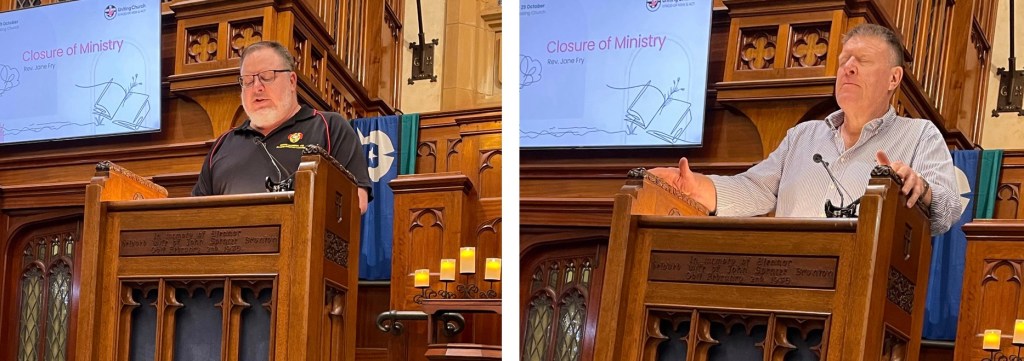
Nathan Tyson (left), Simon Hansford (right)

Past Moderator Simon Hansford brought words of confession (“we speak words of cynicism and anger; for this we are sorry …”) before offering an Assurance of God’s pardon, to which we replied, “thanks be to God”. Jane and Simon had worked together as a fine set of leaders of the Synod team for six years, through the difficulties and challenges of the COVID pandemic. It was good to have his clarity of thought in these prayers of confession.

We sang a number of good hymns, including a favourite one written by Charles Wesley “a long time ago”, as wry Jane’s annotation in the order of service observed. How many people were like me: enjoying the melody and harmony of “And can it be” whilst inwardly recoiling at the blood, wrath, and divine vengeance permeating the hymn, before divine grace eventually shone through? 

Yes, these words show that it was indeed “a long time ago” that such theology reigned supreme; fortunately within the Uniting Church we can see that “the Lord has yet more light and truth to break forth from his word” (in the words of John Robinson, spoken to the Pilgrims in 1620 as they departed on their journey to “the new world” in 1620, and then include in a hymn written by British Congregationalist George Rawson in  the 1850s).

So it is that, as a church, we do indeed rejoice in the affirmation that we “remain open to constant reform under [God’s] Word” and that as “a pilgrim people, always on the way towards a promised goal” we are able to delve into our scripture, traditions, and heritage, “give thanks for the knowledge of God’s ways with humanity which are open to an informed faith”, “sharpen its understanding of the will and purpose of God by contact with contemporary thought”, and stand “ready when occasion demands to confess the Lord in fresh words and deeds”. (Excerpts from the UCA Basis of Union)

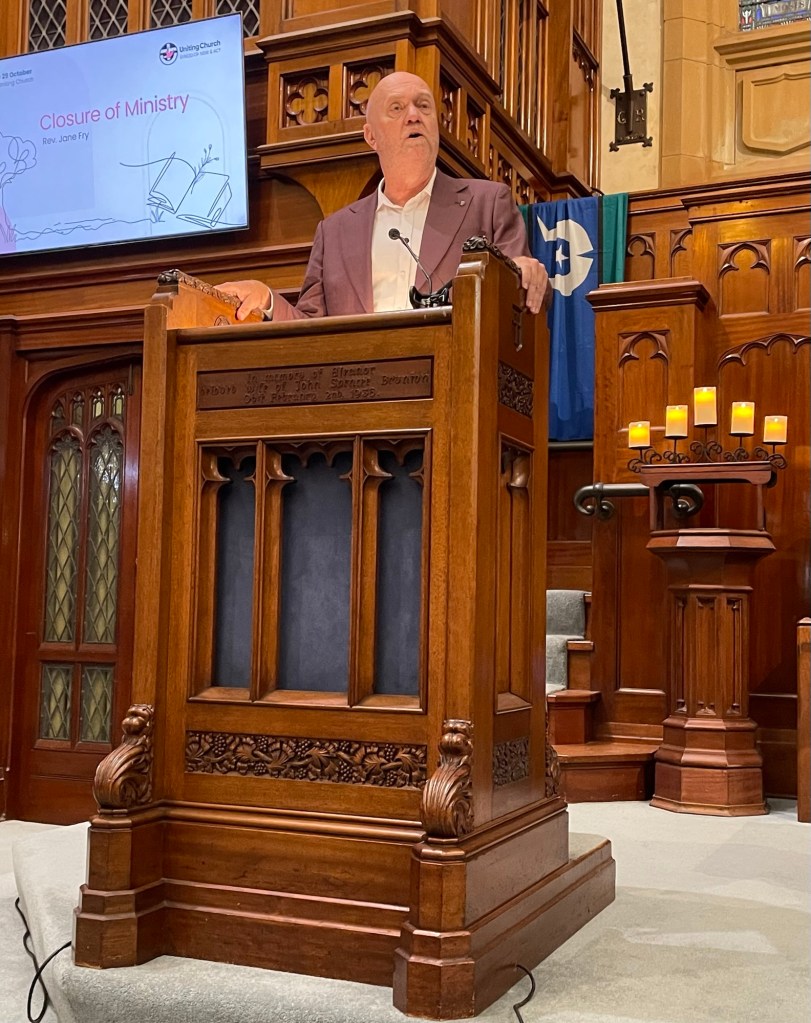
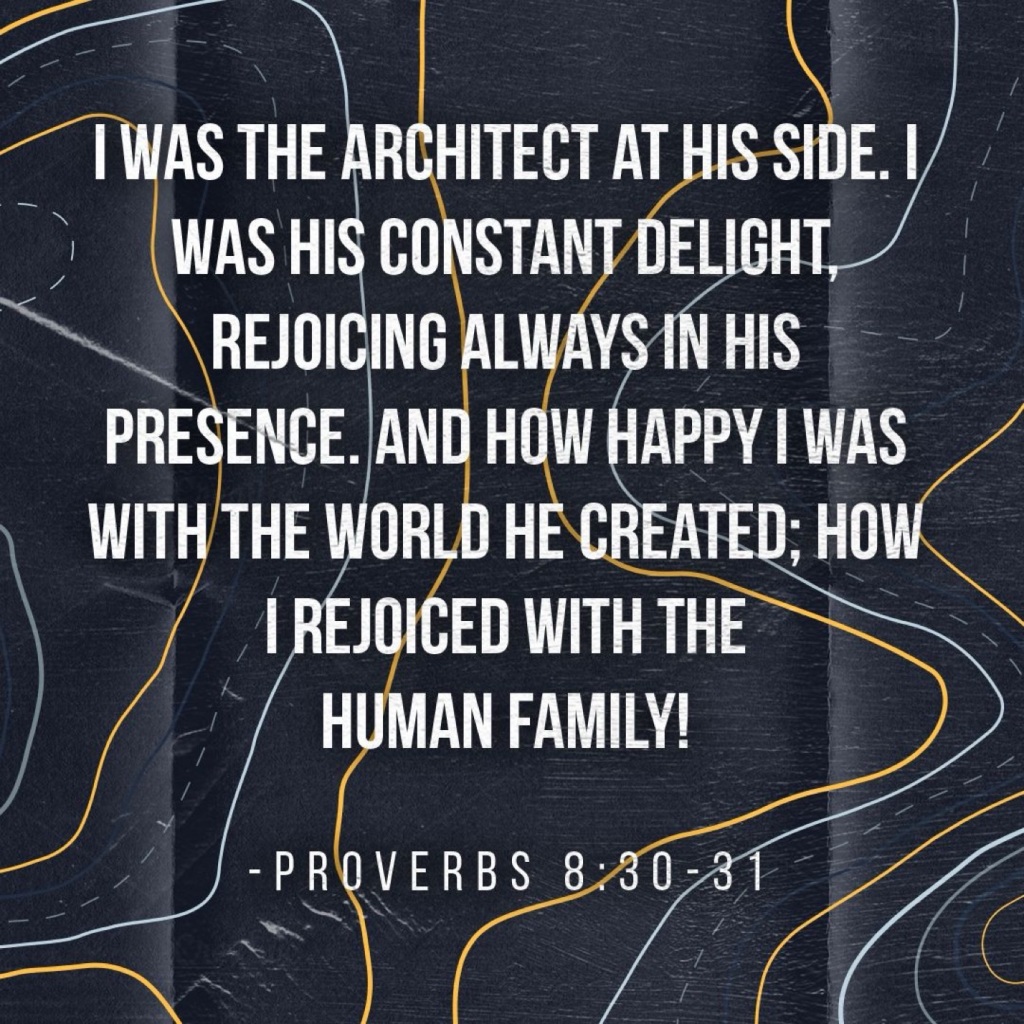
Neale Roberts of Uniting brought two readings from scripture, delivered with eloquence, nuance, and expression. From the scriptures we share with Jewish people he read a passage celebrating Wisdom: “When he marked out the foundations of the earth, I was there, beside him … now, then, listen to me” (Proverbs 8).

Neale Roberts

And then he read words attributed to Jesus: “do not worry about your life … look at the birds of the air … consider the lilies of the field … do not worry about tomorrow, for tomorrow will bring worries of its own; today’s trouble is enough for today”. As Neale observed to me afterwards, “I am sure Jane picked that passage for its final words, as a word to the church today”. They do indeed encapsulate the deep faith and strong hope that Jane has always exuded.

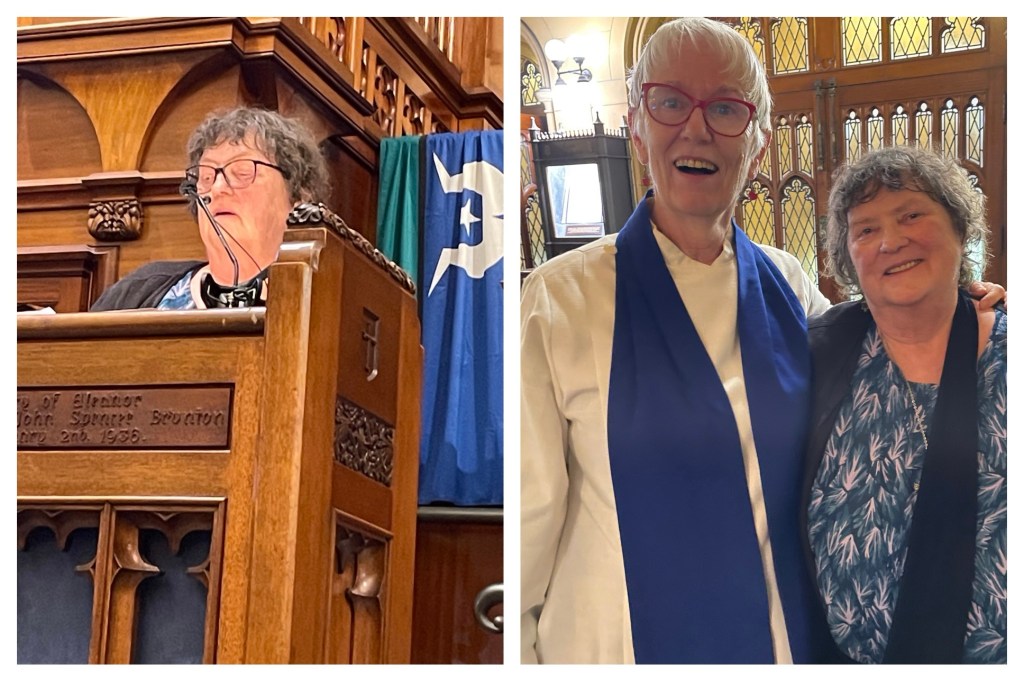
Elizabeth Raine, friend and colleague of Jane since they first met as theological students at UTC in the early 1990s, preached the sermon. Indeed, as a personal aside, I was struck the fact that all who offered leadership in this service, apart from Nathan Tyson, had studied theology and undergone formation for ministry at UTC during the 1990s; perhaps a fine testament to the grounding they had received then—more certainly, a clear indicator of the qualities and giftedness that each person has brought to ministry over the ensuing decades. The church has benefitted much from the calling to which each of them has responded.

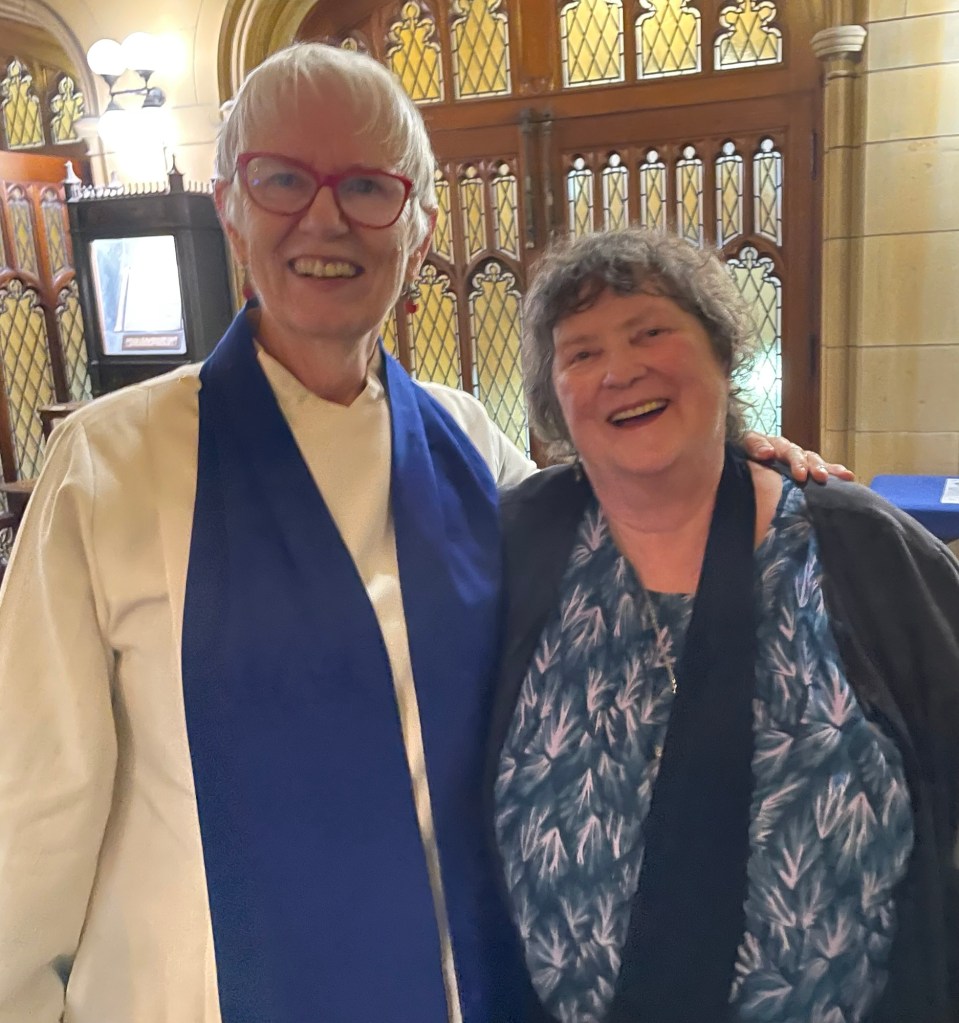
Elizabeth preaching (left); Elizabeth and Jane (right)

Elizabeth spoke about the figure of Wisdom who had been the focus of the Proverbs reading. She warned the congregation, “I told Jane I would be feral and unfiltered … and Jane said to me, ‘go for it!’” And so she did. You can read the full sermon via the link at the end of the blog, but here are some choice extracts: “Wisdom calls us on an unexpected journey … she transgresses male boundaries, standing at the street corner, raising her voice in public places … but Wisdom has been grafted on to Jesus by the early church scholars … they were consumed by their categories and systems … we emerged with a transgendered Holy Spirit … a meek, obedient virgin-mother became the model for women … the figure of Wisdom has been overshadowed.”

Elizabeth offered incisive exegetical insights into the riches that the poetic passage in Proverbs contains. concluded that Wisdom speaks to the church today; “she offers us a relational faith, listening to others, working together for the common good … anyone, but anyone, can acquire what she offers … she would undoubtedly value the invitation of Jesus to his disciples to ‘fish on the other side of the boat’, to be open to new possibilities, not to be bound to practices of the past, and to hold to a relational, experimental theology”. “How will we as a church relate to Wisdom?” she concluded.

Lady Wisdom, from the “Women of the Bible” series
by Sara Beth Baca; https://www.sarahbethart.com

It was clear from the many expressions of thanks—mostly, not entirely, from women in the congregation—that Elizabeth’s “unfiltered” feminist exposition of this crucial passage had struck a very positive chord for many who were present. “We need to hear this message, we need to hear your voice” was a regular refrain. Preachers and teachers in the church should take note; there is, within informed Uniting Church people, a deep appetite for substantive biblical preaching with a clear, prophetic, feminist hermeneutic that speaks directly into our situation today!

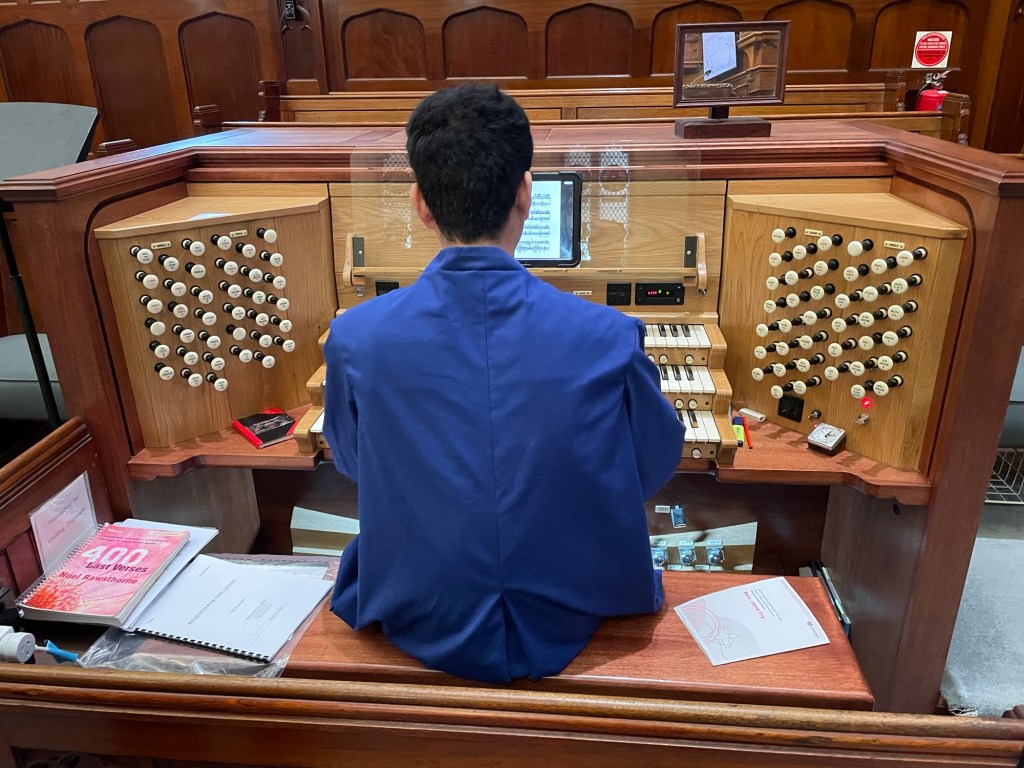
After joining in an Affirmation of Faith, we enjoyed the inspiring playing of the Stephens’ Organ Scholar, Andrei Hadap (pictured in action above), as we meditated on the delightful words of a hymn by Thomas Troeger: “how shall we love this heart-strong God who gives us everything, whose ways to us are strange and odd: what can we give or bring?” Associate Secretary of Synod Bronwyn Murphy then led the prayers of the people to this “heart-strong God”: “so much pain held within one small planet … so hear us, O God, as we pray for your earth … for all people, gathered within your welcome … for the Uniting Church, a body in transition … and for Jane and her family”.

Bron Murphy prays

Jane then spoke in her characteristic direct and challenging style. She referred to the “nine years of drama, change, and engagement across the church”. She is, she confessed (as if we needed reminding!) “a sceptical person, not an early adopter [who] did not expect the recent significant decisions of Synod to have been adopted!” Her reflection at this point was, once again, characteristically Jane; she saw this as an indication that “God is not done with the Uniting Church”.

She reminded all present that “the change [we have] initiated is just housekeeping. Synod is administrative, Presbytery has an oversight role, but the Congregation is where faith is nurtured”. She emphasised that the church is called to “nurture faith, form discipleship, and welcome all: these are the critical elements of being the church.” Her final word exuding the hope she has always held over the years in fulfilling her leadership roles in Congregation, Presbytery, and Synod: “neglecting the disciplines of faith is incredibly dangerous: prayer is the foundation. Letters us remember: ‘God has got this’”.

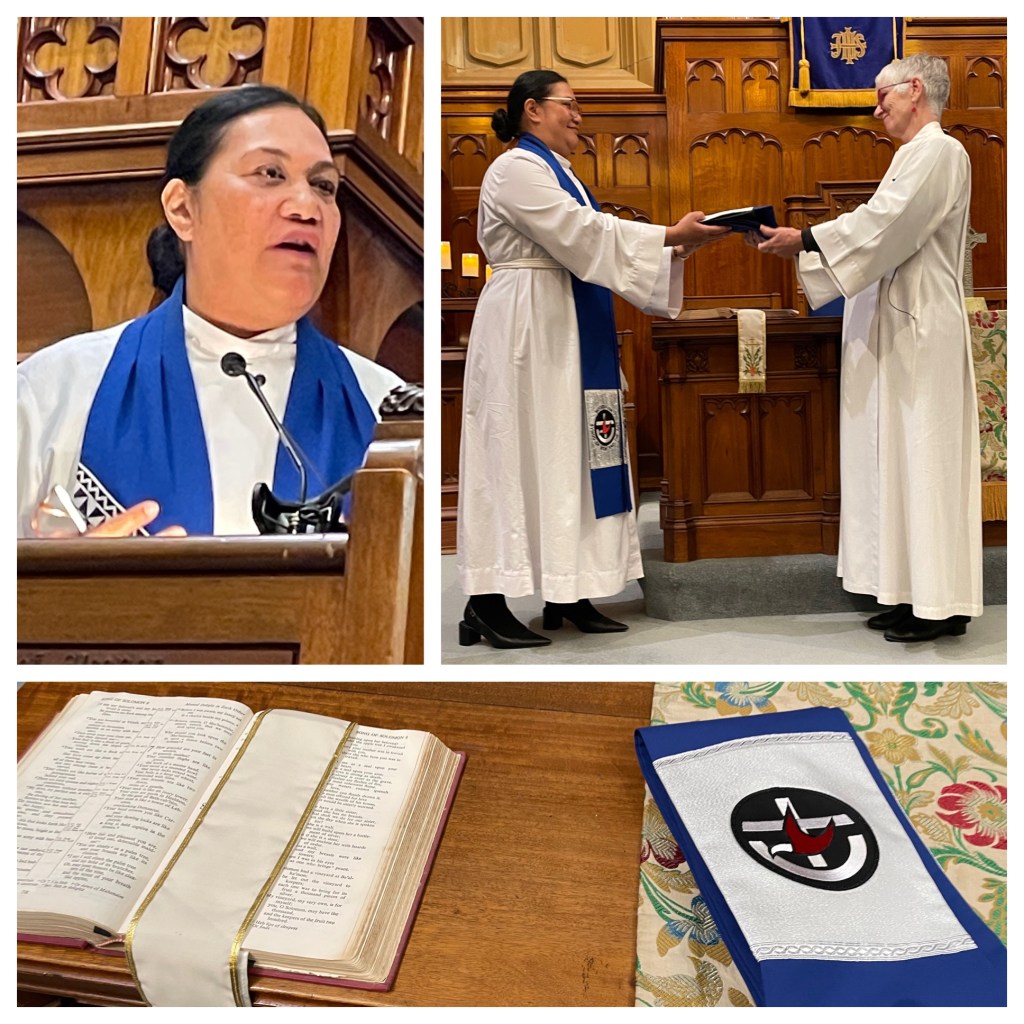
The Moderator receives from Jane the stole which symbolized
her ministry as Secretary of Synod

The Moderator, Mata Havea Hilau, then led the formal closure of ministry for Jane, offering the thanks of all present in the worship space and those participating via the livestream, and praying for Jane, “May the God who rested on the seventh day to delight in all the creation hold you in her arms as you have held this work, celebrate with us the life that takes life from you, and give you grace to let go into a new freedom”; to which all the people responded: Amen!

In the Ferguson Hall after the service, in the midst of the plethora of conversations filling the space with a cascade of sounds, Peter Walker, the incoming Secretary of Synod and former Principal of UTC (and yet another graduate of UTC from the 1990s!) presided over a brief time of formality. Jane expressed her thanks to many people who had worked alongside her and encouraged her over the past nine years. She was given a gift of a lovely bunch of native flowers.

And then the crowd dispersed, stepping back into the rain, the traffic, the chaos of everyday life … … …

*****

You can read the full text of Elizabeth’s sermon at

Featured

Happy is the one who listens to me, watching daily at my gates, waiting beside my doors; for whoever finds me finds life!

A sermon on Wisdom in Proverbs 8

A sermon on Proverbs 8: 22–36, preached by the Rev. Elizabeth Raine in St Stephen’s Uniting Church, Sydney, at a service of Closure of Ministry for the Rev. Jane Fry, outgoing Secretary of the Synod of NSW.ACT, on Wednesday 29 October 2025.

When Jane asked me to preach at this event, I was very surprised. I expected that a former Moderator or Board Chair would be invited to preach at such an important event as the General Secretary of the NSW/ACT Synod retiring. But here I am!

Jane (left), Elizabeth (right)

It is true that Jane and I go back many years, as we went through UTC together, bonded by the attitude of the sexist male colleagues who accused us from everything from ‘sleeping our way to high distinctions’ to being ‘feminists’, like it was some sort of virus. I confess this rather patriarchal attitude has informed this sermon, though it is also true that so many more women now occupy prominent positions in our church, which is a very good thing.

I did warn her that I was unsettling, potentially feral and capable of saying things that were unfiltered in my sermons. Was she sure she wanted to risk such a this? Apparently she did, so here I am.

I was grateful to Jane for her friendship and support then, and I am grateful to her now for her presence as General Secretary over the last 9 years. She has approached this position as she does most things, with integrity, thoughtfulness and a straightforward approach to dealing with what I call ‘faffing around’. Jane has a deep and abiding love for the church and hopes only for its successful transition into the future, and I wish her well for her future in retirement.

Wisdom, from the “Women of the Bible” series by Sarah Beth Baca; https://www.sarahbethart.com/products/p/full-image-women-of-the-bible

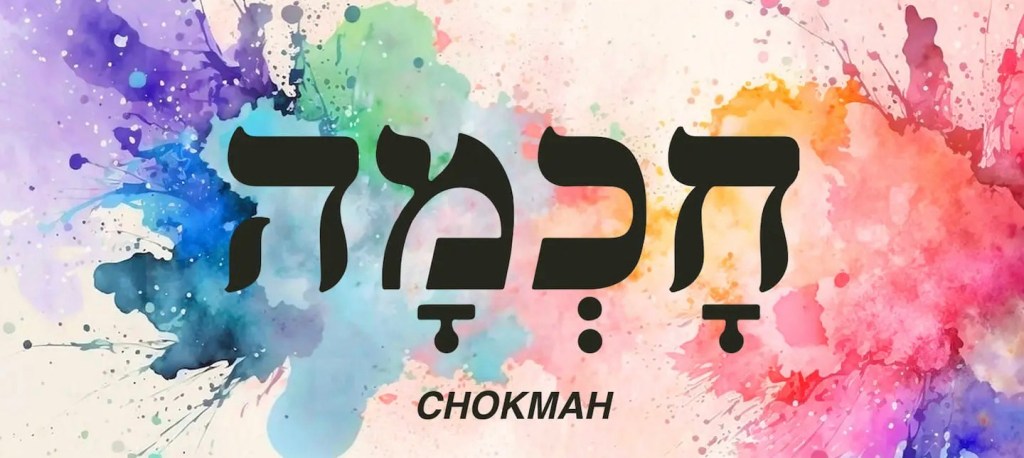
The book of Proverbs from which one of the readings we heard is drawn tells us a lot about Wisdom (hochma in Hebrew). She is a central character in chapters 1–9, and she appears as a mystical feminine aspect of God. “Lady Wisdom”, as she is known, is a central character in many chapters of Proverbs, and those who know her are seen asrighteous people. She calls to us and invites us on an unexpected journey. She is offered as a role model for us, her teachings are a template for life, and she a pioneer who opens up a pathway to faith and obedience.

Scholars have debated how the personification of Wisdom should be interpreted, especially as Wisdom is stated to be the first creation of God (“the Lord created me at the beginning of his work, the first of his acts of long ago”, Prov 8:22) and is involved in the creation process itself (“the Lord by wisdom founded the earth”, Prov 3:19). Is wisdom meant to be a specific aspect of God or even a separate being from God? Or should all such language be taken as mere metaphor?

She has been described in many ways—as an aspect of God, as a divine entity existing in her own right, even as something approaching a feminine deity, as Proverbs 8 states: Wisdom was present at the beginning of creation as a co-creator with God, who delighted in her presence.

The divine Wisdom has fascinated ecclesiasts and scholars since the inception of the Christian church. As we have heard, Wisdom has been described in many and various ways but Wisdom’s primary function was understood by the very early Christians to be a mediating force between God and the world, and was particularly associated with the work of creation.

The text from Proverbs 8:22 was important for this belief: here, Wisdom declares, “The Lord created me at the beginning of his work, the first of his acts of old”. Wisdom was believed to be a vehicle of God’s self-revelation, granting knowledge of God to those who pursue her through scripture and learning. 


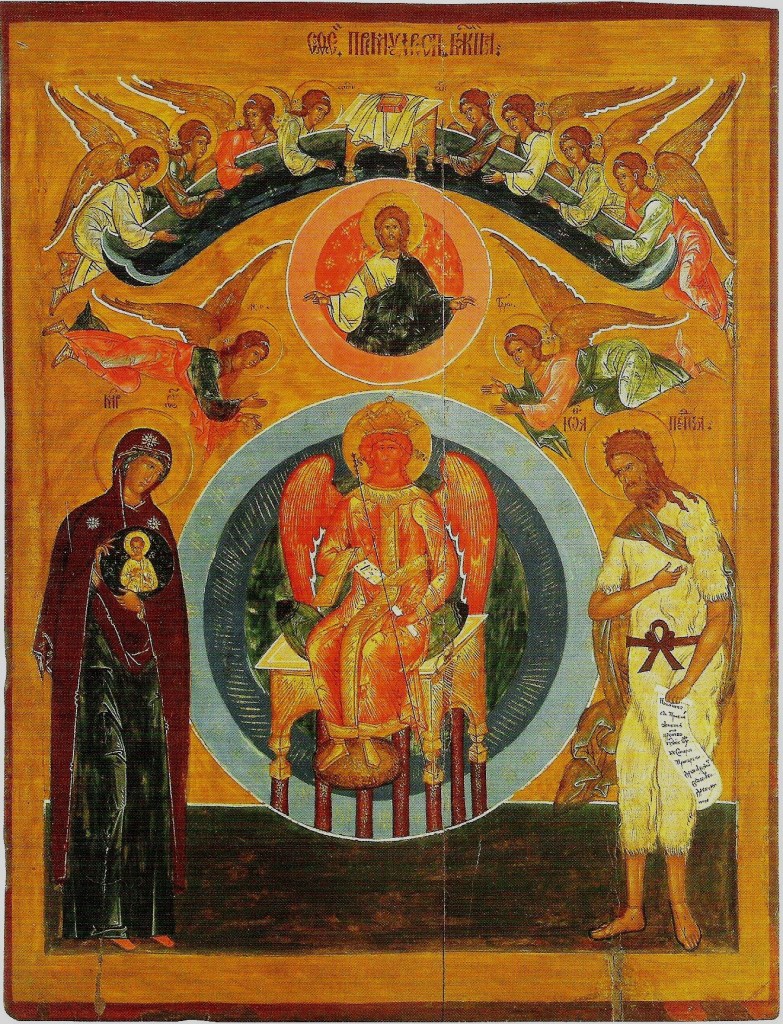
Wisdom (Sophia) on her throne supported by seven pillars
A 16th century Icon of Divine Wisdom
in the St George Church in Vologda, Russia

Despite this, the Christian tradition, for most of its life, cannot be said to be famous for finding the feminine aspect of the divine. Relentlessly masculine, the early Christian church systematically excised any sense of the feminine from the orthodox view of God, spirit and Jesus.

The ruach (Holy Spirit) became masculine through the language of Latin; the bat qol (the voice of God) of the rabbinic literature found a different, masculine grammatical construct in Greek, and hochma or sophia (wisdom) morphed into the figure of Jesus, as the New Testament writings firmly associated the attributes of Wisdom with the person of Jesus Christ. 

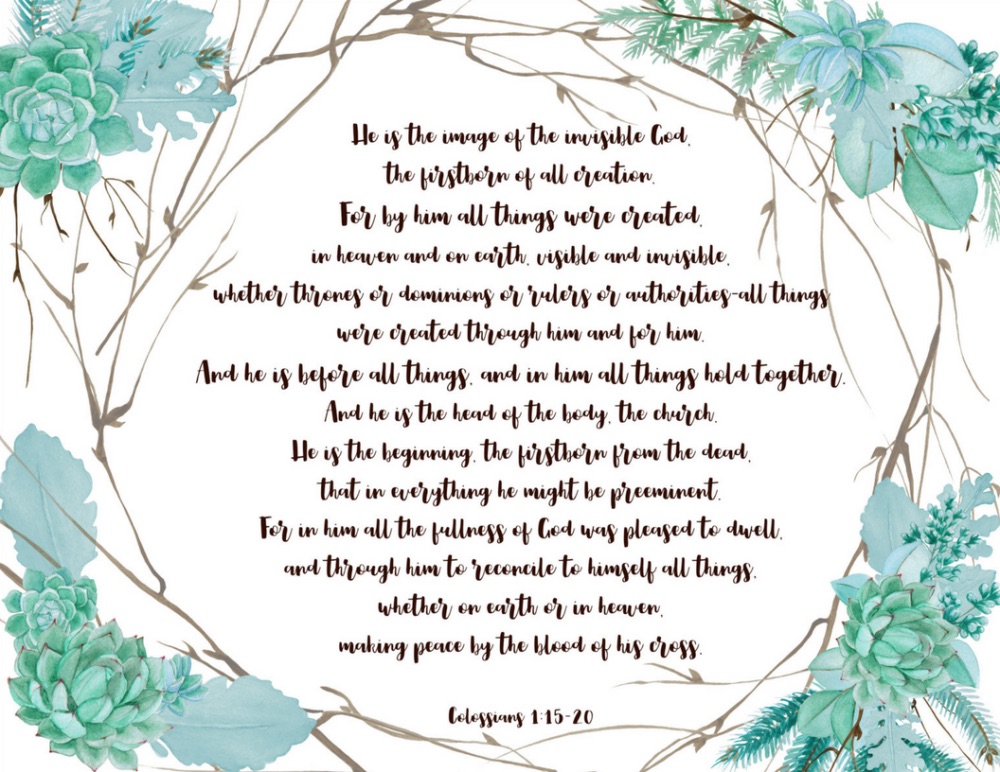
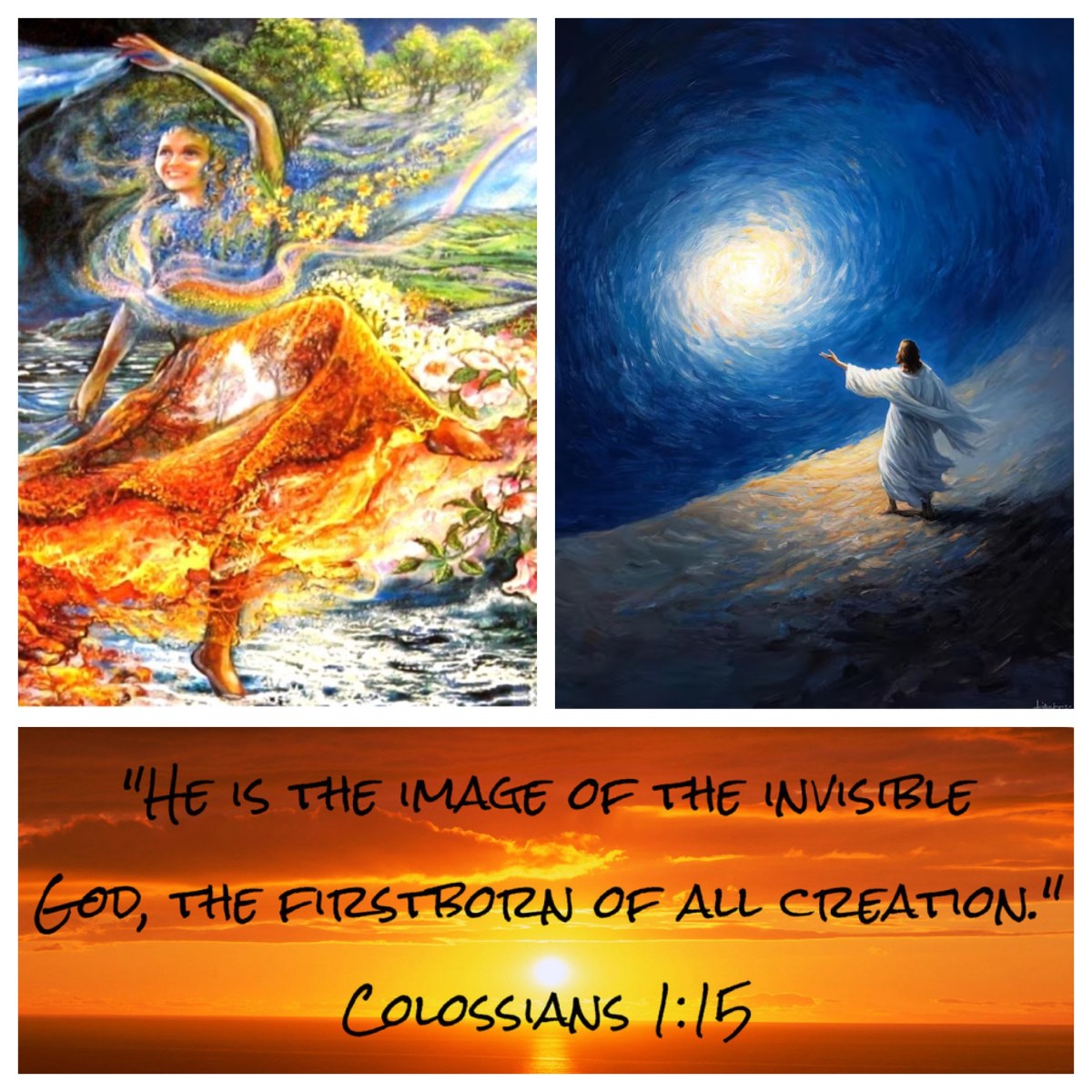
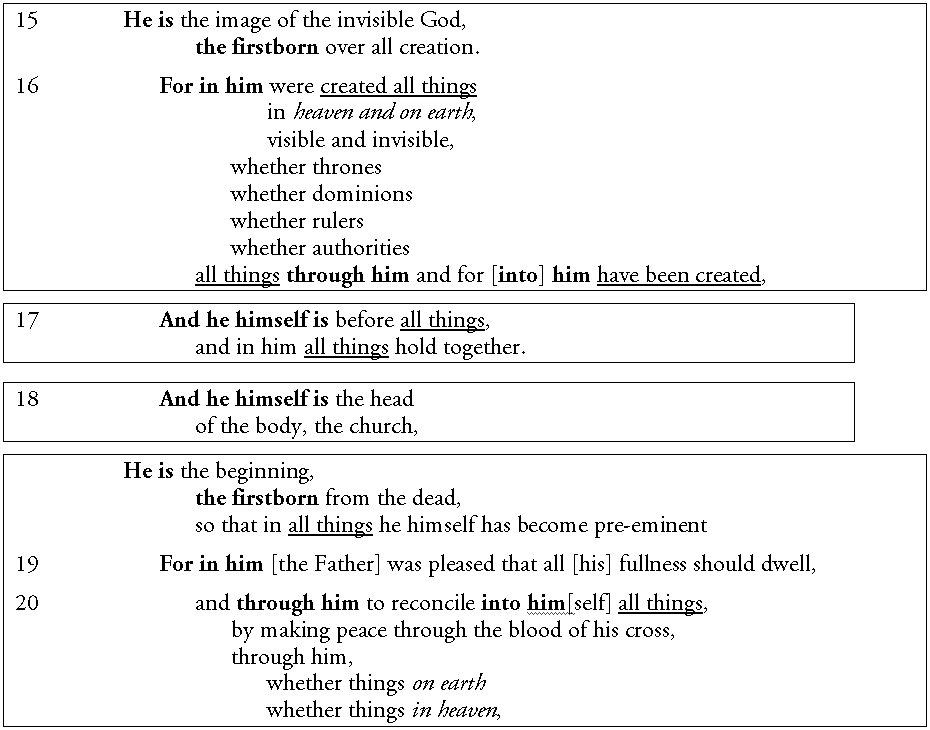
This last is most clearly seen in the letter to the Colossians. This document was originally attributed to the apostle Paul, but is now thought to have been written by a follower of Paul, soon after the apostle’s death in the early 60s. Some early verses in Colossians make it clear that Wisdom had been grafted onto Jesus:

“He is the image of the invisible God, the firstborn of all creation; for in him all things in heaven and on earth were created, things visible and invisible, whether thrones or dominions or rulers or powers — all things have been created through him and for him.”

The Divine Feminine through whom God created the world was replaced with the Divine Masculine. A good example of this can be found in the writings of Justin Martyr – he claimed that Jesus was Wisdom, Logos and the Glory, thereby removing the feminine Spirit (ruach), Wisdom (hochma), and Glory (shekinah) all in one stroke. 

Wisdom sadly morphed into a male saviour, who by assuming the divine characteristics Wisdom was meant to share with God, found himself inserted as the third person of a doctrine of trinity with a transgendered holy spirit, who crossed masculine, neuter and feminine across biblical languages.

Instead of recognizing Wisdom, this feminine aspect of the divine, early Christian male leaders instead have tried to satisfy women throughout the world by presenting them with role models of martyrs and virgins, thereby setting a standard that the vast majority of females cannot possibly aspire to.

Wisdom fast lost her independence and feisty nature, and the meek, obedient woman, characterized by the mother of Jesus (another virgin), was held up as the model to which all women should strive to be.

However: far from being obedient and submissive, Wisdom occupies what is the domain of men, teachers and prophets. She stands on busy street corners, she is at the town gate; she sets her table at the crossroads where many pass by. Unlike her counterpart in Proverbs 31, there is nothing of the domestic goddess about her. She is radical, counter cultural and subversive. She teaches knowledge and leads her people on their way through history. In a most unfeminine way, unaccompanied by a male chaperone, she raises her voice in public places that are the domain of men and calls to everyone who would hear her. 

Wisdom offers us a radical example of faithfulness yet she remains a disturbing presence. She is a most unladylike figure, venturing outside the house, to stand beside the crossroads, crying out in full voice, surprising and startling and provoking with her words.

She transgresses boundaries by standing amidst the male elders at the city gates and presuming to teach them. She has a clear voice, a colourful personality, a dominant presence, and offers words of hope and the promise of life. She is a vehicle of God’s self-revelation, and grants knowledge of God to those who pursue her through scripture and learning. 

The prominent biblical scholar, Elisabeth Schüssler Fiorenza, has written this about Wisdom:

Divine Wisdom is a cosmic figure delighting in the dance of creation, a “master” crafts wo/man and teacher of justice. She is a leader of Her people and accompanies them on their way through history. Very unladylike, she raises her voice in public places and calls everyone who would hear her. She transgresses boundaries, celebrates life, and nourishes those who will become her friends. Her cosmic house is without wallsand her table is set for all.

In short, the biblical figure of Wisdom represents a spirituality of roads and journeys, of public places and open borders, of nourishment and celebration, of justice and equality – rather than a spirituality of categories, doctrines, closed systems and ideologies. Her dramatic modus operandi stands in striking contrast to the slow and methodical way of operating that we see in the classic formulations of Christendom, doctrines that have come to define the church in the eyes of those outside of it.

The church fathers, the male patriarchs of the church, and the myriad of male theologians who followed were, in my humble opinion, consumed with their categories; they articulated their doctrines by amassing the data, analysing the information, systematising the component parts and categorising the key dogmas. And they wrote down these dogmas and systems and turned them into the doctrines by which faith was measured.

By contrast to these closed systems of belief and knowledge, the biblical figure of Wisdom asks for a relational faith, and invites us to develop a wide openness in the way we approach others and God. She requires of us that we really listen to others, including those we don’t agree with … she calls us to listen, to understand, to speak in ways that connect with others and ways that build productive and fruitful relationships across the differences that separate us.

Wisdom calls us to work together, for the common good, with others in our society. She is not a figure bound to buildings, books and writing; she is an outdoor, community spirit, seeking relationships with people, engaging wholeheartedly in the public discourse, debating back and forth in the public arena the key elements of a faith-filled life.

What Wisdom presents is a radical democratic concept, in that anyone, whether illiterate or educated, whether without or with status, whether poor or wealthy, can acquire what she offers. 

She invites us to be life-long learners of the faithful and missional type, and calls us to be constantly open to challenge and change as we read, study, think, discuss, explore, debate, and decide. 

I think that Wisdom is precisely the kind of person who would have relished the invitation, once offered to his disciples by Jesus, to fish on the other side of the boat. She would value the opportunity to look in a different direction, to reconsider the task at hand and seek a new way of undertaking it. Rather then remonstrating with Jesus saying ’but we have always done it this way’, she would jump at the chance to set out in a new arena, to pioneer a new task, to reshape her missional engagement so that it was fresh, invigorating, and creative, open to new possibilities and exciting pathways. What a role model that is, for the church today!

Lady Wisdom, by Canadian artist Kiernan Antares (2013)
https://womenspiritualpoetry.blogspot.com/2013/12/lady-wisdom-by-kiernan-antares.html

So, the question that I invite you to ponder at this moment is: How will we interact with Wisdom? Are we open to the exploration and discoveries that the biblical figure of Wisdom invites us to pursue? 

Are we content with just repeating our tried and true traditions from the past? Are we happy staying in our familiar comfort zones? Will our mission be simply no more than wishing people to walk through ourdoors, as we remain in our comfortable, self-contained spaces?

Or will we choose the way of the rather unladylike and subversive Wisdom, the radical at the street corner, crying out to all who pass by? Can we adopt Wisdom’s model invitation of radical hospitality as relevant to the church today? Should we be more concerned with ‘raising our voices’ in the public arena than confining ourselves to church buildings?

Hopefully as a church we will choose to follow the path of Wisdom into the future, which through its relational, radical and inclusive theology offers us the potential to transform contemporary situations of injustice, brokenness and violence in the communities we serve. By taking our stance in the marketplace, we can demonstrate the ways that show our deep and profound relationship with and love for God, and how that love is extended to all people. Hopefully all of us, not just a few, can follow Wisdom out of our enclosed gatherings to the space where such social and spiritual change can take place.

I trust that as a church, we will continue to encounter Wisdom, hochma, and learn from her, again and again in the coming years.

*****

You can read a report of the whole service of Closure of Ministry at

Featured

In the sound of sheer silence (1 Kings 19; Narrative Lectionary for Pentecost 21)

On the passage about Elijah in 1 Ki 19 proposed by the Narrative Lectionary

In the passage which the Narrative Lectionary places before us this coming Sunday (from 1 Kings 19), we come to Elijah; one of the key prophetic figures whose deeds are recounted in the books of the Kings or whose words are collected within the Hebrew Scriptures under the catch-all second section of Nevi’im (Prophets).

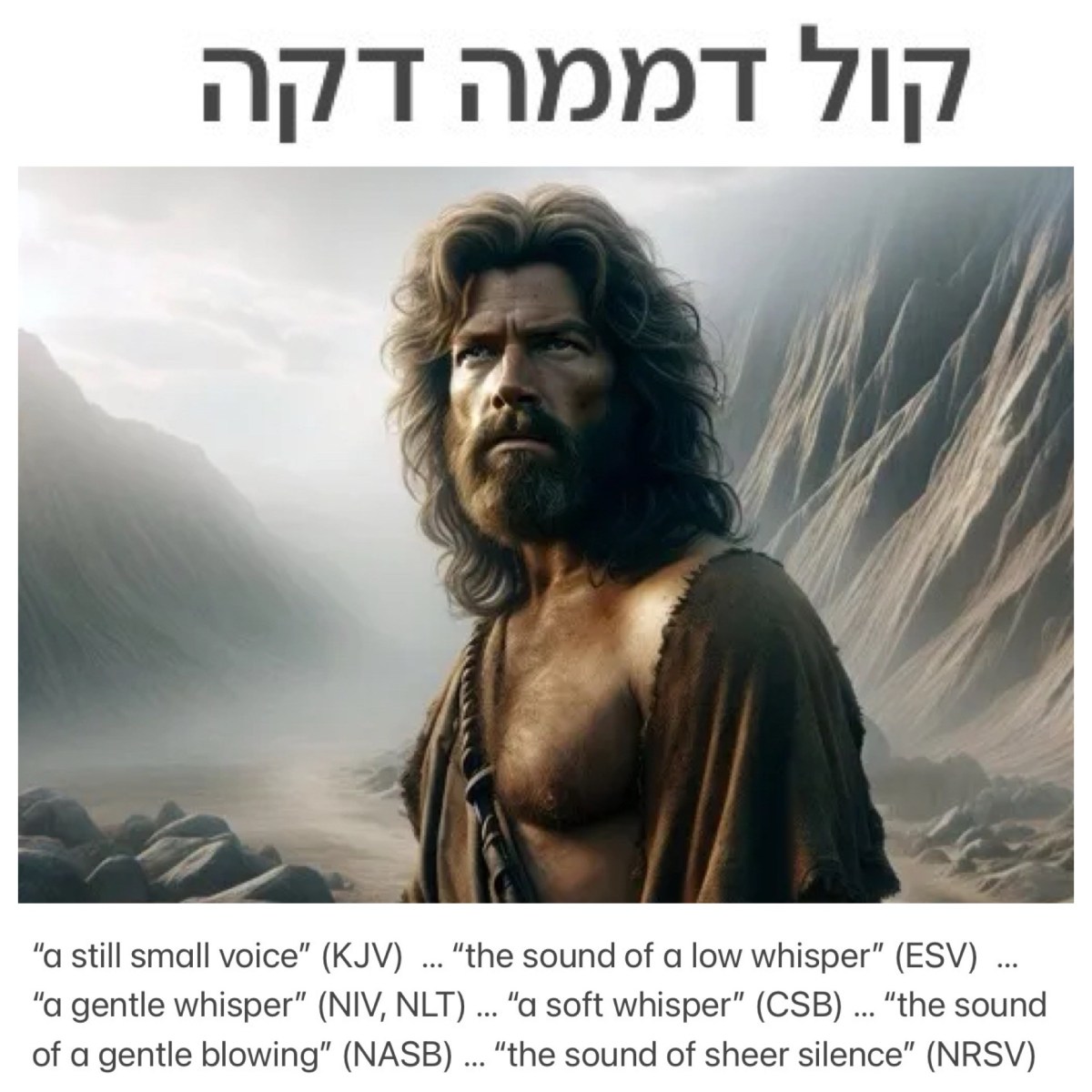
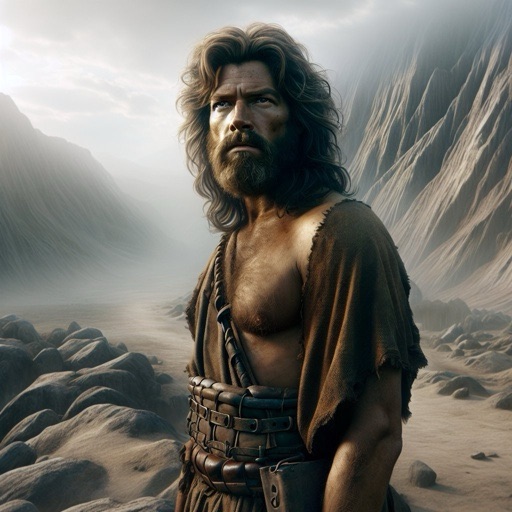
Elijah, famous for being described as “a hairy man, with a leather belt around his waist” (2 Ki 1:8), was first introduced as Elijah the Tishbite, meaning he came from Tishbe in Gilead (1 Ki 17:1), a place whose precise location has occasioned some debate.  See

This initial portrayal of Elijah is nested within the accounts of that long period of time when Israel was ruled by kings, when prophets functioned as the conscience of the king and the voice of integrity within society. The distinctive dress of Elijah perhaps sets him apart from the court of the kings, where a more “civilized” dress code was presumably operative. Nevertheless, Elijah does have some engagement with the kings who ruled at the time he was active: Ahab, and then Ahaziah. Indeed, his distinctive dress points to his emboldened attitude towards those kings.

Elijah operated during the period when Ahab ruled Israel; he figures in various incidents throughout the remainder of 1 Kings—most famously, in the conflict with the prophets of Baal which came to a showdown on Mount Carmel (1 Ki 18), and then later in his confrontation with Ahab and his wife Jezebel, over the matter of Naboth’s vineyard (1 Ki 21). Like Jesus, Elijah was no shrinking violet!

Elijah first appears in the narrative of the various kings, seemingly out of nowhere, just after King Ahab had taken as his wife Jezebel, daughter of King Ethbaal of the Sidonians, who presumably influenced him to begin his worship of Baal (1 Ki 17:31–33). In the same way, at the end of his time of prophetic activity, Elijah simply disappears from sight soon after Kong Ahaziah died. Elijah hands over his role to his successor, Elisha, and as “a chariot of fire and horses of fire separated the two of them”, Elijah ascends in a whirlwind into heaven (2 Ki 2:1–15).

In the book we know as 1 Kings, the compiler of the Deuteronomic History (which stretches from Deuteronomy through Joshua and Judges to Samuel and then Kings) reports many incidents which attest to the courage and power of Elijah. The boldness of Elijah is evident in the confrontations that he has with various rulers; this is made clear, centuries later, to the followers of Jesus, in the earliest account of his life, when John the baptiser is depicted as a fiery desert preacher, calling for repentance, just as Elijah had called the kings to account (Mark 1:1–8). 

In a later account of Jesus, there is a clear inference connecting John with Elijah when Jesus notes, “Elijah is indeed coming and will restore all things; but I tell you that Elijah has already come, and they did not recognize him, but they did to him whatever they pleased” (Matt 17:11–12).

Then, in his sermon in Nazareth (Luke 4:16–30), Jesus refers to the first reported miracle of Elijah, when he provided a widow in Zarephath with food and oil that “did not fail”, even though the land was in drought (1 Ki 17:1–16). In subsequent incidents in 1 Kings, Elijah raises a dead son (17:17–24), directly confronts King Ahab with his sins (18:1–18), and famously stares down the prophets of Baal in a mountaintop showdown (18:19–40), leading to the breaking of the drought (18:41–46).

Elijah later condemns Ahab over his unjust seizure of the vineyard of Naboth (21:17–29) and then stands before Ahab’s son, King Ahaziah, to condemn him to death (2 Ki 1:2–16); a death “according to the words of of the Lord that Elijah had spoken” which is promptly reported (2 Ki 1:17). 

During the rule of Ahab, Elijah had also most famously heard the Lord God “not in the wind … not in the earthquake … not in the fire”—but rather in something else, which the NRSV renders as “the sound of sheer silence” (1 Ki 19:11–12). This incident is, as noted, the story set before us by the lectionary this coming Sunday. We need to ponder what is being conveyed through the symbols employed in this story. 

The three means by which God is said not to have appeared to Elijah reflect the very same means through which Moses, and the people of Israel, did experience the manifestation of the Lord God in their midst. When the escaping Israelites arrived at the Sea of Reeds, according to one version of this archetypal story, “the Lord God drove the sea back by a strong east wind all night, and turned the sea into dry land; and the waters were divided” (Exod 14:21). 

The people later celebrated the defeat of the Egyptians who were pursuing them: “you blew with your wind, the sea covered them; they sank like lead in the mighty waters” (Exod 15:10). The wind was a sign of God’s presence, and an agent of divine protection—indeed, it was the very same “wind from God” which “swept over the face of the waters” at the beginning of creation (Gen 1:2). But for Elijah, the Lord God was “not in the wind”.

Then, as they had travelled through the wilderness, the people were accompanied by a blazing fire, another sign of divine presence: “the Lord God went in front of them in a pillar of cloud by day, to lead them along the way, and in a pillar of fire by night, to give them light, so that they might travel by day and by night” (Exod 13:21). The fire signalled the divine presence.

Indeed, the very same flaming fire had been manifested to Moses when he was but a mere shepherd in Midian; “the angel of the Lord appeared to him in a flame of fire out of a bush; he looked, and the bush was blazing, yet it was not consumed” (Exod 3:2). What follows is the account of the call of Moses; God tells him “I will send you to Pharaoh to bring my people, the Israelites, out of Egypt” (Exod 3:10). The fire had been the assurance to Moses that it was the Lord God who was present.  But for Elijah, the Lord God was “not in the fire”.

The same element of fire was present when Moses and the people ultimately arrived at Mount Sinai in the wilderness of Sinai (Exod 19:1–2). “Mount Sinai”, so the account goes, “was wrapped in smoke, because the Lord had descended upon it in fire; the smoke went up like the smoke of a kiln, while the whole mountain shook violently” (Exod 19:18). Associated with this there was “thunder and lightning, as well as a thick cloud on the mountain, and a blast of a trumpet so loud that all the people who were in the camp trembled” (Exod 19:16). 

The scene at Sinai surely reflects the experience of an earthquake; the same phenomenon that prophets would later interpret as a sign of divine presence—indeed, divine judgement. “You will be visited by the Lord of hosts”, Isaiah subsequently tells the people of his time, “with thunder and earthquake and great noise, with whirlwind and tempest, and the flame of a devouring fire” (Isa 29:6). 

Still later, Zechariah describes how “the Mount of Olives shall be split in two from east to west by a very wide valley”, and instructs the people, “you shall flee as you fled from the earthquake in the days of King Uzziah of Judah; then the Lord my God will come, and all the holy ones with him” (Zech 14:4–5).

Nahum reflects on the jealous and avenging nature of God, declaring that “his way is in whirlwind and storm, and the clouds are the dust of his feet; he rebukes the sea and makes it dry, and he dries up all the rivers; the mountains quake before him, and the hills melt; the earth heaves before him, the world and all who live in it” (Nah 1:2–5). 

This dramatic motif continues on into later apocalyptic writings (Isa 64:1; 1 Esdras   4:36; 2 Esdras 16:12). The prophets and their apocalyptic heirs  knew clearly that this whole dramatic constellation of events revolving around an earthquake was a sign of divine presence.  But for Elijah, the Lord God was “not in the earthquake”. He was heard in something quite different.

What did Elijah hear? The Hebrew phrase in verse 12 is qol d’mamah daqqah. The King James Version translated this as “still small voice”.  More recent translations have provided variants on how these words might be translated. Alternatives that are found include “the sound of a low whisper” (ESV), “a gentle whisper” (NIV, NLT), “a soft whisper” (CSB), or “the sound of a gentle blowing” (NASB). These reflect variations on the kind of nuance that the KJV was offering. 

Screenshot

However, the NRSV option of translating this phrase as “the sound of sheer silence” is more confronting: the presence of God is sensed in the absence of sound; any communication from the deity comes, not in audible sounds, but in the utter absence of any sound. It is a striking paradox!

And in the context of the developing story of 1 Kings, the paradox is strong. Earlier, the prophet had stood firm against the might of Baal, the foreign god whom Ahab and Jezebel had prioritized in the life of Israel (1 Ki 18:17–40). When “the four hundred and fifty prophets of Baal and the four hundred prophets of Asherah who eat at Jezebel’s table” gathered on Mount Carmel, they failed to obtain any response from their god, the god of storms. No matter how intensely the pleaded, all they heard was “no voice, no answer, no response” (18:29).

Elijah, by contrast, prays to the Lord God and the fire of his god fell on the sacrificial altar; it consumed “the burnt offering, the wood, the stones, and the dust, and even licked up the water that was in the trench” (18:38). The victory was absolute and complete; the storm god had been defeated. And yet, the deity who accomplished this would communicate most personally and intimately with his chosen prophet, “not in the wind … not in the earthquake … not in the fire”, but rather in “a sound of sheer silence” (19:11–12). What a deliciously powerful irony!

Elijah was his own, distinctive man, with his own, distinctive encounter with God. He experienced God in a way quite different from what was experienced by Moses and the people of Israel. He experienced God in a way that stood apart from his contemporaries who were priests and prophets of Baal. For that reason, whilst the Lord God of Elijah stands over and against the Baal of Ahab and Jezebel, so too Elijah stands alongside and apart from Moses as a different, but equally great, leader of the people.

Featured

I have built you an exalted house, a place for you to dwell in forever (1 Kings 5, 8; Narrative Lectionary for Pentecost 20)

Discussion of the passages from 1 Kings 5, 8 offered by the Narrative Lectionary

Some weeks ago, the Narrative Lectionary offered the story of God calling Moses to lead his people out of slavery, into freedom (Exod 3–4), followed by another story about the way that Moses exercised this leadership during a testing time (Exod 16). Two weeks ago, we heard the story of God calling Samuel to be prophet (1 Sam 3)—the first of many who would be called to that role. Then last week, we moved on to hear the story of God calling David to be king. So we have had stories about a range of leaders in ancient Israel: the Liberator, the first Prophet, and the most beloved King. 

This coming Sunday we jump to another element that is foundational in the religion of ancient Israelite society. For many years—ever since the “wandering in the wilderness”—the people had a focal point for worshipping their God. The Tabernacle, created during the “wilderness story”, was a mobile sanctuary, travelling with the people (Exod 25:1–9). This sanctuary was faithfully served by the Levites, a group set apart for this priestly role (Num 1:48–54).

However, the central figure in this coming Sunday’s story is not a Priest, but rather a King—Solomon, one of the many offspring of David, and the one who, by all manner of machinations, succeeded his father on the throne. The lectionary deftly steps over all those stories, told with gruesome detail in the early chapters of 1 Kings.

Solomon was not first in line to ascend the throne; that would lie with the eldest of his brothers still living, Adonijah. Adonijah knows this; the first book of Kings opens with the revelation that, since “David was old and advanced in years … Adonijah son of Haggith exalted himself, saying, ‘I will be king’; he prepared for himself chariots and horsemen, and fifty men to run before him” (1 Ki 1:1,5).

However, Solomon plots with his mother Bathsheba and the palace prophet Nathan to arrange for the assassination of his older brother. In addition, a number of other people also had to be eliminated to establish Solomon’s firm grip on the monarchy, and to ensure there were no other possible legitimate claimants to the throne remaining. Such was the raw and vicious nature of “life at the top” those days. (Has anything much changed?)

In fairly quick succession, after Solomon had arranged for the death of his eldest brother Adonijah (2:13–25), he banished the high priest Abiathar who had supported Adonijah (2:26–27) and replaced him with another priest loyal to himself. Next he removed Joab, a cousin who was the commander in the former king’s army (2:28–34). He achieved this via a hit man, Benaniah, who became the general of his army (2:35). 

Then, Solomon had Shimei, who was a relative of Saul, the king before David, killed (2:36–46). In this way all potential contenders for the throne and their powerful supporters were removed, mostly by violent means. As the narrator curtly comments, “so the kingdom was established in the hand of Solomon” (2:46b).

Fortunately for preachers following this lectionary, there is no expectation that there will be any need to read, reflect on, and speak about these chapters during worship. They certainly reveal the depths of degraded humanity! Rather, in the manner that characterises the Narrative Lectionary, we move from high point to high point—and so, this coming Sunday (in 1 Ki 5:1–5), we hear about the beginning steps taken by Solomon in the preparations for erecting the building which would not only sit on the highest point in Jerusalem, but would stand as a symbolic representation of the highest elements—what was best, most valued, most important—in ancient Israelite society.

Solomon, King of Israel, consults with Hiram, King of Tyre (who has a large navy and workforce) regarding the materials and labour needed to undertake this major building project (1 Sam 5); as the narrator indicates, “Solomon’s builders and Hiram’s builders and the Gebalites did the stonecutting and prepared the timber and the stone to build the house” (1 Ki 5:18). And then, after seven years of intense work, the temple is complete (7:1). Here, the lectionary (wisely) skips over the tedious detail of the items made by the artisans and craftsmen of Solomon (6:1–38).

The second part of the reading offered by the lectionary for this coming Sunday tells of how, after thirteen years, King Solomon assembled “the elders of Israel and all the heads of the tribes, the leaders of the ancestral houses of the Israelites” (8:1). Again, the lectionary skips over the detailed account of the work of Solomon’s men in building his own house: the House of the Forest of Lebanon, the Hall of Pillars, the Hall of the Throne, and the house where he would live (7:1–12).

In like manner, the lectionary jumps over the detailed account of the work of Hiram the bronze worker: pillars, stands, basins, pots, and a whole host of items to be used in the sanctuary (7:13–50). Thank goodness the lectionary compilers jumped over all of those verses!

At any rate, when Solomon assembles the leaders of the nation, in the presence of “all the people of Israel” who had assembled, the priests and Levites bring forward the Ark of the Covenant, the Tent of Meeting which had housed the Ark for decades, and “all the holy vessels that were in the tent (8:1–4). It was surely an impressive majestic procession, followed by a scene of overflowing abundance, as the priests received and sacrificed “so many sheep and oxen that they could not be counted or numbered” (8:5). 

There’s no mention of the rivers of blood that must surely have flowed as these sacrifices took place. It may seem like a most unpleasant and unedifying scene to modern eyes and ears; however, the sacrificing of blood was an expression of the central Israelite belief that “the life of the flesh is in the blood … as life, it is the blood that makes atonement” (Lev 17:11). Each sacrifice of a chosen animal was a sacred offering of life that symbolised the obedience and dedication of the person, or people, who had brought the animal to be sacrificed. They were dedicating their whole life to the Lord God through this action, and in return, they were receiving atonement (the forgiveness of their sins) for all the misdeeds they had performed.

Finally, after the procession and sacrifices, the Ark was brought to “the most holy place” (8:6). The presence of the Ark evoked Solomon’s father, David, and his taking of the city from the Jebusites. Solomon was making clear that he was seen to be standing in that fine tradition.

The Ark was placed in the space known as “the Holy of Holies”, as a much later Jewish-Christian writer describes it (Heb 9:3). It was from that time to be set apart as holy for only the High Priest to enter, and at that but once a year (Heb 9:7).

The scene is presented as one of profound religious significance, for “when the priests came out of the holy place, a cloud filled the house of the Lord, so that the priests could not stand to minister because of the cloud; for the glory of the Lord filled the house of the Lord” (1 Ki 8:10–11). The Temple from that time became the fixed dwelling place of God; “O Lord, I love the house in which you dwell, and the place where your glory abides”, one psalmist sings (Ps 26:8); another sings, “bring an offering, and come into his courts; worship the Lord in holy splendour; tremble before him, all the earth” (Ps 96:8b-9). Other psalmists likewise assert the holiness of God in his temple (Ps 11:4; 24:3–4; 48:1; 99:1–5,9). 

Holiness (kadushah) was central to the people of Israel. Those who ministered to God within the Temple, as priests, were to be especially concerned about holiness in their daily life and their regular activities  in the Temple (Exod 28–29; Lev 8–9). The priests oversaw the implementation of the Holiness Code, a large section of Leviticus (chapters 17–26), which explained the various applications of the word to Israel, that “you shall be holy, for I the Lord your God am holy” (Lev 19:2; also 20:7,26). The people were expected to be a holy people, dedicated to God, serving obediently by adhering to all the laws and commandments that Moses had received from the Lord God at Sinai (Exod 19:5–6).

As the glory of the Lord fills the Temple, Solomon makes the solemn declaration to his God that “I have built you an exalted house, a place for you to dwell in forever” (1 Ki 8:13). He then offers an extended prayer which stretches over the next 38 verses—another element of the whole story that the Narrative Lectionary, mercifully, does not prescribe for reading in worship!


Henry J. Soulen, ‘Queen of Sheba Visits Solomon’ (1967), illustration in Everyday Life in Bible Times
(National Geographic Society, 1967), pp. 230-231

Solomon, I am sure you are thinking, is remembered as The Wise King. As the lectionary has offered this passage for this Sunday, it is worth our thinking further about Solomon. Next week we will jump forward a century or so, to the prophet Elijah. So we might, today, reflect on  the quality of Solomon he is best known for: his wisdom. In 2 Chronicles 1, God says to Solomon, “because you have asked for wisdom and knowledge for yourself … wisdom and knowledge are granted to you” (2 Chr 1:11). 

And later, King Solomon is said to have “excelled all the kings of the earth in riches and in wisdom. And all the kings of the earth sought the presence of Solomon to hear his wisdom, which God had put into his mind. Every one of [those kings] brought silver and gold, so much, year by year” (2 Chron 9:22–24). And so, Jesus relates how “the Queen of the south [the Queen of Sheba] came from the ends of the earth to hear the wisdom of Solomon” (Matt 12:42). 

This wonderfully wise, insightful, discerning man, Solomon—bearing a name derived from the Hebrew for peace, “shalom”—became a powerhouse in the ancient world. But he did not always live as a man of peace, as we have seen in tracing his rise to the throne. Indeed, as ruler he used his 4,000 horses and chariots and 12,000 horsemen to good effect; we read that “he ruled over all the kings from the Euphrates to the land of the Philistines and to the border of Egypt” (2 Chron 9:26). 

Solomon was remembered as king over the greatest expanse of land claimed by Israel in all of history. This large scope of territory noted in scripture forms the basis for the claims of zealous fundamentalist Zionists, in the 21st century, that Israel should run “from the river to the sea”. It’s a claim that has fuelled the building of illegal Jewish settlements on the West Bank and the erection by the modern state of Israel of The Wall which divides Israel from Palestinian Territories—but which divides families and friends as it seeks to separate Israelis from Palestinians.

Solomon, there can be no doubt, was a warrior. And warrior-kings were powerful, tyrannical in their exercise of power, ruthless in the way that they disposed of rivals for the throne and enemies on the battlefield alike. Think Alexander the Great. Think Charlemagne. Think Genghis Khan. Think William the Conqueror. Solomon reigned for 40 years—a long, wealthy, successful time. (Although 40 years, in Israelite time, is basically a way of saying “a heaps long time”.)

Yet in the passage we hear this Sunday Solomon appears not as a powerful king. Rather, he is a humble person of faith. He stands before all the people, raises his arms, and prays to the God who is to be worshipped in the Temple that he had erected. He is a person of faith, in the presence of his God, expressing his faith, exuding his piety.

The prayer of Solomon goes for thirty-eight solid verses; there are eight different sections in this prayer. In the first two sections of this prayer, Solomon identifies two important features of the newly-erected Temple.  The first is that the fundamental reason for erecting this building is to provide a focal point, where people of faith can gather to pray to God (2 Ki 8:23–30). The second key element of Solomon’s prayer is that the Temple reaches beyond the people of Israel, covenant partners with the Lord God. He recognises that the Temple is also the place for the prayer of “a foreigner, who is not of your people Israel, [who] comes from a distant land because of your name” (2 Ki 8:41–43). 

This is a striking and dramatic element to include in this dedication prayer before all the people of Israel! Perhaps that is the best way we can remember Solomon: a man of his time, committed to his people, but open to receiving the gifts and the prayers of people from afar. Would that, in our present world of nationalistic fervour, militaristic aggression, and parochial bigotry, there were more rulers like that!

For more on the prayer of Solomon in 1 Kings 8, see

Featured

Will “the peace” hold in Gaza?

There is intense emotion in Israel and in Gaza. Hundreds of Israeli families are mourning the deaths of the 1200 people killed on 7 October 2024, the deaths of scores (perhaps even hundreds) of the 251 hostages taken on that day, the 468 Israeli soldiers who have died since that day.

At the same time, the families and friends of the nearly 68,000 Palestinians killed in Gaza over the same timeframe, and especially the 20,179 of them who were children, are experiencing a similarly intense sense of grief.

It’s a region bubbling with all that unrequited grief brings: sorrow, despair, anger, a festering hatred, a resolve to “never forget”. It’s hardly a fertile ground for peace to flourish. Will the “peace agreement” hold? Will the “peace plan” prove to be effective?

As the latest group of hostages return to Israel, giving understandable joy to their families and friends, and hope for an enduring peace in the region, let us not forget that the displaced Gazans returning to the homes will find 78% of the structures in Gaza are damaged or destroyed; 22 of the 36 hospitals in Gaza have been destroyed, and some of the remaining 14 hospitals are only partially functional; and 1.5% of the viable cropland in Gaza is able now to be used for cultivation. They are not simply “coming back home”; they are returning to scenes of devastation and destruction that will surely intensify their despair.

This is the third ceasefire since the events of 7 October 2023. Will it last? Relations between many (not all) Israelis and Palestinians are incredibly complex, and an enduring peace amidst the aggressive antagonism and intensifying hatred that has marked recent years (indeed, decades) does not give me confidence. 

The US has provided $21.7 billion of military aid to Israel since 7 Oct 2023. If Trump really wants peace, he could cease all future military aid and divert funds to the needs in aid supplies, health, and restoration of infrastructure in Gaza.

I’ve taken these figures from an article by NPR, a media organisation in the USA that is “an independent, nonprofit media organization … founded on a mission to create a more informed public”. (Thanks to Megan Powell du Toit for the link.)

https://www.npr.org/2025/10/13/g-s1-92205/ceasefire-gaza-war-key-figures?

The history of “the peace” in this region over the past 50 years does not give grounds for hope. The establishment of Israel in 1948, as important and necessary as that was after the horrors of the Shoah (a Hebrew word meaning “desolation, sudden destruction, catastrophe”), caused the expulsion of hundreds of thousands of inhabitants of that area, in a catastrophe called by Palestinians the Nakbah (an Arabic word which also means “catastrophe”). 

The Camp David Accords (1978) ultimately led to an agreement in which Israel agreed to “resolve the Palestinian question” and permit Palestinian self-governance in the West Bank and Gaza within five years. It never happened. 

The Oslo Accords (1993) included a pledge to end hostilities, and the second Accords (1995) provided that Israel would accept Palestinian claims to national sovereignty. As an interim measure, a Palestinian Authority was established, to govern designated areas (see the map) in a phased process leading towards Palestinian self-determination. The Palestine Authority still exists today, and the goal of the Accords has never been reached.

See https://www.aljazeera.com/news/2023/9/13/what-were-oslo-accords-israel-palestinians

Indeed, from 1993 onwards, Israel increased its building of settlements in the West Bank, leaving that area utterly fragmented between Israeli and Palestinian areas—a process deemed illegal under international law. Families who had lived on their historic lands were expelled so that new Israeli settlements could be built. It’s been an utterly unjust process.

When PLO leader Yasser Arafat gave up the right for Palestinian refugees to return to their historic lands which Jewish settlers had seized from them in 1948 when Israel was created, many Palestinians became disenchanted with him. The ground was fertile for dissent and revolt; Hamas emerged out of this situation as the leading organisation advocating for—and acting to gain—a Palestinian right to return. Peace was never possible while such an ideology was the key driving force.

Chris Hedges, an American journalist, author, and commentator (and also an ordained Presbyterian minister, as of 2014) writes that the current “peace” is simply “a commercial break … a moment when the condemned man is allowed to smoke a cigarette before being gunned down in a fusillade of bullets”. He foresees the crumbling of the current ceasefire, on the basis of the history of these recent decades.

“Once Israeli hostages are released, the genocide will continue”, he writes. “A pause in the genocide is the best we can anticipate. Israel is on the cusp of emptying Gaza, which has been all but obliterated under two years of relentless bombing. It is not about to be stopped. This is the culmination of the Zionist dream.”

He notes the staggeringly obscene amount of military aid that the USA has given Israel, and observes that the US “will not shut down its pipeline, the only tool that might halt the genocide”. He then goes on to argue that “of the myriads of peace plans over the decades, the current one is the least serious”. He details all the flaws and inadequacies in the much-trumpeted 20-point “peace plan” that has been advocated recently and claims that “there will be no peace in Gaza; only the temporary absence of war”.

Hedges notes that this “peace plan” fails to mention Palestinians’ right to self-determination; it ignores the advice of the International Court of Justice that Israeli settlements are illegal; it places no brakes on Israel’s continuing military power; it does not provide for Israel to provide anything in the way of reparations for Gaza, the area which it has mercilessly bombed; and many provisions are vague to the point of being unenforceable. You can read his scathing analysis at https://chrishedges.substack.com/p/trumps-sham-peace-plan?

Eric Tlozek, the ABC’s Middle East correspondent, observes that “Israel gets to keep troops in Gaza instead of having to withdraw, but that only signifies that the key issues in this conflict — disarmament, security, governance — are far from being resolved”. What will change once the thousands of displaced Gazans return?

He continues, “Hamas still refuses to disarm and remains in control of large parts of the [Gaza] strip. The US may claim the war is over, but Israel’s defence minister has already flagged plans to attack Hamas, and Israeli fire and air strikes continue in Gaza. The violence has not ended, it has only decreased in intensity.”  Tlozek’s pessimism is, nevertheless grounded in reality.

See https://www.abc.net.au/news/2025-10-15/donald-trump-should-not-be-thanked-for-the-gaza-ceasefire/

Will the current “peace” last? How long will it last? How long before the genocide of Palestinians resumes and continues to its inexorable end? As a person of faith, I can join with people of faith around the globe, to pray and to hope. As a citizen of the world in 2025, however, I think that, sadly, we must temper this with realism about the situation and the prospects of an enduring peace. 

*****

See my other, earlier, ruminations at

Featured

Do not judge by appearances (1 Samuel 16; Narrative Lectionary for Pentecost 19)

A discussion of the Narrative Lectionary passage from 1 Samuel 16

The narrative passage proposed by the Narrative Lectionary for this Sunday (1 Sam 16:1–13) comes from the period of time when Israel was ruled by a king. The story of the choosing of the first king, Saul, is told in 1 Sam 9; his rule runs through this narrative until the last chapter of this book, 1 Sam 31.

As I have noted before, although these narratives have the appearance of being historical, they are actually ancient tales which were told and retold, passed on by word of mouth and then written down, because of their enduring significance for the people of ancient Israel. Scholars call such stories “myths”, meaning that they convey something of fundamental importance. (We might best define myth as “a traditional story, usually associated with the time of origins, of paradigmatic significance for the society in which it is told”.)

See more on the nature of these stories at 

The picture of Saul, the first man chosen to be king in Israel, demonstrates the flaws of this system of leadership. His reign was characterised by turbulence and opposition; as early as chapter 13 there are signs of the problems that there were in his leadership. After defeating the Philistines, and being impatient for the prophet Samuel to arrive, he went ahead with a burnt offering, in contradiction to the command of God. “You have done foolishly; you have not kept the commandment of the Lord your God, which he commanded you”, Samuel berates the king (1 Sam 13:13). This is not the behaviour expected of a person leading the chosen people of God!

The prophet Samuel foreshadows the coming turmoil under Saul’s leadership, telling him that “the Lord would have established your kingdom over Israel forever, but now your kingdom will not continue” (1 Sam 13:14). In the passage offered by the lectionary for this coming Sunday (1 Sam 16:1–13), we learn that because the rule of Saul is fraught with difficulties, a significant change is on the cards. 

Pushed by the words of the prophet Samuel, Saul confesses his sin (1 Sam 15:24, 30). Samuel announces to him  that “the Lord has rejected you from being king over Israel” (15:26) and declares, quite dramatically, “the Lord has torn the kingdom of Israel from you this very day, and has given it to a neighbour of yours, who is better than you” (15:28).  

The narrator of this story engages in an interesting theological exploration at this point. Samuel is clear about God’s intentions: “the Glory of Israel will not recant or change his mind; for he is not a mortal, that he should change his mind” (15:29). This God had explicitly chosen Saul, who said he was “only a Benjaminite, from the least of the tribes of Israel, and my family is the humblest of all the families of the tribe of Benjamin” (9:21). 

God had chosen David, this least and most humble person, to serve as ruler over the people, to “save my people from the hand of the Philistines” (9:16). He would rule form40 years—the biblical,way of saying “for an awfully long time”—and exert great power. We might note that this “least-become-greatest” dynamic prefigures some of the teaching of Jesus, a descendant of David, a millennia later.

Samuel, exercising his prophetic leadership, had assured the people, “there is no one like him among all the people” (10:24); but some in the crowd were doubtful, saying, “how can this man save us?”, and they despised him (10:27). Paradoxically, these men had insight into the character of Saul which the Lord God himself failed to perceive at this time.

However, a little later, the narrator of this story muses that “the Lord was sorry that he had made Saul king over Israel” (15:35). This is regret, but seemingly not quite a full change-of-mind. It does, however, paint the divine in a rather human way; an action undertaken that does not bear fruit for us as anticipated can indeed generate regret.

Elsewhere in Hebrew Scriptures, the matter of a change-of-mind for the divine is explored. Jeremiah instructs the people, “amend your ways and your doings, and obey the voice of the Lord your God, and the Lord will change his mind about the disaster that he has pronounced against you” (Jer 26:13). In the tale of Jonah, when God saw the repentance of the people of Nineveh, “God changed his mind about the calamity that he had said he would bring upon them; and he did not do it” (Jon 3:10). 

The prophet Amos petitions God, such that “the Lord relented concerning this; ‘it shall not be,’ said the Lord” (Amos 7:3, 6). And in the story of the Golden Bull, Moses implores God to “turn from your fierce wrath; change your mind and do not bring disaster on your people”, and so the Lord repents (Exod 32:12–14).

We might wonder: is the regret that the narrator perceives in the divine (1 Sam 15:35) strong enough to chasten God in future actions, so that there will be no need for a divine change-of-mind?

For more on this topic, see

As Saul relinquishes his role, Jesse steps onto the stage; one of his eight sons will sit on the throne. It has been a bitterly-fought transition, and Samuel was saddened by the course of events. But the voice of God pushes him on, to step into his role in the transition taking place; and so the prophet faithfully anoints Saul’s successor. 

We should remember that, in the a Christian canon, the two books that tell of the rule of Saul and then David are named, not after those kings, but after the prophet, Samuel—who held and exercised great power, as the story shows, in that he is attuned to God’s voice and speaks God’s words to the people. We saw this dynamic clearly articulated in the earlier narrative (1 Sam 3) on the Sunday after Trinity Sunday (Pentecost 2).

So Samuel follows God’s advice: “do not look on his appearance or on the height of his stature, because I have rejected him; for the Lord does not see as mortals see; they look on the outward appearance, but the Lord looks on the heart” (1 Sam 16:7). This verse is often quoted by people of faith when reflecting on the importance of inner conviction and commitment to God.

This narrative portrays a God who sees and deals with the heart of human beings (v.7). The heart is important to God because of its directional role: “the good person out of the good treasure of his heart produces good, and the evil person out of his evil treasure produces evil, for out of the abundance of the heart his mouth speaks” (Luke 6:45). In like manner, Proverbs 4:23 states “keep your heart with all vigilance, for from it flow the springs of life”.

There is a danger here, of course; the outward actions of people are indeed important, and the claim that God’s focus is solely on our “heart” can be deceptive. Both our inner nature and our outer actions are significant; they each point to our faith and express our discipleship.

Indeed, it is worth remembering that, in the Hebrew language—the language in which this narrative was written—the word translated as heart is לֵבָב, lebab. It’s a common word in Hebrew Scripture, and is understood to refer to the mind, will, or heart of a person—words which seek to describe the essence of the person. It is sometimes described as referring to “the inner person”. The word appears 248 times in the scriptures, of which well over half (185) are translated as “heart”. It has a strong connotation of indication “the whole of a person’s being”. That’s what God is focussed on; that’s where faith is shown and discipleship is lived out.

For more on this, see 

So Jesse brings his sons before Samuel. But which son is it to be? Samuel first offers a sacrifice to God (15:2–5), in the expectation that what he does next will be in accord with the will of God. Samuel had his own ideas, based on appearances; God reprimands him, now telling him to focus on the heart—the very core of the being of the chosen one, the whole of that person’s being (16:7). After receiving all of Jesse’s sons in order (16:8–10), Samuel exercises his prophetic discernment, selecting the youngest son, David, to be the new king (16:11–13). 

God confirms this choice by gifting David with the spirit: “the spirit of the Lord came mightily upon David from that day forward” (16:13). Openness to new ways and new possibilities has led to this defining moment.

Ironically, when Samuel first sees David, the narrator introduces him with the description, “he was ruddy, and had beautiful eyes, and was handsome” (16:12)—precisely the elements of “outward appearance” that we were told earlier that the Lord does not consider. Even the careful crafter of this story gets caught!!

Featured

Peace with Justice: end the genocide in Gaza

It’s hard not to look at what has been happening in the Middle East—and particularly in Gaza—over recent years, and make some very harsh decisions from afar. For a start, after the series of attacks that Hamas and some other Palestinian groups made two years ago yesterday, on 7 October 2023, it seems easy to condemn the violence of terrorists fighting for Palestinian rights. The firing of 4,300 rockets, the slaughter of 1,195 Israelis, mostly civilians, and the taking of around 250 hostages, some still held today, all deserve to be condemned.

The Gaza Strip and the national state of Israel,
from a map in the Encyclopedia Britannica

But it is also hard not to decide that all Israelis should be condemned for the aggressive militaristic actions taken in response to the 7 Oct attacks. On 8 Oct, the Israeli government declared that the nation was “in a state of war”. That “war” has continued each day since then, with consistent attacks across Gaza. 

Current estimates by the Hamas-run Gaza Ministry of Health are that around 67,000 residents in Gaza have been killed, including 18,000 children; 170,000 people have been injured, and 1.9 million people displaced. Amongst the deaths, Al-Jazeera estimates that around 300 journalists and media workers have been killed. They say that across Gaza, the destruction includes 92% of all residential buildings, 88% of all commercial facilities, and more than 2,300 educational buildings have been destroyed.

The clearest accusation that has been made for some time now is that Israel is committing genocide. The World Council of Churches asserts that “the Government of Israel’s military campaign in Gaza has entailed grave breaches of the Fourth Geneva Convention which may constitute genocide and/or other crimes under the Rome Statute of the International Criminal Court (ICC)”. This council has denounced “the system of apartheid imposed by Israel on the Palestinian people, in violation of international law and moral conscience”. It’s clear that Israel,is acting outside the agreed international laws and customs. Yet the USA and other countries continue to provide Israel with all manner of materials and products to sustain their genocidal aggression.

However, it’s important not to not tag all Israelis with the one brush. The Israeli Defence Forces are carrying out the policies implemented by the right wing Prime Minister and his far right fundamentalist coalition of parties. They are committed to the Zionist ideal of ensuring the security of Israel, and of removing all opposition to this nation within the region. They are prosecuting this with vigorous zeal. The bombs and buckets continue each day. But as they oversee this policy, we should remember that they are not representative of everyone in Israel.

Elizabeth and I have a friend in Israel who is faithful and deeply committed to justice; they have been working with others for peace in their country for decades, and they are currently most distressed by their government’s callous fundamentalist actions. And we have a friend in Australia who served in the IDF who is now campaigning vigorously to stop the genocide, lobbying our government to push this message internationally. 

They are not all “the same”—what the army is implementing is a government policy that is incredibly divisive within Israel. Not all Israelis support what has been happening; many disagree with the genocide happening in Gaza. Jeremy Bowen, of the BBC, reports that “Israelis are war-weary and polls show that a majority want a deal that returns the hostages and ends the war. Hundreds of thousands of reservists in the armed forces, the IDF, want to get back to their lives after many months in uniform on active service.”

In like fashion, it’s not fair to label all Palestinians as terrorists. Some are, but many are not. Good Palestinians of integrity do not support the actions of organisations like Hamas.

It’s a complex situation which is not helped when people adopt the simplistic media language that paints all XXs as evil people or all YYs as good people. Indeed, the actions of warfare, terrorism, and genocide that we see playing out each day are held in disdain by millions of people in the region. Like them, we should hope for, yearn for, and pray for peace.

I wrote this blog on what happened two years ago today:

In today’s blog, I have drawn on the following sources:

https://abcnews.go.com/International/israel-hamas-wars-devastating-human-toll-after-2/story?id=126252242

https://www.aljazeera.com/news/liveblog/2025/10/7/live-israels-genocide-continues-across-gaza-two-years-since-start-of-war

https://www.bbc.com/news/articles/cvgqyj268ljo

https://www.oikoumene.org/resources/documents/statement-on-palestine-and-israel-a-call-to-end-apartheid-occupation-and-impunity-in-palestine-and-israel

For other related blogs, see

Featured

Speak, for your servant is listening (1 Samuel 3; Narrative Lectionary for Pentecost 18)

The two books of Samuel and the early chapters of 1 Kings recount the development of the monarchy in Israel, with stories of Saul, David, and Solomon, the first three men charged with the responsibility of leading Israel and ensuring that there was justice in the land. We have four passages proposed by the Narrative Lectionary at this point of the cycle, beginning this Sunday with 1 Sam 3:1–21.

These stories also engage us with the lives of prophets, Samuel and Nathan—men who were called to speak the word of God. This week we hear about the call of the young Samuel. We are told that as Samuel grew up, “the Lord was with him and let none of his words fall to the ground; and all Israel from Dan to Beer-sheba knew that Samuel was a trustworthy prophet of the Lord” (1 Sam 3:20–21). Years later, Nathan is commissioned by “the word of the Lord” to “go and tell my servant David, ‘thus says the Lord’” (2 Sam 7:4–5). That is the role of the prophet—to listen to what God says to them, and then to speak forth the word of the Lord to the people of their society.

Samuel, Nathan, and other prophets were particularly called to speak truth to the king and to recall them to the centrality of their role, to ensure that God’s justice was a reality in Israelite society (Isa 42:1–4; 61:1–2;  Mic 3:8). We see this when Nathan confronts David (2 Sam 12), when Elijah confronts Ahab and the priests of Baal (1 Ki 18), when Isaiah advises Hezekiah (2 Ki 20), and when Josiah consults Huldah (2 Ki 22; 2 Chron 34).

As we pay attention to the details of the stories, let us remember that these stories are not “history” as we know it today. Rather, they are ancient tales told and retold, passed on by word of mouth and then written down, because of their enduring significance for the people of ancient Israel. Scholars call such stories “myths”, meaning that they convey something of fundamental importance. (We might best define myth as “a traditional story, usually associated with the time of origins, of paradigmatic significance for the society in which it is told”.)

See more on the nature of these stories at 

Identifying the stories in the narrative books of the Hebrew Scriptures as myths doesn’t mean they are “not true”—rather, it means that we need to read them, not as historically accurate accounts, but as stories which convey fundamentally important ideas. These stories were valued by people of ancient times. They may well offer us, in our own times, insights and guidance of value.

So we read and ponder these stories from old once again, in our time, because we believe that there is wisdom and guidance in the dynamics we see at work in this ancient society. We pay attention to them because we believe that the same Spirit who anointed the kings, and who called and equipped the prophets, is the very Spirit who today meets us, calls us, and equips us.

This Sunday, the Narrative Lectionary offers us a narrative that recounts the call of the young boy, Samuel, to the role of prophet (1 Sam 3:1–21). Samuel was the designated prophet whose wisdom guided the people in the early period of the monarchy. This story from the early years of Samuel’s life instructs us as we hear it in later times, to listen to God’s voice, and to respond with obedience. 

Young Samuel was in the temple, where the elderly Eli was priest. In the evening, while the lamp was still burning, Samuel hears a voice. The voice simply calls his name. “Here I am”, Samuel responds when he hears that voice. He is sure that it is Samuel who is speaking to him—there is nobody else around. Three times, he hears “Samuel”; and three times, he responds “here I am” (vv.4,6,8). 

Samuel had been thinking that it was Eli speaking to him; but it was not the priest, it was the voice of the Lord. The story conveys a sense of confusion and unknowing. This reflects something of the uncertainty that people of faith often have with regard to “hearing the voice of the Lord”. 

Indeed, the fragility of living by faith without clear and obvious demonstration of he presence of God is signalled in the opening verse: “the word of the Lord was rare in those days; visions were not widespread” (v.1). The poor vision of the elderly priest, Eli (v.2), is a second signal of this uncertainty. The priest cannot see; the child hears but does not understand.

Paying attention to the voice of the Lord is a persistent refrain in Hebrew Scriptures. Indeed, the psalmist rejoices in the clarity of God’s voice: “the voice of the Lord is over the waters; the God of glory thunders, the Lord, over mighty waters; the voice of the Lord is powerful; the voice of the Lord is full of majesty” (Ps 29:3–4). Yet another psalmist recalls the time, in the wilderness, when the people of Israel “grumbled in their tents, and did not obey the voice of the Lord” (Ps 106:25). The people were not always faithful, even though the voice sounded with clarity. They needed reminders of that voice.

In the foundational saga of Israel, Moses is called by the voice of God while tending sheep on Mount Horeb (Exod 3:4). In obedience, he leads the people to freedom—and then informs the people, “if you will listen carefully to the voice of the Lord your God, and do what is right in his sight, and give heed to his commandments and keep all his statutes”, then God promises not to inflict them with disease (Exod 15:26). Later, when Moses has delivered to them “all the words of the Lord and all the ordinances”, the response of the people is an affirmative “all the words that the Lord has spoken we will do” (Exod 24:3).

A number of the prophets indicate that they are impelled to declare “the word of the Lord” to a sinful people because they have heard, and are obedient to, “the voice of the Lord”. Isaiah hears the voice of the Lord calling him: “whom shall I send, and who will go for us?” (Isa 6:8). Isaiah is given words of woe to pronounce over the people (Isa 6:9–13); he warns the leaders of Israel, “listen, and hear my voice; pay attention, and hear my speech” (Isa 28:23). 

His fellow-southerner, the shepherd Amos, opens his words with the bold declaration, “the Lord roars from Zion, and utters his voice from Jerusalem” (Amos 1:2), before he launches into his long series of oracles against the surrounding nations (Amos 1:3—2:3) and then against Judah and Israel (Amos 2:4–16).

The image of the lord as a roaring lion is used also by Joel, “the Lord roars from Zion, and utters his voice from Jerusalem, and the heavens and the earth shake” (Joel 3:16), while in another oracle he says, “the Lord utters his voice at the head of his army; how vast is his host!” (Joel 2:1). Joel’s words of judgement penetrate to the heart of the evil of the people: the coming day will be “a day of darkness and gloom, a day of clouds and thick darkness!” (Joel 2:2), and so he calls the people to “return to [the Lord] with all your heart, with fasting, with weeping, and with mourning; rend your hearts and not your clothing” (Joel 2:12–13).

Micah also declares, “the voice of the Lord cries to the city (it is sound wisdom to fear your name)” (Mic 6:9) before he lambasts the people for their wickedness: “your wealthy are full of violence; your inhabitants speak lies, with tongues of deceit in their mouths” (Mic 6:12; the whole damning oracle is 6:9–16).

Called as a youth by “the word of the Lord” (Jer 1:4–8), Jeremiah hears the assurance, “I have put my words in your mouth” (Jer 1:9); the prophet later instructs the people, “amend your ways and your doings, and obey the voice of the Lord your God, and the Lord will change his mind about the disaster that he has pronounced against you” (Jer 26:13). Again, he tells them, “obey the voice of the Lord in what I say to you, and it shall go well with you, and your life shall be spared” (Jer 38:20). Eventually, the people affirm, “whether it is good or bad, we will obey the voice of the Lord our God to whom we are sending you, in order that it may go well with us when we obey the voice of the Lord our God” (Jer 42:6).

In the return from exile, both Haggai (Hag 1:12) and Zechariah (Zech 6:15) rejoice that Israel “obeyed the voice of the Lord their God”; but Daniel laments that his people “have not obeyed the voice of the Lord our God by following his laws, which he set before us by his servants the prophets; Israel has transgressed your law and turned aside, refusing to obey your voice” (Dan 9:10).

And yet, various prophets had hesitated when first hearing “the voice of the Lord”. The initial response of Moses is “who am I that I should go to Pharaoh, and bring the Israelites out of Egypt?” (Exod 3:11), followed by a series of further objections that he raises (Exod 3:13; 4:1; 4:10). Amos explains to the priest Amaziah how his call had surprised him: “I am no prophet, nor a prophet’s son; but I am a herdsman, and a dresser of sycamore trees” (Amos 7:14).

Isaiah seeks to excuse himself from the prophetic task: “I am lost, for I am a man of unclean lips, and I live among a people of unclean lips” (Isa 6:5). Jeremiah objects, “truly I do not know how to speak, for I am only a boy” (Jer 1:5). A number of the prophets are, initially at least, reluctant spokespersons for the Lord God.

By contrast, in the story told in 1 Sam 3, after hearing his name spoken by the Lord for a third time, Samuel responds with a declaration of obedience: “speak, for your servant is listening” (v.10). This was just as the priest Eli had instructed him (v.9). Here, Samuel demonstrates careful listening, patience, openness to what he encounters, and complete obedience to that voice.

Just beyond the passage set by the lectionary, the narrator indicates that what will follow will be dramatic and compelling; it will “make both ears of anyone who hears of it to tingle” (v.11). The immediate drama which les ahead will tell of punishment for the sins of the house of Eli. Young Samuel is given his first commission: tell his patron Eli about what lies in store for him. Samuel, in fear and trembling, dutifully does so (v.18); Eli recognises the word of the Lord in the voice of the prophet, and accepts his fate. 

The pattern of Samuel’s life is thus set: he will need to summon inner strength, demonstrate commitment to the cause, use clarity of speech, and model integrity of life. The fact that the young Samuel already demonstrated these qualities may well be why this story is remembered and retold. These two stories from the early years of Samuel’s life are remembered in order to instruct those who hear them in later generations, to listen and to obey, to be brave and focussed. And so we, in our time, are to hear the story, reflect on it, and respond appropriately.

Featured

Peace within creation: a sermon for the Season of Creation 2025

A sermon preached during the 2025 Season of Creation

Today, 4 October, is the day when many churches of various denominations in numerous countries around the world remember two important saints, Francis and Clare of Assisi. Many believers pray to them, or rather ask them to make intercession with God for them. This blog post is in honour of them and the discipleship that they modelled. It is a sermon that I preached in the Dungog Uniting Church on 21 September 2025, during the Season of Creation.

*****

The sequence of Bible readings that we follow in this church throughout the year comes from a resource called the Revised Common Lectionary. A lectionary is a collection of passages from the Bible, arranged in a particular way, and intended for use in Christian worship. The word “lection” simply means “reading”, so a lectionary is just that: an arrangement of readings.

The readings are arranged by season. We all know that the season of Spring has begun; it started on 1 September, at the change of month. Although my nose and eyes had already alerted me, some time before that day, to this turn-of-the-seasons. But as from 1 September, it’s officially Spring.

Of course, there’s are many other signs of the coming of Spring downunder. The days are lengthening, the warming sun is strengthening its heat, the grass and flowers—and weeds!—are returning from their wintry hibernation.

Here in Dungog where I live there is a string of local community events that are planned for these pleasantly warm weeks. We have already had Run Dungog and Sculpture on the Farm, and the Dungog Tea Party. There is also Ride Dungog social bike rides, a new art exhibition in one of the local galleries, the Dungog Rumble for hot rod cars, and then the Dungog Show early in November.

However, alongside the seasonal change, there’s also an ecclesial significance to the change-of-season taking place. In 1989, the Ecumenical Patriarch Dimitrios I (bottom left), the head of the Eastern Orthodox Church, declared 1 September to be a day of prayer for the natural environment. I guess it’s somewhat overshadowed by the fact that in Australia, this day is Wattle Day, honouring the national floral emblem of our nation. But in the church calendar, 1 September was the Day of Prayer for the Environment.

In 2008, the World Council of Churches made a decision to extend this focus beyond one day. It invited all churches to observe a Time for Creation from 1 September to 4 October—the day which had long been kept as the feast day for St Francis of Assisi (top left).

Francis, of course, is probably the most popular Catholic saint in the world. He is the one who preached to the birds; blessed fish that had been caught, releasing them back into the water; communicated with wolves, brokering an agreement between one famous ferocious wolf and the citizens of a town that were terrified of it; and used real animals when he created the very first, live, Christmas nativity scene. As a result of these, Francis is the patron saint of animals and the environment. And he is the inventor of the familiar nativity scene. 

Every 4 October, Francis of Assisi is remembered in churches around the world—along with St Clare of Assisi (top right) who, like Francis, came from a noble family, but decided to renounce it all to live a life of simplicity with Francis and his brothers. Unlike Francis, who was a mendicant, a wandering friar, Clare lived an enclosed life of poverty and prayer, leading a community of women who shared the same vision.

In 2019, the Pope who had taken the name of Francis for his time as Pontiff (bottom right) adopted the Season of Creation for Roman Catholic worship. It runs from 1 September to 4 October. And so, in many churches around the world, the whole of September is now designated as a time to focus on Creation—a truly ecumenical festive season, involving Eastern Orthodox, Roman Catholic, Anglican, Lutheran, and many Protestant churches alike.

The Rev. Dr Elizabeth Smith is an Anglican priest living in Western Australia and a well-known hymn writer; she wrote the words for “God gives us a future”, for instance, and for “Where wide skies roll down”, which we will sing in a few minutes. Dr Smith recently attended an internal colloquium which was exploring the adoption of a Season of Creation by all mainstream denominations. 

She described the impetus for such a gathering in this way: “Christians have joined the growing chorus lamenting the climate crisis and its effects on nature and on vulnerable humanity, especially the poor. Energy is coalescing around liturgical acknowledgement of the value of ‘creation’—both God’s creative action and the universe it produces.” 

She then noted that “Ecumenical efforts are pressing toward a feast or season that raises both the act and fact of creation to the praise and thanksgiving of assemblies across denominations, from the Orthodox and Catholics where the initiatives began, to Anglican, Reformed, Lutheran, Methodist, and Pentecostal fellowships and associations.”

We can only hope that this initiative moves from “a good idea” to “a practical implementation” of that good idea! It will be good to have a regular formal liturgical accompaniment, ecumenical and international, to the signs of the change of season that is all around us.

In the meantime, we have opportunity today to give some attention to the environment; to celebrate the wonderful achievements of God’s  creative work all around us; to lament the ways that human beings have ignored, exploited, and destroyed elements of that creation; and to commit to living in ways that honour the creation, ensure its continued viability, and plant seeds of hope for the future.

The theme for the Season of Creation this year is Peace with Creation. It’s a theme that is inspired by the example of Francis and c,are, but is taken directly from words in the passage we heard in Isaiah 32, in which the prophet offers words of hope after the time of exile and despair has taken place. Isaiah foresees that “a spirit from on high is poured out on us, and the wilderness becomes a fruitful field, and the fruitful field is deemed a forest” (Isa 32:15).

In these words, the prophet offers a fine, bountiful expression of the abundance that exists in creation; an abundance which came into being, as the priests would describe in their story telling of the act of creation, when the spirit of God, in the form of a mighty wind, “swept over the face of the waters” and energised the creation of earth and sky, seas and trees, fish and birds, land creatures—and human beings (Gen 1).

Isaiah draws from this priestly story, which we know from Genesis 1, and then continues, describing this coming time as a period when “justice will dwell in the wilderness, and righteousness abide in the fruitful field” (Isa 32:16). These are the two central qualities that God desires amongst human beings—justice and righteousness. 

“Happy are those who observe justice, who do righteousness at all times”, one of the psalmists sings (Ps 106:3). As king, Solomon is told that “the Lord has made you king to execute justice and righteousness” (1 Ki 10:9). The prophet Amos most famously declared, “let justice roll down like waters, and righteousness like an ever-flowing stream” (Amos 5:24). 

And in the time of exile, Jeremiah prophesies about what lies ahead, stating that God has said to him, “I will cause a righteous Branch to spring up for David; and he shall execute justice and righteousness in the land” (Jer 33:15). For Christians, of course, this righteous branch, executing justice and righteousness, is considered to be Jesus, the chosen servant, upon whom God pours out the spirit, so that “he will proclaim justice to the Gentiles” (Matt 12:18).

The vision that Isaiah has shares elements, also, with an earlier passage, in which he looks to the child to be born, who is “named Wonderful Counselor, Mighty God, Everlasting Father, Prince of Peace” (Isa 9:6). This passage, also, we Christians appropriate and claim that it gives us insight into the nature of the child born in Bethlehem,raised in Nazareth, and crucified in Jerusalem. “His authority”, Isaiah declares, “shall grow continually, and there shall be endless peace” (Is 9:7).

So in chapter 32, Isaiah continues, declaring that “the effect of righteousness will be peace, and the result of righteousness, quietness and trust forever. My people will abide in a peaceful habitation, in secure dwellings, and in quiet resting places” (Isa 32:16–18). The global vision of how the environment will operate is that it will be a time of abundance, a time of justice and righteousness, a time of peace.

How will God achieve such a wonderful time? What role do human beings have in helping the divine to shepherd this time of environmental peace into being? What do we have to do to bring abundance, justice, and peace into being across the world? What do we have to do give up to ensure there is plenty for all, equity for all, and peaceful co-existence amongst human beings, amongst all creatures, across all the ecosystems and environments existing in this world? 

And especially, how do we convince our leaders to act so that there is peace in the world: peace in Gaza, peace in the Ukraine, peace in Sudan, peace in the Yemen, peace in the many places where conflicts still continue.

The Season of Creation stands as a time when we can consider what we do that harms the planet … what we do that contributes to the destruction of forests, the endangerment of species, the futile warfare amongst human beings. This Season calls us to walk lightly on the earth, recycle and reuse in every way, decline plastic in our shopping, buy local food and minimise the mileage travelled by ships and trucks transporting food across large distances. 

The sign on display at the front our our church in Dungog declares our commitment to such a way of living, as individuals and families, and as a church. And hopefully, as a nation, as our leaders consider the latest report on what needs to be done to ensure the growth of renewable industries and the closure of coal mines—with appropriate retraining for all those employed in mines at the present. This sign is an expression of solidarity with friends in the Pacific region whose countries are slowly being swamped by rising sea levels; it is an expression of our care for the whole creation.

Can you see the vision of fruitful abundance, security and peacefulness, for the whole of creation that Isaiah sets forth? And in seeing that vision, can you commit to small, achievable, daily actions that contribute to ensuring this vision can become a reality? May this be the path we see ahead of us; may this be the path we walk in the days ahead.

Featured

The road to freedom: seeking the safety of refuge (Exodus 16; Narrative Lectionary for Pentecost 17)

Discussion of the story of the Israelites in the wilderness (Exod 16) for the Narrative Lectionary.

This coming Sunday, we will hear a story that didn’t happen—yet a story that is always happening. We hear stories from the grand saga of ancient Israel at this point in the lectionary cycle each year: stories of Abraham, Sarah, and Hagar, of Isaac and Rebekah, stories of Jacob, Leah, and Rachel, and the twelve sons of Jacob, the stories of Joseph and his brothers and the stories from early in the life of Moses.

Yet a critical approach to scripture recognises that these stories did not actually happen as they are reported; but they are told because the dynamics at work in the stories reflect the realities of life as the ancient Israelites experienced it. And we read them again, and listen, and reflect on them, because we have faith that they also convey something to us, in a very different culture and location, about the realities of life as we know it.

Personally, I don’t think we can say that these ancestral stories happened as actual historical events. Certainly, the historical elements in the story of the Exodus are impossible to validate using the standard methods of historical criticism. However, they are worth remembering and retelling, because they are always happening, in the murky depths of human life. 

So this year in the cycle of the Narrative Lectionary, as we read and hear this story yet again, may it refresh our understanding of life and  take us somehow into the centre of our existential being. This story and others around it have been told and retold throughout the centuries, because they express things that are deep within our lives.

The people depicted in the wilderness in today’s passage (Exodus 16:1–18) are quite relatable characters, to me. We are introduced to “the whole congregation of the Israelites” right at the start, and are told that they “complained against Moses and Aaron in the wilderness” (v.2). I’m going to pass on making any connection between this verse and any congregation of which I have been a part, or in which I have ministered. Let’s just say that humans complaining should not be a surprise to us!

However, let’s pause and consider: the complaint raised by the Israelites against Moses and Aaron appears to be quite unreasonable. How long have they been travelling in the wilderness? And already they seem to think that life was better for them back in Egypt, where “we sat by the fleshpots and ate our fill of bread”. Now, in the wilderness, the accuse their leaders of wanting “to kill this whole assembly with hunger” (v.3).

However, if you put yourself into the situation of the Israelites, you might well have a more empathic understanding of their situation. Their years in Egypt were intensely difficult: the Egyptians “set taskmasters over them to oppress them with forced labour … [they] became ruthless in imposing tasks on the Israelites, and made their lives bitter with hard service” (Exod 1:11–14). How were the Israelites to respond? Fright? Fight? or Flight??

We might hypothesise—imagining what might have been going through the minds of the Israelites in the story as they considered their situation. (As noted above, I don’t think that this was an actual historical event—but it is told in Exodus as a history-like narrative, and that history-like character invites us to consider how the hypothetical characters in that story might have thought and acted.)

In such a situation, fright would have been an understandable response. The power of the Egyptian overlords would have generated fear amongst the Israelites as they struggled to complete the increasingly demanding tasks imposed upon them. As there presumably were many years between the death of Joseph (Gen 50:26) and the time when “a new king arose over Egypt, who did not know Joseph” (Exod 1:8), that suggests that fright gripped the people and paralysed them into inaction. They continued as slaves under increasingly difficult conditions.

The thought of fight might have entered the minds of some—standing up for their rights and asserting themselves in order to gain freedom may well have been suggested, even debated, during this extended interim period. Indeed, as the story recounts, Moses himself, fuelled by a passion for justice and a dislike of injustice, was known to have intervened with passion and force into a situation of injustice—such that “he saw an Egyptian beating a Hebrew, one of his kinsfolk; he looked this way and that, and seeing no one he killed the Egyptian and hid him in the sand” (Exod 2:11–12). The next day, fearing that his actions were known, he fled across the desert to Midian, where he remained for quite some years.

Would Moses have thought to press hard against his Egyptian overlords, agitating for them to act justly in relation to the Israelites? His initial thoughts in this regard may well have been completely deficient—that is, until he had encountered God in the burning bush (Exod 3:1–5). From that bush, the voice had come, commissioning Moses to approach Pharaoh “to bring my people, the Israelites, out of Egypt” (3:10).

Moses, of course, argued with God about what that would mean (3:11–4:17)—but in the end, he returned to Egypt (4:18–31) with the intention of confronting Pharaoh, to say “Let my people go” (5:1). The initial request was simply “so that they may celebrate a festival to me in the wilderness” (5:1)—but Pharaoh was resistant, leading to the long sequence of divinely-initiated plagues (7:14—10:28), culminating in the plague of the death of “all the firstborn in the land” (12:29–32).

It was flight, however, which won the day for the Israelites—after they, in turn, had been convinced by Moses that this was what God wanted them to do (12:3, 21–28). And that flight, according to the story line, was supported by the interventions of the divine into the sequence of human events: “at midnight the Lord struck down all the firstborn in the land of Egypt, from the firstborn of Pharaoh who sat on his throne to the firstborn of the prisoner who was in the dungeon” (12:29), and then “the Lord brought the Israelites out of the land of Egypt, company by company” (12:51), and then “the Lord went in front of them in a pillar of cloud by day, to lead them along the way, and in a pillar of fire by night, to give them light, so that they might travel by day and by night” (13:21).

Then, when confronted with the sea in front of them, “the Lord hardened the heart of Pharaoh king of Egypt and he pursued the Israelites, who were going out boldly” (14:8), and then “the Lord drove the sea back by a strong east wind all night, and turned the sea into dry land; and the waters were divided. The Israelites went into the sea on dry ground, the waters forming a wall for them on their right and on their left. The Egyptians pursued, and went into the sea after them, all of Pharaoh’s horses, chariots, and chariot drivers.” (14:21–23). 

And so the story resolves the tension: “the Lord tossed the Egyptians into the sea. The waters returned and covered the chariots and the chariot drivers, the entire army of Pharaoh that had followed them into the sea; not one of them remained. But the Israelites walked on dry ground through the sea, the waters forming a wall for them on their right and on their left.” (14:27–29).

The Israelites, so the story reveals to us, had thus experienced a long sequence of frightening and troubling events—culminating in their witnessing the mass drowning of the army that was pursuing them. The narrator makes it clear that “the Lord saved Israel that day from the Egyptians; and Israel saw the Egyptians dead on the seashore” (14:30). Today, meeting people who had experienced such a sequence of events, we would recognise that they had been immersed in a series of traumas, and we would readily explain their current state of being with reference to PTSD—post-traumatic stress disorder.

Of course, as we have noted, the narrator shrugs all of this off with the glib summation, “Israel saw the great work that the Lord did against the Egyptians; so the people feared the Lord and believed in the Lord and in his servant Moses” (14:31). The narrator expects the people in the story to move on. And so we are then given the full set of lyrics of the song that Moses led the people in singing, “I will sing to the Lord, for he has triumphed gloriously … the Lord is my strength and my might … this is my God, and I will praise him” (15:1–18), followed by a recapitulation of the earlier verses in the song that Miriam and the women sang, “Sing to the Lord, for he has triumphed gloriously; horse and rider he has thrown into the sea” (15:21).

But as the story continues on, the narrator cannot but help give indication of the ways that the trauma of this long sequence of events has impacted on the Israelites. The first indication of that comes in the complaint of the people when they could find no water; they cried out to Moses, and God intervenes again to enable him to provide water for drinking (15:22–25). 

There are further indications when another set of complaints is brought against Moses and Aaron, for the people are now hungry (16:1–3); then the story of another moment of complaint, at Rephidim (17:1–7); and still further stories of complaint at Num 11:1–15 and 14:1–4.

If we enter into the story and imagine the state of the people, there can be no doubt that they would have been gripped with terror and fear—wondering what the future would hold, lamenting the difficulties of the present, and looking back already on the past with “rose-coloured glasses”, unable to remember exactly how difficult and oppressive it was for them to live in Egypt. 

And yet, the narrator wants us to understand that, in the midst of the complaints raised by the people, there was hope: they camped at a fertile oasis at Elim (15:27), they ate the quails and manna provided each day (16:13–18; Num 11:7–9); they had water to drink at Massah and Meribah (17:7)

The story that is shaped in the narrative of Exodus has a strong belief in an active, interventionist deity. That is possible to claim with the benefit of hindsight, knowing that the people did survive their time in the wilderness, did have nourishment and water, did eventually enter the land promised to them, and did settle and become prosperous in the land. That is the blessing of telling a story long after the time in which it is set; the long range result can be known!

It was not the case in the midst of the story, as the events being narratives took place. Doubt and fear grounded in uncertainty, as well as dysfunction generated by repeated traumatic events, would have blurred and marred any sense of confident hope, surely. And that is precisely the situation that we find ourselves in, today. Life is “happening” to us. We do not have a guarantee of the end-in-view, the longterm result that is hoped for. We live by faith, with hope, yearning and trusting.

So the story we hear this coming Sunday (Exod 16:1–18) tells of God’s provision for the people of Israel—and, by extension, for people of faith today—as they, and we, live with an attitude of hopeful expectation and patient faith.

The climax of the story, at least in terms of the verses that the lectionary offers us, is the simple affirmation that the “fine flaky substance, as fine as frost on the ground”, the “bread from heaven” that they found, was indeed “the bread that the Lord has given you to eat” (16:4, 14–15). 

Later in the chapter, we are told that this was the staple diet of the people for “forty years” (16:35), which is the standard biblical expression for “a very, very long time”. And much later, of course, in Christian tradition, Jesus of Nazareth is presented as “the bread from heaven”, the “living bread” which is given “for the life of the world” (John 6:31–51)—bread which lasts, not for ”forty years”, but “forever” (John 6:51).

Also in the story told in Exodus 16, we are told that “the house of Israel called it manna” and that “it was like wafers made with honey” (16:31). An explanation of this name—drawn from the comment made in Numbers—is that the phrase means “this is aphids”, indicating that the dew was crystallised matter deposited by insects. (See “the manna was like coriander seed, and its color was like the color of gum resin”, Num 11:7.)

An alternative explanation for the name manna lies within the text of Exodus itself; for when the people ask, “what is it?” (16:15), the Hebrew is man hu. And so the name reflects the initial puzzlement—a nice ironic twist, indeed.

How do we read this story today? For me, the story of the first half of Exodus has really strong resonances with the story of millions of people in the world today. These are people that we call refugees and asylum seekers—people fleeing from oppression and mistreatment in the land where they were born, travelling through difficulties and dangers, to seek the safety of refuge in a new land; a land that becomes, for them, a land of hope, a land of promise.

The United Nations Refugee Agency, UNHCR, keeps track of current numbers and publishes a summary each year. For 2024, the figures were:


There has been a consistent rise in numbers of internally displaced people and refugees throughout this century. Compared to a decade ago, the number of refugees under UNHCR’s mandate has more than doubled. This steady increase reflects the persistence of civil war and uprisings in many places, and the impact of various natural disasters (many being the result of, or exacerbated by, climate change). 

Each person in those millions of people has experienced trauma, sought to escape, travelled along difficult pathways on land or sea, and is seeking safety in another country—or is patiently waiting to be resettled from the refugee camp where they are, into another country. In their report on the situation in 2024, the UNHCR says that “While mental health issues can affect anyone, refugees and other forcibly displaced people often face additional stressors that affect their mental health. According to a survey conducted by UNHCR, refugees in all countries are at a higher risk of experiencing depression compared to the host population. Refugees who have experienced violence, are widowed or separated from their partners or who live in adverse living conditions are more likely to experience depression.”

There are other key factors noted in their report, which can be read at https://www.unrefugees.org/news/five-takeaways-from-the-2024-unhcr-global-trends-report/

Perhaps the Exodus story can resonate in our current global context, and remind us of the value of people who are seeking the safety of refuge, whether as displaced persons within their own country, or as refugees fleeing to a safe haven in another country. It can remind us of the importance of meeting the needs of these people, and the necessity of remembering the trauma that they experienced which has pushed them to flee their homeland and seek safety elsewhere. 

The people of Israel, in the ancient story told by Exodus, were refugees, seeking asylum in a foreign land. And as people of faith, we might well ponder: how do we serve as the agents of God, to offer to refugees and asylum seekers, today, “the bread that the Lord has given [them] to eat”?

My take on Exodus, as not an historical account but more of a foundational myth, raises questions about preaching on such stories. I have considered this matter in this blog:

Featured

Standing on holy ground (Exodus 2–4; Narrative Lectionary for Pentecost 16)

Discussion of the Narrative Lectionary passage from Exodus 2–4

“The angel of the Lord appeared to [Moses] in a flame of fire out of a bush; he looked, and the bush was blazing, yet it was not consumed. Then Moses said, ‘I must turn aside and look at this great sight’ … and  [when] the Lord saw that he had turned aside to see, God called to him out of the bush, ‘Moses, Moses!’ And he said, ‘Here I am.’ Then he said, ‘Come no closer! Remove the sandals from your feet, for the place on which you are standing is holy ground.’” (Exod 3:2–5)

The story of the burning bush is well-known; it is the moment when Moses, the murderer who has fled from Egypt (2:11–15), is galvanised by a striking event to become Moses the liberator, the one who will “go [back] to Pharaoh to bring my people, the Israelites, out of Egypt” (3:10). The transformation is striking—although perhaps the transformation is not quite as dramatic as many envisage.

It may well be the case for Moses that a strong sense of justice undergirds both his act of killing the Egyptian who was beating a Hebrew (2:11), and his commitment to deliver the Israelites from “the misery of Egypt” (3:17). Moses was passionate about the need for justice in society. Paradoxically, this passion led him to say NO to a man he witnessed committing a crime, and YES to a body of people who were suffering oppression in a foreign land. 

Of course, common sense says that Moses should not have taken things into his own hands when he saw that Egyptian man beating one of his fellow-Israelites. But the passion within him—passion for fairness and justice—boiled up inside him and overflowed into unjust actions. This was in keeping with the charge given to the father of his people, when God mused about Abraham, “I have chosen him, that he may charge his children and his household after him to keep the way of the Lord by doing righteousness and justice” (Gen 18:19).

No wonder Moses fled, escaping the wrath of Pharaoh, travelling east across the desert areas of the Sinai Peninsula, all the way to Midian! (Exod 2:15). His action, out of proportion with the crime he saw being committed, was unjust. It is not a very propitious start for Moses, the man who towers over the story of the people,of Israel—ironically, best remembered as Moses the lawgiver!

Mind you, throughout Genesis, we have been regaled by tales of men behaving badly—Abraham lying about his wife Sarah as his sister (Gen 12 and again in Gen 20) and threatening to sacrifice his own son (Gen 22); Isaac, who also lied that his wife Rebekah was his sister (Gen 26); and Jacob, the deceiver, who stole his birthright from his twin brother Esau (Gen 27) and then deceived his father-in-law Laban and profited from his flock (Gen 30–31). And let’s not go into the treatment of Joseph by his brothers, throwing him into a pit in the desert, and then selling him off to some passing Midianite traders (Gen 37). And there are more; they are not exactly wonderful role models!

Yet the story about Moses that we are offered by the Narrative Lectionary this week presents Moses in a much more positive light, and it contains two fundamental elements in the story of Israel: the declaration that Moses stands on holy ground, and the revelation of the name of God. 

Holy ground

God’s word to Moses, after calling for his attention, is to declare that “the place on which you are standing is holy ground” (Exod 3:5). This is the first occurrence of the concept of holiness in the Torah—the word is absent from all of the narratives in Genesis. And it is fascinating that this “holy ground” is in Midian, both far away from Egypt and far away from Canaan, the land that would subsequently be decreed as holy (Exod 15:13; Jer 21:23; Zech 2:12). This God is now able to appear in places far away from Canaan, and declare them holy.

A central motif in Hebrew Scripture is that holiness was a defining character of the people of Israel. A section of Leviticus (chapters 17—26) is known as “The Holiness Code”; its main purpose was to set out laws to mark Israel as different from the surrounding cultures. “You shall not do as they do in the land of Egypt, where you lived”, God told Moses, “and you shall not do as they do in the land of Canaan, to which I am bringing you” (Lev 18:2). 

The rules of Leviticus were meant to set the Israelites apart from the Canaanites and Egyptians, who at that time had customs and rituals that were not to be adopted by the Israelites. Moses is instructed to relay to the people, “you shall be holy, for I the Lord your God am holy” (Lev 19:2), and to remind them to “consecrate yourselves therefore, and be holy; for I am the Lord your God. Keep my statutes, and observe them; I am the Lord; I sanctify you” (Lev 20:7). The whole book details those many statutes and commandments, all designed to keep the practices of the Israelites “holy to the Lord” (Lev 19:8; 23:20; 27:14–24).

Once the Temple was constructed, as a holy place within that holy land, those who ministered to God within the Temple, as priests, were to be especially concerned about holiness, both in their daily life and in their regular activities in the Temple (Exod 28–29; Lev 8–9). The priests oversaw the implementation of the Holiness Code, explaining the various applications of the word to Israel, that “you shall be holy, for I the Lord your God am holy” (Lev 19:2; also 20:7, 26). 

In the years before and during the exile, a number of prophets took to addressing the Lord God as “the Holy One of Israel” (Hos 11:9, 12; Isa 1:4; 5:9, 24; 10:20; 12:6; 17:7; 29:19; 30:11–15; 31:1; 37:23; 41:14–20; 43:3, 14; 45:11; 47:4; 48:17; 49:7; 54:5–6; 60:9, 14; Jer 50:29; 51:5; Ezek 39:7; Hab 1:12; 3:3). The psalmists also pick up this phrase (Ps 71:22; 78:41; 89:18), reflecting the affirmation made by Hannah, “there is no Holy One like the Lord, no one besides you; there is no Rock like our God” (1 Sam 2:2).

As a consequence, Israel is regularly assured that the whole nation is a “chosen people” (Deut 7:6–8, 14:2; Ps 33:12; Isa 41:8–10, 65:9), set apart as “a kingdom of priests, a holy nation” (Exod 19:4–6), called to be “a light to the nations” (Isa 42:6, 49:6). So in the towns and villages of Israel, by contrast to the centralised priests, the scribes and Pharisees provided guidance in the interpretation of Torah and in the application of Torah to ensure that holiness was observed in daily living of all people in Israel.

These dispersed teachers undertook the highly significant task of showing how the Torah was relevant to the daily life of Jewish people. It was possible, they argued, to live as God’s holy people at every point of one’s life, quite apart from any pilgrimages made to the Temple in Jerusalem. These figures, scribes and Pharisees, are evident in a number of interactions with Jesus that are reported in the Gospels—interactions focussed on interpreting the Torah (Mark 7:1–23 and Matt 15:1–20 exemplify such encounters).

Perhaps the origins of this localised interpretive role are told in the post-Exilic narrative of Nehemiah, when “the priest Ezra brought the law before the assembly, both men and women and all who could hear with understanding”, ably assisted by men who “helped the people to understand the law, while the people remained in their places”, explaining the significance of “this holy day” and other matters (Neh 7:73b—8:12). The story explains the modus operandi of these teachers.

Certainly, the culture and religion of the Israelites was to be marked by a concern for holiness. This is read back into the foundational narrative of the call given to Moses, “to bring my people, the Israelites, out of Egypt” (Exod 3:10, 17). When he hears this call in Midian, Moses is standing on holy ground (3:1-12).

Name of God

Although he is in Midian, far away from Canaan (later to become Israel), Moses encounters the God who is most firmly identified with that land. It is “the Lord, the God of your ancestors, the God of Abraham, of Isaac, and of Jacob” who appeared to Moses (Exod 3:6, 16). This is the first occurrence of this characteristic linkage of the Lord God with the three patriarchs (see also Exod 3:15–16; 4:5; 6:3, 8; 33:1; Lev 26:42; Num 32:11; Deut 1:8; 6:10; 9:5, 27; 29:13; 30:20; 34:4; 2 Ki 13:23; Jer 33:26).

Identified, therefore, as “the God of your ancestors” (in Hebrew, elohe abotekem) (3:15, 16; 4:5), a distinctive term is added into the mix, and highlighted by God as “my name forever … my title for all generations” (3:15). The term is regularly translated as Lord, and is often capitalised to indicate its distinctive nature. In fact, the name comprises just four consonants (transliterated as yhvh or yhwh). 

Despite its apparent simplicity, the meaning of the word has occasioned intense discussion amongst interpreters over the centuries. First, we should note that many Jews today adhere to the age-old prohibition and do not speak the name of God. This is based on the third of the Ten Commandments, “You shall not take his name in vain” (Exod 20:7; Deut 5:11).

Rabbi Baruch Davidson, writing on the website chabad.org, explains: “Although this verse is classically interpreted as referring to a senseless oath using G‑d’s name, the avoidance of saying G‑d’s name extends to all expressions, except prayer and Torah study. In the words of Maimonides, the great Jewish codifier: ‘It is not only a false oath that is forbidden. Instead, it is forbidden to mention even one of the names designated for G‑d in vain, although one does not take an oath. For the verse commands us, saying: “To fear the glorious and awesome name. Included in fearing it is not to mention it in vain.’” See

https://www.chabad.org/library/article_cdo/aid/1443443/jewish/Why-Dont-Jews-Say-Gds-Name.htm#footnote2a1443443

The name of God that is given to Moses in this story is often referred to as the Tetragrammaton (meaning “four letters”), because it is a four-letter word, yud-hey-vav-hey (יהוה). This name is derived from the verb “to be”, which has led to speculation that it could be translated as “I am who I am” or “I will be whom I will be”—revealing nothing, really, about the nature of this divine being, other than the existence of God. It is a curious “revelation”. What has Moses actually learnt about God in this encounter??

Since Hebrew words are constructed with a set of consonants as the base, to which a variety of vowels can be added, this short word is often expanded to either Jehovah or Yahweh. The former places the vowels of the word Adonai (meaning “lord”) to form the artificial term Jehovah, a title that has been popularised by the Jehovah Witnesses. The latter is a more accurate rendition of the blending of these consonants with the vowels of the verb to be, hayah, forming Yahweh.

This name is certainly mysterious. What does it mean to say, “I am who I am”? or “I will be who I will be”? The mystery of each phrase invites the listener or reader to pause, ponder, and consider what is being conveyed. This is not a direct propositional statement, declaring a closed statement along the lines of, “God is love”, or “God is all-knowing”, or “God desires justice”, or other such statements. It is, rather, mystical, evocative, inviting, something that is invitational and encouraging exploration. Perhaps that, in itself, is enough of a basis for our considering as to who God is and what God desires?

Jewish mystical literature actually teaches that there are seventy names for God; and if you explore the biblical texts (the Torah), the developing rabbinic literature (Mishnah, Talmud, and Midrash) and then the proliferation of Jewish mystical terms, God is referred to by almost more names than can be counted. 

Rabbi Stephen Carr Reuben asks “Why so many names, and why does God tell Moses that the name he knows God by is different from that of Abraham, Isaac, and Jacob?” As he explores this question, he notes that “Every name reflects a quality in relation to human beings that each of us can choose to emulate in our own lives. Thus in Jewish mysticism, the ideal state is to be in harmony with the Divine by emulating the attributes reflected in the great diversity of divine names.”

The rabbi offers some examples: “As God is called, ‘The Compassionate One’ (HARAKHAMAN in Hebrew), so each of us can strive to be compassionate in our behavior toward others. As God is called EL SHADDAI (The Nurturer), so we can be nurturing of the dreams and longings of others. As God is called The Righteous Judge (DAYAN EMET), so we can express righteousness and stand up for justice in our lives.”

What, then, of the revelation to Moses? Rabbi Carr Reuben suggests that “when God tells Moses that he was known by a different name to the patriarchs, it is because every moment in history, and every challenge we face personally demands that we draw upon a different quality of holiness to emulate in our lives. We must choose the name of God that captures the essence of the attributes of Godliness that is appropriate to the moment, and up to the challenge of the day.” See 

and also https://www.myjewishlearning.com/article/the-tetragrammaton/

Featured

Act Now for a Peaceful World: the International Day of Peace 2025

A post for the International Day of Peace, 21 September 2025

Over its lifetime, the United Nations has been proactive in identifying issues of concern in the world and designating specific “days of” and “weeks of”: World Environment Day, World AIDS Day, World Mental Health Day, World Diabetes Day, World Poetry Day,  Day for the Elimination of Violence  against Women, Interfaith Harmony Week, World Immunization Week, World Space Week, and more … 

Today, 21 September, is one of those days: it is the International Day of Peace (Peace Day). This day was established in 1981 by a resolution of the United Nations resolution, supported unanimously by all representatives who voted. So Peace Day is a globally-shared date for all humanity to commit to Peace above all differences and work to ensure that Peace predominates over the conflicts raging in the world.

There is perhaps no more acute time, in 2025, for such a day to be highlighted. Our world today is beset by conflict, aggression, and devastating warfare. Mass starvation and the killing of civilians in Gaza; a genocide, many now (rightly) say. Decades of terrorist activity and the exercise of military power in Israel, the West Bank, Gaza, and surrounding nations. An entrenched military battle on many fronts in the Ukraine, bogged down in the ego of a long-term tyrant. Ethnic violence and long-enduring civil warfare in the Sudan. Armed uprisings in the Congo. A civil war in Myanmar following the 2021 military coup. The list could go on to cover many—far too many—places.

One of the myths of the 20th century is that there were two great wars (the two “World Wars”). That puts the focus on conflicts that involved many nations around the world, coalescing together in alliances to fight “the other side”. However, the terrible reality is that in every year of the 20th century, in country after country, Peace was absent. Civil wars, border disputes, regional conflicts, and terrorist insurgencies against unjust dictatorships, all attest to the continuing reality of the Lack of Peace around the world. 

And at the moment, we really need some signs of Peace in our world.  Where is Peace? When will it ever come? It is more important than ever that we recommit to seeking Peace in our world, and press our leaders to work towards peace in national life and International relations. 

The theme for the 2025 International Day of Peace is Act Now for a Peaceful World. UN Secretary-General António Guterres has rightly said, “Around the world lives are being ripped apart, childhoods extinguished, and basic human dignity discarded, amidst the cruelty and degradations of war.”  

Coinciding with the UN’s International Day of Peace is the World Week for Peace in Palestine and Israel, an event established by the World Council of Churches (WCC) and held each year during the third week of September. This year that week runs from Saturday 20 to Friday 26 September.

The week aims to encourage people of faith to pray for, and work towards, an end to Israeli oppression and allowing both Palestinians and Israelis to live in peace. A fine set of resources has been prepared by the WCC, containing testimonies, a Christian liturgy, a reflective poem, and a “concept note” that sets out the situation in Gaza, the focus of the week, and a set of steps that can be taken locally. See

https://www.oikoumene.org/events/WWPPI-2025?

The Uniting Church has long been a strong supporter of initiatives building towards Peace. Early in the life of the Uniting Church, the National Assembly made a clear and unequivocal commitment, on behalf of the whole church, to support peace-building and reject the idea that the world can be made a better place by killing people.

In 1982, that Assembly declared “that God came in the crucified and risen Christ to make peace; that he calls all Christians to be peacemakers, to save life, to heal and to love their neighbours. The call of Christ to make peace is the norm, and the onus of proof rests on any who resort to military force as a means of solving international disputes.” 

It called for action “to interact and collaborate with local communities, secular movements, and people of other living faiths towards cultivating a culture of peace” and to work to “empower people who are systemically oppressed by violence, and to act in solidarity with all struggling for justice, peace, and the integrity of creation”. It also identified the need “to repent together for our complicity in violence, and to engage in theological reflection to overcome the spirit, logic, and practice of violence”. 

Since the horrific attack on Israel by Hamas militants on 7 October 2023, and the devastating military retaliation by Israel in Gaza, the Uniting Church in Australia Assembly has sought to respond to a worsening conflict situation with a commitment to justice and peace. It has published a number of statements, which can be read at https://uniting.church/palestine-and-israel/

At the moment, the church is encouraging Uniting Church communities to take practical action on Palestine and engage with the World Council of Churches Statement on Palestine and Israel: A Call to End Apartheid, Occupation, and Impunity in Palestine and Israel. This statement has recently been affirmed and adopted by the Uniting Church Assembly.

In the statement, the WCC has declared that “the Government of Israel’s military campaign in Gaza has entailed grave breaches of the Fourth Geneva Convention which may constitute genocide and/or other crimes under the Rome Statute of the International Criminal Court (ICC)”. The WCC calls for churches “to witness, to speak out, and to act” in this matter.

See https://www.oikoumene.org/resources/documents/statement-on-palestine-and-israel-a-call-to-end-apartheid-occupation-and-impunity-in-palestine-and-israel

*****

For more of my blogs on Peace, see

and see also

https://unitingforpeacewa.org/2018/11/28/perth-peacemaking-conference-statement/

Featured

I had a dream (Genesis 27–28; Narrative Lectionary for Pentecost 15) 

A discussion of the passage in the Narrative Lectionary for Pentecost 15

There are some famous dreams throughout history. “I have a dream”, said the Rev. Martin Luther King Jr, speaking in Washington on 28 August 1963, “a dream that my four little children will one day live in a nation where they will not be judged by the color of their skin but by the content of their character. I have a dream today.” That may be the most famous dream in the 20th century.

There have been other significant dreams in modern times. Paul McCartney woke from a dream and wrote the whole score of “Yesterday”. Mary Shelley’s novel “Frankenstein” was inspired by a nightmare. Niels Bohr had a dream in which he saw “the nucleus of the atom, with electrons spinning around it, much as planets spin around their sun”; and thus he developed his theory of atomic structure—a theory later proven by experimental investigation.

In like manner, Albert Einstein is said to have posed his theory of relativity in a dream in which “he was sledding down a steep mountainside, going so fast that eventually he approached the speed of light … at this moment, the stars in his dream changed their appearance in relation to him”; while it was a dream that led Frederick Banting to develop insulin as a drug to treat diabetes.

I found these and other significant modern dreams described at

https://www.world-of-lucid-dreaming.com/10-dreams-that-changed-the-course-of-human-history.html

*****

A part of the Hebrew Scripture readings that are offered by the Narrative Lectionary for this coming Sunday (Gen 28:10–17) includes a dream that Jacob had, as he slept one night. He was journeying from Beer-sheba, in the Negeb desert in the south of Israel, which is where he had received a blessing from his father, Isaac. This blessing, as we hear in the other section of scripture offered for this Sunday, was won by trickery,as he took the blessing that was intended for Esau  (Gen 27:1–4, 15–23). Which explains the name given to Jacob: he is “the one who supplants” (see Hos 12:3).

Isaac was travelling north towards Haran, the place from which Abram and Sarai had left on their journey towards the land of Canaan, the land which God had promised to him (12:1, 4–5). So the journey that Jacob is undertaking is a reversal, in direction and orientation, of the earlier journey that his grandfather had undertaken. 

He was travelling to escape the anger of his brother Esau, after he had tricked their father Isaac into blessing him, Jacob, gifting him with the inheritance that was rightly owed to Esau (27:41). Abraham had travelled south in order to receive God’s blessing. Jacob travels in the other direction after having deceitfully gained his father’s blessing.

We are told that, understandably, “Esau hated Jacob because of the blessing with which his father had blessed him” (27:41), and that he threatens to murder his brother, once “the days of mourning for my father” are completed (27:42). Learning of this hatred, Rebekah advises her son, “flee at once to my brother Laban in Haran, and stay with him a while, until your brother’s fury turns away” (27:43–44).

Whether he had been tipped off about this by Rebekah, or not, Isaac commissions his son to journey back to the homeland—in another case of “don’t marry one of these folks, go back to our homeland and marry one of our own” (as we saw with Abraham and Isaac). Isaac says to Jacob, “you shall not marry one of the Canaanite women; go at once to Paddan-aram to the house of Bethuel, your mother’s father; and take as wife from there one of the daughters of Laban, your mother’s brother” (28:1–2). So Jacob obeys him. 

It is on this journey of escape that Jacob has his striking dream. Jacob is not the first to have encountered God in a dream, in these ancestral sagas. Abimelech of Gerar heard from God in a dream (20:3–7). After Jacob’s dream at Bethel (28:12–15), Jacob has a further dream regarding a flock of goats, relating to his inheritance, urging him to return to Isaac in the land of Canaan (31:10–16). At the same time, God appeared in a dream to Laban (31:24), conveying instructions which he disobeyed. 

The two great “dreamers” in Hebrew Scripture are, of course, Joseph, one of the sons of Jacob, and Daniel, one of the courtiers of Nebuchadnezzar of Babylon, many centuries later. Both men not only dream dreams, but offer interpretations—and interpret dreams that have been dreamt by others. Jeremiah, too, knew of those who claimed that they encountered God in dreams, but warns that understanding those dreams correctly is important (Jer 23:28; 29:8–9). 

And dreams as the vehicle for divine communication is found in an important New Testament story, when Joseph learns of the pregnancy of Mary, in Matt 1–2. “Dreaming dreams” is actually an activity inspired by the Spirit, as Joel prophesied (Joel 2:28) and Peter reminds the crowd on the day of Pentecost (Acts 2:17).

In the story we hear this coming Sunday, Jacob sleeps. As he does, he dreams that “there was a ladder set up on the earth, the top of it reaching to heaven; and the angels of God were ascending and descending on it” (28:12). What do we make of that dream?

In My Jewish Learning, Pinchas Leiser quotes from a book entitled Ruah Chaim (“the breath of life”), by Rabbi Haim of Volozhin. The Rabbi, who lived from 1749 to 1821, was a student of the Vilna Gaon (1695–1785), the pre-eminent sage of Lithuanian Jewry whose ideas were fundamental for the development of modern Jewry. Rabbi Haim writes:

“Our sages come to teach us that we ought not think that, because of our base material, we are truly despicable, like mere plaster on a wall. About this it says, a ladder stationed on the earth–that is Sinai; and its top reaches the heaven–which represents our soul’s life, which is in the highest sphere. There are even souls that see God, and they are the highest of the high, higher than ministering angels, and by this status can the soul cleave to Torah . A whole person is like a tree whose roots are above, and whose trunk extends downward, which is the body, and which is fastened to its supernal roots.”

Pinchas Leiser, a Jewish psychologist and educator, comments: “Thus, Rabbi Haim of Volozhin views Torah learning as a Sinaitic event, since Torah is what connects the heavens and the earth. With Torah, one can ascend and descend between the two spheres. The people who do so are angel-like.” 

This is a penetrating insight into the nature of human beings. We are not spiritual beings, trapped in the prison of the material world, as Plato imagined (and as many writers, including Paul, who were influenced by his philosophy, wrote). Rather, we are fully nephesh, creatures of God containing both material and spiritual characteristics. We belong both to earth and to heaven.

The ladder which Jacob saw reveals this true nature, and tells us that we can transport ourselves between the two places, if we would only open ourselves to the possibility. Jacob’s dream was archetypal—it illustrated exactly who we are and how we can live!

And for me, as a Christian reader, it is important to note that this story (and, indeed, many others in Hebrew Scripture) undermines the crass stereotyping of ancient Israelites—and modern Jews—as alienated from God, crushed under unbearable burdens, far from the grace of God. For this ancient story, told orally for many years before it was ever written down, portrays the possibility of a close and enduring relationship with God, accessible from the patriarch Jacob onwards.

Accompanying the dream of Jacob is a sense of the presence of God; the divine speaks to Jacob, assuring him that God will never leave him. Jacob could never go beyond God’s keeping; angels accompany him on his onward journey to northern Mesopotamia, which was his destination (Gen 29:1). These angels keep going up and coming down on the ladder during this journey; more than this, they continue to accompany him for the twenty years he spends in Haran and then travel with him on his return to the land of Canaan (Gen 31:11; 32:1). The story has a strong sense of the enduring, faithful nature of God’s accompaniment of people of faith throughout their lives.

God’s grace is at work in this story. Jacob was an outcast who had deceived his father and lost friends. Seeking God was probably far from his mind; human company was probably what he yearned for. Nevertheless, he was guided by God at this point of need, offering him revealed care and an assurance for the future. Even though he was not expecting grace, grace was unleashed upon Jacob with no word of blame.

So there is a sign of God’s grace in this story—the ladder connecting heaven and earth, on which “angels” ascend and descend at will. God meets Jacob, even as he is running away from family, and perhaps also running away from God; God meets Jacob in a dream. Jacob was fleeing the consequences of his deception of his father. He wanted to be far away from Isaac, whom he deceived, and Esau, from whom he stole the birthright. And in the midst of that journey, God offers a sign of acceptance and grace in this dream.

Indeed, scripture had offered an earlier sign of God’s grace, in the story of Noah. This is a terrible story—God deliberately and intentionally destroys the world, and “starts all over again”. Only Noah and his family, and the animals on his ark, are saved. The rainbow in the sky is the sign of God’s grace for those who have survived, signalling that God will never again destroy the creation.

The ladder represents the commitment that God has, to an enduring connection with human beings, no matter what their situation. It is a sign of God’s grace—for which we can be thankful.

Featured

Judging Israel; undoing creation (Jer 4; Pentecost 14C)

“A hot wind comes from me out of the bare heights in the desert toward my poor people, not to winnow or cleanse— a wind too strong for that. Now it is I who speak in judgment against them.” (Jer 4:11–12)

We’ve been following the words of Jeremiah over the last three weeks. He has had some very stern messages to deliver. Perhaps this helps us to see the origins of the term “Jeremiad”. The Oxford Dictionary of Literary Terms defines it as “either a prolonged lamentation or a prophetic warning against the evil habits of a nation, foretelling disaster”. The second sense (a prophetic warning) comes directly from the way that the prophet Jeremiah spoke about, and to, the people of Israel in his time.

Jeremiah was, indeed, a voice of doom and gloom. At his calling, the Lord God informed him, “I will utter my judgments against them, for all their wickedness in forsaking me; they have made offerings to other gods, and worshiped the works of their own hands”. He then admonished the young Jeremiah, telling him to “gird up your loins; stand up and tell them everything that I command you”, before putting the very fear of God into him with the warning, “do not break down before them, or I will break you before them” (Jer 1:16–17). That’s stern stuff!

But is this going too far? I think today we would want to call to account the speaker of these words, to remind them not to abuse the power that they have in this relationship, and to be mindful of the vulnerability of the young person to whom they are speaking! (A friend who worked for the then Department of Community Services said years ago that Yahweh would these days be notified to the department if he spoke and acted in this way!)

So Jeremiah remains faithful to his call, through all the challenges and difficulties this brought him. For four decades he is relentless is calling the people of his day to account for their sins: “the house of Israel and the house of Judah have broken the covenant that I made with their ancestors” (11:10); “we have sinned against the Lord our God, we and our ancestors, from our youth even to this day; and we have not obeyed the voice of the Lord our God” (3:25). 

In the passage set before us by the lectionary for this coming Sunday, the prophet reports God’s anguish about Israel: “my people are foolish, they do not know me; they are stupid children, they have no understanding; they are skilled in doing evil, but do not know how to do good” (4:22). In despair, God decides to use a foreign power to bring Israel to their senses. He tells the prophet, “I am now making my words in your mouth a fire, and this people wood, and the fire shall devour them. I am going to bring upon you a nation from far away, O house of Israel, says the Lord” (5:14–15). Thus Jeremiah foretells the invasion of the Babylonians (see 2 Ki 25).

Jeremiah senses that God has fixed the course to be taken: “they have taught their tongues to speak lies; they commit iniquity and are too weary to repent. Oppression upon oppression, deceit upon deceit! They refuse to know me, says the Lord … Shall I not punish them for these things? says the Lord; and shall I not bring retribution on a nation such as this?” (9:5–6, 9). National disgrace awaits them, as they submit to a foreign power.

Eventually, from his exile in Egypt, and as others from his nation are taken north into exile by the invading Babylonians, Jeremiah tells the Israelites, “It is because you burned offerings, and because you sinned against the Lord and did not obey the voice of the Lord or walk in his law and in his statutes and in his decrees, that this disaster has befallen you, as is still evident today” (44:23). He has been resolute in his condemnation of the sinful people. He is now, sadly, vindicated. And so God decrees, “I am going to watch over them for harm and not for good; all the people of Judah who are in the land of Egypt shall perish by the sword and by famine, until not one is left” (44:27).

I must confess that it seems quite easy, at the moment, to slip into a simplistic interpretive pattern and apply these words—spoken long again against a sinful nation—to the very nation, today, who still bears the same name as those ancient people: Israel. The sins of the modern nation of Israel are manifold. Established as a refuge for a persecuted people, the nation has turned persecutor. Given land in recognition of the way they had been disposed and dispersed, the landholders sought more and more land, building settlements on Palestinian land, erecting a strong, impenetrable wall to keep “them” from “us”.

In a series of battles, they have waged war to ensure their safety and security. Besieged by leaders of organisations arrayed against them, they have continued to shoot, bomb, and destabilise such “terrorist” groups. Yet what is happening in Gaza today is no longer able to be distinguished from genocide—the very same genocidal actions that the Jewish people experienced almost a century ago. The sins of the nation appear (at least to me) to be clear, persistent, and utterly repugnant. Jeremiah’s words to ancient Israel—“I am determined to bring disaster on you, to bring all Judah to an end” (44:11) could well be the words of God to the modern nation of Israel.

Can we simply apply to condemnation of Jeremiah to modern Israel? It’s tempting; but it’s not responsible interpretation. And it leaves open the door to the accusation—repeated often, now—that this is antisemitic. I don’t believe it is antisemitic, because such criticisms are directed against the policies and practices of the modern nation-state of Israel, and what they result in, and not against all Jews everywhere, simply for being Jewish. So we need to steer clear of this kind of simplistic equation. The criticisms are political and pragmatic, not based on religion or ethnicity. 

For my analysis of the current situation involving Israel, Hamas, Gaza, and Palestine, see

and

All of this is in the book of Jeremiah: denunciation after denunciation of the people, warnings of divine punishment, and oracles portending imminent exile and absolute destruction. We can’t get away from that.

However: the passage that the lectionary offers for this coming Sunday raises the stakes even higher. In this passage (Jer 4:11–12, 22–28), the wrath of God is directed not just to Israel, but to all creation. The looming catastrophe is not just national; it is global, cosmic in its scope.

To be sure, the passage reports God’s anguish about Israel, as we have noted: “my people are foolish, they do not know me; they are stupid children, they have no understanding; they are skilled in doing evil, but do not know how to do good” (4:22).

But then comes a most remarkable sequence of sentences, in which the whole of creation seems to be in view. “I looked on the earth, and lo, it was waste and void; and to the heavens, and they had no light”, God is saying. “I looked on the mountains, and lo, they were quaking, and all the hills moved to and fro. I looked, and lo, there was no one at all, and all the birds of the air had fled. I looked, and lo, the fruitful land was a desert, and all its cities were laid in ruins before the Lord, before his fierce anger” (4:23–26).

Writing on this Jeremiah passage in With Love to the World, the Rev Dr Anthony Rees, Associate Professor of Old Testament in the School of Theology, Charles Sturt University, notes: “This is a remarkably evocative passage. It begins with a hot wind, a symbol of judgement (as in Jonah 4). It moves quickly to a promise of destruction from the North (Dan and Ephraim); it almost seems that God is cheering on those who would do Judah harm.”

But there is more than just evocative poetry here. It seems to me that the words of Jeremiah might be describing the end result of a process that is happening in our own time. Since the start of the Industrial Revolution, and continuing apace into the 21st century, the damage that human beings have been causing to the planet has been increasing with noticeable impacts seen in so many areas: global warming, more intense extreme weather events, more frequent extreme weather events,  the diminishing of the ice caps at the poles of the earth, the warming of the oceans’ temperature, rising sea levels impacting particularly islands in the Pacific, the bleaching of the Great Barrier Reef, and so many more things that can be attributed to human-generated climate change. 

In our own household, in just the past five years, we have seen a searing bushfire come within a few kilometres of our suburb, and then a massive downpour lead to rising floodwaters that reached the other side of the road on which we live. Climate change is real, and close. We are well on track, as many scientists are saying, to see a planet with a radically altered ecosystem. 

The view from our front yard:
Gordon, ACT, January 2020 (top),
during the severe bushfire in the ACT;
Dungog, NSW, May 2025 (bottom),
during the east coast flooding

Anthony Rees continues his reflections on Jer 4: “Judah is destroyed, the people and land laid waste on account of childish stupidity and ignorance. A remarkable image is then seen: the earth is described as waste and void, the very same description given of the earth in Gen 1:2 before God’s creative activity begins.”

The passage in Jeremiah has God narrating his view of the systematic undoing of his work as the Creator, as that has been set out in the narratives of Gen 1 and Gen 2, and in the poetry of Psalms 8, 19, 65, 104, and 148. God sees that the earth was once again “waste and void” (Jer 4:23a), as it was in the beginning (Gen 1:2). All that the landscape showed was a ravaged wilderness, for no longer did the earth bring forth vegetation: “plants yielding seed of every kind, and trees of every kind bearing fruit with the seed in it” (Gen 1:12; 2:8–9; and see Ps 65:11–13; 104:14–15, 27 –28). Rather, what God sees is that “the fruitful land was a desert, and all its cities were laid in ruins” (Jer 4:26).

In the heavens there is no light (Jer 4:23b), thus undoing God’s early creative work (Gen 1:3, “let there be light”; and Ps 8:3; 19:4b—6; 148:3). Hills and mountains were shaking (Jer 4:24); the stability they provided, the unshakeable foundation of the earth, has been undone (Ps 65:6; 104:5, 8; 148:9). All the birds have fled (Jer 4:25), undoing the work of God reported at Gen 1:21–22 (and see Ps 8:8; 104:12; 148:10b).

Anthony Rees notes, “Jeremiah looks to the heavens and the light is gone. God’s creative work has been undone on account of human failure. And again, human failure has consequences that go beyond our species: mountains sway, birds flee, arable land is turned to desert. What good news is there to be found here? What image of hope?”

The relevance for today of Jeremiah’s poetic “vision” that undoes the vision of creation expressed long ago by priests and poets is striking. And his perception that it is human sinfulness that is at the root of this is noteable. We know what we need to do to slow the rate of change, so that the climate remains within an inhabitable range. We know what we need to do to stop pumping gases into the air that are changing the way the planet works. We know what changes we need to make to our way of living—a whole host of changes, large and small—but we lack the will to do so. Our national policies continue to favour the industries that contribute most to the degradation of our environment. Our daily practices show minimal change, if that, in so many households.

Anthony Rees concludes, “Perhaps we might best read this text as a warning, and commit ourselves to working in ways that maintain relationship with God, our neigbours, and the rest of the created order.” It is certainly a timely word, given our critical situation. How do you respond to Jeremiah’s mournful poetry? What changes can you make? What lobbying can you undertake? What advocacy can you commit to do? Are we always going to be condemned to be, like ancient Israel, those who “are skilled in doing evil, but do not know how to do good”?

https://www.withlovetotheworld.org.au
Featured

On the mount of the Lord it shall be provided (Genesis 21–22; Narrative Lectionary for Pentecost 14)

Discussion of the passages from Genesis 21–22 for the Narrative Lectionary.

The pair of passages from Genesis proposed by the Narrative Lectionary for this coming Sunday contain a paradox. On the one hand, after years of Abraham and Sarah yearning in vain for a son, “the Lord did for Sarah as he had promised; Sarah conceived and bore Abraham a son in his old age” (Gen 21:1–2). The son was named Isaac, meaning laughter; as Sarah, aged 100, declares, “God has brought laughter for me; everyone who hears will laugh with me” (21:6).

Yet in the second passage offered by the lectionary, we read some chilling words: “Abraham reached out his hand and took the knife to kill his son” (Gen 22:10). How does this relate to the joy seen at the birth of Isaac? There is no laughter in this story. It’s a horrifying story. How is this edifying material for hearing in worship?

Questions abound. Who is this God who calls Abraham to take his “only son” up the mountain and “offer him there as a burnt offering” (22:2)? Where is the God who, it is said, has shown “steadfast love” to the people of Israel (Exod 15:13), and before that to Joseph (Gen 39:21), to Jacob (Gen 32:9–19), and indeed to Abraham himself (Gen 24:27)? Why has God acted in a way that Is seemingly so out of character in this incident in Gen 22? Or is this the real nature of God, and these later displays of “steadfast love” are simply for show?

This story is indeed troubling: it presents a God who demands a father to kill his beloved son, with no questions asked. It is not just the knife in Abraham’s hand which is raised (22:10)—there are many questions raised by this seemingly callous story. 

My wife, Elizabeth Raine, has a cracker of a sermon in which she compares this story with the account of Jephthah and his daughter (Judg 11:29–40). Whilst the Lord commands Abraham to kill his son as a burnt offering, it is the vow made by Jephthah to sacrifice “whoever comes out of the doors of my house to meet me, when I return victorious from the Ammonites” as a burnt offering (Judg 11:30).

And whilst the Lord intervenes in what Abraham is planning to do at the very last moment, sending an angel to command him, “do not lay your hand on the boy or do anything to him” (Gen 22:11–12), Jephthah is held to the vow he has made—by his very own daughter, who knows that she will be the victim of this vow (Judg 11:39). There is no divine intervention in this story. 

And worse, whilst Abraham had carefully prepared for the sacrifice, taking his donkey, two servants, and the wood for the fire up the mountain with him (Gen 22:3–6), Jephthah’s vow was made on the spur of the moment (Judg 11:30–31), and when his daughter insisted that he must carry through with this vow, he gives her, as requested, two full months for her to spend with her companions before he sacrificed her (Judg 11:37–39). Surely he might have had time in those two months to reconsider his vow and turn away from sacrificing his daughter?

It would seem, then, that the daughter was dispensable; the son, the much loved only son of Sarah and Abraham, was clearly indispensable. That would clearly reflect the values of the patriarchal society of the day, in which “sons are indeed a heritage from the Lord, the fruit of the womb a reward” (Ps 127:3). 

And Abraham would have followed the same pathway, sacrificing his only son, had not the Lord intervened. Neither father is looking very appealing in these two stories! Which makes it hard to see how the story of the sacrifice told in Judg 11, and the story of the almost-sacrifice told in Gen 22, can be “the word of the Lord” for us, today, in the 21st century. Indeed, the story of Abraham and Isaac comes perilously close to being a story of child abuser—if not physical abuse, by the end of the story, at least emotional and spiritual abuse.

Situations of abuse destroy trust. After such an experience, how could Isaac ever trust his father again? And as we hear the story, how can we trust God? How could we ever believe that his commands to us are what we should follow?—if he follows the pattern of this story, and changes his mind at the last minute, after pushing us to the very brink of existence? How could we trust a God like this?

Or, if the story involving poor Isaac is really about God providing, as Abraham intimates early on (22:8), and then concludes at the end (22:14), then it is a rather malicious way for God to go about showing how he is able to “provide”. Provision, and providence, should be something positive—not perilous and threatening, as in this story.

Or yet again, if the story is about testing Abraham’s faith, as many interpreters conclude, then it is a particularly nasty and confronting way for God to do this—and that points to a nasty streak in the character of God. Is this really what we want to sit with? Was there not some other way for God to push Abraham to test his faith? 

What do we do with such a story within our shared sacred scriptures?

The Jewish site, My Jewish Learning, states that “although the story itself is quite troubling, it does contain a message of hope for Rosh Hashanah. In the liturgy we ask God to “remember us for life.”  The binding of Isaac concludes with his life being spared, and he too is “remembered for life.”  Abraham’s devotion results in hope for life.”

How does the message of hope for life emerge from this story? Clearly, the life of Isaac is spared; but this is a terrible way to teach that message!

James Goodman, writing in My Jewish Learning, explains how he was taught to understand this story. “I learned that the story was God’s way of proclaiming his opposition to human sacrifice”, Goodman writes. 

He refers to the way his Hebrew-school teacher explained this story: “God had brought Abraham to a new land. A good and fertile land, where it was common for pagan tribes, hoping to keep the crops and flocks coming, to sacrifice first-born sons to God. Then one day, God commanded Abraham to sacrifice Isaac, the beloved son of his old age. 

“Abraham set out to do it, and was about to, when God stopped him. He sacrificed a ram instead. In the end, Abraham had ‘demonstrated his—and the Jews’—heroic willingness to accept God and His law,’ and God had ‘proclaimed’ that ‘He could not accept human blood, that He rejected all human sacrifices’.”

See https://www.myjewishlearning.com/2013/09/11/understanding-genesis-22-god-and-child-sacrifice/

Setting the story in the broader context of the practice of child sacrifice is a way of accepting that this terrible story might indeed have some value. Seeing the story is a dramatised version of God’s command not to sacrifice children can be a way to deal with it. “Do not lay your hand on the boy or do anything to him”, the angel says; so Abraham obeys, finds a ram, offers the ram as a burnt offering (22:12–13). And so, the name of the place is given: “the Lord will provide”(22:14).

Three kings of Israel, at different times in the history of Israel, are said to have practised child sacrifice, as they turned to practices found in nations other than Israel. Solomon in his old age is said to have turned to the worship of Molech (1 Ki 11:7); this practice was subsequently adopted by Ahaz, who “made offerings in the valley of the son of Hinnom, and made his sons pass through fire, according to the abominable practices of the nations whom the Lord drove out before the people of Israel” (2 Chron 28:3). Likewise, Manasseh “made his son pass through fire; he practiced soothsaying and augury, and dealt with mediums and with wizards” (2 Ki 21:6). 

Direct commands not to sacrifice children are found in two books of Torah in the scriptural texts. Most direct is “you shall not give any of your offspring to sacrifice them to Molech, and so profane the name of your God: I am the Lord” (Lev 20:18). In Deuteronomy, other nations are condemned as they “burn their sons and their daughters in the fire to their gods” (Deut 12:31), so the command is “no one shall be found among you who makes a son or daughter pass through fire” (Deut 18:10). The prophet Jeremiah also asserts that this practice is not something that the Lord God had thought of (Jer 7:31). 

So the passage we have in the lectionary responds to this practice by telling a tale which has, as its punchline, the command “do not lay your hand on the boy or do anything to him” (22:12). Might this be the one redeeming feature of this passage? 

But if that is the case, the story belongs back in the days when child sacrifice was, apparently, widely practised. What, then, does it say to us today??

A sixth-century CE floor mosaic from the Beth Alpha synagogue, in Israel’s Jezreel Valley. The mosaic lay near the door, so that anyone who entered was confronted by the scene. In this mosaic, Abraham and Isaac are identified in Hebrew. The hand of God extends from heaven to prevent Abraham from proceeding. Below the hand are the Hebrew words, “Lay not [your hand].” Next to the ram are the words, “Behold a ram.”

Featured

I am a potter shaping evil against you (Jer 18; Pentecost 13C) 

The passage from Jeremiah proposed by the lectionary for this coming Sunday (Jer 18:1–11) is the third in a series of eight passages, taken from various sections of the work, that we read and hear during this long season “after Pentecost”. It’s a well-known passage because of the way it uses the common figure of a potter working his clay to form a vessel for domestic use. The potter spoils his work, so he starts again and works another vessel (vv.1–4). 

The image of a potter is used elsewhere in Hebrew Scripture. It appears in an oracle by the prophet Isaiah (Isa 29:13–16). He poses a question to God: “You turn things upside down! Shall the potter be regarded as the clay?” (29:16). This is the very oracle whose words are used by Paul in his words to the Corinthians: “the wisdom of their wise shall perish, and the discernment of the discerning shall be hidden” (Isa 29:13; 1 Cor 1:18–19).

Paul also uses the clay element of the imagery when he later tells the Corinthians that “we have this treasure in clay jars, so that it may be made clear that this extraordinary power belongs to God and does not come from us” (2 Cor 4:7). Paul is referring to his preaching of the message about Jesus, who gives “the light of the knowledge of the glory of God” in his face (2 Cor 4:6).

We also find the potter—clay imagery used by the later unnamed prophet whose words are included in the second section of the book of Isaiah. He speaks of “the one coming from the north” who “shall trample on rulers as on mortar, as the potter treads clay” (Isa 41:21–29, see v.25). He later instructs the people not to question the intentions of God. Those who do so should remember they are “earthen vessels with the potter”; he warns them, “does the clay say to the one who fashions it, ‘What are you making’? or ‘your work has no handles’?” (45:9–13, see v.9). The image of the potter represents the sovereign power of God to act as God wishes and intends. That’s how Paul also understands it in 1 Cor 1.

In the passage offered to us for this coming Sunday, the prophet Jeremiah uses this image specifically to warn Israel that, since the people have become, in effect, “spoiled goods” because of their entrenched idolatry (Jer 18:8), the Lord God can be of a mind to discard them as unwanted. As the potter, God has unfettered freedom to mould and shape the clay exactly how he wills.

Mixing metaphors, Jeremiah then turns to the horticultural imagery employed in the opening scene of the book (“I appoint you over nations and over kingdoms, to pluck up and to pull down, to destroy and to overthrow, to build and to plant”, 1:10). So, he declares, God can decide to “pluck up and break down and destroy” the sinful nation (18:7), just as God may decide on another occasion to “build and plant” a nation (18:9).

In both instances, however, the Lord God retains the sovereign right to exercise a change of mind. If an evil nation repents, “I will change my mind about the disaster that I intended to bring on it” (18:8). Conversely, if a faithful nation, planted by God, turns to evil, “I will change my mind about the good that I had intended to do to it” (18:10). Although Christians have been taught to think of God as unchangeable, eternally the same—under the influence of the stark declaration of Heb 13:8—the testimony of Hebrew Scripture is actually that God can, and did, and will, change God’s mind.

See 

So the message for Israel is clear: “I am a potter shaping evil against you and devising a plan against you”, says God; and so the plea to the people is “turn now, all of you from your evil way, and amend your ways and your doings” (18:11). The notion that God can act with evil intent is perhaps a claim that later Christian theology reacts against; after all, don’t we have the devil, Satan himself, to be responsible for all that is evil intent the world? 

Yet in the world of ancient Israel, a near-contemporary of Jeremiah articulates the twofold nature of God’s sovereign actions. It comes with the territory of claiming that the Lord God is the only God—the beginnings of monotheism. “I am the Lord, and there is no other; besides me there is no god”, says the unnamed prophet of Second Isaiah. As a consequence, he reports the claim of God: “I form light and create darkness, I make weal and create woe; I the Lord do all these things” (Isa 45:5–7). There is no hiding behind Satan as the instigator of evil; for this prophet, as for Jeremiah, the Lord himself is able to act with evil intent. 

Yet God does call for Israel to repent (Jer 18:11). However, their stubborn refusal to repent (18:12) leads to more recriminations from God (18:13–17), and their plotting against the prophet (18:18) leads him to plead with God (18:19–23), culminating in his strident words, “Do not forgive their iniquity, do not blot out their sin from your sight; let them be tripped up before you; deal with them while you are angry” (18:23). 

The prophet’s anger matches—and perhaps even inflames—the divine wrath. So God commands the prophet to “buy a potter’s earthenware jug …. go out to the valley of the son of Hinnom at the entry of the Potsherd Gate … break the jug in the sight of those who go with you … [and declare] so will I break this people and this city, as one breaks a potter’s vessel, so that it can never be mended” (19:1–13). In this way the Lord God stands resolute against the sinful nation, who have “stiffened their necks, refusing to hear my words” (19:15). And so the scene that has begun with a command to go to the potter’s house ends with a smashed pot and wrathful words of vengeance.

On the thread of divine wrath running through scripture, see

and

A good question to ponder, though, is this: God calls Israel to repent. They need to remain faithful to the covenant. Yet Israel refuses to repent. They depart from their covenant commitment. So God acts as God has promised, to bring punishment upon them. Is this acting in an “evil” way? Or is God simply being good to God’s word?

Writing about this passage and others offered on other days this week in the daily Bible study guide, With Love to the World, the Rev. Dr Anthony Rees, Associate Professor of Old Testament in the School of Theology, Charles Sturt University, comments that “the readings this week demonstrate something of the complexity inherent in reading Jeremiah. Emerging from a chaotic, traumatic world, the texts shows the wounds of that experience, so that hope and hopelessness exist side by side. Chronology breaks down, suggestive of the challenge presented by the trauma of being unable to ‘think straight’”.

The disrupted nature of this book as a whole is well-documented. The chronological disjunctures throughout the 52 chapters can be seen when we trace the references to various kings of Judah: in order, we have Josiah in 627 BCE (Jer 1:2), jumping later to Zedekiah in 587 BCE (21:1), then back earlier to Shallum (i.e. Jehoahaz) in 609 BCE (22:11), Jehoiakim from 609 to 598 BCE (22:18), and Jeconiah in 597 BCE (22:24).

The book then returns to Zedekiah in 597 BCE (24:8), then back even earlier to Jehoiakim in April 604 BCE, “the first year of King Nebuchadrezzar of Babylon” (25:1)—and then further haphazard leaps between Zedekiah (chs. 27, 32-34, 37–38, and 51:59) and Jehoiakim (chs. 26, 35, 45) as well as the period in 587 after the fall of Jerusalem when Gedaliah was Governor (chs. 40–44). It is certainly an erratic trajectory if we plot the historical landmarks!

Rather than a straightforward chronological progression, the arrangement of the book is more topical, since oracles on the same topic are grouped together even though they may have been delivered at different times. This topical arrangement is easy to trace: 25 chapters of prophecies in poetic form about Israel, 20 chapters of narrative prose, and six chapters of prophecies against foreign nations. 

Early in the opening chapters, as Jeremiah prophesies against Israel, he reports that God muses, “you have played the whore with many lovers; and would you return to me?” (3:1). The idolatry and injustices practised by the people of Israel have caused God concern. Throughout the poetry of the prophetic oracles in chapters 1—25, God cajoles, encourages, warns, and threatens the people. The passage proposed for this Sunday sits within this opening section of oracles.

There are various theories as to how the book was put together; most scholars believe that someone after the lifetime of Jeremiah has brought together material from collections that were originally separate.

Indeed, A.R. Pete Diamond concludes that “like it or not, we have no direct access to the historical figure of Jeremiah or his cultural matrix”; we have “interpretative representations rather than raw cultural transcripts”, and thus he argues that the way we read this book should be informed by insights from contemporary literary theory, and especially by reading this book alongside the book of Deuteronomy, as it offers a counterpoint to the Deuteronomic view of “the myth of Israel and its patron deity, Yahweh” (Jeremiah, pp. 544–545 in the Eerdman’s Commentary on the Bible, 2003). 

So whereas Deuteronomy advocates a nationalistic God, Jeremiah conceives of an international involvement of Israel’s God. Commenting on this, Anthony Rees observes: “In this famous passage the covenant obligations which govern Judah’s relationship with God are given a broader understanding. Any nation can avoid divine punishment by turning from evil. Likewise, a nation that turns to evil stands condemned by God.”

Prof. Rees then draws an interesting conclusion. “Perhaps this relativizes Judah’s relationship with their God”, he proposes. “However, they maintain something the other nations lack: knowledge. Repeatedly God affirms that they are the only people amongst the nations who have been known by God and know God.”

In a later oracle, when God is considering to bring Israel back out of exile, into their land, he says, using familiar imagery, “I will build them up, and not tear them down; I will plant them, and not pluck them up” (Jer 24:6).

He continues, “I will give them a heart to know that I am the Lord; and they shall be my people and I will be their God, for they shall return to me with their whole heart” (24:7). This is the fruit of knowledge: to be completely faithful to the Lord God.

And then, in yet another oracle—and this one so well-known because of how it is used in the New Testament—the prophet reports God’s intention to make “a new covenant” and to “put my law within them and … write it on their heart”. In this situation, “no longer shall they teach one another, or say to each other, ‘Know the Lord’, for they shall all know me, from the least of them to the greatest” (Jer 31:31–34). This knowledge is at the heart of the covenant. As the psalmist sings, “this I know, that God is for me” (Ps 56:9b). Or, as the Sunday school song goes, “Jesus loves me, this I know”.

So Prof. Rees concludes: “This is the great tragedy of [Israel’s] failure, and our own, that we know, and yet still follow our own plans that run contrary to the desires of God. Still, here we have the prophetic call to turn, to amend our ways and to live into that which, and whom, we know.” It is a call that stands, still, in our own time. How do we respond?

Screenshot
Featured

Seven days and one pair: and God saw that it was good (Genesis 1; Narrative Lectionary for Pentecost 13)

Discussion of Gen 1:1–2:4a for the Narrative Lectionary

The lectionary Gospel reading for the first Sunday in this fourth year of the Narrative Lectionary cycle takes us back to the very beginning of the Bible, to the poetic priestly account of the creation of the world (Gen 1:1—2:4a). There is so much to say about this foundational text; I will be selective!

The story serves as an origin story—for ancient Israel, for the canon of scripture, for Christian thinkers. Words used in origin stories like this have a particular power—and origin stories are always created with care and deliberation, and passed on with love as explaining the essence of being. Each element reflects something of significance in the experience of ancient Israel, and indeed of contemporary humanity.

The first two verses introduce the key characters: God, first described as the one who creates; a formless void, which is how the earth is first described; darkness, an entity in and of itself (not defined in any further way); and the breath of God, sweeping over the waters of the void. 

The story that follows in Gen 1 places the creation of light, the first act of creation, at the head of the story. All that happens after that is bathed in the light of God’s creation. Telling of the creation of light (1:3–5) establishes a pattern which is then repeated, five more times, for each of the various elements whose creation is noted in this narrative: the dome, or firmament, separating the waters (1:6–8); waters and dry land, with vegetation (1:9–13); lights in the sky and seasons (1:14–19); swarms of living creatures in sea and sky (1:20–23); living creatures on the earth (1:24–25); and humankind, male and female, in the image of God (1:26–31).

The third verse introduces light, which comes into existence through a single word of command. Then God said, “Let there be light”; and there was light (1:3). Light is the key entity in the creation story, signalling the creative process which then ensues. Each subsequent creative action results from something that God said (verses 6, 9, 11, 14, 20, 24, 26). And each creation is affirmed with the phrase, and it was so (verses 7, 9, 11, 15, 24, and then verse 30).

The fourth verse tells of God’s approval of what had been created: And God saw that the light was good (1:4). Likewise, God then affirms as good the creation of earth and seas (1:10), vegetation (1:12), the sun for the day and the moon for the night (1:18), all living creatures in the seas and in the sky (1:21), then the living creatures on the earth (1:25). Finally, after the creation of humanity in the image of God, there comes the climactic approval: God saw everything that he had made, and indeed, it was very good (1:31).

In a number of the six main sections of the narrative, God explicitly names what has been created: he called the light Day, and the darkness he called Night (1:5), then God called the dome Sky (1:8), God called the dry land Earth, and the waters that were gathered together he called Seas (1:10), followed by plants yielding seed of every kind, and trees of every kind bearing fruit with the seed in it (1:12), and the greater light to rule the day and the lesser light to rule the night—and the stars (1:16). 

After this, the categories of living creatures are identified (1:21, 25), before the climax of creation is identified: “So God created humankind in his image, in the image of God he created them; male and female he created them” (1:27), and then God’s blessing is narrated (1:28).

Finally, each section concludes with another formulaic note: and there was evening and there was morning, the first day (1:5; likewise, at verses 8, 13, 19, 23, 31), before the whole narrative draws to a close with the note that on the seventh day God finished the work that he had done, and he rested on the seventh day from all the work that he had done (2:2). Of course, it is from this demarcation of the sections of the creative process as “days” that there came the traditional notion that “creation took place over seven days”. 

The notation of “days”, however, is simply to give the story a shape that we can appreciate—they are not literal 24-hour periods, but a literary technique for the story, much like we find that some jokes, some children’s songs, and some fairy stories are constructed around threes (“three men went into a pub …”, or “three blind mice”, or “Goldilocks and the three bears”, etc).

The story is thus told with a set of simple, repetitive phrases, but arranged with sufficient variation to give aesthetic pleasure, and with a growing sense of building towards a climax, to shape the narrative arc towards the culmination of creation (humanity, 1:26) and the completion of the creative task (sabbath rest, 2:2–3).

*****

One verse in this stylised poetic account of creation has attracted much attention over the decades. It is a verse that is most famously quoted by Jesus in an encounter he has with some Pharisees—and so it forms a foundational idea for Christians, as well as Jews. And it is a verse that has particular relevance and importance in the immediate contemporary context, when matters of gender identity and sexuality are regularly in the public discourse.

The story told in Mark 10:2–16 reports this encounter; as they debate the matter of divorce, Jesus offers the Pharisees a quote from a key verse in Genesis, “from the beginning of creation, ‘God made them male and female’” (Gen 1:27).

This verse needs attention; here I want to notes the rabbinic exploration of this text and associated matters. A warning in advance: this will lead to the conclusion that the strict binary understanding of human gender is inadequate. The rabbis clearly understood that not everyone fits these categories. That has important implications for our current understandings of human sexuality and gender.

The quotation from Genesis made by Jesus, that God made human beings as male and female, sounds like a definitive declaration: this is the reality, this is who we are, there is nothing more to debate! Certainly, that’s the way this verse has been used in the “gender wars” that have swirled through western societies in recent times. “God made male and female” became “God made Adam and Eve, not Adam and Steve”, in an early salvo against the emerging number of people who were “outing” themselves as same-gender attracted. “Not so” was the sloganeers’ reply; two genders, each attracted to the opposite, is who we are. Definitively. Resolutely. Absolutely.

It’s worth noting some aspects of this statement in its original context in Genesis. What the priestly authors of the creation story wrote was “God created humankind in his image, in the image of God he created them; male and female he created them” (Gen 1:27). The emphasis is not so much on defining who we are are gendered people—but rather, the verse is reflecting on the amazing feature that, within humanity, signs of divinity are reflected. And in association with that, the statement indicates that the two genders familiar from humanity are somehow reflected in the very nature of God. 

As God’s creatures, we are images of that creating being. The Hebrew word used, tselem (image), indicates a striking, detailed correlation between the human and the deity. This was the insight brought by the authors of this passage, perhaps shaped and honed over generations of telling and retelling the story, passing on through the oral tradition the insights of older generations.

My sense is that these ancients were not so much making a definite declaration about the nature of humanity—an early dogmatic assertion, if you like—as they were actually reflecting on their experience. They sensed that there was something within humanity that reaches out, beyond the material, into the unknown, beyond the tangible, into “the spiritual”. They surely knew the kind of experience that Celtic mystics have known, of coming to a place where “heaven meets earth”—what they call “a thin place”, where God can be sensed in the ordinariness of life. Indeed, such a “thin place” might well be being described in Gen 28:10–22, where Jacob comes to the realisation that “surely, the Lord is in this place” (Gen 28:16).

Indeed, as Jewish tradition developed over time, this fundamental duality of human gender—male and female—was questioned, probed, explored, and developed. Rabbis of late antiquity and the early medieval period (using the standard Western terminology) actually identified six genders.

The first move takes place in the Mishnah (early 3rd century). Tractate Bikkurim 4.1 contains the assertion, “an Androginus (a hermaphrodite, who has both male and female reproductive organs) is similar to men in some ways and to women in other ways, in some ways to both and in some ways to neither”.

It is interesting that the term androginus, a Greek term, is simply transliterated in this Aramaic work, as אדדוגינוס. That’s a sign that the consideration of this issue encompassed more than just rabbinic scholars, as they were drawing on insights and the term androginus from the hellenised world.

The text of Bikkurim goes on to offer indications of the ways that an androginus person is similar to, and dissimilar to, each gender (4.2–3). Another passage in the Mishnah identifies people known as a saris, סריס (Yevamot 8.4). These are people we identify as eunuchs; whether these are “eunuchs who have been so from birth … eunuchs who have been made eunuchs by others … [or] eunuchs who have made themselves eunuchs” (as Matthew reports Jesus saying, Matt 19:12) is not relevant in this context.

Presumably, the rabbis refer to males with arrested sexual development who are unable to procreate.  The female term for such people is given as aiylonit, אילונית. The discussion that follows makes it clear that these people are women with arrested sexual development who cannot bear children.

So this means that rabbis recognised four genders: male, female, androgyne, and eunuch (saris). In the Babylonian Talmud (sixth century CE), Rabbi Ammi is quoted as stating that “Abraham and Sarah were originally tumtumim” (טומטמין). Here we find another gender identity term; this time, describing people a person whose sex was unknown because their genitalia were hidden, undeveloped, or difficult to determine. (Tumtum means “hidden”.)

Thus, Abraham and Sarah lived most of their life as infertile, as their sex was not clear; and then, in Rabbi Ammi’s explanation, miraculously turned into a fertile husband and wife in their old age. The Rabbi points to Isa 51:1–2, saying that the instruction to “look to the rock from where you were hewn, and to the hole of the pit from where you were dug […] look to Abraham your father and to Sarah who bore you” explains their genitals being uncovered and miraculously remade.

(Explaining one scripture passage by drawing on another passage, however distantly related—often through their sharing a common word or phrase—was a common rabbinic mode of scripture interpretation.)

Today, we would explain the phenomenon of a tumtum as being an intersex person, born with both male and female characteristics, including genitalia—although modern science would not go so far as to accept a miraculous reversal of the condition, as Rabbi Ammi proposed. 

There’s a quite accessible discussion of these issues in an article by Dr Rachel Scheinerman, entitled “The Eight Genders in the Talmud”, in the My Jewish Learning online resource.

The title reflects the fact that Dr Scheinerman divides both aylonit and saris into two, on the basis of birth identification. So she lists: (1) zachar, male; (2) nekevah, female; (3) androgynos, having both male and female characteristics; (4) tumtum, lacking sexual characteristics; (5) aylonit hamah, identified female at birth but later naturally developing male characteristics; (6) aylonit adam, identified female at birth but later developing male characteristics through human intervention; (7) saris hamah, identified male at birth but later naturally developing female characteristics; and (8) saris adam, identified male at birth and later developing female characteristics through human intervention.
Dr Scheinerman concludes, “In recent decades, queer Jews and allies have sought to reinterpret these eight genders of the Talmud as a way of reclaiming a positive space for nonbinary Jews in the tradition. The starting point is that while it is true that the Talmud understands gender to largely operate on a binary axis, the rabbis clearly understood that not everyone fits these categories.”

https://www.myjewishlearning.com/article/the-eight-genders-in-the-talmud/

Dr. Charlotte Elisheva Fonrobert, a Talmudic scholar in the Department of Religious Studies at Stanford University, California, has provided a much more detailed and technical discussion of the matter of gender identity, in the online resource the Jewish Women’s Archive. See 

https://jwa.org/encyclopedia/article/gender-identity-in-halakhic-discourse

The abstract of this article reads, “Jewish law is based on an assumption of gender duality, and fundamental mishnaic texts indicate that this halakhic duality is not conceived symmetrically (as seen through the gendered exemptions of some commandments). Rabbinic halakhic discourse institutes a functional gender duality, anchored in the need of reproduction of the Jewish collective body. As such, it aims to enforce and normalize a congruence between sexed bodies and gendered identities. Furthermore, the semiotics of body surfaces produces other different and seemingly more ambiguous gender possibilities, and rabbinic discourse has widely discussed the halakhic implications of these ambiguities.”

What that means, I think, is that whilst Torah prescriptions are based on a definite duality of gender (you are either male or female), later rabbinic discussions entertained the possibility of a range of gender identifications. In this regard, the rabbinic discussions prefigured the move in contemporary society to recognise the full spectrum of diversity amongst human beings: some men are gay, some women are lesbian; some people are bisexual, attracted to both genders, while others are asexual, having no sexual-attraction feelings at all. 

Biologically, we know that some are born intersex, with both male and female physical characteristics; whilst psychologically, some people are born into a body that is clearly one gender have an internal energy that leads them to identify with the opposite gender, and so they undergo a medical transition to that gender, and we identify them as transgender people. And so we have the now-widespread “alphabet soup” of LGBTIQA+ (where the plus sign indicates there may well be other permutations within this widely diverse spectrum).

So we would do well not to remain in a static state of assertion that the Genesis text is a prescription for how human beings should be identified (and a definition for marriage). I think it is preferable to add into the discussion both the rabbinic understandings,  contemporary medical understandings, and psychological insights that reveal a wide spectrum of gender identities; a dazzling kaleidoscope of “letters”, as it were. For this is how we human beings are made, in an image that reflects the diversity and all-encompassing nature of God. 

I believe it is important that, rather than misusing the Genesis/Mark text as a club to batter people into submission, we ought to rejoice in the diversity we see amongst humanity, and affirm that, no matter whether L or G, whether B or A, whether T or I, all people who are Q, and all who are straight, are “fearfully and wonderfully made” (Ps 139:14).

There is a helpful collection of the Jewish texts relating to this matter in the online resource, Sefaria, entitled “More Than Just Male and Female: The Six Genders in Ancient Jewish Thought”, collated by Rabbi Sarah Freidson of Temple Beth Shalom in Mahopac, NY, USA. See

https://www.sefaria.org/sheets/37225?lang=bi

And so, in the end, given the rabbinic midrashic exploration and exposition of this crucial text, I hope we can come to the same conclusion as the ancient priestly writers: “God saw everything that he had made [including the diversity of gender expressions within humanity], and indeed, it was very good”.


Featured

1 September: as the seasons change

Today, 1 September, is the day (in the southern hemisphere) which marks the beginning of Spring. My nose and eyes had already alerted me, some time ago, to this turn-of-the-seasons. But now, it’s official. And to further reinforce this moment, today in Australia is Wattle Day, in celebration of the golden wattle (Acacia pycnantha), whose bright yellows flowers are prolific from August through to January.

Of course, there’s are many other signs of the coming of Spring downunder. The days are lengthening, the warming sun is strengthening its heat, the grass and flowers—and weeds!—are returning from their wintry hibernation, and (at least in the town where I live) there is a string of local community events that are planned for these pleasantly warm weeks. We have already had Run Dungog and Sculpture on the Farm. Ahead, there lies the Dungog Tea Party, Ride Dungog social bike rides, a new art exhibition in one of the local galleries, the Dungog Rumble for hot rod cars, and then the Dungog Show early in November.

However, alongside the seasonal change, there’s also an ecclesial significance to today. In 1989, the Ecumenical Patriarch Dimitrios I (then head of the Eastern Orthodox Church, pictured) declared 1 September to be a day of prayer for the natural environment. In 2008, the World Council of Churches invited all churches to observe a Time for Creation from 1 September to 4 October—the day which had long been kept as the feast day for St Francis of Assisi

Francis, of course, is probably the most popular Catholic saint in the world. He is the one who preached to the birds; blessed fish that had been caught, releasing them back into the water; communicated with wolves, brokering an agreement between one famous ferocious wolf and the citizens of a town that were terrified of it; and used real animals when he created the very first, live, Christmas nativity scene. As a result of these, Francis is the patron saint of animals and the environment. And he is the inventor of the familiar nativity scene. 

Every 4 October, Francis of Assisi is remembered in churches around the world—along with Clare of Assisi who, like Francis, came from a noble family, but decided to renounce it all to live a life of simplicity with Francis and his brothers. Unlike Francis, who was a mendicant, Clare lived an enclosed life of poverty and prayer, leading a community of women who shared the same vision.

In 2019, Pope Francis (pictured) adopted the Season of Creation for Roman Catholic worship. It runs from 1 September to 4 October. And so, in many churches around the world, the whole of September is now designated as a time to focus on Creation—a truly ecumenical festive season, involving Eastern Orthodox, Roman Catholic, Anglican, and Protestant churches alike.

Recently the Rev. Dr Elizabeth Smith (Anglican priest and well-known hymn writer) attended an internal colloquium which was exploring the adoption of a Season of Creation by all mainstream denominations. She described the impetus for such a gathering in this way: “Christians have joined the growing chorus lamenting the climate crisis and its effects on nature and on vulnerable humanity, especially the poor. Energy is coalescing around liturgical acknowledgement of the value of ‘creation’—both God’s creative action and the universe it produces.” 

She then noted that “Ecumenical efforts are pressing toward a feast or season that raises both the act and fact of creation to the praise and thanksgiving of assemblies across denominations, from the Orthodox and Catholics where the initiatives began, to Anglican, Reformed, Lutheran, Methodist, and Pentecostal fellowships and associations.”

Let us hope that this initiative moves from “a good idea” to “a practical implementation” of that good idea! It will be good to have a formal liturgical accompaniment, ecumenical and international, to the signs of the change of season that is all around us.

The Uniting Church in Australia has produced resources to assist in the celebration of the Season of Creation at https://uniting.church/season-of-creation-2025/

Featured

A Jesus-Centred Perspective on Immigration

This is a blog written by a guest blogger, the Rev. Pablo Nunez. Pablo is minister of the Ballina Uniting Church and Moderator-Elect of the NSW.ACT Synod of the Uniting Church in Australia. It is particularly pertinent for today, when xenophobic fascists are trying to mobilise people to “protest against immigration” in Australia. Thanks to Pablo for permission to reproduce his words here.

If you pause for a moment and look around Australia, what do you see? Beaches that take your breath away. Red dirt that stains your shoes and stretches your imagination. Cities alive with languages, smells, and flavours from all over the world. And at the heart of it all, the world’s oldest continuous culture, Aboriginal and Torres Strait Islander peoples, who have lived here, cared for this land, and told its stories for thousands of years.

That’s the starting point. Before we speak about immigration, we need to say out loud: every single non-Indigenous person in Australia is here because of migration. Some of us came by ship generations ago, some by plane more recently. Some came fleeing war, some chasing opportunity, some brought by chains, others by choice. But none of us, apart from our First Nations brothers and sisters, can truly call ourselves original to this land.

And if that’s true, then the way we talk about migration in Australia has to begin with humility.

*****

Jesus Was a Migrant

The story of Jesus is not a neat, polished tale of a man who lived in one safe place his whole life. From the beginning, his life was marked by displacement. Born in Bethlehem, raised in Nazareth, taken as a refugee to Egypt because a violent ruler wanted him dead. Jesus knew what it meant to live in a strange land. He knew what it was to flee under the cover of night, to live with uncertainty, to depend on the hospitality of others.


La Sagrada Familia by Kelly Latimore

Later, as an adult, Jesus would walk dusty roads from village to village, never truly at home, saying: “Foxes have dens and birds have nests, but the Son of Man has no place to lay his head” (Luke 9:58). He was, in every sense, a migrant—on the move, without fixed security, dependent on God and others.

So when Christians think about immigration, we don’t start with politics or economics. We start with Jesus. And Jesus says something radical: when you welcome the stranger, you welcome me (Matthew 25:35).

*****

Migration Is in Our Blood

Sometimes in Australia we talk about immigration as if it’s something unusual or threatening. But migration is the story of us all. Think about it:

  • The Irish came during the potato famine.
  • The Chinese came during the gold rush.
  • Italians and Greeks came after the war, bringing pasta, olives, and coffee that changed our food culture forever.
  • Pacific Islanders have brought love for family, music, faith and more than a few sports’ stars.
  • Vietnamese families arrived in the 1970s, rebuilding their lives after war and giving us the joy of pho and banh mi.
  • More recently, African communities have brought strength, music, and resilience born from hard journeys.
  • Latin Americans, like myself, came in different waves, some fleeing dictatorships, some chasing new opportunities, and we bring rhythms, faith, and fire for life.

Australia today is richer—economically, socially, culturally, spiritually—because of migrants. We wouldn’t be who we are without them. And the truth is, most of our favourite things—our food, our music, our sport—carry a migrant story. Even Vegemite was invented by a man whose parents came from Switzerland.

Migration is not an interruption to the Australian story—it is an essential part of the Australian story.

*****

The Gift of the Stranger

Here’s the thing about migrants: they don’t just bring their skills, their recipes, and their music. They also bring gifts we desperately need but often overlook.

Migrants remind us of courage—because leaving your homeland is never easy. They remind us of resilience—because starting again from scratch takes grit. They remind us of generosity—because most migrants know what it’s like to have little, and so they share what they have.

And, most profoundly, migrants remind us of God. Over and over in Scripture, God appears through the stranger. Abraham entertains three mysterious travellers and realises he’s been hosting God (Genesis 18). The Israelites are told: “Do not oppress the foreigner, because you yourselves were foreigners in Egypt” (Exodus 22:21). And then Jesus himself comes as the refugee child.

To welcome the stranger is to make room for God.

*****

A Personal Word

I carry this personally. I wasn’t born in Australia. My family story, like many of yours, is one of packing up, crossing borders, learning a new language, and trying to fit into a place where you don’t always feel you belong.

And yet, what I’ve discovered is that this tension—this experience of not quite belonging—actually brings me closer to the heart of God. Because faith is, at its core, a migrant journey. Hebrews 11 describes all the great heroes of faith as “foreigners and strangers on earth, longing for a better country—a heavenly one.”

In that sense, migration is not only Australia’s story, it’s the Christian story. We are all on the move, walking toward God’s promised future.

*****

A Challenge for the Church

But here’s the challenge: in Australia, conversations about immigration often get reduced to fear. Fear of boats. Fear of “the other.” Fear that there won’t be enough jobs or houses or space.

Jesus calls us to a different way. If every person is made in the image of God, then every migrant is not a threat but a gift. If Jesus himself was a refugee, then to reject the refugee is, in some sense, to reject Jesus. And if the Spirit of God is at work in every culture, then immigration is not about us “helping them,” but about recognising the Spirit who comes to us through them.

This means the Church in Australia has a prophetic role: to remind our nation of its migrant story, to model hospitality, and to show that love is bigger than fear.

What if every church treated migrants not as projects, but as partners? What if we saw multicultural worship not as a challenge, but as a glimpse of Revelation 7:9—a great multitude from every nation, tribe, people, and language worshipping before the throne? What if we stopped seeing immigration as a “problem” and started seeing it as a mirror of the kingdom of God?

*****

Building Our Legacy

Friends, Australia is at its best when it remembers its migrant heart. Our legacy will not be built on shutting doors, but on opening tables. On meals shared. On friendships made. On seeing the image of God in one another.

And the Church must lead the way. Because when we welcome the migrant, we are not only welcoming a neighbour—we are welcoming Christ into our lives in new perspectives and possibilities. A new life. A better life.
So let’s be people who celebrate our heritage, acknowledge our debt to First Nations peoples, and embrace the truth that every migrant—past, present, and future—brings a gift from God.

Australia’s modern story is migration. The Church’s story is migration. The Gospel’s story is migration. And in all of it, Jesus is the one who walks with us, the migrant Messiah, calling us to follow him into a kingdom where every tribe and tongue has a place at the table.

The Rev. Pablo Nunez, Moderator-Elect,
Synod of NSW.ACT, Uniting Church in Australia
Featured

You defiled my land and made my heritage an abomination (Jer 2; Pentecost 12C)

Last week we began reading and hearing sections of the long book of Jeremiah. Of the first three major prophets, First Isaiah (the actual Isaiah the prophet) fills 39 chapters. The book of the exilic prophet Ezekiel is 48 chapters long; Jeremiah’s book has a mammoth 52 chapters. (The only book longer is Psalms, with an unbeatable 150 chapters.)

Jeremiah makes a most substantial contribution to Israelite society and Hebrew Scripture. It is good, I believe, that we have eight consecutive weeks, no less, to consider what he had to say. (And in the middle of that, the lectionary inserts Lamentations—a work traditionally associated with Jeremiah, even if not actually written by him.)

A depiction of the prophet Jeremiah, from the Icons of the Bible collection by photographer James C. Lewis
see https://elizabethokoh.com/in-conversation-with-james-c-lewis-international-photographer-awakening-a-generation/

We need to allow Jeremiah and his fellow prophets to speak their prophetic words without rushing all-too-quickly to say that they are “predicting Jesus” in what they say (a common misuse of Hebrew Scripture texts); or, indeed, that we say something like, “well that’s how it was back then, but things changed when Jesus came, and it’s now all different—we don’t need these texts any more”. That is the bad heresy of supercessionism (which the church, sadly, has perpetrate and advocated for at various times in its history).

On supercessionism, see https://johntsquires.com/tag/supersessionism/

So it’s best that we hear each passage, week by week, and seek to understand each of them in their own own integrity, paying due attention to the particular historical, cultural, religious, and sociological contexts in which it was first spoken and/or written. So my commentary on each Jeremiah passage will seek to focus in this way as we explore what is offered by the lectionary.

Jeremiah 2 comes immediately after the narrative of the call of the young Jeremiah (1:4–10) and the initial words of the Lord that he hears, pointing to the disaster that is looming as the Assyrians press down from the north onto the kingdom of Israel (1:11–19). Jeremiah reports the stern condemnation of the Lord God, who makes note of “all their wickedness in forsaking me”; he cites, in particular, making offerings to other gods and worshipping idols (“the works of their own hands”) (1:16).

Into this situation, the prophet is commanded to speak three oracles (2:1–3; 4–9; 10–13), perhaps originating at different times, but brought together here for a strongly theological purpose. The lectionary chooses to offer just the second and the third oracles; the first, a brief reminiscence of how disaster has come upon the once-faithful nation (2:1–3), sets the scene for the fiercer words of the following two oracles.

“I remember the devotion of your youth, your love as a bride”, the Lord God has sung (2:2); yet “your ancestors … went far from me”, he accuses, noting that “they went after worthless things, and became worthless themselves” (2:2, 5). Israel has not exhibited the fidelity expected; they have not kept the marital vow to “love and cherish”, in our modern terms. 

So in this second oracle (2:4–9), the Lord condemns Israel in the strongest of terms; even though he brought them “into a plentiful land to eat its fruits and its good things”, their transgressions were such that, as he declares, “you defiled my land, and made my heritage an abomination” (2:7). An abomination!—strong words, indeed.

For more on “abominations” in Hebrew Scripture, see

All knowledge of the Law which was given to guide the people has been lost (2:8). There is, it seems, no longer any hope that the people can maintain their part of the covenant agreement. Their lives are lived in disdain and rejection of all God has hoped for them—all that their ancestors had committed to in the covenant.

We might well infer, then, that judgement is inevitable. The stridency of punishment for such an “abomination” is reminiscent of the punishments promised when the “abominations” of sexual misconduct are canvassed in Torah (see Lev 18:1–23). There, any such actions will have the result that “the land will vomit you out for defiling it” (18:28) and “whoever commits any of these abominations shall be cut off from their people” (18:29).

In these two results—the loss of the land and disconnection from the people—we see the severing of two of the foundational promises recorded in the ancestral saga, when Abraham was promised both a land, and a great nation, in response to his obedience (Gen 12:1–2).

With no land, and a fractured people, this ancestral promise is in tatters. For many more verses, words of condemnation of the idolatrous state of Israel pour forth: “have you not brought this upon yourself by forsaking the Lord your God, while he led you in the way?” (2:17); “on every high hill and under every green tree you sprawled and played the whore” (2:20); “where are your gods that you made for yourself?” (2:28); “on your skirts is found the lifeblood of the innocent poor” (2:34); “you have played the whore with many lovers” (3:1); “you have the forehead of a whore, you refuse to be ashamed” (3:3). The Lord God is incessant in his denunciations.

Yet God does not wish for this situation to continue. At the end of this lengthy tirade, the prophet poses the question of God: “will he be angry forever, will he be indignant to the end?” (3:5). The answer to this comes in the very next oracle: a call for repentance, with the divine assurance that “I will not look on you in anger, for I am merciful, says the Lord; I will not be angry forever” (3:12), followed by the promise that “I will give you shepherds after my own heart, who will feed you with knowledge and understanding” (3:15). The lengthy oracle of judgment does indeed lead to the possibility of forgiveness and restoration (3:15–18). 

And so the fundamental dynamic of the whole long book of oracles spoken by Jeremiah is set forth. Intense, persistent, excoriating condemnation; followed by soothing, loving assurances of grace. For chapter after chapter. Decade after decade. Through all manner of trials. Until the prophet words of the prophet cease (Jer 51:64). 

By offering this passage for preachers in the 21st century, the lectionary invites us to consider how these ancient words from so long ago, in such a different cultural context, might yet still speak to us as “the word of the Lord”. In writing in With Love to the World about the passages from Jeremiah in the lectionary, the Rev. Dr Monica Melanchthon, Associate Professor of Hebrew Bible at Pilgrim Theological College in the University of Divinity, asks some pertinent questions:
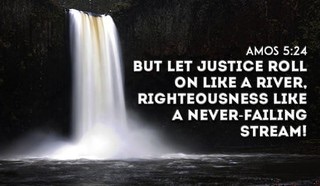
How do you go about applying the role of the ancient Israelite prophet to your own life and experience? 

What aspects of Jeremiah’s call speak to you the most? Why?

How might the sins of the Israelites in Jeremiah 2 be parallel to modern day Christian living?

and then, How might this text guide your reactions to prophetic warnings in the current world?

Featured

Building towards the Creed (7): in conclusion

Looking back over the series of posts I have offered on these earlier credal-like passages found in scripture, I wonder: to what extent have these scripture passages influenced, or contributed to, the wording of the Nicene Creed? Some of them have provided phrases which are taken up in the earlier Apostles Creed, and then adopted by the writers of the Nicene Creed. Some phrases may be alluded to in the Nicene Creed.

However, much of that creed either draws on other comments and descriptions in scripture which are not explicitly credal in their original context; or they reflect the way in which the patristic champions of “orthodoxy” were reflecting on, and developing theologically, the story of Jesus, often in the context of disagreements and debates about particular issues that had emerged since the times in which scripture was written.

The lines that we might trace between these scriptural credal-fragments and the fully-developed Nicene Creed are faint and fragile. A full consideration of how the “non-credal” elements of scripture have informed the Creed is a larger project, beyond the narrow focus I have brought to this series of posts.

The Nicene Creed is undoubtedly a rich and complex document. A number of factors beyond scripture itself have obviously contributed to its development. As Bob Cornwall comments, “as this is a rather extensive statement, history demonstrates that over time early Christians found it necessary to address issues of the day that required more extensive definitions.” See https://www.bobcornwall.com/2025/01/confessing-apostolic-faithnicene-creed.html

On the Nicene Creed in the Uniting Church

I close this series of posts by noting that in the Basis of Union of the Uniting Church in Australia, it is stated that this church accepts this creed as an authoritative statement of faith, “framed in the language of [its] day and used by Christians in many days, to declare and to guard the right understanding of that faith”.

As a minister in the Uniting Church, I am instructed—and long have been committed—to undertake “careful study of [this] creed and to the discipline of interpreting [its] teaching in [this] later age”. That’s far more than the “regular rote reciting” of the Creed that I noted in my last post.

I think for me the Creed has its place as one valid perspective on faith, and although the Council that adopted this saw it as a way of narrowing faith and eliminating other options, I don’t. I do not believe that I am bound by decisions made in 325CE without subjecting them to critical scrutiny and reasoned interpretation. In fact, the Creed should be a basis from which I launch broader and more extensive explorations of matters of faith!

One thing that is very important to me is that a critical and thoughtful approach to the creeds is reflected in the specific wording employed in paragraph 9 of the UCA Basis of Union. This paragraph presents two complementary aspects of the place of creeds in our faith. On the one hand, it specifically notes the authoritative status and doctrinal function that these creeds enjoy within the church.

That’s certainly how the Creed has been seen, and used, over the centuries. It’s almost like it shuts down debate; simply “believe these words” and you are “in”, but “question these ideas” and you are at risk of being declared “outside”. So the Creed, in this view of things functions as a gate; and priests and ministers are the gatekeepers, ensuring the purity of orthodoxy.

Alongside that, however, para. 9 of the Basis of Union notes that the creeds were “framed in the language of their day” and then it commits UCA ministers and instructors “to careful study of these creeds and to the discipline of interpreting their teaching in a later age”.

That’s a clear indication that we need to do the work that is necessary to contextualise the words of the creed and explore carefully how they might be relevant for today. Simply standing and reciting the precise words, week after week, does not come anywhere near to doing this work. We need to dig down into and beyond the words themselves.

Both the authoritative status of the creeds as witnesses to faith, and critical interpretation of the words of the creeds within the present context, are valued in paragraph 9. And that’s as it should be: recognising historical significance of the words, but noting how important it is to contextualise them for our time. (And that’s what we need to do with all parts of the Bible, as well.)

*****

See previous posts at

Featured

Building towards the Creed (6): what Nicaea left out

This year, 2025, marks 1700 years since the Council of Nicaea was held. The Council was called by the Roman emperor Constantine; he invited bishops (local church leaders) from around the Roman Empire, to meet in in his imperial palace in Nicaea, Bythinia (in modern-day Turkey). They met in council from May to July in 325CE. The traditional account of the Council was that 318 bishops attended; most came from eastern churches, with only a small number from western churches. Despite this lopsided representation, the council is known as the first of a series of Ecumenical Councils, allegedly representing the worldwide church.

The end result of the Council was a Creed which bears the name of the meeting place: the Nicene Creed. Half a century later, this creed was expanded at the Council of Constantinople in 381 CE—another council called by the Roman emperor, who was by then Theodosius. What came from this council was the Nicene-Constantinopolitan Creed came to be widely adopted as a foundational expression of the Christian faith. Although various elements in the creed have been interpreted in a variety of ways, it has featured in the ancient churches of the East and the West, and in more recent centuries of the North and South.

However: any mention of the radical life to which Jesus calls disciples is omitted from the two earliest affirmations of faith—the Apostles Creed and the Nicene Creed. In finding a place within the power structures of the Roman Empire, the church fathers left out this aspect of the faith which they confessed. As Chris Budden wrote,

“The teachings of Jesus were a bit of an embarrassment to the [4th century] church and its relationship with power. The creeds which were developed at that time say almost nothing about the real life of Jesus or his teachings. Jesus is a saviour figure rather than one whose life and teachings matter.” (Chris Budden, Why Indigenous Sovereignty Should Matter To Christians, Wayzgoose, 2018, page 62).

The church fathers focussed on “other worldly” matters. Jesus became something of a super man, swooping down from on high to rescue humans from the mess of life and take them to a heavenly home, rather than a prophetic sage active within the gritty realities of earthly life, confronting injustice and living with compassion and grace.

What would a revised Creed look like, if we were to shape one today so that it identified and expressed the essential teachings of Jesus? I have pondered this over the last few years, and have a few suggestions to make.

If we follow the short, staccato precision of the earliest Creed, the Apostles Creed, we could insert something like:

Loving God and loving neighbour,

living in faith and working for justice,

he lived as he taught his followers to live,

praying for the coming of God’s rule here and now.

That’s short and sweet, summing up a lifetime’s teaching in four lines. In my mind, it has the virtue of citing the “two great commandments” that Jesus highlighted, using the key term “justice”, aligning words with deeds, as Jesus exhorted, and focussing on the rule of God, which was the topic for many of the parables and sayings uttered by Jesus.

But this probably fails to do justice to the full range of teachings that are placed on the lips of Jesus in the Gospels (or, at least, in the three Synoptic Gospels).

If we prefer the more expansive developments that unfold in later versions of credal affirmation, we could propose something like:

We rejoice that he came to give

sight for the blind, 

mobility for the lame,

acceptance for the outcast, 

and good news for the poor.

We remember that he guided us

to turn the other cheek and walk the extra mile,

to lend to those in need, expecting nothing in return,

to do to other people what we would have them do to us.

As we walk the way of Jesus, 

who was put to death on a cross,

yet raised back up to life,

we take up our cross, 

and lay down our lives;

we seek to love God with all of our being

and to love others as our neighbours.

In Jesus, we can see what the reign of God looks like;

in following him, we proclaim that reign in our lives,

we yearn that justice will mark all that we do,

and we celebrate the gift of life in abundance

as we work together for the common good.

Yes, that is much longer; it tries to pick up various phrases from scripture which might resonate with us today. It touches on a number of the teachings and sayings of Jesus which are valued within the church. A more expansive creed like this might provide a more realistic statement and a more effective teaching resource for the church today, perhaps? 

An interesting aspect of this process is that it forces you to make some choices amongst the array of words attributed to Jesus … it forces you to show your hand with regard to your own personal “canon within the canon” or ” red letter verses” in the teaching of Jesus. 

You can see what I chose. I wonder what you would choose?

*****

See previous posts at

and the final post at

Featured

Building towards the Creed (5): the Pastoral Epistles

This year, 2025, marks 1700 years since the Council of Nicaea was held. I am posting a series of blogs about the way that the New Testament texts contributed (or didn’t contribute) to the formulation that emerged from that First Ecumenical Council, as it is often styled. In earlier posts I explored affirmations in Paul and the Synoptic Gospels, a section of the letter to the Colossians, and the opening verses of the letter to the Hebrews and the Gospel attributed to John.

In this blog I turn to the Pastoral Epistles, which are often cited in support of a Christianity which is grounded in doctrinal statements about “the faith” These three letters contain regular references to “the faith” (1 Tim 3:9, 13; 4:1, 6; 5:8; 6:10, 12, 21; 2 Tim 2:19; 4:7; Tit 1:1, 4, 13; 3:15) and “the truth” (1 Tim 2:4; 3:13; 4:3; 6:5; 2 Tim 2:18, 25; 3:7–8; 4:4; Tit 1:1, 14). In 2 Timothy there are references to “the word of truth” that needs to be “rightly explained” (2 Tim 2:15) and “the standard of sound teaching that you have heard from me” (2 Tim 1:13), and an injunction to “guard the good treasure entrusted to you, with the help of the Holy Spirit living in us” (2 Tim 1:14). 

Sound teaching is also referenced in 1 Timothy, “the sound teaching that conforms to the glorious gospel of the blessed God” (1:Tim 1:10–11; also 4:6), while the letter to Titus refers to “the word that is trustworthy in accordance with the teaching” that Titus is told will ensure “sound doctrine” (Tit 1:9). These three letters clearly envisage a truth that can be conveyed in proportional statements.

So we find that “the mystery of our religion” can be summed up in six succinct claims about Jesus: that he was “revealed in flesh, vindicated in spirit, seen by angels, proclaimed among Gentiles, believed in throughout the world, taken up in glory” (1 Tim 3:16). 

Whilst the Nicene Creed affirms that Jesus “became human”, the only other element of this six-part credal statement that it reflects is the final clause, which underlies the statement that Jesus “ascended into heaven and is seated at the right hand of the Father … [he] will come again in glory to judge the living and the dead”. There’s nothing here about the salvation that Jesus brings,  despite this being a central Pauline theme (Rom 5:9–10; 10:9–10; 1 Cor 1:18; 15:1–2; 1 Thess 5:9–10) which is referenced in the Nicene Creed in the phrase “for us and for our salvation he came down from heaven”. 

The credal declaration of 1 Tim 3:16 declares that Jesus was “vindicated in spirit”. Although the word used is the same, these seems quite different from the way that the Spirit is referred to in the Nicene Creed, “we believe in the Holy Spirit, the Lord, the Giver of life” (and more). Again, the description of the Spirit in the Nicene Creed has taken various isolated scriptural “proof texts” about the Spirit and woven them into a cohesive “systematic theology” of that person of the Trinity.

It is noteworthy, though, that in 1 Timothy the Spirit has elsewhere been co-opted to become the guarantor of orthodoxy (“guard the good treasure entrusted to you, with the help of the Holy Spirit living in us”,  2 Tim 1:14), and the agent of an ecclesial ritual (God saved us “through the water of rebirth and renewal by the Holy Spirit”, Tit 3:4–6). The Spirit gifts “power … and self-discipline” (2 Tim 1:7), quite a different role from the gifts that are noted in the authentic letters by Paul. Whilst the Nicene Creed declares that the Spirit “has spoken through the prophets”, there is nothing to indicate that the Spirit has a role in guaranteeing orthodoxy.

The two letters Timothy each contain another short credal-like passage, both of which have some loose relationship to the Nicene Creed. The first is “there is one God; there is also one mediator between God and humankind, Christ Jesus, himself human, who gave himself a ransom for all” (1 Tim 2:5–6a). One God, the title Christ Jesus, and the affirmation of his humanity are each reflected in the Nicene Creed, but other phrases have no clear and direct correlation. 

The claim that Christ gave himself as “a ransom for all” most likely echoes the saying attributed to Jesus at Mark 10:45, “the Son of Man came not to be served but to serve, and to give his life a ransom for many”. This, in turn, is believed to be echoing a description of the function performed by “the righteous one, my servant” in the fourth of the four Servant Songs. At the end of this song, the claim is made that the servant “shall make many righteous bearing iniquities or being a ransom and he shall bear their iniquities” (Isa 53:11). 

Although there is no direct reference in the Nicene Creed to bearing iniquities or being a ransom for sin, it is said of Jesus that “for us and for our salvation he came down from heaven”, and that “for our sake he was crucified”. The phrase “for our sake” is considered by various commentators to have an allusion to the process of salvation.

Perhaps the inclusion of this phrase in the Creed was intended to pick up Paul’s affirmation that “for our sake he made him to be sin who knew no sin, so that in him we might become the righteousness of God” (2 Cor 5:21). This, in turn, has statements behind it like “Christ died for our sins in accordance with the scriptures” (1 Cor 15:3), he “loved me and gave himself for me” (Gal 2:20), and he  “gave himself for our sins to set us free from the present evil age” (Gal 1:4). So it does allude in a weak way to a scriptural idea.

The motif of salvation is, of course, at the very centre of Paul’s authentic writings (1 Cor 1:18; Rom 5:9–10; 10:9–19) and in later letters written in his name (Eph 2:5, 8; 1 Tim 2:3–4; 2 Tim 1:8–10; Tit 3:5). In the Creed, by contrast, whilst it is offered as a bare statement, the words move on quickly to other matters. Salvation receives but a passing note; quite a contrast to the way that Paul places it at the heart of his message. He tells the Romans that “now that we have been justified by his blood, will we be saved through him” (Rom 5:9), and the Thessalonians that he was “speaking to the Gentiles so that they may be saved” (1 Thess 2:16).

The second credal-like passage, in 2 Tim 2:11–13, begins with a concept that is more closely related to Paul’s own ruminations on baptism (Rom 6:1–11) than to any element in the Nicene Creed. “If we have died with him, we will also live with him”, the statement in 2 Tim 2 begins; “if we endure, we will also reign with him; if we deny him, he will also deny us; if we are faithless, he remains faithful—for he cannot deny himself.”

This poetic fragment, introduced with “the saying is sure”, sounds more like a sermonic reflection on and extension of the Romans passage. Perhaps “we look for the resurrection of the dead and the life of the world to come”, in the Nicene Creed, might point to some of this sermon in reflection, but the Creed is tighter and more focussed in its statement. Again, the allusion is weak and brief.

But perhaps the intention of those who formed the Creed was simply to note, but not expand on or explain, these central elements of the faith? Perhaps the Creed is actually a fourth century dot-point style bulletin, a list of keynotes that are to be mentioned and that require more detailed and expanded exploration? In which case, it is is study sessions exploring these central,elements of “the faith” which ultimately have much more value, in my opinion, that the rote reciting of these dot-points on a regular basis. Or is my reformed bias showing here??

*****

See previous posts at

and subsequent posts at

Featured

Building towards the creed (4): the Fourth Gospel

Each canonical Gospel ends with an account of the death of Jesus and his burial; the discovery of the empty tomb and subsequent appearances to various followers; and, in one case—that of Luke—an explicit account of his ascending into heaven. (Both Matthew, in its closing scene, and John, in one of the words of the risen Jesus, offer hints about this event without attempting to describe it.) 

The Nicene Creed certainly acknowledges this, albeit in a staccato shorthand manner: “on the third day he rose again in accordance with the scriptures; he ascended into heaven and is seated at the right hand of the father”. It then goes on to describe future events yet to take place: “he will come again in glory to judge the living and the dead, and his kingdom will have no end”. 

These statements draw from isolated verses found in a range of different contexts: various sayings attributed to Jesus, some statements made in Acts and some letters, and inferences drawn from Revelation. They are collated into a succinct, cohesive set of affirmations. It’s a very early instance of a method that became widespread throughout the centuries: weaving isolated “proof texts” into a single “systematic theology”.

However, the Creed turns a blind eye to much of what is told in the various Gospels, in terms of what Jesus said and did, who he encountered and what it meant to respond to his command to “follow me”, where he spent his time and what essential teachings he conveyed. These things were important to the Gospel writers—but not, it would seem, to the framers of the Creed. Perhaps they simply assumed these things from knowledge of the Gospel? But this would not explain why other aspects of the New Testament texts are, as we have seen, directly referenced within the Creed. Some selective editing was at work! See

The one exception to this might well be the thread running through the fourth Gospel, in which the series of conflicts that Jesus has with authorities in Judea revolve around the status of Jesus and his relationship to God. This issue sits at the heart of John’s Gospel, and it is also at the centre of the concerns reflected in the Nicene Creed.

In the Prologue to this Gospel, as we have seen, the pre–existent Logos, the word made flesh, Jesus Christ, is the one who “makes God known” (1:1, 14, 17-18). Jesus “speaks the words of God” (3:34; 8:47; 12:50; 14:8–10; 17:14), gives teaching which is “from God” (7:16–18; 14:24; 17:7–8), makes known “everything that I have heard from my Father” (15:15), utters words of “spirit and life” (6:63, 67). For the author of this Gospel, Jesus is, indeed, the Word who was always with God (1:1).

There are some striking claims made about Jesus in this Gospel, which relate directly to the Creed. Beside the Sea of Tiberias, Simon Peter affirms that, in Jesus, “we have come to believe and know that you are the Holy One of God” (John 6:69). Later, in Bethany, it is Martha who expresses what Peter had said (in the Synoptic Gospels) at Caesarea Philippi, “I believe that you are the Messiah, the Son of God”, before continuing with a characteristically Johannine addition, “(you are) the one coming into the world” (John 11:27).

It is worth exploring, however, how some of the other statements spoken about Jesus in this Gospel were made in contexts of dispute and disagreement. In the first half of the Gospel, the leaders in Jerusalem hear a series of teachings from Jesus and respond with surprise and a growing antagonism.

These leaders witnessed the healing of a lame man by Jesus and heard his claims about his authority (ch.5), leading them to accuse him of “making himself equal to God” (5:18). They heard him speak about himself as “the living bread which came down from heaven” (ch.6), although the key response in this chapter is not from the authorities, but from those following Jesus: “this teaching is difficult; who can accept it?” (6:60).

As Jesus teaches during the Festival of Booths (ch.7), “the chief priests and Pharisees sent temple police to arrest him” (7:32), but this threat was not carried through, for the temple police report back with their observation, “never has anyone spoken like this!” (7:46). Jesus continues with a further speech, claiming “I am the light of the world” (8:12; also 9:5). Is this a deliberate echo of the “pillar of fire by night” that gave light to the travelling Israelites (Exod 13:21; Neh 9:12, 18)? Certainly, looking forward from John’s Gospel, there is a clear allusion to this claim in the credal affirmation that Jesus is “Light from light”.

After Jesus makes this claim, the debate with the authorities intensifies with Jesus accusing them, “you are from your father the devil, and you choose to do your father’s desires” (8:44) and the authorities responding, “are we not right in saying that you are a Samaritan and have a demon?” (8:48). This scene ends with the first threat to stone Jesus (8:59).

Then, after some Pharisees take the lead in interrogating a man who had been healed from his blindness by Jesus (ch.9), they reviled Jesus with the statement, “we are disciples of Moses; we know that God has spoken to Moses, but as for this man, we do not know where he comes from” (9:28–29). The antagonism continues, focussed around the identity of Jesus. In a further speech, Jesus then claims “I am the gate for the sheep”, lambasting those who came before him (presumably the Jewish authorities and their precursors) as “thieves and bandits”, declaring that “the sheep did not listen to them” (10:7–8). 

Jesus intensifies matters still further when he appropriates the shepherd, a well-known image for leadership amongst the Jews (Jer 3:15, 23:4; Ezek 34:1–12; Ps 78:70–72), claiming that “I am the good shepherd” (John 10:11, 14). Again, he is accused by some of being possessed by a demon, although not all agree (10:19–21), and again there is a threat to stone him (10:31). His words are provocative: “the Father and I are one” (10:30). The response is equally incendiary: “you, though only a human being, are making yourself God” (10:33). 

Yet again, Jesus avoids being arrested (10:39), but what he does next seals the deal in the mind of his powerful opponents. Responding to a plea to travel to Bethany, where his beloved friend Lazarus was ill, Jesus arrives to find him dead and in his tomb (ch.11). The narrator reports that Jesus made a sweeping claim for himself: “I am the resurrection and the life” (11:25)—the last of seven “I am” statements in this Gospel, which cumulatively provide a significant case for the unique significance of Jesus. For the author of this Gospel, Jesus is “the only Son, who is close to the Father’s heart” (1:18) who has been “made equal with God” (5:18); indeed, the Johannine Jesus claims explicitly, “the Father and I are one” (10:30).

To demonstrate that he is indeed “the resurrection”, Jesus called Lazarus out of the tomb—as a result of which, “many of the Jews therefore, who had come with Mary and had seen what Jesus did, believed in him” (11:45). Some of them, however, “went to the Pharisees and told them what he had done” leading to a meeting of the council which determined to put him to death (11:46–53). And so the decision is made, and the path is set. 

Soon after, the narrator reports that “Jesus, knowing that the Father had given all things into his hands, and that he had come from God and was going to God, got up from the table, took off his outer robe, and tied a towel around himself” (13:3–4). Later, Jesus told his followers that “now the Son of Man has been glorified, and God has been glorified in him. If God has been glorified in him, God will also glorify him in himself and will glorify him at once” (16:27). 

Then, after his death—and his resurrection from that death—Thomas utters the definitive Johannine declaration about, Jesus: “My Lord and my God!” (20:28). There can be no doubt, for this evangelist, about that claim. (No Synoptic author comes close to attributing any such claim to Jesus.) Again, the Nicene Creed echoes this in its assertion that Jesus is “true God from true God … of one being with the Father”.

It is worth recalling the antagonistic context in which Jesus makes some of his best-known and much-beloved affirmations. It is also worth noting that the Council that made the decisions about the wording of the Nicene Creed was also an environment of highly-contested disagreements. Why, the tale is told of one member who used physical violence to restrain another, echoing the conflicts of John 5–11. At least in this regard, those who wrote the Creed were faithful to the aggressive methos and polemical tone of scripture!

This Gospel thus follows a very different pathway from that offered by the Synoptics Gospels, which relentlessly orient the focus of the reader or hearer onto what Jesus said and did in Galilee, and then what was said and done to Jesus in Jerusalem. And the Nicene Creed, of course, happily ran headlong along the pathway opened up by the fourth Gospel, and, as we have noted, left the many significant elements of the body of each of the Synoptic Gospels to be noted, almost as afterthoughts, in a short sequence of punctiliar comments: he “became incarnate … was made human … was crucified under Pontius Pilate … suffered death and was buried”.

See previous posts at

and subsequent posts at

Featured

Building towards the Creed (3): the preludes of Hebrews and John’s Gospel

This year, 2025, marks 1700 years since the Council of Nicaea was held. I am posting a series of blogs about the way that the New Testament texts contributed (or didn’t contribute) to the formulation that emerged from that First Ecumenical Council, as it is often styled. The first post explored some one-phrase credal-like affirmations in Paul and the Synoptic Gospels; the second post examined a section of the letter to the Colossians.


Icon depicting Constantine the Great, accompanied
by some of the bishops of the First Council of Nicaea (325),
holding the Niceno-Constantinopolitan Creed of 381.
First line of main text in Greek: Πιστεύω εἰς ἕνα Θ[εό]ν, πατέρα παντοκράτορα, ποιητὴν οὐρανοῦ κ[αὶ] γῆς. Translation: “I believe in one God, the Father the Almighty, Maker of heaven and earth.”

We have looked at 1 Corinthians and a scene in the Synoptic Gospels, as well as a passage in Colossians that draws significantly on Wisdom texts to explain the importance of Jesus. There are other places in the New Testament which make quite explicit use of the Wisdom literature as they take ideas about Lady Wisdom—as co-creator with God, as revealed and teacher of things from God—and apply them directly to Jesus. In the course of doing this, of course,  Wisdom loses her feminine identity, as it is subsumed in the masculine figure of Jesus (as we have already seen in Colossians). In the first few centuries of the church, Patriarchy Rules!!

The two places where this use of Wisdom motifs can be seen are in the opening verses of the letter to the Hebrews (Heb 1:1–4) and in the majestic poetic prologue to John’s Gospel (John 1:1–18). In both cases, Jesus is the speaking forth of God, as Wisdom was; and in both cases, Jesus is seen to have been present with God at the creation of the world, and active in the creative process, as Wisdom was.

In the prologue to Hebrews, its anonymous author declares that God, who “long ago spoke to our ancestors in many and various ways by the prophets” has more recently, “in these last days … spoken to us by a Son” (Heb 1:1), one who “sustains all things by his powerful word” (Heb 1:3). In the prologue to the fourth Gospel, the John who is attributed as its author similarly declares that the pre–existent Logos (John 1:1), revealed as “the Word [who] became flesh” (John 1:14), was the one who “makes God known” (John 1: 17–18). 

These statements mirror the affirmations made in earlier Jewish texts about Wisdom. According to Proverbs, her declaration is very public: “Wisdom cries out in the street; in the squares she raises her voice; at the busiest corner she cries out; at the entrance of the city gates she speaks” (Prov 1:20–22; see also 8:1–3). What she speaks bears the mark of God’s teachings; her words are noble, true, what is right, and completely righteous (Prov 8:6–8).

As she speaks, teaching her children, she “gives help to those who seek her” (Sir 4:11). As he writes of Wisdom in a later time, Ben Sirach describes how “in the assembly of the Most High she opens her mouth, and in the presence of his hosts she tells of her glory” (24:1–2). In her words is wisdom for life and instruction for souls (51:25–26).

The motif of “word” then runs consistently throughout the fourth Gospel: Jesus “speaks the words of God” (John 3:34; 8:47; 12:50; 14:8–10; 17:14), gives teaching which is “from God” (7:16–18; 14:24; 17:7–8), makes known “everything that I have heard from my Father” (15:15), utters words of “spirit and life” (6:63, 67). For the author of this Gospel, Jesus is, indeed, the Word who was always with God (1:1). It is a striking appropriation of the role that Wisdom has played, according to these earlier texts. 

Turning back to the prologue to this Gospel, we note that Jesus is portrayed not only as the speaking-forth of God as “the word”, but also as the one who manifests glory, “the glory as of a father’s only son, full of grace and truth” (John 1:14). Indeed, the glory shown by Jesus had been evident centuries earlier, as was attested in the words of Isaiah (John 12:41).

This claim about Jesus resonates with the description of Wisdom as “a pure emanation of the glory of the Almighty” (Wisdom Sol 7:25). Indeed, the motif of “glory” hearkens back to wilderness stories in Exodus and Numbers and receives its clearest New Testament expression, in relation to Jesus, at Col 1:15–20, as we have previously seen.

The imagery of “glory” is taken up and then intensified in the prologue of Hebrews, where Jesus is seen as “the reflection of God’s glory and the exact imprint of God’s very being” (Heb 1:3). Indeed the Wisdom of Solomon, the figure of Wisdom was portrayed in majestic terms as “a breath of the power of God … a reflection of eternal light, a spotless mirror of the working of God, and an image of [God’s] goodness” (Wisd Sol 7:25–26). Hebrews itself echoes the language of the Wisdom of Solomon.

The person of Wisdom, a reflection of God, the exact imprint of God, emanating directly from the Almighty, had earlier been described in Proverbs as being “set up, at the first, before the beginning of the earth” (Prov 8:30), taking part with the deity in the acts of creation. The poetry builds through repetition and ever-expanding circle of influence; when “he established the heavens, I was there”, she says; “when he drew a circle on the face of the deep, when he made firm the skies above, when he established the fountains of the deep, when he assigned to the sea its limit … when he marked out the foundations of the earth” (Prov 8:27–29). In all these acts of creation, Wisdom was beside the Lord, “daily his delight, rejoicing before him always, rejoicing in his inhabited world and delighting in the human race” (Prov 8:30–31).

This affirmation leads on to the claim that Wisdom “pervades and penetrates all things” (Wisd Sol 7:24) and “renews all things … [she] passes into holy souls and makes them friends of God, and prophets” (Wisd Sol 7:27). She “reaches mightily from one end of the earth to the other, and she orders all things well” (Wisd Sol 8:1). Likewise, Jesus son of Sirach writes in a song of Wisdom that she “came forth from the mouth of the Most High, and covered the earth like a mist” (Sir 24:3), expanding on this in a sequence of grand claims: “I dwelt in the highest heavens, and my throne was in a pillar of cloud. Alone I compassed the vault of heaven and traversed the depths of the abyss. Over waves of the sea, over all the earth, and over every people and nation I have held sway.” (Sir 24:6).

And so, just as Wisdom has been with God since the beginning, working with God in every phase of creation, the claim is then made for Jesus, the Word,  that he was “in the beginning with God” (John 1:2), and that “all things came into being through him, and without him not one thing came into being” (John 1:3). The co-creative role of Wisdom has been claimed for the Word, the sole creator of the world.

And, indeed, the presence of this Word throughout all the world is expressed in another characteristic Johannine image, as the Word comes as “the light of all people” a light which “shines in the darkness”, the “true light” which “enlightens everyone” (John 1:4–5, 9). This is picked up with focussed clarity in the claims later put onto the lips of Jesus, “I am the light of the world” (8:12; 9:5; and see 12:35–36, 46).

So there is a clear and direct trajectory in Jewish documents, from the scriptural text of Proverbs, through the Intertestamental texts of the Wisdom of Solomon and Ben Sirach, into the New Testament texts as indicated. And from there, into the credal structures of the emerging patristic church, affirming that belief in Jesus entails acknowledgement that he is “the only Son of God, eternally begotten of the Father, God from God, Light from Light, true God from true God, begotten, not made, of one being with the Father”. Whilst some of the precise terminology and its relationship to the biblical texts might be debated, the line of development (from Wisdom, to Word, to creed) is clear.

All of which makes it rather striking that so much of the second section of the Nicene Creed is devoted to articulating a line of thought that draws from a relatively small collection of biblical texts, whilst almost completely ignoring the vast majority of what the New Testament bears witness to: the life of Jesus, his teachings, his fervent sense of justice, his passionate desire to reform and renew Judaism, and the miraculous deeds attributed to him.

The richness of meaning and wideness of scope of so many stories and teachings and passages within the New Testament is reduced and narrowed to a small collection of words in the creed. The creed itself is largely focussed on matters heavenly, speculative, and philosophical. Such is the nature of the Nicene Creed.

*****

See earlier posts at

and subsequent posts at

Featured

Building towards the Creed (2): Colossians

This year, 2025, marks 1700 years since the Council of Nicaea was held. I am posting a series of blogs about the way that the New Testament texts contributed (or didn’t contribute) to the credal formulation that emerged from that First Ecumenical Council, as it is often styled. The first post explored some one-phrase credal-like affirmations in Paul and the Synoptic Gospels. In this post the focus is on a section of the letter to the Colossians.


Icon depicting Constantine the Great, accompanied
by some of the bishops of the First Council of Nicaea (325),
holding the Niceno-Constantinopolitan Creed of 381.
First line of main text in Greek: Πιστεύω εἰς ἕνα Θ[εό]ν, πατέρα παντοκράτορα, ποιητὴν οὐρανοῦ κ[αὶ] γῆς. Translation: “I believe in one God, the Father the Almighty, Maker of heaven and earth.”

Alongside the very short credal affirmations found in 1 Corinthians and the Caesarea Philippi scene in the Synoptic Gospels (see first post), another place in the New Testament where language from the scriptural traditions of Judaism is used to shape an affirmation of what is believed about Jesus is in the first chapter of the letter to the Colossians.

Col 1:15–20 provides us with a more complex example of what we might consider to be a creed “before Nicaea”. It provides some of the material for the developed theological confession of Jesus that the Nicene Creed uses (as just noted).

The author of this letter (claiming to be Paul, 1:1, although I am not convinced it was actually by him) begins with the expected words of greeting (1:1–2) and prayer of thanksgiving (1:3–8). The prayer morphs into a prayer of intercession for the Colossians (1:9–12), cycling back into an expression of thanks to “the Father” (1:12) for what he has done through “his beloved Son” (1:13–14). 

This thanksgiving then morphs seamlessly (in the original Greek, there is no sentence break) into an extended affirmation about Jesus, “the image of the invisible God, the firstborn of all creation … the head of the body, the church … the beginning, the firstborn from the dead …[in whom] all the fullness of God was pleased to dwell” (1:15–20).

This is quite an extension to the expression of thanks; the sentence in Greek actually begins in v.9 and continues through multiple subordinate clauses to v.20! It offers a relatively early consideration of “the person and work of Jesus Christ”, as later systematic theology writers would label it. It is a complex and intricate affirmation of faith.

The main thrust of this early creed, if we can call it that, can best be understood by giving consideration to the way this it draws on Jewish elements—specifically, the Wisdom material found in parts of Hebrew Scripture. Jesus is portrayed very much in the manner of Lady Wisdom, as we encounter her in scripture in Proverbs 8, and then in the deuterocanonical works of Ben Sirach (Ecclesiaticus) and the Wisdom of Solomon.

In Colossians, of course, the attributes of the female Wisdom are applied directly to the male Jesus. Jesus is here described as the agent of God’s creative powers: “in him all things in heaven and on earth were created … all things have been created through him and for him” (Col 1:16). In the same way, in Proverbs Wisdom herself is said to have declared that “ages ago I was set up, at the first, before the beginning of the earth … when [the Lord] established the heavens, I was there … when he marked out the foundations of the earth, then I was beside him, like a master worker” (Prov 8:22–31). 

In the Wisdom of Solomon, Wisdom is described as “the fashioner of all things” (Wisd Sol 7:22), “a breath of the power of God” who “pervades and penetrates all things”(7:24–25), who was “present when you [God] made the world” (9:9), whose “immortal spirit is in all things” (12:1). 

In Ben Sirach, Jesus, son of Sirach, declares that “Wisdom was created before all other things” (Sir 1:4), that at the very first she “came forth from the mouth of the Most High, and covered the earth like a mist” (Sir 24:3), and “compassed the vault of heaven and traversed the depths of the abyss” (24:5) as she undertook her creative works, distinguishing one day from another and appointing “the different seasons and festivals” (33:7–8).

Jesus Christ, as the one who is “before all things” (Col 1:17), reiterates what Wisdom declared, that “before the mountains had been shaped, before the hills, I was brought forth—when [the Lord] had not yet made earth and fields, or the world’s first bits of soil” (Prov 8:25–26).

So Jesus is the one who has “first place in everything” (Col 1:18), just as the works of Wisdom can be traced “from the beginning of creation” (Wisdom Sol 6:22). The importance of these Wisdom writings for what is stated in Col 1 is clear. (The same writings underpin the theological affirmations made about Jesus in Heb 1:1–4 and John 1:1–18; on which, see later posts.)

The passage in Colossians also indicates that believers are “transferred … into the kingdom of [God’s] beloved son” (Col 1:13); they are rescued (1:13) and redeemed (1:14) by the work of Jesus. In similar fashion, the Wisdom of Solomon contains a long section praising Wisdom who was actively involved in human affairs from when “she delivered him [Adam] from his transgression” (Wisd Sol 10:1), saved the people at the Exodus, and guided the Conquest and settlement in the land. It was Wisdom who punished the Canaanites (12:3–11), sinful Israelites (12:19–22), and the Egyptians (12:23–27), as well as all idolators (13:1—14:31).

A similarly lengthy poem praising the works of Wisdom occurs in chapters 44 to 50 of Ben Sirach, extending all to the way to Simon, son of Onias (high priest in the early C3rd BCE), just as the creative work of Jesus is noted in the Nicene Creed (“through him all things were made”, so his salvific work is also briefly described (“for us [all] and for our salvation he came down from heaven“).

These fleeting references draw on the way in which scripture has used the Wisdom literature— although, of course, all four Gospels and many Epistles note the forgiving, saving, delivering work of Jesus. It is, in fact, the bedrock of the developing patristic theology of the time between the New Testament and the early Ecumenical Councils. 

*****

See the first post at

and subsequent posts at

Featured

Building towards the Creed (1): Corinth and Caesarea Philippi

This year, 2025, marks 1700 years since the Council of Nicaea was held. The Council was called by the Roman emperor Constantine; he invited bishops (local church leaders) from around the Roman Empire, to meet in in his imperial palace in Nicaea, Bythinia (in modern-day Turkey).

Those bishops met in council from May to July in 325CE. The traditional account of the Council was that 318 bishops attended; most came from eastern churches, with only a small number from western churches. Despite this lopsided representation, the council is known as the first of a series of Ecumenical Councils, allegedly representing the worldwide church.

The end result of the Council was a Creed which bears the name of the meeting place: the Nicene Creed. Half a century later, this creed was expanded at the Council of Constantinople in 381 CE—another council called by the Roman emperor, who was by then Theodosius.


Icon depicting Constantine the Great, accompanied
by some of the bishops of the First Council of Nicaea (325),
holding the Niceno-Constantinopolitan Creed of 381.
First line of main text in Greek: Πιστεύω εἰς ἕνα Θ[εό]ν, πατέρα παντοκράτορα, ποιητὴν οὐρανοῦ κ[αὶ] γῆς. Translation: “I believe in one God, the Father the Almighty, Maker of heaven and earth.”

What came from this council was the Nicene-Constantinopolitan Creed came to be widely adopted as a foundational expression of the Christian faith. Although various elements in the creed have been interpreted in a variety of ways, it has featured in the ancient churches of the East and the West, and in more recent centuries of the North and South.

Where does this creed come from? There are some passages in scripture which have a “credal-like” quality. Might consideration of those sections of scripture lead us to understand what drove those fourth century bishops to formulate such a creed? I begin by considering two relevant passages where the early “credal-like” statement is very short. 

First: Corinth

The starting point for me would be in an early New Testament document, the first (extant) letter to the Corinthians, which Paul and Sosthenes wrote to the community of faith in Corinth in the middle of the fifth century (as we count time).

Paul and Sosthenes wrote addressing a situation where factionalism, dubious morality, unrestrained chaos in worship, theological divisions, and differing approaches to cultural practices threatened the very existence of a cohesive faith community. Seeking a common denominator that all could commit to and focus on as their bedrock, they proposed “Jesus is Lord” (1 Cor 12:3) as a foundational affirmation. 

A contemporary imagining of Paul and Sosthenes

This confession describes Jesus using a term with significance in Hebrew Scripture (“who is God except the Lord?”, Ps 18:31). Later commentators have observed that within the Roman imperial context, the Emperor functioned in the manner of a Lord—although the precise claim that Christians were forced to say “Caesar is Lord” is not substantiated by any extant ancient document.

So the first credal statement in the early years of the movement that Jesus initiated was born in the midst of conflict, as a way to bring cohesion and unity. We know, however, from subsequent correspondence involving believers in Corinth (letters known as 2 Corinthians and 1 Clement) that this rhetorical effort was a failure; conflict and divisions continued within the community throughout the remainder of the first century CE. Later, at the Council of Nicaea, the tile “Lord” was applied both to Jesus (“the m

Next: Caesarea Philippi

Nevertheless, other writers in that early Jesus movement adopted a similar strategy, writing short, succinct statements which they believed would serve to unite disparate factions. In the earliest extant written account of the public activities of Jesus, Simon Peter tells Jesus, “you are the Messiah” (Mark 8:29). This was a simple Jewish affirmation, referring to one who had been anointed for a task as a prophet. We have indications of this for Elisha (1 Ki 19:16) and for an unnamed post-exilic prophet (Isa 61:1).

An imaginative depiction of David being anointed as king

Anointing was also used in the installation of kings: Saul (1 Sam 10:1–2; 15:7), David (1 Sam 16:13, in Israel; 2 Sam 2:1–7, in Judah; 5:1–5, 17; 12:7; 23:1, over all Israel), Solomon (1 Ki 1:38–40, 45), Jehu (2 Ki 9:1–3, 6, 12), Joash (2 Ki 11:12), Jehoahaz (2 Ki 23:30), and all of David’s descendants (Ps 18:50; 45:7; 89:20–21, 38–39, 49–51; 132:10, 17). 

Drawing from this Jewish heritage to make this confession makes sense, given that Jesus and Simon Peter were both Jewish men, and the incident that provoked this response by Peter took place on Jewish land—amongst “the villages of Caesarea Philippi”, on the northernmost edge of Israel.

A later writer took this confession—another very early creed, if you like—and expanded it just a little. “You are the Messiah, the Son of the living God”, Peter declares, in Matthew’s version of the incident (Matt 16:16).

Messiah in Hebrew

Just as “Messiah” was a well-known term in Hebrew Scripture, so too “living God” is applied to the God of Israel in narratives (Deut 5:26; Josh 3:10; 1 Sam 17:26, 36; 2 Ki 19:4, 16, repeated at Isa 37:4, 16), prophets (Jer 10:10; 23:36; Dan 6:20, 26; Hos 1:10), and in psalms (Ps 42:2; 82:2). The use of a scriptural title to describe the significance of Jesus is thus an early credal affirmation. 

The scriptural title of Messiah appears in the Nicene Creed in the Greek equivalent, Christ, when the second part of the creed is introduced: “We believe in one Lord Jesus Christ”, before proceeding to use other terms for the exalted nature of Jesus as “eternally begotten of the Father; God from God, Light from Light, true God from true God; begotten not made, one in being with the Father”. These phrases are taken from parts of scripture that are not credal as such, but which reflect on the nature of Jesus in a developed theological manner. We will explore them in later posts.

*****

See

Featured

Inscriptions as doorways into religion in antiquity

How do we know about religion in the ancient world? We get lots of information from writers of the time, who either write explicitly about the religions being practised, or include material in their work that offers insights. The Old Testament contains Torah and associated literature which tells us about the development of Israelite religion and then Judaism, while the New Testament tells us about the formative period of Christianity. 

Beyond those sacred texts Jewish literature continues into the rabbinic period, probing and exploring every dimension of Torah, while Christian writers of the centuries after Jesus write and debate, documenting liturgies and formulating doctrine. A whole host of pagan writers across all those time periods reveal insights into both of these religions as well into as the array of gods and goddesses who were worshipped in ancient times. We have a wealth of information!

Alongside these writers, however, there are many inscriptions from the ancient world which give us direct access into the religious world of the day. These are, by their nature, localised, individualised, focussed, even fragmentary; yet the collective set of insights from such inscriptions, alongside the written literature, deepens and widens our understanding. Here’s a brief glimpse of what we might learn.

Erecting a plaque in church is a modern phenomenon; the same was done back in antiquity. There are many instances of inscriptions found in archaeological sites in the Mediterranean region. Hellenistic inscriptions abound, serving a range of purposes—including the dedication of a holy space to a designated God, as well as a note indicating who the primary benefactor was for the erection of such a building. Letters were chiselled into a stone block before it was then attached to the wall of the temple. They were sturdy when made, and so have lasted over the centuries.

1. Temple Inscriptions

Inscriptions in pagan temples are useful for indicating the particular deity being worshipped. They usually include the name of the god or goddess who is worshipped in this space, and the name of the benefactor(s) who funded the erection of the inscription (or the whole building). In many cases, the deity is addressed with a twofold name—one indicating a Greek or Roman deity, the other either a name indicating function or a name of a local deity (in another language) who has become attached to the Greek or Roman deity.

A simple example is the Priene Inscription of Alexander the Great. This is an early dedicatory inscription made by Alexander in about 330 BCE. It was discovered at the Temple of Athena Polias in Priene, in modern Turkey, during an 1868–69 archaeological exploration of Priene. It is inscribed on both sides. It reads, quite simply:

King Alexander dedicated the Temple to Athena Polias.

In this inscription, Polias is derived from polis, city, and so the dedication is most likely to Athena, protector of the city.

2. Inscriptions in Dura—Europos

Dura—Europos was a Hellenistic settlement on the eastern edge of Alexander’s empire, in the middle Euphrates. Numerous archaeological remains were discovered in the 1920s and brought to Yale University, where a special room houses numerous inscriptions and building remains. (It was in this room that I did my graduate seminar in Epigraphy, learning how to document and translate Ancient Greek inscriptions.)

There are many temples in the city, with inscriptions dedicating those various buildings to a range of deities. It is because of these inscriptions that we know who was worshipped in each building: Zeus Theos, Zeus Megistos, Zeus Kyrios, Atargatis, Artemis Nanaia,  Artemis Azzanathkona, Adonis, Tychaios, Bel, and Aphlad. There was one other temple to an unidentified deity. People were very religious at that time! The twofold names on some inscriptions reflect either a function (Theos = god, Megistos = great, Kyrios = lord) or a local deity (Nanaia was the Mesopotamian goddess of fertility; Azzanathkona was a Semitic goddess, unknown in any place other than Dura—Europos).

There was also a Jewish synagogue (with highly decorated artwork on its walls), a temple co-dedicated to Jupiter Dolichenus )with one room dedicated to Turmasgade and another room dedicated to Juno Dolichena), a Mithraeum, place where Mithras was worshipped (a bull-shaped deity who was popular amongst Roman soldiers), and a Citadel Temple of Zeus, the official worship space for the Roman troops stationed there.

In the 2nd century BCE, while Dura—Europos was under Parthian control, a certain Alexander raised a dedicatory inscription in Greek for a renovated temple. His father had originally built it, but Roman soldiers had stolen its doors, thereby prompting Alexander to replace them and enlarge the temple itself. 

In this inscription Alexander initially described himself as Alexander, son of Epinikos, but he subsequently called himself Ammaios, this same Alexander. Alexander is a Greek name—presumably his birth name—whilst Ammaios is a Semitic name.

The dedication is to Artemis, Greek goddess of the hunt and sister of Apollo, who is also given the name Azzanathkona, a Semitic goddess otherwise unknown. One leading scholar identifies her with Atargatis, a fertility goddess in Syria. So it seems that this inscription indicates that Alexander, with origins in a Greek-speaking area, had been sent east to Dura (perhaps as a soldier?), become enculturated over time (maybe even married a local woman, as many soldiers did), and adopted a local name, Ammaios, as well as becoming a devotee of a local goddess, Azzanathkona. All this from one inscription!

Aerial view of Dura—Europos, taken from the east.
Yale University, 1997

3. Jerusalem Temple Inscription

Jews also made and erected inscriptions. In Jerusalem, there was an inscription of seven lines that was placed outside the sanctuary of the Second Temple, warning Gentiles not to proceed any further. It is dated between 23 BCE and 70 CE. It was found in 1871 just outside the Gate to the Temple Mount in Jerusalem. Some letters still contain traces of the red paint that would have highlighted the whole text.

No stranger is to enter /  within the balustrade round / 
the temple and / enclosure. Whoever is caught / 
will be himself responsible / for his ensuing / death.

4. Synagogue Inscriptions

Synagogues also include inscriptions, some identifying the purpose of the building or the name of the benefactor who paid for its building. The Theodotus Inscription is a well-known example. It has ten lines, 75cm x 41cm, and was found in 1913 in a dig in Wadi Hilweh, in East Jerusalem. It was erected by Theodotus, the patron and leader of the synagogue. The inscription identifies him as benefactor and gives details of the whole building complex; it’s an important insight into the fact that ancient synagogues were not just places of worship and teaching, but also places of hospitality for visitors.

Theodotos son of Vettenus, priest /
and head of the synagogue (archisynágōgos), 
son of a head of the synagogue, / 
and grandson of a head of the synagogue, / 

built the synagogue / 
for the reading of the law and for

the teaching of the commandments, /
as well as the guest room, the chambers, /

and the water fittings as an inn /
for those in need from abroad,
the synagogue which his fathers / 
founded with the elders / and Simonides.

5. Christian inscriptions.

There are Christian inscriptions in church spaces that have been excavated, increasing in numbers over the centuries. The Akeptous Inscription is one of a number of inscriptions found in the mosaic floor of a 3rd century church. It was discovered in 2005 while digging inside the Megiddo Prison in Israel. There are six lines in this simple inscription: 

A gift / of Akeptous, /  she who loves God, / 
this table [is] / for God Jesus Christ, / a memorial.

This reminds me of many churches where I have been, where a small plaque is placed outside the building, marking its opening.

There are also many churches that have plaques inside; such a plaque may indicate that it was erected in memory of a named person, and it can be attached to the the wall, the communion table, a chair in the sanctuary, a lectern, or even (as in the case where I currently worship) the light switch that turns on the light behind the central cross!

6. Women in Jewish synagogue inscriptions.

Scholar Bernadette Brootten wrote a groundbreaking book, Women Leaders in the Ancient Synagogue: Inscriptional Evidence and Background Issues (published in 1982). Brooten identified nineteen Greek and Latin inscriptions that name women with the titles “head of the synagogue,” “leader,” “elder,” “mother of the synagogue,” and “priestess”.

The inscriptions have been found by archaeologists in synagogues from the Roman and Byzantine periods; they range in date from 27 BCE to the sixth century CE and were found in Italy, Asia Minor, Egypt, and Palestine. So they cover a broad range of dates and locations. 

Brootten argues that in these inscriptions the women leaders are not simply “honorary” leaders (as some dismissively claim); she considers that they identify actual leaders, who had specific leadership functions. For instance, a white marble sepulchral plaque from Gortyn in Crete dating to the 4th or 5th century CE remembers Sofia:

Sofia of Gortyn, elder (presbytera)
and head of the synagogue (archisynagōgissa)
of Kissamos [lies] here.
The memory of the righteous one for ever. Amen. 

Centuries earlier, a second-century CE inscription from Smyrna mentions a woman named Rufina who was a synagogue ruler. The inscription reads: 

Rufina, a Jewess synagogue ruler (archisynagōgos),
built this tomb for her freed slaves
and the slaves raised in her household.
No one else has a right to bury anyone here.

In the inscriptions found and discussed by Brootten, there are three Greek inscriptions in which women have the title archisynagōgos or archisynagōgissa (arch– plus “an element formed from the institution over which the officer stands, in this case the synagogue”).

In another inscription, Peristeria is called archēgissa, “leader.” Six ancient Greek inscriptions have been found in which women carry the title “elder” (presbytera or presbyterēsa) and one in which a woman is called presbytis. Women are called “mothers of the synagogue” in six Greek and Latin inscriptions and “priest” (hierea or hierissa) in three Jewish inscriptions.

(Summary taken from a review of the digital [2020] edition of the book by Elizabeth Anne Willett, https://www.cbeinternational.org/resource/book-review-woman-leaders-in-the-ancient-synagogue/ )

Brootten also notes that various biblical references, as well as writings from Jewish historian Josephus and rabbinic teachings, indicate that Jewish women were present and often prominent in synagogues, and they did not sit separately from men. She reviews the reports of quite a number of archaeological sites where synagogues existed, and concludes that “the vast majority of ancient synagogues in Israel do not seem to have possessed a gallery, and there is no archaeological or literary reason to assume that side rooms were for women”.

Likewise, she notes that “there is no Diaspora synagogue in which a strong archaeological case can be made for a women’s gallery or a separate women’s section. The analogy of a separate room as a woman’s section in modern synagogues is anachronistic.” That puts paid to separation by gender in synagogues in antiquity.

Brootten’s work is important for understanding the biblical stories of Lydia, who appears to have been the leader of a synagogue (“place of prayer”) in Philippi (Acts 16:13–15) and quite a number of other women who are identified as leaders of faith communities in Acts: Priscilla in Ephesus (18:26), Tabitha in Joppa (9:36), Mary the mother of John Mark in Jerusalem (12:12), and possibly Damaris in Athens (17:34); as well as women so identified in the letters of Paul: Phoebe in Cenchraea (Rom 16:1–2), Prisca (and Aquila) in Ephesus (1 Cor 16:19) and also in Rome (Rom 16:3–5), Euodia and Syntyche in Philippi (Phil 4:2), Apphia (with Philemon and Archippus) in  Colossae (Phlm 1), Nympha in Colossae (Col 4:15), and possibly Chloe in Corinth (1 Cor 1:11) and Junia in Rome (Rom 16:7); and 2 John (“the elect lady”).

See more at https://margmowczko.com/new-testament-women-church-leaders/ 

Featured

There in heaven a door stood open (Rev 4)

In the book of Revelation, we are invited into a world of unfettered imagination, with evocative imagery, enticing language, and disturbing rhetoric. The whole book comes from words spoken by “one like the Son of Man, clothed with a long robe and with a golden sash across his chest” (Rev 1:13). Clearly, it is a vision of the glorified Jesus Christ, now conveying his “revelations” to John, who is instructed to write letters to seven churches (in chapters 2—3) and then to detail a series of amazing visions (in chapter 4 onwards to the end of the book). 

Each vision contains graphic descriptions and dramatic happenings. The first of these visions (proposed for this coming Sunday in the Narrative Lectionary Summer Series for this year) sets the scene set for what will later be revealed as a colossal, cosmic battle between good and evil. 

It opens with the striking claim that the door into heaven is opened (4:1). A disturbing and increasingly detailed dramatization of “what must take place after this” is revealed. The vision comes to a climax with an image of a slaughtered lamb (5:11–14), which  is the passage set in the Narrative Lectionary for a week after this coming Sunday.

Gazing into heaven, the author views a magnificent scene of worship. The importance of this scene is signalled by gleaming jewels and a shining rainbow, golden crowns and white robes, thrones and torches of fire, a sea of glass, grumbling thunder and flashes of lightning (4:3–6).

Thunder and lightning were characteristic of the God of Israel. In the book of Job, Elihu praises God, describing “the thunder of his voice and the rumbling that comes from his mouth … his voice roars; he thunders with his majestic voice” (Job 37:1–5). The psalmist sings of  “voice of the Lord over the waters” which thunders with powerful and is “full of majesty” as it “breaks the cedars of Lebanon … flashes forth flames of fire … shakes the wilderness of Kadesh … causes the oaks to whirl, and strips the forest bare” (Ps 29:3–9).

Thunder and lightning were associated with the foundational event of Israel, in the Exodus from Egypt. David sang of how the Lord God “thundered from heaven; sent out arrows, and scattered them—lightning, and routed them; then the channels of the sea were seen, the foundations of the world were laid bare at the rebuke of the Lord, at the blast of the breath of his nostrils” (2 Sam 22:14–16; Ps 18:13–19). The same graphic descriptions occur at Ps 77:16–20. 

In the book of Exodus, the scene at Mount Sinai includes thunder and lightning, a thick cloud, the blast of a trumpet, the shaking of the mountain and a spreading haze of smoke from the burning fire, an intensifying of the trumpet blast and peals of thunder  (Exod 19:16–19). This was the setting for Moses’ encounter with the Lord, when (according to the story passed on through the generations) the foundation of Torah was laid. The biblical nature of the imagery is very clear; these are all associated with an encounter with the divine.

Twenty-four elders and four six-winged creatures sing praises to “one seated on the throne” (4:2–11), and to a slaughtered lamb “with seven horns and seven eyes” (5:1–14). The hymns they sing in chapters 4, 5, and 7 appear to combine attributes of God which feature in scriptural songs of praise (holy, worthy, glory, honour, power, creator) as well as elements familiar from other New Testament texts in which early Christian thinking is developing. The twenty-four elders, sitting on thrones (4:4), along with the seven spirits (4:5; see also 1:4; 3:1) represent numbers of great symbolism throughout scripture, if we consider the twenty-four to comprise two lots of twelve.

The four living creatures each have a distinctive facial feature: “the first living creature like a lion, the second living creature like an ox, the third living creature with a face like a human face, and the fourth living creature like a flying eagle” (4:7). These four creatures allude to the chariot vision which opens the book of Ezekiel, in which the prophet sees four such creatures, with “the face of a human being, the face of a lion on the right side, the face of an ox on the left side, and the face of an eagle” (Ezek 4:10). These creatures emerge out of the midst of “

“a great cloud with brightness around it and fire flashing forth continually, and in the middle of the fire, something like gleaming amber” (Ezek 4:4), later revealed to be a magnificent chariot (Ezek 4:15–28), on which sat “something that seemed like a human form” (v.26).

Jesus is depicted in this book as “one like the Son of Man, clothed with a long robe and with a golden sash across his chest” (Rev 1:13). He is the supreme authority, the one who has risen from the dead and is at one with God (1:18). Yet there is a stark counterpoint running throughout the whole book. Jesus is the one who has been pierced (1:7); perhaps this evokes the piercing of Jesus’ side as he hung on the cross (John 19:34–37, citing this as a fulfillment of Zech 12:10).

In this initial vision, the Lord God Almighty is seated on the throne, surrounded by four six-winged creatures (4:2–11), perhaps reminiscent also of the six-winged seraphim seen by Isaiah in his vision in the temple (Isa 6:1–2). The one on the throne is holding a scroll with seven seals, which no one was able to open (5:1–4). These seals form the basis for the sequence of visions in 6:1—8:1, culminating in the vision of seven angels holding seven trumpets (8:2), yet another angel burning incense (8:3–4), and the inevitable “peals of thunder, rumblings, flashes of lightning, and an earthquake” (8:5). The markers of the divine are evident once more.

The author continues on, to introduce the one who has power to open the scroll: “the Lion of the tribe of Judah, the Root of David” (5:5)—phrases which clearly evoke the Davidic lineage of Jesus which the Gospel writers have so carefully claimed. (The same Davidic lineage is noted at 22:16.) Immediately, and despite the magnificent splendour of the scene being described, with its many dazzling jewels and angelic creatures, this “Lion” is described as a “Lamb standing as if it had been slaughtered” (5:6).

This paradoxical description of Jesus as “the Lamb that was slaughtered” recurs in hymns later in the book (5:9, 13; 13:8). His victory has been won, not through the power of force, but by submission to death. It seems that it is the fact that he has been slain which qualifies him to open the scroll. His power lies in his avoidance of violence, his submission to death.

This theme is the power that this strange book from a distant past offers us in the turmoil of the present. Our world today—as, indeed, the world time and time again over the centuries—is beset by conflict, aggression, and devastating warfare. Mass starvation and the killing of civilians in Gaza; a genocide, many now (rightly) say. Decades of terrorist activity and the exercise of military power in Israel, the West Bank, Gaza, and surrounding nations. An entrenched military battle on many fronts in the Ukraine, bogged down in the ego of a long-term tyrant. Ethnic violence and long-enduring civil warfare in the Sudan. Armed uprisings in the Congo. A civil war in Myanmar following the 2021 military coup. The list could go on to cover many–far too many–places.

The Geneva Academy of International Humanitarian Law (an institute of the University of Geneva) is monitoring more than 110 armed conflicts which are currently active across the globe. It’s a sad testimony to human greed for power, and to the seemingly endless capacity to inflict terrible damage on others.

The Way of the Lamb is a way that turns away from conflict as a means to resolve differences. In 1982, the National Assembly of my church (the Uniting Church in Australia) passed a resolution declaring “that God came in the crucified and risen Christ to make peace; that he calls all Christians to be peacemakers, to save life, to heal and to love their neighbours. The call of Christ to make peace is the norm, and the onus of proof rests on any who resort to military force as a means of solving international disputes.” 

It reiterated this affirmation some decades later, in 2003, when the Assembly further declared that “that the Church is committed to be a peacemaking body”. This is central to who we are as a faith community. Many other church denominations around the world have similar resolutions marking a similar commitment. Pope John XXIII had issued his encyclical “Pacem in Terris” in 1963. Yet wars snd conflicts have continued. More recently, Pope Francis issued a “Prayer for Peace” in which he invited the faithful to pray, “Renew our hearts and minds, so that the word which always brings us together will be “brother”, and our way of life will always be that of: Shalom, Peace, Salaam!”. Pope Leo XIV prayed for peace in the Middle East and in other conflicted areas. The church yearns for peace. Too many leaders perpetuate antagonism, foment conflict, engender wars.

We need to recapture the central element of the way of discipleship as a commitment to the way of peace, as we seek to follow Jesus in our contemporary world. This is the vision of Revelation. May it be that, as we hear again of the door in heaven standing open, and the vision of the “Lamb standing as if it had been slaughtered”, we recommit to praying for peace, living in a peaceable way, and writing to our political representatives urging them to withdraw support for any armed conflict (including the withdrawal of arms and financial support for those perpetrating aggression). 

Featured

The Bruyns of Brown Street (9)—Ellen Esther Bruyn (concluded)

This post concludes the story of the land and house which Elizabeth and I purchased in Dungog a few years ago. I have traced the early landholders for this property (1848–1858), Daniel and Sarah Bruyn and their family (from 1858 to 1882) and then two of their children, Daniel Justin Bryan (d.1912) and his sister, Ellen Bruyn. In this blog, the story continues to the people who bought house in 1969, the Finneys.

28 Brown St Dungog in November 2023, on the day we moved in
(as the moving trolley attests!!)

An interesting report in the Sydney Daily Telegraph of Tuesday 14 June 1927, p.18, entitled ARE WINTERS MILDER, quotes a “Mrs. [sic.] Ellen Bruyn, who has spent 71 years at Dungog” as declaring that “the winters of late years had be come milder, and the summers hotter, and drier”. It is interesting to see such an early observation relating to what we know now to be human-exacerbated climate change, as the average annual temperature is rising at a worrying level.

The Telegraph notes that “she quoted no thermometer readings to support her contention, but said she could speak with personal experience of the seasons, coupled with her observations of the less rigorous effects of recent winters upon vegetation in the gardens which adorn her residence.” Indeed: that would be the cottage garden at the front of her property, that is evident in the one photo of the house that is extant, as noted earlier.

Ellen Bruyn’s Will

Ellen’s father had died intestate. Her property and goods were not to be caught in the same way; on 4 August 1925 Ellen Bruyn, then aged 85 years, made her Last Will and Testament, in which she appointed George Alexander Mackay, Thomas Edward Monaghan and Robert Kendall Hobbs the Executors. Just two years and two months later, on 2nd October 1927, Ellen Bruyn died. Probate was subsequently granted on 1 November 1927.

The first page of Ellen Bruyn’s Last Will and Testament

In an article in the Dungog Chronicle of Tuesday 4 October 1927, page 2, tribute was paid to Ellen Bruyn. “During her life-time Miss Bruyn was known far and wide for her benevolent nature and broad-minded charities. None that ever besought her help went away empty-handed.”

Reports of her estate indicate this extensive benevolence, with a lengthy report in the Sydney Morning Herald of Friday 4 Nov 1927, on p.6, providing details. The article is headed simply LATE MISS E. BRUYN. It notes that she left an estate “of the net value of £20,106”. A similar notice in the Maitland Weekly Mercury of 3 Nov 1927, p.5, reports that “the estate of the late Miss Ellen Bruyn, of Dungog, who died last month, aged 88, has been valued for probate purposes at £20,116”. The calculator provided by the Reserve Bank of Australia indicates that in 2023 this sum of money would be worth $1,932,438.79.

This was managed by a Trust established by the appointment of as George Alexander Mackay, Thomas Edward Monaghan and Robert Kendall Hobbs as Executors and Trustees in Ellen Bruyn’s 1925 will. Between 1932 and 1941, all three Trustees died; in February 1942 George Mackay, Donald Reay Mackay and Robert John Alison were appointed as “Trustees of the Will of the said Ellen Bruyn in the place of the deceased original Trustees”.

In this 1942 process, the components of the 1925 will forming the Trust were specified, in particular, as “£1000 secured by Memorandum of Mortgage 18 Dec 1928 for land at Heydon St Mosman; £1700 fixed deposit with Commercial Banking Company; £67.14.3 on account with Commercial Banking Company; Land in Brown Street Dungog on which is erected a dwelling house and other improvements being Lots 6 and 7 of Section 5 Town of Dungog; Vacant land in Mackay Street Dungog being Lots 4 and 5 Section 5 Town of Dungog”.

As far as the distribution of various elements of this estate was concerned, the SMH article provides specific details. It first notes that Ellen had “devised certain lands in Mackay-street, Dungog, to the local council, to be held by them in trust as a play and recreation ground for children; if, after a period of 20 years, the council did not think it advisable to use them as such, the lands were to be sold, and the net proceeds paid to the funds of the Roman Catholic Church at Dungog.” In 2024, the Council still maintains land on Mackay Street which is called Bruyn Park; it abuts the southern end of Jubilee Park, which runs along the western boundary of the Brown Street property once owned by the Bruyns.

Furthermore, Ellen took care to provide for her family, as “she devised certain real estate and £1500 to maintain it to her nephew, Joseph Thomas Bruyn, and his sons, £1500 each to her three sisters, Margaret Monaghan, Elizabeth Ann Cooke, and Sarah Malvina Lawless, and their daughters”.

Ellen outside her house in Brown St Dungog;
perhaps within the last decade before her death?

The various charitable organisations that Ellen remembered in her will are signalled through this list of bequests: “£1000 to the Deaf and Dumb Institution conducted by the Dominican Nuns at Waratah, £500 to the Sisters of St. Joseph at Lochinvar, £500 to the Dr. Murray Catholic Orphanage at West Maitland, Waitara Foundling Home conducted by the Sisters of Mercy, £1000 to the Dungog Cottage Hospital”.
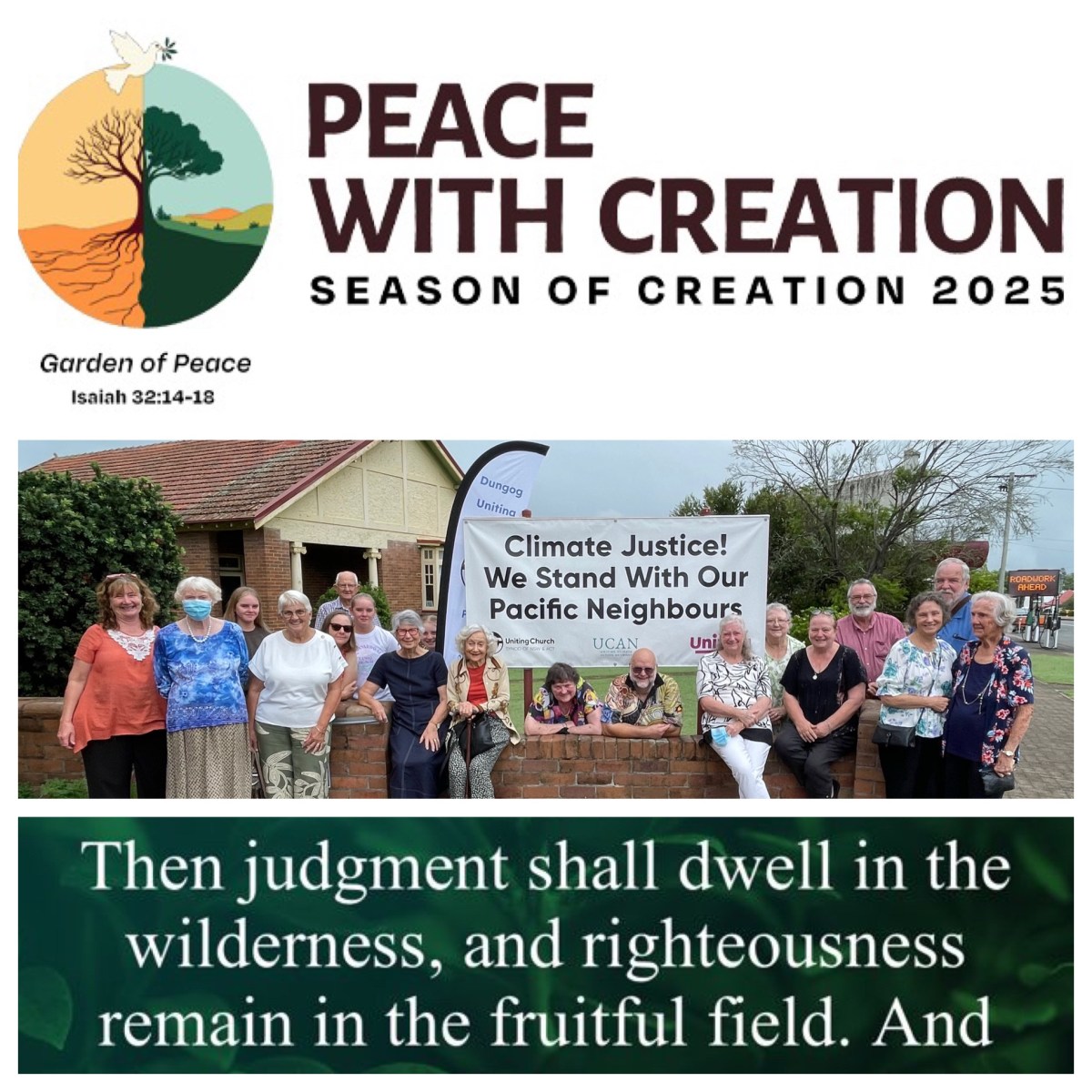
In addition, Ellen had directed that “the interest from the investment of £200 [was to be used] for the upkeep of the graves in the local cemetery of herself and relatives of the name of Bruyn for a period of 25 years from the date of her death; at the expiration of that period the £200 to be paid to the local Roman Catholic Church; £100 to the Roman Catholic curate at Dungog, and the residue of her estate to relatives and others”.

Dungog Cottage Hospital

One significant matter identified in this will relates to the Dungog Hospital. Daniel had been appointed as one of the foundation members of the hospital committee in 1891. Ellen must have been actively involved in the years after Hospital Cottage was opened in 1892. One item in her will was that she bequeathed “£1000 to Dungog Hospital, the interest to be used for 20 years and then the principal to go to the committee” (Sydney Catholic Press, Thursday 13 October 1927, p.41).

The original Dungog Cottage Hospital building

Annual distributions in accordance with this bequest are reported in the Dungog Hospital reports over the two decades after Ellen’s death. The Dungog Chronicle reported that £17/10/- (three months interest) was paid in Sept 1929; however, over a period of years, there was no interest paid, occasioning legal communications regarding the accumulated amounts that had not been paid.

From 1939, interest was paid more regularly: £71/3/10 in Aug 1939, £43/-/- in May 1940, £7/12/- and £4/15/- in Sept 1941, £44/5/9 and £136/6 in Sept 1942, as well as “an advance of subsidy for £28/6/8 and a special grant of £1/15/-“, followed by £10/1/9 in Oct 1942, £8/5/- in Feb 1943, “the usual subsidy of £28/6/8 … and a further amount of £51/6/8, being arrears of subsidy for the year commencing 1/7/42”. This presumably satisfied the accumulated amount due that had not been paid in earlier years.

The Hospital then received £45/4/5 in Sept 1943, £28/-/- in Sept 1944, £27/15/9 in May 1945, £23/18/9 in Oct 1945, £10/1/9 in June 1946, £47/-/- in Aug 1946, £31/16/9 in Feb 1947, £16/14/- in April 1947, and £23/9/6 in Aug 1947. In that month, the Hospital Board was advised that “the 20-year period of this investment in house properly at Mosman expires on 2/10/1947, and the matter has been placed in the hands of the Hospital’s Honorary Solicitors, Messrs. Borthwick and Wilson”.

Nevertheless, £11/2/4 was received in Jan 1948, £12/2/10 in June 1948, and £12/7/9 in July 1948. The income over the years had been generated through an investment in a property in Mosman; the property now needed extensive repairs, so at the Jan 1949 meeting, “it was moved by Messrs. Scott and Irwin that a copy of the Commission’s letter be forwarded to Messrs. Borthwick and Wilson and that they be requested to instruct solicitors for the Bruyn Trustees to take necessary action as set out in the Commission’s letter”.

A further £12/7/9 was paid in Sept 1949, while “Hospital’s Honorary Solicitors have been requested to instruct the Solicitors for the Bruyn Trustees to take necessary steps to obtain consent of the Moratorium Court to sell the property prior to its being offered for auction sale”.

In July 1951, the Secretary advised the Board that “a cheque for £111/1/3 had been received through Messrs Enright Son and Atkin, being rent received from Messrs. Richardson & Wrench Ltd., from 2/7/1948 to 18/6/1951, less collection charges, exchange, repairs, and rates”.

In July 1953, “£52/13/5, being rent collected in connection with the Bruyn Bequest”, was received. This was the last payment that has been found through reports accessed in Trove’s collection of newspapers.

The Sale of Brown Street

The last act of the Trustees of the Ellen Bruyn Bequest, in 1969, was to place the property on Brown Street up for sale. The documentation received relating to the Brown Street property for the period from 1927 to 1969 concludes with a document that notes the various changes in personnel in those Trustees, and a 1969 Conveyance. It is most likely that the property was rented out for this period of time, thereby bringing in a regular income to the Trust.

On 30 June 1967, George Dark was appointed Trustee in place of George Mackay and Donald Reay Mackay, joining Robert John Alison as continuing Trustee. Then, on 8 April 1968, these Trustees appointed the Public Trustee “to accept the trusts of the will accordingly”. The trusts were comprised of “Land in Brown Street, Dungog on which is erected a dwelling house and other improvements being Lots 6 and 7 of Section 5 Town of Dungog; Special Bonds Series “I” due September 1970 $1,600 Treasury Bonds held by the Commercial Banking Co.; Commonwealth Treasury Bonds August 1975 — 5 — $1,400; Current Account Commercial Banking Co. of Sydney Limited Dungog — $13.15”.

And so it was that in 1969, Victor Jack Finney and Wendy Elizabeth Finney purchased this property. In a Conveyance dated 24th May 1969, between “the Public Trustee as Trustee of the will of Ellen Bruyn, late of Dungog, Spinster deceased, and Victor Jack Finney of Dungog, Evaporator Operator, and Wendy Elizabeth Finney of Dungog, his wife”, Lot No. Seven of Section No. Five and Lot No. Six of Section No. Five were purchased for three thousand five hundred dollars. A new set of owners would, in time, move into the house and begin a new era.

For earlier blogs, see

Featured

The Bruyns of Brown Street (8)—Ellen Esther Bruyn (continued)

I am continuing the story of the land and house which Elizabeth and I purchased in Dungog a few years ago, after having traced the early landholders for this property (1848–1858), Daniel and Sarah Bruyn and their family (from 1858 to 1882) and then two of their children, Daniel Justin Bryan (d.1912) and his sister, Ellen Bruyn.

At some point in the latter part of the period of growth in the town of Dungog in the late 19th and early 20th century, the solid double/brick building that still sits on the Bruyn’s land in Brown St was built. Its style reflects certain Arts and Craft features of the late 19th century; although compared to the extravagance of some Arts and Crafts buildings, it is modest in its scope, which most likely reflects the life and tastes of Ellen Bruyn.

Ellen Bruyn outside the house in Brown St

The original double-brick building has six equal-sized rooms coming off a central hallway, each with a single window, high ceilings, and picture rails about 8 feet from the floor. There are fireplaces in three rooms.

The house has a verandah at the front with fine curved brickwork, and what appears (under the later additions) to have been a back verandah which would have led to a kitchen and washing tub in an outhouse. There is no bathroom in the brick structure; indoor plumbing was only beginning in the richer urban areas in the late 19th century, and slowly spread into the homes of those who could afford it in the early decades of the 20th century. The present house has a mid-20th century addition at the rear which includes all rooms requiring plumbing (kitchen, toilet, bathroom, and laundry).

The floor plan of the current house

Elizabeth has found architect plans for buildings of a similar (if more modest) layout in the online “Living History” archives of Newcastle University. These include plans drawn up by the first architect of the area, John W. Pender, who designed a residence for Mr. J. Quigan, built in West Maitland in 1875; the Wesleyan Parsonage in Dungog, completed in 1878; and a residence for D. Logan Esq., built in Bolwarra in 1909. All three properties share a similar floor plan, which in turn is close to the Brown St layout.

Pender’s plans for houses for Mr. J. Quigan (1875, left)
and D. Logan Esq. (1908, right)
Pender’s plans for the Wesleyan Parsonage in Dungog (1878)

In the 1880s, the youthful trainee architect J. Warren Scobie (1863—1946) served his apprenticeship in West Maitland with Pender, the sole architect in the area at that time. He must have been influenced by Pender’s design habits. Les Reedman, in Early Architects of the Hunter Region (2008) reports that “Scobie designed every type of building in the Hunter and as far as the Queensland border and Gunnedah” (p.118). After the 1893 flood, he designed the Lorn Embankment; “according to his theory, designed the bank to conform to the fall of the river after the 1893 flood” (Reedman, p.119).

Scobie designed buildings in Maitland, including the 1889 Town Hall; Lorn, including Flagstaff, where he lived, Stockton (where he lived for some of the 1910s); two churches in Largs; 10 out of the 28 hotels built in the Cessnock—Kurri Kurri Coalfields in the early 20th century; and in Gloucester, Gunnedah, and Dungog.

A writer with the pen-name “Nemo” (meaning “nobody”), contributing news of the Dungog Presbyterian Church in the Maitland Mercury of 29 January 1905, p.16, waxes lyrical in reporting that in Dungog “Presbyterianism … has built itself a new religious home; a neat, choice design, not pretentious, not elaborate, but just fit for its purpose. It is good to look at. It makes one feel like being in church, its position is of the best, and it is now one of the chief ornaments of the town. It is a sort of poem in architecture, the happy inspiration of Mr. J. Warren Scobie of this town [that is, Maitland] and built by Mr. Noad of the East.” A detailed and fawning description of the building concludes the article.

A portrait of the younger J. Warren Scobie

An article in the Maitland Mercury of Friday 24 January 1913, p.2, tells of the new shop erected for Mr. E. Grierson. “The appearance of Dungog suggests to the casual observer that it must possess a number of enterprising and progressive business men, inasmuch as the principal buildings are as substantial as they are attractive and suggests an unmistakable air of solidity”, the article begins.

It notes that Mr. Grierson “bought a commanding block of land … on the west side of Dowling Street, adjoining Mr Brighton’s terrace, and let a contract to Amos Moore to put him up the best shop Dungog can boast of. Amos, working under the plan of that capable Maitland architect, Mr J. Warren Scobie, who has completed excellent work in this district got busy on the job.” Scobie is known as the architect of some grand homes in the area which share stylistic features with the Brown St house.

A house in Paterson which was designed by J. Warren Scobie, named Kalimna, was recently put on the market (early 2024). The online photographs indicate that this 1902 double-brick residence shares with the Brown St double-brick residence a reasonably similar floorplan and a number of close similarities in details. These include French doors opening out to the front of the house from both front rooms, high ceilings, the design of the fireplaces, a wide central hallway with arches, and doors into the side rooms which are offset along the hallway.

The hallways of the Brown St house (left) and Kalimna (right)

Could it be that Scobie designed this house for the Bruyns? It is a strong hypothesis, we feel, although in the absence of the papers relating to the design of the Brown St house, it can never be definitively confirmed. Kalimna is more extravagant, but stylistically and structurally very similar.

Dungog’s population had been growing rapidly, rising from 436 in 1881 to 878 in 1891 and 1169 in 1898. With more people, came more traffic, and more wear and tear on road surfaces. A paragraph in the Dungog section of the “District News” in the Maitland Mercury for Tuesday 3 August 1880, p.7, had reported that “Brown-Street, which has long needed something to be done to it, is at last being formed thirty feet wide, and the contractor seems to be making a good job of it. The expense has been defrayed by private subscription, as we were unable to obtain Government money, although it is really a work of necessity.”

The Maitland Mercury of Tuesday 18 July 1893, p.5, reported that after the 1893 municipal election, the newly-elected councillors (and those defeated at the ballot) each gave a speech to the gathered crowd. Ellen’s brother, Daniel Justin Bruyn, one of the successful candidates, said “he was very thankful for the position in which he was placed”.

The Maitland Mercury’s report of Daniel Bruyn’s speech
after he was elected as an Alderman in 1893.

In an obvious reference to the state of the roads, the new Councillor Daniel Justin Bruyn said that “he would do all back streets alike; but Dowling-street should be made one of the finest streets in the colony”. Still, into the present day, the matter of road maintenance continues to be a concern for residents of the Dungog Shire; and Brown St itself has quite its share of potholes!

The house in November 2023

For earlier blogs, see

and for the final blog, see

Featured

The Bruyns of Brown Street (7)—Ellen Esther Bruyn

In exploring the history of the land and house which Elizabeth and I purchased in Dungog a few years ago, I have already noted the early landholders for this property, and investigated the life of Daniel and Sarah Bruyn and their family after Daniel purchased the land in 1858.

When Daniel died intestate in 1882, all of his property was made over to his son, Daniel Justin Bruyn, whose life has already been canvassed. A few months later, we find that the land he received from his father in Brown St had been purchased by his sister, Ellen Bruyn. This is her story.

Ellen Esther Bruyn was born in in the later months of 1839 in Smethwick, Metropolitan Borough of Sandwell, West Midlands, England, the second daughter of Daniel Joseph Bruyn, a Blacksmith (1796—1882), born in Roscommon, Ireland, migrated to England, and Sarah Helen Nichols (1807—1882), whom he married on 5 Feb 1837 (to 4 May 1882) in West Bromwich, Staffordshire. Ellen was the fourth child born to Daniel and Sarah; a further three children were born in subsequent years.

The family travelled to France in about 1845, where two of those children were born, including Daniel Justin Bruyn. After a rise of unrest in France, they returned four years later to England. They came to the Colony of New South Wales in 1856 as assisted migrants. Daniel and Sarah arrived in the Colony on board the Commodore Perry on 1 May 1856 with their children Margaret, Ellen, Elizabeth, Daniel and Sarah. (The eldest child, Joseph, travelled to the Colony a few years later.)

We have seen that Ellen had a sizeable inheritance on the death of her brother, Daniel Justin Bruyn. He had accumulated cash and property over the years, with a thriving business as a Grazier on the lands that he had purchased to the northwest of Dungog. That was given over to her, added to the land that was already under her name.

Map of the Parish of Tillegra showing
the property owned by Ellen Bruyn

An 1894 survey map for the Parish of Tillegra contains Lots which are registered in the name of Ellen Bruyn: Lots 100 (45 acres), 101 (40 acres), 3 (39 acres), 147 (80 acres), and 148 (45 acres)—a total of 249 acres. This land was located immediately next to land in north-eastern section of the many Lots owned by Ellen’s brother, Daniel Justin, so it is reasonable to suppose that it formed a part of the one large farm stretching along much of the Dungog—Tillegra parish boundary.

So Ellen had a large portfolio to oversee, what with her own land and the land she had received on the death of brother Daniel. She managed this property well over the following decades, using the land to maintain a strong economic position throughout her life. Ellen continued to live in the house in Brown Street where she had spent the latter years of her childhood as well as the early decades of her adult life.

At some point late in the 1890s or, more likely, in the first decade or so of the 20th century, a substantial brick dwelling was built on this site, replacing what was an earlier family home. The 1913 Electoral Roll for Dungog lists “Bruyn, Ellen, Dungog, domestic duties” as a resident. A photo (undated, perhaps in the 1910s?) shows Ellen in her mature years in the garden at the front of this house.

The double brick house on the land in Brown St, where the Bruyn family had lived since the 1850s. The lady in the (undated) photo is Ellen Bruyn, who had owned the land since 1883.
The house appears relatively new; could this be early in the 20th century, or even a few years earlier?

The exterior of the house looks relatively unchanged even today. The sweeping curve of the verandah bricks and the path from the front fence leading to an offset entry can be seen. At the other end of the front verandah, it is evident that there are some people standing there, although identification of individuals is not possible. The front garden reflects a substantial investment of time and care from Ellen over the years.

Ellen was a single woman who never married. There are clear indications that Ellen’s bachelor brother, Daniel Justin, had lived in a room in this house over the years before he took his own life in 1912. Daniel had been a well-respected member of the Dungog community. Ellen herself was evidently very involved in charitable and community matters locally—the distribution of funds from her will indicated this very clearly.

The 1883 Conveyance passing the title of the property
from Daniel Bruyn to his sister Ellen

A Conveyance dated 31 May 1883 between Ellen Bruyn of Dungog, Spinster, and Daniel Justin Bruyn of Dungog, Blacksmith, indicates that Allotment No. Seven of Section No. Five and Allotment No. Six of Section No. Five were sold for the sum of two hundred pounds. Ellen would live there as the owner of the house for almost half a century, until her death in 1927. That property had been made over to Daniel Jnr soon after the death of his father, Daniel Snr, and he subsequently put it up for public auction.

Ellen must have pleased to be the owner of the house that she had been living in for years, as well as the adjacent block of land. Why she had to pay this amount to her brother when she was just as much a child of Daniel and Sarah as he was, is a mystery. The gendered bias in 19th century society would, of course, have meant that the property of the father would normally pass to his son after his death, unless another course of action was specified. Obviously, such an alternative had not been set out by Daniel Snr. So Daniel Justin Bruyn inherited the family home in Brown St, and then his sister Ellen Bruyn bought it off him.

Ellen’s signature on the 1883 Conveyance

Ellen lived in the houses on this property for many decades—from the 1860s until her death in 1927. Over this time, she would have seen the town of Dungog grow and develop over the years. In her study of towns and buildings in the region, Grace Karskens writes that Governor Darling “published regulations for town planning in 1829 which directed that streets be laid out in a grid pattern, and emphasised uniformity and regularity, wide streets, half-acre allotments, and that buildings were to beset well back” (Dungog Shire Heritage Study: Thematic History, 1986, p.51). This set the pattern for numerous country towns, including Dungog.

This neat, orderly development continued for some decades. Karskens notes that “the second half of the nineteenth century was generally a boom-time for the major towns in Dungog Shire, and thus also a period of physical consolidation and community growth” (p.63).

The pattern that she observes in the 1860s was certainly evident in Dungog: “neat, solid government buildings, such as police stations, watch houses, post offices and court houses, all built to indicate a civilized and well-ordered society. Rows of stores and offices were built by merchants, professional people, banks and businessmen along the main streets, slowly filling up the grids laid down by surveyors forty years before.” (p.63).

Karskens cites an unidentified press clipping held in the Newcastle Local History Library when she observes that “during the 1850s, Dungog, like Clarence Town, benefited from a position on the route to the Peel River and Gloucester goldfields, and this was repeated during the 1880s with the finds at Wangat (within the Shire), Whispering Gully and Barrington” (p.80).

An 1887 map showing the area of NSW designated as coalfield

She reports that “an anonymous correspondent writing in 1888 listed the town’s businesses as including three banks, four hotels, four large general stores, three butchers, three bakers, a coachmaker, wheelwrights, three blacksmiths, a hairdresser, a fancy tailor, boot makers, three saddle and harness makers and four churches, a weekly newspaper and ‘a School of Arts a credit to any town’.” (p.81). Included among those three blacksmiths, of course, was Daniel Joseph Bruyn, Ellen’s father.

Growth in the town continued year by year. Karskens notes that “Dungog Cottage Hospital was opened in 1892 in a small (two-roomed) ornate Italianate brick building in Hospital Street at the western end of town” (p.82) and in the following year the town was proclaimed a Municipality and elections were held for councillors for the first Dungog Municipal Council. The new council would have responsibility for services in the town of Dungog and the rest of the newly-formed shire.

Along Dowling St, the new buildings included the Roman Catholic Church and Presbytery (1880s, now Tall Timbers Motel and the Information centre), an Italianate Post Office (1874, with a less dramatic facade added some decades later), the Oddfellows Hall (1881, now the Dungog Medical Practice), the ornate CBC bank and residence (1884, now a private residence), Centennial Hall (1888, now a cafe), the Bank Hotel (an 1891 conversion of a former residence), the Skillen and Walker Terrace (1895, four two-story shops-and-residences with a central archway), the School of Arts (1898, now the Historical Society), and the Angus and Coote building (1911).

Dowling St, Dungog, early in the 20th century

After the death of her father in 1883, Ellen Bruyn had bought the land in Brown Street where the family had lived for around 30 years. As the town continued to grow, a number of significant buildings were erected near to this residence. On the corner of Brown and Dowling Sts, Dark’s Store was built in 1877 and expanded in each of 1896, 1900 and finally in 1920. It came to be called “the hall of Commerce” and housed the largest store in Dungog. Opposite this was the striking Coolalie, built in 1895 as the home of Henry Charles Dark.

The Court House Hotel (later renamed the Settlers Arms), the earliest hotel in Dungog

In Brown Street itself, Dungog’s oldest hotel, the Court House Hotel, now the Settler’s Arms (pictured above), had been trading since the 1850s. On the top of the hill, the Roman Catholic Convent of St Joseph was built in 1891, a Parish Hall in 1913, and a new Church in 1933, six years after Ellen died. As a devout Catholic, she would have been a regular attendee at the Church on Dowling St and, in later years, at Parish events in the Hall on Brown St. On the eastern end of Brown St, the James Theatre was opened in 1918; to the west of the Bruyn residence, a large and impressive Memorial Hall (now the RSL club) was built in 1919.

The James Theatre, Dungog, in the 1950s
(from https://www.newcastleherald.com.au/story/
1208160/dungog-cinema-celebrates-100-years/)

(The information about these buildings is taken largely from Michael Williams’ 2011 publication, Ah, Dungog! A brief survey of its charming houses and historic buildings.)

So the hypothesis that Elizabeth and I have developed is that, after she had bought the property in Brown St in 1883, with the older family home on it, Ellen Bruyn had a new double-brick house built on Lot 6.

Which opens the next stage as the story continues … … …

and see earlier blogs at

Featured

The Bruyns of Brown Street (6)—Daniel Justin Bruyn (continued)

In exploring the history of the land and house which Elizabeth and I purchased in Dungog a few years ago, I have already noted the early landholders for this property, and investigated the life of Daniel and Sarah Bruyn and their family after Daniel purchased the land in 1858. When Daniel died intestate in 1882, all of his property was made over to his son, Daniel Justin Bryan, whose life we have considered. We turn now to his death.

On 22 September 1886, Daniel Justin Bruyn had made his last Will and Testament “whereby he gave devised and bequeathed all his property of whatsoever nature and wheresoever situate to his sister Ellen Bruyn absolutely and appointed the said Ellen Bruyn the sole Executrix thereof”. On 1 November 1912 Daniel Justin Bruyn died, and that will came into effect.

A Coroner’s Inquest for Daniel Justyn Bruyn of Dungog was held by Walterus Le Brun Brown, J.P., on 2 November 1912. The report of the inquest notes that “cash or property possessed by deceased” was “probably over £10,000”. That equates to around $1.45 million in 2023.

Probate for the estate of Daniel Justin Bryan was granted on 26 February 1913. Daniel had never married and had no descendants; as his will prescribed, this collection of property and cash became the possession of Ellen Bruyn. That was a happy result for her in very sad circumstances. The death of Daniel Justin Bruyn, however had a deeper tragedy at its heart.

The Bathurst National Advocate stated the matter plainly, in a brief report published on Monday 4 November 1912, under the heading PASTORALIST SUICIDES: “Daniel Justin Bruyn, a prominent local pastoralist, drowned himself in the Williams River last night. He left a note saying he was tired of the world and its worries. Deceased was a notable public figure in the town, and formerly an alderman, and holding high positions in all the local associations.”

Note of death by suicide in the Bathurst National Advocate

The next day, the Dungog Chronicle provided a much fuller obituary which provided details of the incident and demonstrated just how high a regard was had for Mr Bruyn in the town (Tuesday, 5 November, 1912, Page 2). “Dungog has never had a more profound sensation than that provided by the tragic end of its most highly respected citizen, Mr. Daniel J. Bruyn, on Saturday morning last”, it began.

“Early that morning those about the town learned the news that he had left a note on the table at his home indicating his intention of taking his life, stating that financial worries robbed him of sleep and that he was tired of life”, it continued. It then offered this sad commentary: “He asked forgiveness of his sister for what he was about to do.”

The Chronicle had been advised that “on the previous evening he had complained of feeling unwell, and had taken some medicine after tea. He had been talking to his sister on the verandah and about eight o’clock got up and walked down the street towards the bridge. That was the last occasion on which he was seen alive.”

This is the verandah at the front of the house when we moved in, late 2023. Could this have been the same verandah referred to in the obituary of Daniel Justin Bruyn?

This report indicates that Daniel Bruyn did spend time living in the house at Brown Street with his sister, at least at this stage of his life. As both were unmarried, and as the house was ideally placed in the centre of town—next to Dark’s burgeoning general store on Dowling Street, near to the School of Arts where the Municipal Council met—it would make sense for Bruyn of Sugarloaf to have his base in Brown St for such town activities.

Indeed, as the report states, when his sister Ellen “became anxious for his absence … in the early hours of the morning she went into his room, and there on the table, under a brush, she found the note which explained everything”. It continues by noting that upon discovery of Mr. Bruyn’s body, he was “immediately placed upon a stretcher and conveyed to his late home”—that is, the residence in Brown St that he had so recently left.

And, as we have seen, when he was elected to Dungog Council in 1893, his residence is listed as Brown Street. (Michael Williams, in his extensive survey of the historic buildings of Dungog, notes that street numbers were not used until the 1960s; see Ah! Dungog, 2011, p.11.)

The detailed report of Daniel Bruyn’s death in the Dungog Chronicle of 5 November 1912 noted that once his note was discovered and the alarm was raised, “at daylight a large crowd was busily engaged in searching along the river, it being suspected that he would seek the water.”

Sure enough, the report continues, “about eight o’clock Sergt. Bowen discovered the body, fully clothed and with hat on, floating in about 6 feet of water in the river at the foot of Dark’s paddock, just about opposite the railway station, and by a strange coincidence at the precise spot where a similar tragedy occurred a few years since. It is surmised that he walked across the Cooreei bridge and doubled down the river till near the fatal spot and plunged in from that side.” (The Cooreei Bridge crosses the Williams River about a kilometre out of town, on the road that connects Dungog with Stroud.)

The report continues with words that emphasise the regard felt for the deceased: “There was no more highly respected man in the whole of this community than the late Mr.D.J. Bruyn, and his death will remove from our midst, one of the most prominent men … he was recognised as one of Dungog’s notables.” Then, musing on the manner of his death, it opines, “of a genial and equable disposition, a keen business man, and one who never shirked an obligation, it is hard to understand what caused him to terminate his own life.”

The full obituary for Daniel Justin Bruyn, published by
the Dungog Chronicle just four days after his death

The report further offers comments on the character of Mr. Bruyn: he was “noted for his liberality in matters of charity, and he has befriended many a one in this district who will sorely miss him from the town.” The report notes the fitting tribute paid to Daniel Justin Bruyn: “when the news begame known in Dungog, flags were flown half mast from the public buildings”.

In pondering a possible reason for this suicide, the article offers a hypothesis, noting that Daniel Bruyn “has been in indifferent health of late and worried considerably over estates of which he was executor, but his own affairs were in a flourishing state and he was a comparatively wealthy man. It was probably the worry of other’s business that unhinged his mind temporarily and caused him to put a period to his life.” The truth of this hypothesis, however, will never be able to be ascertained.

A correspondent in the Maitland Daily Mercury on Wednesday 6 Nov 1912, p.2, further expresses the dismay of the locals at the news of Daniel’s death: “to say that Dungog and district were struck dumb when it became known that Mr. Daniel Justin Bruyn had left a note expressing his intention to end his life, is putting the truth very mildly. The deceased was about the last person anyone would have expected to do such an act. He was a very quiet man of a retiring disposition, and as far as an onlooker could see had less worry than most people. He was more universally trusted than most men, as proved by the number of wills in which he was appointed an executor, and it is thought that his troubles were not his own, but were those which he voluntarily shouldered for others.”

Daniel Justin Bruyn (1847—1912)

Of the funeral of Daniel Justin Bruyn, the Dungog Chronicle notes that, as might be expected, it was “one of the largest seen here for many years”. The Anglican minister, the Ven. Archdeacon Luscombe, officiated, and wreaths were laid on the coffin from organisations including the School of Arts, the A. and H. Association, and the Cricket Club. Three of his sisters remained: Ellen Bruyn in Brown St, Elizabeth Cook of Johnson’s Creek north of Stroud Road, and Sarah Landers of Towel Creek in the Armidale district.

Our particular story will continue with Daniel’s sister, Ellen Bruyn … … …

For earlier posts, see

For the story of Ellen Bruyn, see

Featured

Image of the invisible God, firstborn of creation (Pentecost 6C; Col 1)

The lectionary continues to offer us passages from epistles attributed to Paul. After working our way through Galatians—which Paul, I believe, most definitely did write—this coming Sunday we continue the sequence of passages from Colossians, which I am not convinced was written by Paul, even though the letter claims that it was written by Paul (Col 1:1).

The passage for this coming Sunday (1:15–28) is one of the places in this letter where there are significant theological developments beyond the theology found in the seven “authentic” letters of Paul: Romans, 1 & 2 Corinthians, Galatians, Philippians, 1 Thessalonians, and Philemon (this order, by the way, moves from the longest to the shortest of these letters).

The letter has begun with the expected words of greeting (1:1–2) and prayer of thanksgiving (1:3–8). The prayer morphs into a prayer of intercession for the Colossians (1:9–12), cycling back into an expression of thanks to “the Father” (1:12) for what he has done through “his beloved Son” (1:13–14). All of this adheres to the pattern that is found in most of Paul’s letters (although Galatians has omitted any thanksgiving from the beginning of the letter—Paul is too angry with them!).

This thanksgiving for the Son then morphs seamlessly (in the original Greek, there is no sentence break) into an extended affirmation about Jesus, “the image of the invisible God, the firstborn of all creation … the head of the body, the church … the beginning, the firstborn from the dead …[in whom] all the fullness of God was pleased to dwell” (1:15–20).

This is quite an extension to the expression of thanks; the sentence in Greek actually begins in v.9 and continues through multiple subordinate clauses to v.20! It has a lovely structure beauty, which is clearly evident in the Greek text; not so much, unfortunately, in most English translations. (Indeed, it is nigh-impossible to convey the structure in a poetic manner in a language other than the original.) The best structure exposition I have found of it looks like this:
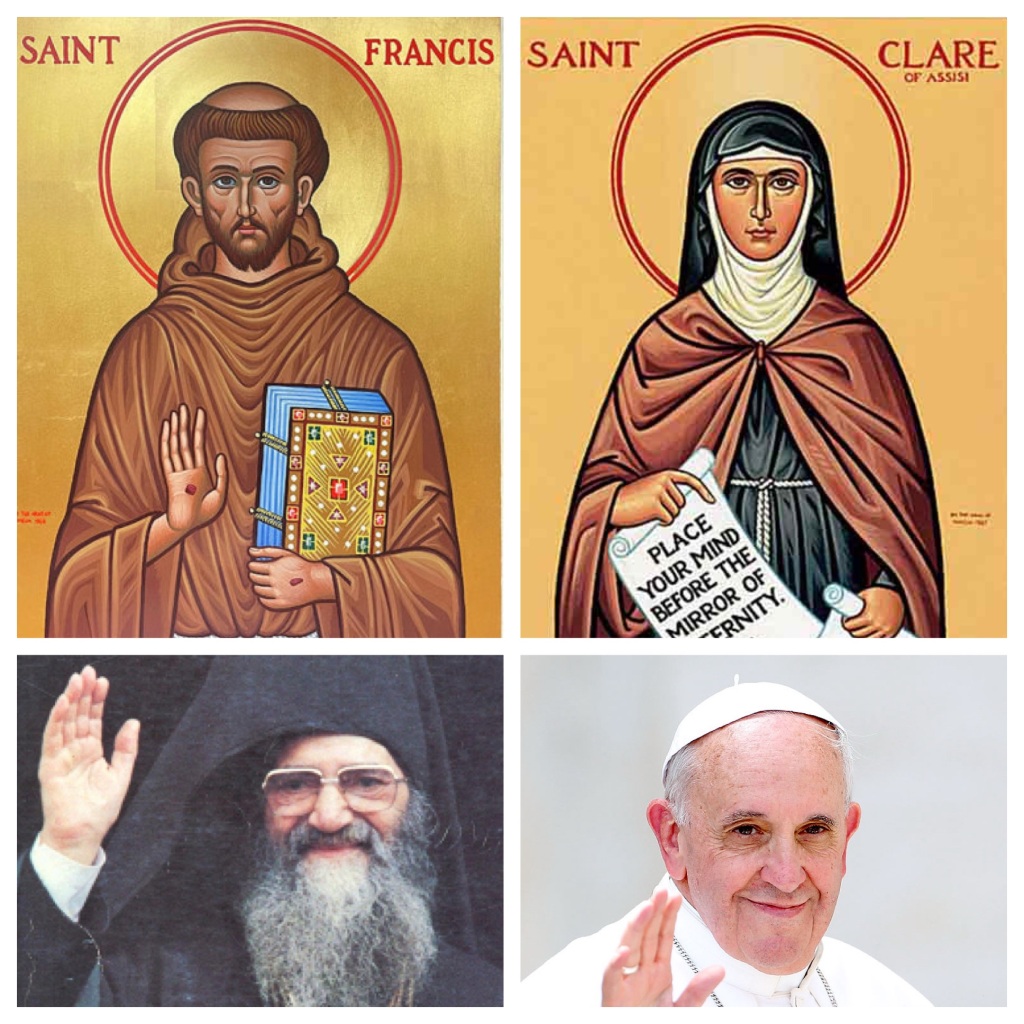
The structure of Col 1:15–20, as outlined by Andrew Fountain
in “The song hidden in Colossians”, Newlife Church Toronto;
see https://nlife.ca/audio/colossians-pt4

This poetic passage also stands as significant theological affirmation. It offers a relatively early consideration of “the person and work of Jesus Christ”, a crucial theme which later systematic theology writers would explore and develop, using this and other passages of scripture as foundations for a complex and intricate affirmation of this key element of Christian faith.

The main thrust of this passage can best be understood by giving consideration to the way this it draws on Jewish elements—specifically, the Wisdom material found in parts of Hebrew Scripture. Jesus is portrayed very much in the manner of Lady Wisdom, as we encounter her in scripture in Proverbs 8, and then in the deuterocanonical works of Ben Sirach (Ecclesiaticus) and the Wisdom of Solomon. In Colossians, of course, the attributes of the female Wisdom are applied directly to the male Jesus.

Jesus is here described as the agent of God’s creative powers: “in him all things in heaven and on earth were created … all things have been created through him and for him” (Col 1:16). In the same way, in Proverbs Wisdom herself is said to have declared that “ages ago I was set up, at the first, before the beginning of the earth … when [the Lord] established the heavens, I was there … when he marked out the foundations of the earth, then I was beside him, like a master worker” (Prov 8:22–31). 
The creative power of Wisdom

In the Wisdom of Solomon, Wisdom is described as “the fashioner of all things” (Wisd Sol 7:22), “a breath of the power of God” who “pervades and penetrates all things”(7:24–25), who was “present when you [God] made the world” (9:9), whose “immortal spirit is in all things” (12:1). 

Jesus, son of Sirach, declares that “Wisdom was created before all other things” (Sir 1:4), that at the very first she “came forth from the mouth of the Most High, and covered the earth like a mist” (Sir 24:3), and “compassed the vault of heaven and traversed the depths of the abyss” (24:5) as she undertook her creative works, distinguishing one day from another and appointing “the different seasons and festivals” (33:7–8).

Jesus Christ, as the one who is “before all things” (Col 1:17), reiterates what Wisdom declared, that “before the mountains had been shaped, before the hills, I was brought forth—when [the Lord] had not yet made earth and fields, or the world’s first bits of soil” (Prov 8:25–26).

So Jesus is the one who has “first place in everything” (Col 1:18), just as the works of Wisdom can be traced “from the beginning of creation” (Wisdom Sol 6:22). The importance of these Wisdom writings for what is stated in Col 1 is clear. (The same writings underpin the theological affirmations made about Jesus in Heb 1:1–4 and John 1:1–18.)

The passage in Colossians also indicates that believers are “transferred … into the kingdom of [God’s] beloved son” (Col 1:13); they are rescued (1:13) and redeemed (1:14) by the work of Jesus. In similar fashion, the Wisdom of Solomon contains a long section praising Wisdom who was actively involved in human affairs from when “she delivered him [Adam] from his transgression” (Wisd Sol 10:1), saved the people at the Exodus, and guided the Conquest and settlement in the land. It was Wisdom who punished the Canaanites (12:3–11), sinful Israelites (12:19–22), and the Egyptians (12:23–27), as well as all idolators (13:1—14:31). A similarly lengthy poem praising the works of Wisdom occurs in chapters 44 to 50 of Sirach, extending all to the way to Simon, son of Onias (high priest in the early C3rd BCE). 

So Jesus brings to a high point much of what had been hoped for, and spoken about, in the figure of Wisdom. All of this is now seen to reside in him, “the image of the invisible God, the firstborn of all creation … the head of the body, the church … the beginning, the firstborn from the dead …[in whom] all the fullness of God was pleased to dwell” (1:15–20). It’s a remarkable testimony.

Wisdom, by Sara Beth Baca

This year we are to celebrate 1700 years since the Nicene Creed was created. The development in theological understanding of Jesus that is found in these verses in Colossians, drawing from Hebrew scriptures of past centuries, continues apace in the ensuing centuries, as Christian writers draw more and more from neo-platonic philosophy to develop what eventually becomes a full suite of Christian doctrines—including a series of affirmations about Jesus.

It is worth noting that, just as the creative work of Jesus is noted in the Nicene Creed (“through him all things were made”), so his salvific work is also briefly described (“for us [all] and for our salvation he came down from heaven“). These fleeting references draw on the way in which scripture has used the Wisdom literature— although, of course, all four Gospels and many Epistles note the forgiving, saving, delivering work of Jesus. Colossians plays its part in attesting to this. It is, in fact, part of the bedrock of the developing patristic theology which emerged over the centuries between the New Testament and the early Ecumenical Councils. 

I’m planning to write some more blogs about credal affirmations found within scripture, and how they inform (or not) the Nicene Creed, in the context of this global celebration of 1700 years since Nicaea. Stay tuned!

Featured

The Bruyns of Brown Street (5)—Daniel Justin Bruyn

In exploring the history of the land and house which Elizabeth and I purchased in Dungog a few years ago, I have already noted the early landholders for this property, and investigated the life of Daniel and Sarah Bruyn and their family after Daniel purchased the land in 1858. When Daniel died intestate in 1882, all of his property was made over to his son, Daniel Justin Bryan, whose life we now consider.

Daniel Justin Bruyn was born in France. His parents, Joseph and Sarah, had married in 1837 in West Bromwich, Staffordshire, where four children were born in the years 1837 to 1842. The family travelled to France, perhaps seeking to use there the skills that Daniel Snr had as a Blacksmith. Two children were born there; Mary died within a year, Daniel Jnr was born on 26 May 1847, at Graville, Le Havre, Seine.

After four years the family returned to England because of the unrest relating to industrialisation. Another daughter was born; the family then migrated to the Colony of New South Wales in 1856 and settled in Dungog, where Daniel purchased land and established his Blacksmith business.

Daniel Justin Bruyn was eleven years of age when his father purchased the land in Brown St; presumably he lived with the family there for some time after they moved into the building that was erected there, at some stage between 1858 and 1866, as noted previously.

Grevilles 1872 Post Office Directory lists both Daniel Bryun, Blacksmith, of Brown St, Dungog, and Joseph Bruyn, farmer, “near Dungog”. Joseph was the firstborn son of Daniel. At some point after this, Daniel Justin Bruyn began to purchase land holdings to the north of Dungog.

Daniel Justin Bruyn

On 11 Sept 1879, Daniel Justin Bruyn is listed as selecting 234 acres in Dungog, Al. No. 76-37754, C.P. No. 73–9338. On 19 April 1883 Daniel Justin Bruyn made application to be registered as “Proprietor by Transmission” of land in Dungog, as the Administrator of the intestate estate of Daniel Bruyn, deceased. The land was 3 acres, Lots 1, 2, and 3, of Section 32, Town of Dungog; this was on the northern side of Hooke St, between Abelard and Eloisa Streets. (There are residential building on these lots today.)

On 1 September 1892 Daniel Justin Bruyn made application for 79 1/2 acres at Tillegra; on 1 February 1893, 78 3/4 acres was granted to him. On 20 October 1892 he made application for 77 acres at Dungog; on 1 February 1893, 65 1/4 acres was granted to him. It is also reasonable to assume, from a piece of evidence noted below, that Daniel had a room in the house at Brown Street where his sister lived. That was his base when he was in town, it would seem.

In a series of Electoral Rolls (1895, 1900, 1904) Daniel Justin Bryun, Grazier, is listed as living at Sugarloaf. In 1905, he is listed as having 15 horses and 190 cattle (and no sheep) on his property at Sugarloaf Creek.

A survey map of the area, dated 9 January 1894, designates seven properties in his name running along the northern boundary of the Parish of Dungog, adjacent to the Parish of Tillegra, to the south of the current Sugarloaf Road, and west of the Longbrush Gully. Another survey map for the Parish of Tillegra places him as owner of a further fourteen Lots running in parallel to his Dungog Parish holdings.

In the Parish of Dungog, running east to west, Bruyn owned Lots 128 (50 acres) and 134 (73 acres), adjacent to each other; then stretching west from them, Lots 52 (234 acres), 50 (40 acres), 136 (40 acres), 53 (120 acres), and 151 (65 acres). This final Lot was the penultimate Lot before the boundary with the Parish of Lewinsbrook, covering the area between Dungog and Gresford. The total acreage of these seven Lots is 622 acres.

The holdings of Daniel Justin Bruyn in the Sugarloaf region, running along the northern boundary
of the Parish of Dungog

In addition, on the other side of the Parish boundary, in the Parish of Tillegra, there is another, more extensive, collection of Lots in the name of Daniel Justin Bruyn. Running east to west, he owned Lots 48 (40 acres), 129 (49 acres), 37 (40 acres), 38 (40 acres), 49 (80 acres), 106 (114 acres), 4 (99 acres), 149 (40 acres), 119 (40 acres), 137 (40 acres), 138 (40 acres), 55 (78 acres), 145 (40 acres), and 55 (78 acres)! The total acreage of these Lots is 818 acres.

The holdings of Daniel Justin Bruyn in the Sugarloaf region
on the southern border of the Parish of Tillegra,
adjacent to his holdings in the Parish of Dungog

The Sugarloaf Creek meanders its way through the easternmost half of the Lots in the Parish of Tillegra. A survey map declares that all of these Lots were part of a larger area, Gloucester Coldfield, that was proclaimed on 3rd June 1879. Together, the 1,440 acres of these Lots form a very significant landholding. To the east of Daniel’s landholdings, another series of Lots totalling 249 acres bear the name of his sister, Ellen Bruyn.

In the Dungog Chronicle of 30 August 1898, p.3, a notice appeared relating to a proposed “public meeting for the purpose of petitioning the Minister for Works, through the Member for Durham, to construct a road between Gresford and Dungog”. There are 14 signatories to this notice, including that of Daniel J. Bruyn, indicating that “a public meeting [is] to be held at the Council Chambers on THURSDAY NEXT, at 8 p.m.”

As one owning property in the Sugarloaf Creek area, Daniel Bruyn obviously had a vested interest. It is clear that the petition for the construction of this road was successful, as a road today does wind its way through the beautiful hills in the area between Gresford and Dungog, and through some of the land once owned by Daniel Justin Bruyn.

Scenery on the Sugarloaf Road from Dungog to Gresford, 2024

Not only did Daniel Justin Bruyn die a wealthy man, however; he died also a highly-regarded and well-respected member of the Dungog community. His obituary (see below) indicated that he was a Trustee of the Dungog Hospital, a Municipal Alderman, a Justice of the Peace, a longterm committee member of the A. and H. Association, and one of the founders of the Dungog School of Arts. He followed the local cricket team with enthusiasm, and owned a number of horses that he raced in the local area.

On 17 November 1891, the Government Gazette (p.9023) contained a notice from the Department of Lands of the appointment of Joseph Abbott, George Alexander McKay, Vincent Carlton, John Robson, and Daniel Justin Bruyn, as “Trustees of the land at Dungog, viz. portion 135, parish of Dungog, county of Dungog, dedicated 15th September 1891, for hospital site”.

Notice from the NSW Government Gazette of 7 Nov 1891

The Dungog Cottage Hospital was opened on Hospital Hill in 1892 and the site, now much expanded, has provided local hospital and medical services since that time.

The Dungog Cottage Hospital building

On 21 July 1893, the Government Gazette (p.5663) contained a notice of the election of Frederick Agustus Hooke, Dingadee, Dungog; Daniel Justian [sic.] Bruyn, Brown-street, Dungog; Henry Charles Dark, Dowling-street, Dungog; Joseph Abbott, Dowling-street, Dungog; John Robson, Dowling-street, Dungog; and John A. Jones, Dowling-street, Dungog, as Aldermen of the Municipal District of Dungog.

1893 Government Gazette announcement

Then, on 8 February 1896, the Government Gazette (p.1022) contained a notice of the election of Frederick Augustus Hooke and Daniel Justin Bruyn, as Aldermen of the Municipal District of Dungog. Three years later, on 13 February 1899, the Government Gazette (p.1415) contained a notice of the election of Frederick Augustus Hooke, Daniel Justin Bruyn, and John McLauchlin, as Aldermen of the Municipal District of Dungog.

Extracts from the Dungog Chronicle of 1896 and 1989, announcing the election of Alderman for the Municipality of Dungog

On 4 May 1901, the Maitland Mercury (p.3) reported that Daniel Justin Bruyn was amongst a list of “gentlemen appointed to them commission of the Peace” (that is, as a Magistrate, or a Justice of the Peace).

On 22 September 1886, Daniel Justin Bruyn had made his last Will and Testament “whereby he gave devised and bequeathed all his property of whatsoever nature and wheresoever situate to his sister Ellen Bruyn absolutely and appointed the said Ellen Bruyn the sole Executrix thereof”. On 1 November 1912 Daniel Justin Bruyn died, and that will came into effect. So Ellen received a significant amount of property, as we have seen.

The Register of Coroner’s Inquests for 2 November 1912 lists an inquest for Daniel Justyn Bruyn of Dungog, held by Walterus Le Brun Brown, J.P., which notes that “cash or property possessed by deceased” was “probably over £10,000”. That equates to around $1.45 million in 2023.

to be continued … … …

*****

See earlier posts at

and subsequent posts at