
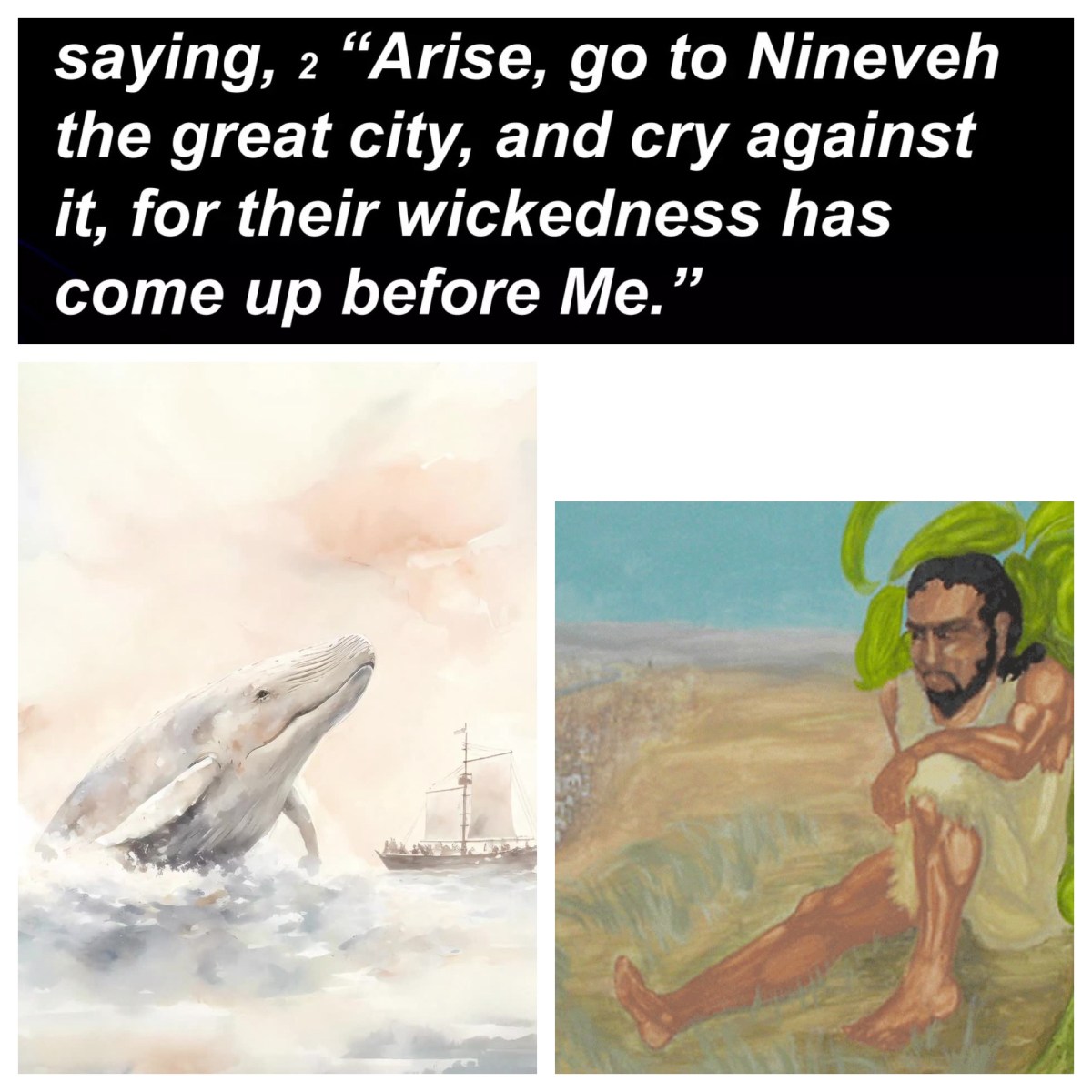
This Sunday the Narrative Lectionary will move us on from the narratives of the Samuel—Kings cycle, into the books of the prophets. There are six different prophets ahead: this Sunday, Jonah, followed by Isaiah, Jeremiah, Daniel, Joel, and then the anonymous prophet whose words form the final section of the scroll of Isaiah.
Jonah is a curiously enticing character; he is almost an anti-prophet in the way that he runs away from the call of God and then, when he finally submits and preaches repentance, he resents the fact that they do repent! Whether Jonah was an actual historical figure is hotly debated; but never mind, for the four chapters of this book tell a rollicking good tale, that makes us suspect that it was, in fact, “just a story”, rather than actual history.
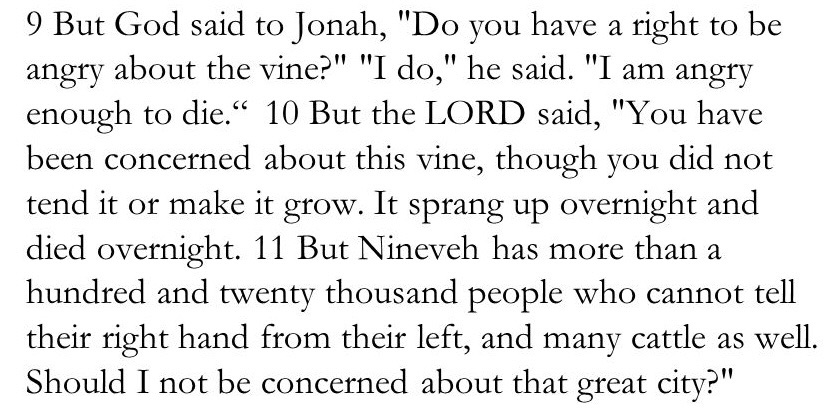
The Narrative Lectionary guides us to read and listen to two chapters of this four-chapter book, with the final chapter as an optional addition to the reading. Having all three prose chapters of the story read in worship means that the whole story is conveyed—from Jonah’s flight away from God’s call (1:1–3) through to the final dialogue between these two characters, set beside a withered bush, in which Jonah’s anger is met with God’s reproof (4:9–11). This omits, of course, the poetic offering of ch.2, in which Jonah sings (in the belly of the great fish) of his fear of the ocean, and of his trust in God (2:2–9).
Jonah is addressed by God at the very start of the book: “go at once to that great city” (1:2). The large city in this book is identified immediately as Nineveh (1:2; 3:1–10); it was the capital of Assyria (2 Ki 19:36; Isa 37:37) and we learn at the end of the story of Jonah that it had a huge population of more than 120,000 people. The story thus appears to be set during the period of Assyrian ascendancy, in the 8th century BCE. But many of the literary characteristics of this book reflect a later period, perhaps even a post-exilic time.
It is true that 2 Kings 14:25 mentions that God speaks through “Jonah son of Amittai, the prophet” during the time of Jeroboam II (about 793–753 B.C.), but this was a time before Nineveh was the capital of Assyria. There is no other indication that this individual was the prophet whose story is told in the book of Jonah, for it does not provide any specific dating; nor does the mention of Jonah in 2 Kings indicate how he exercised his prophetic role.
The charge that Jonah is given is a stock standard prophetic charge: “go to Nineveh, that great city, and cry out against it; for their wickedness has come up before me” (1:2). It’s worth comparing that with the message of judgement that is proclaimed by many other prophets. Amos begins, “the Lord roars from Zion, and utters his voice from Jerusalem … for three transgressions of Damascus, and for four, I will not revoke the punishment”, Amos 1:2–3). Isaiah is charged to “go and say to this people: ‘Keep listening, but do not comprehend; keep looking, but do not understand.’ Make the mind of this people dull, and stop their ears, and shut their eyes” (Isa 6:9–13).
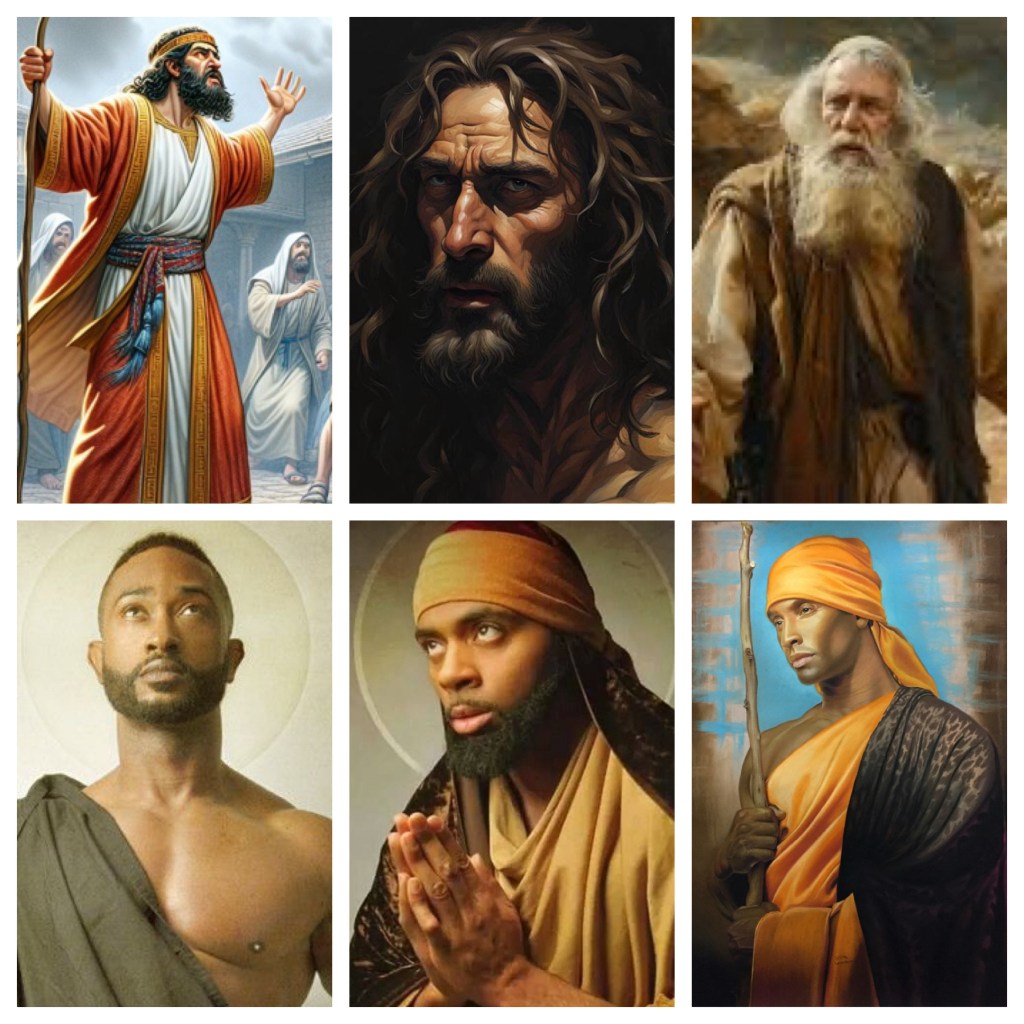
Jeremiah is given the double-edged message, “today I appoint you over nations and over kingdoms, to pluck up and to pull down, to destroy and to overthrow, to build and to plant” (Jer 1:9–10), while Ezekiel is informed that he is being sent to speak “to a nation of rebels who have rebelled against me; they and their ancestors have transgressed against me to this very day; the descendants are impudent and stubborn” (Ezek 2:3–4). Quite ominously, the prophet is warned, “their blood I will require at your hand” (3:18–21).
The opening message to Nineveh from the prophet Nahum is fierce: “jealous and avenging God is the Lord; the Lord is avenging and wrathful; the Lord takes vengeance on his adversaries and rages against his enemies” (Nah 1:2–3). His task is not guaranteed to win him any friends. Likewise, Habakkuk is given an oracle of intense doom: “Look at the proud! their spirit is not right in them, but the righteous live by their faith … wealth is treacherous; the arrogant do not endure; they open their throats wide as Sheol; like Death they never have enough” (Hab 2:2–5). And Zephaniah, in similar fashion, forsees a disaster of cosmic proportions: “I will utterly sweep away everything
from the face of the earth, says the Lord; I will sweep away humans and animals; I will sweep away the birds of the air and the fish of the sea” (Zeph 1:2–6). The call to be a prophet is a fiercely challenging call!
The response of Jonah—fleeing from the presence of the Lord—is also like the response of some of those prophets. An initial reluctance to accept the charge is most famously expressed by Isaiah (“woe is me! I am lost, for I am a man of unclean lips, and I live among a people of unclean lips”, Isa 6:5) and the young Jeremiah (“truly I do not know how to speak, for I am only a boy”, Jer 1:6).
In this regard they follow the pattern already expressed in the story of Moses, who responds to God’s call with a string of objections: “who am I that I should go to Pharaoh, and bring the Israelites out of Egypt?” (Exod 3:11); “if they ask me, ‘What is his name?’ what shall I say to them?” (Exod 3:13); then “suppose they do not believe me or listen to me” (Exod 4:1); and finally “O my Lord, I have never been eloquent, neither in the past nor even now that you have spoken to your servant; but I am slow of speech and slow of tongue” (Exod 4:10). To which God, rather exasperatedly, retorts with “go, and I will be with your mouth and teach you what you are to speak” (Exod 4:12). No excuse will ever deflect the Lord God!
However, whilst other prophets ultimately accede to the divine pressure to take up the challenge and declare the judgement of the Lord to a sinful people, Jonah holds fast to his reticence—when commanded to go northeast to Nineveh, he immediately flees in the opposite direction, boarding a ship that was headed west across the Mediterranean Sea, to Tarshish, “away from the presence of the Lord” (Jon 1:3).
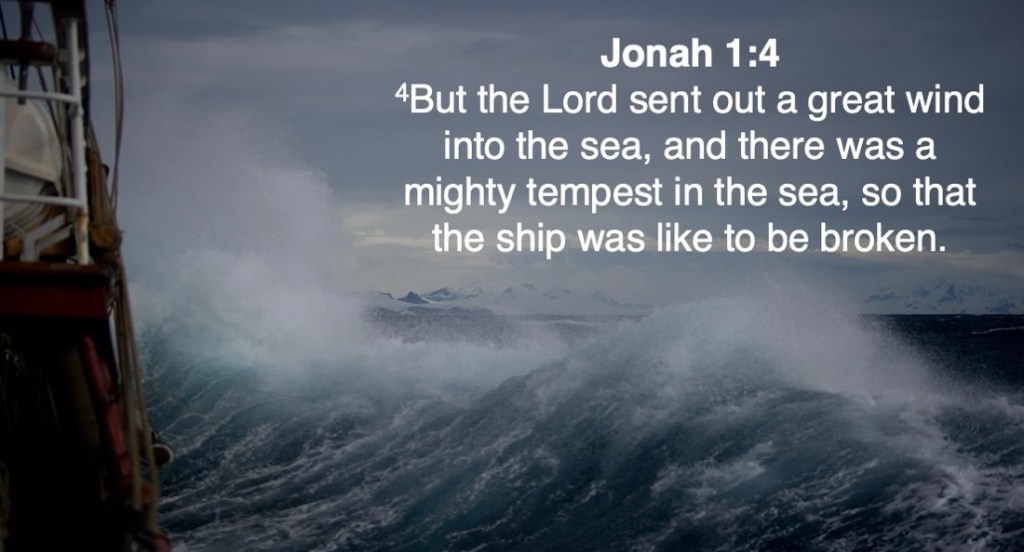
The escape of Jonah from the command of the Lord may be deeply troubling; but the narrative spins the story into burlesque, as “the Lord hurled a great wind upon the sea”, all the cargo on the ship is thrown overboard, and then Jonah (blissfully sleeping, apparently unaware of the great storm—as if!) is interrogated by the sailors, and eventually offers himself as a sacrifice to save the boat (1:12).
The sailors try in vain to save the ship; realising that this is futile, they throw Jonah into the sea—and immediately “the sea ceased from its raging” (1:15). Then, adding further incredulity to the unbelievable narrative, “the Lord provided a large fish to swallow up Jonah” (1:17). The three days and three nights that he spends “in the belly of the fish” before he is vomited onto dry land (2:10) add to the comic exaggeration.
The psalm that Jonah prays from inside the fish (2:1–9) and the successful venture to Nineveh, where even the king “removed his robe, covered himself with sackcloth, and sat in ashes” (3:1–10) apparently demonstrate that Jonah should have obeyed the command of the Lord in the first place. However, Jonah’s response continues the exaggerated response of a burlesque character; “this was displeasing to Jonah, and he became angry” (4:1).
Jonah’s resentment and his plea for God to take his life (4:2–4) and his patient waiting for God to act (4:5) lead to yet another comic-book scene, as a bush grows and then is eaten by a worm and Jonah is assaulted by “a sultry east wind” (4:6–8). The closing words of the book pose a rhetorical question to Jonah (4:9–11) which infers that God has every right to be concerned about the lives of pagans in Nineveh. The last laugh is on Jonah; indeed, he has given his readers many good laughs throughout the whole story!

 An Informed Faith