
This coming Sunday, the lectionary offers Luke’s account of that striking moment when Jesus of Nazareth was declared to be the beloved Son, anointed by the Spirit, and equipped for his role of proclaiming the kingdom of God (Luke 3:1–22). This particular Sunday, the first after the celebration of the Epiphany (on 6 January), is always designated as the day to celebrate The Baptism of Jesus, and therefore for those who have been baptised to remember the significance of their own baptism.
The moment of his baptism appears to be a turning point for Jesus. He was already, we must presume, a person of faith. We know that Jesus was raised as a good Jew. We can hypothesise much about his upbringing and faith. There is evidence from the Gospel,accounts of his adult years that he knew the daily prayer of the Jews, the Shema (“Hear, O Israel, the Lord our God is One”).

Jesus also knew the major annual festivals of his people: Passover, Harvest (later called Pentecost) and Tabernacles. He attended the synagogue each Sabbath, where he watched the scrolls containing the Hebrew scriptures unrolled, before they were read (in Hebrew, the sacred language) and explained (in Aramaic, the language of the common Jewish folk). Jesus, like all his fellow–Jews, believed that his God, Yahweh, was the one true God. He followed the traditional practices of worship and studied the scriptures under the guidance of the scribes in his synagogue.
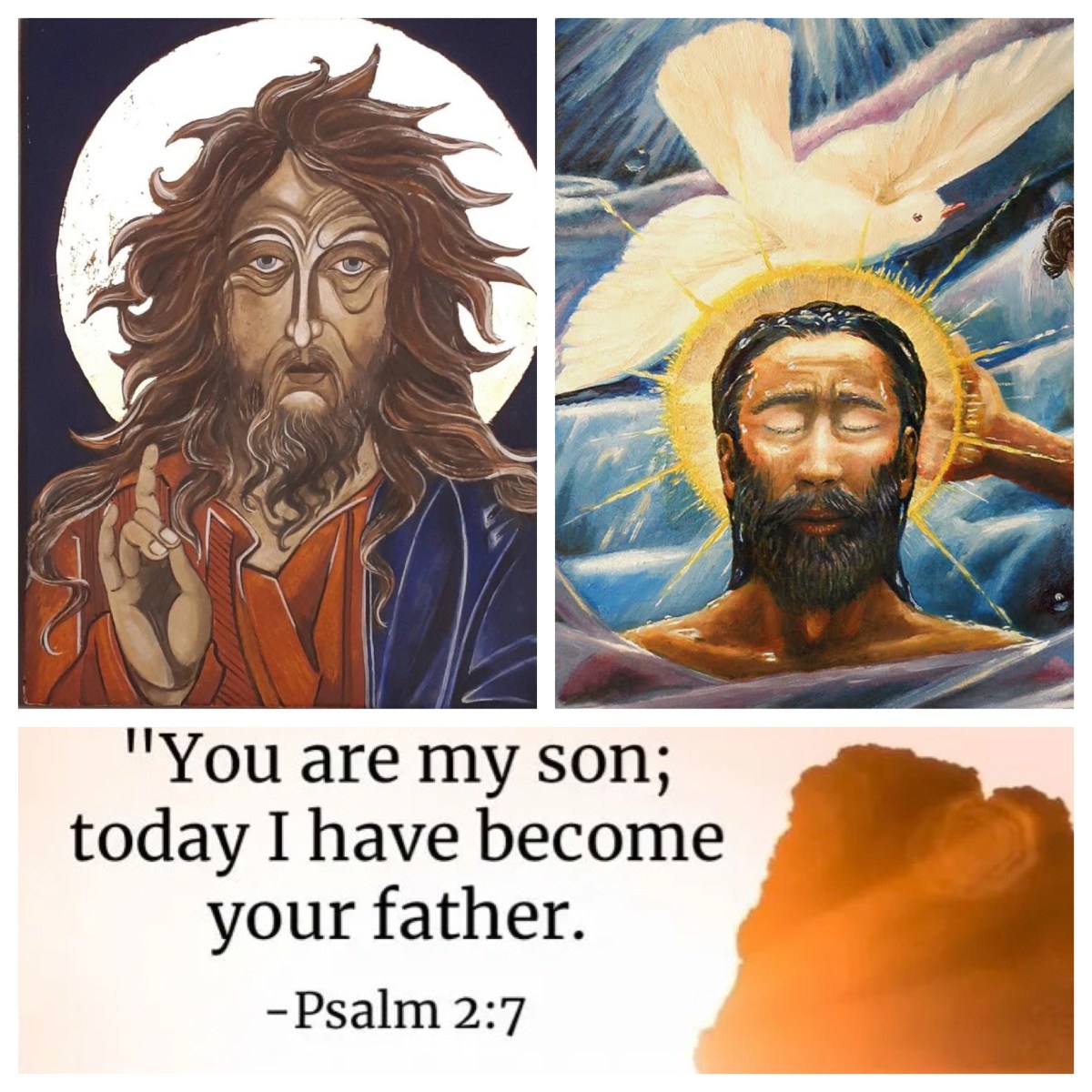
At a mature age (by tradition, in his early 30’s), Jesus made his way south towards Jerusalem, into the desert regions, along with other Jews of the day. Beside the Jordan River he listened to the preaching of a strange figure—a desert-dwelling apocalyptic prophet named John (Luke 3:1–18). Perhaps he and already encountered John, heard his message, and been inspired by his focus on the need for repentance. At least in terms of how the Gospel writers portray things from many decades later, this moment beside the Jordan River appears to have been a pivotal moment for the pious Jewish man from Nazareth. His encounter with John deepens his faith and sharpens his commitment.
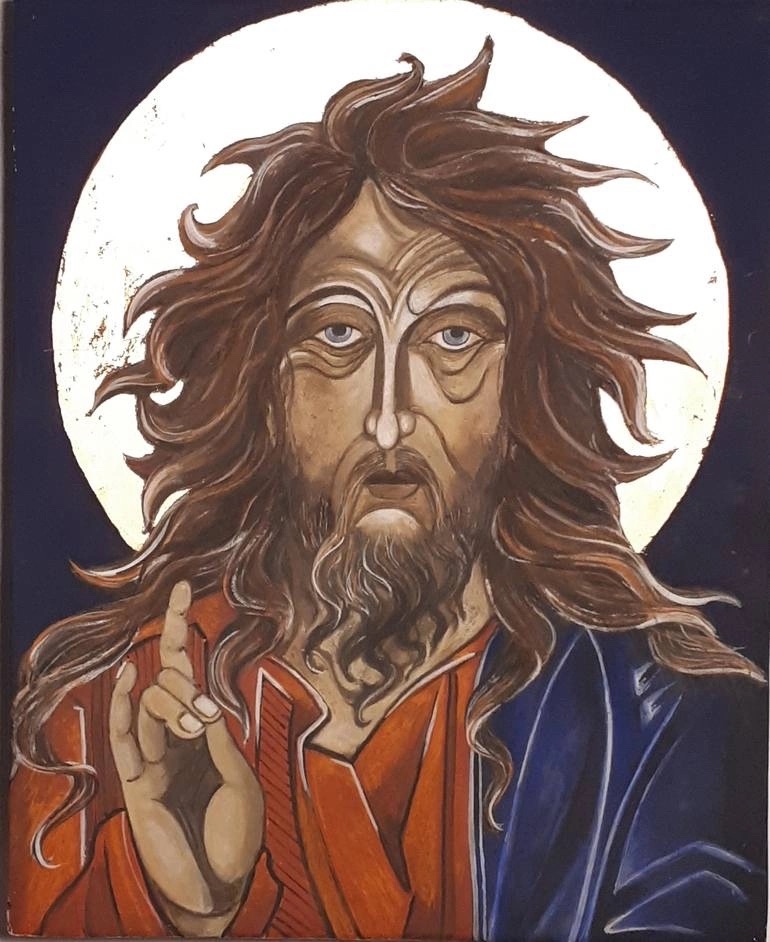
John’s was proclaiming “a baptism of repentance (Luke 3:3), urging people to “bear fruits worthy of repentance” (3:8). This call to repent was the traditional prophetic message, calling for teshuva (Hebrew; in Greek, metanoia). These words are usually translated into English as “repentance” (see Isa 1:27; Jer 8:4–7, 9:4–5, 34:15; Ezek 14:6, 18:30; Zech 1:1–6). Indeed, so many of the oracles included in both major and minor prophets provide extended diatribes against the sinfulness of Israel and call for a return to the ways of righteousness that are set out in the convening with the Lord. When prophets called for teshuva, metanoia, repentance, they were seeking a striking and thoroughgoing change of mind, a reversal of thinking and acting, a 180 degree turnaround, amongst the people. This is what metanoia means.
Accompanying this, however, was a very distinctive action that John the desert dweller performed, of immersing people into the river (Luke 3:21). Our Bibles translate this as “baptising”, but it was actually a wholesale dunking right down deep into the waters of the river.
Our refined ecclesial terminology of “baptism” is often associated, in the popular mind, with cute babies in beautiful christening gowns surrounded by adoring grandparents, aunties and uncles. This leads us far away from the stark realities of the act: being pushed down deep into the river, being completely surrounded by the waters, before emerging saturated and maybe gasping for air.
Such a dramatic dunking was designed to signify the cleansing of the repentant person. Repentance and baptism were necessary for the ushering in of the reign of God, according to John. Jesus appears to have accepted this point of view; it is most likely that his baptism was an intense religious experience for him. He underwent a whole scale change of mind, a reorientation towards the mission that was thrust upon him.
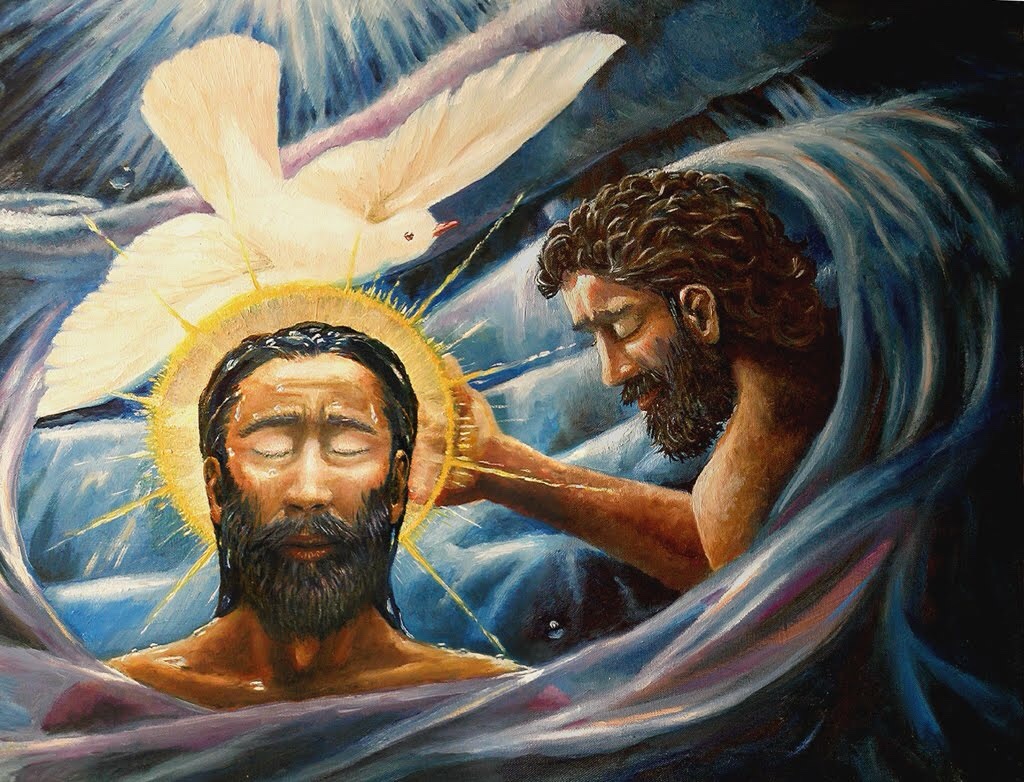
Certainly, the way that the experience is presented by Luke (and also in the other canonical Gospels) presents Jesus as being singled out by God for a special role. There are multiple signs on the short account of this moment (Luke 3:21–22).
FIrst, we note that Luke observes that “the heaven was opened” (4:21a). In Mark’s earlier account, there was a dramatic pairing of the “breaking apart” of the heavens, mirrored in the water of the river, which parts “as he was coming up out of the water” (Mark 1:10). The breaking of the heavens perhaps echoes the cry of the prophet of old: “O that you would tear open the heavens and come down, so that the mountains would quake at your presence … to make your name known to your adversaries, so that the nations might tremble at your presence!” (Isa 64:1). Luke, however, has softened the language about the heaven and removed reference to the waters, downplaying the dramatic impact of the story as Mark tells it.

Then, Luke reports, “the Holy Spirit descended upon him in bodily form like a dove” (Luke 3:22). The imagery is telling. A dove, of course, appeared at a key moment early in the biblical narrative: as the waters of the Great Flood recede (Gen 8:6–12); but the association of the dove with the Spirit (a commonplace in our thinking today, surely) is not actually made anywhere in scripture before this moment. The dove which appears seems, to Jesus, to come from beyond rest on him, in the way that the prophet declares that “the spirit of the Lord God is upon me” (Isa 61:1). The dove brings a signal from the sky—from the Lord God, perhaps?
A third signal comes through “a voice from heaven” (Luke 3:22). This is a common note regarding the hearing of the divine voice. Moses tells the Israelites, “from heaven he made you hear his voice to discipline you” (Deut 4:36). In the wilderness, God “came down upon Mount Sinai, and spoke with them from heaven, and gave them right ordinances and true laws, good statutes and commandments” (Neh 9:13; also Exod 20:22). Ben Sirach tells the story of the judges, when “the Lord thundered from heaven, and made his voice heard with a mighty sound” (Sir 46:17). David sang that “the Lord thundered from heaven; the Most High uttered his voice” (2 Sam 22:14). So a voice speaking from heaven, in Jewish understanding, is a communication from God.

Finally, the actual words which that voice speaks are deeply significant. “You are my son” are words spoken by God to David (Ps 2:7). “With you I am well pleased” echoes what God says about “my servant, whom I uphold, my chosen, in whom my soul delights” (Isa 42:1); indeed, of the Servant, the prophet declares, God indicates that “I have put my spirit upon him; he will bring forth justice to the nations” (Isa 42:2). What is heard at the moment of the baptism of Jesus is confirmation of the place of Jesus as one beloved, chosen, and equipped by God for what lies ahead of him. It is a moment of clarity that fuels what lies ahead for Jesus.
So it is that from the moment of this intense experience, Jesus was fervently committed to the renewal and restoration of Israel. We can see this being played out in the narrative that follows on from this crystallising moment. After his dramatic dunking in the river by the desert dweller, Jesus spent some time in the Judean wilderness (Luke 4:1–13), before he returns to Galilee and begins “to teach in their synagogues” (4:14).
What he says in those synagogues is not reported, although perhaps his typical message is contained in the story which follows. Luke notes that Jesus “came to Nazareth, where he had been brought up … went to the synagogue on the sabbath day, as was his custom … [and] stood up to read” (4:16). His first public words, as reported in this Lukan account of his ministry, were clear and focussed.

Speaking in Nazareth, Jesus quotes from his scriptures (4:18–19, quoting Isa 61:1–2), utilises a proverb about a prophet (4:23), tells stories relating to prophets of old, Elijah and Elisha (4:25–27), and invites his listeners to relate all of this to his very presence in their midst: “today this scripture has been fulfilled in your hearing” (4:21).
We gather from the Gospel narratives that Jesus had left his family as he travelled around Galilee (8:19–21; 14:26), announcing that the time was near for dramatic changes to take place (10:9, 11). He gathered a group of men and women who accepted his teachings, journeying with him as he spread the news throughout Galilee (8:1–3).
The intense religious experience of his dunking meant that the fierce apocalyptic message spoken by the desert dweller was lived out in a radical way in daily life by this group of deeply committed associates of Jesus. The intense religious experience associated with his dramatic dunking by the desert dweller had a deep and abiding impact. Perhaps, if Jesus had already known John and his teachings, he would have imbibed the fiery apocalyptic language and the deeply confronting challenge of John’s “baptism of repentance for the forgiveness of sins” (3:3), calling for people to “bear fruits worthy of repentance” (3:8) and warning that “every tree therefore that does not bear good fruit is cut down and thrown into the fire” (3:9).
The radical cost of living in the way that Jesus taught is clear in his words to his followers: “whoever comes to me and does not hate father and mother, wife and children, brothers and sisters, yes, and even life itself, cannot be my disciple” (14:26); “whoever does not carry the cross and follow me cannot be my disciple” (14:27); “none of you can become my disciple if you do not give up all your possessions” (14:33). For Jesus, it is clear that “unless you repent, you will all perish as they did” (13:3, 5), where he cites recent incidents of the death of those he labels as “sinners” (13:2, 4).
Reflecting on his own baptism, Jesus notes, “I have a baptism with which to be baptized, and what stress I am under until it is completed!” (12:50). “I came to bring fire to the earth”, he states, “and how I wish it were already kindled!” (12:49). What that means for his followers is crystal clear: “Do you think that I have come to bring peace to the earth? No, I tell you, but rather division” (12:51). Following him means a complete and dramatic life transformation.
The challenge, for those of us who follow him, is to live out this radical way of life today in our lives. As those baptised into the way that Jesus teaches, and lives, our baptism mandates a transformed life. And that’s what we should remember, and commit to, on this Sunday when we remember The Baptism of Jesus.

 An Informed Faith