
One of the questions that is often put to Independent candidates relates to the issue of funding. “Where is your funding coming from?” “Your candidate is on the Climate 200 website—that means they’re a Teal, doesn’t it?” Some basic figures might be helpful here.

In the 2022 election, Climate 200 donated a total of $6.5 million, distributed amongst 19 candidates. This money had come from 6,750 donors—including Simon and Karina Holmes à Court, but obviously including so many more than them. That indicates widespread support for Independents amongst the community; the vast majority of C200 donors were individual supporters of the community-backed Independents.
However, the $6.5 million from Climate 200 for community-backed Independents pales into insignificance when we note the donations received by the two major parties. For the 2022 election, Labor raised $124 million to spend on its electioneering, and the Coalition raised $115 million. Together, that’s 36 times more money than was provided by Climate 200.
And the bulk of these donations come from a small number of well-heeled individuals: the top 5% of donors provided 82% of the donations to the major parties. The Centre for Public Integrity reports that the top 5 individual donors to the ALP contributed $205.4 million, (that’s 34.5% of their total donations), while the top 5 donors to the Coalition contributed $118.8 million (22.6% of their total donations). So who is calling the shots? Just a few very rich people.
Many of the community-supported Independent candidates ran strong grassroots campaigns in the 2022 election, attracting much more of their funding support from donations made by community members. For example, Monique Ryan raised $1.8 million from 3,762 donors for her successful campaign to unseat former treasurer Josh Frydenberg in the Melbourne seat of Kooyong. This clearly reflects the higher socio-economic level of the population in this electorate, compared with western Melbourne or western Sydney seats, where support at such a level would not be able to materialise.
Climate 200 has been completely transparent about the individual donors whose money is them distributed amongst community-nominated Independent campaigns that they supported. They are listed by name on their website:
https://www.climate200.com.au/our-donors
These donors support C200 in its platform of assisting Independent candidates with community support, who are each committed to the three basic areas of responsible climate policies, integrity in government, and gender equity. These three areas are designed to ensure a focus on equity within society. Our federal members need to represent us all.
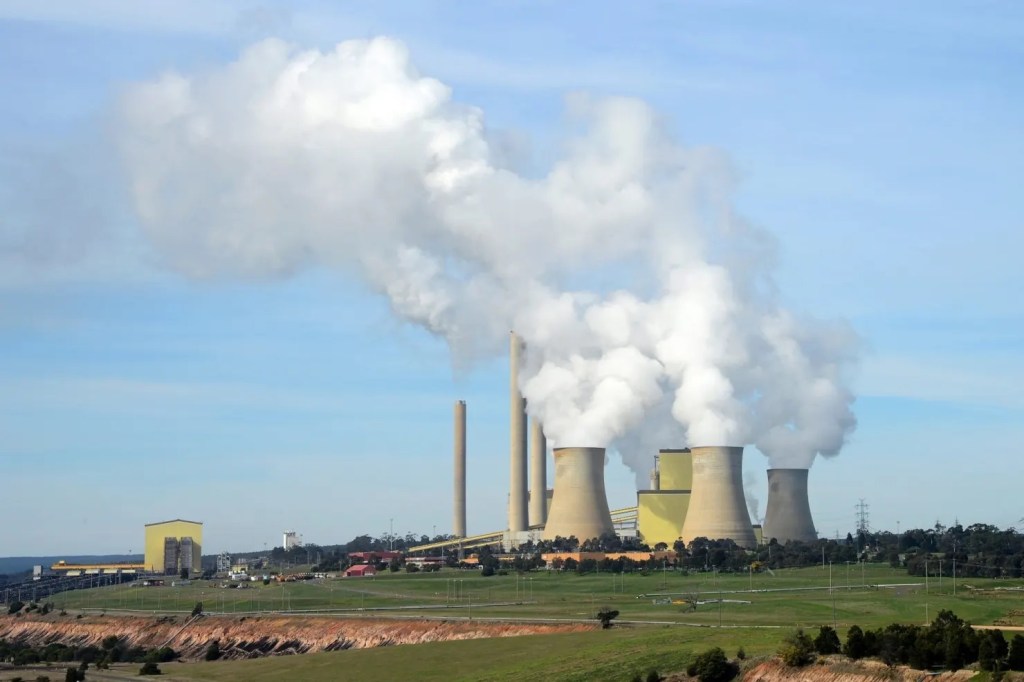
By contrast, the fossil fuel industry has provided strong support for the major parties in an attempt to further their environmentally damaging projects, which bring financial benefit to their businesses. Their intense lobbying and continued financial support is intended to get these parties to support their businesses enterprises, and to slow or stall the support given to renewable sources of energy,which are much more environmentally responsible.
The Australian Electoral Commission has published the figures of where donations came from in the 2022 election, and it shows that:
- Fossil fuel industry sources gave more than $2.3 million to the major political parties ($1.4 million to Labor and over $900,000 to the Coalition parties).
- The mining and energy division of the CFMEU union ($500,000) and industry lobby group the Minerals Council ($105,000) were the biggest fossil fuel interest donors to Labor, while oil and gas lobby group APPEA ($56,700) was also a big contributor.
- Tamboran Resources, the company that plans to extract gas from the Beetaloo Basin, donated a combined total of $200,000 to Labor, Liberal and National parties.
- Oil and gas giant Woodside donated a total of $109,930 to Labor, Liberal and Nationals.
- Mineral Resources Limited ($135,000) and gas giant Santos ($77,310) were the biggest individual fossil fuel company donors to Labor.
- Coal miner Adani donated $100,000 to the Liberal-National Party in Queensland.
https://www.acf.org.au/fossil-fuel-interests-big-donors-to-major-parties-in-election-year
And the changes for the 2028 election onwards?
Climate 200 estimates that if the proposed changes to electoral funding are in place for the 2028 election, the two parties could expect to receive 2.44 times as much as in 2025, with the forecast windfall increasing by $82.66m to $140.01m. This includes an estimated $16.53m in new administrative support funding.
These calculations are based on the Reserve Bank of Australia’s inflation projections, the current trajectory of first-preference voting for the two biggest parties and the proposed rate of public funding per eligible vote.
So any criticism of the support given to community-nominated and community-supported Independents should be placed alongside these figures!
******
Declaration of interest: for the 2025 federal election I am an active and committed member of the campaign team for Jeremy Miller,who is the community-supported Independent candidate in the seat of Lyne.
https://www.jeremy4lyne.com.au/what_i_stand_for

 An Informed Faith