

The term “Woke” was first used in a positive manner by Afro-Americans. It can be traced back to an 1891 book by Joel Chandler Harris (best known for his “Uncle Remus” stories). In the 1930s, it was used by Blacks quite often to describe being aware of racial prejudice and discrimination, often in the phrase “stay woke”. That usage continued through the decades and was picked up by the Black Power movement in the 1970s, and then increased in usage in the Black Lives Matter push of the 2010s.
See more at https://www.independent.co.uk/news/uk/home-news/woke-meaning-word-history-b1790787.html
In 2017, the Oxford English Dictionary added “woke” to its official lexicon, noting that it was most often used “in a derogatory sense”. This reflects the reality that the term had been picked up and hijacked by people of more conservative political and social perspectives (predominantly white people), and employed as a way of denigrating people with a social conscience committed to social justice. It’s a strange recent twist to what had been a proud Black statement.
The same development in meaning can be seen with the word “Teal”, with a much more recent origin and a highly-compressed trajectory in turning from a positive to a negative meaning. It was first used as a political label in the 2019 federal election campaign of Zali Steggall, when she defeated Tony Abbott in the seat of Warringah (NSW).
The term (and the campaign colour) was then picked up and used in a constructive sense by some (but not all) community-supported independents in the 2022 election: Dr Monique Ryan in Koorong (Vic), Allegra Spender in Wentworth (NSW), Dr Sophie Scamps in Mackellar (NSW), Zoe Daniel in Goldstein (Vic), Kate Chaney in Curtin (WA), and Zali Steggall in her successful re-election campaign in Warringah.
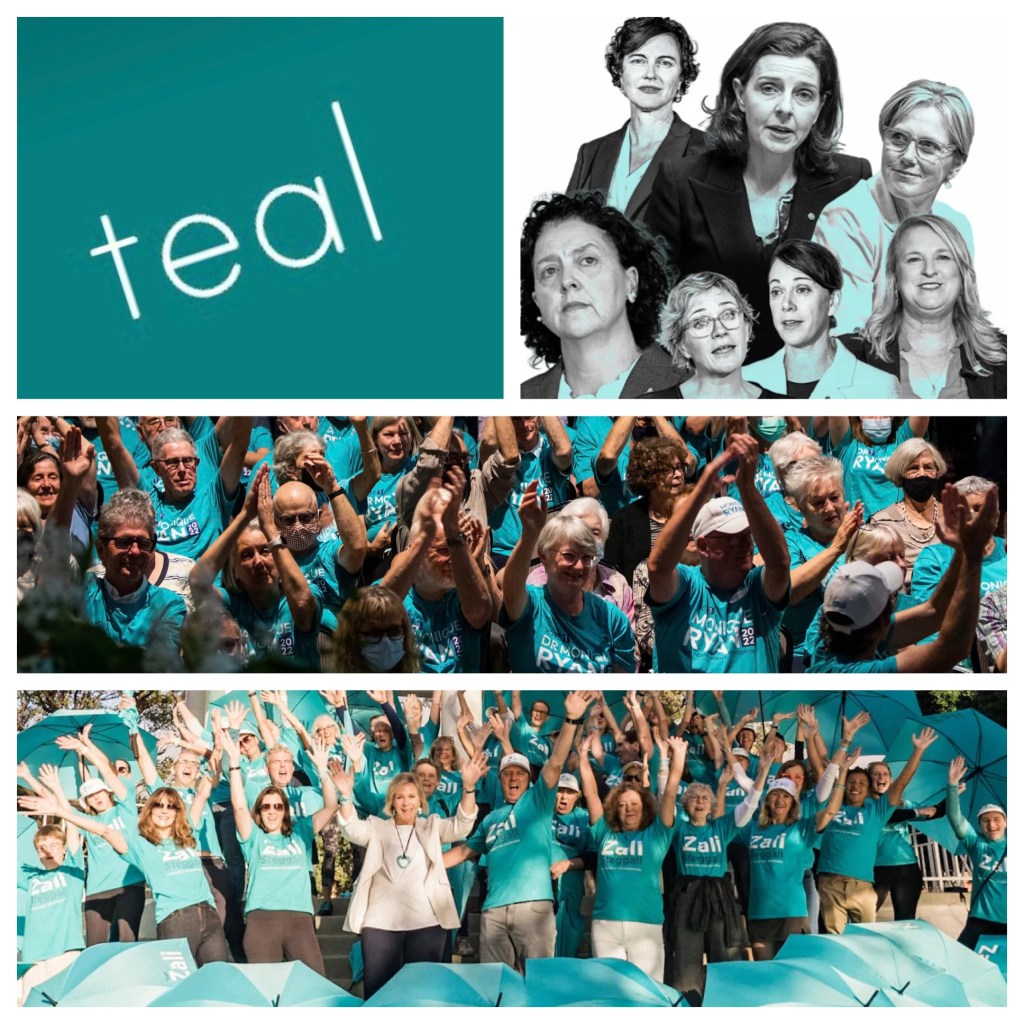
The colour has successfully differentiated community-supported Independents from the “old parties” of Labor (bright red), Nationals (deep green), and Liberal (royal blue), as well as the Greens (light green).
However, the word “teal” has been adopted by uncritical conservative people as used as a way to lump together a widely-disparate group of independents and frame them all as “Labor lite” or “pale Green”. It has become a derogatory term for such people, as they look for an easy (and lazy) way to caricature those standing as Independents, dismissing them all as “leftwing woke ideology” (three slurs in one phrase!).
Too often there is a conflation of “Teal” and “Climate 200”, with the implication being that all candidates supported by C200 are Teals who are climate change warriors—“leftwards”, as some derogatorily call them. However, the C200 website clearly shows that the independents they are supporting are using a range of colours.
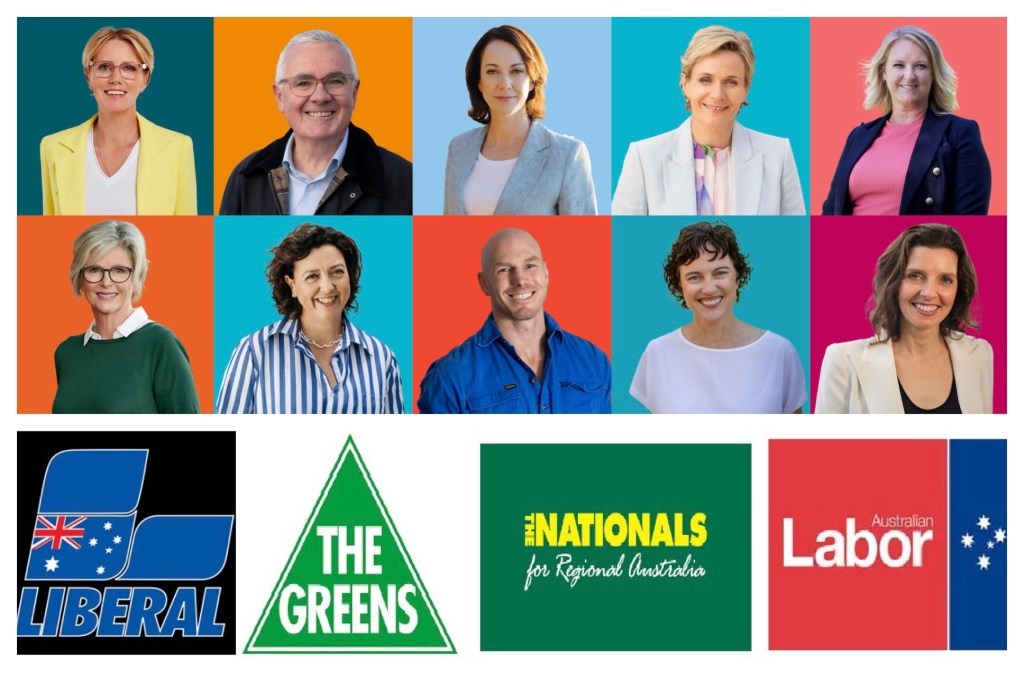
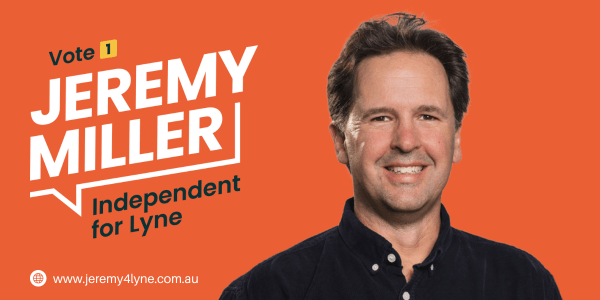
Quite a number of the Independent candidates that the Community independents Project is supporting are using teal, but others are using orange, and a few are using yellow. Standing against Peter Dutton in Dickson (Qld), Ellie Smith is using magenta. Overall, the choice of colour for Independents it is made on an individual basis. That’s far from the monolithic imposition by the parties of the red of Labor or blue for the Liberals, the lighter green for Greens and the deeper green for the Nationals. These are required of all of their candidates around the country. Community-supported Independents each choose their colour and their marketing strategy.
For myself, I am wearing orange and supporting Jeremy Miller as the Community Independent for Lyne. Jeremy has been chosen by community members across the Lyne electorate in response to a twelve month listening campaign aimed at prioritising the local needs of the Lyne electorate. His fundamental commitment is to listen to the people of the electorate and advocate strongly for the needs of people in Lyne.
See more at https://www.jeremy4lyne.com.au/what_i_stand_for

 An Informed Faith