
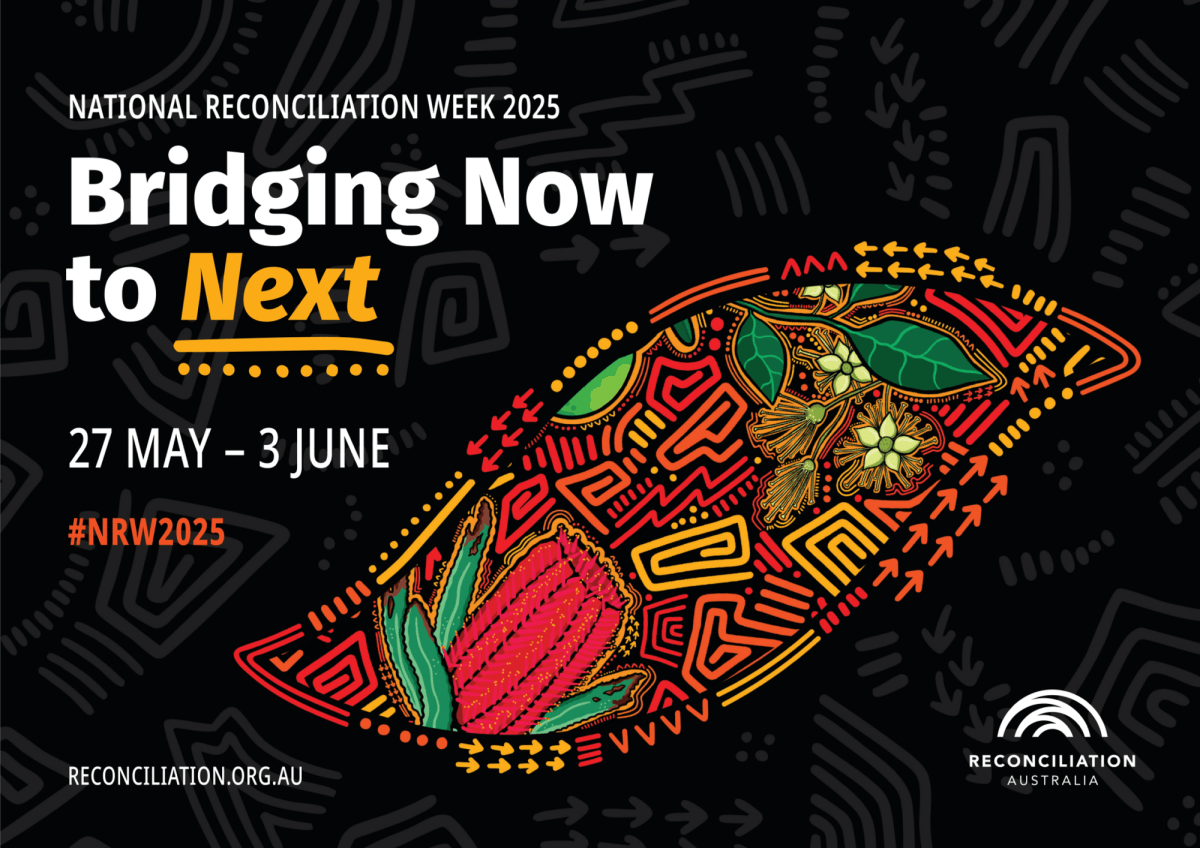
National Reconciliation Week runs each year from 27 May to 3 June. 27 May is the anniversary of the 1967 referendum which recognised the indigenous peoples of Australia and gave them the right to vote. 3 June is the day in 1992 that the legal case brought by Eddie (Koiki) Mabo was decided and the lie of terra nullius was laid bare by Koiki in the Australian High Court.
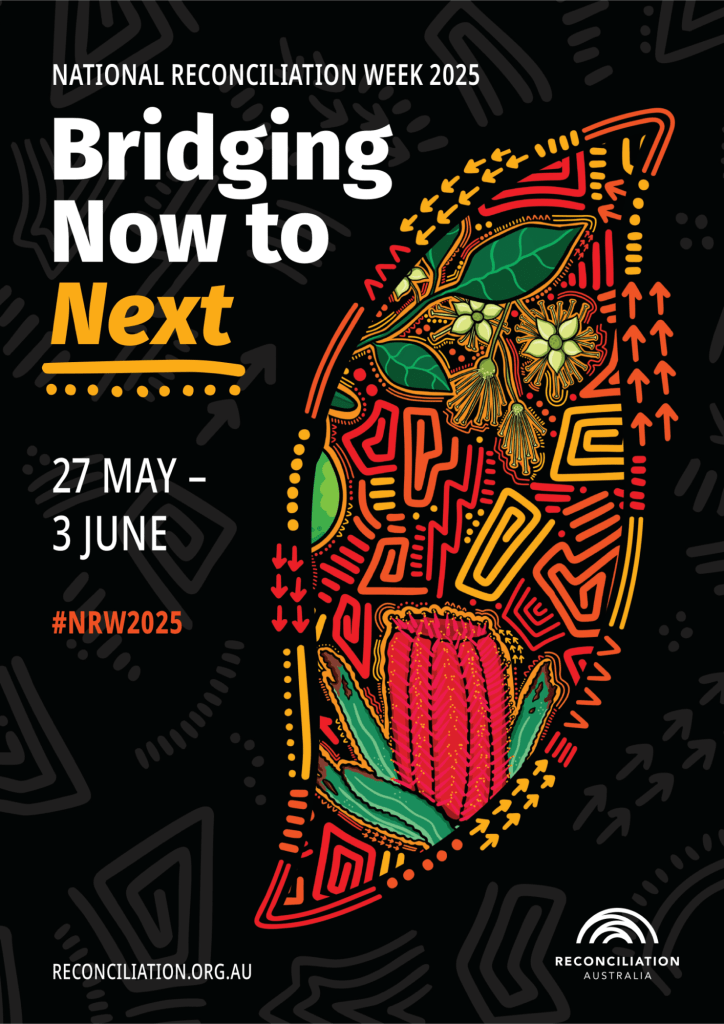
The theme for this year is Bridging Now to Next. This theme reflects the ongoing connection between past, present, and future, urging us to look ahead and continue the push forward as past lessons guide us.
Australia had an opportunity to take an important step forward in 2023, with the proposal that our Constitution incorporate recognition of the first inhabitants of the nation, who have cared for the countries of this continent for millennia. Unfortunately, the reluctance of conservative elements in our political leadership to embrace this proposal meant that the proposal failed.
That does not mean that everything to do with Indigenous matters is now on the back burner, as I have (unfortunately) heard a number of times since the 2023 referendum. Indeed, there is a need to press on ahead with the reconciliation journey that we really do need to undertake in this country.
Elizabeth and I have been pleased to find in Dungog a group dedicated precisely to to that purpose; Reconciliation Dungog, a group of people which aims “to support, educate and inspire our community to engage in reconciliation activities”.
See https://reconciliationdungog.square.site
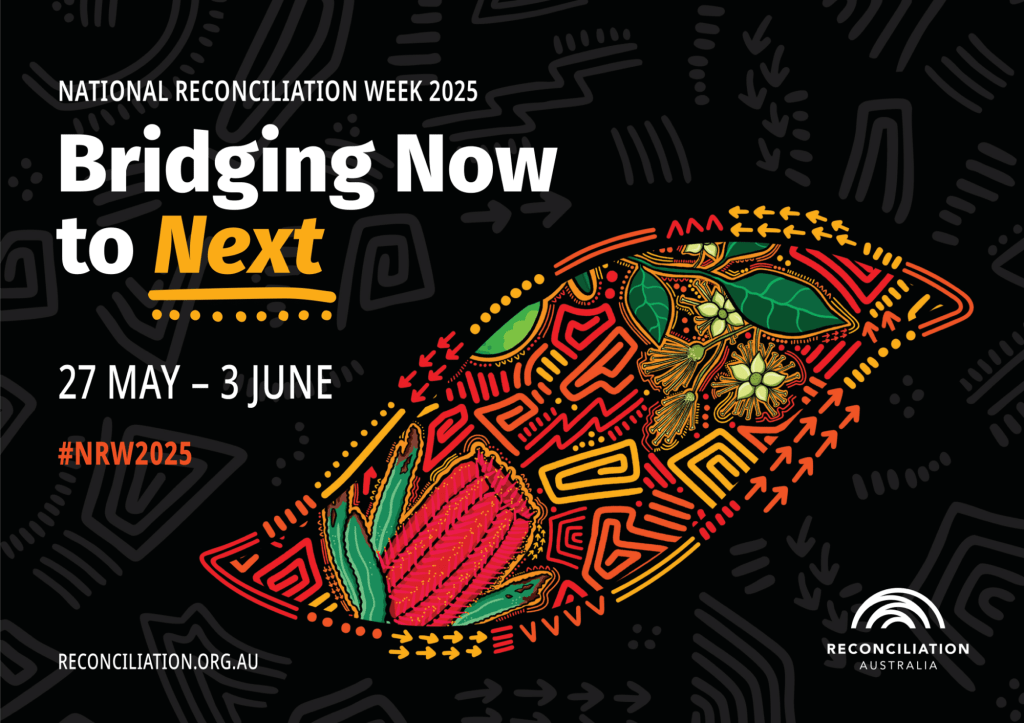
Artwork relating to the theme of Bridging Now to Next has been created by Kalkadoon woman Bree Buttenshawn. She is a Kalkadoon woman (in the Mount Isa region of Queensland) who is currently living on Quandamooka Country (in the Moreton Bay region, near Brisbane). She works as a digital artist under the artist pseudonym of Little Butten and seeks to integrate her Aboriginal culture with a contemporary digital approach.
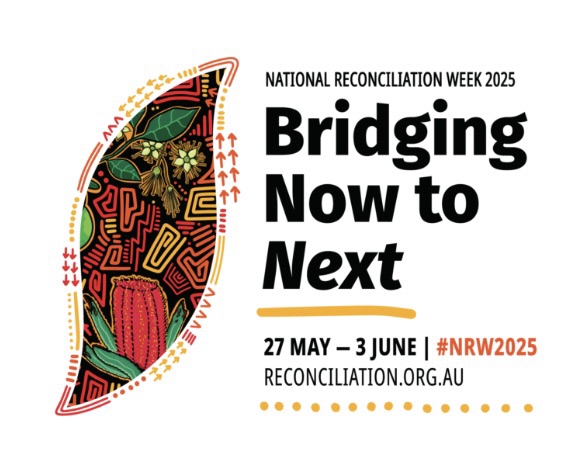
The website of Reconciliation Australia states that “the artwork features native plants − known for regenerating after fire and thriving through adversity − [which] symbolise our collective strength and the possibilities of renewal.”
The website continues, “This is a time for growth, reflection, and commitment to walking together. Reconciliation must live in the hearts, minds and actions of all Australians as we move forward, creating a nation strengthened by respectful relationships between the wider Australian community, and Aboriginal and Torres Strait Islander peoples.”
National Reconciliation Week began as the Week of Prayer for Reconciliation in 1993 (the International Year of the World’s Indigenous Peoples). It was supported by Australia’s major faith communities: Christian, Jewish, Muslim, and others. In 1996, the Council for Aboriginal Reconciliation launched Australia’s first National Reconciliation Week.
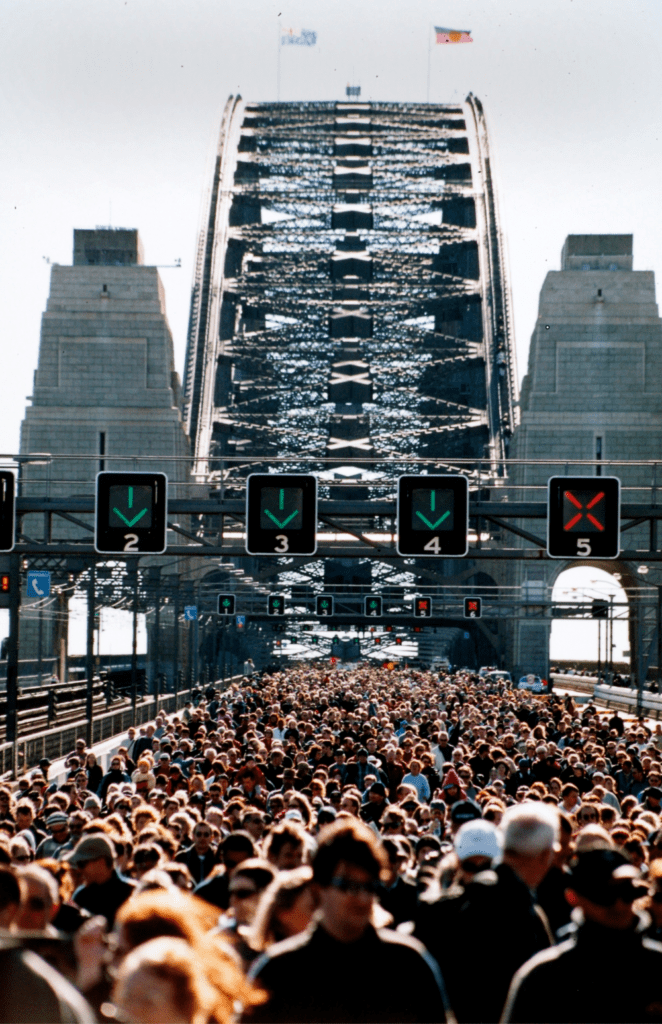
In the year 2000, hundreds of thousands of Australians walked across Sydney Harbour Bridge (see image above), and other bridges around Australia, to show support for Aboriginal and Torres Strait Islander aspirations. A few months before that, the Council for Aboriginal Reconciliation had presented its final reports to the Australian people, The Australian Declaration towards Reconciliation and The Roadmap for Reconciliation, at the Corroboree 2000 event in Sydney in May 2000.

Then, in 2001, Reconciliation Australia was established to continue to provide national leadership on reconciliation. This week (#NRW) has been held each year since then. It is celebrated in workplaces, schools and early learning services, community organisations and groups, and by many individuals Australia-wide. The #NRW2025 theme, Bridging Now to Next, was created in collaboration with Little Rocket, a First Nations owned and operated marketing and creative agency.
See
https://littlebutten.com/pages/artist-portfolio
See also

 An Informed Faith