
The land on which the house that we currently own and live in, on Brown Street, Dungog, was part of the original area of land in the town of Dungog that was made available in 1838 to settlers by the Governor of the Colony of New South Wales, Sir George Gipps.
Of course, this land and the surrounding region had been the land of the Gringai people for millennia; but once the British government started sending convicts to this continent, and began the process of claiming the land from the Indigenous people, the British system of law, and of land and property, became dominant as new settlements were opened up for the incoming settlers.
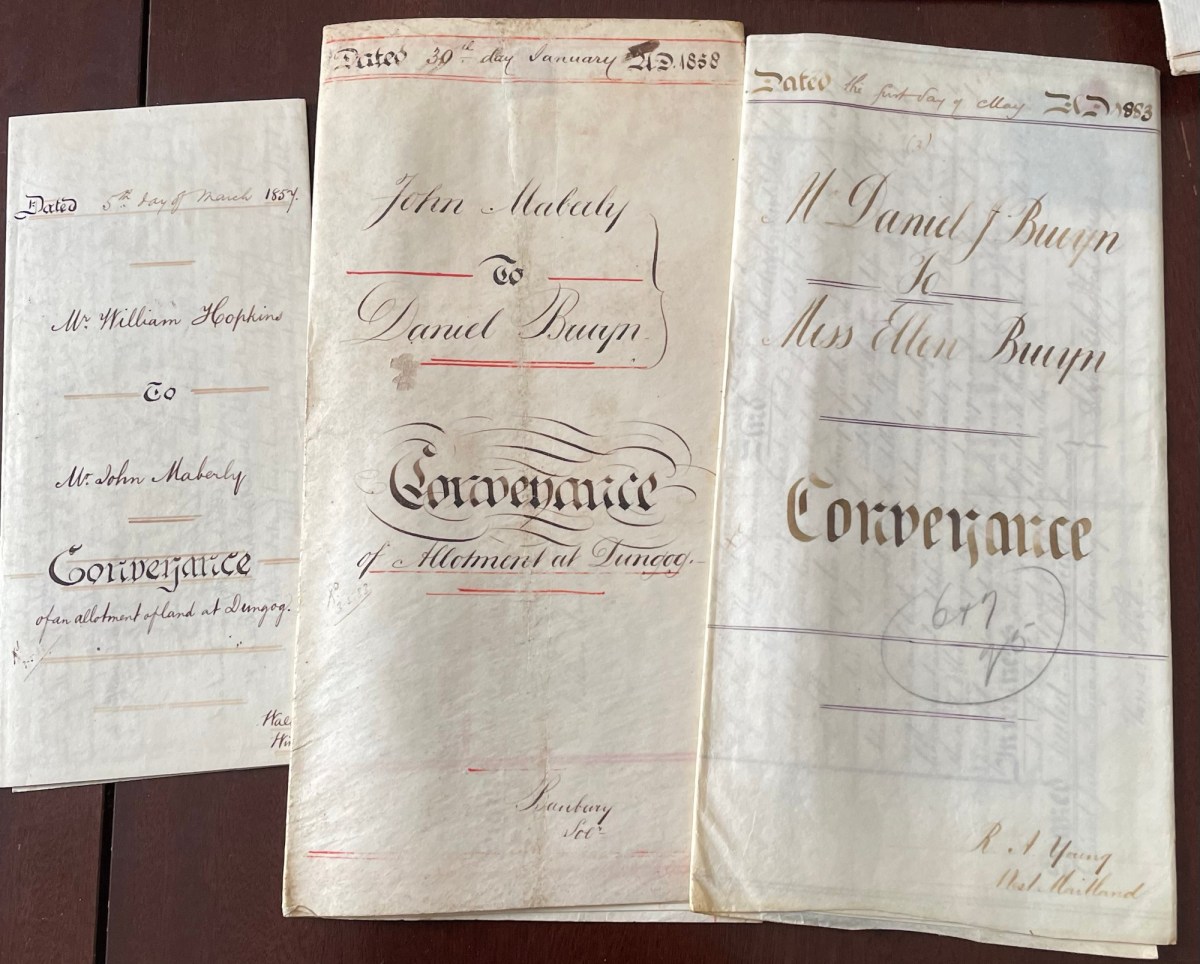
A bundle of documents which we received when we purchased the property provides information about the sequence of owners, from 1842, when the land was bought by James Fawell, up to 1969, when it was bought by Victoria Jack and Wendy Elizabeth Finney. These documents show that it was owned by a series of men in the middle of the 19th century: James Fawell (1852), Barnet Levey (1852), William Hopkins (1855), John Maberly (1857), and then Daniel Bruyn (1858).
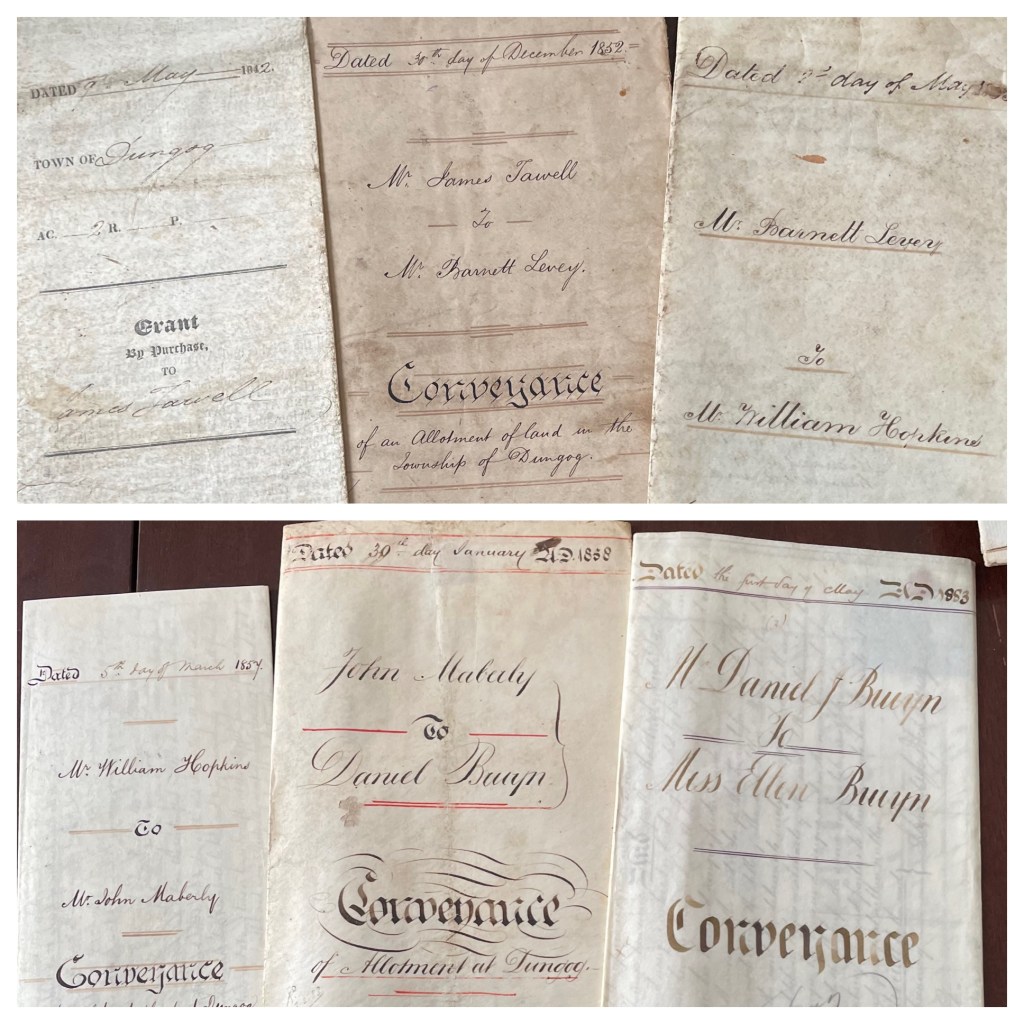
relating to the Brown St property
When Daniel Bruyn purchased the land in 1858, two years after arriving on New South Wales, it meant that he could provide a home for his family in Dungog, as well as a site to conduct his business as a Blacksmith. When Daniel Snr died intestate in 1882, all of his property was made over to his son, Daniel Justin Bryan; a few months later, the land he held in Brown St had been purchased by his daughter, Ellen Bruyn. She lived in the house until her death in 1927.
What do we know of the life of the Bruyn family? In the obituary to Miss Ellen Bruyn after her death, published in the Dungog Chronicle of Tuesday 4 October 1927, p.2, we read: “In the memorable flood of 1857, the [Bruyn] family had to be rescued from their home, which, although situated at a comparatively high level, was inundated by the swirling waters. It was the year that eight of the ill-fated Ross family were swept to death from their home on Melbee flat.”
The Bruyn family survived the flood. The names of the members of the Ross family who died in this flood are listed in a report of the inquest held on 1 September 1857, namely: “George Ross, aged 39 years; Mrs. Ross, aged 27 years; William Ross, aged 9 years; Mary Jane Ross, aged 7 years; John Ross, aged 6 years; Elizabeth Ross, aged 4 years; Julia Ross, aged 1 year and 9 months.” (Maitland Mercury, Thursday 3 September 1857, p.2)
The obituary to Ellen Bruyn also reports that “The Bruyn family played an important part in Dungog’s progress, and were prominently identified with every forward movement. They experienced many of the trials and hardships inseparably associated with the early pioneering days, and saw many thrilling happenings.” That’s a very nice tribute to them all—and it would be fascinating to know more about some of these “thrilling happenings”!
We know far more about men in society in the 19th and 20th centuries than we do about women; not only were male occupations more public (“a woman’s place is in the home”, as the sexist, but generally accurate, saying went in those days), but the bias towards males overall is evident in so many ways.
Newspapers articles do report the contributions of women to some charitable and community events and organisations; but it is predominantly the men who serve on Council, buy and sell property, conduct professions and trades, and are in what were seen, at that time, to be leadership roles in the community.
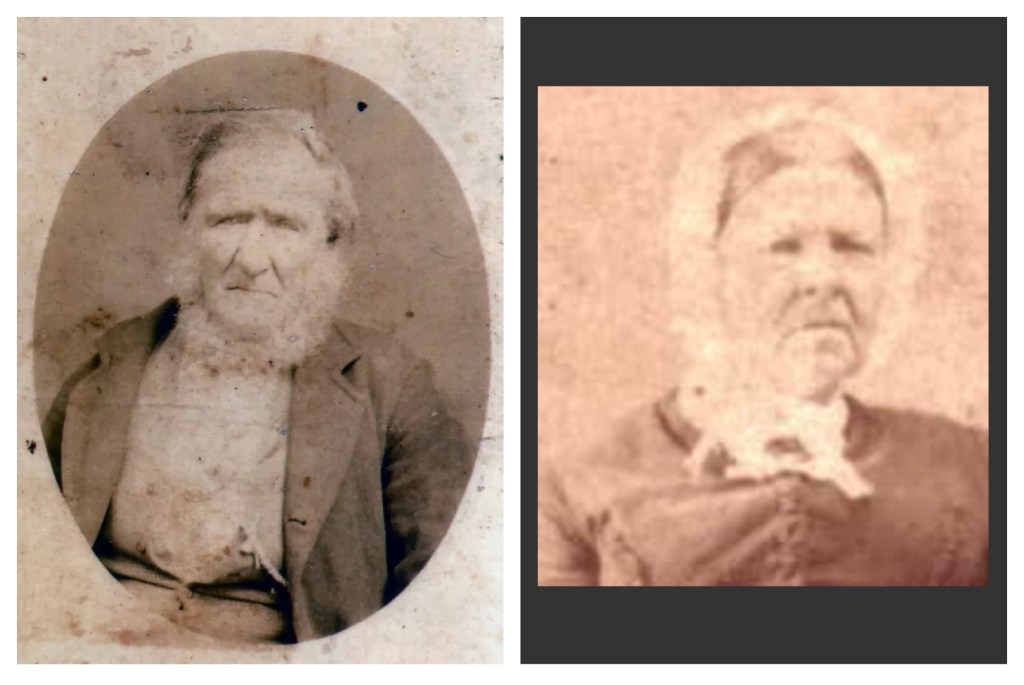
So not much more cannot be said about Sarah Bruyn other than, as a faithful wife and mother of six children, she would have organised and run the Bruyn household with efficiency and diligence. She should always be considered to be there—albeit “in the shadows”—when her husband, Daniel Joseph Bruyn, is mentioned.
And fortuitously, as we shall see, her spinster daughter Ellen would be noted more often in the newspapers of the day and even on property registers (as an adult she owned land adjacent to the holdings of her brother, Daniel Justin). Through her compassion, diligence, and concentrated effort, she was able to make bequests in her will that both reflected her community involvements and that had a life of their own, for two decades and more, for the good of the community. Did she inherit these traits from her mother, perchance?
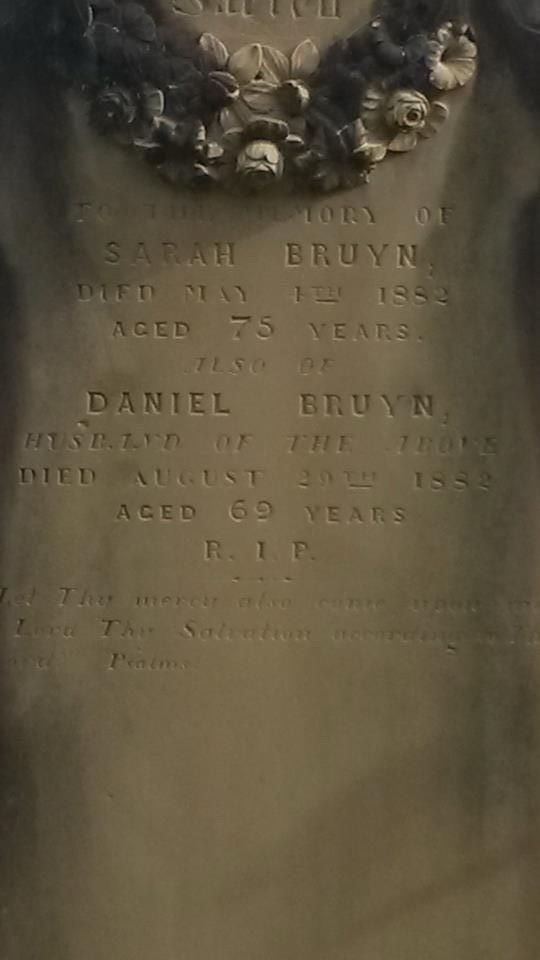
At the age of 75, the mother of the Bruyn family, Sarah Ellen Bruyn, died on 4 May 1882; her husband Daniel Joseph Bruyn died soon after on 29 August 1882. They are both buried in the Dungog Cemetery.
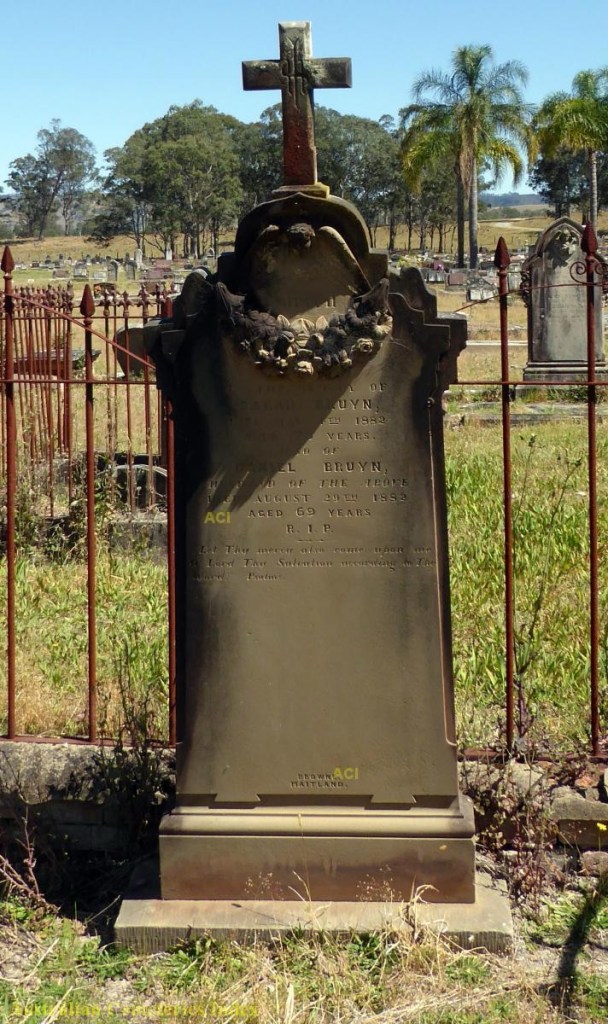
in the Dungog Cemetery
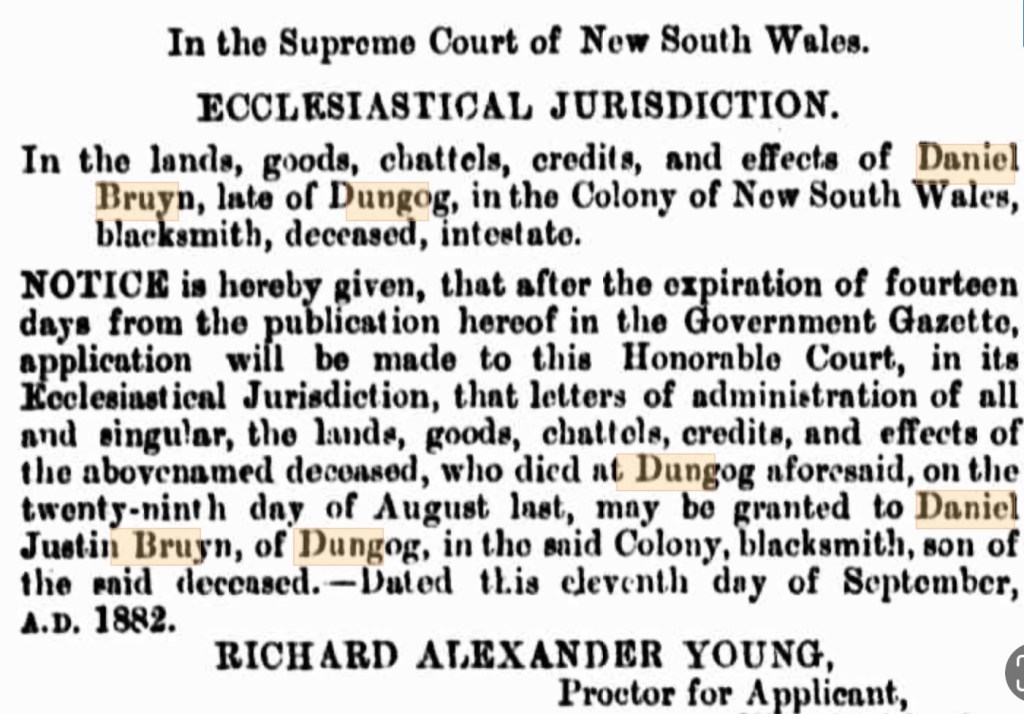
Daniel died intestate, so there were legal matters to be dealt with. In the first instance, all of the property held by Daniel Joseph Bruyn was to be given over to his son, Daniel Justin Bruyn. The Dungog Chronicle included the following notice:
In the Supreme Court of New South Wales ECCLESIASTICAL JURISDICTION. In the land, goods, chattels, credits, and effects of Daniel Bruyn, late of Dungog, in the Colony of New South Wales, blacksmith, deceased, intestate.
NOTICE is hereby given, that after the expiration of fourteen days from the publication hereof in the Government Gazette, application will be made to this Honorable Court, in its Ecclesiastical Jurisdiction, that letters of administration of all and singular, the lands, goods, chattels, credits, and effects of the abovenamed deceased, who died at Dungog aforesaid, on the twenty-ninth day of August last, may be granted to Daniel Justin Bruyn, of Dungog, in the said Colony, blacksmith, son of the said deceased.—Dated this eleventh day of September, A.D. 1882.
RICHARD ALEXANDER YOUNG, Proctor for Applicant, West Maitland. By W. J. Fergusson, 136, Pitt-street, his Agent. 6023 6s. 6d.
It appears that plans were made for this to be duly executed, as a notice in the classified advertising of the Maitland Mercury of Sat 24 Feb 1883, p.7, indicates that the two blocks of land in Brown St are to be sold be auction:
SALE BY PUBLIC AUCTION.
J. ROBSON has received instructions from Mr Daniel Justin Bruyn, Administrator in the Estate of the late Mr. Daniel Bruyn, Blacksmith, of Dungog, to sell by public auction, at Robson’s Hotel, Dungog, on Saturday, 3rd day of March, 1883, at Three o’clock p.m. sharp, 2 HALF-ACRE ALLOTMENTS OF LAND, situated and Fronting Brown-street, in the Town of Dungog, and adjoining the Market Reserve, being Allotments Number 6 and Number 7, of Section Number 5; Together with ALL THE BUILDINGS ERECTED THEREON, which consists of a Comfortable Dwellinghouse, Kitchen, Blacksmith Shop, and other Outbuildings. TITLE PERFECT. Terms cash. 2938
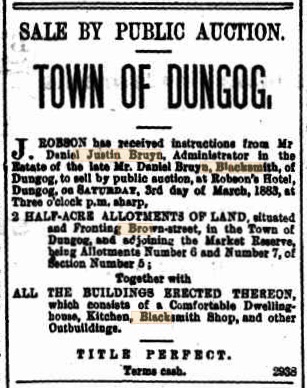
This notice certainly shows that buildings had been erected on the land and were in use well before 1883.
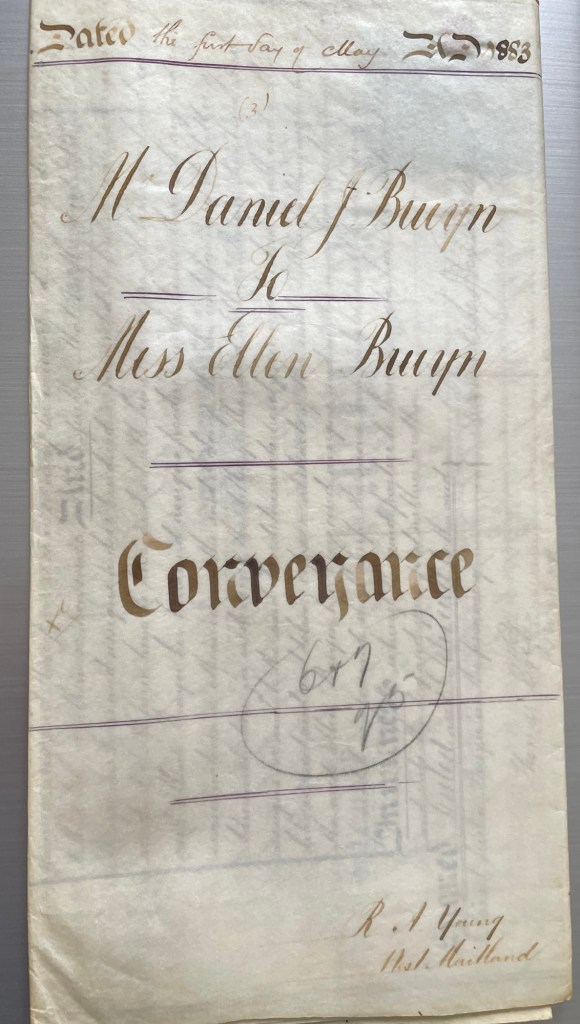
The next piece of information about this property comes from the next Conveyance contained in the bundle of documents we received when purchasing our land. That Conveyance, dated 1 May 1883 (two months after the auction day) indicates that Ellen bought the two blocks of land from her brother Daniel for £160.
“Conveyance dated 31st day of May 1883 … between Ellen Bruyn of Dungog, Spinster, and Daniel Justin Bruyn of Dungog, Blacksmith, Allotment No. Seven of Section No. Five and Allotment No. Six of Section No. Five. Two hundred pounds”.
Before we explore the story of Ellen Bruyn, we need to give due consideration to the life of Daniel Justin Bruyn.
And so to the next chapter in this story … … …
*****
See earlier posts at
and subsequent posts at

 An Informed Faith