
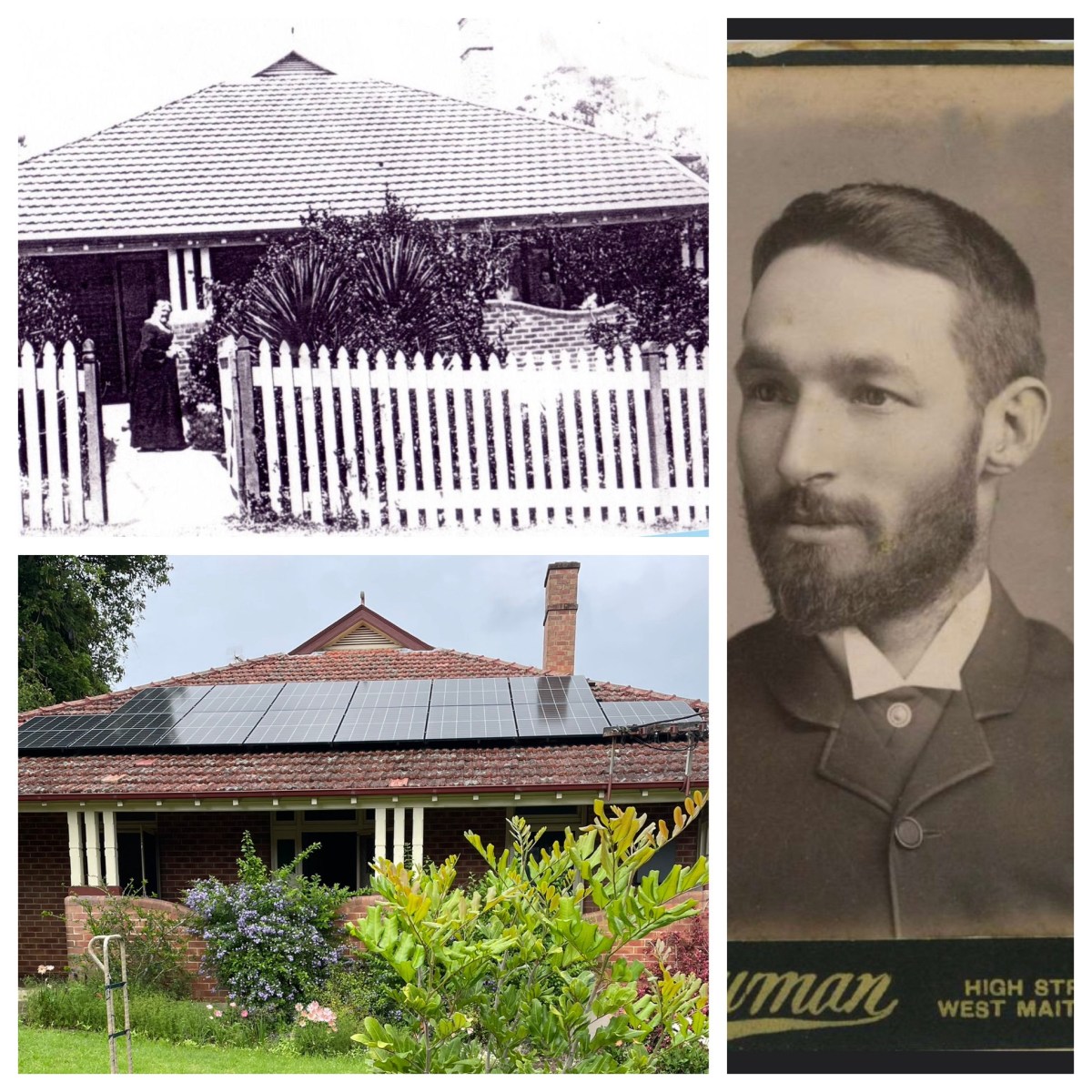
I am continuing the story of the land and house which Elizabeth and I purchased in Dungog a few years ago, after having traced the early landholders for this property (1848–1858), Daniel and Sarah Bruyn and their family (from 1858 to 1882) and then two of their children, Daniel Justin Bryan (d.1912) and his sister, Ellen Bruyn.
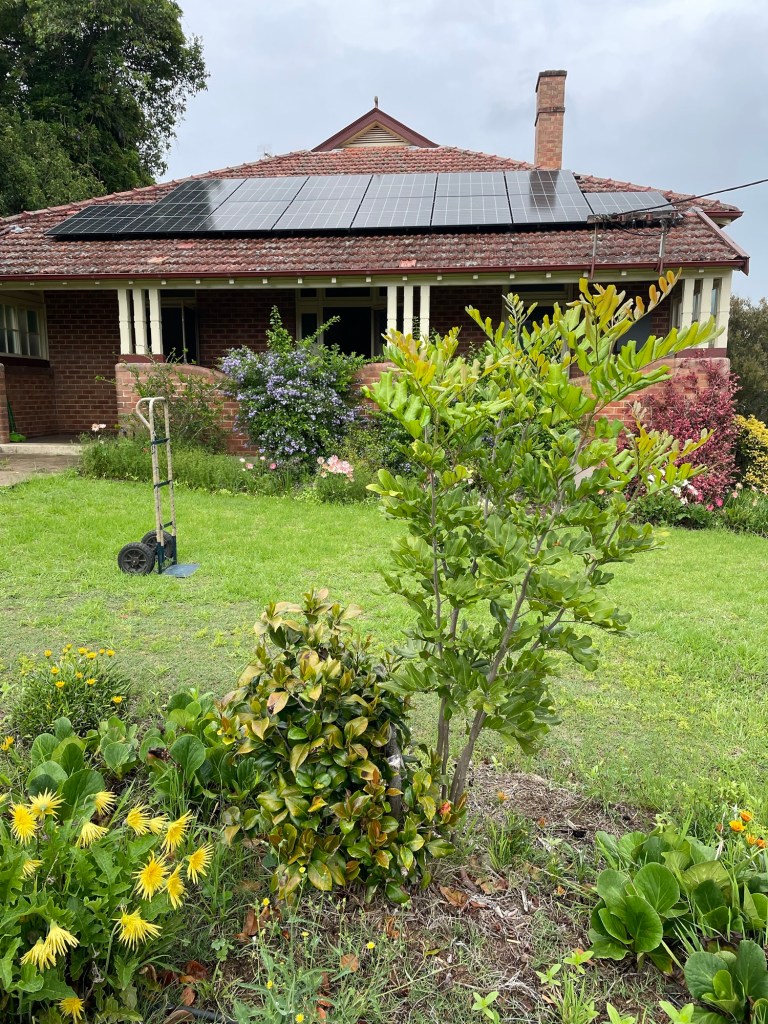
At some point in the latter part of the period of growth in the town of Dungog in the late 19th and early 20th century, the solid double/brick building that still sits on the Bruyn’s land in Brown St was built. Its style reflects certain Arts and Craft features of the late 19th century; although compared to the extravagance of some Arts and Crafts buildings, it is modest in its scope, which most likely reflects the life and tastes of Ellen Bruyn.
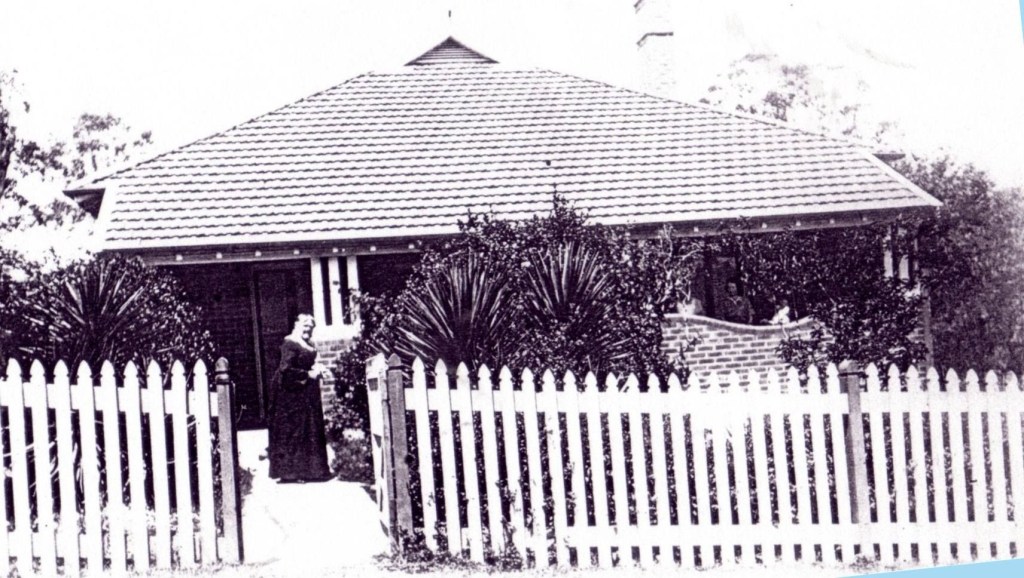
The original double-brick building has six equal-sized rooms coming off a central hallway, each with a single window, high ceilings, and picture rails about 8 feet from the floor. There are fireplaces in three rooms.
The house has a verandah at the front with fine curved brickwork, and what appears (under the later additions) to have been a back verandah which would have led to a kitchen and washing tub in an outhouse. There is no bathroom in the brick structure; indoor plumbing was only beginning in the richer urban areas in the late 19th century, and slowly spread into the homes of those who could afford it in the early decades of the 20th century. The present house has a mid-20th century addition at the rear which includes all rooms requiring plumbing (kitchen, toilet, bathroom, and laundry).
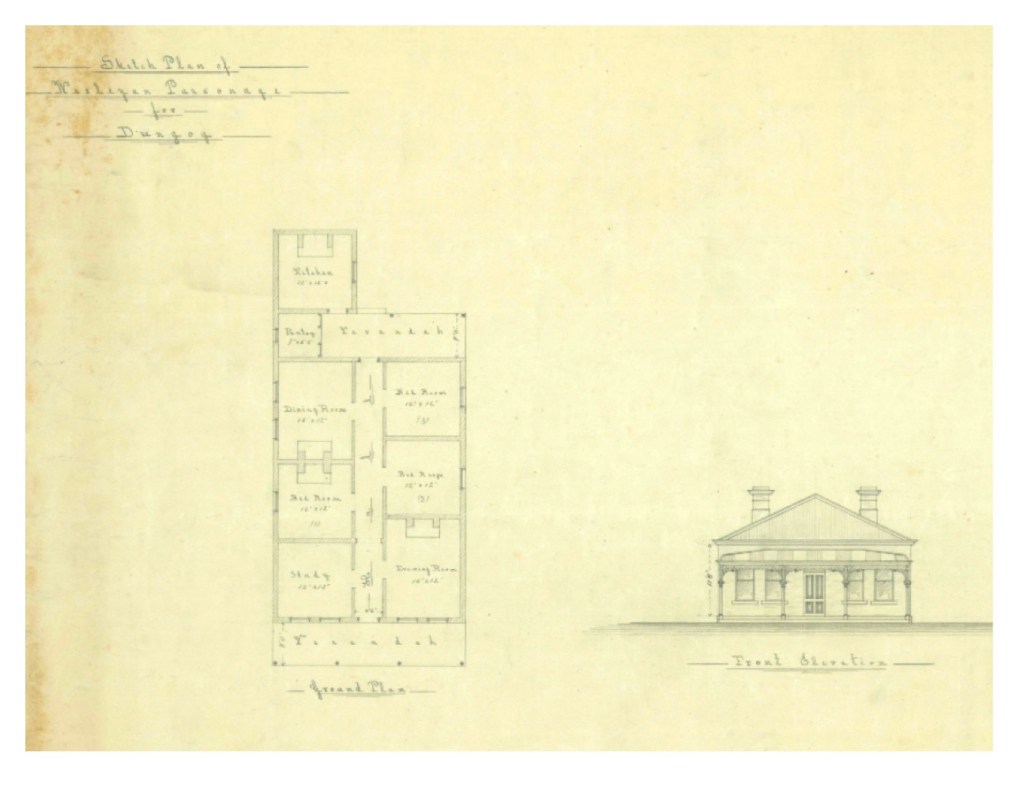
Elizabeth has found architect plans for buildings of a similar (if more modest) layout in the online “Living History” archives of Newcastle University. These include plans drawn up by the first architect of the area, John W. Pender, who designed a residence for Mr. J. Quigan, built in West Maitland in 1875; the Wesleyan Parsonage in Dungog, completed in 1878; and a residence for D. Logan Esq., built in Bolwarra in 1909. All three properties share a similar floor plan, which in turn is close to the Brown St layout.
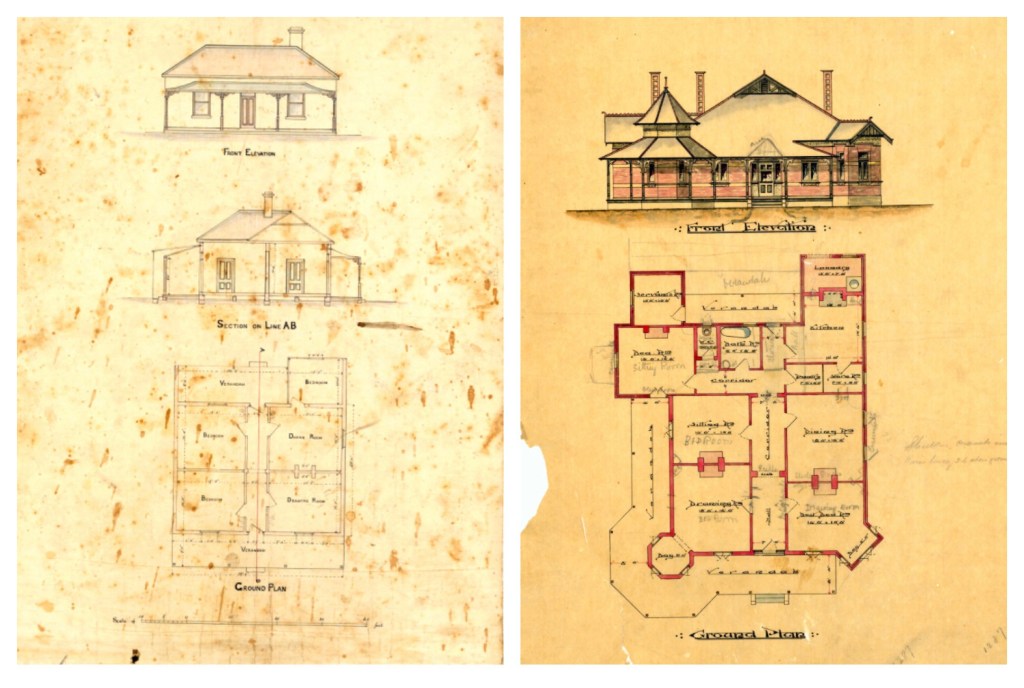
and D. Logan Esq. (1908, right)
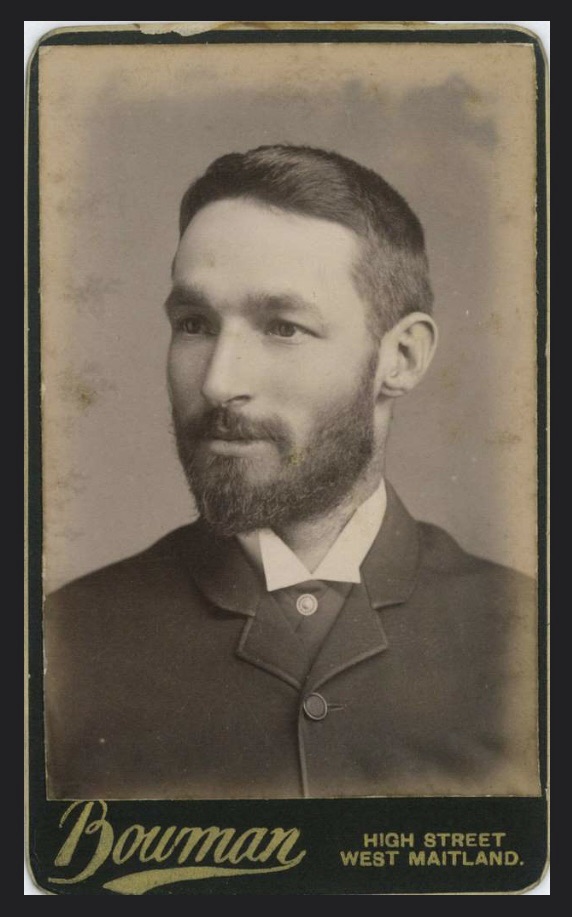
In the 1880s, the youthful trainee architect J. Warren Scobie (1863—1946) served his apprenticeship in West Maitland with Pender, the sole architect in the area at that time. He must have been influenced by Pender’s design habits. Les Reedman, in Early Architects of the Hunter Region (2008) reports that “Scobie designed every type of building in the Hunter and as far as the Queensland border and Gunnedah” (p.118). After the 1893 flood, he designed the Lorn Embankment; “according to his theory, designed the bank to conform to the fall of the river after the 1893 flood” (Reedman, p.119).
Scobie designed buildings in Maitland, including the 1889 Town Hall; Lorn, including Flagstaff, where he lived, Stockton (where he lived for some of the 1910s); two churches in Largs; 10 out of the 28 hotels built in the Cessnock—Kurri Kurri Coalfields in the early 20th century; and in Gloucester, Gunnedah, and Dungog.
A writer with the pen-name “Nemo” (meaning “nobody”), contributing news of the Dungog Presbyterian Church in the Maitland Mercury of 29 January 1905, p.16, waxes lyrical in reporting that in Dungog “Presbyterianism … has built itself a new religious home; a neat, choice design, not pretentious, not elaborate, but just fit for its purpose. It is good to look at. It makes one feel like being in church, its position is of the best, and it is now one of the chief ornaments of the town. It is a sort of poem in architecture, the happy inspiration of Mr. J. Warren Scobie of this town [that is, Maitland] and built by Mr. Noad of the East.” A detailed and fawning description of the building concludes the article.
An article in the Maitland Mercury of Friday 24 January 1913, p.2, tells of the new shop erected for Mr. E. Grierson. “The appearance of Dungog suggests to the casual observer that it must possess a number of enterprising and progressive business men, inasmuch as the principal buildings are as substantial as they are attractive and suggests an unmistakable air of solidity”, the article begins.
It notes that Mr. Grierson “bought a commanding block of land … on the west side of Dowling Street, adjoining Mr Brighton’s terrace, and let a contract to Amos Moore to put him up the best shop Dungog can boast of. Amos, working under the plan of that capable Maitland architect, Mr J. Warren Scobie, who has completed excellent work in this district got busy on the job.” Scobie is known as the architect of some grand homes in the area which share stylistic features with the Brown St house.
A house in Paterson which was designed by J. Warren Scobie, named Kalimna, was recently put on the market (early 2024). The online photographs indicate that this 1902 double-brick residence shares with the Brown St double-brick residence a reasonably similar floorplan and a number of close similarities in details. These include French doors opening out to the front of the house from both front rooms, high ceilings, the design of the fireplaces, a wide central hallway with arches, and doors into the side rooms which are offset along the hallway.
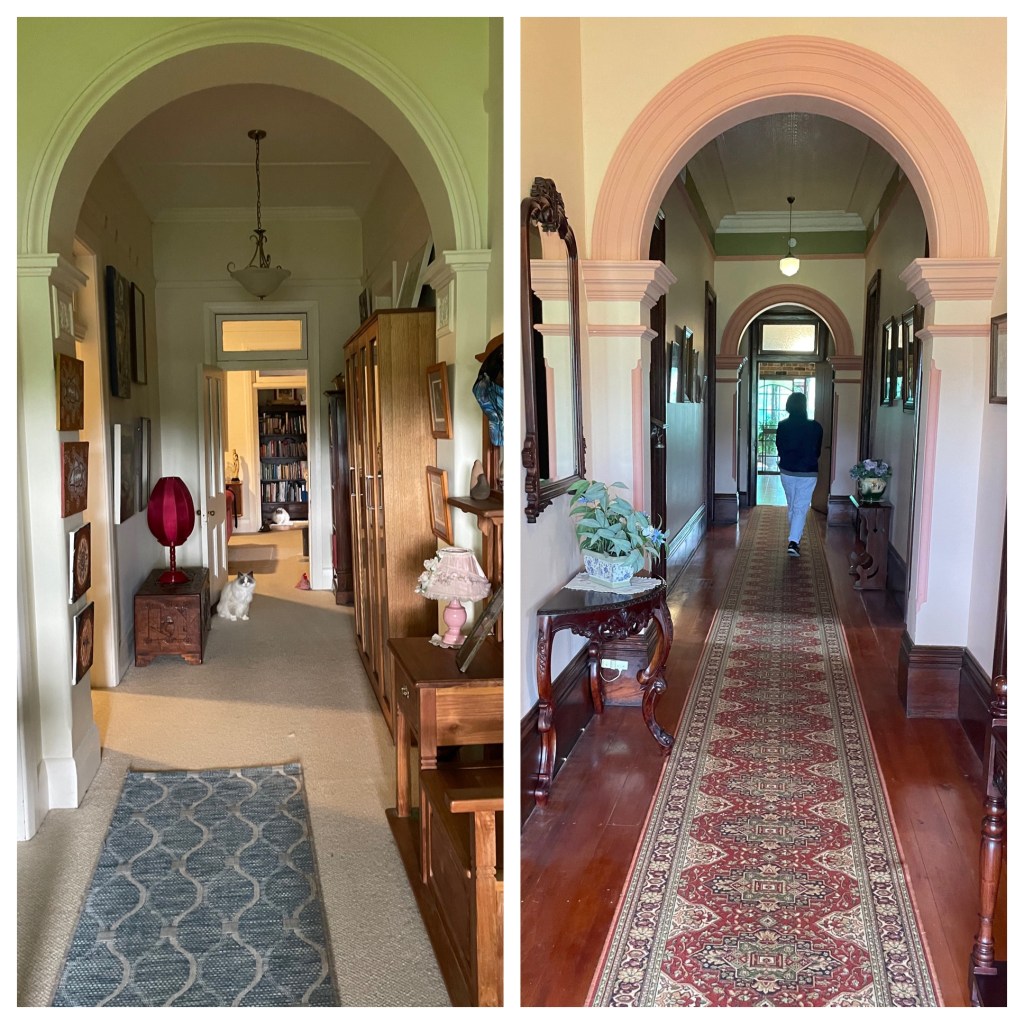
Could it be that Scobie designed this house for the Bruyns? It is a strong hypothesis, we feel, although in the absence of the papers relating to the design of the Brown St house, it can never be definitively confirmed. Kalimna is more extravagant, but stylistically and structurally very similar.
Dungog’s population had been growing rapidly, rising from 436 in 1881 to 878 in 1891 and 1169 in 1898. With more people, came more traffic, and more wear and tear on road surfaces. A paragraph in the Dungog section of the “District News” in the Maitland Mercury for Tuesday 3 August 1880, p.7, had reported that “Brown-Street, which has long needed something to be done to it, is at last being formed thirty feet wide, and the contractor seems to be making a good job of it. The expense has been defrayed by private subscription, as we were unable to obtain Government money, although it is really a work of necessity.”
The Maitland Mercury of Tuesday 18 July 1893, p.5, reported that after the 1893 municipal election, the newly-elected councillors (and those defeated at the ballot) each gave a speech to the gathered crowd. Ellen’s brother, Daniel Justin Bruyn, one of the successful candidates, said “he was very thankful for the position in which he was placed”.
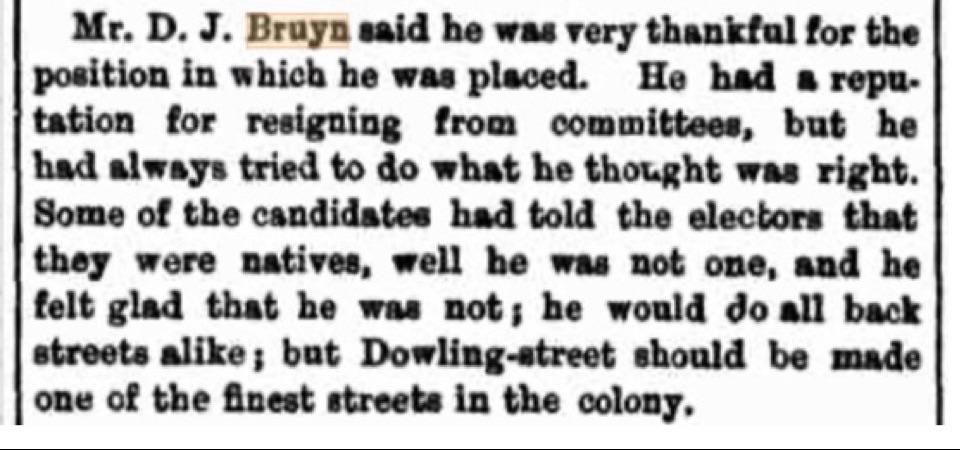
after he was elected as an Alderman in 1893.
In an obvious reference to the state of the roads, the new Councillor Daniel Justin Bruyn said that “he would do all back streets alike; but Dowling-street should be made one of the finest streets in the colony”. Still, into the present day, the matter of road maintenance continues to be a concern for residents of the Dungog Shire; and Brown St itself has quite its share of potholes!
For earlier blogs, see
and for the final blog, see

 An Informed Faith