
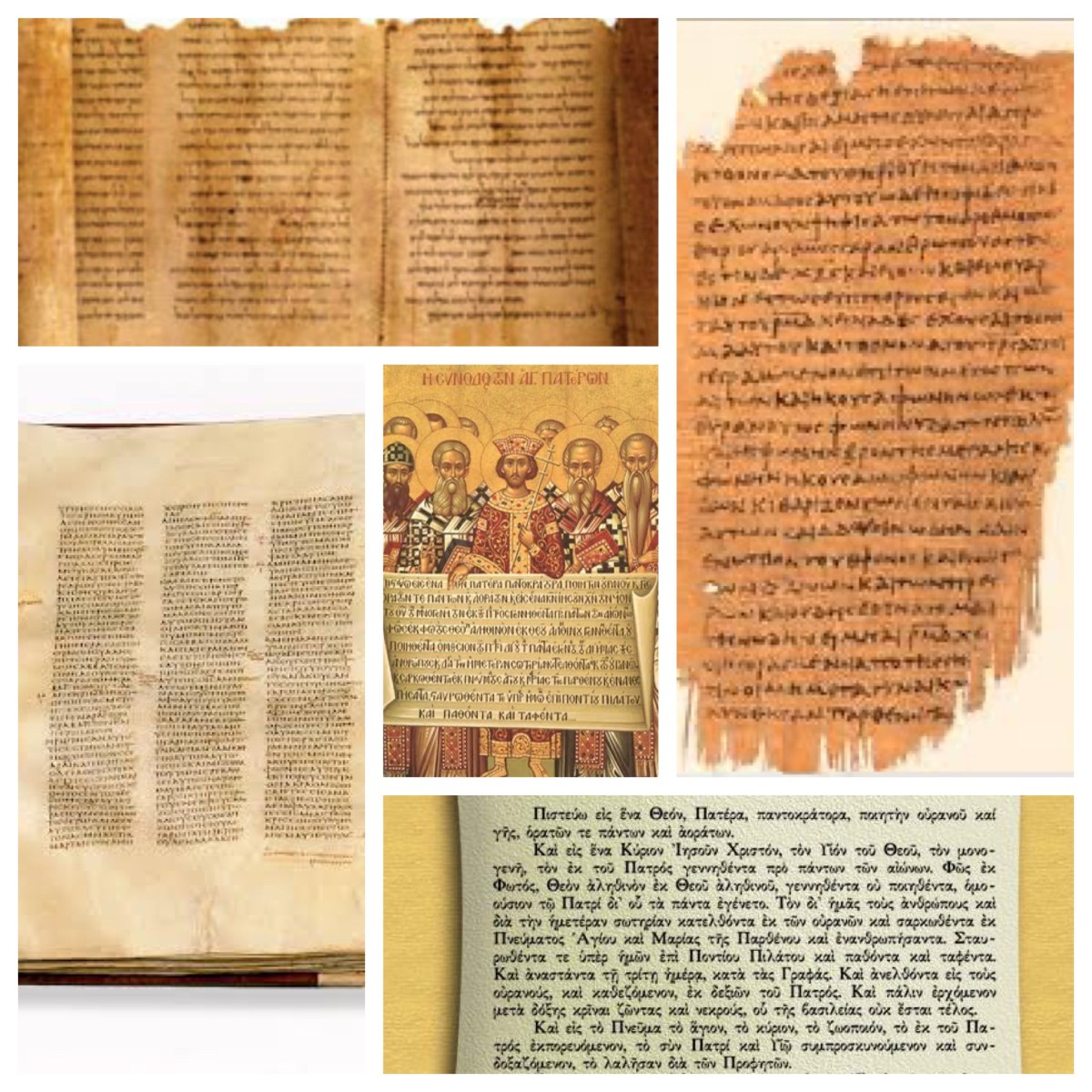
Looking back over the series of posts I have offered on these earlier credal-like passages found in scripture, I wonder: to what extent have these scripture passages influenced, or contributed to, the wording of the Nicene Creed? Some of them have provided phrases which are taken up in the earlier Apostles Creed, and then adopted by the writers of the Nicene Creed. Some phrases may be alluded to in the Nicene Creed.
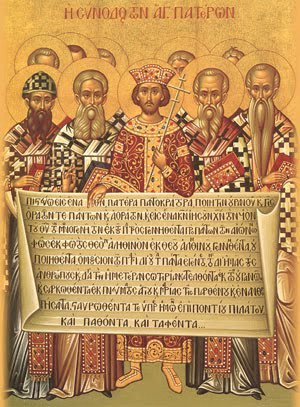
However, much of that creed either draws on other comments and descriptions in scripture which are not explicitly credal in their original context; or they reflect the way in which the patristic champions of “orthodoxy” were reflecting on, and developing theologically, the story of Jesus, often in the context of disagreements and debates about particular issues that had emerged since the times in which scripture was written.
The lines that we might trace between these scriptural credal-fragments and the fully-developed Nicene Creed are faint and fragile. A full consideration of how the “non-credal” elements of scripture have informed the Creed is a larger project, beyond the narrow focus I have brought to this series of posts.
The Nicene Creed is undoubtedly a rich and complex document. A number of factors beyond scripture itself have obviously contributed to its development. As Bob Cornwall comments, “as this is a rather extensive statement, history demonstrates that over time early Christians found it necessary to address issues of the day that required more extensive definitions.” See https://www.bobcornwall.com/2025/01/confessing-apostolic-faithnicene-creed.html
On the Nicene Creed in the Uniting Church
I close this series of posts by noting that in the Basis of Union of the Uniting Church in Australia, it is stated that this church accepts this creed as an authoritative statement of faith, “framed in the language of [its] day and used by Christians in many days, to declare and to guard the right understanding of that faith”.
As a minister in the Uniting Church, I am instructed—and long have been committed—to undertake “careful study of [this] creed and to the discipline of interpreting [its] teaching in [this] later age”. That’s far more than the “regular rote reciting” of the Creed that I noted in my last post.
I think for me the Creed has its place as one valid perspective on faith, and although the Council that adopted this saw it as a way of narrowing faith and eliminating other options, I don’t. I do not believe that I am bound by decisions made in 325CE without subjecting them to critical scrutiny and reasoned interpretation. In fact, the Creed should be a basis from which I launch broader and more extensive explorations of matters of faith!
One thing that is very important to me is that a critical and thoughtful approach to the creeds is reflected in the specific wording employed in paragraph 9 of the UCA Basis of Union. This paragraph presents two complementary aspects of the place of creeds in our faith. On the one hand, it specifically notes the authoritative status and doctrinal function that these creeds enjoy within the church.
That’s certainly how the Creed has been seen, and used, over the centuries. It’s almost like it shuts down debate; simply “believe these words” and you are “in”, but “question these ideas” and you are at risk of being declared “outside”. So the Creed, in this view of things functions as a gate; and priests and ministers are the gatekeepers, ensuring the purity of orthodoxy.
Alongside that, however, para. 9 of the Basis of Union notes that the creeds were “framed in the language of their day” and then it commits UCA ministers and instructors “to careful study of these creeds and to the discipline of interpreting their teaching in a later age”.
That’s a clear indication that we need to do the work that is necessary to contextualise the words of the creed and explore carefully how they might be relevant for today. Simply standing and reciting the precise words, week after week, does not come anywhere near to doing this work. We need to dig down into and beyond the words themselves.
Both the authoritative status of the creeds as witnesses to faith, and critical interpretation of the words of the creeds within the present context, are valued in paragraph 9. And that’s as it should be: recognising historical significance of the words, but noting how important it is to contextualise them for our time. (And that’s what we need to do with all parts of the Bible, as well.)
*****
See previous posts at
 An Informed Faith