
Last week we began reading and hearing sections of the long book of Jeremiah. Of the first three major prophets, First Isaiah (the actual Isaiah the prophet) fills 39 chapters. The book of the exilic prophet Ezekiel is 48 chapters long; Jeremiah’s book has a mammoth 52 chapters. (The only book longer is Psalms, with an unbeatable 150 chapters.)
Jeremiah makes a most substantial contribution to Israelite society and Hebrew Scripture. It is good, I believe, that we have eight consecutive weeks, no less, to consider what he had to say. (And in the middle of that, the lectionary inserts Lamentations—a work traditionally associated with Jeremiah, even if not actually written by him.)
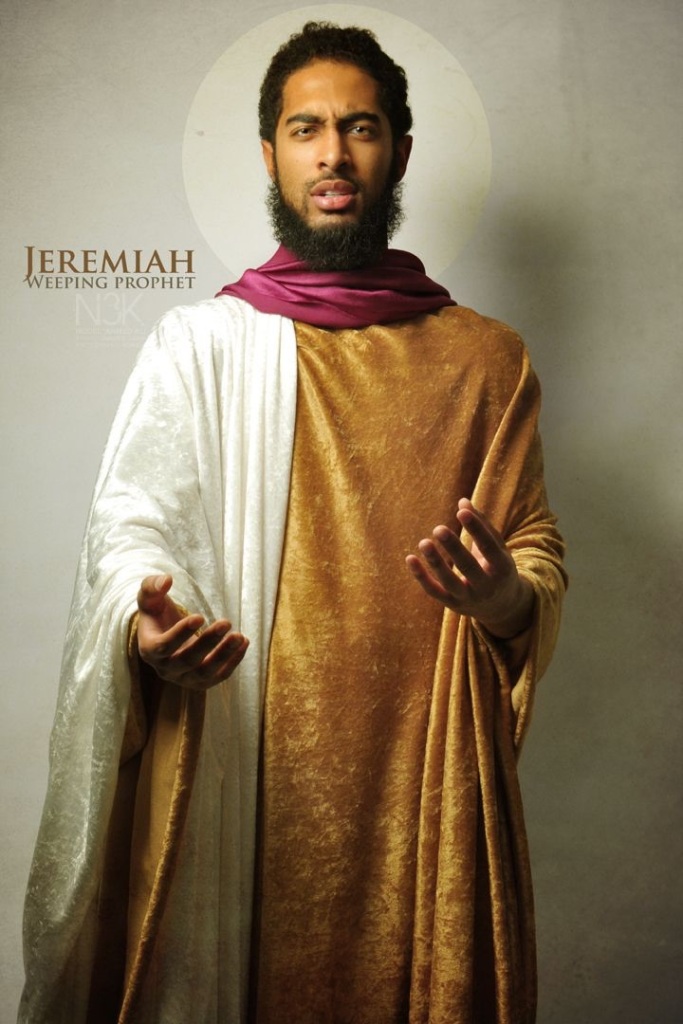
see https://elizabethokoh.com/in-conversation-with-james-c-lewis-international-photographer-awakening-a-generation/
We need to allow Jeremiah and his fellow prophets to speak their prophetic words without rushing all-too-quickly to say that they are “predicting Jesus” in what they say (a common misuse of Hebrew Scripture texts); or, indeed, that we say something like, “well that’s how it was back then, but things changed when Jesus came, and it’s now all different—we don’t need these texts any more”. That is the bad heresy of supercessionism (which the church, sadly, has perpetrate and advocated for at various times in its history).
On supercessionism, see https://johntsquires.com/tag/supersessionism/
So it’s best that we hear each passage, week by week, and seek to understand each of them in their own own integrity, paying due attention to the particular historical, cultural, religious, and sociological contexts in which it was first spoken and/or written. So my commentary on each Jeremiah passage will seek to focus in this way as we explore what is offered by the lectionary.
Jeremiah 2 comes immediately after the narrative of the call of the young Jeremiah (1:4–10) and the initial words of the Lord that he hears, pointing to the disaster that is looming as the Assyrians press down from the north onto the kingdom of Israel (1:11–19). Jeremiah reports the stern condemnation of the Lord God, who makes note of “all their wickedness in forsaking me”; he cites, in particular, making offerings to other gods and worshipping idols (“the works of their own hands”) (1:16).
Into this situation, the prophet is commanded to speak three oracles (2:1–3; 4–9; 10–13), perhaps originating at different times, but brought together here for a strongly theological purpose. The lectionary chooses to offer just the second and the third oracles; the first, a brief reminiscence of how disaster has come upon the once-faithful nation (2:1–3), sets the scene for the fiercer words of the following two oracles.
“I remember the devotion of your youth, your love as a bride”, the Lord God has sung (2:2); yet “your ancestors … went far from me”, he accuses, noting that “they went after worthless things, and became worthless themselves” (2:2, 5). Israel has not exhibited the fidelity expected; they have not kept the marital vow to “love and cherish”, in our modern terms.
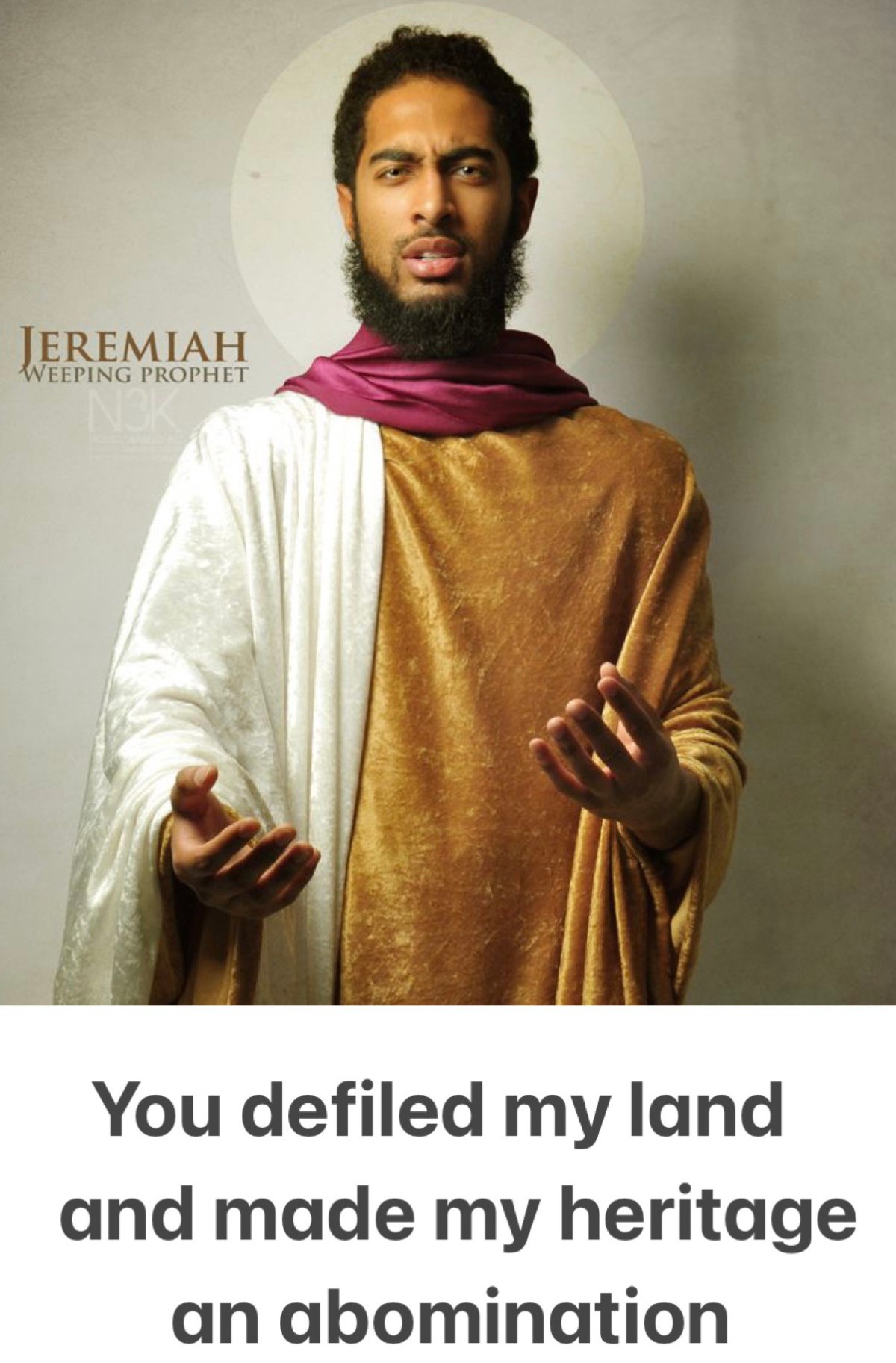
So in this second oracle (2:4–9), the Lord condemns Israel in the strongest of terms; even though he brought them “into a plentiful land to eat its fruits and its good things”, their transgressions were such that, as he declares, “you defiled my land, and made my heritage an abomination” (2:7). An abomination!—strong words, indeed.
For more on “abominations” in Hebrew Scripture, see
All knowledge of the Law which was given to guide the people has been lost (2:8). There is, it seems, no longer any hope that the people can maintain their part of the covenant agreement. Their lives are lived in disdain and rejection of all God has hoped for them—all that their ancestors had committed to in the covenant.
We might well infer, then, that judgement is inevitable. The stridency of punishment for such an “abomination” is reminiscent of the punishments promised when the “abominations” of sexual misconduct are canvassed in Torah (see Lev 18:1–23). There, any such actions will have the result that “the land will vomit you out for defiling it” (18:28) and “whoever commits any of these abominations shall be cut off from their people” (18:29).
In these two results—the loss of the land and disconnection from the people—we see the severing of two of the foundational promises recorded in the ancestral saga, when Abraham was promised both a land, and a great nation, in response to his obedience (Gen 12:1–2).
With no land, and a fractured people, this ancestral promise is in tatters. For many more verses, words of condemnation of the idolatrous state of Israel pour forth: “have you not brought this upon yourself by forsaking the Lord your God, while he led you in the way?” (2:17); “on every high hill and under every green tree you sprawled and played the whore” (2:20); “where are your gods that you made for yourself?” (2:28); “on your skirts is found the lifeblood of the innocent poor” (2:34); “you have played the whore with many lovers” (3:1); “you have the forehead of a whore, you refuse to be ashamed” (3:3). The Lord God is incessant in his denunciations.

Yet God does not wish for this situation to continue. At the end of this lengthy tirade, the prophet poses the question of God: “will he be angry forever, will he be indignant to the end?” (3:5). The answer to this comes in the very next oracle: a call for repentance, with the divine assurance that “I will not look on you in anger, for I am merciful, says the Lord; I will not be angry forever” (3:12), followed by the promise that “I will give you shepherds after my own heart, who will feed you with knowledge and understanding” (3:15). The lengthy oracle of judgment does indeed lead to the possibility of forgiveness and restoration (3:15–18).
And so the fundamental dynamic of the whole long book of oracles spoken by Jeremiah is set forth. Intense, persistent, excoriating condemnation; followed by soothing, loving assurances of grace. For chapter after chapter. Decade after decade. Through all manner of trials. Until the prophet words of the prophet cease (Jer 51:64).
By offering this passage for preachers in the 21st century, the lectionary invites us to consider how these ancient words from so long ago, in such a different cultural context, might yet still speak to us as “the word of the Lord”. In writing in With Love to the World about the passages from Jeremiah in the lectionary, the Rev. Dr Monica Melanchthon, Associate Professor of Hebrew Bible at Pilgrim Theological College in the University of Divinity, asks some pertinent questions:
How do you go about applying the role of the ancient Israelite prophet to your own life and experience?
What aspects of Jeremiah’s call speak to you the most? Why?
How might the sins of the Israelites in Jeremiah 2 be parallel to modern day Christian living?
and then, How might this text guide your reactions to prophetic warnings in the current world?


 An Informed Faith