Skip to content

An Informed Faith

John T Squires

An Informed Faith

Category: An Orderly Account: Gospel of Luke

What do you see? What do you hear? (Luke 19; Palm Sunday C)

What do you see? What do you hear? (Luke 19; Palm Sunday C)

The story of the day that Jesus and his followers drew near to Jerusalem and walked into the city, is a very familiar story. We have, most likely, heard the story, acted out the story, reflected on the story, year after year, at this same time of the year—Palm Sunday. It is a familiar story. (We are Reading it, this year, in the version found in Luke 19.) What do we see in the story? What do we hear in the story?

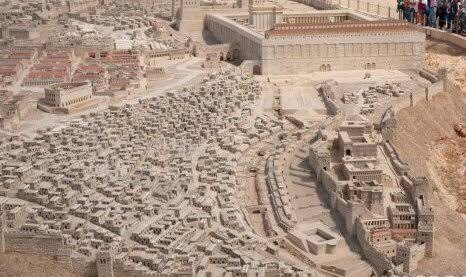
What do you see? What do you hear? I see pilgrims travelling the winding route to Jerusalem, climbing the hills outside the city as they make their way to the capital of ancient Israel, to the city where the Lord God, so it was believed, was residing in the Holy of Holies, the inner court of the Temple. I hear the noisy, bustling sounds of these pilgrims, excited with anticipation as they make their way along the same routes, up the same hills, year after year, at this time of the year.

It was Passover; one of the three high festivals of the year for good religious Jewish people. It was Passover, the festival of unleavened bread, which recalled the hurried departure of the people, long ago, from captivity in Egypt (Exodus 13). It was Passover, a celebration of the foundational myth at the heart of Jewish identity; the story that tells of the liberating actions of God, in the face of the military might of the Egyptians, the liberation of the people from their time of enforced slavery, as they set out, across the wilderness, to the land they had been promised (Exodus 14–17 and beyond).

Passover. A central religious celebration. But also, a thoroughly politicised procession of pilgrims, wending their way to the holy city, the city of peace. Passover, when bread was eaten without leaven, to signify the haste with which the departure from Egypt took place. Passover, when lambs were roasted and eaten as a sign of that liberation, when bitter herbs were sprinkled eaten as a reminder of the bitterness of slavery. Passover, when the intervention of the divine into the social and political situation of those ancient Israelites was to the fore in the minds of those later pilgrims.

So, we see a scene of pilgrims, a scene of Passover pilgrims, celebrating this ancient political action of God which they hold before themselves as the fundamental paradigm for what their faith means for them. Yes, God is for us! Yes, God will save us!

As the story is told in each of the three synoptic Gospels, Mark, Matthew, and Luke, once the disciples arrive in the city, they seek out lodgings, and at the appointed time, they recline at table to eat the Passover meal, the annual family celebration when the story of that first Passover is told. A time when the actions of God in confronting and overturning the political rulers is remembered, retold, and celebrated.

What do you see? What do you hear? Can you see the Roman soldiers, on the edges, behind the crowds, looking out from the Antonia Fortress? The Roman soldiers, strategically deployed, watching with care the every move that was taking place in the approaches to the city. They knew, from many years’ experience, that the city swelled with the influx of pilgrims each year at this time, as the Passover pilgrims made their way towards Jerusalem. (J.Jeremias, Jerusalem in the time of Jesus, 1966, pp.58–84)

They knew, from years of monitoring the crowds, of the potential for dispute and conflict that simmered underneath the crowds. They knew that this was a high point in the Jewish year, and that any Jew with finely-attuned attention to the history of their people, would know of the charged political consequences of this festival. A celebration of God, intervening, overturning the despotic ruler, liberating the faithful people. As it was long ago in Egypt … so it now could well be, in Jerusalem under Roman rule. A political celebration, wrapped around with religious significance, a celebration of political victory. (E.P.Sanders, Judaism: Practice and Belief, 1992, pp.132–138).

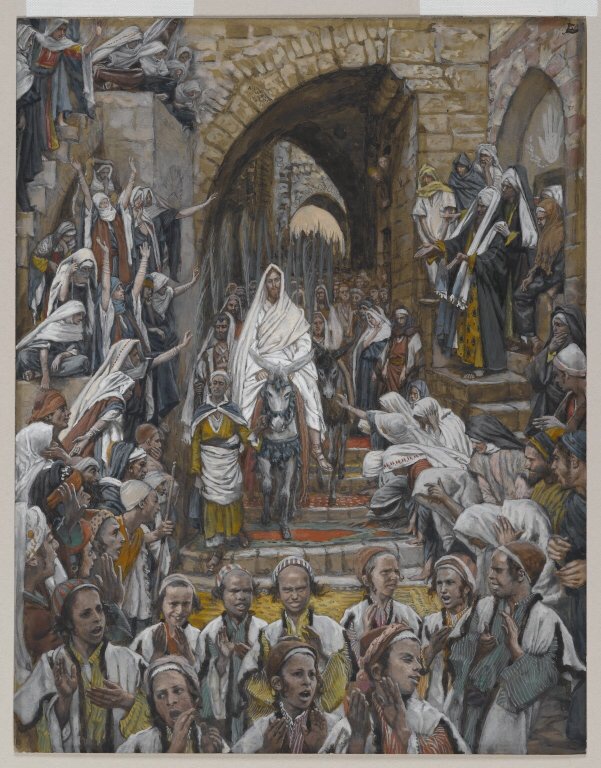
What do you see? What do you hear? Can you see the figure of Jesus, surrounded by his followers, approaching the city? Jesus, seated on the colt, riding on a donkey, the centre of attention, at least for his own followers. An unusual mode of transport, at least! Those in the crowd who knew their scriptures, would have immediately recognised the allusion. The account of this story that we find in Matthew’s Gospel actually specifies the verse that interprets the significance of the donkey.

In Zechariah 9:9, the vision is clear: “your king comes to you, triumphant and victorious, humble and riding on a donkey”. That is what the prophet declares; in this story of Passover pilgrims, Jesus can be seen to be bringing that vision to fruition. And that vision declares that this coming ruler “shall command peace to the nations, and his dominion will be from sea to sea, from the river to the ends of the earth”. That is the vision that Jesus evokes as he rides into Jerusalem on this donkey.

What do you see? What do you hear? Can you hear the cries of the crowd: “Hosanna, hosanna!” they cry. What were they calling out? Hosanna is a foreign term, a word from the Hebrew language, not a common word in our English usage. The best way to translate Hosanna, is “save us”. It is a cry for salvation; a yearning for deliverance. The word appears in the Psalm we have heard today, in Psalm 118:25, where they people cry out, “save us, we beseech you, O Lord!” Save us, redeem us, liberate us.

Psalm 118 was one of the Hallel Psalms, the Praise Psalms, which were associated with celebrations on each of the three great festival days—the Feast of Tabernacles, or Booths; the Feast of Weeks, or Pentecost; and the Feast of Passover. These psalms of praise became particularly associated with the celebrations of the rebuilding of the Temple—an inherently political action, since it was the foreign invasion of Palestine by the Hellenistic Seleucids some two centuries before Jesus which had led to the destruction of the Temple, and it was the political activity of the Jewish Maccabees which had led to the reclaiming of the Temple two decades later.

“Praise you, O God, for we have our Temple, rebuilt, restored, renewed”. So the prayer might well have gone. And it was the political activity of the Maccabees which had brought this about. The Hallel Psalms had become Psalms of Praise for liberating political activity. And this is what the people were singing out!

What do you see? What do you hear? Can you see the people, waving branches of palms? This, too, was an activity intimately associated with the actions of the Maccabees, who were men from a priestly family who took up arms to fight back the Seleucid overlords and reclaim the Temple. The waving of palm branches became closely associated with this event; we can read the instructions in one of the Jewish books (2 Maccabees 10), which directs the people to “carry ivy-wreathed wands and beautiful branches and fronds of palms, and offer hymns of thanksgiving to [God] who had given success to the purifying of their own holy place”.

What do you see? What do you hear? Do you see the cloaks, spread on the ground, by those along the side of the road? A curious detail. What can this mean? Perhaps the more astute of the Jews along the side of the road, would have had some insight; perhaps they recalled the story of the time when a young prophet from Ramoth-gilead declared that God was anointing Jehu, the son of Jehoshaphat, as the next king of Israel.

The story is recounted in 2 Kings 9, and it contains this striking detail, as the prophet decreed, “Thus says the Lord, ‘I anoint you king over Israel’”, and so they took their cloaks and spread them for him on the bare steps, and blew the trumpet, and proclaimed, ‘Jehu is King’” (2 Kings 9:13). Can you hear the resonances in the story of the Passover pilgrims? The cloaks on the steps, when Jehu is King … the cloaks on the wayside, when Jesus comes as King.

What do you see? What do you hear? “Blessed is the coming king, the one who comes in the name of the Lord, the one bringing the peace of heaven into this city here on earth”. So the people cry, singing words from Psalm 118 about the king who comes to implement the kingdom willed by God, and echoing the song of the angels from early in Luke’s Gospel, declaring that, in Jesus, God is bringing “peace on earth, among those whom he favours” (Luke 2:14)

What do you see? What do you hear? Can you see the thoroughly political nature of the activity of Jesus? Can you hear the thoroughly political nature of the cries of the crowd? Hosanna—Save us! Blessed is the King—not Caesar, not ruler of the Romans, but Jesus, King of the Jews, the one Chosen by God to proclaim the kingdom. Can you hear these cries?

In this story of the Passover pilgrims, the cries of the crowd, the actions of the people, the anticipation of the Roman soldiers and the symbolic statement made by Jesus as he rides into the city on a donkey—all of this points to the inherently political, thoroughly this-worldly orientation of the ministry of Jesus. The kingdom is coming, the future kingdom is here and now in our midst, and the kingdom will overturn the expectations and practices of the political powers within this world. The Romans did well to notice, and anticipate, and respond to such a message.

Next Friday, on Good Friday, we will remember that Jesus, ultimately, was condemned to death with a sign that declared that he was “the King of the Jews” (John 19:19–20). The inscription nailed to the cross clearly set out the political nature of the message of Jesus. From the perspective of the Roman rulers, articulated by Pilate, Jesus was given a drastic political punishment for the political insurgency that he was seen as undertaking. That is the one whom we follow. This is the path that he calls us to walk.

What do you see? What do you hear? Our wilderness journey leads us to the city, but requires of us that we take a stand against the city. Jesus stood against Roman imperial power; as he submitted to its might, he showed that there was another way. A way of faithfulness to God’s calling. A way that truly leads to peace, to peace with justice.

For a creative dramatic response to this scene, see https://ruralreverend.blogspot.com/2019/04/palm-sunday-ps-1181-2-19-29-luke-1928.html

Unknown's avatarAuthor John T SquiresPosted on April 9, 2019October 29, 2021Categories An Orderly Account: Gospel of LukeTags Luke, scriptureLeave a comment on What do you see? What do you hear? (Luke 19; Palm Sunday C)

Don’t take it at face value: on what lies behind and what lies ahead (Lent 2C)

Don’t take it at face value: on what lies behind and what lies ahead (Lent 2C)

The lectionary offers passages this week, which remind me of an important principle of interpretation: don’t take it at face value.

In his short letter to the church in Phillipi, the apostle Paul writes:

“Whatever gains I had, these I have come to regard as loss because of Christ …

this one thing I do: forgetting what lies behind and straining forward to what lies ahead.”

Paul is focussed on the future, working for the future and running with enthusiasm into the future. Life will change, and for Paul, it is clear that God wills this change, and therefore it will take place. Change is inevitable, and divinely-authorised. So, orient yourselves to what lies ahead.

But the warning to interpreters is: don’t take it at face value! In Philippians 3, Paul speaks about his past in quite derogatory terms. In fact, he swears about his past. That might not be evident in the translation that we regularly use. But it is what is happening here.

Now, I have to confess that when I taught Greek to theological students, this was one passage that I enjoyed setting for students to translate. Because there is one word in this passage which is very rare, not often found in the Greek literature of the day. It needs investigation. And more often that not, when they work out what the word means, my students would say: Paul can’t have said that, can he?

Our English translation says that Paul wrote: “I count all these things as loss”. My Greek dictionary offers these rather polite options for translating the one critical word: “rubbish, refuse, dung”. The reason the word appears infrequently in Ancient Greek literature is that it actually was a popular, and very base, swear word. I will let your imagination take hold here. We have an equivalent in English: a four letter word that refers to the waste products of our bodily systems. Paul was not being very complimentary about his past, in this verse!

However, the irony is that when we look at the way that Paul operated, we see that he drew extensively on his own past. Raised as a Pharisee, grounded in the knowledge of Hebrew scripture, trained in the interpretation of the laws and commandments—there are signs of this way of operating in each of Paul’s letters! He quotes scripture, analyses it carefully, and argues against other views using classic Pharisaic methods—far from disposing of his Jewish past in the rubbish bin, he drew, again and again, on the resources available to him in his life, precisely because of that past.

Now, that is not to say that Paul did not orient himself to the future, and work in ways that were more developed and more mature than the ways he had learnt as he grew up. Indeed, Paul writes and speaks in Greek—not his native language, for as a Jew he would have learnt scriptures in Hebrew, and spoken Aramaic to fellow Jews. Yet, as apostle to the Gentiles, in the world that had become dominated by Hellenistic culture and customs, he learnt Greek; to the extent that his letters display many characteristics of the sophisticated, learned style of a mature Hellenistic philosopher.

Paul holds together the past and the present, as he works to bring about the future that is promised, in his understanding of God’s ways in the world. Paul’s past informs and shapes his present; just as the cultural context of those around him feeds into the way he relates to people. And that, more than just one ill-thought throwaway line, defines the way that we understand Paul, and provides us with a model for how we are to grapple with past, present and future in our own times.

See also https://johntsquires.wordpress.com/2019/04/03/dont-take-it-at-face-value/

On the Gospel passage for this week, from John 12, see https://ruralreverend.blogspot.com/2019/04/this-weeks-lectionary-reading-from-john.html

Unknown's avatarAuthor John T SquiresPosted on April 5, 2019October 29, 2021Categories An Orderly Account: Gospel of LukeTags Luke, scriptureLeave a comment on Don’t take it at face value: on what lies behind and what lies ahead (Lent 2C)

Don’t take it at face value: on former things and new things

Don’t take it at face value: on former things and new things

The lectionary offers passages this week, which remind me of an important principle of interpretation: don’t take it at face value. There is no passage from the Gospel according to Luke, this week. However, the Hebrew Scripture passage is quite relevant to the Lenten season, with its vivid imagery of the wilderness journey.

In Isaiah 43, the prophet declares:

“Do not remember the former things, or consider the things of old.

I am about to do a new thing; now it springs forth, do you not perceive it?”

(Isaiah 43:18-19)

This offers a hopeful vision of the future; an affirmation that life will change. It is clear to the prophet that God wills this change, and therefore it will take place. Change is inevitable, and divinely-authorised. So, get ready for the new thing.

But the warning to interpreters is: don’t take it at face value!

At first glance, this passage is attributed to the prophet Isaiah, who lived in the eighth century before the common era and served as a “court prophet” during the times of abundance in the southern kingdom of Judea. Isaiah 6, the passage describing the call of the prophet, is set in the Jerusalem Temple, and reflects the privileged status of the prophet, as part of the court of King Uzziah, when Judah was flourishing.

However, scholarship maintains that the section of the book of Isaiah where we find this prophecy (Isaiah 40-55) is set some centuries later, in the sixth century before the common era. The words of prophecy are included in the book of Isaiah, but this section comes from a later time, and was uttered by an unknown prophet, perhaps one who had carefully studied the earlier prophecies of the eight century Isaiah.

Don’t take it at face value: this was not, in fact, a prophecy of Isaiah.

This anonymous prophet speaks during the period when the Israelites were in exile in Babylon. That was not a happy time for many of the people of Israel. They yearned to return home. They looked back on the past with longing eyes. They remembered their years in the land where God lived; now they were living amongst Babylonians, strangers, conquerors.

Yet the words of the prophet instruct them to leave behind these memories; to grasp hold of the future that God has for them in the place where they now find themselves:

“Do not remember the former things, or consider the things of old.

I am about to do a new thing; now it springs forth, do you not perceive it?”

So on face value, this passage is about leaving behind the past, looking only to the future. Yet, if we read this passage carefully, it not just about what lies ahead. There are some things to be said, and reflected upon, in relation to what lies behind, what is in the past.

The prophet asserts that God declares, Do not remember the former things, or consider the things of old. That sounds like a wholesale dismissal of the past, consigning what has happened to the archives of history.

And yet: the whole enterprise of the prophet, speaking forth the word of God, calling people to be faithful to God’s way, is in fact an enterprise that relies very heavily on the past. One way of understanding the role of the prophet is, in fact, is to see him as the one who reminds the people of “that old time religion”. Throughout the words of the prophets over the centuries—Isaiah and Ezekiel, Amos and Hosea, Elijah and Hulda, Deborah and Miriam—through all of these words, the bedrock is the covenant which God made with the people of Israel.

Each prophet, in pointing to what is happening in the society around them, draws from the traditions of the Israelite people. The covenant—that special relationship between the people of the Lord God—the covenant is the basis upon which they speak forth “the word of the Lord”, critique the sinful practices that are evident within their society, and propose a constructive way forward. “Seek the Lord”, they declare; “he has made known his ways to you, so if you are true to the covenant, you will draw back to God’s ways.”

So there is, actually, no rejection of the past in the words of the prophets; rather, there is a yearning for the people to draw deeply from the wells of past tradition, in order to refresh lives and reshape society in their own time. Looking with hope to the future means understanding with depth the resources and lessons of the past. The covenant needs to be related to, and lived our, within the daily life of the people. The last informs the present and shapes the future.

“Do not remember the former things, Or consider the things of old.

I am about to do a new thing; now it springs forth, do you not perceive it?”

That new thing is integrally related to, and deeply informed by, the past. And the anonymous prophet who speaks in the name of Isaiah, to the people of the land who are now without land, the Israelites living in Babylon, speaks to assure the people of the ongoing presence of God in their midst, even in this land of strangers. They will return to their land. They will undertake the journey home.

And like their ancestors before them, travelling out of slavery in Egypt, to the land promised to them by God, they will endure suffering and trials on their journey. Just as the waters parted to enable the Israelites to leave Egypt, so the springs in the wilderness will bubble up to nurture and sustain the people on their journey:

“When you pass through the waters, I will be with you;

and through the rivers, they shall not overwhelm you” (Isaiah 43:2)

the prophet declares, speaking the promise from God that the divine presence will ensure a hopeful future for the people. The prophet here draws quite explicitly and directly from the exodus story, when the people move through the miraculously-parted waters, away from slavery, into freedom. That imagery is applied, ironically, to the journey through the wilderness, back to the land.

And then the prophet continues with this vision of what will occur in that hoped-for future:

“Bring forth the people who are blind, yet have eyes,

who are deaf, yet have ears!

Let all the nations gather together, and let the peoples assemble “ (Isaiah 43:8-9)

The return to Israel will be a glorious gathering of all the nations on mount Zion, a healing of those disabled and disfigured, gathering to worship the powerful Lord God of hosts. This is envisaged as a moment of triumph. The language used is thoroughly military; the victory won is reminiscent of the victory won over the powerful Egyptians.

“Thus says the Lord, your Redeemer, the Holy One of Israel:

For your sake I will send to Babylon and break down all the bars,

and the shouting of the Chaldeans will be turned to lamentation.

I am the Lord, your Holy One, the Creator of Israel, your King.

Thus says the Lord.” (Isaiah 43:14-15)

So he does, in fact, attend to the things from the past. And what is better, what is more important, from the past, than the story of the Exodus? The story which provided the foundational narrative for the nation of Israel. The story that is the narrative that all good Jews, even to our own time, look back as as identity-forming for the people of the Jews. The Passover, the Exodus, the Land.

“Do not remember the former things,

or consider the things of old.

I am about to do a new thing;

now it springs forth, do you not perceive it?”

(Isaiah 43:18-19)

Don’t take it at face value. The past is not obsolete, irrelevant. There are gems, treasures, from the past. They speak to the present. They shape and inform the future. Our way forward must be understood and interpreted in the light of the past. What was of value, then, remains relevant and valued for us, now.

The new context, the new occasion, the new opportunity, is a moment for reworking, reshaping, refreshing and renewing. That’s the new thing that God is doing. That’s the mission that God is about in the world, the mission in which we are called to participate with joy and with hope.

On the Gospel passage for this week, from John 12, see https://ruralreverend.blogspot.com/2019/04/this-weeks-lectionary-reading-from-john.html

On the Epistle, see https://johntsquires.wordpress.com/2019/04/03/dont-take-it-at-face-value-2/

Unknown's avatarAuthor John T SquiresPosted on April 3, 2019April 4, 2019Categories An Orderly Account: Gospel of LukeTags Luke, scripture1 Comment on Don’t take it at face value: on former things and new things

Jerusalem, Jerusalem: holy city, holy calling (Luke 13; Lent 2C)

Jerusalem, Jerusalem: holy city, holy calling (Luke 13; Lent 2C)

The earliest extant account of the story of Jesus contains just a brief note that, after a time spent in Galilee, Jesus then went to Judea (Mark 10:1). In Luke’s Gospel, there is a major reworking of the story of Jesus which places this journey in a prominent position. Jerusalem plays a central role in the whole Lukan story, from the early chapters onwards. In thinking about this, we should start by considering the significance of the city of Jerusalem in the ancient world.

I. Jerusalem in the first century: the centre of holiness

In Jewish traditon, holiness is identified as the central quality of God (Exodus 3:1-6, 15:11). It was also seen to be an important characteristic of the people of Israel (Exodus 19:5-6, Lev 11:44-45; 19:2; Num 15:40-41; Deut 7:6; 14:2; 26:18-19; 28:9).

Jerusalem is intimately associated with this holiness. Whilst the Torah declares the importance of holiness, it was long believed that God resided in the Holy of Holies within this Temple (Exod 26:31-37; Lev 16:1-2). All activities associated with the Temple required preparation that ensured that the holiness of the place would not be breached.

The prophet Isaiah, whilst in the Temple, experienced a vision of God: “holy, holy, holy is the Lord of hosts” (Isa 6:3), and the Psalms often assert the holiness of God in his temple (Ps 11:4; 24:3-4; 48:1; 99:1-5,9).

Those who ministered to God within the Temple, as priests, were to be especially concerned about holiness in their daily life and their regular activities in the Temple (Exod 28-29; Lev 8-9). The temple priests claimed their role as the authorised interpreters of the Torah, and they were responsible for determining how the matter of holiness was to be worked out in the system of sacrifices brought to the Temple (Ezekiel 44:15–16, 23–24).

The Pharisees (mentioned in Luke 13) provided a counterpoint to the centralised role of the Priestly leaders. Pharisees and scribes alike specialised in the interpretation of Torah and in the application of Torah to ensure that holiness was observed in daily living. They undertook the highly significant task of showing how the Torah was relevant to the daily life of Jewish people.

Whilst the Pharisees clustered around the larger towns in Judea, the scribes were to be found in the synagogues of villages throughout greater Israel, and indeed in any place where Jews were settled. Their task was to educate the people as to the ways of holiness that were commanded in the Torah. It was possible, they argued, to live as God’s holy people at every point of one’s life, quite apart from any pilgrimages made to the Temple in Jerusalem. So there was already an “alternative pathway” for living out holiness in daily life.

Jesus debated often with the scribes and Pharisees. He seems to share much in common with them. They were all committed to living in accordance with the commandments of Torah, although they had differing interpretations of how to do this. Jesus advocated for the living out of holiness in daily life, as did the scribes and Pharisees.

Yet all the Gospels report that Jesus intentionally set out to journey to Jerusalem, to visit the Temple. His Jewish piety drove him to the place that had long been considered the central point of his faith. He went there to effect a renewal amongst his people. His journey to Jerusalem and into the Temple is a clear expression of his commitment to ensuring that his people continue to live as a holy people.

II. Jerusalem in the Lukan story: the destination in view

In the Lukan version of the story of Jesus, the Jerusalem Temple plays a significant role. His “orderly account of the things that have been fulfilled among us” begins in the temple in Jerusalem, where we meet faithful Jewish people, Zechariah and Elizabeth (Luke 1:8-22) and then Simeon and Anna (2:22-38). This is the only Gospel that refers to these figures.

In Luke’s account of the story of the testing of Jesus (Luke 4:1-14), the order of testings found in Matthew’s account is altered, so that the testing relating to the Jerusalem Temple is placed at the climactic point of the last testing (4:11-13).

At a crucial point during his ministry in Galilee, Jesus “sets his face” to go to Jerusalem (9:51). This prophetic phrase (Ezekiel 4:3,7, 6:2, 14:8, 15:7, 21:2, 25:2, 28:21) indicates his firm commitment to this pathway but also indicates the judgement that will take place through this visit.

On the way, Luke reports on the teachings and healings of Jesus and his encounters and debates with various people, drawing from the ‘Q’ source as well as a source used only by Luke. Luke stretches out his account of this journey; Jesus sets out in chapter 9, but will not arrive in the city until chapter 19.

The journey over ten chapters provides the context for teaching and instruction at depth. These teachings include Jesus’ revelation of his own fate (9:43b–44; 18:31–33) and the high cost involved in following him (14:25–35). The city will become the place where his fate is played out, when he confronts the authorities (both Jewish and Roman) in that city.

But whilst Jesus will be judged by human authorities and meet his fate on the cross in Jerusalem, the city itself sits under divine judgement. The ultimate judgement over the city is made clear at key points in the journey. As he heads towards Jerusalem, Jesus laments the fate that is in store for the people of the city (13:33-35) and when he enters the city, he weeps over the city (19:41-44) and provides more prophetic words about their fate (21:20-24). Each of these passages is found only in this particular Gospel.

Of course, this Gospel is written some decades after the time of Jesus; and most surely it is to be dated after the year 70, when the city of Jerusalem was held hostage by Roman forces and the holy grounds of the Temple were desecrated in a tragic intra-Jewish battle. (The historian Josephus provides graphic accounts of both elements in his writings, and the description that Luke provides in 21:20-24 resonates with the description that Josephus provides.) So we are looking at the journey of Jesus and his words over Jerusalem with the benefit of hindsight. This is not “straight history”; this is “theological interpretation”.

Once Jesus has arrived in the city, the narration of his arrest, trial, betrayal, sentencing, death and burial follows the pathways recounted in other canonical Gospels. However, in the Lukan account, the risen Jesus appears, not in Galilee (as in other versions), but only in the nearby town of Emmaus (24:28-32) and then in Jerusalem itself (24:33-49).

In Acts, the focus is singularly on the early movement as it formed in Jerusalem (Acts 1-7, 12) before spreading out from Jerusalem into other regions. Indeed, Acts 1:8 provides a programmatic statement that prioritises Jerusalem amongst all locations.

Later in Acts, in the Lukan version of the story of Paul, despite his self-proclaimed credentials as “apostle to the Gentiles”, Jerusalem remains as the central pivot of the Jesus movement. The community of believers in Jerusalem is regularly visited and consulted by Paul (Acts 9:26-28, 12:25, 15:1-4, 18:22, 19:21, 20:16,22, 21:13-23:30, 25:1-26:32). This sits rather at odds with Paul’s own claim that he rarely went to Jerusalem (Gal 1:17-18, 2:1).

Only in the final scene of Acts is the central point shifted to Rome (28:14-41), as had already been declared by the Lord (23:11). For Luke, that’s a signal about the re-orientation of the emerging Jesus movement, away from Jerusalem, the centre of the Jewish world, to Rome, the centre of the Roman Empire, the dominant world power of the day. That signals the movement from Jerusalem … to the ends of the earth (Acts 1:8).

So, Jerusalem is pivotal and central in the two volumes we know as Luke-Acts. The testing of Jesus on the pinnacle of the temple represents the ultimate desertion of his calling to bring renewal and fresh hope to the people of Israel. Jesus faces this testing and proceeds resolutely towards the capital city, where his fate awaits him.

III. Jerusalem in theological perspective: judgement and compassion

The lectionary offers us this striking claim in the Gospel passage from Luke 13: “Jerusalem, Jerusalem, the city that kills the prophets and stones those who are sent to it!” That striking claim connects with Israel at key points. Prophets being killed in Jerusalem are reported by Elijah (1 Kings 19:14), Jeremiah (Jer 29:15-21) and Ezra (Neh 9:26), for example; so it seems this was a standard claim in Jewish history. (There’s also the reference to the string of deaths, culminating in that of Zechariah, son of Barachiah, in Matt 23:35.)

However, it is not the case that every single prophet that went to the capital city was killed in Jerusalem, nor even that they were persecuted. Isaiah, who has the ear of the King as court prophet, died in Jerusalem; tradition is that he was sawn in two and then buried near the Pool of Siloam! Ezekiel died in exile in Babylon. Jeremiah certainly was persecuted, but we do not know where he died. One story in Jewish tradition says he was stoned to death in Egypt. Most of The Twelve (the minor prophets) died outside of Jerusalem.

The point is not historical accuracy; it is the rhetorical flourish in the words of Jesus, which indicates that the fidelity of the prophets was, sadly, met on many occasions with rejection and even martyrdom. Ominously, that is the pattern into which he will step, himself, in coming chapters.

The lectionary also offers this striking image: “How often have I desired to gather your children together as a hen gathers her brood under her wings, and you were not willing!” This image, of a mother hen, exudes the care and compassion that is at the heart of God.

Whilst we think of Hebrew Scripture as being a collection of patriarchal texts, written and compiled over time in a society that maintained a strong patriarchal ethos, there are, nevertheless, texts which offer a counter-narrative to the dominant paradigm. By explaining his mission in this image, and, by implication, comparing God with a mother hen, Jesus invites us into that alternative perspective.

We can find texts which compare God to a mother (Hosea 11:3-4) and like a mother eagle (Deut 32:11-12). We can find God described as one “who gave you birth” (Deut 32:18) and like a woman in labour (Isa 42:14). God is depicted as being like a nursing mother (Isa 49:15), like a mother who comforts her child (Isa 66:13), like the mother of a weaned child (Ps 131:2). And once God is described as a fierce mother bear who acts with vengeance when her cubs are snatched away from her (Hosea 13:8). There’s an interesting reflection on these passages at The Julia Project (https://juniaproject.com/biblical-maternal-images-for-god/)

The final words of Jesus in this oracle look to the imposition of divine judgement: “See, your house is left to you. And I tell you, you will not see me until the time comes when you say, ‘Blessed is the one who comes in the name of the Lord.’ ” The die is cast. Jesus sets his face to the city to bring judgement (Luke 9:51). He is clear that he must travel with that end in view (13:33). When he enters the city, he comes as the messenger of divine judgement (19:44; the “visitation of God”is a biblical phrase for executing diving judgement).

The Lukan account of the moment when Jesus enters the Temple is compressed, succinct, and redolent with meaning. In the seat of holiness, Jesus casts out the merchants (the action is described in a word with inherent violence), and cites scripture to lament the brokenness of the site (Luke 19:46, conflating Isa 56:7 and Jer 7:11). There needs now to be a renewal of the pathway of holiness. That will be provided by the one who is called to be the Holy One of God (2:23, 4:34).

As Jesus continues inexorably towards the holy city, his mission is being clarified: he walks a path that will renew a fractured holiness, and he issues a call that requires of us, as we follow in his way, to live out that holiness. He demonstrates that this way of holiness incorporates openness and welcome, as he sits to eat with sinners. This way of holiness includes transformative engagement with those on the outer, those whose lives are marred by illness or caught by negative forces. The journey to Jerusalem is a journey to the heart of God’s holiness.

For other posts in this series, see

https://johntsquires.wordpress.com/2019/01/31/an-orderly-account-a-quick-guide-to-luke-and-acts/

https://johntsquires.wordpress.com/2019/02/01/scripture-fulfilled-in-your-hearing-luke-416-30/

https://johntsquires.wordpress.com/2019/02/05/costly-discipleship-according-to-luke/

https://johntsquires.wordpress.com/2019/02/07/leave-everything-follow-jesus-luke-51-11/

https://johntsquires.wordpress.com/2019/02/12/on-a-level-place-with-a-great-crowd-luke-6/

https://johntsquires.wordpress.com/2019/02/14/the-plain-the-synagogue-and-the-village-luke-6-4-and-1/

https://johntsquires.wordpress.com/2019/02/19/the-beloved-physician-the-lover-of-god-and-loving-our-enemies-luke-6/

https://johntsquires.wordpress.com/2019/02/26/bringing-his-exodos-to-fulfilment/

https://johntsquires.wordpress.com/2019/03/05/a-testing-time-forty-days-in-the-wilderness-1/

https://johntsquires.wordpress.com/2019/03/08/sacred-place-and-sacred-scripture-forty-days-in-the-wilderness-2/

Unknown's avatarAuthor John T SquiresPosted on March 13, 2019October 29, 2021Categories An Orderly Account: Gospel of LukeTags Luke, scriptureLeave a comment on Jerusalem, Jerusalem: holy city, holy calling (Luke 13; Lent 2C)

Sacred place and sacred scripture: forty days in the wilderness (Luke 4; Lent 1C)

Sacred place and sacred scripture: forty days in the wilderness (Luke 4; Lent 1C)

I have recently blogged on the story set for the first Sunday, which is traditionally called The Temptation of Jesus. There (https://johntsquires.wordpress.com/2019/03/05/a-testing-time-forty-days-in-the-wilderness-1/) I argued that this story should better be called The Testing of Jesus, and it could best be understood as a time of testing Jesus with regard to his understanding of, and commitment to, the mission to which God was calling him, worked out through a pattern familiar from Jewish midrashic interpretation of scripture.

In this blog, I turn from the nature of the story to the actual content. What is it, that Jesus is being tested about? How do each of the elements of the story contribute to our understanding of what God was wanting, and planning, to do through the public activities of Jesus, in Galilee and then in Jerusalem?

I

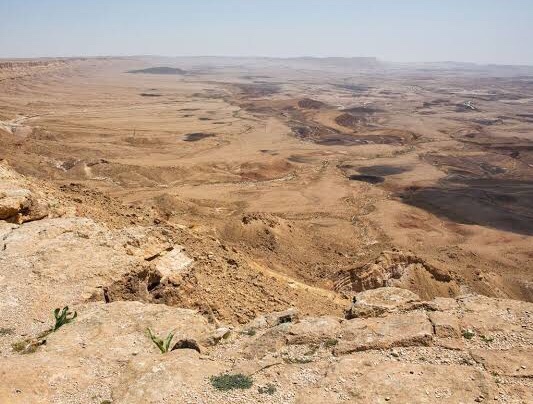
The first observation about this story comes from the location, in all three versions that we have. In each case, it is the wilderness where these testing take place. How is this significant?

Central to the story of Israel, is the wilderness as the place of testing. The story of Moses and the Israelites is narrated in Exodus 13:17-19:2 and 40:34-38, through the book of Numbers (where it is mentioned 44 times), and in Deuteronomy 1-2.

This journey is recalled in the Psalms (68:7, 78:15-20, 40, 52, 95:8, 106:14-33, 136:16) as well as in various prophetic oracles (Isaiah 40:3-5, 41:17-20, 43:19-20, Jer 2:6, 31:2-3, Ezekiel 20:8b-21, Hosea 13:4-6, Amos 2:9-10, Wisdom of Solomon 11:1-4).

That’s a lot of references to the period in the wilderness!

It is clear, in each of these Hebrew Scripture texts, the wilderness is not a god-forsaken place, full of temptations, but it is the place where God encounters the people, tests them, nurtures them, and equips them for their future.

II

A second set of observations relate to the specific scripture texts that are cited in the course of this testing. They are the same in each extended version that we have. And each of the three testing moments, with the associated scripture texts that are cited, relate to key moments in the story of Israel in the wilderness during their forty years of wandering. (I am indebted to my wife, the Rev. Elizabeth Raine, for this insight.)

Understanding the significance of each testing comes when we look more closely at the passages to which Jesus refers, and explore the resonances and connections that those texts have with other biblical passages. Just as Israel (the child of God) is tested during their forty years in the wilderness, so Jesus (the son of God) revisits those testings in his forty days in the wilderness.

1. The first moment of testing relates to bread: “command these stones to become loaves of bread”. The story evoked is that concerning the gift of manna which was given to the people of Israel as they sojourned in the wilderness. It is told in Numbers and referred to quite directly in Deut 8:3—the verse which is part-quoted by Jesus in the testing narrative, people do not live by bread alone. Could the mission of Jesus be diverted into concerns about sustenance and immediate survival, rather than longer-term strategies?

2. The second moment of testing, on the top of a mountain, relates to worship, and the recognition of the special and supreme place of the Lord God. The offer, “all these [kingdoms] I will give you”, is met by another quotation, by Jesus, from the same book: it is the Lord your God you shall fear; him you shall serve (Deut 6:13).

The story of the Golden Calf, told in detail in Exodus 32, sits behind this particular test. It is alluded to, perhaps not quite so directly this time, in Deut 6:14-15, the verses which come immediately after the verse quoted by Jesus.

The incident involving the Golden Calf was when Israel “went off the rails”, developing an idol for the focus of their worship, rather than being focussed on God alone. The testing faced by Jesus was for him to gain power and authority in his own right, at the expense of serving the greater call that God had placed on his life.

The words of the tester in this second testing evoke the belief that God is able to allocate power and authority. The words of the tester explicitly resound with the claim made twice about the supreme authority of the Lord God, as reported in Jeremiah:

“It was I who made the earth, human being and beast on the face of the earth, by my great power, with my outstretched arm; and I can give them to whomever I think fit” (Jer 27:5)

and

“Ah, my Lord GOD! You made the heavens and the earth with your great power and your outstretched arm; nothing is too difficult for you” (Jer 32:17).

Here, the tempter has taken on the persona of God in this test. Jesus forcefully denies this test: it is the Lord your God you shall fear; him you shall serve.

3. The third and final test, placed on the pinnacle of the Temple, pits the possibility of testing God against the alternative of trusting absolutely in God. The tester’s challenge to Jesus, to “throw yourself down”, and the implication that God would save him (quoting Psalm 91) evokes the response from Jesus, quoting Deut 6:16, you shall not put the Lord your God to the test.

Test God … or Trust God? That was the age-old dilemma for Israel, noted at a number of points in the wilderness stories (for instance, Exod 17:2, Deut 6:16; Ps 106:14). It is one that Jesus himself encounters as the climax, in the Lukan version, of his wilderness testing.

The third Deuteronomy passage cited by Jesus, you shall not put the Lord your God to the test (Deut 6:16), comes immediately after the recital of The Ten Words which were given to Israel, through Moses, on Mount Sinai (Deut 5:1-21). As the scripture reports, Moses instructed the people to trust God by living in accordance with these words, for this was the way to life for them (Deut 5:27, 32-33).

So, to assist them in this enterprise, The Ten Words are then boiled down to One Great Commandment, love the Lord your God (Deut 6:5)—a commandment which Jesus himself quoted and highlighted in his debates with Jewish teachers (Luke 10:27). This prime commitment is what is alluded to by the citation that Jesus makes in his third testing. It is a test to see if he will divert from this singular focus.

****

This story of testing in the wilderness presents a communal challenge, and requires a communal commitment. The personal identity of Jesus, in the mission to which he is called, is found in the context of the communal identity of the people of Israel, who faced precisely these tests—and failed, in the accounts we have in Hebrew Scripture. The testings of Jesus are a reworking of those ancient testings; he is faced with the same tests—and passes them, in the accounts we have in Christian scriptures. That is the model we are offered through this story.

See also

https://johntsquires.wordpress.com/2019/01/31/an-orderly-account-a-quick-guide-to-luke-and-acts/

https://johntsquires.wordpress.com/2019/02/01/scripture-fulfilled-in-your-hearing-luke-416-30

https://johntsquires.wordpress.com/2019/02/05/costly-discipleship-according-to-luke/

https://johntsquires.wordpress.com/2019/02/07/leave-everything-follow-jesus-luke-51-11/

https://johntsquires.wordpress.com/2019/02/12/on-a-level-place-with-a-great-crowd-luke-6/

https://johntsquires.wordpress.com/2019/02/14/the-plain-the-synagogue-and-the-village-luke-6-4-and-1/

https://johntsquires.wordpress.com/2019/02/19/the-beloved-physician-the-lover-of-god-and-loving-our-enemies-luke-6/

https://johntsquires.wordpress.com/2019/02/26/bringing-his-exodos-to-fulfilment/


Unknown's avatarAuthor John T SquiresPosted on March 8, 2019October 29, 2021Categories An Orderly Account: Gospel of LukeTags Luke, scripture2 Comments on Sacred place and sacred scripture: forty days in the wilderness (Luke 4; Lent 1C)

A Testing Time: forty days in the wilderness (Luke 4)

A Testing Time: forty days in the wilderness (Luke 4)

The story of Jesus being “tempted in the wilderness” is told early on in three canonical Gospels. The shortest and most focussed version is in the earliest of these Gospels—the account of the good news of Jesus, the anointed one, the Son of God, which we attribute to the evangelist Mark.

This brief and focussed account (Mark 1:12-13) simply notes the bare minimum. The location is “the wilderness”. The duration is “forty days”. Present with Jesus throughout these days were both “wild beasts” and “angels”. What was the purpose of this challenging, difficult experience? Mark says that Jesus was there to be “tempted by Satan”. Under whose auspices did this all take place? The first line of the Markan account is, “the Spirit drove him out into the wilderness”.

So this short, succinct, concentrated version already gives us key pointers to the significance of this story. The forty days in the wilderness stand at the start of the public activity of Jesus, as a declaration of what he is on about. And these days are part of the intention that God has, for Jesus, to prepare for his role.

The story also appears in the book of the origins of Jesus, the anointed one, the son of David, the son of Abraham, which we attribute to Matthew, and place as the first Gospel in canonical order in our scriptures. But this wasn’t the first Gospel written; the author (by tradition, Matthew) quite clearly knew, and made use of, the earlier account of “the good news” which we link with Mark.

So in this later work, the details of the story are expanded and the plot line is filled out (Matt 4:1-11). The forty days in the wilderness becomes a time when Jesus fasted (Matt 4:2; something not mentioned in the earlier Markan account). Here, Jesus engages in a disputation with “the tempter” (Matt 4:3, which uses the language already found in the Markan version)

Of course, the role that is enacted by this figure—the tempter, the devil, the tester, the Satan—is the role of divine advocate, the one we know from the book of Job as the prosecuting attorney, the accuser, the one who puts the case that Job needs to answer. The whole of that book demonstrates how such a courtroom setting plays out, as the argument is investigated, the evidence is explored, the case for a verdict is painstakingly built.

The forty days in the wilderness was undoubtedly an intense experience for Jesus. The role of “the tempter” in this story is not actually to tempt Jesus to stray into immoral or unethical or unrighteous actions. On the contrary, the role of “the tempter” is actually to test Jesus, to probe and analyse his understandings, in to hypothesise and offer alternative strategies, to help Jesus to clarify and focus on what is central for him. It is a test of his character, his core qualities, and of his commitment to the mission to which he has been called.

Indeed, the devil here fills the role more of “the tester” than “the tempter”—and the Greek word used here (peirasmos) is quite capable of this alternative translation. It is most often used in Greek literature to describe the process of testing as to whether something is viable or possible, and that is the way it is intended elsewhere in the Gospels when it occurs. It only gains the secondary sense of “tempting” or soliciting something that is sinful, in relatively few instances, mostly within the letters of Paul and James.

The way this testing is worked out, in the book of the origins of Jesus, the anointed one (the Gospel of Matthew) is largely the way that the story is recounted in the orderly account of the things that have been fulfilled among us, another later version of the story of Jesus.

This Gospel, placed third in order in our New Testaments, is the book we attribute to Luke. This author clearly knew the earliest account (in Mark); it may well be that he also knew a version such as we have in Matthew, and he has reshaped and reinterpreted it at various points throughout his account. This may be one such instance.

In the version of the story of the forty days in the wilderness which appears at Luke 4:1-14, there are words added, sentences rewritten, and the order of things is slightly varied. But there is still the same process of back-and-forth between accuser and accused, shaped by the scripture texts that are cited.

So Luke and Matthew both give us deeper insight into the testing that Jesus experienced during those forty days in the wilderness. They show that “the tester” utilised scripture as the basis for the trial that Jesus is undertaking. And this, it must be said, is thoroughly predictable—given that we are dealing with a text from the first century of the common era, emerging out of the context of faithful Judaism, telling the story of a faithful Jewish man—Jesus—and his earliest circle of followers—Jewish men and women. They all express the piety and faith of the Judaism of the time, for that was their religion and their culture.

Scripture sits at the heart of Jewish life and faith. Young Jewish boys, like Jesus, were taught to read the Hebrew text of scripture, and to memorise it. They were grounded in the Torah, the books of the Law, which set out the way of life, the way of faithful living, that they were to follow. They needed to know this, to have it deep within their hearts. That would have been the upbringing experienced by Jesus.

As they grew older, these Jewish boys were taught the next stage, the midrashim, the teachings which provided explanation and application of the laws and stories embedded in Torah. There were two types of midrashim: there was haggadah, which was telling stories (and the Jewish teachers, the rabbis, were excellent at telling stories!); and there was halakah, which was discussion and debate about how best to interpret and apply the laws found in Torah.

It is this latter form of teaching that we encounter, in the story of the forty days in the wilderness. The back and forth between the person on trial—Jesus—and the person charged with testing and probing his case—the accuser—is couched entirely in terms of sacred scripture. Each time an accusation is put before Jesus, the accuser quotes a passage of scripture. And each time the person on trial—Jesus—responds, another text from sacred scripture is quoted. [I have written a second post that deals with the details of these scriptural texts: see https://johntsquires.wordpress.com/2019/03/08/sacred-place-and-sacred-scripture-forty-days-in-the-wilderness-2/%5D

Think about that for a minute: both the accuser and the accused are citing scripture, arguing on the basis of what is found in the tradition and heritage and sacred story of the people of Israel. They are both engaged in this task, to get to the heart of the matter; to penetrate to the essence of the issue, through exploration of scripture and its relevance to Jesus and his mission.

This is typical Jewish midrashic argumentation. This is the way that, throughout the centuries, Jews have sought to encounter the truths of scripture—through discussion and debate, by one posing a proposition and then another arguing back in counter-proposition, through the adding of additional scripture passages into the argument, in a process of refining, sharpening, and clarifying the intent of the initial scripture text.

This was par for the course for ancient Jews. This is still the way that faithful Jews engage with scripture. My years as a member of the Uniting Church Dialogue with the Jewish Community immersed me into precisely this culture on a regular basis. It was quite an experience! To us polite, constrained Westerners, it seems like an unruly mess. To Jews, schooled in this process since their early years, it is natural, and results in deep and profound understandings of scripture.

So this is what was happening in the story that our Gospels recount: a time of testing, a testing which was designed to cut through to the centre of the issue, to engage deeply with the heart of the matter. It wasn’t an attempt by the devil to get Jesus to go off the rails, to misbehave badly, to succumb to unrighteous behaviour, to sin. Rather, this was the way that ancient Jews sought to crystallise the issue and define key matters of faith and life. That’s what was going on for Jesus during those forty days in the wilderness.

Most versions of the Bible, today, put a heading at the beginning of this story: “The Temptation of Jesus”. I wouldn’t label it as such. I would prefer to call it, “The Testing of Jesus”. What is his mission all about? Is he clear about how he will carry out that mission? What strategy does he have, as he enters into the public proclamation of his good news about God’s kingdom? These are the issues that are at stake in this particular story.

The Gospel writers believed that the forty days in the wilderness was a time for Jesus to face testing, and that this testing was mandated by God. The final point that underlines this way of understanding the story, comes when we look at the top-and-tail of each account.

The shortest and earliest account states that “the Spirit drove him into the wilderness” (Mark 1:12). There is a violence, an aggression, in the term used here. But it is an action of the Spirit, forcing Jesus to enter this trial. It is something that he had to do, under the impulse of God’s direction.

One later account modifies this, and softens the verb to say that “Jesus was led up by the spirit into the wilderness” (Matt 4:1). We find this in Matthew; and that version ends with “the devil left him, and suddenly angels came and waited on him” (Matt 4:11). That picks up on what Mark had said, that “the angels waited on him” (Mark 1:13). So the story ends with an implicit approval, by the divine, through the vehicle of the angels, regarding what has transpired in the wilderness.

Another later account makes this quite clear and explicit. The version we attribute to Luke begins “Jesus, full of the Holy Spirit, returned from the Jordan, and was led by the Spirit in the wilderness” (Luke 4:1). That intensifies the sense of divine guidance and approval in what is about to take place. And the account ends with a similar note: “The devil departed from him … then Jesus, filled with the power of the Spirit, returned to Galilee” (Luke 4:13-14). Could it be any clearer?

Indeed, a still later account, which is not in the canon of New Testament books, but was revered by some in the early church, includes a section that reports on something from this story, placed onto the mouth of Jesus: “even so did my mother, the Holy Spirit, take me by one of my hairs and carry me to the great Mount Tabor”—a reflection of the section of the story that talks about Jesus being taken up to a high mountain (Matt 4:8). [That comes from the Gospel according to the Hebrews, and is quoted by Origen in his Commentary on John 2:12.] So in this version, the testing of Jesus is actually carried out, not by the devil, but by the Spirit!

My proposal is that, as we read this story, we need to banish thoughts of “temptation” and the notion that Jesus might choose a false and unrighteous pathway. What is actually taking place, is a strenuous and engaged encounter, in which Jesus is challenged to clarify his divine calling and better equipped to live out the mission that he has been given, by God, during his adult life. He is being tested.

In that sense, this story is not a remote, back-then, archaic account …. it is a living, here-and-now, immediate insight into how we, ourselves are to live out our faith in the hustle and bustle of our own lives. That is precisely the pathway that we are encouraged to enter, as we stand at the start of the season of Lent, and as we experience our own time of re-evaluation and reassessment of our own walk of faith today. What is God calling us to do? Who is God calling us to be? How can we best live that out in our lives?

See also

https://johntsquires.wordpress.com/2019/01/31/an-orderly-account-a-quick-guide-to-luke-and-acts/

https://johntsquires.wordpress.com/2019/02/01/scripture-fulfilled-in-your-hearing-luke-416-30

https://johntsquires.wordpress.com/2019/02/05/costly-discipleship-according-to-luke/

https://johntsquires.wordpress.com/2019/02/07/leave-everything-follow-jesus-luke-51-11/

https://johntsquires.wordpress.com/2019/02/12/on-a-level-place-with-a-great-crowd-luke-6/

https://johntsquires.wordpress.com/2019/02/14/the-plain-the-synagogue-and-the-village-luke-6-4-and-1/

https://johntsquires.wordpress.com/2019/02/19/the-beloved-physician-the-lover-of-god-and-loving-our-enemies-luke-6/

https://johntsquires.wordpress.com/2019/02/26/bringing-his-exodos-to-fulfilment/

Unknown's avatarAuthor John T SquiresPosted on March 5, 2019June 3, 2019Categories An Orderly Account: Gospel of LukeTags Luke, scripture2 Comments on A Testing Time: forty days in the wilderness (Luke 4)

Bringing his ‘exodos’ to fulfilment (Luke 9; Transfiguration C)

Bringing his ‘exodos’ to fulfilment (Luke 9; Transfiguration C)

The story of the Transfiguration stands out for a number of reasons. Here are four that I find of interest.

ONE: Metamorphosis

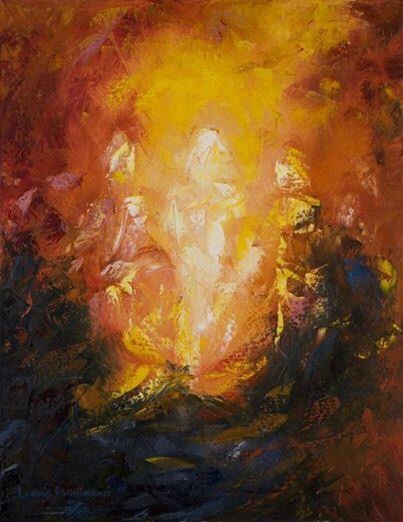
The story contains a unique, dramatic visual effect—a changed facial appearance, dazzling white clothes, and the appearance of two long-dead figures. This is certainly designed to cause people hearing the story to pay attention.

The word Transfiguration is a strange word. It is not often found in common English usage. It’s one of those peculiar church words, that seems to be used only in church circles. Like thee and thy, holy and righteous, sanctification and atonement … and trinity. These words don’t usually pop up in regular usage!

I looked for some helpful synonyms for the word transfiguration, and found these: change, alter, modify, vary, redo, reshape, remodel, transform, convert, renew … and transmogrify. I am not sure whether that last one gets us anywhere nearer to a better understanding, but some of the others are helpful. Transfiguration is about change, adaptation, and taking on a new shape or size or appearance.

One of the other words offered as a synonym was metamorphose; and that caught my eye, because that word comes directly from the Greek word, metamorphidzo, which is used by Mark in his Gospel, when he tells his account of this incident. “After six days, Jesus took Peter, James and John with him and led them up a high mountain, where they were all alone; and he was metamorphosed before them” (Mark 9:2). Mark then explains that this metamorphosis was evident in that “his clothes became dazzling white”.

Unfortunately, in the version we have heard today, from Luke’s Gospel, this gets rewritten as “about eight days later, Jesus took Peter, John and James with him and went up onto a high mountain to pray; and as he was praying, the appearance of his face changed” (Luke 9:28-29). So Luke simplifies the description and adds an explicit mention of the change in appearance of Jesus, before going on to note that his clothes became dazzlingly bright.

Unfortunately, the fancy Greek word has gone from Luke’s account; but the basic story remains exactly the same, and the details about the glowing face and shining clothes are there. This was, indeed, a moment of metamorphosis.

TWO: Son of God

The story also contains a voice, booming forth from the clouds, “This is my Son, my Chosen; listen to him!”. These words seem, at first hearing, to be quoting Hebrew scripture: perhaps the second Psalm, which praises the King of ancient Israel as the one whom God has begotten; perhaps the song in Isaiah 42, which extols the servant as the one whom God has chosen, or anointed; perhaps the oracle in Deuteronomy 18, which instructs the people to listen carefully to the words of the prophet.

Whatever scripture, or scriptures, are here spoken by the divine voice, making this bold declaration from the cloud, it is clear that God has a special task, a special role, and a special place for Jesus. The words of this heavenly voice link this story back to the opening scenes of the story of the adult period in the life of Jesus, and also to a moment towards the end of that adult life.

At the baptism of Jesus, there is a heavenly voice making this declaration that Jesus was chosen by God to be his son (Luke 3:22). And bookmarking the story of the adult Jesus, towards the end of this time, there is another clear reference to Jesus as Son of God, when he is brought before the Sanhedrin and questioned by the chief priests and scribes (Luke 22:70).

So the voice that is heard on the mountaintop (in Luke 9) actually resonates throughout the whole storyline. Jesus occupies a distinct and special place; an understanding of this characterises the whole of his time as an itinerant prophetic figure in Galilee and then Jerusalem.

THREE: Moses, Elijah, and the Covenant

In Luke’s report, this scene on the mountain top becomes a pointer to the Exodus journey and the new Covenant which Jesus undertakes and effects in Jerusalem. We can see this in the middle of the scene, when Jesus is deep in conversation with his two key conversation partners from the past of Israel, Moses and Elijah.

Moses was the one to whom God gave the Law, as the foundation and guide for the covenant relationship which was established between the Lord God and the chosen people of Israel. Elijah was the one through whose prophetic words God addressed the people of Israel, recalling them from their disobedience and challenging them to recommit to the covenant that God had established with them.

So at the centre of this story, there sits the Covenant: that bonding relationship that contracted God to be the God of Israel, committed to guide and instruct and sustain them; and the people of Israel, throughout the centuries, committed to obedience and trusting fidelity to God throughout all the changes and challenges of their history.

The Covenant which is at the heart of this story is a story about how we relate to God. That is why it is told and retold by the Gospel writers; that is why we recall and repeat the story, each year, in fact, in the pattern of seasons that we follow through the year. It’s as much a story about Jesus, as it is a story about how we are to follow Jesus.

FOUR: a new Exodus

There is another key word in this story that comes from the history of the Covenant that was forged between the people of Israel, and their God. It may have escaped your notice. In fact, the translators of our modern English versions have, quite unhelpfully, done a fine job of obscuring this word. Verse 31 of Luke’s account reads, “they spoke about his departure, which he was about to bring to fulfilment at Jerusalem “.

The Greek word which is here translated as “departure” is a word that you will know, even if you know absolutely nothing about Ancient Greek. It is the word exodos. Now that’s a word that resonates with each one of us, surely. Because we know from hearing the stories of the Old Testament, just how important the Exodus was, for the people of Israel. Because it was through the story of the Exodus, that the Covenant between God and Israel emerged.

Indeed, right through into Judaism of the present time, the story of the Exodus has remained central. Every year, at Passover, Jewish people gather, to retell the story and remember the exodus of the people of old, out of Egypt, across the desert, into the land which they believe had been promised to them.

So the conversation between these great figures of Israelite history—Moses the Teacher, Elijah the Tishbite, and Jesus of Nazareth—revolved around the fate that was in store for Jesus when he went to Jerusalem. The end point of the cross is in view, even from this early stage of ministry.

The term which Luke uses to describe the aim of Jesus, in taking leave for his journey to Jerusalem, is far deeper and more significant than what the translators offer us, in the word “departure”. Luke makes it clear that it is the Exodus which is to be effected by Jesus himself, in what takes place in Jerusalem. His entry into Jerusalem will set the fate in store for Jesus. There, his departure from his followers will be his Exodus moment, where the New Covenant, made with all his followers to come, will be sealed.

So this story of Transfiguration is grounded in the covenant relationship between God and humanity, and is expressed by Jesus through his resolute commitment to walking the journey which leads to his death, on the cross, in the capital city, in the shadow of the great temple of the people of Israel. And elsewhere in scripture, that death then becomes interpreted as the means by which a new covenant relationship is established.

Unknown's avatarAuthor John T SquiresPosted on February 26, 2019October 29, 2021Categories An Orderly Account: Gospel of LukeTags Luke, scripture5 Comments on Bringing his ‘exodos’ to fulfilment (Luke 9; Transfiguration C)

The beloved physician, the lover of God, and loving our enemies (Luke 6; Epiphany 7C)

The beloved physician, the lover of God, and loving our enemies (Luke 6; Epiphany 7C)

Why did “Luke” write his Gospel? And what purpose did he have, in depicting Jesus in the particular ways that he did, throughout this work?

The opening verses offer some clues. This book, that we know as “the Gospel of Luke”, actually describes itself, in these verses, as an “orderly account of the events that have been fulfilled among us”, written to a person named “lover of God” (in Greek, Theophilus). The book was written so that he might “know the certainty concerning the things about which you have been instructed”.

Continue reading “The beloved physician, the lover of God, and loving our enemies (Luke 6; Epiphany 7C)”

Unknown's avatarAuthor John T SquiresPosted on February 19, 2019February 16, 2022Categories An Orderly Account: Gospel of LukeTags Luke, scripture4 Comments on The beloved physician, the lover of God, and loving our enemies (Luke 6; Epiphany 7C)

The plain, the synagogue, and the village (Luke 6, 4 and 1; Epiphany 6C)

The plain, the synagogue, and the village (Luke 6, 4 and 1; Epiphany 6C)

Blessed are the poor. Blessed are the hungry.

Blessed are those who weep. Blessed are those who are hated.

Woe to the rich. Woe to those who are full.

Woe to those who are laughing. Woe to those who are spoken well of.

For the careful and thoughtful reader of this Gospel, the blessings and woes pronounced by Jesus in chapter 6 of this Gospel reach back into earlier parts of the story. Jesus is here standing on a level place, surrounded by a crowd of people, drawn from nearby and from places further afield, Jews and even Gentiles, who are crying out for help. It is a striking scene (see https://johntsquires.wordpress.com/2019/02/12/on-a-level-place-with-a-great-crowd-luke-6/)

Continue reading “The plain, the synagogue, and the village (Luke 6, 4 and 1; Epiphany 6C)”

Unknown's avatarAuthor John T SquiresPosted on February 14, 2019February 7, 2022Categories An Orderly Account: Gospel of LukeTags Luke, scripture6 Comments on The plain, the synagogue, and the village (Luke 6, 4 and 1; Epiphany 6C)

On a level place, with a great crowd (Luke 6; Epiphany 6C)

On a level place, with a great crowd (Luke 6; Epiphany 6C)

Blessed are the poor. Blessed are the hungry.

Blessed are those who weep. Blessed are those who are hated.

We probably know this collection of teachings from Jesus better, from the way that it is reported in the Gospel according to Matthew:

Blessed are the poor in spirit. Blessed are those who mourn.

Blessed are those hungry for righteousness. Blessed are the pure in heart.

Blessed are the peacemakers. Blessed are those who are persecuted.

In that Gospel, Jesus is seated, in the traditional teaching stance of the Rabbi, at the top of a mountain, the traditional location for encountering the divine; and he seems to leave the crowd behind, for he is gathered with just his disciples, so it would seem.

In this somewhat irenic, relaxed setting, Jesus pronounces eight blessings (or eight beatitudes, using this unusual word which is derived from Latin), before he launches into his detailed teaching. And the blessings all seem to be oriented to spiritual realities: poor in spirit, pure in heart, hungry for righteousness.

However, in the version we have heard today, from the Gospel according to Luke, Jesus is standing, in the traditional pose of a Greek orator, and he is on a level place, at the foot of the mountain, rather than at its top. He is surrounded by a crowd of people looking for help.

And in Luke, Jesus speaks only four blessings, or beatitudes; and the blessings are all very tangible, material, earthed: the poor, the hungry, those who grieve. Then, only in Luke, they followed immediately by four matching curses, four woes, which are equally earthed, grounded in the realities of daily life.

That pattern, of blessings matched by woes, is thoroughly prophetic; that reflects the standard way of operating for so many of the prophets of Israel who had come before Jesus.

This prophetic pattern, introduced early in Luke’s story, will continue throughout his Gospel. Jesus is in the line of the prophets. Indeed, it is only in Luke’s Gospel (chapter 7, verse 16) where we hear the scene that ends, “fear seized all of [the people]; and they glorified God, saying, “A great prophet has risen among us!”.

So, here is this Jewish prophet, standing to declaim, like a Greek orator, not sitting to teach, like a Jewish Rabbi, focussing, not on the spiritual realm, but on the very stuff of everyday life. Already, Luke is painting a complex picture.

Indeed, Luke reports that Jesus gives his blessings and woes in the midst of “a great crowd of his disciples AND a great multitude of people”, and they are peppering him with requests for their diseases to be healed and for their unclean spirits to be banished. It is not at all a restful setting.

And further, Luke signals, very clearly, a quite specific interest that he has, in telling his version of the story of Jesus. For he specifies the places from whence the great crowd had come: there are Jews, from all Judea, and from its capital city, Jerusalem; and then there are people who have come, so he claims, from the northern coastlands of Tyre and Sidon—an area where there were more Gentiles than Jews (the area we today know as Lebanon).

These people to whom Jesus relates are drawn from across a range of locations, they come from different cultures, speaking different languages, bringing different customs. Luke deliberately locates Jesus within this multicultural setting. That’s already a contrast to the Gospel of Matthew, in which Jesus clearly and explicitly instructs his disciples to speak only to “the lost sheep of Israel”, and to have nothing to do with Gentiles and Samaritans.

In Luke’s story, such outsiders are already there from the start, and the teachings, healings, exorcisms, and parables of Jesus, all take place in the midst of this seething swirl of human beings, drawn from the chosen people of Israel, but also from those suspicious neighbours who have become enemies, the Samaritans, and even those not-to-be trusted outsiders, the Gentiles.

So the setting is significant—Jesus is not “on retreat” with “the inner circle”, as Matthew infers, but he is immersed into the realities of daily life, with people from all over. The words that he offers will need to speak into that noisy, needy mass of human beings. And that sets the direction of mission to be followed by the followers of Jesus, in the first century, as also in the twenty-first century.

See also:

https://johntsquires.wordpress.com/2019/01/31/an-orderly-account-a-quick-guide-to-luke-and-acts/

https://johntsquires.wordpress.com/2019/02/01/scripture-fulfilled-in-your-hearing-luke-416-30/

https://johntsquires.wordpress.com/2019/02/05/costly-discipleship-according-to-luke/

https://johntsquires.wordpress.com/2019/02/07/leave-everything-follow-jesus-luke-51-11/

Unknown's avatarAuthor John T SquiresPosted on February 12, 2019October 29, 2021Categories An Orderly Account: Gospel of LukeTags Luke, scripture6 Comments on On a level place, with a great crowd (Luke 6; Epiphany 6C)

Posts pagination

Previous page Page 1 … Page 20 Page 21 Page 22 Next page

The Book of Origins

  • Leaving Luke . . . Meeting Matthew
  • Matthew: tax collector, disciple, apostle, evangelist—and “scribe trained for the kingdom”? (Matt 9; Pentecost 2A)
  • For our instruction … that we might have hope (Rom 15, Isa 11, Matt 3; Advent 2A)
  • The origins of Jesus in the book of origins: Matthew 1 (Advent Year A)
  • Now the birth of Jesus the Messiah took place in this way (Matthew 1; Advent 4A)
  • Descended from David according to the flesh (Rom 1; Advent 4A)
  • A young woman? A virgin? Pregnant? About to give birth? (Isa 7:14 in Matt 1:23; Advent 4A)
  • More on Mary (from the Protoevangelium of James)
  • Tales from the Magi (the Revelation of the Magi)
  • Herod waiting, Herod watching, Herod grasping, holding power (Matt 2; Christmas 1A)
  • Herod was infuriated, and he sent and killed all the children (Matt 2; Christmas 1A)
  • Repentance for the kingdom (Matt 4; Epiphany 3A)
  • Proclaiming the good news of the kingdom (Matt 4; Epiphany 3A)
  • Teaching in “their synagogues” (Matt 4; Epiphany 3A)
  • Teaching the disciples (Matt 5; Epiphany 4A)
  • Blessed are you: the Beatitudes of Matthew 5 (Epiphany 4A)
  • An excess of righteous-justice (Matt 5; Epiphany 5A)
  • You have heard it said … but I say to you … (Matt 5; Epiphany 6A)
  • The missing parts of the Sermon on the Mount (Matt 6 and 7; Epiphany Year A)
  • Our Father in heaven: a pattern for prayer (Luke 11, Matt 6) part III
  • Our Father in heaven: a pattern for prayer (Luke 11, Matt 6) part II
  • Our Father in heaven: a pattern for prayer (Luke 11, Matt 6) part I
  • “Go nowhere among the Gentiles” (Matt 10:5): the mission of Jesus in the book of origins (Pentecost 3A)
  • “Even the hairs of your head are all counted.” (Matt 10:30; Pentecost 4A)
  • Come to me, take my yoke, I will give you rest (Matt 11; Pentecost 6A)
  • Parables: the craft of storytelling in the book of origins (Matt 13; Pentecost 7A)
  • The righteous-justice of God, a gift to all humanity (Romans; Year A)
  • Let anyone with ears, hear! (Matt 13; Pentecost 8A)
  • Chopping and changing: what the lectionary does to the parables of Matthew (Pentecost 7–9A)
  • Nothing but five loaves and two fish (Matt 14; Pentecost 10A)
  • Liminal experiences and thin places (Matt 14; Pentecost 11A)
  • It’s all in the geography. Jesus, the Canaanite woman, and border restrictions (Matt 15; Pentecost 12A)
  • A rock, some keys, and a binding: clues to the identity of Jesus (Matt 16; Pentecost 13A)
  • An invitation that you just cannot … accept! (Pentecost 19A)
  • Towards Palm Sunday (Matt 21): Passover and politics
  • Towards Palm Sunday (Matt 21): Riding on a donkey (or two) as the crowd shouts ‘Hosanna’
  • Towards Palm Sunday (Matt 21): Waving branches, spreading cloaks
  • Towards Palm Sunday (Matt 21): Acclaiming the king, anticipating the kingdom
  • Producing the fruits of the kingdom (Matt 21; Pentecost 19A)
  • Darkness, weeping, and gnashing of teeth: the scene of judgement (Matt 22; Pentecost 20A)
  • The greatest and first commandment … and a second, like it (Matt 22)
  • On these two commandments hang all the law and the prophets (Matt 22; Pentecost 22A)
  • Sitting on the seat of Moses, teaching the Law—but “they do not practice what they teach” (Matt 23; Pentecost 23A)
  • Discipleship in an apocalyptic framework (Matt 23–25; Pentecost 23–26A)
  • A final parable from the book of origins: on sheep and goats, on judgement and righteous-justice (Matt 25; Pentecost 26A)
  • Scripture debate and disputation in the wilderness (Matt 4; Lent 1A)
  • Testing (not temptation) in the wilderness (Matt 4; Lent 1A)
  • Practising righteous-justice: alms, prayer, and fasting (Ash Wednesday)
  • Forcing scripture to support doctrine: texts for Trinity Sunday (2 Cor 13, Matt 28; Trinity A)

An Orderly Account: Luke and Acts

  • “An orderly account”: a quick guide to Luke and Acts
  • Costly discipleship, according to Luke
  • Did Luke write the first “orderly account” about Jesus?
  • With one eye looking back, the other looking forward: turning to Luke’s Gospel I (Year C)
  • Leaving out key moments, so they can appear later in the story: turning to Luke’s Gospel III (Year C)
  • “A light for the Gentiles, salvation to the ends of the earth”: turning to Luke’s Gospel II (Year C)
  • The scriptural resonances in the Annunciation (Luke 1; Advent 4B)
  • Magnificat: the God of Mary (Luke 1) is the God of Hannah (1 Sam 2) (Advent 4C)
  • “To give knowledge of salvation”: Luke’s portrayal of John the baptiser (Luke 3; Advent 2C)
  • On angels and virgins at Christmastime (Luke 2; Christmas Day B)
  • A light for revelation to the Gentiles and for glory to your people Israel (Luke 2; Christmas 1B)
  • John the baptiser’s call for ethical, faithful living (Luke 3; Advent 3C)
  • A Testing Time: forty days in the wilderness (Luke 4)
  • Sacred place and sacred scripture: forty days in the wilderness (2)
  • Scripture fulfilled in your hearing (Luke 4:16-30; Epiphany 3C, 4C)
  • Jesus and conventional Jewish piety (Luke 4:16; Epiphany 3C)
  • Jesus, scripture and experience (Luke 4:17, 21; Epiphany 3C)
  • The holistic spirit-inspired mission of Jesus (Luke 4:18–19; Epiphany 3C)
  • Jesus, the widow of Sidon and the soldier of Syria: representatives of the community of faith (Luke 4:25–27; Epiphany 4C)
  • Two prophets of Israel, the widow of Sidon and the soldier of Syria: an inclusive community of Jews and Gentiles (Luke 4:25–27; Epiphany 4C)
  • Leave everything, follow Jesus (Luke 5:1-11; Epiphany 5C)
  • On a level place, with a great crowd (Luke 6; Epiphany 6C)
  • Blessed are you … poor, hungry, weeping … (Luke 6; Epiphany
  • The plain, the synagogue, and the village (Luke 6, 4 and 1; Epiphany 6C)
  • Bless—Love—Forgive—and more. The teachings of Jesus (Luke 6; Epiphany 6C, 7C)
  • The beloved physician, the lover of God, and loving our enemies (Luke 6; Epiphany 7C)
  • Perfect, or merciful? The challenge Jesus poses (Matt 5, Epiphany 7A; Luke 6, Epiphany 7C)
  • Jesus and his followers at table in Luke’s “orderly account”
  • Before Transfiguration Sunday, the stories of the dying slave and the grieving widow (Luke 7; Epiphany 9C; Proper 4C)
  • What have you to do with me, Jesus? (Luke 8; Pentecost 2C)
  • Bringing his ‘exodos’ to fulfilment (Luke 9; Transfiguration C)
  • Setting his face to go to Jerusalem (Luke 9:51, 13:33, 17:11, 19:11; Lent 2C)
  • Through Samaria, heading to Jerusalem (Luke 9; Pentecost 3C)
  • Sent out in Samaria, proclaiming the kingdom (Luke 10; Pentecost 4C)
  • Listening and learning at the feet of Jesus (Luke 10; Pentecost 6C)
  • Mary and Martha: models of women following and learning from Jesus (Luke 10; Pentecost 6C)
  • There is need of only one thing. Or, maybe, two. (Luke 10; Pentecost 6C)
  • Where have all the women gone? Women in the movement initiated by Jesus (Luke 10; Pentecost 6C)
  • On earth, as in heaven: the key to The Lord’s Prayer (Luke 11; Pentecost 7C)
  • Sins or trespasses? Trial or temptation? Thine or yours? The prayer that Jesus taught (Luke 11; Pentecost 8C)
  • “Where your treasure is, there your heart will be also” (Luke 12; Pentecost 8C)
  • Coming to grips with the judgement of God (Luke 12 and Isaiah 5; Pentecost 10C)
  • She stood up straight and they were put to shame (Luke 13; Pentecost 11C)
  • Jerusalem, Jerusalem: holy city, holy calling (Luke 13; Lent 2C)
  • Disturbing discipleship: exploring the teachings of Jesus in Luke 14 (Pentecost 12C to 13C)
  • Disreputable outsiders invited inside: parables in Luke 14 (Pentecost 12C, 13C)
  • The discomfort of ambiguity (Luke 15; Lent 4C)
  • Human sinfulness and divine grace (Jeremiah 4; Luke 15; 1 Timothy 1; Pentecost 14C)
  • Shrewd? dishonest? manipulative? or contributing to the common good? (Luke 16; Pentecost 15C)
  • Lazarus and the rich man (Luke 16; Pentecost 16C)
  • Faith the size of a mustard seed (Luke 17; Pentecost 17C)
  • Was none of them found to return and give praise to God except this foreigner? (Luke 17; Pentecost 18C)
  • Unjust judge, shameless widow (Luke 18; Pentecost 19C)
  • In defence of the Pharisees: on humility and righteousness (Luke 18; Pentecost 20C)
  • Zacchæus: patron saint of change and transition (Luke 19; Pentecost 21C)
  • “When these things begin to take place … your redemption is drawing near” (Luke 21; Advent 1C)
  • “Be alert at all times, praying that you may have the strength … to stand before the Son of Man” (Luke 21; Advent 1C)
  • Look up to the sky? Look down to your feet! (Luke 20; Pentecost 22C)
  • Don’t take it at face value: on former things and new things
  • Don’t take it at face value: on what lies behind and what lies ahead (Lent 2C)
  • The death, resurrection and ascension of Jesus in Luke’s “orderly account”
  • What do you see? What do you hear? (Luke 19; Palm Sunday C)
  • Holy Week: the week leading up to Easter
  • Sacrificial death and liberating life: at the heart of Easter
  • Ministry and Mission in the midst of change and transition (Luke 21:13; Pentecost 23C)
  • Easter in Christian tradition and its relation to Jewish tradition
  • A time in-between the times, a space in no-space.
  • The tomb is empty. He is not here. He is risen. (Luke 24; Easter Sunday)
  • He Is Not Here Day
  • Discovering new futures … letting go of the old
  • The moment of recognition: walking … talking … listening … understanding … (Luke 24; Easter evening; Easter 3A)
  • Ten things about Pentecost (Acts 2)
  • The cross-cultural nature of the early Jesus movement
  • From Learners to Leaders: deepening discipleship in Luke’s “orderly account”
  • Constantly devoting themselves to prayer (Acts 1; Easter 7A)
  • You will be my witnesses (Acts 1; Easter 7A)
  • Judas: reconsidering his part in the Easter story (Acts 1; Easter 7B)
  • Pentecost, the Spirit, and the people of God (Acts 2; Pentecost B)
  • What God did through him: Peter’s testimony to Jesus (Acts 2; Easter 2A)
  • What God did through him: proclaiming faith in the public square (Acts 2; Easter 2A)
  • Repent and be baptised: Peter’s Pentecost proclamation (Acts 2; Easter 3A)
  • The church in Acts: Times of refreshing (Acts 3; Easter 3B)
  • Boldly proclaiming “no other name” (Acts 4; Easter 4 B)
  • The church in Acts: Unity, testimony, and grace (Acts 4; Easter 2B)
  • We must obey God rather than human authority (Acts 5; Easter 2C)
  • Edging away from the centre (Acts 8; Easter 5B)
  • What happened after Philip met the Ethiopian? (Acts 8; Easter 5B)
  • The calling of Saul and the turn to the Gentiles: modelling the missional imperative (Acts 8—12; Easter 3C)
  • People of ‘The Way’ (Acts 9; Easter 3C)
  • You will be told what you are to do (Acts 9; Easter 3C)
  • Resurrection life, economic responsibility, and inclusive hospitality: markers of the Gospel (Acts 9)
  • Another resurrection! (Acts 9; Easter 4C)
  • Even to the Gentiles! (Acts 10; Easter 6B)
  • Even to the Gentiles (Acts 11; Easter 5C)
  • On literary devices and narrative development (Acts 16; Easter 7C)
  • The unknown God, your own poets, and the man God chose: Paul on the Areopagus (Acts 17; Easter 6A)
  • Paul, Demetrius and Damaris: an encounter in Athens (Acts 17:16-17,22–34)
  • Lydia, Dorcas, and Phoebe: three significant strategic leaders in the early church
  • An Affirmation for Our Times
  • I make prayers on your behalf (Letters to Luke #1; Year C)
  • I rejoice in the gift of writing (Letters to Luke #2; Year C)
  • How exciting it was! (Letters to Luke #3; Year C)
  • I write briefly (Letters to Luke #4; Year C)
  • I am happy to report that we have held another reading (Letters to Luke #5; Year C)
  • I was astonished to receive your brief note (Letters to Luke #6; Year C)
  • Leaving Luke . . . Meeting Matthew

Scripture and Theology

  • The Word of God, Scripture, and Jesus Christ
  • Marrying same-gender people: a biblical rationale
  • Discernment
  • Interpreting the creeds “in a later age”
  • Affirming the Teachings of Jesus
  • To articulate faith contextually
  • Let your gentleness be known to everyone
  • What can we know about the birth of Jesus?
  • “An orderly account”: a quick guide to Luke and Acts
  • Costly discipleship, according to Luke
  • In the wake of the verdict about Pell …
  • Another Time, Another Place: towards an Australian Church
  • Holy Week: the week leading up to Easter
  • Sacrificial death and liberating life: at the heart of Easter
  • The death, resurrection and ascension of Jesus in Luke’s “orderly account”
  • Easter in Christian tradition and its relation to Jewish tradition
  • The cross-cultural nature of the early Jesus movement
  • Jesus and his followers at table in Luke’s “orderly account”
  • Once again: affirming our diversity, celebrating joyous marriages
  • Ten things about Pentecost (Acts 2)
  • The Paraclete in John’s Gospel: exploring the array of translation options (John 14, 15, 16)
  • “Do you believe in the Triune God?”
  • The DNA of the UCA (part I)
  • The DNA of the UCA (part II)
  • Harness the passion, but restrain the rhetoric. Musing on the role model which Paul offers in Galatians.
  • Providing for the exercise by men and women of the gifts God bestows upon them: lay people presiding at the sacraments in the Uniting Church
  • Freedom and unity: themes in Galatians
  • Australian Religious Leaders support renewable energy
  • Human sexuality and the Bible
  • Dividing the unity, splintering the connections: more ACC agitation
  • Giving Voice, Telling Truth, Talking Treaty: NAIDOC 2019
  • Advocacy and Climate Change, Growth and Formation, Treaty with First Peoples: Synod 2019
  • Climate Change: a central concern in contemporary ministry
  • On earth, as in heaven: the key to The Lord’s Prayer (Luke 11; Pentecost 7C)
  • Ramping up the rhetoric, generating guilt and provoking panic: the failed strategy of conservatives in the UCA (part I)
  • Ramping up the rhetoric, generating guilt and provoking panic: the failed strategy of conservatives in the UCA (part II)
  • Ramping up the rhetoric, generating guilt and provoking panic: the failed strategy of conservatives in the UCA (part III)
  • International Day of the World’s Indigenous Peoples
  • In the wake of the verdict (and appeal decision) relating to Pell …
  • Where will we find hope? When will we see justice?
  • Supporting the Climate Strike
  • Gracious openness and active discipleship as key characteristics of church membership
  • Please Leave ?? No — Please Stay !!
  • Stones singing and rivers vibrating … a liturgy for Holy Communion
  • Faith in Action: a religious response to the Climate Emergency (Part One)
  • Faith in Action: a religious response to the Climate Emergency (Part Two)
  • Faith in Action: a religious response to the Climate Emergency (Part Three)
  • Celebrating Transitions: into a strange and graceful ease … (part one)
  • Celebrating Transitions: into a strange and graceful ease … (part two)
  • We wait, and hope, and grieve, anticipating …
  • On the move. A reflection on Christmas.
  • Reflecting on faith amidst the firestorms
  • This is the world we live in, this is the Gospel we believe in
  • Giving up? Or going deep? The opportunity of Lent
  • Passing the peace, sharing the elements, greeting the minister
  • When you come together … reflections on community in the midst of a pandemic
  • Holy Week: a week set apart, in a time set apart.
  • It was on that night that everything came to a head. Maundy Thursday Reflections.
  • Sacrificial Death: to give his life. Good Friday Reflections
  • Liminal Space: waiting and not knowing. Holy Saturday Reflections
  • Liberating Life: a new way of being. Easter Sunday Reflections
  • It’s been just over a month—but there have been lots of learnings!
  • Not this year. So what about next year?
  • The times, they are are a-changin’.
  • When we come together (2) … values and principles in the midst of a pandemic
  • It’s been two months under restrictions—what will our future look like? (1)
  • It’s been two months under restrictions—what will our future look like? (2)
  • Saying sorry, seeking justice, walking together, working for reconciliation
  • Worship like the first Christians. What will our future look like? (3)
  • Pentecost: the spirit is for anyone, for everyone.
  • Racism and Reconciliation
  • Paul’s vision of “One in Christ Jesus” (Gal 3:28) and the Uniting Church
  • In memory of James Dunn (1939–2020)
  • Black Lives Matter. Now—and Then.
  • Hiroshima and Nagasaki (1945), and the commitment to seek peace (2020)
  • Sexuality and Gender Identity Conversion Practices Bill: A Christian Perspective
  • Always Was, Always Will Be. #NAIDOC2020
  • The Lectionary: ordering the liberty of the preacher
  • Women in the New Testament (1): the positive practices of Jesus and the early church
  • Women in the New Testament (2): six problem passages
  • Reflections on a significant anniversary
  • What do we know about who wrote the New Testament Gospels? (1)
  • What do we know about who wrote the New Testament Gospels? (2)
  • What do we know about who wrote the letters attributed to Paul? (3)
  • What do we know about who wrote the letters in the name of the apostles? (4)
  • Revelation: a complex and intricate world of heavenly beings and exotic creatures
  • Why the Christmas story is not history (1): the “nativity scene” and the Gospels
  • Why “the Christmas story” is not history (2): Luke 1-2 and Matthew 1-2
  • Advent Greetings from Canberra Region Presbytery
  • Honours. Honestly?
  • Celebrations in Canberra (in the Uniting Church Presbytery)
  • Enough is Enough!
  • Earth Day 2021
  • From BC (Before COVID) to AD (After the Disruption)
  • The identity of the Uniting Church
  • #IBelieveHer: hearing the voice of women (Easter Day; John 20)
  • An Affirmation for Our Times
  • The missional opportunity of Trinity Sunday
  • The Murugappans of Biloela
  • World Refugee Day 2021: “when I was a stranger, you welcomed me”
  • The climate is changing; the planet is suffering; humanity is challenged.
  • 20 years on, and the shame continues: the Palapa, the Tampa, and “children overboard”
  • Rosh Hashanah: Jewish New Year
  • Remembering John Shelby Spong (1931–2021)
  • International Day of Indigenous Peoples
  • A Safe Place for Rainbow Christians
  • Working with First Peoples and advocating for them
  • Jesus, growing, learning: a review of ‘What Jesus Learned from Women’
  • “The exercise by men and women of the gifts God bestows upon them”: celebrating women in leadership in the Uniting Church
  • On vaccinations, restrictions, and fundamentalism
  • We are buying more debt, pain, and death: a case against nuclear-powered submarines
  • World Rivers Day (27 September)
  • Affirming and inclusive passages from scripture
  • The challenge of COVID-19 to Social Ethics as we know them
  • Mental Health Day, 10 October
  • The shame continues: SIEV X after 20 years
  • What does it mean to be Protestant in the Contemporary World?
  • Eye of the Heart Enlightened: words for the opening of the Parliamentary Year (2023)
  • Saltiness restored: the need for innovation. An Ordination Celebration.
  • God of all the tribes and nations
  • A Day of Mourning, ahead of Invasion Day (26 January)

Life during COVID 19

  • Passing the peace, sharing the elements, greeting the minister
  • When you come together … reflections on community in the midst of a pandemic
  • Pastoral Letter to Canberra Region Presbytery on COVID-19 pandemic
  • Pastoral Letter to the Canberra Region Presbytery of the Uniting Church in Australia. 31 March 2020
  • Liminal Space: waiting and not knowing. Holy Saturday Reflections
  • It’s been just over a month—but there have been lots of learnings!
  • Not this year. So what about next year?
  • The times, they are are a-changin’.
  • When we come together (2) … values and principles in the midst of a pandemic
  • It’s been two months under restrictions—what will our future look like? (1)
  • It’s been two months under restrictions—what will our future look like? (2)
  • Worship like the first Christians. What will our future look like? (3)
  • Pastoral Letter to Canberra Region Presbytery: June 2020
  • “Greet one another” (2 Cor 13). But no holy kissing. And no joyful singing. (Trinity Sunday A)
  • When you come together (3) … wait for one another (1 Cor 11)
  • Going “back” to church—what will our future look like? (4)
  • Minimising risks in the ongoing reality of COVID-19
  • Pastoral Letter to Canberra Region Presbytery—September 2020
  • Reimagining—the spirit of our times
  • Coping in the aftermath of COVID-19: a global perspective, a local response
  • From BC (Before COVID) to AD (After the Disruption)
  • Values and Principles in the context of a pandemic (revisited)

The First Peoples of Australia

  • The sovereignty of the First Peoples of Australia
  • Affirming the Sovereignty of First Peoples: undoing the Doctrine of Discovery
  • On Covenant, Reconciliation, and Sovereignty
  • Learning of the land (1): Eora, Biripi, Whadjuk Noongar
  • Learning of the land (2): Ngunnawal, Namadgi and Ngarigo
  • The profound effect of invasion and colonisation
  • “Endeavour by every possible means … to conciliate their affections”
  • “We never saw one inch of cultivated land in the whole country”
  • “They stood like Statues, without motion, but grinn’d like so many Monkies.”
  • “Resembling the park lands [of a] gentleman’s residence in England”
  • On Remembering: Cook and Flinders (and Trim), Bungaree and Yemmerrawanne
  • “They are to be hanged up on trees … to strike the survivors with the greater terror.”
  • So, change the date—to what?
  • Learning of the land (3): Tuggeranong, Queanbeyan, and other Canberra place names
  • Learning from the land (4): Naiame’s Nghunnhu—fishtraps at Brewarrina
  • We are sorry, we recognise your rights, we seek to be reconciled
  • Reconciliation on the land of Australia: learning from the past
  • Reconciliation on the land of Australia: Bennelong and Yemmerrawanne
  • Reconciliation on the land of Australia: Bungaree and Mahroot
  • Reconciliation on the land of Australia: Cora Gooseberry and Biddy Giles
  • Reconciliation on the land of Australia: “these are my people … this is my land”.
  • Reconciliation on the land of Australia: living together with respect
  • Dark deeds in a sunny land: the exposé offered by John B. Gribble
  • This is the proper way: no climbing
  • “They appear’d to be of a very dark or black colour”. Cook, HMS Endeavour, and the Yuin people and country.
  • “Three canoes lay upon the beach—the worst I think I ever saw.” James Cook at Botany Bay, 29 April 1770
  • Saying sorry, seeking justice, walking together, working for reconciliation
  • Racism and Reconciliation
  • “We weigh’d and run into the Harbour”. Cook, the Endeavour, and the Guugu Yimithirr
  • Black Lives Matter. Now—and Then.
  • James Cook, the Endeavour, twelve turtles and the Guugu Yimithirr (3)
  • James Cook: Captain? Discoverer? Invader? Coloniser? Cook, the Endeavour, and Possession Island.
  • Always Was, Always Will Be. #NAIDOC2020
  • Invasion and colonisation, Joshua 3 and contemporary Australia (Pentecost 23A)
  • This whispering in our hearts: potent stories from Henry Reynolds
  • A vision, a Congress, and a struggle for justice
  • What’s in a name? Reconciliation ruminations
  • NAIDOC WEEK 2021
  • Heal Country: the heart of the Gospel (for NAIDOC WEEK 2021)
  • The Spirit was already in the land. Looking back on NAIDOC WEEK (2017–2021)
  • Working with First Peoples and advocating for them
  • World Rivers Day (27 September)
  • Eye of the Heart Enlightened: words for the opening of the Parliamentary Year (2023)
  • God of all the tribes and nations
  • A Day of Mourning, ahead of Invasion Day (26 January)

Paul

  • The calling of Saul and the turn to the Gentiles: modelling the missional imperative (Acts 8—12; Easter 3C)
  • The unknown God, your own poets, and the man God chose: Paul on the Areopagus (Acts 17; Easter 6A)
  • Freedom and unity: themes in Galatians
  • Paul’s vision of “One in Christ Jesus” (Gal 3:28) and the Uniting Church
  • Descended from David according to the flesh (Rom 1; Advent 4A)
  • Reckoning what is right (Romans 4; Lent 2A) part one
  • Reckoning what is right (Romans 4; Lent 2A) part two
  • Original Sin? or Innate Goodness? (Genesis 2, Romans 5; Lent 1A)
  • We have obtained access to this grace (Romans 5, Pentecost 3A)
  • Dead to sin and alive to God (Romans 6; Pentecost 4A)
  • The best theology is contextual: learning from Paul’s letter to the Romans (Year A)
  • The righteous-justice of God, a gift to all humanity (Romans; Year A)
  • Paul and the Law, sin and the self (Rom 7; Pentecost 6A)
  • Paul, the law of the Spirit, and life in the Spirit (Rom 8; Pentecost 7A)
  • Paul, the spirit of adoption, and the “Abba, Father” prayer (Rom 8; Pentecost 8A)
  • Sighs too deep for words: Spirit and Scripture in Romans (Rom 8; Pentecost 9A)
  • Praying to be cursed: Paul, the passionate partisan for the cause (Rom 9:3; Pentecost 10A)
  • A deeper understanding of God, through dialogue with “the other” (Romans 10; Pentecost 11A)
  • God has not rejected his people. All Israel will be saved. (Rom 11; Pentecost 12A)
  • The rhetoric of the cross (1 Cor 1; Epiphany 3A)
  • The paradox of “the word of the cross” in Corinth (1 Cor 1; Epiphany 4A)
  • Who has known the mind of the Lord? (1 Cor 2; Epiphany 5A)
  • “We do not lose hope” (2 Corinthians; Pentecost 3B—6B)
  • For our instruction … that we might have hope (Rom 15, Isa 11, Matt 3; Advent 2A)
  • When you come together (3) … wait for one another (1 Cor 11)
  • A new creation: the promise articulated by Paul (2 Cor 5; Pentecost 6B)
  • “Greet one another” (2 Cor 13). But no holy kissing. And no joyful singing. (Trinity Sunday A)
  • Paul the travelling philosopher (1 Thessalonians; Pentecost 21–25A)
  • The sincerest form of flattery? Or a later, imperfect imitation? (2 Thessalonians; Pentecost 21C to 23C)
  • To the saints [not just in Ephesus] who are faithful (Ephesians 1; Pentecost 7B)
  • Declare boldly the gospel of peace, put on the armour of God (Ephesians 6; Pentecost 13B)
  • To the saints [not just in Ephesus] who are faithful (Ephesians 1; Pentecost 7B)
  • Making (some) sense of the death of Jesus (Colossians 2; Pentecost 7C)
  • No longer as a slave: Paul, to Philemon, about Onesimus (Pentecost 13C)
  • An example to those who come to believe (1 Timothy 1; Pentecost 14C)
  • Human sinfulness and divine grace (Jeremiah 4; Luke 15; 1 Timothy 1; Pentecost 14C)
  • A ransom for all: a formulaic claim (1 Tim 2; Pentecost 15C)
  • On godliness, dignity, and purity: the life of faith in 1 Timothy (Epiphany 16C)
  • In the name of the apostle … (2 Timothy, Pentecost 17B to 21B)
  • Rightly explaining the word of truth (2 Tim 2:15; Pentecost 18C)
  • Guard the good treasure entrusted to you (2 Tim 1; Pentecost 17C)
  • What does it mean to say that the Bible is inspired? (2 Tim 3:16; Pentecost 19C)
  • On care for orphans and widows (James 1; Pentecost 14B)
  • Fulfilling the Law (James 2; Pentecost 16B)
  • Wisdom from ages past for the present times (Leviticus, Jesus, James, and Paul) (Pentecost 15B, 23B)
  • The wisdom from above (James 3; Pentecost 18B)
  • The ‘word of exhortation’ that exults Jesus as superior (Hebrews 1; Pentecost 20B)
  • A great high priest who “has passed through the heavens” (Hebrews 4; Pentecost 23B)
  • A priest forever, “after the order of Melchizedek” (Hebrews 5; Pentecost 21B)
  • The perfect high priest who mediates “a better covenant” (Hebrews 9; Pentecost 23B)
  • The superior high priest who provides “the better sacrifices” (Hebrews 9; Pentecost 24B)
  • The assurance of hope in “the word of exhortation” (Hebrews 10: Pentecost 25B)
  • Strangers and foreigners on the earth (Hebrews 11; Pentecost 9C)
  • Jesus, the pioneer and perfecter of faith (Hebrews 11–12; Pentecost 10C)
  • Jesus, justice, and joy (Hebrews 12; Pentecost 11C)
  • I will not be afraid; what can anyone do to me? (Hebrews 13; Pentecost 12C)
  • A new birth into a living hope (1 Peter 1; Easter 2A)
  • The living and enduring word of God (1 Peter 1; Easter 3A)
  • ‘Christ died for us’: reflections on sacrifice and atonement
  • Christ suffered for you, leaving you an example (1 Peter 2; Easter 4A)
  • On suffering as a virtue (1 Peter 3; Easter 6A)
  • The spirit of glory is resting on you (1 Peter 4–5; Easter 7A)

The Beginning of the Good News: Mark

  • The Lectionary: ordering the liberty of the preacher
  • Forty days, led by the Spirit: Jesus in the wilderness (Mark 1; Lent 1B)
  • The kingdom is at hand; so follow me. The Gospel according to Mark (Year B)
  • The more powerful one who is coming (Mark 1; Advent 2B)
  • The whole city? (Mark 1; Year B). Let’s take that with a grain of salt
  • “Let’s get down to business”: beginning the story of Jesus (Mark 1; Epiphany 3B)
  • Textual interplay: stories of Jesus in Mark 1 and the prophets of Israel (Year B)
  • 1: Where has Mark gone ?
  • 2 Mark: collector of stories, author of the passion narrative
  • 3 Mark: placing suffering and death at the heart of the Gospel
  • 4 The structure of the passion narrative in Mark
  • Reading the crucifixion as a scene of public shaming
  • In his house, out of his mind (Mark 3; Pentecost 2B)
  • The kingdom, God’s justice, an invitation to all (Mark 4; Pentecost 3B)
  • Mark: a Gospel full of questions (Mark 4; Pentecost 4B)
  • On ‘twelve’ in the stories of the bleeding woman and the dying child (Mark 5; Pentecost 5B)
  • On not stereotyping Judaism when reading the Gospels (Mark 5; Pentecost 5B)
  • Just sandals and a staff—and only one tunic (Mark 6; Pentecost 6B)
  • Shake off the dust that is on your feet (Mark 6; Pentecost 6B)
  • What’s in, and what’s out (Mark 6; Pentecost 8B)
  • Stretching the boundaries of the people of God (Mark 7; Pentecost 15B, 16B)
  • Wash your hands (Mark 7; Pentecost 14B)
  • On Jesus and Justa, Tyre and Decapolis (Mark 7; Pentecost 16B)
  • Disturbance, disruption, and destabilising words (Mark 8; Lent 2B)
  • Transfigured lives—in the here and now (Mark 9 and 1 Kings 2; Epiphany 6B)
  • The paradoxes of discipleship (Mark 8; Pentecost 17B)
  • Giving priority to “one of these little ones” (Mark 9; Pentecost 19B)
  • Boundary lines and the kingdom of God (Mark 9–10; Pentecost 18B to 20B)
  • Not to be served, but to serve: the model provided by Jesus (Mark 10; Pentecost 21B)
  • A ransom for many: a hint of atonement theology? (Mark 10; Pentecost 21B)
  • Seeing and believing as Jesus passes by (Mark 10; Pentecost 22B)
  • Love God, love neighbour: prioritising the Law (Mark 12; Pentecost 23B)
  • Love with all that you are—heart and soul, completely and entirely (Deut 6 in Mark 12; Pentecost 23B)
  • Jesus, the widow, and the two small coins (Mark 12; Pentecost 24B)
  • The beginnings of the birth pangs (Mark 13; Pentecost 25B)
  • Towards the Coming (Mark 13; Advent 1B)

The Book of Signs

  • In the beginning … the Prologue and the book of signs (John 1; Christmas 2B)
  • Living our faith in the realities of our own times … hearing the message of “the book of signs”
  • John (the baptizer) and Jesus (the anointed) in the book of signs (the Gospel of John; Epiphany 2A)
  • Righteous anger and zealous piety: the incident in the Temple (John 2; Lent 3B)
  • Raise up a (new) temple: Jesus and “the Jews” in the fourth Gospel (John 2; Lent 3B)
  • The serpent in the wilderness (John 3, Num 21; Lent 4B)
  • The complex and rich world of scriptural imagery in ‘the book of signs’ (John 3; Lent 4B)
  • The Pharisee of Jerusalem and the woman of Samaria (John 3 and 4; Lent 2–3A)
  • “How can anyone be born after having grown old?” The questions of Nicodemus (John 3; Lent 2A)
  • On the Pharisees: “to help the people to understand the Law”
  • From the woman at the well to a Byzantine saint: John 4, St Photini, and the path to enlightenment (Lent 3A)
  • A well, two mountains, and five husbands (John 4; Lent 3A)
  • Speaking out for equality: a sermon for Lent 3A
  • Misunderstanding Jesus: “they came to make him a king” (John 6; Pentecost 9B)
  • Claims about the Christ: affirming the centrality of Jesus (John 6; Pentecost 9B—13B)
  • In the most unlikely company: confessing faith in Jesus (John 9; Lent 4A)
  • In the most unlikely way … touching the untouchable (John 9; Lent 4A)
  • We do not know how it is that he now sees (John 9; Lent 4A)
  • Perception is everything: a sermon on John 9 (Lent 4A)
  • I am the gate for the sheep (John 10; Easter 4A)
  • The Father and I are one (John 10; Easter 4C)
  • Reading scripture with attention to its context (John 11, Year A)
  • Flesh and bones, spirit and life (Ezek 37, Psalm 130, Rom 8, John 11, Lent 5A)
  • Holding out for hope in the midst of turmoil (John 11; Lent 5A)
  • Yes, Lord, I believe—even in the midst of all of this! (John 11; Lent 5A)
  • We wish to see Jesus (John 12; Lent 5B)
  • Love one another: by this everyone will know (John 13; Easter 5C)
  • “I am the way” (John 14): from elitist exclusivism to gracious friendship? (Easter 5A)
  • The Paraclete in John’s Gospel: exploring the array of translation options (John 14, 15, 16)
  • Father, Son, and Disciples (I): the *real* trinity in John’s Gospel (John 17; Easter 7A,B,C)
  • Father, Son, and Disciples (II): the *real* trinity in John’s Gospel (John 17; Easter 7A,B,C)
  • #IBelieveHer: hearing the voice of women (Easter Day; John 20)
  • In defence of Thomas: a doubting sceptic? or a passionate firebrand? (Easter Sunday)
  • Hands and fingers: the work of God (John 20; Easter 2A)
  • The third time that Jesus appeared to the disciples (John 21; Easter 3C)
  • Back to the lake, back to fishing: a late resurrection story (John 21; Easter 3C)
  • “See what love the Father has given us”: the nature of 1 John (1 John 3; Easter 3B)
  • “We know love by this, that he laid down his life for us” (1 John 3; Easter 4B)
  • “In this is love: that God sent his son” (1 John 4; Easter 5B)
  • “The one who believes that Jesus is the Son of God” (1 John 5; Easter 6B)
  • Images drawn from the past, looking to the future, as a message for the present (Revelation; Easter, Year C)
  • “Worthy is the lamb that was slaughtered”: a paradoxical vision (Rev 5; Easter 3C)
  • With regard to Revelation … and the “great multitude that no one could count” in Rev 7 (Easter 4C)
  • With regard to Revelation … and the “great multitude that no one could count” in Rev 7 (Easter 4C)
  • A new heaven and a new earth … musing on Revelation 21 (Easter 5C, 6C)
  • I will offer a sacrifice and call on the name of the Lord (Psalm 116; Easter 3A)

The Basis of Union

  • What I really like about the Basis of Union
  • What is missing from the Basis of Union?
  • Alongside the Basis of Union, there was the Statement to the Nation
  • Fresh words and deeds
  • The Word of God, Scripture, and Jesus Christ
  • The sovereignty of the First Peoples of Australia
  • Affirming the Sovereignty of First Peoples: undoing the Doctrine of Discovery
  • On Covenant, Reconciliation, and Sovereignty
  • Forty four years on …

Marriage and the Uniting Church

  • Marrying same-gender people: a biblical rationale
  • A diversity of religious beliefs and ethical understandings
  • Marriage and the matter of being vital to the life of the church
  • Seven Affirmations
  • Recognising Pain, Working for Reconciliation
  • The “additional marriage liturgy” for Uniting Churches
  • An Explainer, in nine easy steps
  • Marriage of same gender people: a gift to the whole Church
  • Let your gentleness be known to everyone
  • The Uniting Church is not a political democracy
  • So, what just happened? (An Explainer, Updated)
  • A Prayer for the Uniting Church in Australia
  • “When you suffer, the whole body of Christ suffers”
  • Affirmations we can make together
  • Once again: affirming our diversity, celebrating joyous marriages

Archives

  • December 2025
  • November 2025
  • October 2025
  • September 2025
  • August 2025
  • July 2025
  • June 2025
  • May 2025
  • April 2025
  • March 2025
  • February 2025
  • January 2025
  • December 2024
  • November 2024
  • October 2024
  • September 2024
  • August 2024
  • July 2024
  • June 2024
  • May 2024
  • April 2024
  • March 2024
  • February 2024
  • January 2024
  • December 2023
  • November 2023
  • October 2023
  • September 2023
  • August 2023
  • July 2023
  • June 2023
  • May 2023
  • April 2023
  • March 2023
  • February 2023
  • January 2023
  • December 2022
  • November 2022
  • October 2022
  • September 2022
  • August 2022
  • July 2022
  • June 2022
  • May 2022
  • April 2022
  • March 2022
  • February 2022
  • January 2022
  • December 2021
  • November 2021
  • October 2021
  • September 2021
  • August 2021
  • July 2021
  • June 2021
  • May 2021
  • April 2021
  • March 2021
  • February 2021
  • January 2021
  • December 2020
  • November 2020
  • October 2020
  • September 2020
  • August 2020
  • July 2020
  • June 2020
  • May 2020
  • April 2020
  • March 2020
  • February 2020
  • January 2020
  • December 2019
  • November 2019
  • October 2019
  • September 2019
  • August 2019
  • July 2019
  • June 2019
  • May 2019
  • April 2019
  • March 2019
  • February 2019
  • January 2019
  • December 2018
  • November 2018
  • October 2018
  • September 2018
  • August 2018
  • July 2018

Archives

Recent Comments

What the Nicene Cree… on Building towards the Creed (6)…
karencj's avatarkarencj on In the squares she raises her…
John T Squires's avatarJohn T Squires on Convicted (5): Nathan Tay…
karencj's avatarkarencj on Convicted (5): Nathan Tay…
John T Squires's avatarJohn T Squires on Unjust judge, shameless widow…

Posts

December 2025
M T W T F S S
1234567
891011121314
15161718192021
22232425262728
293031  
« Nov    

Recent Posts

  • Antisemitism: yes, it’s about legislation—but more, it’s about our culture
  • They are part of the whole of us
  • Truly God and truly human: the reason for the season
  • Expectations: a key theme for Advent
  • Words of terror and despair … hope amidst the turmoil (Luke 21)

Recent Comments

What the Nicene Cree… on Building towards the Creed (6)…
karencj's avatarkarencj on In the squares she raises her…
John T Squires's avatarJohn T Squires on Convicted (5): Nathan Tay…
karencj's avatarkarencj on Convicted (5): Nathan Tay…
John T Squires's avatarJohn T Squires on Unjust judge, shameless widow…

Archives

  • December 2025
  • November 2025
  • October 2025
  • September 2025
  • August 2025
  • July 2025
  • June 2025
  • May 2025
  • April 2025
  • March 2025
  • February 2025
  • January 2025
  • December 2024
  • November 2024
  • October 2024
  • September 2024
  • August 2024
  • July 2024
  • June 2024
  • May 2024
  • April 2024
  • March 2024
  • February 2024
  • January 2024
  • December 2023
  • November 2023
  • October 2023
  • September 2023
  • August 2023
  • July 2023
  • June 2023
  • May 2023
  • April 2023
  • March 2023
  • February 2023
  • January 2023
  • December 2022
  • November 2022
  • October 2022
  • September 2022
  • August 2022
  • July 2022
  • June 2022
  • May 2022
  • April 2022
  • March 2022
  • February 2022
  • January 2022
  • December 2021
  • November 2021
  • October 2021
  • September 2021
  • August 2021
  • July 2021
  • June 2021
  • May 2021
  • April 2021
  • March 2021
  • February 2021
  • January 2021
  • December 2020
  • November 2020
  • October 2020
  • September 2020
  • August 2020
  • July 2020
  • June 2020
  • May 2020
  • April 2020
  • March 2020
  • February 2020
  • January 2020
  • December 2019
  • November 2019
  • October 2019
  • September 2019
  • August 2019
  • July 2019
  • June 2019
  • May 2019
  • April 2019
  • March 2019
  • February 2019
  • January 2019
  • December 2018
  • November 2018
  • October 2018
  • September 2018
  • August 2018
  • July 2018

Categories

  • 15th Assembly
  • A Book of Origins: Gospel of Matthew
  • An Orderly Account: Gospel of Luke
  • Australian society
  • Convicted: Convict Ancestors
  • Environment
  • Family History
  • First Peoples in Australia
  • Hebrew Scripture
  • Hebrews
  • James
  • Living in Canberra
  • Narrative Lectionary
  • Paul
  • Peace with Justice
  • Psalms
  • Scripture and Theology
  • The Beginning of the Good News: Mark
  • The Book of Signs: the Gospel of John
  • The Hebrew Prophets
  • Uncategorized

Meta

  • Create account
  • Log in
  • Entries feed
  • Comments feed
  • WordPress.com
An Informed Faith Start a Blog at WordPress.com.
An Informed Faith
Start a Blog at WordPress.com.
  • Subscribe Subscribed
    • An Informed Faith
    • Join 258 other subscribers
    • Already have a WordPress.com account? Log in now.
    • An Informed Faith
    • Subscribe Subscribed
    • Sign up
    • Log in
    • Report this content
    • View site in Reader
    • Manage subscriptions
    • Collapse this bar
 

Loading Comments...