“They appear’d to be of a very dark or black colour”. Cook, HMS Endeavour, and the Yuin people and country.

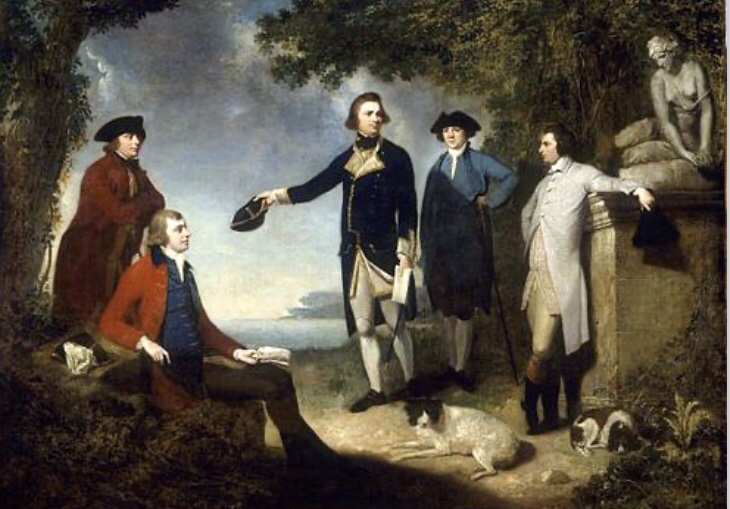
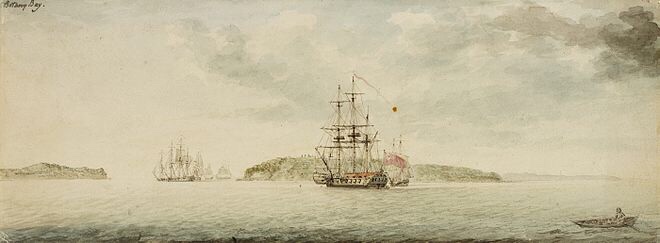
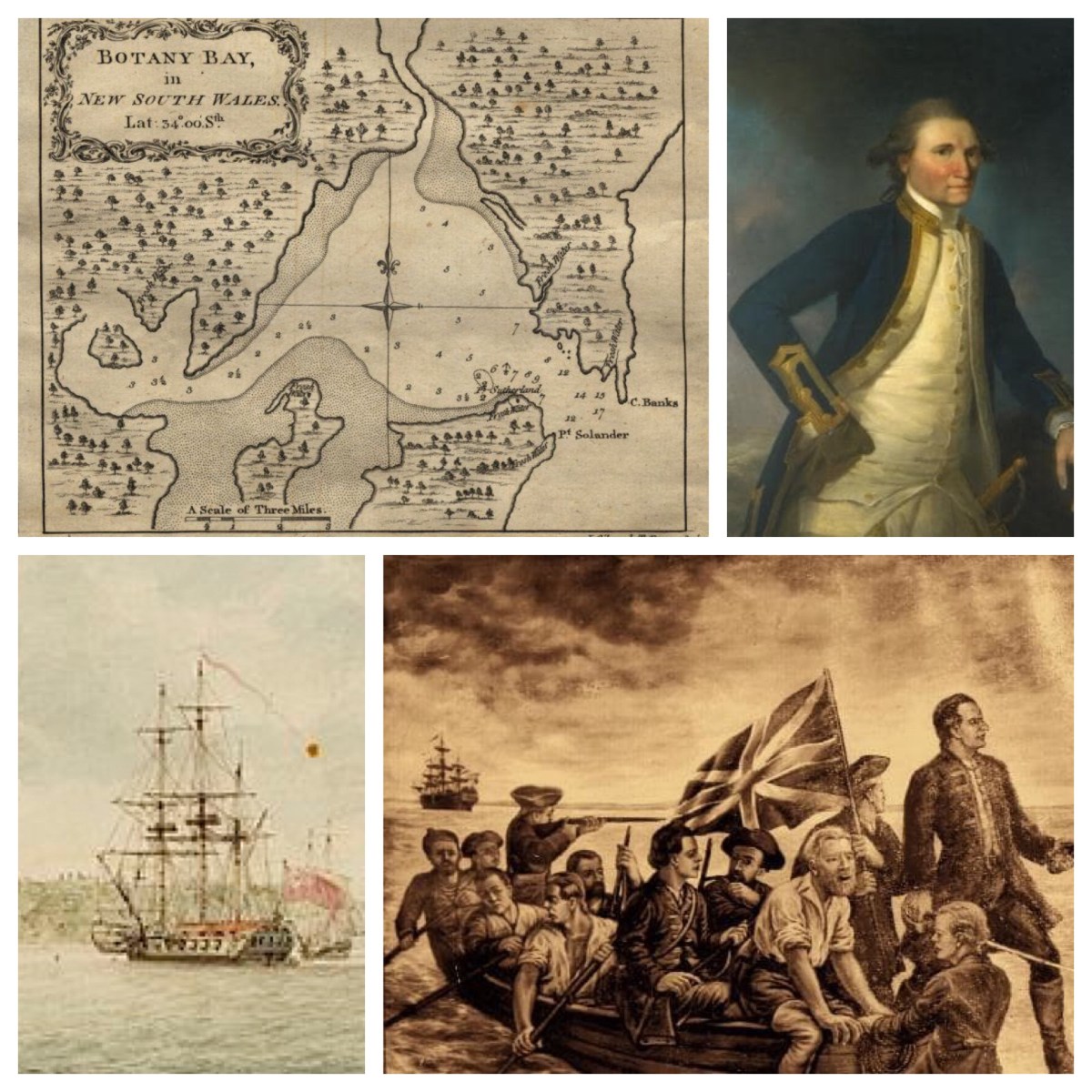
On this day, 250 years ago, as the HMS Endeavour sailed up the east coast of Terra Australis Incognita, the captain of the ship, Lieutenant James Cook, wrote a significant comment in his journal. Cook was looking out across the sea to the land on which the sailors were yet to set foot—the land on which indigenous inhabitants had lived, slept, married, grown crops, caught fish, died and were buried, for centuries—for millennia. He described some people whom he saw on the land he was observing.

Cook had given a description of the land, itself, which he was able to observe from on board his ship. On 20 April, he wrote in his journal: “The weather being clear gave us an oppertunity to View the Country which had a very agreeable and promising Aspect the land is of moderate height diversified with hills, ridges, planes and Vallies with some few small lawns, but for the most part the whole was cover’d with wood, the hills and ridges rise with a gentle slope, they are not high neither are there many off them.”

[Cook’s journaling was strikingly absent of punctuation—we take it as it is, and make sense of it as we will.]

And he had also described some of the animal and bird life he was able to observe. On 18 April, he wrote, “Last night we saw a Port Egmont Hen and this morning two more, a Pintado bird several Albetrosses and black sheer-waters. The first of these birds are certain signs of the nearness of land.”

But on 23 April, he made comments specifically about the people that he was able to see on that land. He wrote, “after this we steerd along shore NNE having a gentle breeze at SW and were so near the Shore as to distinguish several people upon the Sea beach they appear’d to be of a very dark or black Colour but whether this was the real colour of their skins or the C[l]othes they might have on I know not.”

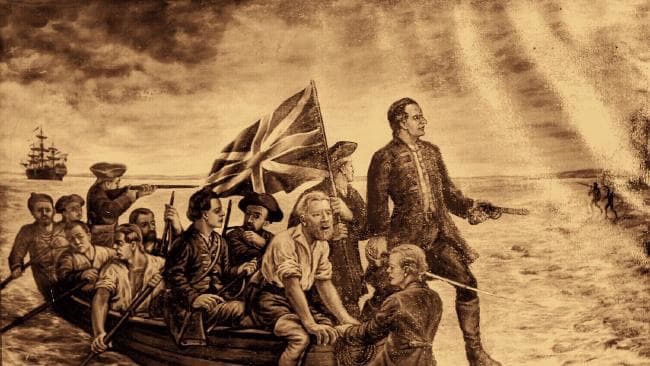
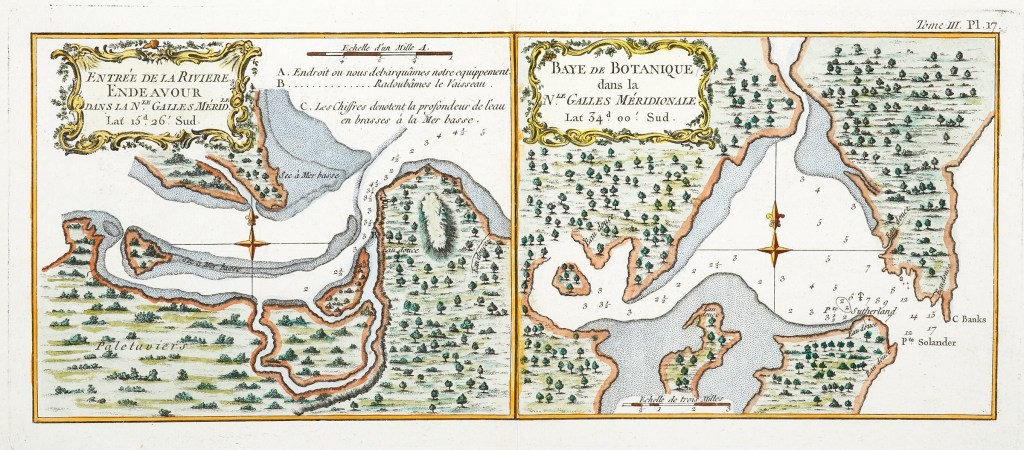
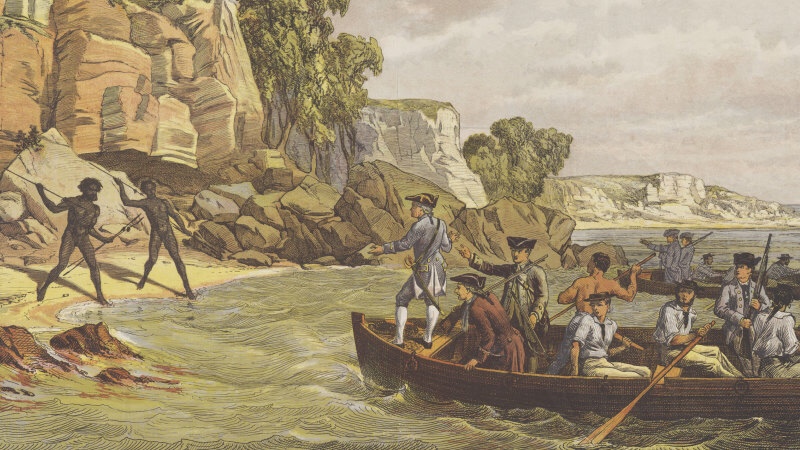
It would be almost another week before anyone from his ship actually set foot on the land that they had been sailing next to for some days. On Sunday 29 April, 1770, one of the sailors on board the HMS Endeavour, Isaac Smith, stepped off the ship and onto land beside what we now know as Botany Bay. Smith was the first British person to stand on the land of the east coast of the continent that we know now as Australia. (William Dampier, a British sailor of an earlier generation, had made landfall on the west of the continent back in 1688).

The relationships between the white explorers and the dark indigenous inhabitants would build and grow and become complex, over time—and be marked by numerous occasions of great tragedy, violence, misunderstanding, and sadness. For the moment, at this first sighting, Cook simply observes and describes.

We know the place where Smith and others made landfall as Kurnell, of Botany Bay, in New South Wales, on the continent Australia. What was it called by the indigenous inhabitants at the time when Smith, Cook, and other crew members from the HMS Endeavour, set foot there?

One hypothesis is that the name Kurnell derives from a Dharug word, variously transcribed as cunthal, kundle, or koondool, perhaps meaning “place of or where the wild carrot grows”. This was the suggestion made by W. Wentworth Bucknell, Honorary Secretary of the Royal Anthropological Society, in a letter published in the Sydney Morning Herald on 6 December 1912 (see https://trove.nla.gov.au/newspaper/article/15381124)

An alternative explanation is that it is a corruption of the surname of John Connell, who was granted land in the area in 1821. We cannot be certain about the precise of origin of this place’s name.

The issue of place names is a significant one. The indigenous inhabitants knew their country; their relationship with the land was, quite clearly, enmeshed with their culture, spirituality, lifestyle, and sense of identity. When white explorers sailed into their territory—and then, later on, when white settlers invaded and colonised the land, subdued and massacred the people, and established their own patterns of farming and living on the land of these indigenous inhabitants—they provided their own names, from their own culture.

Whilst many place names today can claim Aboriginal origins, still the vast majority of our places, suburbs, streets, and geographical features, bear names from the British (or Irish, or German, in some instances) who invaded, settled, and dominated the land. (The process of bestowing names goes by the term toponymy, from the two Greek terms topos, place, and onoma, name.)

Cook’s own journal provides numerous instances of his naming features that he observed from his ship, and bestowing British names on what he saw. On 19 April he called one location Point Hicks. This was the first land on mainland Australia which Cook sighted, and named.

It is said that Cook’s practice was to reward the first person to sight land with a gallon of rum, plus the distinction of having a place named after him. On this occasion, the prize fell to Lieutenant Zachary Hicks, who called out “Land ho” when he saw “land making high” in the hinterland of Australia’s south coast.

The traditional custodians of the land surrounding Point Hicks are the Bidhawal and Gunaikurnai peoples, who called the point Tolywiarar. That name is lost, now, in modern Australian toponymy.

The next day, 20 April, Cook’s journal records his comments about a place that he named Cape Howe, in honour of Admiral Earl Howe, the Treasurer of the British Navy at that time. I haven’t been able to find any reference to the indigenous name for this location. [My googling skills obviously leave something to be desired.]

On the following days, Cook noted and named many places along the south coast: Mount Dromedary and Cape Dromedary on 21 April, Batemans Bay and Pigeonhouse Mountain on 22 April, Cape St George, named for the day it was first sighted by Cook, on 23 April, and Long Nose Bay and Red Point on 25 April.

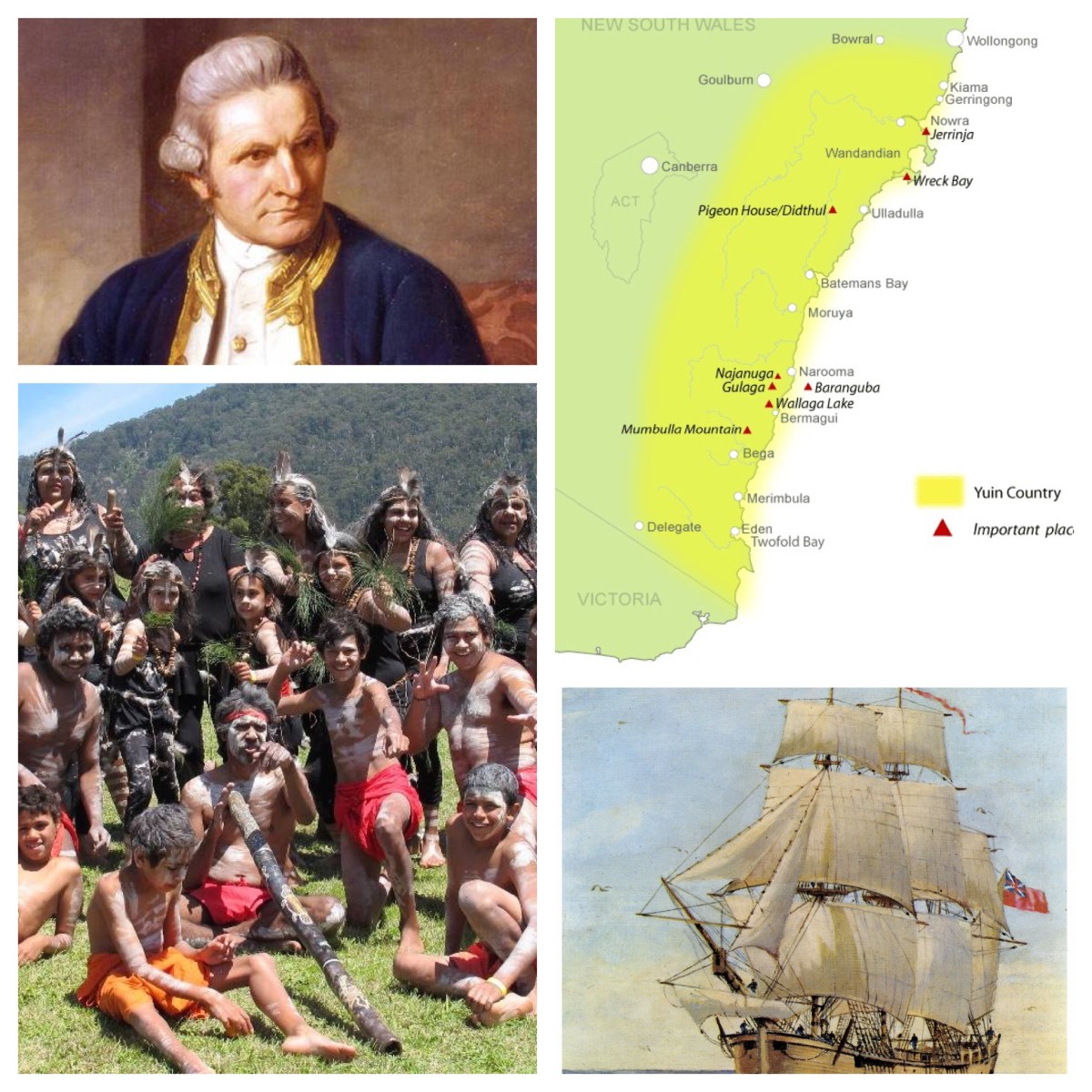
Gulaga is the place of ancestral origin within the culture and stories of the Yuin people, whose land encompasses the south coast of NSW, from Cape Howe to the Shoalhaven River. Gulaga is a large mountain inland from the current village of Tilba Tilba (between Narooma and Bermagui). In Yuin story-telling, holds particular significance for the Yuin people. The mountain and surrounding area is seen as a place of cultural origin. The mountain is regarded as a symbolic mother-figure providing the basis for the people’s spiritual identity.

In May 2006 the Gulaga National Park, incorporating the former Wallaga Lake National Park, was handed back to its traditional Aboriginal owners, the Yuin people, in a historic agreement signed by the NSW Government and the Yuin people. Gulaga, of course, was the mountain which Cook named as Mount Dromedary, as its figure reminded him of the hump of a camel.

In his journal for 22 April, Cook wrote: “At 6 o’clock we were abreast of a pretty high mountain laying near the shore which on account of its figure I named Mount Dromedary Latde 36°..18′ & Longde 209°..55′ Wt / The shore under the foot of this Mountain forms a point which I have named Cape Dromedary over which is a peaked hillick.“

The traditional custodians of the land surrounding Batemans Bay are the Walbunja clan of the Yuin people. The traditional language spoken by the Walbunja people is Dhurga. A number of sites in the region are considered culturally significant to the Aboriginal peoples.

On 22 April 1770, Cook first sighted this bay; he immediately gave it a British name. Cook gave no reason for the name, which may commemorate either Nathaniel Bateman, the captain of HMS Northumberland when Cook was serving as her master (1760-62), or John Bateman, 2nd Viscount Bateman, a former Lord Commissioner of the Admiralty in the 1750s.

Further south, there are a number of locations which are considered to be significant sites for the Yuin people: Umbarra (Merriman Island), Barungba (Montague Island), and Dithol (Pigeon House Mountain).

Pigeonhouse Mountain was first seen by Cook at 7 a.m. on 21 April, 1770. Cook later noted in his journal, “The land near the Sea coast still continues of a moderate hieght forming alternatly rocky points and Sandy beaches, but inland between Mount Dromedary and the Pigeon house are several pretty high Mountains two only of which we saw but what were coverd with trees and these lay inland behind near to the Pigeon house and are remarkably flat atop with steep rocky clifts all round them as far as we could see – the trees in this Country hath all the appearence of being stout and lofty.”

The Aboriginal name for the mountain is Didthul, Didhol, or Dithol, which means “woman’s breast”, on account of the distinctive shape of the mountain.

Cape St George was named for the day it was discovered—St George being the patron saint of England whose saints day is 23 April. On 24 April his journal includes the comments, “A point of land which I named Cape St George we having discover’d it on that Saints day, bore West distant 19 Miles and the Pigeon house So 75° West, the Latitude and Longitude of which I found to be 35°..19′ S and 209° 42′ West.” I have not been able to find any reference to the indigenous name for the area.

The next day, Cook recorded, “About 2 leagues to the northward of Cape St George the Shore seems to form a bay which appeard to be shelterd from the NE winds but as we had the wind it was not in my power to look into it… The north point of this bay on account of its figure I named Long Nose, Latitude 35 degrees 4 minutes S.3.” Long Nose Bay is obviously named for its appearance. Again, I can’t see any indication of what the indigenous name for this place was.

There are other names in the localities which Cook was observing, which today bear names derived from the local indigenous language. In what follows, I am drawing from the notes provided by the NSW Government Geographic Names Board (see https://www.gnb.nsw.gov.au/place_naming/place_name_search) as well as various local history or tourism sites, which provide insight into local understandings of the origins of the names of these places.

The list below traces indigenous names in existence today from Batemans Bay south to Eden, retracing in reverse the path of Cook’s 1770 voyage. (I have focussed on this region because it is the area of the South Coast which falls within the Presbytery in which I am currently ministering, the Canberra Region Presbytery.)

Eurobodalla is said to be named from an Aboriginal word meaning “small haven for boats” or “land between waters”. Several meanings have been put forward for the name Bodalla, including “Boat Alley”, “tossing a child up in the arms”, “haven for boats” and “several waters”.

The name Moruya is said to be derived from an Aboriginal word, (phonetically) mherroyah, meaning “home of the black swan”. Black swans can still be seen in the lakes and rivers around Moruya, and the black swan is used locally as an emblem.

In Narooma, the story is that this name comes from an Aboriginal word for ‘clear, blue water’. It was to become the name of the area after Francis Hunt sold his property known as “Wagonga” in 1839 to Thomas Forster who renamed it Noorooma. Yuin Elder Gubbo Ted Thomas advises, however, that Noorawa is the Yuin word for the bubble yellow seaweed that grows in the inlet.

Bermagui is derived from a word in the Dyirringany language (a language group within the Yuin nation), permageua, possibly meaning ‘canoe with paddles’. Tilba Tilba is the original name of the district, and is said to be a word from Tharwa (another language group within the Yuin nation) meaning “many waters”. Cobargo may have originated from a Yuin word, cubago, which some sources claim was used to describe the nearby mountain, Gulaga. Quaama is a Yuin word meaning “shallow waters”.

One claim is that the name Bega is derived from a Yuin word meaning “big camping ground”. Another claim is that it is a corruption of the word bika, meaning “beautiful”. Just outside Bega, there is a village called Tarraganda. The story locally is that a man named Joshua Higgs claims to be the one who named Tarraganda. Many years ago, Higgs told W F Braine of the Bega Gazette that “we asked the blacks what they called the spot and, in their quick way, they said what I took to be Tarraganda”. It is said to mean “a string of waterholes”.

There is considerable debate about the Aboriginal (presumably Yuin) meaning of Merimbula. Some sources claim it means “big snake”. Others claim the word means “place of two waters or lakes”. The name Pambula is derived from a Dharwa word panboola, meaning “twin waters”.

It is good that we have many names that honour the names given to these places by the indigenous peoples, who for so long have cared for these lands. It is also good that we can delve below the British names in at least some locations, to recover and recall the indigenous names for these places.

There’s lots of detail about Cook, the Endeavour, and his voyages, at https://www.captaincooksociety.com/home

For information about Yuin country, see https://livingknowledge.anu.edu.au/learningsites/kooricoast/05_map.htm

https://aiatsis.gov.au/exhibitions/south-coast-new-south-wales

https://earthtreasurevase.org/2018/10/south-east-coast-yuin-country-australia/

http://bermaguihistoricalsociety.org.au/djiringanj-yuin-nation/

For more thoughts on indigenous history, see my previous blogs at:

On the Day of Mourning, https://johntsquires.wordpress.com/2019/01/16/the-profound-effect-of-invasion-and-colonisations/

On Arthur Philip, https://johntsquires.wordpress.com/2019/01/18/endeavour-by-every-possible-means-to-conciliate-their-affections/

On James Cook, https://johntsquires.wordpress.com/2019/01/20/we-never-saw-one-inch-of-cultivated-land-in-the-whole-country/

On William Dampier, https://johntsquires.wordpress.com/2019/01/22/they-stood-like-statues-without-motion-but-grinnd-like-so-many-monkies/

On recent books, https://johntsquires.wordpress.com/2019/01/24/resembling-the-park-lands-of-a-gentlemans-residence-in-england/

On Cook and Flinders, https://johntsquires.com/2019/01/25/on-remembering-cook-and-flinders-and-trim-bungaree-and-yemmerrawanne/

This is the proper way: no climbing

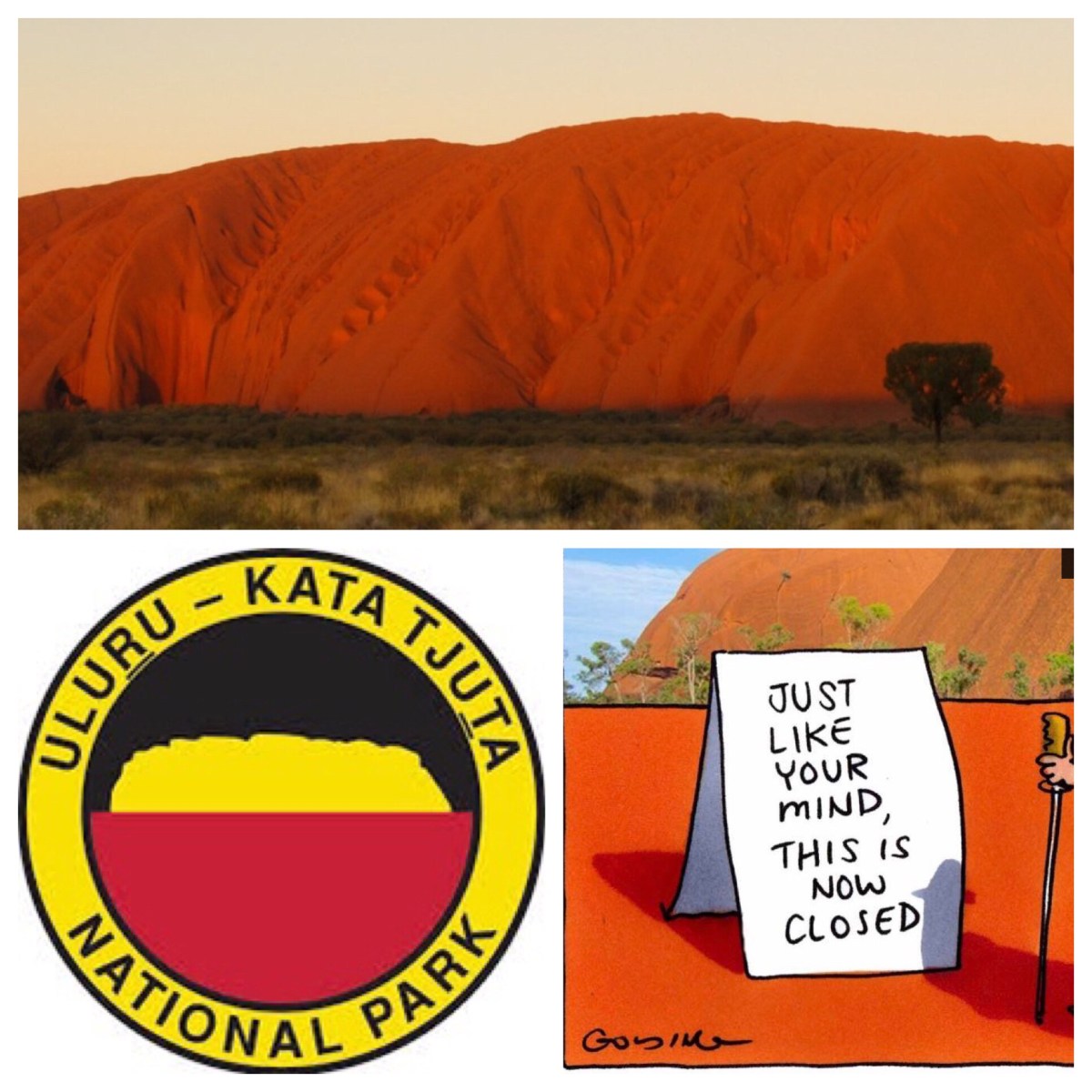
34 years ago today, on 26 October 1985, Uluru was handed back to the Anangu peoples, the Traditional Custodians. On that day, the Governor-General, Sir Ninian Stephen, ceremonially handed over title for the Uluru-Kata Tjuta National Park to the Anangu peoples.

Now, 34 years later, as from today, 26 October 2019, Uluru will no longer be able to be climbed. The Anangu peoples have for a long time, decades even, asked visitors not to climb this sacred place. Now, that has come to be.

It is believed the first European explorer to climb Uluru was an Englishman, William Christie Gosse, in 1873. However, as there are no specific records for this, the first climb actually recorded climb was in 1936, with the introduction of tourism to the region.

Since the 1950s when records were first kept, there have been a total of 37 fatalities on the treacherous climb. The most recent fatality was on 4 July 2018, when a 76 year old Japanese tourist collapsed when he was attempting to ascend one of the steepest parts of the climb. There hadn’t been a death on the Uluru climb before this since 2010, when a 54-year old Victorian man collapsed while attempting to reach the top.

In 1966, after two fatalities occurred in 1964, a chain was installed along a portion of the climb, without consultation or consent from the Traditional Owners. The chain was upgraded and ultimately completed in 1976. What will happen with the chain, posts and landmark cairn installed on top of Uluru after the closure of the climb is yet to be determined.

(I obtained this information from https://www.ayersrockresort.com.au/uluru-and-kata-tjuta/uluru-and-kata-tjuta-national-park/can-i-climb-uluru)

The First People of the area are the Yankunytjatjara and Pitjantjatjara people, the traditional landowners of Uluru-Kata Tjuta National Park. In their language, they call themselves Anangu. The landscape of the region is closely related to a series of stories from their heritage. What can be told in public about these stories can be found at https://parksaustralia.gov.au/uluru/discover/culture/stories/.

On the website of the Uluru-Kata Tjuta National Park, the Anangu people have said this about climbing Uluru:

We Anangu have a responsibility to teach and safeguard visitors to our land. The climb can be dangerous. Too many people have died while attempting to climb Uluru. Many others have been injured while climbing. We feel great sadness when a person dies or is hurt on our land. We worry about you and we worry about your family. Our traditional law teaches us the proper way to behave.

See https://parksaustralia.gov.au/uluru/discover/culture/uluru-climb/

And they offer these words, from Kunmanara, a traditional owner:

“That’s a really important sacred thing that you are climbing… You shouldn’t climb. It’s not the real thing about this place. And maybe that makes you a bit sad. But anyway that’s what we have to say. We are obliged by Tjukurpa to say. And all the tourists will brighten up and say, ‘Oh I see. This is the right way. This is the thing that’s right. This is the proper way: no climbing’.”

(Tjukurpa is the traditional law, stories and spirituality of the Anangu)

See https://parksaustralia.gov.au/uluru/discover/culture/uluru-climb/

Dark deeds in a sunny land: the exposé offered by John B. Gribble

I am currently reading an excellent work by Richard Broome, Professor of History at LaTrobe University in Melbourne. He is a much-published researcher in the area of Aboriginal history. The book, entitled Aboriginal Australians: a history since 1788, is comprehensive, providing many insights into the history of this country over the past 230 years, with many challenges in the narrative. I will be pondering much of what Broome writes as I work my way through the 400 pages of this book.

Today I read about a minister-missionary, of whom I was previously unaware. He was the Rev. John B. Gribble, who came originally from Cornwall in Britain, travelling as a one year old with his parents as they set out for a new life down under.

In October 1876, Gribble was admitted to the ministry of the United Free Methodist Church, but subsequently he joined the Congregational Union of Victoria and served as a home missionary. Apparently he had an encounter with the Kelly Gang during their heyday.

Over the years, Gribble worked with the Indigenous people, and in 1879 Gribble and his wife Mary opened the Warangesdah Aboriginal Mission at Darlington Point. The Bishop of the Church of England from Goulburn took on sponsorship of the mission, and then made Gribble a stipendiary reader in 1880, deacon in 1881 and priest in 1883.

In 1884, Gribble was invited by Bishop Henry Parry of Perth to work in Western Australia. He went to England, where he raised funds and published Black but Comely, a description of Aboriginal life in Australia. In 1885 he opened a mission on the Gascoyne River but was strongly opposed by settlers who exploited native labour.

In 1886, Gribble published Dark Deeds in a Sunny Land. This was a fierce castigation of his opponents; it created a furore and the welfare of the Aborigines was obscured by the fierce debate that ensued, which impacted the reputation of Gribble for some decades.

The booklet included an allegation that ‘quite sixty natives, men, women and children’ had been shot dead in one day in the Pilbara region. This exposé appears to have been one of the earliest, if not the earliest, public descriptions of what later became known as the Flying Foam massacre. The witness cited by Gribble, one David Carly, claimed to have seen ‘the skulls of fifteen who were shot’.

More information about the Flying Foam Massacre can be read at http://nationalunitygovernment.org/content/flying-foam-massacre-killing-fields-murujuga

I have read all of this information also in the Australian Dictionary of Biography (http://adb.anu.edu.au/biography/gribble-john-brown-3668). What this official biography does not mention—but Broome duly reports—is that Gribble’s license to preach was removed by his Bishop, and the Church later closed down the mission which he had started.

Gribble worked for a time as a labourer, sued the West Australian newspaper (but lost the case), then returned to the east and established another mission for Indigenous people in Queensland. Sadly, he died soon after this.

So much for the Church siding with the oppressed and standing for the Gospel!

The pictures show Gribble, the settlement at Warangesdah Aboriginal Mission, and relevant book covers.

See also

https://johntsquires.wordpress.com/2018/10/13/on-covenant-reconciliation-and-sovereignty/

https://johntsquires.wordpress.com/2018/10/13/on-covenant-reconciliation-and-sovereignty/

https://johntsquires.com/2019/01/16/the-profound-effect-of-invasion-and-colonisations/

https://johntsquires.com/2018/08/13/affirming-the-sovereignty-of-first-peoples-undoing-the-doctrine-of-discovery/

International Day of the World’s Indigenous Peoples

Today, 9 August, has been designated since 1982 by the United Nations as International Day of the World’s Indigenous Peoples. This year’s observance is dedicated to Indigenous Peoples’ Languages, since 2019 is being marked as the International Year of Indigenous Languages.

A person’s right to use his or her chosen language is a prerequisite for freedom of thought, opinion and expression, access to education and information, employment, building inclusive societies, and other values enshrined in the Universal Declaration of Human Rights. 

Many of us take it for granted that we can conduct our lives in our home languages without any constraints or prejudice. But this is not the case for everyone. Of the almost 7,000 existing languages, the majority have been created and are spoken by indigenous peoples who represent the greater part of the world’s cultural diversity. 

Yet many of these languages are disappearing at an alarming rate, as the communities speaking them are confronted with assimilation, enforced relocation, educational disadvantage, poverty, illiteracy, migration and other forms of discrimination and human rights.

It is estimated that, every 2 weeks, an indigenous language disappears, placing at risk the respective indigenous cultures and knowledge systems. That is why, on this International Day, the goal is to draw attention to the critical loss of indigenous languages and the urgent need to preserve, revitalize and promote them at both national and international levels.

It is believed that there were more than 250 Indigenous Australian languages, as well as 800 local dialectal varieties, which were spoken on the continent of Australia at the time of European settlement in 1788. Today, only 13 of those traditional Indigenous languages are still acquired by children. Approximately another hundred or so are spoken to various degrees by older generations, with many of these languages at risk as Elders pass away.

A map indicative of the language groups across the continent (in the image above) was created in 1994 to illustrate the diversity of Indigenous cultures across the continent. It includes many language groups but is not definitive in this regard; it provides a visual representation of that cultural diversity. The map was developed along with the Encyclopedia of Aboriginal Australia as part of a national research project. The Encyclopedia is available in libraries and contains more detailed information about the groups represented on the map.

Today Aboriginal and Torres Strait Islander people across Australia are speaking out about the need to maintain, preserve and strengthen Indigenous Australian languages. There is currently a wave of activity, with people in many communities working to learn more about their languages, and to ensure they are passed on to the next generation.

An important resource for the preservation and revival of Aboriginal and Torres Strait Islander languages is the Australian Indigenous Languages Collection maintained by AIATSIS. The collection brings together over 4500 items such as children’s’ readers, bible translations, dictionaries, grammars, vocabularies, works of imagination and learning kits in 200 languages. The collection’s significance was recognised in 2009 when it was added to the UNESCO Australian Memory of the World Register.

Approximately 20 dictionaries of Australian Indigenous languages are being supported through the end of production cycle. This includes what will become an iconic Warlpiri encyclopedic dictionary, based on 60 years of research by teams of speakers and linguists, to support language maintenance in that community, and a facsimile edition of The Sydney Language (1993), to support language awareness and revival of the language which the First Fleet first encountered in 1788.

In 2016, then Prime Minister Malcom Turnbull made history by being the first Prime Minister to speak an Australian Indigenous language in a parliamentary speech. He gave an acknowledgment of country in Ngunawal for the annual Closing the Gap speech. The acknowledgment was written by Ngunawal men Tyronne Bell and Glen Freeman, with assistance from AIATSIS linguist Doug Marmion. This is particularly significant as the Ngunawal language has not been spoken fluently for almost a century, but AIATSIS has been working with the Ngunawal community for several years to revitalise it.

****

I have taken the above information from these websites:

https://www.un.org/en/events/indigenousday/

https://en.iyil2019.org/international-day-of-the-worlds-indigenous-peoples-9-august-2019/

https://en.iyil2019.org/role-of-language/

https://en.iyil2019.org

https://aiatsis.gov.au/explore/articles/indigenous-australian-languages

https://aiatsis.gov.au/collections/about-collection/languages

https://aiatsis.gov.au/explore/articles/aiatsis-map-indigenous-australia

https://aiatsis.gov.au/news-and-events/blog/indigenous-languages-australian-parliaments

https://aiatsis.gov.au

https://www.researchgate.net/publication/330293198_The_Encyclopaedia_of_Aboriginal_Australia

https://australianarchaeologicalassociation.com.au/journal/review-of-encyclopaedia-of-aboriginal-australia-aboriginal-and-torres-strait-islander-history-society-and-culture-edited-by-d-horton/

The DNA of the UCA (part II)

Two years ago, for the fortieth anniversary of the formation of the Uniting Church in Australia, I prepared a resource exploring the key characteristics of this church. This week, for the 52nd anniversary, I am reposting those thoughts. Here is a second set of five key characteristics.

VI A very important dimension to being the church in this country is that we are a church in Covenant with the First Peoples of Australia. From its earliest years, the Uniting Church has been involved in actions which express our solidarity with the Aboriginal and Torres Strait Islander peoples. Older members will recall events at Noonkanbah Station in the Kimberley in 1980, when Uniting Church members stood in solidarity with the traditional owners, the Yungngora people, against the mining of their land.

The Uniting Aboriginal and Islander Christian Congress (UAICC) was established in 1985, and a Covenant between the UAICC and the UCA was implemented in 1994. This Covenant recognises that working for reconciliation amongst people is central to the Gospel.

In 2009, the Preamble to the UCA Constitution was revised to recognise the difficult history of relationships between the First Peoples and the later arrivals, as Second Peoples. Our present relationship is one which seeks to ensure that we commit to the destiny together which we share as Australians.

VII In the same year that the Congress was formed, the Uniting Church declared that it is a multicultural church, which rejoices in the diversity of cultures and languages which are found across Australia. The Basis of Union recognises that we share much, as Australians, with people of Asia and the Pacific. The Uniting Church has maintained strong relationships with churches from these regions, as well forging new links with churches in Africa and the Middle East.

The Statement to the Nation, issued in 1977, acknowledged that the Uniting Church seeks a unity that transcends cultural, economic and racial distinctions. Within Australia, there are currently 12 national conferences based on regional groupings and people from 193 language groups who belong to the Uniting Church.

Each Sunday, worship takes place in Uniting Churches in 26 different languages, not including the many indigenous languages used in worship by first peoples across our church.

Through UnitingWorld, we maintain partnerships with churches in Asia, the Pacific, Africa and the Middle East. We are truly a multicultural church. Through the Relations with Other Faiths Working Group, the Uniting Church has been active in developing relationships with other faith communities. We are firmly committed to constructive interfaith relations.

VIII Over 40 years, the Uniting Church has shown that it is a church which is prepared to engage in difficult discussions about contentious issues. Our Basis of Union commits us to learn from the insights of contemporary scientific and historical studies, and affirms that we remain open to correction by God in the way we order our life together.

In the early years of the Uniting Church, debates about Baptism were the focus of great controversy. Infant baptism had been an integral part of the worship practices of each denomination which joined the Uniting Church, but Ministers and Elders Councils were receiving regular requests for baptism by adults who had been baptised as infants but had come to a personal faith later in their lives. After debates stretching through the 1980s and 1990s, the Uniting Church has developed a clear set of protocols to cover such requests.

Another area of enduring controversy has been that of human sexuality. There is a wide diversity of opinion within society relating to such matters, and this diversity is present within the Uniting Church. Once again, from the 1980s though into the present era, lively debates regarding human sexuality have taken place in the various councils of the church. In dealing with such issues, we have learned how to debate with respect and integrity with ongoing conversations looking to employ a “Space for Grace” process to encourage respectful, empowering, and inclusive decision-making. Let us hope that this trait stays firmly embedded in the DNA of the UCA.

IX The Uniting Church inherited from its predecessor Churches a strong commitment to advocating for justice for all. Many Uniting Church congregations and members are actively committed to serving those people who find themselves on the margins of society. This commitment was clearly articulated in the 1977 Statement to the Nation and it has been evident in many actions undertaken by Uniting Church members over the decades.

The Uniting Church has joined in common cause with other groups and organisations in society, in advocating for a welcoming attitude towards refugees; in lobbying for a fair and just system of caring for people who are experiencing poverty and homelessness; in seeking equity for workers in their workplace; and in many other issues.

A regular stream of policy documents and public resolutions point to a clear and unbroken commitment to seeking justice for all.

X In like manner, the Uniting Church has always been a church which honours the environment and supports a sustainable lifestyle.

Although such matters are firmly on the radar of the public now, they have long been integral to the DNA of the UCA. Once again, the 1977 Statement to the Nation flagged such commitment. A series of subsequent documents attest to the ongoing determination of the church to live responsibly, in such a way that we minimise the damage we cause to the environment in which we live.

Our partnerships with Churches in the Pacific have intensified our awareness of the negative impacts that are resulting from climate change. We know that we need to act now, to reduce the threat.

So, many congregations and individual members of the UCA are seeking to implement practices that will reduce their carbon footprint on the planet. We know that we owe it to future generations, to live responsibly in the present.

For the first five key characteristics, see https://johntsquires.com/2019/06/18/the-dna-of-the-uca-part-i/

So: these are ten strands to our DNA, as far as my thinking is concerned. What about you?

Would you add anything? Take anything away?

What do you think are the essential aspects of our UCA DNA?

See also https://johntsquires.com/2018/08/15/what-i-really-like-about-the-basis-of-union/

https://johntsquires.com/2018/08/20/alongside-the-basis-of-union-there-was-the-statement-to-the-nation/

Reconciliation on the land of Australia: living together with respect

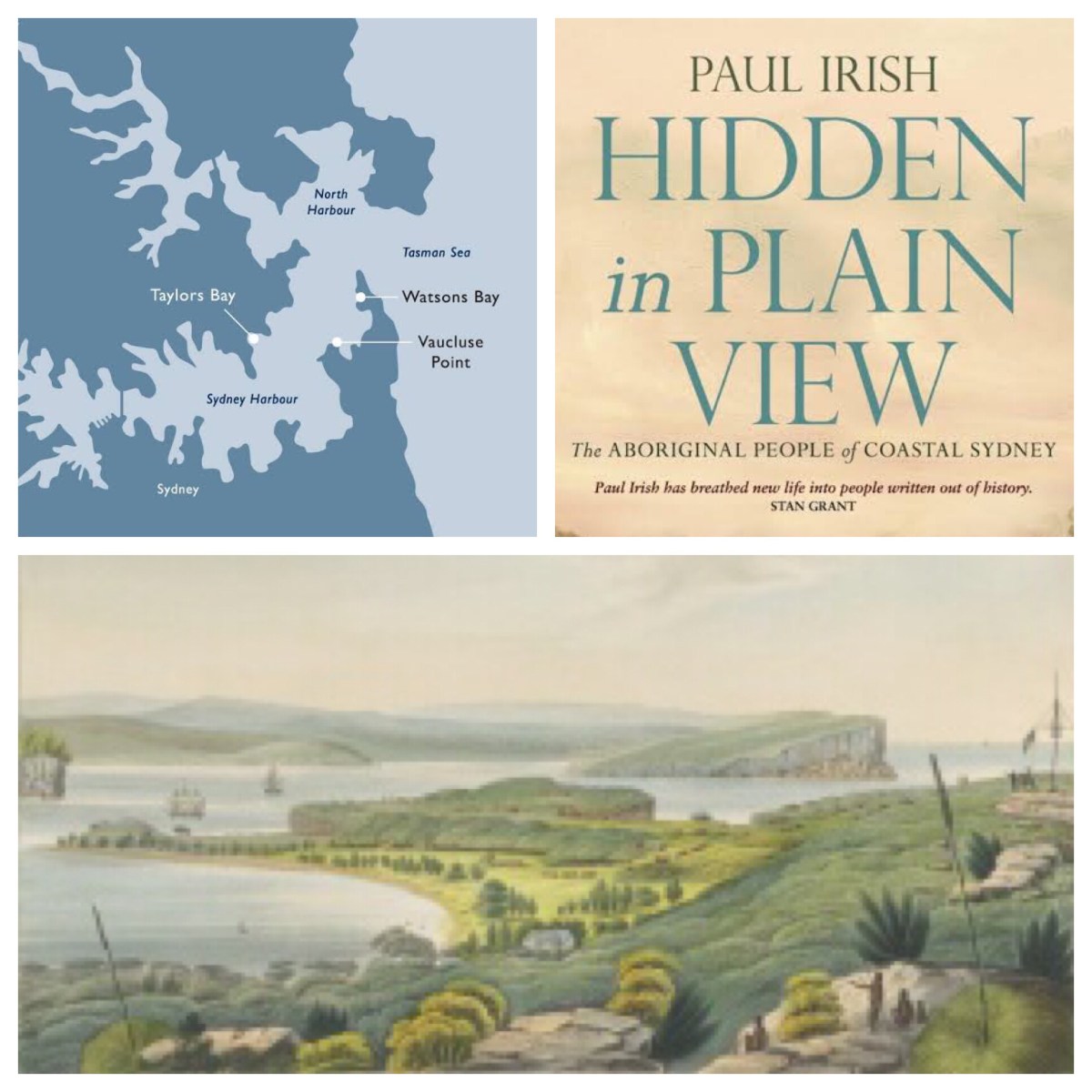
In his book Hidden in Plain View, Paul Irish has found many records that demonstrate the positive relationships between the colonisers and Indigenous people at various locations in the coastal Sydney region.

One story concerns the area in Sydney Harbour known today as Watsons Bay.

The original inhabitants of the area that is now known as Watsons Bay, were the Gadigal people. The Gadigal referred to the area as Kutti. This indigenous group of people fished and collected shellfish in the waters and bays off South Head. They acquired their resources from Camp Cove and carved rock engravings there, although many have since eroded from the cliff faces and rock surfaces that line the coastline.

Watsons Bay was named after Robert Watson (1756–1819), who had arrived with the First Fleet as quartermaster of H.M.S. Sirius. After some years at Norfolk Island, Watson was given a land grant at South Head. When the lighthouse at South Head was finished, Watson was installed as its first superintendent in November 1818.

In the early decades of the colony, there was a group of Aborigines which used Camp Cove as their base for fishing. They co-existed with the whites who began settling in the area. Later events would challenge, and then unravel, this positive relationship. There is a lot of tragedy and much sadness in the relationships between First Peoples and the colonisers, in the ensuing decades. But perhaps we need to look back to those early positive, respectful relationships, as the model for our lives today?

See also

http://home.dictionaryofsydney.org/paul-irish-hidden-in-plain-view-the-aboriginal-people-of-coastal-sydney/

https://johntsquires.com/2019/05/27/we-are-sorry-we-recognise-your-rights-we-seek-to-be-reconciled/

https://johntsquires.com/2019/05/28/reconciliation-on-the-land-of-australia-learning-from-the-past/

https://johntsquires.com/2019/05/29/reconciliation-on-the-land-of-australia-bennelong-and-yemmerrawanne/

https://johntsquires.com/2019/05/30/reconciliation-on-the-land-of-australia-bungaree-and-mahroot/

https://johntsquires.com/2019/05/31/reconciliation-on-the-land-of-australia-cora-gooseberry-and-biddy-giles/

https://johntsquires.com/2019/06/01/reconciliation-on-the-land-of-australia-these-are-my-people-this-is-my-land/

On the doctrine of discovery: https://johntsquires.com/2018/08/13/affirming-the-sovereignty-of-first-peoples-undoing-the-doctrine-of-discovery/

On learning from the land:

https://johntsquires.com/2018/12/17/learning-of-the-land-1/

https://johntsquires.com/2018/12/18/learning-of-the-land-2-ngunnawal-namadgi-and-ngarigo/

https://johntsquires.com/2019/01/30/learning-of-the-land-3-tuggeranong-queanbeyan-and-other-canberra-place-names/

https://johntsquires.com/2019/02/08/learning-from-the-land-4-naiames-nghunnhu-fishtraps-at-brewarrina/

On difficulties and tragedies in the early relationships:

https://johntsquires.wordpress.com/2019/01/16/the-profound-effect-of-invasion-and-colonisations/

https://johntsquires.wordpress.com/2019/01/18/endeavour-by-every-possible-means-to-conciliate-their-affections/

https://johntsquires.wordpress.com/2019/01/20/we-never-saw-one-inch-of-cultivated-land-in-the-whole-country/

https://johntsquires.wordpress.com/2019/01/22/they-stood-like-statues-without-motion-but-grinnd-like-so-many-monkies/

https://johntsquires.wordpress.com/2019/01/24/resembling-the-park-lands-of-a-gentlemans-residence-in-england/

https://johntsquires.com/2019/01/26/they-are-to-be-hanged-up-on-trees-to-strike-the-survivors-with-the-greater-terror/#more-424

Reconciliation on the land of Australia: “these are my people … this is my land”.

During this National Reconciliation Week, I am recalling the evidence for various positive and respectful relationships that existed between First Peoples and the invading colonisers from Britain, drawing on the work of Paul Irish in his recent book, Hidden in Plain View. (See https://www.newsouthbooks.com.au/books/hidden-plain-view/)

Earlier this week, I mentioned Bungaree, an early Aboriginal leader. He is reported as living, at various times, at Broken Bay, Sydney Town, and the Hunter region. Paul Irish reports that his first wife was Matora (1770s-1820s) and his second wife was Cora Gooseberry (1770s-1852). Both women were from the Sydney Harbour area, and Cora became known as the “Queen” of coastal Sydney in her latter years.

I love Bungaree for his clear and forthright declaration, when he was part of an Indigenous group meeting with a group of sailors from Russia in 1820. In one such meeting, he apparently declared to them: “These are my people … this is my land”.

Right on!!!

(Irish cites this from a report by Glynn Barrett in “The Russians at Port Jackson 1814-1822”, published in 1981. Barrett’s work relates to Russian ships travelling from Europe to Alaska, which often stopped at Sydney, anchoring at Port Jackson. Naval Officers and Sailors had close dealings with the Aboriginal people of the area.)

Bungaree spoke truth. This was (and still is) the land of his people. But the colonial powers of Britain failed to listen and respond appropriately. During Reconciliation Week, we need to foster an attitude of respectful relationship and careful listening, as we engage with our Indigenous sisters and brothers.

See also

http://home.dictionaryofsydney.org/paul-irish-hidden-in-plain-view-the-aboriginal-people-of-coastal-sydney/

https://johntsquires.com/2019/05/27/we-are-sorry-we-recognise-your-rights-we-seek-to-be-reconciled/

https://johntsquires.com/2019/05/28/reconciliation-on-the-land-of-australia-learning-from-the-past/

https://johntsquires.com/2019/05/29/reconciliation-on-the-land-of-australia-bennelong-and-yemmerrawanne/

https://johntsquires.com/2019/05/30/reconciliation-on-the-land-of-australia-bungaree-and-mahroot/

https://johntsquires.com/2019/05/31/reconciliation-on-the-land-of-australia-cora-gooseberry-and-biddy-giles/

On the doctrine of discovery: https://johntsquires.com/2018/08/13/affirming-the-sovereignty-of-first-peoples-undoing-the-doctrine-of-discovery/

Reconciliation on the land of Australia: Cora Gooseberry and Biddy Giles

As well as known Aboriginal men who were leaders of their clans and figured in ongoing relationships with the British colonisers in the coastal Sydney area, there are Aboriginal women who are recorded in the early colonial records. Paul Irish recounts what is known about some of them, in his book “Hidden in Plain View”.

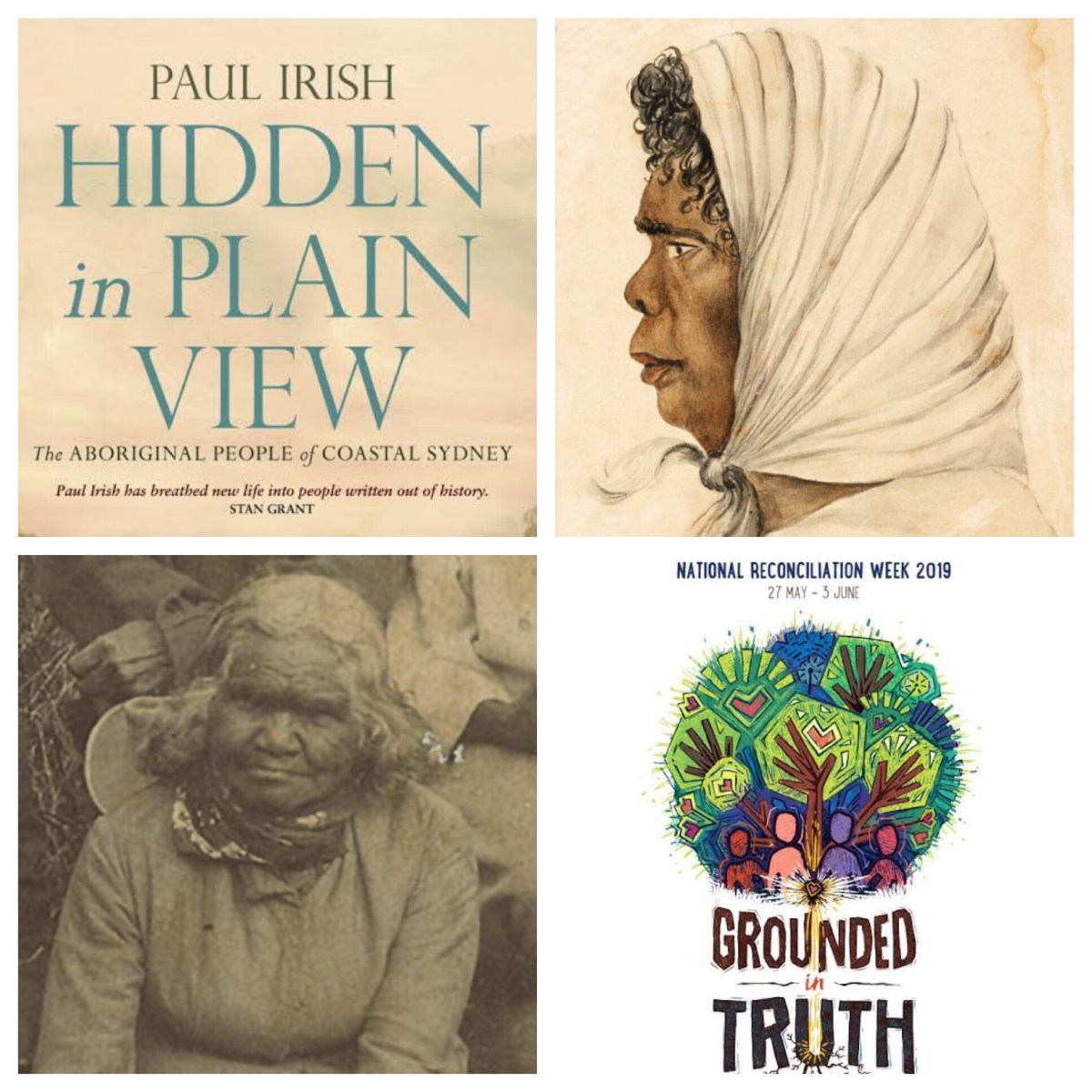
Cora Gooseberry was the widow of Bungaree (see https://johntsquires.com/2019/05/30/reconciliation-on-the-land-of-australia-bungaree-and-mahroot/). She was born around 1777 and lived until 1852. Cora was a well-known identity in the Sydney streets. Born as Carra or Kaaroo, she was the daughter of Moorooboora, leader of the Murro-Ore (Pathway Place) clan, named from muru (pathway) and Boora (Long Bay).

Irish reports that Gooseberry’s mob, including Ricketty Dick, Jacky Jacky and Bowen Bungaree, camped in the street outside Sydney hotels or in the Domain, where they engaged with the British invaders by giving exhibitions of boomerang throwing. In July 1845, in exchange for flour and tobacco, Cora Gooseberry took Angas and the police commissioner W.A. Miles on a tour of Aboriginal rock carvings at North Head and told them ‘all that she had heard her father say’ about the places where ‘dibble dibble walk about’, an inference that he had been a koradji from that region. (See http://adb.anu.edu.au/biography/gooseberry-cora-12942)

Biddy Giles, 1810 to 1888, lived first in the Illawarra, where she had two daughters to Burragalong, known as Paddy Davis. Davis lived with Biddy from 1850s on a farm at Mill Creek, off the George’s River. Biddy was skilled at fishing and hunting with a pack of dogs. Irish reports that she ran guided tours in the bush land near George’s River down to the Heathcote area, from the 1850s onwards, and then tours to whale engravings near Bundeena in 1860s and 1870s

About the time Paddy died around 1860, Biddy moved to the Georges River, with a new partner, an Englishman called Billy Giles. They lived on the western bank of Mill Creek, known to the Dharawal as Gurugurang, in a farmhouse built earlier by Dr Alexander Cuthill. They had fruit trees, goats and abundant bush tucker from the river and its banks. During the 1860s, Biddy and Billy acted as guides for groups of travellers in shooting or fishing parties, sharing their knowledge of the river and its wildlife, telling stories and sharing skills. These trips ranged from Mill Creek east all the way to the ocean and south into Dharawal country as far as the Shoalhaven.

Some of these travellers wrote accounts of their trips with Biddy, marvelling at her unfailing ability to find fish, her control of her hunting dogs and the skill with which she could rustle up a delicious meal from local produce. (See https://dictionaryofsydney.org/entry/giles_biddy)

Such women are fine models for us to ponder during this National Reconciliation Week.

(In the picture, Cora Gooseberry is top right, Biddy Giles is bottom left.)

See also

http://home.dictionaryofsydney.org/paul-irish-hidden-in-plain-view-the-aboriginal-people-of-coastal-sydney/

https://johntsquires.com/2019/05/27/we-are-sorry-we-recognise-your-rights-we-seek-to-be-reconciled/

https://johntsquires.com/2019/05/28/reconciliation-on-the-land-of-australia-learning-from-the-past/

https://johntsquires.com/2019/05/29/reconciliation-on-the-land-of-australia-bennelong-and-yemmerrawanne/

https://johntsquires.com/2019/05/30/reconciliation-on-the-land-of-australia-bungaree-and-mahroot/

On the doctrine of discovery: https://johntsquires.com/2018/08/13/affirming-the-sovereignty-of-first-peoples-undoing-the-doctrine-of-discovery/

Reconciliation on the land of Australia: Bungaree and Mahroot

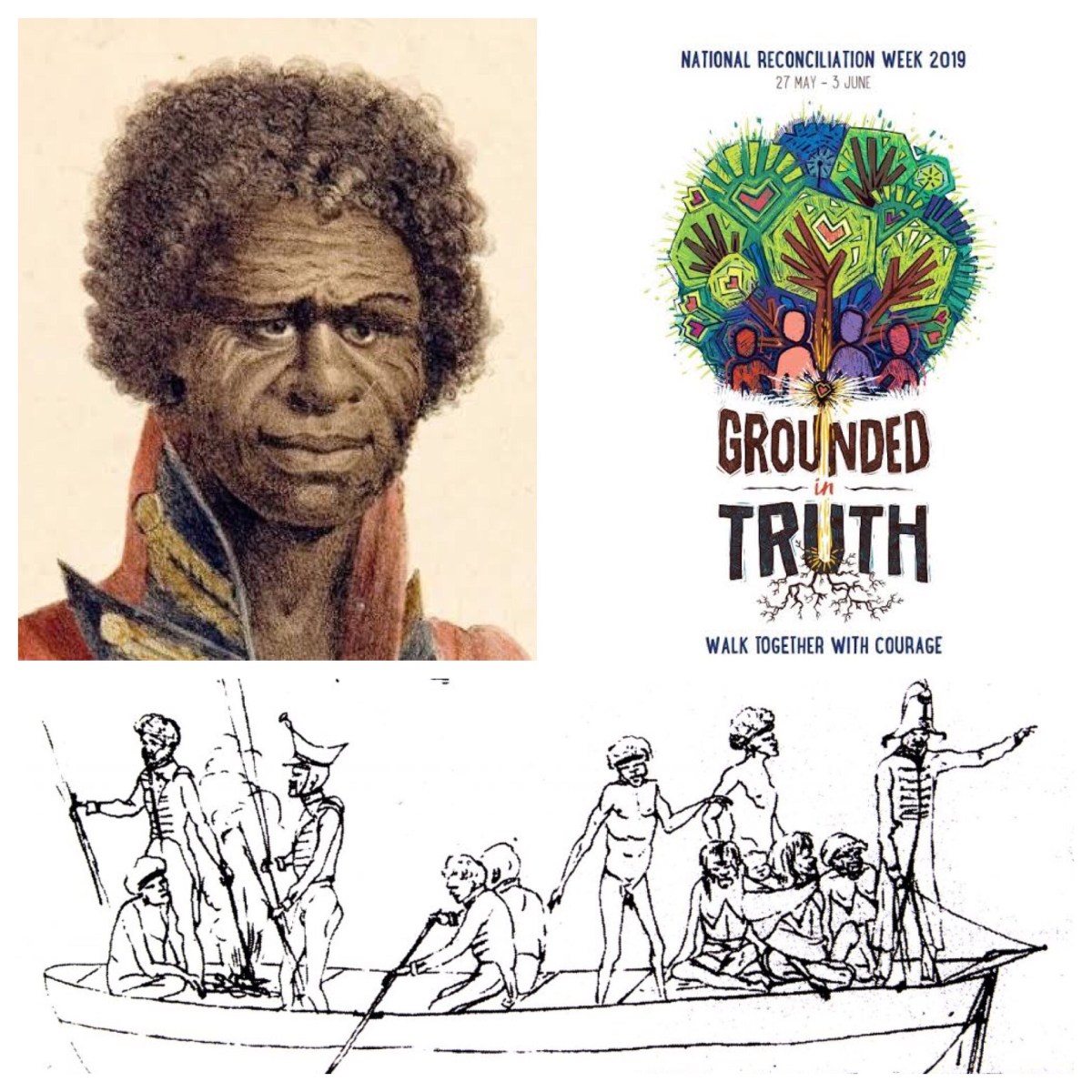
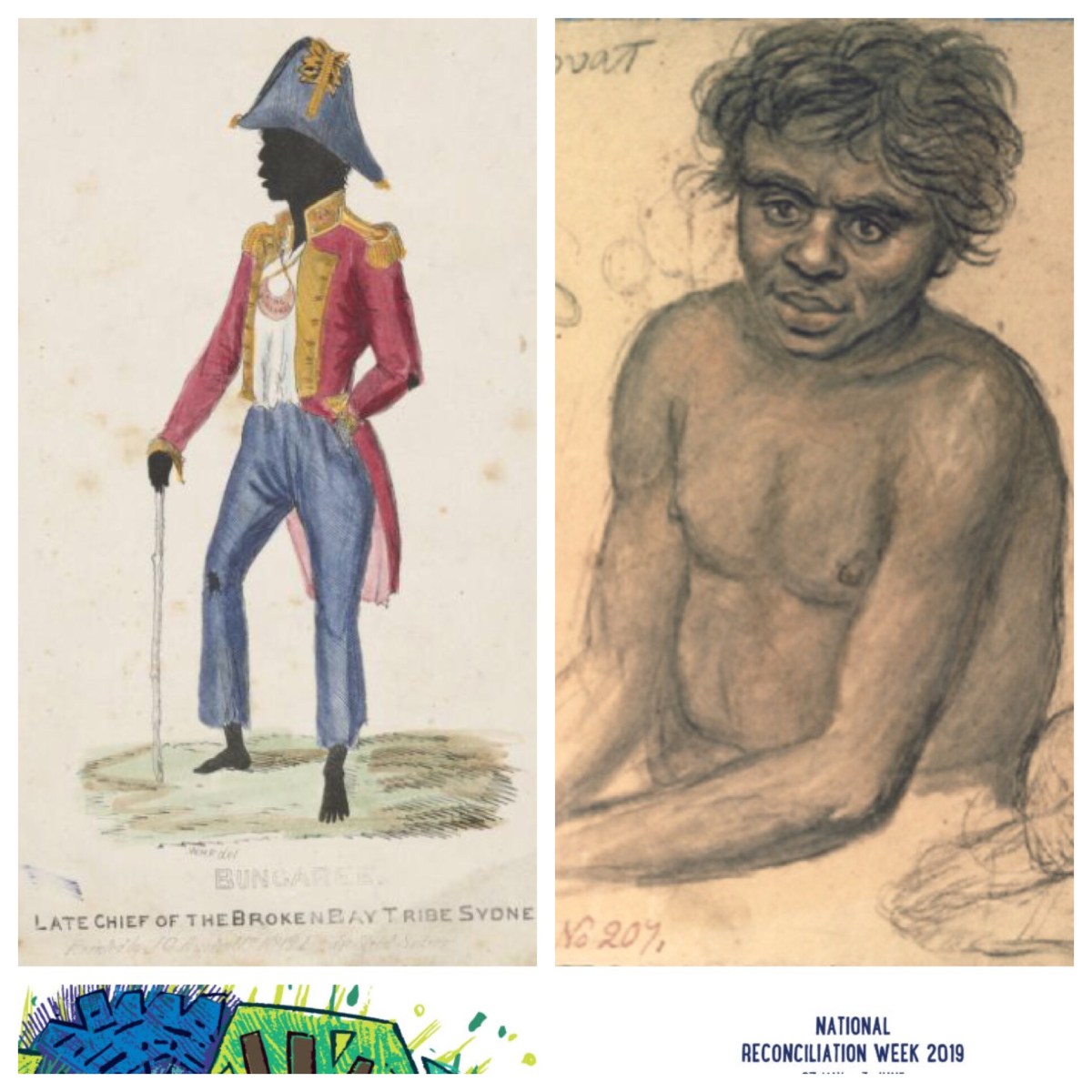
Paul Irish, in his recent book, “Hidden in Plain View”, introduces us to various Aboriginal people who are noted on a number of occasions in the early colonial records. One of them was Bungaree (1770s-1830), who came from the area we know as Broken Bay, at the northern end of “Coastal Sydney”.

Bungaree, or Boongarie, was born around the time that the First Fleet was being gathered together in preparation for the long trip to the Great South Land. As an adult, he adopted the role of a mediator between the invading British colonists and the Aboriginal people. He sailed in that capacity with Matthew Flinders, becoming the first Australian to circumnavigate the continent on that voyage of 1802–03.

It is said that, during this voyage, Bungaree used his knowledge of Aboriginal protocol to negotiate peaceful meetings with local Indigenous people. later, in A Voyage to Terra Australis, Matthew Flinders subsequently wrote that Bungaree’s ‘good disposition and open and manly conduct had attracted my esteem.’ (In A Voyage to Terra Australis)

In mid-life he found a patron in Governor Lachlan Macquarie, who made Bungaree ‘Chief of the Broken Bay Tribe’, set aside land and gave him a boat for fishing. In his later life Bungaree, while still respected as an Aboriginal leader, was regarded as the best-known character in the streets of Sydney.

Bungaree died in 1830. There is a substantial entry on him in the Dictionary of Sydney (https://dictionaryofsydney.org/entry/bungaree)

Another Aboriginal leader was Mahroot (1790s to 1850), who was also known as “Boatswain”. Mahroot lived with his wife at Botany (near the site of the Sir Joseph Banks Hotel), and it is recorded that he worked there as ferryman and guide in the 1840s. It is also claimed that several white people lived there, as his tenants. (https://dictionaryofsydney.org/person/boatswain_maroot)

Mahroot had regular and consistent engagement with whites in the colony; it is said that Mahroot and the British colonisers happily co-existed. He gave evidence to the Select Committee on the Condition of the Aborigines in 1845 where he spoke frankly about his life, his family, his Country and the impact on Indigenous people since 1788.

See also

http://home.dictionaryofsydney.org/paul-irish-hidden-in-plain-view-the-aboriginal-people-of-coastal-sydney/

https://johntsquires.com/2019/05/27/we-are-sorry-we-recognise-your-rights-we-seek-to-be-reconciled/

https://johntsquires.com/2019/05/28/reconciliation-on-the-land-of-australia-learning-from-the-past/

On the doctrine of discovery: https://johntsquires.com/2018/08/13/affirming-the-sovereignty-of-first-peoples-undoing-the-doctrine-of-discovery/

Reconciliation on the land of Australia: Bennelong and Yemmerrawanne

During this National Reconciliation Week, I think it is worth recalling the evidence for various positive and respectful relationships that existed between First Peoples and the invading colonisers from Britain. We are accustomed, now, to reading of the violent conflicts and massacres that occurred. These are tragic parts of our history that we must not deny, overlook, or ignore.

But in the early stages of the colony—and, indeed, stretching throughout the colonial period—there were mutually respectful relationships between these groups. National Reconciliation Week seems to be a good time to recall this.

Perhaps the best known persona from amongst the First Peoples encountered by the invading British coloniser was Bennelong, born in 1764 on the southern shore of the Parramatta River. Paul Irish (in Hidden in Plain View) notes that his various family connections meant that Bennelong had connections to country on Goat Island, at Botany Bay, on the lower north shore of Sydney Harbour, and along the northern side of Parramatta River.

Bennelong was kidnapped in November 1789, under the orders of Governor Arthur Phillip, who thereby set an unfortunate tone for the relationship with the locals from the very early years of the colony. Phillip apparently assumed that Bennelong was a “King” of the local people, and thus the correct person with whom to negotiate about co-existing in the same area. It was an attempt to build a constructive relationship, even if it was carried out in what we now recognise to be an entirely flawed manner.

It is said that Bennelong took readily to life among the white men, relished their food, acquired a taste for liquor, learned to speak English and became particularly attached to the Governor. At the end of his term as Governor in 1792, Arthur Phillip travelled to England with Bennelong and another Aborigine, Yemmerrawanne, a Wangal man of the Eora people.

Yemmerrawanne was described by Watkin Tench, in his work, A Complete Account of the Settlement at Port Jackson (1793), as a “good-tempered lively lad” who became “a great favourite with us, and almost constantly lived at the governor’s house”. (See https://dictionaryofsydney.org/entry/yemmerrawanne)

Yemmerrawanne never returned home from his trip to England. After a long illness, he died from a lung infection on 18 May 1794 at the home of Mr Edward Kent at South End, Eltham in the county of Kent. His gravestone in Kent marks his life, and death.

Bennelong stayed in England from 1792 to 1795. On his return to Sydney, he was able to develop more positive relationships with the British, and functioned as an advisor to Governor Hunter.

Bennelong lived his last years with one of his wives, Boorong, at Kissing Point, with an extended group of about 100 people, until his death on 3 January 1813. He was buried in the Kissing Point orchard of the brewer James Squire—no relationship! Squire had been a great friend to Bennelong and his clan; another sign of positive, respectful relationships between Aborigines and the colonisers. We need to learn from such stories in our history.

See the extensive article on Bennelong in the Australian Dictionary of Biography at http://adb.anu.edu.au/biography/bennelong-1769

The image portrays Bennelong, the grave of Yemmerrawanne, and the 2019 National Reconciliation Week logo and theme.

See also

http://home.dictionaryofsydney.org/paul-irish-hidden-in-plain-view-the-aboriginal-people-of-coastal-sydney/

https://johntsquires.com/2019/05/27/we-are-sorry-we-recognise-your-rights-we-seek-to-be-reconciled/

https://johntsquires.com/2019/05/28/reconciliation-on-the-land-of-australia-learning-from-the-past/

On the doctrine of discovery: https://johntsquires.com/2018/08/13/affirming-the-sovereignty-of-first-peoples-undoing-the-doctrine-of-discovery/