On Covenant, Reconciliation, and Sovereignty

Earlier this year, the 15th Assembly of the Uniting Church affirmed Australia’s First Peoples as the sovereign peoples of Australia. Former President Stuart McMillan introduced the proposal, calling it an opportunity to bring moral leadership to the nation, and noting that this decision could lead to a new way to live together in this land, based on mutual respect. 

Together, members of Assembly considered the proposal, discussing the meaning of the word sovereignty, considering the implications of this decision for our national polity and for our life as the church, and working towards a consensus view on the matter. The process of discussion and deliberation was important.

The decision of the Assembly recognised that Sovereignty is the way in which First Peoples understand themselves to be the traditional owners and custodians of the land. This land has been cared for and cultivated by the First Peoples for tens of thousands of years before our time. What we have in the land on which we live, represents both the creative forces at work over time, and the careful custodianship of these peoples.

The proposal also referred to the Statement from the Heart which was adopted in 2017 at Uluru, which indicated that Sovereignty is understood by the First Peoples as a spiritual notion, reflecting the ancestral tie between the land and the First Peoples. Sovereignty looks like a formal, legal term, to those of us used to the Western way of thinking. Not so for Indigenous peoples. Sovereignty has a deep spiritual resonance. We need to ponder that dimension more fully.

This decision built upon the earlier decisions of the Uniting Church in earlier years. There was an early action where Uniting Church people stood in solidarity with the Yungngora people (at Noonkanbah Station near Fitzroy Crossing in WA) to oppose the unlawful and destructive activities of western corporations on their traditional lands. 

There was agreement at a national level to establish a distinctive body for Aboriginal and Islander peoples within the Uniting Church, a body known as the Congress, with its own leadership and decision-making processes. Early in its life, the then National Chairperson of Congress spoke of our gifts of Aboriginal spirituality, our culture, our Aboriginal way of loving and caring, our instinctive concern and … every good aspect about being Aboriginal and Islander. Congress provides a means for those aspects to be highlighted and articulated. 

There was the decision to adopt a process of deliberation and discernment in our meeting procedures which valued and honoured the way that First Peoples meet, talk, listen, and decide. It’s been a process that has challenged the presuppositions and assumptions of a western style of decision-making: propose, oppose, debate, argue, vote, decide, and then enforce the decision no matter what. Instead, we are challenged to listen, pause, seek to understand, look for commonalities, be open to the leading of the spirit, ensure that everyone’s voices are heard, and make a decision only when we are sure that we are able to move on together with consensus, or at least high-level agreement, about the matter.

There was the formalising of a Covenant between the Congress and the UCA as a whole. This recognised the special significance of the First Peoples and urges us to place our relationship with them at the heart of all that we decide to do. Covenant is a rich biblical idea which can inform how we function in our relationships together. In making this Covenant, the then President of Assembly prayed that it might unite us in a multi-racial bond of fellowship which will be a witness to God’s love for us all and a constant challenge to the continuing racism which oppressed you and separates us in this land and that it might move us towards a nation which provides justice and equity for all. That’s a prayer that holds good, still, today.

There was the adoption of a revised Preamble to the Constitution a decade ago, in which the church acknowledged the tragic history of colonisation, and affirmed that the First Peoples had already encountered the Creator God before the arrival of the colonisers, and the Spirit was already in the land revealing God to the people through law, custom and ceremony. That is a hugely important theological affirmation and I sense that we will be working out the implications of this affirmation for quite some time to come.

And more recently there was a gathering in Canberra of Uniting Church people from across the continent, converging in the nations capital to affirm that, as First and Second Peoples, we are hopeful that all may see a destiny together, praying and working together for a fuller expression of our reconciliation in Jesus Christ. Reconciliation is a key matter for us as a church, something that we need to continue to place at the fore of our life together.

This week, the Presbytery of which I am a member in Western Australia met on Noongar country and was led by elders and leaders of the Noongar peoples in a consideration of the implications of the decision to affirm that the First Peoples are sovereign in this land. What does it mean for us to value and hold to the covenant relationship, to affirm the sovereignty of the First Peoples, to shape our church life on the principle of reconciliation based on justice, and to advocate for these values in our national life? There are lots of challenges involved in these matters. The Chair of Congress in WA told us that “what we are talking about today is big business”. 

I’m reading rather carefully through a recently-published book by Chris Budden, Why Indigenous Sovereignty Should Matter To Christians. Chris writes that “affirming Sovereignty is a way [Australia’s First] people can reclaim their place, identity, dignity, access to economy, spirituality, and humanity. It is an action that may contribute to reconciliation.” (p.11)

May we play a constructive and enthusiastic part in ensuring that this process continues!

See also
https://johntsquires.wordpress.com/2018/08/13/affirming-the-sovereignty-of-first-peoples-undoing-the-doctrine-of-discovery/
https://johntsquires.wordpress.com/2018/08/10/the-sovereignty-of-the-first-peoples-of-australia/
Continuing faithful discernment

I have been doing some further reflection, in recent days, on the decision about marriage made at the 15th Assembly, in July, and the ongoing discussions about this matter that have been taking place within the various Congregations and Presbyteries and Synods around the country.

There has been a lot of discussion that has taken place. There have certainly been some intense conversations about this, over the past few weeks.

I think it is important to note that the decision of the Assembly gave due weight and specifically honoured the position of those who hold to the traditional view that marriage is a relationship involving a male and a female.

Continue reading “Continuing faithful discernment”

What do we look like? From the outside, looking in …

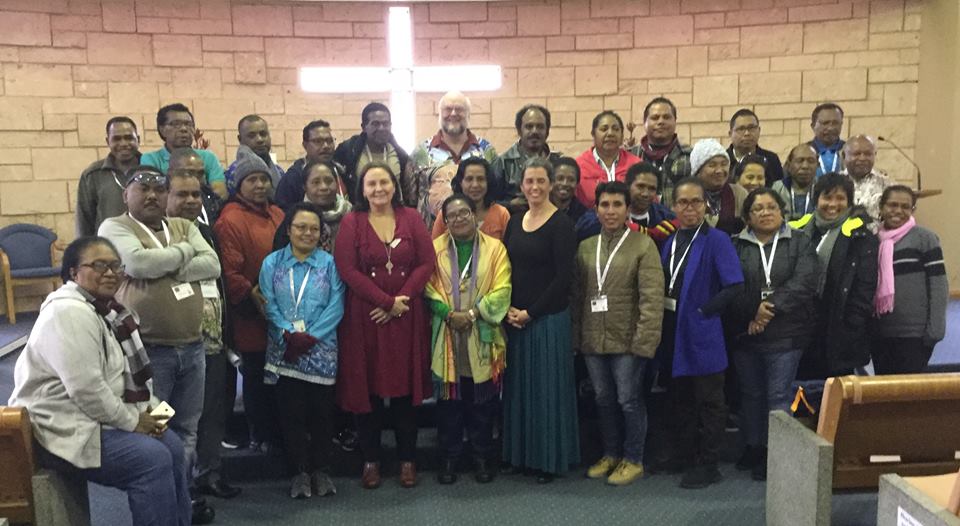
A few days ago, I joined with some colleagues to meet with a group of overseas visitors from the church in West Papua. They were spending some weeks in Perth, as guests of the Uniting Church, interacting with local UCA people and participating in church and community events, as a part of their Masters studies in community development.

Three of us from the UCA WA Education Team had opportunity to talk with the visitors over the course of an afternoon. We had been asked to speak about what education and training we offer people in the church. As a part of that, we set out to offer a short explanation of the Uniting Church, what our core values and commitments are, and what training we offer to people.

Continue reading “What do we look like? From the outside, looking in …”

The “additional marriage liturgy” for Uniting Churches

Good news from the Uniting Church in Australia website:

The Uniting Church in Australia has today published an additional marriage liturgy that will allow same-gender couples to get married in Uniting Churches from Friday 21 September 2018. The liturgy was approved by the Assembly Standing Committee which met in Sydney from 24-26 August.

The publication of the Uniting Church in Australia Additional Marriage Liturgy (2018) follows the decision by members of the Fifteenth Assembly in July to hold two equal and distinct statements of belief on marriage to honour the diversity of Christian belief among Uniting Church members.

President Dr Deidre Palmer has issued a Pastoral Letter to Church members, to reassure people about the additional liturgy. “By using this liturgy, or the previously authorised marriage liturgies, Uniting Church authorised marriage celebrants will be acting properly within the rites of the Uniting Church in Australia,” said Dr Palmer. “I reaffirm that the Assembly’s resolution on marriage allows you to hold one of two positions on marriage, as a member, Minister or Church Council. The Assembly made this decision acknowledging the faithfully held positions across the life of the Church.”

The Assembly decision allows ministers and celebrants in the Uniting Church the freedom to conduct or to refuse to conduct same-gender marriages.

In her Pastoral Letter, Dr Palmer also praised the conscientious work of Uniting Church Synods and Presbyteries. “If you are still concerned about the position of the Uniting Church in relation to same-gender marriage, I would encourage you to talk to your Presbytery or Synod leaders to ensure you are acting on accurate information about the nature and impact of the Assembly’s decision,” said Dr Palmer.

The Assembly General Secretary Colleen Geyer has written to all Uniting Church authorised celebrants notifying them of the additional liturgy, and the date from which it is authorised for use.

Resources including frequently asked questions are also available on the Assembly website.

What is missing from the Basis of Union?

I’ve offered some reflections in an earlier post concerning the things about the Basis of Union that I really appreciate:

https://johntsquires.wordpress.com/2018/08/15/what-i-really-like-about-the-basis-of-union/

But I ended those reflections with the note that the First Peoples of this continent (and related islands) are not mentioned anywhere in the Basis of Union. This needs to be noted, first of all, as a striking (and unfortunate) deficit in the Basis. I want to think further about this, and some other matters, that are absent from the Basis of Union.

Continue reading “What is missing from the Basis of Union?”

Alongside the Basis of Union, there was the Statement to the Nation

I recently reflected on “what I like about the Basis of Union”. It was a visionary document for its time, and in many ways it stands us in good stead as we seek to be a pilgrim people, always on the way towards a promised goal (para 3). That affirmation has shaped our understanding that, as a church, we are undertaking a journey, during which we continue to look to the final reconciliation of humanity under God’s sovereign grace (para 17).

At the same time (1977) as this document provided a foundation for three denominations to come together as a new Church, the inaugural national meeting of that body issued a Statement to the Nation. This document has lived under the shadow of the Basis. We could do well to read and reflect on it regularly. You can read this Statement at https://assembly.uca.org.au/resources/introduction/item/134-statement-to-the-nation-inaugural-assembly-june-1977

Continue reading “Alongside the Basis of Union, there was the Statement to the Nation”

What I really like about the Basis of Union

I am preparing to teach a couple of days on the Basis of Union, the foundational document on which the Uniting Church was created (back in 1977). That led me to thinking about the key things that I really love about the Basis. Here are some of them: Continue reading “What I really like about the Basis of Union”

Affirming the Sovereignty of First Peoples: undoing the Doctrine of Discovery

When the 15th Assembly of the Uniting Church decided to recognise the sovereignty of the First Peoples, it invited its members to start to undo the Doctrine of Discovery and all the imperialist, colonising influences that it set off.

Continue reading “Affirming the Sovereignty of First Peoples: undoing the Doctrine of Discovery”

The sovereignty of the First Peoples of Australia

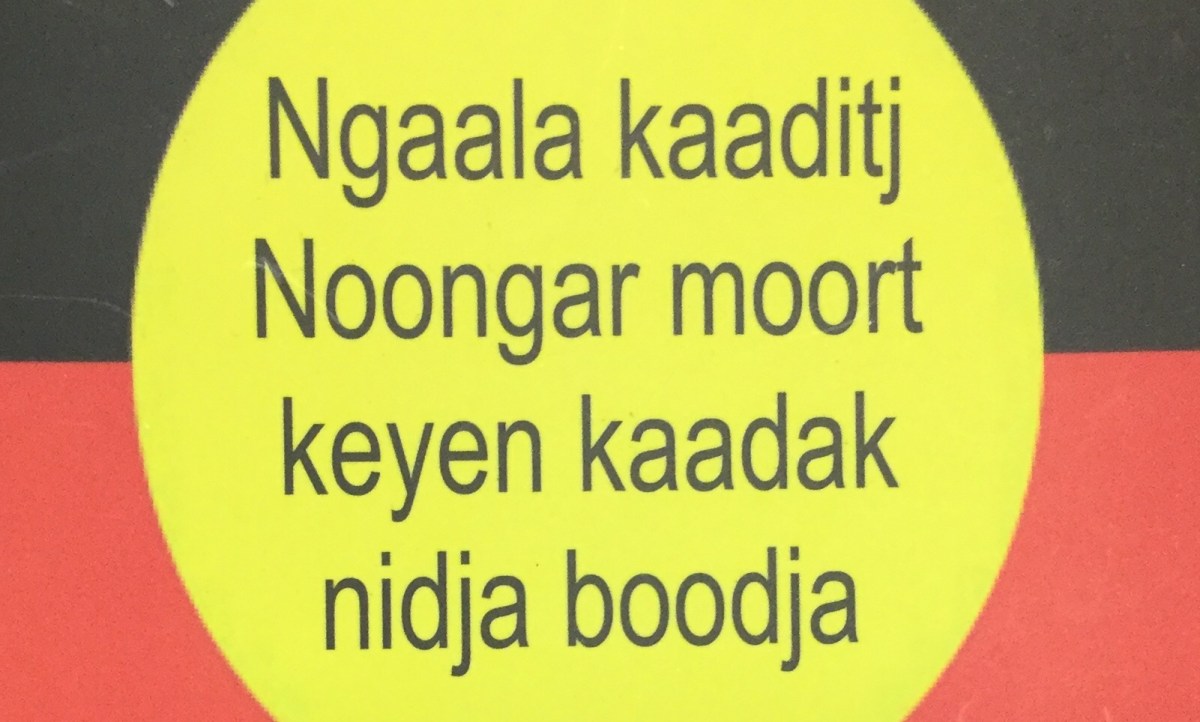
In the middle of my office desk, underneath the main computer screen, I have a small card, in red, yellow, and black, with the words

Ngaala kaaditj Noongar moort keyen kaadak nidja boodja

That is a daily reminder, in the Noongar language, for me to acknowledge the Noongar people, the first inhabitants of the land where I live and work. The Noongar people have been the custodians of the large southwest area of this land from time immemorial, and my respect is due to their elders, past and present, and those still to come, for this careful custodianship over millennia and millennia.

Continue reading “The sovereignty of the First Peoples of Australia”