The times, they are are a-changin’.

Change is happening around us. We are noticing changes taking place in society. The COVID-19 virus has forced a range of changes on us. Decades ago, Bob Dylan penned a folk song, “The times, they are a-changin’”, which has come to be seen as an anthem celebrating the changes that are always taking place in our society.

But in the present time, as we live under significant restrictions on gathering in person, as we keep our distance and stay at home for all manner of things, we sense that our times, are, indeed, a-changin’. So let’s ponder those changes.

Some of these are not good changes. Some may well be beneficial changes. We have had to let go of some valued ways of operating. We have also had to learn new skills and adopt new practices. This is what happens during a time of transition: many things can change. How we deal with these changes is important. What we choose to accept, and what we chose to reject, is up to us.

William Bridges has written an insightful book about such processes, entitled Managing Transitions (2009). Bridges talks about transitions in terms of three stages (as the graphic indicates): first, there is the letting go; then there is the neutral zone of being in-between; and finally, the connection into a new place, a new way of being.
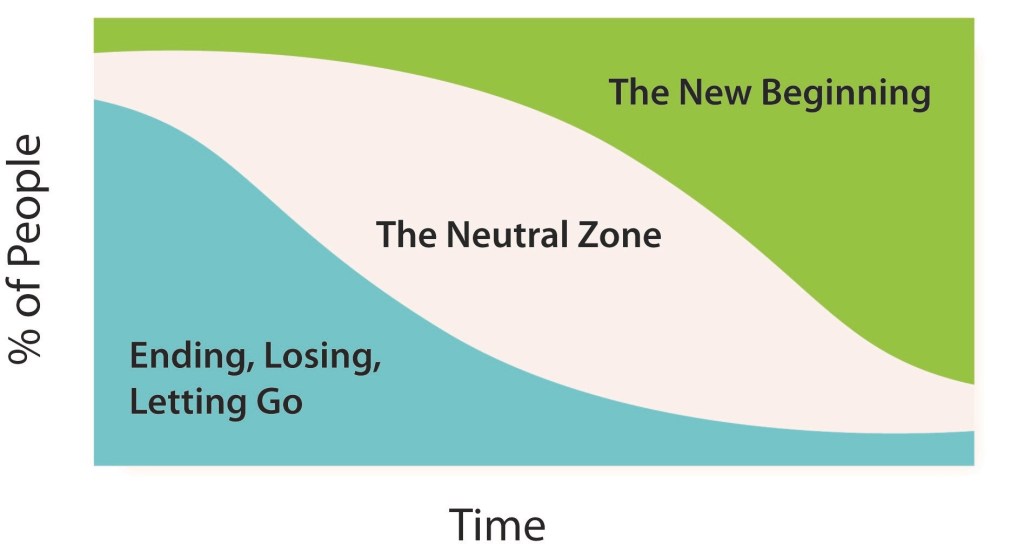
In that neutral, in-between zone, there is a need for us to develop a capacity to live within the discomfort of ambiguity which arises during the experience of loss, as we move away from the familiar. That is the space we are in now, in the midst of restrictions on gathering, as we work to slow the spread of the COVID-19 virus. We are experiencing, in various ways, the discomfort of ambiguity, as things shift under our feet.

In that liminal space, that unfamiliar territory, we have the time and space to reconsider, to review, to reshape, to remake ourselves. What changes will we accept? What changes will we reshape? What changes will we reject?

****

Some changes taking place in society feel difficult. Unemployment rates are rising, and many people who move out of employment will find it hard, if not impossible, to gain work after the restrictions end. Funerals are taking place with friends and most family unable to attend; weddings are occurring with even less people physically present. People who live alone are experiencing more intense feelings of loneliness and are craving real human interaction.

People who are vulnerably housed will have far fewer options for shelter at night during winter, as Safe Shelter programs will not be running because of the risks of passing on the virus. The rates of domestic violence are rising, as pressures in the home situation grow, for some, to boiling point. More people are drawing on the social services network provided by our government, but they will hit the ground with a thump after the restrictions end, when benefits will return to their “normal” level (well below the poverty line).

Some small businesses are looking at a glum future, considering the prospect of having to close for good. Tourism companies and travel agencies are particularly impacted, and their reduced business means loss of employment for significant numbers of people. Apparently more than 16,000 new coronavirus-related online domains have been registered since January 2020—many of which are believed to be set up to enable malware and hacking tools to be sold through COVID-19 “discount codes”.

But some changes are good. More than $1 billion has been saved in poker machine losses in the first five weeks of COVID-19 restrictions in Australia, according to the Alliance for Gambling Reform. There have been 25% less call outs of paramedics in the Ambulance Service in the ACT, because “people are not out and about so much, they are taking things very easy.” In the NT, the same decrease has been observed, because “there’s less traffic on the roads, so less motor vehicle accidents.”

Seeds have sold out, as people plant their own vegetables in anticipation of food shortages. Laying pullets are scarce and those for sale are selling at two or three times the normal price, as people look to guarantee their supply of eggs. Backyard gardening is making a comeback!

“We’ve been riding bikes for years, now, and we have never experienced so many people out and about walking and riding bikes on the bike trails!”, a number of our friends have commented. Meanwhile, in my region, there are no electric bikes available for sale at the moment—all stock has been sold out!

Local communities have rallied together in so many places. People are much more attuned to those folks who are shut-ins or who are self isolating because of their medical conditions or age. Phone calls and food drops at the front door have been made on a regular basis, and online coffee and chat groups are springing up to maintain connections amongst friends who cannot see each other in person.

Pollution rates have fallen across the globe at the moment; satellite observations showed that levels of nitrogen dioxide (NO₂) decreased quite significantly over China in the first month that COVID-19 infections were occurring there, February 2020. The same pattern is now taking place in other countries where restrictions on travel, because of the corona virus, means less traffic, less pollution, less NO₂.

(The NO₂ in our air is almost entirely from combustion. When coal and wood burn, nitrogen trapped in the fuel is oxidised as NO₂. Cars and trucks make NO₂ in their engines when they break down nitrogen in the air at extremely high temperatures. It makes a significant contribution to air pollution, which causes acute respiratory issues like asthma, as well as long-term diseases such as stroke, heart disease, and cancer. The World Health Organisation estimates that in recent years, seven million deaths a year have been attributable to air pollution.)

Drug arrests in Chicago have been measured at 42% lower during March, as drug dealers have no choice but to wait out the economic slump. El Salvador reported an average of two killings a day during March, down from a peak of 600 a day a few years ago. Even criminals are practising social distancing, social isolation!

And our Chief Medical Officer is now saying that we need to ensure that some changes in the way we relate to one another remain permanent, and we don’t go back to old ways—he advocates that we keep our distance from each other, continue our good hand hygiene habits, and don’t shake hands with other people. (This will lower the spread of all forms of viral infections, not just COVID-19.)

Changes are happening in society. Which of these beneficial changes will hold fast into the future? Which ones do we really want to hold on to? Which ones do we want to keep, just a little modified, in the future?

*****

We are also noticing changes that are happening in churches. For instance, I have been keeping a collection of comments from people in my home congregation about the positive nature of the changes they are experiencing, such as: “We can see the faces of people at worship with us, instead of the backs of their heads.” “Morning tea was more lively, I got to talk with different people, people that I normally don’t talk with.” “It was easy to go to church, I can sit in my comfortable chair and don’t have to get going early.”

And some more: “We have seen people come to online church who haven’t been able to come to church in person for months.” “We need to keep on offering services by ZOOM for those who can’t get to church in person.” “Finding happiness in the present moment and situation is such a great way to live. Not always easy to pull off, but a great goal.”

A recent conversation I heard between two people was very succinct: “I’m still learning.” “Aren’t we all!” And I have just seen online an elderly man who has never seen the need for a mobile phone, let alone a computer, who got his technologically-literate son to buy him a second-hand laptop, so he could join the Sunday morning worship. He set ZOOM himself and has been participating every week since!

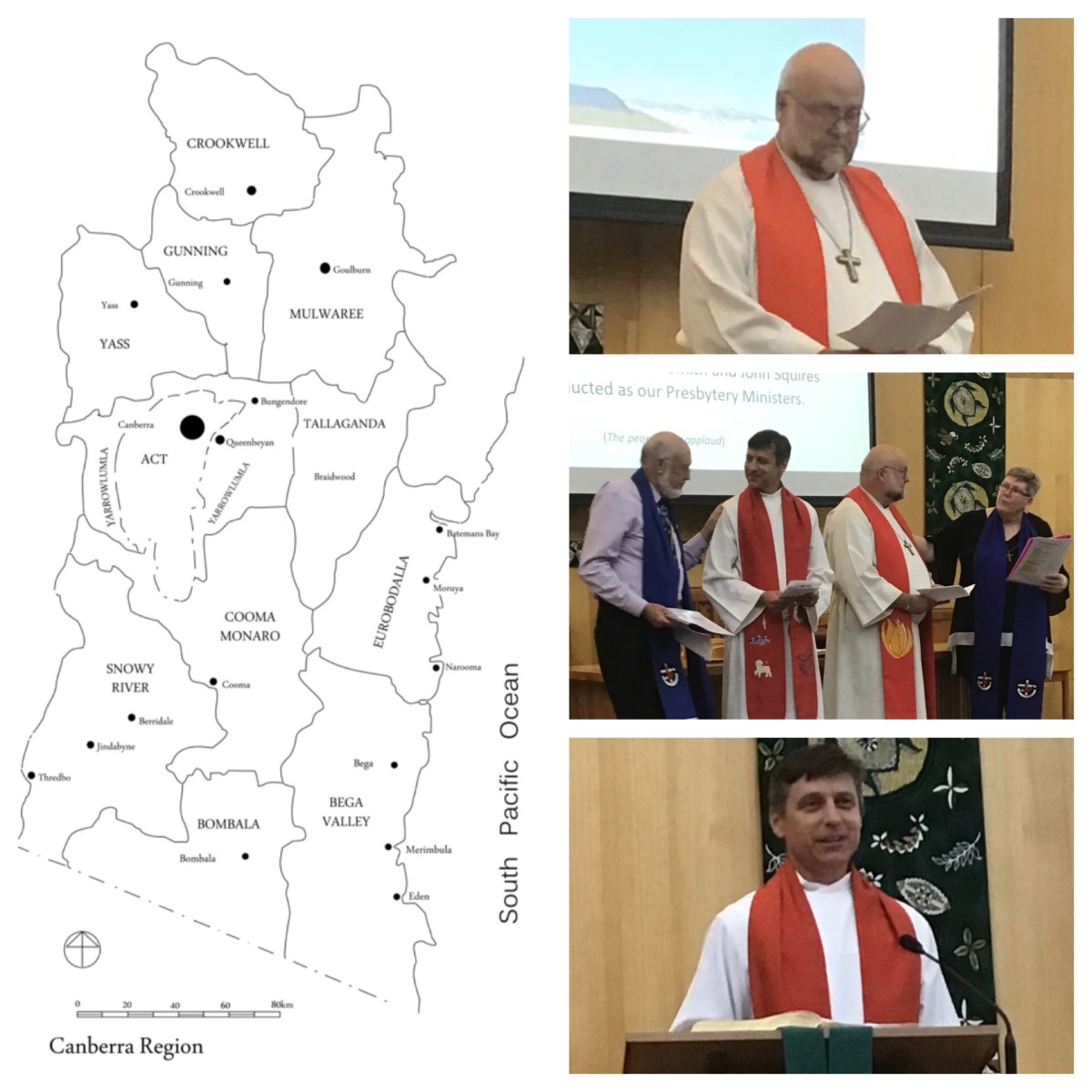
Another ZOOM meeting I attended recently included people from across a number of Congregations who have been in office, in some cases, for quite some time. Someone from one of the places further away from Canberra (where Presbytery staff and most office bearers are based) said, “It’s nice to put a face to a name after all this time”. Another tick for people from dispersed locations meeting together online!

In another Synod-wide online meeting, a comment was made that “the current crisis has brought to a head some long-running issues; we now need to deal with them and get involved in a constructive way”. The situation has stimulated proactive engagement in situations where the tendency had been to hold back and “let’s hope things sorts out by themselves” (which, of course, they rarely, if ever, do!)

I have heard one person comment that they have turned to the Psalms for spiritual nurture, and they observed that, wherever the psalmist reflects desolation, that is almost always followed by a sense of consolation. Perhaps that idea can undergird our prayers and reflections on the current situation.

Another colleague has observed that new, and positive, connections are being made between previously disconnected and distanced communities and individuals, which has been good for the health of the whole body. The challenge of disruption has generated a new pattern of collaboration and hopefulness.

One regional body is taking advantage of this interruption to “business as usual” by focussing on mission planning for the future, asking, “what are we learning in this current disrupted period, that we can apply to being the church in a renewed missional way?”

And many times, now, I have heard a story that runs along the same lines: since we have been in this period of restrictions on gathering, we have been making intentional connections with people who had drifted away from our Sunday gatherings. Now we have refreshed our connections and we are feeling that many of them seem to be “part of us” once again.

Some of the changes are, to be sure, experienced as less than desireable. “How many people are clicking on to online worship more as voyeurs than as fully engaged disciples?”, asked one colleague. Another mused, “my minister seems to be spending all their time playing with technology rather than making contact with people”. These are practices that we need to find a way to balance better.

I’ve heard one person articulate the need to move away from “leading worship well” towards a way to “equip people to grow in their own discipleship”. Some colleagues are devoting significant time, not just to preparing the Sunday worship, but to collating, writing and distributing resources that are available for personal use in the home—reflective worship times, meditations on scripture, studies to deepen discipleship, questions to challenge people to seek new ways of serving in the post-COVID period.

Another church leader has identified the challenges that are immediately before us as we consider how we might serve people with particular issues: people living with disabilities, people dealing with longterm mental illness, people who are vulnerable housed and dependent on church and community provision of safe shelter (especially in winter time). For such people who depend so much on in-person connection, the online manner of connecting leaves much to be desired. (And, for some, they lack any capacity to have the capability of regular, trustworthy online connection.)

By the same token, those whose particular challenge has been that they live at a significant distance from their place of worship, and need to undertake lengthy drives each time they attend worship, fellowship, or church council meetings, have found that being able to attend online, from the comfort of their own home, has many benefits.

So I think that, overall, my take on all of this can be articulated in some short and simple comments: Community is more important than worship. Service is at the centre of the Gospel. Discipleship engages us with the whole of society, not simply the inner club. Consistent relationships with other human beings are crucial. Creativity can flourish when we are thrust into unfamiliar situations. Disruption can deepen our faith, extend our understandings, refresh our mission.

******

Dr Kimberley Norris, an authority on confinement and reintegration at University of Tasmania, has undertaken a detailed study of the mental health of Australians who have overwintered in Antarctica. She found that those who have been through a period of isolation value the experience for what it has taught: They have a better idea of their personal values, and they’re more committed to acting on them. (See https://www.abc.net.au/triplej/programs/hack/coronavirus-covid19-isolation-third-quarter-phenomenon-has-begun/12190270)

The study indicates that the positives from this liminal period can be valued and retained, even as we shed the negatives and less desireable aspects from our time of social,distancing and self isolation.

Dr Norris believes that post-COVID, “we will see differences in the way people engage with each other, in the way people work, in the priorities given to the environment, and the way people think about travel.” And another interesting comment she has: “A lot of people expect spirituality to increase.”

That study clearly indicates that we stand in a critical period of time, during which we have the opportunity to explore our priorities—personal, as disciples, and communal, as a church—and to make commitments to refreshed and innovative ways of operating in the future. It’s an opportunity, not a threat. We ought to rejoice in, and focus on our strengths, not bemoan our situation and become fixated on the weaknesses it has exposed.

So what changes do we want to keep? What things can we change to ensure that the good things that have been happening continue? What new things do we plan to introduce as a result of the changes we have experienced in this period of time? What strategies are we developing to be well placed for the post-COVID situation?

What are your thoughts?

See also https://johntsquires.com/2020/05/04/not-this-year-so-what-about-next-year/

https://johntsquires.com/2020/04/22/its-been-just-over-a-month-but-there-have-been-lots-of-learnings/

https://johntsquires.com/2020/03/15/when-you-come-together-reflections-on-community-in-the-midst-of-a-pandemic/

https://johntsquires.com/2020/03/19/pastoral-letter-to-canberra-region-presbytery-on-covid-19-pandemic/

Not this year. So what about next year?

Crowds attending ANZAC Day events, it has reported for many years now, are growing. The further away we are from the events of Gallipoli, Lone Pine, the Kokoda Trail, and Long Tan, the more people are flocking to crowded public events: at dawn services, at Cenotaph gatherings, at local town war memorials, and in major city marches.

But not this year. No social gatherings, no travel except for essential purposes, meant no ANZAC gatherings: no large Cenotaph dawn services, no massed marches, not even any local services at the town war memorial. Instead, a grassroots movement saw thousands of people standing outside their house, at the front of their driveways, as the sun rose.

TV news reports this year showed streets with one, two or a handful of people outside each house, a string of candlelights stretching along the street, as the sun rose. Gathering apart, no close contact, no large crowds. In some enterprising streets, musicians played The Last Post on bugle, trumpet, clarinet, or saxophone.

And those official events that did take place, with just a handful of invited “dignitaries” in attendance, were seriously pared-down events: no massed singing; no droning long addresses on the valour and bravery of those who died in war; no string of people, one after another, laying wreaths in remembrance. Instead, a short statement, the traditional Last Post and Reveille, the Ode of Remembrance, just a few words to mark the occasion; perhaps the national anthems of Australia and then New Zealand.

Then, it was over. Short, succinct, sombre.

****

Central to the Christian story of Jesus is the death and burial of Jesus, followed by his being raised from the dead on the third day. Central to the Christian Church is the annual remembrance of those crucial events, over the four days of the Easter weekend.

Quietly reflective recollections of the last meal of Jesus on Thursday evening, subdued recollections of the story of his crucifixion and death on the Friday, a time of silent vigil on Friday afternoon and, for some, throughout Saturday; then, the early Sunday morning fire (in some denominations) and the grand Sunday morning celebrations, recalling our baptism, hearing the Gospel read and proclaimed, gathering at the table of the Lord. This is what Easter is. This is what the church does so well.

Indeed, every Sunday morning throughout the year, in purpose-built structures and and in rented halls, in majestic cathedrals with stained-glass windows and in modest wooden country church buildings out in the paddock, people of faith gather to be reminded of the good news, to be strengthen in their faith, to be challenged in their discipleship. The Gospel is read and interpreted, hymns of praise and reflective tunes are sung, prayers are offered, then tea and coffee are drunk as people share news and gossip.

But not this year. The doors of every church, every cathedral (and every synagogue, every mosque, every temple, every meeting house) were shut for Easter, and will remain closed, locked, not to be opened until the wave of viral infections has well and truly passed. Inside, the vacant spaces, the silenced pulpits, the empty tables, all point to the way that we are now “being church” in different ways—in ways that, not so long ago, we never imagined or expected to see.

So the worship services have been transferred to online platforms: ZOOM, YouTube, Facebook Streaming; or resources are collated and emailed to people; or printed and posted, or even hand delivered to letter boxes or front doors. We have demonstrated both great ingenuity and also focussed energy, devoted to ensuring that we maintain contact with everyone connected to our church communities.

And more than worship—now, morning teas that once took place around tables in church halls, now take place online, in chaotic but warm and friendly conversations on ZOOM. Church Council meetings that once required everyone attending in person, now also meet online by ZOOM. We have held on to our connections, and are ensuring that nobody is left out.

*******

Churches, of course, are more than just worship. Lots of community-oriented activities are integral to the life of the church. Op Shops with low cost clothing and kitchen items, weekly Free Meal programmes, Emergency Relief and Food Pantry programs for vulnerable people in society, book libraries at the front door of the church building with free books available for borrowing and swapping, are some examples.

Fellowship Groups for lonely people to meet and talk together on a regular basis, the availability of overnight accommodation as Safe Shelter in church halls for people who are vulnerably housed, and Community Gardens operating from the grounds of churches. All of these activities are fundamental ways that faithful followers of Jesus live out their discipleship. Caring for others, especially the lonely and the vulnerable, is at the heart of how people of faith live out the command to “love your neighbour”.

Such activities happen day in and day out, throughout the year, each year. But, for the most part, not this year. Some of these activities have had to be suspended for the duration of the period that restrictions are in place. Some of them have been able to continue, albeit with significant changes to the regular way in which they were operating.

Food pantries have adopted strict social distancing and thorough disinfecting protocols. Some meals programs continue by providing pre-cooked, individually packaged take away meals for regular clients. Many Op Shops, unable to provide space to enable appropriate social distancing, have closed for the duration.

*******

What will ANZAC Day look like in 2021? Assuming that restrictions are eased and “life returns to normal” by April next year, we might well expect to see the return of the massed gatherings, the carefully-choreographed dawn services and the modest meetings at thousands of small town and suburban war memorials, the long, extended city marches, followed by the inevitable breakfasts, two up games and afternoon drinking sessions. ANZAC Day will likely “return to normal”.

What will Easter look like in 2021? Again, if we assume that restrictions are lifted, most churches will undoubtedly offer their usual array of worship services across the weekend; people will gather to reflect, to grieve, to give thanks, to celebrate. And Easter egg hunts will presumably be able to be held once again!

What will church look like in 2021? Will it simply “return to normal”? Or will we take this opportunity to change things, to do church differently, to step out into a new way of gathering and serving?

Will worship go back to “Sunday morning at 9:30am, everyone in the same building”? Or will a variety of ways of gathering be offered, including options that continue online participation from those least able to be present in person?

Will food programs revert to the “business as usual” pattern of past years, or will there be important learnings about hygiene, work patterns, seating, or other matters, that will inform new practices?

Will church-based Community Gardens open up to all members of the community with “free seed collection” days, so the people can benefit from the produce in their own gardens?

What will church look like, near year? and the year after? What are your thoughts?

It’s been just over a month—but there have been lots of learnings!

It’s been just over a month since we moved into a period when restrictions on social gatherings came into force because of the spread of the COVID-19 virus. 1.5 metres between individuals, no more than two people at an outdoor gathering, no more than five people at a wedding, no more than ten people (including the minister) at a funeral, and certainly no gathering together as a congregation for worship, whether that be as twelve people, or 45 people, or 200 people in one church building.

There is no doubt that this will be an extended period while we need distancing and isolating. There will be weeks, even months, ahead of us in the same mode. We will have plenty of time to reflect on our situation, and to look forward to the time when restrictions are eased and regathering becomes possible.

But a month, give or take, is a good time to step back and assess: what have we learnt, during this intense and most unusual period of time? I want to offer some reflections from my own perspective. Here are a handful of things that I have learnt.

1 Relationships are critical.

Human beings are relational creatures. We like to, and need to, relate to other people. Spending far more time in our own homes, and far less time at work or at school, in social outings and family gatherings, is proving to be a challenge.

Social distancing and self isolation are essential to ensure that we minimise, as much as possible, the spread of the COVID-19 virus. But they are challenging to the very core of our being, as humans. Social engagement and interpersonal connections are what we need, and value, in our lives. We need one another. Relationships are critical.

2 Worship is important.

For people of faith, gathering together each Sunday (usually in the morning) is seen as the centre of what it is to be church. Worship is important, but conversation and connection is more important. My home congregation gathers-apart each Sunday, meeting up online via ZOOM, and people are clear that they appreciate the work of our minister (my wife, Elizabeth) each Sunday, in leading prayers, curating musical items, and offering reflections on scripture. Worship is important.

But the group “comes alive” in two moments: at the start, when people recognise others from the Congregation as they join the gathering, and see the faces of their friends appear on the screen; and after worship, during the virtual morning tea, when the conversations really flow. This is where the energy of the group coalesces and builds. Indeed, some congregations have pre-recorded worship which they then follow with live morning tea times, so people can interact over a cuppa. Connection is incredibly important.

3 Good communication is desirable.

We rely on good communication in everyday life. But how good it is depends on the ability to read subtle signs, to see body language and micro signals, to have conversations that ebb and flow in a natural rhythm, like breathing. Online communication diminishes our capacity for subtle communication. It is a blunt instrument.

Being able to see each other on the screen and talk with each other across the ether is very good—but it lacks some critical elements. We can rejoice that we live in an age when we can communicate online across vast distances. Nevertheless we need to recognise how that medium shapes our communications and inhibits deep connection with, and understanding of, one another.

Perhaps we can take this learning on into the post-COVID 19 situation and allow it to inform how we communicate with and relate to others? We need up-close, person-to-person engagement, for good, effective communication to occur.

4 Creativity can flourish under pressure.

I have watched in awe as my various ministerial colleagues have demonstrated great creativity, offering their preaching and praying gifts in new ways. I have read imaginative poems, heard engaging sermons, entered into deep prayer, watched striking short videos, and appreciated the fine photos that have been offered by ministers and pastors, lay preachers and other lay worship leaders, as they nurture their people by creative ways in worship.

Humans are innately creative beings, and creativity can flourish, even (perhaps especially) in pressured situations. Let us hope that this creativity can continue and indeed flourish into the future time, when gathering-together once again will be possible.

5 New skills can be acquired rapidly.

Given the will (and perhaps also the need) to learn new skills, people are capable of fast tracking the process and acquiring new skills very quickly. I have now been told of so many people of mature—very mature—ages, who have taken the challenge, downloaded ZOOM, learnt how to enter a ZOOM meeting, start their video camera, and mute and unmute their speakers—all skills that they never envisaged they could do, just a month or two ago!

What might our churches look like, if we learnt from this? If we took on the challenge to reshape our worship, start fresh expressions of church, adopt new patterns of gathering and sharing and deepening our faith? How might the current experience of individuals learning new skills provide a template for communities setting out on experimental or pioneering pathways? It’s an exciting prospect!

6 Patience is paramount.

In a stay-at-home situation, this is the case; even in a regular situation where we come and go each and every day, patience is at a premium. People who live by themselves are learning a new level of patience, as they wait for fleeting encounters with other people at their front doors, or on the phone, or on the screen.

People who live in families with energetic bundles of energy (children) on hand 24/7 are learning another level of patience, as they isolate together as a family and attempt to conduct the business required to draw a wage and feed a family, even whilst supervising learning-at-home programs. Patience is paramount, in these, and in every, situation that people find themselves at this time.

7 We are well off.

Yes, we are very well off. Indeed, we are very, very, very well off! The great toilet paper panic was an ugly and unsightly episode, but it illustrates how privileged we actually are. At least we have toilet paper to use. Many people don’t. The constant injunctions to wash our hands are important. But we have water on tap (literally) to wash our hands with. Many, many people don’t.

And we have space, the space in our houses and the space on our streets, to practice social distancing. Many, many, many people do not have such space; they live in crowded homes, in overcrowded city areas, where keeping appropriate distance is just not possible. By comparison, it is clear: we are well off.

8 Science is invaluable.

The advances in scientific understanding in recent centuries have enabled us to understand how pandemics (what used to be called plagues) spread. Microbiologists and infectious disease specialists are able to harness their specialised understandings and insights for the benefit of the common good. Medical researchers are able to focus on possible drug treatments, conduct experiments, and produce guidance as to what will assist, and what will not help, as we seek to minimise the spread of the virus.

Science and medicine reporters are doing a fabulous job on the media, providing us with technical insights into how diseases work and how our bodies respond, breaking this information down into understandable bites of information, assuring us of the steps that are being taken to find the vaccine for this virus. We can be grateful for scientific and medical insights.

9 Faith provides a bedrock foundation.

When living in troubled, challenging times, people have regularly turned to some form of faith, for comfort and assurance. We have seen that throughout history. Perhaps that may be happening, these days, when we see the upsurge of interest that has been experienced by churches offering online worship. Many report large “attendances” at online worship, larger than the in person gatherings of past months. It may be too early to tell—but could it be that people are turning to spiritual resources in this time of need?

Certainly, people of faith are active and to the fore, in regular times and now in this unusual time, in ensuring that the vulnerable people in our society are given care and support in these challenging times. I know of many people of faith who are making extra phone calls and offering a compassionate listening ear to people in need.

I know of other people of faith who make home deliveries of food packages to elderly people, or who are staffing food banks operating out of church facilities. Protocols about social distancing are being observed, and needy people are being supported. Looking to the material needs of people in society is important. And in this regard, we clearly see that faith in action undergirds our society. So many people of faith are involved in these kinds of projects. This demonstrates how true religion is (as James writes), “to care for orphans and widows in their distress”.

That’s what I have learnt, this far into the process of social distancing and self isolating. What do you reckon? What are your key learnings?

See also https://johntsquires.com/2020/04/22/its-been-just-over-a-month-but-there-have-been-lots-of-learnings/

Pastoral Letter to the Canberra Region Presbytery of the Uniting Church in Australia. 31 March 2020

Dear friends across the Country and Coast, and in the Capital area of the Presbytery:

We write to express our gratitude to everyone who is working hard in the current challenging circumstances, and to offer encouragement to you as you offer ministry to the people in your communities of faith. We are experiencing a time of rapid transition and significant change, from week to week, from day to day. May you be strengthened as you continue to serve in this challenging context.

Like Christian communities right around the world, we are finding new and creative ways to worship, as we gather-apart. We are seeing that people in our congregations and faith communities are continuing to care for one another and stay connected with each other. Most of us are on a steep learning curve as we try to work out what is best for our own congregation in the light of the abundance of resources increasingly available.

As we connect online, we have an amazing opportunity to get to know one another in ways never possible before, as the distance between us vanishes with technology. Ministers, Pastors, and lay leaders in Congregations are now meeting up regularly via ZOOM to share concerns and learn from one another. From Bega to Crookwell, in Gungahlin and Braidwood, from Eden and Goulburn and Jindabyne, in Tuggeranong and Braddon, conversations have been flowing across the internet.

One exciting development in the Canberra Region Presbytery is the way in which our 28 Uniting Church congregations are willingly sharing the talent and expertise God has gifted us. Every congregation has been able to draw their people together in new ways. We have used YouTube, Facebook Live, ZOOM, Facebook groups, emails of PDFs and Word documents, the mobile phone, and Australia Post—an amazing array of options! (You can check out some of the creativity across our presbytery by looking at the Canberra Region Presbytery Facebook page.)

Last Sunday, members of Cooma and Alpine congregations shared in worship for the first time in many years. Rev. Noel Williams, taking the plunge with ZOOM, led the service from an otherwise empty St Andrews in Cooma. What resulted was a genuine worshipful experience, as Bible readers and musicians contributed from their own homes, and Noel preached a very relevant and meaningful message.

People who barely knew each other came into each other’s homes in a shared, good-humoured willingness to help make something new work well. An hour later we said cheerful goodbyes, enriched by a fellowship of the Spirit that knows no worldly boundaries.

The same happened with other groups meeting online for worship. Members of the Tuggeranong Congregation have told of their positive experience on ZOOM last Sunday (see the article contributed). Members of the Weston Creek Congregation worshipped in their own homes, using material sent to them, and then gathered on ZOOM for the after-worship morning tea time. Both groups valued the interactive element available by this platform.

There were a number of people from around our presbytery who shared in the Saltbush Sundays @9service (see the details at https://saltbushcommunity.uca.org.au/news/saltbush-sundays-9/).
Others are using the online resources at a time more convenient for themselves (https://saltbushcommunity.uca.org.au/the-word-around-the-bush/).

As our daily lives are changing to combat the COVID-19 virus, we have the opportunity to engage in new expressions of congregational life. Connecting online means we have new opportunities to study Scripture, listen to good teachers, encourage our children and youth, pray and develop our personal spiritual life, explore music, witness to our community.  

In the mist of the suffering and pain that the world is experiencing, our God has given us a way to prepare for being part of a much-changed world, which will have an unprecedented need for the healing and restorative message of the Gospel.

Maintaining an outward focus is tremendously important. We are called to continue serving the world, even—especially—in the midst of the current pandemic. Kippax Uniting Church is coordinating the Canberra Relief Network (CRN) to create the opportunity for congregations in strategic geographical locations in the urban area to become centres for food relief packages to the Canberra population.

The CRN will provide the food relief packages, and the congregations will be asked to staff the distribution following health protocols for safe distancing and hygiene. This is one of the practical ways that congregations with the needed capacity can be involved in blessing their local communities and beyond. Already Gungahlin and Tuggeranong have agreed to collaborate with the CRN and conversations are underway with more UCA congregations as well as community groups.

Even though our church buildings are closed for worship and other meetings, there are places in our Presbytery where church buildings are being used to provide essential emergency services to homeless and marginalized people. In each place, special protocols to facilitate safe social distancing are being followed very carefully. Monty’s Place in Narooma is still providing take-away meals with these strict protocols in place, both on site and at delivery, to safeguard at-risk members of the Narooma congregation. We thank volunteers like Merrick Willcocks who arranged the deliveries.

Let’s not forget, also, that whilst the COVID 19 Pandemic has captured our focus, many communities in our Presbytery are continuing the struggle to recover from Bushfires. At Narooma, “Flowers for Cobargo/Quaama” has resulted in large numbers of pots of colourful flowers to be gathered and planted to lift to the spirits of residents in these towns devastated by fire in January. We thank folk like Di White and her team.

In Eurobodalla, Duncan McDiarmid has recently commenced in part-time ministry with the Moruya and Batemans Bay Congregations. Thanks to a generous offer from two Congregations in the Sydney Central Coast Presbytery, Duncan will be funded to provide some further community chaplaincy in the region. We are currently exploring ways that other funding might support community chaplaincies in other bushfire-impacted communities on the South Coast.

There are more stories which could be told … but we will leave them for another day. We are greatly encouraged by the commitment and dedication, energy and persistence, faith and loving compassion, determination and sensitivity, that we see and hear and experience in each of the communities of faith across Country, Coast, and Capital. We hope that as we share these stories, you also are encouraged in faith, strengthened in hope, and renewed in love.

So let us continue to live the Gospel, serve one another, and offer compassionate care to our wider communities. In the name of Christ.

Judy McKinlay and John Williams, Presbytery Co-Chairpersons
Andrew Smith and John Squires, Presbytery Ministers
31 March 2020

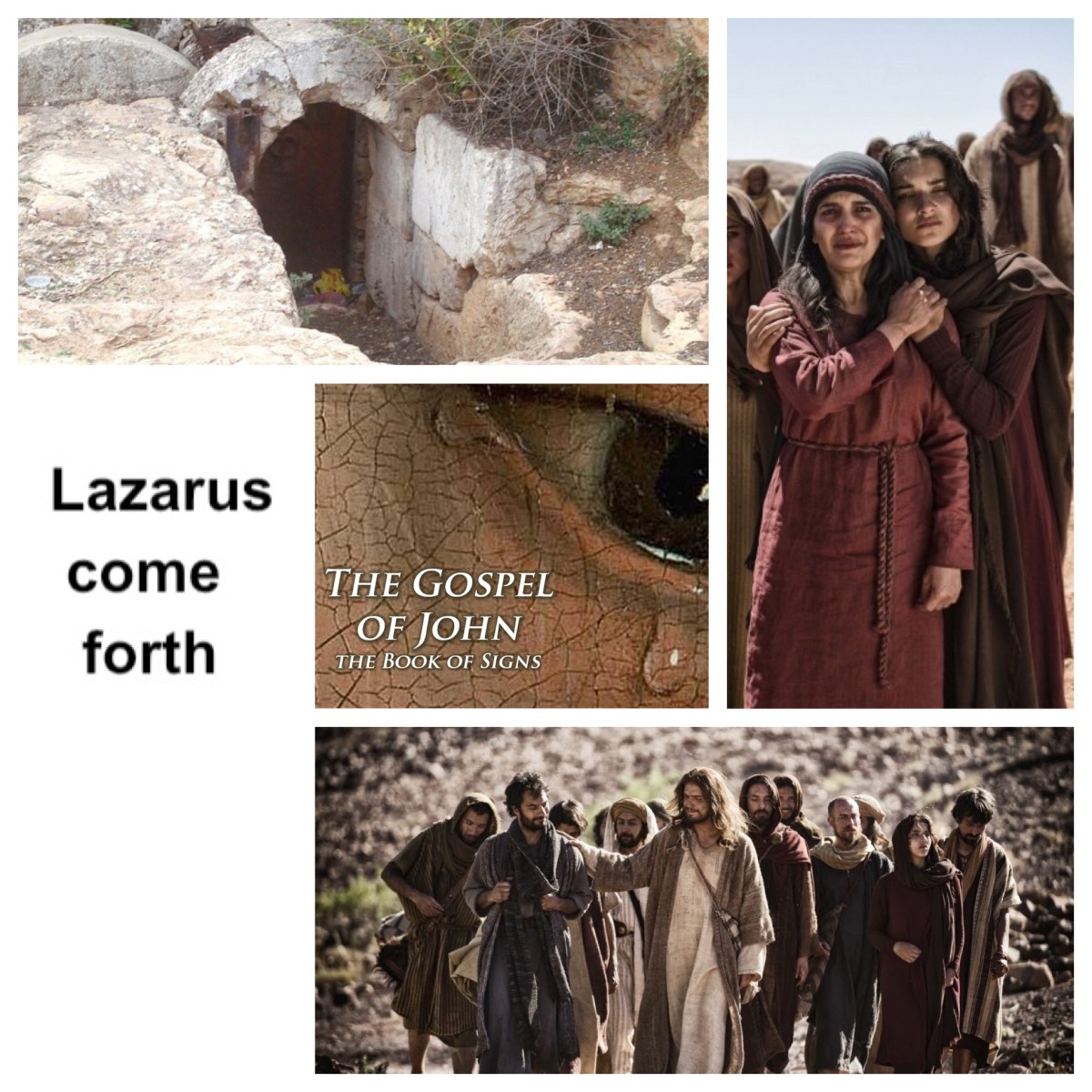
Holding out for hope in the midst of turmoil (John 11; Lent 5A)

“Could not he who opened the eyes of the blind man have kept this man from dying?” (John 11:37). That’s the question posed by people who had gathered to mourn with Martha and Mary, in the days after their brother had died.

It’s a question that, with some slight rephrasing, may well be posed in the days ahead of us, as we begin to experience the savage impact of the COVID-19 pandemic. Restrictions on movement, imposition of social isolation, spreading unemployment, rising numbers of infections being reported, and the early stages of what threatens to be a huge death rate, all from this powerful, invasive, invisible virus.

Frustration, anxiety, fear, and anger are within us, suppressed; and around us, beginning to be expressed. These times will be turbulent, confronting, disturbing. We draw deep into our emotional reserves in anticipation of what lies ahead.

I A message from Bethany

“Could not he who opened the eyes of the blind man have kept this man from dying?” Lazarus was dead, lying in the tomb (and had been there for four days, 11:17), so the reality of his death had surely been registered. But why did this have to be so? The level of grief being felt by his sisters, their household, and their friends from the village, was obviously intense.

Jesus had been reticent to travel from Galilee, back into Judea, where opposition to him had been steadily increasing (6:41; 7:1; 10:39). He initially paused, wanting not to go back to the place where, twice, threatening stones had been raised against him (8:59 and 10:31).

Jesus had been to Judea a number of times previously; in the book of signs, he is found there at 2:13, 5:1, 7:10, and 10:22—unlike the Synoptics, where his only visit as an adult is at the end of his earthly life (Mark 11:11). Jesus was reluctant to return there yet again. It was dangerous territory. He was in touch with his own deep emotions, as he considered his next move. Jesus demonstrates basic, raw humanity.

II Debating with the disciples

So Jesus delayed his travel for two days (11:6). Was he procrastinating? weighing up his options? looking to hide? making a strategic plan? The Greek word used here (meno) refers to staying still with purpose, resting, abiding. It is the word that appears quite a number of times in the “farewell discourse” as Jesus spends time with his disciples, before his arrest in Jerusalem (John 13-16).

This word occurs ten times in twelve verses in John 15, where Jesus speaks of the vine and the branches, and exhorts his followers to “remain” or “abide” (meno) in him, as he “remains” or “abides” in them. This is a deliberate, carefully thought out, plan, to hold back from travelling too quickly. Jesus had a plan in mind (as he indicates, first at 11:4, again at 11:15).

Then, when Jesus finally committed to a plan of action—“Let us go to Judea again”—we are told that Thomas the Twin expressed the great fear of his fellow disciples by saying, “Let us also go, that we may die with him” (11:16). Down south (in Judea) was dangerous territory for the radical prophet from the north (in Galilee), fuelled both by the traditional antagonism between the regions, and by the plotting against Jesus that was underway amongst the leadership in Judea (5:18; 9:16: 10:39).

I tend to think that, had I been there alongside Thomas and Jesus and the rest, my words would have been more like, “What? Are you crazy? Go back to Jerusalem? And risk being stoned to death? No way. Just no way at all!!” But I wasn’t there. And this, according to the story told in the book of signs, is how Thomas responded: “Let us also go, that we may die with him.” Wow!

III Meeting Martha by the tomb

Then, when Jesus arrived, he was met immediately with a very strong kickback from Martha, who went out to meet the group beside the tomb, before they arrived in the house. Martha was clear and direct; she said to Jesus, “Lord, if you had been here, my brother would not have died” (11:22).

I would think that she was angry. We can assume that she would have known the reputation of Jesus, she would have known he was able to perform miracles (signs, as they are regularly described in the book of signs). With this knowledge, Martha would have despaired that Jesus chose not to come and perform such a sign in her village, for her family. She lashed out at Jesus. Understandably. Perhaps with good reason.

Being forced into an uncomfortable place, being railroaded into disturbing emotions and unsettling experiences, means that any human being is likely, at some point, to kick back, lash out, with unrestrained raw emotion. We need to take care of ourselves lest we offend or damage people of property in such a state.

IV Mary and others join

As the story continues, Jesus begins to mollify Martha, and then invites her sister, Mary to join with her (11:28). Jesus and his group have still not arrived at the village; they are still where Lazarus lies in the tomb. Mary brings with her a group of friends and family (11:31). As the group of mourners arrive, the tension in the air would have been palpable.

When Mary came to the tomb, where Jesus was, and saw him, she knelt at his feet. She appears to be expressing due respect and reverence, perhaps. “Lord, I am so glad you are here”, we might expect her to have said.

But no—the first words out of her mouth are the same as what her sister had said, a little earlier: “Lord, if you had been here, my brother would not have died” (11:32). She, too, was angry. Human emotions easily dominate. How clearly these sisters reflect the way we human beings operate!

V Jesus responds with raw human emotion

Hearing these words for a second time—“look what has happened, you could have stopped this from happening”—penetrates right to the core of Jesus. The author of the books of signs uses a number of colourful words in describing how Jesus responded. My sense is that Jesus had been stirred up, to the very depths of his being. He was profoundly moved—not with compassion, but with anger.

First (according to the NRSV), we learn that Jesus was “greatly disturbed in spirit” (11:33). The word chosen in Greek signifies the uttering of a sound from deep in the belly; a full-blooded reaction, a sound that shocks and shatters the eardrums. The most literal way of translating this would be to say that Jesus “snorted like a horse”—that deep, guttural warning that horses utter when they are distressed, cornered, angry. The basic word used here (as in a couple of other places in stories about Jesus—Mark 1:43 and Matt 9:30; Mark 14:5) signifies deep, burning anger. Jesus was thoroughly angry.

Then, we read that Jesus was “deeply moved” (11:33, NRSV) or “troubled” (NIV). This word comes from the root word which means “to shudder”. Jesus’s reaction was so strong, so extensive, that his whole body shook and shuddered. There was a clear physical manifestation of the inner emotional turmoil raging in Jesus. He was, as we say, shaking with anger. One commentator writes, “the word implies deep disturbance”; another, that it means “an expression of rage; to become indignant, be furious”; yet another simply says, that “Jesus is angry”.

After this, as he presumably draws closer to the tomb and sees where Lazarus has been laid, we are told, “Jesus began to weep” (11:35). The Greek word used here is significant. The weeping of Mary and her companions, described just a moment earlier (11:33), is weeping that a band of mourners would do. It was the weeping and wailing, the anguished crying of those deep in grief, which was the socially-expected, customary grieving form of weeping. An expression of deep human emotions, to be sure; but channelled in the appropriate and customary manner by this group of grieving family and friends.

The weeping of Jesus is described with a different word—a word that is used only once, at this exact place, in the whole of the New Testament. The word (dakruo) has its primary reference point in the tears shed by Jesus. As we read this passage in English, where the same word is used, it looks like Mary and Jesus are both weeping in the mourning customs of the day. In Greek, where completely different words are used, the weeping is different. Mary and her friends are grieving the loss of Lazarus. Jesus is thoroughly rattled, completely shattered, by what he has experienced. And he is angry. Utterly angry. Jesus weeps tears of anger.

There have been various explorations as to why Jesus was feeling such anger. Was he angry at the lack of faith he had encountered in Mary and Martha? I think that seems reasonable, given some other comments he makes in this narrative.

Other suggestions have been made. Was he angry because he was under pressure to perform yet another miracle? (a miracle far greater than any others he had performed thus far). Was he angry that sin held such a hold on his friends? Was he angry because he was realising that his own time on earth was soon to come to an end, that he would soon be grappling with the devil in the final battle? (The latter exotic suggestion was made by John Chrysostom in the fourth century.)

I am not so much interested in WHY Jesus was angry. I am more taken by the fact THAT Jesus was angry. He was human. Fully human. He had had enough. He was at breaking point. He had a plan, a carefully thought-out intention, and he was determined to carry it through. The emotional turmoil surrounding him was distracting, getting in the way. Jesus held to his purpose with a steely resolution.

I can identify with the grieving sisters, with the crowd that met Jesus. They had been thrown into confusion. Grief does that to you. A global pandemic will do that to you, too. There are restrictions that now limit how we live our lives, our news becomes more alarming, we are becoming hard pressed. Emotions surge within us. We are at risk of lashing out. We might want to play the blame game. We are losing any sense of hope.

It is exactly at this point, according to the narrative we have in the book of signs, that some of those around Jesus respond to his intense, visceral expressions of anger, with their own angry, accusing words: “Could not he who opened the eyes of the blind man have kept this man from dying?” (John 11:37). Tit for tat. Accusation and counter-accusation. Throwing it back, with interest. The scene has become ugly.

The story continues, fraught with emotion. Jesus is still “greatly disturbed” (11:38)—that is to say, still uttering that deep-seated, raw emotional outburst of anger, “snorting like a horse”. Yet, in the midst of this emotional upheaval, Jesus is able to act calmly, and speak with purpose and clarity.

VI Removing the stone, unbinding the dead man

“Take away the stone”, he commands (11:39). “Did I not tell you …”, he says to the crowd (11:40), offering a clear explanation of his intent. “Father, I thank you …”, he prays (11:41), withdrawing, gathering himself together, drawing on his inner resources. Clear, measured, purposeful.

Then, he shouts, “Lazarus, come out”, crying in a loud voice (11:43)—the verb used here has a sense of a raucous outburst. Jesus becomes, once more, highly emotional at this critical point. Yet this is a more positive emotion. A sense that things are now being set right. This is what he came to Bethany, to do. There is a purpose, amidst all the upheaval and turmoil.

And, finally, the clear instruction, “Unbind him, and let him go” (11:44). The deed is done, the man emerges from the tomb, walking, no longer lying dead. There are signs of hope, right at this point: Lazarus is alive, a new reality is in place, the freedom of life restored is evident. Jesus has achieved what he had intended from the start. “This illness … is for Hod’s glory, so that the Son of God may be glorified through it” (11:4).

VII In a global pandemic

Where do you find yourself in this story? We might really want to be at that moment at the end, where hope bursts forth. But we are not there. Not now. Not for a while. Not, most likely, for a long time. So where do you see yourself in this story?

With Thomas, fearful of what the future will bring, and yet resolute about stepping forth with confidence? With Martha, pushing back, crying out in despair at the situation we are in? With Mary, piling on with more angst, fuelled by uncertainty, angry at what has happened?

With the grieving crowd, rushing from one thing to the next, gripped by a host of competing emotions? With the astonished crowd, watching the miracle of a man once dead, now alive?

Or with Jesus, determined to hold a steady course through the upheavals he experiences? He was clear about what he intends to achieve, steadfast in working his way through the obstacles, to the place of fruition. (If we want to emulate him, we need to be careful that we do not say “God is working through the pandemic”, or “God sent this pandemic to us for a purpose”.) Holding to a steadfast goal in the current context is a daunting challenge.

This story, set in this Sunday’s lectionary, invites us to consider who we are, as human beings; how we respond, when under pressure; what it is, that we hope for, in challenging times; how our faith guides us, in the midst of fear, anxiety, and despair.

*****

I have been greatly assisted in writing this blog by the research of my wife, the Rev. Elizabeth Raine, who has a great eye for detail when it comes to matters of translation. I have also drawn on published work by Gail R O’Day, in the New Interpreter’s Bible Commentary vol. IX p. 690; and the wonderful commentary by Raymond Brown, The Gospel according to John, vol. I pp. 425-426.

See also my other blogs on the Book of Signs:

https://johntsquires.com/2020/03/23/yes-lord-i-believe-even-in-the-midst-of-all-of-this-john-11/

https://johntsquires.com/2020/03/12/from-the-woman-at-the-well-to-a-byazantine-saint-john-4-st-photini-and-the-path-to-enlightenment/

https://johntsquires.com/2020/03/10/the-pharisee-of-jerusalem-and-the-woman-of-samaria-john-3-and-4/

https://johntsquires.com/2020/03/04/living-our-faith-in-the-realities-of-our-own-times-hearing-the-message-of-the-book-of-signs/

https://johntsquires.com/2020/01/16/john-the-baptizer-and-jesus-the-anointed-in-the-book-of-signs-the-gospel-of-john/

https://johntsquires.com/2019/06/07/the-paraclete-in-john-15-exploring-the-array-of-translation-options/

https://johntsquires.com/2019/04/23/in-defence-of-thomas-a-doubting-sceptic-or-a-passionate-firebrand/

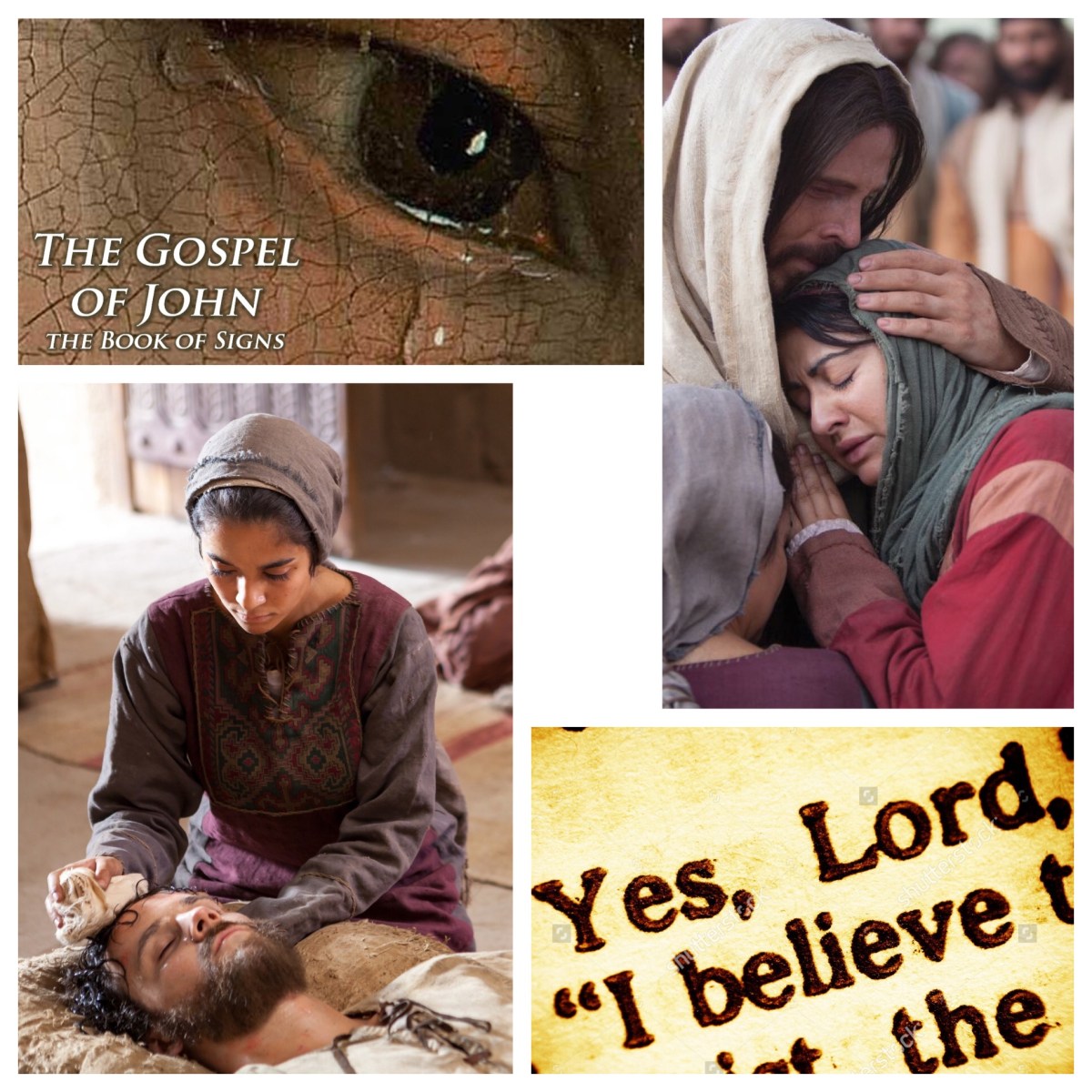
Yes, Lord, I believe—even in the midst of all of this! (John 11; Lent 5A)

In the midst of a time of fear and anxiety, generated by the rapid spread of the COVID-19 pandemic, holding to our faith and being nourished by that faith is important.

The story set for this coming Sunday is pertinent to this situation. How do we confess our faith in the midst of the rapid spread of the virus and news of the dramatic escalation of infections and deaths around the world?

In the midst of this story of death and grief, of life being thrown out of joint by an unexpected happening, the author of the book of signs (identified in the tradition as the apostle John), we have a story of faith. In this story, Martha expresses her trust in Jesus—even as what is happen around her fuels her unsettled state, as she grieves the death of her brother.

The book of signs has seven clearly narrated signs, or miracles, performed by Jesus. Each of them is inserted in the midst of an evolving narrative, in which followers of Jesus grow in their understanding of who he is, whilst at the same time a movement of those opposed to Jesus gains strength.

The author of this Gospel makes it clear that there were more signs performed by Jesus than what is narrated (20:30), and that the signs actually narrated are told in order to strengthen the faith of those hearing or reading them (20:31).

The first and second signs take place in Galilee (2:1-11, 4:46-54). Subsequent signs are located in Jerusalem (5:2-9), the Sea of Galilee (6:1-14), on the Sea of Galilee near Capernaum (6:16-21), back in Jerusalem (9:1-7) and then, for the seventh, and final, sign of those narrated, in Bethany, where Lazarus had recently died (11:17-44).

This final sign provides a clear climax to this collection of seven signs. This is the miracle supreme—raising a dead person back to life takes some beating! It is told at some length, with many details, leading to the climactic moment of the appearance of the once-dead man, now alive. “The dead man came out, his hands and feet bound with strips of cloth, and his face wrapped in a cloth. Jesus said to them, “Unbind him, and let him go.” (11:44).

In the literary framework of the whole Gospel, however, this building to a climax through the seven signs is paralleled by a growing tension, as leaders in the Jewish community marshal forces in plotting against Jesus. Initially, there were positive responses to Jesus (2:23, 4:42, 4:45). Then, an engagement in debate and controversy with “the Jews” (5:13) quickly escalated into persecution (5:16) and indeed an attempt to kill Jesus (5:18).

This double attitude towards Jesus continues unchecked throughout the narrative. Whilst Jesus remained popular in Galilee (6:14, 34) and amongst some in Jerusalem (7:31, 40-41a, 46: 8:30; 9:17, 38; 10:21, 41) and Bethany (11:27, 45), hostility towards Jesus continued, being expressed both in verbal aggression (6:41, 52; 7:15, 20; 8:48; 9:18-19; 10:20), threats of his arrest (7:32, 44; 11:57), direct physical threats (stoning at 8:49, expulsion from the synagogue at 9:22, and stoning once more at 10:31) and threats against his life (7:1, 25, 32).

Then, at the climactic moment, after Lazarus appears, the Jewish leadership plans a strategy to put Jesus to death (11:45-53). The plot is hatched, the fate of Jesus is sealed. That section of the narrative also includes the famous, yet ironic, comment by Caiaphas: “it is better for you to have one man die for the people than to have the whole nation destroyed” (11:50). And so the inevitable process begins, moving towards the death of Jesus (11:53, 57).

In the midst of this story, about the death and burial of Lazarus—before Jesus acts in any way to bring Lazarus back from death—Martha, the brother of Lazarus, makes a striking confession of faith in Jesus.

First, however, as Jesus arrived in Bethany, Martha had initially berated him with an outpouring from the depths of her grief—“Lord, if you had been here, my brother would not have died” (11:21).

One element of that confession, that Jesus is the Son of God, was articulated very early in the narrative of the Gospel, by one of the lesser-known disciples, Nathaniel (1:49). Another element, that Jesus is Messiah, had been spoken by another less prominent disciple, Andrew, the brother of Simon Peter (1:41).

In my reading, this confession of faith stands at the same place, structurally, as the confession that Simon Peter made in Caesarea Philippi, as recorded in all three Synoptic Gospels: “you are the Messiah” (8:27, and parallels in Matt 16:16 and Luke 9:20). This comes at the high point in the public ministry of Jesus: just before he is transfigured, and then makes his fateful decision to turn towards Jerusalem, in the Synoptics.

In like manner, the confession by Martha comes in the midst of the climactic miracle that he performs, raising Jesus from the dead, in the book of signs.

The declaration of Jesus as Messiah, as the christological high point of the three Synoptic Gospels, is uttered by the unchallenged leader of the apostles in those accounts, Simon Peter. The equivalent christological high point in the narrative of John’s Gospel is here, in Bethany, on the lips, not of one of the favoured male leaders (Peter, or the beloved disciple, or even, in other books, James the brother of Jesus). This high claim is made by a woman, not a man.

And how significant it is, that this high point of confession is made in the midst of grief and turmoil. Similar confessions, also by women, have occurred in the book of signs, also in difficult contexts.

At the end of the Gospel, there is an important confession of faith that is made as a result of the encounter that Mary Magdalene had with Jesus, in the garden, after his resurrection.

Mary was deep in grief as she went to the garden. Her grief initially stopped her from recognising Jesus. By the end of her conversation with the person she assumed was the gardener, she realised that he was actually Jesus. She returned to the disciples and declared to them that she has seen the risen Lord (20:18). She becomes known, in later tradition, as “the apostle to the apostles”. Her confession of faith comes to fruition in the midst of her grief.

Earlier, of course, there was the woman of Samaria, back in chapter 4, who encountered Jesus, thirsting, in the heat of the day, who enables many people in her city to come to faith in Jesus.

So, at the beginning, in the middle, and at the end, the story of Jesus—recognised as prophet, Messiah, Son of God, Saviour of the world, the risen Lord—is entrusted to women. Not to the familiar male leaders. But to women. Thanks be to God!

This blog draws on material in JOURNEYING WITH JOHN: an exploration of the Johannine writings, by Elizabeth Raine and John Squires (self-published 2014)

See also https://johntsquires.com/2020/03/12/from-the-woman-at-the-well-to-a-byazantine-saint-john-4-st-photini-and-the-path-to-enlightenment/

https://johntsquires.com/2020/03/10/the-pharisee-of-jerusalem-and-the-woman-of-samaria-john-3-and-4/

https://johntsquires.com/2020/03/04/living-our-faith-in-the-realities-of-our-own-times-hearing-the-message-of-the-book-of-signs/

https://johntsquires.com/2020/01/16/john-the-baptizer-and-jesus-the-anointed-in-the-book-of-signs-the-gospel-of-john/

In the most unlikely way … touching the untouchable (John 9; Lent 4A)

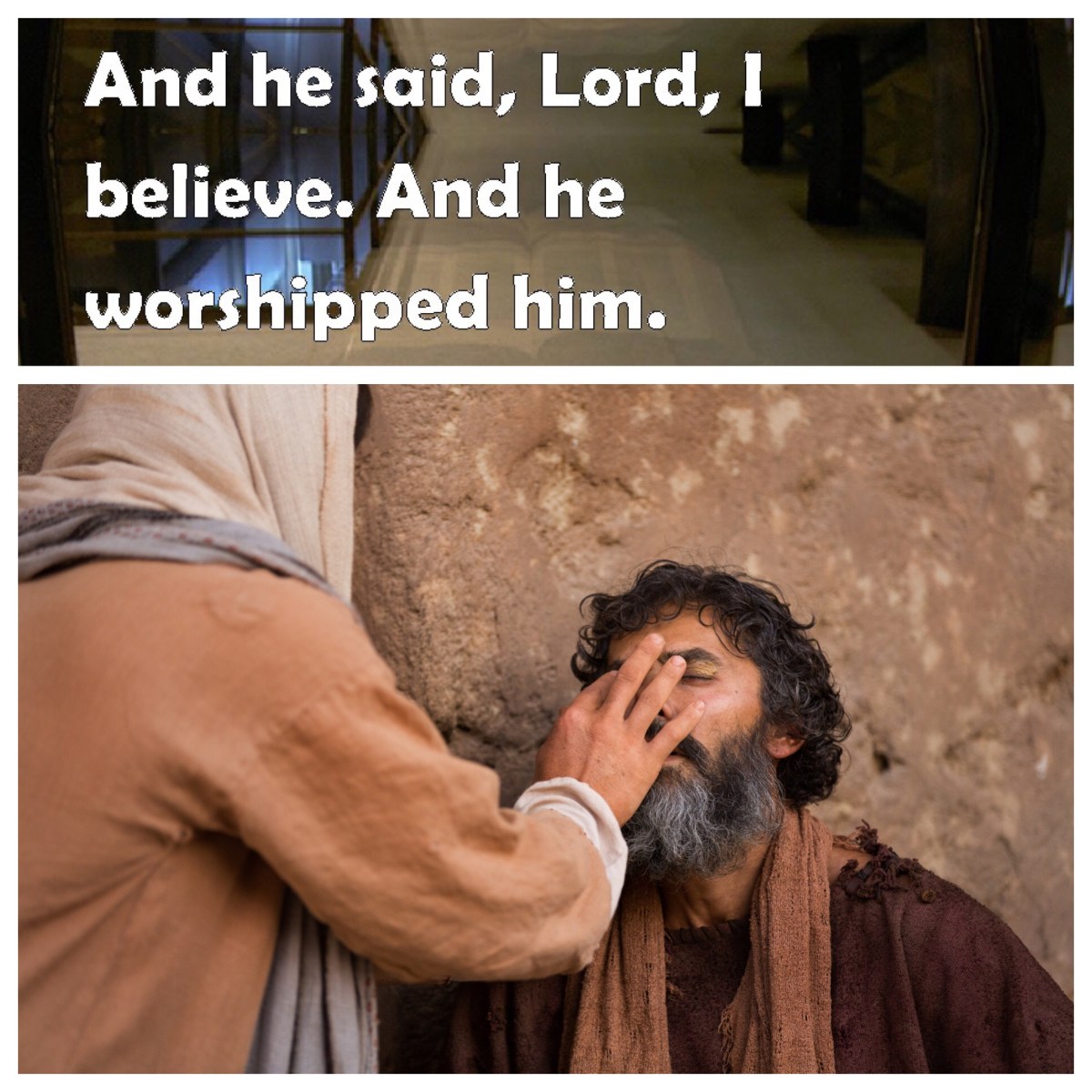
“Lord, I believe.” And he worshipped him. (John 9:38)

So said the man born blind, whom Jesus encountered, and healed, in Jerusalem (John 9:1-41).

What causes this man to make his bold public confession of faith in Jesus? The book of signs recounts the way that his turnaround took place, when he encountered Jesus. The disciples of Jesus want to quibble about the cause of his blindness: was he a sinner? was he being punished for the sin of his parents? (9:2).

Jesus, however, is not diverted by this theological consideration; he moves quickly and directly to heal the man (9:3-7). It is this healing which leads him to confess faith in Jesus.

In so doing, he stands in the most unlikely company, amongst other unlikely characters who confess faith in Jesus. For my reflections on the significance of this man’s confession of faith in the context of the book of signs as a whole, see https://johntsquires.com/2020/03/17/in-the-most-unlikely-company-confessing-faith-in-jesus-john-9/

Further than this, the man is healed in a most unlikely way. Other healings performed by Jesus and reported already in this Gospel have taken place simply by his word of command (4:47-52; 5:6-9).

This one is different; it involves two distinctive features, both of which push against the boundaries of expected behaviour within the ancient Jewish context. Jesus uses spittle mixed with dirt to make mud, and then he physically touches the blind man as he applies that mud to his eyes (9:6).

Were these actions of Jesus seen as breaching ancient Jewish protocols relating to holiness? The man was blind; traditionally, that made him unclean under the prescriptions of the Law. Blind people were amongst the groups identified as prohibited as acting as priests in the Jerusalem Temple (Lev 21:17-21). Likewise, no blind animals could be presented as offerings for sacrifice in the temple (Lev 22:22; Deut 15:21). Blindness signalled incompleteness. Conversely, one of the promises involved in the vision of eschatological hope, at the end of time, is the removal of blindness (Isa 29:18; 35:5; 42:7).

When Jesus touches this blind man, we may consider that he is identifying himself with the man in his state of incompleteness. If that is so, Jesus appears to be deliberate in breaching that boundary by directly touching the eyes of the blind man. At the very least, he is enacting, in the present time, the eschatological hope, that the blind will see (compare Matt 11:2-6; Luke 7:18-23).

There are twelve times across the four Gospels when Jesus touched a person that he healed (and four times when people reached out to touch Jesus as they sought his healing powers). This occasion, in John 9, is the one and only time in this Gospel that Jesus touched a person when he healed them. In this regard, it is a distinctive story.

What is even more distinctive in this incident is the use of spittle: it appears only here in this Gospel—although Jesus is also reporting as having used it in healings on two occasions in Mark (Mark 7:33 and 8:23).

It is noteworthy that Luke omits any reference to either incident, whilst Matthew omits the second and reduces the first to a brief summary statement in passing (Matt 15:30-31), with no reference at all to the manner by which Jesus heals in this case. This suggests quite strongly that these two evangelists saw the use of spittle by Jesus as a problematic aspect in these stories. Better to say nothing at all about them!

(Thanks to Elizabeth Raine for these insights from her research into the ways that Matthew redacted Mark’s Gospel, and also for her research in the next matter canvases, the Greek magical papyri.)

Spittle was a substance regarded, much later in Jewish tradition (in a couple of place in the Talmudic writings of the 6th century) as having healing properties in some circumstances—however, we have no evidence from Jewish sources of the time of Jesus, or before him, as to whether that view was current during the first century. It would seem not.

We do know that, in the first century, magicians and healers in the ancient hellenistic world utilised touch as one of the techniques in their repertoire. We know this from many Greek papyri which attest to the techniques of magicians and healers (the so-called Greek magical papyri). Touch was often employed by such people, along with the utterance strange words from foreign languages, or indeed simply gibberish words, and ecstatic states, as the means of effecting healings in others.

(You can read some examples at https://hermetic.com/pgm/index and explore a technical academic analysis of these papyri at https://archive.org/details/TheGreekMagicalPapyriInTranslation/page/n9/mode/2up)

So this element of the story is not strikingly unusual in the larger context of the society of that time. Wandering healers were common in the world of the day, and there are a number of records of their using spittle in their healings. Pliny recommended it for use in treating epileptics (Nat. Hist. 28.7). Two Roman historians reported that Vespasian used spittle to heal blindness (Tacitus, Hist. 4.81; Suetonius, Life of Caesar 8.7.2-3).

Because of this, some rabbis from a later time period, such as the famous Akiba (who was born two decades after the death of Jesus), were not favourably disposed at all towards spittle. Akiba is cited in a tractate of the third century work, the Mishah (Sanhedrin 10:1), as prohibiting its use because of its popular connection with the practices of pagan magicians.

Could it be argued that the reason that spittle was viewed negatively by Jewish teachers of the Law was because it was a substance which rendered someone unclean? The Law was given, in traditional Jewish understanding, to instruct as to what is holy, and what is unholy or unclean. To be rendered unclean meant to be placed outside the holy realm which is where God intends the people of Israel, the holy nation, would be. God’s desire was for Israel to be a holy nation, just as God is a holy God (Exod 19:6; Lev 11:44-45, 19:2, 22:31-33).

In the midst of detailed instructions as to how to maintain this holy state, Lev 15 deals with the ways to manage bodily charges which make a person unclean (semen from a male, menstrual blood from a female). Spittle, however, is not specifically identified here; so this is an hypothesis which relies on an argument by analogy. Could it gain some support from the observation that animals with discharges are grouped with blind, maimed, or skin-diseased animals as being unfit for offering as sacrifices (Lev 22:22)? The argument cannot be sustained with any strength.

There is other evidence that relates to spittle in daily life in the ancient Jewish world, however, which shows that spitting was linked with shaming. Spitting at somebody was regarded as an offensive act, a public shaming of the person spat at. If a man did not marry his dead brother’s childless widow, in accordance with the Law, she was to remove his sandal and spit in his face (Deut 25:9). Spitting in somebody’s face was considered a great disgrace (Num 12:14; Job 17:6; 30:10; Isa 50:6).

At Qumran, there was a prescription in one of the Dead Sea Scrolls (1QS 7.13) that a thirty-day punishment was given if somebody in the assembly spit in the presence of others. The same prohibition is reported by Josephus (Jewish War 2.147).

However, what is noteworthy in the story recounted in the book of signs, is that there is no indication in any way that Jesus was shaming to man. On the contrary, the author of this book takes a known symbol of shame, and turns it into a symbol of hope. Jesus spits—but does not shame. He spits, makes mud, and rubs the blind eyes—and gives hope and new life to the man. John turns this symbol upside down.

Jesus uses spittle, mixed with dirt, to create mud as a healing substance. It seems a strange, almost objectionable, action for him to undertake. And yet, through this challenging process, Hope is born, the gift of sight is given—and faith in Jesus is affirmed.

Later patristic interpretation relates this action in John 9 to the action of the divine, in Genesis 2:7, of creating the human being out of the dust of the earth. I don’t want to head in that direction, as I can’t see any clear signal in the text that invites us to consider this pathway.

And I know also that this focus on physical touching and, worse, the use of a bodily discharge, spittle, in the process of healing, sits quite at odds with the immediate contemporary context. The world is wracked by stories of the rapid spread of the COVID-19 virus, as the pandemic streaks across the globe and permeates every corner of every country.

Looking for the healing of illness in the midst of a viral pandemic is a vain hope. People are dying, and more people will, sadly, die, in this pandemic. Prayers for healing will not turn back the tide of infection and reduce the rate of illness and death that has been unleashed by this potent virus. Perish the thought that we might even think that we could emulate Jesus, and go around spitting on sick peoples, touching them in order to heal them. Let’s not be that literalist—please!!

In our current context, we are being urged not to make physical contact with people (no handshakes, no hugging, etc), to maintain a clear physical distance between ourselves and other people, and even, now, to adopt a regime of self-isolation, not attending any group activities, until the pandemic has significantly subsided.

So this story, set in this Sunday’s lectionary, needs to be understood and applied with great care.

What is clear, however, is that there was a striking and unusual element in the story—for us, and even for people of the ancient world. Jesus heals this man in a most unlikely way. That leads him to be able to see the world, for the first time, through his own eyes; and to see Jesus in a new way, in the light of this new vision.

Perhaps it calls us to be open to unlikely engagements with people (albeit in a socially-distant nature) in different ways, in the rapidly changing context that we find ourselves in today.

*******

This blog draws on material in JOURNEYING WITH JOHN: an exploration of the Johannine writings, by Elizabeth Raine and John Squires (self-published 2014)

See also https://johntsquires.com/2020/03/17/in-the-most-unlikely-company-confessing-faith-in-jesus-john-9/

https://johntsquires.com/2020/03/12/from-the-woman-at-the-well-to-a-byazantine-saint-john-4-st-photini-and-the-path-to-enlightenment/

https://johntsquires.com/2020/03/10/the-pharisee-of-jerusalem-and-the-woman-of-samaria-john-3-and-4/

https://johntsquires.com/2020/03/04/living-our-faith-in-the-realities-of-our-own-times-hearing-the-message-of-the-book-of-signs/

https://johntsquires.com/2020/01/16/john-the-baptizer-and-jesus-the-anointed-in-the-book-of-signs-the-gospel-of-john/

Pastoral Letter to Canberra Region Presbytery on COVID-19 pandemic

This morning a pastoral letter was sent to all people within the Canberra Region Presbytery of the Uniting Church in Australia, as follows:

Dear sisters and brothers in Christ,

On Wednesday morning the leadership of the Synod of NSW and the ACT and all the Presbyteries in this Synod met to make plans for our future as the Uniting Church, in the current context of the growing COVID-19 pandemic.

On Wednesday evening the Moderator and General Secretary issued a statement which strongly urged all Church Councils to immediately suspend worship services and any other group meetings on Uniting Church property.

See https://nswact.uca.org.au/communications/newsroom/covid-19-update-for-presbyteries-and-congregations/

We are in complete agreement with this guidance. We recognise that this is a difficult decision. This situation will remain in force for some time, over some months, until we are advised that it is again safe to hold gatherings of people.

This is essentially a pastoral decision for the well-being of people in our congregations and faith communities, and in the wider communities where we live. It is an expression of love and care for our neighbours and community, as together we try to slow the spread of infection so that our health system is able to cope.

By making this decision before our community feels the full impact of this health crisis, it is our hope that we can establish and learn new, creative, alternative ways to worship and sustain community connection from home and online.

To support us during this difficult time, Synod and Presbytery leadership is working to provide worship resources via various means including: e-mail, text messaging, Facebook and a Synod-hosted website, so that we can continue to pray, sing and reflect together. Adrian Drayton, of Synod Communications, and Matt Pulford, of Assembly Communications, are working to provide access to multiple resources.

Saltbush is offering a regular weekly “9am Sunday church with Saltbush” that will be a viable option. Project Reconnect provides weekly DVD resources, on a subscription basis. Some tech-savvy colleagues will provide online resources such as sermons and prayers, as well as reflections and devotions, for all to use.

We will send emails in the days ahead that will link you in to these resources. You do not have to do all of this by yourself.

As leaders within our local communities of faith, the highest priority we can have is to ensure that we provide meaningful pastoral care for one another during this time of physical separation. There are big challenges in this. We need, firstly, to be sure to support and encourage each other in our leadership roles.

Presbytery leadership will be looking to put in place opportunities for regular, online “check-in” opportunities for pastors, ministers, and lay leaders in each of the communities of faith across our Presbytery.

We are one body in Christ, even when that body is not together in the flesh. There are many ways to stay connected in spirit, and care for each others’ spiritual and practical needs. We trust that the people of our congregations and faith communities will reach out with hearts, words and practical compassion. We are capable, resilient people. The current situation invites us to explore new ways of connecting, supporting, and caring.

As we walk this wilderness journey, there will be real grief and loss in letting go of the things that usually bring us together. There will be real fear and anxiety that comes with physical distancing. This may take on added dimensions for people who already live with anxiety. We know that we are walking into difficult times. We know, also, the promise of God’s presence in the midst of this.

As you receive this news, and communicate it to others, we expect that you will encounter a range of responses: some may feel disappointed or frustrated by a perceived over-reaction, others may feel relief and cared for. We pray that all will know themselves to be held in love and prayer.

We want to be sure that Presbytery supports and equips you as you work with people in your community of faith to meet the challenges ahead.

Please do not hesitate to contact either of your Presbytery Ministers if you wish to discuss any pastoral matters relating to this situation (John on 0408 024 642, Andrew on 0437 011 338).

Canberra Region Presbytery Leadership Team;
John Williams and Judy McKinlay
(Co-chairpersons)
John Squires and Andrew Smith (Presbytery Ministers)
Elizabeth Raine (PRC Chairperson)
John Sutton (Presbytery Treasurer)
Janise Wood (Operations Manager)

The Moderator of the NSW.ACT Synod has written this pastoral letter https://nswact.uca.org.au/communications/newsroom/a-pastoral-message-from-the-moderator-about-covid-19/

The President of the National Assembly has written this pastoral message https://assembly.uca.org.au/news/item/3144-a-pastoral-response-to-the-pandemic

I have blogged on the importance o placing care for one another as a higher priority than gathering for worship, at https://johntsquires.com/2020/03/15/when-you-come-together-reflections-on-community-in-the-midst-of-a-pandemic/

When you come together … reflections on community in the midst of a pandemic

“When you come together, each one has a hymn, a lesson, a revelation, a tongue, or an interpretation. Let all things be done for building up” (1 Cor 14:28). So writes Paul to the followers of Jesus in the city of Corinth.

In these words, Paul indicates the importance—some would say, the highest priority—of gathering together in communal worship. The body of Christ, meeting together, in one place at the one time, sharing fellowship as we share in worship, is accorded central importance in the life of the church, back then in Corinth, as now in our own times.

How do we understand that imperative, now, in the midst of a growing sense of anxiety and uncertainty, as the pandemic of COVID-19 gradually makes it presence felt more clearly and definitively? And what will we doing as communities of faith, as we face the reality that gathering together as a community of faith might become limited or prohibited?

I When you come together …

It is clear from various New Testament passages, that communal worship was regular, expected, and valued, right across the movement that arose amongst the earliest followers of Jesus. This is evident, at face value, in the fact that all but one of the authentic letters of Paul were written to gathered communities: one to Rome, two to Corinth, one to Philippi, one to Thessalonica, and one to the region of Galatia.

There is only one authentic letter which we say was sent to an individual, Philemon—but even at the start of that letter, after naming Philemon and two other individuals, Paul continues, “and to the church in your house” (Phlm 2). And even in the later letters, attributed to Paul but not directly authored by him, the individuals addressed (Timothy and Titus) are given clear instructions regarding the ordering of life within the community of faith.

Elsewhere in his first (extant) letter to the Corinthians, Paul reflects what took place in those communal gatherings (1 Cor 14:26). It sounds like many of the elements we find in our communal worship today, as Paul lists the various elements that the Corinthians brought into worship: “a hymn [singing songs or choruses], a lesson [from scripture], a revelation [sharing our experience of faith with each other], a tongue [offering prayers], or an interpretation [the function of a sermon]” (1 Cor 14:26).

It is also evident that interpersonal interaction was integral to what took place when those communities of faith gathered. “Greet one another with a holy kiss”, Paul instructs the Corinthians (1 Cor 6:20 and 2 Cor 13:12), as well as the Thessalonians (1 Thess 5:26) and the Romans (Rom 16:16). (The same instruction appears at 1 Peter 5:14). These five verses all indicate that first century worship was not just sitting formally and watching what went on at the front; it was interactive, engaging, personal.

II Greet one another …

One of my colleagues, Sarah Agnew, suggests that the best way to translate these five verses is by referring to a “holy embrace”, rather than a “holy kiss”. That understanding is premised on the fact that the Greek word which is translated as “greet” in these texts, contains elements of making personal contact which are both interpersonal (greetings) and also physical (the word can be used to signify hugging or embracing). See https://www.academia.edu/28243257/A_call_to_enact_relationships_of_mutual_embrace_Romans_16_in_performance

Given that, then, on each of the sixteen times that Paul instructs for greetings to be given to named individuals in Romans 16, he may well be saying something like, “give them a hug from me”. Such relationships were personal and intimate.

This rendering takes us to the heart of community—and to the centre of the controversy swirling around the current situation with COVID-19 (which is the technical way of referring to “the novel coronavirus disease 2019”). The ancient practice clearly envisaged that physical contact was involved.

Physical contact, in the intimacy of either a kiss (on the cheek) or an embrace (with the upper body), is now, we are told, not advisable, given the way that infectious diseases such as COVID-19 (or, indeed, the common cold—which is itself a form of a coronavirus) are spread.

How do we reconcile these current guidelines with the scriptural injunctions? Do we ignore current guidelines (and keep on meeting together) because “the Bible says…” ? Or, do we turn away from strict biblical teaching (and stop our gatherings), because of contemporary concerns about the pandemic?

See my reflections, from a week ago, on this, at https://johntsquires.com/2020/03/05/passing-the-peace-sharing-the-elements-greeting-the-minister/

III Be separate from them

Alongside the texts cited above, there are other biblical references that we ought to consider. One cluster of passages to consider relates to keeping separate from the community in certain circumstances. Paul himself advocates keeping a certain level of separateness in his advice to the Corinthians, quoting a Hebrew scripture passage, “Therefore come out from them, and be separate from them, says the Lord, and touch nothing unclean; and I will welcome you” (2 Cor 6:17).

(I note there is scholarly debate as to whether this section of 2 Corinthians was actually written by Paul himself, or added by a later scribe or compiler. Nevertheless, the passage he quotes is in our scripture, and we need to make sense of it in our context.)

Paul is here quoting Isaiah 52:11, verses immediately before the famous song of the Suffering Servant (Isa 52:13-53:12), which sets forth the means for the redemption of Israel through the work of the Servant. Israel, the holy nation, is to be set apart, sanctified, separated from the nations which surrounded it. That is why the holy (clean, sanctified and redeemed) people of Israel are to remain separate from the common (unclean, sinful and unrighteous) peoples of the nations.

But it is entirely possible that we could (if we pursue a certain hermeneutical approach) adopt 2 Cor 6:17 into our current context, and use it as a text for advocating the kinds of distancing and separation advised by government health departments and religious institutions: do not shake hands, do not embrace, do not share a common cup, do not let there be anyway of passing on the virus to others, do not do any of the things that we value in our coming together as a community of faith—even, do not come together to worship and share together.

I am not advocating this line of interpretation, let me clear; I am just noting that some might be attracted to going down this pathway. But I think that is too simple: staying apart because we are set apart, consecrated, holy. That is sectarian thinking, and that is not how I think the church needs to be. We need to think further about “how to be church” in the crisis situation of a global pandemic.

IV Care for the needy

Alongside these biblical injunctions, there are other instructions and admonition that are found in scripture. These are equally valid and equally binding upon us, as we think about how to be church. I am thinking, at this time, particularly of the responsibilities that we have towards those who people within our midst are most in need of care and support.

In Hebrew Scriptures, the Law advocates this as a priority: take care of the needy: “If there is among you anyone in need, a member of your community in any of your towns within the land that the LORD your God is giving you, do not be hard-hearted or tight-fisted toward your needy neighbour”. (Deut 15:7).

This commandment is precisely what Jesus was alluding to, in the scene set in Bethany, where Mary anoints his feet, when he says, “You always have the poor with you, but you do not always have me” (John 12:8), where he was referring to Deut 15:11, “Since there will never cease to be some in need on the earth, I therefore command you, ‘Open your hand to the poor and needy neighbour in your land.’”

The command to care for the needy is replicated in other places in the Bible the Psalmist exhorts is to “rescue the weak and the needy” (Psalm 82:3-4), amd in Proverbs we are exhorted to “defend the rights of the poor and needy.” (Prov 31:8-9). These instructions to the people of Israel are based upon the understanding that the Lord God “executes justice for the orphan and the widow, and shows his love for the alien by giving him food and clothing” (Deut 10:18).

The ancient instructions to care for the needy are replicated in the New Testament, in instructions spoken by Jesus (Mark 10:21), in the blessings he spoke (Luke 6:20), in his signature synagogue sermon (Luke 4:18-19), and in the description of his ministry as fulfilling prophecy (Matt 11:4-5). Jesus demonstrated the priority of caring for people at their point of need.

Such an orientation is also found in directions in the epistles (Eph 4:28; James 2:1-7; 1 John 3:17), as well as in the summary description of the early community of believers who gathered in Jerusalem (Act 4:34-35, “there was not a needy person among them, for as many as owned lands or houses sold them and … it was distributed to each as any had need”).

My colleague Chris Goringe has written in a very helpful way about how we could, in fact, take the opportunity of the moment, in the pandemic crisis, to refocus and intensify our efforts to care for one another, paying particular attention to those who are in need. See

https://roseville.unitingchurch.org.au/2020/03/covid-19-and-the-church/

In the UK, a useful resource encouraging us to care for one another has been published by the Anglican Bishop of St Albans, at https://www.stalbans.anglican.org/coronavirus/

In my mind, helping the person in need is as central to our faith as it is to gather together in fellowship and worship. That, it seems to me, is the word for our times, a time of global pandemic, where the number of affected needy people is increasing on a regular—and frightening—basis.

We would do well to remember, in this instance, the words of Jesus in the last parable he spoke in the Gospel of Matthew: “just as you did it to one of the least of these my sisters or brothers, you did it to me” (Matt 25:40).

V Community in the midst of a pandemic

The context that the whole world now finds it in, is that of a pandemic. The alarmingly rapid spread of this virus is leading to a disturbingly rapid increase in instances of people who are significantly impacted by the virus. The rate of growth in cases is exponential, meaning that it is doubling each day. That is very worrying.

In this context, we need to ask: who are the needy? The best medical advice indicates that there a number of factors which predispose certain people towards being seriously affected by this virus. Age and health are two key factors; people aged 65 and over are more likely to contract the virus, and people with one or more of the co-morbidity factors are likewise at a higher risk of contracting the virus.

Co-morbidity factors include hypertension (high blood pressure), cardiovascular disease (heart problems), chronic respiratory disease (breathing difficulties), diabetes, and cancer. Anyone with one or more of these can be viewed in terms of their being one of “the needy”, who are to receive particular care from other believers. Avoiding situations where such people are exposed to a greater risk of contacting the virus, is surely a responsibility that we have, as a community of faith.

See this accessible discussion of co-morbidity factors at https://www1.racgp.org.au/newsgp/clinical/examining-factors-that-worsen-coronavirus-severity

Occasions when large groups of people are gathered together are precisely the situations when the passing of the virus to other people can occur. People with a number of the factors that predispose them to be significantly impacted by the virus are at greater risk in such situations. Our responsibility in this situation is, not only to those in our community of faith, but, more widely, to those in the society of which we are a part. We are committed, after all, to “the common good” (see Neh 2:8 and Gal 6:10).

That raises, for me, the question as to how we balance the desire, and the felt importance, of gathering together for worship and fellowship, with the responsibility of the community of faith to care for the needy, and particularly, for the elderly and medically unhealthy individuals who are found, inevitably, across all of the Congregations of the church. What is the responsible way forward?

The worship service that I attended today was scheduled to be a service of Holy Communion. During the week, after considering the medical advice available and the evidence concerning the spread of the virus, the elders decided to hold a service without communion. An empty plate and goblet stood at the front, as the minister—my wife, Elizabeth Raine—led a time of lamenting and remembering, in place of a full communion. See https://ruralreverend.blogspot.com/2020/03/a-lament-for-communion.html

However, there are further questions to explore. Should we suspend our regular worship gatherings, until the peak of the pandemic has passed? Caring for the needy—ensuring that we do not place them in a situation of greater risk—would seem, to me, to mitigate the need, and the desire, to gather each week for worship. We may well be better served to suspend our gatherings for the moment. That would be a good way to show that we are serious about “opening our hands to the poor and needy neighbour in our land” (Deut 15:7).

Gathering together on a Sunday for worship and fellowship is precisely the thing about “being church” that is valued by the group most exposed to risks in the current pandemic. People over 65 make up the majority of church attenders in any denomination, as, indeed, in many denominations. Older people attending are what keeps many Sunday worship services continuing. They have a strong commitment (so they keep on telling me) to keeping the doors open, making a witness to the community, by worshipping each Sunday.

So closing worship on Sunday in the face of such intense commitment will be difficult. But it might now be the issue that we need to confront, and the decision that we need to take, if we want to ensure that the incidence if illness and, indeed, the death rate, amongst elderly and inform church members is minimised. It is that serious, that dangerous, and that pressing.

Up to date statistics on the spread of the virus in Australia can be found at https://www.covid19data.com.au/

The NSW.ACT Synod of the Uniting Church has published guidelines for how we act during the pandemic, at https://nswact.uca.org.au/communications/newsroom/letter-from-the-general-secretary-regarding-the-prevention-of-novel-coronavirus-covid-19/

In the USA, the Wisconsin Council of Churches has a very helpful and comprehensive set of resources available at https://www.wichurches.org/2020/02/28/flu-season-the-coronavirus-and-the-church/?utm_source=rss&utm_medium=rss&utm_campaign=flu-season-the-coronavirus-and-the-church