So how did your bloke go?

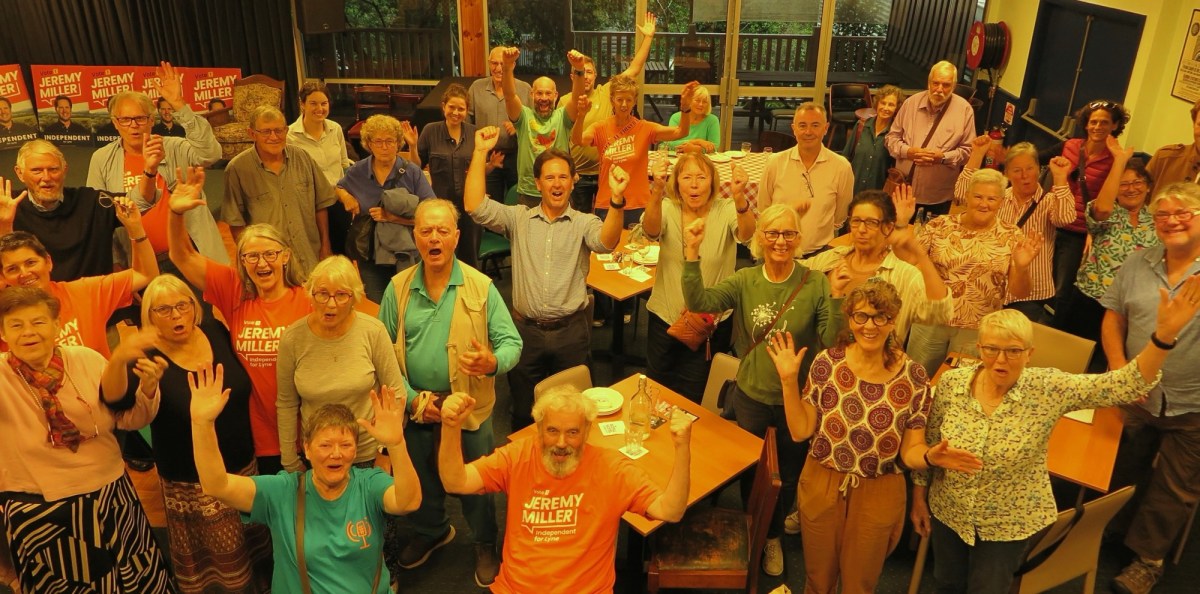
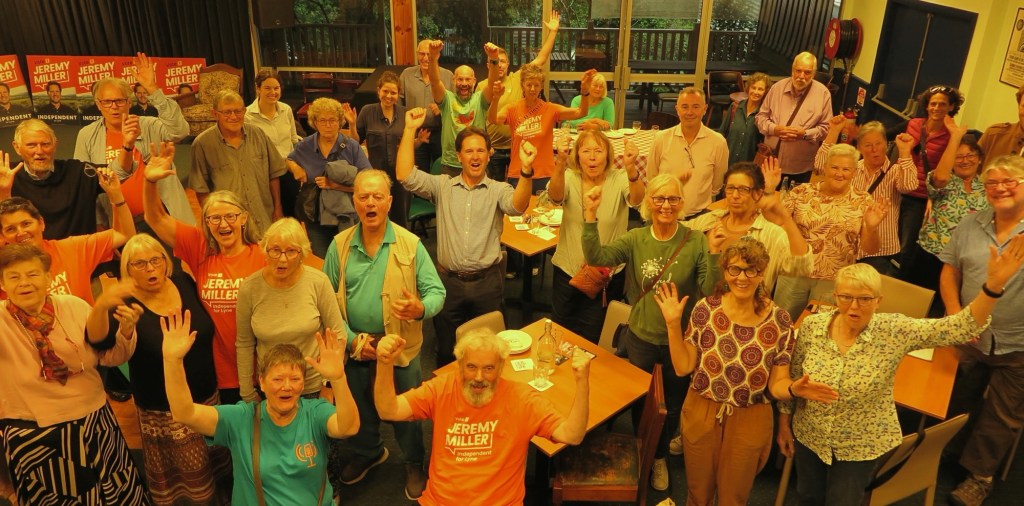
“So how did your bloke go?” Have you been asked this question in the weeks since the election? Recently a group of local leaders and volunteers in the Jeremy Miller for Lyne campaign met with members of the central campaign team to look at the future for an Independent candidate in Lyne. As part of that exploration, we heard an overview of what the polling in the booths reveal about how “our bloke” Jeremy actually went in the 2025 election.
1 The overall result

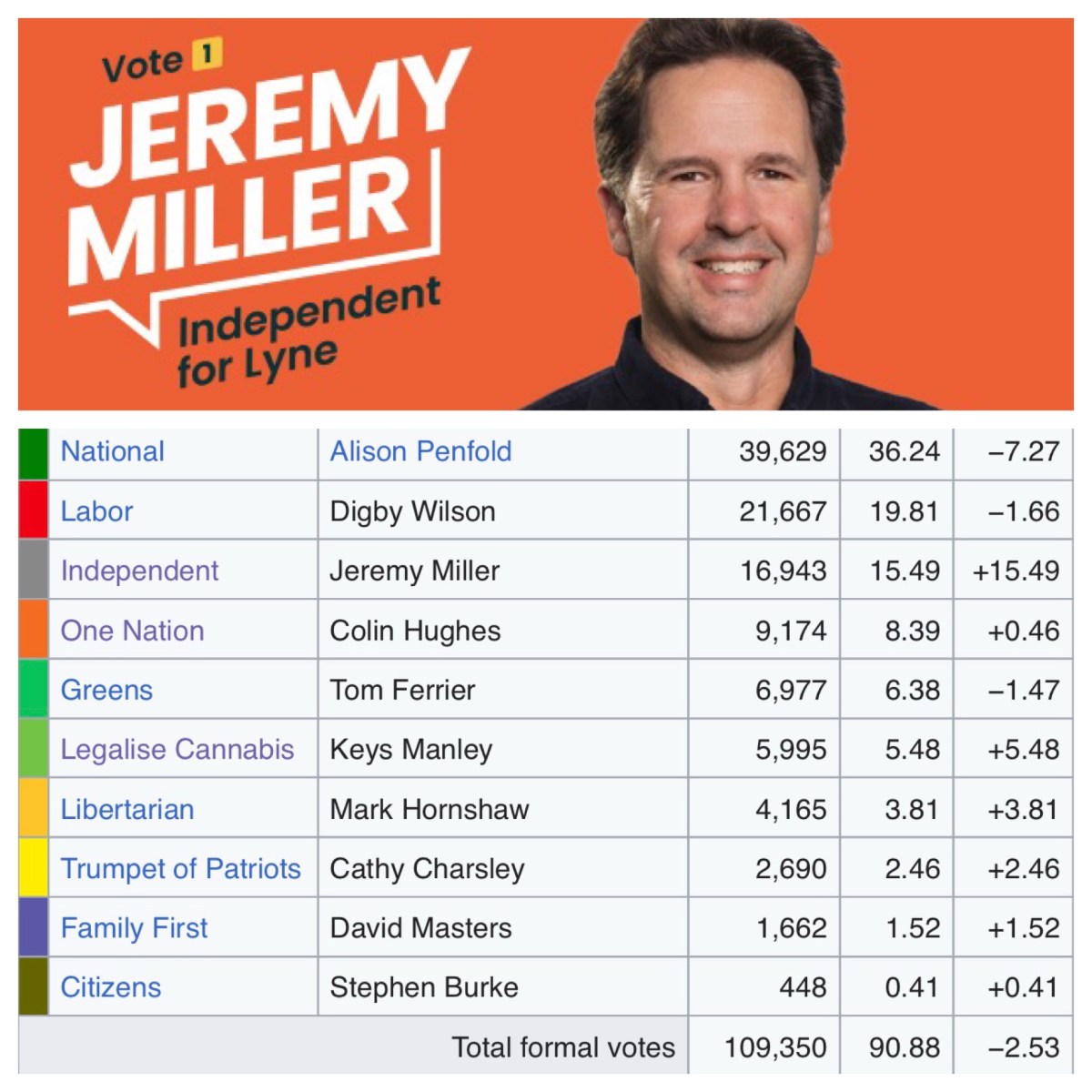
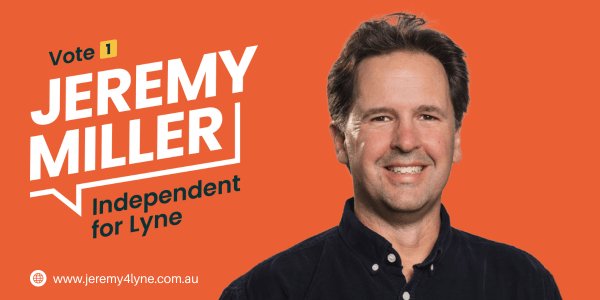
Now that the poll has been declared, we know the big picture: he didn’t win the seat—but, realistically, that would have been a huge achievement, which was somewhat unexpected. Yet, he did do remarkably well for a first-time community-supported candidate. Jeremy gained just under 16% of first preferences across the whole electorate, which was about 8% more than the votes that independent candidates gained in the 2022 election. 

And by the way: that 8% came from an 8% swing away from the Nationals candidate, for the 36.24% of first preference votes for the Nationals candidate was a healthy 7.27% less than the first preference votes for the Nationals in the 2022 election— and a massive 20% less than the 56.31% of first preferences that voters gave to the National Party way back in the 2004 federal election. That’s been a significant drop in the Nationals votes over the past two decades. Do they really think they are serving the electorate well, if one in five voters has stopped supporting them?
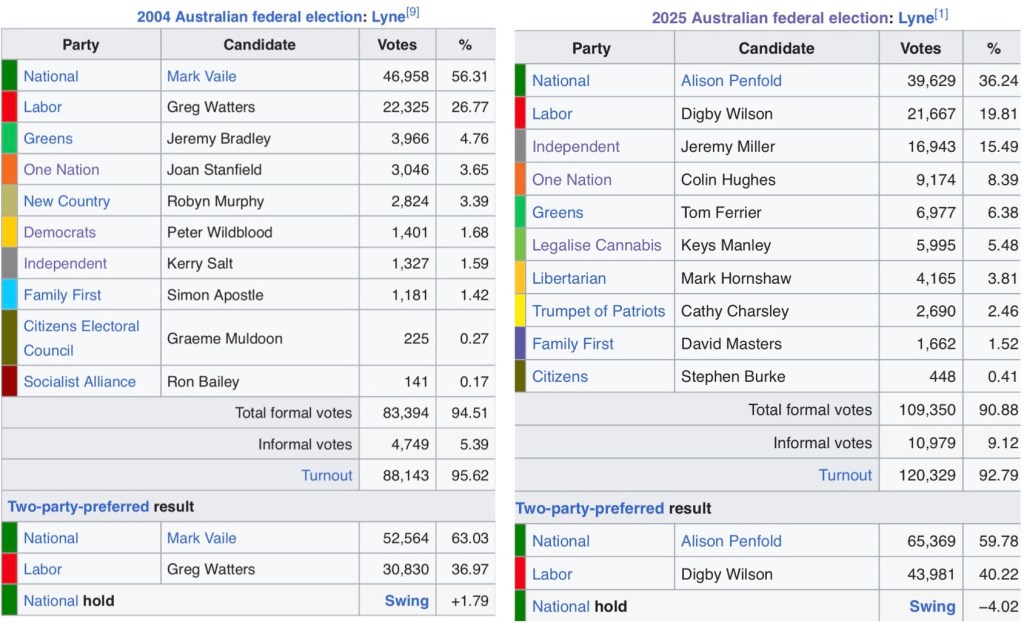
Looking at the longer-term trends, like this, as well as the detailed votes from booths across the electorate (discussed below) certainly indicates where our attention needs to be focussed in the next election in 2028: on “soft” Nationals voters who are open to being persuaded to change the way they vote. Are they happy with how the electorate is being represented in Canberra? Or are they discontent with the way the Lyne electorate is being treated? Might they be open to a different way of seeing things? After all, “if you want things to change, you need to change the way you vote”.

2 Where Jeremy polled best of all

If we look at the first preference votes cast booth-by-booth, we can see that in a good dozen or so booths, Jeremy’s vote was over 20%. He did best at Tinonee, with a wonderful 28.82% of first preference votes (more than the Labor vote and just under the Nationals votes) and at Old Bar, with 27.6% of first preferences there (ahead of both Labor and Nationals). At Taree West, where he attracted 26.2% of first preferences, he received the same number of votes as the Nationals and almost double the votes for Labor. 

A more detailed breakdown of statistics indicates that Jeremy did indeed gain votes “where it matters”—in the larger population areas of Greater Taree and Forster—Tuncurry, where 40% of the voters live.

That detailed breakdown (which you can skip if figures befuddle you) is: in the Taree area, where Jeremy’s recognition is high, he attracted over 20% of the vote at Tinonee (28.82), Old Bar (27.6), Taree West (26.28), Cundletown (25.31), Purfleet (24.00), Chatham (22.08), and Taree (21.85). The exception in this area was the lower vote of 18.5% at Taree North. Nevertheless, all of these booths are significantly higher than the 15.8% primary vote across the electorate.

Further south, in Forster—Tuncurry, the best results were achieved at Pacific Palms (24.17, higher than each of Labor and the Nationals), Coomba Park (21.67), Forster East (21.67), Forster (21.50), Bungwahl (20.55), and Tuncurry (17.09). Other good results in this part of the electorate were at Hallidays Point (23.11) and Diamond Beach (24.78). At Lansdowne, Jeremy received 19.69, and at Coopernook 16.81, whilst at the two booths in Wingham, Jeremy secured 16.84 and 14.20. Again, these booth results are higher than the average.

So this is further cause for reflection: what was it in these particular areas that helped Jeremy to push his vote up, higher than the 15.8% average for the whole electorate? Clearly, the fact that he lives in the area and that he is a very active Councillor on the MidCoast Council must both have helped in securing that higher vote. Being “known” in these areas was a strong positive for Jeremy. These results again point to an area where our energy might best be focussed in the time leading up to the next election (presumably in 2028). 

The largest blocks of voters live in the two main urban areas—Greater Taree (including Wingham, Old Bar, and surrounds) and Forster—Tuncurry. This is where the influence of the National Party is less, by comparison, than it is in the inland rural areas. And these are amongst the areas in the electorate where we might expect population growth in future years. How do we plan and implement effective campaigning in these areas in the next few years?
3 In other places across the electorate of Lyne

In the north of the electorate, at Barrington, Jeremy secured 20.99, and in Gloucester itself 16.38. In Wauchope, he obtained fewer votes: 11.28 at Wauchope and 10.53 at Wauchope South. Nearby in Beechwood, the vote was 13.26, and in King Creek 15.27. These are promising results, offering a good base for future campaigning.

In the Dungog Shire, there was a good result at Paterson (16.46), and less at Seaham (12.59), Dungog (12.57), and Clarence Town (11.92). Closer to the coast, Jeremy’s share of the votes ranged from Krambach (17.00) to Bulahdelah (11.01) and Karuah (10.19). In polling places in the Port Stephens Council, votes ranged from Hawks Nest (16.74) to North Arm (14.13) and Tea Gardens (12.60).

4 Votes for Jeremy and votes for Labor

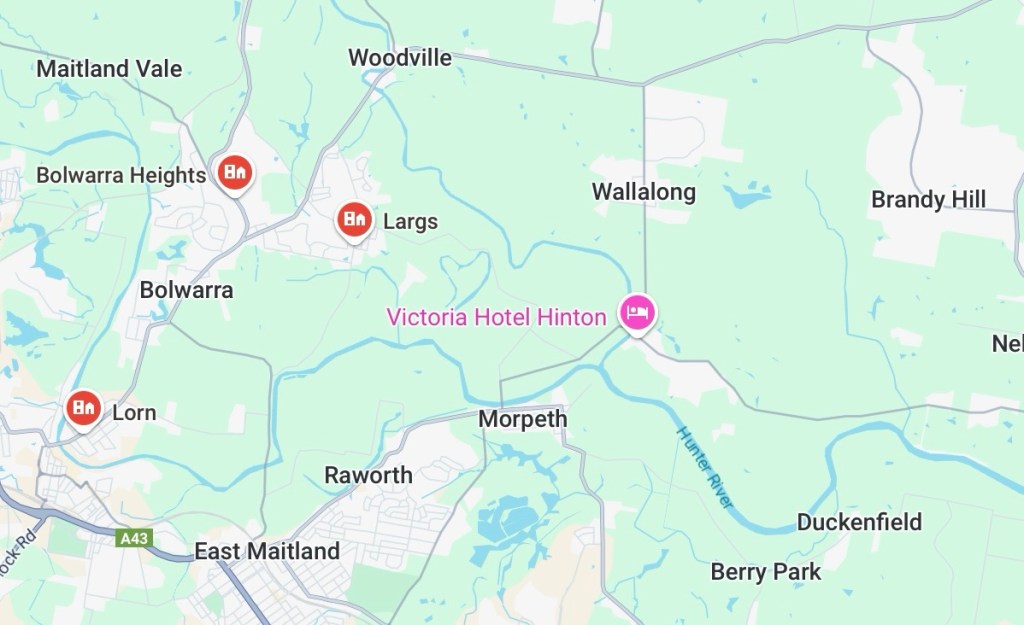
Another area of particular interest is in the area immediately to the north of Maitland which are currently included in the very southern end of the electorate. Whilst some votes for Jeremy were under 10% (in the more rural locations), better results were gained at Largs (10.81%), Lorn (11.67%), and Bolwarra (11.86%). These percentages are still below the average vote across the whole electorate. But a significant factor in this area is the support for Labor.

At these three polling booths, Labor’s share was consistently over 27%, although in Lorn it was 40.14%, the highest of all the booths in Lyne. This reflects the strong Labor base in Maitland itself (where the seat of Paterson saw a swing of 4.2% to Labor, despite the massive resources allocated to this seat by the Liberal Party). Making any headway in this area by attracting hesitant Labor voters would need a sustained campaign leading into the 2028 election.
And finally, if we look to places where Jeremy polled better than Labor, we can see some striking margins. At Old Bar, the 27.66 primary vote for Jeremy was greater than Labor’s 18.59. There were good margins also at other eight booths in this region: Taree pre-polling (21.93 to 16.47), Taree (21.85 to 14.94), Taree West (26.28 to 14.46), Cundletown (25.31 to 10.05), Chatham (22.08 to 15.35), Tinonee (25.82 to 13.64), Taree North (18.50 to 17.22), and Wingham West (16.84 to 13.46).

Jeremy also secured more votes than Labor at another seven polling booths: Hallidays Point (23.11 to 16.49), Diamond Beach (24.78 to 16.34), Pacific Palms (24.17 to 21.87), Krambach (17.00 to 14.41), Beechwood (13.26 to 12.80), King Creek (15.27 to 14.34), and Barrington (20.99 to 14.36). In all cases except for Old Bar and Pacific Palms, however, the Nationals still out-polled both Jeremy and Labor at these booths.

5 The future

So we can see from this just how well “our bloke” Jeremy did, and also just what work lies ahead for an even more successful campaign in 2028. I hope that lots will stay on board and even more sign up for that ride!

***** ***** *****

Written by John Squires, Member of the Central Campaign Team for Jeremy4Lyne, drawing on data prepared by James Foster, Polling Coordinator, Central Campaign Team, and data on the website of the Australian Electoral Commission.

See also

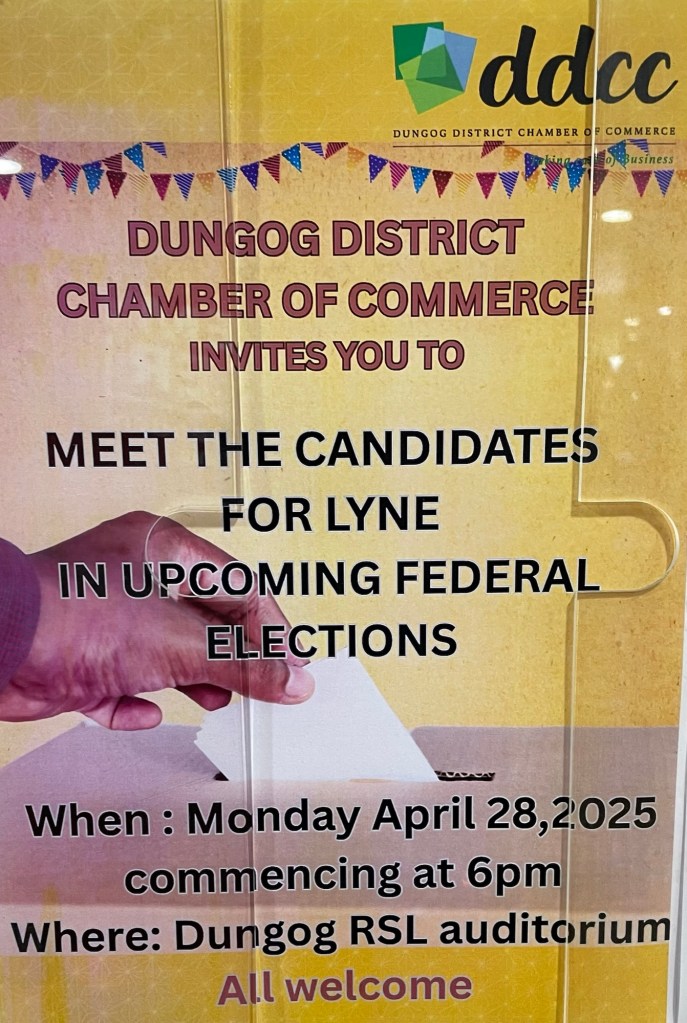
“Meet the Candidates” for Lyne, at Dungog (28 April 2025)

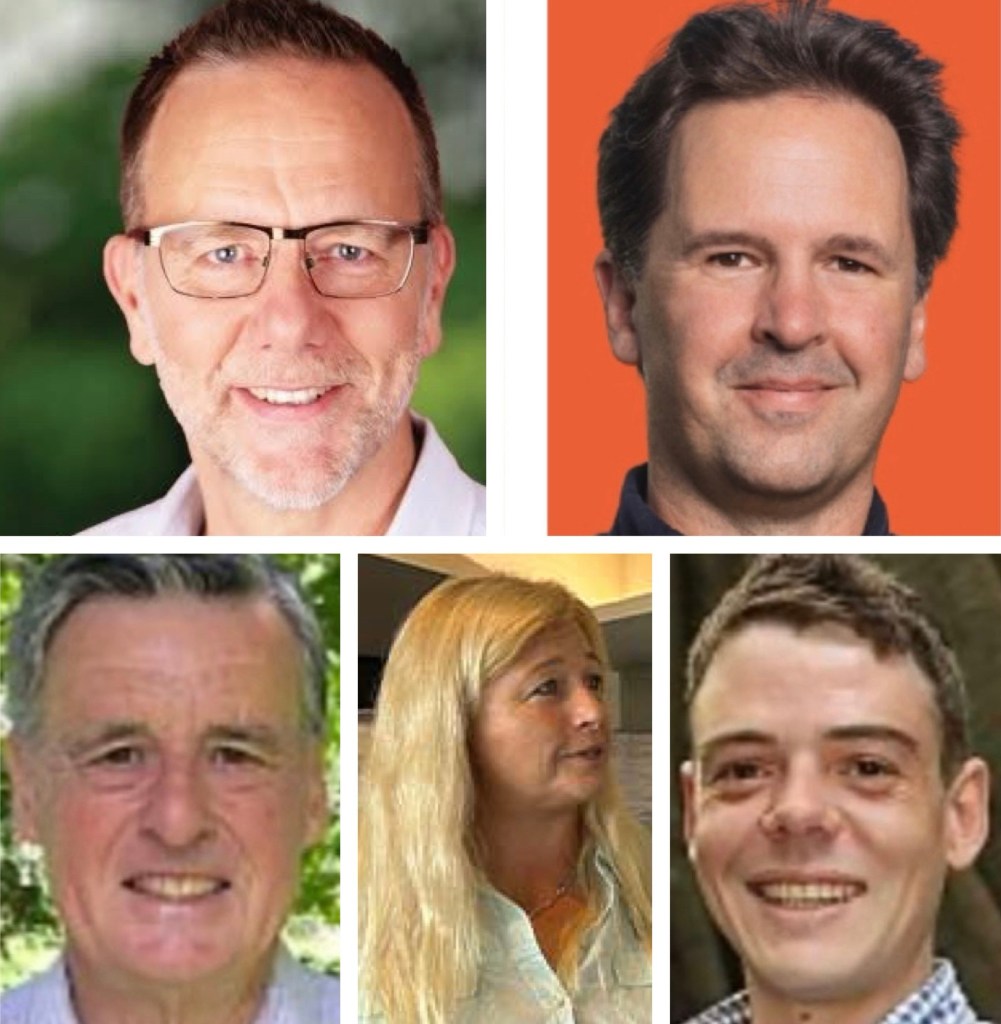
Five of the ten candidates standing in the electorate of Lyne came to Dungog yesterday at the start of the last week of campaigning. They were attending a Meet The Candidates forum organised by the Dungog Chamber of Commerce and held at the Dungog RSL Club.

Amongst the almost 50 people present were the Mayor and two Councillors of Dungog Shire Council. Three candidates had sent their apologies for the event. Each of the five candidates present were given ten minutes to speak about themselves and their policies. They spoke in the order that they appear on the ballot paper.

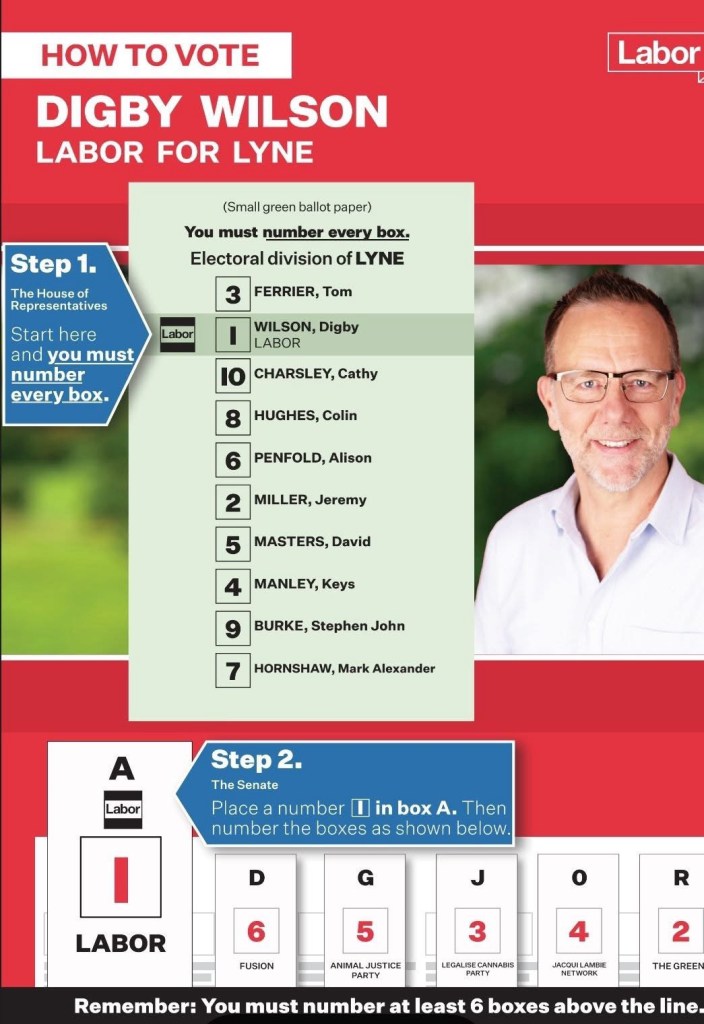
Digby Wilson (Labor) began, declaring that he is always energised by working with people. He spent 30 years working in telecommunications (with Optus and Telstra) before,retiring. He currently volunteers at St Vincent de Paul and is a councillor on Mid Coast Council; in these roles he meets many people struggling to make ends meet.

Digby spoke about the deteriorating roads and decrease in medical funding during the time that the Coalition was in power. The Coalition policy allowing people to empty superannuation savings is causing an increase in housing prices. 

He affirmed that policy and character are the fundamental bases for deciding how to vote. Misrepresentation by Nationals candidate has not been fair. His speech was a little hesitant at times, but overall it was a thoughtful presentation.

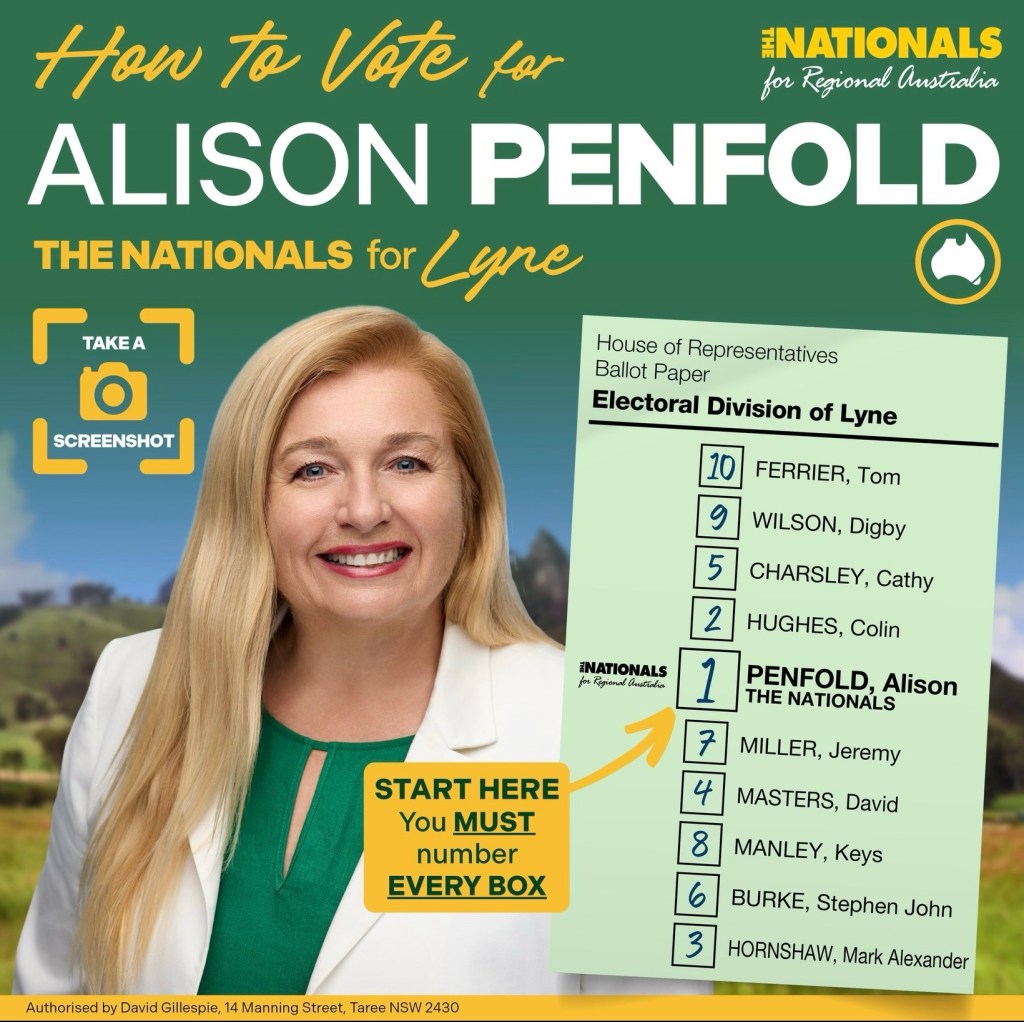
Alison Penfold (Nationals) noted that she has visited Dungog on many occasions in the past and is aware of the challenges Dungog faces as the smallest shire council in the electorate. Tied funding is the way to ensure that money comes to regional councils; it is not ideological, but practical. She spoke of plans to establish a fund that will prioritise roads, healthcare, and medical needs.

She noted that “if renewables can deliver, I will support them; but I don’t believe they can. I will not be ideological, but practical.” Her focus will be to develop a cost of living plan to get the country back on track, with cuts in fuel costs, tax offsets for up to $140k, cheaper energy, and a nuclear programme that will cost far less than $600billion. The Coalition will offer incentives for first home buyers; she also rattled off a list of specific proposals in terms of health care. 

Alison has worked in private enterprise and also on the staff of a member of parliament in both government and opposition. She is not interested in personality politics. However, throughout her presentation she was loud, assertive, even aggressive, which was noted by other speakers and in the informal conversations taking place after the event amongst those who had attended.

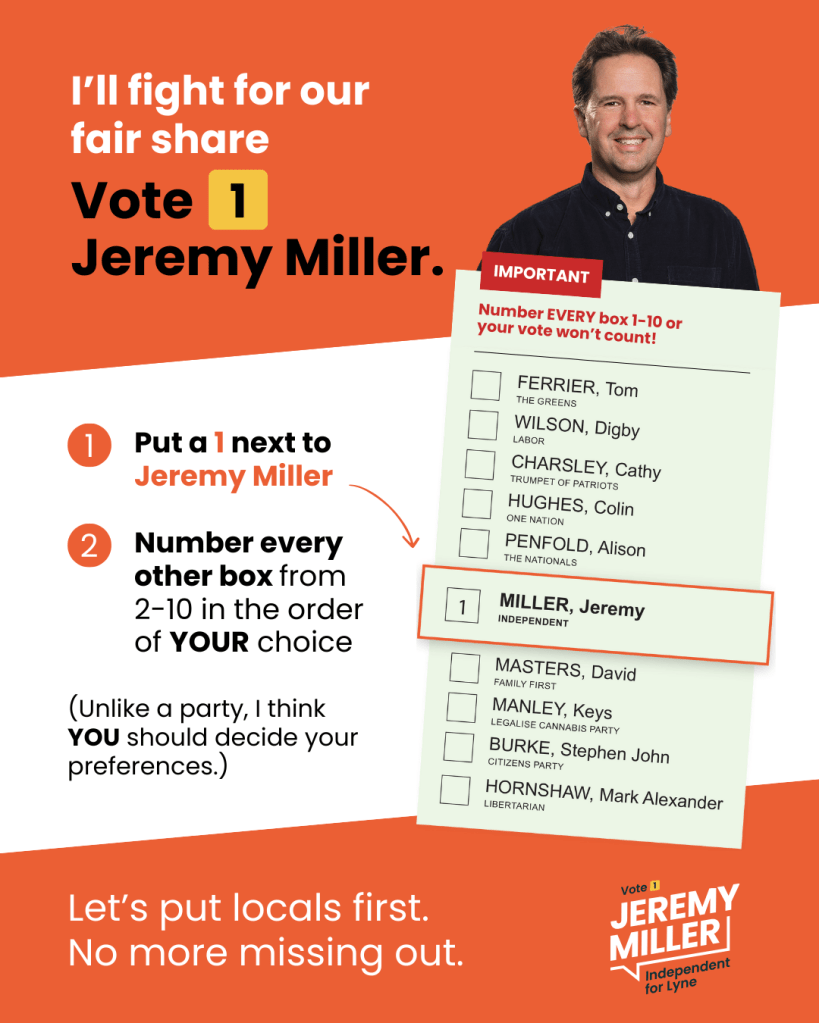
Jeremy Miller (Independent) is standing with the support of Independent Lyne, a local community movement. He has lived 30 years in the area, after moving from Canberra to Taree. Married with three kids, two at university, he now runs two businesses in Taree, employing 14 people. “I am not a typical politician”, he said; “I am not a lobbyist, but a business person who wants to get things done.” He believes it is time for something new, other than “the two tribes”. 

Independent Lyne has been modelled on the process used in the Indi electorate, with a strong grassroots movement developed by Cathy McGowan, and then used by Helen Haines. Kitchen table conversations were held across the electorate, with the results reported in a Listening Report. The group called for applications, then chose a candidate through a grassroots process. If he is asked “what do you stand for?”, Jeremy points to the results of that listening phase, which has shaped the policies he stands for.

He wants to see three levels of government working together (he is also a councillor on Mid Coast Council) rather than pointing the finger at each other as to why it does not work. In Lyne, he maintains, “we can feel it in our bones” that we are getting left behind. Jeremy offered an energetic and enthusing presentation.

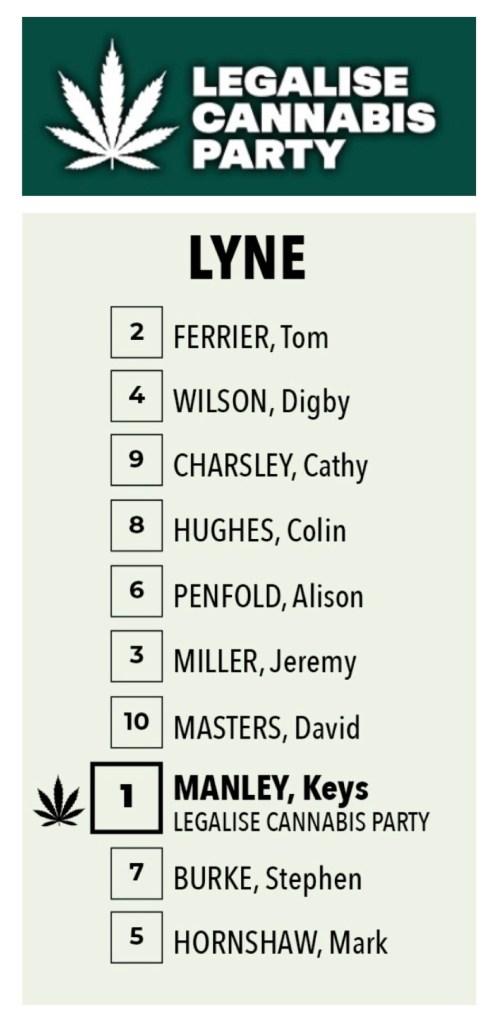
Keys Manley (Legalise Cannabis) has family links with Taree and Wingham, where he grew up. In 2017, he was diagnosed with a genetic mutation predisposing cancer. After a series of operations, he was introduced to medical cannabis, with oils and balms used as well. At a fourth operation to remove polyps, he was given a clean bill of health. He has since learnt about the many benefits of cannabis across many industries. It has saved his life. It offers many benefits in so many areas. 

Keys advocates for civil liberties and social tolerance. There is a wastage of resources consumed by the policing of cannabis; we could free all of this by legalising it. It is safer than alcohol and other drugs. Cannabis is a rich nutrient food and it can provide a more sustainable future. “Let’s embrace this industry and funnel the resources saved into what we need to build locally”, he concluded his passionate speech.

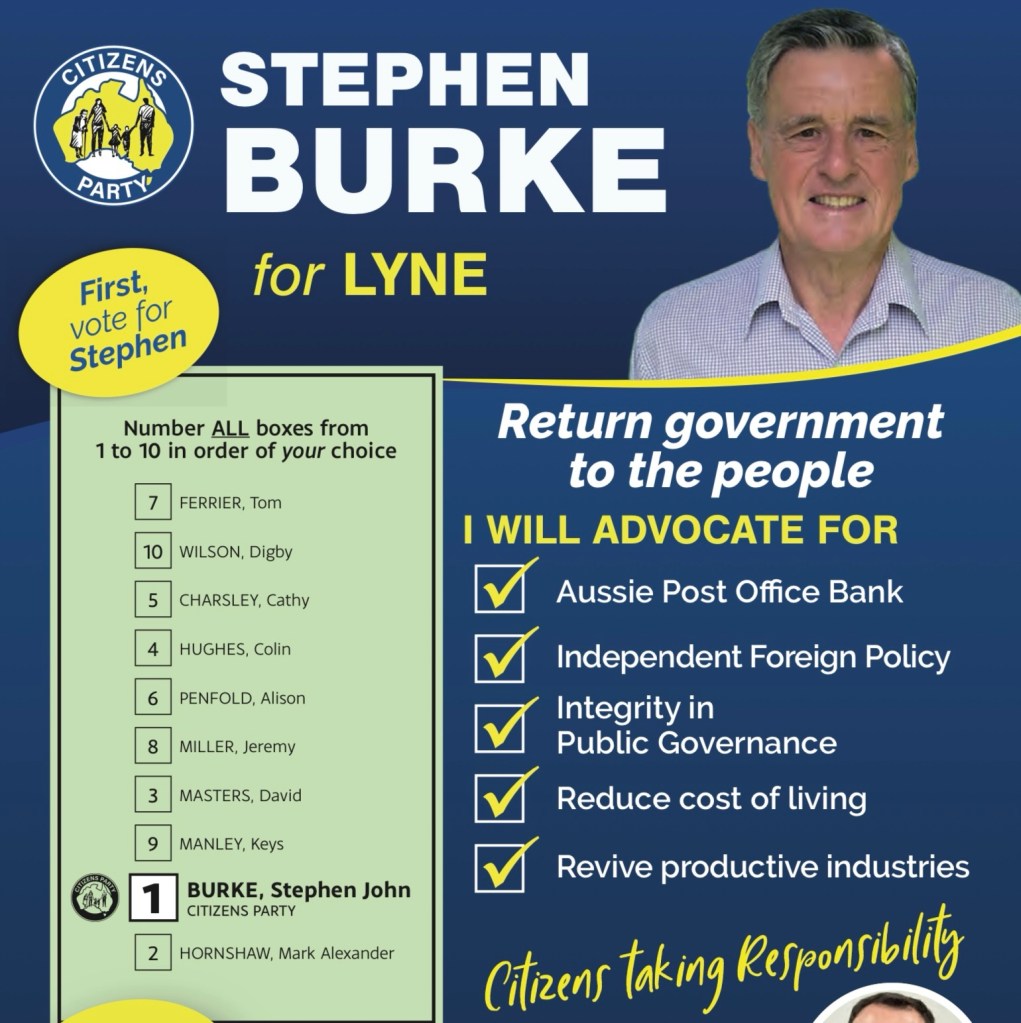
Stephen John Burke (Australian Citizens Party) also spoke passion  a speech filled with his key themes: Our system is broken, with policies of destruction, fostered by the rich, who benefit from and manipulate the current system. The ACP, he noted, is not a splinter party but has worked for over 30 years to achieve some important gains. 

He then ranged over the various policies of the party, which included: No totalitarian censorship. Liberty of expression. Religious liberty. Moving away from the digital scenario—“cash is king”. A Post Office Bank so that in person banking facilities are available directly in each rural town. The speech was delivered with some humour and intensity of commitment to the issues and the solutions he proposed.

The night ended with three specific questions relating to Dungog Shire being put to the candidates for their short response each in turn: recognising some local roads as State roads, thereby attracting funding; keeping in person government services in the town; and how to maintain more youth in the town. The answers given reflected the varying experiences of the candidates, in local and Federal roles, as well as the general policy platforms on which they were standing.

Unfortunately there was no opportunity to ask questions from the floor. However, the general feeling was that the evening was a useful event for those who attended. 

See also
Woke and Teal

The term “Woke” was first used in a positive manner by Afro-Americans. It can be traced back to an 1891 book by Joel Chandler Harris (best known for his “Uncle Remus” stories). In the 1930s, it was used by Blacks quite often to describe being aware of racial prejudice and discrimination, often in the phrase “stay woke”. That usage continued through the decades and was picked up by the Black Power movement in the 1970s, and then increased in usage in the Black Lives Matter push of the 2010s.

See more at https://www.independent.co.uk/news/uk/home-news/woke-meaning-word-history-b1790787.html

In 2017, the Oxford English Dictionary added “woke” to its official lexicon, noting that it was most often used “in a derogatory sense”. This reflects the reality that the term had been picked up and hijacked by people of more conservative political and social perspectives (predominantly white people), and employed as a way of denigrating people with a social conscience committed to social justice. It’s a strange recent twist to what had been a proud Black statement.

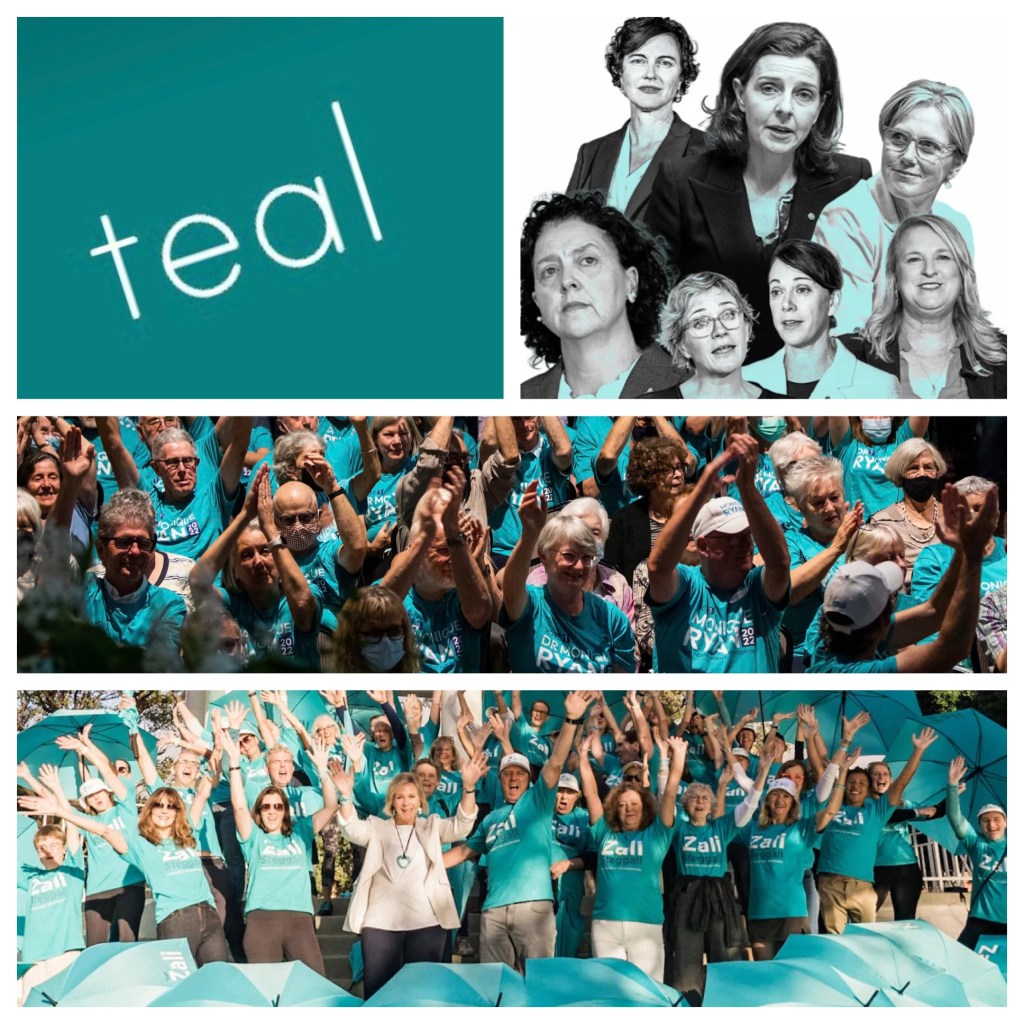
The same development in meaning can be seen with the word “Teal”, with a much more recent origin and a highly-compressed trajectory in turning from a positive to a negative meaning. It was first used as a political label in the 2019 federal election campaign of Zali Steggall, when she defeated Tony Abbott in the seat of Warringah (NSW). 

The term (and the campaign colour) was then picked up and used in a constructive sense by some (but not all) community-supported independents in the 2022 election: Dr Monique Ryan in Koorong (Vic), Allegra Spender in Wentworth (NSW), Dr Sophie Scamps in Mackellar (NSW), Zoe Daniel in Goldstein (Vic), Kate Chaney in Curtin (WA), and Zali Steggall in her successful re-election campaign in Warringah.

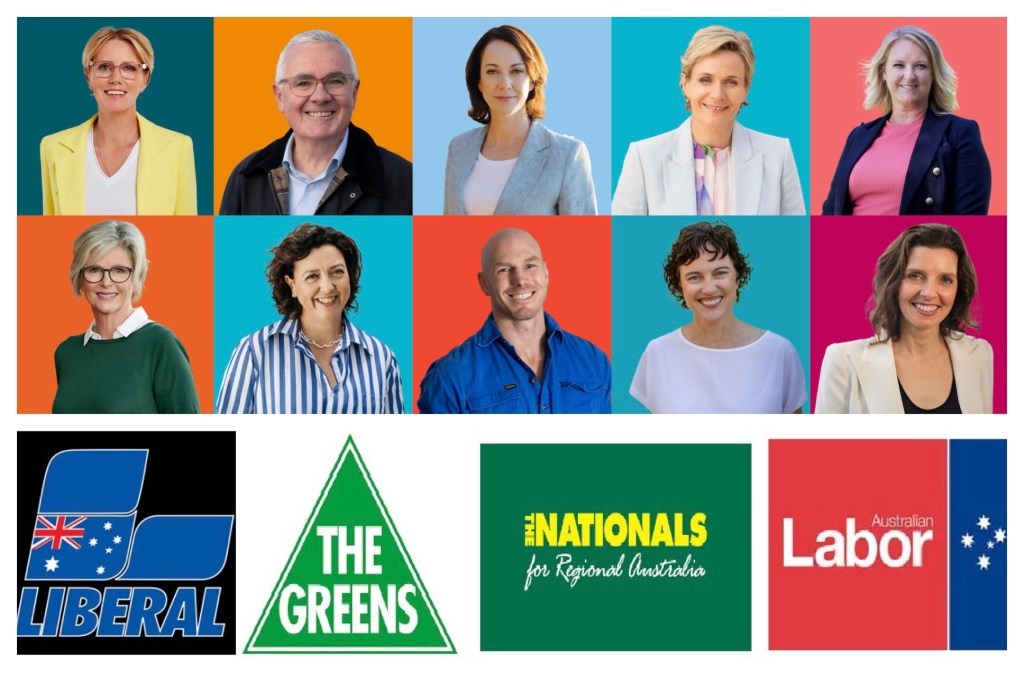
The colour has successfully differentiated community-supported Independents from the “old parties” of Labor (bright red), Nationals (deep green), and Liberal (royal blue), as well as the Greens (light green).

However, the word “teal” has been adopted by uncritical conservative people as used as a way to lump together a widely-disparate group of independents and frame them all as “Labor lite” or “pale Green”. It has become a derogatory term for such people, as they look for an easy (and lazy) way to caricature those standing as Independents, dismissing them all as “leftwing woke ideology” (three slurs in one phrase!).

Too often there is a conflation of “Teal” and “Climate 200”, with the implication being that all candidates supported by C200 are Teals who are climate change warriors—“leftwards”, as some derogatorily call them. However, the C200 website clearly shows that the independents they are supporting are using a range of colours. 

Quite a number of the Independent candidates that the Community independents Project is supporting are using teal, but others are using orange, and a few are using yellow. Standing against Peter Dutton in Dickson (Qld), Ellie Smith is using magenta. Overall, the choice of colour for Independents it is made on an individual basis. That’s far from the monolithic imposition by the parties of the red of Labor or blue for the Liberals, the lighter green for Greens and the deeper green for the Nationals. These are required of all of their candidates around the country. Community-supported Independents each choose their colour and their marketing strategy.

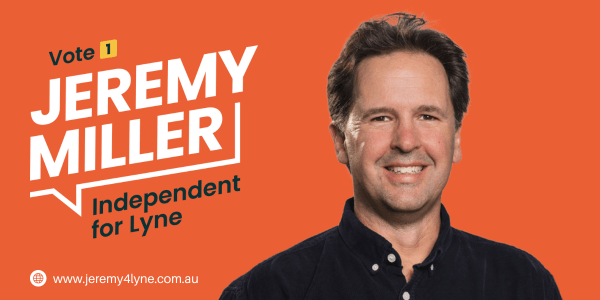
For myself, I am wearing orange and supporting Jeremy Miller as the Community Independent for Lyne. Jeremy has been chosen by community members across the Lyne electorate in response to a twelve month listening campaign aimed at prioritising the local needs of the Lyne electorate. His fundamental commitment is to listen to the people of the electorate and advocate strongly for the needs of people in Lyne.

See more at https://www.jeremy4lyne.com.au/what_i_stand_for

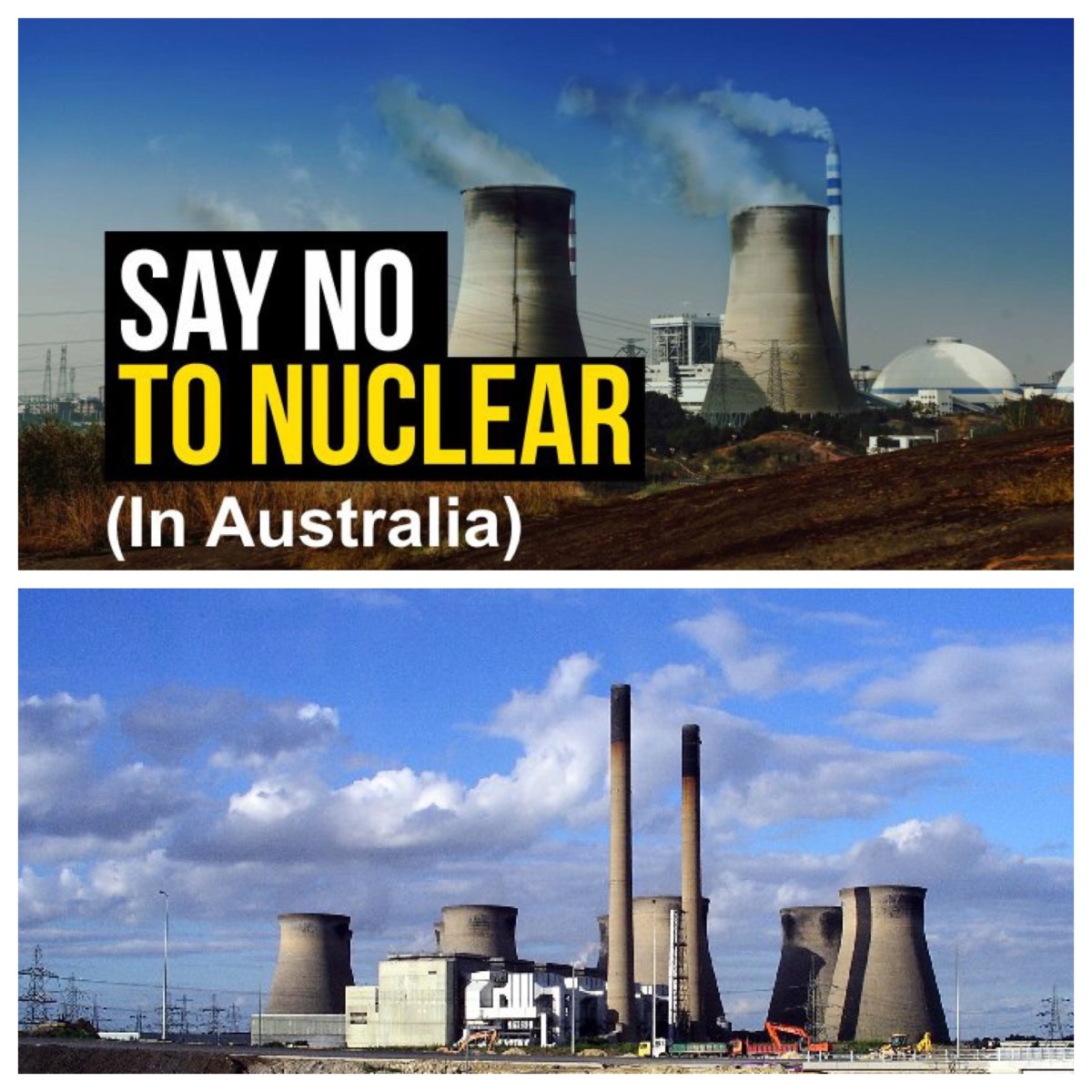
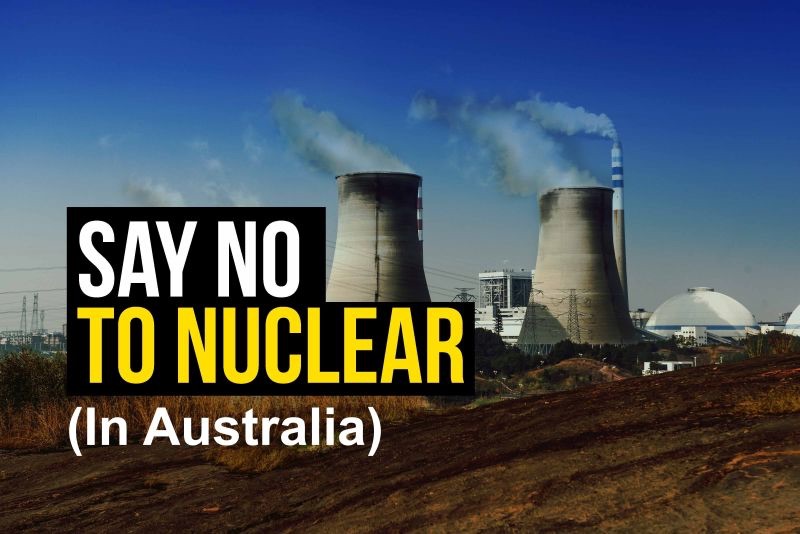
Seven reasons NOT to embrace nuclear power as the basis for electricity generation

Is moving to nuclear power as the basis for electricity generation in Australia a reasonable move? There are many problems with this idea. Here are seven key reasons that come to mind for me.

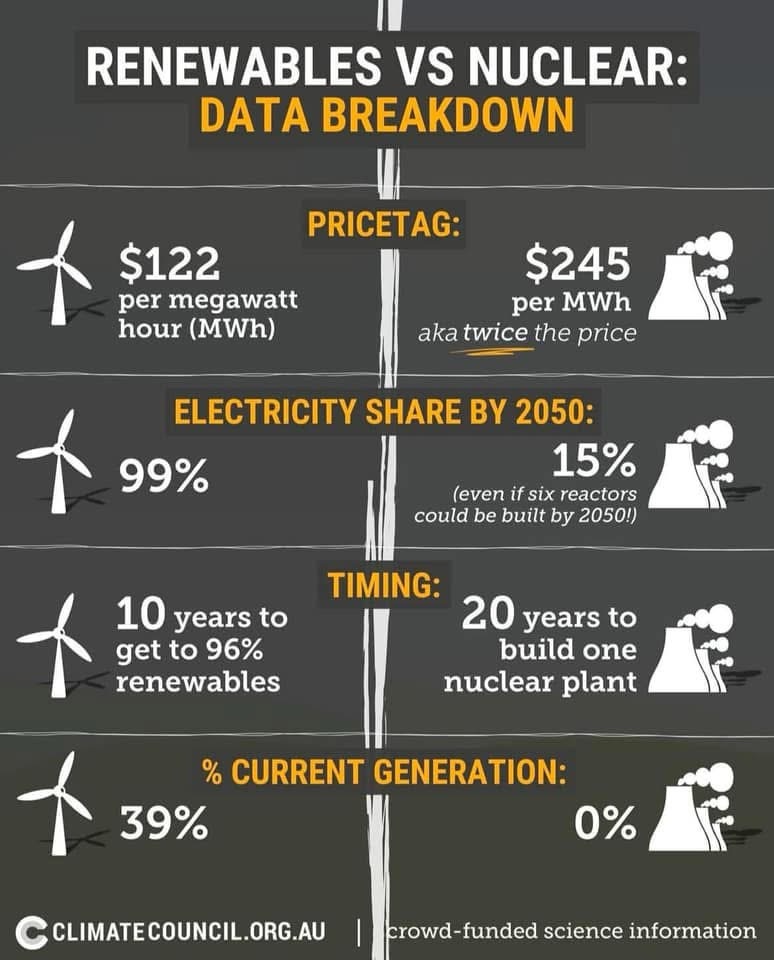
1. Time. We are a long way from having the capacity for nuclear power to provide electricity in Australia. If we were to start work right now, there wouldn’t be any nuclear-generated electricity before 2040 at the earliest, according to the CSIRO. Even then, it might take years longer. Nuclear energy is not an immediate solution to our energy production issues.

2. Pollution. In the meantime, while we wait for the nuclear power plants to be built, there will be about a billion tonnes of climate pollution from burning more coal and gas. It would be more sensible to spend money in developing truly renewable sources of energy. These will cause far less climate pollution than nuclear power. Nuclear energy produces lots of pollution.

3. Cost. The cost of building nuclear power plants to generate electricity is much higher than any other source of power. Small Modular Reactors cost more than four times more than Solar Farms to build and maintain. Even larger-scale nuclear plants (which are not in view for Australia at the moment) are two and a half times the cost involved in harnessing renewable sources of energy. Nuclear energy is bad economic policy.

4. Efficiency. For the seventh year in a row, the CSIRO has said that renewable sources of energy are the most cost-efficient way of generating electricity. Large scale Solar PV farms is the most efficient. Gas turbine costs are rising. Nuclear power is the most expensive and least efficient way to generate electricity.

5. Risks for the environment. There are large environmental risks associated with nuclear power. Radioactive waste is a by-product of producing nuclear energy. This waste needs to be transported safely and stored securely. If it escapes, it can cause significant damage to human beings and to the whole environment. The risk lasts for thousands of years. Again: nuclear energy is bad environmental policy.

6. Risks for people. We have seen that even nuclear power plants that have high safety standards have failed to keep radioactive materials safe (see Chernobyl in 1986, and Fukushima in 2011). Many people have suffered from the breakdown of these nuclear reactor sites. Playing with this risk in Australia is unacceptable. Nuclear energy is risky.

7. Water. Nuclear reactors would require massive amounts of water to keep them running. A typical 1600MW nuclear facility uses 2,000 litres of water per second—that’s how much water four average households use in one year! With increased risks of drought in Australia, the driest continent on earth, this is bad management of our resources. Again, nuclear energy is bad environmental policy.

Sources consulted:

Centre for Independent Studies, “The six fundamental flaws underpinning the energy transition” (2 May 2014)

Centre for Independent Studies, “Nuclear vs Renewables—which is cheaper?” (Energy News Bulletin, 12 July, 2024)

Climate Council, “Why nuclear energy is not worth the risk for Australia” (media release, 28 January 2025)

Climate Council, “CSIRO confirms nuclear fantasy would cost twice as much as renewables” (explainer, 10 December 2024)

CSIRO, “GenCost: cost of building Australia’s future electricity needs” (Consultation Draft released February 2025; final version to be released in the second quarter of 2025)

But where does your funding come from? (political candidates and their donors)

One of the questions that is often put to Independent candidates relates to the issue of funding. “Where is your funding coming from?” “Your candidate is on the Climate 200 website—that means they’re a Teal, doesn’t it?” The implication is that Teal is somehow “Green-lite” and that there are murky climate-change figures lurking behind the group, feeding it money. Some basic figures might be helpful here.

For the 2022 election campaign, Climate 200 raised over $12 million and used it to back 23 independent candidates. These include Dr Monique Ryan, Zoe Daniel, Kylea Tink and Allegra Spender. The crowdfunded initiative received donations from every electorate in the country, with 11,500 donors in total. One third of these came from rural and regional areas. 

Over the past financial year, Climate 200 has disclosed that they have received a total of $4.4m in donations. One donor, Robert Keldoulis and his investment firm Keldoulis Investments Pty Ltd, gave $1.1 million. Climate and energy market-focused trader Marcus Catsaras also donated $1 million. Other donations came from the large number of individuals, located right around the country, who are keen to support independent candidates who support an evidence-informed response to climate change, integrity in parliament, and gender equity. That’s all they ask for; they don’t govern the policies of each candidate.

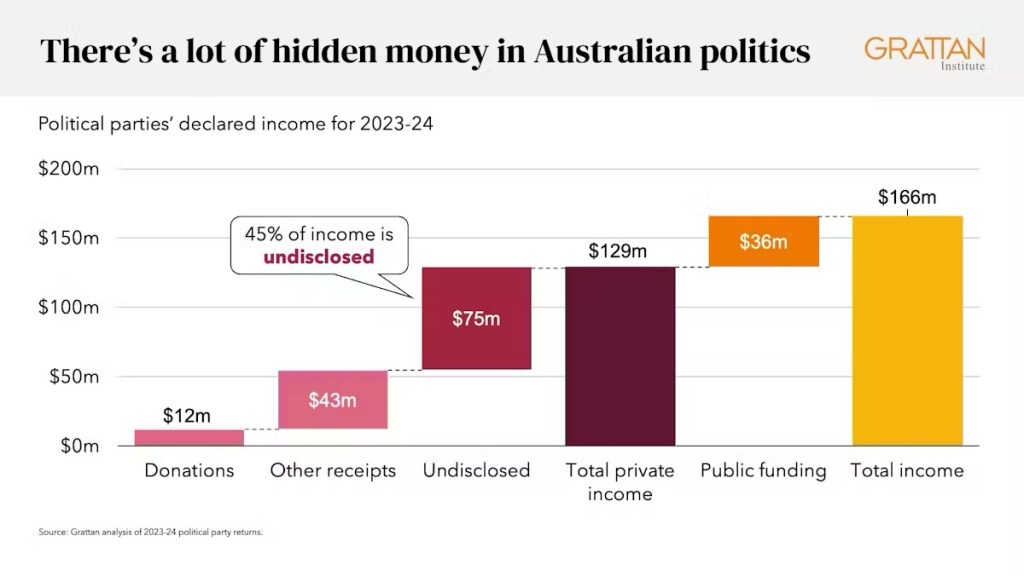
Alongside that $4.4 million given to Climate 200, we should place the major parties. The Australian Electoral Commission recently published a report which indicated that almost $160m flowed to the established major parties (Labor, Liberal, National, and Greens) in the past financial year, in preparation for the 2025 election. Labor’s branches received a total of $67.5m in receipts in the past financial year, compared with the Liberals’ and Nationals’ combined $72.2m. The Greens received $17.1m.  

Whilst the majority of these donations were declared, the source for $67.2m was not declared. That’s troubling. The major parties apparently have ways around the laws that are still in place for this election. About half of what was donated to the Coalition has not been publically declared. It’s a lesser proportion for Labor. But that is still a worry.

Betting companies gave large amounts to Labor. In 2022, Sportsbet donated $88,000, Tabcorp $60,500 and the peak body Responsible Wagering Australia gave $66,000. Overall, Labor received almost $300,000 in 2021–2022, the Liberals a little over $100,000, and the Nationals received around $80,000. 

Figures reported to the Australian Electoral Commission and analysed by the parliamentary library, show donations from the biggest gambling companies involved in horse betting to the major parties have increased from $66,650 in 2013–14 to $488,000 in 2022–23, representing a 632% growth. The major parties have taken this money without gumption. It’s a disgrace.

The Labor Party and the Liberal Party do not accept donations from tobacco industry players, but other parties do. In 2021–22 for example, Philip Morris Ltd donated $110,000 to political parties, split between Liberal Democratic party and the National Party.

The two major parties continue to receive donations from fossil fuel companies. Gina Rinehart’s Hancock Prospecting donated $500,000 to the Coalition, while the Minerals Council of Australia gave $382,465 in donations to several Labor and Coalition branches. 

A report released this week predicts that a Coalition proposal to limit the rollout of renewable energy could stop at least $58bn of private investment in new developments and halt billions of dollars in flow-on spending in communities. Although it has not said it would limit renewable energy to 54%, the Coalition has said that it would not support as much solar and wind energy, and that it would scrap Labor’s $20bn rewiring the nation fund to build transmission links across the country.

That’s what comes from accepting fossil fuel money and supporting a destructive, dying industry. The policies of the Coalition—and, indeed, the policies of Labor—continue reflect that they cannot give up their damaging addiction to fossil fuels. We are helping to sign the death warrant of humanity and the planet by continuing on this path.

Climate 200 passes on all donations received to community-supported Independents. They report that their donors come from all walks of life. “They include entrepreneurs, farmers, tradespeople, professionals, teachers, pensioners, and health care workers. One-third are from rural and regional Australia and collectively they hail from every single electorate in the country.”

They note that “All our donors hoped for a better future for the planet and a more civilised politics.” That’s a markedly different motivation from the donations made by commercial business interests, who lobby the government incessantly and fund all major parties with the intention that they will be able to influence legislation. It’s a cancer at the heart of our system.

Climate 200 also notes that all their donors who give above the disclosure threshold each financial year “will be disclosed in accordance with AEC regulations, [however] the majority of our donors are below this threshold and have agreed to share their identity anyway.” There is full, open, transparent disclosure. Unlike the major parties, who are shifty and reticent about the declarations that they do have to make. It’s a clear contrast, offering a clear choice. 

*****

In writing this blog, I have consulted the following websites:

https://www.theguardian.com/australia-news/2025/feb/03/dark-money-political-donations-labor-coalition-liberal-greens-ntwnfb

https://www.theguardian.com/australia-news/2024/nov/04/how-donations-to-political-parties-from-gambling-companies-linked-to-horse-racing-have-surged

https://www1.racgp.org.au/newsgp/professional/ban-tobacco-and-vape-political-donations-racgp

https://www.acf.org.au/fossil-fuel-interests-big-donors-to-major-parties-in-election-year

https://www.theguardian.com/australia-news/2025/apr/10/coalition-nuclear-plan-will-plough-58bn-wrecking-ball-through-renewable-energy-projects-analysis-warns

https://www.rmit.edu.au/news/factlab/australian-federal-election-simon-holmes-a-court

See also 
Why vote for an Independent?

An independent can:

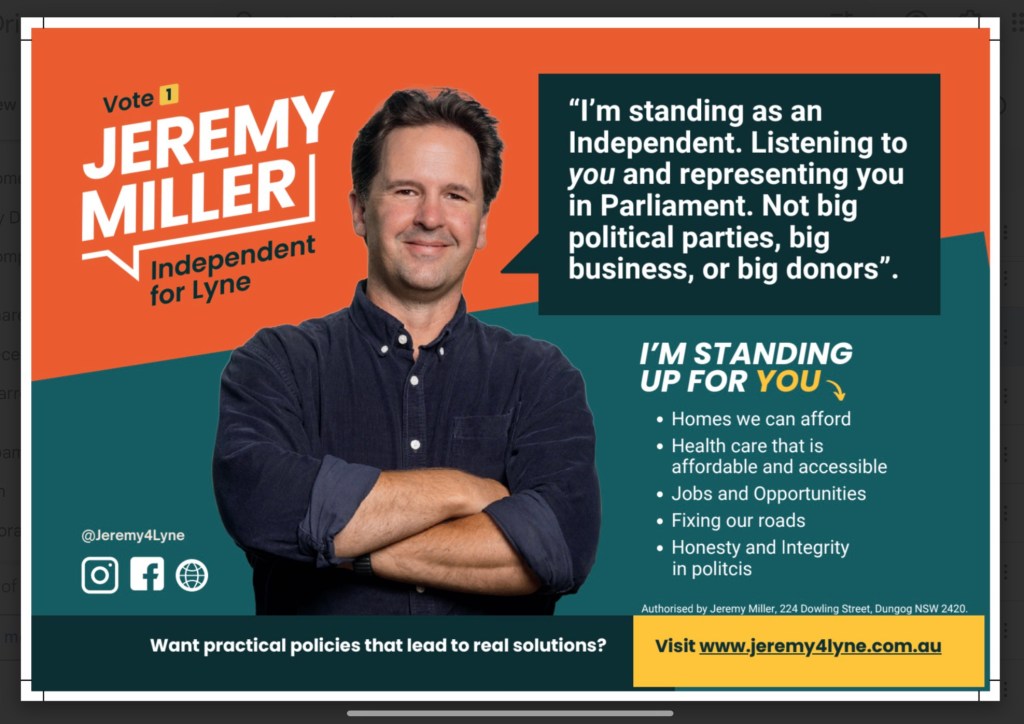
Represent your interests not party or big business interests

Collaborate across party lines and take the best of both views

Prioritise practical solutions over party driven agendas

Speak up on important issues as they’re not silenced by party interests

Reflect your values and concerns, not the party platform


True Representation of Local Interests
Independent candidates are not bound by party lines, meaning they can focus entirely on the needs and concerns of their local community. This ensures that your voice is heard without the influence of national party politics.

Greater Accountability
Independent MPs are directly accountable to their constituents, not a political party. They must work to earn your trust and support with every decision, giving you more direct influence over the political process.

Less Partisan Gridlock
With no allegiance to a political party, an Independent can work across party lines, pushing for policies that benefit the community rather than getting caught up in party politics. This leads to more practical and effective solutions for pressing issues.

Freedom to Speak Up on Important Issues
Without the constraints of party policies or backroom deals, Independent MPs can speak freely on important matters, advocating for change and challenging both sides of the political spectrum when necessary to improve local and national outcomes.

Focus on Practical Solutions
Independents often bring a more pragmatic approach to governance, focusing on tangible solutions to local problems. This means they are more likely to push for policies that address real issues such as housing, healthcare, and cost of living without getting bogged down by political agendas.

Empowering the Voter
Voting for an Independent candidate allows voters to have more control over their representation. It encourages a shift away from the traditional two-party system, giving individuals the power to choose someone who best reflects their values and concerns, not just a party platform.

Authorised by Jeremy Miller, Independent for Lyne 224 Dowling St Dungog NSW 2420

If you want things to change, you need to change the way you vote

I have been exploring just how it is that my federal electorate of Lyne has been “represented” National Party incumbent in recent times. It’s quite revealing.

The member who “represented” the people of Lyne in Canberra for the past three years has consistently voted 

AGAINST increasing support for rural and regional Australia

AGAINST improving housing affordability

AGAINST growing our investment in renewable energy

AGAINST increasing workplace protection for women

AGAINST a transition plan for people working in the coal industry, whose jobs will become obsolete in the future 

AGAINST treating the COVID vaccine rollout as a matter of urgency 

But the voting record for our representative is not always NO; unfortunately, it is sometimes YES. In the same period of time, our member has voted

FOR getting rid of penalty rates on Sundays and public holidays

FOR political intervention into research funding grants 

FOR privatising more government services

FOR banning mobile devices in immigration centres

FOR decreasing the availability of welfare payments

FOR putting welfare payments onto a “cashless card” system

Is this really how we want to be represented in parliament? These issues are all central to the commitments that the National Party has—all their members voted the same way. They showed little concern for local issues, but were focussed on “following the party line”.

As the saying goes, “if you want things to change, you need to change the way you vote”. A vote FOR Jeremy Miller will ensure that the concerns of people in the electorate are heard and considered, and that there will be strong advocacy about what really matters to you. 

You can check out the voting record of the retiring National Party representative at https://theyvoteforyou.org.au/people/representatives/lyne/david_gillespie

You can check out the things that Jeremy Miller is standing for at https://www.jeremy4lyne.com.au/what_i_stand_for

Our “Meet the Candidate” event: Jeremy Miller comes to Dungog

Since the middle of last year, Elizabeth and I have been involved in a process that has led to the selection of a Community Independent to stand as a candidate for the seat we live in, Lyne, and then into the forming of a team to run the campaign for JeremyMiller4Lyne. It has been a most interesting experience! See

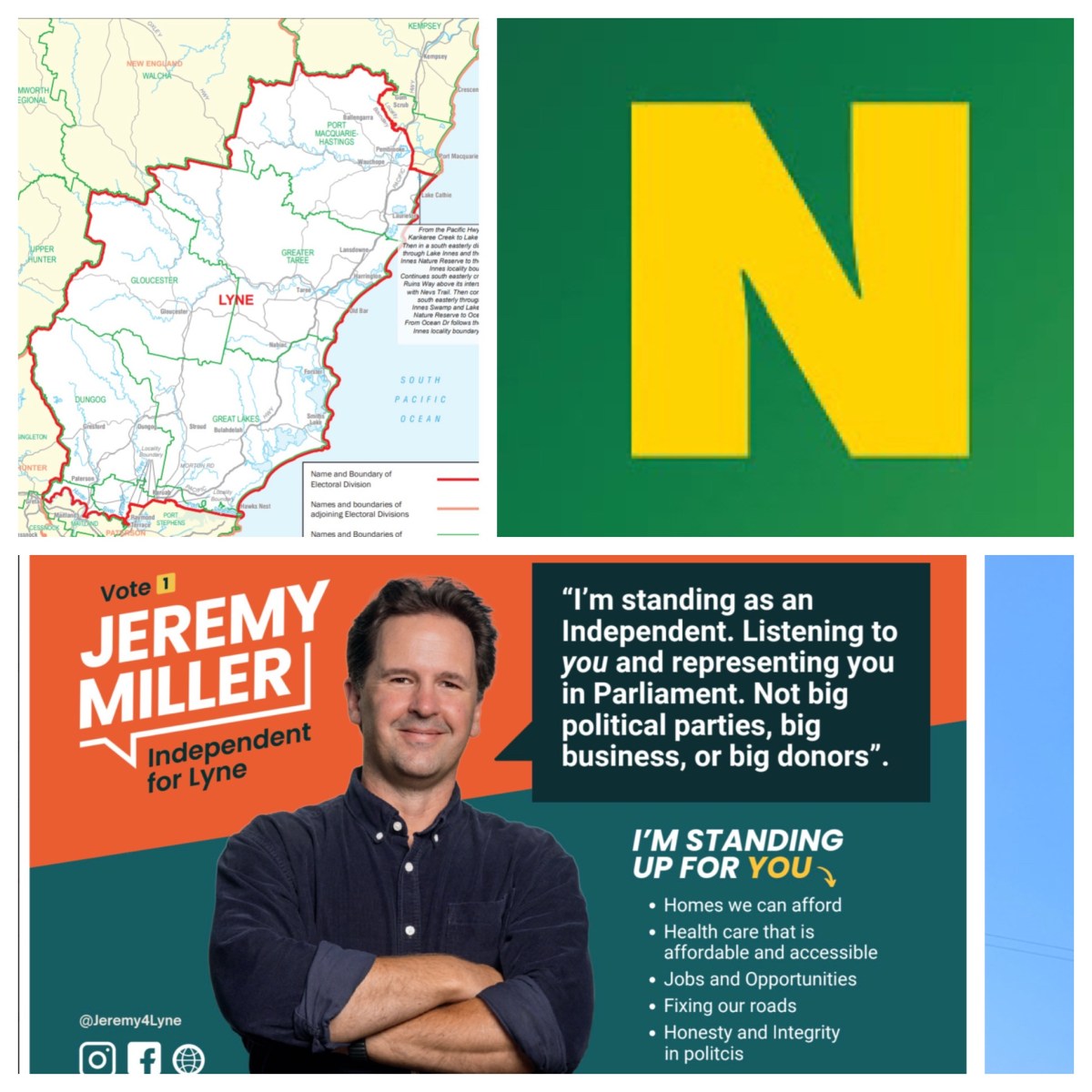
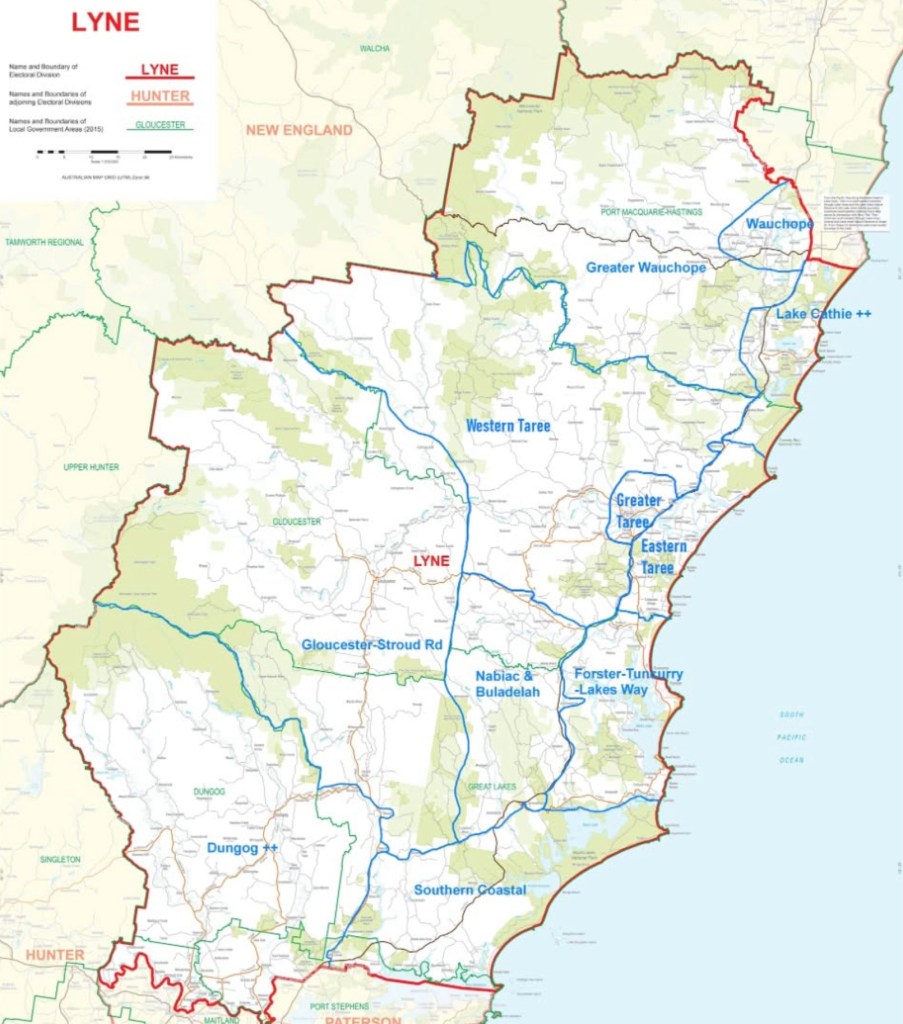
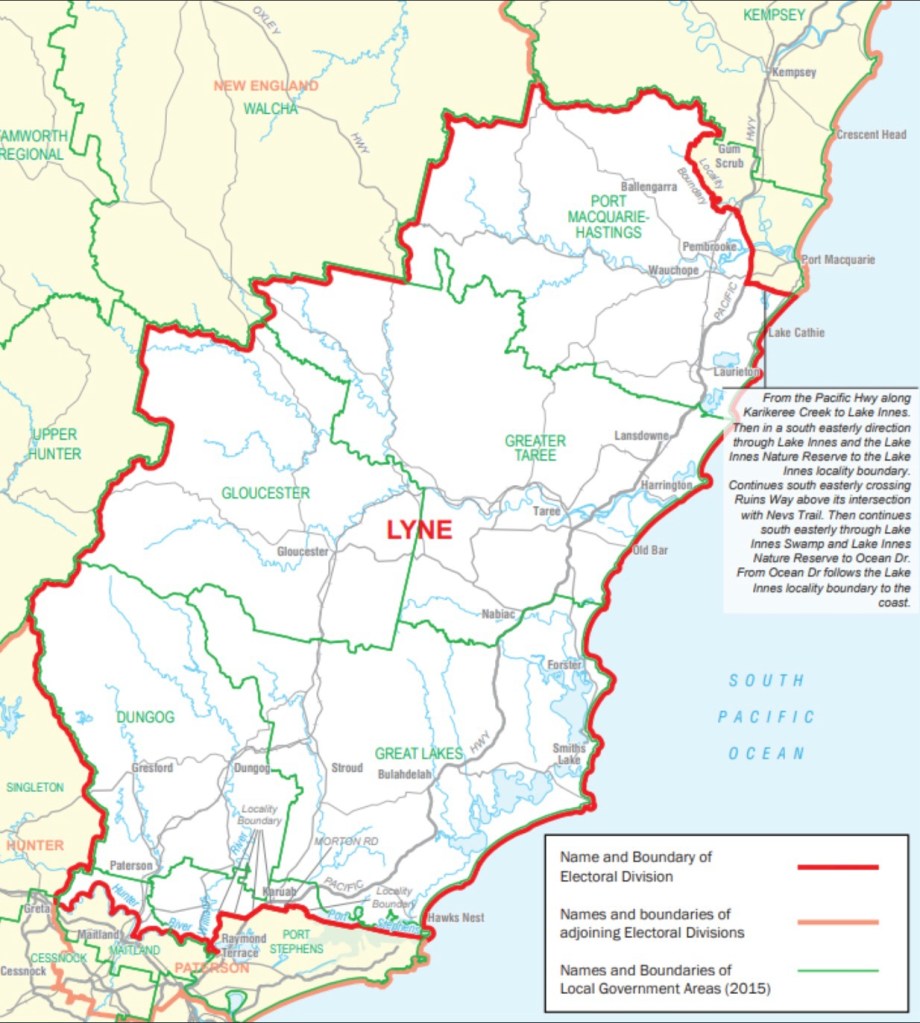
The federal electorate of Lyne is large. It is about 230km in length and over 100km in width. It takes about two and a half hours to drive it south to north, although there are very few roads that run east to west as there are wonderful areas of natural beauty in national parks, nature reserves, and state forests through much of the inland area. The electorate includes the magnificent rainforests of the Barrington Tops National Park, just north of where we live in Dungog.

The electorate stretches from the northern suburbs of Maitland on the banks of the Hunter River, across to Tea Gardens and Hawks Nest, and then north all the way to the southern suburbs of Port Macquarie near the Hastings River, and inland to the west to our old stomping ground of Wauchope. It includes significant urban areas on the coast—Taree, Forster, and Tuncurry—as well as a string of smaller coastal towns and villages.

There are some key rural hubs inland—Wauchope, Gloucester, and Dungog—as well many other smaller towns and villages in the hinterlands, and widely dispersed farmland areas through many river valleys. It is an area with wonderful scenery along the coastline as well in the mountain areas inland, and many natural features that attract visitors throughout the year.

To cover all of these diverse locations, the campaign team has sent up Hubs (see above). Each Hub is running its own events locally. Each Hub has a local leader—Elizabeth has taken on this role for the Dungog Hub, which includes the whole of Dungog Shire (Dungog, Clarence Town, Paterson, Vacy, and Gresford) as well as the northern suburbs of Maitland (Lorn, Largs, and Bolworra Heights).

Elizabeth has marshalled a team of volunteers, mostly living in Dungog itself. We have started a weekly street stall in the Main Street of Dungog, to let people know about Jeremy. Three of us set up a stall at Clarence Town Markets some weeks back, with the same purpose. Volunteers in other hubs have been at stalls for markets in Taree, Forster, Gloucester, and other places where monthly markets are held. We have started putting up Corflutes in our various hubs. Some hubs are now starting Corflutes Marches in the main towns. There’s lots of activity happening.

Jeremy Miller (in the centre) with Dungog supporters

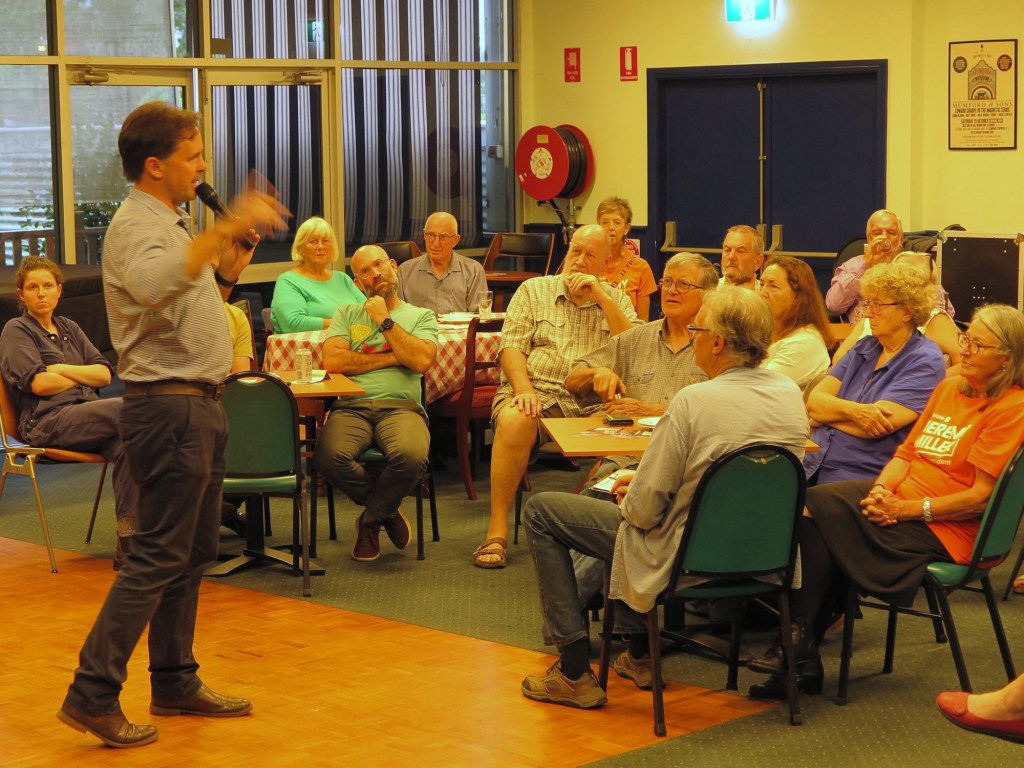
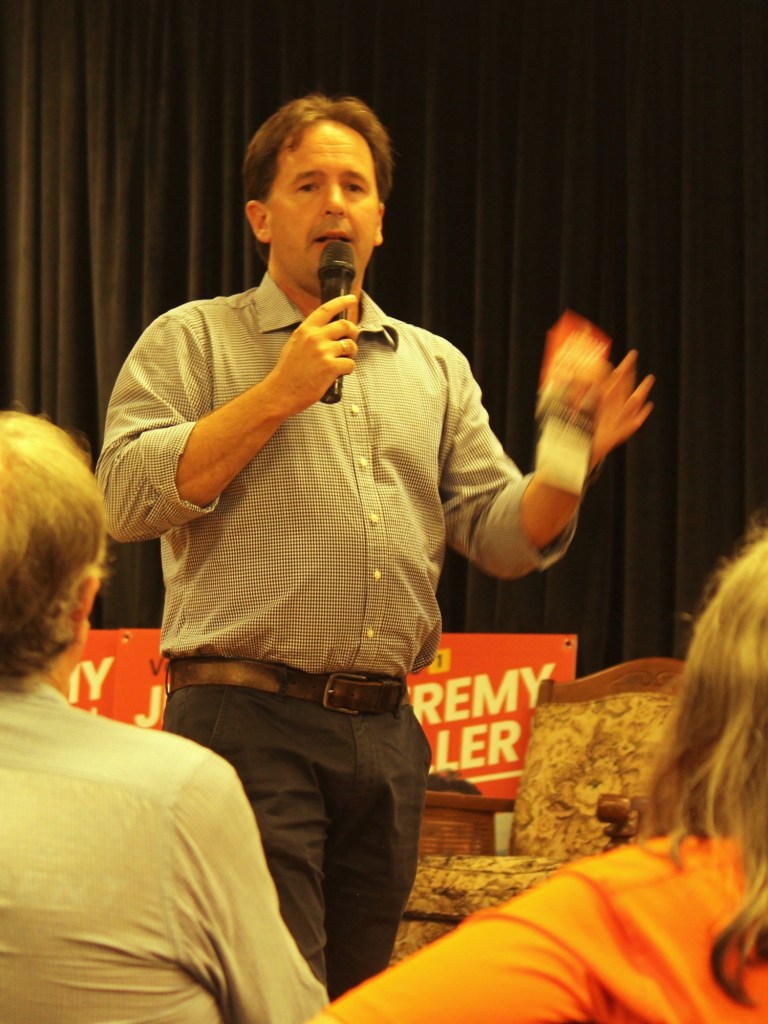
As a team, we decided not to have a “campaign launch”, but to have a series of “Meet the Candidate” events in key locations. The first one was held this week at Dungog, in the heart of the southern part of the electorate. A crowd of over 40 locals gathered at the Royal Hotel to hear Jeremy speak about his candidature. He spoke a little about his own life and outlined how he would serve as the member for Lyne. “As your Independent representative”, he declared, “my only loyalty is to our community. I’ll work with anyone who helps our region and stand up to anyone who doesn’t”.

The room was decked out with Corflutes and Banners in support of Jeremy’s visit. Local volunteer Janine Atkin served as the MC for the evening. Former Dungog Shire Mayor Tracey Norman spoke enthusiastically about what Jeremy would bring to federal parliament. The pub provided a fine spread of finger food for people to eat as they listened intently to what Jeremy had to say. 

Former Mayor of Dungog Shire Council, Tracey Norman, introducing Jeremy Miller

David Smith and Libby Doolan made sure that everyone who attended was invited to sign up as a supporter. In the audience were some Dungog Shire Councillors, including the current Mayor of Dungog, Digby Rayward. Jeremy had met with Cr Rayward some days earlier in order to gain a better understanding of the current priorities of the Dungog Shire Council.

The whole event ran smoothly, due largely to the careful planning of Elizabeth as the Dungog local leader and her persistence in inviting people from a wide range of local community groups in Dungog. We believe that offers a fine model for how other “Meet the Candidate” events in other parts of the electorate could run. There’s one scheduled for Tea Gardens today and Forster tomorrow.

Answering questions about key issues

Questions were asked about Jeremy’s environmental commitment and his stance on nuclear power and large-scale renewable energy installations. He said that community consultation was really important in setting up such things. He said that each project needs to be assessed on its own merits, and that there are too many unknown factors relating to nuclear power installations. “The Government shouldn’t be running large-scale risky businesses” such as nuclear power. Other questions asked related to tertiary education, tax reform, and truth-telling and treaty. 

One good question was about what principles guided his ethics. Jeremy said he will always seek to do “what is right” for the people of the electorate. He noted that, according to the ABC’s votecompass, he was “socially left, economically a little right, overall pretty much in the centre”.  What he would most like to achieve whilst in parliament would be “to change the mindset that things can’t change for the better”.

One person who attended commented that Jeremy “reeked of integrity”—an interesting turn of phrase! Another observed that he was up front and honest; perhaps a rare quality in public life? A number of people had come wondering “who is Jeremy Miller?” and “what does he stand for?” As they left, quite a number took Corflutes and signed up to volunteer to support Jeremy in his campaign in the coming days. It was a great evening!

Jeremy’s website is at https://www.jeremy4lyne.com.au

More details of what he stands for is at https://www.jeremy4lyne.com.au/what_i_stand_for

Much of Jeremy’s funding is from donations by individuals. He also has received funding from Climate 200 and the Community Independents Project; see https://www.communityindependentsproject.org
A list of the Community Independents who are standing in 35 electorates across the country is at https://www.communityindependentsproject.org/ci-mps-candidates

See also