
Reconciliation on the land of Australia: Bungaree and Mahroot

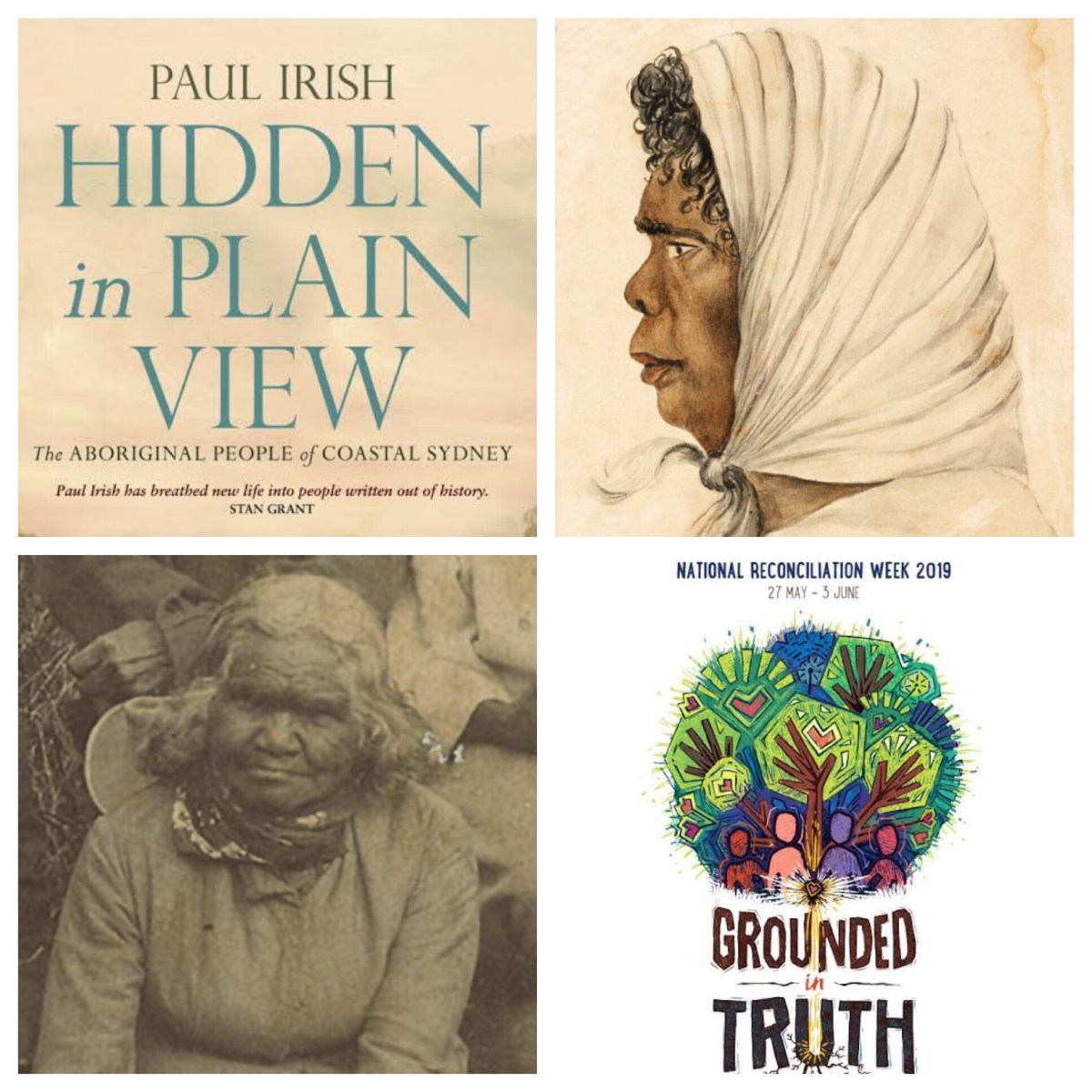
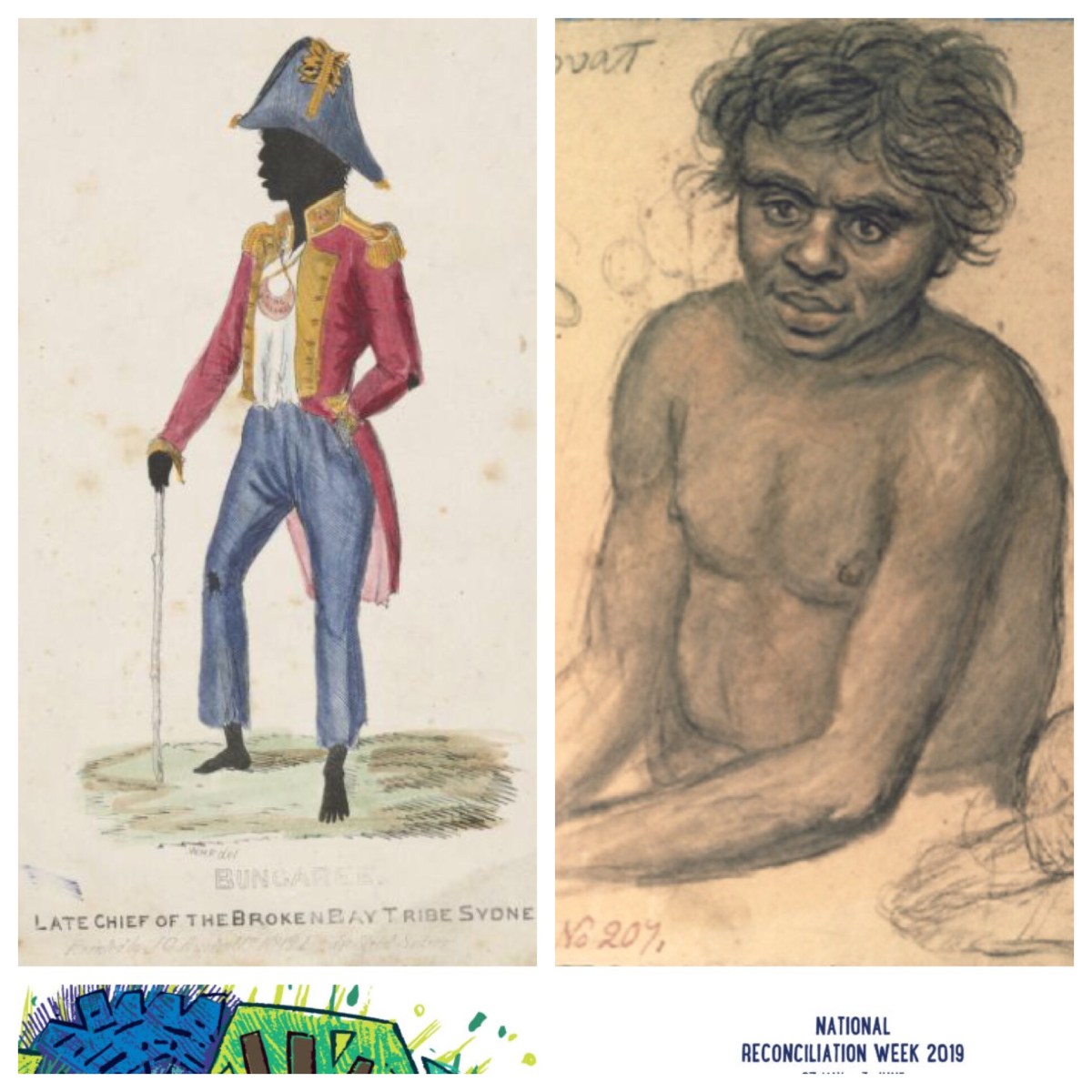
Paul Irish, in his recent book, “Hidden in Plain View”, introduces us to various Aboriginal people who are noted on a number of occasions in the early colonial records. One of them was Bungaree (1770s-1830), who came from the area we know as Broken Bay, at the northern end of “Coastal Sydney”.

Bungaree, or Boongarie, was born around the time that the First Fleet was being gathered together in preparation for the long trip to the Great South Land. As an adult, he adopted the role of a mediator between the invading British colonists and the Aboriginal people. He sailed in that capacity with Matthew Flinders, becoming the first Australian to circumnavigate the continent on that voyage of 1802–03.

It is said that, during this voyage, Bungaree used his knowledge of Aboriginal protocol to negotiate peaceful meetings with local Indigenous people. later, in A Voyage to Terra Australis, Matthew Flinders subsequently wrote that Bungaree’s ‘good disposition and open and manly conduct had attracted my esteem.’ (In A Voyage to Terra Australis)

In mid-life he found a patron in Governor Lachlan Macquarie, who made Bungaree ‘Chief of the Broken Bay Tribe’, set aside land and gave him a boat for fishing. In his later life Bungaree, while still respected as an Aboriginal leader, was regarded as the best-known character in the streets of Sydney.

Bungaree died in 1830. There is a substantial entry on him in the Dictionary of Sydney (https://dictionaryofsydney.org/entry/bungaree)

Another Aboriginal leader was Mahroot (1790s to 1850), who was also known as “Boatswain”. Mahroot lived with his wife at Botany (near the site of the Sir Joseph Banks Hotel), and it is recorded that he worked there as ferryman and guide in the 1840s. It is also claimed that several white people lived there, as his tenants. (https://dictionaryofsydney.org/person/boatswain_maroot)

Mahroot had regular and consistent engagement with whites in the colony; it is said that Mahroot and the British colonisers happily co-existed. He gave evidence to the Select Committee on the Condition of the Aborigines in 1845 where he spoke frankly about his life, his family, his Country and the impact on Indigenous people since 1788.

See also

http://home.dictionaryofsydney.org/paul-irish-hidden-in-plain-view-the-aboriginal-people-of-coastal-sydney/

https://johntsquires.com/2019/05/27/we-are-sorry-we-recognise-your-rights-we-seek-to-be-reconciled/

https://johntsquires.com/2019/05/28/reconciliation-on-the-land-of-australia-learning-from-the-past/

On the doctrine of discovery: https://johntsquires.com/2018/08/13/affirming-the-sovereignty-of-first-peoples-undoing-the-doctrine-of-discovery/
Reconciliation on the land of Australia: Bennelong and Yemmerrawanne

During this National Reconciliation Week, I think it is worth recalling the evidence for various positive and respectful relationships that existed between First Peoples and the invading colonisers from Britain. We are accustomed, now, to reading of the violent conflicts and massacres that occurred. These are tragic parts of our history that we must not deny, overlook, or ignore.

But in the early stages of the colony—and, indeed, stretching throughout the colonial period—there were mutually respectful relationships between these groups. National Reconciliation Week seems to be a good time to recall this.

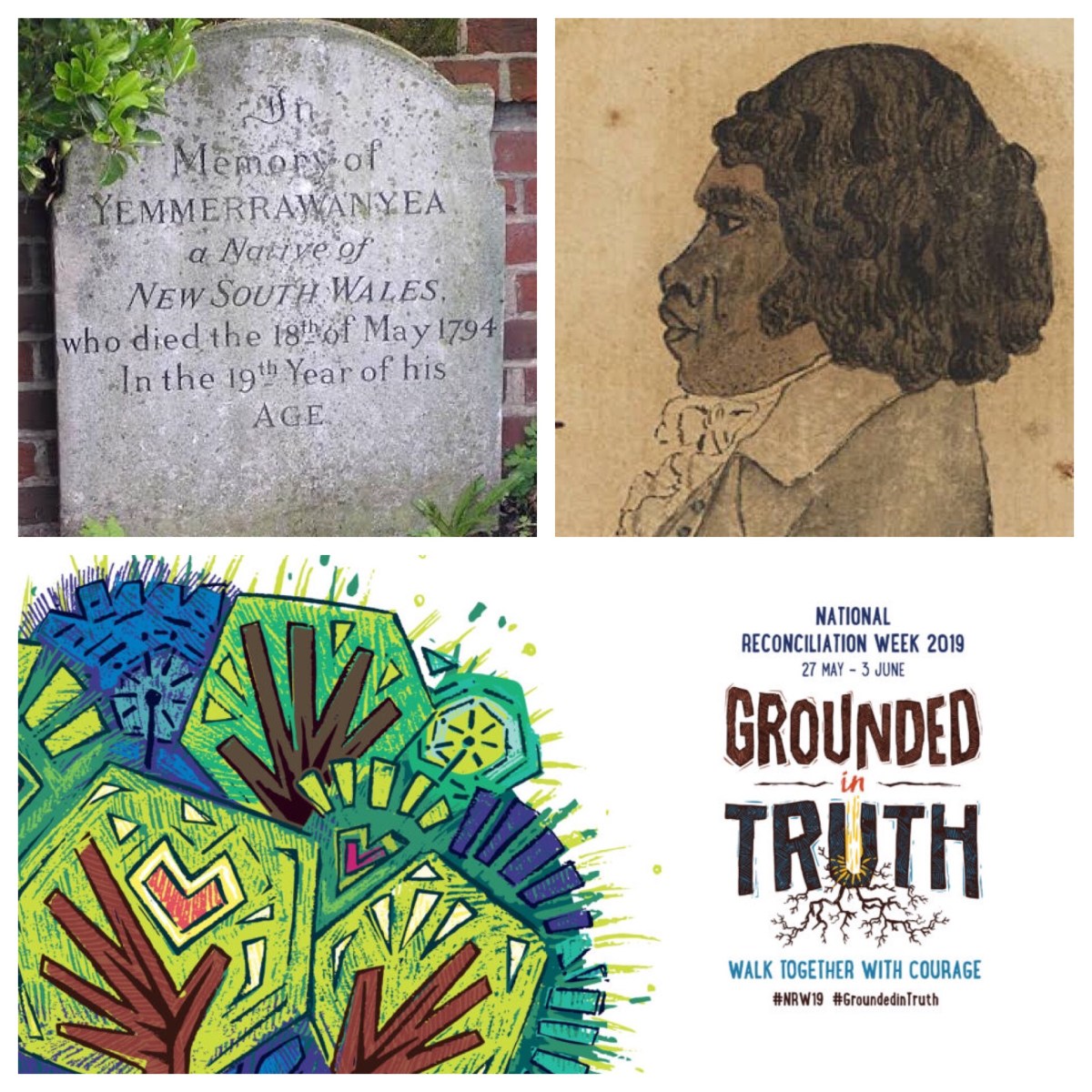
Perhaps the best known persona from amongst the First Peoples encountered by the invading British coloniser was Bennelong, born in 1764 on the southern shore of the Parramatta River. Paul Irish (in Hidden in Plain View) notes that his various family connections meant that Bennelong had connections to country on Goat Island, at Botany Bay, on the lower north shore of Sydney Harbour, and along the northern side of Parramatta River.

Bennelong was kidnapped in November 1789, under the orders of Governor Arthur Phillip, who thereby set an unfortunate tone for the relationship with the locals from the very early years of the colony. Phillip apparently assumed that Bennelong was a “King” of the local people, and thus the correct person with whom to negotiate about co-existing in the same area. It was an attempt to build a constructive relationship, even if it was carried out in what we now recognise to be an entirely flawed manner.

It is said that Bennelong took readily to life among the white men, relished their food, acquired a taste for liquor, learned to speak English and became particularly attached to the Governor. At the end of his term as Governor in 1792, Arthur Phillip travelled to England with Bennelong and another Aborigine, Yemmerrawanne, a Wangal man of the Eora people.

Yemmerrawanne was described by Watkin Tench, in his work, A Complete Account of the Settlement at Port Jackson (1793), as a “good-tempered lively lad” who became “a great favourite with us, and almost constantly lived at the governor’s house”. (See https://dictionaryofsydney.org/entry/yemmerrawanne)

Yemmerrawanne never returned home from his trip to England. After a long illness, he died from a lung infection on 18 May 1794 at the home of Mr Edward Kent at South End, Eltham in the county of Kent. His gravestone in Kent marks his life, and death.

Bennelong stayed in England from 1792 to 1795. On his return to Sydney, he was able to develop more positive relationships with the British, and functioned as an advisor to Governor Hunter.

Bennelong lived his last years with one of his wives, Boorong, at Kissing Point, with an extended group of about 100 people, until his death on 3 January 1813. He was buried in the Kissing Point orchard of the brewer James Squire—no relationship! Squire had been a great friend to Bennelong and his clan; another sign of positive, respectful relationships between Aborigines and the colonisers. We need to learn from such stories in our history.

See the extensive article on Bennelong in the Australian Dictionary of Biography at http://adb.anu.edu.au/biography/bennelong-1769

The image portrays Bennelong, the grave of Yemmerrawanne, and the 2019 National Reconciliation Week logo and theme.

See also

http://home.dictionaryofsydney.org/paul-irish-hidden-in-plain-view-the-aboriginal-people-of-coastal-sydney/

https://johntsquires.com/2019/05/27/we-are-sorry-we-recognise-your-rights-we-seek-to-be-reconciled/

https://johntsquires.com/2019/05/28/reconciliation-on-the-land-of-australia-learning-from-the-past/

On the doctrine of discovery: https://johntsquires.com/2018/08/13/affirming-the-sovereignty-of-first-peoples-undoing-the-doctrine-of-discovery/
Reconciliation on the land of Australia: learning from the past

During this National Reconciliation Week, I think it is worth recalling the evidence for various positive and respectful relationships that existed between First Peoples and the invading colonisers from Britain.

We are accustomed, now, to reading of the violent conflicts and massacres that occurred As the invading colonisers settled on lands which had belonged, for millennia, to the First Peoples of the continent. These are tragic parts of our history that we must not deny, overlook, or ignore. (See my earlier posts on this aspect, noted below.)

But in the early stages of the colony—and, indeed, stretching throughout the colonial period—there were mutually respectful relationships between these groups. National Reconciliation Week seems to be a good time to recall this.

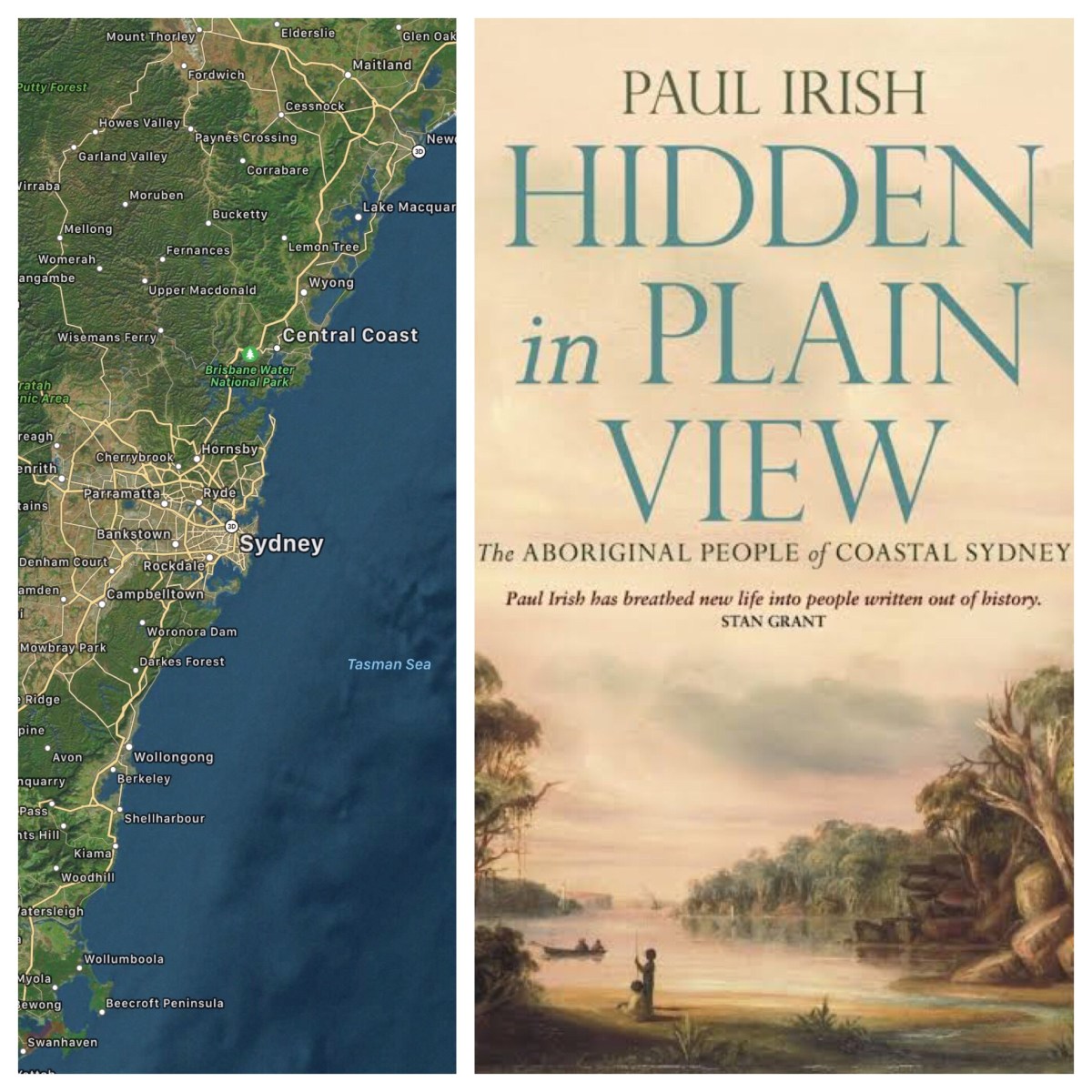
Paul Irish, in his recent book, Hidden in Plain View, has traced the evidence that shows the positive and respectful relationships that existed in the 19th century “between the colonial settlers and Aboriginal people in Coastal Sydney”. (See https://www.newsouthbooks.com.au/books/hidden-plain-view/)

Irish maps an area stretching from Port Stephens to the Shoalhaven, as far inland as the headwaters of the Parramatta and George’s Rivers in the Sydney Basin, but including coastal spurs along northern and southern edges of the Basin. (Pretty much like the current urban sprawl of Newcastle-Central Coast-Sydney-Wollongong-Kiama-Nowra.)

According to Irish, this was an area within which many of the Indigenous peoples moved about, living in different locations at different times, because of their long-established family and clan links with those locations. His interest in is mapping the relationships between the colonisers and Indigenous people at various locations in this coastal area.

Irish refers to “those whose links to coastal Sydney extend back hundreds of generations, whose ancestors met the first Europeans, and who found a way to create an ongoing place for themselves in the oldest and largest city in the country.”

He writes about their “remarkable story of survival through cultural strength and cross-cultural entanglement that sits in stark contrast to commonly held views of colonial and Aboriginal Australia, and to the experiences of most Australians today”. (There is an edited extract from his book available online at https://insidestory.org.au/atween-here-and-the-georges-river/)

Paul Irish refers to men such as Bennelong, Yemmerrawanne, Bungaree, and Mahroot. He also refers to women such as Cora Gooseberry, Biddy Giles, Matora, and Mary Ann Burns. They were leaders in their communities and they were able, for the most part, to relate to the colonisers who had invaded their lands, with grace and respect. In this National Reconciliation Week, we would do well to reflect on them and to follow their example.

(More reflections to come as the week continues …)

See also

http://home.dictionaryofsydney.org/paul-irish-hidden-in-plain-view-the-aboriginal-people-of-coastal-sydney/

https://johntsquires.com/2019/05/27/we-are-sorry-we-recognise-your-rights-we-seek-to-be-reconciled/

On the doctrine of discovery: https://johntsquires.com/2018/08/13/affirming-the-sovereignty-of-first-peoples-undoing-the-doctrine-of-discovery/

On learning from the land:

https://johntsquires.com/2018/12/17/learning-of-the-land-1/

https://johntsquires.com/2018/12/18/learning-of-the-land-2-ngunnawal-namadgi-and-ngarigo/

https://johntsquires.com/2019/01/30/learning-of-the-land-3-tuggeranong-queanbeyan-and-other-canberra-place-names/

https://johntsquires.com/2019/02/08/learning-from-the-land-4-naiames-nghunnhu-fishtraps-at-brewarrina/

On difficulties and tragedies in the early relationships:

https://johntsquires.wordpress.com/2019/01/16/the-profound-effect-of-invasion-and-colonisations/

https://johntsquires.wordpress.com/2019/01/18/endeavour-by-every-possible-means-to-conciliate-their-affections/

https://johntsquires.wordpress.com/2019/01/20/we-never-saw-one-inch-of-cultivated-land-in-the-whole-country/

https://johntsquires.wordpress.com/2019/01/22/they-stood-like-statues-without-motion-but-grinnd-like-so-many-monkies/

https://johntsquires.wordpress.com/2019/01/24/resembling-the-park-lands-of-a-gentlemans-residence-in-england/

https://johntsquires.com/2019/01/26/they-are-to-be-hanged-up-on-trees-to-strike-the-survivors-with-the-greater-terror/#more-424