Gathering the outcasts, envisaging the new creation (Isaiah 56–66)

The third section of the book of Isaiah (chapters 56–66) begins with a familiar prophetic announcement: “maintain justice, and do what is right, for soon my salvation will come, and my deliverance be revealed” (Isa 56:1). Written during the period when the people of Judah were returning to their land, to the city of Jerusalem (from the 520s BCE), the book demonstrates what this justice will look like through a series of powerful oracles.

The prophet sounds a vivid counter-cultural note in the midst of the events of his time. He begins with the promise to foreigners and eunuchs that “I will give, in my house and within my walls, a monument and a name better than sons and daughters; I will give them an everlasting name that shall not be cut off” (Isa 56:5). This is a striking contrast to the narrative provided in the books of Ezra and Nehemiah, which tell of the return to the city, the rebuilding of the walls, the renewal of the covenant and the public reading of the Law, the rededication of the Temple—and actions designed to remove foreigners (especially women) from within Israel (see Ezra 10; Neh 13).

Ezra and Nehemiah exhibited a zealous fervour to restore the Law to its central place in the life of Israel. Ezra, learning that “the holy seed has mixed itself with the peoples of the lands” (Ezra 9:2), worked with “the elders and judges of every town” to determine who had married foreign women; the men identified “pledged themselves to send away their wives, and their guilt offering was a ram of the flock for their guilt” (Ezra 10:19). (So much for the importance of families!)

Nehemiah considered that this project to “cleanse [the people] from everything foreign” (Neh 13:30) was in adherence to the command that “no Ammonite or Moabite should ever enter the assembly of God, because they did not meet the Israelites with bread and water, but hired Balaam against them to curse them” (Neh 13:1–2; see Num 22—24). The restoration of Israel as a holy nation meant that foreigners would be barred from the nation.

The oracle at the start of the third section of Isaiah stands in direct opposition to this point of view; “the foreigners who join themselves to the Lord … and hold fast my covenant—these I will bring to my holy mountain, and make them joyful in my house of prayer; their burnt offerings and their sacrifices will be accepted on my altar; for my house shall be called a house of prayer for all peoples” (Isa 56:6–7).

Jesus, of course, quoted this last phrase in the action he undertook in the outer court of the Temple (Mark 11:17). Later, the welcome offered to the Ethiopian court official by Philip, who talked with him about scripture and baptised him, a eunuch (Acts 8:26–38), is consistent with the prophetic words, “to the eunuchs who keep my sabbaths, who choose the things that please me and hold fast my covenant, I will give them an everlasting name that shall not be cut off” (Isa 56:4–5). (From the earliest days, the church practised an inclusive welcoming of diversity that was consistent with this prophetic declaration.)

Other words in this last section of Isaiah also resonate strongly with texts in the New Testament. The ingathering of the outcasts (56:8) and the flocking of all the nations to Zion (60:1–18) together are reflected in the prediction of Jesus that “this good news of the kingdom will be proclaimed throughout the world, as a testimony to all the nations; and then the end will come” (Matt 24:14).

The statement that those coming from Sheba “shall bring gold and frankincense, and shall proclaim the praise of the Lord” (60:6) most likely informed the story that Matthew created, concerning the wise ones from the east who came to see the infant Jesus and “offered him gifts of gold, frankincense, and myrrh” (Matt 2:11).

******

Further oracles set out exactly what the justice that God desires (56:1; 61:8) looks like. The extensive worship of idols (57:1–13) will bring God’s wrath on the people; “there is no peace, says my God, for the wicked” (57:13). Rather, “the high and lofty one who inhabits eternity, whose name is Holy” chooses “to revive the spirit of the humble and to revive the heart of the contrite” (57:15).

Because God indicates that “I will not continually accuse, nor will I always be angry” (57:16), the prophet conveys what the Lord sees as the fast that is required; not a fast when “you serve your own interest on your fast day,

and oppress all your workers” (58:3), but rather, a fast “to loose the bonds of injustice, to undo the thongs of the yoke, to let the oppressed go free,

and to break every yoke … to share your bread with the hungry, and bring the homeless poor into your house; when you see the naked, to cover them, and not to hide yourself from your own kin” (58:6–7). These words resonate with the actions of “the righteous” in the well-known parable of Jesus, as they gave food, water, a welcome, clothing, and care to those sick or imprisoned (Matt 25:31–46).

The prophet laments that “there is no justice … justice is far from us … we wait for justice, but there is none … justice is turned back … the Lord saw it, and it displeased him” (59:8–15); he declares that, as a consequence, God “put on righteousness like a breastplate, and a helmet of salvation on his head; he put on garments of vengeance for clothing, and wrapped himself in fury as in a mantle” (59:17)—a description that underlines the later exhortations to the followers of Jesus to “put on the whole armour of God, so that you may be able to stand against the wiles of the devil” (Eph 6:10–17).

Because the Lord “loves justice” (61:8), the prophet has been anointed “to bring good news to the oppressed, to bind up the brokenhearted, to proclaim liberty to the captives, and release to the prisoners; to proclaim the year of the Lord’s favour, and the day of vengeance of our God” (61:1–2)—words which are appropriated by Jesus when he visits his hometown and reads from the scroll of Isaiah (Luke 4:18–19); “today this scripture has been fulfilled in your hearing”, Jesus declares (Luke 4:21).

Adhering to this way of justice, practising the fast that the Lord desires, means that he will give Israel a new name: “you shall no more be termed Forsaken, and your land shall no more be termed Desolate; but you shall be called My Delight Is in Her, and your land Married; for the Lord delights in you, and your land shall be married” (Isa 62:4). We have already seen the symbolic significance of names in considering the prophet Hosea and in Isaiah 8.

By contrast, vengeance will be the experience of Edom; using the image of trampling down the grapes in the wine press, the prophet reports the intention of God: “I trampled down peoples in my anger, I crushed them in my wrath, and I poured out their lifeblood on the earth” (63:1–6). So vigorously does God undertake this task, that he is attired in “garments stained crimson” because “their juice spattered on my garments and stained all my robes” (63:1–3). Once again, the prophet speaks in graphic terms about the consequences of sinfulness.

Confronted with this display of wrath and vengeance, the prophet adopts an attitude of penitence, yearning for God to “look down from heaven and see, from your holy and glorious habitation” (63:15). His plea for the Lord to “tear open the heavens and come down, so that the mountains would quake at your presence—to make your name known to your adversaries, so that the nations might tremble at your presence!” (64:1–2) must surely have been in the mind of the evangelists as the reported the baptism of Jesus, when he “saw the heavens torn apart and the Spirit descending like a dove on him” (Mark 1:10).

The book ends with a sequence in which the prophet reports the words of the Lord which indicate that Israel will be restored (65:1–16), followed by the statement that the Lord is “about to create new heavens and a new earth” (65:17–25; 66:22–23). (This passage appears in the lectionary on the 23rd Sunday flyer Pentecost.)

This vision is taken up and expanded in the closing chapters of the final book of the New Testament (Rev 21:1–22:7). The closing vision of Trito-Isaiah incorporates a number of references to earlier prophetic words: building houses and planting vineyards (65:21) recalls the words of Jeremiah (Jer 29:5–7); the image of wolves lying with lambs and lions “eating straw like the ox” recalls the vision of Isaiah (Isa 11:6–7).

The promise that “they shall not hurt or destroy all on my holy mountain” (65:25) recalls that same vision of Isaiah (Isa 11:9), whilst the next promise about not labouring in vain nor bearing children for calamity (65:23) reverses the curse of Gen 3:16–19. The story of creation from the beginning of Genesis is evoked when the Lord asserts that “heaven is my throne and the earth is my footstool … all these things my hand has made” (66:1–2); these are the words which Stephen will quote back to the council in Jerusalem (Acts 7:48–50) and will lead to his death at their hands.

Even to the very end of this book, the judgement of the Lord is evident; the prophet declares that “the Lord will come in fire, and his chariots like the whirlwind, to pay back his anger in fury, and his rebuke in flames of fire; for by fire will the Lord execute judgment, and by his sword, on all flesh; and those slain by the Lord shall be many” (66:15–16).

Nevertheless, the glory of the Lord shall be declared “among the nations” (66:19) and “they shall bring all your kindred from all the nations as an offering to the Lord” (66:20). The universalising inclusivism that was sounded at the start of this prophet’s work is maintained through into this closing oracle. In “the new heavens and the new earth which I will make … all flesh shall come to worship before me, says the Lord” (66:22–23). The vision lives strong!

*****

See also

In my mouth, it was as sweet as honey: Ezekiel the prophet (1)

Like Jeremiah, Ezekiel was both a prophet and a priest (Ezek 1:3). The opening verse of the book exhibits characteristic priestly concern to document details; in this case, a very precise date is recorded: “in the thirtieth year, in the fourth month, on the fifth day of the month”. The year correlates with what we know as 593 BCE. No other prophet gives the precise day of his seeing “visions of God”!

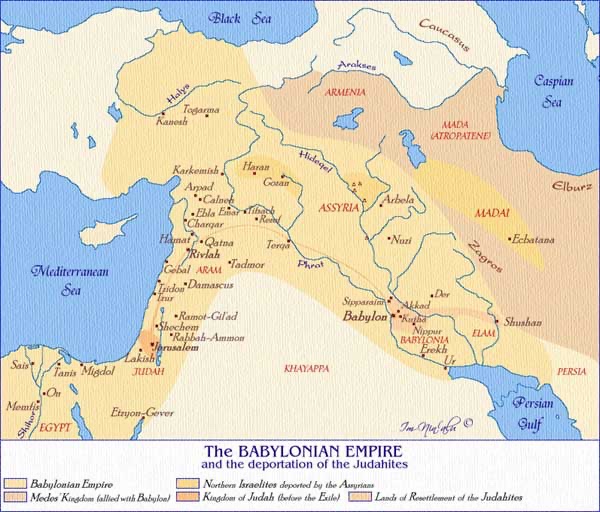
Six years earlier, Ezekiel had been exiled to Babylon during the siege of Jerusalem by King Nebuchadnezzar II of Babylon (599 BCE; see 2 Kings 24:10–17). His prophetic activity was thus undertaken entirely in exile. He addresses both those in exile with him in Babylon, and also those left behind in Judah. His prophecies continue through the period when the people in Judah were conquered and taken to join Ezekiel in exile (587 BCE; see 2 Ki 25:1–21), and then for some time after that.

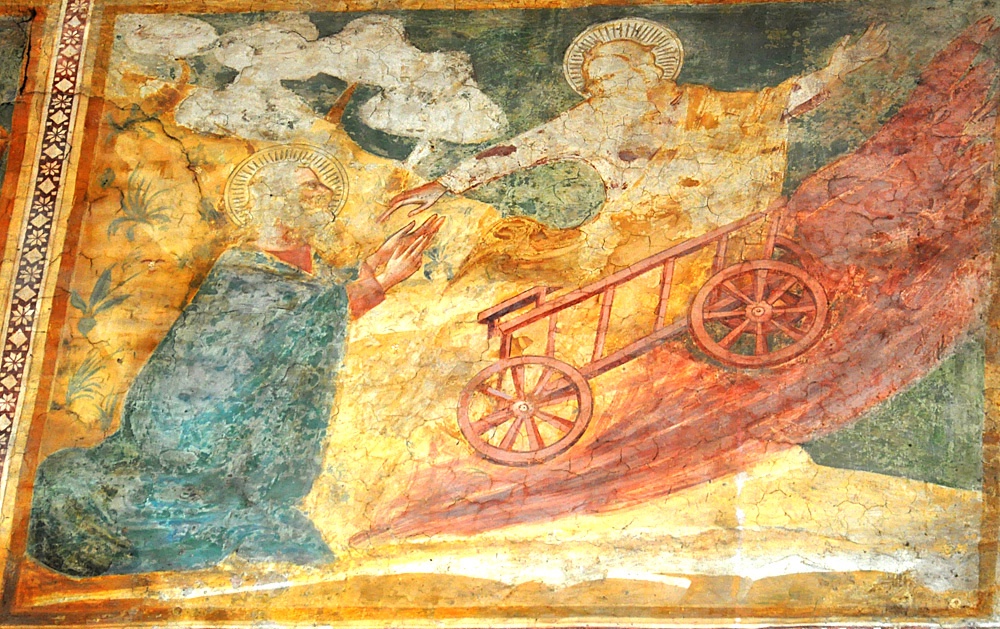
A 14th century fresco of the chariot in Ezekiel’s vision
from Pomposa Abbey, Codigoro, Italy

A dramatic vision opens the book, in which “the glory of God” appears in the form of a fiery, flaming chariot (1:4–28). Priestly attention to detail marks the account of this vision—the scene is reported in scrupulous detail, with many references to other scriptural stories. The bright cloud and flashing fire evokes the scene on Mount Sinai, when God gave Moses the Law (Exod 19:16–19) and the “burning coals of fire” (1:13) remind us of the burning coals in the scene of the call of Isaiah (Isa 6:6).

Then, “the bow in the cloud on a rainy day” evokes the sign of the covenant made with Noah (Gen 9:12–17). The creatures with wings that touch perhaps evoke the golden cherubim overlooking the mercy seat in the Tabernacle (1 Ki 6:23–28), while the wheeled chariot may have been inspired by the chariot that carried the ark of the covenant in procession (2 Sam 6:3).

However, the four creatures, each with four faces and four legs, sparkling “like burnished bronze” (1:6–7), with the appearance of a human being, a lion, an ox, and an eagle (1:10) are unusual. Their presence has invited much speculation about their significance. In the early centuries of the Christian church, these four figures were interpreted as symbols for the four Gospels included in the New Testament. They are found also in the first vision of the seer John, in exile on Patmos, many centuries later (Rev 4:1–8).

Similarly, the description of the crystal dome over the heads of the creatures (1:22) and the sapphire throne with a human form seated on it (1:26) signal to us that this prophet has a vivid imagination, and that there will be much symbolism in the oracles that lie ahead! The remainder of the book continues relentlessly in this style; exotic scenes, vividly imagined, described in detail, conveying a consistent theological perspective.

The point of this dramatic opening comes immediately, when Ezekiel reports a further vision, of a scroll (2:1–10) which he is immediately commanded to eat (2:8, 3:1–3). This second vision is at the heart of the call that Ezekiel receives, to “speak my very words to them [the people]” (2:7; 3:4). Ezekiel the priest has become Ezekiel the prophet.

These words “of lamentation and mourning and woe” (2:10) nevertheless taste “as sweet as honey” to Ezekiel (3:3). However, he knows from the start that the task he has been given will be difficult, for “all the house of Israel have a hard forehead and a stubborn heart” (3:8). They will not listen to him. The scene is set for the difficult career of this prophet-in-exile.

*****

A key issue for Ezekiel relates to whether God continues to be the God of the people of Judah who are in exile in Babylon. Ezekiel offers a development in understanding that God continues to care for the people even when they have no land and no temple, when they can no longer “go up to the house of the Lord” and offer sacrifices.

Ezekiel is impelled to play his role as a prophet by “the hand of the Lord” (1:3; 3:22; 8:1; etc); indeed, he says, “the spirit lifted me up” (3:12). That same spirit continues to lift him up with regularity (8:3; 11:1, 24; 37:1; 43:5) to show him vision after vision. More than this, Ezekiel declares that “the spirit entered me” (3:24), a process which he promises will be experienced by Israel as a whole (36:26–28)—for the Lord says he will “pour out my spirit upon the house of Israel” (39:29).

This emphasis on the renewing spirit of God is seen, most dramatically, by Ezekiel when he is taken by the spirit into “the middle of a valley … full of bones” (37:1) and sees a vision that he conveys in what must be his most famous oracle. What Ezekiel sees in this valley of dry bones is the work of God, as God puts sinews and flesh and skin on the bones, and breathes into the bodies so created, so that they live (37:5–6, 8, 10). The scene is a dramatic reworking of the creation scene in Genesis, when God creates humanity out of the dust, breathing “the breath of life” into human beings (Gen 2:7).

The vision indicates what God will do: “I will put my spirit within you, and you shall live, and I will place you on your own soil” (37:14). The end of the exile, it seems, is in sight. This passage is often interpreted in a Christian context as a pointer both to the resurrection of Jesus, and also to the general resurrection; for Ezekiel, however, it is not a far-into-the-future prediction (foretelling), but a word of hope to the people in their immediate situation (forthtelling).

Indeed, the very next section of this chapter reports a proclamation of Ezekiel which is quite directly forthtelling. The two sticks that he takes (37:16) stand for Judah and Israel; as he joins the sticks, so he points to the return of these peoples from their exile, their return “to their own land”, and a cleansing which will mean “they shall be my people, and I will be their God” (37:21–23, 27).

That final phrase is a common covenantal affirmation made by God (Lev 26:12; Ruth 1:16; Jer 7:23; 11:4; 24:7; 30:22; 31:1, 33; 32:38; Ezek 11:20; 14:11; 36:28; Zech 2:11; and Hos 1:10–11, overturning Hos 1:9). The reunited people shall have one king (37:24) and they will observe “an everlasting covenant” (37:26).

The Lord God addresses the prophet Ezekiel in a distinctive way; 94 times, he begins his words to the prophet with the Hebrew phrase ben adam—traditionally translated as “son of man” (meaning a human being), in the NRSV rendered as “o mortal”. We could simply say, Ezekiel, o human one. My NIV has the footnote, “the phrase son of man is retained as a form of address here and throughout Ezekiel because of its possible association with “Son of Man” in the New Testament”. Certainly, this distinctive address in Ezekiel resonates with the use of this distinctive phrase in the Gospels (although another scriptural usage, in Dan 7:14, offers a different take on this phrase.)

*****

Continued at

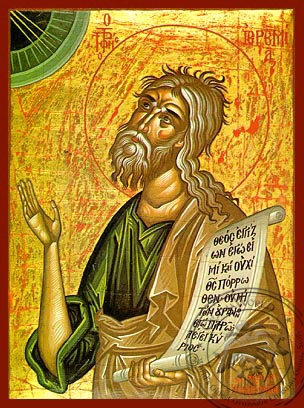
A reticent prophet: called, equipped, and sustained (Jeremiah 1; Pentecost 11C)

This is a sermon that I wrote and presented for Project Reconnect for this coming Sunday, Pentecost 11. The video of the sermon is at https://projectreconnect.com.au/2022/07/21/21st-august-2022-pentecost-9-the-prophet-jeremiah

Project Reconnect is a worship resource that is published weekly to help congregations with their worship service. It includes a PDF information sheet with video messages, music resources and discussion starters. (The website notes, “downloads are free but we would appreciate your donations to help continue our work”; see https://projectreconnect.com.au)

*****

Prophets. Not profits as in financial gain, the difference between the amount earned and the amount spent in buying, operating, or producing something. But prophets, as in the chosen messengers of God, empowered by the Spirit, equipped to declare the word of the Lord to the people of God.

If your mind goes to prophets, perhaps you might think of Amos: “let justice roll down like waters, and righteousness like an ever-flowing stream”; or Micah: “what does the Lord require of you but to do justice, and to love kindness, and to walk humbly with your God?”. Perhaps you think of Elijah: “the Lord was not in the earthquake, nor in the fire; but in the sound of sheer silence.” Or is it Isaiah who comes to your recollection: “I heard the voice of the Lord saying, “Whom shall I send, and who will go for us?” And I said, “Here am I; send me!”

I’m not surprised if one of those famous prophets was the person you immediately thought of. We have heard from some of them in the Old Testament readings in previous weeks, so they may be fresh in your mind.

But in today’s reading, we hear about the call that God placed on another person, a somewhat reluctant prophet: Jeremiah.

Jeremiah was not itching to respond to God, when he received the call to become a prophet. He was not very old; some commentators consider him to be in his early 20s, others note that the distinctive Hebrew word used in this passage indicates he was in his teens. We might have sympathy for Jeremiah on this account; he was young, hardly at an age that we would recognise as qualified and equipped to be a public spokesperson for God!

So when he heard God declare to him, “I appointed you a prophet to the nations”, the NRSV translation says that the young man replied, “Ah, Lord GOD! Truly I do not know how to speak, for I am only a boy.” Actually, when they say he replied, “Ah”, he was using a Hebrew word that actually means, “alas” or “woe is me”. Strong’s Concordance says this is “a primitive word expressing pain”—so, more like “ouch!!!” So perhaps it’s better to think of his response as more like “oh no, oh no, oh nooooo—I couldn’t possibly do that! no way at all!!”. Jeremiah just did not want this gig at all.

Maybe you might know how he feels: when we are asked to do something difficult, something demanding, something challenging, that is beyond what we feel that we are able to achieve. For you, that might be the challenge of running a marathon, or being invited to speak in public to a large crowd, or learning a new language. Big challenges, lots of hard work, too much to consider. For me, I can think of a few challenges that really freak me out: climbing the Sydney Harbour Bridge (I don’t handle heights very well at all), letting a snake coil around me (that’s a petrifying thought), touching a spider (we just aren’t going to go there in any way!)

Jeremiah was incredibly reticent; like Moses, he was not going to take up this invitation in any way. Moses declined the offer of becoming the spokesperson for God: “who am I, to go to Pharaoh? what could I say to him?” but God persisted, and Moses relented. Likewise, with Jeremiah; initially, he says, “I do not know how to speak, for I am only a boy”, but God persists: he will support the young man Jeremiah, just as he supported the young man Moses.

But I think that we have this story from the opening chapter of this book, in our reading today, not because it shows us that God will help us overcome our fears about challenges set before us. It think that it is not Jeremiah’s words that we are to focus on. It is, rather, the words that God speaks to Jeremiah which should ring in our ears.

It is the encouragement for the task that God promises—and later delivers—that must stand out for us. “Do not say, ‘I am only a boy’”, the voice declares; “for you shall go to all to whom I send you, and you shall speak whatever I command you.” God gives the right words for the appropriate time. That is remembered when Jesus later tells his disciples that the spirit would enable them to speak, even in the midst of difficulties (Luke 21:13–15).

And then, we hear the words: “Do not be afraid of them, for I am with you to deliver you, says the LORD.” In typical style, the first word of God to the human being chosen for a specific task is, “do not be afraid”. When God appears to human beings—in a vision, as an angel, in a voice from the heavens, in a response to prayer, as a niggling, unsettling feeling, in words of advice or guidance from a friend—however God might appear to us, it can be an experience that evokes fear, awe, anxiety. Who is this, speaking to me? How am I to respond?

“Do not be afraid”, said the Lord, to Abraham, in a vision (Gen 15). “Do not be afraid”, he said, to Isaac, at Beersheba (Gen 26). “Do not be afraid”, to Moses, in the wilderness (Num 21), to Joshua, facing the combined might of a great army (Josh 11), to Elijah, also facing a great army (2 Kings 1); “do not be afraid”, Isaiah says, on behalf of the Lord, to king Hezekiah (Isa 37); “do not be afraid”, the voice of God says to the prophet Ezekiel, when he was called to his role (Ezek 2), and to Zechariah (Zech 8). It is a common refrain throughout the stories of the people of Israel.

And we hear the same phrase repeated in New Testament stories, when God speaks to Zechariah, “do not be afraid” (Luke 1), to Mary, “do not be afraid” (Luke 1), to Joseph (Matt 1), to Simon Peter (Luke 5), to Paul, Silas, and Timothy, in Corinth (Acts 18), and to the ageing prophet John in exile on Patmos: “do not be afraid” (Rev 1). It is God’s consistent and encouraging word to those who encounter the intensity of divine presence, the enormity of divine challenge, the inescapable call to follow, to believe, to declare the word of the Lord: “do not be afraid”. It is God’s word to each of us.

So the word of God to Jeremiah is clear: “I appointed you a prophet to the nations.” And Jeremiah is willing to respond; to accept the challenge, to take up the call, to stretch himself and step into a new experience.

What Jeremiah would encounter in the decades that followed, was pretty heavy stuff. He didn’t know that at the time that he accepted the call to be God’s spokesperson. He persisted, held strong, remained faithful throughout all the difficulties that ensued for the people of Israel, as they were attacked, besieged, defeated, and then sent into exile, away from their homeland, off into a strange, foreign country. Jeremiah held fast; he remained faithful to the call that God had placed upon him through all of this.

And God held fast to him through all these tragic events. Jeremiah received the support, the guidance, and the encouragement from God through this all, as the people of God were taken from their beloved land, and sent far away into exile. God remained faithful.

So we give thanks to God, for God holds fast, God remains faithful, God does not let go, no matter what. That gracious, faithful commitment to us is the heart of the good news that we know, that we proclaim, that we live in our lives: the ever-faithful God who is with us, the ever-present God who is for us.

For this, we say: thanks be to God!

*****

1. What do you think about the idea that a teenager could be the chosen voice of God?

2. How do you deal with difficulties on your walk of faith? How do you listen for what God might be saying to you at such a time?

3. Think of a challenge that faces your congregation or faith community. How might you work together to discern what God is calling you to do?

4. Jeremiah was called to speak to all the people—the whole community—in the public arena. How do you make your voice heard in the public discussion of important issues today?

Cords of kindness, bands of love: the prophet Hosea (Pentecost 7C and 8C)

As we continue to follow the prophets in the readings from Hebrew Scripture that the lectionary offers, we hear from Hosea this coming Sunday (Hos 1:2–10) and the following Sunday (Hos 11:1–11). The two passages offer quite a contrast.

In the first selection in the lectionary, the opening chapter of the book, we hear about the prophet’s own situation. Hosea receives direction from God as to how he is to behave. The actions he undertakes provide a series of signs to the people of Israel concerning their fate (1:2–10). The future looks grim. In the second section offered by the lectionary (11:1–11), the prophet speaks on behalf of God to the people, reminding them of God’s persistent love for them. There is hope for the future, he tells them.

Jeroboam II from Guillaume Rouillé’s
Promptuarii Iconium Insigniorum
(published 1553)

Hosea was active as a prophet in the northern kingdom in the 8th century BCE, over six decades, from the reign of Jeroboam II to the time of Hoshea. He seems to reflect an awareness of the war between Syria and Ephraim, a northern tribe (see 5:8–15), but his oracles do not indicate any knowledge of the defeat of the northerners by the Assyrians in 721 BCE, and their subsequent exile (2 Kings 17).

The name Hosea means “salvation”, and the oracles in this book provide occasional glimpses of that desired outcome (1:7; 2:24; 6:2–3; 10:12; 11:3–4, 8–9; 13:4–5) before the final oracle assures Israel, “I will heal their disloyalty; I will love them freely, for my anger has turned from them” (14:4–9). The love song of chapter 11 represents the height of this aspiration. However, the predominant tone of the book is a relentless condemnation of Israel for her sins. This fate is signalled in striking fashion in the opening chapter, through the names of Hosea’s children. They indicate exactly what fate is in store for the people.

*****

The opening chapter presents a challenge to orthodox views of morality and the nature of God. God commands Hosea to “take for yourself a wife of whoredom and have children of whoredom, for the land commits great whoredom by forsaking the Lord” (1:2). Let’s note that: God commands behaviour that is generally regarded as immorality!

Hosea’s wife is named as Gomer, from the verb gamar, which means “to complete or bring to an end”. Is she the one to bring to completion the salvation to which Hosea looks? The promiscuity of Gomer is noted at 3:1; Hosea wins her back with “fifteen shekels of silver and a homer of barley and a measure of wine” (3:2). Her behaviour seems to signal the infidelity and then return to God of the Israelites (3:3–5). Hosea regularly pleads with Israel to “return to the Lord” (2:7; 4:5; 6:1; 12:6; 14:1–2).

Not only does Gomer signify the behaviour of Israel; the names of her children are similarly significant. The first son, Jezreel (“God sows”) signals punishment (1:4). A daughter, Lo-ruhamah (“not pitied”) signals God’s continuing refusal to forgive Israel (1:6). A second son, Lo-ammi (“not my people”) seals their fate, it would seem: “you are not my people and I am not your [God]” (1:9). The names tell a story; a story that does not bode well for Israel.

Wrath infuses the whole book, from the opening series of names and in the indictment set out in legal form, “the Lord has an indictment against the inhabitants of the land” (4:1), with the threat from God that “I will punish them for their ways, and repay them for their deeds” (4:1–11). It is present as the prophet tells of the wrath poured out on Ephraim like drowning water (5:8–11) and in his words about God’s smouldering anger over idol worship (8:1–6). It climaxes in the threat of destruction and the removal of the king (13:9–11). Paradoxically, for a book bearing the name “salvation” (Hosea), the message is consistently about punishment for wrongdoing.

The metaphor of Gomer’s behaviour as a whore (1:2; 2:5; 3:1) permeates the book: the divine accusation is that Israel has “played the whore” (4:10–14; 5:3; 9:1), that “a spirit of whoredom has led them astray” (4:12; 5:5), that “they have forsaken the Lord to devote themselves to whoredom” (4:10–11), that because of this whoredom, the nation is defiled (6:10).

Yet in the opening chapter, Hosea strongly affirms that all is not lost; there is hope. “The number of the people of Israel shall be like the sand of the sea”, says Hosea, “which can be neither measured nor numbered” (1:10a)—and more than this, “in the place where it was said to them, ‘You are not my people,’ it shall be said to them, ‘Children of the living God’” (1:10b). The new name for the people signifies the promise that Israel will be saved; “I will now allure her, and bring her into the wilderness, and speak tenderly to her. From there I will give to her her vineyards, and make the Valley of Achor a door of hope” (3:14–15).

*****

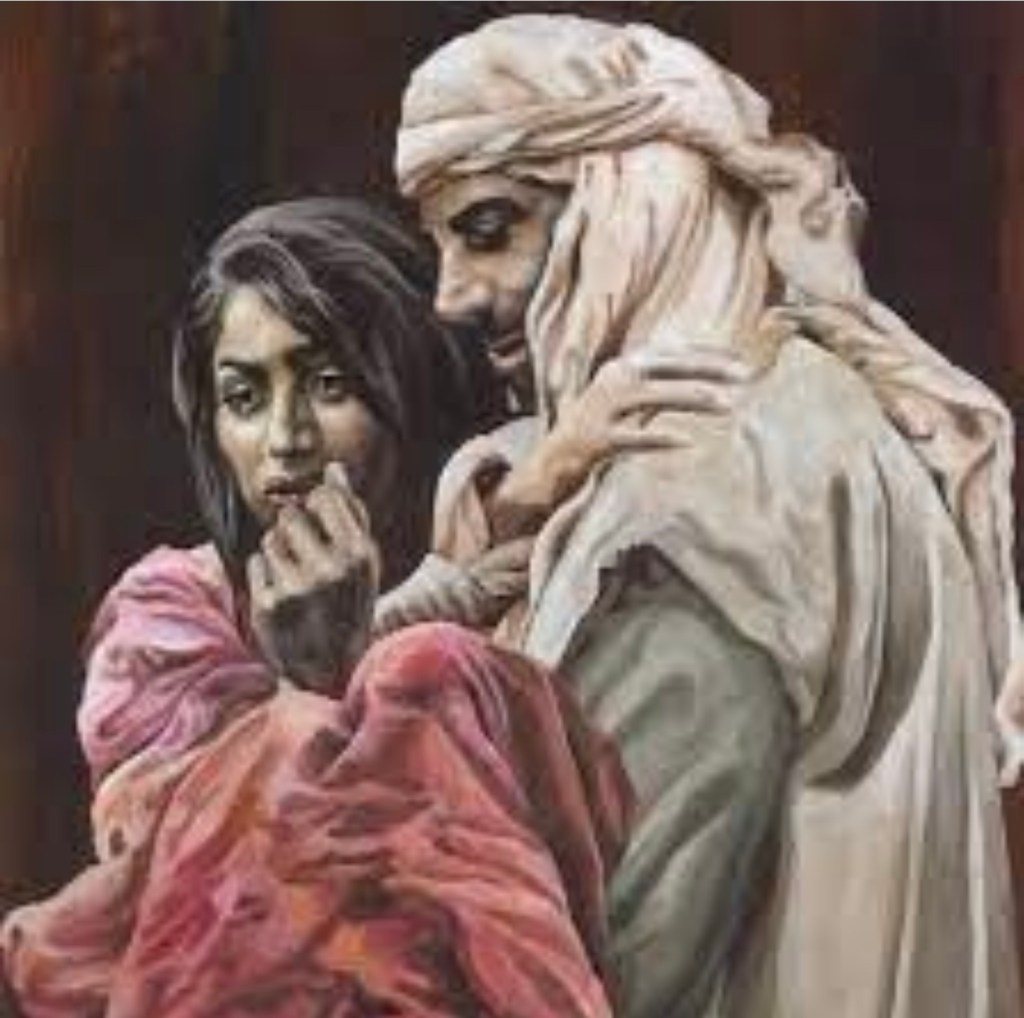
This fluctuation between the threat of punishment hanging over Israel, and the alluring words of love that God speaks to her, takes us into a deeper level of concern, for this is precisely the kind of behaviour that is experienced by women caught in abusive relationships. Is the Lord nothing more than a manipulative, power-wielding tyrant of a husband, inflicting damage, driving his woman away in fear, then pleading for his woman to come back to him, offering all manner of blandishments and promises of transformation? “Come, let us return to the Lord, for it is he who has torn, and he will heal us; he has struck down, and he will bind us up” (6:1)

How we answer that question determines how we read the second passage offered by the lectionary (11:1–11). Is this a truly loving, gracious, ever-forgiving God? or a violent, devious, never-changing tyrant?

Certainly, the larger context of the prophetic literature and of the whole sweep of the story told in scripture encourages us to see God in a good light. This is surely the God who is “a God merciful and gracious, slow to anger, and abounding in steadfast love and faithfulness” (Exod 34:6, and a number of other places in Hebrew Scripture). Hosea plays out in one specific time what God and Israel enact time and time again, over the centuries.

Indeed, the words of promise (“after two days he will revive us; on the third day he will raise us up, that we may live before him”, 6:2) were even cited by church fathers and scholars as the place in Hebrew Scripture which provides a prediction of the gospel affirmation, “he was raised on the third day” (2 Cor 15:4; and see Acts 10:40; Luke 9:22; 18:33; 24:7, 21, 46).

These words were not, of course, intended to point forward in this way in the time of Hosea; they are poetically non-specific (“after two days… on the third day” is typical Hebraic parallelism with a linguistic variation), and are spoken by Hosea into the context of his own time, as an insight into the divine offer of hope that he senses, for the Lord “will come to us like the showers, like the spring rains that water the earth” (6:3). This is forthtelling, and not foretelling.

So the “cords of human kindness … bands of love” (11:4) depict God in an anthropomorphic manner, loving Israel as a child (11:1), calling to them (11:1–2), taking them up into God’s arms (11:3), kissing them and feeding them (11:4, showing warm and tender compassion (11:8), withholding anger (11:9), welcoming them back as they return from their wandering (11:11). God is the patient, loving, caring parent. The chapter offers beautiful insights into how God deals with people, to set alongside our concerns about the nature of God.

As we noted in considering the prophet Amos, the king of Assyria began to deport Israelites to Assyria (2 Kings 15:29; 1 Chron 5:26), perhaps in the 730s, while Hosea was still alive. Two decades later, after Hosea’s death, a new Assyrian king captured the northern capital, Samaria (2 Kings 17:3–6). The northern kingdom had come to an end; the people taken into exile would never return to their land. They became known as “the lost tribes of Israel” (see https://www.britannica.com/topic/Ten-Lost-Tribes-of-Israel).

*****

See also