The book of signs, the fourth Gospel that we have in our New Testament, is attributed by tradition to the apostle John. It is most likely that it draws on stories that originated with that apostle, but they have been retold, elaborated, passed on, reshaped, developed, and eventually written down in a form that corresponds with the Gospel that we have today.
This Gospel contains many distinctive elements. It recounts incidents where Jesus encountered a number of individuals who do not feature at all in the other three Gospels, the so-called Synoptic Gospels attributed to Mark, Matthew, and Luke. It opens doors into aspects of the story of Jesus which are not found when we read those first three Gospels.
We meet four such characters over the coming four Sundays, as the revised common lectionary provides us with accounts of the interaction that took place between Jesus and the Pharisee, Nicodemus (John 3), an unnamed woman beside a well in Samaria (John 4), a resident of Jerusalem who had been born blind, and his parents (John 9), and then Lazarus of Bethany, whom Jesus is said to have raised back to life after his death (John 11). This last story includes two characters who, it is thought, appear also in the Synoptic Gospels—Mary and Martha of Bethany, the sisters of Lazarus (Luke 10:38-42).
The accounts of these four characters are located in the first half of the Gospel (John 1-12), before the second half of the Gospel is devoted to an extended scene, where Jesus farewells his closest followers (John 13-17), before moving into an account of a sequence of event told also in the Synoptic Gospels: the arrest, trials, sentencing, crucifixion, burial, and then resurrection appearances of Jesus (John 18-21).
The first half of the Gospel, then, provides collection of public events in the life of the adult Jesus, some of which touch on events recounted n other Gospels, many of which are distinctive to this book. They are narrated in a long section often called the Book of Signs (2:1–12:50).
This terminology is drawn from the descriptions provided by the author (2:11, 3:2, 4:54, 11:47, 12:37, and 20:30). What was most likely the original conclusion to this book notes that Jesus did many other signs … which are not written in this book (20:30), which leads me to use the description the book of signs when referring to this Gospel.
However, these chapters contain more than simply “signs” (miracles) performed by Jesus. For instance, this “book” begins with a miracle in Galilee (2:1–11), an incident in Jerusalem (2:13–22), an encounter with a Pharisee in Jerusalem (3:1–10), another encounter with a Samaritan woman in Sychar (4:1–26), and a second miracle in Cana (4:46–54).
Relevant teachings of Jesus are interspersed amongst these happenings. The pattern of alternating encounters, teachings and miracles continues, with the addition of a sequence of controversies as Jesus engages in increasingly tense debates with Jewish leaders (5:10–18; 6:41–50; 7:14–52; 8:12–59; 10:19–39).
Sometimes Jesus delivers his teachings in lengthy monologues (for example, 3:11–21; 5:19–47; 9:41–10:18); more often, his teachings are punctuated by questions and responses from others. On his final visit to Jerusalem (from 12:9 onwards), Jesus summarises his teachings in a pivotal public address (12:23–28; 12:44–50).
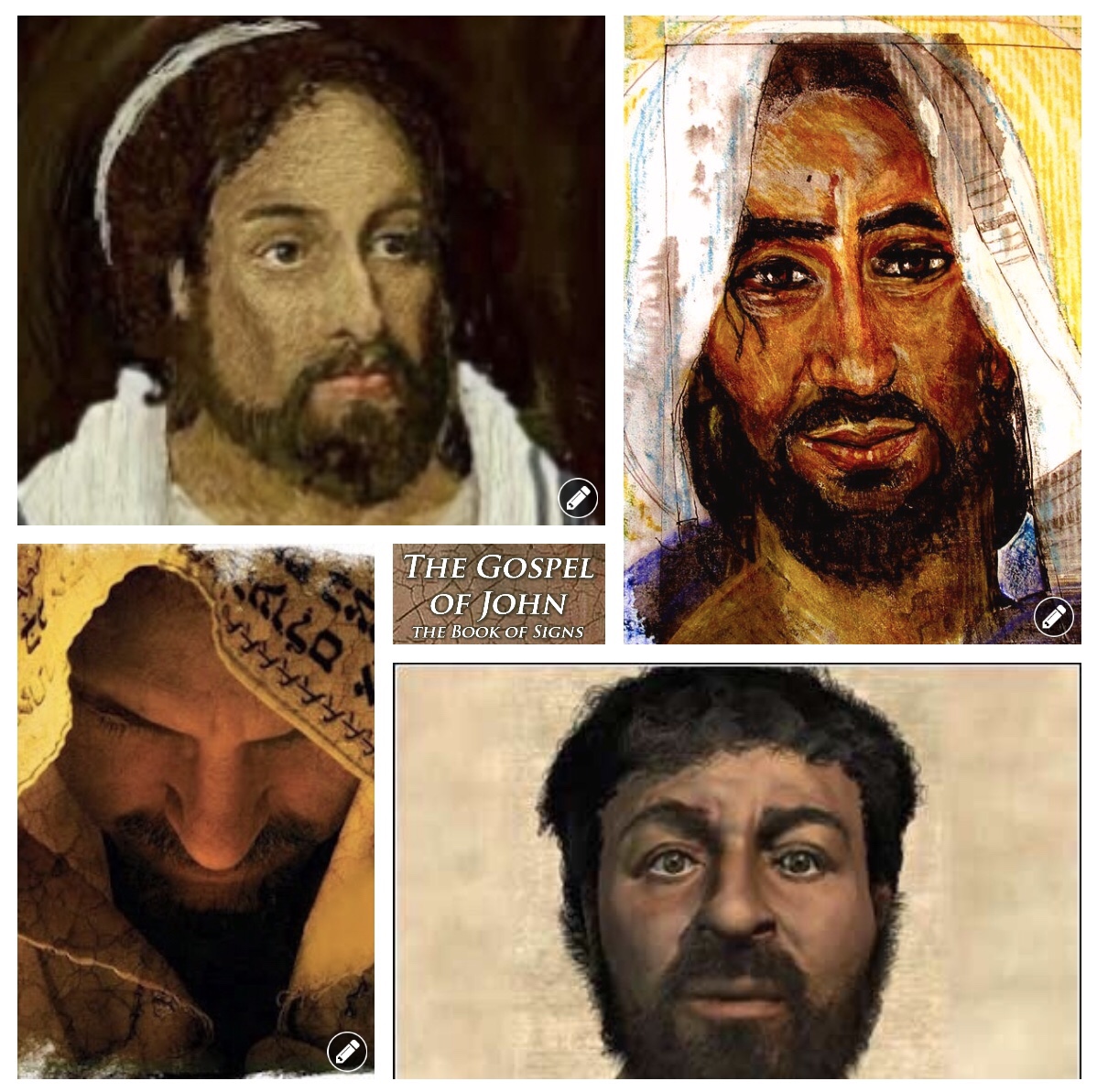
It is important to note how this Gospel firmly locates the story of Jesus within the within the framework of his religion—that is, first century Palestinian Judaism. Jesus visits Jerusalem on a number of occasions (2:13; 5:1; 7:10; 11:55). This is already in contrast to the Synoptic Gospels, in which the adult Jesus stays in Galilee and visits Jerusalem only once (on the occasion leading to his crucifixion—Mark 11 and parallels).
In John’s Gospel, each of his visits to Jerusalem is located within the Jewish calendar—a feature which is also unique to this Gospel amongst the four canonical Gospels. The first visit, during the Passover festival (2:13), is the occasion when Jesus undertook his “cleansing of the Temple”.
The second visit was during an unnamed feast (5:1; possibly Pentecost, as it was some time before the Passover at 6:4). This leads to a discussion of the story of manna in the wilderness (an integral part of the Passover story). Jesus’ next visit(7:10) takes place during the feast of Tabernacles (7:2, 11, 14).
His last Passover visit, after the raising of Lazarus from the dead (11:55), equates with the one Synoptic visit, for this is when Jesus is brought into direct conflict with the Jerusalem authorities. In addition to these festivals, the Feast of Dedication is also noted in the narrative (10:22).
The activity of Jesus in this Gospel is firmly grounded within traditional Jewish religious observances. He keeps the conventional Jewish feasts. Jesus is acknowledged as a Jew explicitly by the Samaritan woman (4:9) and implicitly by Pilate (18:35), as well as by the inscription placed on his cross, “King of the Jews” (19:19–22). It is a story which is incarnate, enfleshed, grounded in earthly realities—because, in Jesus “the Word became flesh and lived among us” (1:14).
The whole account thus provides us with encouragement to live out our faith in the realities of life in our own times. Although Jesus was a Jew, living in a different time, within a different culture, in a different location form where we are now living, nevertheless, his story indicates that God’s love is for the whole world, that the Gospel reaches out over place and time and culture, to engage each of us precisely where we are.
It is with that encouragement that we enter into the hearing and thinking about the interactions that Jesus had, with a Pharisee, a Samaritan woman, a blind Jerusalem man and the family of the deceased man, Lazarus. We hear these stories because they can inform the ways that we live out our faith today.
******
See also https://johntsquires.com/2020/01/16/john-the-baptizer-and-jesus-the-anointed-in-the-book-of-signs-the-gospel-of-john/
https://johntsquires.com/2019/06/07/the-paraclete-in-john-15-exploring-the-array-of-translation-options/
https://johntsquires.com/2019/04/23/in-defence-of-thomas-a-doubting-sceptic-or-a-passionate-firebrand/

 An Informed Faith