What can love hope for? A review.

Bill Loader is widely-known, much-consulted, and greatly loved across the Uniting Church. He has had a fine career as a leading biblical scholar, teaching for decades at Murdoch University and publishing prolifically with prestigious international publishers.

This academic career has sat alongside an active involvement in the Uniting Church, preaching in local Congregations, teaching regular sessions with lay leaders, and forming ministers and deacons for their ministries. His website with its scholarly yet accessible discussions of lectionary texts (http://wwwstaff.murdoch.edu.au/~loader/home.html) attracts regular readership, not only from Uniting Church people, but from preachers right around the world

Out of this wealth of experience comes this slim but rich offering: ten succinct chapters (most only ten to twelve pages long) on topics of key theological import: the significance of Jesus, the good news for the poor, how to understand the cross, the place of other faiths, God’s wrath and God’s justice, the place of the Law, miracles and faith, God and love–and, of course, marriage and sexuality. All in 110 pages.

Each chapter ends with a focused “question for reflection”, to encourage ongoing consideration of the topic at hand. The book itself ends with a bonus afterword, setting out Bill’s personal journey “from fundamentalism to fundamentals”. The afterword concludes, “we all walk with some grit in our shoes in religious and cultural contexts where its awareness is possible even if, by and large, its removal is not” (p.130).

Loader seeks to work with the irritants provided by this “grit” in a constructive and hope-filled way, to indicate how, in the midst of contentious discussions, people of faith are able to discern “what brings life and health”. In Chapter 5, whose title also provides the title of the book, he concludes that we ought “to be a just and caring society that is inclusive and to care for the world and its future inhabitants” (p.46).

It’s no surprise that the enduringly contentious issue of marriage and sexuality is addressed (in chapter 10, the longest chapter). Bill Loader has made many contributions to the long-running discussions of these matters–leading workshops and producing resources pitched at a popular level, undergirded especially by the academic research and writing undertaken during his five years as a professorial fellow with Australian Research Council funding.

This chapter makes clear the two key pillars of his well-considered views: one, that Paul reflects the common first century belief that “all people are heterosexual”, so anyone identifying as homosexual is “in an unnatural state of being as a result of sin” (p.111); and two, that in some circumstances “it is not appropriate, indeed it is irresponsible, to apply what Paul says” to contemporary situations (also p.111).

Thus, Loader affirms that “the Bible does not tell it all on these matters any more than it did on matters of women and divorce” (p.112). Such honesty about matters hermeneutical is to be commended. As is the case in each chapter, the reader is invited to give serious personal consideration to how biblical passages are to be brought into engagement with contemporary situations and considerations.

But the book is not just about marriage and sexuality. There is much more that is explored in its pages.

Chapter 5 (whose title, as we have noted, provides the title for the whole book) begins with a further observation about the process of interpretation: “There is a 2,000-year gap between believers in today’s twenty-first-century world and those of the first century”, such that “to engage the writings of the New Testament is to engage in a cross-cultural encounter with all the respect and opportunity for learning and enrichment which that entails” (p.35).

Starting with the fact that New Testament texts expect a return of Jesus within the lifetime of those then alive, the chapter canvasses the eschatological vision of the kingdom, various parables of Jesus, the function of the risen Jesus, and the resurrection body, leading to the conclusion that we, today, are to “reconfigure our approach to hope, retaining the central [first century] substance, but not their notions of timing and manner of its achievement” (p.45).

In this way, Loader models the task of the interpreter, be they preacher, Bible study leader, scholar, or individual disciple. Immersion into the culture, customs, languages, perspectives of the ancient texts is as important as thoughtful, reflective consideration of what is heard and seen in the text, in the light of contemporary understandings, insights, and perspectives. (Somewhat like what paragraphs 5 and 11 of the UCA Basis of Union affirms.)

There is much more to be said about this delightful book; but only one comment needs to be made here. This is a book worth buying, reading, studying (alone or with others), and engaging with wholeheartedly.

An Affirmation for Our Times

In recent weeks, the Revised Common Lectionary has offered passages from Acts which narrate the expansion of the early movement of followers of Jesus. The author of Acts provides a clear schematic account of how the good news spread out from the centre of the Jewish nation, Jerusalem, to the edges of Samaria and beyond (starting with a court official from Ethiopia), and into the widespread Gentile world (starting with a Roman soldier based in Caesarea).

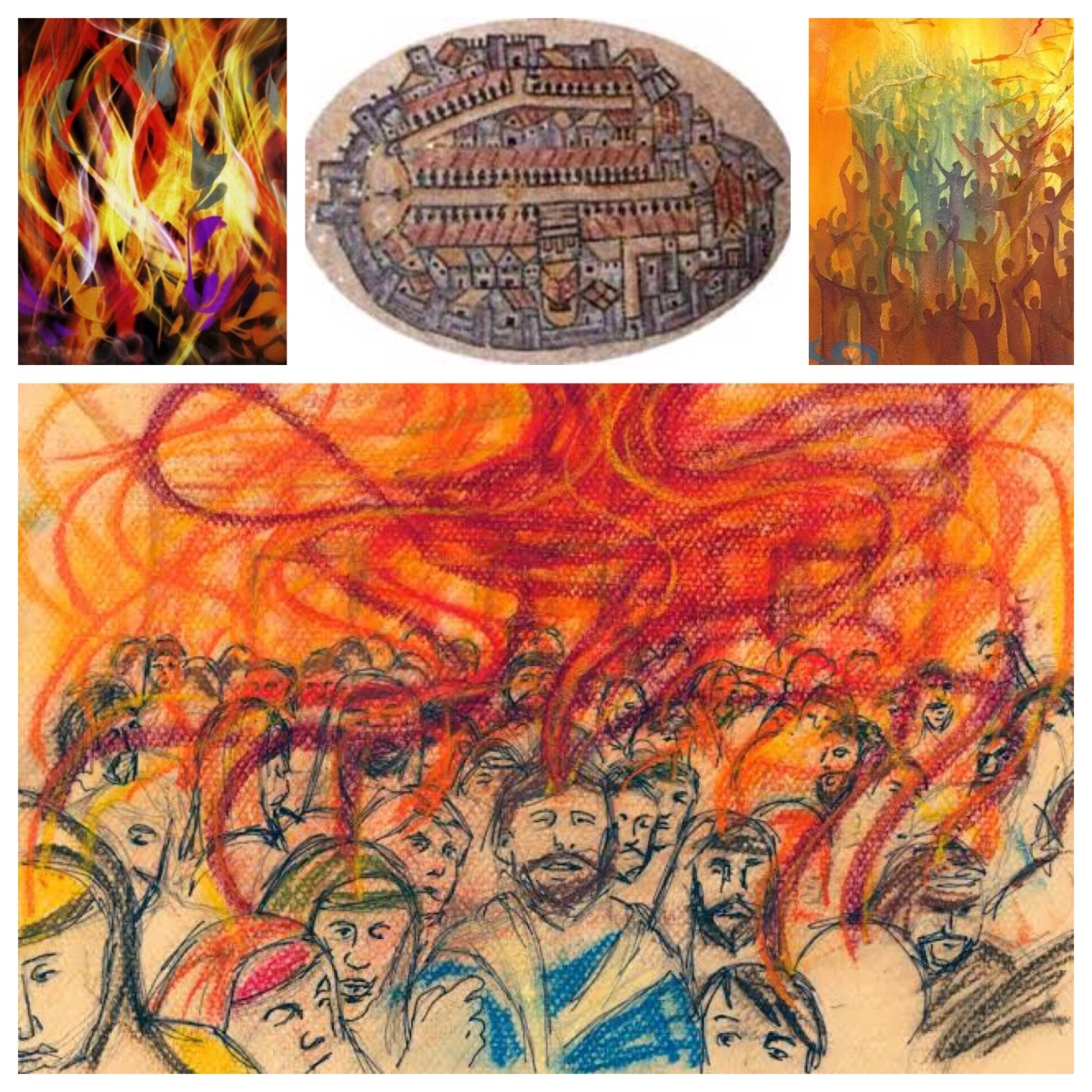
In a couple of weeks, we will read the story of Pentecost, with Mews gathered in Jerusalem from many of the surrounding regions and nations. Encountering God in a dramatic new way, they return to their homes with good news bubbling over in joyful ways.

The Iona Community has a fine Affirmation which fits well within the context of these readings, reflecting God’s openness to the outsider, welcoming the diversity of humanity, affirming grace at work . Here it is:

Affirming the Global Church

We believe in God,

who befriended a wandering people,

calling them from slavery into freedom,

yet who in Rahab, Tamar, Ruth, Bathsheba,

Cyrus, Darius and many others,

called outsiders to be agents of God’s purpose.

We believe in Jesus,

who was revered by Persian sages,

sought and found asylum in Egypt,

preached the love of God to Syrians,

attracted Greeks to his cause,

found his first evangelist in a Samaritan,

saw incomparable faith in a Roman,

had his cross shouldered by a Libyan,

and ascended to his native land

that he might be present in all places.

We believe in the Holy Spirit,

who at Pentecost proved

that heaven has no mother tongue;

who, in the baptism of an Ethiopian,

denied racism a foothold in faith;

and who, in the ancient and modern worlds,

founded churches in different cultures.

We believe that God is supremely known in Jesus,

yet we affirm that the love of God is beyond our understanding.

Therefore we celebrate

that God’s ways are not our ways,

that God knows whom God chooses,

and reserves the right to surpass all human expectation.

From A Wee Worship Book, 2015, from Wild Goose Publications (page 105)

On the Acts passages, see https://johntsquires.com/2021/04/27/edging-away-from-the-centre-easter-5-acts-8/

What happened after Philip met the Ethiopian? (Acts 8; Easter 5B)

Even to the Gentiles! (Acts 10; Easter 6B)

On creeds, see also https://johntsquires.com/2018/10/30/affirming-the-teachings-of-jesus/

Interpreting the creeds “in a later age”

“The one who believes that Jesus is the Son of God” (1 John 5; Easter 6B)

The book we know as 1 John is unlikely, as we have seen, to have been a letter. It is more likely that it came into being as a sermon, which was later collected alongside some other works attributed to John, which were actual letters (2 John and 3 John), themselves placed alongside letters by other leaders (Peter, James, Jude—and, of course, Paul).

This sermon-letter is intended to encourage believers, who are to live in light, not in darkness, to love, and not to hate (1:5–10; 2:9–11; 3:11–15; 4:20–21), and to strive to ensure that their love reaches “perfection” (2:5; 4:12, 17–18) in their lives.

Set in stark contrast to these believers is “the world”, which is full of desire (2:16); those in “the world” do not help a person who is in need (3:17); they hate the believers (3:13) and do not know God (3:1; 4:3–6).

A striking feature of this sermon-letter occurs towards its end, in a compact sentence (5:13) which contains both a description of the recipients (“you who believe in the name of the Son of God”) and a declaration of the purpose of the letter (“so that you may know that you have eternal life”). The key terms in this sentence are immediately reminiscent of a similar declaration of purpose towards the end of John’s Gospel (John 20:31).

Each work is “written” concerning “eternal life”, granted to people who “believe” in Jesus as “the Son of God”. The similarities suggest either common authorship, or an intentional allusion to the Gospel by the author of the sermon-letter. The differences in style and theology between the two works are subtle, but they do reinforce the latter option as preferable.

One clear difference to be noted is that, whilst the Gospel makes frequent references to Hebrew Scripture (both in quotations and by allusion), the sermon-letter betrays little awareness of these scriptures, other than what had already been mediated through the Gospel. The strong Jewish context of the Gospel is not evident in this later work. Other points of differentiation are noted below.

There are many signs of the common theological standpoint shared by letter and Gospel. The opening of the sermon-letter is reminiscent of the grand poem which begins John’s Gospel, and three important themes of this Gospel are flagged in both prologues. Central to each is the revelation of God (1 Jn 1:2; John 1:14, 18) which occurs through speaking (1 Jn 1:1, 3; compare “the Word” of John 1:1, 14) and conveys the message of eternal life (1 Jn 1:2; John 1:4).

Another important motif in the prologue to the sermon-letter is the believer’s fellowship with God and Jesus (1 Jn 1:3), which may be compared with the Gospel terminology of “abiding in” (John 14:17; 15:1–11). The sense of testimony which permeates 1 Jn 1:1–4 resonates with the frequent emphasis on testimony, or witness, in the Gospel (John 1:6–8, 15, 19, 32– 34; 3:31–34; 5:31–32, 36–39; 8:17–19; 10:25–27; 19:35). The note of joy which ends the prologue (1 Jn 1:4) reflects similar expressions in the Gospel (John 15:11; 16:20–24; 17:13).

Beyond the sermon-letter’s prologue, other themes also point towards the Gospel of John, with some observable differences. The language of light and darkness (1 John 1:5–7; 2:8–10) is a reminder of the Gospel’s use of similar imagery (John 1:4–9; 3:19–21; 12:46), although there is a change in attribution, from Jesus as “the light of the world” (John 8:12; 9:5), to the affirmation that “God is light” (1 Jn 1:5).

The author of 1 John asserts that “we are from the truth” (3:19) and “we know the spirit of truth” (4:6); this is reminiscent of the claim of the Johannine Jesus that “I am the truth” (John 14:6) and his promise that “if you continue in my word…you will know the truth” (John 8:32).

Indeed, a consistent emphasis on adherence to the truth runs through the sermon-letter (1 John 1:6, 8; 2:4, 8, 21, 27; 3:18–19; 4:6; 5:6, 20) as through the Gospel (John 1:9, 14, 16; 3:21; 4:23–24; 6:55; 7:18; 8:32; 14:6, 17; 16:13; 17:17–19; 19:37–38).

We have already noted the occurrence of the phrase eternal life in the sermon-letter’s prologue (1 John 1:2); it occurs elsewhere in ensuing chapters (2:25; 3:15; 5:11, 13, 20). This is a recurrent theme in the Gospel, for it characterises the offer which Jesus makes to his followers (John 3:15–16, 36; 4:14; 5:24; 6:27, 40, 47, 54, 68; 12:25, 50; 17:1–3).

Again, as we have seen, the attribute of love is highly prized within 1 John; the command to love, which issues from God (1 John 2:7–8; 3:23– 24; 4:21; 5:1–5), looks back to the Johannine Jesus, who is twice reported as delivering this commandment (John 13:34–35; 15:12–17) and whose death exemplifies such love (John 15:13; see also 10:11–18; 12:23–26).

However, the notion that love can be perfectly expressed (1 John 4:17) and the opposition between love and fear (1 John 4:18) go beyond the Gospel’s exposition of love, as does the claim that God is love (1 John 4:8).

Knowledge is a key concern of this sermon-letter (1 John 2:4, 13–14, 21; 3:1, 19; 4:2, 6–8, 16; 5:13); likewise, in the Johannine account of the life of Jesus, knowing Jesus is crucial (John 10:4–5, 14–15, 27; 14:1–7; 16:29–30; 17:3, 7, 25–26). The assertion to the sermon-letter’s recipients that “all of you have knowledge” (1 John 2:20) reflects the Gospel’s concern for people to know Jesus; this is especially important in the early chapters (John 1:10, 18, 26, 31, 33, 48; 3:2, 11; 4:22, 25, 42).

The emphasis on knowledge in this sermon-letter has led interpreters to the view that the writer is combating a Gnostic development in the Jesus movement, which places great weight on knowing in contrast to believing. (The Greek word for knowledge is gnosis.) We can see a similar debate taking place in Corinth (1 Cor 2:6–3:4). The letter-writer assures the recipients that the anointing they have received provides them with knowledge about all things (1 John 2:20, 27).

The substance of this knowledge, in the Gospel, is that Father and Son are one (John 10:30; related expressions are found at 14:7 and 16:32); a similar discussion in the sermon-letter treats Father and Son as a unity (1 John 2:22– 24). The characteristic Johannine language of Father and Son, in intimate and reciprocal relationship with one another (given fullest expression in John 17), also runs throughout this work (1 John 1:3, 7; 2:22–24; 3:8, 23; 4:9–10, 14–15; 5:9–12, 13, 20).

The Spirit is given by the Father (1 John 3:24; 4:13) and is described as the spirit of truth (1 John 4:6), reflecting the most frequent Gospel portrayal of the Spirit (John 14:17; 15:26; 16:13). The Spirit is not yet a personal entity, as envisaged in the doctrine of the Trinity, but plays a role as a witness (1 John 5:6–9), as is noted of the Spirit in the Gospel (John 15:26; 16:13).

The negative attitude towards the world in this sermon-letter is consistent with the polemics of the Gospel (John 1:10; 7:7; 8:23; 15:18–19; 17:14–19). Jesus has distinguished himself as being “from above…not of this world” (John 18:23) and stated that his kingdom “is not of this world” (John 18:36); as a result, he observes, the world hates him and his followers (John 15:18– 19).

The same antagonism is clearly evident, as we have noted, in the sermon-letter; the world hates believers (1 John 3:13) and is “under the power of the evil one” (1 John 5:20). The role of the devil in this struggle is clear, both in the letter (1 John 3:8–10) and in the Gospel (John 6:70; 8:44; 13:2).

The sermon-letter articulates an apocalyptic view that “it is the last hour” (1 Jn 2:18), but anticipates a moment of full revelation in the future (1 Jn 2:28– 3:3). Presumably this is equivalent to “the last day” which is anticipated at points in the Gospel (John 6:39–40, 44, 54; 11:24; 12:47–49), although much of the Gospel does convey the sense that this day has already arrived.

Jesus asserts, “now is the judgment of this world; now the ruler of this world will be driven out” (John 12:31); “from now on, you know him [the Father] and have seen him” (John 14:7). This perspective is often labelled realised eschatology; it is a clear point of difference between sermon-letter and Gospel.

However, the connections between sermon-letter and Gospel are more complex than can be indicated simply by a comparison of the occurrence of key words.

There is a high degree of what is now called intertextuality exhibited by these two books. This term refers to the level of cross-referencing which can be seen when the two books are read together; such cross-referencing may be intentional, by means of direct word-for- word citation and clear allusions to dominant ideas or motifs, or it may take place through more tangential and suggestive means. There is a synergy which arises when the interaction of the two books is allowed to “speak”, as it were, in its own right.

Many parts of 1 John contain words or ideas which sound very much like the Gospel, but which have their own enhancement or development, so that there is both similarity and difference. The same kind of relationship, incidentally, can be seen when other New Testament books are read with a view to their relationship with passages from Hebrew Scripture. There is both direct citation and specific allusion, as well as more general intimations of scriptural thinking.

Some parts of the Gospel have been the focus of such creative rewriting by the author of 1 John; the prologue (John 1:1–18) and the final chapter (John 20:1–31) are two clear examples.

This sermon-letter, then, reflects the ongoing development of thinking within the Jesus movement. Stories of Jesus and reflections on his significance give rise, over time, to creative and insightful reworkings of these stories, applied to new situations, resulting in an expanding discernment about the importance of Jesus and of following his way. In this respect, the first letter of John provides a model for thoughtfully contextual, faithful discipleship along the way of Jesus.

This blog draws on material in IN THE NAME OF … an exploration of writings attributed to the apostles, by Elizabeth Raine and John Squires (self-published 2014).

The command to love and the ethics of Jesus (John 15; Easter 6B)

The Gospel passage set for the coming Sunday offers us a short and succinct summation of the ethics of Jesus: “This is my commandment, that you love one another as I have loved you. No one has greater love than this, to lay down one’s life for one’s friends” (John 15:12–13).

Nevertheless, we should note that there is little more I n the way of explicit ethical instruction in John’s Gospel. In keeping with the emphasis on the presentation of Jesus as the authoritative teacher, revealing God to those who have already been chosen, the basic position with regard to ethics is that those who know Jesus, will do as God wills; they will love, as he has loved. As for those who do not know him, they are condemned to the darkness.

As a result, there is no urgency about instructing believers how to behave; for they will know what to do. Rather than providing believers with guidelines and resources for living faithfully in the world, the Johannine Jesus assures his followers, “I have chosen you out of the world” (16:19). Following Jesus is not a pathway to faithful living in the world, but rather a journey towards the cosmic Christ, who leads believers into mystical unity with God.

Nevertheless there are some pointers, in this Gospel, to what is required of believers. The Synoptic Gospels report that Jesus commanded his disciples to perform various actions, including those which subsequently became sacramental (communion, Luke 22:19; baptism, Matt 28:19).

In John’s Gospel, at his last meal, Jesus commands his disciples to wash one another’s feet, following his own example (John 13:14–15). The ethics of the Johannine Jesus are summed up in similar fashion: “just as I have loved you, so you should love one another” (13:34b).

This commandment is repeated in this Sunday’s passage (15:12). This “new commandment” sits at the centre of this Gospel (13:34–35; 15:12–17) and will inspire subsequent literature in the Johannine tradition (1 Jn 2:7–11; 3:11, 23; 4:7–11, 16–21; 5:3; 2 Jn 5–6).

Yet in contrast to the scriptural commands to love God and neighbour, cited by the Synoptic Jesus (Mark 12:28–31) and Paul (Rom 13:8–10), the command of the Johannine Jesus focuses on love of God and love of “one another”. It is limited to those within the faith community, and does not include “neighbours” (let alone love of “enemies”, as in Luke 6:27).

Another Synoptic instruction which is echoed in this Gospel is the command to serve, but once again with a narrower scope. Jesus instructs his disciples to follow his example and serve one another (Mark 10:42–45; Luke 22:24–27), but the Johannine Jesus exhorts them simply to serve him (John 12:26). Later, he informs them that they are no longer to be called servants, but friends, for they know all that God intends them to know (15:15). Even this ethical category is now obsolete.

In John’s Gospel, there appears to be little need for specific instruction about particular ethical situations, such as we find in the letters of Paul, James, Peter, and the teachings of the Synoptic Jesus (Matt 5–7; Luke 6; and so on). Rather, belief in Jesus brings with it an inherent sense of what must be done for the good.

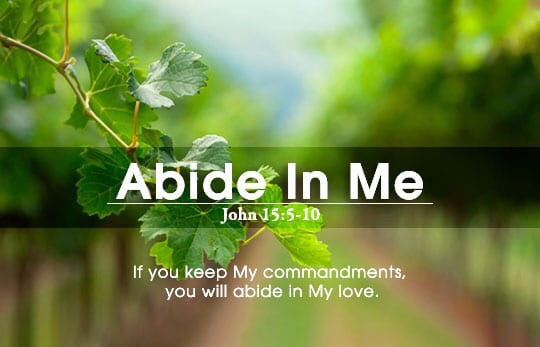
This is expounded, not through ethical instructions, but by means of images which offer glimpses into how the central quality of love is made possible. In the image of the vine and the branches (15:1–11), Jesus portrays the foundations of ethical awareness (as we saw in last week’s Gospel passage).

Because believers abide in the Son, he is then able to bear fruit in their lives and “become my disciples” (15:8). So, love is made possible for those who believe, because they abide in the love of Jesus (15:10).

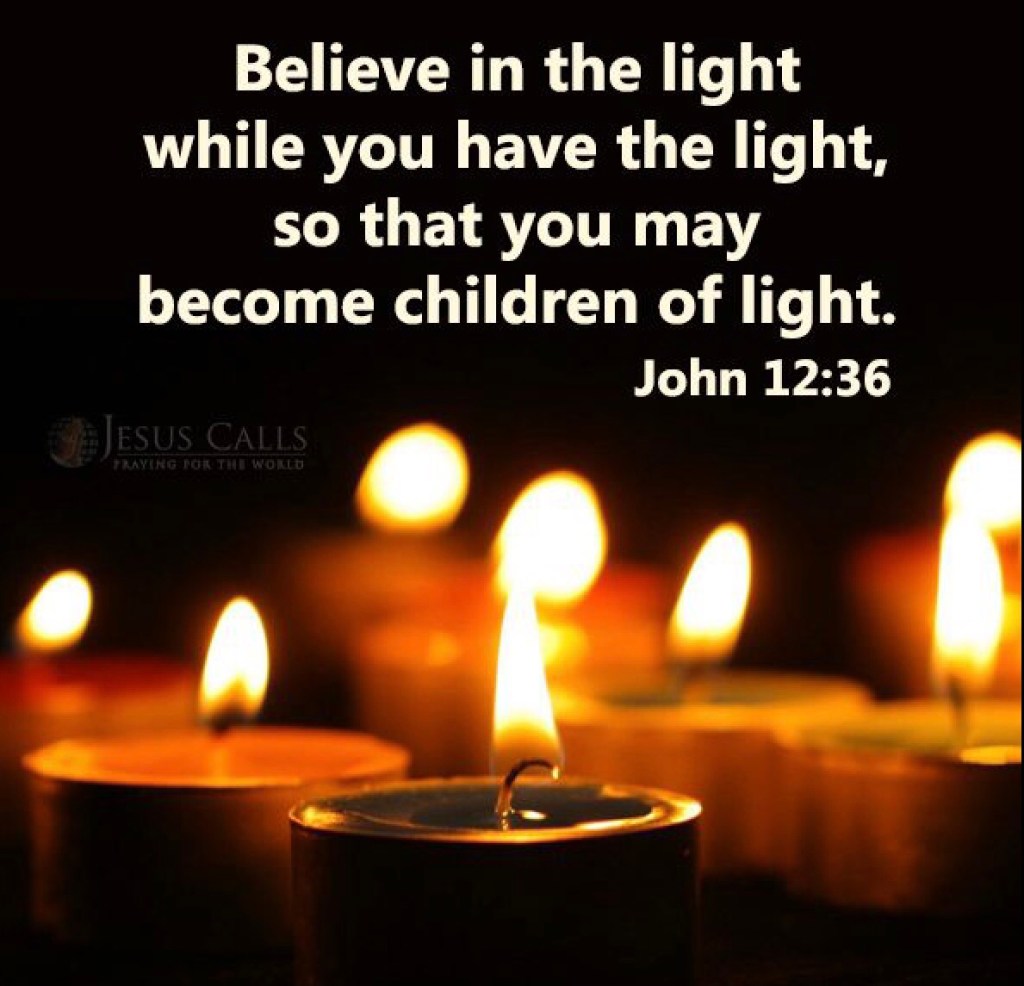
Employing another image, Jesus declares that he comes as “the light of the world” (9:5), inviting those who believe in him to follow the light (8:12), walk in the light (11:9–10), and thus become “children of light” (12:36).

A third image with potential for much ethical exposition is the statement by Jesus that “I am the way” (14:5). This image has been developed in other New Testament books, and in the Dead Sea Scrolls, in this direction. However, the Johannine Jesus appears to see “the way” simply as the way to intimacy with God (14:6–7).

For more on “the way” in John’s Gospel, see https://johntsquires.com/2020/05/06/i-am-the-way-john-14-from-elitist-exclusivism-to-gracious-friendship/

Each of these images provides a sense of certainty for the believer—who abides in Jesus, who walks in his light, who follows his way—without having to spell out particular attitudes or behaviours which must be followed. In the end, the Jesus of this Gospel invites his followers to walk into unity with him, and thus unity with the Father. Right behaviour, it is assumed, will simply follow on.

This blog draws on material in JOURNEYING WITH JOHN: an exploration of the Johannine writings, by Elizabeth Raine and John Squires (self-published 2014)

The identity of the Uniting Church

The Uniting Church is part of the one holy catholic and apostolic church – we see ourselves as just one part of a much larger whole. We do the things that other denominations within the church do: we gather for worship, preach the Gospel, care for the needy, witness to our faith, and connect with communities.

We have many organisations that cater specifically for pre-schoolers, school students, people with disabilities, theological students, adult learners, Indigenous people and aged and infirm people. We have chaplains in hospitals, schools, industry, and the defence forces. And we have congregations in many places across the continent.

When we worship, we feel connected with the people of God of all denominations across the globe. When we witness, we bear testimony to the faith shared by Christians of many varieties. When we reach out in service, we act in solidarity with people of Christian faith, people of other faiths, and people of goodwill of any stripe, in our communities and across the globe.

We share in the call to be missional, universal, set apart, and unified, as God’s people together. Or in more traditional theological language, we are part of the ‘one, holy, catholic and apostolic’ church.

But we believe that we have some distinctive elements to contribute to that larger whole. Our identity as the Uniting Church in Australia is marked by ten distinctive features.

I In Ecumenical Relationship

When the Congregational, Methodist and Presbyterian churches joined together in 1977 to form the Uniting Church in Australia, they declared that this union was both in accord with the will of God, and that it was a gift of God to the people of God in Australia.

Since then, the Uniting Church has been a church which is committed to working ecumenically with other Christian denominations. That commitment is one very important aspect of our identity as a Uniting Church. We belong to the National Council of Churches in Australia and the World Council of Churches, where we co-operate with many denominations.

Nationally, we have participated in ongoing conversations with other denominations (Anglican, Lutheran, Greek Orthodox, and Roman Catholic). At the grassroots level, our ministers participate in local ministers’ associations in hundreds of towns and cities across the nation. Some Congregations share buildings with other denominations; some worship and serve together, especially in rural towns.

We are an ecumenical church.

II In Covenant with First Peoples

A very important dimension to being the church in this country is that we are a church in Covenant with the First Peoples of Australia. From its earliest years, the Uniting Church has been involved in actions which express our solidarity with the Aboriginal and Torres Strait Islander peoples. Older members will recall events at Noonkanbah Station in the Kimberley in 1980, when Uniting Church members stood in solidarity with the traditional owners, the Yungngora people, against the mining of their land.

The Uniting Aboriginal and Islander Christian Congress (UAICC) was established in 1985, and a Covenant between the UAICC and the UCA was implemented in 1994. This Covenant recognises that working for reconciliation amongst people is central to the Gospel. This gives expression to our commitment to shape a destiny together.

In 2009, the Preamble to the UCA Constitution was revised to recognise the difficult history of relationships between the First Peoples and the later arrivals, as Second Peoples. In 2018, we agreed to support a Makarrata process to give a clear national voice to First Peoples, and to support a national Treaty. Our present relationship is one which seeks to ensure that we commit to the destiny together which we share as Australians. The Assembly fosters ongoing work in this area through the Walking Together as First and Second Peoples Circle.

We stand in covenant relationship with the First Peoples.

III A Multicultural Church 

In the same year that the Congress was formed, the Uniting Church declared that it is a multicultural church, which rejoices in the diversity of cultures and languages which are found across Australia. The Basis of Union recognises that we share much, as Australians, with people of Asia and the Pacific. The Uniting Church has maintained strong relationships with churches from these regions, as well forging new links with churches in Africa and the Middle East.

The Statement to the Nation, issued in 1977, acknowledged that the Uniting Church seeks a unity that transcends cultural, economic and racial distinctions. Within Australia, there are at least 12 national conferences based on regional groupings and people from 193 language groups who belong to the Uniting Church.

Each Sunday, worship takes place in Uniting Churches in 26 languages from cultures beyond Australia, as well as many indigenous languages used in worship by first peoples across our church. We have learnt the importance of moving from “enjoying each other’s foods”, to conversing at a deep level about the hopes and expectations we bring from different cultural experiences. We have learnt that we need to be intercultural in our relationships.

Through UnitingWorld, we maintain partnerships with churches in Asia, the Pacific, Africa and the Middle East. We are truly a multicultural church. Through the Relations with Other Faiths Working Group and the Seeking Common Ground Circle, the Uniting Church has been active in developing relationships with other faith communities. We have had a long and fruitful Dialogue with the Jewish Community, and participate in a number of other interfaith Dialogue conversations. We are firmly committed to constructive interfaith relations.

We continue to develop as a church in deepening relationships with many cultures and faiths.

IV  All the people of God

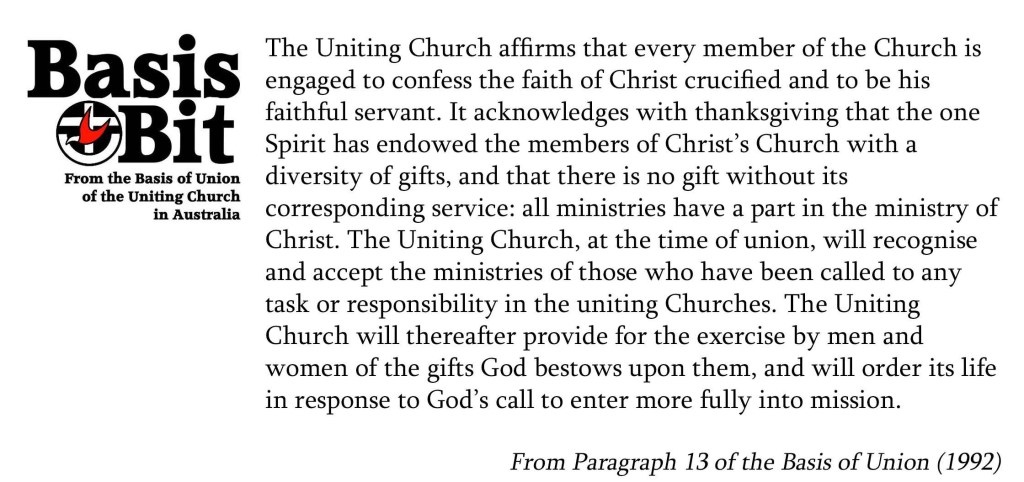
The Uniting Church is a church which values the ministry of all the people of God and seeks to order itself in accordance with the will of God. Our Basis of Union affirms that every member of the church is engaged to confess Christ crucified, and every person is gifted by the Spirit to engage in ministry in their own particular way. We are a church that values the ministry of each and every person.

Throughout the life of the Uniting Church, we have held our structures and forms of ministry accountable to ongoing scrutiny. Alongside the Ministry of the Word, to nurture and guide Congregations, we have introduced the Ministry of Deacon, to focus attention on people living on the margins. We have introduced the Ministry of Pastor to recognise the giftedness of lay people, and that sits alongside the Ministry of Lay Preacher (which we have had since 1977), and the more recent accreditation of Lay Presiders in many locations.

We have also undertaken important conversations about membership and the relationship of Baptism to Holy Communion. We now have a clear commitment to an open table when we gather for The Lord’s Supper: all who are baptised (whether adult or child, whether confirmed or not) are welcome to share at this table.

We are a church which values the ministry of all the people of God.

V  Women and Men

The Basis of Union makes it very clear that we are a church which is committed to equality and mutuality of women and men in ministry. Even before 1977, the three previous denominations had ordained women to ministry. This is a very strong distinctive, especially in the Australian scene.

Since 1977, many women have stood on an equal basis alongside men, as Ministers of the Word, Deacons, Elders, Church Councillors, Lay Preachers, Lay Presiders, Chaplains, and Pastoral Carers. We value the insights and experience of women in each and every way that we seek to “be church”—as we gather to worship, as we witness to our faith, as we serve the wider community.

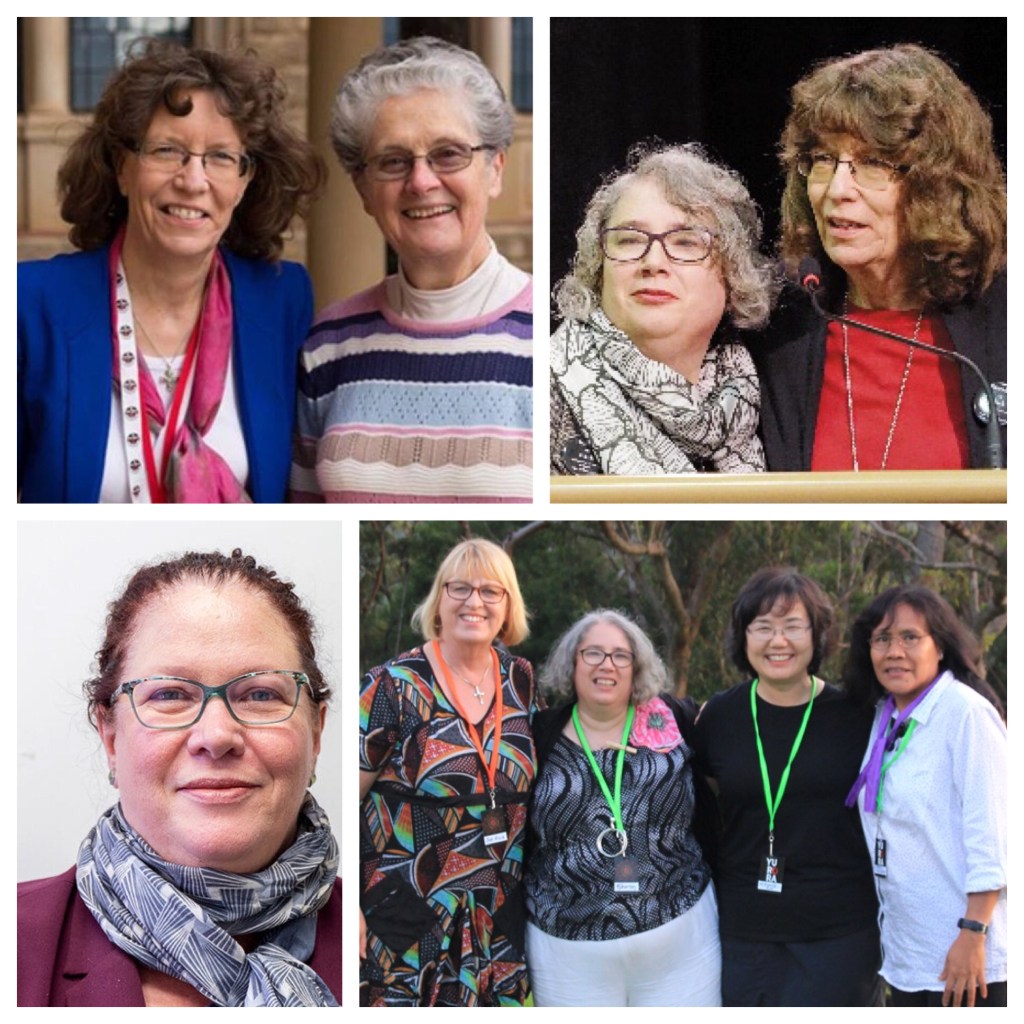
Women in leadership: Presidents Jill Tabart (1994–1997) and Deidre Palmer (2018–2021); Deidre Palmer and President-Elect Sharon Hollis (2021–2024);
Assembly General Secretary Colleen Geyer (2016– );
and Moderators Sue Ellis (SA), Sharon Hollis (VicTas),
Myung Hwa Park (NSW.ACT) and Thresi Mauboy (Northern Synod).

Both lay and ordained women have served in leadership positions across all councils of the Uniting Church, from Church Council Chairpersons to Presbytery Chairpersons, to Synod Moderators and Secretaries, to the Assembly General Secretary and President. Many couples minister together as husband and wife. Gender equality is most certainly part of our identity.

We are committed to mutuality and gender equality in every part of the church.

VI Discernment

Another contribution that the UCA has made has been to highlight the importance, when we gather in council, of being open to the Spirit, and seeking to discern the will of God. We live this out in our councils by practising a process of consensus decision-making. The Manual for Meetings sets out the various elements that are involved in making decisions by discernment: a time of information, a time of deliberation, and a time of decision-making.

The infamous “coloured cards” are only one small part of the whole. The focus is on listening to the Spirit before we speak, and striving to find a way forward that most, if not all, people can see as the will of God for the church. This way of decision-making, which originated in the UCA, has now been adopted by the World Council of Churches and a number of its member Churches.

We are a church which deliberately seeks to discern the movement of the Spirit in our midst.

VII Professional Standards

Over the last 20 years, the Uniting Church has developed a firm commitment to strong professional standards, for Ministers as well as for lay people who exercise leadership in the church. Our commitment to professional standards emerged initially in response to the problems of sexual misconduct within the church. A whole section of the Regulations is now devoted to this.

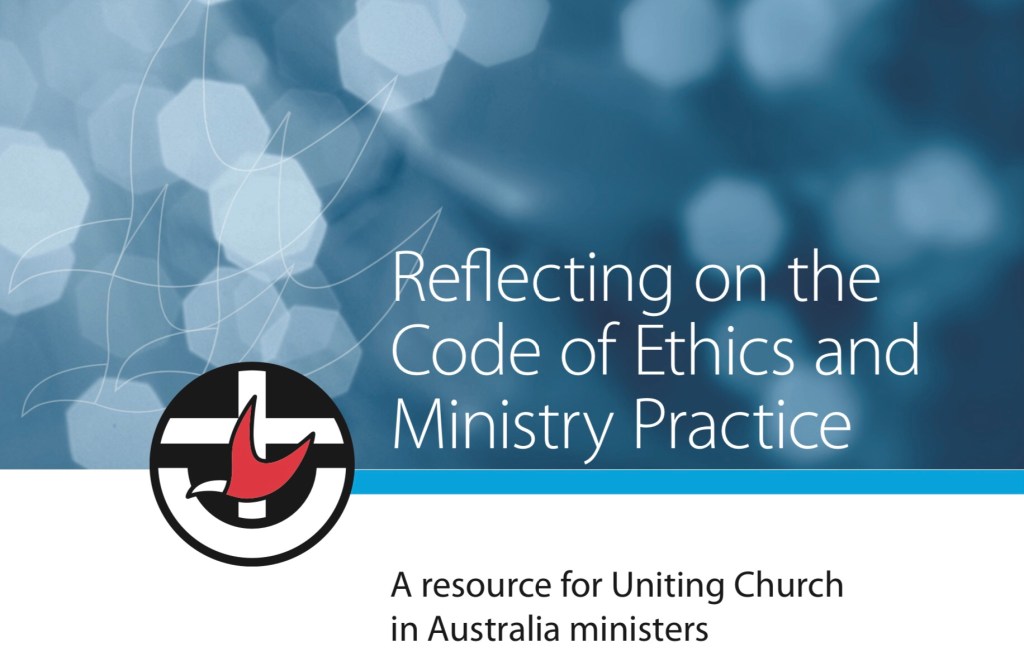
Since 1999, all Ministers have been expected to adhere to a Code of Ethics, and this has most recently been revised to provide a Code of Ethics Ministry Practice for Ministers and a Code of Conduct for Lay Leaders. Ministers and Pastors undertake regular training in aspects of this code, in ethical ministry workshops.

Since the Royal Commission into Institutional Responses to Child Sexual Abuse, we have intensified our efforts to ensure that our churches are Safe Places, valuing everybody, honouring integrity, avoiding negative and hurtful behaviours.

We are a church which values integrity and clarity about our ethical standards.

VIII  Open to explore difficult issues

Over 40 years, the Uniting Church has shown that it is a church which is prepared to engage in difficult discussions about contentious issues. Our Basis of Union commits us to learn from the insights of contemporary scientific and historical studies, and affirms that we remain open to correction by God in the way we order our life together.

In the early years of the Uniting Church, debates about Baptism were the focus of great controversy. Infant baptism had been an integral part of the worship practices of each denomination which joined the Uniting Church, but Ministers and Elders Councils were receiving regular requests for baptism by adults who had been baptised as infants but had come to a personal faith later in their lives. After debates stretching through the 1980s and 1990s, the Uniting Church has developed a clear set of protocols to cover such requests.

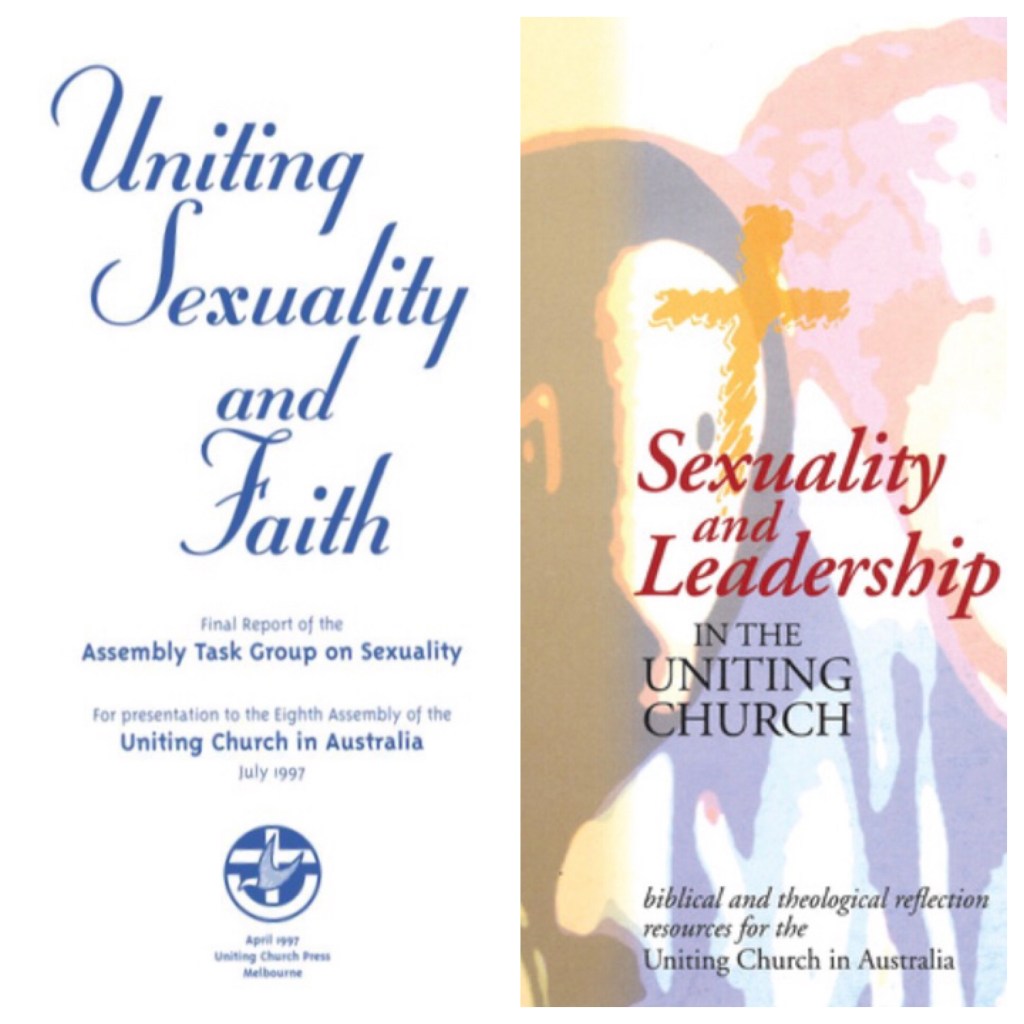
Another area of enduring controversy has been that of human sexuality. There is a wide diversity of opinion within society relating to such matters, and this diversity is present within the Uniting Church. Once again, from the 1980s though into the present era, lively debates regarding human sexuality have taken place in the various councils of the church. We have worked through difficult decisions about sexuality and leadership, and then about sexuality, gender, and marriage. We continue to learn, explore, and adapt.

In dealing with such issues, we have learned how to debate with respect and integrity with ongoing conversations looking to employ a “Space for Grace” process to encourage respectful, empowering, and inclusive decision-making.

We seek to be a church that engages in the difficult discussions with honesty, transparency, and hopefulness.

IX  Advocating for Justice

The Uniting Church inherited from its predecessor Churches a strong commitment to advocating for justice for all. Many Uniting Church congregations and members are actively committed to serving those people who find themselves on the margins of society. This commitment was clearly articulated in the 1977 Statement to the Nation and it has been evident in many actions undertaken by Uniting Church members over the decades.

The Uniting Church has joined in common cause with other groups and organisations in society, in advocating for a welcoming attitude towards refugees; in lobbying for a fair and just system of caring for people who are experiencing poverty and homelessness; in seeking equity for workers in their workplace; and in many other issues. The Assembly Working for Justice Circle, brings together people who are strongly committed to this avenue of ministry.

A regular stream of policy documents and public resolutions point to a clear and unbroken commitment to seeking justice for all. Each federal election, we are provided with resources that encourage us, as people of faith, to consider the implications of our votes in the life of the nation.

We are a church which is strongly committed to justice for all.

Environmental Sustainability

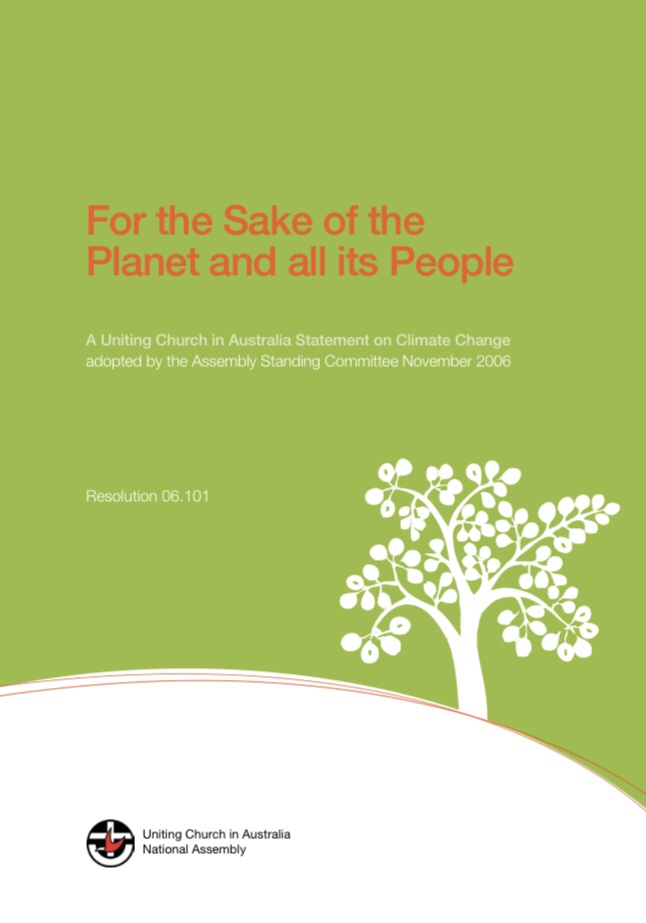
In like manner, the Uniting Church has always been a church which honours the environment and supports a sustainable lifestyle. Although such matters are firmly on the radar of the public now, they have long been integral to the identity of the UCA. Once again, the 1977 Statement to the Nation flagged such commitment. A series of subsequent documents attest to the ongoing determination of the church to live responsibly, in such a way that we minimise the damage we cause to the environment in which we live.

Our partnerships with Churches in the Pacific have intensified our awareness of the negative impacts that are resulting from climate change. We know that we need to act now, to reduce the threat. Each year, we experience catastrophic consequences from more regular and more intensified “natural disasters”—fires, floods, drought, cyclones. Just as we provide pastoral support in these situations through Disaster Response Chaplains, so too we maintain advocacy with governments, urging them to set policies which will turn us away from the trajectory of yet more environmental disasters.

Locally, many Congregations and individual members of the UCA are seeking to implement practices that will reduce their carbon footprint on the planet. We know that we owe it to future generations, to live responsibly in the present.

We are a church that lives, acts, and advocates for a sustainable environmental future.

*****

You may have some thoughts about what I have articulated above. You may have thought, “what about …?” – something that I have overlooked, that you see as important. You may have some questions about how I have described some of these elements. I encourage you to talk with others about how you respond. Together, we are the Uniting Church!

This discussion of identity is the first in a series of articles on this question on the Assembly website, at DNA of the UCA – Uniting Church Australia