On the mount of the Lord it shall be provided (Gen 22; Pentecost 5A)

“Abraham reached out his hand and took the knife to kill his son” (Gen 22:10). We read these chilling words in the passage that the lectionary offers for our reflection and consideration this coming Sunday (Gen 22:1–14). It’s hardly edifying reading material for worship, is it?
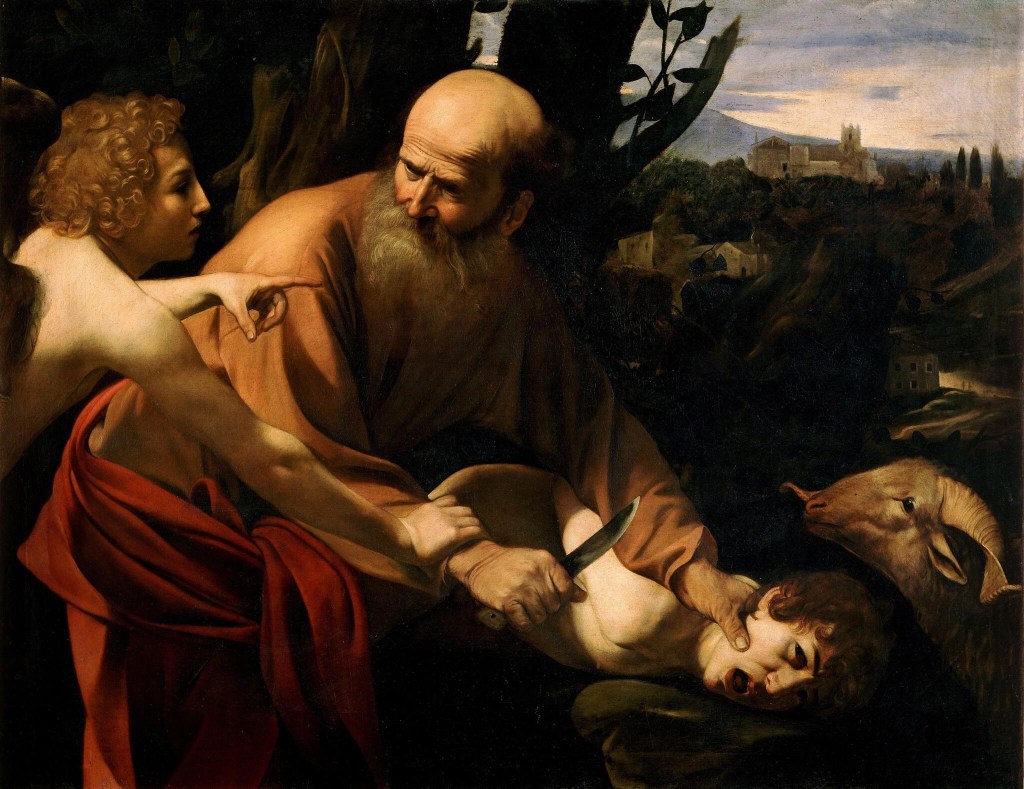
The Sacrifice of Isaac, by Caravaggio, c. 1603

It’s a horrifying story. Who is this God who calls Abraham to take his “only son” up the mountain and “offer him there as a burnt offering” (22:2)? How does this God relate to the God who, it is said, has shows “steadfast love” to the people of Israel (Exod 15:13), and before that to Joseph (Gen 39:21), to Jacob (Gen 32:9–19), and indeed to Abraham himself (Gen 24:27)? Why has God acted in a way that Is seemingly so out of character in this incident in Gen 22? Or is this the real nature of God, and later displays of “steadfast love” are simply for show?

Writing in With Love to the World, the Revd Sophia Lizares, a Uniting Church Minister originally from the Philippines, now serving in Perth, WA, says that this story is “an improbable and troubling reading: a God who demands a father to kill his beloved son, a father who questions not.” It is not just the knife in Abraham’s hand which is raised (22:10)—there are many such questions raised by these seemingly callous story.

My wife, Elizabeth Raine, has a cracker of a sermon in which she compares this story with the account of Jephthah and his daughter (Judg 11:29–40). Whilst the Lord commands Abraham to kill his son as a burnt offering, it is the vow made by Jephthah to sacrifice “whoever comes out of the doors of my house to meet me, when I return victorious from the Ammonites” as a burnt offering (Judg 11:30).

And whilst the Lord intervenes in what Abraham is planning to do at the very last moment, sending an angel to command him, “do not lay your hand on the boy or do anything to him” (Gen 22:11–12), Jephthah is held to the vow he has made—by his very own daughter, who knows that she will be the victim of this vow (Judg 11:39). There is no divine intervention in this story.

And worse, whilst Abraham had carefully prepared for the sacrifice, taking his donkey, two servants, and the wood for the fire up the mountain with him (Gen 22:3–6), Jephthah’s vow was made on the spur of the moment (Judg 11:30–31), and when his daughter insisted that he must carry through with this vow, he gives her, as requested, two full months for her to spend with her companions before he sacrificed her (Judg 11:37–39). Surely he might have had time in those two months to reconsider his vow and turn away from sacrificing his daughter?

It would seem, then, that the daughter was dispensable; the son, the much loved only son of Sarah and Abraham, was clearly indispensable. That would clearly reflect the values of the patriarchal society of the day, in which “sons are indeed a heritage from the Lord, the fruit of the womb a reward” (Ps 127:3).

And Abraham would have followed the same pathway, sacrificing his only son, had not the Lord intervened. Neither father is looking very appealing in these two stories! Which makes it hard to see how the story of the sacrifice told in Judg 11, and the story of the almost-sacrifice told in Gen 22, can be “the word of the Lord” for us, today, in the 21st century. Indeed, the story of Abraham and Isaac comes perilously close to being a story of child abuser—if not physical abuse, by the end of the story, at least emotional and spiritual abuse.

Situations of abuse destroy trust. After such an experience, how could Isaac ever trust his father again? And as we hear the story, how can we trust God? How could we ever believe that his commands to us are what we should follow?—if he follows the pattern of this story, and changes his mind at the last minute, after pushing us to the very brink of existence? How could we trust a God like this?

Or, if the story involving poor Isaac is really about God providing, as Abraham intimates early on (22:8), and then concludes at the end (22:14), then it is a rather malicious way for God to go about showing how he is able to “provide”. Provision, and providence, should be something positive—not perilous and threatening, as in this story.

Or yet again, if the story is about testing Abraham’s faith, as many interpreters conclude, then it is a particularly nasty and confronting way for God to do this—and that points to a nasty streak in the character of God. Is this really what we want to sit with? Was there not some other way for God to push Abraham to test his faith?

What do we do with such a story within our shared sacred scriptures?
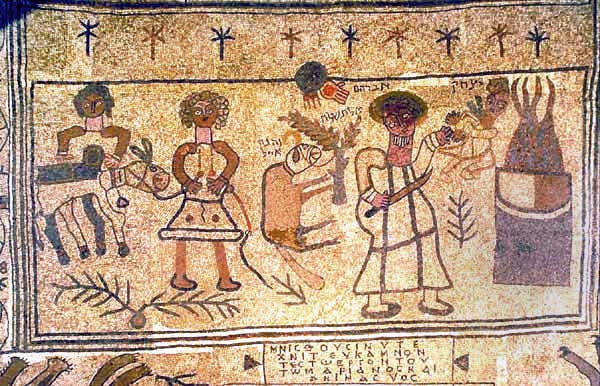
A sixth-century CE floor mosaic from the Beth Alpha synagogue, in Israel’s Jezreel Valley. The mosaic lay near the door, so that anyone who entered was confronted by the scene. In this mosaic, Abraham and Isaac are identified in Hebrew. The hand of God extends from heaven to prevent Abraham from proceeding. Below the hand are the Hebrew words, “Lay not [your hand].” Next to the ram are the words, “Behold a ram.”

*****

The Jewish site, My Jewish Learning, states that “although the story itself is quite troubling, it does contain a message of hope for Rosh Hashanah. In the liturgy we ask God to “remember us for life.” The binding of Isaac concludes with his life being spared, and he too is “remembered for life.” Abraham’s devotion results in hope for life.”

How does the message of hope for life emerge from this story? Clearly, the life of Isaac is spared; but this is a terrible way to teach that message!

James Goodman, writing in My Jewish Learning, explains how he was taught to understand this story. “I learned that the story was God’s way of proclaiming his opposition to human sacrifice”, Goodman writes.

He refers to the way his Hebrew-school teacher explained this story: “God had brought Abraham to a new land. A good and fertile land, where it was common for pagan tribes, hoping to keep the crops and flocks coming, to sacrifice first-born sons to God. Then one day, God commanded Abraham to sacrifice Isaac, the beloved son of his old age.

“Abraham set out to do it, and was about to, when God stopped him. He sacrificed a ram instead. In the end, Abraham had ‘demonstrated his—and the Jews’—heroic willingness to accept God and His law,’ and God had ‘proclaimed’ that ‘He could not accept human blood, that He rejected all human sacrifices’.”

See https://www.myjewishlearning.com/2013/09/11/understanding-genesis-22-god-and-child-sacrifice/

Setting the story in the broader context of the practice of child sacrifice is a way of accepting that this terrible story might indeed have some value. Seeing the story is a dramatised version of God’s command not to sacrifice children can be a way to deal with it. “Do not lay your hand on the boy or do anything to him”, the angel says; so Abraham obeys, finds a ram, offers the ram as a burnt offering (22:12–13). And so, the name of the place is given: “the Lord will provide” (22:14).

Three kings of Israel, at different times in the history of Israel, are said to have practised child sacrifice, as they turned to practices found in nations other than Israel. Solomon in his old age is said to have turned to the worship of Molech (1 Ki 11:7); this practice was subsequently adopted by Ahaz, who “made offerings in the valley of the son of Hinnom, and made his sons pass through fire, according to the abominable practices of the nations whom the Lord drove out before the people of Israel” (2 Chron 28:3). Likewise, Manasseh “made his son pass through fire; he practiced soothsaying and augury, and dealt with mediums and with wizards” (2 Ki 21:6).

Direct commands not to sacrifice children are found in two books of Torah in the scriptural texts. Most direct is “you shall not give any of your offspring to sacrifice them to Molech, and so profane the name of your God: I am the Lord” (Lev 20:18). In Deuteronomy, other nations are condemned as they “burn their sons and their daughters in the fire to their gods” (Deut 12:31), so the command is “no one shall be found among you who makes a son or daughter pass through fire” (Deut 18:10). The prophet Jeremiah also asserts that this practice is not something that the Lord God had thought of (Jer 7:31).

So the passage we have in the lectionary responds to this practice by telling a tale which has, as its punchline, the command “do not lay your hand on the boy or do anything to him” (22:12). Might this be the one redeeming feature of this passage?

But if that is the case, the story belongs back in the days when child sacrifice was, apparently, widely practised. What, then, does it say to us today???

See also

From violent conflict to joyful celebrations: Pride Month

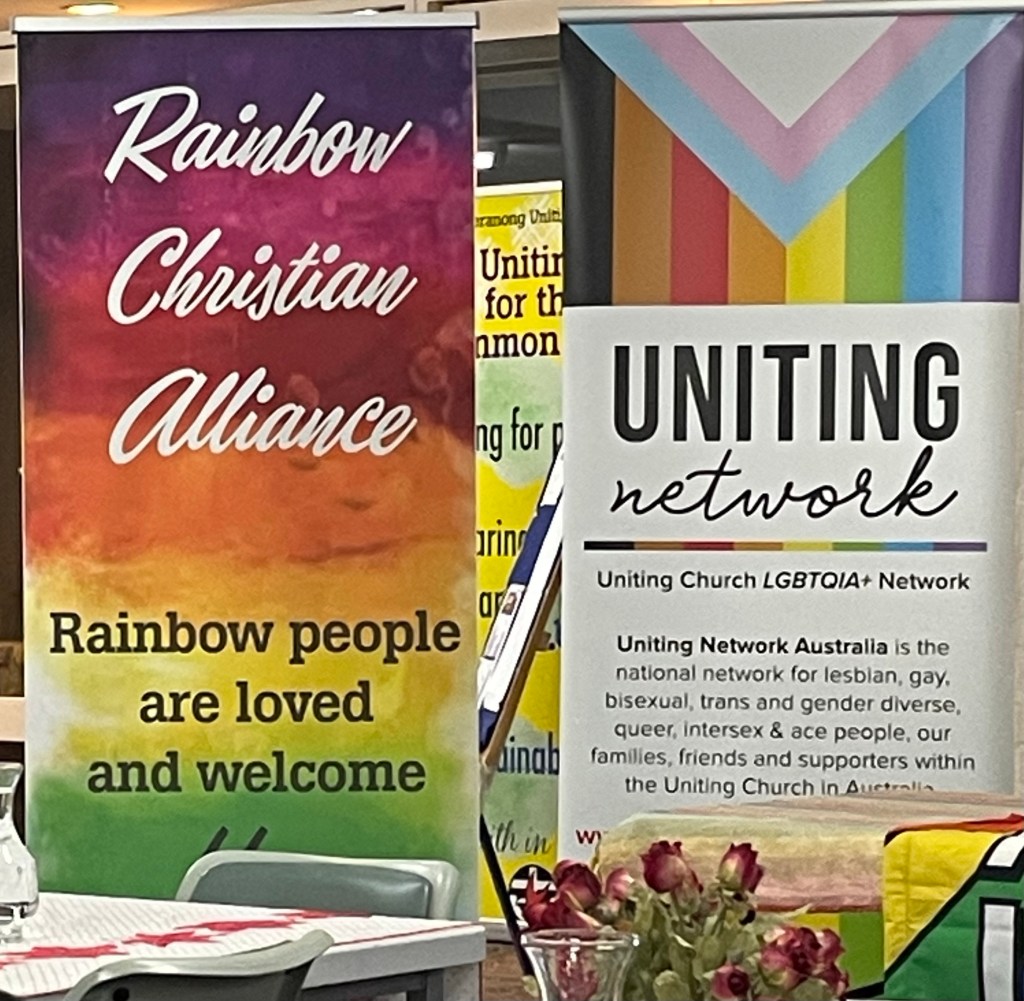
Earlier this month, Elizabeth and I attended the regular monthly gathering of Rainbow Christian Alliance (RCA), where rainbow people of faith, who identify with one or more of the letters in LGBTIQA, join with allies to share food, conversation, and prayer, and discuss matters of mutual concern.

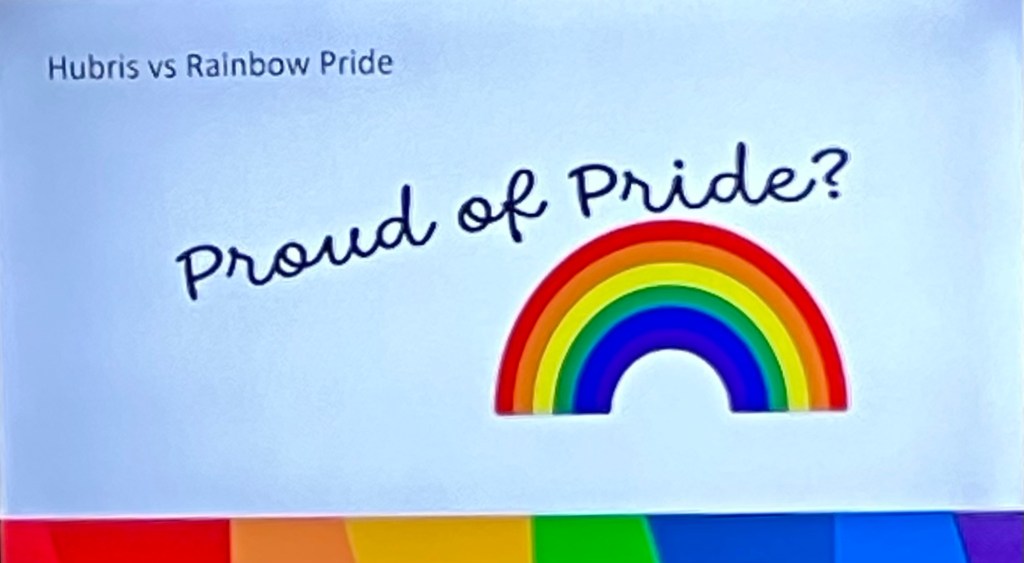
This time, the theme for RCA—since it is Pride Month during June—was “Proud of Pride?” Pride Month runs throughout the month of June. It honours the 1969 Stonewall Riots, a tipping point for the then Gay Liberation Movement in the USA.

In response to a police raid of a gay bar, the Stonewall Inn, on 28 June 1969, in Greenwich Village, New York City, members of the gay community began a rolling series of spontaneous protests that were marred by police violence, which generated increasingly aggressive protests in response.

Simultaneous Gay Pride marches were held a year later, in New York, Chicago, and Los Angeles, to remember the Stonewall Riots. That custom has continued each year since, and has grown into Pride Month.

The long-term result of these protests was that gay rights groups sprang up in every major US city, and the decriminalisation of homosexuality (which had already occurred in Illinois in 1962) spread across the fifty states over the next four decades. A similar slow-drip rollout occurred across the states and territories of Australia, from South Australia in 1972, to 1997 in Tasmania, the last state to decriminalise consenting homosexual activity.

Today, Pride Month is a time for celebrations, including pride parades, picnics, parties, workshops, symposia and concerts. It offers an opportunity to “celebrate the diversity of the lesbian, gay, bisexual, transgender and intersex community … to reflect on just how far civil rights have progressed in half a century… and an opportunity to protest discrimination and violence”. (quoted from https://unyouth.org.au/event/global-issues-resources/national-pride-month/)

Those present at the Rainbow Christian Alliance gathering earlier in June engaged in a discussion of the differences between the sin of pride—hubris, according to the ancient Greeks—and the situation of LGBTIQA+ people today, where their expressing of pride in their gender identity or their sexual orientation is encouraged.

It is my view that the longterm historical prejudice and discrimination that LGBTIQA+ people have experienced—and that many continue to experience today—means that it is quite different for rainbow people. To express pride in their identity is something that is important and necessary for them to do. It is a way of claiming a place as a respected, honoured, and valued member of society.

That is quite different from someone like myself (a cis-gender white straight male, who has experienced so many points of privilege in life) expressing pride. Any expression of pride by myself about my privileges would be hubris; rainbow pride is seeking to redress past wrongs and establish a good and positive place in society for LGBTIQA+ people.

The Rainbow Christian Alliance provides a safe space for people to gather under the umbrella of the church. The importance of this space is evident at every RCA gathering, where friendship, support, compassion, and empathy is always strong. Participants keep coming back because they are valued and respected. Acceptance and affirmation are central to what takes place at each gathering.

As an ally, I find that welcoming rainbow people into the physical space where I worship week by week is complemented by the fact that I always feel welcomed into the emotional “rainbow space” that people create on these Sunday nights. Being able to take part in such a gathering is so important for all of us; there are mutual benefits for all of us.

Many of the people who participate in RCA have had negative experiences, related to their sexuality and/or gender, from family members, and from churches. The churches that give the most grief are of a more conservative theology, and a substantial proportion of those are Pentecostal, but even mainstream churches, Anglican and Catholic alike, have inflicted hurt and perpetrated harm by the way they have dealt with people in their midst who “come out” in relation to their gender identity or sexual preference.

I am glad that the Uniting Church has held a strong line in relation to LGBTIQA+ people. We have consistently grappled with issues of sexuality and, more recently, gender identity, exploring the biblical, theological, and pastoral dimensions with care, compassion, and integrity. That we can offer safe spaces in so many of our Congregations, now, is a small testimony to the determination we have to hold fast to the Gospel, as we best understand: we value, we accept, we include, and we advocate for people across the spectrum, as integral members of our community of faith.

See also

A prophet, a righteous person, and a little one (Matt 10; Pentecost 5A)

This Sunday, the lectionary offers a Gospel passage of just three succinct verses (Matt 10:40–42). In those verses, three key terms are used Jesus: prophet, righteous one, and little one. “Whoever welcomes you welcomes me, and whoever welcomes me welcomes the one who sent me,” Jesus asserts (Matt 10:42), before he proceed to extend this saying to include those who welcome a prophet, a righteous person, and “whoever gives even a cup of cold water to one of these little ones in the name of a disciple”. In each case, a reward is certain, says Jesus.

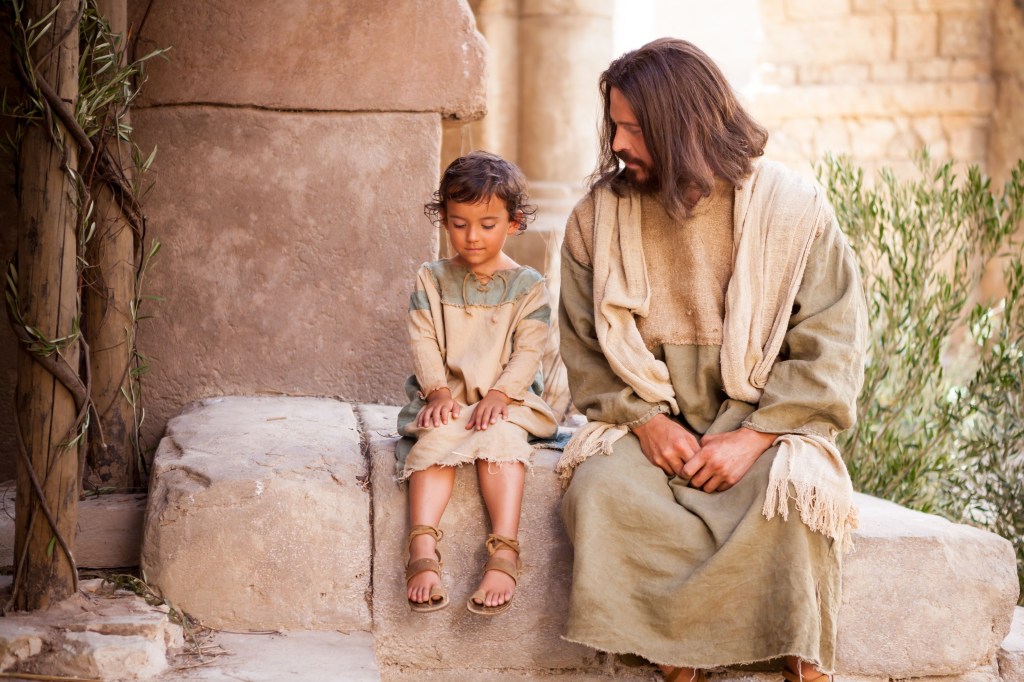
The last of these sayings, about “one of these little ones”, links these verses with the saying of Jesus he spoke after the disciples had been arguing about “who was the greatest”. This saying is reported in the triple tradition (Mark 9:33–37 and parallels in Matt 18 and Luke 9). In that scene, Jesus took a child in his arms and said, “whoever welcomes one such child in my name welcomes me, and whoever welcomes me welcomes not me but the one who sent me” (Mark 9:37; Matt 18:5; Luke 9:48).

Matthew here reports an expanded version of that saying, which is applied directly to the disciples. He begins by reversing Mark’s saying, taking the end of that version by referring initially to all the disciples: “whoever welcomes you”, before extending this to include “welcoming me” (10:40).

The disciples represent Jesus as “the one who sent me”, namely, God. This last phrase, found in the three Synoptic versions of this saying, is a favourite Johannine phrase for God (John 1:33; 6:44; 7:28; 8:26, 29; 9:4). The Johannine version of this saying is “whoever receives one whom I send receives me; and whoever receives me receives him who sent me” (John 13:20). That is very similar to the version that Matthew reports.

However, Matthew extends his version of Mark’s saying still further by adding “whoever welcomes a prophet”, then “whoever welcomes a righteous one” (10:41), before concluding with “whoever gives even a cup of cold water to one of these little ones in the name of a disciple” (10:52). The “little one” is presumably equivalent to “the child” which had begun Mark’s saying.

Jesus’ other saying about “the little ones” appears in all three Synoptic Gospels. The saying is highly likely to be authentic, if we adopt the classic form-critical criteria that were developed some decades ago. One marker of authenticity is for a saying to be hard, difficult, or unexpected. Jesus instructs his disciples, “if any of you put a stumbling block before one of these little ones who believe in me, it would be better for you if a great millstone were hung around your neck and you were thrown into the sea” (Mark 9:42; Luke 17:2; Matt 18:6).

This is a shocking, confronting instruction. It is undoubtedly a hard saying. In Mark 9, that shocking statement is extended regarding a hand or a foot or an eye causing a person to stumble; “it is better for you to enter life maimed … lame …[or] with one eye”, he advises (Mark 9:43-48). So Jesus is strenuously advocating for “the little ones”, and giving them a cup of water (Matt 10:42) is an essential act of discipleship.

*****

We have seen, then, that Matthew has inverted the order he received from Mark and extended the comparison he makes about welcoming a person who comes in his name. Adding the prophet to this saying (10:41) brings in another dimension to the story.

One line of interpretation that has been proposed intrigues me. Could these sayings reflect the on-the-ground nature of the earliest period of the movement that Jesus initiated? He had called disciples to follow him (4:18-22; 9:9), warned people of the difficulties that this would entail (8:18–22), selected an inner group to be designated as “emissaries—translating the Greek apostoloi (10:1–4), and commissioned them to proclaim the nearness of God’s presence in this world (10:5–15).

Jesus then warned these emissaries of the dangers that lay in store for them (10:16–25) and encourages them with the words, “do not fear those who kill the body but cannot kill the soul” (10:26–31), assuring them that “everyone who acknowledges me before others, I also will acknowledge before my Father in heaven” (10:32–33). The short lectionary passage brings the whole “mission discourse l (10:1–42) to a close. These words encapsulate the commission and the anticipated experience of the disciples.

How were the followers of Jesus to implement this? Gerd Theissen, a German New Testament scholar, has proposed that the message of Jesus was spread by itinerants within the early Jesus movement who travelled from village to village with their message. They were dependent on those who received them for hospitality and lodging, in literal obedience to what Jesus had told his disciples (Mark 6:10–11). They were living in complete obedience to “the Son of Man [who] has nowhere to lay his head” (Matt 8:20; Luke 9:58).

Evidence for such itinerant preachers can also be found in the Didache, which instructs: “Whosoever, therefore, comes and teaches you all these things that have been said before, receive him … Let every apostle that comes to you be received as the Lord. But he shall not remain except one day; but if there be need, also the next; but if he remain three days, he is a false prophet. And when the apostle goes away, let him take nothing but bread until he lodges; but if he ask money, he is a false prophet.” (Didache 11:1, 4–6).

The reference to prophets in Matthew’s account of the words of Jesus resonate with this portrayal of the early church. Receiving a prophet and welcoming them (providing them with hospitality—food, drink, and shelter) is affirmed, for the prophet comes as a representative of Jesus (10:41).

Throughout the story of Israel, the prophet has been the one who, literally, “speaks forth”; so the prophets sent by Jesus proclaim the message that “the kingdom of heaven has come near” (Matt 10:7). The prophets proclaiming this message, as prophets did in earlier times, accompany their message with acts that manifest the truth of what is proclaimed: “cure the sick, raise the dead, cleanse the lepers, cast out demons” (10:8).

*****

Matthew also adds a saying about receiving “a righteous one” 10:42). This is language which is very important to Matthew. The word dikaios, translated as righteous, refers to a person who adheres carefully to the prescriptions of Torah, who is faithfully trusting God, who follows the ways that God sets out, who contributes constructively to society so that it functions in a just and equitable way.

Torah and righteous-justice are linked in Jewish understanding. The psalmist, characteristically, places them in synonymous parallelism, when they sing, “your righteousness is an everlasting righteousness, and your law is the truth” (Ps 119:142). The prophet Habakkuk, lamenting the “destruction and violence” that surrounds him as the Babylonian army presses into Jerusalem, observes that “the law becomes slack and justice never prevails; the wicked surround the righteous—therefore judgment comes forth perverted” (Hab 1:4). The two go hand-in-hand.

Matthew reflects this close connection between Torah and righteous-justice, as he presents Jesus as being completely faithful to Torah. In reporting his baptism, only Matthew has Jesus declare to John, “it is proper for us in this way to fulfill all righteousness” (3:15). In beginning the Sermon on the Mount, Jesus declares blessed “those who hunger and thirst for righteousness” (5:6) and “those who are persecuted for righteousness’ sake” (5:10).

Jesus follows this by announcing his intention to intensify the demands of the Law (5:18) by demanding that his followers exhibit a righteous-justice that exceeds that demonstrated by the Pharisees (5:20). Only Matthew reports these words of Torah fidelity, and only Matthew has the various parables which affirm “the righteous” over against those who disobey the law (13:36–43; 13:47–49; 25:31–46).

Matthew presents Jesus as thoroughly Jewish, for he knows that God is righteous, as is declared in scripture (Deut 32:4; Ps 145:7; Job 34:17). The psalmists regularly thank God for God’s righteousness (Ps 5:8; 7:17; 9:8; 33:5; 35:24, 28; 36:6; 50:6; etc) and note the importance of humans living in that way for righteousness (Ps 18:20, 24; 85:10–13; 106:3, 31; 112:1–3, 9).

The book of Proverbs advises that the wisdom it offers is “for gaining instruction in wise dealing, righteousness, justice, and equity” (Prov 1:3) and the prophets consistently advocated for Israel to live in accordance with righteousness (Hos 10:12; Amos 5:24; Isa 1:22; 5:7; 28:17; 32:16–17; 54:14; Jer 22:3; Ezek 18:19–29; Dan 9:24; 12:3; Zeph 2:3; Mal 4:1–3; Hab 2:1–4).

So welcoming a righteous one is welcoming a person who follows, intensely and faithfully, the way that Jesus sets out, the way of God’s righteous law—just as welcoming a prophet is welcoming one who faithfully and persistently declares the message of that righteous law. That is the measure of faith that Matthew sets out in this saying. That is the intensity that the Jesus of Matthew presents.

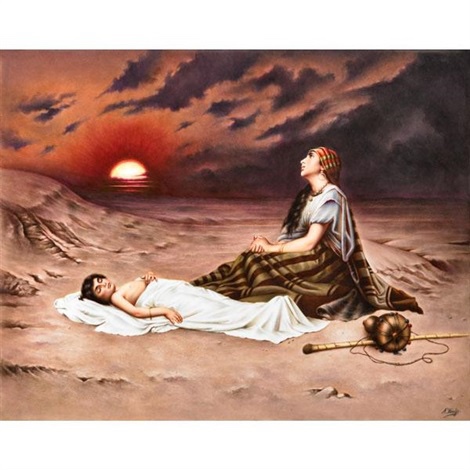
Come, lift up the boy and hold him fast: “the other son”, Ishmael (Gen 21; Pentecost 4A)

As we continue through the season After Pentecost, the lectionary offers stories of some quite extraordinary people, drawn from the sagas that tell of the key moments in the story of Israel. The sagas we will hear are found in the narrative books, Genesis, Exodus, Deuteronomy, Joshua, and Judges.

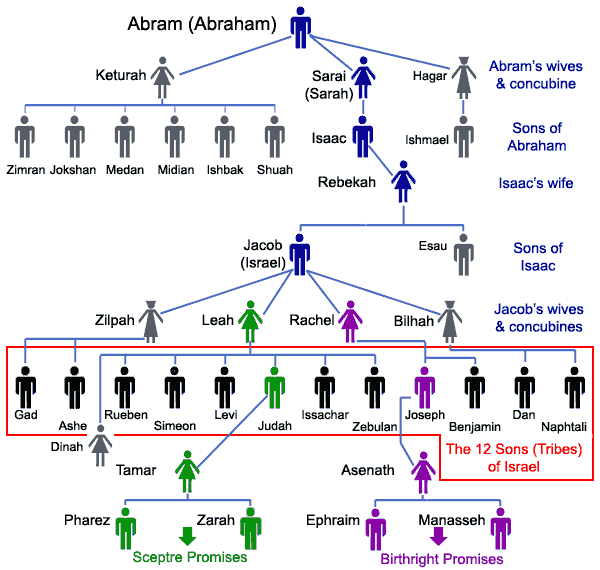
This coming Sunday, we hear another story relating to the patriarch of Israel, Abraham, his Egyptian slave Hagar, and the child that is born to them, Ishmael (21:8–21). This is the first child of Abraham; he and Sarah had not produced any children over many years. The fact that his mother is Abraham’s servant, Hagar, rather than his wife, Sarah, is not unusual. Later in the Genesis saga, Abraham’s grandson Jacob, already married to Leah and then to her sister Rachel, has children by Leah (29:32–35), as well as his servant Bilhah (30:1–7), and later by Leah’s servant Zilpah (30:9–11), before eventually Rachel gave him a son, Joseph (30:22–24) and later, Benjamin (35:16–21).

Earlier in Genesis, in a passage omitted by the lectionary, a report is provided of the circumstances leading to the birth of Ishmael (16:1–16). The naming of the child is announced by angelic visitation to Hagar (16:7–12), establishing a pattern which will later be used in recounting the naming of Samson (Judg 14:2–7), the child of a young woman in the time of Isaiah (Isa 7:13–16), and then of Jesus (Matt 1:20–21; Luke 1:31). It appears, at this earlier point, that it is Ishmael through whom the promise made to Abraham would be fulfilled: “I will make you exceedingly fruitful; and I will make nations of you, and kings shall come from you” (17:6).

In this week’s passage, however, the enmity that was evident once Sarah learnt that Hagar had conceived, comes to full fruition. Once the pregnant Hagar had this news confirmed, “she looked with contempt on her mistress” (16:4), and so “Sarah dealt harshly with her, and she [Hagar] ran away from her” (16:6). Hagar retreats to a spring in the wilderness (16:7), which is where the angel makes their announcement about the name and character of the child. Ishmael means “God has heard”, signalling that God was acting to fulfil the promise. But the life foreseen for Ishmael was one of conflict and opposition: “he shall live at odds with his kin” (16:12).

Hagar presumably returned to be with Abraham and Sarah; in due time, a son, Isaac, is born to Abraham and Sarah (21:1–7). At the start of this week’s passage (21:8–21), it appears that Ishmael is playing happily with his brother (21:8). Jewish interpreters note that the Hebrew word used, tsachaq, can be interpreted as “playing” or “laughing”—or with a more menacing overtone, perhaps hinting at Ishmael’s envy of his half-brother as the favoured one, at least in Sarah’s eyes.

(The LXX, in translating this word into Greek, takes the more benign option, adding the words “with his brother” to imply that this is just children playing games; and that is what Christian translators reflect in their translations.)

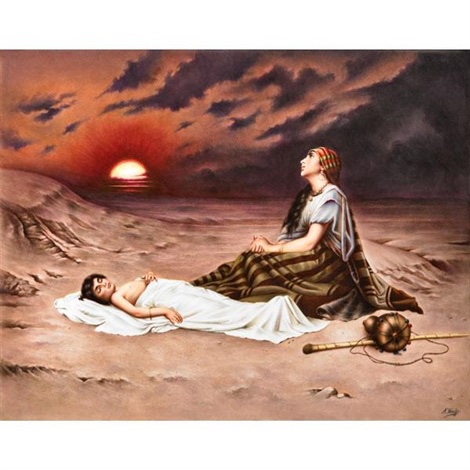
Sarah’s dissatisfaction with this moment of “play”—whether innocent or, perhaps more likely, with a threatening element—leads her to expel Hagar for another time, this time into the wilderness of Beersheba (21:9–14). Hagar’s distress is intense, such that she prepares for the death of the child Ishmael—only to be visited by another angelic intervention, inviting her to “lift up the boy and hold him fast with your hand”, assuring her that “I will make a great nation of him” (21:18).

Writing on the story in this week’s issue of With Love to the World, the Revd Sophia Lizares, a Uniting Church Minister originally from the Philippines, now serving in Perth, WA, says: “God is in the wilderness and hears even the least of the least. In times of trial, God opens our eyes to the goodness close at hand. Even those who have been banished, God accompanies into a unique and unexpected future. In God, the wilderness becomes a sanctuary where Hagar and Ishmael flourish.”

The story is told as an offering of hope—hope that what is yearned for will come to pass, even in the midst of distressingly difficult circumstances. The story has “a happy ending”, of sorts, for an angel intervenes (21:17)—does this perhaps indicate that Sarah was wrong to expel Hagar?

Guided by the angel, Hagar finds water (21:19) and the boy grows to become “an expert with the bow” (21:20). It is even said of him that “God was with the boy” (21:20), a presaging of what was later said of King Solomon (1 Chron 1:1), then later still of the infant Jesus, “the favour of God was upon him” (Luke 2:40), and of the whole life of Jesus, “God was with him” (Acts 10:38).

And the boy Ishmael does indeed become the father of “a great nation” (2:18)—through the 12 sons which he fathered! All’s well that ends well, it would seem.

*****

Yet the conflict that was to be visited upon Ishmael is an important element in this story which we must not pass by. “He shall be a wild ass of a man, with his hand against everyone, and everyone’s hand against him; and he shall live at odds with all his kin” (16:21) is a heavy burden to be laying on the child from the start of his life.

Although Ishmael was circumcised in accordance with the covenant that Abraham had entered into with the Lord God (17:23–27), and although he is indeed “blessed and made fruitful” (17:20) and does become the father of twelve sons (25:13–16) as well as a daughter (28:9), he still faced enmity. He bequeathed that conflicted state to his progeny. Indeed, the story of Ishmael functions (as do many of the stories in Genesis) as an aetiology.

An aetiology, as I have noted previously, tells of something that is said to have occurred long back in the past, but the focus is on present experiences and realities, for “such explanations elucidate something known in the contemporary world by reference to an event in the mythical past”.

See https://oxfordre.com/classics/display/10.1093/acrefore/9780199381135.001.0001/acrefore-9780199381135-e-7050;jsessionid=3DB38C42C54D01E1CBFA8682FB55DA4C

In the developing Jewish tradition, Ishmael attracts negative stories. It is said that he prayed to idols—some rabbis offer this as the explanation for Sarah expelling Ishmael and Hagar into the wilderness. Other rabbis claim that Hagar, an Egyptian woman (16:1) was not “a slave girl” but rather a daughter of Pharaoh.

Some interpreters, following the opening given by the ambiguity in the Masoretic (Hebrew) text, interpret the “playing with Isaac” (21:9) as an attempt to usurp the birthright of Isaac, the son of Abraham’s wife. Was Ishmael play-acting how he planned to dispose of his half-brother, and claim the heritage of his father Abraham?

By contrast, Ishmael is honoured in Islam as a prophet and as the patriarch of Muslims. Abraham—Ibrahim in Arabic—is acknowledged as a messenger of God and recognised as father of the nations, as scripture attests. The Kaaba in Mecca, the holy site to which Muslims make pilgrimage each year, is considered to have been built by Abraham and Ishmael, while the near-sacrifice of Isaac, told in Gen 22, is commemorated by Muslims on the holy day of ‘Eid al-Ada (“the Feast of Sacrifice”). In Muslim thinking, Abraham cleansed the world of idolatry.

In the Muslim holy text, the Quran, there are a number of mentions of Ishmael, who is described as “an Apostle, a Prophet” (19:54), as “truly good”, along with Elijah (38:48), and as inspired, along with “Abraham … and Isaac, and Jacob, and their descendants, including Jesus and Job, and Jonah, and Aaron, and Solomon … and David” (4:163). He occupies a key place in the stories of their past.

*****

The Quran is well-disposed towards Isaac, declaring, “we believe in God, and in that which has been bestowed upon Abraham and Ishmael and Isaac and Jacob and their descendants, and that which has been vouchsafed by their Sustainer unto Moses and Jesus and all the [other] prophets: we make no distinction between any of them; and unto him do we surrender ourselves” (3:84; the term Islam, of course, means “surrender” or “submission”).

Antagonism between Jews and Muslims has nevertheless been experienced throughout much of the time which followed the establishment of Islam as a faith with its own doctrines and practices during the seventh century. Early Muslim expansionary undertakings brought cultural, technological, and literary developments through Persia, Syria, Arabia, Palestine, Egypt, and North Africa. There was a “golden age” under this Islamic rule, during which Jews, Christians, and Muslims lived together in harmony—the so-called convivienca.

During the Middle Ages, the Crusades undertaken under the auspices of the Roman Church scarred relationships between Christianity and Islam—the storming of Jerusalem in 1099 saw masses of Muslims slaughtered. Jerusalem was recaptured by Saladin in 1187, but he ordered that Christians not be slaughtered; Muslims controlled the city but allowed Christian pilgrims access to holy sites.

The Fall of Constantinople, capital of the Byzantine Christian empire, in 1453 and the later expulsion of Muslims from Spain marked the end of congenial relationships. Later Christian missionary enterprises regarded Indigenous and Muslim peoples as primitive and uncivilised, and forced a Western way of life onto them, creating a heritage that still plays out across the world today.

*****

In like manner, Jews living in Muslim lands throughout the Middle Ages were permitted to practise their faith and culture for many centuries, although there are various instances of localised massacres and ghettoisation of Jews by Muslims. The height of tension between these two faiths has been in the modern era, relating to the creation of the State of Israel.

In the 19th century, Zionist Jews were calling for Jews to return to their ancestral homeland, which had been under Muslim control for centuries. The declaration of the State of Israel in 1958, so soon after the Shoah (“the Destruction”) that Jews had so recently experienced in Nazi Germany, meant that Palestinians experienced the Nakba (“the Catastrophe”) of becoming displaced from a land that had been their home for many centuries.

Tensions about the borders of Israel, the rights of Jewish settlers, the removal of Palestinian (Muslim) residents, the barricading of the West Bank and the Golan Heights, as well as the Temple Mount in the centre of Jerusalem, have been the focus of increasing and apparently unresolvable tensions for the past 75 years. The Temple Mount—the place from which Abraham ascended into heaven, in Muslim belief—is also,contentious. This is where the Muslim Dome of the Rock is built, on the foundations which centuries ago formed the base of the two Jewish Temples (one built by Solomon, and then the second built under Nehemiah and extended by Herod the Great).

So the Ishmael story has been a potent saga throughout history, and stands today as a powerful signal of the possibility of co-operative relationships, but the unfortunate reality is one of fractured and unhappy relationships which have spilled out into aggressive and destructive conflict.

Might it be that as we hear again this story of Ishmael, Hagar, and Sarah, we might recommit to being makers of peace, and work towards the goal of co-operative harmony, so that “the wilderness becomes a sanctuary where Hagar and Ishmael flourish”, where Jews and Muslims and Christians can find a common, irenic venture?

May it be so.

Dead to sin and alive to God (Romans 6; Pentecost 4A)

“What then are we to say? Should we continue in sin in order that grace may abound? By no means! How can we who died to sin go on living in it? Do you not know that all of us who have been baptized into Christ Jesus were baptized into his death?”

Paul, in typical style, starts into this section of his letter to the Romans (6:1–14) with a string of questions—interrupted only by his typical exclamation, “by no means!” The chapter divisions in our Bibles lead us to read the text in self-contained chunks—and the lectionary, by choosing clearly-defined collections of verses, exacerbates this tendency. But if we read in the way that the letter was written—as a continuous stream, with no chapter divisions or verse markings—we can see the downside of this approach.

What we know as Romans 6:1–14 (offered under a heading such as “dying and rising with Christ”) is actually a continuation of the discussion in the previous section, about sin. The sentence immediately before these words (5:21) refers to “sin exercising dominion in death”; this passage explores how the dominion of death is dealt with by Christ. Before that, Paul has undertaken a discussion of the sin of all people (5:18–20), citing the effect of “the one man’s trespass”.

That passage in turn has been a development from the claim that “sin came into the world through one man, and death came through sin, and so death spread to all because all have sinned” (5:12), itself introducing a carefully-structured argument, proceeding step by step through parallel clauses, using a typical Jewish line of argument whereby the one (Adam) functions as a representative of all (humanity). This line of argument sets up the basis for the claim that it is the work of another one man (Christ) to provide “grace exercis[ing] dominion through justification leading to eternal life” (5:21).

And the pinning of the blame for universal sinfulness on the one representative man, Adam, itself is an exposition of the earlier claim that “while we still were sinners Christ died for us” (5:8), which in turn rests on the need for God to demonstrate how sinful people are “reckoned as righteous”—something asserted at 4:6 and explained through a midrashic treatment of Gen 15:6 throughout Rom 4:1–25.

And Paul’s midrash of the Abraham story in turn expounds the tightly-declared announcement of 3:21–26, concerning how God “showed his righteousness” (3:25–26) by means of “the redemption that is in Christ Jesus, whom God put forward as a sacrifice of atonement by his blood, effective through faith” (3:24–25).

This sacrifice of atonement itself is premised on the understanding that “all have sinned and fall short of the glory of God” (3:23), which is a statement which repeats and refines the earlier “all, both Jews and Greeks, are under the power of sin” (3:9), a gathering up of those under law who have sinned (2:1–29) and those not under law who also have sinned (1:18–32)—which in turn explains the need for the Gospel of which Paul was not ashamed, “the gospel [which is] the power of God for salvation to everyone who has faith, to the Jew first and also to the Greek” (1:16).

Or, to put it all the other way around (as Paul writes it), there is good news (1:16–17) which deals with the sinfulness of Gentiles (1:18–31) and of Jews (2:1–29), a universal sinfulness (3:1–20) which God has dealt with through the sacrifice of Jesus (3:21–31), consistent with the pattern already shown centuries before in Abraham, of “reckoning as righteous” those who have faith (4:1–25), which manifests God’s grace (5:1–11); all of which has been necessary because of the introduction of sin through one man, Adam (5:12–21).

And so: “What then are we to say? Should we continue in sin in order that grace may abound? By no means!” (6:1).

Turning to the particular verses offered by the lectionary for this coming Sunday (6:1b—11): what do we find? The rhetorical pattern of the diatribe is evident here, also. The posing of a rhetorical question, followed by the definitive “by no means!”, followed up with further rhetorical questioning, is characteristic of a diatribe—a form that was developed in Ancient Greece and which was widely practised by Greek rhetoricians, philosophers, and teachers during the Hellenistic period.

Paul wants to explain that baptism signals the way that Jesus deals with human sinfulness. “Do you not know that …” (6:3) is the typical way to introduce a new matter for consideration (see also 6:16; 7:1; 11:2; 1 Cor 3:16: 5:6; 6:2, 3, 9, 15, 16, 19; 9:13, 24). In this case, the standard question introduces the subject of baptism. Whilst baptism is a sign of belonging to the community of faith, as is stated in 1 Cor 12:13 and Gal 3:27, baptism is also a joining with Christ into the mystical union that characterises Paul’s thinking.

In other letters, Paul writes about “being found in him” (Phil 3:9),

“In Christ” appears frequently in Paul’s letters: grace is given “in Christ” (1 Cor 1:4), redemption is “in Christ” (Rom 3:24), sanctification is “in Christ” (1 Cor 1:2), justification is “in Christ” (Gal 2:16–17), reconciliation is “in Christ” (2 Cor 5:19), “the blessing of Abraham” is “in Christ” (Gal 3:14), peace guards the hearts and minds of believers “in Christ” (Phil 4:7), “the riches in glory” of God are “in Christ” (Phil 4:19), encouragement is “in Christ” (Phil 2:1), and eternal life is “in Christ Jesus our Lord” (Rom 6:23). Or, as Paul writes to the Galatians, “I have been crucified with Christ; and it is no longer I who live, but it is Christ who lives in me; and the life I now live in the flesh I live by faith in the Son of God, who loved me and gave himself for me” (Gal 2:20).

So this mystical union with Christ, which shapes the life of a believer, is both symbolised and, it would seem, enacted through the ritual of baptism. Paul here pushes beyond the forensic argumentation of the previous chapters, where the status of “being justified” is a transaction that is effected by placing trust (faith) in what Jesus has done, and is doing. (Jesus, or rather Christ, for Paul, is always both past and present; perhaps, even more the active presence in a believer’s life, that the historical figure of Galilee.)

Being baptised is being “buried with him by baptism into death” which leads, inevitably, to emerging from that state into “newness of life”: “just as Christ was raised from the dead by the glory of the Father, so we too might walk in newness of life” (Rom 6:4). To drive the point home, Paul restates this union in verse 5: “if we have been united with him in a death like his”, through the act of baptism, then “we will certainly be united with him in a resurrection like his”, as we emerge from the waters of baptism. The dynamic of what is believed to take place in baptism is clear.

Then he finds another way to describe this process, introducing it by another stock standard introductory phrase, “we know” (6:6). Paul uses this phrase also at 6:9, and quite regularly elsewhere in Romans (2:2; 3:19; 7:14; 8:22, 28) as well,as in other letters )1 Cor 8:1, 4; 13:9; 2 Cor 1:7; 5:1, 6, 16; Gal 2:16; 1 Thess 1:4). In each case, the phrase functions to underline and reaffirm something that Paul presumably has previously communicated to those hearing his letter.

So, for a third time, Paul states the first, most important, half dynamic: “we know that our old self was crucified with him so that the body of sin might be destroyed” (6:6). The result is that “we might no longer be enslaved to sin”, repeated and amplified in the next clause, “for whoever has died is freed from sin” (6:7).

Then, Paul moves to the second half of this dynamic: “if we have died with Christ, we believe that we will also live with him” (6:8). Death, in the baptismal dynamic, leads inevitably into life. That is the value that it has for believers; an assurance of a “newness of life” in union with Christ, as believers “live with him”.

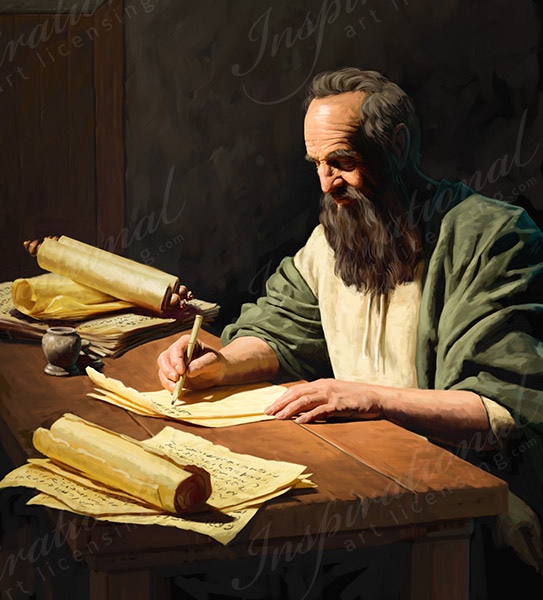
To make sure the Roman’s grasp the point, Paul says, once again, “we know”. The style of Romans is more oral rhetoric than written argumentation; I always like to imagine Paul, his brow furrowed, his shoulders slightly stooped, pacing up and down his small room, as Tertius (the scribe who actually wrote the letter, according to Rom 16:22) furiously scribbles the phrases that pour forth from Paul’s mouth. Syntactical omissions and irregularities, peculiar grammatical forms, idiosyncratic vocabulary: all of this is due to the lack of a careful, third-party, editorial eye. The letter was dictated, scribed, and sent off post haste!

At any rate, “we know”, says Paul, “that Christ, being raised from the dead, will never die again; death no longer has dominion over him, [for] the death he died, he died to sin, once for all; but the life he lives, he lives to God” (6:9–10).

Which brings us to the punchline for this particular collection of verses. Nothing new is said; the same thing has been said four or five times, and that one thing has been said, with variations throughout, to drive the point home. For the Romans, hearing this letter read in their various house gatherings, the consequence of their baptism, and of what God has done in Jesus, and of how they are to understand God’s atoning actions, and of how they are regard themselves, as justified by faith: “so you also must consider yourselves dead to sin and alive to God in Christ Jesus” (6:11).

And so the conclusion itself is then expanded, once again by stylistically varied repetitions, in 6:12–14, ending with the definitive conclusion, “sin will have no dominion over you”, and the strong and clear affirmation, “you are not under law, but under grace” (6:14).

*****

On the central theme of the letter to the Romans, see

On the use of the diatribe form in Romans, and particularly in 4:1–25, see

For my take on a key theological issue in 5:12–21, see

Not peace, but a sword (Matt 10; Pentecost 4A)

“Do not think that I have come to bring peace to the earth; I have not come to bring peace, but a sword. For I have come to set a man against his father, and a daughter against her mother, and a daughter-in-law against her mother-in-law; and one’s foes will be members of one’s own household.” (Matt 10:34–36).

Gentle Jesus, meek and mild, lover of all, and patron of the close-knit nuclear family … where are you? The words of Jesus we are given by the lectionary for this coming Sunday (Matt 10:24–39) seem to come from a very different person from the stereotypical “Jesus loves the little children, all the children of the world”. Who exactl y is this Jesus?

“Go nowhere among the Gentiles” (10:5), he has told his disciples, establishing what appears to be a very exclusivist, racially-driven undertaking. “Take no gold, or silver, or copper in your belts, no bag for your journey, or two tunics, or sandals, or a staff” (10:9–10), on what will undoubtedly be an incredibly ascetic experience for the disciples. “If anyone will not welcome you or listen to your words, shake off the dust from your feet as you leave that house or town” (10:14), says Jesus, anticipating a divisive and difficult time for his followers.

And then, “I am sending you out like sheep into the midst of wolves” (10:16), for “they will hand you over to councils and flog you in their synagogues” (10:17). Yes, this sure to be an experience that the disciples will not forget—for all the wrong reasons! “You will be hated by all because of my name” (10:22) is hardly an enticing invitation to take part in this mission; indeed, the advice, “do not fear those who kill the body but cannot kill the soul” (10:28) bodes no good; are there not only persecutions, but also deaths, on the horizon?

What is going on? How did Jesus manage to entice a group of men and women to take part in this enterprise? And why was he so clear and direct about all the dangers that lay ahead of them?

***

As I noted in last week’s blog on Matthew 10, we know that Judaism was in a state of flux after the destruction of the Temple in 70 CE. Evidence indicates that there were a number of sectarian groups contesting with each other for recognition and influence. During this period, the Pharisees were becoming increasingly important as an alternative to the Temple cult, and emerging as the dominant Jewish religious movement. Their power base was moved from Jerusalem and spread throughout the area.

It has been claimed that a Jewish Council was formed in Jamnia, a city on the coast of Judea. This is taken to demonstrate that the Pharisees had laid claim to be the dominant group amongst the Jews; it might also indicate that it was possible to legislate for the formal separation of some communities (such as the Matthean one).

Note: this story is now regarded as more likely that this story of Jamnia was a ‘foundation myth’, developed in later years, with the aim of showing that there was unity in formative Judaism from the earliest times.

The area of Galilee is extremely important in Matthew’s Gospel (2:22; 3:13; 4:12–25; 17:22; 19:1; 21:11; 26:32; 28:7). As the Galilean Pharisees figure prominently in the narrative of Matthew’s Gospel, it seems reasonable to suppose there was a strong Pharisaic presence in Galilee, and that this group provided the main opponents for the community of Matthew.

The power of the Pharisees was rising, and with the destruction of the Temple, it was common to find new ways of interpreting how Judaism should exist. From this time on, Pharisees evolved into the “Rabbis”, and they developed the kind of Judaism that became dominant through to the present time.

Nevertheless, many Jews, particularly in the Diaspora, were not yet “Pharisaic”—they did not see their faith in the same way as the Pharisees. There were many disputes amongst Jewish communities as to the correct way of seeing things, and some of these disputes were quite bitter. Many groups claimed to be the ‘true Israel’ as distinct from other groups, who were false leaders and teachers, and who failed to follow the Law correctly.

The Law became the most accessible means of revealing God’s will for Israel after the destruction of the Temple, and most of these groups focused on what they believed to be the true interpretation and application of it.

Matthew’s Gospel reflects one such debate; scholars suggest that it should be read alongside of other literature from after the time of the destruction of the Temple—books such as 2 Baruch, 4 Ezra, and the Psalms of Solomon. This literature is trying to envisage what Judaism should be like in the aftermath of the destruction of the Temple.

Thus, although Matthew’s Gospel has been seen to have played an important role in the formation of early Christian theology, a more natural interpretation is to locate this Gospel within the post-70 Jewish debates about the survival of Judaism without the Temple. The polemic in Jesus’ debates with the Pharisees, and the warnings that are uttered to Israel, show that Matthew still had hope that his ideas would become normative for all Jewish people.

I think it likely that Matthew’s Gospel was created to insist on the centrality and priority of the teachings of Jesus, the Torah-observant Jew, whom God had chosen as the anointed one; it was his teaching, not that of the local synagogue leaders, which was to be given priority.

*****

In such a context, the opposition envisaged by Jesus and the warnings that he gives in this polemical speech to his earliest followers, starts to make sense. Matthew sets out the teachings of Jesus concerning discipleship within the context of an apocalyptic view of reality. This view looks at the present time in relation to the ultimate end of time, and calls for a way of living that will ultimately show responsibility for decisions made.

What ultimate end does Matthew have in view? Each Gospel writer tends to emphasis something slightly different. In Mark, the focus is on the resurrection of Jesus (Mark 14:28; 16:7). In Luke-Acts, carrying the good news throughout the Roman Empire fulfils the story (Luke 24:47–48; Acts 1:8). In John, it is eternal life which is emphasised (John 20:31).

Matthew’s Jesus has in mind the coming eschatological deliverance, a deliverance which is expected imminently and that will vindicate the community as faithful and righteous to the will of God. So he tells his followers that “you will not have gone through all the towns of Israel before the Son of Man comes” (10:23). The mission that his followers undertake amongst Jews only is urgent; the end of time is coming soon, and they will not have shared “the good news [that] the kingdom of heaven has come near” (10:7) before “the Son of Man appears in heaven, and then all the tribes of the earth will mourn, and they will see ‘the Son of Man coming on the clouds of heaven’ with power and great glory” (24:30).

In this way, Matthew is typical of one type of Judaism after the destruction of the Second Temple; that of apocalyptic hope. Most of the post-70 sectarian groups express hope that God will remember his covenant with them, the faithful few of Israel, and save them; for example, 2 Baruch and 4 Ezra write that God will provide consolation for their suffering and vindicate them, whilst also punishing their enemies on the Day of Judgement (2 Baruch 6:21; 82:1–2; 4 Ezra 8:51–59; 12:34).

In these sectarian documents, the kingdom of God is eschatological is nature; it has not yet arrived on earth, though signs telling of its coming can be detected. These communities also agree that much of Israel no longer truly follows the Law of God, and that the dominant Jewish leadership is unfaithful and wicked, and that they are the ones alone representing the true Israel. Therefore, entry to the kingdom is dependent upon faithfulness to the Law as interpreted by the community.

*****

Much of this sectarian understanding can also be found in Matthew’s Gospel. Matthew redacts his sources and shapes his material so that this eschatological end is prominent—even in the mission discourse. The words of Jesus about persecutions (10:17–20) are very similar to words in the closing apocalyptic of Jesus (24:9); his words about divisions and hatred within the family (10:21–22 and 10:34-37) mirror the later declaration of betrayal and hatred (24:10).

The “false messiahs and false prophets” that are foreseen (10:24) evoke the false message of “those who will lead you astray” (24:4–5) whilst the words that the Spirit will speak through the disciples (10:19–20) provide the substance for the future “testimony to all the nations” concerning “the good news of the kingdom” (24:14). The instruction to flee in the face of persecution (10:23) foreshadows the apocalyptic command that “those in Judea must flee to the mountains” (24:16–18).

The urgency of the mission (9:37–38; 10:11–14) is because “you will not have gone through all the towns of Israel before the Son of Man comes” (10:23). And the note that the Son of Man is expected to come soon (10:23) presages the cataclysmic scene described in the closing speech of Jesus (24:29–31)—for “this generation will not pass away until all these things have taken place” (24:34). This later causes Jesus such frustration, when he berates his disciples, those of “little faith”, “you faithless and perverse generation, how much longer must I be with you? how much longer must I put up with you?” (17:17).

The mission discourse (10:5–42) thus contains many of the key elements of the apocalyptic discourse (24:3–44): opposition, persecution, division, fear, assurance, and urgency. Jesus, in this Gospel, is particularly clear that there are two ages: the first is the current time for the evangelist, and the second is the age to come (Matt 12:32, from Mark 3:29). In this Gospel, the first indication that we have of the nearness of the second age is the announcement of John the Baptist, “Repent, for the kingdom of heaven has come near” (3:2).

This succinct message has set the tone for the rest of the Gospel. Jesus repeats, word-for-word, John’s call for people to repent (4:17). He intensifies the need for faithful people to be obedient to God’s law (5:17–20) and demonstrate an intensified righteous-justice (5:21–48), as the end-time of God’s judgement is fast approaching. This is the centrepiece of the message that the disciples are to proclaim, when sent out on mission: “as you go, proclaim the good news, ‘The kingdom of heaven has come near.’ Cure the sick, raise the dead, cleanse the lepers, cast out demons” (10:7–8).

In Matthew’s understanding, the kingdom is imminent, but not yet arrived; however, signs of its imminence break in to the present times to demonstrate its nearness. The ministry of Jesus is set at the end of the first age; the second age will commence very shortly with the triumphant return of Jesus after his death, within the lifetime of his disciples (10:23; 16:28; 24:34).

Matthew does not reflect the notion that the kingdom has already arrived on earth, even though it can be seen in Jesus (12:28), and in the continuation of his ministry by his followers after his death. Jesus and the disciples both preach that the kingdom of heaven is near, or at hand (4:17; 7:21–22; 9:35; 10:7), but it has not yet established itself on earth.

A number of the parables of Jesus address the nature of this kingdom. The kingdom of heaven will be established “at the end of the age”, when the final judgement of righteous and unrighteous will take place (13:39–40, 49; 24:3). Before the coming of the Son of Man, it remains hidden and mysterious (13:31–33, 44–45), too small to be observed, but the day is coming when it will grow and become the “greatest of all things”, and the righteousness of God will triumph.

And entry into this kingdom—or not—will be determined by a person’s readiness (24:45–51; 25:1–11) and by an assessment of the way they lived their life (25:31–46). So Jesus gives his followers this assurance: “whoever welcomes a prophet … and whoever welcomes a righteous person … and whoever gives even a cup of cold water to one of these little ones in the name of a disciple—truly I tell you, none of these will lose their reward” (10:41–42).

He also issues this severe warning: “whoever loves father or mother more than me is not worthy of me; and whoever loves son or daughter more than me is not worthy of me; and whoever does not take up the cross and follow me is not worthy of me. Those who find their life will lose it, and those who lose their life for my sake will find it.” (10:37–39).

*****

Matthew takes source material about the mission of the disciples (Mark 6:7–13), modifies, intensifies, expands, and reshapes it, in the light of the context in which he is writing the Gospel. The events of the 50s and 60s, the onset of the war with the Romans in 66, and perhaps even the destruction of the Temple in 70CE, have all guided the way that the author of Matthew’s Gospel retells the instructions that Jesus gave to his first disciples, decades earlier.

Just as he and his community are experiencing intense difficulties and confronting entrenched conflict, so the Jesus of earlier times had foreseen such a situation, and had sent his followers out forewarned, and thus forearmed. What was taking place in the early 70s (or perhaps even in the late 60s) amongst a group of Torah-abiding, Messiah-following Jews, was an outworking of what Jesus is presented as speaking to his disciples.

In other words, the mission discourse of Matt 10:1–11:1 reveals much about the strife and contention amongst Jews in the local area where Matthew’s community was located, and the intensified expectation that the end was coming soon, that they felt. It was a word for his time; placed on the lips of Jesus, but speaking with clarity and insight into the lived experience of the people of Matthew’s community. For them, this was what obedience to the Gospel and following the way of Messiah Jesus, their Rabbi, entailed.

This blog draws on material in MESSIAH, MOUNTAINS, AND MISSION: an exploration of the Gospel for Year A, by Elizabeth Raine and John Squires (self-published 2012)

See also

The Mooloolaba Eight: sexuality, ethics, and church practice

Regular readers of my blog will know that, from time to time, I leave my natural environment of detailed exegetical exploration of biblical texts, and move into matters of church practice or issues of key concern in the wider society—even, at times, into politics.

This blog is such a venture, written in response to the news that on 17 June 2023, eight people who had been ordained as Uniting Church ministers and who for years have exercised ministry in Uniting Churches, have now joined the Diocese of Southern Cross Inc. (I will refer to this as the DSC in what follows.) What follows is entirely my own point of view, and I do not claim to be speaking for any part of then Uniting Church in this blog.

That “Diocese”—to be precise, it is an incorporated company that has taken an ecclesiastically-sounding title—is related to GAFCON, the breakaway group of Anglicans who have grown increasingly dissatisfied with the worldwide Anglican Communion, headed by the Archbishop of Canterbury.

The critical issue for GAFCON (indeed, the only issue, it seems) is homosexuality. GAFCON (the Global Anglican Future Conference) has been vehement in its criticism of the Anglican Church as a collection of issues in this area have been considered. Some GAFCON leaders from African countries have indeed supported the introduction of the death penalty in that country in some instances of homosexual practice.

The eight “former Uniting Church ministers” who have joined the DSC are all firmly convinced that the practice of homosexual sex is abhorrent, that gay people (broadly understood) are perpetual sinners, and that the church needs to take a strong stand, condemning same-gender relationships and writing that point of view into the doctrine and practices of the church. (None of them, I should hasten to add, have called for the death penalty to be imposed.)

The Uniting Church has consistently refused to do as they have wished in relation to homosexuality; their most recent spectacular failure was the efforts to derail the national Assembly meeting in Melbourne in 2018. This was the meeting where, despite the blocking tactics and argumentative strategy of members of the Assembly of Confessing Congregations—what I have described as their “aggressive apologetic antagonism”—the UCA Assembly agreed that same gender couples could be married under the auspices of the Uniting Church.

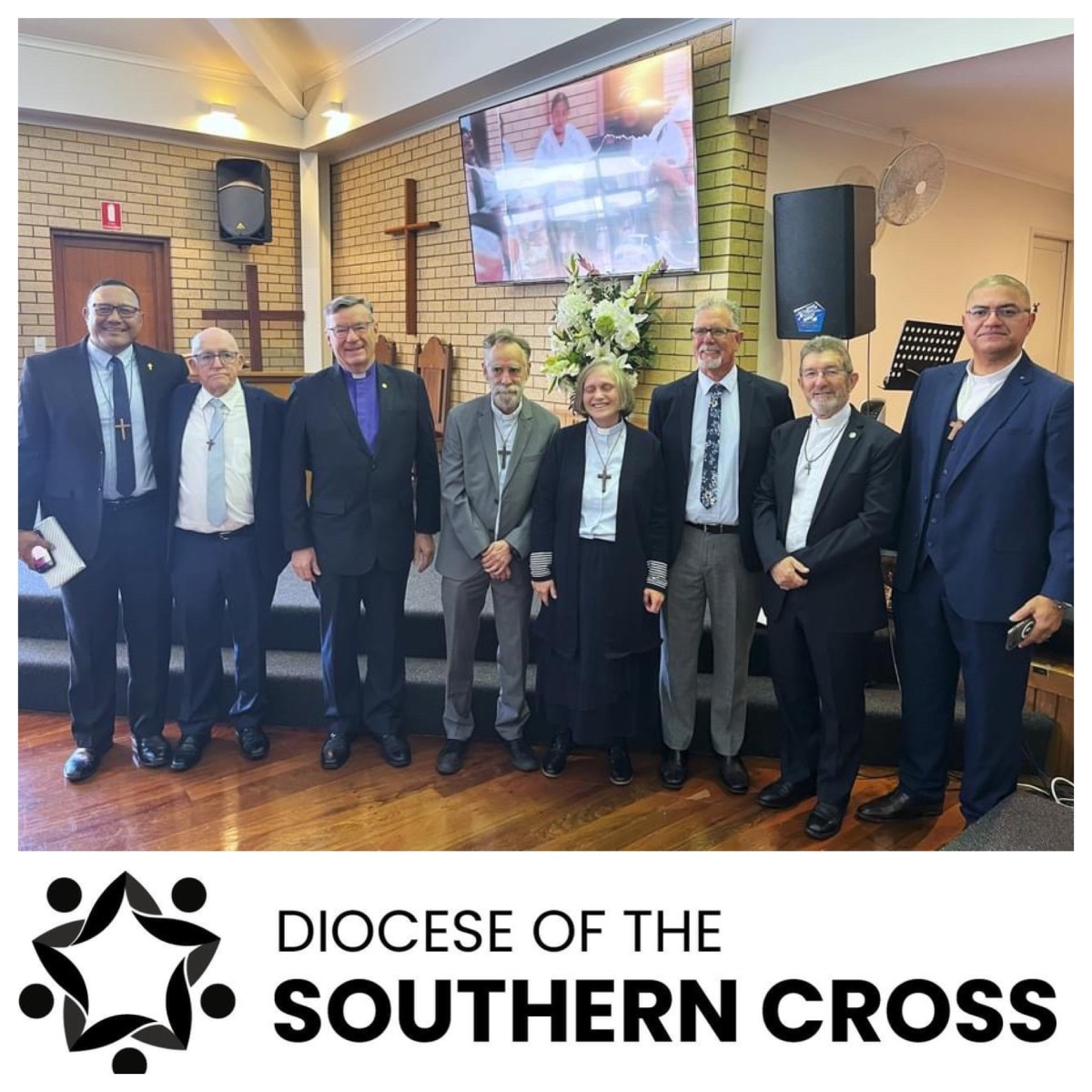
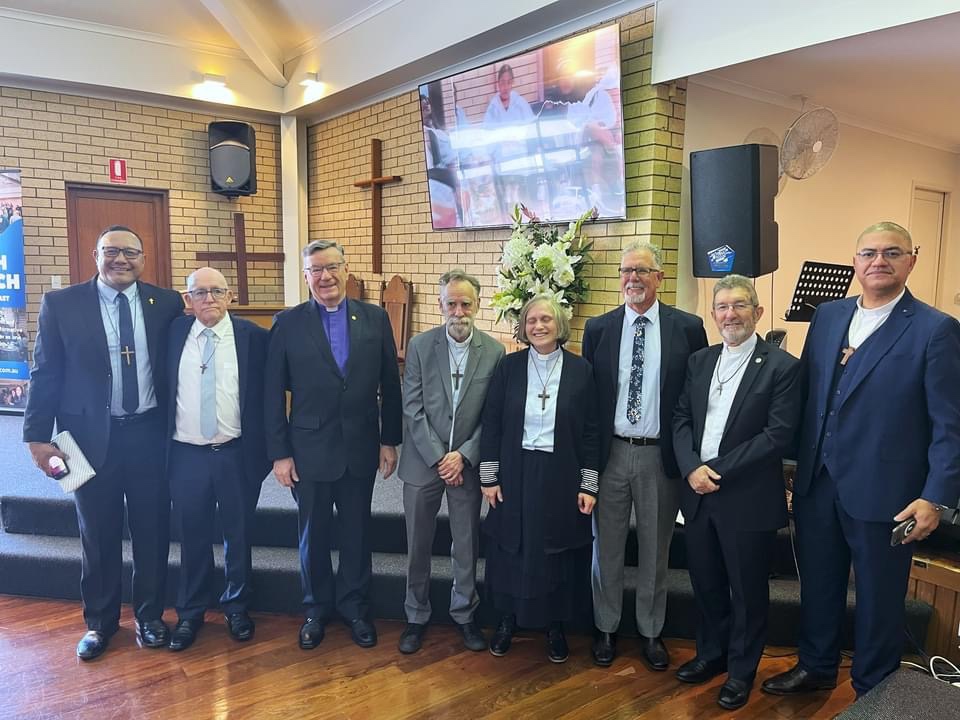
These eight people left the Uniting Church to join the DSC in a ceremony held at Mooloolaba, on the Sunshine Coast in Queensland, that “recognised” them as Pastors in the DSC. What precise status that gives them is unclear; they cannot be seen as ordained Anglican ministers, since Anglican ordination require connection to the episcopal line of tradition, which Uniting Church ordinations do not have, at least in their eyes.

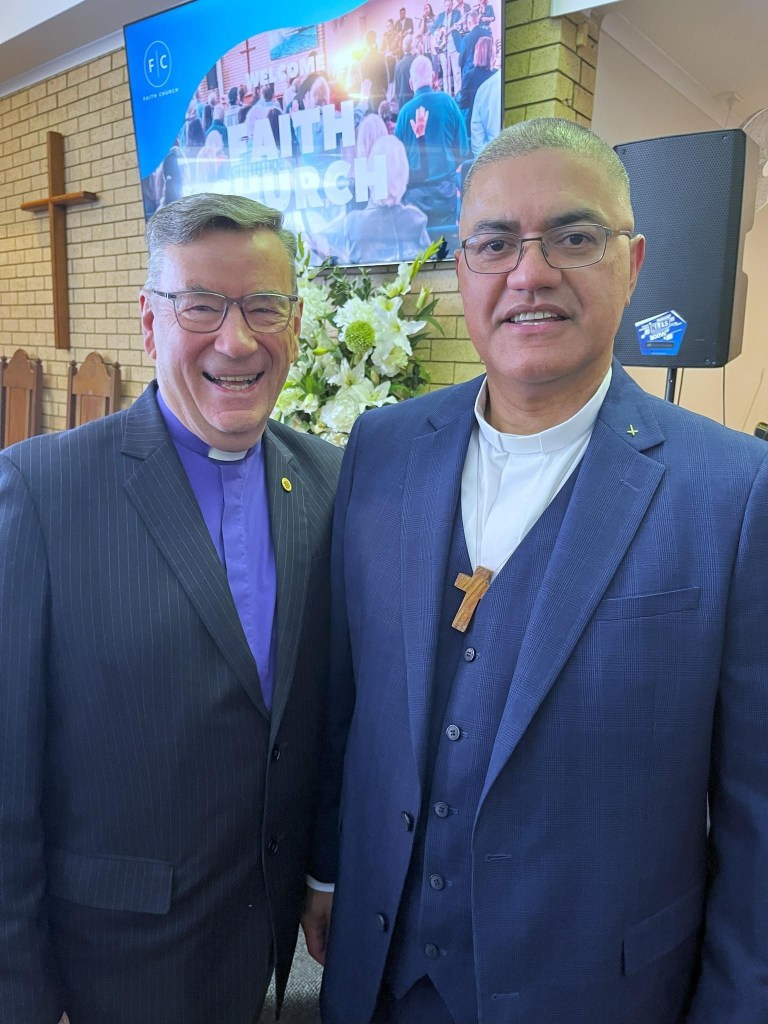
The Facebook page for the Diocese of Southern Cross proclaims that Faith Church Sunshine Coast and Hedley Fihaki were welcomed to the Diocese of the Southern Cross. Hedley Fihaki, of course, is the former chairperson of the Assembly of Confessing Congregations in the Uniting Church, which recently caved in on itself and closed. The ACC is no more. Hedley and his companions are seeking a new base.

Glenn Davies and Hedley Fihaki

So the Mooloolaba Eight left the Uniting Church. It is rather ironic that their service of “recognition” was presided over by Glenn Davies, the former Archbishop of the Anglican Diocese of Sydney. Whilst he was still Archbishop in Sydney, he had invited members of the Anglican Church who disagreed with Sydney Diocese policy about sexuality, to “please leave”. The Mooloolaba Eight left their church to join a breakaway group headed by the person who said “please leave”. How ironic!

The Facebook post continues: “As well as being commissioned as pastor of Faith Church, Hedley was formally recognised by Bishop Glenn Davies as a presbyter in the diocese along with seven other former Uniting Church ministers who have chosen to join us in the Diocese of the Southern Cross. Welcome to Philip Anderson, David Graham, Anne Hibbard, Roger Hibbard, Raymond McIlwraith, Lulu Senituli, and Harold Strong.”

I have to confess that I know and have had interactions with six of the eight people identified in this post—some as members of the same council of the church, some through online conversations, some as colleagues in ministry in placements in the same synod as me, and one who I taught whilst they were in theological college. (A wise colleague has helpfully reminded me that, in line with Ezekiel 18, the sins of the student should not be attributed to or visited on the teacher!)

Some of those who were “recognised” this past weekend have been aggressive in their pursuit of their homophobic agenda, for years, whilst in the Uniting Church. This has been a very bad thing for the Uniting Church, because much energy and effort has been diverted from the core matters of importance in the church, to attempt to placate and include those who prosecuted this strident line. Now that they have moved on, the UCA can hopefully return to key matters of mission and ministry unhindered by such regressive views and the associated intrusive aggressive tactics.

There are interesting questions of church order now to be explored. Presumably, the eight people have or will resigned from their status as ordained ministers within the Uniting Church. My understanding is that two of them have already been engaged in processes within the Uniting Church over the past year, in this regard. But the move to the DSC must surely mark the time when they each formally resign from the Uniting Church.

The DSC itself is a curious beast. There is debate amongst Anglicans as to whether this is “a real diocese” or not. I have seen a direct statement that “this is a real Anglican diocese”, but also a similarly definitive claim that “this is not an entity in fellowship with the Anglican Church in Australia”, and so not actually an Anglican diocese. That’s all a matter for Anglican polity nerds, though.

What interests me more is how the eight who were “formally recognised as presbyters” will portray themselves and act in ministry. Will they simply continue as if they remain ordained? If the DSC is acting like an Anglican entity, their ordination as Uniting Church ministers will not be recognised—no bishop, in the line of apostolic succession, laid hands on them at their ordination, and so they technically are not to be regarded as ordained. That’s how I understand it, from my non-Anglican standpoint; but it will be interesting to see what eventuates.

The other element is the curious fact, commented on by some of my Facebook friends, that the person who “recognised” the eight people at Mooloolaba on 17 June was Glenn Davies, who was previously Archbishop of the Sydney Diocese of the Anglican Church. This diocese has fought long and hard, over many years, to oppose the ordination of women.

Yet the former Archbishop of Sydney, who so strenuously opposed the ordination of women in that role, has seemingly validated the ordained ministry of the one woman in the Mooloolaba Eight. It will be interesting to see how this is dealt with.

Apparently the DSC, being affiliated with the schismatic GAFCON within the Anglican Church, is nevertheless open to women ministers. Indeed, the first GAFCON-affiliated congregation in Western Australia, New Beginnings Church in Mandurah, Western Australia, has an ordained female minister, the Rev. Linley MatthewsWant, who is an Anglican minister.

Glenn Davies with Linley MatthewsWant in Mandurah, WA

So the irony is that the former leader of the aggressively anti-women’s ordination push is now the leader of an organisation with ordained female in ministry. Isn’t that a telling revelation as to the ethics of Glenn Davies? Either he really believes in the ordination of women, but put this to one side while he was in the Sydney Diocese; or else he has shelved the firm commitment that he had in the past for entirely pragmatic reasons in the present. Neither option indicates a good grasp of ethical responsibility, in my view.

So what next for the Mooloolaba Eight? We will just have to see where this leads next …

**********

On the end of the Assembly of Confessing Congregations, see

My previous posts on the various evangelical/fundamentalist groups in the UCA are at

For the various affirmations that the Uniting Church Assembly has made that led the church to agree to the marriage of people of the same gender, see

Psalm 86: a primer of prayer (Pentecost 4A) part II

Psalm 86 is offered by the lectionary for this coming Sunday, the Fourth Sunday after Pentecost. This psalm comprises a string of prayers, offering petition, thanksgiving, adoration, and intercession, filled with phrases that occur in other psalms and prayers in Hebrew Scripture. Although some commentators have criticised it for being unoriginal, it serves an important purpose, collating many phrases that can serve well those who pray.

In an earlier blog, I considered the structure of this psalm, and explored three types of prayers that are to be found in it: thanksgiving, adoration, and intercession. See

In this blog, I turn my attention to the petitions that are included in this psalm. The opening section (verses 1–7) includes a substantial collection of petitions to be prayed in times of trouble. Along with the further petitions in verse 11 and verses 16–17, there are a total of eleven petitions to God in this psalm. Let’s consider each of them in turn.

“Incline your ear, O Lord” (v.1) is a request made in other psalms (Ps 17:6; 31:2; 71:2; 88:2; 102:2); in one psalm, there is a confidence that God “will hear the desire of the meek … will strengthen their heart … will incline your ear to do justice” (10:17–18). Likewise, a number of psalms include the request for God to “answer me” (v.1; see Ps 4:1; 13:3; 27:7; 55:2; 69:13, 16, 17; 102:2; 108:6; 119:145; 143:1, 7). In one psalm the author affirms that “I call upon you, for you will answer me, O God” (Ps 17:6); likewise, in Ps 86, the psalmist affirms with confidence that “in the day of my trouble I call on you, for you will answer me” (v.7).

In the same verse, the psalmist describes themselves: “I am poor and needy” (v.1)—a self-description also offered at Ps 40:17; 70:5; and 109:22. The phrase is placed in parallel with “the downtrodden” at Ps 74:21. That God stands with the poor and needy is asserted regularly in the psalms; “because the poor are despoiled, because the needy groan, I will now rise up, says the Lord; I will place them in the safety for which they long” (Ps 12:5).

So God “raises the poor from the dust and lifts the needy from the ash heap” (Ps 113:7); God “maintains the cause of the needy and executes justice for the poor” (Ps 140:12). “As for me, I am poor and needy, but the Lord takes thought for me; you are my help and my deliverer, O God” (Ps 40:17; also 70:5). And the psalmist pleads that the king will “judge your people with righteousness and your poor with justice … defend the cause of the poor of the people, give deliverance to the needy” (Ps 72:2, 4)

“Preserve my life” is the next petition (v.2), echoing the same prayer found at Ps 64:1; 79:11; 119:49, 159; 143:11; a prayer made on the basis that God is “a hiding place for me [for] you preserve me from trouble” (Ps 32:7), for “though I walk in the midst of trouble, you preserve me against the wrath of my enemies” (Ps 138:7).

The psalmist undergirds this request to God with the declaration, “I am devoted to you” (v.2), a phrase that might also be translated as “I am a godly person” or “I am a faithful person”. The Hebrew word used here, hasid, is the basis for the contemporary group of ultra-conservative Orthodox Jews known as Hasidic Jews. Many psalms uses this word as a description for those in Israel who were godly people (Ps 12:1; 52:1) or faithful people (Ps 4:3; 16:10; 30:4; 32:6; 37:28; 50:5; 52:9; 79:2; 85:8; 89:19; 97:10; 116:15; 132:9, 16; 145:10). The NRSV also translates this word as blameless (Ps 18:25) and as saints (Ps 31:23).

*****

The plea of the psalmist for God to “save” them (v.2) is another persistent refrain throughout the psalms—both “save me” (Ps 6:4; 7:1; 22:21; 31:2, 16; 44:6; 54:1; 57:3; 59:2; 69:1; 71:2, 3; 109:26, 116:4; 119:94, 146; 142:6; 143:9) and “save us” (Ps 28:9; 31:2; 80:2; 106:47; 118:25). This is a request grounded in the assurance that “God is my shield, who saves the upright in heart” (Ps 7:10); “the Lord is near to the brokenhearted, and saves the crushed in spirit” (Ps 34:18); God “fulfils the desire of all who fear him; he also hears their cry, and saves them” (Ps 145:19). Of course , God as Saviour is an important Hebraic way of understanding the divine, that then has implications and influence as the New Testament documents are written, centuries later.

The self-description of the psalmist in this verse, as “your servant who trusts in you” (v.2), is a description found also in verses 4 and 16. The writer presents themselves as God’s servant in a number of other psalms (Ps 19:11, 13; 27:9; 31:16; 35:27; 69:17; 109:28; 116:16; 143:2, 12) as well as twelve times in Psalm 119 (vv.17, 23, 38, 49, 65, 76, 84, 124, 125, 135, 140, 176).

The attitude of trust in God (v.2) is a stance which is shared with other psalms. “Those who know your name put their trust in you, for you, O Lord, have not forsaken those who seek you”, the psalmist sings (Ps 9:10). “O my God, in you I trust; do not let me be put to shame; do not let my enemies exult over me” (Ps 25:2), they sing, affirming that “steadfast love surrounds those who trust in the Lord” (Ps 32:10), “happy are those who make the Lord their trust” (Ps 40:4), and “in God I trust; I am not afraid” (Ps 56:4; and similar, 55:23).

“Be gracious to me, O Lord” (v.3) is yet another petition that is typical of the psalms. The psalmist regularly implores God, “be gracious to me, for I am in distress” (Ps 31:9; similarly, 6:2; 9:13; 56:1), or “be gracious to me, and hear my prayer” (Ps 4:1), or “be gracious to me and answer me” (Ps 27:7), or simply, “be gracious to me” (Ps 25:16; 26:11; 30:10; 41:4).

In one song, the psalmist muses, “has God forgotten to be gracious?” (Ps 77:9), but in typical style, this cry of lament transforms into words of praise, for “you are the God who works wonders … with your strong arm you redeemed your people” (Ps 77:11–20). God showing grace towards God’s faithful people is indeed “your custom toward those who love your name” (Ps 119:132).

The cry for God to be gracious is a constant and insistent plea, “for to you do I cry all day long” (v.3). The cry of the psalmist is expressed often (Ps 3:4; 5:2; 17:1; 18:6; 27:7; 28:2; 39:12; 57:2; 61:1; 77:1; 88:1–2; 102:1; 119:146–147, 169; 120:1; 142:1, 5–6). Even though the psalmist cries to God “with my whole heart” (Ps 119:145), there are times when this cry feels futile; “I cry by day, but you do not answer me, and by night, but find no rest” (Ps 22:2), and “O Lord, I cry out to you; in the morning my prayer comes to you; why do you cast me off? why do you hide your face from me?” (Ps 88:13–14).

Yet the psalmist is persistent, crying “all day long” (v.3); this mirrors the oppression and distress experienced by the psalmists “all day long”. Various psalms reflect “sorrow in my heart all day long” (Ps 13:2), “groaning all day long” (Ps 32:3), “all day long I go around mourning” (Ps 38:6), “all day long I have been plagued” (Ps 73:14). “All day long my foes oppress me” (Ps 56:1), laments the psalmist, “all day long my enemies taunt me” (Ps 102:8), even bemoaning that “we are being killed all day long” (Ps 44:22). Extended personal distress seems to mark a number of psalms.

However, in other psalms, we have affirmations that “the eyes of the Lord are on the righteous and his ears are open to their cry” (Ps 34:15); “when the righteous cry for help, the Lord hears” (Ps 34:17); “I waited patiently for the Lord; he inclined to me and heard my cry” (Ps 40:1); “he regarded their distress when he heard their cry” (Ps 106:44). As the psalmist cries “out of the depths”, so they are assured that “with the Lord there is steadfast love, and with him there is great power to redeem” (Ps 130:1–8).

The same dynamic, of calling out to God and anticipating an answer, is sung in the petition in v.6, “give ear, O Lord, to my prayer”. This is found in ten other psalms (Ps 5:1; 17:1; 39:12; 54:2; 55:1; 80:1; 84:8; 140:6; 141:1; 143:1), and the parallel request, “listen to my cry of supplication” (v.6) is also offered in two other psalms (Ps 5:2; 61:1).

The psalmist’s confidence that, “on the day of my trouble I call on you, for you will answer me” (v.7), is also reflected at Ps 17:6. This confidence is undergirded by the words spoken by God to those who trust in God: “those who love me, I will deliver; I will protect those who know my name; when they call to me, I will answer them” (Ps 91:14–15).

Verse 11 moves from the offering of prayers and anticipation of receiving answers, to the request to “teach me your way, O Lord, that I may walk in your truth”. The language here reflects another common element in the relationship between the psalmist and the divine, as a student learning from a teacher.

“Teach me” (v.11) is what the psalmist asks for, seeking to be taught “your ways … your paths … your truth” (Ps 25:4–5), “your way” (27:11; 143:8), “your will” (Ps 143:10), “the fear of the Lord” (Ps 34:11), and “wisdom in my secret heart” (Ps 51:6). Throughout the longest psalm of all, there are regular petitions for the Lord to teach “your statutes” (Ps 119:12, 26, 33, 64, 68, 124, 171) as well as “good judgement and knowledge” (Ps 119:66). The psalmists appear to be keen students, thirsting for knowledge.

The next request is for God to “give me an undivided heart” (v.11)—an unusual request, not found in any other psalm, and using a Hebrew word that appears in only two other places in Hebrew Scripture (Gen 49:6; Isa 14:20). The purpose of this request, “to revere your name” (v.11), draws on a very common Hebrew word, found often in the formulaic “do not be afraid” (Gen 15:1;21:17;26:24; 35:17;46:3; Exod 14:13; 20:20; etc.; and on into New Testament texts). This is no fear in the sense of negative terror, for the psalmist clearly draws on the positive sense of the verb, yare’, to indicate a reverence towards God.

*****

In the final set of verses, there are three further petitions worthy of note. “Turn to me and be gracious to me” (v.16) is a petition repeated exactly (Ps 25:16; 119:132) and in shortened form, “turn to me” (Ps 69:16; 119:79). “Give your strength to your servant” (v.16) recalls the closing verse of a powerful nature psalm, “may the Lord give strength to his people! may the Lord bless his people with peace!” (Ps 29:11). The latter part of verse 16, “save the child of your serving girl”, echoes the petition of verse 2, “save your servant who trusts in you”, which we have dealt with above.

Finally, “show me a sign of your favour” (v.17) does not reflect any other psalm, but does evoke the petition of Gideon to the Lord, “now I have found favour with you, then show me a sign that it is you who speak with me” (Judg 6:17).

The purpose of this sign which is sought by the psalmist, “so that those who hate me may see it and be put to shame” (v.17), does however reflect a common request across a number of psalms, pleading for enemies to be “put to shame” (Ps 6:10; 31:17; 35:4, 26; 40:14; 50:5: 57:3; 70:2; 71:13, 24; 83:17; 97:7;109:28; 119:78; 129:5). The other side of this petition is the request, “do not let me be put to shame” (Ps 25:2, 20; 31:1, 17; 71:1; 119:31, 116).

*****

And so we can see that throughout this psalm, in offering petition, thanksgiving, adoration, and intercession, the psalmist has made use of many phrases that occur in other psalms and prayers in Hebrew Scripture. This psalm, a primer for prayer, serves an important purpose, as it draws together many phrases that can serve well those who pray.

Psalm 86: a primer of prayer (Pentecost 4A) part I

Christians are used to praying The Lord’s Prayer on a regular basis, in obedience to the instructions of Jesus recorded in two Gospels: “when you pray, say …” (Luke 11:2; Matt 6:9). This prayer can be considered a succinct primer for prayer, since it contains the key elements of praying.

After an opening adoration of God (“our Father in heaven, holy is your name”), there follows prayers for the world (“your kingdom come, your will be done”), petitions for ourselves (“give us bread for the day, forgive us our sins, do not bring us to the time of trial”), and intercessions for others (“as we forgive those who sin against us”). In the later version of the prayer, a closing benediction is included (“yours is the kingdom, the power, the glory”), ending, of course, with “Amen”. The pattern is clear and concise. See

and

and

There is a similar primer for prayer in Hebrew Scriptures, and it is offered by the lectionary for this coming Sunday, the Fourth Sunday after Pentecost. Psalm 86 comprises a string of prayers, offering petition, thanksgiving, adoration, and intercession, filled with phrases that occur in other psalms and prayers in Hebrew Scripture. Although some commentators have criticised it for being unoriginal, it serves an important purpose, collating many phrases that can serve well those who pray.

(And a similar criticism of unoriginality can be levelled against The Lord’s Prayer; every phrase in that prayer reflects ideas expressed already in Hebrew Scriptures. The originality of the prayer lies not in its content, but in the distinctive way that Jesus has drawn together each element into a cohesive unity.)

Psalm 86 is a prayer which is titled as “A psalm of David”, one of 72 psalms directly attributed to the poet king. Critical studies of the Psalms maintain a strong degree of scepticism regarding the attribution to David of those songs. As the psalm is a fine compilation of various psalmic phrases, however, we will maintain references to the author as “the psalmist”.

The psalm falls into four sections, each with its own style of praying. First (86:1–7), the psalmist cries out in great need, asking God to hear and act on his or her behalf. Then, in a traditional formulaic statement (86:8–10), the psalmist offers adoration of God as the only true God, the Lord of the nations. In the following verses (86:11–13), the psalmist asks God to teach them God’s way and to unite their heart to fear God’s name, so that they might glorify God’s name forever. Finally (86:14–17), in light of the enemies that are perceived, the psalmist again appeals to God’s mercy and grace to deliver them.

The opening section of the prayer (verses 1–7) thus includes a substantial collection of petitions to be prayed in times of trouble. Along with the further petitions in verse 11 and verses 16–17, there are a total of eleven petitions to God in this psalm. (We will explore these further in a subsequent blog post.)

Thanksgiving is the focus in verses 12–13, when the psalmist declares, “I will give thanks to you, O Lord my God, with my whole heart, and I will glorify your name forever; for great is your steadfast love toward me; you have delivered my soul from the depths of Sheol”. Prayers giving thanks to God occur frequently in the book of Psalms (Ps 7:17; 9:1; 28:7; 30:12; 44:8; 54:6; 57:9; 75:1; 79:13; 92:1; 97:12; 100:4; 105:1; 106:1, 47; 107:1; 108:3; 109:30; 111:1; 118:1, 19, 28–29; 122:4; 136:1–3, 26; 138:1–2; 140:13; 142:7; 145:10; see also 1 Chron 29:13; 2 Chron 30:22; Neh 12:24).

Celebrations of being delivered from Sheol likewise occur in other psalms (Ps 30:3; 49:15; 71:20; and see a counterpoint at Hos 13:14). Glorifying the name of the Lord is also a common practice (Ps 22:23; 29:2; 66:2; 72:19; 96:8; 105:3; 115:1; 148:13; 1 Chron 16:8–10, 28–30, 35; Isa 24:15; and for a counterpoint, Mal 2:2). Each of these phrases connects in multiple ways with other parts of Hebrew Scripture.

Adoration is offered in verses 8 to 10 and again in verse 15 of Psalm 86. In the latter verse, the psalmist addresses God as “a God merciful and gracious, slow to anger and abounding in steadfast love and faithfulness”—the same refrain found in many places in the Hebrew Scriptures (Exod 34:6; 2 Chron 30:8–9; Neh 9:17, 32; Jonah 4:2; Joel 2:13; Ps 86:15; 103:8, 11; 111:4; 145:8–9). In both thanksgiving and in adoration, then, the psalm echoes the prayers offered in other psalms as well as in prophetic works.

In the first expression of adoration, the psalmist draws a clear comparison between the Lord God and the many other gods: “there is none like you among the gods, O Lord, nor are there any works like yours” (v.8). This reflects early (pre-Exilic) understandings about the Lord God amongst the many gods, before the Exilic experience crystallised the move into monotheism, articulated especially by Second Isaiah, that “beside me there is no god” (Isa 45:5, 14, 18, 21, 22; 46:9), and in Deuteronomy, that “the Lord is God; there is no other besides him” (Deut 4:35, 39; 5:7; 6:14; 7:4; 8:19; 11:16, 28; 13:6–7, 13; 17:3; 18:20; 28:14, 36, 64; 29:26; 30:17–20).

Could this be a clue that supports the claim in the title of this psalm, that it was written by David? The pre-monotheistic view of the Lord God amongst the gods is reflected in the ancestral narratives concerning Jacob (Gen 31:30–35; 35:1–4). Psalm 82 begins, “God has taken his place in the divine council; in the midst of the gods he holds judgement” (Ps 82:1); of these gods, he says “they have neither knowledge nor understanding, they walk around in darkness” (Ps 82:5).

This criticism reflects the claim that while they wandered in the wilderness, the people “made [God] jealous with strange gods, with abhorrent things they provoked him; they sacrificed to demons, not God, to deities they had never known, to new ones recently arrived, whom your ancestors had not feared” (Deut 32:16–17).

This critical view of other gods is also reflected in the opening words of the Decalogue: “You shall have no other gods before me. You shall not make for yourself an idol, whether in the form of anything that is in heaven above, or that is on the earth beneath, or that is in the water under the earth. You shall not bow down to them or worship them; for I the Lord your God am a jealous God, punishing children for the iniquity of parents, to the third and the fourth generation of those who reject me, but showing steadfast love to the thousandth generation of those who love me and keep my commandments” (Exod 20:2–5).

In the song of celebration attributed to Moses after passing through the Sea of Reeds, the people rejoice, asking “who is like you, O Lord, among the gods? who is like you, majestic in holiness, awesome in splendor, doing wonders?” (Exod 15:11). Later, Jethro the Midianite affirms, “I know that the Lord is greater than all gods, because he delivered the people from the Egyptians, when they dealt arrogantly with them” (Exod 18:11). The distinctiveness of the Lord God is known and celebrated in these ancient sagas. The psalm thus may well have origins in the time of David, long before later post-Exilic theological developments had occurred.

Intercession is the flavour of the prayers offered in verses 14 and 17. Although there is antagonism towards “the insolent … a band of ruffians” (v.14), nevertheless the psalmist hopes that “those who hate me may see [a sign of your favour] and be put to shame” (v.17). Prayers for enemies to be put to shame occur regularly in the psalms (Ps 6:10; 35:4, 26; 40:14; 57:3; 70:2; 71:13, 24; 83:17; 109:28; 119:78; 129:5) and the prophets look for this fate to meet those who are unfaithful (Isa 42:17; 44:9, 11; Jer 2:36; 17:13; 50:2; 51:47; Hos 10:6; Zech 10:3-5).

But praying for enemies to experience God’s grace, as in Ps 86:17, is rare. The psalmist prays for God’s favour to be shown to the faithful people of Israel (Ps 90:17; 106:4; 119:58) and the ancestral sagas record that God showed favour to Noah (Gen 6:8), Joseph (Gen 39:4), Moses (Exod 33:12-17), the people in the wilderness (Lev 26:9), Samuel (1 Sam 2:26), Manasseh (2 Chron 33:12-13), and the remnant who returned to the land (Ezra 9:8).

There is, nevertheless, no other prayer in Hebrew Scripture for God to show favour to enemies, apart from the final verse of Psalm 86. This distinctive prayer thus reaches out across the centuries to link with the teaching of Jesus, to “love your enemies, do good to those who hate you, bless those who curse you, pray for those who abuse you” (Luke 6:27-28).

Picturing God as the one who “has helped me and comforted me” (v.17) does resonate strongly, however, with other scriptural passages. God comforts—most famously in Psalm 23, where the psalmist prays, “your rod and your staff, they comfort me” (Ps 23:4), but also in the longest psalm of all, where we hear the plea, “let your steadfast love become my comfort according to your promise to your servant” (Ps 119:76), as well as the affirmation, “when I think of your ordinances from of old, I take comfort, O Lord” (Ps 119:52).

So, in a famous oracle, the prophet Jeremiah promises Israel that God says, “I will turn their mourning into joy, I will comfort them, and give them gladness for sorrow” (Jer 31:13), and another prophet in exile sings, “the Lord will comfort Zion; he will comfort all her waste places” (Isa 51:3). Years later, a post-exilic prophet affirms that God declares, “as a mother comforts her child, so I will comfort you; you shall be comforted in Jerusalem” (Isa 66:13), and another, Zechariah, conveys the message that “cities shall again overflow with prosperity; the Lord will again comfort Zion and again choose Jerusalem” (Zech 1:17).

Not only will God comfort; God is also the one who helps (Ps 86:17). “The Lord helps [the righteous] and rescues them; he rescues them from the wicked, and saves them, because they take refuge in him”, says the psalmist (Ps 37:40). “It is the Lord God who helps me”, says Isaiah (Isa 50:7, 9). So God is “helper of the orphan” (Ps 10:14), “the God of the lowly, helper of the oppressed, upholder of the weak, protector of the forsaken, saviour of those without hope” (Judith 9:11). “Surely, God is my helper”, sings the psalmist (Ps 54:4), and so they pray, “O Lord, be my helper” (Ps 30:10).

How God is understood in this psalm, and the way that God relates to the people who are in covenant with God, and indeed with all people of the world, is entirely consistent with these elements as expressed elsewhere in scripture.

(more in the next blog …)

The Uniting Church Statement to the Nation (1977)

A sermon preached by the Rev. Elizabeth Raine in Sunday worship of the Tuggeranong Uniting Church on Sunday 18 June, the Sunday before the 46th Anniversary of the UCA (22 June). (Passages in italics are taken from the 1977 Statement to the Nation issued by the First Assembly.)

In a few days time it will be the 46th birthday of the Uniting Church in Australia. At the time, it was certainly a risky and brave adventure, combining three denominations to make one uniquely Australian church.

It seemed to me that the journey of the Uniting church reflected our readings this week – like Abraham, this church stepped out in faith on a journey where a lot was unknown but also where faith in God committed people to the journey. Like the disciples in Matthew, this church sought to go into the communities surrounding them with the good news to make the world a better place.

At the time of the UCA inauguration, a statement was issued to all of the Australian nation, unsurprisingly called the Statement to the Nation. How many of you know it exists? Have read it? Know what’s in it?

After 46 years, sometimes we need to be reminded of the vision of the Uniting Church in Australia, and to recognise that witnessing to this vision is still vital and attainable. This vision called the church to act with love, live with hope, witness in faith, and work for justice.

Today as we celebrate the UCA’s birthday, we are going to read this statement as I think it is one of the greatest and most enlightened documents ever produced by a church.

People of the Congregational, Methodist and Presbyterian Churches have united. A new church has been born. We, who are members of the first Assembly of the Uniting Church in Australia address the people of Australia in this historic moment. The path to unity has been long and at times difficult, but we believe this unity is a sign of the reconciliation we seek for the whole human race.

We acknowledge with gratitude that the churches from which we have come have contributed in various ways to the life and development of this nation. A Christian responsibility to society has always been regarded as fundamental to the mission of the Church. In the Uniting Church our response to the Christian gospel will continue to involve us in social and national affairs.

We are conscious of our responsibilities within and beyond this country. We particularly acknowledge our responsibilities as one branch of the Christian church within the region of South-East Asia and the Pacific. In these contexts we make certain affirmations at the time of our inauguration.

We affirm our eagerness to uphold basic Christian values and principles, such as the importance of every human being, the need for integrity in public life, the proclamation of truth and justice, the rights for each citizen to participate in decision-making in the community, religious liberty and personal dignity, and a concern for the welfare of the whole human race.

Assembly General Secretary, Colleen Geyer (bottom right),
along with Past President Dr Deidre Palmer (top left),
President (2022–2024) the Rev. Sharon Hollis (top right),
and President-Elect the Rev. Charissa Suli (bottom left)

Our Assembly General Secretary, Collen Geyer, has stated that every time [she] read[s] these words, she “feel[s] proud that, as a church, we had the guts to say these things, were courageous enough to set the bar high, and wanted there to be no doubt about what Australia could expect of us. Read these words and you will know how we’re intending to be true to who we are. Our unity, which is a sign of the reconciliation we seek for the whole human race, will look like this.”

What a wonderful aim for a church, to be an entity that embodies basic Christian values and principles, the importance of every human being, integrity in public life, truth and justice, democracy for all, religious freedom and personal dignity, and a concern for the welfare of the whole human race. Have we lived up to this? What do we need to do to make sure we do?

Did we realise as a church how extraordinary these words were? Did we understand what we were saying? These words tell of the great courage it took to make this announcement and embark on this journey of faith and justice. And since that time, we have seen that courage played out in the 46 years since Union as the Uniting church continues to stand with the voiceless, the marginalised and the poor, and continue to be activists for climate change reform. The Statement to the Nation commits us to acting in ways that are often considered political.

An Economy for Life is a later statement by the UCA Assembly which develops key themes that were articulated in the Statement to the Nation

We can see that such activities are built into the DNA in this church, yet sometimes we hesitate in implementing them. We lack the confidence in ourhomegrown models of mission and in ourselves. We can baulk at stepping out on new journeys. We have more trouble engaging around faith with our communities in an increasingly secular world. We shy away from being ‘political’ forgetting that Jesus also stood with the voiceless, the marginalised and the poor and was incredibly political.

We will challenge values which emphasise acquisitiveness and greed in disregard of the needs of others and which encourage a higher standard of living for the privileged in the face of the daily widening gap between the rich and poor.

In many churches, Western culture has created a culture of consumerism that permeates our congregations. Faith dwindles to “what’s in it for me” rather than homothumadon, discerning the common good. This leads to a reduced willingness to engage beyond the immediate and ourselves and look at ways in which various parts of the church can partner with others around us or how we can become the church of the future, a church still relevant, vital and life-giving not only to ourselves, but to the communities around us.

We are concerned with the basic human rights of future generations and will urge the wise use of energy, the protection of the environment and the replenishment of the earth’s resources for their use and enjoyment.

This small but direct statement let Australia know that as a church we weren’t just focused on the here and now but that we aim to be a future-focused church. We don’t want just to make a difference for the generations now, but we want to implement actions now that are “concerned with the basic human rights of future generations”. God’s love and commitment to humanity is not limited by time, space or matter and nor should ours be.

Renewal of the Whole Creation is a later statement by the UCA Assembly
which develops the brief sentence about the environment
that is found in the Statement to the Nation

This whole statement calls us to look now to identify injustices and at how we can influence change for the better and have improved outcomes for the future. It also acknowledges the impact of our actions for the future, particularly on our environment, God’s good creation that we are meant to be stewards of. Climate Change is a looming threat to most life on the planet, loss of biodiversity and loss of species are accelerating. This statement calls us into action now to prevent what may well be a very bleak future.

Finally we affirm that the first allegiance of Christians is God, under whose judgment the policies and actions of all nations must pass. We realise that sometimes this allegiance may bring us into conflict with the rulers of our day.

But our Uniting Church, as an institution within the nation, must constantly stress the universal values which must find expression in national policies if humanity is to survive.

We are clear about who we belong to – “the first allegiance of Christians is God”. As the Uniting Church, this is our foundation. It defines who we are and why we speak and act the way we do. Because of this belonging, we acknowledge that this may mean we could come into “conflict with the rulers of our day”, not because we want it, but because we will be speaking out for “the universal values which must find expression in national policies if humanity is to survive.” This isn’t a statement that holds back, and we should be proud of it as it leads us to live in the way of Jesus.

We pledge ourselves to hope and work for a nation whose goals are not guided by self-interest alone, but by concern for the welfare of all persons everywhere — the family of the One God — the God made known in Jesus of Nazareth the One who gave His life for others. In the spirit of His self-giving love we seek to go forward.

We pledge ourselves to hope … Can you think of anything better to pledge yourself to? Because of this hope, we pledge ourselves to work for our nation – a strong commitment which calls us to action. Our work however, is for a nation “whose goals are not guided by self-interest alone”. Everything that has come prior to this in the statement has been about being God’s church for others. Here, “all persons everywhere” are identified as “the family of the One God, through Jesus who “gave His life for others”. In this statement, we are called to be part of the work of God’s church in Australia.

In 2021, the National Assembly of the UCA issued
Our Vision for a Just Australia, which develops and applies
many of the core commitments made in the Statement to the Nation

Today, how can we be more purposeful and intentional about how we achieve this vision? This is a question to ponder. We could start by reclaiming this statement, andbeing deliberate in our efforts to live into it.

As the Uniting Church, we can’t make these commitments and then be silent. Our voice has had to be loud and strong at points of justice, fairness and what is best for the common good. At times our voice has had to be a lone voice, a voice that isn’t popular, even amongst our own members and among other Christians.

I suggest this should remind you of someone, who also wasn’t popular within his own religion and who voice often howled across the wilderness of the white noise of religious self-interest and disregard for how others were treated, and championed the notion that the future kingdom embodied a place of justice and equity for all.

The Statement to the Nation draws us back to our foundations. It reminds us that like Abraham and the disciples, we too are sent by God in the now to prepare the futurefor all. To help us in this quest, I am closing with a prayer by the Rev. Dorothy McRae-McMahon.

Gracious God,
we believe in the wonder of life in you.
In every moment, we know that
you call us on towards creativity and hope,
never giving up on us, your church.

Christ Jesus, we celebrate
that you have journeyed with us
over these last 46 years together,
never leaving us alone in our humanness
and inviting us towards
fullness of life together.

Holy Spirit of Wisdom,
we believe that you will be discovered
in unexpected places around us,
your shining life emerging before us
and inspiring us to believe
that we can share in your power
to change the world
towards your goodness and grace.
This we believe, O God. Amen.


(Source: Dorothy McRae-McMahon, slightly adapted from a prayer for the WCC 70th anniversary)