
Regular readers of my blog will know that, from time to time, I leave my natural environment of detailed exegetical exploration of biblical texts, and move into matters of church practice or issues of key concern in the wider society—even, at times, into politics.
This blog is such a venture, written in response to the news that on 17 June 2023, eight people who had been ordained as Uniting Church ministers and who for years have exercised ministry in Uniting Churches, have now joined the Diocese of Southern Cross Inc. (I will refer to this as the DSC in what follows.) What follows is entirely my own point of view, and I do not claim to be speaking for any part of then Uniting Church in this blog.

That “Diocese”—to be precise, it is an incorporated company that has taken an ecclesiastically-sounding title—is related to GAFCON, the breakaway group of Anglicans who have grown increasingly dissatisfied with the worldwide Anglican Communion, headed by the Archbishop of Canterbury.
The critical issue for GAFCON (indeed, the only issue, it seems) is homosexuality. GAFCON (the Global Anglican Future Conference) has been vehement in its criticism of the Anglican Church as a collection of issues in this area have been considered. Some GAFCON leaders from African countries have indeed supported the introduction of the death penalty in that country in some instances of homosexual practice.
The eight “former Uniting Church ministers” who have joined the DSC are all firmly convinced that the practice of homosexual sex is abhorrent, that gay people (broadly understood) are perpetual sinners, and that the church needs to take a strong stand, condemning same-gender relationships and writing that point of view into the doctrine and practices of the church. (None of them, I should hasten to add, have called for the death penalty to be imposed.)
The Uniting Church has consistently refused to do as they have wished in relation to homosexuality; their most recent spectacular failure was the efforts to derail the national Assembly meeting in Melbourne in 2018. This was the meeting where, despite the blocking tactics and argumentative strategy of members of the Assembly of Confessing Congregations—what I have described as their “aggressive apologetic antagonism”—the UCA Assembly agreed that same gender couples could be married under the auspices of the Uniting Church.
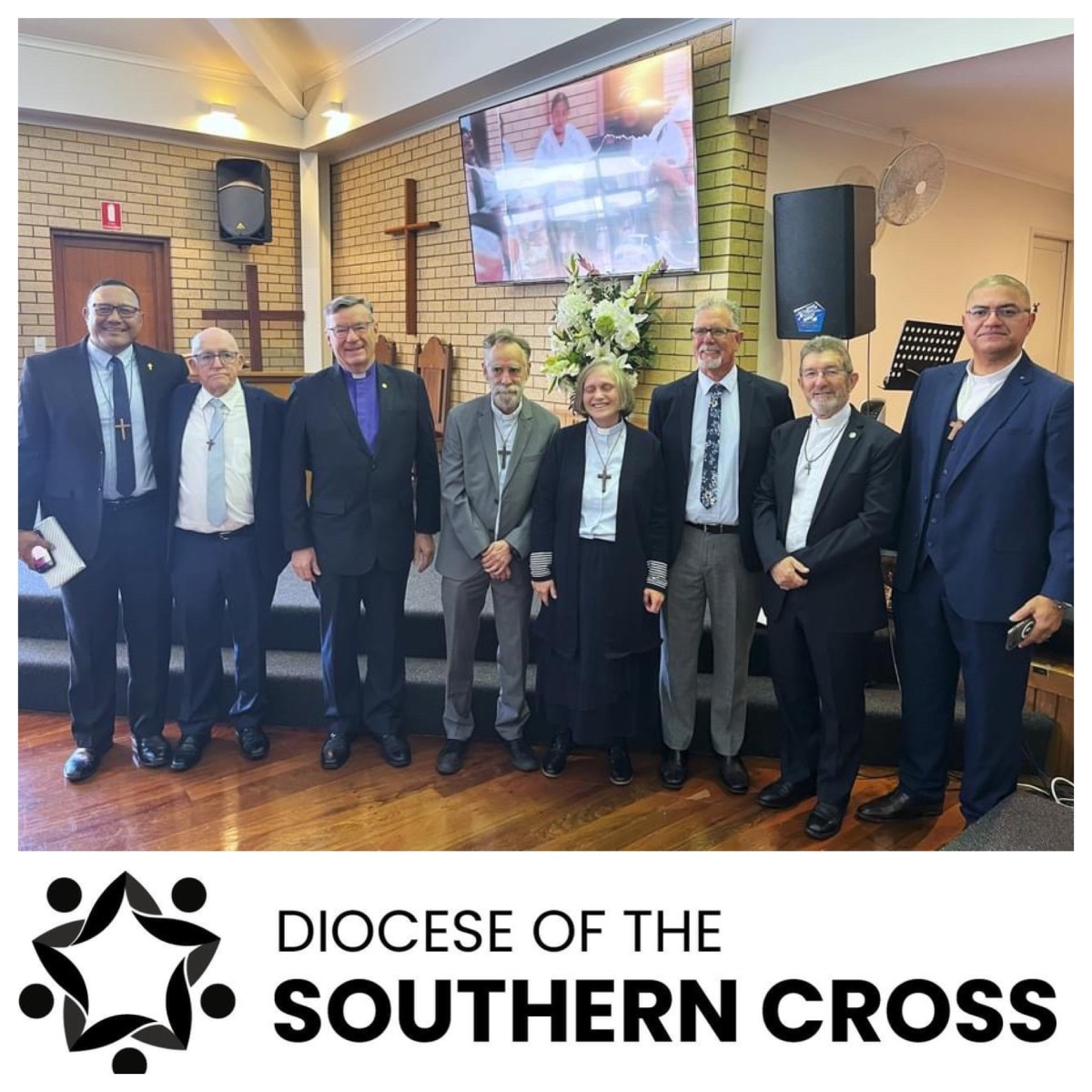
These eight people left the Uniting Church to join the DSC in a ceremony held at Mooloolaba, on the Sunshine Coast in Queensland, that “recognised” them as Pastors in the DSC. What precise status that gives them is unclear; they cannot be seen as ordained Anglican ministers, since Anglican ordination require connection to the episcopal line of tradition, which Uniting Church ordinations do not have, at least in their eyes.
The Facebook page for the Diocese of Southern Cross proclaims that Faith Church Sunshine Coast and Hedley Fihaki were welcomed to the Diocese of the Southern Cross. Hedley Fihaki, of course, is the former chairperson of the Assembly of Confessing Congregations in the Uniting Church, which recently caved in on itself and closed. The ACC is no more. Hedley and his companions are seeking a new base.
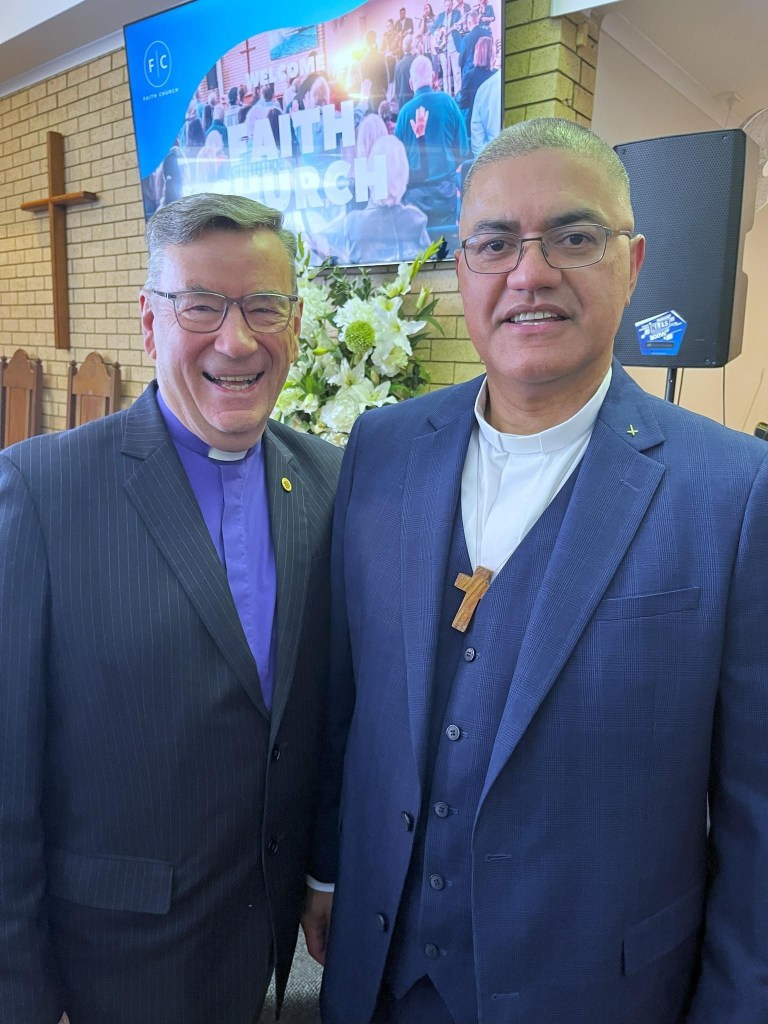
So the Mooloolaba Eight left the Uniting Church. It is rather ironic that their service of “recognition” was presided over by Glenn Davies, the former Archbishop of the Anglican Diocese of Sydney. Whilst he was still Archbishop in Sydney, he had invited members of the Anglican Church who disagreed with Sydney Diocese policy about sexuality, to “please leave”. The Mooloolaba Eight left their church to join a breakaway group headed by the person who said “please leave”. How ironic!
The Facebook post continues: “As well as being commissioned as pastor of Faith Church, Hedley was formally recognised by Bishop Glenn Davies as a presbyter in the diocese along with seven other former Uniting Church ministers who have chosen to join us in the Diocese of the Southern Cross. Welcome to Philip Anderson, David Graham, Anne Hibbard, Roger Hibbard, Raymond McIlwraith, Lulu Senituli, and Harold Strong.”
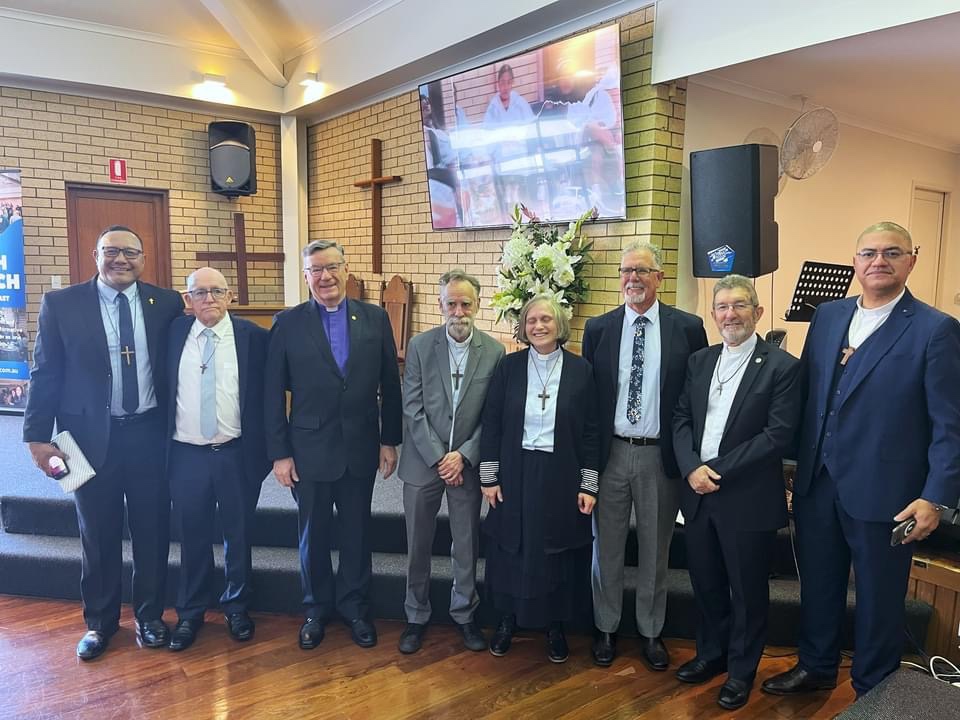
I have to confess that I know and have had interactions with six of the eight people identified in this post—some as members of the same council of the church, some through online conversations, some as colleagues in ministry in placements in the same synod as me, and one who I taught whilst they were in theological college. (A wise colleague has helpfully reminded me that, in line with Ezekiel 18, the sins of the student should not be attributed to or visited on the teacher!)
Some of those who were “recognised” this past weekend have been aggressive in their pursuit of their homophobic agenda, for years, whilst in the Uniting Church. This has been a very bad thing for the Uniting Church, because much energy and effort has been diverted from the core matters of importance in the church, to attempt to placate and include those who prosecuted this strident line. Now that they have moved on, the UCA can hopefully return to key matters of mission and ministry unhindered by such regressive views and the associated intrusive aggressive tactics.
There are interesting questions of church order now to be explored. Presumably, the eight people have or will resigned from their status as ordained ministers within the Uniting Church. My understanding is that two of them have already been engaged in processes within the Uniting Church over the past year, in this regard. But the move to the DSC must surely mark the time when they each formally resign from the Uniting Church.
The DSC itself is a curious beast. There is debate amongst Anglicans as to whether this is “a real diocese” or not. I have seen a direct statement that “this is a real Anglican diocese”, but also a similarly definitive claim that “this is not an entity in fellowship with the Anglican Church in Australia”, and so not actually an Anglican diocese. That’s all a matter for Anglican polity nerds, though.
What interests me more is how the eight who were “formally recognised as presbyters” will portray themselves and act in ministry. Will they simply continue as if they remain ordained? If the DSC is acting like an Anglican entity, their ordination as Uniting Church ministers will not be recognised—no bishop, in the line of apostolic succession, laid hands on them at their ordination, and so they technically are not to be regarded as ordained. That’s how I understand it, from my non-Anglican standpoint; but it will be interesting to see what eventuates.
The other element is the curious fact, commented on by some of my Facebook friends, that the person who “recognised” the eight people at Mooloolaba on 17 June was Glenn Davies, who was previously Archbishop of the Sydney Diocese of the Anglican Church. This diocese has fought long and hard, over many years, to oppose the ordination of women.
Yet the former Archbishop of Sydney, who so strenuously opposed the ordination of women in that role, has seemingly validated the ordained ministry of the one woman in the Mooloolaba Eight. It will be interesting to see how this is dealt with.
Apparently the DSC, being affiliated with the schismatic GAFCON within the Anglican Church, is nevertheless open to women ministers. Indeed, the first GAFCON-affiliated congregation in Western Australia, New Beginnings Church in Mandurah, Western Australia, has an ordained female minister, the Rev. Linley MatthewsWant, who is an Anglican minister.
So the irony is that the former leader of the aggressively anti-women’s ordination push is now the leader of an organisation with ordained female in ministry. Isn’t that a telling revelation as to the ethics of Glenn Davies? Either he really believes in the ordination of women, but put this to one side while he was in the Sydney Diocese; or else he has shelved the firm commitment that he had in the past for entirely pragmatic reasons in the present. Neither option indicates a good grasp of ethical responsibility, in my view.
So what next for the Mooloolaba Eight? We will just have to see where this leads next …
**********
On the end of the Assembly of Confessing Congregations, see
My previous posts on the various evangelical/fundamentalist groups in the UCA are at
For the various affirmations that the Uniting Church Assembly has made that led the church to agree to the marriage of people of the same gender, see

 An Informed Faith