
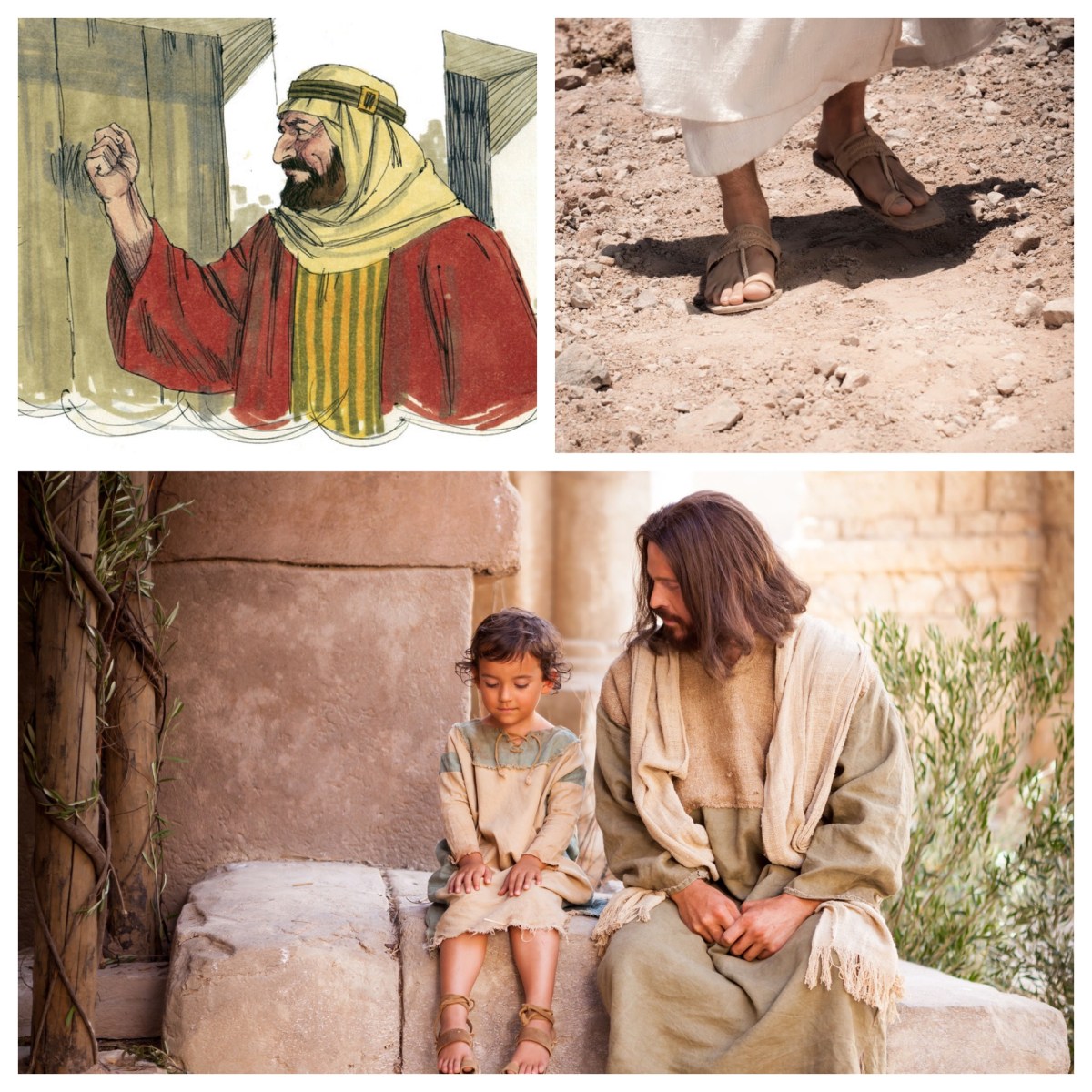
This Sunday, the lectionary offers a Gospel passage of just three succinct verses (Matt 10:40–42). In those verses, three key terms are used Jesus: prophet, righteous one, and little one. “Whoever welcomes you welcomes me, and whoever welcomes me welcomes the one who sent me,” Jesus asserts (Matt 10:42), before he proceed to extend this saying to include those who welcome a prophet, a righteous person, and “whoever gives even a cup of cold water to one of these little ones in the name of a disciple”. In each case, a reward is certain, says Jesus.
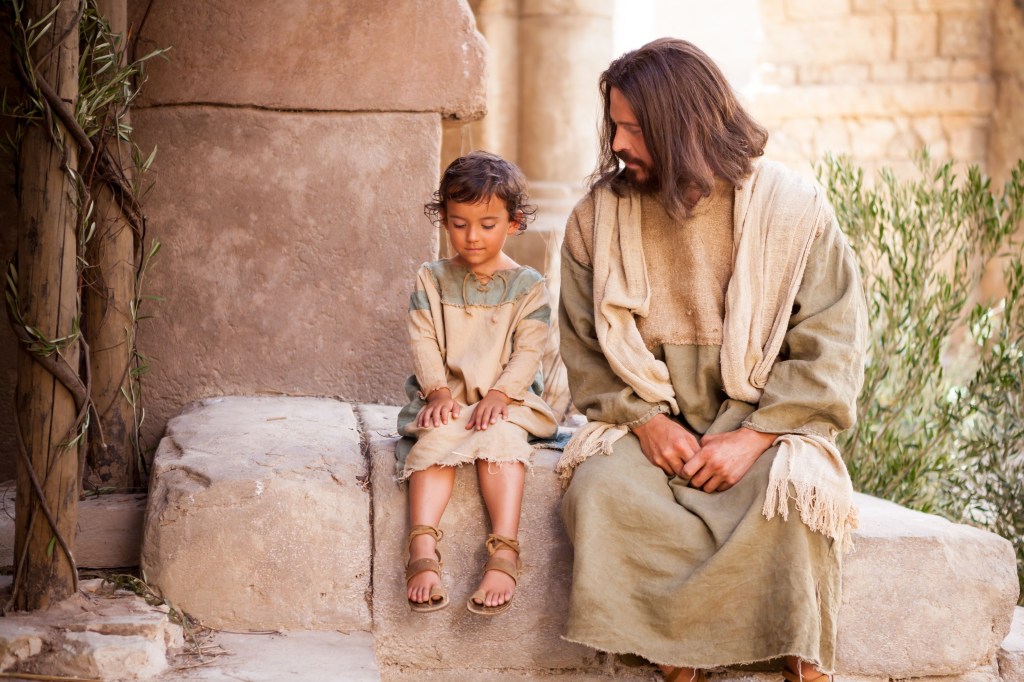
The last of these sayings, about “one of these little ones”, links these verses with the saying of Jesus he spoke after the disciples had been arguing about “who was the greatest”. This saying is reported in the triple tradition (Mark 9:33–37 and parallels in Matt 18 and Luke 9). In that scene, Jesus took a child in his arms and said, “whoever welcomes one such child in my name welcomes me, and whoever welcomes me welcomes not me but the one who sent me” (Mark 9:37; Matt 18:5; Luke 9:48).
Matthew here reports an expanded version of that saying, which is applied directly to the disciples. He begins by reversing Mark’s saying, taking the end of that version by referring initially to all the disciples: “whoever welcomes you”, before extending this to include “welcoming me” (10:40).
The disciples represent Jesus as “the one who sent me”, namely, God. This last phrase, found in the three Synoptic versions of this saying, is a favourite Johannine phrase for God (John 1:33; 6:44; 7:28; 8:26, 29; 9:4). The Johannine version of this saying is “whoever receives one whom I send receives me; and whoever receives me receives him who sent me” (John 13:20). That is very similar to the version that Matthew reports.
However, Matthew extends his version of Mark’s saying still further by adding “whoever welcomes a prophet”, then “whoever welcomes a righteous one” (10:41), before concluding with “whoever gives even a cup of cold water to one of these little ones in the name of a disciple” (10:52). The “little one” is presumably equivalent to “the child” which had begun Mark’s saying.
Jesus’ other saying about “the little ones” appears in all three Synoptic Gospels. The saying is highly likely to be authentic, if we adopt the classic form-critical criteria that were developed some decades ago. One marker of authenticity is for a saying to be hard, difficult, or unexpected. Jesus instructs his disciples, “if any of you put a stumbling block before one of these little ones who believe in me, it would be better for you if a great millstone were hung around your neck and you were thrown into the sea” (Mark 9:42; Luke 17:2; Matt 18:6).
This is a shocking, confronting instruction. It is undoubtedly a hard saying. In Mark 9, that shocking statement is extended regarding a hand or a foot or an eye causing a person to stumble; “it is better for you to enter life maimed … lame …[or] with one eye”, he advises (Mark 9:43-48). So Jesus is strenuously advocating for “the little ones”, and giving them a cup of water (Matt 10:42) is an essential act of discipleship.
*****
We have seen, then, that Matthew has inverted the order he received from Mark and extended the comparison he makes about welcoming a person who comes in his name. Adding the prophet to this saying (10:41) brings in another dimension to the story.
One line of interpretation that has been proposed intrigues me. Could these sayings reflect the on-the-ground nature of the earliest period of the movement that Jesus initiated? He had called disciples to follow him (4:18-22; 9:9), warned people of the difficulties that this would entail (8:18–22), selected an inner group to be designated as “emissaries—translating the Greek apostoloi (10:1–4), and commissioned them to proclaim the nearness of God’s presence in this world (10:5–15).
Jesus then warned these emissaries of the dangers that lay in store for them (10:16–25) and encourages them with the words, “do not fear those who kill the body but cannot kill the soul” (10:26–31), assuring them that “everyone who acknowledges me before others, I also will acknowledge before my Father in heaven” (10:32–33). The short lectionary passage brings the whole “mission discourse l (10:1–42) to a close. These words encapsulate the commission and the anticipated experience of the disciples.

How were the followers of Jesus to implement this? Gerd Theissen, a German New Testament scholar, has proposed that the message of Jesus was spread by itinerants within the early Jesus movement who travelled from village to village with their message. They were dependent on those who received them for hospitality and lodging, in literal obedience to what Jesus had told his disciples (Mark 6:10–11). They were living in complete obedience to “the Son of Man [who] has nowhere to lay his head” (Matt 8:20; Luke 9:58).
Evidence for such itinerant preachers can also be found in the Didache, which instructs: “Whosoever, therefore, comes and teaches you all these things that have been said before, receive him … Let every apostle that comes to you be received as the Lord. But he shall not remain except one day; but if there be need, also the next; but if he remain three days, he is a false prophet. And when the apostle goes away, let him take nothing but bread until he lodges; but if he ask money, he is a false prophet.” (Didache 11:1, 4–6).
The reference to prophets in Matthew’s account of the words of Jesus resonate with this portrayal of the early church. Receiving a prophet and welcoming them (providing them with hospitality—food, drink, and shelter) is affirmed, for the prophet comes as a representative of Jesus (10:41).
Throughout the story of Israel, the prophet has been the one who, literally, “speaks forth”; so the prophets sent by Jesus proclaim the message that “the kingdom of heaven has come near” (Matt 10:7). The prophets proclaiming this message, as prophets did in earlier times, accompany their message with acts that manifest the truth of what is proclaimed: “cure the sick, raise the dead, cleanse the lepers, cast out demons” (10:8).
*****
Matthew also adds a saying about receiving “a righteous one” 10:42). This is language which is very important to Matthew. The word dikaios, translated as righteous, refers to a person who adheres carefully to the prescriptions of Torah, who is faithfully trusting God, who follows the ways that God sets out, who contributes constructively to society so that it functions in a just and equitable way.

Torah and righteous-justice are linked in Jewish understanding. The psalmist, characteristically, places them in synonymous parallelism, when they sing, “your righteousness is an everlasting righteousness, and your law is the truth” (Ps 119:142). The prophet Habakkuk, lamenting the “destruction and violence” that surrounds him as the Babylonian army presses into Jerusalem, observes that “the law becomes slack and justice never prevails; the wicked surround the righteous—therefore judgment comes forth perverted” (Hab 1:4). The two go hand-in-hand.
Matthew reflects this close connection between Torah and righteous-justice, as he presents Jesus as being completely faithful to Torah. In reporting his baptism, only Matthew has Jesus declare to John, “it is proper for us in this way to fulfill all righteousness” (3:15). In beginning the Sermon on the Mount, Jesus declares blessed “those who hunger and thirst for righteousness” (5:6) and “those who are persecuted for righteousness’ sake” (5:10).
Jesus follows this by announcing his intention to intensify the demands of the Law (5:18) by demanding that his followers exhibit a righteous-justice that exceeds that demonstrated by the Pharisees (5:20). Only Matthew reports these words of Torah fidelity, and only Matthew has the various parables which affirm “the righteous” over against those who disobey the law (13:36–43; 13:47–49; 25:31–46).
Matthew presents Jesus as thoroughly Jewish, for he knows that God is righteous, as is declared in scripture (Deut 32:4; Ps 145:7; Job 34:17). The psalmists regularly thank God for God’s righteousness (Ps 5:8; 7:17; 9:8; 33:5; 35:24, 28; 36:6; 50:6; etc) and note the importance of humans living in that way for righteousness (Ps 18:20, 24; 85:10–13; 106:3, 31; 112:1–3, 9).
The book of Proverbs advises that the wisdom it offers is “for gaining instruction in wise dealing, righteousness, justice, and equity” (Prov 1:3) and the prophets consistently advocated for Israel to live in accordance with righteousness (Hos 10:12; Amos 5:24; Isa 1:22; 5:7; 28:17; 32:16–17; 54:14; Jer 22:3; Ezek 18:19–29; Dan 9:24; 12:3; Zeph 2:3; Mal 4:1–3; Hab 2:1–4).
So welcoming a righteous one is welcoming a person who follows, intensely and faithfully, the way that Jesus sets out, the way of God’s righteous law—just as welcoming a prophet is welcoming one who faithfully and persistently declares the message of that righteous law. That is the measure of faith that Matthew sets out in this saying. That is the intensity that the Jesus of Matthew presents.

 An Informed Faith