Paul, the law of the Spirit, and life in the Spirit (Rom 8; Pentecost 7A)

Last week, we considered the section of Paul’s letter to the Romans which the lectionary offered: Paul grappling within “the sin that lives within me” (Rom 7:14–25a). In probing that state, Paul came to a rather pessimistic conclusion: “wretched man that I am! who will rescue me from this body of death?” (7:24), before immediately switching to a grateful “thanks be to God through Jesus Christ our Lord!” (7:25). See

This week, the lectionary continues the argument that Paul is developing, as he presses on to rejoice that “there is now no condemnation for those who are in Christ Jesus” (8:1). The passage proposed by the lectionary (8:1–11) marks a dramatic change in tone. Whilst he still recognises that “the mind that is set on the flesh is hostile to God; it does not submit to God’s law” (8:7), the primary focus that Paul now has is on the claim that “the law of the Spirit of life in Christ Jesus has set you free from the law of sin and of death” (8:2).

Paul considers the state of humanity: “to set the mind on the flesh is death … the mind that is set on the flesh is hostile to God; it does not submit to God’s law—indeed it cannot, and those who are in the flesh cannot please God” (Rom 8:6–8). He has already grappled with this in the previous chapter. Here, he presses on to celebrate that, as he tells the believers in Rome, “you are not in the flesh; you are in the Spirit, since the Spirit of God dwells in you” (8:9).

Because of what the Spirit effects in the lives of believers, Paul is embued with great hope—a quality that he expresses in other letters he wrote. He rejoices with the Thessalonians that they share with him in “hope in our Lord Jesus Christ” (1 Thess 1:3) and tells the Galatians that “through the Spirit, by faith, we eagerly waits for the hope of righteousness” (Gal 5:5).

He reminds the Corinthians that “faith, hope and love abide” (1 Cor 13:13), and then in a subsequent letter to believers in Corinth, he asserts that “he who rescued us from so deadly a peril will continue to secure us; on him we have set our hope that he will rescue us again” (2 Cor 1:10)

Paul has already reported to the Romans that “we boast in our hope of sharing the glory of God” (Rom 4:2) and that “we boast in our hope of sharing the glory of God” (5:2). He will go on to refer to “the law of the Spirit of life in Christ Jesus” (8:2), and explain how the work of the Spirit gives hope to the whole creation, currently “in bondage to decay”, which will “obtain the freedom of the glory of the children of God” (8:21). And so, Paul declares, it is “in hope that we were saved” (8:24).

Towards the end of the letter, Paul offers a blessing to the Romans: “may the God of hope fill you with all joy and peace in believing, so that you may abound in hope by the power of the Holy Spirit” (15:13). That the Spirit produces this hope is a fundamental dynamic in the process of “setting [believers] free from the law of sin and of death” (8:2).

The Spirit is rarely mentioned in the first seven chapters of this letter. Paul does note that it was “according to the spirit of holiness by resurrection from the dead” that Jesus was “declare to be Son of God with power” (1:4), and that it was “through the Holy Spirit that has been given to us” that “God’s love has been poured into our hearts” (5:5). And he notes that it was by being “discharged from the law” that believers entered into “the new life of the Spirit” (7:6).

But from 8:1 onwards, the Spirit becomes an active presence in what Paul writes about. The Greek word pneuma appears 33 times in the letter to the Romans; most of these are referring to the Holy Spirit. Strikingly, 19 of these occurrences are in chapter 8; a further eight instances then occur in chapters 9–15.

We might contrast this with the word that is often seen to be the key to this letter, dikaiosunē, which appears 57 times in Romans—including the programmatic key verse of 1:17, 13 times in ch.3, 11 times in ch.4, nine times in ch.5, and then nine more times in chs.9–11. Whilst righteousness is indeed an important word, the Spirit is also of crucial significance in Paul’s argument throughout Romans.

Rom 8:1–11 makes a strategic contribution to what Paul is explaining in this letter—that in the Gospel, “the righteousness of God is revealed through faith for faith” (1:17), that “the righteousness of God has been disclosed, and is attested by the law and the prophets, the righteousness of God through faith in [or of] Jesus Christ for all who believe” (3:21–22).

As he develops his argument, drawing on the story of Abraham (Gen 15), Paul affirms that this righteousness “will be reckoned to us who believe in him who raised Jesus our Lord from the dead, who was handed over to death for our trespasses and was raised for our justification” (4:24–25), concluding that “since we have been made righteous by faith, we have peace with God through our Lord Jesus Christ” (5:1), and asserting that “if Christ is in you … the Spirit is life because of righteousness” (8:10).

Incidentally, when we look at the statistics of word occurrences in the seven authentic letters of Paul, we see that “righteousness” occurs a total of 87 times (57 of them in Romans, 13 in Galatians), whilst “spirit” can be found 117 times: as well as the 33 times in Romans, there are 39 occurrences in 1 Corinthians and a further 15 occurrences in 2 Corinthians, and then 19 more appearances in Galatians. Spirit is a fundamental component in Paul’s theology.

Paul believes that it is by the Spirit that the gift of righteousness is enlivened and activated within the believer. He hammers this point with a series of clear affirmations in this week’s passage (8:1–11): “there is no condemnation” (v.1), “the law of the Spirit has set me free” (v.2), “God has done what the law, weakened by the flesh, could not do: by sending his own Son in the likeness of sinful flesh, and to deal with sin” (v.3), “the Spirit of God dwells in you” (v.9), “the Spirit is life” (v.10), and “he who raised Christ from the dead will give life to your mortal bodies also through his Spirit that dwells in you” (v.11).

Important for Paul is for the believer to know that “you are in the Spirit, since the Spirit of God dwells in you” (8:9) and that “his Spirit … dwells in you” (8:11). This is an idea that Paul also articulates in his first letter to a Corinth, when he poses the rhetorical question, “do you not know that you are God’s temple and that God’s Spirit dwells in you?” (1 Cor 3:16). The answer to this rhetorical question which is expected (but not stated) is, of course, “yes, we do know that God’s Spirit dwells in us”.

A similar rhetorical strategy can be seen as Paul draws this section (Rom 8:1–11) to a close. He poses a matched pair of conditional possibilities: “if Christ is in you” (v.10), “if the Spirit dwells in you” (v.11). The possibility, in each case, is crystal clear: since Christ is in you, “the Spirit is life because of righteousness” (v.10), and since the Spirit dwells in you, “he who raised Christ from the dead will give life to your mortal bodies also through his Spirit that dwells in you” (8:11).

For Paul, then, the role of the Spirit in enlivening and energising the believer is crucial. That is the important contribution that this passage makes to Pauline theology, and to our understanding of the Christian life.

See also
A fully-developed theology from just one psalm? (Psalm 119; Pentecost 7A) §1

I set myself a challenge: develop a fully-rounded theology from just one psalm. Easy, I thought; the shortest psalm, 117, has a number of key elements in its two verses: praise (“praise the Lord” twice, at the beginning and the end), adoration (“extol him”), a recognition of divine love (“great is his steadfast love towards us”), the universal orientation of that love (“all peoples”), and the assurance of divine fidelity (“the faithfulness of the Lord endures forever”).

There: done and dusted! … although, I think, on further reflection, that this looks more like the outline of a litany (praise—adoration—intercession —blessing) than a fully-developed theology. As a litany, it is succinct; as a theology, it is still quite deficient.

So, what about a challenge to develop a fully-rounded theology, not from the shortest psalm, but from the longest psalm? For just two psalms later, we have the 176–verse grand acrostic of the Hebrew Scriptures: Psalm 119—a small portion of which (119:105–112) is offered by the lectionary this coming Sunday. What would a theology look like, using only the verses in this psalm? And how full (or inadequate) would that theology be?

I love the way that this wonderfully artistic creation contains key elements of a theological understanding of the world. There are components regarding the nature of God, the human condition, and the divine response to that human condition. There is much to be gleaned regarding revelation and also salvation. And there are indications that touch on the character of living a faithful life, as well as signs of what the future is to be. All of these elements contribute to a fully-developed theology, surely?

This longest psalm of all, Psalm 119, is an acrostic series of 22 eight-verse stanzas (arranged alphabetically) in which the author(s) consistently affirm the value and importance of the teaching (Hebrew, torah) which sits at the centre of faith for the person singing this psalm. “I will delight in your statutes; I will not forget your word” (Ps 119:16). By contrast to “the arrogant”, whose “hearts are fat and gross”, the psalmist declares, “I delight in your law” (Ps 119:70).

The psalm includes the petition, “let your mercy come to me, that I may live, for your law is my delight” (Ps 119:77), noting that “if your law had not been my delight, I would have perished in my misery” (Ps 119:92). It also affirms, “I long for your salvation, O Lord, and your teaching (torah) is my delight” (Ps 119:74). Echoing these words many centuries later, Paul, in the midst of his agonising about Torah in Romans 7, is able to affirm, “I delight in the law of God in my inmost self” (Rom 7:22). Delight for the Law runs through Jewish history.

This longest of all psalms is a series of 22 meditations on teachings, or Torah, which is usually translated as “law”. It contains regular affirmations of the place of Torah in personal and communal piety: “give me understanding, that I may keep your law and observe it with my whole heart” (v.34); “Oh, how I love your law! it is my meditation all day long” (v.97).

The psalmist contrasts their devotion to Torah with those who neglect or ignore it: “I hate the double-minded, but I love your law” (v.113); “I hate and abhor falsehood, but I love your law” (v.163). They rejoice that “great peace have those who love your law; nothing can make them stumble” (v.165). From this long and persistent affirmation of Torah throughout all 22 stanzas, we can indeed devise a fully-fledged theology, canvassing many of the key issues that we have come to associate with theology.

(In what follows, I will refer to the psalmist as “they”, making no assumptions about who they were, even their gender. As psalms were collective songs, it is reasonable to suggest that they were developed within the community, by members of the community—so “ they” is a reasonable assumption, I feel.)

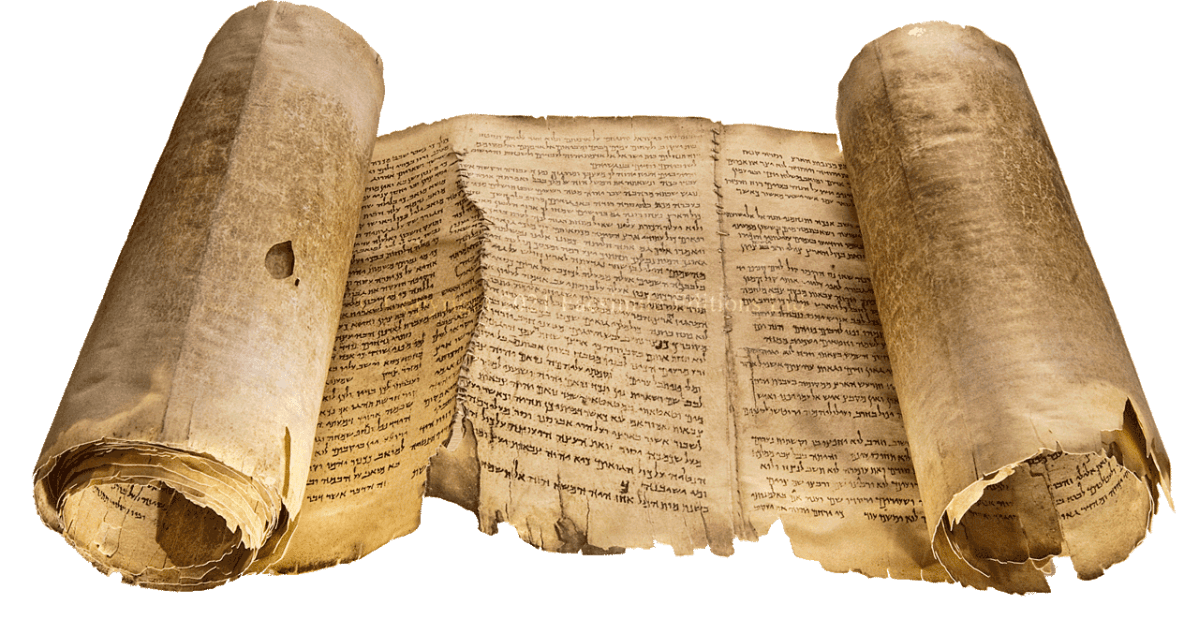
4QPs Dead Sea Scroll Psalm 119 from the First Century CE

1 God

Undergirding the joyful appreciation of Torah in the lengthy psalm is a consistent trust in God, who is consistently acknowledged as the author and giver of Torah, but is also celebrated as creator: “your hands have made and fashioned me” (v.73). That affirmation reflects famous words sung in another psalm, “I praise you [God], for I am fearfully and wonderfully made; wonderful are your works; that I know very well” (Ps 139:14).

God’s creative power is at the centre of Hebrew Scripture. It is celebrated in passing in many psalms (Ps 8:3–8; 33:6–7; 74:16–17; 95:4–5; 96:5; 100:3; 103:14; 115:15; 121:2; 124:8; 136:4–9; 146:5–6); in the majestic celebratory psalm, Psalm 104, which rejoices, “Lord, how manifold are your works! In wisdom you have made them all” (Ps 104:24); and in the carefully-crafted priestly account of creation that stands at the head of Hebrew Scripture (Gen 1:1–2:4a). It is noted with appreciation also in psalm 119 (v.73).

A second element in this psalm is that God’s mercy is valued; “great is your mercy, O Lord” (v.156), and so the psalmist prays, “let your mercy come to me, that I may live; for your law is my delight” (v.77). This is a common refrain in other psalms, where God is asked to show mercy (Ps 25:6; 40:11; 51:1; 123:2, 3). As one proverb says, “no one who conceals transgressions will prosper, but one who confesses and forsakes them will obtain mercy” (Prov 28:13). A similar sentiment is offered by Isaiah: “the Lord waits to be gracious to you; therefore he will rise up to show mercy to you, for the Lord is a God of justice; blessed are all those who wait for him” (Isa 30:18).

Then, we might note the love of God. A recurrent refrain in Hebrew Scripture is a celebration of “the steadfast love of the Lord” (Exod 34:6; 2 Chron 30:8–9; Neh 9:17, 32; Jonah 4:2; Joel 2:13; Ps 86:15; 103:8, 11; 111:4; 145:8–9). This affirmation presents God as “merciful and gracious, slow to anger, and abounding in steadfast love and faithfulness, keeping steadfast love for the thousandth generation”.

God is praised for showing love by redeeming the people in the Exodus (Exod 15:13) and then guaranteeing abundance in the land is promised to the people: “he will love you, bless you, and multiply you; he will bless the fruit of your womb and the fruit of your ground, your grain and your wine and your oil, the increase of your cattle and the issue of your flock, in the land that he swore to your ancestors to give you”, says Moses (Deut 7:13).

Solomon later praises God, saying “you have shown great and steadfast love to your servant my father David … and you have kept for him this great and steadfast love, and have given him a son to sit on his throne today” (1 Ki 3:6; also 2 Chron 1:8), and then as he dedicates the Temple, he prays “there is no God like you in heaven above or on earth beneath, keeping covenant and steadfast love for your servants who walk before you with all their heart” (1 Ki 8:23; 2 Chron 6:14).

When the foundations of the Temple are laid, after it has been destroyed by the Babylonians, the people sing, “praising and giving thanks to the Lord, ‘for he is good, for his steadfast love endures forever toward Israel” (Ezra 3:11). When a covenant renewal ceremony takes place under Nehemiah, he addresses God as “a gracious and merciful God” and continues, “the great and mighty and awesome God, keeping covenant and steadfast love” (Neh 9:31–32). A number of prophets refer to God’s enduring, steadfast love (Isa 16:5; 43:4; 54:8, 10; 63:7; Jer 9:24; 31:3; 33:11; Dan 9:4; Hos 2:19; 11:3–4; Jonah 4:2; Micah 7:18–19; Zeph 3:17).

Reference is made to the steadfast love of God on seven occasions in this psalm (verses 41, 64, 76, 88, 124, 149, and 159). Such love is often linked with Torah—“the earth, O Lord, is full of your steadfast love; teach me your statutes” (v.64); and again, “deal with your servant according to your steadfast love, and teach me your statutes” (v.124). An important function of Torah is thus to communicate the extent of divine live.

In tandem with God’s mercy and steadfast love, so divine justice is also noted. “Great is your mercy, O Lord; give me life according to your justice” (v.156); and “in your steadfast love hear my voice; O Lord, in your justice preserve my life” (v.149).

Justice, of course, is at the heart of the covenant that God made with Israel. Moses is said to have instructed, “justice, and only justice, you shall pursue” (Deut 16:20), the king is charged with exhibiting justice (Ps 72:1–2; Isa 32:1), whilst many prophets advocate for justice (Isa 1:17; 5:7; 30:18; 42:1–4; 51:4; 56:1; Jer 9:24; 22:3; 23:5; 33:15; Ezek 18:5–9; 34:16; Dan 4:37; Hos 12:6; Amos 5:15, 24; Mic 3:1–8; 6:8).

So God, says the psalmist, holds the people of the covenant to the standard set in Torah: “you rebuke the insolent, accursed ones, who wander from your commandments” (Ps 119:21). The assumption throughout this psalm is that the creator God is personal, approachable, relatable; just and fair, kind and loving.

See further posts at