
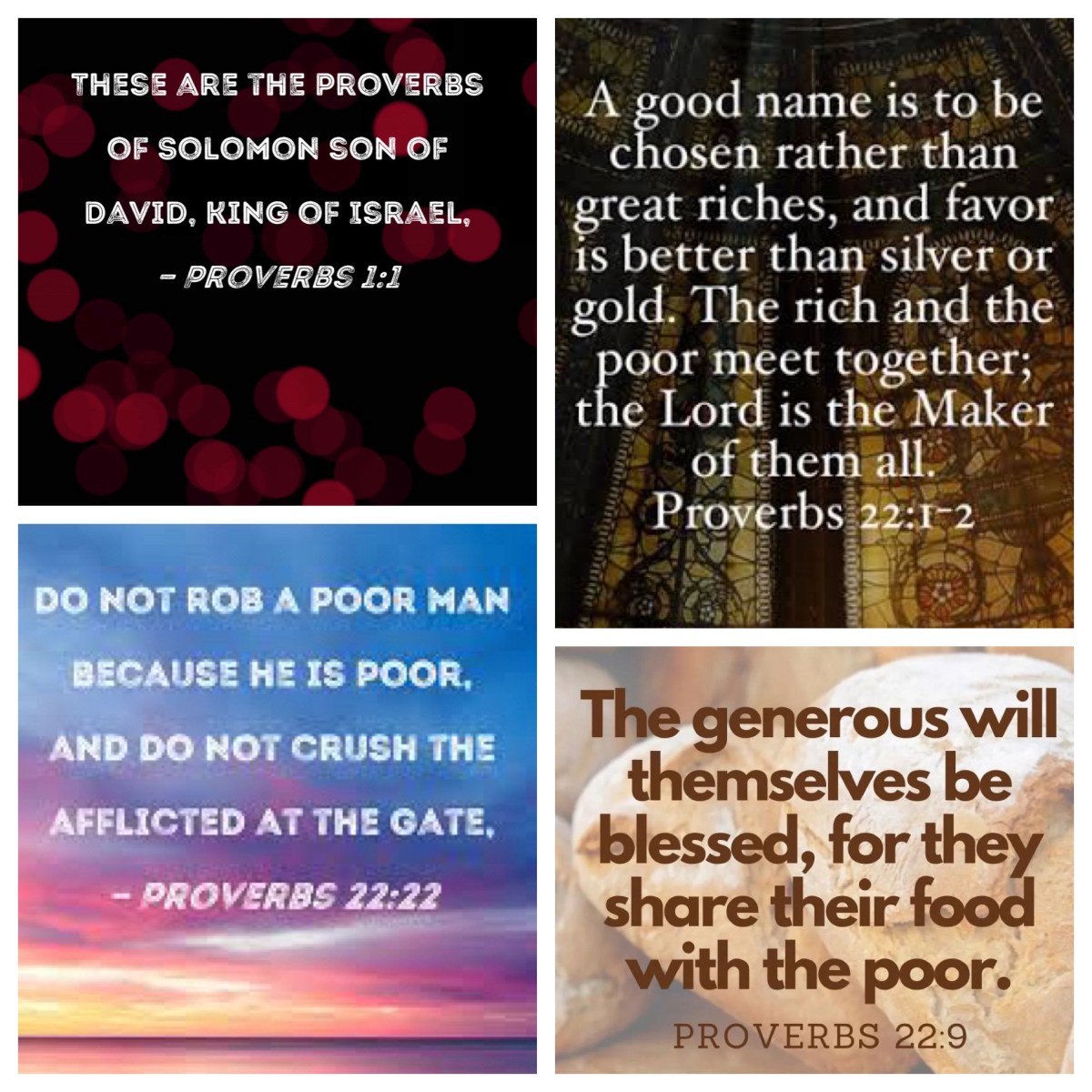
This Sunday we continue reading passages from the “Wisdom Literature” of the ancient Israelites, with an excerpt from the book of Proverbs. The lectionary offers a set of three paired sayings from a later chapter (Prov 22:1–2, 8–9, 22–23). Perhaps these are chosen to be reflective of the kind of proverbs that are included in the book of the same name.
Curiously, we read or hear a passage from near the beginning of the book in the selection proposed for the Sunday after next (1:20–33). After that, over two Sundays, we will focus on Wisdom (ch.8) and “the woman of valour” (ch.31)—two passages that provide strong, positive female role models.
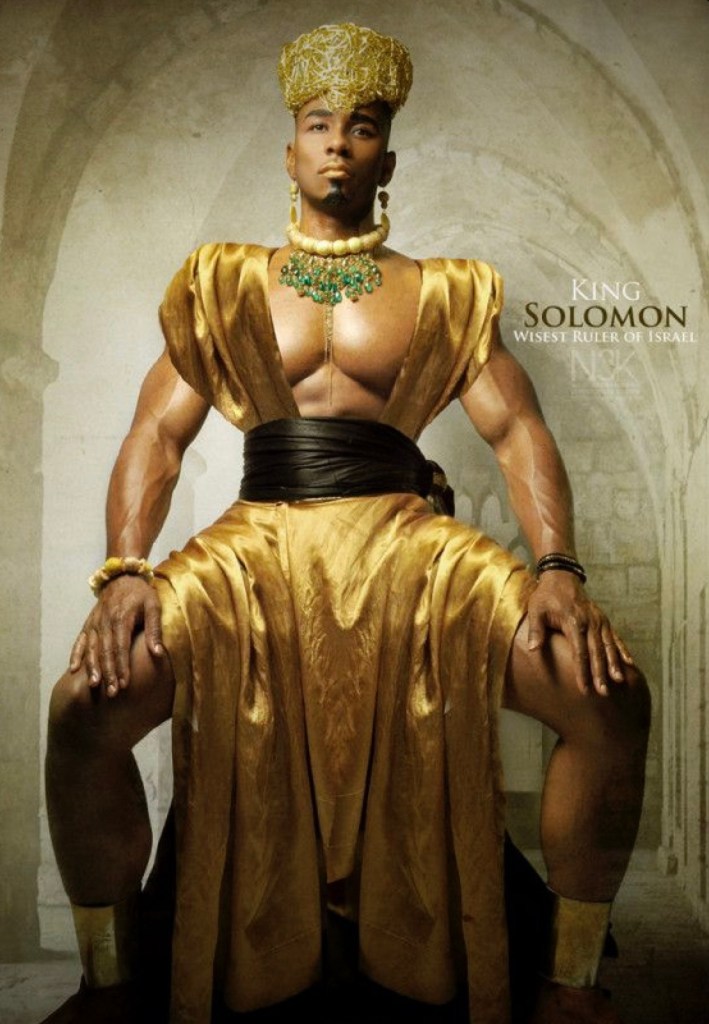
Although this book claims Solomon as its author, it is probably a work which collates the words of multiple anonymous people. Most proverbs start their life in unheralded ways; they eventually enter folklore, and that’s what this book has collated. It is thought that the book was completed in the post-exilic period, long after the lifetime of Solomon, although it may well have material that could be pre-exilic. The attribution to Solomon (1:1; 10:1; 25:1) derives from traditional accounts of his legendary wisdom (1 Kings 4:29-34) and lends authority to the book. The style and language of many proverbs suggests an origin much later than the 10th century BCE, the time when Solomon is alleged to have existed.
The purpose of the book of Proverbs is to make suggestions as to how one might learn to cope with life: “learning about wisdom and instruction, for understanding words of insight, for gaining instruction in wise dealing, righteousness, justice, and equity; to teach shrewdness to the simple, knowledge and prudence to the young—let the wise also hear and gain in learning, and the discerning acquire skill, to understand a proverb and a figure, the words of the wise and their riddles” (1:2–6).
Its emphasis is on teachings gathered from tradition of the elders: “when I was a son with my father, tender, and my mother’s favorite, he taught me, and said to me, Let your heart hold fast my words; keep my commandments, and live” (4:2–4). The basic instruction that is offered by the father is “get wisdom; get insight: do not forget, nor turn away from the words of my mouth” (4:5).
That injunction, “get wisdom” is repeated later (4:7; 16:16; 19:8), with further exhortations to “be attentive to my wisdom” (5:1), “listen to advice and accept instruction, that you may gain wisdom for the future” (19:20), and “buy truth, and do not sell it; buy wisdom, instruction, and understanding” (23:23).
Other proverbs affirm the value of wisdom: “how much better to get wisdom than gold!” (16:16), “the discerning person looks to wisdom” (17:24), “the fountain of wisdom is a gushing stream” (18:4), and “by wisdom a house is built, and by understanding it is established” (24:3). The praise of wisdom recurs in saying such as “happy are those who find wisdom, and those who get understanding” (3:13), “wisdom is with those who take advice” (13:10), and of course “the fear of the Lord is the beginning of wisdom” (9:10; see also Ps 111:10). The poems of chapters 1–3 and 8, where Wisdom is personifies, and the woman featured in ch.31 who “opens her mouth with wisdom” (31:26), particularly exemplify the value of attending to wisdom.
In contrast to many other books of the Hebrew Bible, major themes such as the Mosaic and Davidic covenants are absent; Temple worship and sacrifice are rarely mentioned. Most of the sayings are meant to inspire moral ideals. Guided by the principle that “the fear of the Lord is the beginning of wisdom” (9:10; 1:7; 15:33), many proverbs emphasise values such as honesty, diligence, trustworthiness, self-restraint, and appropriate attitudes toward wealth and poverty.
There are various indications that the original audience of Proverbs was primarily young men preparing for adult responsibilities; so, a male-centred perspective prevails in the book. There is intense interest in finding a “good wife”; one saying suggests that “a good wife is the crown of her husband” (12:4), another that “he who finds a wife finds a good thing, and obtains favour from the Lord” (18:22).
In chs 1–9, within a sequence of sayings presented as the instruction of a father to his son, the centre of attention is a vibrant feminine personification of divine Wisdom. She is opposed to the foolish woman (ch.9) and to the complex, threatening figure of the “strange woman” (chs.2,5,7). So the book itself contains a delightful undercutting of the male orientation that runs throughout.
Proverbs invites the reader to an intellectual discipline as a life-giving pathway to ethical concern, righteousness and piety. Study of Torah undergirds the righteous life; “those who keep the law are wise children” (28:7), “happy are those who keep the law” (29:18), “the wise of heart will heed commandments” (10:8). The particular doublets chosen for this Sunday’s reading from ch.22 draw from the foundations of Torah to highlight the value of a good name (vv.1–2), a generous life (vv.8–9), and an upright ethic (vv.22–23).

“A good name is to be chosen rather than great riches”, the chapter begins, “and favour is better than silver or gold” (v.1). This resonates both with the affirmation that the person who listens to the teaching of Wisdom “will find favour and good repute in the sight of God and of people” (3:1,4), and, on the contrary, if a person discloses a secret in an argument, “someone who hears you will bring shame upon you, and your ill repute will have no end” (25:9–10).
This reflects the fundamental ethos of an honour—shame society, such as ancient Israel was. A good reputation—a position of public honour—is to be desired and sought after. This honour is closely bound up with wisdom; “the wise will inherit honour, but stubborn fools, disgrace” (3:35), “whoever pursues righteousness and kindness will find life and honour” (21:21), for Wisdom holds honour in her left hand” (3:16; also 4:8;8:18). It is also connected with humility, for “a person’s pride will bring humiliation, but one who is lowly in spirit will obtain honour” (29:23), and just as “the fear of the Lord is instruction in wisdom”, so “humility goes before honour” (15:33).
That the importance of honour and shame is carried through into the time of Jesus is evident in his words about “a prophet without honour” (Mark 6:4), those who choose “the best seats in the synagogues and places of honor at banquets” (Mark 12:39), and the dishonouring he experiences when he is called names in public (John 8:48–49). It is also clear through the way that Paul explicitly identifies the general expectations about honour in society (Rom 13:7), the ways that “the cross” brings shameful dishonour (1 Cor 1:26–29; 2 Cor 6:8–10), and the way that following Jesus turns a conventional attitude on its head (1 Cor 12:22–24).
For more on honour and shame, especially as it illuminates the story of Jesus, see
and
Generosity is applauded in sayings such as “a generous person will be enriched, and one who gives water will get water” (11:25), “many seek the favour of the generous” (19:26), and the saying included in this Sunday’s selection, “those who are generous are blessed, for they share their bread with the poor” (22:9).
One of the psalmists notes that “the righteous are generous and keep giving” (Ps 37:21). Another psalmist connects generosity with ethical uprightness, singing that “all is well with those who deal generously and lend, who conduct their affairs with justice” (Ps 112:5).
Of course, sharing with “the poor” is a theme sounded by prophet after prophet. God’s care for “the poor” is announced by Hannah, as she sings how the Lord “raises up the poor from the dust; he lifts the needy from the ash heap” (1 Sam 28; also Ps 113:7). Amos famously berates Israel as they “trample the head of the poor into the dust of the earth, and push the afflicted out of the way” (Amos 2:7) before he turns his rhetoric towards “the cows of Bashan who are on Mount Samaria”, the ones “who oppress the poor, who crush the needy” (Amos 4:1). Judgement is coming upon both groups (Amos 2:13–16; 4:2–3).
Isaiah reports that God’s judgement will fall on the elders who are “crushing my people … grinding the face of the poor” (Isa 3:15; also 10:2) and Ezekiel berates those who “oppress the poor and needy” (Ezek 18:12; 22:29), for which they shall indeed die (Ezek 18:13). One psalm laments that “the wicked draw the sword and bend their bows to bring down the poor and needy, to kill those who walk uprightly” (Ps 37:14)
Isaiah promised that a shoot from the stump of Jesse, embued with the spirit, “with righteousness … shall judge the poor, and decide with equity for the meek of the earth” (Isa 11:1, 4). In exile, Jeremiah remembered (perhaps rather idealistically) that it was the role of the king to “judge the cause of the poor and needy” (Jer 22:16); a psalmist also remined the king of his responsibility to “judge your people with righteousness, and your poor with justice … defend the cause of the poor of the people, give deliverance to the needy” (Ps 72:2, 4). The Lord, says psalmist, through David and his house “will abundantly bless [Israel’s] provisions [and] will satisfy its poor with bread” (Ps 132:15).
Then, as the exiles begin to return to Jerusalem, Zechariah reminded them of the Lord’s commands: “do not oppress the widow, the orphan, the alien, or the poor; and do not devise evil in your hearts against one another” (Zech 7:10). Various psalmists celebrated that “the poor shall eat and be satisfied” (Ps 22:26), that on “the day of trouble” the person who “considers the poor” will be delivered by the Lord (Ps 41:1), that “the Lord maintains the cause of the needy, and executes justice for the poor” (Ps 140:12). So it is that those “who fear the Lord, who greatly delight in his commandments” have “distributed freely, they have given to the poor” (Ps 112:1, 9).
We know that this theme is taken up with clarity and consistency by Jesus, who proclaims a message of “good news for the poor” (Luke 4:18; 7:22) and instructs his followers to “sell what you own, and give the money to the poor” (Mark 10:21). He advocates strongly that the kingdom of God belongs variously to the poor (Luke 6:20), the meek (Matt 5:5), and the humble (Luke 14:11; 18:14), to children (Mark 9:36–37; 10:15) and to sinners (Mark 2:15–17; Luke 15:1–2).
And so, this uprightness in life is advocated by the final two couplets included in this Sunday’s selection, instructing people “not [to] rob the poor because they are poor, or crush the afflicted at the gate”, and noting that, as a consequence, “the Lord pleads their cause and despoils of life those who despoil them” (22:22–23).
These instructions are fundamental to living by Torah, and they are reiterated by many prophets in Israel. So even within the wisdom literature, we find support for the coming punishment of the Lord of which the prophets spoke incessantly; this judgement is based on how faithfully a person adheres to the commandments of the Torah. Wisdom is integral to Torah; “those who keep the law are wise children” (28:7).

 An Informed Faith