Wisdom cries out in the street, at the city gates (Prov 1; Pentecost 17B)

“Wisdom cries out in the street; in the squares she raises her voice; at the busiest corner she cries out; at the entrance of the city gates she speaks” (Prov 1:20–21). So begins the passage from Proverbs which the lectionary offers for this coming Sunday—the third passage from the “Wisdom Literature” that comprises much of the third section of the Hebrew TaNaK, the Kethuvim (“The Writings”).

We saw two weeks ago, in the Song of Songs, that the woman singing some of the songs may have been functioning as the vehicle for communicating wisdom to the king, her lover. The passage this week, from the opening chapter of Proverbs, introduces us to the figure of Wisdom herself. She is positioned in a very public place “in the street” (1:20), a location which may perhaps be echoed by the woman in Song of Songs, who declares that “I will rise now and go about the city, in the streets and in the squares; I will seek him whom my soul loves” (Song 3:2).

Many occurrences of “the streets” in Hebrew Scripture depict scenes of terror and anguish, as the Lord God executes his judgement “in the streets” (Isa 5:25; 10:5-6; Jer 6:10-12; 44:6; Lam 2:21; Isa 51:20; and more). Nevertheless, the prophet Jeremiah is commissioned to proclaim his message in the pubic place of the streets (Jer 11:6) and the prophet Zechariah foresees the rejuvenation of the abandoned streets, when “old men and old women shall again sit in the streets of Jerusalem, each with staff in hand because of their great age; and the streets of the city shall be full of boys and girls playing in its streets” (Zech 8:4–5). The streets were clearly public places.

In Proverbs, Wisdom speaks out “in the squares” (Prov 1:20); this also is a public location which is echoed at Song 3:2. Again, Jeremiah is commissioned to “run to and fro through the streets of Jerusalem, look around and take note! Search its squares and see if you can find one person who acts justly and seeks truth” (Jer 5:1). Other prophets note the public significance of the squares. Amos foresees that because he has proclaimed the Lord’s message to “hate evil and love good, and establish justice in the gate … in all the squares there shall be wailing; and in all the streets they shall say, ‘Alas! alas!’” (Amos 5:15–16). Nahum portrays the invasion of Nineveh as being publically signalled as “chariots race madly through the streets, they rush to and fro through the squares” (Nah 2:4).

So Wisdom here in Proverbs—like the woman in the Song—is functioning in a very public place, as the opening couplet of v.20 indicates. The significance of this location is intensified when we consider the second couplet of the next verse: “at the busiest corner she cries out; at the entrance of the city gates she speaks” (Prov 1:21). The street corner may well have been the location for public prayer by some, if the words of Jesus reflect the common practice of “the hypocrites [who] love to stand and pray in the synagogues and at the street corners, so that they may be seen by others” (Matt 6:5).
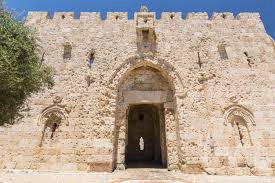
A city gate into Jerusalem

However, it is the mention of “the entrance of the city gates” (Prov 1:21) that is most significant. The gates were part of the protective structure surrounding towns and cities; built into the walls at strategic locations, they could be opened to allow for the coming and going of traders and visitors, or they could be closed to keep out enemies and invaders. “Fortress towns” are described in Deut 3:5 as having “high walls, double gates, and bars”. King Asa decreed “let us build these cities, and surround them with walls and towers, gates and bars” (2 Chron 14:7). 

In Jerusalem, the Chronicler claimed that it was the Levites who had responsibility for the gates, as Solomon appointed “gatekeepers in their divisions for the several gates” (2  Chron 8:14); their names, and their duties, are listed at length in 1 Chron 9:17–27. When the southern kingdom was under attack from the Assyrian king Sennacherib in 701, several towns in Judah were invaded (see 2 Kings 18–19; Micah 1:10–16).

Micah laments that “disaster has come down from the Lord to the gate of Jerusalem” (Micah 1:12); the wound inflicted on Judah “has reached to the gate of my people, to Jerusalem” (Micah 1:9). Some time later, the poet-author of Lamentations observes that “the kings of the earth did not believe, nor did any of the inhabitants of the world, that foe or enemy could enter the gates of Jerusalem” (Lam 4:12). The importance of the gates in providing security is clear.

In contrast, when Judith calls out to be let into the city, “the people of her town heard her voice, they hurried down to the town gate and summoned the elders of the town … they opened the gate and welcomed them, then they lit a fire to give light, and gathered around them” (Jud 13:12–13). Opening the gates is a clear sign of welcome to those acceptable to enter. 
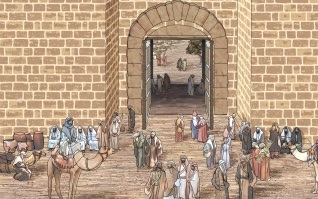
What the city gates may have looked like: a
place of entry, a meeting place

Accordingly, the gates of the city became the place where various matters associated with the life of the city took place. When God’s angels arrived in Sodom, Lot was “sitting in the gateway,” apparently serving as a judge (Gen 19:1, 9). In association with the rape committed on Dinah, “Hamor and his son Shechem came to the gate of their city and spoke to the men of their city” (Gen 34:20). The “men of the city” are apparently often to be found in this location.

When David gathered his troops to fight against the uprising led by Absalom, “the king stood at the side of the gate, while all the army marched out by hundreds and by thousands” (2 Sam 18:4). After Absalom was killed, “the king got up and took his seat in the gate; the troops were all told, “See, the king is sitting in the gate”; and all the troops came before the king” (2 Sam 19:8). In a story from much later, Mordecai learned of plans to assassinate the king while “sitting at the king’s gate” (Esther 2:19).

Earlier in the narrative saga of Israel, when a soldier arrived at Shiloh and reported that Philistines had captured the ark of the covenant, Eli was sitting in the gate where “he had judged Israel forty years” (1 Sam 4:10–18). It was already known as a place for the judging of cases by the elders. That this took place at the city gates is clear from the story of Ruth, for Boaz went to the town gate to settle legal matters regarding his marriage to Ruth (Ruth 4:1–11).
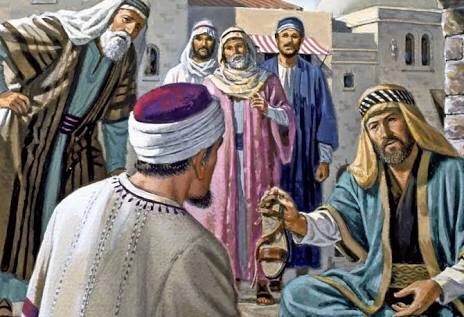
Boaz at the city gate

Moses instructs Israel to “appoint judges and officials throughout your tribes, in all your gates that the Lord your God is giving you, and they shall render just decisions for the people” (Deut 16:18). Both the NRSV and the NIV render the phrase “in all your towns” as “in all your towns” on the reasonable understanding that each town has its own walls and gates.

Soon after this, one of the laws decrees that parents of a rebellious son who would not submit to their discipline were to “take hold of him and bring him out to the elders of his town at the gate of that place” and there “all the men of the town shall stone him to death; so you shall purge the evil from your midst” (Deut 21:18–21). Such was the nature of justice rendered “ at the gates”.

So finding Wisdom “at the entrance of the city gates” (Prov 1:21) is striking. This is the place where the men of the city would gather, debate, and render justice. In the normal course of events, women would not be found at the gates; their domain was inside the houses with their families. The psalmist sings, “your wife will be like a fruitful vine within your house” (Ps 128:3). Luke has Jesus indirectly indicate this when he tells his followers, “there is no one who has left house or wife or brothers or parents or children, for the sake of the kingdom of God, who will not get back very much more in this age, and in the age to come eternal life” (Luke 18:29). The wife, along with the rest of the family, is based in the house.

The acrostic poem at the end of the book of Proverbs (which will be our lectionary reading next week) clearly locates the “woman of valour” in the house, from daybreak, when “she rises while it is still night and provides food for her household and tasks for her servant-girls” (Prov 31:15), through the day as “she girds herself with strength, and makes her arms strong” (31:17) to complete the many tasks listed in this poem, right until the darkness comes, when “her lamp does not go out at night” (31:18b). See

The town gate was the place where business was conducted, and judgment according to law was enacted by men in the ancient Hebrew world. Monetary and legal transactions took place here in the presence of other men—the jtown elders—and it is here that the power plays of this male-dominated society took place. Women’s domain was in the privacy of their home, and any excursions into the public arena would usually be chaperoned by a family male member or older woman.

So the presence of Wisdom, not sequestered in the private space of the house, but rather by herself out in the public space, “in the street … in the squares … at the busiest corner … at the entrance of the city gates” (1:20–21), is quite noteworthy. The prominent biblical scholar, Elisabeth Schüssler Fiorenza, has described Wisdom as “very unladylike, she raises her voice in public places and calls everyone who would hear her. She transgresses boundaries, celebrates life, and nourishes those who will become her friends.” 

What does Wisdom do in this very public space?  She cries out, berating the “simple ones”, demanding, “how long will you love being simple? … how long will scoffers delight in their scoffing and fools hate knowledge?” (1:22). These are strong words. Later, she describes how a “loud and wayward woman” used “smooth words” to seduce “a young man without sense”, one of “the simple ones” (7:6–27).

Like Wisdom, this woman is active in the public spaces, “now in the street, now in the squares, and at every corner she lies in wait” (7:12). Unlike Wisdom, who is “a tree of life to those who lay hold of her” (3:18), who offers “life to those who find them, and healing to all their flesh” (4:22), what this woman offers is “the way to Sheol, going down to the chambers of death” (7:27). 
 

“Give heed to my reproof”, she continues; “I will pour out my thoughts to you; I will make my words known to you” (1:23). To the simple ones, she declares: “simple ones, learn prudence; acquire intelligence, you who lack it” (8:5). For too long, these scoffers “have ignored all my counsel and would have none of my reproof” (1:25, 30); they “hated knowledge and did not choose the fear of the Lord” (1:29). And so, she declares, “they shall eat the fruit of their way and be sated with their own devices” (1:31).

In like manner, one psalmist recognises that “those who carry out evil devices” shall “prosper in their way” in this life; but these people “shall be cut off, but those who wait for the Lord shall inherit the land” (Ps 37:7, 9), and so they implore the righteous person, “do not fret”, for “yet a little while, and the wicked will be no more … but the meek shall inherit the land, and delight themselves in abundant prosperity” (Ps 37:8, 10–11). 

This is the faith that sits at the base of the Deuteronomic assertions about blessings and curses in this life, as “those who obey the Lord your God by diligently observing all his commandments and decrees” will indeed receive the blessing, for “the Lord will make you abound in prosperity, in the fruit of your womb, in the fruit of your livestock, and in the fruit of your ground in the land that the Lord swore to your ancestors to give you” (Deut 32:1–14), whilst those who will not so obey God will be afflicted with all manner of illness, pestilence, and destitution, and they “shall become an object of horror, a proverb, and a byword among all the peoples” (Deut 32:15–68; the extended list of curses and their impacts is indeed gruesome!). 

Indeed, the wise words  found in the book of Proverbs declare that “misfortune pursues sinners, but prosperity rewards the righteous” (Prov 13:21); Wisdom herself declares that “riches and honour are with me, enduring wealth and prosperity; my fruit is better than gold, even fine gold, and my yield than choice silver” (8:18–19).
These are the blessings for those who “walk in the way of righteousness, along the paths of justice” (8:20)—the very same righteousness and justice that is conveyed through the teaching of Solomon (1:1–3) and of Wisdom (2:9),  the very same righteousness and justice which is “more acceptable to the Lord than sacrifice” (21:3).

This is the same righteousness and justice that the prophets have declared in the streets and on the corners of their society. Amos calls for “justice and righteousness” (Amos 5:22). Micah asks the question, “what does the Lord require of you but to do justice?” (Mic 6:8). Through the prophet Hosea, the Lord God promises to Israel, “I will take you for my wife in righteousness and in justice, in steadfast love, and in mercy” (Hos 2:19). Isaiah ends his famous love-song of of the vineyard by declaring that God “expected justice” (Isa 5:7).

In the exile, Ezekiel laments that “the sojourner suffers extortion in your midst; the fatherless and the widow are wronged in you” (Ezek 22:7). Jeremiah encourages the people of Jerusalem with a promise that God will allow them to continue to dwell in their land if they “do not oppress the sojourner, the fatherless, or the widow” (Jer 7:5–7). Second Isaiah foresees that the coming Servant “will bring forth justice to the nations” (Isa 42:1) and knows that God’s justice will be “a light to the peoples” (Isa 51:4).

Later, the words of Third Isaiah begin with a direct declaration, “maintain justice, and do what is right” (Isa 56:1); his mission is “to bring good news to the oppressed, to bind up the brokenhearted, to proclaim liberty to the captives, and release to the prisoners” (Isa 61:1), thereby demonstrating that “I the Lord love justice” (Isa 62:8).

In teaching about Wisdom in the book of Proverbs, Elizabeth Raine has written: “Wisdom functions in the same way as the prophets, standing where prophets and teachers would have stood, at the city gates, a busy place where all manner of business was transacted. However, Wisdom does not cry out in the temples or synagogues, but rather in the public squares, the city gates, at the crossroads where people from all nations are gathered or are passing through.

“She declares that those who incline their minds to her spirit and follow her words in their lives will receive knowledge and wisdom. She also suggests that those who ignore this invitation will be punished, much as the prophets decreed that ignoring the commands they carried from God would also result in punishment.

“The main difference here is that Wisdom speaks these things in her own voice—there is no ‘thus says the Lord’ as we find in the prophets. She does mention ‘the fear of the Lord’, and those who do not choose this, who hate knowledge, will be left to their own devices, something that is presented as very undesirable and inviting calamity.”

Wisdom is indeed a strong, persuasive, significant figure in the Hebrew Scriptures.

You can read the full sermon by Elizabeth at
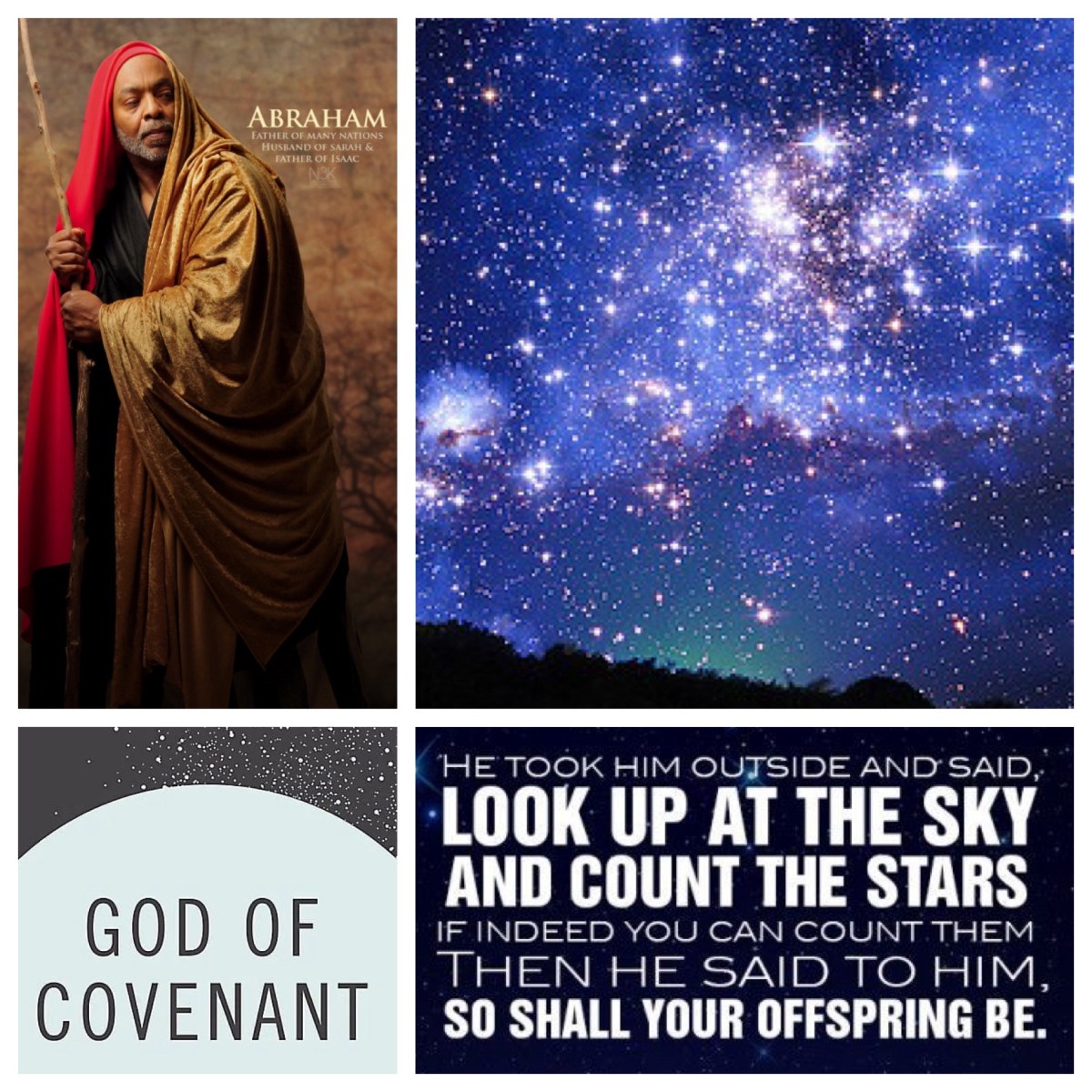
Look toward heaven and count the stars … so shall your descendants be (Gen 15; Narrative Lectionary for Pentecost 17C)

This Sunday, the Narrative Lectionary takes us from the story of The Garden of Eden, into the Negeb, where “Abram the Chaldean” (Gen 11:27–28) had become “Abram the Hebrew” (Gen 14:13). In this week’s passage (Gen 15:1–6), Abram experiences a vision which 

In these chapters, the long saga of Israel begins with stories about the ancestors held in highest regard as the mother and father of the nation: Sarai and Abram. The command that they heard is set out at the beginning of their story: “Go from your country and your kindred and your father’s house to the land that I will show you” (Gen 12:1). The saga of this couple that is told in the ensuing chapters will reach fulfilment, many centuries later, when their descendants enter the land and settle in Canaan.

This sequence of passages offers us stories which were told, retold, and probably developed over quite some time by the elders in ancient Israel. They are stories which define the nature of the people and convey key values which were important in ancient Israel.  These faithful people from the past stand, for us today, as role models to encourage us, centuries later, in our own journey of faith. They are stories which are worth holding up for our reflection and consideration. 

These stories each have the function of an aetiology—that is, a mythic story which is told to explain the origins of something that is important in the time of the storyteller. The online Oxford Classical Dictionary defines an aetiology as “an explanation, normally in narrative form (hence ‘aetiological myth’), of a practice, epithet, monument, or similar.” 

Whilst telling of something that is presented as happening long back in the past, the focus is on present experiences and realities, for “such explanations elucidate something known in the contemporary world by reference to an event in the mythical past”. 

See https://oxfordre.com/classics/display/10.1093/acrefore/9780199381135.001.0001/acrefore-9780199381135-e-7050;jsessionid=3DB38C42C54D01E1CBFA8682FB55DA4C

The ancestral narratives of Israel (Gen 12–50), as well as the series of books known as “the historical narratives” (Exodus to 2 Kings, Ezra—Nehemiah) are all written at a time much later that the presumed events which they narrate. The final form of the books as we have them most likely date to the Exile or post-exilic times, although pre-existing sources would have been used for many of these stories. (There are specific references to earlier written documents—now lost to us—scattered throughout 1—2 Kings.)

Those older stories were remembered, retold, and then written down, because they spoke into the present experiences of the writers. Common scholarly belief is that the stories found in Gen 12–50 were originally oral tales, that were collected together, told and retold over the years, and ultimately written down in one scroll, that we today call Genesis.

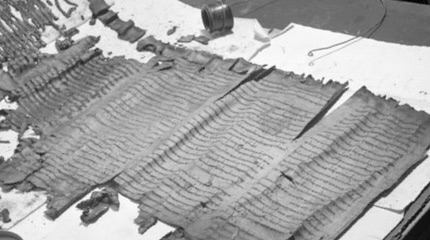
One of the leaves of the Genesis Apocryphon,
a text found in the Qumran Caves which contains narratives
not found in the biblical text, involving Noah and Abraham.

At the start of the ancestral narratives, Abram sets off, with his extended family: “his wife Sarai and his brother’s son Lot, and all the possessions that they had gathered, and the persons whom they had acquired in Haran” (12:5). Haran was a strategic city in the upper reaches of the area we know as the Fertile Crescent, far from the land of Canaan (over 12,000km). The call was to travel that distance, to Canaan. For support and sustenance along the way, Abram and Sarai were called into covenant relationship with God. The formalising of the covenant is reported later in this chapter, at 15:18, with a promise that the descendants of Abram and Sarah will indeed have the land that is specified.

Abram and Sarah had left their homeland with some assured promises from God; they would be parents of a great nation, blessed by God, remembered as having a great name, and that all the nations of the earth would be blessed through them (12:1–3). Those promises were intended to hold Sarai and Abram to the journey, despite all that they might encounter. The end result would make the travails along the way bearable.

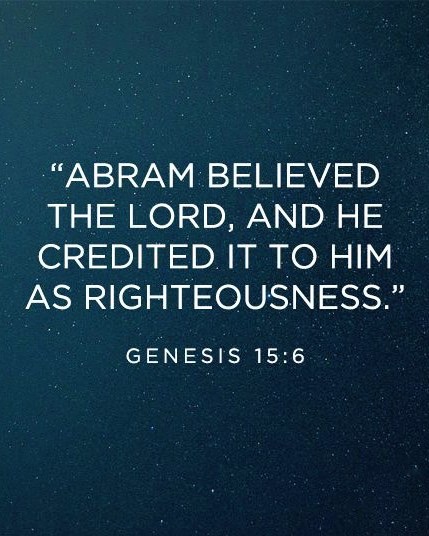
However, Abram expresses some doubt that the promises made by God would come to pass (15:2–3). God’s response is to provide further reassurance; the multitude of stars in the sky is testimony to that (15:5). Abraham’s resulting affirmation of faith leads to the famous phrase, so central to Paul’s later argument about righteousness: “he believed the Lord; and the Lord reckoned it to him as righteousness” (15:6; see Rom 4:3,9,22).

The ceremony that follows adheres to the traditional cultic practices of the time. A collection of sacrificial victims, two animals and two birds, are offered and slaughtered, and the animals are cut in two (15:9–11). (The phrase, “to make a covenant” in Hebrew, can literally be rendered as ”to cut a covenant”.) Such practices signal the seriousness of the moment and symbolise that each party will keep their word on pain of death. 

Indeed, the prophet Jeremiah later alludes to this specific provision, when he warns recalcitrant Israelites that “those who transgressed my covenant and did not keep the terms of the covenant that they made before me, I will make like the calf when they cut it in two and passed between its parts” (Jer 34:18, referring to Gen 15:10). The prophet continues, “their corpses shall become food for the birds of the air and the wild animals of the earth” (Jer 34:20, referring to Gen 15:11).

This ancient cultic sacrificial practice of cutting animals does not reflect modern practices and is, in fact, distasteful to contemporary sensitivities. That might prod current readers to dismiss this passage as archaic, irrelevant, obsolete. That would be a shame. It remains relevant to us in a striking way.

Abram and Sarai reveal both trust in the promises they have been given, but also articulate some uncertainty about whether God would continue to be faithful to those promises. How human this is! In this regard, they reflect the somewhat ambivalent way that each of us relate to the promises of God: living out our trust and hope in the midst of the challenges, changes, and obstacles along the way, yet still holding back, somewhat dubious, about the ultimate reality this all.

We cannot hear of this covenant without thinking of the current inhabitants of the land defined by these verses (vv.18–21). Some claim the land through Abram, some through Ishmael, some through Isaac. Each of these peoples have sought to justify their claim to the land through politics and power, and sometimes bombs and guns. Yet the way to participate in this promise is to recognise that God offers up God’s own life as God’s pledge of faithfulness.

It’s a perfect vignette for those in the northern hemisphere (where the Narrative Lectionary originates) as people regather after the summer and face the year that lies ahead. This gathering back together offers an opportunity to reconsider how God had been at work in our midst, when we reconsider our commitment to the covenant we have made with God, and how live out that covenant in the realities of discipleship. It reminds us of the call to full-blooded, whole-scale, all-of-life commitment to the covenant that we have with God through Jesus.

See my reflections on the current situation in Gaza at

A good name, a generous life, an upright ethic (Proverbs 22; Pentecost 16B)

This Sunday we continue reading passages from the “Wisdom Literature” of the ancient Israelites, with an excerpt from the book of Proverbs. The lectionary offers a set of three paired sayings from a later chapter (Prov 22:1–2, 8–9, 22–23). Perhaps these are chosen to be reflective of the kind of proverbs that are included in the book of the same name.

Curiously, we read or hear a passage from near the beginning of the book in the selection proposed for the Sunday after next (1:20–33). After that, over two Sundays, we will focus on Wisdom (ch.8) and “the woman of valour” (ch.31)—two passages that provide strong, positive female role models.

Although this book claims Solomon as its author, it is probably a work which collates the words of multiple anonymous people. Most proverbs start their life in unheralded ways; they eventually enter folklore, and that’s what this book has collated. It is thought that the book was completed in the post-exilic period, long after the lifetime of Solomon, although it may well have material that could be pre-exilic. The attribution to Solomon (1:1; 10:1; 25:1) derives from traditional accounts of his legendary wisdom (1 Kings 4:29-34) and lends authority to the book. The style and language of many proverbs suggests an origin much later than the 10th century BCE, the time when Solomon is alleged to have existed.

The purpose of the book of Proverbs is to make suggestions as to how one might learn to cope with life: “learning about wisdom and instruction, for understanding words of insight, for gaining instruction in wise dealing, righteousness, justice, and equity; to teach shrewdness to the simple, knowledge and prudence to the young—let the wise also hear and gain in learning, and the discerning acquire skill, to understand a proverb and a figure, the words of the wise and their riddles” (1:2–6). 

Its emphasis is on teachings gathered from tradition of the elders: “when I was a son with my father, tender, and my mother’s favorite, he taught me, and said to me, Let your heart hold fast my words; keep my commandments, and live” (4:2–4). The basic instruction that is offered by the father is “get wisdom; get insight: do not forget, nor turn away from the words of my mouth” (4:5).

That injunction, “get wisdom” is repeated later (4:7; 16:16; 19:8), with further exhortations to “be attentive to my wisdom” (5:1), “listen to advice and accept instruction, that you may gain wisdom for the future” (19:20), and “buy truth, and do not sell it; buy wisdom, instruction, and understanding” (23:23).

Other proverbs affirm the value of wisdom: “how much better to get wisdom than gold!” (16:16), “the discerning person looks to wisdom” (17:24), “the fountain of wisdom is a gushing stream” (18:4), and “by wisdom a house is built, and by understanding it is established” (24:3). The praise of wisdom recurs in saying such as “happy are those who find wisdom, and those who get understanding” (3:13), “wisdom is with those who take advice” (13:10), and of course “the fear of the Lord is the beginning of wisdom” (9:10; see also Ps 111:10). The poems of chapters 1–3 and 8, where Wisdom is personifies, and the woman featured in ch.31 who “opens her mouth with wisdom” (31:26), particularly exemplify the value of attending to wisdom.

In contrast to many other books of the Hebrew Bible, major themes such as the Mosaic and Davidic covenants are absent; Temple worship and sacrifice are rarely mentioned. Most of the sayings are meant to inspire moral ideals. Guided by the principle that “the fear of the Lord is the beginning of wisdom” (9:10; 1:7; 15:33), many proverbs  emphasise values such as honesty, diligence, trustworthiness, self-restraint, and appropriate attitudes toward wealth and poverty. 

There are various indications that the original audience of Proverbs was primarily young men preparing for adult responsibilities; so, a male-centred perspective prevails in the book. There is intense interest in finding a “good wife”; one saying suggests that “a good wife is the crown of her husband” (12:4), another that “he who finds a wife finds a good thing, and obtains favour from the Lord” (18:22).

In chs 1–9, within a sequence of sayings presented as the instruction of a father to his son, the centre of attention is a vibrant feminine personification of divine Wisdom. She is opposed to the foolish woman (ch.9) and to the complex, threatening figure of the “strange woman” (chs.2,5,7). So the book itself contains a delightful undercutting of the male orientation that runs throughout.

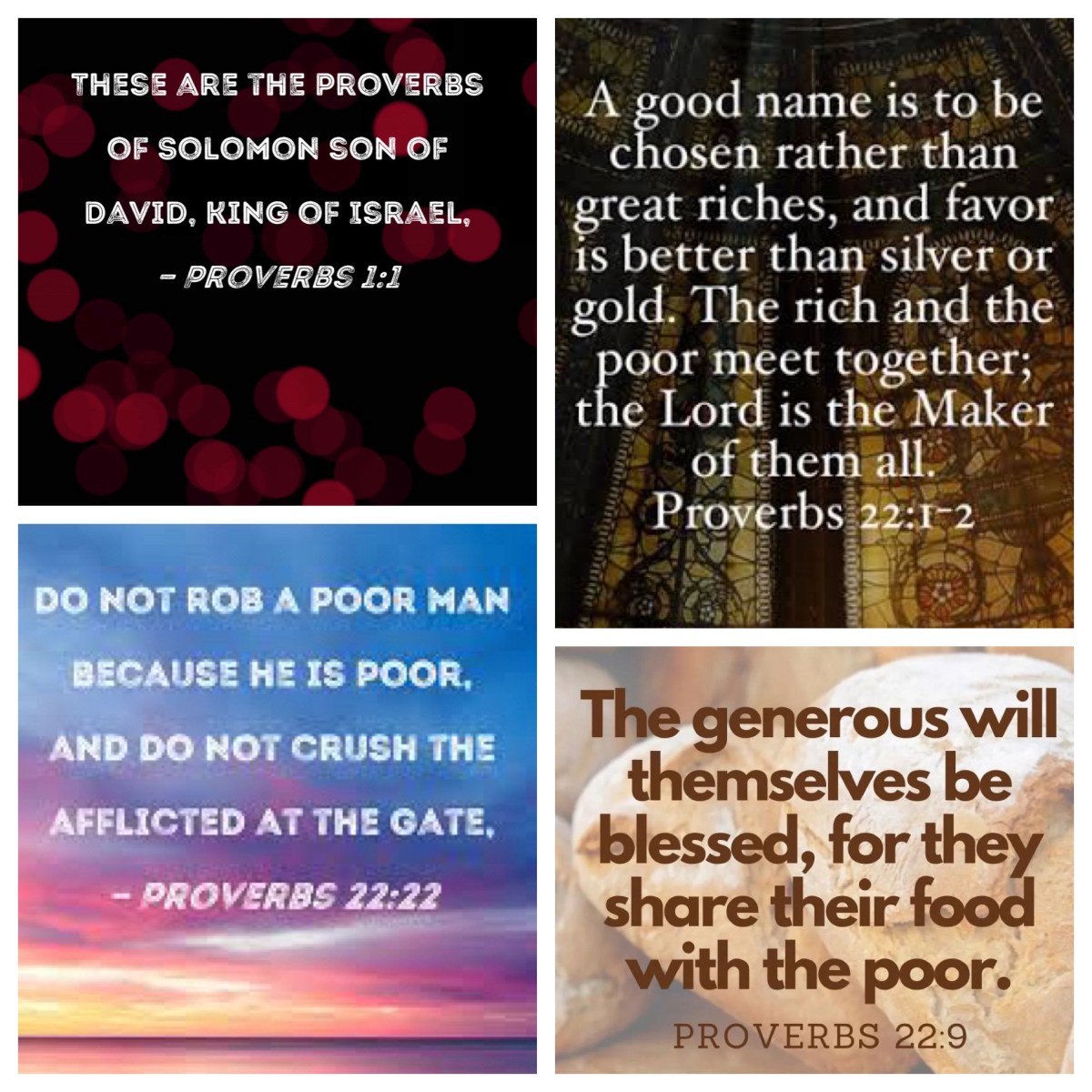
Proverbs invites the reader to an intellectual discipline as a life-giving pathway to ethical concern, righteousness and piety. Study of Torah undergirds the righteous life; “those who keep the law are wise children” (28:7), “happy are those who keep the law” (29:18), “the wise of heart will heed commandments” (10:8). The particular doublets chosen for this Sunday’s reading from ch.22 draw from the foundations of Torah to highlight the value of a good name (vv.1–2), a generous life (vv.8–9), and an upright ethic (vv.22–23).

“A good name is to be chosen rather than great riches”, the chapter begins, “and favour is better than silver or gold” (v.1). This resonates both with the affirmation that the person who listens to the teaching of Wisdom “will find favour and good repute in the sight of God and of people” (3:1,4), and, on the contrary, if a person discloses a secret in an argument, “someone who hears you will bring shame upon you, and your ill repute will have no end” (25:9–10). 

This reflects the fundamental ethos of an honour—shame society, such as ancient Israel was. A good reputation—a position of public honour—is to be desired and sought after. This honour is closely bound up with wisdom; “the wise will inherit honour, but stubborn fools, disgrace” (3:35), “whoever pursues righteousness and kindness will find life and honour” (21:21), for Wisdom holds honour in her left hand” (3:16; also 4:8;8:18). It is also connected with humility, for “a person’s pride will bring humiliation, but one who is lowly in spirit will obtain honour” (29:23), and just as “the fear of the Lord is instruction in wisdom”, so “humility goes before honour” (15:33). 

That the importance of honour and shame is carried through into the time of Jesus is evident in his words about “a prophet without honour” (Mark 6:4), those who choose “the best seats in the synagogues and places of honor at banquets” (Mark 12:39), and the dishonouring he experiences when he is called names in public (John 8:48–49). It is also clear through the way that Paul explicitly identifies the general expectations about honour in society (Rom 13:7), the ways that “the cross” brings shameful dishonour (1 Cor 1:26–29; 2 Cor 6:8–10), and the way that following Jesus turns a conventional attitude on its head (1 Cor 12:22–24).

For more on honour and shame, especially as it illuminates the story of Jesus, see 

and

Generosity is applauded in sayings such as “a generous person will be enriched, and one who gives water will get water” (11:25), “many seek the favour of the generous” (19:26), and the saying included in this Sunday’s selection, “those who are generous are blessed, for they share their bread with the poor” (22:9).

One of the psalmists notes that “the righteous are generous and keep giving” (Ps 37:21). Another psalmist connects generosity with ethical uprightness, singing that “all is well with those who deal generously and lend, who conduct their affairs with justice” (Ps 112:5).

Of course, sharing with “the poor” is a theme sounded by prophet after prophet. God’s care for “the poor” is announced by Hannah, as she sings how the Lord “raises up the poor from the dust; he lifts the needy from the ash heap” (1 Sam 28; also Ps 113:7). Amos famously berates Israel as they “trample the head of the poor into the dust of the earth, and push the afflicted out of the way” (Amos 2:7) before he turns his rhetoric towards “the cows of Bashan who are on Mount Samaria”, the ones “who oppress the poor, who crush the needy” (Amos 4:1). Judgement is coming upon both groups (Amos 2:13–16; 4:2–3).

Isaiah reports that God’s judgement will fall on the elders who are “crushing my people … grinding the face of the poor” (Isa 3:15; also 10:2) and Ezekiel berates those who “oppress the poor and needy” (Ezek 18:12; 22:29), for which they shall indeed die (Ezek 18:13). One psalm laments that “the wicked draw the sword and bend their bows to bring down the poor and needy, to kill those who walk uprightly” (Ps 37:14) 

Isaiah promised that a shoot from the stump of Jesse, embued with the spirit, “with righteousness … shall judge the poor, and decide with equity for the meek of the earth” (Isa 11:1, 4). In exile, Jeremiah remembered (perhaps rather idealistically) that it was the role of the king to “judge the cause of the poor and needy” (Jer 22:16); a psalmist also remined the king of his responsibility to “judge your people with righteousness, and your poor with justice … defend the cause of the poor of the people, give deliverance to the needy” (Ps 72:2, 4). The Lord, says psalmist, through David and his house “will abundantly bless [Israel’s] provisions [and] will satisfy its poor with bread” (Ps 132:15).

Then, as the exiles begin to return to Jerusalem, Zechariah reminded them of the Lord’s commands: “do not oppress the widow, the orphan, the alien, or the poor; and do not devise evil in your hearts against one another” (Zech 7:10). Various psalmists celebrated that “the poor shall eat and be satisfied” (Ps 22:26), that on “the day of trouble” the person who “considers the poor” will be delivered by the Lord (Ps 41:1), that “the Lord maintains the cause of the needy, and executes justice for the poor” (Ps 140:12). So it is that those “who fear the Lord, who greatly delight in his commandments” have “distributed freely, they have given to the poor” (Ps 112:1, 9).

We know that this theme is taken up with clarity and consistency by Jesus, who proclaims a message of “good news for the poor” (Luke 4:18; 7:22) and instructs his followers to “sell what you own, and give the money to the poor” (Mark 10:21). He advocates strongly that the kingdom of God belongs variously to the poor (Luke 6:20), the meek (Matt 5:5), and the humble (Luke  14:11; 18:14), to children (Mark 9:36–37; 10:15) and to sinners (Mark 2:15–17; Luke 15:1–2).

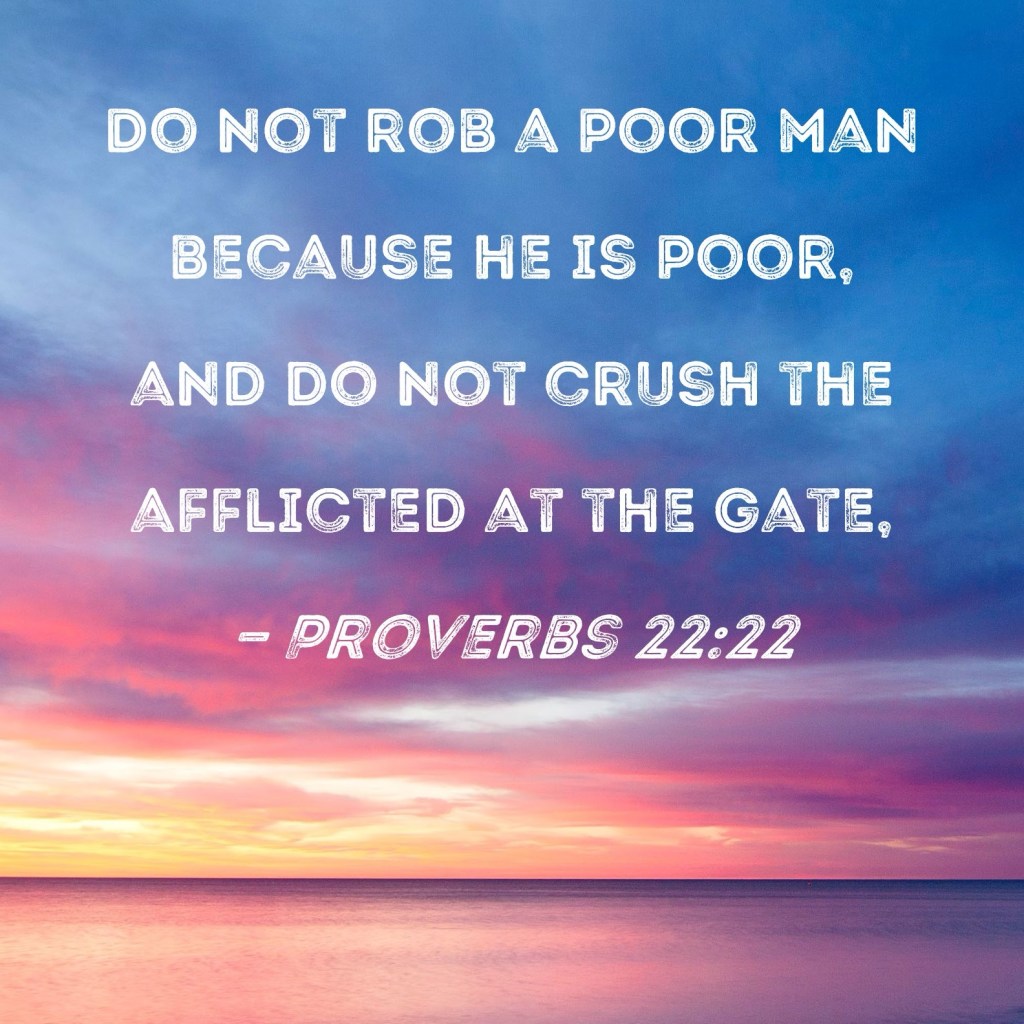
And so, this uprightness in life is advocated by the final two couplets included in this Sunday’s selection, instructing people “not [to] rob the poor because they are poor, or crush the afflicted at the gate”, and noting that, as a consequence, “the Lord pleads their cause and despoils of life those who despoil them” (22:22–23).

These instructions are fundamental to living by Torah, and they are reiterated by many prophets in Israel. So even within the wisdom literature, we find support for the coming punishment of the Lord of which the prophets spoke incessantly; this judgement is based on how faithfully a person adheres to the commandments of the Torah. Wisdom is integral to Torah; “those who keep the law are wise children” (28:7).

She took of its fruit and ate; and gave some to her husband … and he ate (Gen 2–3; Narrative Lectionary for Pentecost 16C)

The Narrative Lectionary begins this year’s cycle of readings with some verses from early in the first book of the Bible, Genesis. The lectionary has picked out what it considers to be key verses (2:4–7, 15–17; 3:1–8) from the extended narrative that begins with the second account of creation (2:4–25) and continues with the story of The Garden of Eden (3:1–24).  

The first section (2:4–7) tells of the creation of human beings. Unlike the first version of the creation (1:1—2:4a), in which human beings, “male and female”, are created “in the image of God” on the sixth “day” (1:27), this version moves immediately to declare that “the Lord God formed man from the dust of the ground, and breathed into his nostrils the breath of life” (2:7). 

Both of these creation stories, and the long, extended narrative that follows, are to be regarded as “myths”; they are traditions about  the time of origins, with paradigmatic or fundamental significance for ancient Israelite society, expressing the reality of life and the place of humanity in that reality, through story. See 

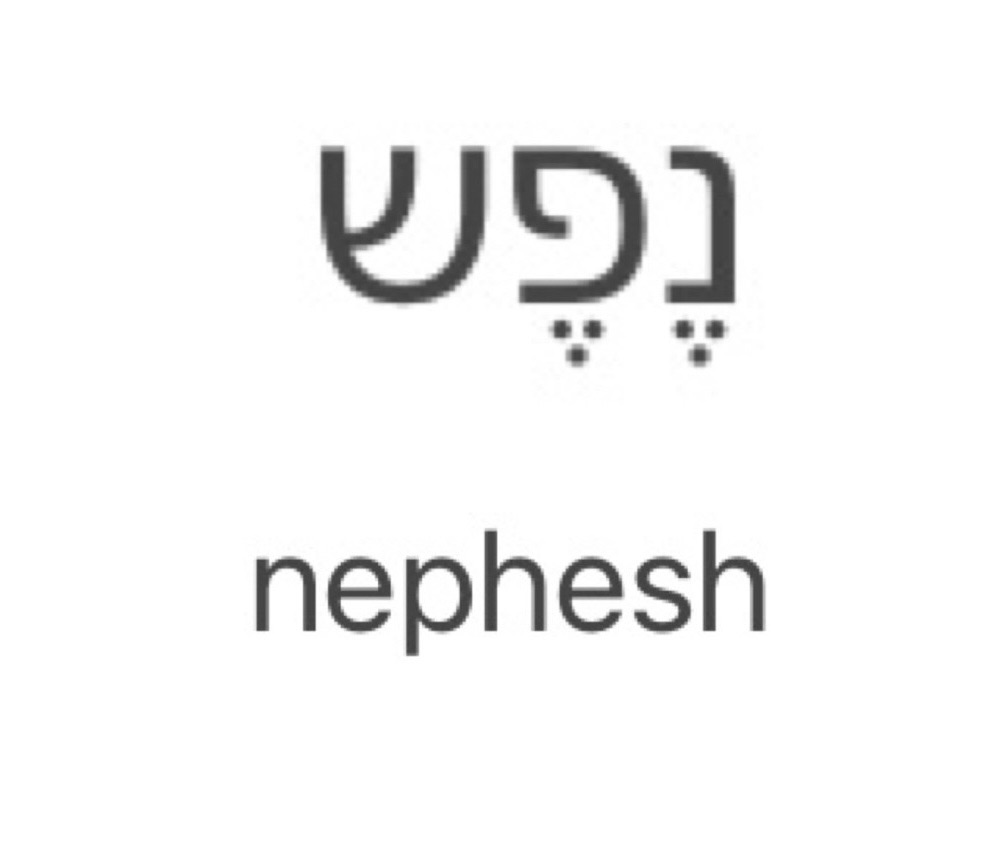
The breathing of life into the human being in the second creation story signals that “the man became a living being (nephesh hayah)” (Gen 2:7). The phrase nephesh hayah appears also a number of times in the first creation story in Hebrew scripture, where it refers to “living creatures” in the seas (Gen 1:20, 21), on the earth (Gen 1:24), and to “every beast of the earth, and to every bird of the air, and to everything that creeps on the earth, everything that has the breath of life (nephesh hayah)” (Gen 1:30). 

The word nephesh (נֶפֶש) is a common Hebrew word, appearing 688 times in Hebrew Scripture. It is most commonly translated (238 times) as “soul”; the next most common translation is “life” (180 times). The word is a common descriptor for a human being, as a whole; it is better translated in a way that indicates it refers to “the essence of a creature”, “the whole being”.

The claim that each living creature is a nephesh is reiterated in the Holiness Code (Lev 11:10, 46; 17:11). It is also stated in the account of the covenant that God made with all creation; “all living creatures” (nephesh) are explicitly noted in this narrative (9:10, 12, 15, 16). This signals the inherent interconnectedness of all creation; the covenant forged in Gen 9 is one that has a cosmic scope. Other passages in the Hebrew Scriptures affirm that human beings—indeed, all living creatures—are given life by God’s spirit and share the essence of a nephesh (Ps 104:24–30; Job 12:7–10). This is an important affirmation from this opening section of the Genesis 2—3 reading for this Sunday.

Myths concerning “the fruit” and “the serpent”

It is widely known (I hope) that what is popularly seen as “an apple”, which the serpent suggested to the woman that she might eat, was in fact not (necessarily) an apple; the Hebrew word used to identify “the fruit of the tree that is in the middle of the garden” which was prohibited to eat (3:3) is פְרִי (peri), which simply means “fruit”or “produce” in general. In no way does it specify “apple”. This popular identification of the fruit as an apple is a myth, in the popular sense that it is “not true”. It is also curious; the apple was a fruit with far eastern origins and appears to have been unknown in the Middle East in biblical times. 

The reason for this misidentification comes, not from the Hebrew, nor from the Greek of the LXX translation, but from a later Latin translation. There is a wordplay in the Latin translation of Genesis 3, involving the Latin words mālum (an apple) and mălum (an evil), each of which is normally written simply malum, without differentiating the long ā from the short ă. So “the fruit of the tree that is in the middle of the garden” (3:3) was conflated with the “evil” that will become known to the human beings “when you eat of it your eyes will be opened, and you will be like God, knowing good and evil” (3:5).

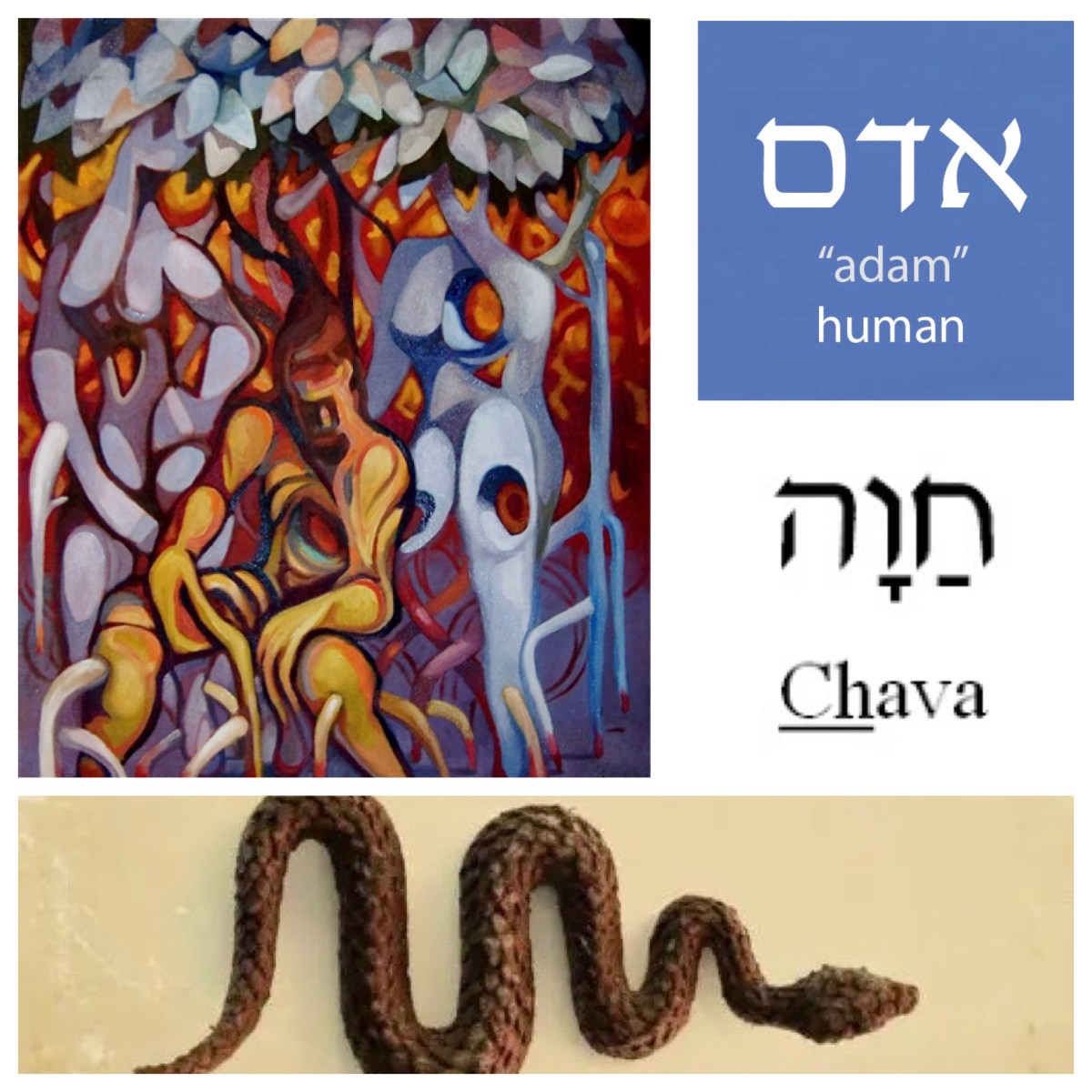
Adam, Eve, and the serpent , oil,on canvas, by Pedro Brull
https://www.mutualart.com/Artwork/ Adam–Eve-and-the-serpent/

Likewise, the traditional interpretation—strongly influenced by millennia of patriarchal bias—is that the serpent tempted the woman, Eve, and she succumbed to temptation. But we need to read these verses (3:1–6) carefully and thoughtfully. It is true that the first step is that the serpent encouraged the woman to eat the fruit, and she duly ate; but then “she also gave some to her husband, who was with her” (3:6b). He had agency at this point, as she had when she was encouraged to eat by the serpent. But “she took of its fruit and ate”, and then, when she offered it to him, “he ate”. He is as guilty as she is of succumbing to what the serpent proposed.

With regard to the serpent: whilst the phrase “the evil one” is absent from Hebrew Scripture, the notion of evil is present throughout—from the garden of Eden, where Adam and Eve flaunt the ban on their eating fruit from “the tree of the knowledge of good and evil” (Gen 2:15–17; 3:1–7), to the condition of humanity in the time of Noah, when “the wickedness of humankind was great in the earth, and that every inclination of the thoughts of their hearts was only evil continually” (Gen 6:5), through the forty years when Israel was condemned to “wander in the wilderness for forty years, until all the generation that had done evil in the sight of the Lord had disappeared” (Num 32:13), and on into the generations under the Judges when “the Israelites did what was evil in the sight of the Lord” (Judg 2:11; 3:7, 12; 4:1; 6:1; 9:23; 10:6; 13:1).

The introduction of evil into the story is generally laid at the feet (or, rather, the belly) of “the serpent” who slithers through the narrative, from the first verse of ch.3 (“the serpent was more crafty than any other wild animal that the Lord God had made”, v.1) to the punishment inflicted on him because of his deeds (“upon your belly you shall go, and dust you shall eat all the days of your life”, v.14).

The serpent is the first character in the Bible who was called shrewd. Alongside him, perhaps the most famous “shrewd” character was the manager in the parable told by Jesus in Luke 16:1–9. Actually, in that parable, whilst the manager is described as being “shrewd” (16:8), it does not convey a negative meaning, I believe. The Greek word used, phronimos (φρόνιμος), translated as shrewd, comes from the verb phroneō (φρονέω), which simply means to think, to use one’s brain. There is no malice involved in this; the manager is simply being intelligent. 

Back in Genesis, the serpent is called “more shrewd than all other beasts”. Shrewd, of course, is an ambiguous term. On the one hand, it is a virtue the wise should cultivate. The word used at Gen 3:3 appears in proverbs where it is translated as “prudent”. Thus, “fools show their anger at once, but the prudent ignore an insult” (Prov 12:16), and “a fool despises a parent’s instruction, but the one who heeds admonition is prudent” (Prov 15:5). However, when this capacity is misused, it become wiliness and guile; the same Hebrew word is used to refer to those who are “crafty” (Job 5:12; 15:5), who “act with cunning” (Josh 9:4), or who practise “treachery” (Exod 21:14).

In the Genesis account, it is the craftiness or cunning of the serpent that is emphasised; this limbless reptile was “more crafty (עָר֔וּם, arum) than any other wild animal” (3:1). The Hebrew, however, has a wordplay here; in the previous verse (2:25), Adam and Eve were “naked” (עֲרוּמִּ֔ים, arummim); then (3:1) the serpent is described as “more crafty” (עָרוֹם, arum) than all others. It is a compliment! 

Later, Paul will take a much more negative line, claiming that “as the serpent deceived Eve by his craftiness, so your minds may be corrupted from the simplicity that is in Christ” (2 Cor 11:3). It is this castigation of the serpent which has predominated throughout Christian history. So, although Impersonally have a great dislike for getting near to, or handling, snakes, I do want to stand up for the reputation of this creature!

The myth of Original Sin

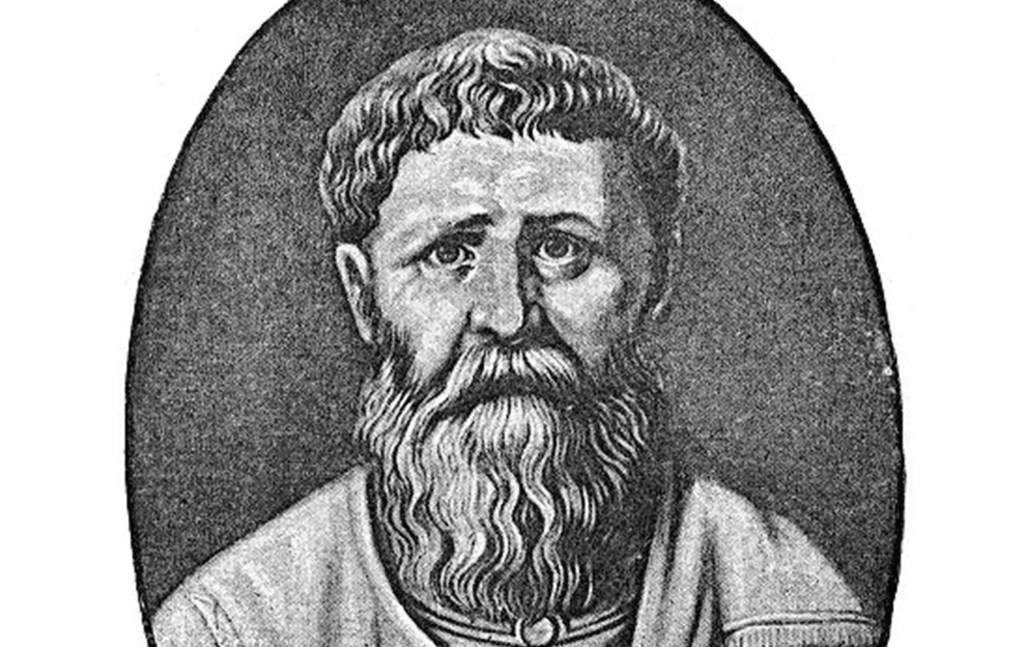
A hugely important deduction that has been made from this story is “the  doctrine of original sin”, which can be traced back to Aigustine of Hippo. Augustine bases his claim about original sin on his reading of the story of Genesis 2–3, which depicts the fall of Adam, from which all humans inherited innate sinfulness (original sin). But I think this is another error in relation to the interpretation of this passage. 

Augustine of Hippo (354–430 CE)

The problem is that the Genesis 1 account of creation which precedes this story (which is read in another year in the Narrative Lectionary) makes it quite clear that the original state of humanity was that human beings, like all that God created, “was good”—indeed, that as the final act of that sequence of creation, humanity was “very good” (Gen 1:31). So much for original sin; humanity, according to this narrative, was part of a “very good” creation. 

Indeed, Augustine was reading the sequence of early chapters in Genesis as historical narrative, and his understanding was that the consequences of “the fall” in Gen 3 was that every person born after Adam inherited that fallen state from the first human being. However, we know from a careful application of literary criticism, that the Adam story is myth which has an aetiological purpose, and that it is not an historical account. 

That is, it does not give a realistic account of “things as they happened”, but rather, it is an imaginative story which tells of the reasons for the origin of things. It doesn’t answer the question, “what happened?”; rather, it responds to the question, “why are things like this?” So the Genesis story as a whole explains the good original state of humanity, before any decline or corruption took place. It is descriptive of how we find things, not prescriptive for how things should be.

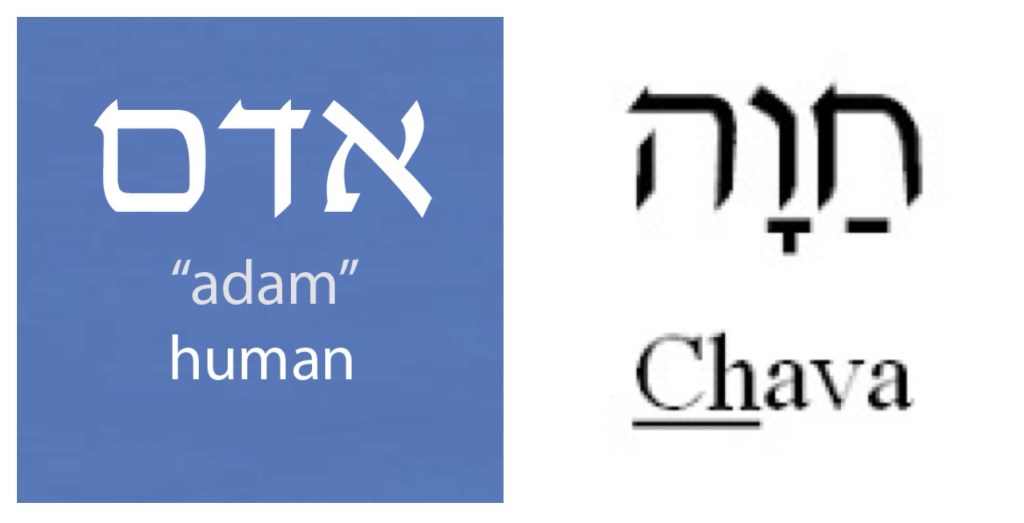
In fact, we can see this nature of the story in the names given to these mythical first two human beings: the man, Adam (adam) was created “from the dust of the earth” (ha-adaman), and so his name signifies “the earth person” (Gen 2:7), whilst the woman, Eve (chavah) was to be “the mother (chay) of all living creatures”, and thus her name signifies “the giver of life” (Gen 3:20).

It’s not the case that what “occurs” with Adam and Eve has been passed on through human beings ever since; but, rather, it is the case that how we experience humanity has led to the creation of a story about Adam (the earth person) and Eve (the giver of life) as an explanation for the way that we experience ourselves, and other people on this earth.

Augustine’s distinctive interpretation was his own initiative; most patristic writers prior to him who addressed this topic (Barnabas, Hermas, Justin Martyr, Origen of Alexandria, Clement of Rome, Ignatius of Antioch, Cyril of Jerusalem) offered explicitly different interpretations of the human state. By contrast, Clement of Alexandria accepted that sin was inherited from Adam, and Cyprian of Carthage argued for the necessity of infant baptism on the basis of a belief that humans were born sinful. 

Augustine had developed his views in opposition to the view of his contemporary, Pelagius; the debates continued on into the medieval period, with significant contributions being made by the great theologians Anselm of Canterbury and Thomas Aquinas, as well as Franciscans such as Duns Scotus and William of Ockham. The Reformers, Martin Luther and Jean Calvin, adopted and developed the Augustinian view, which has held sway in the Western Church over subsequent centuries. Eastern Orthodoxy, by contrast, attributes the origin of sin to the Devil; what we humans have inherited from Adam is our mortality, but not any innate sinfulness.

This is all a long way, then, from prophetic fulminations against foolish, stupid, evil Israelites, caught in the error of their sinful ways, or the grace-filled encounters that Jesus had with sinners as he called “not the righteous but sinners”, or the formulaic affirmation of the first letter to Timothy, that “Christ Jesus came into the world to save sinners”, which has become the bedrock of certain contemporary theologies.

Whilst a recognition of sin is inherent in each of those texts, there is no indication in any way that such sinfulness is innate, inherited from birth, of the very essence of our human nature. The doctrine of original sin is not a biblical idea; it’s not something that we should be maintaining in our theological discourse and spiritual understanding.

Made from the dust 

Dust is central to who we are as human beings. The story of the creation of human beings indicates that the man was “formed from dust (עָפָר, aphar) of the ground” before God breathed the breathe of life into him (Gen 2:7). But in the foundational myth that is told in the earliest chapters of scripture, dust is at the centre, also, of the punishments that are handed out after the sin committed by Adam and Eve. 

The serpent, as a result of its role in tempting them, is told, “because you have done this, cursed are you above all livestock and above all beasts of the field; on your belly you shall go, and dust you shall eat all the days of your life” (Gen 3:14; Isa 65:25). The man is told, “by the sweat of your face you shall eat bread, till you return to the ground, for out of it you were taken; for you are dust, and to dust you shall return” (Gen 3:19).

However, in association with the tearing of clothes, the placing of dust on your head is also a symbol of repentance. Joshua repents of the sin of Achan by tearing his clothes and placing dust on his head (Joshua 7:6). Ezekiel speaks of the people of Tyre, lamenting, as “they cast dust on their heads and wallow in ashes” (Ezek 27:30).  Jeremiah reports that “ the elders of the daughter of Zion sit on the ground in silence; they have thrown dust on their heads and put on sackcloth; the young women of Jerusalem have bowed their heads to the ground” (Lam 2:10; see also Isa 25:12; 29:1–4). 

The three friends of Job see him coming, and they “raised their voices and wept, and they tore their robes and sprinkled dust on their heads toward heaven”, before they then sat, grieving with him, “on the ground seven days and seven nights” (Job 2:12–13). Dust means mourning and repenting.

Job himself uses dust and sackcloth to signify that “my face is red with weeping, and on my eyelids is deep darkness” (Job 16:15–16). As a result, he laments, “ God has cast me into the mire, and I have become like dust and ashes” (Job 30:19). Returning to dust is the final state for those punished by God (Job 34:5; see also 10:9; 17:6; 20:11; 21:26; Ps 7:5; 22:15; 90:3; 104:29; Isa 26:5; Lam 2:21)—or, indeed, for all human beings (Eccles 3:20; 12:7). 

In the end, though, Job “repents of dust and ashes” (42:6). He has had enough of being repentant. The book ends with a return of the defiant Job. He will have no more use for the dust and ashes of repentance.

In a number of scriptural incidents, dust is used in curses signalling divine punishment. Shimei, for instance, casts dust into the air to curse David (2 Sam 16:13). When Deutero-Isaiah speaks of the coming salvation that God will bring, to remove the punishment of exile, he exhorts Jerusalem to “shake yourself from the dust and arise” (Isa 52:2). 

Dust had been a sign of the place of mourning, the place of despair, the place which signifies worthlessness and emptiness. Dust had been  where the poor sat (1 Sam 2:8; Amos 2:7); it was where the enemies of Israel were pressed down and beaten into fine particles by the Lord (2 Sam 22:4 3; 2 Ki  13:7; Job 40:13; Ps 18:42; 44:24–25; 72:9; 83:13; Isa 41:2; Micah 7:17). Now, the people were called to leave that dust behind and move on in hope.

Could the action of shaking off the dust have the function of warning recalcitrants—along the lines of, God will turn you to ashes? As the disciples move on to the next town, they were leaving behind a warning with an implicit demand for their repentance. Or could it signal that there would be hope, in the future, from the message of good news that the disciples proclaimed? 

Ransom and Atonement

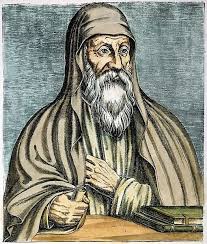
In the third century scholar, Origen of Alexandria developed an idiosyncratic theory of the atonement (the way that Jesus enables God to deal with human sinfulness).

Origen of Alexandria (185–253 CE)

Origen’s ransom theory of atonement reads Genesis 3 as an account of Adam and Eve being taken captive by Satan; this state was then inherited by all human beings. The death of Jesus is what enables all humans to be saved; the means for this was that the blood shed by Jesus was the price paid to Satan to ransom humanity (or, in a variant form, a ransom paid by Jesus to God to secure our release).

However, none of these texts—and particularly not Mark 10:45—require this overarching theological superstructure to make sense of what they say. Origen’s ransom theory held sway for some centuries, but was definitively rejected by the medieval scholar Anselm of Canterbury. It is not a favoured theory of atonement in much of the contemporary church (though it is still advocated in various fundamentalist backwaters). Certainly, none of this should be attributed to the saying of Jesus in Mark 10:45. It is far more likely that he is drawing on the Jewish tradition of the righteous sufferer in his words. And the fundamental narrative of Gen 3 does not in any way support the theory of ransom by atonement.