
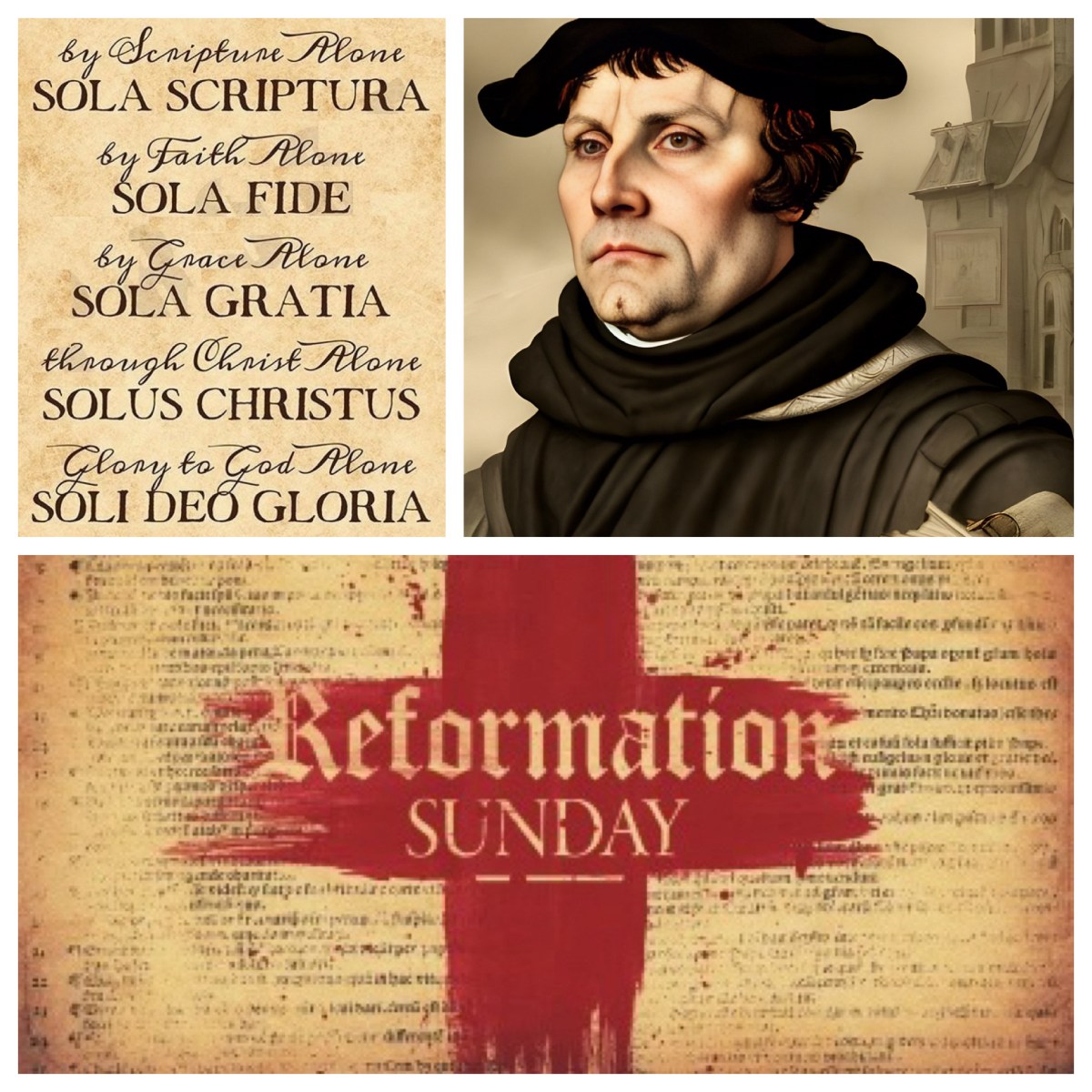
Ten Things about the Christian Faith (for Reformation Day) part 3

For Reformation Sunday I am exploring Ten Things about the Christian Faith that I think are significant. In the first post I considered Jewish heritage, Hellenistic contextualisation, and a state religion leading to Christendom. In the,second post, I commented on various influences on theology over time, the central tension of words and deeds, the growing dominance of the Global South, and Eastern Orthodox commitment to tradition and creeds. In this final post, my attention turns to post-Christendom weakening in the West, ecumenical and interfaith developments, and bearing witness to faith in sensitive ways for the present.

VIII

An emphasis on right belief and holiness of life exists in the churches of the Western world, just as in the churches of Eastern Orthodoxy. Various Western churches were the dominant force in Christianity for many centuries, from the days of Constantine’s Roman Empire to the high point of colonisation. However, the dominant factor over the past century in Western churches has been the gradual weakening of the bonds between Christian faith and the governing of society, with the consequent marginalising of faith communities and faith commitments across society. This is often viewed in terms of the demise of Christendom in these societies, but also in terms of opening up new possibilities for understanding and expressing faith in a contemporary way. In this regard, the dynamics that are at work in these developments share much with the dynamics at play in the various Reformations that took place four and five centuries ago.

This focus on fresh expressions is often undergirded by reference to the biblical passages which portray small communities of faith, meeting in homes, offering a counter-cultural alternative to the dominant state-supported religious activities. Paul sends greetings to communities in the houses of Philemon (Palm 1-2), Priscilla and Aquila (Rom 16:3-5; those greetings are reciprocated in 1 Cor 16:19), and Nympha (Col 4:15), and perhaps also to other house churches in Rome (Rom 16:6-15). 

Luke’s portrayal of the early days of the movement in Jerusalem, although idealised and written over half a century later, nevertheless maintains the view of believers meeting in houses (Acts 2:46; 5:42; see also Paul at 20:20). And those communities of believers are recognised as being distinctive gatherings by those outside the communities.

IX

An important development throughout the 20th century has been for various churches to seek to work together. Presbyterian Churches began this process in 1875, when the Alliance of the Reformed Churches throughout the World holding the Presbyterian System was formed in London. Then, also in London, the International Congregational Council was formed in 1891. Those two groups joined together in 1970, during the heady days of strong commitment to ecumenism across the churches, to form the World Alliance of Reformed Churches (WARC). In 2010, the WARC joined with a smaller, strongly Calvinist group, the Reformed Ecumenical Council, to form the World Communion of Reformed Churches.


Over the past century, Orthodox, Anglican, and Protestant churches have sought to work together, forming ecumenical councils on a global basis (the World Council of Churches, formed in 1948) as well as national and locally. Although not formally a part of the WCC, since the Second Vatican Council (1962—1965) the Roman Catholic Church has been actively working with other denominations in local, regional, and national forums. Developments from this ecumenical impetus have led also in recent decades to a strong focus on developing interfaith relationships, especially in contexts that are strongly multicultural and multifaith.

It is the prayer of Jesus in John 17 which is most often cited in relation to the development of ecumenical organisations and relationships. In that prayer, Jesus prays for those who believe because of the word of the disciples, “may they be one, just as we are one, I in them and you in me, that they may become completely one, so that the world may know that you have sent me and have loved them even as you have loved me” (John 17:22–23). 

Other biblical texts which undergird this commitment are the affirmation that there is “one body and one Spirit … one Lord, one faith, one baptism, one God and Father of all” (Eph 4:4–6), and the Pauline claim that “we are all one in Christ” (Gal 3:28).

Faithful discipleship in the contemporary world thus calls people of faith to bear witness to their faith in words and deeds. Especially since the 19th century, Reformed churches have largely inherited a strong commitment to “make disciples”, in keeping with the “Great Commission” of Jesus (Matt 28:16–20). Some Roman Catholic Churches share this commitment. However, an aversion to excessive aggressive proselytism and forced conversion is widespread in some quarters of the church as a whole, even though in other streams within Christianity this is still seen as the primary responsibility of believers. 

So there is a final contrast within Christianity at this point. Seeking to contextualise the expression of faith in ways that connect with and communicate to the contemporary world is seen by a number of believers as paramount, whilst others hold to the primacy of traditional expression of belief, liturgy, and discipleship. The tension between these approaches is often tangible.

Bearing witness in both word and deed is commended by Paul, “I will not venture to speak of anything except what Christ has accomplished through me to win obedience from the Gentiles, by word and deed”

 (Rom 15:18) and in a later Paul-inspired letter, “whatever you do, in word or deed, do everything in the name of the Lord Jesus, giving thanks to God the Father through him” (Col 3:17). In another letter, believers are encouraged to “be ready always to make your defense to anyone who demands from you an accounting for the hope that is in you” (1 Pet 3:15).

For myself, I think it is important to note that nowhere in the New Testament is any person coercively pushed to “make a decision”; indeed, in most encounters involving Jesus and another he is invitational, not proselytising. Paul only becomes verbally aggressive with those who are already followers of Jesus, whose actions and words he considers to be unethical and contrary to his understanding of the Gospel. 

In relation to those who are not yet committed to faith in Jesus or are finding their way in the early days of such a faith, Paul seeks to be “gentle among you, like a nurse tenderly caring for her own children”, behaving “like a father with his children, urging and encouraging you and pleading that you lead a life worthy of God” (1 Thess 2:7, 11–12). That is a model we would do well to emulate today.

For part 1, see

and for part 2,

Ten Things about the Christian Faith (for Reformation Day) part 2

For Reformation Sunday I am exploring Ten Things about the Christian Faith that I think are significant. In the first post I considered Jewish heritage, Hellenistic contextualisation, and a state religion leading to Christendom. In this post, I am commenting on various influences on theology over time, the central tension of words and deeds, the growing dominance of the Global South, and Eastern Orthodox commitment to tradition and creeds. In the third post, my attention turns to post-Christendom weakening in the West, ecumenical and interfaith developments, and bearing witness to faith in sensitive ways for the present.

IV

Alongside the two testaments of scripture and the fact that Christianity became The State Religion in the fourth century, other factors have influenced Christianity over time. Theological developments have been shaped by the logic and ethos of medieval insights and reasoning. Reformers  the end of the medieval period were well-schooled in such learnings. Spiritual practices have been developed by the monastic practices of desert mothers and fathers, the theological orthodoxy promoted by liturgical leadership in gathered communities, and environmental insights from the Celtic connections with nature. In more recent centuries there has been spirited engagement with debates generated by the Enlightenment, evolving scientific and philosophical understandings, commitments to multicultural societies, and deeper interfaith engagements.

My own church, the Uniting Church in Australia (which draws on the Reformed heritage of Congregationalism and Presbyterianism) has a very clear statement about constructive engagement with influences in the wider society, in the Basis of Union for the UCA. This document signals the importance of entering into “the inheritance of literary, historical and scientific enquiry which has characterised recent centuries” and affirms the value of “contact with contemporary thought” and engaging with “contemporary societies”. It “gives thanks for the knowledge of God’s ways with humanity which are open to an informed faith”, and thus commits the church “to sharpen its understanding of the will and purpose of God by contact with contemporary thought” (para. 13).

Along with such careful thinking about the faith, living out the imperatives of faith in a just and ethical manner in the context of the challenges and opportunities of society of the day is something that is regularly modelled in scripture—as Moses commands the people of Israel (Deuteronomy), as Jesus instructs his disciples (Matt 5–7; Luke 6), and as the voices of Paul, James, John, Peter, and the anonymous writer of Hebrews invariably exhort and guide those who receive their writings in each of the letters attributed to them. Living by faith means living in a just and fair way.

V

Our Christian faith contains an ongoing tension between orthodoxy (right thinking) and orthopraxis (right behaviour)—or words and deeds, as an older paradigm expressed it. This is a tension between believing the “correct doctrine” of the faith, on one hand, and living in a way that is faithful to the teaching of the faith, on the other hand. This tension can be manifest in the different emphases found in different expressions of Christian faith. It was a tension that drove Luther to criticize the Pope for the various practices that had developed, over many centuries, within the Roman Catholic Church. How could right belief (orthodoxy) be expressed in such corrupt behaviour? 

The same tension can also undergird some intense debates that occur, both within denominations and across denominations, about specific matters. A commitment to seeking justice in the social and political arenas has particular influenced many Christians to resist unhealthy forces at work in society, often through nonviolent means. This course of action is often rejected by those holding strongly to the “correct doctrine” view of the faith.

Nevertheless, prophets in Israel of times past had expressed the central importance of demonstrating justice in society. The Torah includes the clear instruction, “you shall not render an unjust judgment; you shall not be partial to the poor or defer to the great: with justice you shall judge your neighbour” (Lev 19:15) and Moses enjoins the people, “justice, and only justice, you shall pursue” (Deut 16:20). Later, Jesus placed “justice and mercy and faith” amongst “the weightier matters of the law” (Matt 23:23). Justice is central to Christian faith.

VI

In recent centuries, two important developments have been evident in relation to Christianity. One is the deepening and strengthening of Christian faith in countries where this faith was introduced during the time of European colonial expansion. (Most of these countries are in the southern hemisphere, so this group is often referred to now as the Global South.) These countries largely inherited forms of Christianity that were shaped by the various reformers and Reformed denominations in the European countries which undertook colonisation of these countries. 

For these people, expressions of faith tend to be focussed on orthodoxy, where correct belief or “the truth” is paramount, and living a clearly demarcated life of faith, or “holiness”, is greatly desired. The growth of this element in a number of denominations in the Western world means that it is this Global South perspective which dominates them. It has a very strong debt to the ways that reformers, in various places, over various decades, highlighted what they saw as they “right way” to express belief, often as a counter to practices seen as corrupt and ideas seen as “unbiblical”.

Often it is the Pastoral Epistles which are cited in support of this type of Christianity, with their references to “the standard of sound teaching that you have heard from me, in the faith and love that are in Christ Jesus” (2 Tim 1:13), and “guard the good treasure entrusted to you, with the help of the Holy Spirit living in us” (2 Tim 1:14). Sound teaching is also referenced in the first letter to Timothy, “the sound teaching that conforms to the glorious gospel of the blessed God” (1:Tim 1:10–11; also 4:6), while the letter to Titus refers to “the word that is trustworthy in accordance with the teaching” that Titus is told will ensure “sound doctrine” (Tit 1:9).

VII

Reformed Churches form the third major stream in Christianity, with Roman Catholicism being the second stream, derived from Orthodoxy Christianity, whose churches often lay claim to being the oldest and most authentic forms of Christianity. Within the Orthodox churches, the social and theological dominance of the church has continued into the present era, as reflected in the Pastoral Epistles and the national churches formed during the early centuries of Christian expansion.

In each church within Orthodox Christianity, the culture and the language of the region where the church is located play a leading role in the life of the community of faith. Tradition exercises a prominent role in Orthodox churches, and the voices of selected church fathers from the early centuries are prioritised. Decisions made in the ecumenical councils of the church from the first, at Nicea in 325, to the seventh, also at Nicea in 787, play a significant role in Orthodox churches. Scripture is placed alongside these councils in terms of its governing authority.

Early indications that credal statements will figure prominently in Christianity can be found in scriptural passages which offer short, succinct affirmations creed, such as 1 Tim 2:5–6, foreshadowing the first and second sections of the Apostles Creed; Phil 2:5–11, describing Jesus with some phrases that appear in that Creed; and 1 Tim 3:16, a precursor of the third section of the Apostles Creed. The passing on of tradition, likewise, is already evident in the formation of the Torah, and is specifically noted by Paul in relation to Christian teachings at 1 Cor 11:2;  11:23; and 15:1–5.

For the first blog, see

… and for the final blog,