
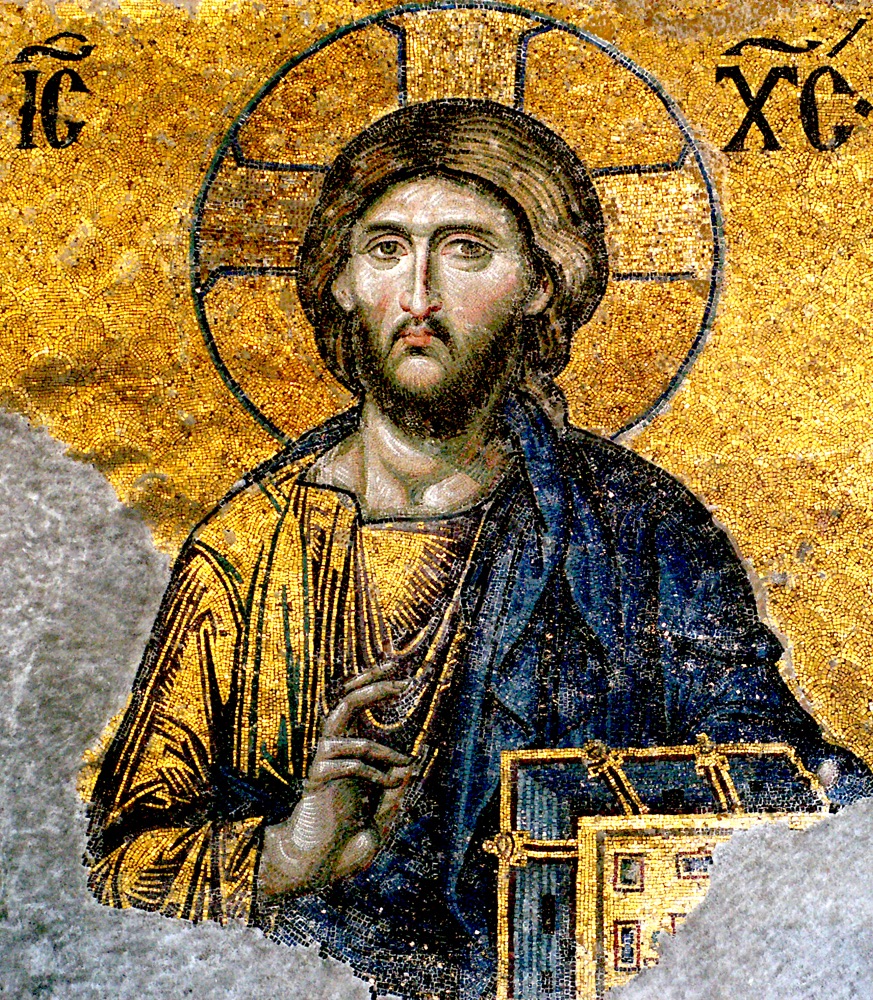
We are drawing to the end of the long “season after Pentecost” that began back in June and has run through half the year. This coming Sunday is celebrating The Festival of the Reign of Christ, as the climactic moment of this long “season of growth”, as it is often called. The Epistle reading proposed by the lectionary for this Sunday (Rev 1:4b—8) fits well with the theme of “the reign of Christ”, as it contains a greeting from the author which refers to “Jesus Christ, the faithful witness, the firstborn of the dead, and the ruler of the kings of the earth” (1:5).
It is also fitting that, on the last Sunday in the church year, we hear from the last book in the New Testament, commonly called the Revelation of John. This book has some indications that it is to be understood as a letter. The opening section (1:1–20) includes an explicit identification of the author (1:4) and the location of his writing (1:9); a brief description of the situation of the recipients (1:9) along with a listing of the specific cities in which they lived (1:11); and a short blessing and doxology (1:4–5).
The book also contains the text of seven short letters, to the churches in these seven cities (2:1–3:22). The closing section (22:8–21) reiterates the role of the author (22:8) and concludes with a blessing formula (22:21). Each of these elements reflects traditional letter-writing style.
The author identifies himself as John (1:4, 9; 22:8) and notes that he was living on the island of Patmos (1:9); church tradition has equated him with John, the disciple of Jesus, as well as the author of the fourth Gospel and three letters. However, this book is strikingly different from the Gospel and the three letters.
Some have argued that the tone of the book might reflect the style of one of “the sons of Thunder”, as the disciple John was labelled (Mark 3:17); but such a generalisation is not grounded in specific evidence.
Both the style of Greek employed and the way that biblical imagery is deployed sets this book apart from the Gospel which bears John’s name; whilst that book is steeped in biblical imagery and language, it is done in a more subtle and sophisticated manner.
The recipients of the book, identified generically as “the seven churches that are in Asia” (1:4), are subsequently named one by one, by city (1:11). In the details of the seven letters which are addressed specifically to these seven churches (2:1– 3:22), we might imagine that we will find insight into the specific situation in these churches, which is being addressed in this book.
Yet, a careful reading of these particular letters indicates that they are written and delivered in response to a dramatic vision of a distinguished figure with an ominous presence, who instructs the author to write the letters to the angels of the various churches (1:9–20). This figure can well be understood to be the “ruler of the kings of the earth” already referred to (see 1:4)—Jesus, reigning supreme over all.
Indeed, this opening section of the book is rich with imagery which describes the significance of Jesus. Many of the phrases used here to describe Jesus are later employed in connection with those who follow him. In the initial doxology of 1:4–6, four key phrases are used to describe Jesus. First, the author affirms the traditional view of the redemptive power of the blood which Jesus has shed (1:5); the same language appears in other New Testament books (Rom 3:25; 5:9; 1 Cor 11:25–27; Col 1:20; Eph 1:7; 2:13; Heb 9:12–14; 10:19; 13:20; 1 Pet 1:2, 19; 1 John 1:7; 5:6–8).
This affirmation, of Jesus as the lamb who is sacrificed in order to effect redemption, returns as a common refrain in Revelation (5:10; 7:14; 12:11; 14:3–4; 19:13). In the regulations for temple sacrifice, the purity of the sacrificial lamb was seen as essential (Num 28:3; Lev 1:10). Jesus is depicted in this book as the supreme authority, the one who has risen from the dead and is at one with God. Yet there is a stark counterpoint running throughout the whole book. Jesus is the one who has been pierced (1:7); perhaps this evokes the piercing of Jesus’ side as he hung on the cross (John 19:34–37, citing this as a fulfillment of Zech 12:10). Such power comes only through complete submission.
Next comes the affirmation that he is “the firstborn of the dead” (1:5; see also 1:18; 2:8); resurrected believers will follow the same path he treads (20:6). This resonates with the Pauline language about Jesus as firstborn from the dead (Rom 8:29; Col 1:15, 18; and see 1 Cor 15:20, 23; and Heb 1:6).
A third affirmation is that he is “the faithful witness” who testifies to the purposes of God (1:5; 3:14); those who follow his way are given insight into God’s will and in turn, they become witnesses to Jesus (17:6).
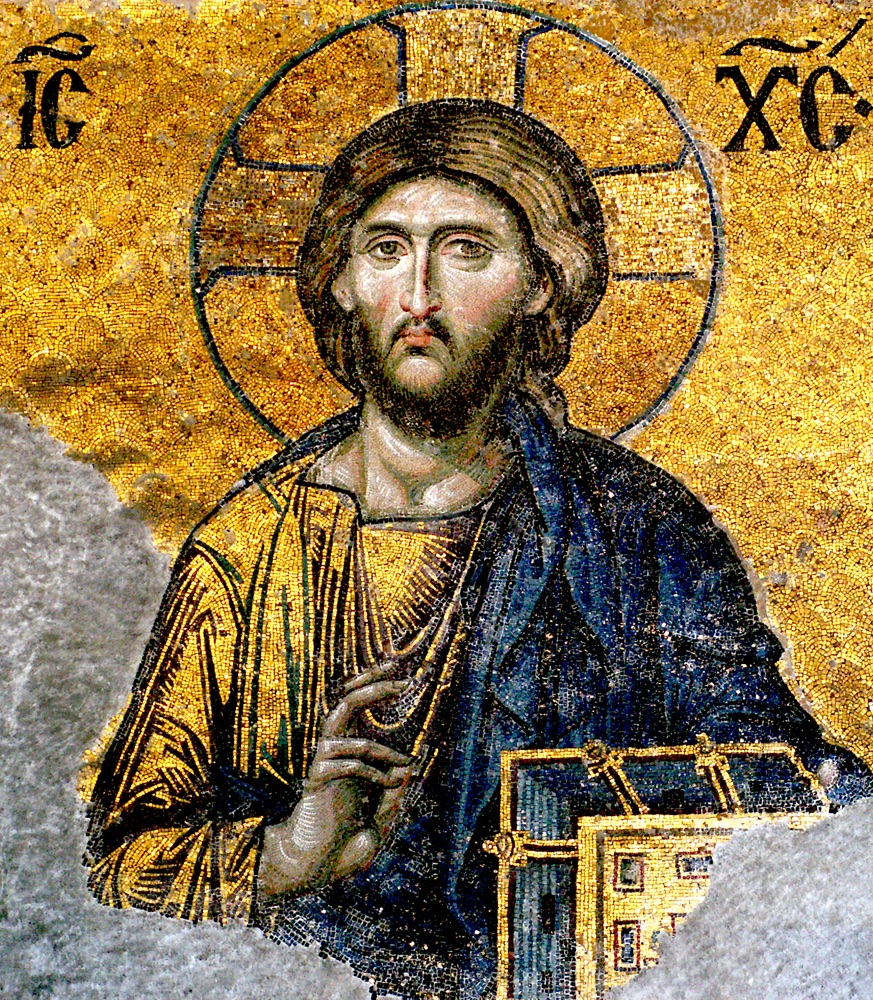
from a mosaic in the Hagia Sophia Church
(now a Mosque) in Istanbul
Finally, as the risen one, Jesus is “the ruler of the kings of the earth” (1:5) who exercises the sovereign powers of God over earthly authorities (6:15–17); ultimately these rulers will either be destroyed (19:17–21) or acknowledge his authority (21:22– 24). His supreme authority is conveyed by a later reference to the keys given to him (1:18; see Isa 22:20–22; Matt 16:19); these keys grant him power over Death and Hades (1:18; see also 6:8; 20:13–14). This element certainly resonates with the theme of The Reign of Christ, which originated when it was introduced by Pope Pius XI in 1925.
The 1920s were a time when Fascist dictators were rising to power in Europe. I have read that “the specific impetus for the Pope establishing this universal feast of the Church was the martyrdom of a Catholic priest, Blessed Miguel Pro, during the Mexican revolution”; see Today’s Catholic, 18 Nov 2014, at https://todayscatholic.org/christ-the-king/
The article continues, “The institution of this feast was, therefore, almost an act of defiance from the Church against all those who at that time were seeking to absolutize their own political ideologies, insisting boldly that no earthly power, no particular political system or military dictatorship is ever absolute. Rather, only God is eternal and only the Kingdom of God is an absolute value, which never fails.” The vision of Rev 1:4b—8 is certainly consistent with this perspective. And the distinctive vision of this book, concerning “the lamb who was slain” (5:1–14), offers a distinctive way by which this political power is exercised. See
The work as a whole is characterised as being “words of prophecy” (1:3; 22:10, 18–19). The prophecy which is presented in this book is summarised as “what must soon take place” (1:1; 22:6). Both at the beginning and at the end of the book, the author declares that he is looking forward in time, reporting events that will soon take place. When, exactly, those events will take place has been the focus of investigation by numerous people of faith over many centuries—“the end of the world is nigh” has been proclaimed in every century since the first century, and always (as we know) without success. Any claims in this regard, today, should be dismissed as not at all correct.
In the ways that Revelation has been interpreted, and the problems associated with each of them, see
So, enjoy reading and hearing this very brief excerpt from this most unusual biblical book at this time of the year!

 An Informed Faith