
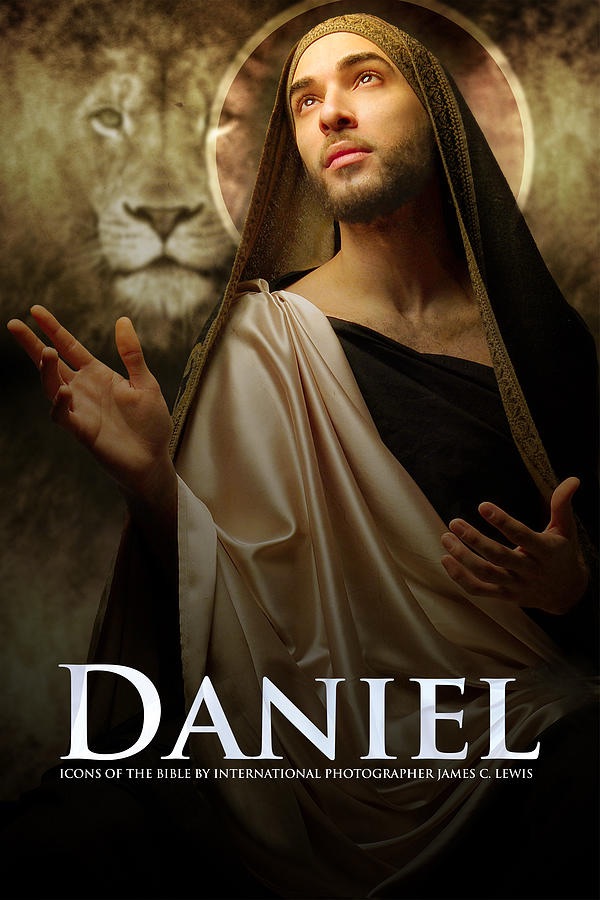
The Narrative Lectionary is currently offering us a selection of passages from six of the prophets of ancient Israel: Jonah, Isaiah, Jeremiah, Daniel, Joel, and the anonymous post-exilic prophet whose words are collected in Isaiah 56–66. This coming Sunday we we will read and hear the passage from Daniel 6, which tells of Daniel being placed in grave danger in a den of lions, and then rescued by the command of King Darius of Persia.
Ironically, although he is considered one of the four Major Prophets in Hebrew Scripture, Daniel himself is never “called to be a prophet”, as we have seen in other prophetic books; he is introduced as one of a number of “young men without physical defect and handsome, endowed with knowledge and insight”, who were chosen “to be taught the literature and language of the Chaldeans” (1:3–5). Indeed, the Israelite Daniel is given a Babylonian name, Belteshazzar (1:7; 4:8), and his entire story takes place in the Babylonian court.
(The Chaldeans were part of the Babylonian Empire; centuries earlier they had settled beside the Euphrates in what became the southeastern edge of the Babylonian Empire. Abraham is said to have come from Ur, a city in the region of Chaldea; see Gen 11:31; 15:7.)
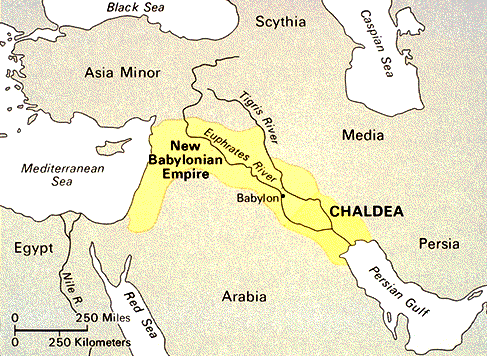
The story of the prophet Daniel is thus set outside Israel, in the time of exile, after the conquest of the southern kingdom by the Babylonians in 587 BCE (Dan 1:1–2; see 2 Kings 25). Daniel had been chosen to serve in the court of Nebuchadnezzar, who reigned from 605 BCE to 562 BCE (Dan 1:3–7); when the Persians took control of the Babylonian empire in 539 BCE, Daniel continued to serve in a position of some power.
Scholars believe, however, that the story is told at a much later time, after the exile—perhaps even during the time of Seleucid superiority in the second century BCE. Two centuries after they had returned to the land of Israel, rebuilt their Temple, restored their cities and towns, and living under Persian rule, the people of Israel were over run by the troops of Alexander the Great, King of Macedonia, as he swept across the eastern Mediterranean region as Far East as modern day India. A new foreign power, and a new attitude towards the religion and customs of Israel.
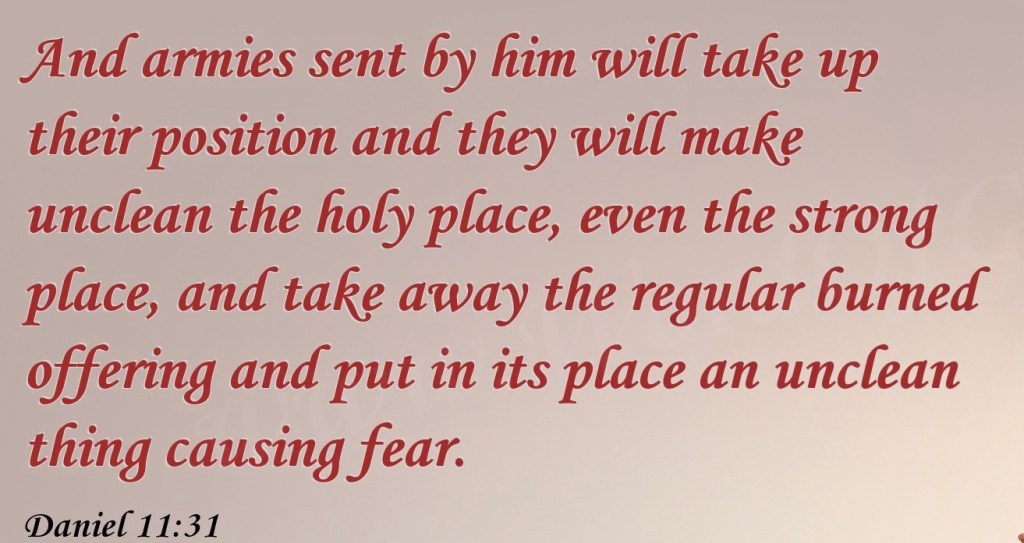
Initially the interaction between Israelites and Macedonians was one of integration. Greek became the language of trade; syncretism marked the religious life of the people, as they adopted Greek customs. But when Antiochus Epiphanes came to power over the region, he introduced an altar in the temple to receive pagan offerings—something which, in Israelite eyes, was known a “desolating sacrilege” (Mark 13:14; 1 Mac 1:54). This appears to be clearly described in the final vision, recounting how forces “shall occupy and profane the temple and fortress, abolish the regular burnt offering and set up the abomination that makes desolate” (Dan 11:31).
A clear reflection of the exile experience is that an extended section of the book (2:4b—7:28) is written in Aramaic, a language which evolved from Hebrew because of the influence of Babylonian culture and language on the exiled Israelites. The rest of the book (like all the rest of Hebrew Scripture) is written in Hebrew. Whereas Aramaic became the common language of Jews even when they were living back in Israel (and this was the case by the time of Jesus), Hebrew was preserved as the holy language of scripture.
Curiously, the book has two distinct parts, which overlap this linguistic division; each part is likely to have originated in a different time after the exile. The first six chapters recount stories about Daniel, who was serving in the court and enjoyed friendly relations with the monarch; the style is one found in other legends about courtiers and dream interpreters. Chapters 7–12 comprise a series of apocalyptic visions which appear to contain some very direct references to events that took place in the second century BCE. These chapters come “from the mouth of Daniel”, as it were, rather than being stories about him (as in chapters 1–6).
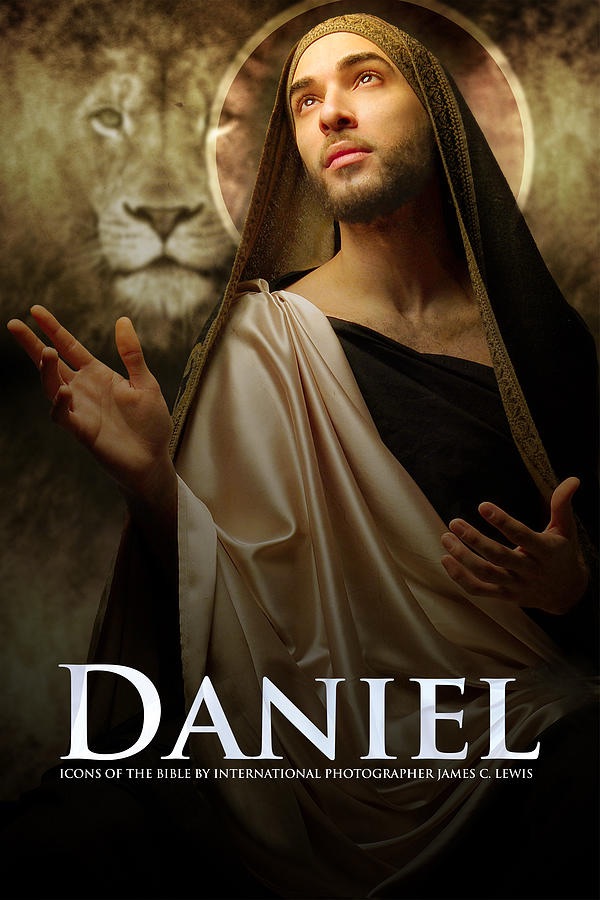
Daniel has been operating in the murky arena of national politics: then, as now, a fraught environment! He has twice advised the king by interpreting dreams. Whilst Daniel exercised his role as a satrap under Darius the Mede, a conspiracy was formed against him as opponents looked to bring him down. When he is caught praying to the Lord God, despite the interdict of the king (6:1–15), he is thrown into the lion’s den (6:16).
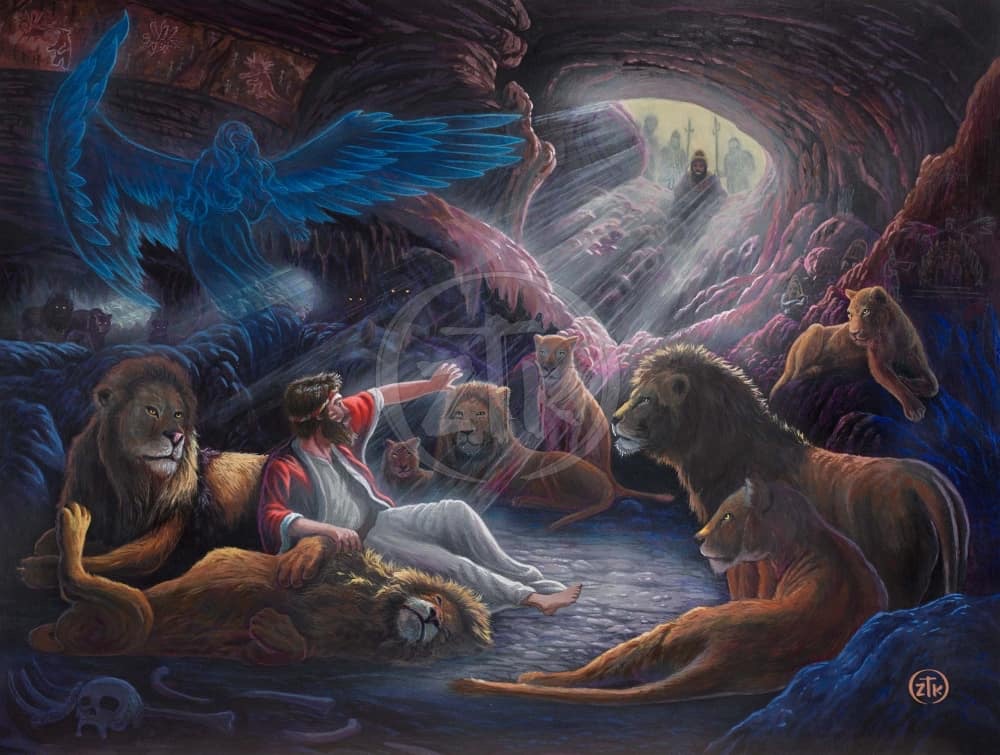
The next morning, the king hurries to the den, and finds Daniel alive; his prayers have miraculously saved him (6:19–22). Daniel is released from the lion’s den and rescued from danger (6:23–28); Darius issues an edict praising “the living God” whose “kingdom shall never be destroyed, and his dominion has no end; he delivers and rescues, he works signs and wonders in heaven and on earth” (6:26–27).
If the story was written (as is thought by many) during the time of the Seleucids, its depiction of a foreign ruler who is positively disposed towards Israel’s God is striking. Under Antiochus Epiphanes, the colonising forces of the Macedonians “built a gymnasium in Jerusalem, according to Gentile custom, and removed the marks of circumcision, and abandoned the holy covenant; they joined with the Gentiles and sold themselves to do evil” (1 Mac 1:14–15). Antiochus not only erected an image in the temple (the “desolation of sacrilege”), but even had the scrolls of Torah collected and burnt—many centuries before the Nazis did this (you can read the details of his rule in 1 Mac 1:41–64).
The author of Daniel is writing political literature as political critique. We know that Antiochus provoked a political uprising led by the Maccabees, the sons of Matthias (1 Mac 2—6)—figures later upheld as heroes by the Zealots in the time of Jesus. The book of Daniel provides a rationale for the zealous ideology of the Maccabees, seeking to put in place a righteous leadership in Israel.
Carol Newsom observes that “in several narratives in the book of Daniel, the king humbly confesses the sovereignty of the God of the Jews, acknowledging that he rules by the will of God” (“Political Theology in the Book of Daniel: An Internal Debate”, Review and Expositor, vol. 109, 2012, pp.557–568). Prof. Newsom continues, “other parts of the book depict the gentile king as being part of God’s plan, but a part that will ultimately be destroyed as incompatible with divine sovereignty.” We see this clearly in view in chapters 1—6.

 An Informed Faith