
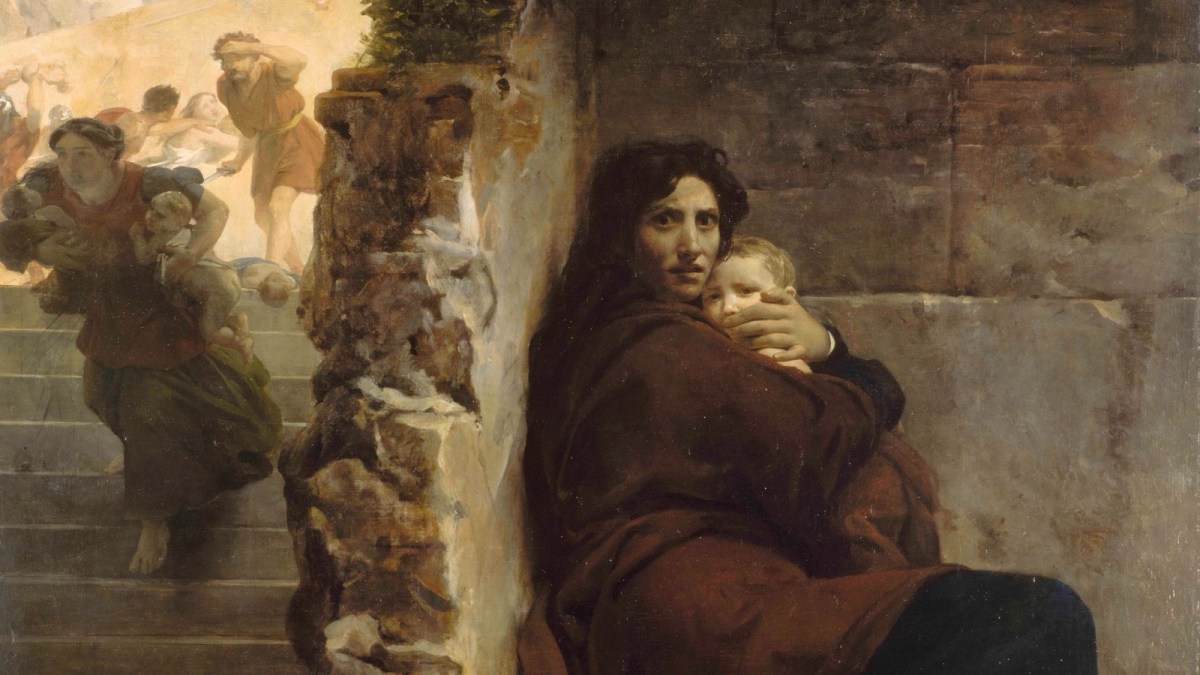
Yesterday, we focussed on “the slaughter of the innocents” which is commemorated in the Western Church on 28 December. Today, 29 December, is the day when this commemoration takes place in the Eastern Church.
This this potent story, full of pathos, is so resonant with events in the world in which we live today: people dying in invasions and wars; people fleeing, seeking refuge, in a safe place. Sadly, this part of the story has all but faded from view in “the Christmas story” that is recounted each Christmas. So here are some more thoughts—largely from the words written by contemporary hymn writers that tell this story.
There are clear words in these carols which show how the story challenges political values and policies and how it connects with the deepest feelings of human existence.
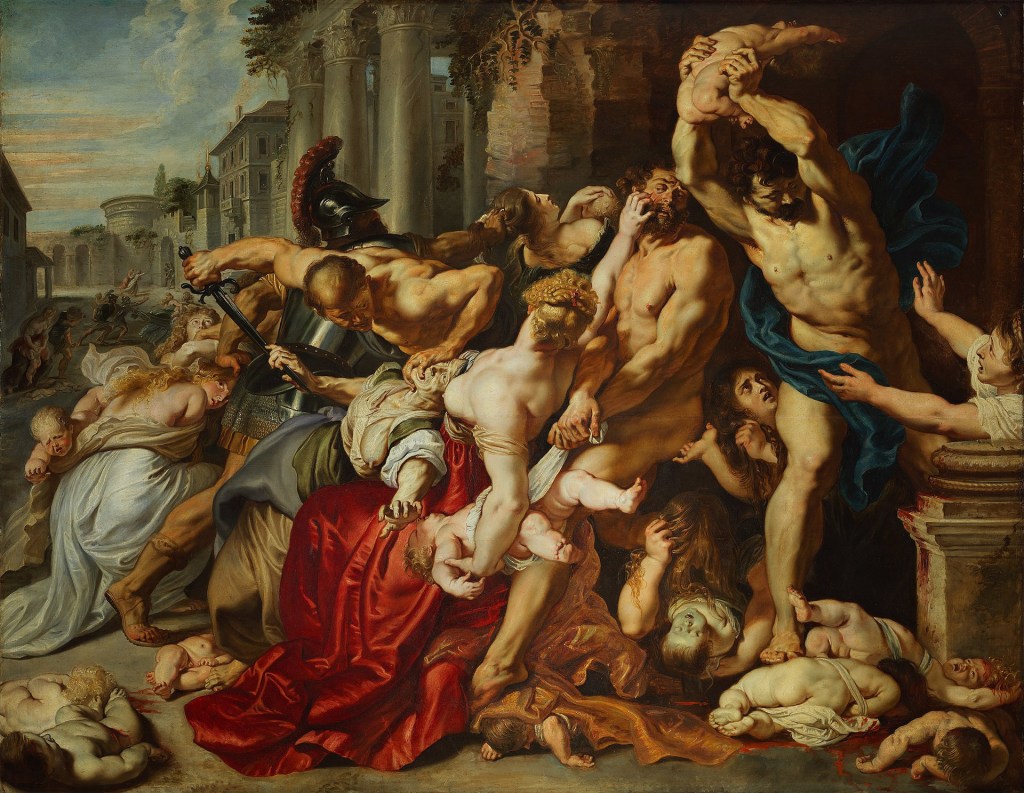
One contemporary hymn writer who has turned his attention to the story of Herod’s tyrannical rampage against the male children in Bethlehem, is the British Methodist, the Rev. Dr Andrew Pratt. Here is a powerful hymn which he has written about this story.
Herod waiting, Herod watching,
Herod grasping, holding power,
Herod fearful for the future,
Herod counting every hour.
Now the thing that he was fearing:
love and justice, peace and health,
here embodied in a person,
God incarnate, heaven’s wealth.
This was more than he could stomach,
human wine skins tear and rend.
Herod’s dream had been confounded,
human power had met its end.
Many children now were crying,
temper triumphed, babies dead.
Mary, Joseph made an exit,
every step was filled with dread.
Into exile they were driven,
fear would ripple through each life:
Jesus challenged vested interests.
Gracious love fuelled hate and strife.
And the children still are crying,
forced to war and harmed by hate.
Still our world is deaf to hear them,
still our loving comes too late.
© Andrew Pratt 18/11/2010. For the First after Christmas, Matthew 2: 13 – 23; Herod, Holy Innocents, the flight into Egypt.
See https://www.umcdiscipleship.org/resources/herod-waiting-herod-watching
Another person who has worked well with words over many decades is the late Shirley Erena Murray, a Presbyterian from Aotearoa New Zealand. She was right on the money when she highlighted the violence and fear at the heart of the story, claiming that the infant in the story has “come to plead war’s counter-case”, and articulating the hope that “goodness will outclass the gun, evil has no tooth that can kill the truth.” Here’s her words:
Summer sun or winter skies, Christmas comes —
shepherds, angels, lullabies, words recorded by the wise:
read it in the book — take another look . . . .
Shadows track the hawk in flight, Christmas now —
children born in fire and fight, silent night a violent night,
hawks are in control of a nation’s soul.
There where terror plies its trade, Christmas now —
children learn to be afraid, minefields of distrust are laid,
evil is in force on a winning course.
Child of peace, God’s human face, Christmas now —
come to plead war’s counter-case, bring the dove a nesting place,
though her wings are torn, though her blood is drawn.
Winter skies or summer sun, Christmas comes —
still the threads of hope are spun, goodness will outclass the gun,
evil has no tooth that can kill the truth.
This ancient story resonates so strongly with our situation today, not because “it really happened, exactly like this”, but because (like a good myth does) it takes us to the centre of our humanity and reveals the depth of God’s presence in our midst. We ought to sing more about it!
See http://www.hopepublishing.com/html/main.isx?sitesec=40.2.1.0&hymnID=430

by Léon Cogniet, held in the Musée des Beaux-Arts

 An Informed Faith