
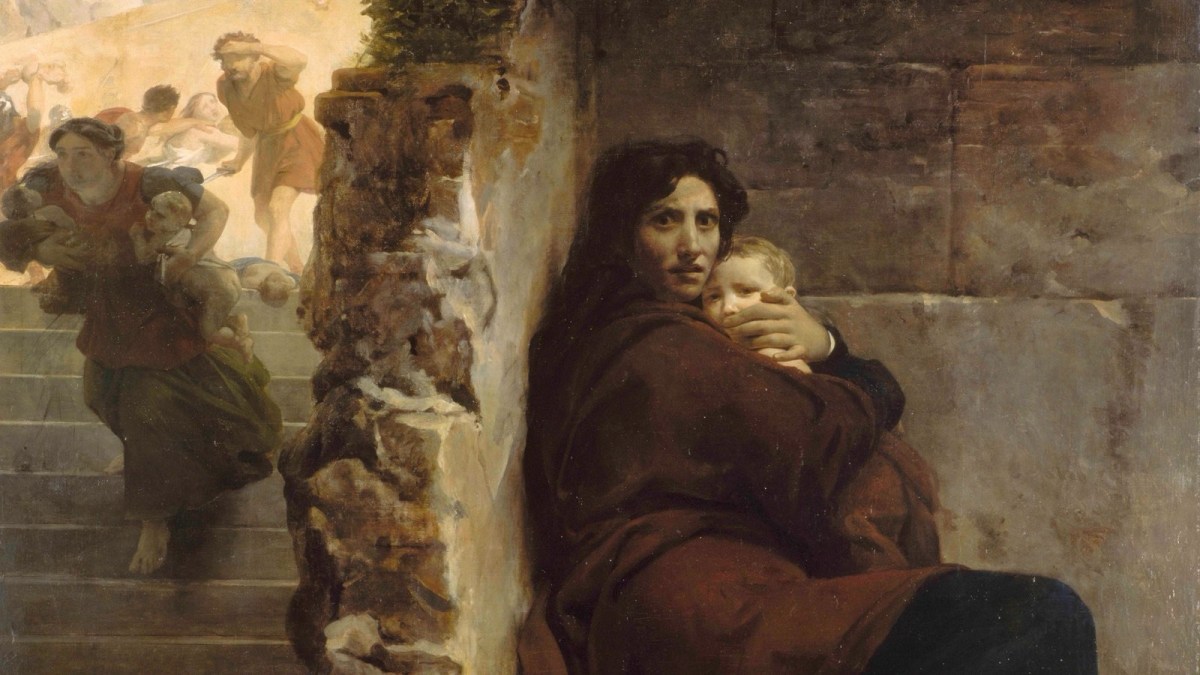
I have been amazed to learn that, back in the fifth century, the poet Prudentius wrote a number of hymns that tell the story of the slaughter of innocent children, ordered by King Herod.
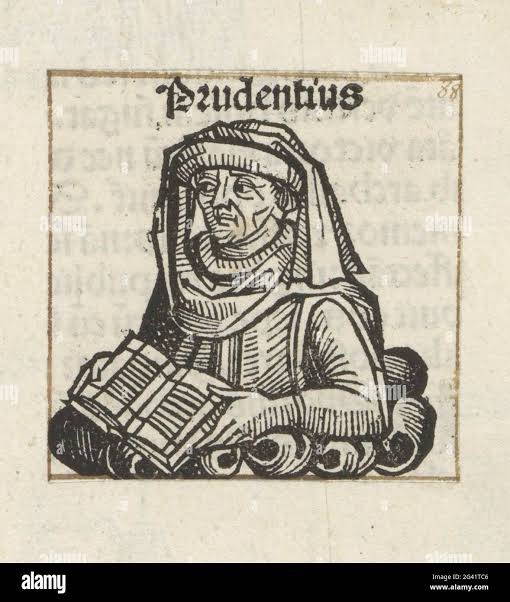
Whilst the basic theological orientation of these hymns is clearly patristic orthodoxy, they do contain a gritty realism that seems to have largely flown out the window when modern day carols are sung!
Here is a hymn which remembers those innocent children who were, according to the theology of Prudentius, “victims slain for Christ the King”.
All hail, you infant martyrs’ flow’rs,’
Cut off in life’s first dawning hours
As rosebuds, snapt in tempest strife
When Herod sought the Savior’s life.
O tender flock of Christ, we sing
Of victims slain for Christ the King
Oppression’s loud lament we raise,
Then join the martyrs’ song of praise:
All honor, laud, and glory be,
O Jesus, Virgin-born, to thee;
All glory, as is ever meet,
To Parent and to Paraclete.
(Prudentius, 5th century, alt.)
This hymn is a cento (a patchwork quilt of words from various sources) from the twelfth and last poem in the Cathemerinon of Prudentius, and in its full form it contains 208 lines. The first line of the complete hymn is Quicumque Christum quaeritis. Four beautiful centos from this hymn were included in the Breviary by Pius V (1568); see https://media.churchmusicassociation.org/pdf/hymnsofbreviary.pdf
The original Latin text of the hymn is:
Salvete, flores Martyrum, in lucis ipso lumine
Quos ssevus ensis messuit, ceu turbo nascentes rosas.
Vos prima Christi victima, grex immolatorum tener,
Aram sub ipsam simplices palma et coronis luditis.
Quid proficit tantum nefas ? Quid crimen Herodem juvat?
Unus tot inter funera impune Christus tollitur.
Inter coaevi sanguinis fluenta solus integer,
Ferrum quod orbabat nurus party’s fefellit virginis.
Qui natus es de Virgine Jesu, tibi sit gloria,
Cum Patre, cumque Spiritu, in sempiterna secula.
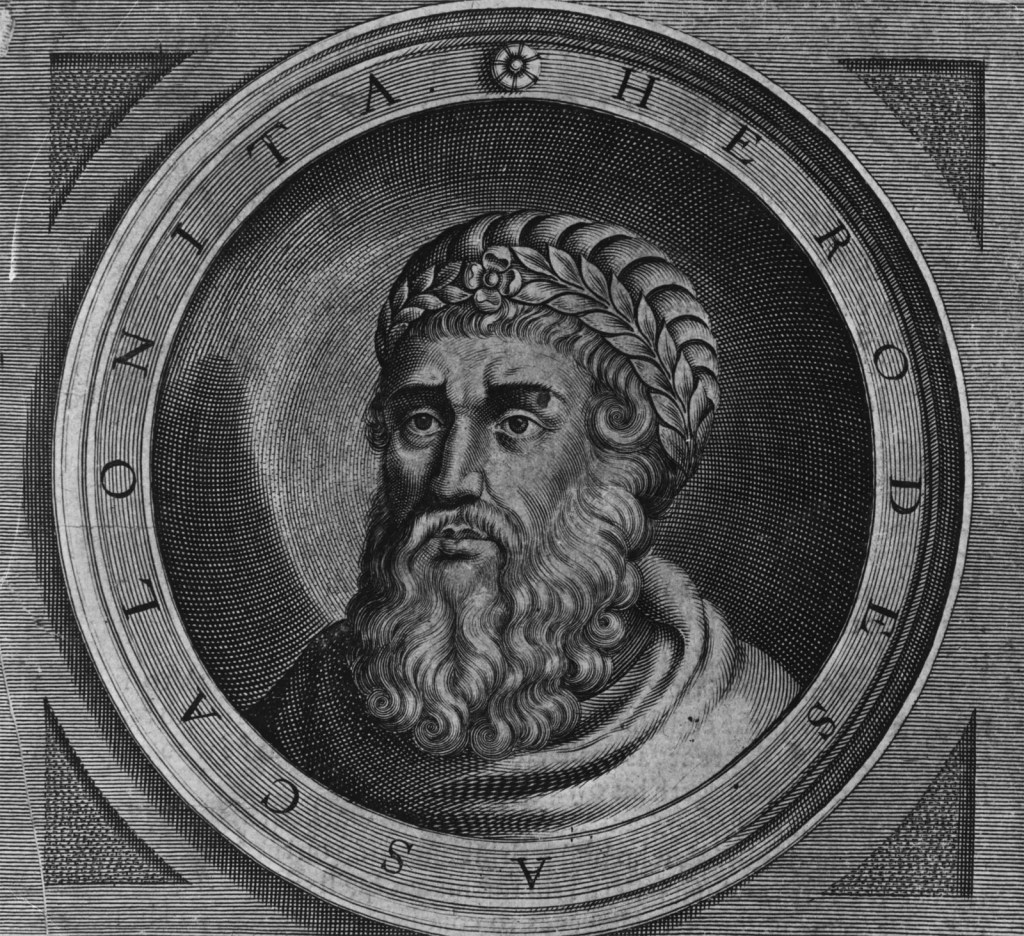
Bust of Herod the Great, from the Hulton Archive.
Encyclopædia Britannica. https://www.britannica.com/biography/Herod-king-of-Judaea#/media/1/263437/319900
Another of his compositions recounts the same story from the perspective of King Herod.
With boding fears the tyrant hears
A King of Kings is hard at hand,
Who rule shall claim o’er Israel’s name
And high in David’s palace stand.
With wild surprise, ” We die,” he cries, “
Around us lurks a traitor brood ;
” Up, guard, awake, thy weapon take, “
And every cradle drown in blood.”
What boots his ire, and dark desire;
What help, if he his thousands slay ?
Alone of all, around that fall,
The Christ is safely borne away.
Jesu, to Thee all glory be,
Of Mary, Virgin-Mother born ;
To God Triune all praise be done,
Through endless life’s unwaning morn.
The Latin text:
Audit tyrannus anxius adesse regum principem,
qui nomen Israel regat teneatque David regiam.
Exclamat amens nuntio, successor instat, pellimur;
satelles i, ferrum rape, perfunde cunas sanguine.
Quid proficit tantum nefas, quid crimen Herodem iuvat?
unus tot inter funera inpune Christus tollitur.
Iesu, tibi sit gloria, qui natus es de Virgine,
cum Patre et almo Spiritu, in sempiterna saecula. Amen.
This is the 12th and last poem in his Cathemerinon, and in its full form consists of 208 lines. It is found in a 5th century manuscript in the Bibliotheque Nationale, Paris (Prudentius, Opera, 8048, f. 39b).
Though one of the finest poems of Prudentius, it was apparently little used in the services of the Church until the revision of the Roman Breviary after the Council of Trent.
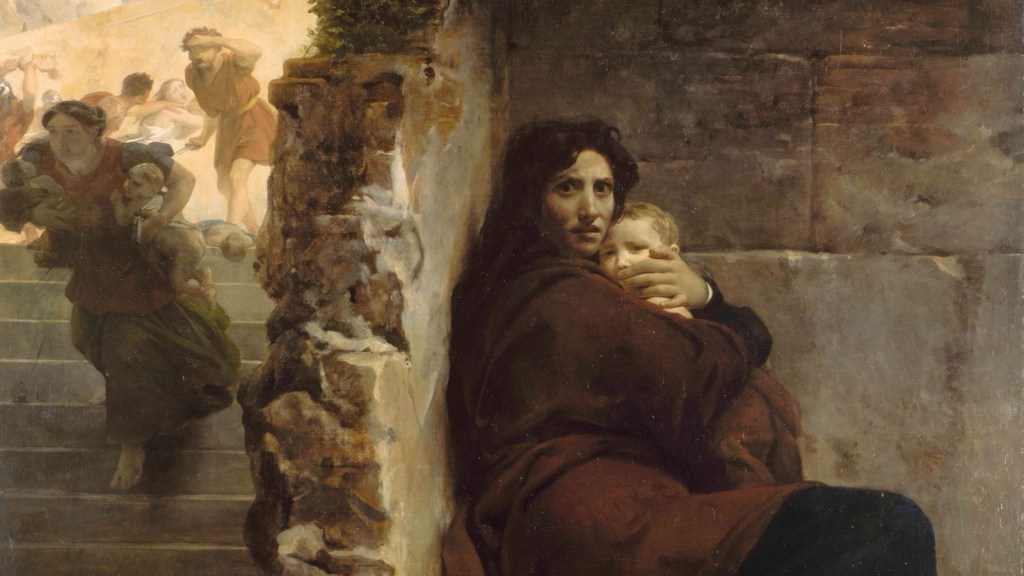
by Léon Cogniet, held in the Musée des Beaux-Arts
 An Informed Faith