Standing4Lyne in 2025

Elizabeth and I have had an interesting sequence of experiences over the past six months. It all began some months after we had moved to Dungog, late last year, and settled in to the community here. In about May we were invited to attend a gathering of people who had interest in exploring what it might look like to start a “Voices for Lyne” group locally. This would be a group of people from the community in and around Dungog who would be happy to support an Independent candidate in the upcoming federal election.
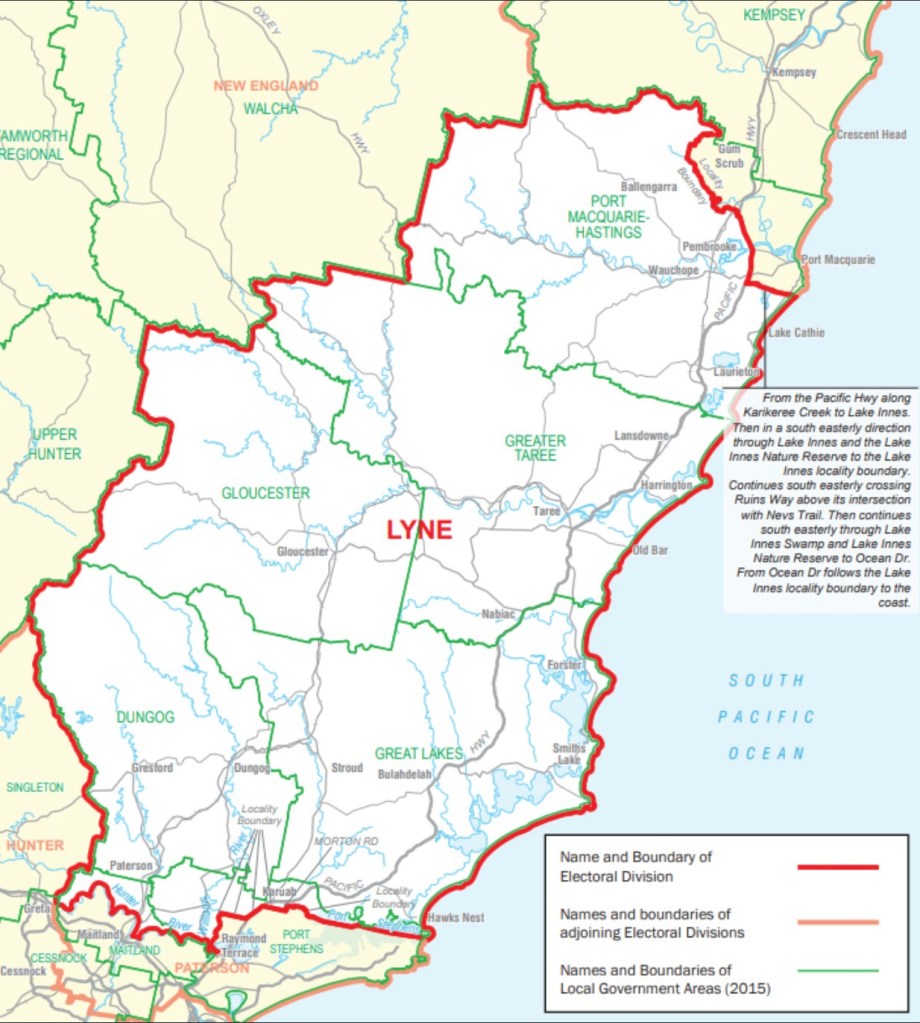
Lyne is the federal electorate that we live in. It stretches from the northern suburbs of Maitland on the banks of the Hunter River, to the southern suburbs of Port Macquarie near the Hastings River. It includes significant urban areas on the coast—Taree, Forster, and Tuncurry—as well as a string of smaller coastal towns and villages. There are also some key rural hubs inland—Wauchope, Gloucester, and Dungog—as well many other smaller towns and villages in the hinterlands, and widely dispersed farmland areas through many river valleys. It is a diverse region with wonderful scenery along the coastline as well in the mountain areas inland. It has many natural features that attract visitors throughout the year.

Since it was established in 1949, the seat of Lyne has had only six members: five Nationals and one Independent. It was long regarded as a National Party stronghold. The one Independent member was Rob Oakeshott, whom we got to know and respect while we lived in Wauchope from 2011 onwards. Rob was an excellent local member, highly attuned to representing the needs and concerns of his electorate, and right over a wide range of policy areas. By contrast, the various National Party members elected by Lyne over the decades have—quite predictably—been more concerned to vote according to the party line, and so the electorate has suffered a degree of neglect as they have each prosecuted the ideological wars of the Coalition.
We were two of a dozen people at that meeting in May, to talk about forming a “Voices for Lyne”. A month after that, an organisation called Independent Lyne was formed, and Elizabeth and I both committed to working with other folks on an organising committee. The committee has met every two or three weeks since early June. (Guess who is the secretary, diligently taking minutes of each of those meetings …)
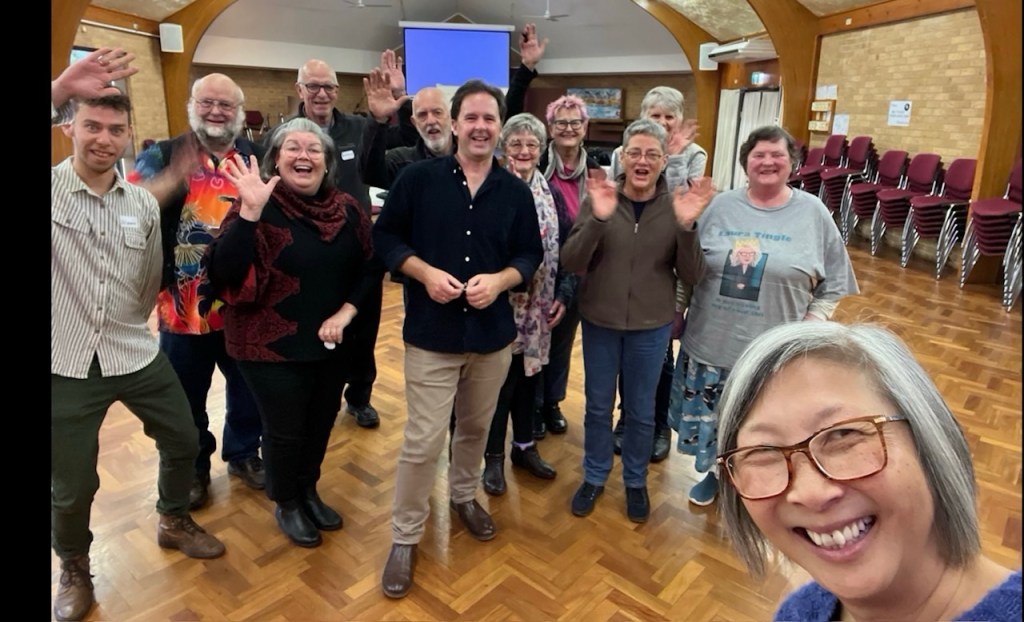
We have established a website, invited people to complete an online survey about their hopes and needs, appointed a number of Local Leaders (Elizabeth took on that role for Dungog), held kitchen table conversations, had stalls at local markets, and generally “talked up” the benefits of having a federal representative who is Independent and not bound to party policy—someone willing to consider each issue on its merits, consult with the people whom they represent, and commit to integrity and transparency in their decision-making.

See https://www.independentlyne.org

We called for expressions of interest from local people; a small committee did the hard work of sifting and sorting those applications, then the Organising Committee was expanded with other interested community members to form a Community Panel to listen to those shortlisted. Emerging from this, we identified the best person to be our candidate, to stand as a community-backed Independent in the seat of Lyne at the 2025 federal election. And so Independent Lyne has given birth to Standing4Lyne.

At the same time, the incumbent local member announced his retirement, after 11 predictable years in the position, and the National Party announced their new candidate. It was no surprise that the new candidate was his chief policy advisor—a clear case of keeping the party machine hegemony rolling over. Just a week after this announcement, Independent Lyne announced support for our community-backed Independent candidate.
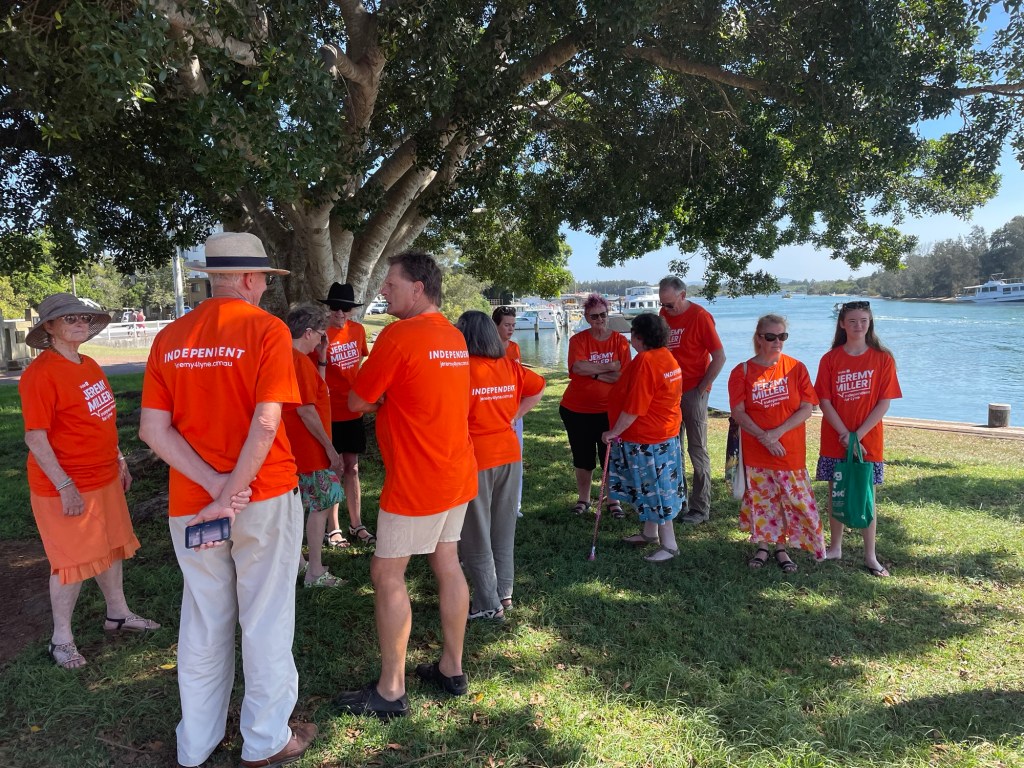
Our candidate who is Standing4Lyne is Jeremy Miller, who is well-known in the Greater Taree area as an energetic small business owner, and throughout the Mid Coast Council area as the Deputy Mayor of Council. “I’ve always looked for practical ways to make things better—whether that’s running local events, managing the Manning Entertainment Centre, or serving on Council”, Jeremy said. “I’m married to a local teacher, we’ve raised three kids here, and there’s nowhere else we’d rather be”.

You can read more at https://www.jeremy4lyne.com.au
Standing4Lyne is part of the Community Independents Project (CIP) that has grown exponentially across the country in the last few years. This project supports groups like Standing4Lyne that are putting forward community-backed Independents as candidates in the next election. Standing4Lyne people have participated in the training and resourcing that CIP provides. It has given us a base for working towards the election.

The Community Independent candidates that are emerging are committed to genuinely representing their community, reflecting the values and views of their electorates. They each have developed a ‘compact’ with their community that guides their actions and they seek to empower their communities through collaborating and partnering with them. This movement is at the vanguard of real political change in Australia. See more at https://www.communityindependentsproject.org

I can affirm from my personal knowledge of Jeremy that he is personable, intelligent, enthusiastic, and committed. He has travelled to many places across the electorate in recent years, met with many people, and listened to their concerns. In my experience he is always respectful in his interactions with others. He would bring the same freshness to politics that we have seen in a number of the Independents now in the Federal Parliament.

Jeremy stresses he’s not “joining the Teals” if he’s elected. He is and will remain a genuine community-backed Independent, taking the issues that most concern Lyne voters, guided by their suggestions, ensuring that he is always transparent to voters in his thinking and how he plans to implement them. He plans to work as a truly Independent regional member like Helen Haines in Indi. 

Jeremy knows that for a truly Independent member of Parliament, “every vote is a conscience vote, so I will consult with community about issues before the parliament and be accountable to the electorate for my decisions”.

“My record will be transparent to everyone”, he assures; “I will be visible across the communities of Lyne throughout the three years, I will always be open to chatting with people and listening carefully, and I hope to be a strong and positive ambassador for Lyne”.

He maintains that he will “work constructively with whoever’s in government to get things done for our region, while maintaining my independence to fight for our community’s interests. After 30 years of bringing people together locally to get results, that’s exactly what I’ll do in Canberra.”

So this past weekend we gathered in Forster with a group of a dozen people from across the electorate to focus on what we need to do to plan the campaign. It was an energising and inspiring day—although to be honest, what lies ahead looks utterly daunting! The day finished with photos by the river, as we showed our enthusiastic support for Jeremy. In January, we begin the campaign proper. It looks like it will be a fascinating experience! 

 

Good news to the oppressed, liberty to the captives: a message of hope (Isaiah 61; Narrative Lectionary for Advent 3C)

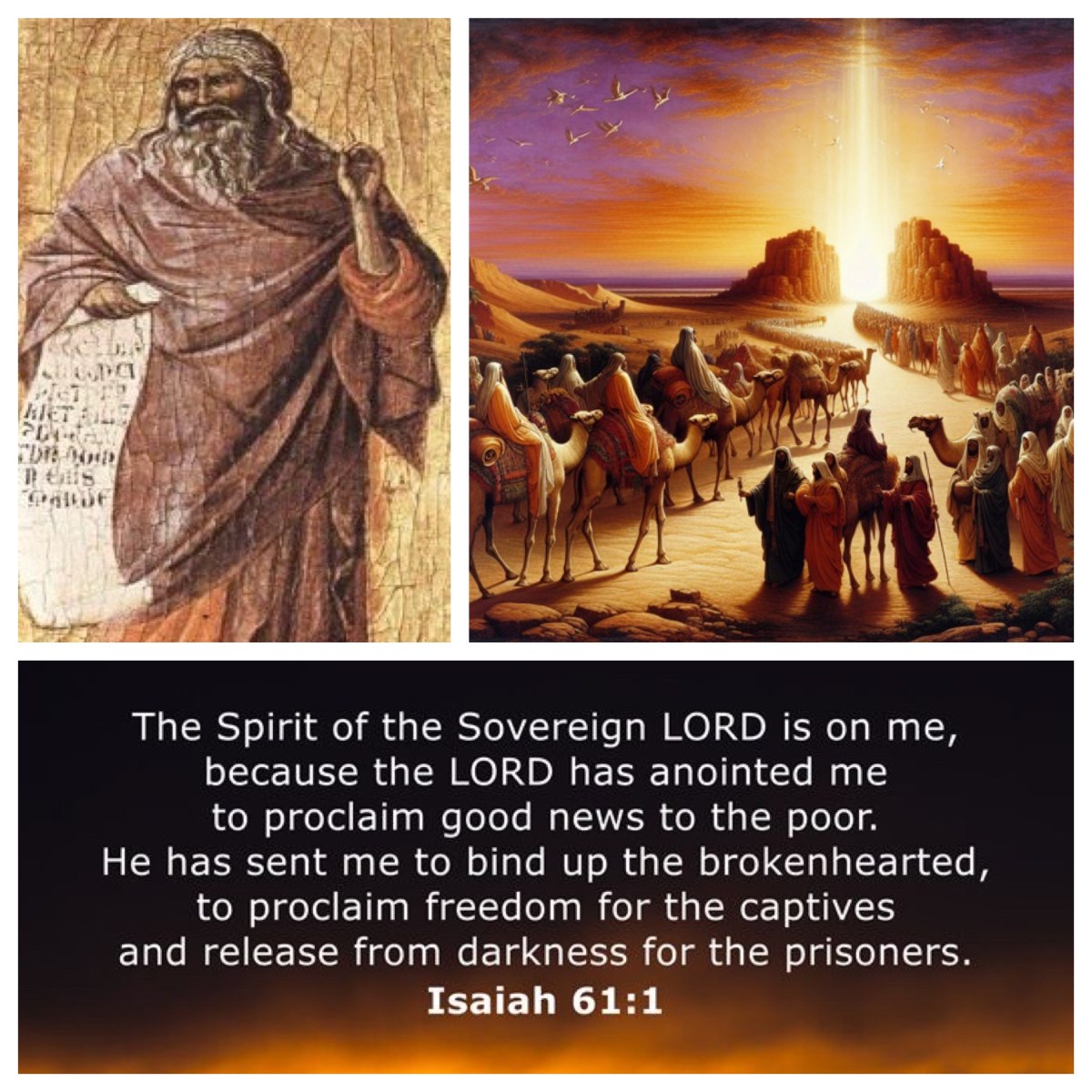
For this coming Sunday, the Narrative Lectionary is offering a very familiar passage from Third Isaiah, that part of the long book of Isaiah that is usually dated to a time when the exiles were returning from Babylon and re-establishing life in Jerusalem and the surrounding area. The passage (Isa 61:1–11) is best known within Christianity as providing the key elements for the manifesto that Jesus—at least in Luke’s Gospel—sets out to follow. 

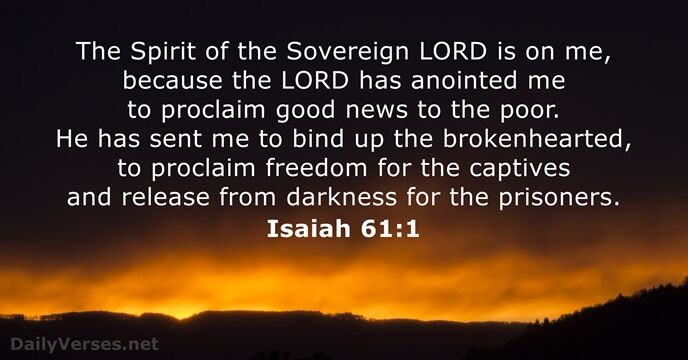
Luke reports that Jesus quotes the opening verse of this oracle when he attends the synagogue in his hometown of Nazareth and was invited to read from the scroll of Isaiah (Luke 4:16–20). Most famously, Luke places the opening verse of the prophet on the lips of Jesus, and the first line of verse 2—but then stops short of quoting what follows, regarding “the day of vengeance of our God” and the mourning that will be associated with the mixed emotions of returning to a devastated city and engaging in the rebuilding programme: “they shall build up the ancient ruins, they shall raise up the former devastations; they shall repair the ruined cities, the devastations of many generations” (Isa 61:4).

The passage offered by the lectionary needs to be seen, primarily, within the context in which it was first spoken. The third section of the book of Isaiah (chapters 56–66) has begun with a familiar prophetic announcement: “maintain justice, and do what is right, for soon my salvation will come, and my deliverance be revealed” (Isa 56:1). As the people of Judah were returning to their land, to the city of Jerusalem (from the 520s BCE), the book sets out what this justice will look like through a series of powerful oracles.

The prophet sounds a vivid counter-cultural note in the midst of the events of his time. He begins with the promise to foreigners and eunuchs that “I will give, in my house and within my walls, a monument and a name better than sons and daughters; I will give them an everlasting name that shall not be cut off” (Isa 56:5). This is a striking contrast to the narrative provided in the books of Ezra and Nehemiah, which tell of the return to the city, the rebuilding of the walls, the renewal of the covenant and the public reading of the Law, the rededication of the Temple—and actions designed to remove foreigners (especially women) from within Israel (see Ezra 10; Neh 13). 

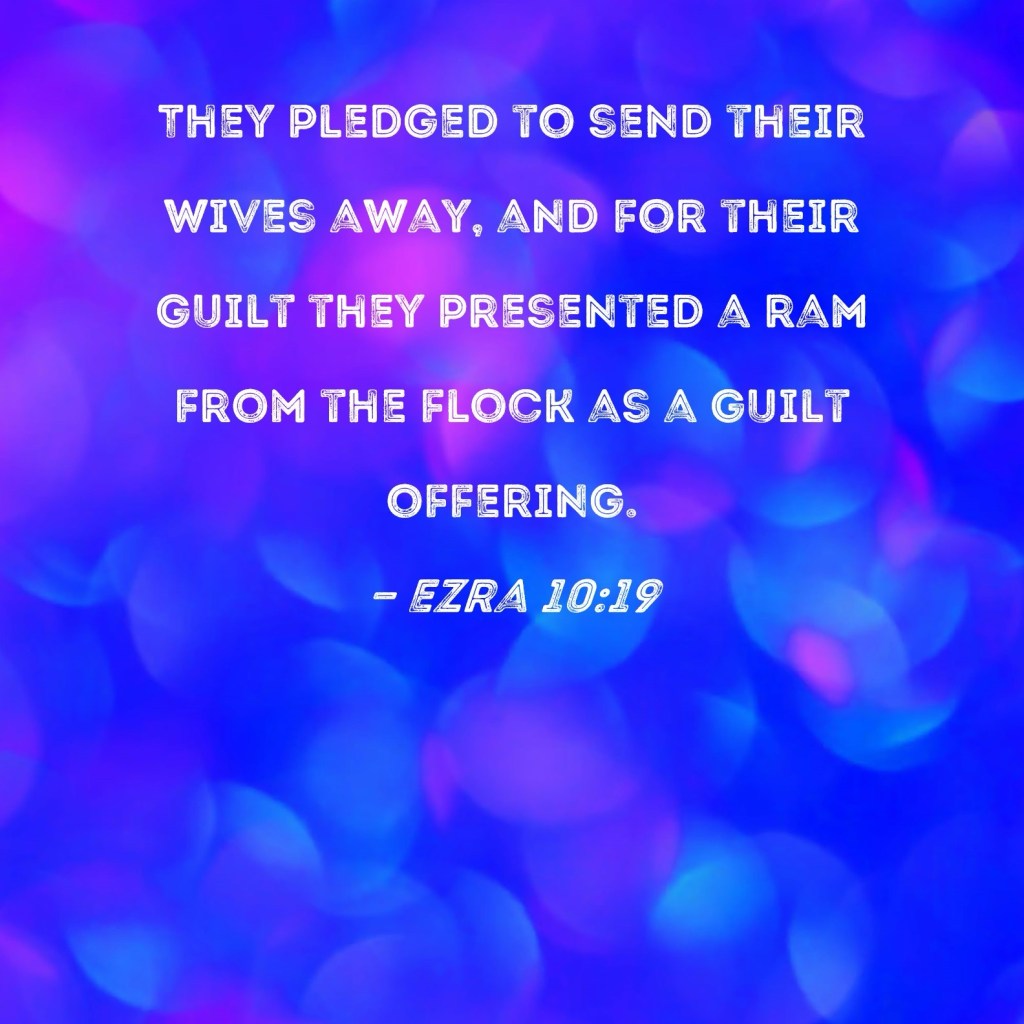
Ezra and Nehemiah exhibited a zealous fervour to restore the Law to its central place in the life of Israel. Ezra, learning that “the holy seed has mixed itself with the peoples of the lands” (Ezra 9:2), worked with “the elders and judges of every town” to determine who had married foreign women; the men identified “pledged themselves to send away their wives, and their guilt offering was a ram of the flock for their guilt” (Ezra 10:19). (So much for the importance of families!)

 Nehemiah considered that this project to “cleanse [the people] from everything foreign” (Neh 13:30) was in adherence to the command that “no Ammonite or Moabite should ever enter the assembly of God, because they did not meet the Israelites with bread and water, but hired Balaam against them to curse them” (Neh 13:1–2; see Num 22—24). The restoration of Israel as a holy nation meant that foreigners would be barred from the nation.

The oracle at the start of the third section of Isaiah stands in direct opposition to this point of view; “the foreigners who join themselves to the Lord … and hold fast my covenant—these I will bring to my holy mountain, and make them joyful in my house of prayer; their burnt offerings and their sacrifices will be accepted on my altar; for my house shall be called a house of prayer for all peoples” (Isa 56:6–7). 

Jesus, of course, quoted this last phrase in the action he undertook in the outer court of the Temple (Mark 11:17). Later, the welcome offered to the Ethiopian court official by Philip, who talked with him about scripture and baptised him, a eunuch (Acts 8:26–38), is consistent with the prophetic words, “to the eunuchs who keep my sabbaths, who choose the things that please me and hold fast my covenant, I will give them an everlasting name that shall not be cut off” (Isa 56:4–5). (From the earliest days, the church practised an inclusive welcoming of diversity that was consistent with this prophetic declaration.)

Other words in this last section of Isaiah also resonate strongly with texts in the New Testament. The ingathering of the outcasts (56:8) and the flocking of all the nations to Zion (60:1–18) together are reflected in the prediction of Jesus that “this good news of the kingdom will be proclaimed throughout the world, as a testimony to all the nations; and then the end will come” (Matt 24:14). 

The statement that those coming from Sheba “shall bring gold and frankincense, and shall proclaim the praise of the Lord” (60:6) most likely informed the story that Matthew created, concerning the wise ones from the east who came to see the infant Jesus and “offered him gifts of gold, frankincense, and myrrh” (Matt 2:11).

Further oracles set out exactly what the justice that God desires (56:1; 61:8) looks like. The extensive worship of idols (57:1–13) will bring God’s wrath on the people; “there is no peace, says my God, for the wicked” (57:13). Rather, “the high and lofty one who inhabits eternity, whose name is Holy” chooses “to revive the spirit of the humble and to revive the heart of the contrite” (57:15). 

Because God indicates that “I will not continually accuse, nor will I always be angry” (57:16), the prophet conveys what the Lord sees as the fast that is required; not a fast when “you serve your own interest on your fast day, and oppress all your workers” (58:3), but rather, a fast “to loose the bonds of injustice, to undo the thongs of the yoke, to let the oppressed go free, and to break every yoke … to share your bread with the hungry, and bring the homeless poor into your house; when you see the naked, to cover them, and not to hide yourself from your own kin” (58:6–7). These words resonate with the actions of “the righteous” in the well-known parable of Jesus, as they gave food, water, a welcome, clothing, and care to those sick or imprisoned (Matt 25:31–46).

The prophet laments that “there is no justice … justice is far from us … we wait for justice, but there is none … justice is turned back … the Lord saw it, and it displeased him” (59:8–15); he declares that, as a consequence, God “put on righteousness like a breastplate, and a helmet of salvation on his head; he put on garments of vengeance for clothing, and wrapped himself in fury as in a mantle” (59:17)—a description that underlines the later exhortations to the followers of Jesus to “put on the whole armour of God, so that you may be able to stand against the wiles of the devil” (Eph 6:10–17).

Because the Lord “loves justice” (61:8), the prophet has been anointed “to bring good news to the oppressed, to bind up the brokenhearted, to proclaim liberty to the captives, and release to the prisoners; to proclaim the year of the Lord’s favour, and the day of vengeance of our God” (61:1–2)—words which are appropriated by Jesus when he visits his hometown and reads from the scroll of Isaiah (Luke 4:18–19); “today this scripture has been fulfilled in your hearing”, Jesus declares (Luke 4:21).

Adhering to this way of justice, practising the fast that the Lord desires, means that he will give Israel a new name: “you shall no more be termed Forsaken, and your land shall no more be termed Desolate; but you shall be called My Delight Is in Her, and your land Married; for the Lord delights in you, and your land shall be married” (Isa 62:4). We have already seen the symbolic significance of names in considering the prophet Hosea and in Isaiah 8.

By contrast, vengeance will be the experience of Edom; using the image of trampling down the grapes in the wine press, the prophet reports the intention of God: “I trampled down peoples in my anger, I crushed them in my wrath, and I poured out their lifeblood on the earth” (63:1–6). So vigorously does God undertake this task, that he is attired in “garments stained crimson” because “their juice spattered on my garments and stained all my robes” (63:1–3). Once again, the prophet speaks in graphic terms.

Confronted with this display of wrath and vengeance, the prophet adopts an attitude of penitence, yearning for God to “look down from heaven and see, from your holy and glorious habitation” (63:15). His plea for the Lord to “tear open the heavens and come down, so that the mountains would quake at your presence—to make your name known to your adversaries, so that the nations might tremble at your presence!” (64:1–2) must surely have been in the mind of the evangelists as the reported the baptism of Jesus, when he “saw the heavens torn apart and the Spirit descending like a dove on him” (Mark 1:10).

The book ends with a sequence in which the prophet reports the words of the Lord which indicate that Israel will be restored (65:1–16), followed by the statement that the Lord is “about to create new heavens and a new earth” (65:17–25; 66:22–23).

This vision is taken up and expanded in the closing chapters of the final book of the New Testament (Rev 21:1–22:7). The closing vision of Trito-Isaiah incorporates a number of references to earlier prophetic words: building houses and planting vineyards (65:21) recalls the words of Jeremiah (Jer 29:5–7); the image of wolves lying with lambs and lions “eating straw like the ox” recalls the vision of Isaiah (Isa 11:6–7). 

The promise that “they shall not hurt or destroy all on my holy mountain” (65:25) recalls that same vision of Isaiah (Isa 11:9), whilst the next promise about not labouring in vain nor bearing children for calamity (65:23) reverses the curse of Gen 3:16–19. The story of creation from the beginning of Genesis is evoked when the Lord asserts that “heaven is my throne and the earth is my footstool … all these things my hand has made” (66:1–2); these are the words which Stephen will quote back to the council in Jerusalem (Acts 7:48–50) and will lead to his death at their hands.

Even to the very end of this book, the judgement of the Lord is evident; the prophet declares that “the Lord will come in fire, and his chariots like the whirlwind, to pay back his anger in fury, and his rebuke in flames of fire; for by fire will the Lord execute judgment, and by his sword, on all flesh; and those slain by the Lord shall be many” (66:15–16). 

Nevertheless, the glory of the Lord shall be declared “among the nations” (66:19) and “they shall bring all your kindred from all the nations as an offering to the Lord” (66:20). The universalising inclusivism that was sounded at the start of this prophet’s work is maintained through into this closing oracle. In “the new heavens and the new earth which I will make … all flesh shall come to worship before me, says the Lord” (66:22–23). The vision lives strong!

“Psalms from my seventies … and other stuff”

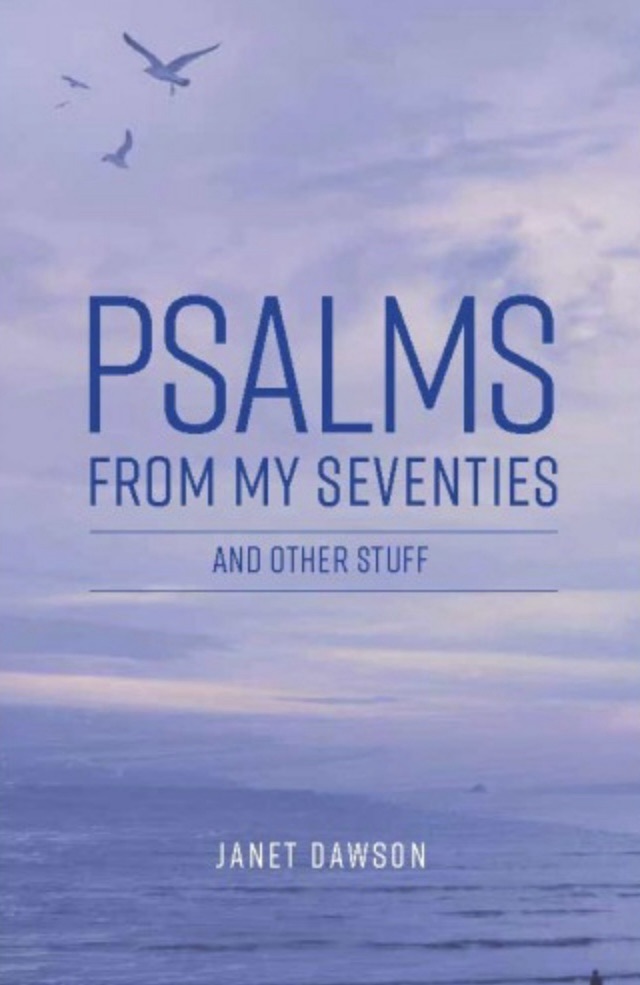
Retired Uniting Church minister Janet Dawson, friend and colleague, has just had a book of poems published by Coventry Press: Psalms from my seventies … and other stuff.

It’s a book filled with honesty. Janet lives as she writes; in this book, she exemplifies a deep spirituality grounded in the ordinariness of life.

There are prayers about the closed blinds … sharing communion with a lizard … shedding tears in the fragility of life … reflecting on how hard it is to let go, especially to let a go a life partner who is changing before her eyes. There is no pretence, no puffed-up terminology, no pious hope in these prayers; they are everyday, grounded in the ordinary—and thus, so profound.

Janet especially grapples with her uncomfortableness—her sense of alienation—in the regular weekly routines of worship. Can there be a theology that offers something better than unthinking platitudes and unacceptable dogmas? So Janet seeks to offer precisely this in her prayers.

She celebrates the music that has been “a joy and treasure all my life”, remembers “those who can’t rejoice”, questions “what did Jesus think he was doing?”, imagines people as “beautiful round objects with so many exciting possibilities”. One prayer offers images of God as “Quantum God, Eternal Becoming, Infinite Possibility, Ultimate Consciousness”, another rejoices as she leaves behind “the boat” of the church and immerses herself in “the Ocean” of the divine.

And to close: a short, punchy drama about God in the ordinariness of life. I recommend this book as a fine resource!

https://coventrypress.com.au/Bookstore/Psalms%20from%20my%20Seventies

I am sending my messenger to prepare the way (Mal 3; Advent 2C)

This coming Sunday, the lectionary offers two choices for the First Reading. One option, following on from the First Reading last Sunday (from Jeremiah 33) is the last chapter in the book of Baruch, a short book bearing the name of the Baruch who served as a scribe to Jeremiah. The book is included in the canon in Roman Catholic and Orthodox churches, but not in Reformed churches—and also not in Judaism.

The passage (Bar 5:1–9) invites the exiles from Jerusalem to “put off the garment of your sorrow and affliction … and put on forever the beauty of the glory from God” (Bar 5:1), to celebrate that “God will lead Israel with joy, in the light of his glory, with the mercy and righteousness that come from him” (Bar 5:9). It’s a joyful song that is quite appropriate for the season of Advent, as we prepare for the joyous celebrations—both sacred and secular—of the Christmas season.

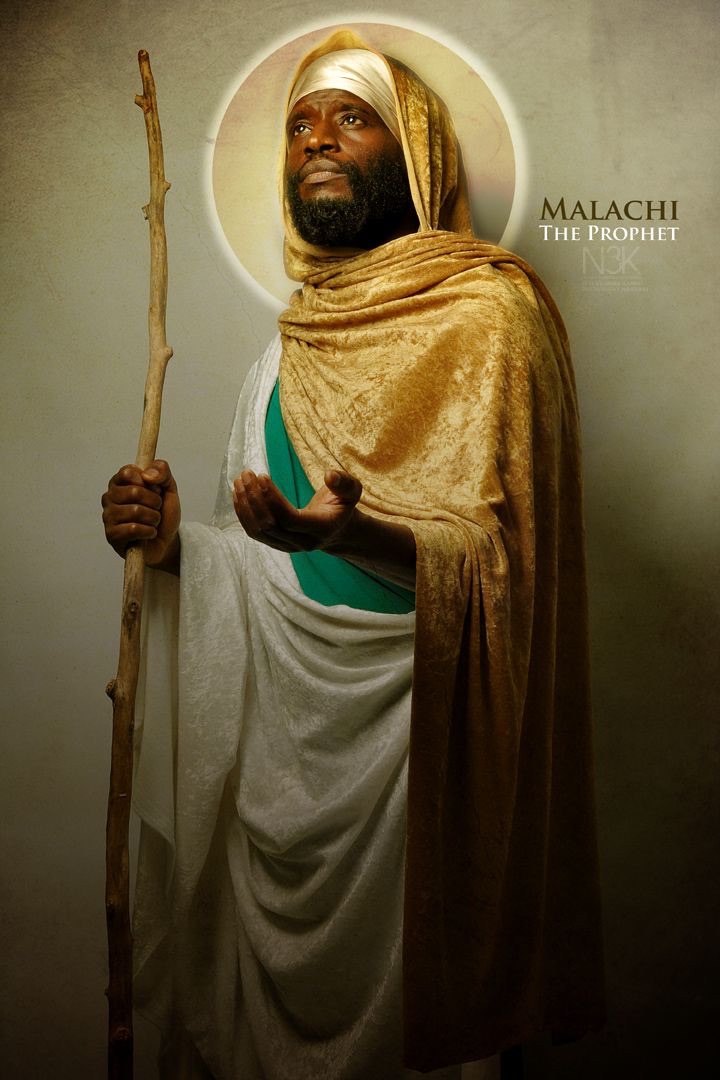
The alternative offering comes from the book of the prophet Malachi (3:1–4). The passage is obviously proposed because of correlates with the Gospel passage, in which John the Baptist declares that he comes to prepare for the coming of Jesus. “See, I am sending my messenger to prepare the way before me”, Malachi quotes the Lord as saying. “He is like a refiner’s fire and like fullers’ soap; he will sit as a refiner and purifier of silver, and he will purify the descendants of Levi and refine them like gold and silver”, Malachi declaims, providing a description that correlates well with the fiery declarations made by John.

Malachi was active after the Babylonian Exile; the  city and temple had been fully restored and worship was now active in the temple. In this context, Malachi called the people to repentance, starting with the priests, whom he attacks for their corruption (1:6–2:9); “the lips of a priest should guard knowledge, and people should seek instruction from his mouth, for he is the messenger of the Lord of hosts; but you have turned aside from the way; you have caused many to stumble by your instruction; you have corrupted the covenant of Levi, says the Lord of hosts” (2:8–9).

He then turns to the religious profanity of the people; “Judah has been faithless, and abomination has been committed in Israel and in Jerusalem; for Judah has profaned the sanctuary of the Lord, which he loves, and has married the daughter of a foreign god” (2:11), and instructs them to “take heed to yourselves and do not be faithless” (2:16). God threatens punishment in graphic terms: “I will rebuke your offspring, and spread dung on your faces, the dung of your offerings, and I will put you out of my presence” (2:3).

In the passage that is proposed for this coming Sunday, Malachi then looks to the coming of a messenger from God (3:1) who will bring judgment “like a refiner’s fire and like fullers’ soap; he will sit as a refiner and purifier of silver, and he will purify the descendants of Levi and refine them like gold and silver, until they present offerings to the Lord in righteousness” (3:2–3). 

He then identifies a range of ways by which social inequities are practised; God threatens, “I will be swift to bear witness against the sorcerers, against the adulterers, against those who swear falsely, against those who oppress the hired workers in their wages, the widow and the orphan, against those who thrust aside the alien, and do not fear me, says the Lord of hosts” (3:5). He notes that people regularly shortchange the Lord with incomplete tithes (3:8–15); rectifying this will result in blessings from God (3:10–12). 

The fierce imagery continues with a description of “the day [which] is coming, burning like an oven, when all the arrogant and all evildoers will be stubble; the day that comes shall burn them up, says the Lord of hosts, so that it will leave them neither root nor branch” (4:1). The motif of “the day” has run through the prophets, from before the exile (Amos 5:18–20; Isa 2:12, 17; 13:6–8; 34:8; Zeph 1:7, 14–15), during the years of exile (Jer 35:32–33; 46:10), and on into the years after the return from exile (Joel 2:1–3, 30–31).

What is required of the people is clear: “remember the teaching of my servant Moses, the statutes and ordinances that I commanded him at Horeb for all Israel” (4:4). Adherence to the covenant undergirds the claims of this prophet, as indeed it does with each prophet in Israel.

This short book ends with a memorable prophecy from Malachi: “Lo, I will send you the prophet Elijah before the great and terrible day of the Lord comes. He will turn the hearts of parents to their children and the hearts of children to their parents, so that I will not come and strike the land with a curse.” (4:5–6). These words are explicitly picked up in the Gospel portrayals of John the Baptist as the returning Elijah (Matt 17:9–13; Luke 1:17), turning the hearts of people so that they might receive the promise offers by Jesus. 

Whether Malachi himself understood these words to point to John and Jesus, of course, is somewhat dubious. But in the context of our Gospel passage for Advent 2, this passage is a timely offering—of a different nature from the Baruch passage, but relevant, nevertheless.

Prophesy, dream dreams, see visions, as the Spirit is poured out (Narrative Lectionary for Advent 2C; Joel 2)

As we continue in Advent, the Narrative Lectionary is continuing the sequence of passages from the prophets in ancient Israel. This coming Sunday, just four verses from the book of Joel are proposed (Joel 2:12–13, 28–29). The reason for these verses will become evident in my commentary that follows. But I think that the best approach is to begin with a consideration of the book as a whole; this gives the context (as best as we can determine) for those particular verses.

Joel speaks words of lament and calls for repentance amongst the people of Judah. Nothing in this book provides any clues as to the time when Joel was active. The identification of the prophet as “son of Pethuel” (Joel 1:1) gives no clue, as Pethuel appears nowhere else in the Hebrew Scriptures—indeed, the name Joel, itself appears nowhere else. The name appears to combine the divine names of Jah and El, suggesting that it may be a symbolic creation. Was Joel an historical person? or not?

Joel calls on the “ministers of God” to “put on sackcloth and lament” (1:13); this reminds us of the response of the pagans in Nineveh (Jonah 3), whilst his remonstrations that “the day of the Lord is near” (1:15) echoes the motif of “the day” already sounded by other prophets (Amos 5:18–20; Isa 2:12, 17; 13:6–8; 34:8; Zeph 1:7, 14–15; Jer 35:32–33; 46:10). 

This day forms the centrepiece of Joel’s undated prophecies, as he describes that day as “a day of darkness and gloom, a day of clouds and thick darkness!” (Joel 2:2), when “the earth quakes before them, the heavens tremble, the sun and the moon are darkened, and the stars withdraw their shining” (2:10). He describes the response of the people “in anguish, all faces grow pale” (2:6).

However, Joel adheres to the constant thread running through Hebrew Scriptures, that the Lord is “gracious and merciful, slow to anger, and abounding in steadfast love, and relents from punishing” (2:13). Because of this, he yearns for the people to “turn with all your heart, with fasting, with weeping, and with mourning” (2:12), sensing that there might be hope of restitution for the people. (These two verses form the start of the excerpt proposed for this Sunday by the Narrative Lectionary.)

Joel calls for the people to gather (2:15–16); the oracle that follows paints a picture of abundance and blessing (2:18–27), affirming that “my people shall never again be put to shame” (2:27). 

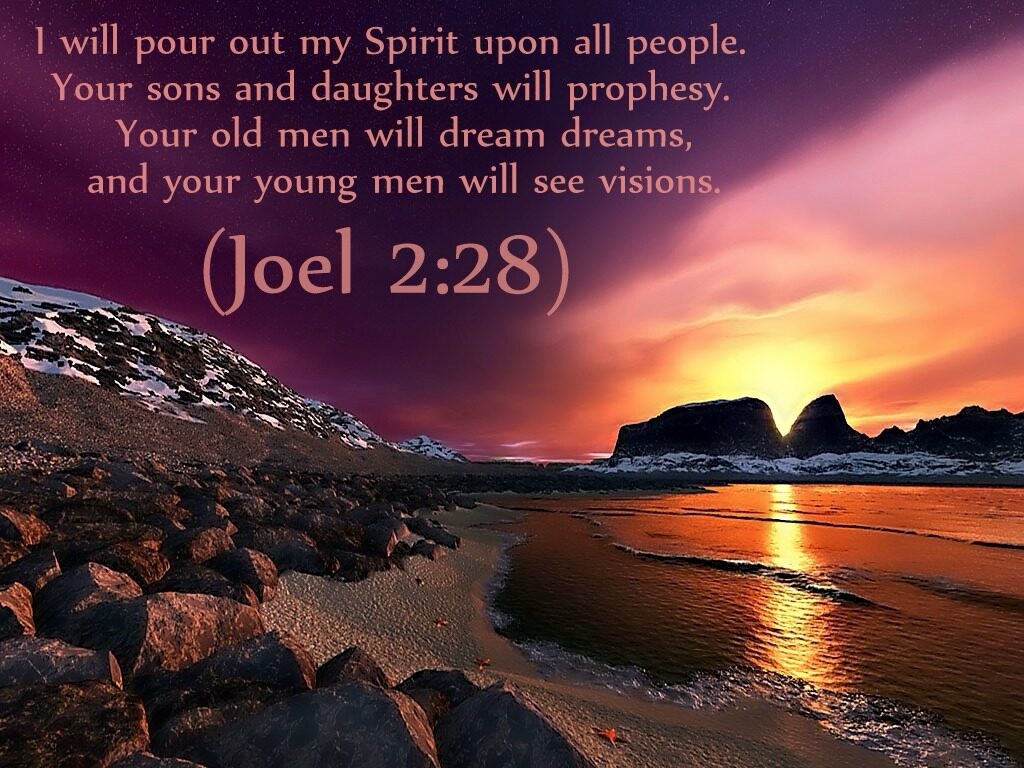
The prophet then speaks words which have been given a central place in the later story of the Christian church, when he foreshadows that the blessings of God will be manifest through the outpouring of the spirit: “your sons and your daughters shall prophesy, your old men shall dream dreams, and your young men shall see visions; even on the male and female slaves, in those days, I will pour out my spirit” (2:28–29).

The promise that is set forth here is specifically for “all flesh”; this universal vision informs the whole outward impulse of the movement of followers of Jesus, after the day of Pentecost, which Peter interprets as being a fulfilment of this prophecy (Acts 2:14–21). And that most likely explains why these two verses (2:28–29) form the concluding section of the passage proposed by the Narrative Lectionary.

The day of the Lord that is then envisaged (2:31) will signal a significant reversal for Israel. The Lord laughs at other nations (3:1–8), a reversal that pivots on a turn from despair to hope, from the threats of judgement to a glorious future (3:9–21). Joel repeats the irenic vision of swords being beaten into ploughshares (3:10; see Isa 2:4; Mic 4:3); he sees a ripe harvest (3:13), the land will drip with sweet wine, and there will be milk and water in abundance (3:18). The voice of the Lord “roars from Zion, and utters his voice from Jerusalem, and the heavens and the earth shake” (3:16; cf the similar pronouncement of Amos at Am 1:2; 3:8).

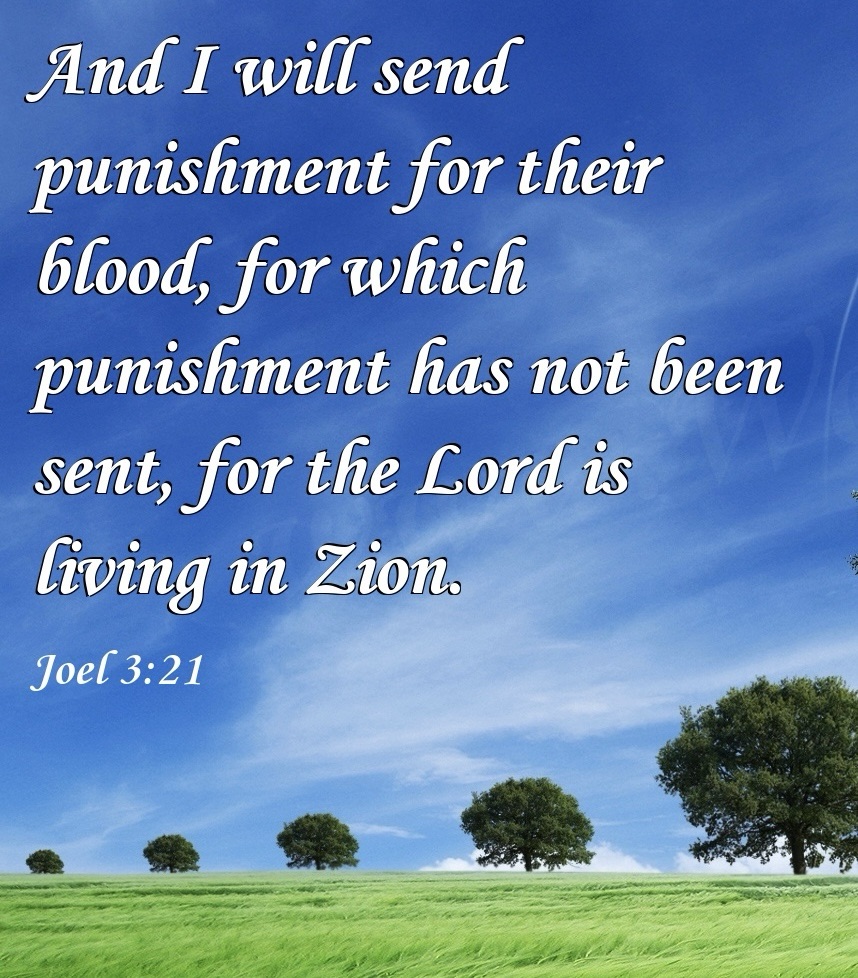
The last word of this book, “the Lord dwells on Zion” (3:21), provides assurance and certainty for the future. These words of hope promises a peaceful future for the nation. When Joel might have been speaking these words cannot be definitively determined; it could have been under the Assyrian threat, during the Babylonian dominance, in the time of exile, or after the return to the land—whatever it was, the promise of hope holds good in each of these scenarios. As, indeed, we might well claim it for our present times.