
Every Sunday throughout the Christian year (save for the six Sundays in the season of Easter), the Revised Common Lectionary provides a passage from Hebrew Scripture as the First Reading in the set of four readings for that Sunday. (During Easter, a passage from Acts stands as the First Reading, providing stories from the early years of the movement which Jesus founded.)
Each year, during the season of Epiphany, the First Readings relate to the prophetic figures of ancient Israel. In Year C (this year), they are drawn from the books of Isaiah and Jeremiah. I think we need to be wary how we hear and interpret these prophetic passages. There is often a temptation to hearvthesemoldermreadings and argue that, because of what the Gospel passage says, they have now been “ fulfilled” in Jesus.
That’s a danger that we should work carefully to avoid—for if we simply take Hebrew Scriptures as providing the “set up” which is being “fulfilled” in Jesus, we are running the risk of an inappropriate appropriation of the older texts. It’s a path that can lead us to a supercessionist attitude towards Hebrew Scriptures and, by extension, to Judaism. (By supercessionism I mean “the belief that Christians have replaced Jews in the love and purpose of God”.) This post is designed to steer us in a different direction.
Each year, the Feast of Epiphany includes Isaiah 60:1–6 as the First Reading. In this passage, the prophet foresees that “nations shall come to your light, and kings to the brightness of your dawn” (Isa 60:3); he specifies that when they come to the light of the Lord, “they shall bring gold and frankincense, and shall proclaim the praise of the Lord” (Isa 60:6). The reason for reading this on Epiphany is obvious—it correlates well with the story in Matthew of when the magi came to visit Jesus, and “they offered him gifts of gold, frankincense, and myrrh” (Matt 2:11).
The first Sunday after the Feast of Epiphany is always the day on which the Baptism of Jesus is recalled. One year (Year B) places the beginnings of the priestly creation account (Gen 1:1–5) alongside this Gospel story. In the other two years, passages from Second Isaiah are offered; for this year, Year C, this is Isaiah 43:1–7, which includes the affirmation, “do not fear, for I have redeemed you; I have called you by name, you are mine; when you pass through the waters, I will be with you” (Isa 43:1b—2). The presence of water in both of these passages seems to be the reason for their linking with the baptism of Jesus.
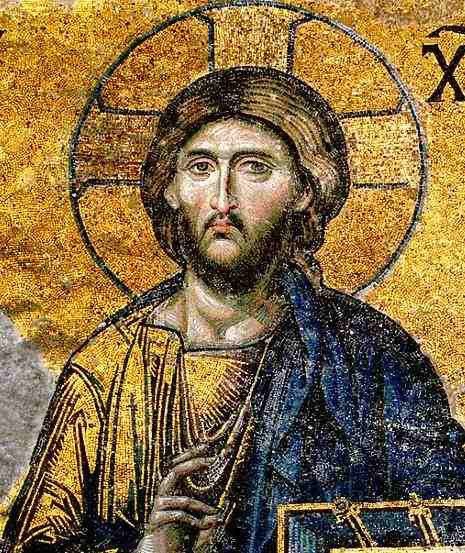
The sequence of passages will continue with selections from Third Isaiah (Isa 62:1–5, Epiphany 2C), First Isaiah (Isa 6:1–13, Epiphany 5C), and two excerpts from Jeremiah (Jer 1:4–10, Epiphany 4C, and Jer 17:5–10, Epiphany 6C). A section of Nehemiah 8 is offered on Epiphany 3C, while the sequence concludes with a story recounting the moment when Joseph revealed himself to his brothers when they had come to Egypt (in Gen 45) on Epiphany 7C.
I think it is noteworthy that two of these passages relate specifically to “call”. For Epiphany 4C, the call of the young prophet Jeremiah is placed alongside the Lukan account of the reception accorded to the young(ish) Jesus when he spoke at the synagogue in his home town. Jeremiah is told by the Lord that the message he will speak to his people will be about “to pluck up and to pull down, to destroy and to overthrow, to build and to plant” (Jer 1:10). It won’t be a straightforward task for Jeremiah—as the rest of the book reporting his oracles confirms.
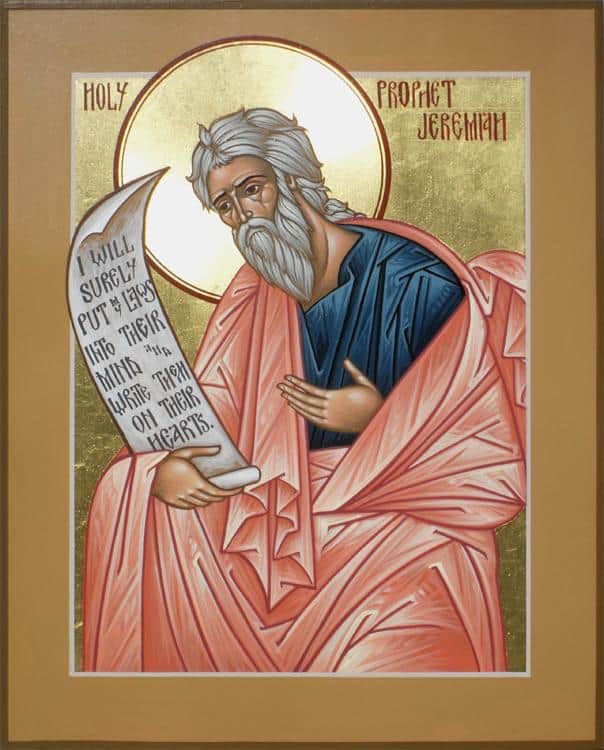
In like manner, Jesus is initially met with amazement “at the gracious words that came from his mouth” (Luke 4:22). However, after he recounts older stories in which he commends the faith of outsiders (a widow of Zarephath, a leper of Syria), the people turn on him, “drove him out of the town, and led him to the brow of the hill on which their town was built, so that they might hurl him off the cliff” (Luke 4:29). The duality of positive and negative responses, evident throughout the ministry of Jesus, is signalled in this early, programmatic incident.
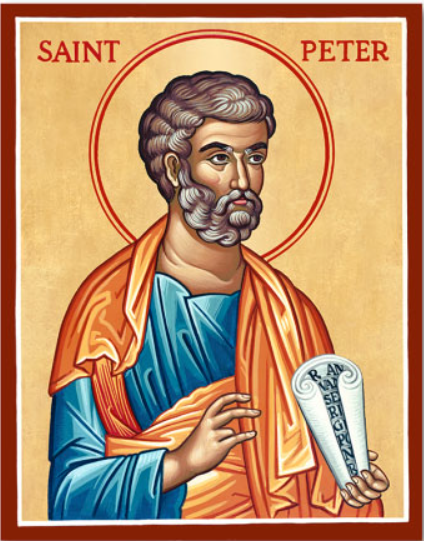
For Epiphany 5C, when the Gospel moves on the recount the call of Simon Peter and those who were fishing with him (Luke 5:1–11), the Hebrew Scripture passage placed alongside this is the narrative of the call of Isaiah (Isa 6:1–13). Simon and his fellow fishermen were beside the lake of Genessaret, while Isaiah was in the Temple in Jerusalem. Both men, however, recognize that they are in the presence of an awesome power. Isaiah cries out, “Woe is me! I am lost, for I am a man of unclean lips, and I live among a people of unclean lips; yet my eyes have seen the King, the Lord of hosts!” (Isa 6:5). Simon Peter “fell down at Jesus’ knees, saying, ‘Go away from me, Lord, for I am a sinful man!’” (Luke 5:8).

Isaiah’s commissioning alerts him to the reality that those to whom he speaks will be struck with incomprehension; they will “not look with their eyes, and listen with their ears, and comprehend with their minds, and turn and be healed” (Isa 6:10). His role will be to call for repentance from a sinful people. Simon Peter is given the charge, “from now on you will be catching people” (Luke 5:10). That imagery also refers to the reality that in the prophetic rhetoric of years past, the metaphor of fishing for a human being has indicated the means of carrying out the judgement of God (Jer 16:16–18; Hab 1:14–17; Ezek 29:4–5). See
The two Hebrew Scripture call narratives thus inform and enrich the Gospel passages that are heard alongside them on those days. A similar dynamic is at work on Epiphany 6C, when the Gospel offers a set of blessings and curses spoken by Jesus (Luke 6:20–26). Alongside this is a pair of sayings, a curse and a blessing, that Jeremiah spoke to Israel: “cursed are those who trust in mere mortals … blessed are those who trust in the Lord” (Jer 17:5–8). Both Jeremiah and Jesus address their contemporaries with a challenge through their words. The challenge is to meet the testing of the Lord (Jer 17:10) and to receive the “great reward” awaiting in heaven (Luke 6:23).
And perhaps the tale of reconciliation told in Genesis 45 dramatically illustrates the central theme of the words of Jesus which are offered on Epiphany 7C: “love your enemies, do good, and lend, expecting nothing in return … be merciful, just as your Father is merciful” (Luke 6:35–36). Joseph exemplifies what Jesus teaches.
As I noted above, I think there is always a temptation to hear a passage from the older scriptures, inherited from the ancient stories of Israel, as being “fulfilled” in a story told in the later scriptures, formed by the early Church. This pattern draws on a flat reading of the statement by Jesus that “everything written about me in the law of Moses, the prophets, and the psalms must be fulfilled” (Luke 24:44). It fosters a perspective that sees everything in Hebrew Scriptures as material that Jesus “brought to fulfilment”. It contains an implicit ideology that anything that took place in Judaism was “incomplete” and “in need of fulfilment”. The pathway into supercessionism is clear. For further discussion of supercessionism, see https://johntsquires.com/tag/supercessionism/
By contrast, I think that each of these paired passages can be read in a way that accords greater value to the Hebrew Scripture texts. I am reminded of what Richard B. Hays has written about in his book Echoes of Scripture in the Gospels (Baylor, 2017). Hays describes what he labels as figural reading, which is to read back from the Gospel into the older texts and see patterns and figures at work that may not have been evident at the time they were created.
The later texts in the New Testament can throw light on the passages in Hebrew Scripture, without insisting that hey “predict Jesus” and are “fulfilled” in Jesus. We can notice, not only how the NT writers shaped their words in ways that drew from Hebrew Scripture passages, but also how the internal dynamics in the later texts both utilise and illuminate those earlier passages, drawing forth from them new levels of meaning.
As the blurb for this book states, “He shows how each Gospel artfully uses scriptural echoes to re-narrate Israel’s story [and] to assert that Jesus is the embodiment of Israel’s God.” I think that is a really helpful way to think about how the paired passages work together, informing and enlightening each other. And that’s an appropriate thing to be looking for in those season of Epiphany—mutual understanding and enlightenment!























 An Informed Faith