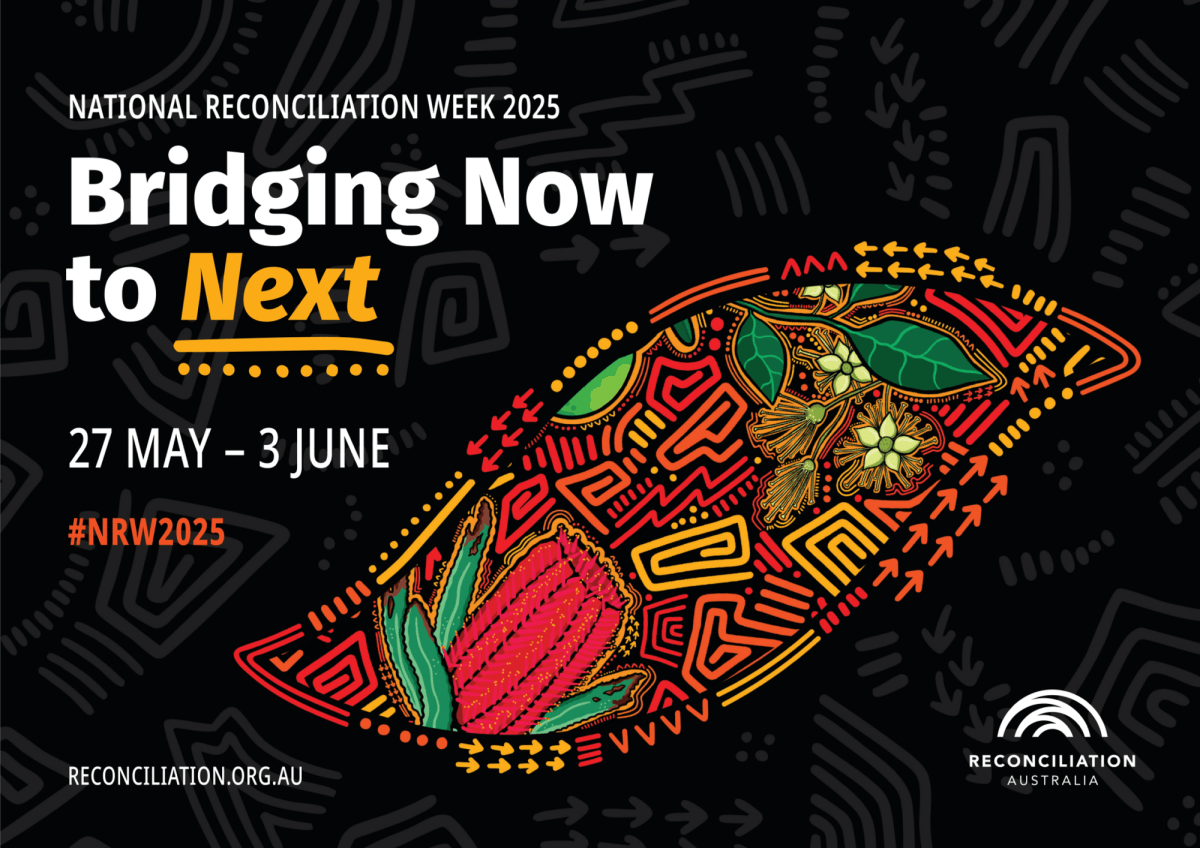
Reconciliation Week 2025: Bridging Now to Next

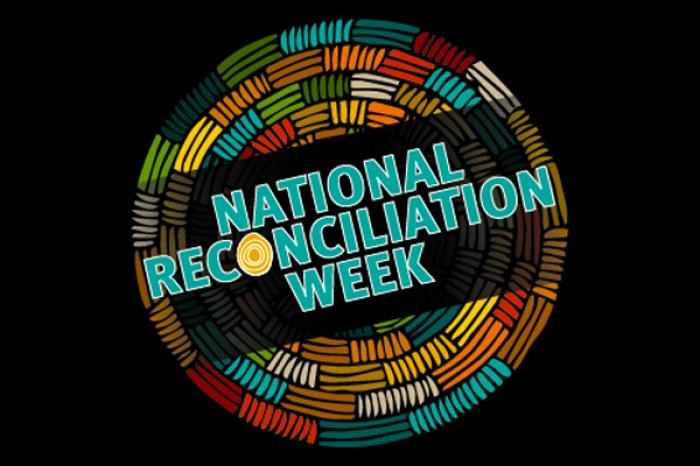
National Reconciliation Week runs each year from 27 May to 3 June. 27 May is the anniversary of the 1967 referendum which recognised the indigenous peoples of Australia and gave them the right to vote. 3 June is the day in 1992 that the legal case brought by Eddie (Koiki) Mabo was decided and the lie of terra nullius was laid bare by Koiki in the Australian High Court.

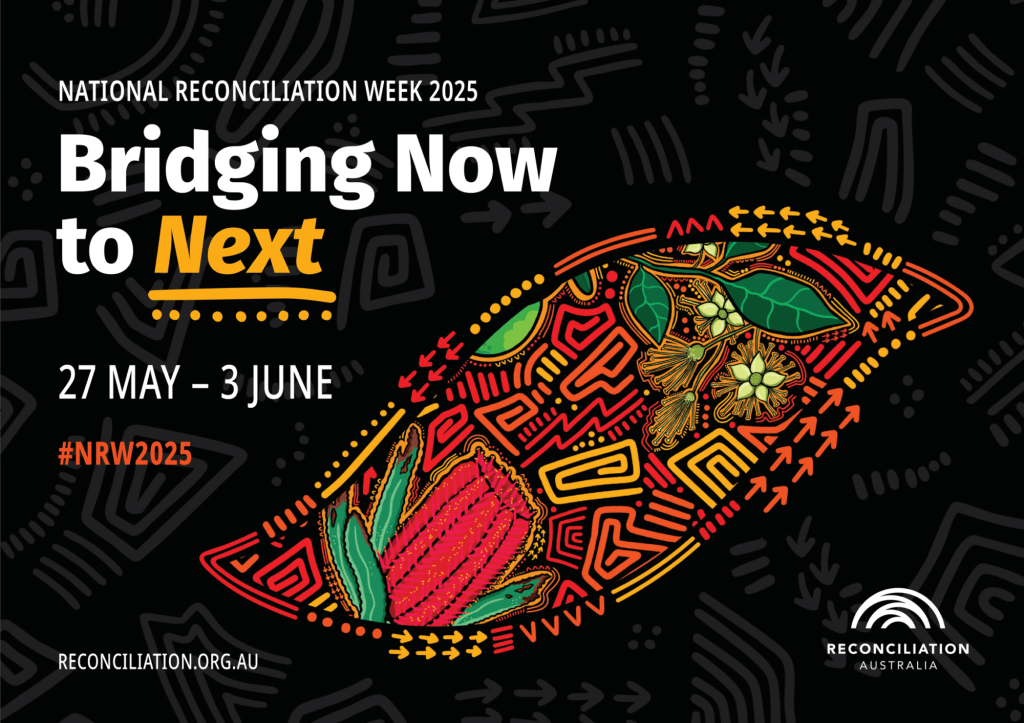
The theme for this year is Bridging Now to Next. This theme reflects the ongoing connection between past, present, and future, urging us to look ahead and continue the push forward as past lessons guide us.
Australia had an opportunity to take an important step forward in 2023, with the proposal that our Constitution incorporate recognition of the first inhabitants of the nation, who have cared for the countries of this continent for millennia. Unfortunately, the reluctance of conservative elements in our political leadership to embrace this proposal meant that the proposal failed.

That does not mean that everything to do with Indigenous matters is now on the back burner, as I have (unfortunately) heard a number of times since the 2023 referendum. Indeed, there is a need to press on ahead with the reconciliation journey that we really do need to undertake in this country. 

Elizabeth and I have been pleased to find in Dungog a group dedicated precisely to to that purpose; Reconciliation Dungog, a group of people which aims “to support, educate and inspire our community to engage in reconciliation activities”.

See https://reconciliationdungog.square.site

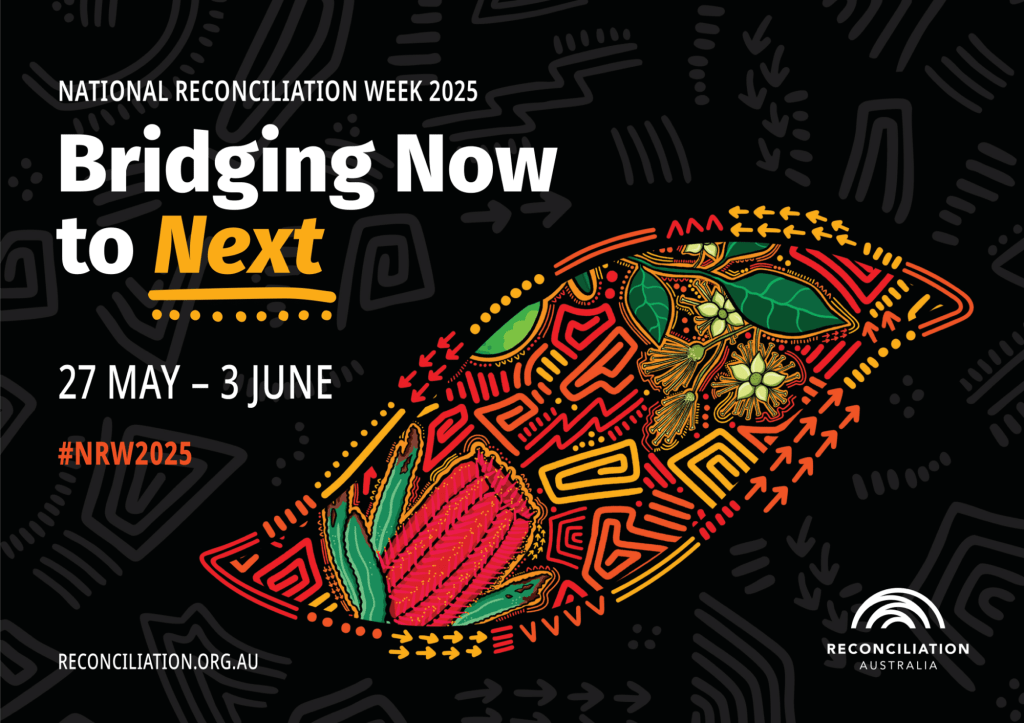
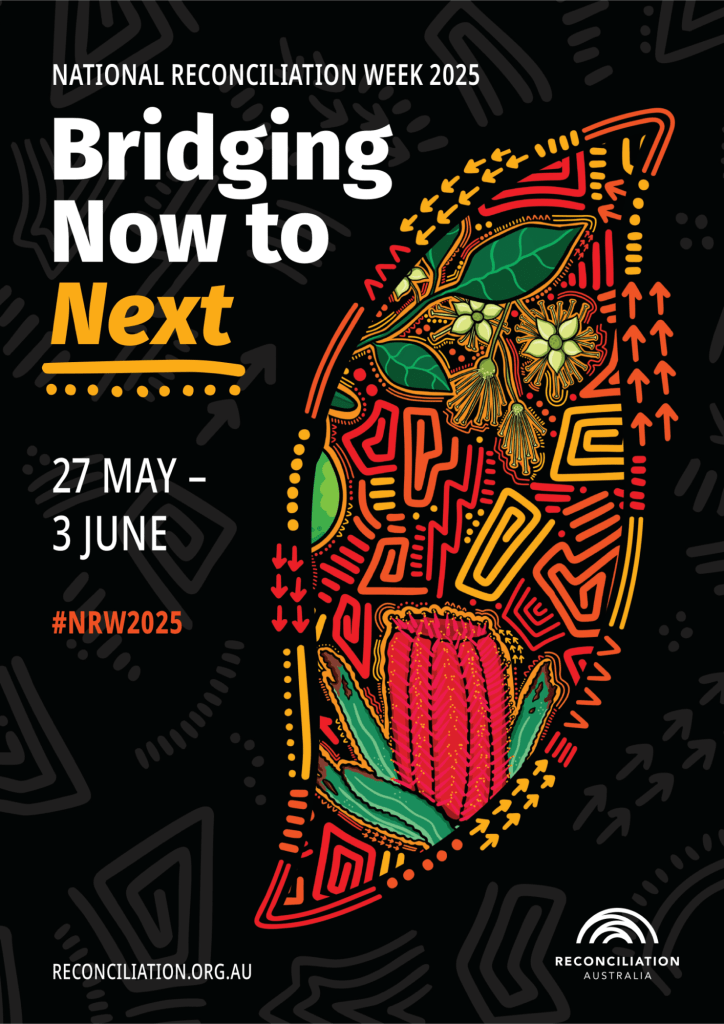
Artwork relating to the theme of Bridging Now to Next has been created by Kalkadoon woman Bree Buttenshawn. She is a Kalkadoon woman (in the Mount Isa region of Queensland) who is currently living on  Quandamooka Country (in the Moreton Bay region, near Brisbane). She works as a digital artist under the artist pseudonym of Little Butten and seeks to integrate her Aboriginal culture with a contemporary digital approach. 
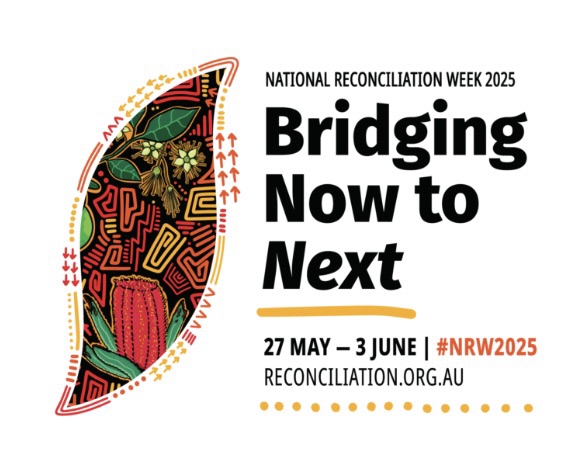
The website of Reconciliation Australia states that “the artwork features native plants − known for regenerating after fire and thriving through adversity − [which] symbolise our collective strength and the possibilities of renewal.”

The website continues, “This is a time for growth, reflection, and commitment to walking together. Reconciliation must live in the hearts, minds and actions of all Australians as we move forward, creating a nation strengthened by respectful relationships between the wider Australian community, and Aboriginal and Torres Strait Islander peoples.”

National Reconciliation Week began as the Week of Prayer for Reconciliation in 1993 (the International Year of the World’s Indigenous Peoples). It was supported by Australia’s major faith communities: Christian, Jewish, Muslim, and others. In 1996, the Council for Aboriginal Reconciliation launched Australia’s first National Reconciliation Week

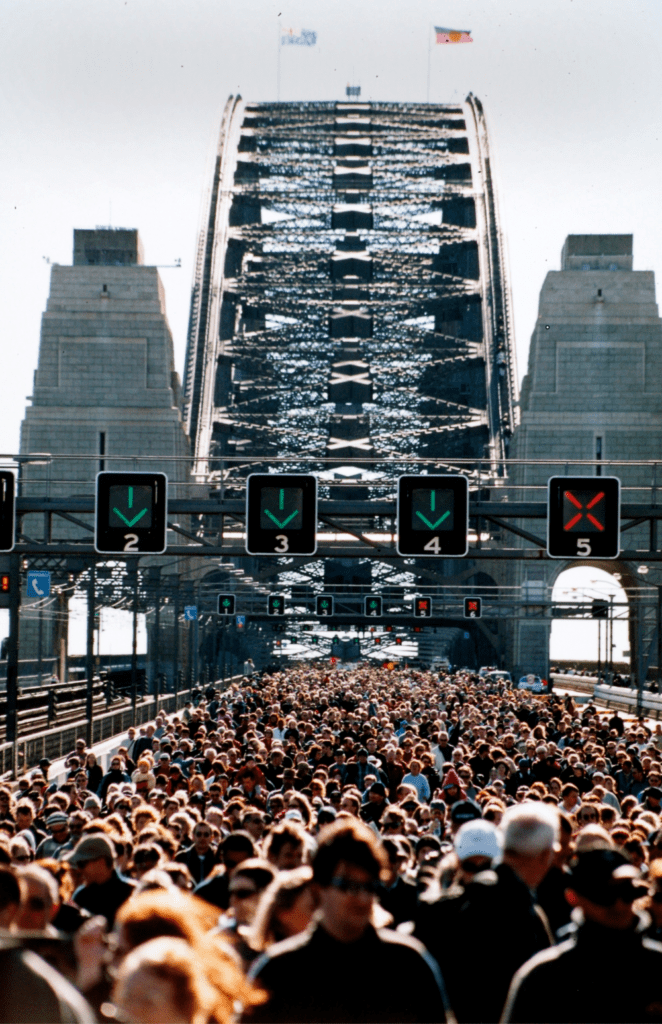
In the year 2000, hundreds of thousands of Australians walked across Sydney Harbour Bridge (see image above), and other bridges around Australia, to show support for Aboriginal and Torres Strait Islander aspirations. A few months before that, the Council for Aboriginal Reconciliation had presented its final reports to the Australian people, The Australian Declaration towards Reconciliation and The Roadmap for Reconciliation, at the Corroboree 2000 event in Sydney in May 2000. 

Then, in 2001, Reconciliation Australia was established to continue to provide national leadership on reconciliation. This week (#NRW) has been held each year since then. It is celebrated in workplaces, schools and early learning services, community organisations and groups, and by many individuals Australia-wide. The #NRW2025 theme, Bridging Now to Next, was created in collaboration with Little Rocket, a First Nations owned and operated marketing and creative agency.
See 

https://littlebutten.com/pages/artist-portfolio

See also
Saying Sorry—beginning the process of Telling Truth

Today is National Sorry Day. It begins National Reconciliation Week, which runs from 27 May to 3 June each year. This week was initiated in 1996 by Reconciliation Australia, to celebrate Indigenous history and culture in Australia and promote discussions and activities which would foster reconciliation.

The dates of National Reconciliation Week hold special historical significance. On 26 May 1997, the Bringing Them Home report was tabled in Federal Parliament. This report addressed them impacts of the fact that in the late 19th century and throughout the 20th century, Australian government policies resulted in many Stolen Generations, in which thousands of Indigenous children were separated, often forcibly, from their families, with the aim of removing them from their culture and turning them into “white Australians”.

Because of this, the date 26 May carries great significance for the Stolen Generations, as well as for Aboriginal and Torres Strait Islander communities, and its supporters among non-indigenous Australians. The word sorry is used in First Nations cultures in relation to the rituals surrounding death—the process of grieving is often call Sorry Business. So sorry indicates an acknowledgement of loss and offers empathic understanding to those who grieve.

Sorry Day is an annual event that has been held around the continent on 26 May since 1998, to remember and commemorate the mistreatment of the country’s Aboriginal and Torres Strait Islander People.

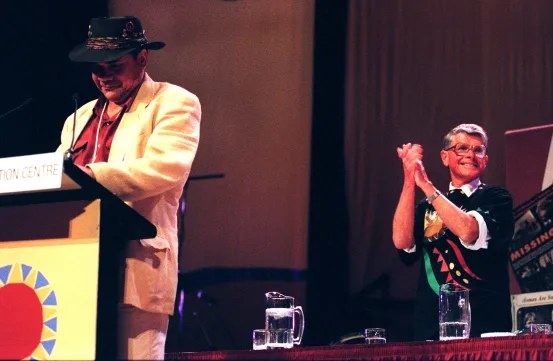
Mick Dodson and Ronald Wilson,
Commissioners of the Bringing Them Home Report
at its launch date on 26 May 1997

27 May marks the anniversary of the 1967 referendum in Australia, which gave the vote to Aboriginal and Torres Strait Islander people, while 3 June marks the anniversary of the 1992 judgement by the High Court on the Mabo v Queensland case.

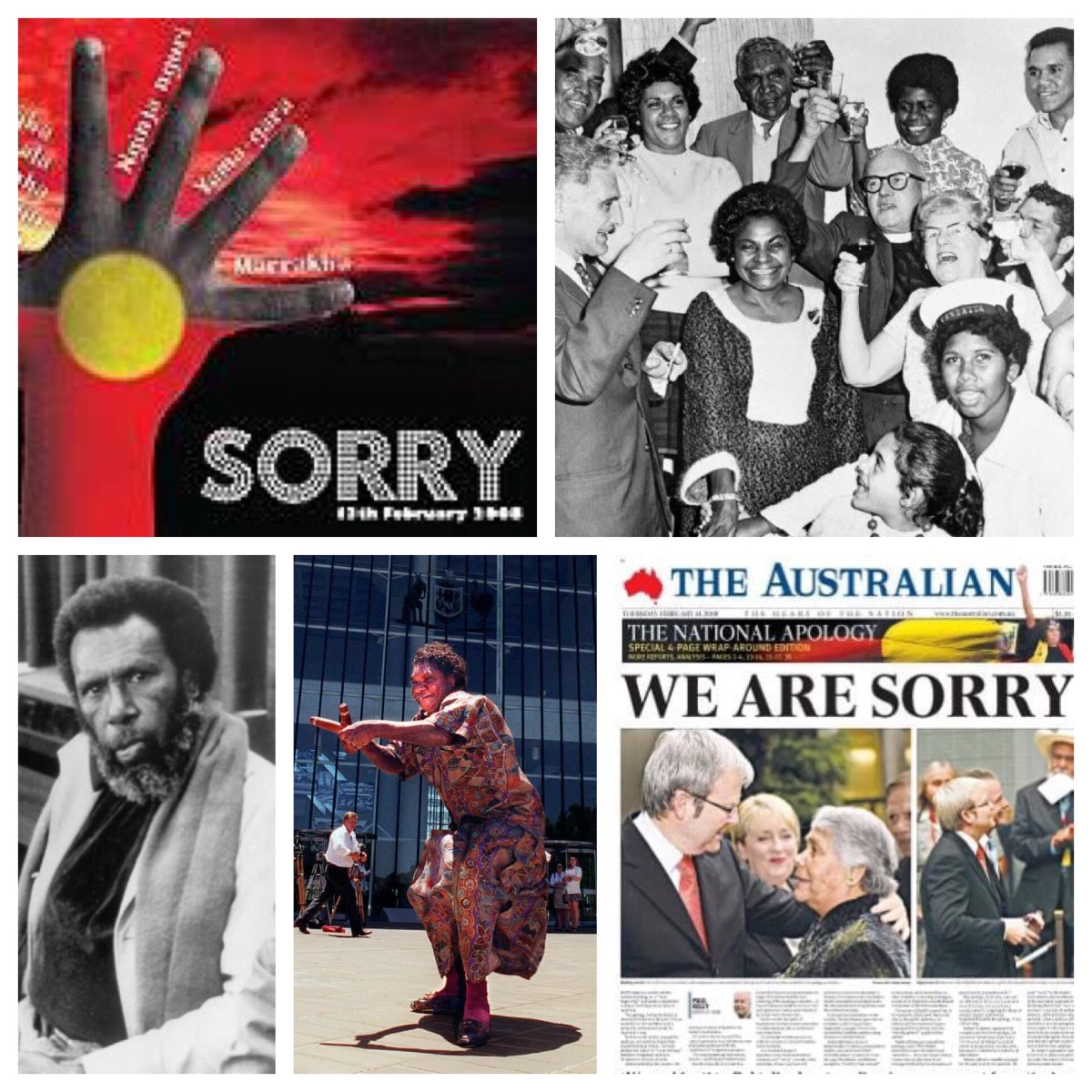
Sorry Day (26 May) and the National Apology (made in Federal Parliament on 13 February 2008), the 1967 referendum, the 1992 Mabo decision, along with the Wik decision on native title (delivered by the High Court on 23 December 1996), are considered to be key events in addressing the historic mistreatment of indigenous Australians, and in taking steps towards reconciliation and restorative justice.

But these were only steps. The path still lies ahead. We need to take more steps, walking together, to foster deeper relationships, advocate for a more embedded restoration of justice, work for wider and more lasting reconciliation within our communities. The current discussion is focussed on a process that will lead to a referendum on the proposal that the Australian Constitution recognise the First Peoples as custodians of the land from millennia before the British Invasion and colonisation of 1788, and the establishment of a permanent Voice to the federal parliament.

This step is but one on a pathway that stretches ahead of us, well into the succeeding generations still to come in Australia. We need to hear and understand the Truth that was set forth in the 1997 Report, and indeed to listen to the Truth that is being stated by First Peoples leaders in our own time, and be willing to respond with sorry and with actions that lead to justice for the First Peoples of this continent and it’s surrounding islands.

The theme for National Reconciliation Week 2025 is Bridging Now to Next. This theme reflects the ongoing connection between past, present, and future, urging us to look ahead and continue the push forward as past lessons guide us.

To seek reconciliation, we need to speak together, commit together, and act together. We are all in this together. May we tread that pathway with compassion and intent.

See https://www.reconciliation.org.au/national-reconciliation-week/

Click to access 150520-Sorry-Day.pdf

https://australianstogether.org.au/discover/australian-history/1967-referendum/

https://australianstogether.org.au/discover/australian-history/mabo-native-title/

The picture montage shows a Sorry Day poster, celebrations after the 1967 referendum, Eddie Mabo who brought the High Court case that was resolved in 1992, Gladys Tybingoompa dancing outside the high court in Canberra on 23 December 1996 following the Wik people’s native title win, and the front page of a national newspaper reporting the National Apology in 2008.