The Bruyns of Brown Street (2): Early Landholders in Brown Street

Continuing the story of the half-acre block in the centre of the town which Elizabeth and I bought five years ago; the block which has the house that we are now living in.

It turns out that we are just the latest in a line of people who have owned this particular block since soon after it was put up for sale, under the land ownership system of the invading British colonisers, in 1842. We know that this land had been Gringai land for millennia prior to the arrival of the British. We know also that they systematically and relentlessly marginalised the First Peoples and laid claim to the land, both locally, and indeed right across the continent we now know as Australia.

We know the names of the previous owners of this block under British colonial law from the legal documentation that came with the title to the land. And we have been able to find something about each of these owners through searching the internet and sifting the material we have found.
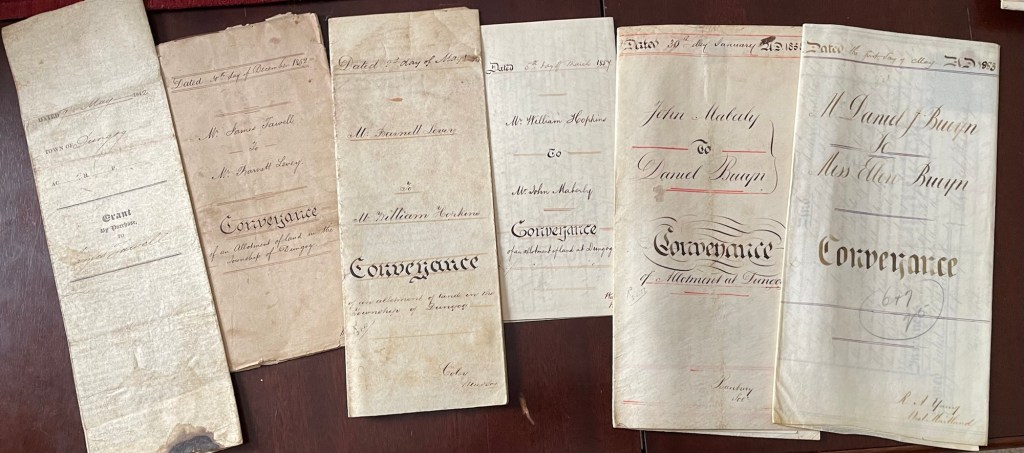
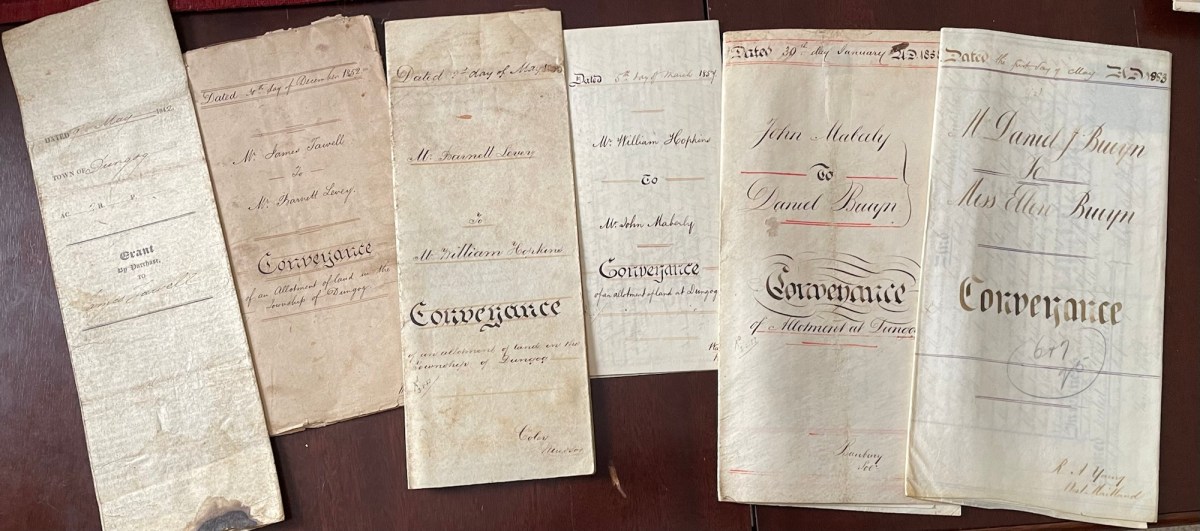
The set of documents from the 19th century
relating to land in Brown St, Dungog, which we acquired
when we purchased the house and land.

The block of land which we recently bought was originally bought under the system of colonial landholding by James Fawell on 9 May 1842. It cost him £4.0.0. The legal documentation identifies it as “Lot No. Seven Section No. Five in the Town of Dungog”. Section Five is the block bounded by Dowling, Brown, Lord, and Mackay Streets. Dowling St runs along the ridge beside the Williams River, and it developed early into the street of commerce for the town.

The land on Brown St that James Fawell bought is described in the legal documentation as “two roods situate in the Town of Dungog County of Durham, bounded on the North by one chain of the South side of Brown Street, bearing East on the East by a line dividing it from allotment number eight, bearing South five chains on the South by a line dividing it from allotment number four, bearing West one chain and on the West by a line dividing it from allotment number six, bearing North to Brown Street”.
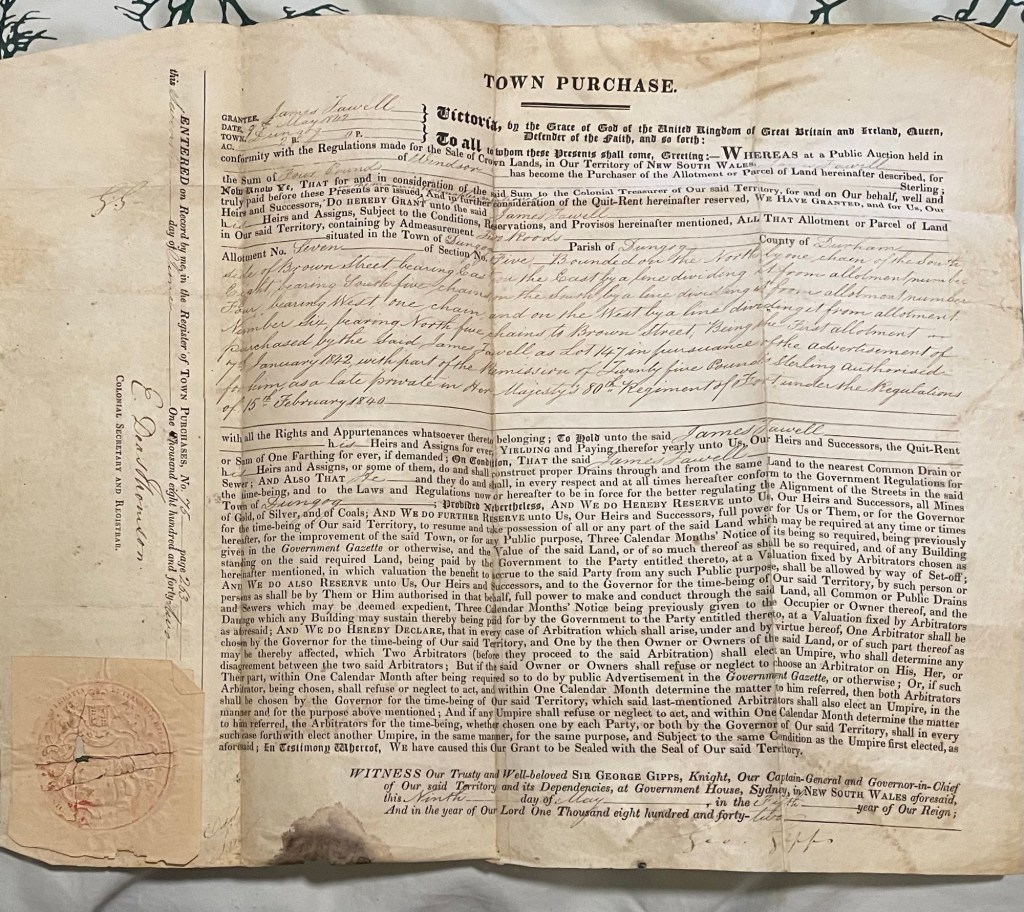
The 1842 document granting land in Brown Street,
Dungog, to James Fawell

All of this means it was a long block, fronting Brown St, a little more than 20 metres (one chain) wide and just over 100 metres (five chains) wide. In total, the “two roods” equates to half an acre (since one rood equals a quarter-acre).

After Fawell bought the land at Public Auction in 1842, there were a number of owners of the land over the ensuing years. The land was purchased by Barnett Levey (in 1852), sold to William Hopkins (in 1855), then sold to John Maberly (in 1857), and in the next year (1858) to Daniel Bruyn.

There is no indication from the legal papers that any of these owners either built a house on the land, or lived on the land. Indeed, Daniel Bruyn is the first owner to be identified as being “of Dungog”; those before him, apart from Fawell, all lived in Windsor. This reflects what is known of Dungog in the mid—19th century.

Throught the 1800s, it seems that there was relatively little building west of Lord St. The main populated area was on Dowling St and within a block either way on its various cross streets (Hooke, Brown, Mackay, Chapman, Myles, and Mary). One John Wilson, born in Dungog in 1854, is said to have described the town as a “sea of bush and scrub, with a house here and there”, and with bullock teams and drays having “to wend their way between stumps and saplings”.
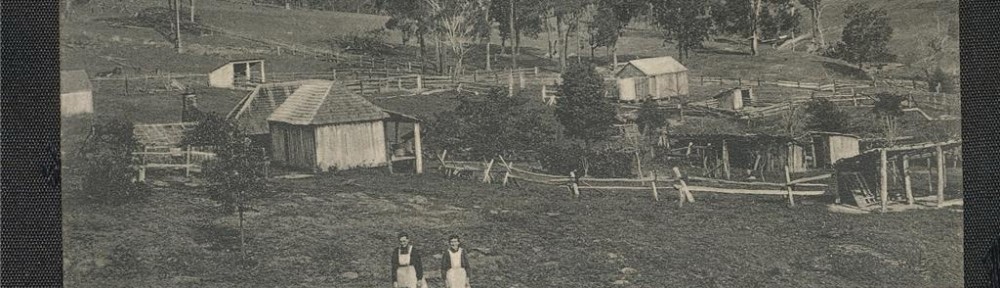
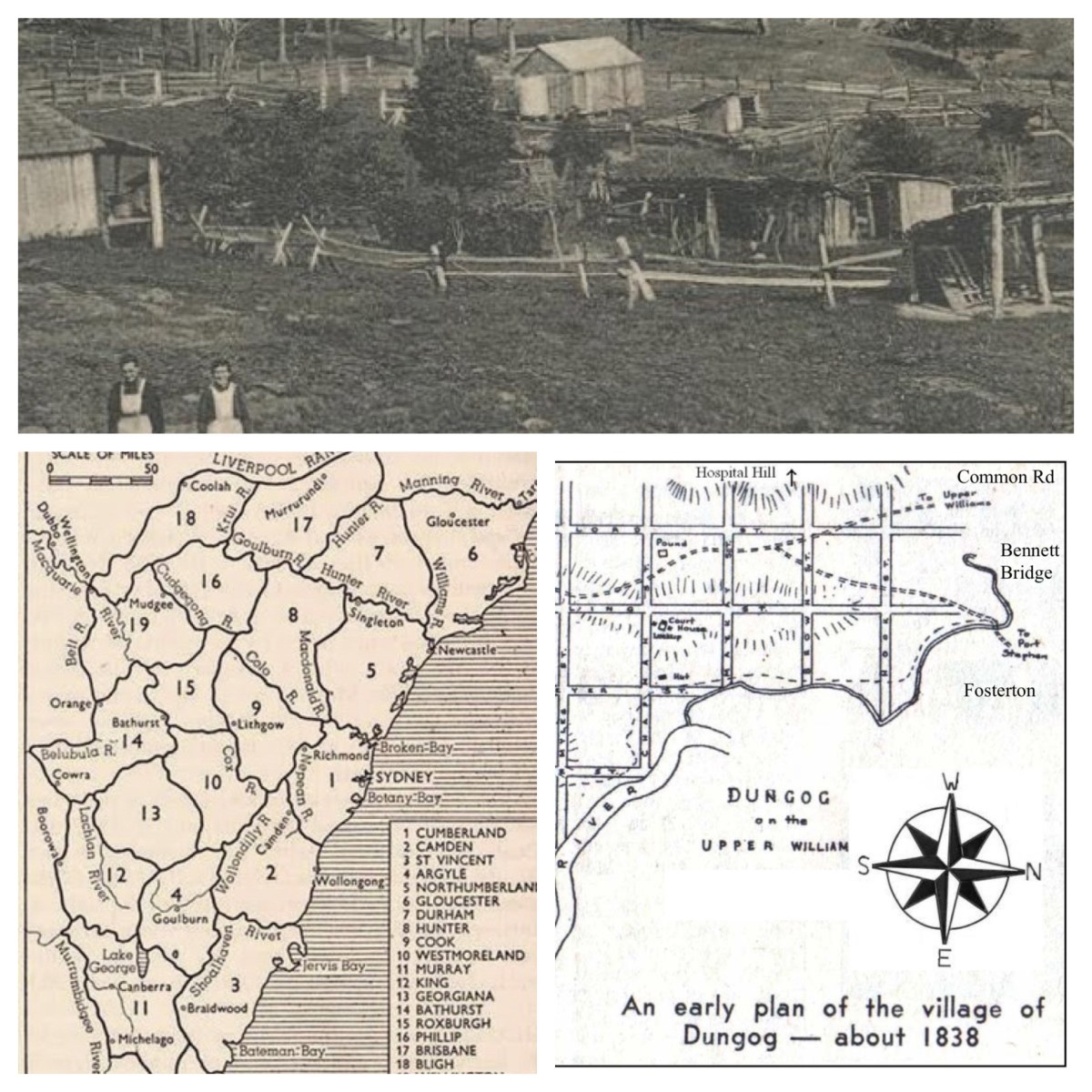
A photo of early Dungog, from History in the Williams River Valley

Even in 1892, at the opening of Dungog Cottage Hospital on Hospital Hill to the west, the trek up was largely through open countryside. Boosted by the development of the dairy industry from the 1890s, Dungog grew more rapidly; as with all towns north of Newcastle, a further boost occurred with the arrival of the railway in 1911.

Indeed, many of the finest houses and commercial buildings still standing in the town were built from the end of the nineteenth century, into the first two decades of the twentieth century. Coolalie (206 Dowling St) and Coimbra (72 Dowling St), as well as the then Angus & Coote building (146–148 Dowling St) and the Dark stores (184–190 Dowling St) all date from this period of expansion. Which may well provide a clue regarding the house eventually built on our Brown St block of land.
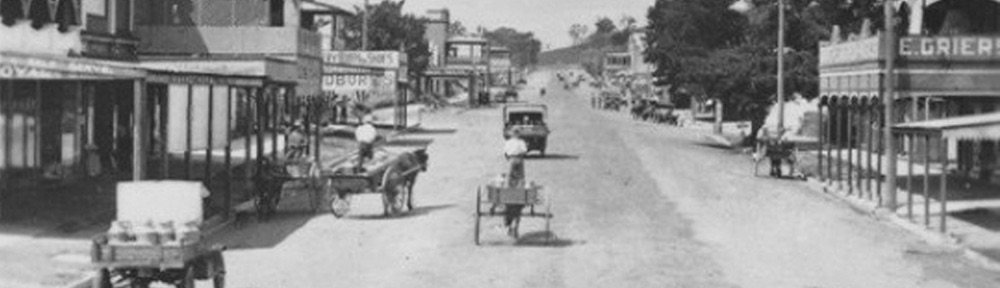
Dowling St, Dungog, around 1910; photo from
History of the Williams River Valley

Who were these five men who owned, in turn, Lot Seven in Section Five of the Town of Dungog, over the 16 years from 1842 to 1858? All had their origins in England. I have been able to find out some basic information about some of them, and with some educated hunches, perhaps also about the others. It seems to me that, with the exception of the fifth of these five men, each of them bought the property in order to leverage their possession to increase their finances. Certainly, each time the land was sold, it brought a profit to the seller.

James Fawell purchased the block of land on 9 May 1842 for £4. The Grant by Purchase document states that he was using “part of the Remission of Twenty five Pounds Sterling Authorised for him as a late private in Her Majesty’s 80th Regiment of Foot under the Regulations of 15th February 1840”. This was a regiment raised in 1793 in Staffordshire; it saw action in Flanders and the Netherlands and it was part of the British force that expelled Napoleon from Egypt in 1801. The Regiment served in India from 1803 to 1817.

In May 1836 a detachment of the Regiment, led by Major Narborough Baker, left Gravesend as the guard on the convict ship Lady Kennaway. It arrived in Sydney in October 1836. 25 further detachments followed as convict guards on convict ships in the next two years. Fawell must have come to the Colony in this capacity.

Fawell owned the land for a decade. A Conveyance dated 30 December 1852 reports that James Fawell of Windsor, Settler, sold this land to Barnett Levey of Windsor, Innkeeper, for Nine Pounds Sterling.
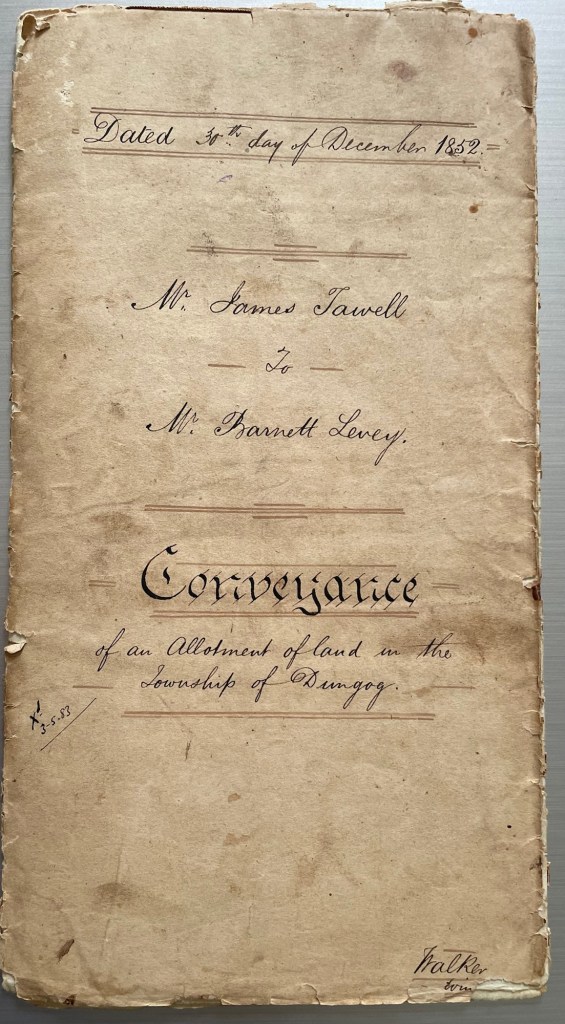
The 1852 Conveyance of the Brown St land
from James Fawell to Barnett Levey

Who was Barnett Levey? Was he one of the four children of Barnett Levey (1798–1837), theatrical entrepreneur, first free Jewish settler in NSW ?

For an account of the life of Barnett Levey snr, see https://bondistories.com/category/colonial-history/
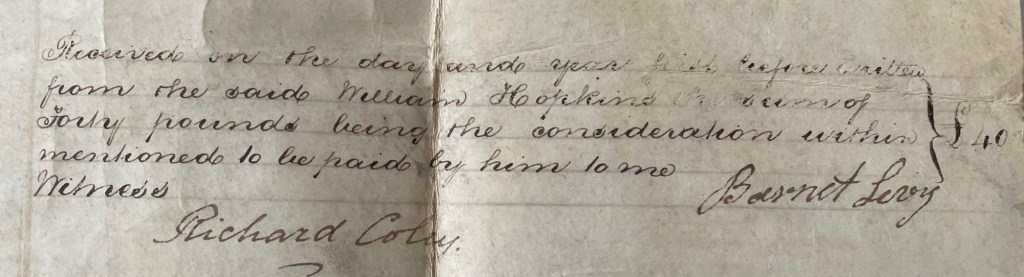
The signature of Barnett Levey on the 1852 Conveyance

It is an unusual name; so if this hunch is correct, Barnett jnr was born 1827 and listed in the 1828 Census with his parents. He later worked as a Teacher (1870–1896) and he died in 1907.

(Information taken from https://www.wikitree.com/wiki/Levey-87)

The next owner was William Hopkins. Levey held the land for less than three years; a Conveyance dated 2 May 1855 documents the transaction between Barnet Levey of Windsor, Dealer, and William Hopkins of Windsor, Miller. The land cost Hopkins Forty Pounds Sterling, so Levey had received more than three times what he paid for the land in 1852.
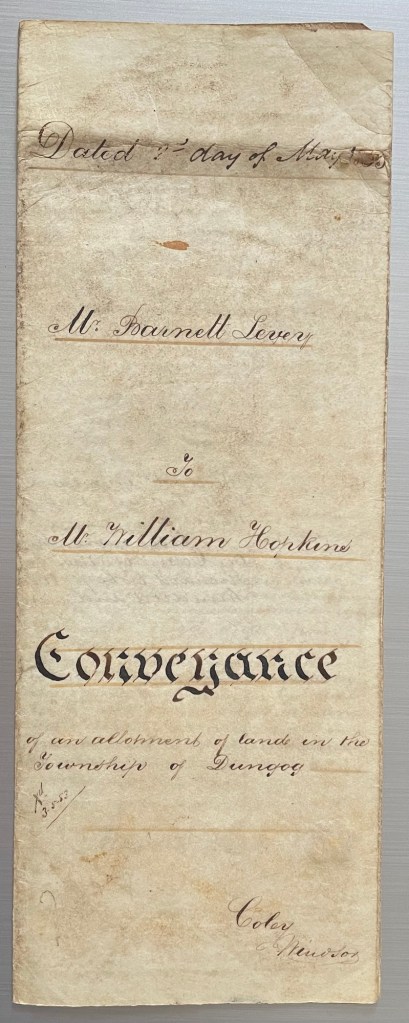
The 1855 Conveyance transferring the Brown St land
from Barnett Levey to William Hopkins

Was the purchaser of this land William Hopkins, Miller, of Windsor, who established the Fitz Roy Steam Flour Mill at 309 George Street, Windsor in the 1840s? If so, it would mean that this land was once owned by a convict who gained his Certificate of Freedom on 10 February 1825.

This William Hopkins was born in the late 1790s. He was indicted for stealing, on the 17th of October, one coat, value 20s., the goods of Henry Moule. He was (again) indicted for stealing, on the 17th of October, one tea-pot, value 5s; and two spoons, value 2s , the goods of Charles Moody. Hopkins was convicted at Middlesex Gaol Delivery for a term of 7 years on 29 October 1817. He was aged 22.
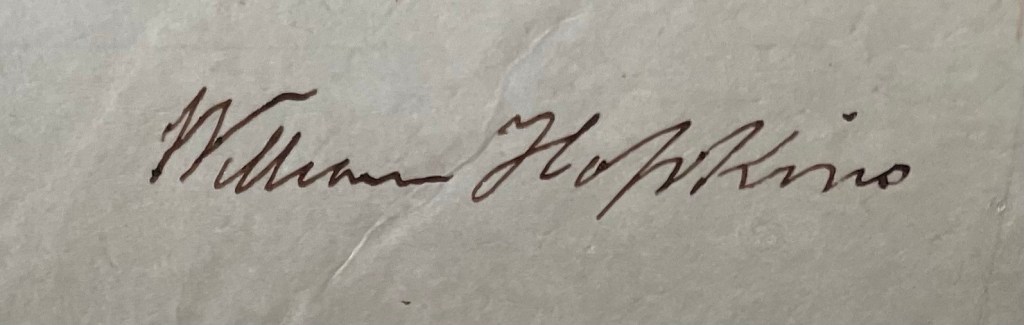
The signature of William Hopkins on the 1855 Conveyance

Hopkins was one of 170 convicts transported on the ship ‘Glory’, which departed in May 1818 and arrived in the Colony on 14 Sept 1818. At age 26, Hopkins was free by servitude, and became a landholder at Wilberforce. His wife at this time was Susannah Lisson, born in 1796; their children were William, 2, born in the colony, and Ann, 11 months, also born in the colony. William died and was buried on 30 Jan 1862.

(These details about William Hopkins are taken from https://australianroyalty.net.au/tree/purnellmccord.ged/individual/I76736/William-Hopkins)
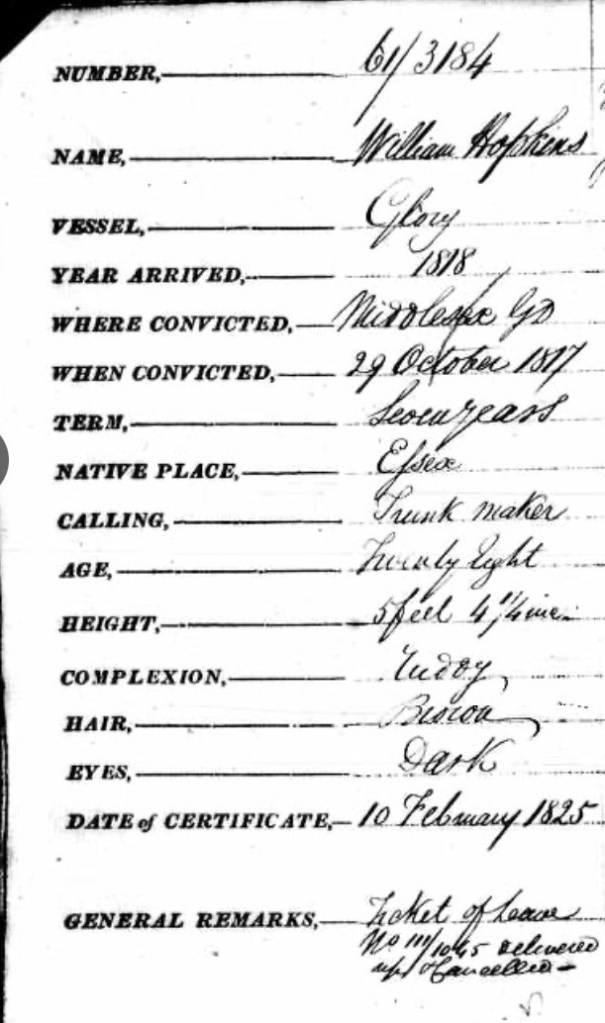
The 1825 Certificate of Freedom for William Hopkins

The land then had two further owners in quick succession: John Maberly in 1857, and in the next year, 1858 Daniel Bruyn. A Conveyance dated 5th day of March 1857, between William Hopkins of Windsor, Miller, and John Maberly of Windsor, Boot and Shoe Maker, states that Allotment No. Seven of Section No. Five was sold at Public Auction by Mr John Boulton Laverack, Auctioneer, for the sum of Fifty Pounds. Hopkins thus made Ten Pounds in the space of 22 months when he sold the land.
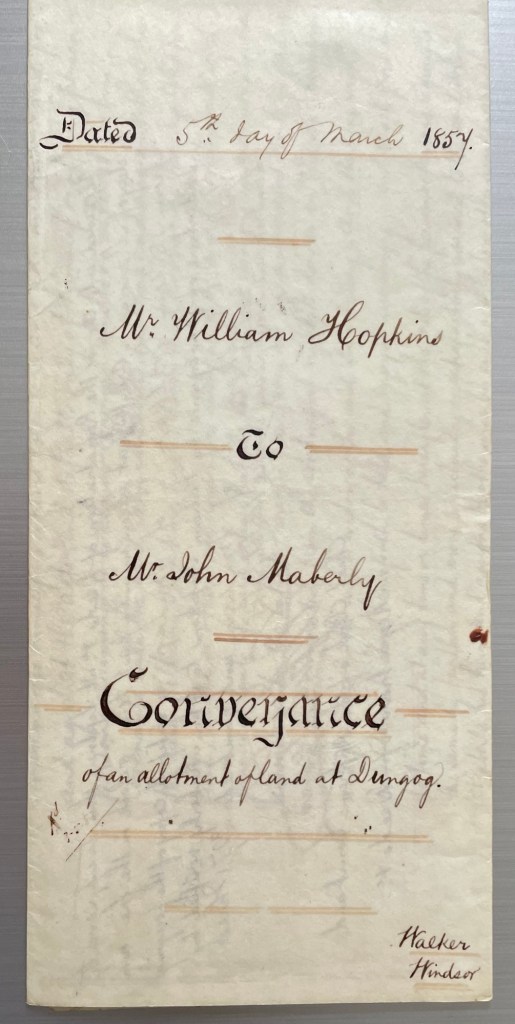
The 1857 Conveyance transferring the Brown St land
from William Hopkins to John Maberly.

John Rogers Maberly (1827–1860) was the son of convict John Maberly, a carpenter, who arrived in the Colony in 1830 on the Nithsdale), and Elizabeth Rogers. He was born on 14 Oct 1827 in Lambourne, West Berkshire and married Mary Ann Miller (1831–1918) in 1849. John Maberly died of heart disease on 18 Oct 1860 at Windsor; Mary Ann later married William Stubbs at Richmond on 21 June 1866. Stubbs was the son of William Stubbs (1796–1852), who came to the Colony on the Coromandel in 1802.

(Information taken from https://www.wikitree.com/wiki/Maberly-21)
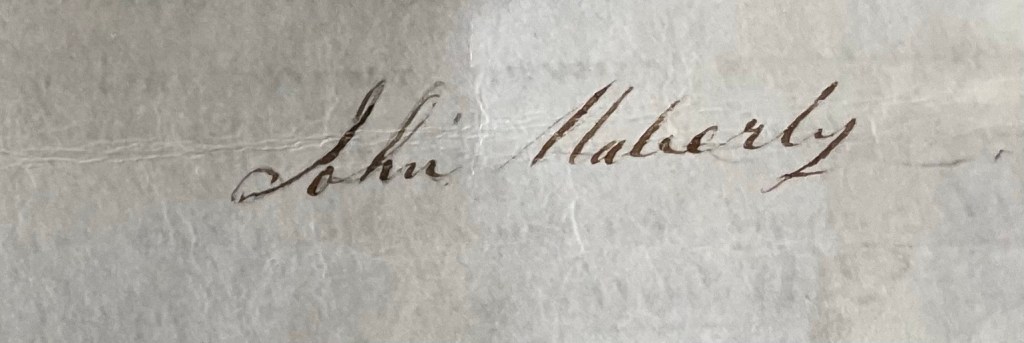
The signature of John Maberly on the 1857 Conveyance

There is also another document from 1857, a Bond of Indemnity from William Hopkins to John Maberly in relation to Rebecca Levy, widow of Barnett Levy.

Within less than a year, Maberly had sold the land. In a Conveyance dated 30 January 1858 between John Maberly of Windsor, Boot and Shoe Maker, and Daniel Bruyn of Dungog, Blacksmith, the transfer was effected for a price of fifty three pounds ten shillings.
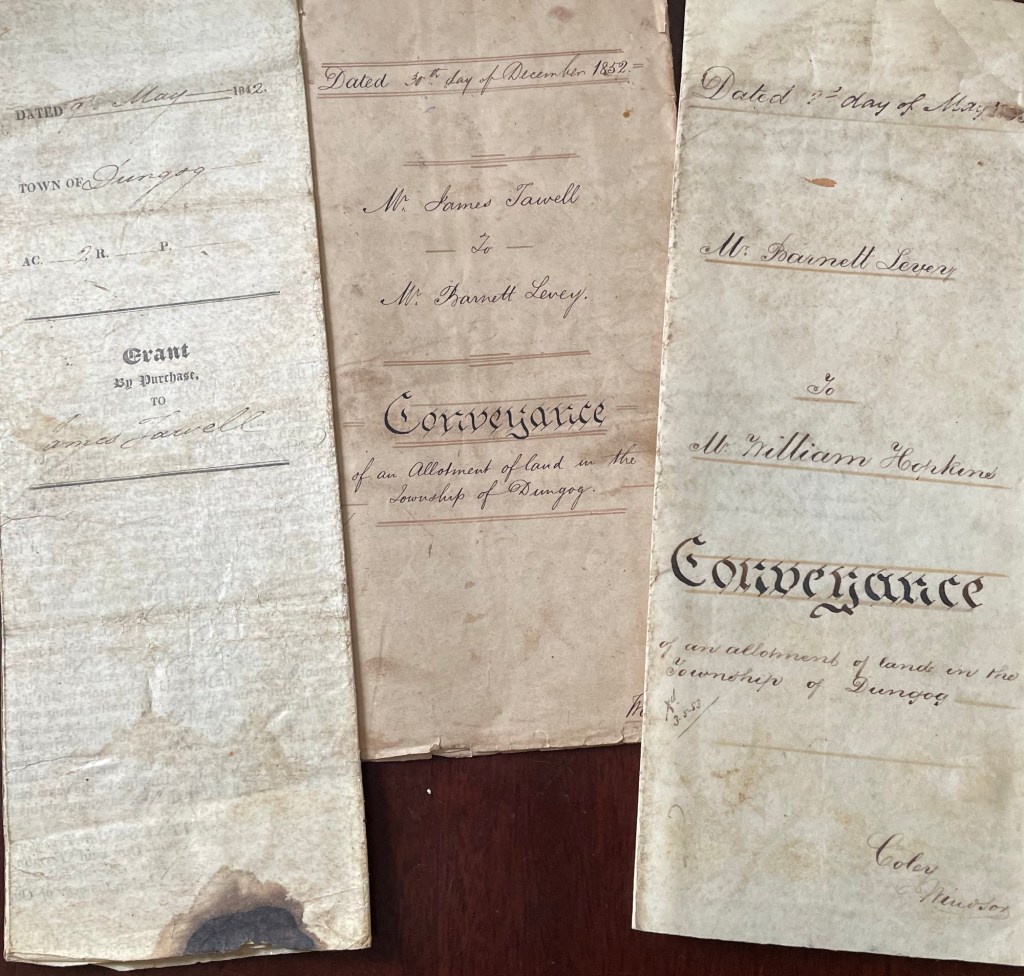
The first three Conveyances

The land would stay in the Bruyn family for the next 110 years. What, then, do we know about Daniel Bruyn?

Ah, well, that’s a story for another time … … …

See earlier blog at

and subsequent posts at
The Bruyns of Brown Street (1): Establishing the Town of Dungog

A little over five years ago, Elizabeth and I bought land in Dungog. It was a half-acre block in the centre of the town; the block which has the house that we are have been living in, now, for just over 18 months. It turns out that we are just the latest in a line of people who have owned this particular block.

We know the names of the previous owners of this block from the legal documentation that came with the title to the land. And we have been able to find something about each of these owners—from the person who was originally granted the land in 1842, right up to the people who bought the house and land in 1969, from whose deceased estate we bought the house and land a few years back. We have found this through searching the internet and sifting the material we have found.

The block of land in Brown St was part of the original area of land in the town that was made available in 1838 to settlers by the Governor of the Colony of New South Wales, Sir George Gipps. Of course, this land and the surrounding region (like all land that had been granted to the invading British colonisers) had been the land of the Indigenous people of the area for millennia.

As I have done with each move of recent times, I have taken some time to investigate a little of what is known about the First Peoples of the area to which we have moved. I have been exploring the stories about contact between the invading British colonisers and the First Peoples who have cared for the land from time immemorial.

The First Peoples of this area are the Gringai. The traditional lands of the Gringai include an area centred on the place where the town of Dungog is situated, next to the Williams River. It is thought that the name Dungog is derived from a word meaning “clear hills” in the Gringai language. I have explored what we know of the Gringai and this area in my earlier blogs

Once the British government started sending convicts to this continent, and began the process of claiming the land from the Indigenous people, the British system of law, and of land and property, became dominant as new settlements were opened up for the incoming settlers.

(In the following four paragraphs, I am quoting from https://mhnsw.au/guides/land-grants-guide-1788-1856/)

“In 1825 the sale of land by private tender began (Instructions to Governor Brisbane, 17 July 1825, HRA 1.12.107-125). There were still to be grants without purchase but they were not to exceed 2,560 acres or be less than 320 acres unless in the immediate vicinity of a town or village.

“On 5 September 1826, a Government order allowed Governor Darling to create the limits of location. Settlers were only permitted to take up land within this area. A further Government order of 14 October 1829 extended these boundaries to an area defined as the Nineteen Counties.

“In a despatch dated 9 January 1831, Viscount Goderich instructed that no more free grants (except those already promised) be given. All land was thenceforth to be sold at public auction (HRA 1.16.22) and revenue from the sale of land was to go toward the immigration of labourers.

“Following this, land was sold by public auction without restrictions being placed on the area to be acquired. After 1831 the only land that could be made available for sale was within the Nineteen Counties. This restriction was brought about to reduce the cost of administration and to stem the flow of settlers to the outer areas.”

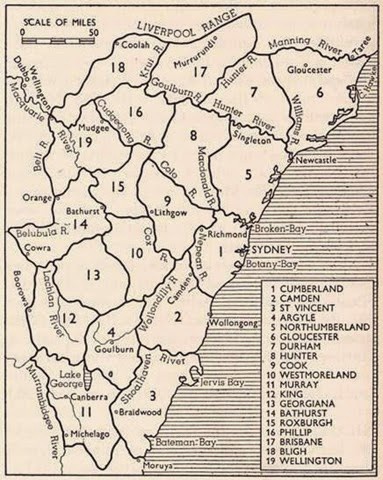
The Nineteen Counties in which settlement by British colonists was permitted as from 1829. Squatters, however, soon began “squatting” on lands outside the Nineteen Counties.

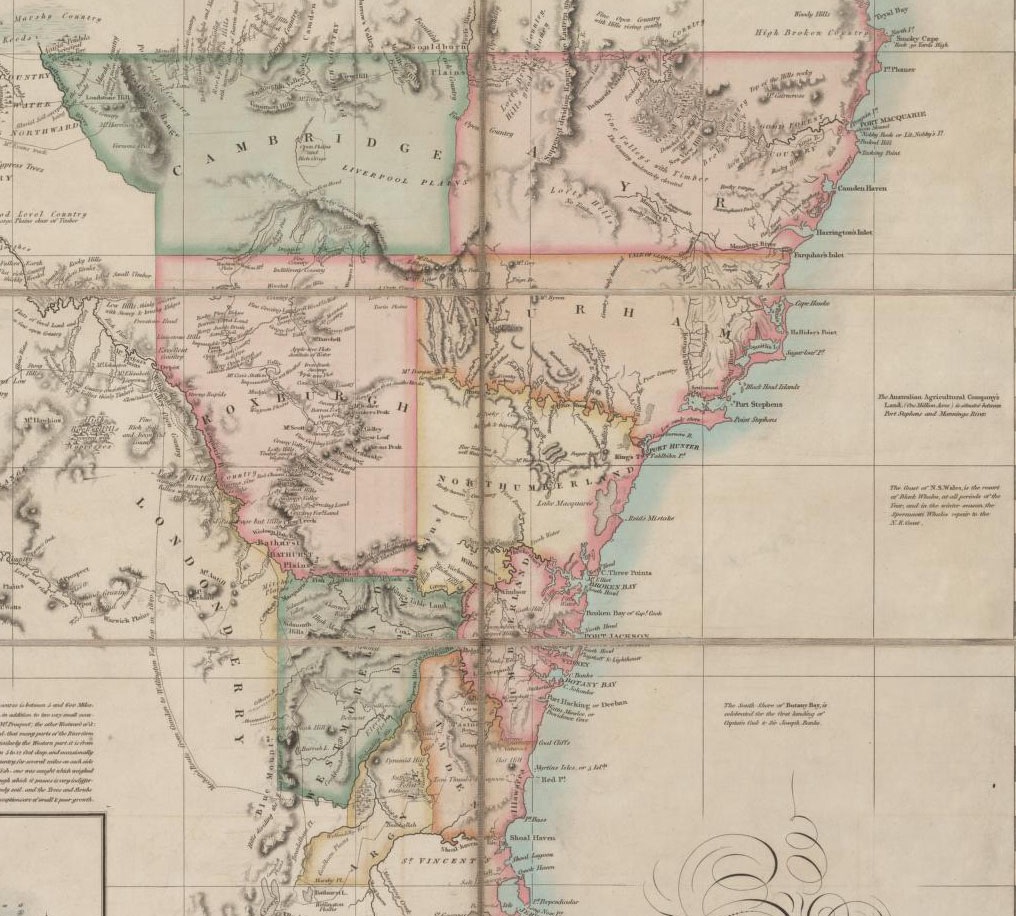
The first county, Cumberland, had been established soon after the British colony was established, in June 1788. a second county, Northumberland, was proclaimed in 1804. By 1820, nine counties had been established: Roxburgh, Northumberland, Durham, Westmoreland, Cumberland, Argyle, Camden, Ayr and Cambridge. The town of Dungog would be established in the Durham County, named after John George Lambton, First Earl of Durham (1792–1840).

The nine counties in 1832

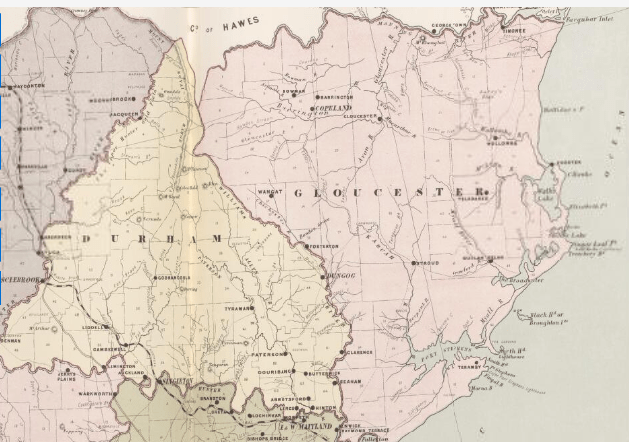
In 1829, when the establishment of the nineteen counties was decreed to be the limits of settlement, the original Durham County was divided into two, with Gloucester County taking the eastern half of the original county. The dividing boundary was the Williams River, with Dungog lying just to the west of the river in County Durham. (Durham County in the UK was the place where Elizabeth’s family, the Raine family, had originated.)

Durham and Gloucester counties in 1886

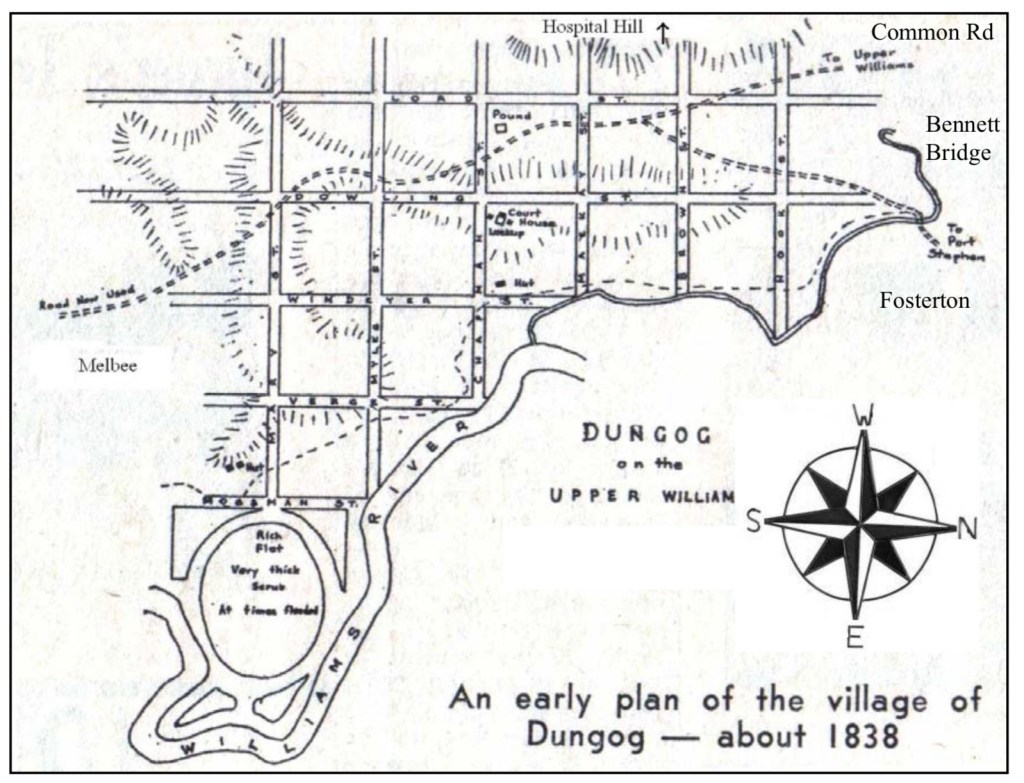
The Census of 1857 indicated that Dungog village had 25 houses and a population of 126 people. By 1861 the population had grown to 458 people. The town had begun some decades earlier, in 1838, when a fully surveyed plan of land for sale in Dungog was advertised in the Sydney Gazette. Initially, land was sold at a “Minimum price” of “£2 sterling per acre”. In 1839, a further parcel of half acre and other sized allotments were offered for sale at £4 per acre.

The 1838 plan can be seen as an example of the early colonial government’s attempts to create an English-style model of small villages and surrounding estates. The central area of the village was divided into a number of sections, each separated by a street. The first grant of land in the area had been made a decade earlier, to John Hooke, of Parramatta, in July 1828.

Map of the 1838 plan for Dungog, reproduced from Ah! Dungog

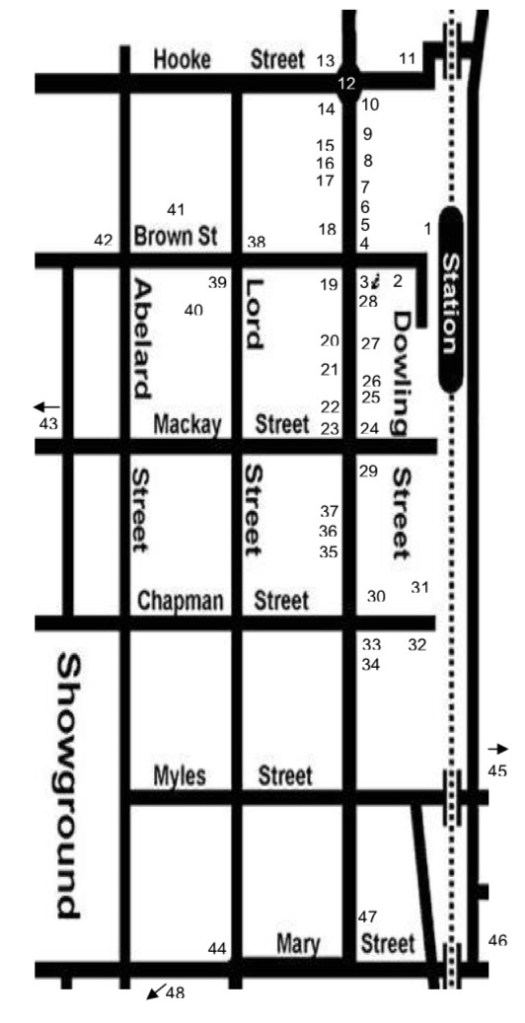
The block of land which we recently bought was originally bought under the system of colonial landholding by James Fawell on 9 May 1842. It cost him £4.0.0. The legal documentation identifies it as “Lot No. Seven Section No. Five in the Town of Dungog”. Section Five is the block bounded by Dowling, Brown, Lord, and Mackay Streets. Dowling St runs along the ridge beside the Williams River, and it developed early into the street of commerce for the town.

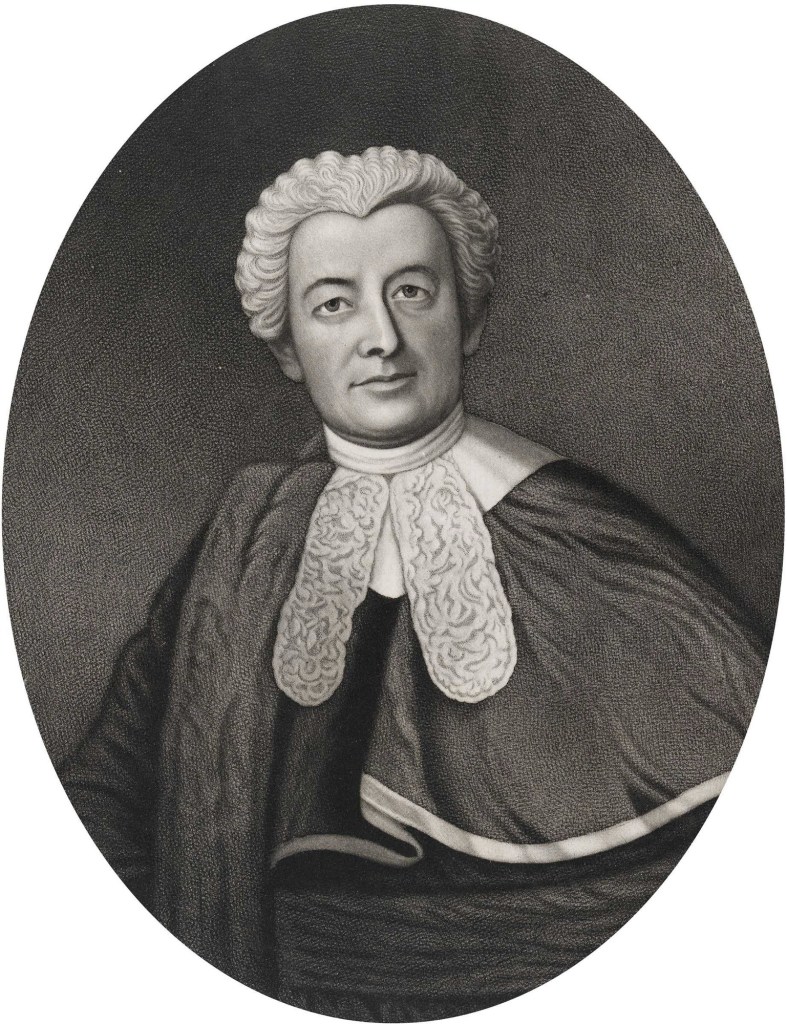
All four streets are named after early British settlers in the town. Dowling St bears the name of James Dowling, who was granted land in 1828. Dowling became the second Chief Justice of NSW, serving from 29 August 1837 to 27 September 1844, the day of his death.


The Hon. Sir James Dowling;
engraving by Henry Samuel Sade, c. 1860

Mackay St is named after D.F. Mackay, whose grant of 640 acres was made in 1829. Mackay took up the position of Superintendent of Prisoners and Public Works in Newcastle.

Lord St carries the name of John Lord, whose land (2560 acres) had been designated, in 1829, to be granted to Archibald Mosman; in 1836 it was re-allocated to John Lord. (Mosman did purchase land in the area in 1837, but sold it a year later and moved to Glen Innes.)

Streets in the central area of the “grid” for the Town of Dungog. Taken from a Tourist Pamphlet (the numbers refer to key buildings) at https://williamsvalleyhistory.org/epub_docs/Tourist%20pamphlet%20-%20A3%20June%202012.pdf

Brown Street, it seems, carries the name of one Crawford Logan Brown, a Scotsman who in 1829 had been granted 1280 acres at Dungog by the then Governor, Sir Ralph Darling.

Brown’s estate was named Cairnsmore. In 1836 he added to his grant with a purchase of 640 acres at a cost of £160. In addition to Cairnsmore at Williams River, Crawford L. Brown also owned land at Patrick Plains known as Blackford. He exemplifies the expansionary style of those privileged to obtain grants—and to have convict labour assigned to them—under the British colonial system.

Crawford Logan Brown served as a Magistrate at Dungog from 1845 until his death on 13th December 1859 in Dungog. An interesting—and startling—anecdote known about him is that in January 1846, whilst serving as Magistrate, he sentenced his own assigned servant Thomas Fry to two years in irons. This sentence was punishment for an assault that Fry had made on Brown himself!

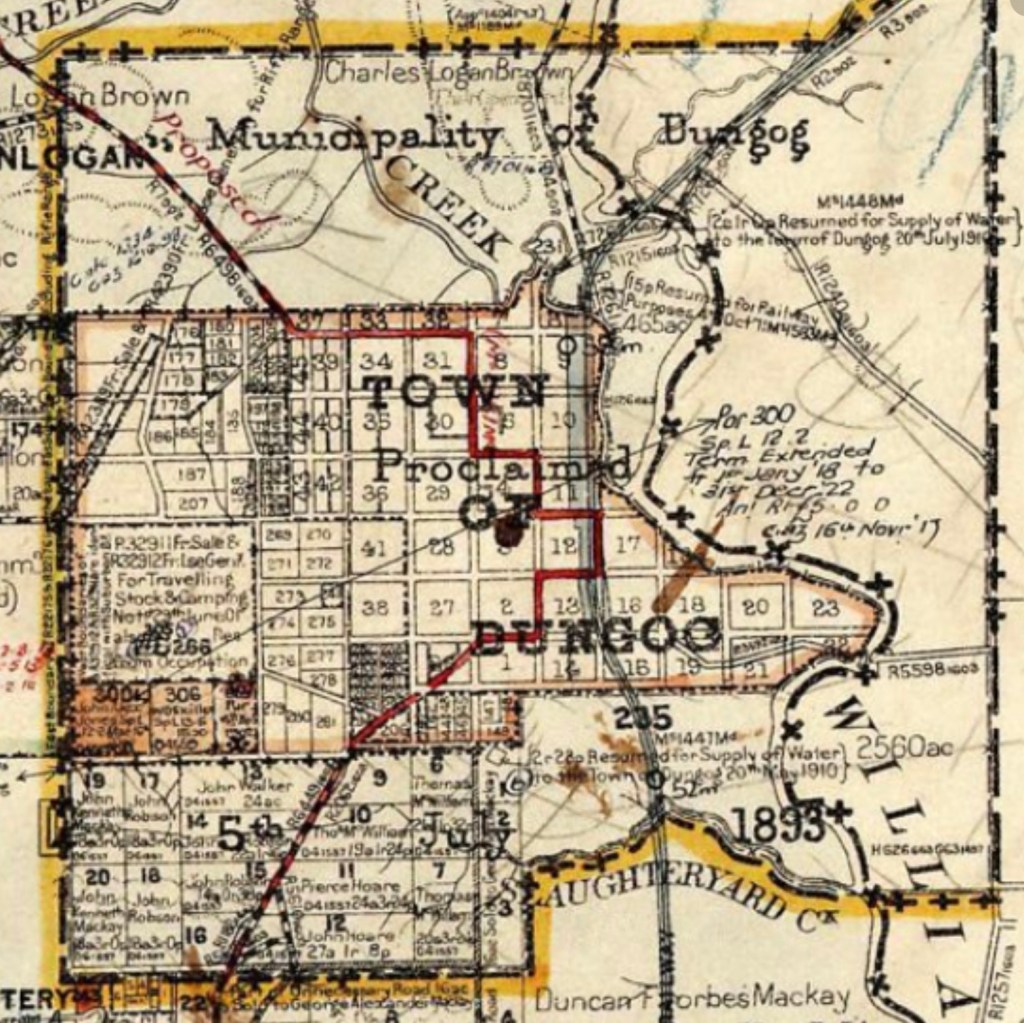
An extract from a late 19th century survey map
of the Parish of Dungog, showing the grid plan
and numbered Lots in the Town of Dungog.

There will be more of the story told in a series of blogs to follow, focussing in on the history of the people, the land, and the house on the property that we currently occupy … … …

*****

See subsequent blogs at

The spirit of Elijah rests on Elisha (2 Kings 2; Pentecost 3C)

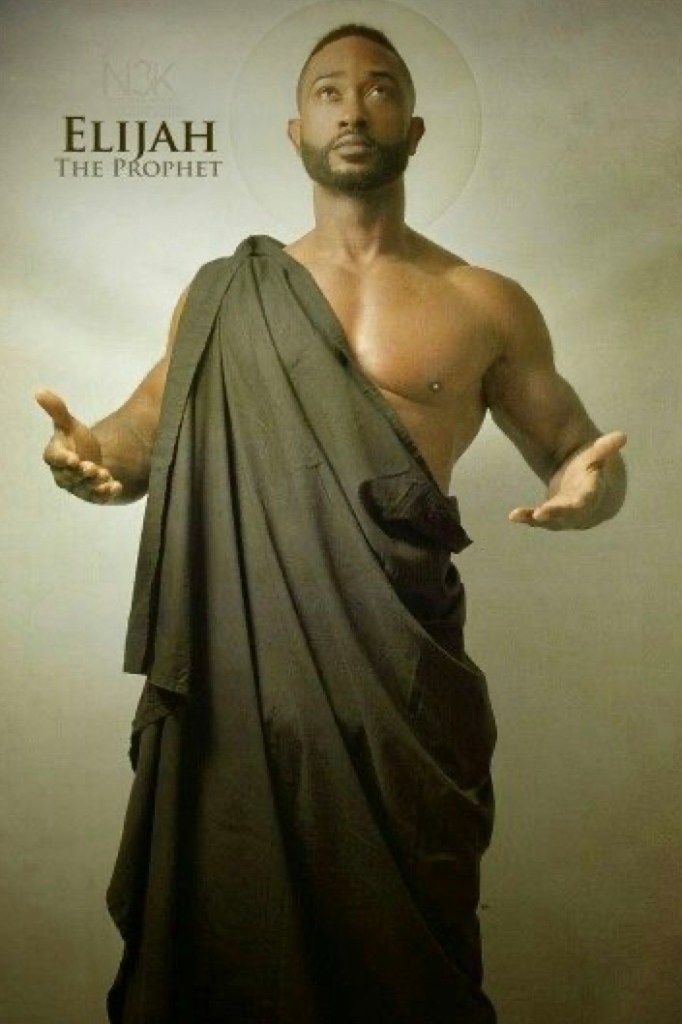
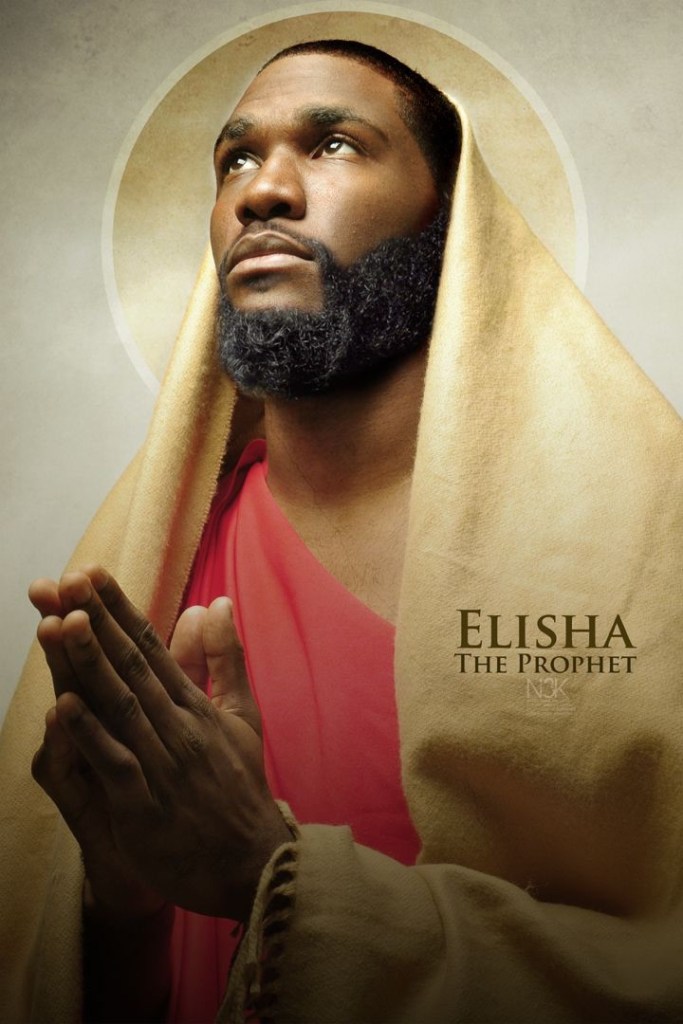
In the Hebrew Scriptures passage that the lectionary sets before us this coming Sunday (in 2 Kings 2), we read about the transition from Elijah the prophet to Elisha the prophet. This is an important moment in the story, as it moves on from the words and deeds of Elijah the Tishbite, later remembered as the great “prophet like fire [whose] word burned like a torch” (Sirach 48:1) and as one who had “great zeal for the law” (1 Macc 2:58).

Whilst Elijah remained in his heavenly abode, it was considered that he would ultimately return from that place “before the great and terrible day of the Lord”; he would come “to turn the hearts of the people of Israel” so that the Lord God “will not come and strike the land with a curse” (Mal 4:5–6). But in the meantime, who would follow him in the earthly realm to declare the word of the Lord and to signal the power of the Lord God by performing miracles, as Elijah had done? This transition story offers the answer.

In the book we know as 1 Kings, the compiler of the Deuteronomic History reports many incidents which attest to the courage and power of Elijah. In his sermon in Nazareth, Jesus refers to the first miracle of Elijah, when he provided a widow in Zarephath with food and oil that “did not fail”, even though the land was in drought (1 Ki 17:1–16). In subsequent incidents in this book, he raises a dead son (17:17–24), confronts King Ahab (18:1–18) and famously stares down the prophets of Baal in a mountaintop showdown (18:19–40), leading to the breaking of the drought (18:41–46).

Elijah later condemns Ahab over his unjust seizure of the vineyard of Naboth (21:17–29) and then stands before Ahab’s son, King Ahaziah, to condemn him to death (2 Ki 1:2–16); a death “according to the words of of the Lord that Elijah had spoken” which is promptly reported (2 Ki 1:17). During the rule of Ahab, Elijah had also most famously heard the Lord God “not in the wind … not in the earthquake … not in the fire”—the standard elements involved in a theophany since the time of Moses (Exod 19:1–6)—but rather in “the sound of sheer silence” (1 Ki 19:11–12). Elijah was his own, distinctive man, with his own, distinctive encounter with God.

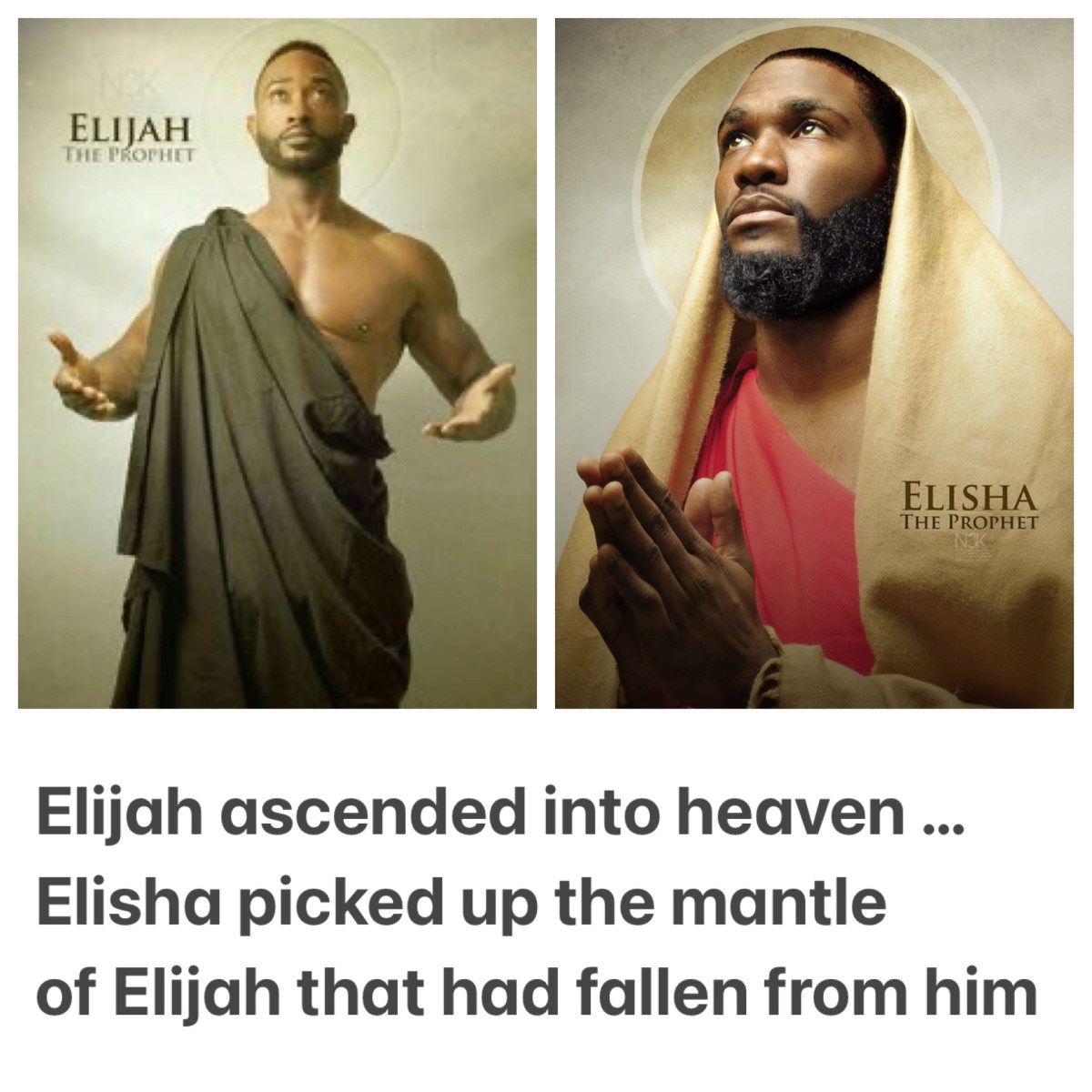
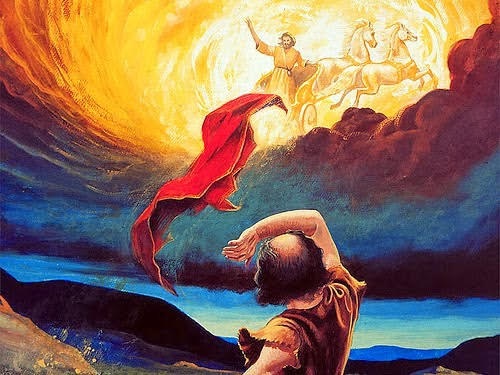
Then, immediately after that encounter, Elijah the Tishbite, from Gilead, called Elisha son of Shaphat, a farmer ploughing his fields, to be his chosen disciple (1 Ki 19:19–21). All of these stories serve as the background to the story that we face on this Sunday’s readings, when Elijah “ascended in a whirlwind into heaven” (2 Ki 2:11) and leaves behind his prophetic mantle, which Elisha then took as his own (2 Ki 2:12–14). From that moment, as “the company of prophets who were at Jericho” declared, “the spirit of Elijah rests on Elisha” (2 Ki 2:13–15).

Indeed, Elisha had rather brashly requested of Elijah, “please let me inherit a double share of your spirit” (2:9). Elijah had responded, “you have asked a hard thing; yet, if you see me as I am being taken from you, it will be granted you; if not, it will not” (2:10). Sure enough, as Elisha subsequently watches as “a chariot of fire and horses of fire” take Elijah and he ascends “in a whirlwind” (2:11), Elisha is watching, indeed crying out a description of the spectacle: “father, father! the chariots of Israel and its horsemen!” (2:12). He will surely be doubly blessed. The narrator makes sure we know that Elisha could see Elijah departing, commenting that “when he could no longer see him, he grasped his own clothes and tore them in two pieces” (2:12).

Elisha knows he had the blessing of Elijah when his first action after the departure of his mentor was to pick up the cloak (or mantle) that Elijah had left behind, and immediately uses it to enact a miracle (2:13–14)—replicating what Elijah had just done (2:8). It seems that a distinctive cloak, or mantle, was worn by prophets over the years; although cloaks were common garments—worn, for instance, by Ezra (Ez 9:5) and Job (Job 1:20)—it is thought the cloak or mantle worn by Samuel (1 Sam 15:27) and Elijah (1 Ki 19:13) was a sign of their prophetic role. That certainly seems the case with Elisha (2 Ki 2:8, 12).

Now, Elisha is not exactly my favourite prophet. After all, look at what he did when some small boys taunted him because of his distinctive hairline.  They jeered at him, calling him “bald head”; in response, he cursed them and, presumably to enact the curse, “two she-bears came out of the woods and mauled forty-two of the boys” (2 Kings 2:23–24). As a particularly alopecic person myself, this does not particularly endear this prophet to me. Why did his sensitivity about his follicularly-challenged head justify this incredibly excessive response to the games of children?

However, the compiler of the Deuteronomic History sees otherwise. Elisha is honoured as a prophet who is able to perform miracles, who confronts kings, and who declares the word of the Lord forthrightly and without fear. He replicated the last miracle of Elijah (2 Ki 2:8) by striking a steam of water with his newly-acquired mantle, so that “the water was parted to the one side and to the other” (2:13–14). He made good the bad water in Jericho (2:19–22), then spoke the word that made the water flow again in Judah (3:13–20), replicating another miracle of Elijah when he caused an earlier drought in Israel to end (1 Ki 18:41–45).

He later supplies an impecunious widow with an abundance of oil to save her from her debtors (2 Ki 4:1–7) and then raises from the dead the son of a Shunnamite woman (4:8–37). These two miracles replicate actions performed earlier by Elijah (1 Ki 17:8–16, 17–24). Elisha’s miraculous deeds continue as he supplies food to end a famine in Gilgal (2 Ki 4:38–41), feeds a hundred men (4:42–44), and then heals the Syrian army commander Naaman (5:1–19), a story that we will focus on in worship the Sunday after this coming one. And as Elijah had challenged the kings of his day, so Elisha confronts the king of his time (2 Ki 6).

Still more miracles are reported, before Elisha became ill and died (13:14–20). Yet even in death, his miraculous powers continued; the narrative reports that as the Moabites invade the land each spring, “as a man was being buried, a marauding band was seen and the man was thrown into the grave of Elisha; as soon as the man touched the bones of Elisha, he came to life and stood on his feet” (13:21). Whilst Elijah had not died—his ascension into heaven was most certainly while he was still alive (2 Ki 2:11–12)—Elisha had died, but his power to perform miracles lived on (2 Ki 13:21).

In his long “hymn in honour of our ancestors”,  Jesus, son of Sirach lavishes praise on Elisha. “When Elijah was enveloped in the whirlwind”, he writes, “Elisha was filled with his spirit. He performed twice as many signs, and marvels with every utterance of his mouth. Never in his lifetime did he tremble before any ruler, nor could anyone intimidate him at all. Nothing was too hard for him, and when he was dead, his body prophesied. In his life he did wonders, and in death his deeds were marvelous.” (Sirach 48:12–14). He was, by all accounts, a worthy successor to Elijah. I may have to allow him that, despite his hyper-sensitivity about his hairstyle.

See also 

In the sound of sheer silence (1 Kings 19; Pentecost 2C)

In the passage which the lectionary places before us this coming Sunday (from 1 Kings 19), we meet the first of a number of prophetic figures whose deeds are recounted in the books of the Kings or whose words are collected within the Hebrew Scriptures under the catch-all second section of Nevi’im (Prophets).

The first of these prophetic figures is the Elijah the Tishbite, who was introduced as coming from Tishbe in Gilead (1 Ki 17:1), a place whose precise location has occasioned some debate.  See https://www.biblegateway.com/resources/encyclopedia-of-the-bible/Tishbite

Elijah is later described as “a hairy man, with a leather belt around his waist” (2 Ki 1:8). This initial portrayal of Elijah is nested within the accounts of that long period of time when Israel was ruled by kings, when prophets functioned as the conscience of the king and the voice of integrity within society. The distinctive dress of Elijah perhaps sets him apart from the court of the kings, where a more “civilized” dress code was presumably operative. Nevertheless, Elijah does have some engagement with the kings who ruled at the time he was active: Ahab, and then Ahaziah. Indeed, his distinctive dress points to his emboldened attitude towards those kings.

Elijah operated during the period when Ahab ruled Israel; he figures in various incidents throughout the remainder of 1 Kings—most famously, in the conflict with the prophets of Baal which came to a showdown on Mount Carmel (1 Ki 18), and then later in his confrontation with Ahab and his wife Jezebel, over the matter of Naboth’s vineyard (1 Ki 21). Like Jesus, Elijah was no shrinking violet!

Elijah first appears in the narrative of the various kings, seemingly out of nowhere, just after King Ahab had taken as his wife Jezebel, daughter of King Ethbaal of the Sidonians, who presumably influenced him to begin his worship of Baal (1 Ki 17:31–33). In the same way, at the end of his time of prophetic activity, Elijah simply disappears from sight soon after Kong Ahaziah died. Elijah hands over his role to his successor, Elisha, and as “a chariot of fire and horses of fire separated the two of them”, Elijah ascends in a whirlwind into heaven (2 Ki 2:1–15).

In the book we know as 1 Kings, the compiler of the Deuteronomic History reports many incidents which attest to the courage and power of Elijah. The boldness of Elijah is evident in the confrontations that he has with made clear, centuries later, to the followers of Jesus, in the earliest account of his life, when John the baptiser is depicted as a fiery desert preacher, calling for repentance, just as Elijah had called the kings to account (Mark 1:1–8). In a later account of Jesus, there is a clear inference connecting John with Elijah when Jesus notes, “Elijah is indeed coming and will restore all things; but I tell you that Elijah has already come, and they did not recognize him, but they did to him whatever they pleased” (Matt 17:11–12).

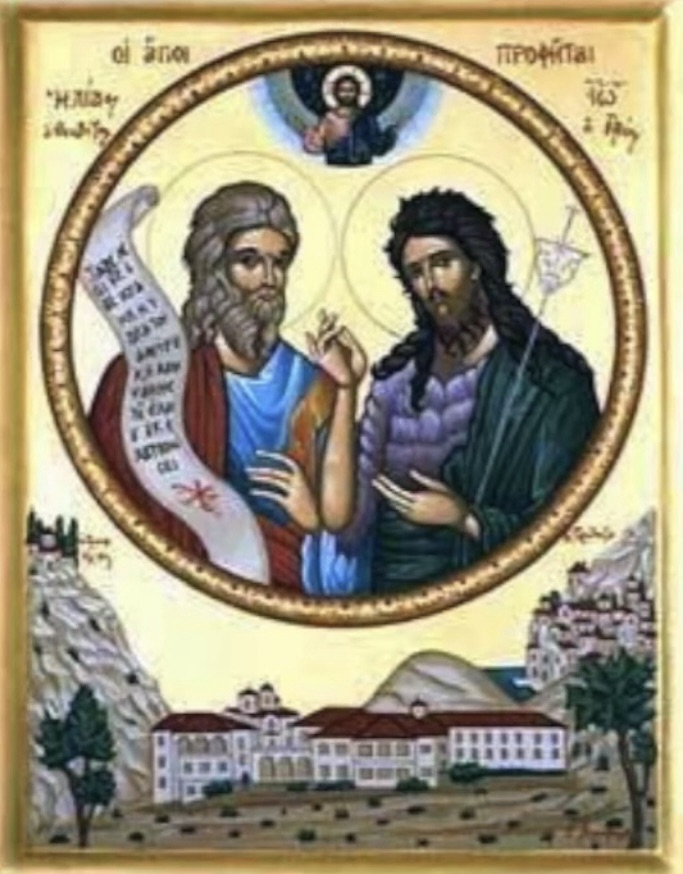
An icon of the Prophet Elijah and Saint John the Baptist from the Monastery of the Prophet Elias (Elijah) in Preveza, Greece

Then, in his sermon in Nazareth (Luke 4:16–30), Jesus refers to the first reported miracle of Elijah, when he provided a widow in Zarephath with food and oil that “did not fail”, even though the land was in drought (1 Ki 17:1–16). In subsequent incidents in 1 Kings, Elijah raises a dead son (17:17–24), directly confronts King Ahab with his sins (18:1–18), and famously stares down the prophets of Baal in a mountaintop showdown (18:19–40), leading to the breaking of the drought (18:41–46).

Elijah later condemns Ahab over his unjust seizure of the vineyard of Naboth (21:17–29) and then stands before Ahab’s son, King Ahaziah, to condemn him to death (2 Ki 1:2–16); a death “according to the words of of the Lord that Elijah had spoken” which is promptly reported (2 Ki 1:17). 

During the rule of Ahab, Elijah had also most famously heard the Lord God “not in the wind … not in the earthquake … not in the fire”—but rather in something else, which the NRSV renders as “the sound of sheer silence” (1 Ki 19:11–12). This incident is, as noted, the story set before us by the lectionary this coming Sunday. We need to ponder what is being conveyed through the symbols employed in this story. 

The three means by which God is said not to have appeared to Elijah reflect the very same means through which Moses, and the people of Israel, did experience the manifestation of the Lord God in their midst. When the escaping Israelites arrived at the Sea of Reeds, according to one version of this archetypal story, “the Lord God drove the sea back by a strong east wind all night, and turned the sea into dry land; and the waters were divided” (Exod 14:21). 

The people later celebrated the defeat of the Egyptians who were pursuing them: “you blew with your wind, the sea covered them; they sank like lead in the mighty waters” (Exod 15:10). The wind was a sign of God’s presence, and an agent of divine protection—indeed, it was the very same “wind from God” which “swept over the face of the waters” at the beginning of creation (Gen 1:2). But for Elijah, the Lord God was “not in the wind”.

Then, as they had travelled through the wilderness, the people were accompanied by a blazing fire, another sign of divine presence: “the Lord God went in front of them in a pillar of cloud by day, to lead them along the way, and in a pillar of fire by night, to give them light, so that they might travel by day and by night” (Exod 13:21). The fire signalled the divine presence.

Indeed, the very same flaming fire had been manifested to Moses when he was but a mere shepherd in Midian; “the angel of the Lord appeared to him in a flame of fire out of a bush; he looked, and the bush was blazing, yet it was not consumed” (Exod 3:2). What follows is the account of the call of Moses; God tells him “I will send you to Pharaoh to bring my people, the Israelites, out of Egypt” (Exod 3:10). The fire had been the assurance to Moses that it was the Lord God who was present.  But for Elijah, the Lord God was “not in the fire”.

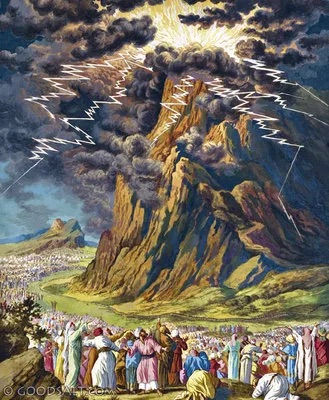
The same element of fire was present when Moses and the people ultimately arrived at Mount Sinai in the wilderness of Sinai (Exod 19:1–2). “Mount Sinai”, so the account goes, “was wrapped in smoke, because the Lord had descended upon it in fire; the smoke went up like the smoke of a kiln, while the whole mountain shook violently” (Exod 19:18). Associated with this there was “thunder and lightning, as well as a thick cloud on the mountain, and a blast of a trumpet so loud that all the people who were in the camp trembled” (Exod 19:16). 

The scene at Sinai surely reflects the experience of an earthquake; the same phenomenon that prophets would later interpret as a sign of divine presence—indeed, divine judgement. “You will be visited by the Lord of hosts”, Isaiah subsequently tells the people of his time, “with thunder and earthquake and great noise, with whirlwind and tempest, and the flame of a devouring fire” (Isa 29:6). 

Still later, Zechariah describes how “the Mount of Olives shall be split in two from east to west by a very wide valley”, and instructs the people, “you shall flee as you fled from the earthquake in the days of King Uzziah of Judah; then the Lord my God will come, and all the holy ones with him” (Zech 14:4–5).

Nahum reflects on the jealous and avenging nature of God, declaring that “his way is in whirlwind and storm, and the clouds are the dust of his feet; he rebukes the sea and makes it dry, and he dries up all the rivers; the mountains quake before him, and the hills melt; the earth heaves before him, the world and all who live in it” (Nah 1:2–5). 

This dramatic motif continues on into later apocalyptic writings (Isa 64:1; 1 Esdras   4:36; 2 Esdras 16:12). The prophets and their apocalyptic heirs  knew clearly that this whole dramatic constellation of events revolving around an earthquake was a sign of divine presence.  But for Elijah, the Lord God was “not in the earthquake”. He was heard in something quite different.

What did Elijah hear? The Hebrew phrase found in verse 12 is qol d’mamah daqqah.

The King James Version translated this as “still small voice”.  More recent translations have provided variants on how these words might be translated. Alternatives that are found include “the sound of a low whisper” (ESV), “a gentle whisper” (NIV, NLT), “a soft whisper” (CSB), or “the sound of a gentle blowing” (NASB). These reflect variations on the kind of nuance that the KJV was offering. 

However, the NRSV option of translating this phrase as “the sound of sheer silence” is more confronting: the presence of God is sensed in the absence of sound; any communication from the deity comes, not in audible sounds, but in the utter absence of any sound. It is a striking paradox!

And in the context of the developing story of 1 Kings, the paradox is strong. Earlier, the prophet had stood firm against the might of Baal, the foreign god whom Ahab and Jezebel had prioritized in the life of Israel (1 Ki 18:17–40). When “the four hundred and fifty prophets of Baal and the four hundred prophets of Asherah who eat at Jezebel’s table” gathered on Mount Carmel, they failed to obtain any response from their god, the god of storms. No matter how intensely they raised their frenzied pleas, all they heard was “no voice, no answer, no response” (18:29).

Elijah, by contrast, prays to the Lord God and the fire of his god fell on the sacrificial altar; it consumed “the burnt offering, the wood, the stones, and the dust, and even licked up the water that was in the trench” (18:38). The victory was absolute and complete; the storm god had been defeated. And yet, the deity who accomplished this would communicate most personally and intimately with his chosen prophet, “not in the wind … not in the earthquake … not in the fire”, but rather in “a sound of sheer silence” (19:11–12). What a deliciously powerful irony!

Elijah was his own, distinctive man, with his own, distinctive encounter with God. He experienced God in a way quite different from what was experienced by Moses and the people of Israel. He experienced God in a way that stood apart from his contemporaries who were priests and prophets of Baal. For that reason, whilst the Lord God of Elijah stands over and against the Baal of Ahab and Jezebel, so too Elijah stands alongside and apart from Moses as a different, but equally great, leader of the people.

The master worker beside the Lord: Wisdom at the time of creation (Sunday after Pentecost; Proverbs 8)

“When he established the heavens, I was there … when he marked out the foundations of the earth, I was beside [the Lord], like a master worker; and I was daily his delight, rejoicing before him always”. 

So Wisdom is described, in these verses in the second portion of Proverbs 8 which the lectionary offers us for this Sunday, the first Sunday after the festival of Pentecost (Prov 8:22–31). Of course, this day is identified in the liturgical calendar as Trinity Sunday, and this passage from Proverbs is one of a number of Scripture passages which, over three years, are proposed for this particular Sunday. 

The others are Genesis 1, where God, God’s word, and God’s spirit are to be found, and Isaiah 6, which includes the tripartite song “holy, holy, holy”; and Psalms 8, a song in praise of creation, and 29, singing of “the voice of the Lord”. None of them, of course, make any specific claim that can be seen to be articulating a “doctrine of the Trinity”. It is up to later Christian interpreters to “read back” into the passage any inferences regarding a triune God.

In this post I am not going to attempt any exegetical gymnastics, to find aspects of the threefold nature of God in what is said about Wisdom. In an earlier post, I have explored the importance of what is said about where Wisdom exercises her ministry (8:1–4). In this post, I turn to the the significance of the role that Wisdom plays in the creation of the world (8:22–31). These are themes that are inherent in the passage itself; as we attend to these matters, we don’t need to squeeze, distort, or manipulate the text to make it conform with a much later dogmatic theory. 

Perhaps there is a connection with the patristic Christian doctrine of the Trinity; we can see this if we trace a trajectory from the Jewish documents already noted, in the scriptural text of Proverbs, then following its development through the Intertestamental texts of the Wisdom of Solomon and Ben Sirach. These lead to some of the New Testament texts we have noted, where Jesus is described in terms drawn from these earlier scriptural passages (Col 1, Heb 1, and John 1).

In Proverbs 8, Wisdom herself is said to have declared that “ages ago I was set up, at the first, before the beginning of the earth … when [the Lord] established the heavens, I was there … when he marked out the foundations of the earth, then I was beside him, like a master worker” (Prov 8:22–31). In the Wisdom of Solomon, Wisdom is described as “the fashioner of all things” (Wisd Sol 7:22), “a breath of the power of God” who “pervades and penetrates all things”(7:24–25), who was “present when you [God] made the world” (9:9), whose “immortal spirit is in all things” (12:1). Som wisdom pre-exists all other elements of creation, and Wisdom herself participates with the deity in the creating of the world.

The importance of these Wisdom writings for what is stated about Jesus in Col 1:15–20, Heb 1:1–4, and John 1:1–18, cannot be overstated. In these New Testament passages, Jesus is identified as the one who has “first place in everything” (Col 1:18), the Word who was “in the beginning … with God” (John 1:1), the one who “sustains all things by his powerful word” (Heb 1:3). In this last book, this word is further described, in language drawn from the Wisdom traditions, as “the reflection of God’s glory and the exact imprint of God’s very being” (Heb 1:3).

In Prov 8, Wisdom herself declares that “before the mountains had been shaped, before the hills, I was brought forth—when [the Lord] had not yet made earth and fields, or the world’s first bits of soil” (Prov 8:25–26), just as the works of Wisdom can be traced “from the beginning of creation” (Wisdom Sol 6:22). Wisdom is described in Proverbs as being “set up, at the first, before the beginning of the earth” (Prov 8:30), taking part with the deity in the acts of creation. All that came into being was due to the creative contribution of Wisdom from the very start.

The poetry of this hymn builds through repetition and an ever-expanding circle of influence. So Wisdom declares that “when he established the heavens, I was there … when he drew a circle on the face of the deep, when he made firm the skies above, when he established the fountains of the deep, when he assigned to the sea its limit … when he marked out the foundations of the earth” (Prov 8:27–29). In all these acts of creation, Wisdom was beside the Lord, “daily his delight, rejoicing before him always, rejoicing in his inhabited world and delighting in the human race” (Prov 8:30–31).

This affirmation in Proverbs leads on to the subsequent claim that Wisdom “pervades and penetrates all things” (Wisd Sol 7:24) and “renews all things … [she] passes into holy souls and makes them friends of God, and prophets” (Wisd Sol 7:27). She “reaches mightily from one end of the earth to the other, and she orders all things well” (Wisd Sol 8:1). 

Likewise, Jesus son of Sirach writes in a song of Wisdom that she “came forth from the mouth of the Most High, and covered the earth like a mist” (Sir 24:3), expanding on this in a sequence of grand claims: “I dwelt in the highest heavens, and my throne was in a pillar of cloud. Alone I compassed the vault of heaven and traversed the depths of the abyss. Over waves of the sea, over all the earth, and over every people and nation I have held sway.” (Sir 24:6).

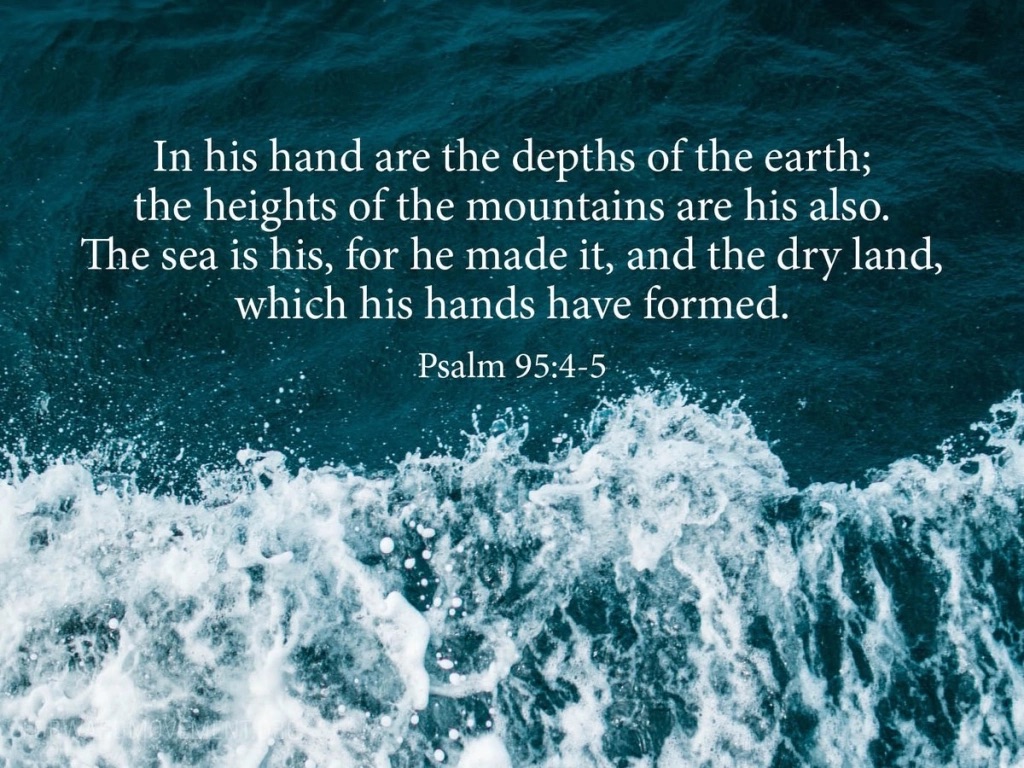
The all-encompassing work of Wisdom in this act of creation is emphasised through the places noted—the depths, the heavens, the sea, and the land. Her hymn of celebration reflects the joyous song sung by the psalmist in Psalm 95.

The depths of the earth were the place where sinful people went (Ps 63:9; Isa 14:15), following the lead of the Egyptians who pursued the Israelites and “went down into the depths like a stone” (Exod 15:4–5; Neh 9:11; Isa 63:11–13). There, in the depths, God’s anger burned (Deut 32:22). However, those banished to the depths were able to be brought back from the depths by God’s decree (Ps 68:22; 71:20; 86:13), so in one psalm we hear the cry, “out of the depths I cry to you, O Lord; Lord, hear my voice” (Ps 130:1), and the prophet Micah affirms that God “will cast all our sins into the depths of the sea” (Mic 7:19).

The heights are where the Lord God set the people once they had made their home in Israel, “atop the heights of the land … [where] he fed [them] with the produce of the land” (Deut 32:13; similarly, Isa 49:9; 58:14; Ezek 34:14). It is a place of security (2 Sam 22:34; Ps 18:33); indeed, “on the heights” is where Wisdom is to be found (Prov 8:2) and the Temple was built on the (relative) heights of Mount Zion, and so it is from “the holy height” that God looks down over the people (Ps 102:19).

Just as the depths and the heights were parts of God’s good creation, so too the sea was integral to God’s creative works: “yonder is the sea, great and wide, creeping things innumerable are there, living things both small and great” (Ps 104:25). Yet the sea was a threatening place for the people of Israel, accustomed to life on the land, planting grapevines and herding sheep in “the land of milk and honey”. The sea of reeds was the place of destruction for Egypt (Ps 114:1–8), although it was also the location of salvation for Israel, as is celebrated in David’s song of praise (2 Sam 22:1–4, repeated at Ps 18:6, 12–19). 

For sailors, however, the sea could be a place of great danger (Ps 107:23–31)—the story of Jonah attests to this (Jon 1:4–17), as does the final trip of Paul as he is taken as a prisoner to Rome (Acts 27:14–20). Yet the power of the roaring sea, as majestic as it is, pales into insignificance beside the majesty of the Lord on high (Ps 93:3–4).

Just as the sea was a place of danger, so the dry land was a place of safety—as evidenced by the way the story of crossing the sea of reeds is told (Exod 14:21; Neh 9:11; Ps 66:6) and when Jonah is vomited up onto dry land by the fish (Jon 2:10). However, when the Psalmist finds themselves in “a dry and weary land where there is no water”, a prayer is offered to God because “my soul thirsts for you; my flesh faints for you” (Ps 63:1). When linked with “the wilderness”, “the dry land” receives blessing from God, who will “make the wilderness a pool of water, and the dry land springs of water” (Isa 41:18) and “pour water on the thirsty land, and streams on the dry ground” (Isa 44:3).

So Wisdom has shared with the Lord God in the whole enterprise of bringing into being the whole creation. Her importance in this task cannot be minimised. And the wonders of the whole creation are in view in this passage from Proverbs, as Wisdom celebrates: “I was beside [the Lord], like a master worker, and I was daily his delight, rejoicing before him always, rejoicing in his inhabited world and delighting in the human race.”

See also

At the crossroads, beside the gates: Wisdom in the public places (Sunday after Pentecost; Proverbs 8)

“On the heights, beside the way, at the crossroads … beside the gates”. So Wisdom is located, in these opening verses of the section of Proverbs which the lectionary offers us for this Sunday, the first Sunday after the festival of Pentecost (Prov 8:1–4). Of course, this day is identified in the liturgical calendar as Trinity Sunday, and this passage from Proverbs is one of a number of Scripture passages which, over three years, are proposed for this particular Sunday. 

The others are Genesis 1, where God, God’s word, and God’s spirit are to be found, and Isaiah 6, which includes the tripartite song “holy, holy, holy”; and Psalms 8, a song in praise of creation, and 29, singing of “the voice of the Lord”. None of them, of course, make any specific claim that can be seen to be articulating a “doctrine of the Trinity”. It is up to later Christian interpreters to “read back” into the passage any inferences regarding a triune God.

In this post I am not going to attempt any exegetical gymnastics, to find aspects of the threefold nature of God in what is said about Wisdom. Rather, I want to highlight the importance of what is said about where Wisdom exercises her ministry (in this post) and the significance of the role that Wisdom plays in the creation of the world (in the following post). These are themes that are inherent in the passage itself; as we attend to these matters, we don’t need to squeeze, distort, or manipulate the text to make it conform with a much later dogmatic theory. 

Wisdom is positioned in the public places of her society—places where, normally, males would be found, transacting their business, arguing their views, maintaining the honour of their public status. Instead, in this poem, as also in the opening poem about Wisdom at 1:20–33, the female figure is placed firmly within those traditionally-male places. In the earlier poem, she was said to be crying out “in the street” (1:20), raising her voice “in the squares”, speaking forth “at the busiest corner” (1:20–21). 

The street is where the prophet Jeremiah is commissioned to proclaim his message in the pubic place of the streets (Jer 11:6); the squares are where this same prophet is to search, to see “if you can find one person who acts justly and seeks truth” (Jer 5:1). So here in Proverbs, Wisdom  is functioning in a very public place.

This claim is intensified with the further declaration that Wisdom takes her stand “at the crossroads” (8:2). This is reminiscent of the earlier assertion about Wisdom: “at the busiest corner she cries out; at the entrance of the city gates she speaks” (Prov 1:21). The street corner may well have been the location for public prayer by some, if the words of Jesus reflect the common practice of “the hypocrites [who] love to stand and pray in the synagogues and at the street corners, so that they may be seen by others” (Matt 6:5).

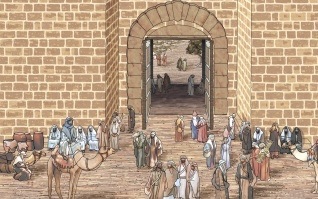
However, it is the mention of “the gates in front of the town” (8:3) that is most significant. The same claim, placing Wisdom “at the entrance of the city gates”, is made in the earlier poem (1:21). The gates were important parts of the protective structure surrounding towns and cities; built into the walls at strategic locations, they could be opened to allow for the coming and going of traders and visitors, or they could be closed to keep out enemies and invaders. “Fortress towns” are described in Deut 3:5 as having “high walls, double gates, and bars”. King Asa decreed “let us build these cities, and surround them with walls and towers, gates and bars” (2 Chron 14:7). 

In Jerusalem, the Chronicler claimed that it was the Levites who had responsibility for the gates, as Solomon appointed “gatekeepers in their divisions for the several gates” (2  Chron 8:14). When Judith calls out to be let into the city, the elders of the town “opened the gate and welcomed them, then they lit a fire to give light, and gathered around them” (Jud 13:12–13). Opening the gates is a clear sign of welcome to those acceptable to enter. 

Accordingly, the gates of the city became the place where various matters associated with the life of the city took place. When God’s angels arrived in Sodom, Lot was “sitting in the gateway,” apparently serving as a judge (Gen 19:1, 9). In association with the rape committed on Dinah, “Hamor and his son Shechem came to the gate of their city and spoke to the men of their city” (Gen 34:20). The “men of the city” are apparently often to be found in this location.

When David gathered his troops to fight against the uprising led by Absalom, “the king stood at the side of the gate, while all the army marched out by hundreds and by thousands” (2 Sam 18:4). After Absalom was killed, “the king got up and took his seat in the gate; the troops were all told, “See, the king is sitting in the gate”; and all the troops came before the king” (2 Sam 19:8). In a story from much later, Mordecai learned of plans to assassinate the king while “sitting at the king’s gate” (Esther 2:19).

Earlier in the narrative saga of Israel, when a soldier arrived at Shiloh and reported that Philistines had captured the ark of the covenant, Eli was sitting in the gate where “he had judged Israel forty years” (1 Sam 4:10–18). It was already known as a place for the judging of cases by the elders. That this took place at the city gates is clear from the story of Ruth, for Boaz went to the town gate to settle legal matters regarding his marriage to Ruth (Ruth 4:1–11). 

Moses instructs Israel to “appoint judges and officials throughout your tribes, in all your gates that the Lord your God is giving you, and they shall render just decisions for the people” (Deut 16:18). One of the laws decrees that parents of a rebellious son who would not submit to their discipline were to “take hold of him and bring him out to the elders of his town at the gate of that place” and there “all the men of the town shall stone him to death; so you shall purge the evil from your midst” (Deut 21:18–21). Such was the nature of justice rendered “ at the gates”.


What the city gates may have looked like:
a place of entry, a meeting place

So finding Wisdom “beside the gates in front of the town, at the entrance of the portals” (Prov 8:3) is striking. This is the place where the men of the city would gather, debate, and render justice. In the normal course of events, women would not be found at the gates; their domain was inside the houses with their families. The acrostic poem at the end of the book of Proverbs clearly locates the “woman of valour” in the house, from daybreak, when “she rises while it is still night and provides food for her household and tasks for her servant-girls” (Prov 31:15), through the day as “she girds herself with strength, and makes her arms strong” (31:17) to complete the many tasks listed in this poem, right until the darkness comes, when “her lamp does not go out at night” (31:18b). See

See also

So how did your bloke go?

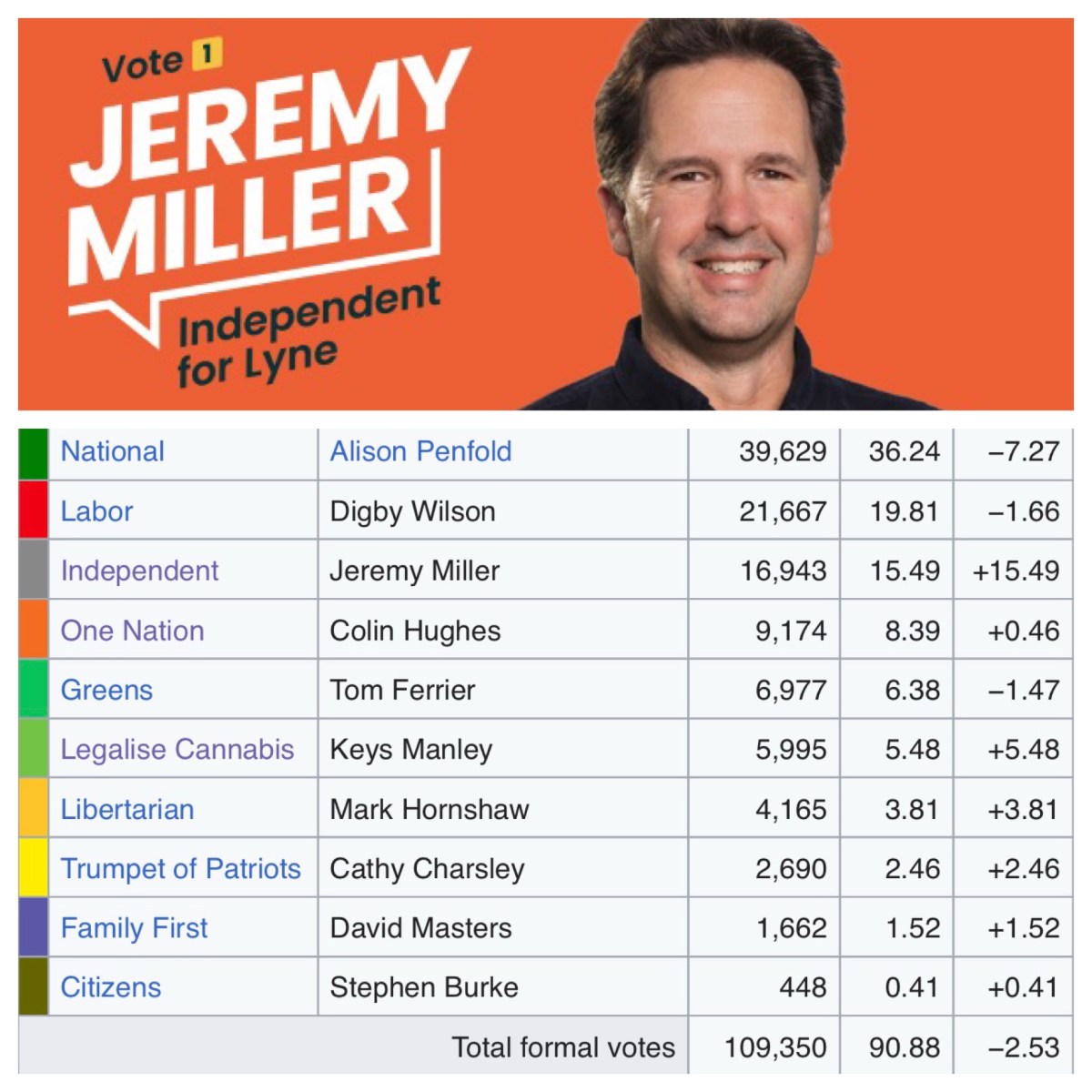
“So how did your bloke go?” Have you been asked this question in the weeks since the election? Recently a group of local leaders and volunteers in the Jeremy Miller for Lyne campaign met with members of the central campaign team to look at the future for an Independent candidate in Lyne. As part of that exploration, we heard an overview of what the polling in the booths reveal about how “our bloke” Jeremy actually went in the 2025 election.

1 The overall result

Now that the poll has been declared, we know the big picture: he didn’t win the seat—but, realistically, that would have been a huge achievement, which was somewhat unexpected. Yet, he did do remarkably well for a first-time community-supported candidate. Jeremy gained just under 16% of first preferences across the whole electorate, which was about 8% more than the votes that independent candidates gained in the 2022 election. 

And by the way: that 8% came from an 8% swing away from the Nationals candidate, for the 36.24% of first preference votes for the Nationals candidate was a healthy 7.27% less than the first preference votes for the Nationals in the 2022 election— and a massive 20% less than the 56.31% of first preferences that voters gave to the National Party way back in the 2004 federal election. That’s been a significant drop in the Nationals votes over the past two decades. Do they really think they are serving the electorate well, if one in five voters has stopped supporting them?

Looking at the longer-term trends, like this, as well as the detailed votes from booths across the electorate (discussed below) certainly indicates where our attention needs to be focussed in the next election in 2028: on “soft” Nationals voters who are open to being persuaded to change the way they vote. Are they happy with how the electorate is being represented in Canberra? Or are they discontent with the way the Lyne electorate is being treated? Might they be open to a different way of seeing things? After all, “if you want things to change, you need to change the way you vote”.

2 Where Jeremy polled best of all

If we look at the first preference votes cast booth-by-booth, we can see that in a good dozen or so booths, Jeremy’s vote was over 20%. He did best at Tinonee, with a wonderful 28.82% of first preference votes (more than the Labor vote and just under the Nationals votes) and at Old Bar, with 27.6% of first preferences there (ahead of both Labor and Nationals). At Taree West, where he attracted 26.2% of first preferences, he received the same number of votes as the Nationals and almost double the votes for Labor. 

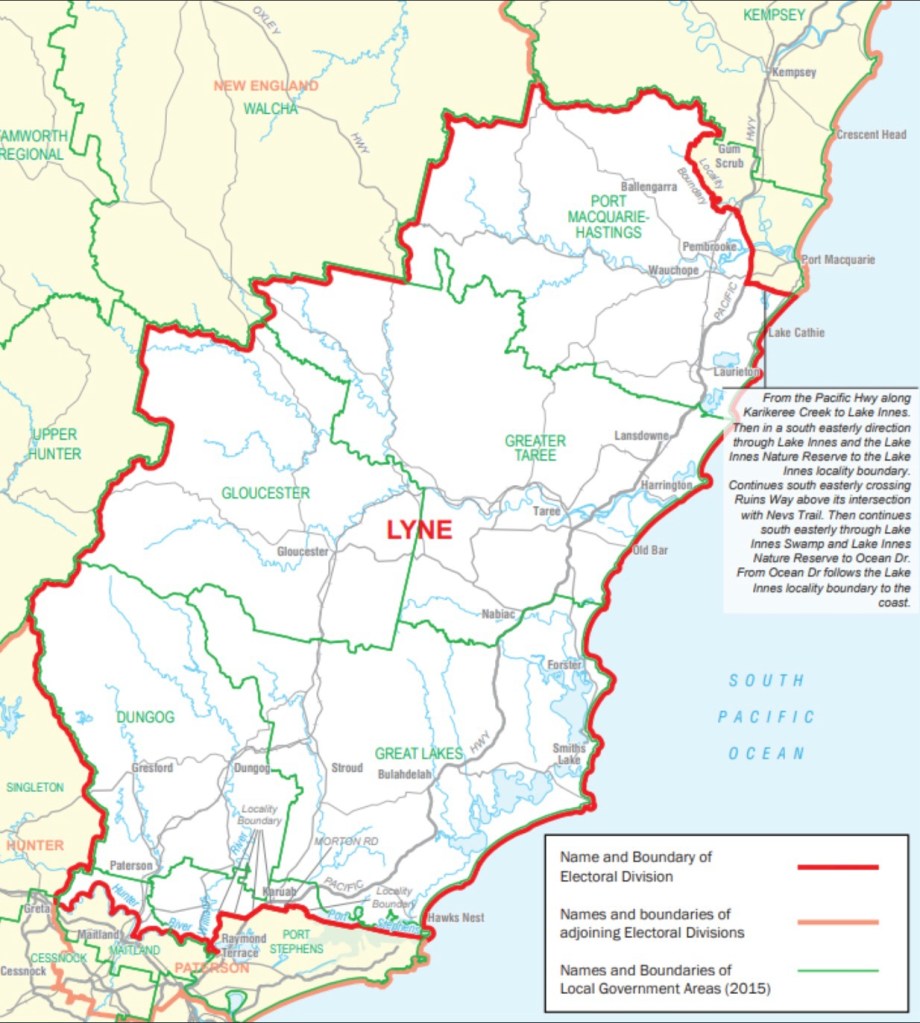
A more detailed breakdown of statistics indicates that Jeremy did indeed gain votes “where it matters”—in the larger population areas of Greater Taree and Forster—Tuncurry, where 40% of the voters live.

That detailed breakdown (which you can skip if figures befuddle you) is: in the Taree area, where Jeremy’s recognition is high, he attracted over 20% of the vote at Tinonee (28.82), Old Bar (27.6), Taree West (26.28), Cundletown (25.31), Purfleet (24.00), Chatham (22.08), and Taree (21.85). The exception in this area was the lower vote of 18.5% at Taree North. Nevertheless, all of these booths are significantly higher than the 15.8% primary vote across the electorate.

Further south, in Forster—Tuncurry, the best results were achieved at Pacific Palms (24.17, higher than each of Labor and the Nationals), Coomba Park (21.67), Forster East (21.67), Forster (21.50), Bungwahl (20.55), and Tuncurry (17.09). Other good results in this part of the electorate were at Hallidays Point (23.11) and Diamond Beach (24.78). At Lansdowne, Jeremy received 19.69, and at Coopernook 16.81, whilst at the two booths in Wingham, Jeremy secured 16.84 and 14.20. Again, these booth results are higher than the average.

So this is further cause for reflection: what was it in these particular areas that helped Jeremy to push his vote up, higher than the 15.8% average for the whole electorate? Clearly, the fact that he lives in the area and that he is a very active Councillor on the MidCoast Council must both have helped in securing that higher vote. Being “known” in these areas was a strong positive for Jeremy. These results again point to an area where our energy might best be focussed in the time leading up to the next election (presumably in 2028). 

The largest blocks of voters live in the two main urban areas—Greater Taree (including Wingham, Old Bar, and surrounds) and Forster—Tuncurry. This is where the influence of the National Party is less, by comparison, than it is in the inland rural areas. And these are amongst the areas in the electorate where we might expect population growth in future years. How do we plan and implement effective campaigning in these areas in the next few years?

3 In other places across the electorate of Lyne

In the north of the electorate, at Barrington, Jeremy secured 20.99, and in Gloucester itself 16.38. In Wauchope, he obtained fewer votes: 11.28 at Wauchope and 10.53 at Wauchope South. Nearby in Beechwood, the vote was 13.26, and in King Creek 15.27. These are promising results, offering a good base for future campaigning.

In the Dungog Shire, there was a good result at Paterson (16.46), and less at Seaham (12.59), Dungog (12.57), and Clarence Town (11.92). Closer to the coast, Jeremy’s share of the votes ranged from Krambach (17.00) to Bulahdelah (11.01) and Karuah (10.19). In polling places in the Port Stephens Council, votes ranged from Hawks Nest (16.74) to North Arm (14.13) and Tea Gardens (12.60).

4 Votes for Jeremy and votes for Labor

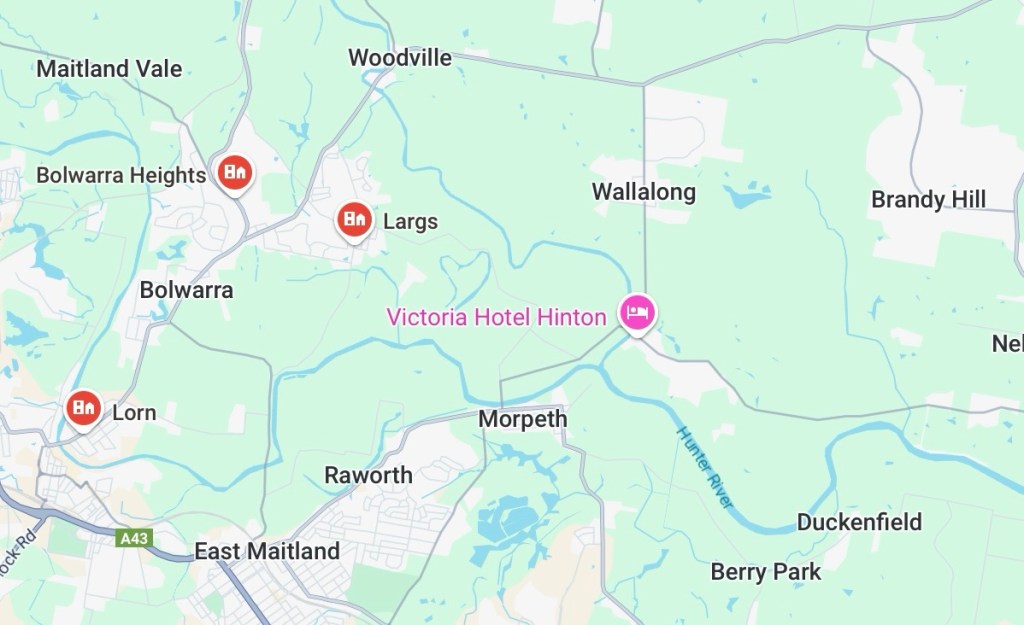
Another area of particular interest is in the area immediately to the north of Maitland which are currently included in the very southern end of the electorate. Whilst some votes for Jeremy were under 10% (in the more rural locations), better results were gained at Largs (10.81%), Lorn (11.67%), and Bolwarra (11.86%). These percentages are still below the average vote across the whole electorate. But a significant factor in this area is the support for Labor.

At these three polling booths, Labor’s share was consistently over 27%, although in Lorn it was 40.14%, the highest of all the booths in Lyne. This reflects the strong Labor base in Maitland itself (where the seat of Paterson saw a swing of 4.2% to Labor, despite the massive resources allocated to this seat by the Liberal Party). Making any headway in this area by attracting hesitant Labor voters would need a sustained campaign leading into the 2028 election.

And finally, if we look to places where Jeremy polled better than Labor, we can see some striking margins. At Old Bar, the 27.66 primary vote for Jeremy was greater than Labor’s 18.59. There were good margins also at other eight booths in this region: Taree pre-polling (21.93 to 16.47), Taree (21.85 to 14.94), Taree West (26.28 to 14.46), Cundletown (25.31 to 10.05), Chatham (22.08 to 15.35), Tinonee (25.82 to 13.64), Taree North (18.50 to 17.22), and Wingham West (16.84 to 13.46).

Jeremy also secured more votes than Labor at another seven polling booths: Hallidays Point (23.11 to 16.49), Diamond Beach (24.78 to 16.34), Pacific Palms (24.17 to 21.87), Krambach (17.00 to 14.41), Beechwood (13.26 to 12.80), King Creek (15.27 to 14.34), and Barrington (20.99 to 14.36). In all cases except for Old Bar and Pacific Palms, however, the Nationals still out-polled both Jeremy and Labor at these booths.

5 The future

So we can see from this just how well “our bloke” Jeremy did, and also just what work lies ahead for an even more successful campaign in 2028. I hope that lots will stay on board and even more sign up for that ride!

***** ***** *****

Written by John Squires, Member of the Central Campaign Team for Jeremy4Lyne, drawing on data prepared by James Foster, Polling Coordinator, Central Campaign Team, and data on the website of the Australian Electoral Commission.

See also