
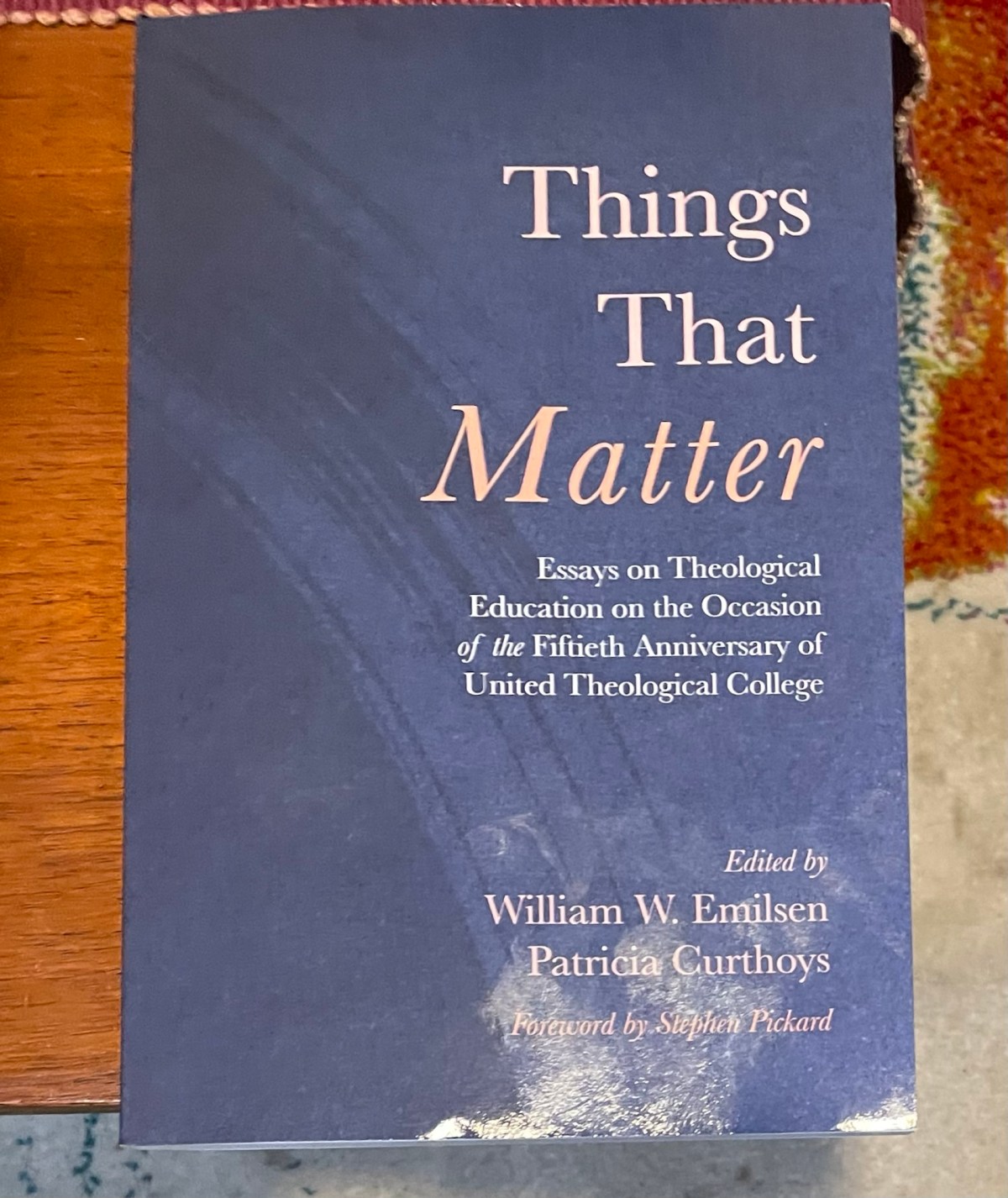
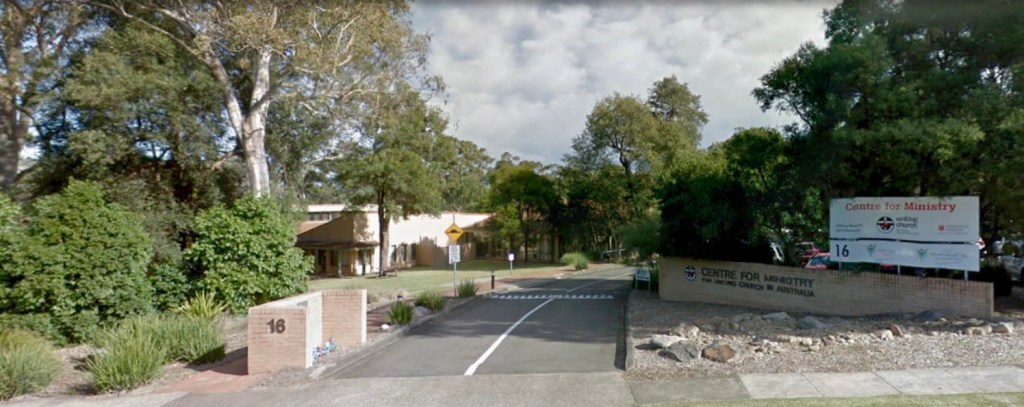
I’ve just received my copy of Things That Matter: Essays on Theological Education on the Occasion of the Fiftieth Anniversary of United Theological College. The college (UTC) was where I trained for ministry in the latter years of the 1970s, was a visiting lecturer in the later 1980s, and taught as a member of the Faculty from 1990 to 2010.
It is edited by my friend and colleague, William W. Emilsen (whom I’ve known since he was also a student at UTC in the 1970s) and Patricia Curthoys. Both are historians of some repute within the Australian church and beyond, each having written and published a number of significant historical works, as well as collaborating on earlier historical volumes.
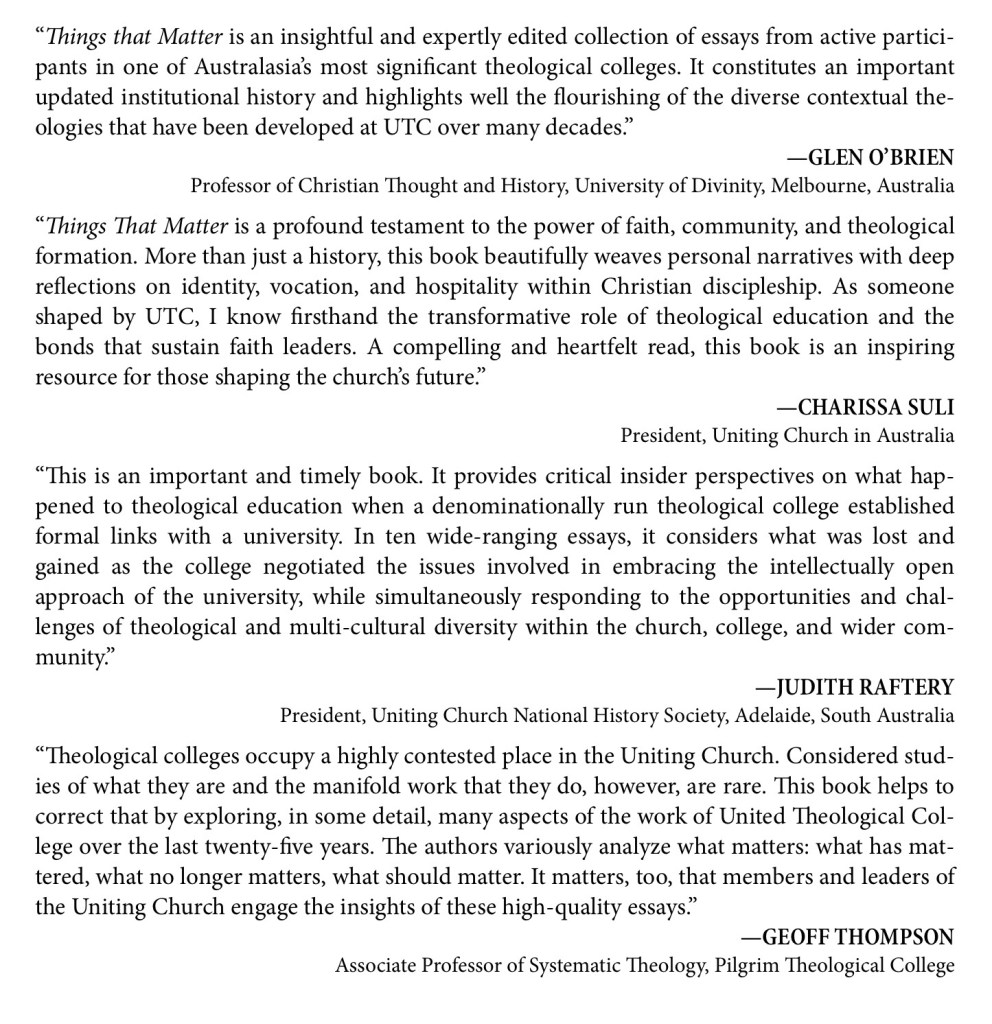
Prof. Glen O’Brien says that the book “highlights well the flourishing of the diverse contextual theologies that have been developed at UTC over many decades.” Assoc. Prof. Geoff Thompson, reflecting the title of the book, appreciates that the book explores “what has mattered, what no longer matters, what should matter.” And the President of the Uniting Church, the Rev. Charissa Suli (herself a graduate of UTC) offers appreciation for the way the book “beautifully weaves personal narratives with deep reflections on identity, vocation, and hospitality within Christian discipleship.”
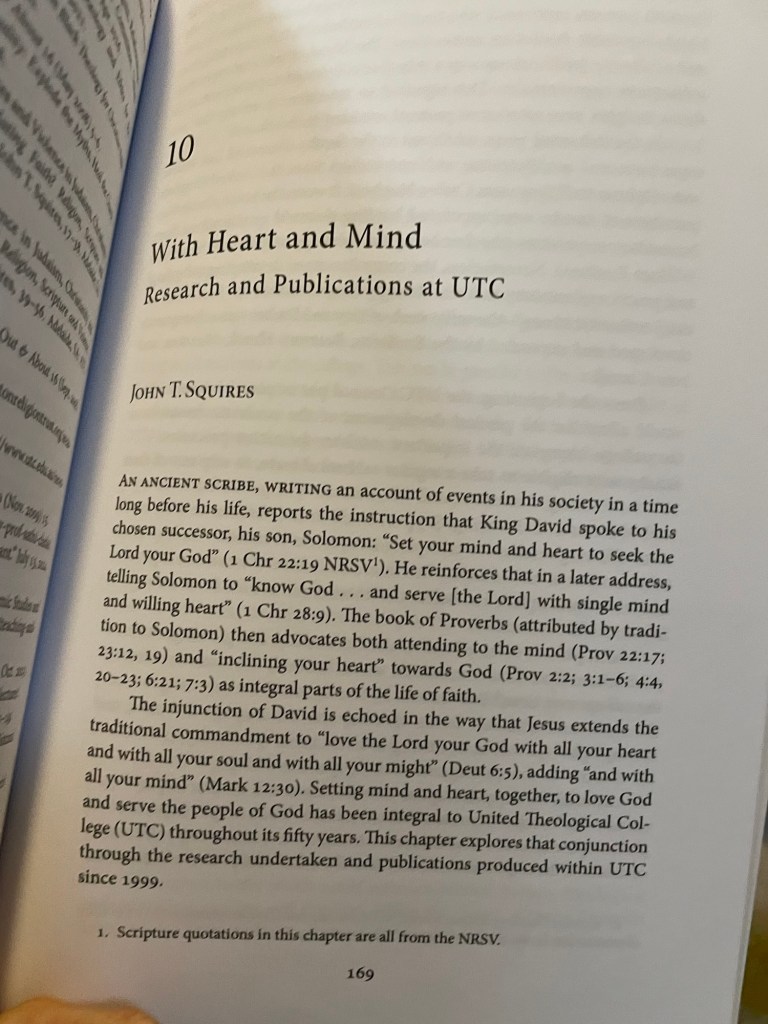
There are ten chapters in the book, each written by a different author. I was pleased to be able to contribute the final chapter, “With Heart and Mind”, exploring the research output produced within the college over the last 25 years—both publications by members of Faculty as well as the many doctoral dissertations that they supervised during those years.
I’d had early involvement in the development of the research culture of the College when we offered bachelor and masters degrees through the Sydney College of Divinity in the 1990s. In those days we had a Research and Publications Committee, which I convened, and a regular masters-level seminar. It is most pleasing to see how from those early steps a strong research and publications culture has developed, with scores of doctoral dissertations having been produced in the first 25 years of this century, supported by the regular Friday postgraduate seminar where ideas are presented, critiqued, and refined.
In the end, my chapter in this book ran to twenty-two pages with 114 footnotes, followed by a bibliography of works published by Faculty and PhD dissertations completed under their supervision, which added another 8 pages. So it was quite a piece of work: variously fascinating, illuminating, daunting, and finally: achieved!
There are many reasons why I am looking forward to reading this book. In an opening chapter, Ross Chambers explores the relationship of the College (and through it, the Church) to the University of which we became a part, in the School of Theology of Charles Sturt University. This is a substantial reason that underlies the flourishing research culture that I wrote about; government funding to the University meant that the college gained financial contributions for each faculty publication and for supervision of research students.
Ross was instrumental in negotiating the involvement of UTC in CSU; he saw the value of bringing into the School a Faculty where each member themselves had a quality doctoral qualification as well as a growing experience in research supervision. (And, of course, this would undoubtedly look good for the University!) Ross is both a former Vice-Chancellor of CSU and a Chair of the UTC Council (which in earlier years, when I was then secretary of this council, was chaired by two previous Vic-Chancellors of Macquarie University: Bruce Mansfield and then Barry Leal).
There are chapters in this book which explore ministerial formation, the centrality of community, the varying approaches to teaching from those responsible for Systematic Theology, the wonderful Camden Theological Library under the brilliantly entrepreneurial stewardship of Moira Bryant, and the opportunities for continuing education (especially through the presence of overseas visiting scholars) for those already engaged in ministry.
There’s a chapter on the intersection between multiculturalism (a key commitment of the Uniting Church) and theological learning, as well as a chapter each devoted to the experiences of the many Korean students of UTC, and the equally numerous Pasifika students, many of whom have produced doctoral work that develops and extends the theology of their native countries (Tonga, Samoan, Fiji, Tuvalu, the Cook Islands, and more).
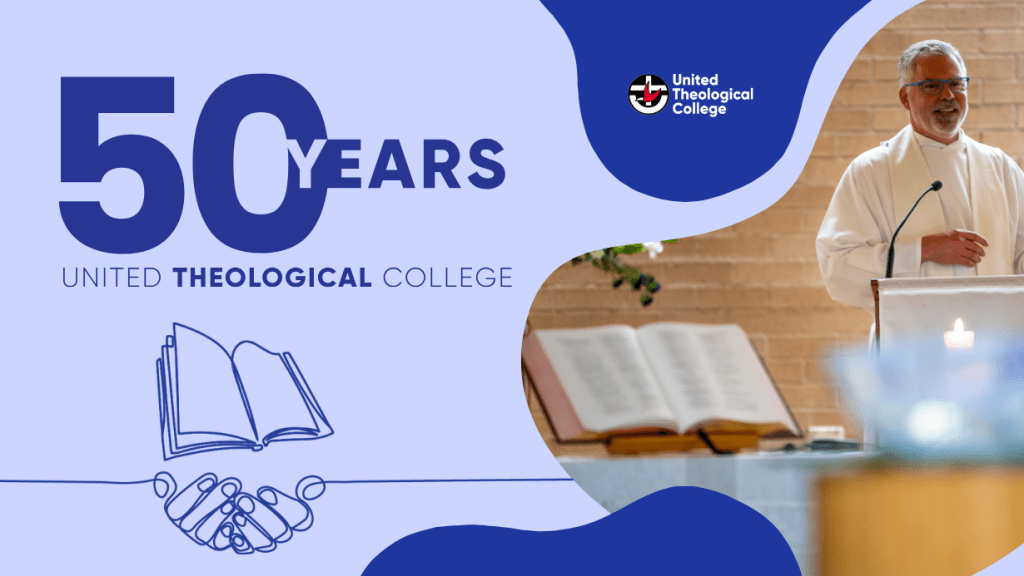
It’s a delight to know that my co-contributors to this book are both those alongside whom I taught for many years, as well as some whom I had taught in their foundational theological studies. It augurs well for the College and the Church that the current Faculty includes UTC graduates Peter Walker (Principal), Sef Carroll (Cross Cultural Ministry and Theology) and Bec Lindsay (Hebrew Scripture/Old Testament). A number of previous faculty members (myself included) had also begun their theological studies at UTC. Whilst there is certainly value in having teachers from beyond this circle—indeed, in some cases, from beyond the Uniting Church—on the faculty, it’s important to have “home-grown” scholars-ministers as well.
As I say, I am looking forward to reading the other chapters. I understand that the publication of the book will be recognised at the forthcoming meeting of the NSW.ACT Synod, and then there will be a formal public launch on 12 September at UTC in North Parramatta.
The book is published by Wipf & Stock and is available to order at https://wipfandstock.com/9798385218813/things-that-matter/
 An Informed Faith