“We thank you for the ministry you have exercised”. A service of Closure of Ministry.

Elizabeth and I have just attended the Closure of Ministry service at which the Rev. Jane Fry concluded her years of service as the Secretary of the Synod of NSW.ACT—or, as Elizabeth referred to it, the Synod of the ACT and NSW (ever loyal to our time in the Canberra Region Presbytery!)

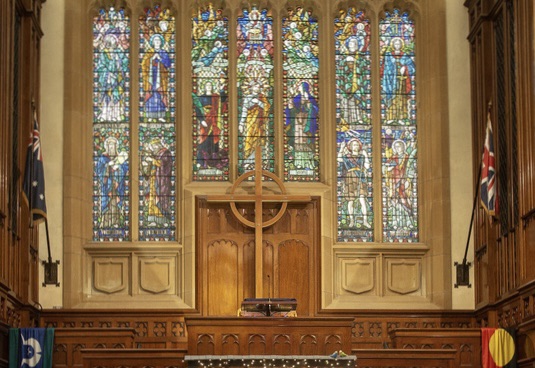
It was held in the impressive surroundings, dripping with signs and symbols of Christendom, in St Stephen’s Uniting Church in Macquarie Street, Sydney, directly opposite the NSW Houses of Parliament. The team from St Stephens, under the wise and gentle leadership of Ken Day, did a fine job in hosting the crowd of people who came for this important occasion.

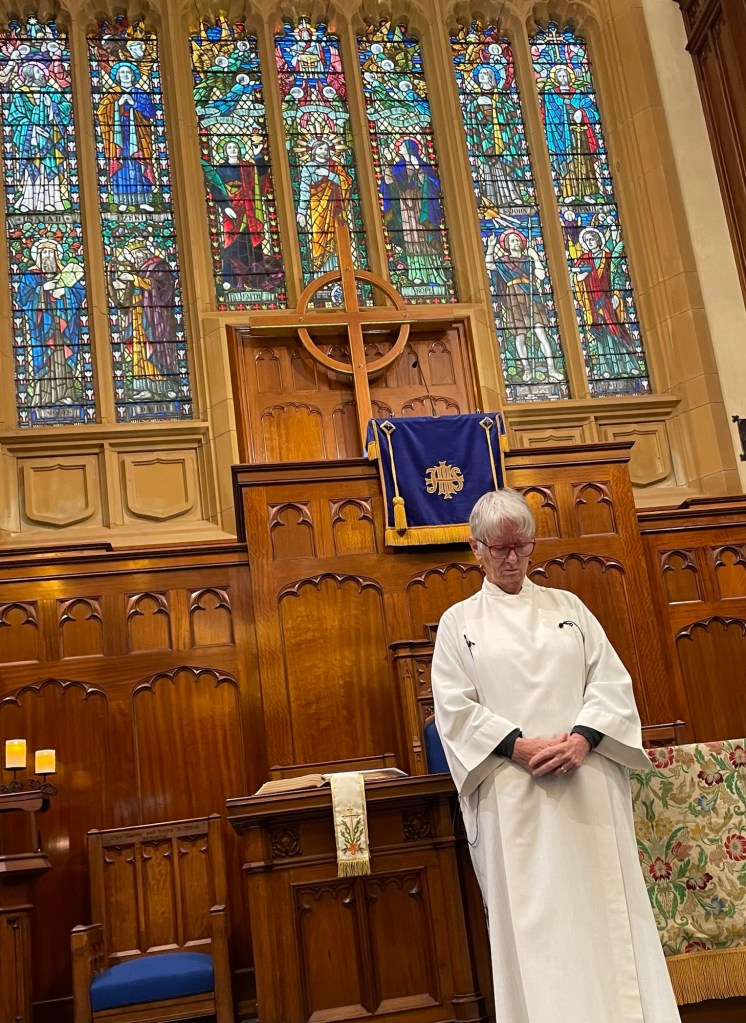
Banks of wooden pews filled the large floor area of the church, with wooden panelling running around the walls. At the front, above the high central (typically Presbyterian) pulpit, stained glass windows reached up to the high vaulted ceiling—including various Hebrew prophets and early Christian saints (including, of course, St Stephen himself). Two flags from the glory days of Church and Empire hung high at the front—the Australian Blue Ensign on the left, the British Union Jack on the right—and the respective flags of Aboriginal and Torres Strait Islanders were draped over the railings running out from the high pulpit. Rich symbolism abounded.
Our venturing all the way into the Sydney CBD for this event (170km, but who’s counting?) meant, on the one hand, that we had to endure the thick, turgid, stress-evoking traffic snarls of Sydney; nothing can be a stronger signal to Elizabeth and myself that we have made the right decision to retire in rural Dungog! Yet this visit also offered the welcome opportunity to celebrate and express gratitude for the gifts Jane has brought to this crucial leadership role, and to meet up with many people with faces and names familiar from past years (or decades)! It was good to reconnect in person with many who for some time now have been “Facebook friends”. The bonds of years past hold strong.

There were multiple conversations in the church’s Ferguson Hall in the time after worship, as we ate, drank, and caught up, under the watchful eye of the Rev. John Ferguson, after whom the hall is named. Ferguson was minister of St Stephen’s from 1894 to 1925, including a term as Moderator-General of the Presbyterian Church in Australia commencing in 1909. 

Alan Dougan writes in the Australian Dictionary of Biography that “his inaugural address, published as The Economic Value of the Gospel, raised a storm in Melbourne and praise from trade union leaders. Billy Hughes said ‘The new moderator preaches a gospel all sufficient, all powerful. He grapples with the problems of poverty … he insists on justice being done, though the heavens fall. I advise every citizen to read every word of it’.”

Ferguson was a most enlightened minister, it would seem; apparently he sought an audience with the Pope on a visit to Rome in 1914, “an action that evoked much hostile criticism in Sydney”, says Dougan. The tribalism in Sydney’s ecclesial life, clearly evident in this reaction, is sadly still alive and well in this city, where sectarian fundamentalism (“We Know The Truth, and Only We Have It!”) has an iron grip in some churches. Not in the Uniting Church, however!
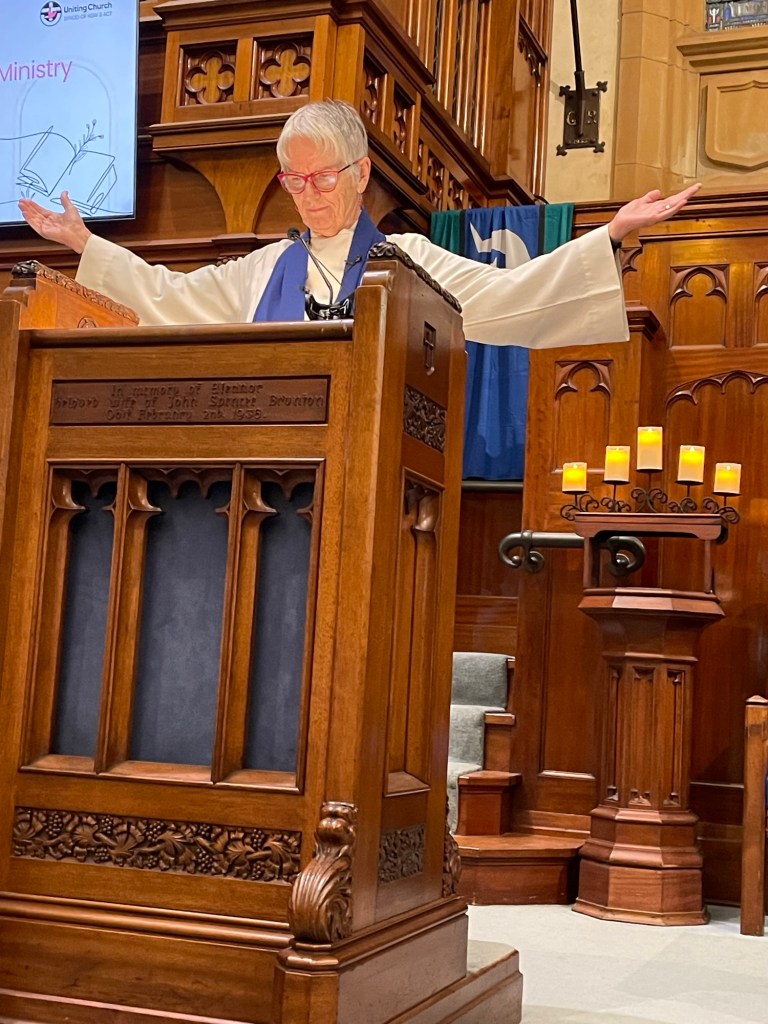
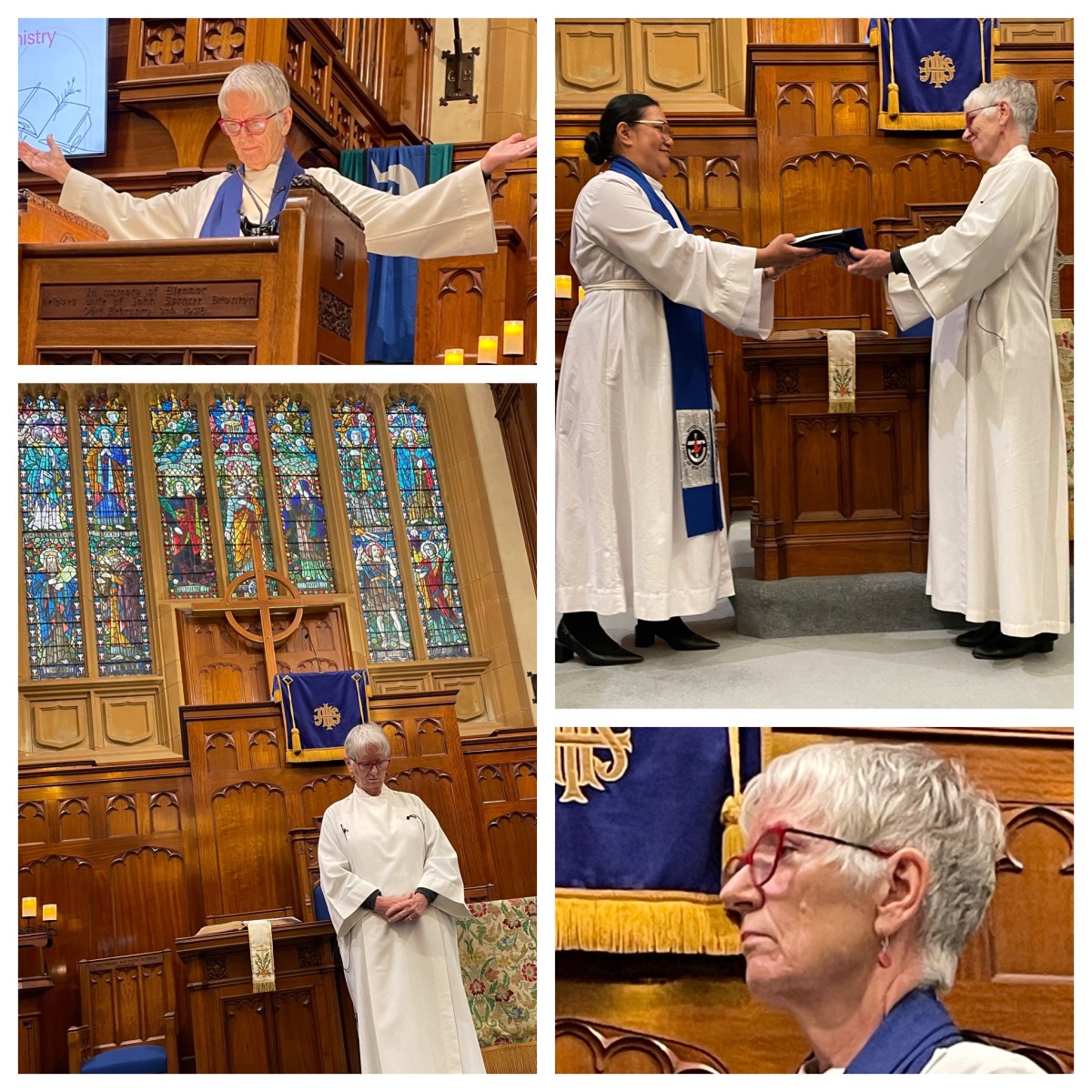
Jane Fry calling the people to worship

The church on this occasion held a full congregation when the service itself began, with Jane in characteristic pose, arms outstretched, as she called the people to worship: “Look! Listen!”, with a string of appropriate scripture sentence after each iteration. Nathan Tyson then acknowledged Country, giving thanks for the First Peoples who have cared for the land for millennia, and offering a gracious and warm welcome to the many Second Peoples (of multiple cultural heritages) who had gathered for the occasion.
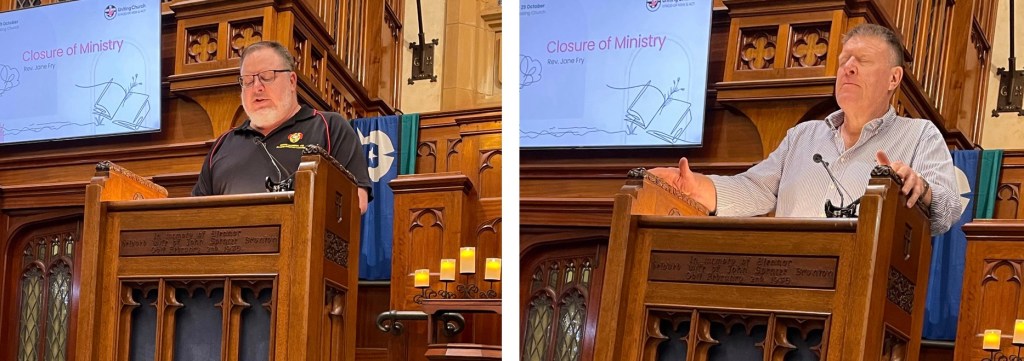
Nathan Tyson (left), Simon Hansford (right)

Past Moderator Simon Hansford brought words of confession (“we speak words of cynicism and anger; for this we are sorry …”) before offering an Assurance of God’s pardon, to which we replied, “thanks be to God”. Jane and Simon had worked together as a fine set of leaders of the Synod team for six years, through the difficulties and challenges of the COVID pandemic. It was good to have his clarity of thought in these prayers of confession.

We sang a number of good hymns, including a favourite one written by Charles Wesley “a long time ago”, as wry Jane’s annotation in the order of service observed. How many people were like me: enjoying the melody and harmony of “And can it be” whilst inwardly recoiling at the blood, wrath, and divine vengeance permeating the hymn, before divine grace eventually shone through? 

Yes, these words show that it was indeed “a long time ago” that such theology reigned supreme; fortunately within the Uniting Church we can see that “the Lord has yet more light and truth to break forth from his word” (in the words of John Robinson, spoken to the Pilgrims in 1620 as they departed on their journey to “the new world” in 1620, and then include in a hymn written by British Congregationalist George Rawson in  the 1850s).

So it is that, as a church, we do indeed rejoice in the affirmation that we “remain open to constant reform under [God’s] Word” and that as “a pilgrim people, always on the way towards a promised goal” we are able to delve into our scripture, traditions, and heritage, “give thanks for the knowledge of God’s ways with humanity which are open to an informed faith”, “sharpen its understanding of the will and purpose of God by contact with contemporary thought”, and stand “ready when occasion demands to confess the Lord in fresh words and deeds”. (Excerpts from the UCA Basis of Union)

Neale Roberts of Uniting brought two readings from scripture, delivered with eloquence, nuance, and expression. From the scriptures we share with Jewish people he read a passage celebrating Wisdom: “When he marked out the foundations of the earth, I was there, beside him … now, then, listen to me” (Proverbs 8).
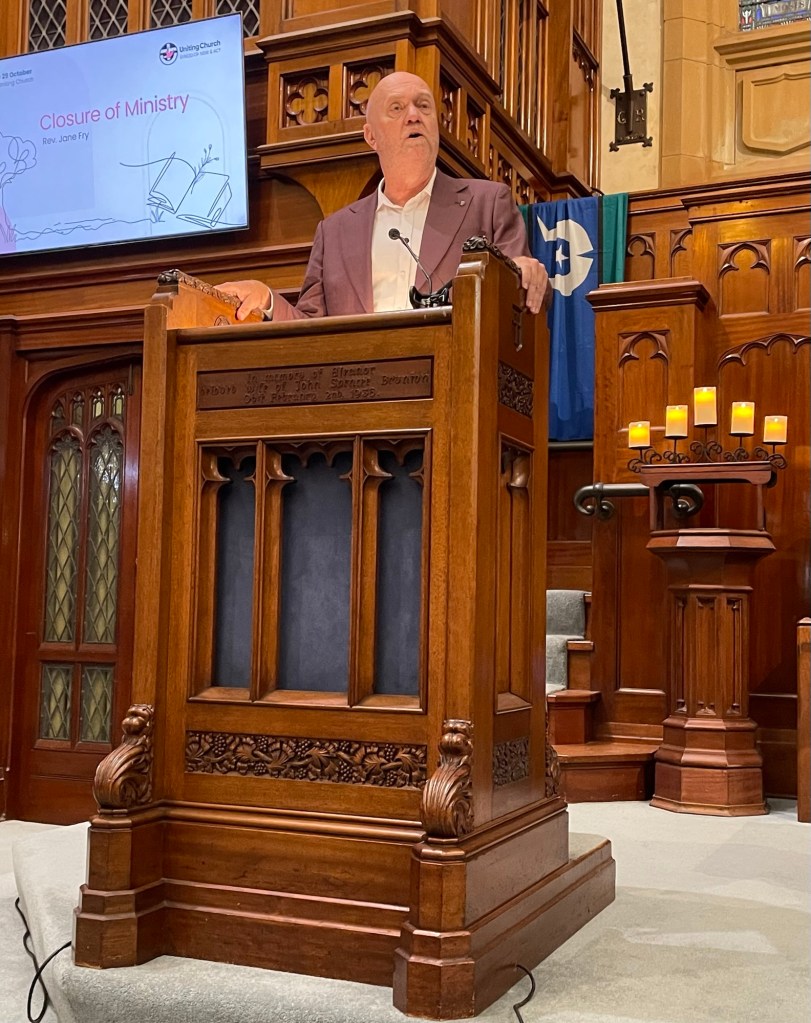
Neale Roberts

And then he read words attributed to Jesus: “do not worry about your life … look at the birds of the air … consider the lilies of the field … do not worry about tomorrow, for tomorrow will bring worries of its own; today’s trouble is enough for today”. As Neale observed to me afterwards, “I am sure Jane picked that passage for its final words, as a word to the church today”. They do indeed encapsulate the deep faith and strong hope that Jane has always exuded.

Elizabeth Raine, friend and colleague of Jane since they first met as theological students at UTC in the early 1990s, preached the sermon. Indeed, as a personal aside, I was struck the fact that all who offered leadership in this service, apart from Nathan Tyson, had studied theology and undergone formation for ministry at UTC during the 1990s; perhaps a fine testament to the grounding they had received then—more certainly, a clear indicator of the qualities and giftedness that each person has brought to ministry over the ensuing decades. The church has benefitted much from the calling to which each of them has responded.
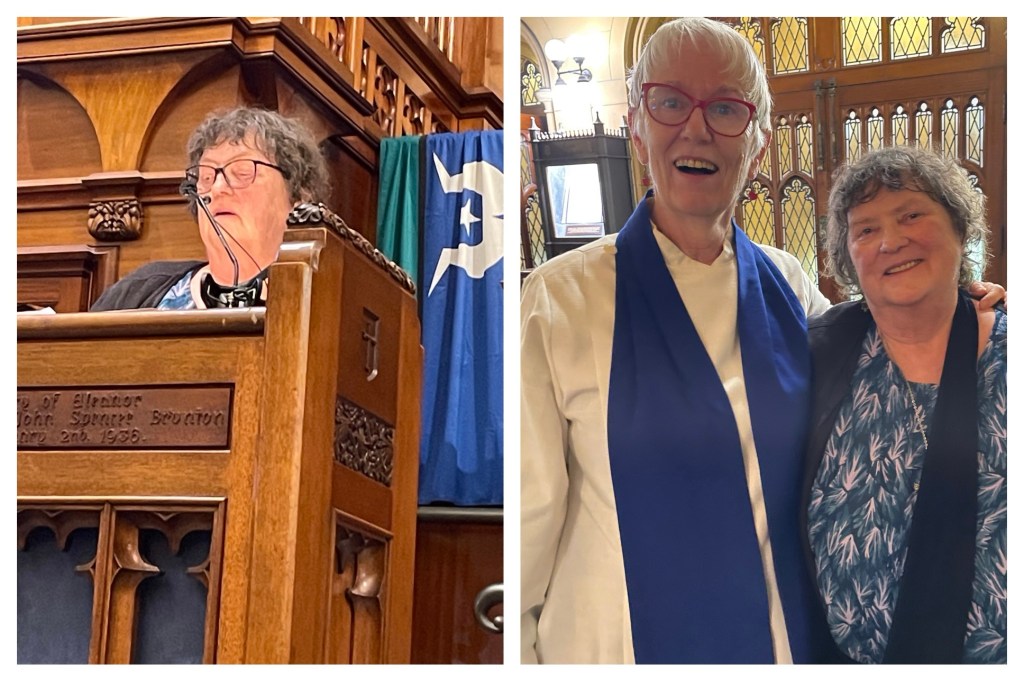
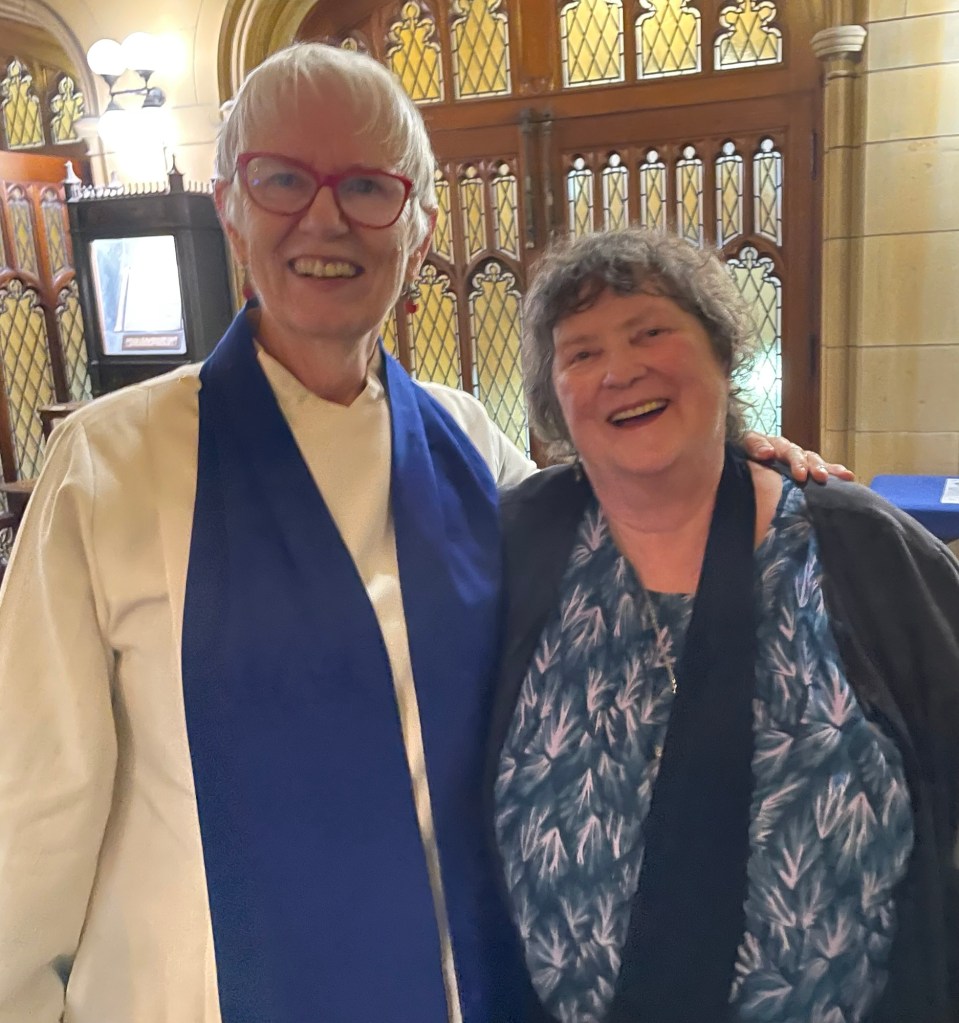
Elizabeth preaching (left); Elizabeth and Jane (right)

Elizabeth spoke about the figure of Wisdom who had been the focus of the Proverbs reading. She warned the congregation, “I told Jane I would be feral and unfiltered … and Jane said to me, ‘go for it!’” And so she did. You can read the full sermon via the link at the end of the blog, but here are some choice extracts: “Wisdom calls us on an unexpected journey … she transgresses male boundaries, standing at the street corner, raising her voice in public places … but Wisdom has been grafted on to Jesus by the early church scholars … they were consumed by their categories and systems … we emerged with a transgendered Holy Spirit … a meek, obedient virgin-mother became the model for women … the figure of Wisdom has been overshadowed.”

Elizabeth offered incisive exegetical insights into the riches that the poetic passage in Proverbs contains. concluded that Wisdom speaks to the church today; “she offers us a relational faith, listening to others, working together for the common good … anyone, but anyone, can acquire what she offers … she would undoubtedly value the invitation of Jesus to his disciples to ‘fish on the other side of the boat’, to be open to new possibilities, not to be bound to practices of the past, and to hold to a relational, experimental theology”. “How will we as a church relate to Wisdom?” she concluded.

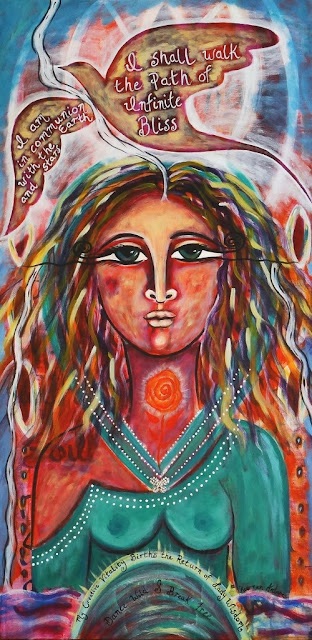
Lady Wisdom, from the “Women of the Bible” series
by Sara Beth Baca; https://www.sarahbethart.com

It was clear from the many expressions of thanks—mostly, not entirely, from women in the congregation—that Elizabeth’s “unfiltered” feminist exposition of this crucial passage had struck a very positive chord for many who were present. “We need to hear this message, we need to hear your voice” was a regular refrain. Preachers and teachers in the church should take note; there is, within informed Uniting Church people, a deep appetite for substantive biblical preaching with a clear, prophetic, feminist hermeneutic that speaks directly into our situation today!
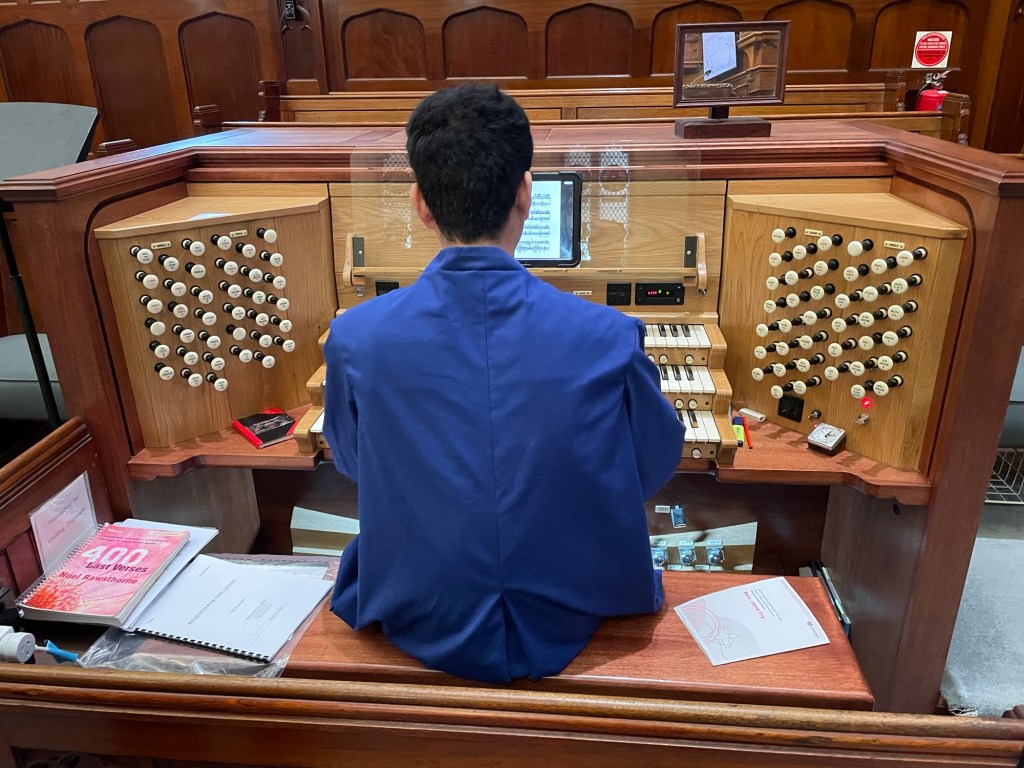
After joining in an Affirmation of Faith, we enjoyed the inspiring playing of the Stephens’ Organ Scholar, Andrei Hadap (pictured in action above), as we meditated on the delightful words of a hymn by Thomas Troeger: “how shall we love this heart-strong God who gives us everything, whose ways to us are strange and odd: what can we give or bring?” Associate Secretary of Synod Bronwyn Murphy then led the prayers of the people to this “heart-strong God”: “so much pain held within one small planet … so hear us, O God, as we pray for your earth … for all people, gathered within your welcome … for the Uniting Church, a body in transition … and for Jane and her family”.
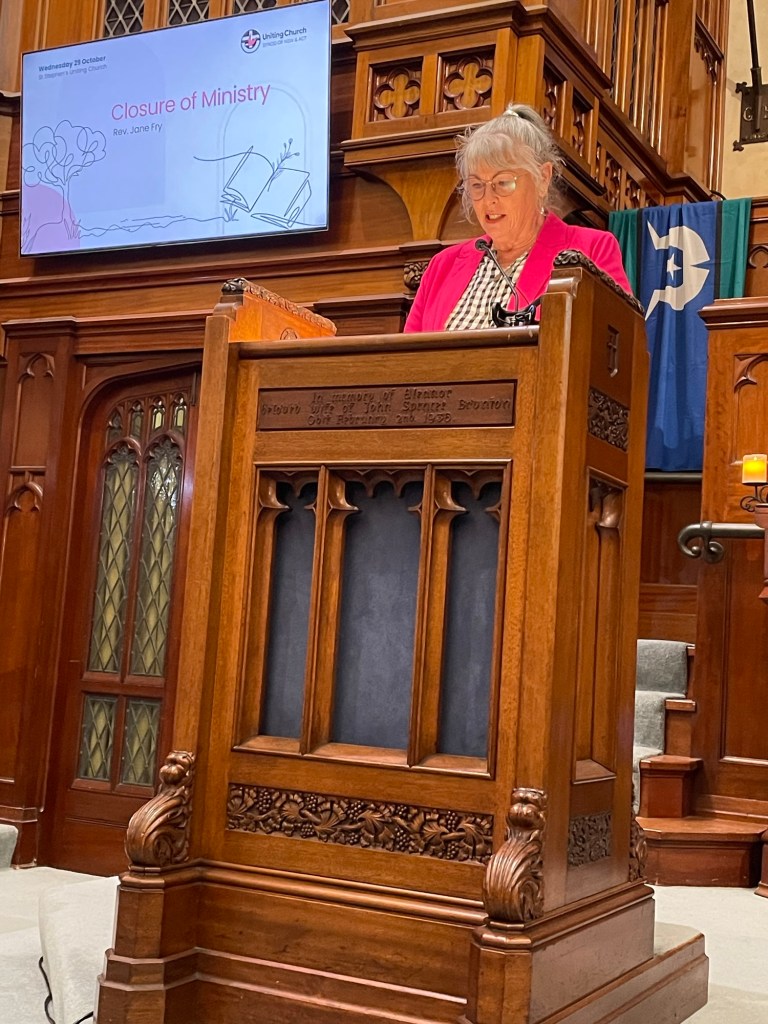
Bron Murphy prays

Jane then spoke in her characteristic direct and challenging style. She referred to the “nine years of drama, change, and engagement across the church”. She is, she confessed (as if we needed reminding!) “a sceptical person, not an early adopter [who] did not expect the recent significant decisions of Synod to have been adopted!” Her reflection at this point was, once again, characteristically Jane; she saw this as an indication that “God is not done with the Uniting Church”.

She reminded all present that “the change [we have] initiated is just housekeeping. Synod is administrative, Presbytery has an oversight role, but the Congregation is where faith is nurtured”. She emphasised that the church is called to “nurture faith, form discipleship, and welcome all: these are the critical elements of being the church.” Her final word exuding the hope she has always held over the years in fulfilling her leadership roles in Congregation, Presbytery, and Synod: “neglecting the disciplines of faith is incredibly dangerous: prayer is the foundation. Letters us remember: ‘God has got this’”.
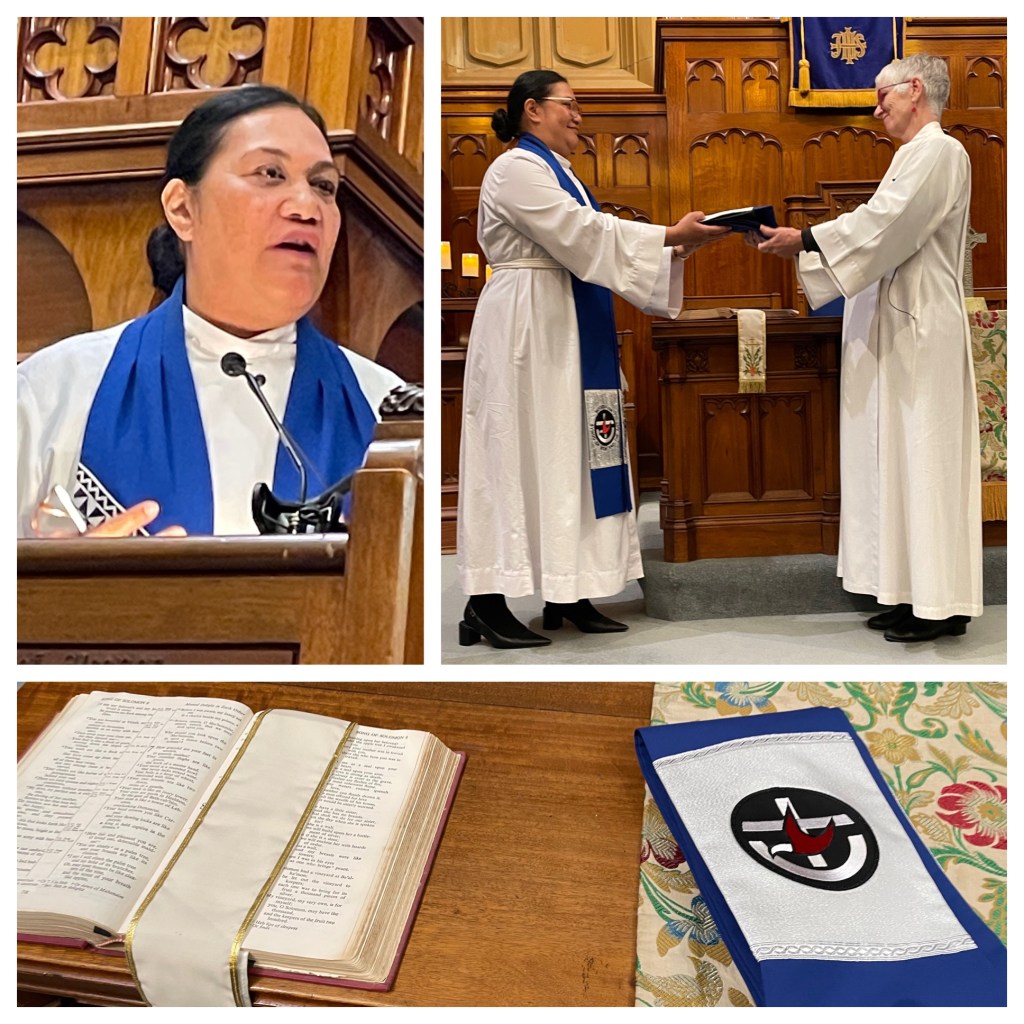
The Moderator receives from Jane the stole which symbolized
her ministry as Secretary of Synod

The Moderator, Mata Havea Hilau, then led the formal closure of ministry for Jane, offering the thanks of all present in the worship space and those participating via the livestream, and praying for Jane, “May the God who rested on the seventh day to delight in all the creation hold you in her arms as you have held this work, celebrate with us the life that takes life from you, and give you grace to let go into a new freedom”; to which all the people responded: Amen!
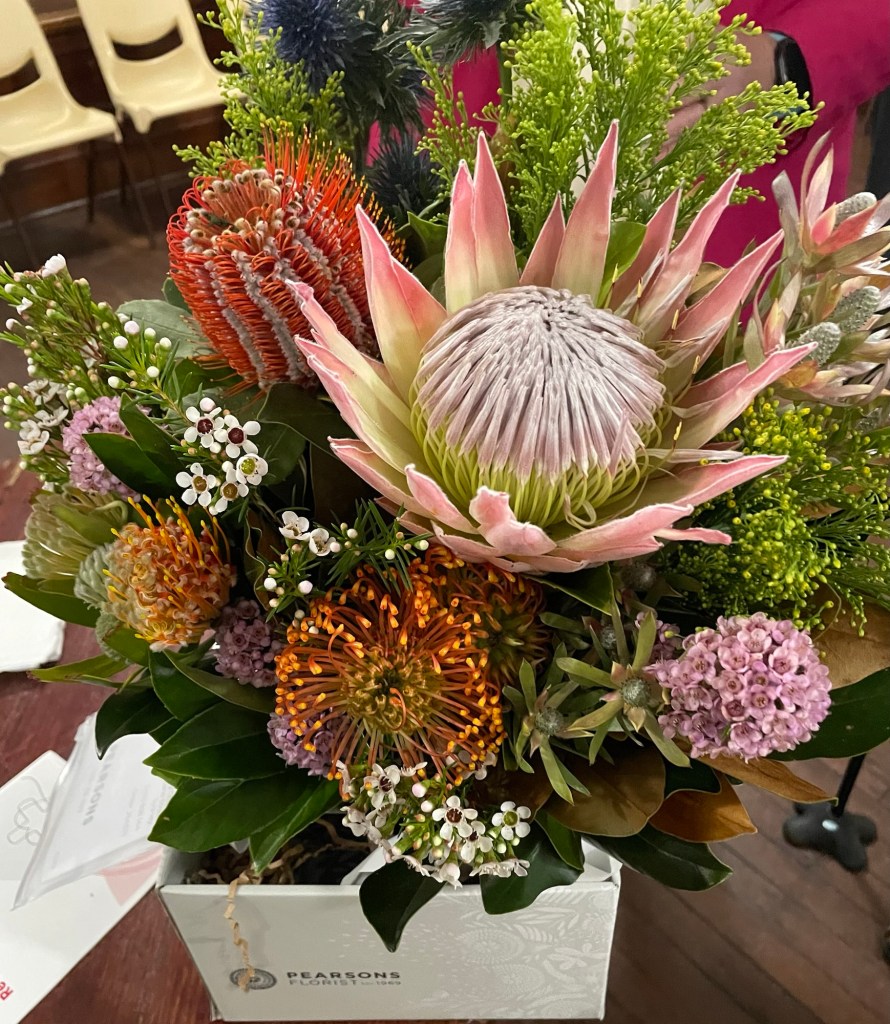
In the Ferguson Hall after the service, in the midst of the plethora of conversations filling the space with a cascade of sounds, Peter Walker, the incoming Secretary of Synod and former Principal of UTC (and yet another graduate of UTC from the 1990s!) presided over a brief time of formality. Jane expressed her thanks to many people who had worked alongside her and encouraged her over the past nine years. She was given a gift of a lovely bunch of native flowers.
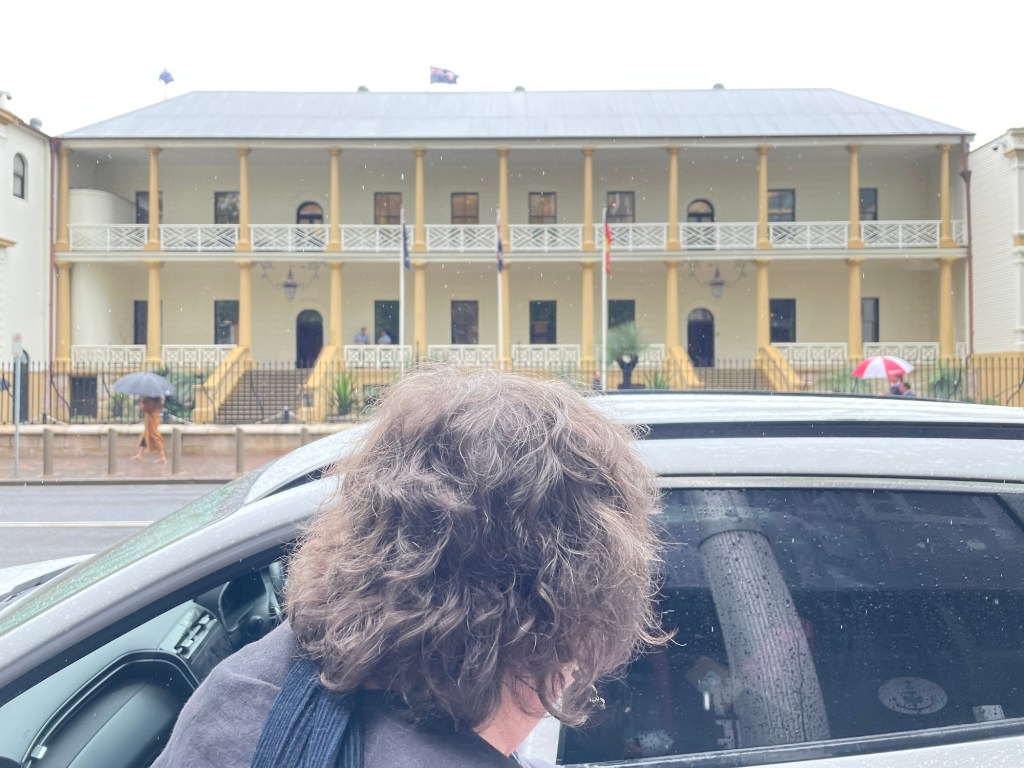
And then the crowd dispersed, stepping back into the rain, the traffic, the chaos of everyday life … … …
*****

You can read the full text of Elizabeth’s sermon at

Happy is the one who listens to me, watching daily at my gates, waiting beside my doors; for whoever finds me finds life!

A sermon on Wisdom in Proverbs 8

A sermon on Proverbs 8: 22–36, preached by the Rev. Elizabeth Raine in St Stephen’s Uniting Church, Sydney, at a service of Closure of Ministry for the Rev. Jane Fry, outgoing Secretary of the Synod of NSW.ACT, on Wednesday 29 October 2025.

When Jane asked me to preach at this event, I was very surprised. I expected that a former Moderator or Board Chair would be invited to preach at such an important event as the General Secretary of the NSW/ACT Synod retiring. But here I am!

Jane (left), Elizabeth (right)

It is true that Jane and I go back many years, as we went through UTC together, bonded by the attitude of the sexist male colleagues who accused us from everything from ‘sleeping our way to high distinctions’ to being ‘feminists’, like it was some sort of virus. I confess this rather patriarchal attitude has informed this sermon, though it is also true that so many more women now occupy prominent positions in our church, which is a very good thing.

I did warn her that I was unsettling, potentially feral and capable of saying things that were unfiltered in my sermons. Was she sure she wanted to risk such a this? Apparently she did, so here I am.

I was grateful to Jane for her friendship and support then, and I am grateful to her now for her presence as General Secretary over the last 9 years. She has approached this position as she does most things, with integrity, thoughtfulness and a straightforward approach to dealing with what I call ‘faffing around’. Jane has a deep and abiding love for the church and hopes only for its successful transition into the future, and I wish her well for her future in retirement.

Wisdom, from the “Women of the Bible” series by Sarah Beth Baca; https://www.sarahbethart.com/products/p/full-image-women-of-the-bible

The book of Proverbs from which one of the readings we heard is drawn tells us a lot about Wisdom (hochma in Hebrew). She is a central character in chapters 1–9, and she appears as a mystical feminine aspect of God. “Lady Wisdom”, as she is known, is a central character in many chapters of Proverbs, and those who know her are seen asrighteous people. She calls to us and invites us on an unexpected journey. She is offered as a role model for us, her teachings are a template for life, and she a pioneer who opens up a pathway to faith and obedience.

Scholars have debated how the personification of Wisdom should be interpreted, especially as Wisdom is stated to be the first creation of God (“the Lord created me at the beginning of his work, the first of his acts of long ago”, Prov 8:22) and is involved in the creation process itself (“the Lord by wisdom founded the earth”, Prov 3:19). Is wisdom meant to be a specific aspect of God or even a separate being from God? Or should all such language be taken as mere metaphor?

She has been described in many ways—as an aspect of God, as a divine entity existing in her own right, even as something approaching a feminine deity, as Proverbs 8 states: Wisdom was present at the beginning of creation as a co-creator with God, who delighted in her presence.

The divine Wisdom has fascinated ecclesiasts and scholars since the inception of the Christian church. As we have heard, Wisdom has been described in many and various ways but Wisdom’s primary function was understood by the very early Christians to be a mediating force between God and the world, and was particularly associated with the work of creation.

The text from Proverbs 8:22 was important for this belief: here, Wisdom declares, “The Lord created me at the beginning of his work, the first of his acts of old”. Wisdom was believed to be a vehicle of God’s self-revelation, granting knowledge of God to those who pursue her through scripture and learning. 


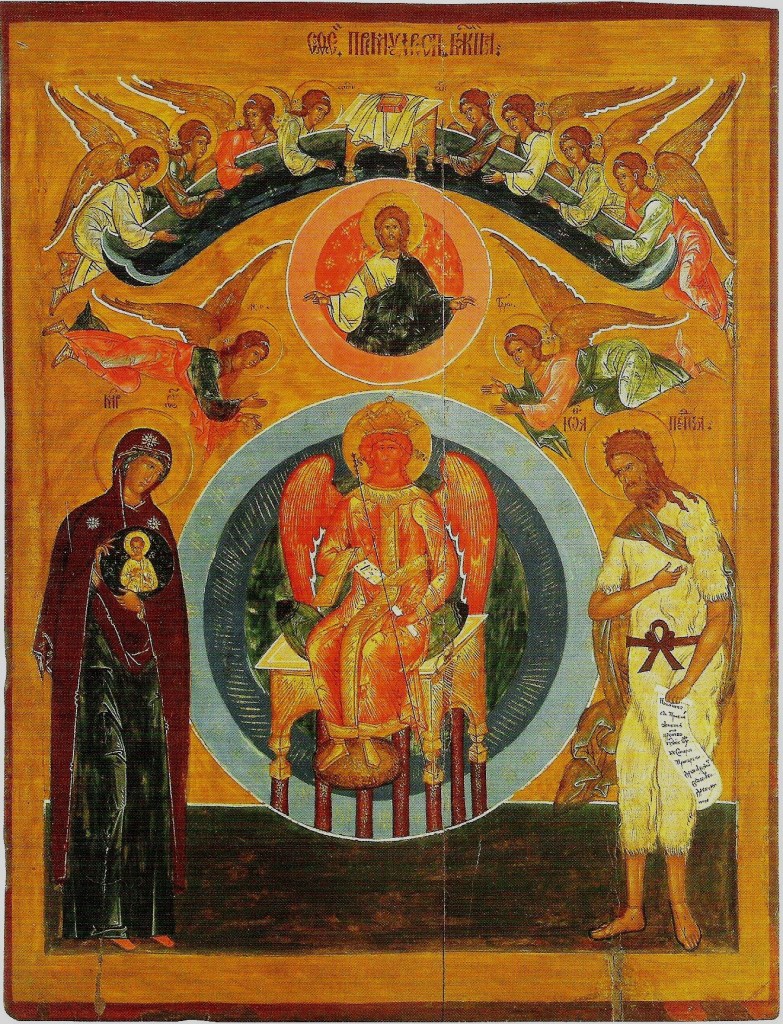
Wisdom (Sophia) on her throne supported by seven pillars
A 16th century Icon of Divine Wisdom
in the St George Church in Vologda, Russia

Despite this, the Christian tradition, for most of its life, cannot be said to be famous for finding the feminine aspect of the divine. Relentlessly masculine, the early Christian church systematically excised any sense of the feminine from the orthodox view of God, spirit and Jesus.

The ruach (Holy Spirit) became masculine through the language of Latin; the bat qol (the voice of God) of the rabbinic literature found a different, masculine grammatical construct in Greek, and hochma or sophia (wisdom) morphed into the figure of Jesus, as the New Testament writings firmly associated the attributes of Wisdom with the person of Jesus Christ. 

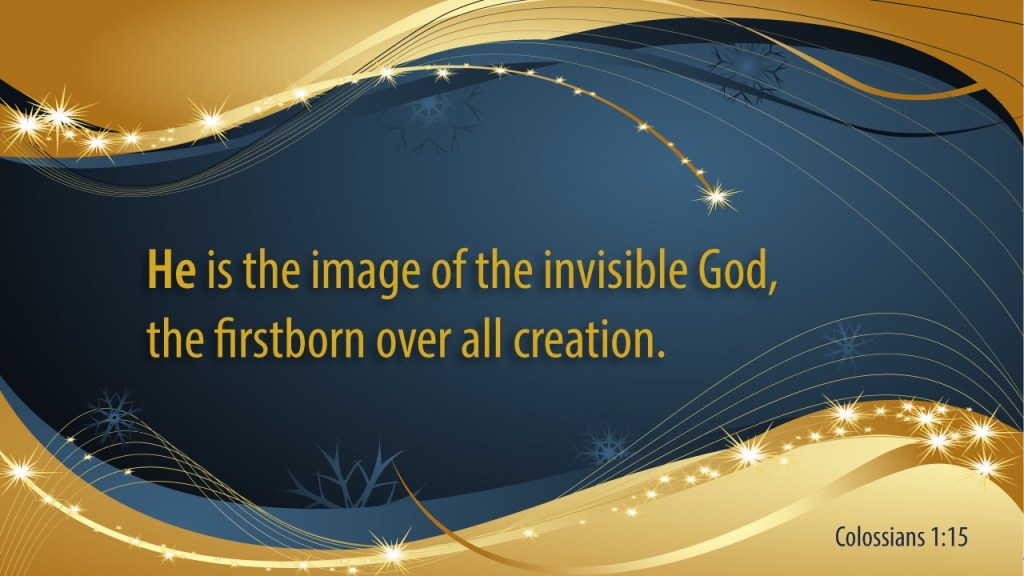
This last is most clearly seen in the letter to the Colossians. This document was originally attributed to the apostle Paul, but is now thought to have been written by a follower of Paul, soon after the apostle’s death in the early 60s. Some early verses in Colossians make it clear that Wisdom had been grafted onto Jesus:

“He is the image of the invisible God, the firstborn of all creation; for in him all things in heaven and on earth were created, things visible and invisible, whether thrones or dominions or rulers or powers — all things have been created through him and for him.”

The Divine Feminine through whom God created the world was replaced with the Divine Masculine. A good example of this can be found in the writings of Justin Martyr – he claimed that Jesus was Wisdom, Logos and the Glory, thereby removing the feminine Spirit (ruach), Wisdom (hochma), and Glory (shekinah) all in one stroke. 

Wisdom sadly morphed into a male saviour, who by assuming the divine characteristics Wisdom was meant to share with God, found himself inserted as the third person of a doctrine of trinity with a transgendered holy spirit, who crossed masculine, neuter and feminine across biblical languages.

Instead of recognizing Wisdom, this feminine aspect of the divine, early Christian male leaders instead have tried to satisfy women throughout the world by presenting them with role models of martyrs and virgins, thereby setting a standard that the vast majority of females cannot possibly aspire to.

Wisdom fast lost her independence and feisty nature, and the meek, obedient woman, characterized by the mother of Jesus (another virgin), was held up as the model to which all women should strive to be.

However: far from being obedient and submissive, Wisdom occupies what is the domain of men, teachers and prophets. She stands on busy street corners, she is at the town gate; she sets her table at the crossroads where many pass by. Unlike her counterpart in Proverbs 31, there is nothing of the domestic goddess about her. She is radical, counter cultural and subversive. She teaches knowledge and leads her people on their way through history. In a most unfeminine way, unaccompanied by a male chaperone, she raises her voice in public places that are the domain of men and calls to everyone who would hear her. 

Wisdom offers us a radical example of faithfulness yet she remains a disturbing presence. She is a most unladylike figure, venturing outside the house, to stand beside the crossroads, crying out in full voice, surprising and startling and provoking with her words.

She transgresses boundaries by standing amidst the male elders at the city gates and presuming to teach them. She has a clear voice, a colourful personality, a dominant presence, and offers words of hope and the promise of life. She is a vehicle of God’s self-revelation, and grants knowledge of God to those who pursue her through scripture and learning. 

The prominent biblical scholar, Elisabeth Schüssler Fiorenza, has written this about Wisdom:

Divine Wisdom is a cosmic figure delighting in the dance of creation, a “master” crafts wo/man and teacher of justice. She is a leader of Her people and accompanies them on their way through history. Very unladylike, she raises her voice in public places and calls everyone who would hear her. She transgresses boundaries, celebrates life, and nourishes those who will become her friends. Her cosmic house is without wallsand her table is set for all.

In short, the biblical figure of Wisdom represents a spirituality of roads and journeys, of public places and open borders, of nourishment and celebration, of justice and equality – rather than a spirituality of categories, doctrines, closed systems and ideologies. Her dramatic modus operandi stands in striking contrast to the slow and methodical way of operating that we see in the classic formulations of Christendom, doctrines that have come to define the church in the eyes of those outside of it.

The church fathers, the male patriarchs of the church, and the myriad of male theologians who followed were, in my humble opinion, consumed with their categories; they articulated their doctrines by amassing the data, analysing the information, systematising the component parts and categorising the key dogmas. And they wrote down these dogmas and systems and turned them into the doctrines by which faith was measured.

By contrast to these closed systems of belief and knowledge, the biblical figure of Wisdom asks for a relational faith, and invites us to develop a wide openness in the way we approach others and God. She requires of us that we really listen to others, including those we don’t agree with … she calls us to listen, to understand, to speak in ways that connect with others and ways that build productive and fruitful relationships across the differences that separate us.

Wisdom calls us to work together, for the common good, with others in our society. She is not a figure bound to buildings, books and writing; she is an outdoor, community spirit, seeking relationships with people, engaging wholeheartedly in the public discourse, debating back and forth in the public arena the key elements of a faith-filled life.

What Wisdom presents is a radical democratic concept, in that anyone, whether illiterate or educated, whether without or with status, whether poor or wealthy, can acquire what she offers. 

She invites us to be life-long learners of the faithful and missional type, and calls us to be constantly open to challenge and change as we read, study, think, discuss, explore, debate, and decide. 

I think that Wisdom is precisely the kind of person who would have relished the invitation, once offered to his disciples by Jesus, to fish on the other side of the boat. She would value the opportunity to look in a different direction, to reconsider the task at hand and seek a new way of undertaking it. Rather then remonstrating with Jesus saying ’but we have always done it this way’, she would jump at the chance to set out in a new arena, to pioneer a new task, to reshape her missional engagement so that it was fresh, invigorating, and creative, open to new possibilities and exciting pathways. What a role model that is, for the church today!

Lady Wisdom, by Canadian artist Kiernan Antares (2013)
https://womenspiritualpoetry.blogspot.com/2013/12/lady-wisdom-by-kiernan-antares.html

So, the question that I invite you to ponder at this moment is: How will we interact with Wisdom? Are we open to the exploration and discoveries that the biblical figure of Wisdom invites us to pursue? 

Are we content with just repeating our tried and true traditions from the past? Are we happy staying in our familiar comfort zones? Will our mission be simply no more than wishing people to walk through ourdoors, as we remain in our comfortable, self-contained spaces?

Or will we choose the way of the rather unladylike and subversive Wisdom, the radical at the street corner, crying out to all who pass by? Can we adopt Wisdom’s model invitation of radical hospitality as relevant to the church today? Should we be more concerned with ‘raising our voices’ in the public arena than confining ourselves to church buildings?

Hopefully as a church we will choose to follow the path of Wisdom into the future, which through its relational, radical and inclusive theology offers us the potential to transform contemporary situations of injustice, brokenness and violence in the communities we serve. By taking our stance in the marketplace, we can demonstrate the ways that show our deep and profound relationship with and love for God, and how that love is extended to all people. Hopefully all of us, not just a few, can follow Wisdom out of our enclosed gatherings to the space where such social and spiritual change can take place.

I trust that as a church, we will continue to encounter Wisdom, hochma, and learn from her, again and again in the coming years.

*****

You can read a report of the whole service of Closure of Ministry at