
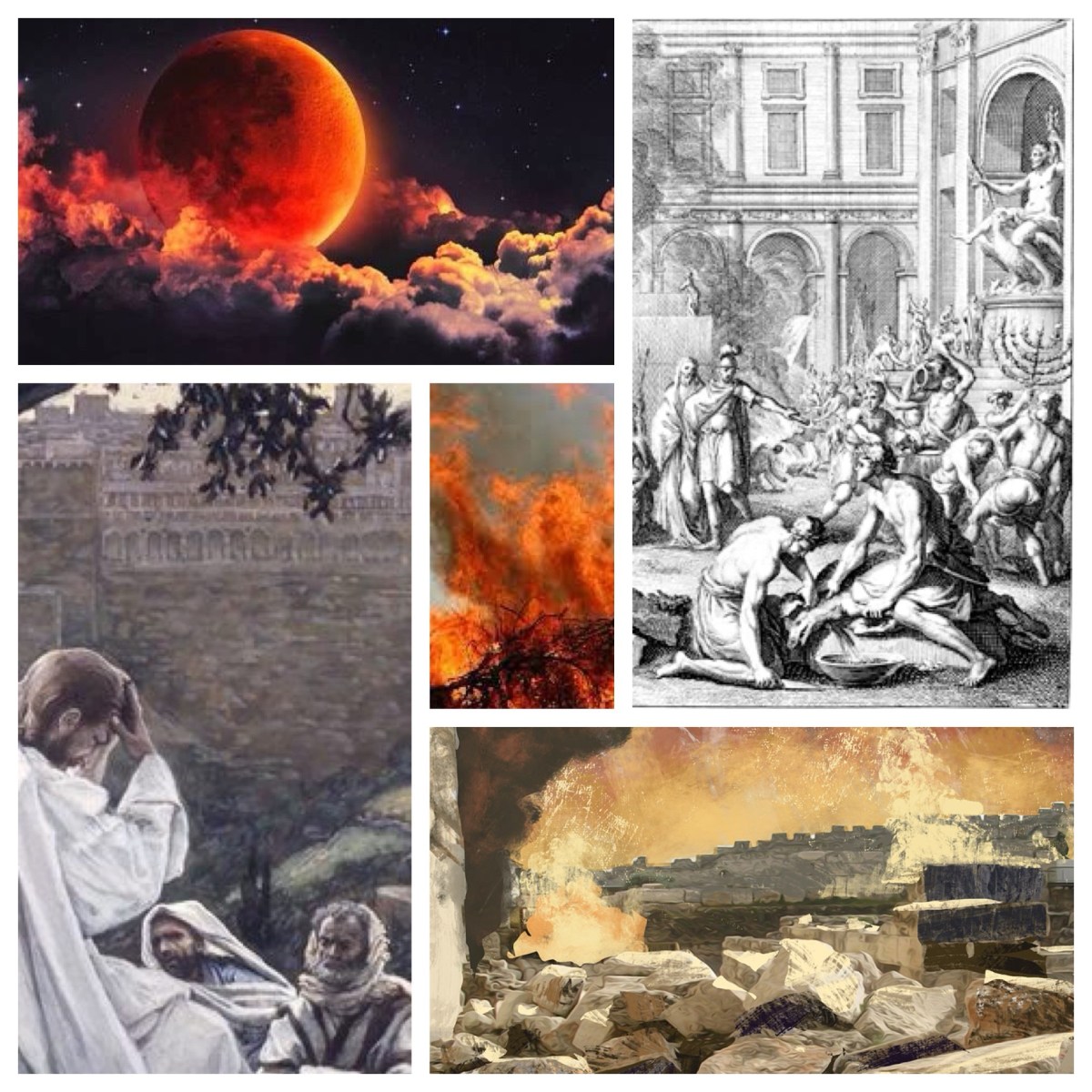
I preached this sermon, a reflection on the apocalyptic words of Jesus reported in Luke 21, at Dungog Uniting Church on 16 November 2025.
Conflict. Aggression. Upheaval. Disaster. Destruction. Catastrophe. A cosmic conflagration, as there are “great earthquakes, famines and plagues … dreadful portents and great signs from heaven … on the earth distress among nations confused by the roaring of the sea and the waves”. A time when “people will faint from fear and foreboding of what is coming upon the world, for the powers of the heavens will be shaken”.
If you have a mental image of gentle Jesus, meek and mild, calling the children to sit on his knee, placidly proclaiming the importance of love, healing the sick and blessing the people who listen to his words with awe and respect—then banish this unbiblical image! For the words we have heard today—words of conflict, aggression, upheaval, disaster, destruction, and catastrophe, are the final teachings of Jesus; the last words he offered his disciples in a lengthy, detailed, and deeply disturbing speech that he made in the shadow of the glorious Temple in Jerusalem.
How kind of the lectionary to give us the solid excerpt from this speech, reported in Luke 21, as the last-but-one Gospel passage in this year when Luke’s Gospel has been in our view. Through this year, we have heard of Jesus blessing the poor, healing a crippled woman, telling stories about a Good Samaritan, welcoming outcasts to a banquet table, and the persistent seeking of justice, as well as recruiting a band of willing helpers to disseminate his message, instructing his followers how to pray, and sharing at table with a chief tax collector. All inspiring, encouraging, positive stories, you will agree.
And yet, today, we hear about deceivers and destroyers, armed troops and prosecuting authorities, upheavals in earthquakes and suffering in famines: quite a contrast, and not what we normally associate with the Galilean preacher, Jesus of Nazareth.

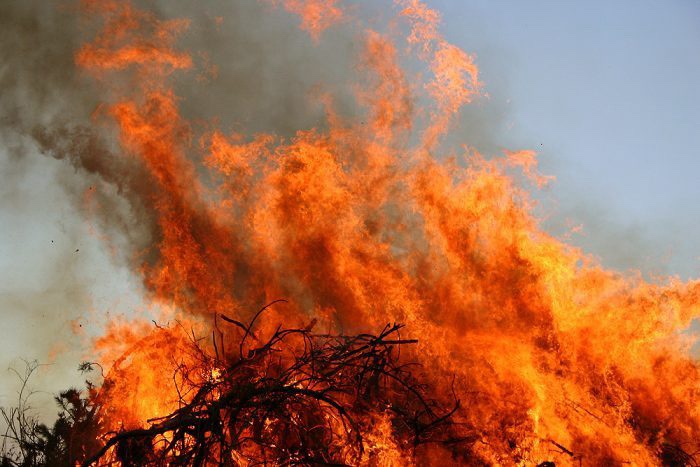
I don’t know if you have seen any episodes of the series being shown on ABC-TV, I Was Actually There. In particular there was an episode about the Black Saturday fires in Victoria in 2009. It put me in mind of the Black Summer fires along the eastern coast in 2019–2020. Living in Canberra during that season, we had a fire that came within 5kms of our house, and we knew people whose memories were jogged of the 2003 fire when whole suburbs of Canberra were incinerated. Two people that we worked closely with had lost their entire house and contents in that fire. From a distance of 5km, the fire seemed threatening enough to us; I can’t imagine what it must be like to see a fierce raging fire come storming along the very street where you live!
Actually, scenes of destruction abound in our news: destruction in the war in The Ukraine, the ravages of genocide in The Gaza Strip, landslides in Nepal and Bangladesh, earthquakes in Afghanistan and Türkiye, cyclones in the Pacific and the Bahamas, floods in Spain, bushfires in California and Greece, famine and droughts in countries in central Africa and southern America. Watching the news, we can’t avoid regular exposure to such “natural disasters”.
So the words of Jesus, on one level, should be no surprise to us. Has there ever been a time when “disasters” have not been occurring on this planet?
And yet, the surprise is, that the particular series of disasters that Jesus describes are all associated with the culmination of his ministry, the climax of his message, the pinnacle of his project: “when you see these things taking place, you know that the kingdom of God is near” (Luke 21:31).
The kingdom of God, which Jesus had preached persistently since emerging out of his 40 days in the wilderness (4:43). The kingdom of God, which he put front-and-centre as the message for his followers to proclaim (9:2; 10:9). The kingdom of God, which he boldly declared to the Pharisees, was “among you” (17:21). It is this kingdom which Jesus boldly declares will come with signs in the heavens, distress on the earth, upheavals in the sea, and great fear in the hearts of people.
Why?
This particular way of speaking and writing is described by scholars in a technical theological term: apocalyptic. That is an ancient Greek word which literally means, “revelation”, “making clear what will happen”, “lifting the lid on what God is planning for us”. God is planning a sequence of cataclysms, disasters, and catastrophes.
Apocalyptic is the essential nature of Jesus’ teachings about “the kingdom of God”. This final speech confirms the thoroughly apocalyptic character of Jesus’ teaching. The parables he tells about that kingdom are apocalyptic, presenting a vision of the promised future that is in view. The call to repent is apocalyptic, in the tradition of the prophets. The demand to live in a way that exemplifies righteous-justice is apocalyptic; it stands firmly in the line of the older prophetic call for repentance and righteous-just living.
In chapter 21 of his Gospel, Luke has drawn his narrative to a climactic moment with the same focussed attention to the vision of God’s kingdom, as was expressed at the start. The beginnings of the birth pangs are pointers to the kingdom that Jesus has always had in view. This call is as demanding and difficult as giving birth can be, Jesus warns. Jesus was, indeed, a prophet of apocalyptic intensity. We should not forget that.
So what do we do with this terrifying language, with the threatening vision that Jesus places before us today? We could put our head in the sane, pretend he really didn’t mean it, and carry on with business as normal. We can hold to the romanticised picture of gentle Jesus, meek and mild, adoring children on his lap, admiring adults by his side.
But that picture is utterly at odds with the passage we have heard today. We need to accept the vision of Jesus, embrace his words, explore what it is that this means, and respond to what he is calling us to do. And his words in this passage are fierce, direct, confronting.
Some want to use these words to read “the signs of the times” and paint a picture of unstoppable decay surrounding us and engulfing us. They want to use these words—misuse these words, I maintain—to threaten us with hellfire and brimstone. “God is coming to get us” they proclaim; “just look at how much of this is happening now”.
But this was not, and is not, the purpose of such language. Tellers of apocalyptic tales have always invited their listeners, living in times of crisis, to suspend disbelief, watch the vision unfolding, hear the angelic interpretation, even undertake the heavenly journey that the author retells; and to do this with expectation and hope. “God will act” is the central message. “Trust in God”.
Apocalyptic is always written in the midst of despair; despair for Israel that had been fuelled by foreign invasion, murder and rape during the pillaging of that invasion, enforced slavery, religious repression, cultural imperialism, and societal oppression, with the loss of much-loved traditional practices and customs, disconnection from the homeland (the place where God resided), and a continuing sense of having been abandoned by God.
In the midst of all of this, apocalyptic texts invite their readers or listeners to have hope: hope that God would act; hope that despair would be dispelled and life would flourish once now; hope that the familiarity of traditions would be reinstated; hope that the evils perpetrated by the invading oppressors would be rectified by acts of divine revenge; hope that life, even in their own time, would be transformed into a realm where righteous-justice was in force, where the evils of lawlessness were dispelled.

All of this, this, it should now be clear, is what Jesus was looking to in his apocalyptic teaching, in his teachings about living with fidelity to the covenant with God, in his invitations to his followers to walk the way he walks, leading to the realm of God’s kingdom. His visions of cataclysmic times, in the apocalyptic speech of Luke 21, provide a hope-filled declaration that, despite the turmoil of the times, God is indeed acting to intervene in events, overturn evil, and institute the righteous-justice of God.
And all of this is intensely contextual, thoroughly political, firmly directed towards the injustices perpetrated under the religious and economic system of the Temple and the cultural and religious oppression of the Roman colonisers. In Mark’s account, Jesus refers to the “birth pangs” that are just beginning (13:8). They herald the coming good times when “the great power and glory” of the Lord is evident (Mark 13:26; Luke 21:26). In Luke’s version, this is the time when “summer is near” (21:30). That is the kingdom of God, in which much fruit is borne (Luke 8:15), much growth occurs (13:19), new life will emerge (9:22; 9:44; 18:33; 20:38); righteous-justice is enacted by God (20:15–17); and love of God and neighbour is practised by those in that kingdom (10:26).
Out of the darkness and despair, the agony of the birthpangs point to the hope of abundance that has been persistently proclaimed by Jesus. And so, we might pray: may that time come, may that kingdom be a reality, even in our time, even in our place; or, as Jesus taught us to pray, in thoroughly apocalyptic terms: “your kingdom come, your will be done, on earth, as in heaven”. And that is a fine way to end the long series of passages from Luke’s Gospel that we have heard throughout this year.

 An Informed Faith