
A Reflection for A Day of Mourning 2025

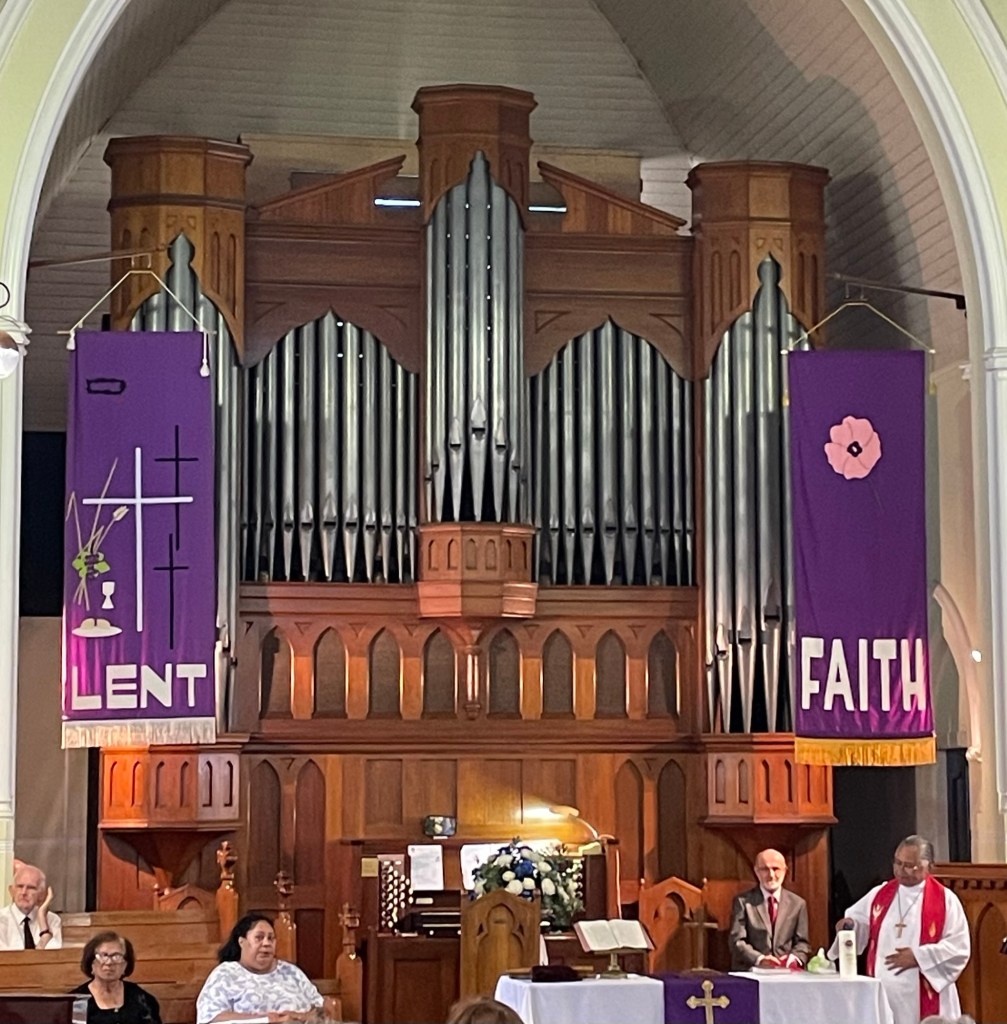
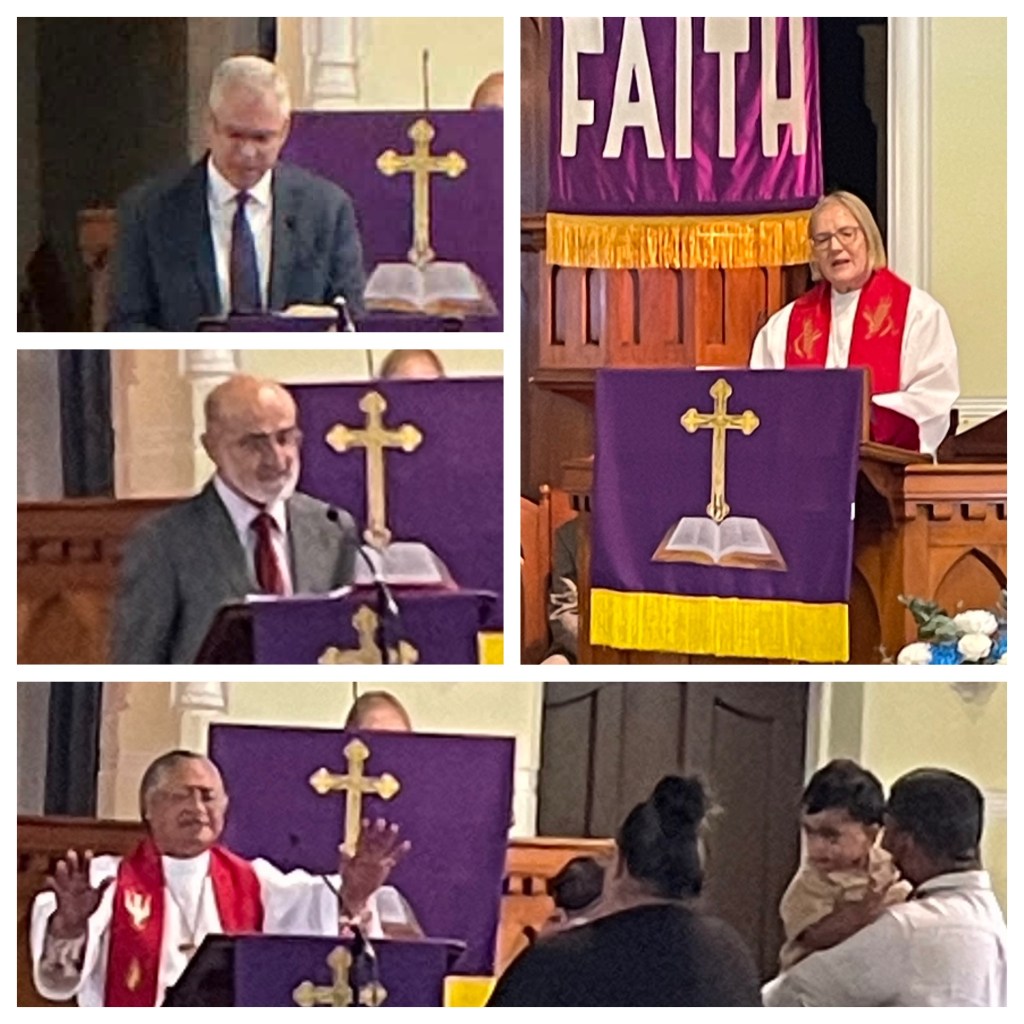
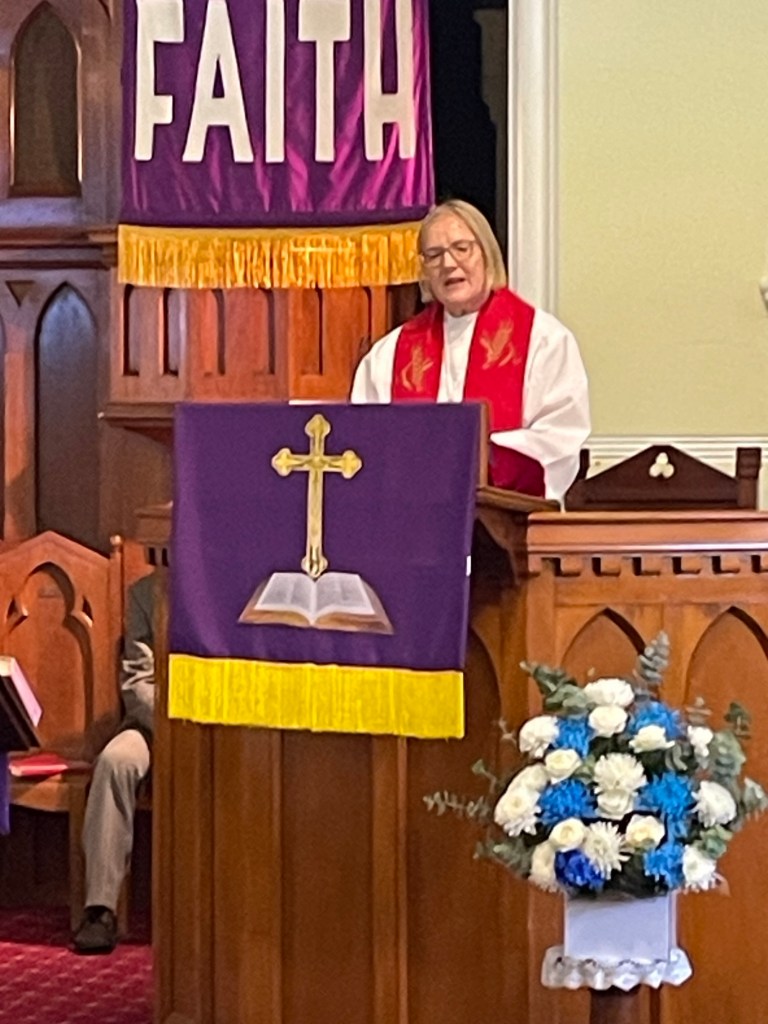
A reflection given by the Rev. Dr John Squires at Dungog Uniting Church on Sunday 18 January 2026.

In just over a week, on 26 January, no doubt many people around Australia will gather to cook at the BBQ and swim in the surf. Families and friends will enjoy a relaxing time on a public holiday. Somewhere in the background, perhaps, there will hover a sense of satisfaction that we are “the lucky country” full of “mates and cobbers”, where there is “a fair go” for everyone, a country in which we can wave our flags, have our BBQs, kick back and relax.

Indeed, around the world, people who call Australia home will most likely be gathering, perhaps with fellow-Aussies, to celebrate the day. I know that when I was living in a foreign country, 40 years ago, I did just that—finding some other Australians in the university’s Graduate Student Housing to share in a meal as we celebrated “being Australian” in a foreign land.

That was all almost half-a-lifetime ago, now; and my perspective on this has changed somewhat, I confess. I am still, as I was then, a fervent republican, believing that Australia needs to be a completely independent nation with no role at all for the imperialist blueblooded family whose forbears colonised this continent and who still have a formal, legal role in the affairs of this country, from many thousands of kilometres away.

And I am still resolutely opposed to the primitive tribal tendencies inherent in nationalism, and its ugly cousin jingoism, because of the emotional damage that this does to impressionable minds, and the consequent savagery that it has unleashed in warfare across the years.

The cost of war is immense and long-enduring; the “victory” won by a nation in prosecuting war is fleeting by comparison. War means injury and death, to our own troops, and to the troops of those we are fighting against. Every death means a family and a local community that is grieving. There is great emotional cost just in one death, let alone the thousands and thousands that wars incur. To say nothing of the damage done to civilians, particularly women and children, as “collateral damage” in these nationalistic enterprises. Jingoistic nationalism fuels the appetite for warfare. So let us be wary about how far we are carried away by the rhetoric of living in “the lucky country” and extolling the virtues of this “great southern land”.

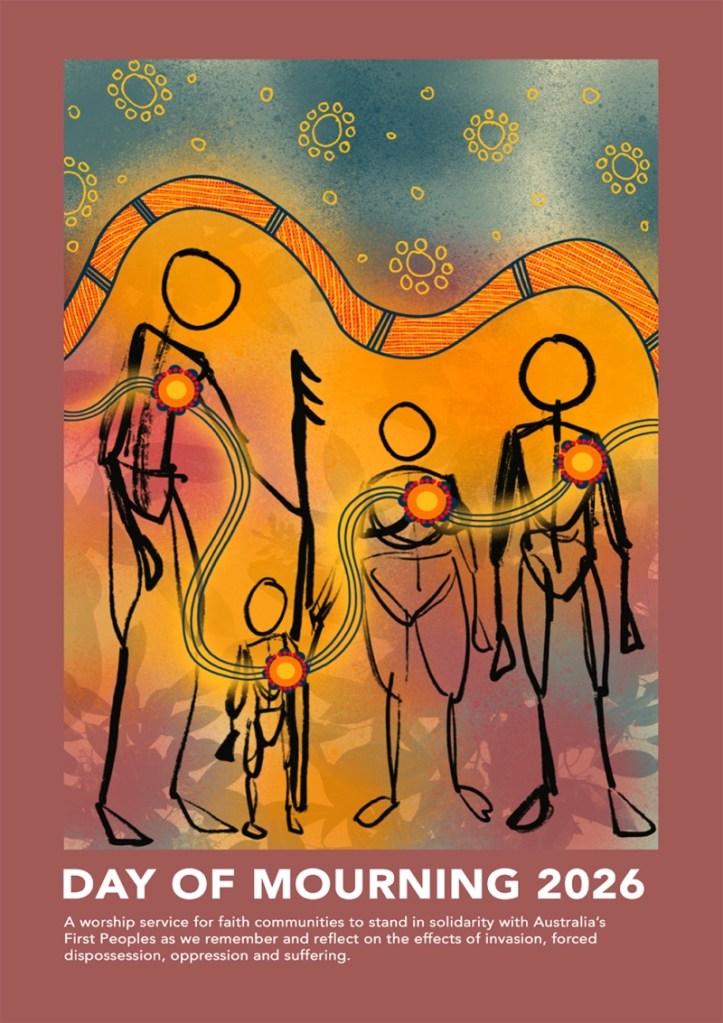
Standing in contrast to any nationalistic fervour that may well grip people on 26 January, I note that the many congregations of the Uniting Church have taken up the invitation of the Assembly to hold a Day of Mourning each year on the Sunday before 26 January. On that day, we are invited to reflect on the dispossession of Australia’s First Peoples and the ongoing injustices faced by First Nations people in this land. This resets and reorients the focus of the time around the “national day” of Australia. Indeed, it can provide a timely reminder that First People around this continent were forced into armed engagements with the invading colonisers, as they sought to press the frontiers of their newly-claimed colonial lands further and further.  

We are now aware that in these Frontier Wars, more Indigenous people died than in the formal military engagement of World War One; and, of course, many settlers also died in these conflicts. But First People were not armed with guns and did not have any way to push back against the superior firepower of the colonists. So they suffered greatly in these wars.

For those of us who are Second Peoples from many lands, the focus of a Day of Mourning offers an opportunity to lament that we were and remain complicit in the ongoing consequences of this dispossession and warfare. It also invites us to consider what we might do to move away from that negative trajectory.

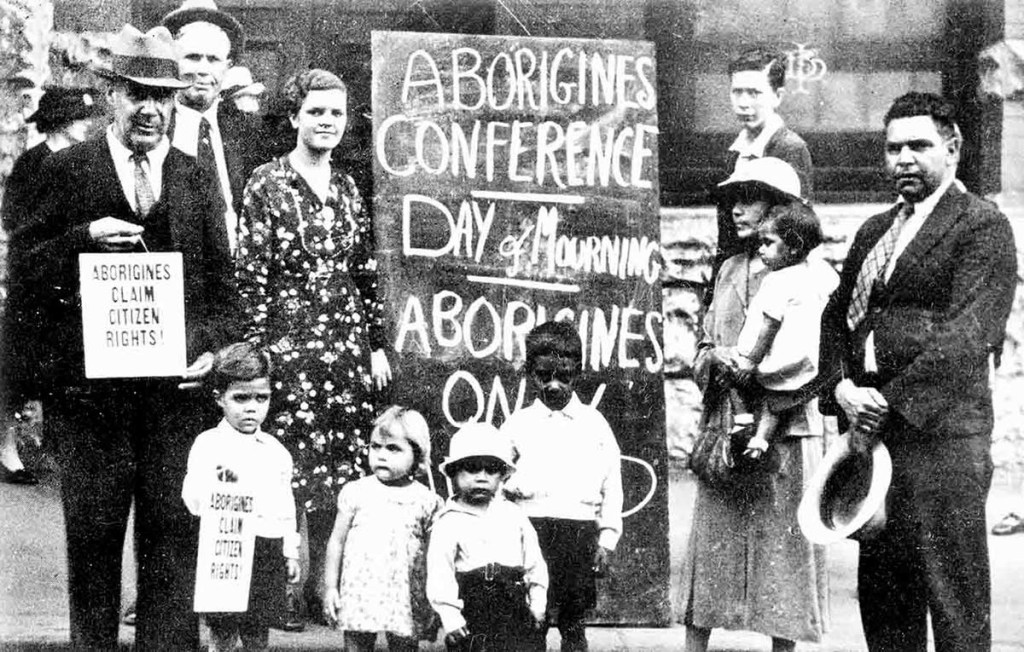
The observance of a Day of Mourning on the Sunday before 26 January looks back to the first Day of Mourning in 1938, after years of work by the Australian Aborigines League (AAL) and the Aborigines Progressive Association (APA). In a pamphlet published for the occasion, it was stated that “the 26th of January, 1938, is not a day of rejoicing for Australia’s Aborigines; it is a day of mourning. This festival of 150 years’ so-called “progress” in Australia commemorates also 150 years of misery and degradation imposed upon the original native inhabitants by the white invaders of this country.”

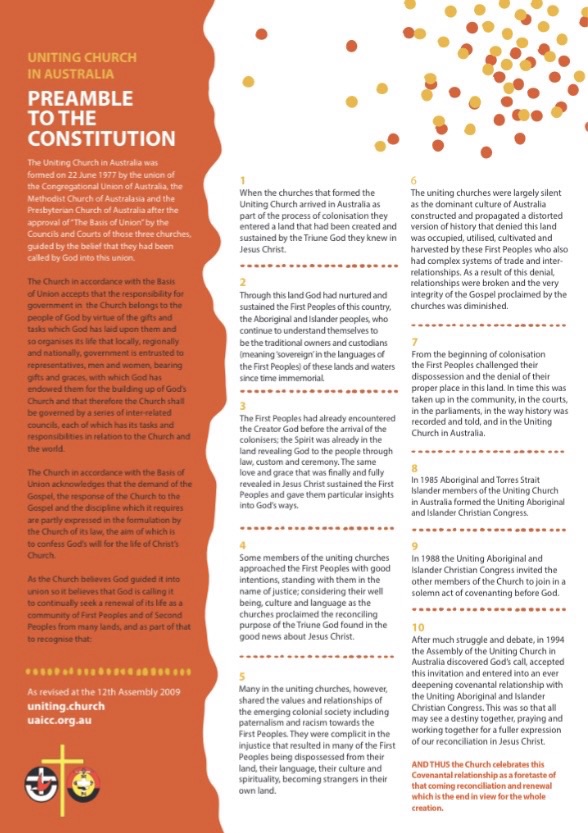
The national body of the Uniting Church, the Assembly, has acknowledged that our predecessors in the denominations which joined in 1977 to form the Uniting Church have been “complicit in the injustice that resulted in many of the First Peoples being dispossessed from their land, their language, their culture and spirituality, becoming strangers in their own land”. That itself is a cause for lament and mourning.

The Uniting Church Assembly has also recognised that people in these churches “were largely silent as the dominant culture of Australia constructed and propagated a distorted version of history that denied this land was occupied, utilised, cultivated and harvested by these First Peoples who also had complex systems of trade and inter-relationships”. [These quotations come from the Revised Preamble to the Constitution of the Uniting Church in Australia, adopted in 2009]

In worship resources prepared in relation to this Revised Preamble, we are invited to affirm the general belief that “the Spirit has been alive and active in every race and culture, getting hearts and minds ready for the good news: the good news of God’s love and grace that Jesus Christ revealed”, as well as the specific statement for our context, that “from the beginning the Spirit was alive and active, revealing God through the law, custom and ceremony of the First Peoples of this ancient land”. God is not confined to the way that we know things, the people we are familiar with, the customs and culture that we inhabit. God acts beyond all of these.

Thinking more about our First People, we are also invited by this Revised Preamble to confess “with sorrow the way in which their land was taken from them and their language, culture and spirituality despised and suppressed”, as well as the reality that “in our own time the injustice and abuse has continued; we have been indifferent when we should have been outraged, we have been apathetic when we should have been active, we have been silent when we should have spoken out.”

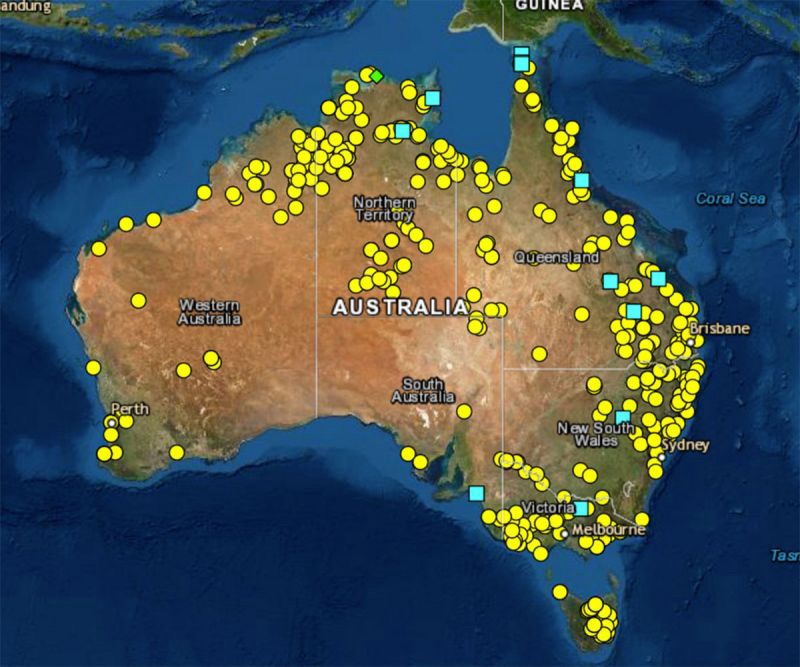
Injustice, discrimination, and oppression was not just the way of life for First People in times past; oppression, discrimination, and injustice still occur against First People today. Massacres do not happen in our time; but they were a feature of Australian life until 1932, probably in the lifetime of all of our parents. That is a national disgrace in our history. This map, compiled in the University of Newcastle, shows just how extensive these massacres were.

Children are not routinely taken from their families and placed into care homes; the policies about this brought mass removals to an end in the 1970s, but still today interventions are made amongst Indigenous people at a higher rate than other ethnic groups. 

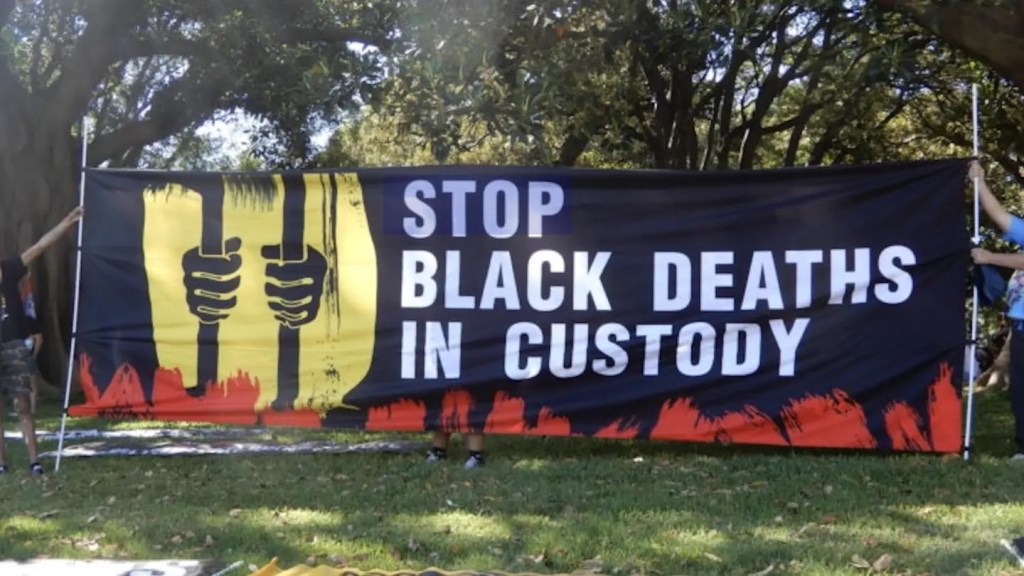
We had a Royal Commission into Aboriginal and Islander Deaths in Custody three decades ago, but still the rate of Indigenous deaths in custody remains many times higher than non-Indigenous people in custody. Some died by suicide as they were gripped by the black dog, that deep, deep despair, some by neglect as they were suffering significant medical conditions that were not treated, and some, as we have seen in graphic images and heard in voice recordings, have died through the violent interventions of police and custodial staff. It remains a national disgrace in our own time.

First People were ill-treated in the past; it is still the way that many of them are ill-treated today. Being the victim of racial discrimination, no matter how large or how seemingly small, is still a regular feature for many First People. We have not moved into a new and better era; we continue to perpetuate the sins of our past.

*****

Elizabeth and I are friends with Aunty Karen, a Yeagl woman of the Budjalung nation further to the north of NSW, who lives on Gadigal land in Sydney. She recently wrote this post on Facebook:

“As we near ‘Australia Day’: Please remember the hurt and degradation this day means to Aboriginals Australia-wide. Intergenerational trauma exists (just ask the Jewish community; they still mourn the “Holocaust”). Enjoy yourselves, but remember this day has a different meaning for us Kooris.  Please be respectful to each other. It’s time to acknowledge that we have survived, yes, but also carry the hurt and memories of what colonisation has done to our ancestors, and we have long memories.”

And in the latest issue of With Love to the World, I have reproduced a poem that Aunty Karen wrote some years ago, about the day which is our national day. If you’d like a copy of it, I have some WLW copies to give out. It is entitled “Walking Together”.

The droning of the Didgeridoo 

as the music sticks plays along;

the sounds of my people’s Corroboree

as they sing their dreaming songs.

For 60,000 years or more, 

my ancestors walked the land. 

Our homes have changed in many ways, 

sometimes hard to understand.

But though long gone are my tribal ways 

after millennia of age, 

I cannot forget our history:

for this is my heritage.

But to live in anger of the past is wrong, 

as hate is such a wasted emotion.

So, let’s forgive the past, say “hello, my friend”, 

and forge a greater nation.

In that spirit, let us approach 26 January, mindful of what has been done in the past, aware of the challenges and opportunities before us at the present, and committed to act with justice and to seek reconciliation in our nation. 

See more on the UCA and First Peoples in these posts:

“The young woman will conceive and bear a son”: a sign that is vague, nebulous, and longterm

A sermon on Isaiah 7:10–16 and Matthew 1:18–25, for the fourth Sunday in Advent, preached by the Rev. Elizabeth Raine at Dungog Uniting Church on 21 December 2025.

The gospel of Luke so dominates the Christmas season that only occasionally are we afforded an opportunity to experience the birth of Christ from a perspective other than Luke’s. So I am quite happy that here on the last Sunday of Advent, we are given a chance to hear the story from a different perspective, that of Joseph, the husband of Mary.  As we might expect, Mary is not the only one shocked by the announcement that she is pregnant.  Now it is Joseph’s turn to listen to the angel, and have his faith tested as to what is deemed “righteous”.

All of us dream. But when should we pay attention to our dreams? When are our dreams truthful and when are they simply ridiculous? Are dreams always the product of our own malformed desires or can they contain a truth or a warning that must be heeded? When we fall through our conscious mind’s trapdoor into the wider consciousness of our unconscious mind, what is revealed? Can it really help us to head in the right direction? 

How did Joseph know to turn aside from righteousness as he knew it, to follow a non-rational, alternative righteousness from the darkness of his unconscious dreams? For Joseph, the Greek word dikaiosoune referred to a “righteousness” that would have included obeying the law. The law meant that a woman in Mary’s predicament—pregnant but unmarried—could well have been at risk of being stoned to death.

Something in his life, perhaps a yearning to use love rather than the stringent expectations of his society as a guide, must have prepared Joseph to pay attention to that particular dream that night: do not fear to take Mary as your wife, for the child conceived in her is from the Holy Spirit.

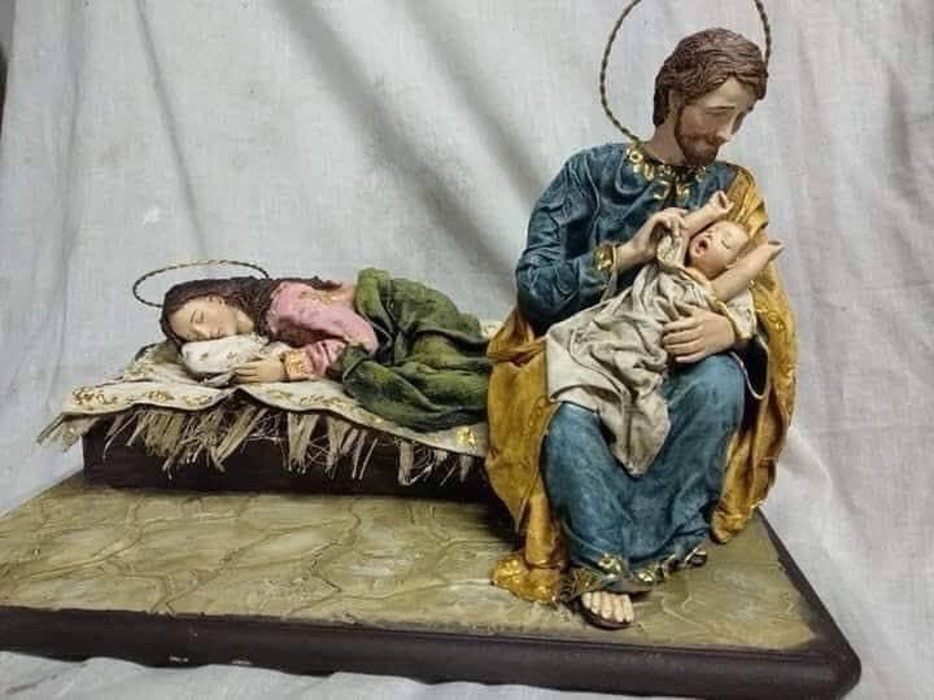
Let Mum Rest, a “non-traditional nativity scene”.
See the discussion by the Rev. Cynthia Taylor at
https://www.augustachronicle.com/story/lifestyle/columns/2019/12/23/cynthia-taylor-nontraditional-nativity-scene-shows-reality-of-birth/2021252007/

Such a statement could no doubt make perfect sense in the context of a dream. But what happens when Joseph wakes up and the real world, complete with scandal, reputation and rules comes flooding in with the light of day? What is the more likely scenario that Joseph faces: that Mary experienced sexual relations (welcome or unwelcome) or that she is pregnant by the Holy Spirit?

But the angel in the dream links the message with a scripture passage familiar to Joseph, the dreamer: “Look, the virgin shall conceive and bear a son, and they shall name him ‘Emmanuel’, which means, “God is with us”.

As a poor man working as an artisan (probably building for the Roman oppressors), Joseph drew hope from these texts, this promise, this dream of all dreams. What righteous dreamer upon waking would not lay down his prejudices for such a dream?

Joseph, like his ancestor Joseph the son of Jacob, appears to have trusted his dreams. But even more than his dreams, in order to embrace Mary’s unusual pregnancy Joseph must have also trusted the voice of God in the prophets, which speak of justice rather law, and tell narrative tales of reversals of power, where in an unjust society where things are frequently turned upside down.

We will turn now to Isaiah, where the angel’s message comes from. When Israel and Syria demanded that Ahaz align with them in an attempt to overthrow the growing power of Assyria, Ahaz was frightened and undecided. On the one hand they threatened to invade Judah if he should refuse, and so the safer option seemed to be to join them. But, on the other hand, there was a possibility that asking Assyria for protection against the two smaller powers would be even safer. 

Yet, Isaiah advised the king against these very human solutions, and challenged him to trust God that the threatened invasion would not happen. He even offered Ahaz the opportunity to ask for a sign, which Ahaz, feigning piety, declined. In frustration, then, Isaiah gave Ahaz a sign anyway, but it was extremely enigmatic, and seems not to have convinced Ahaz at all.

The sign Isaiah offered was that “the young woman” (the Hebrew does not say virgin – that word was introduced by the Septuagint), who was almost certainly known by the prophet (hence the definite article), would become pregnant and would give birth to a son who would be named Immanuel (God is with us). By the time this child was weaned and old enough to reject evil and choose good, the threat would be gone.

The problem with this sign is that Ahaz was being asked to exercise faith before the sign could be proved true. He would have to choose to trust Isaiah’s word, and then wait and see if the sign would indeed be fulfilled as Isaiah predicted. It’s a powerful sign, but not much use if it is intended to bolster faith before the fact. The result is that Ahaz, it seems, was unconvinced. He joined forces with Assyria, with disastrous consequences in the end for Judah.

Nevertheless, the sign Isaiah offered was significant for a number of reasons. The name of the child was ambiguous in the sense that God’s presence, especially in those traumatic times, could be seen as both good news – God would rescue the faithful – and as bad news – God’s presence would bring judgment on faithlessness. This sense of God’s presence being both a comfort and a confrontation is a constant theme in the Scriptures, and one that is often lost in Christian proclamation (especially in the Christmas season), or twisted into a caricature of itself in “hellfire-and-damnation” preaching.

But, the other significant feature of this sign is its character. This is no dramatic, supernatural event that the prophet promises. Nor is it a destructive attack on Judah’s enemies. Rather, the sign that is given is natural — childbirth happens all the time — and creative — in childbirth, a new life is created. God’s presence, says Isaiah, is known in the natural ordinary rhythms of life, and through the creativity that brings new life into the world. Where the powers of the day were threatening destruction and death, God called Ahaz to trust in the greater, creative power of life. However, Ahaz believed more strongly in death, and so he made choices that brought death and destruction on his nation.

Years later, as the writer of the Gospel of Matthew sought to describe God’s intervention to a people who had witnessed the worst that the destructive Roman Empire could do, and who were being threatened with death and destruction for simply professing faith in Jesus, he recalled Isaiah’s sign to Ahaz. Using the Septuagint’s word “virgin”, he spoke of Jesus’ birth as a sign of God’s salvation, and an assurance of God’s presence.

For a people who must have been tempted either to give up on their faith and align themselves with the seemingly indestructible Empire that threatened them, or align with the small groups of rebels who continued to try and undermine the Empire’s power, the context of Isaiah’s sign to Ahaz must have resonated strongly.

Indeed, Matthew’s intended use of the sign would have been to communicate the same message as Isaiah — God’s presence was with God’s people (to save or confront, depending on their willingness to trust in God’s salvation) and God’s creative, life-giving activity was stronger than the forces of death and destruction.

By using this sign as the start of his account of Jesus’ life and ministry, the Gospel writer established at the outset that Jesus’ agenda was not to engage the world’s powers in violent conflict, or divine shows of dominance.

On the contrary, Jesus’ work was to lead people into an experience of God’s creative life that would sustain them, empower them to resist the temptation to seek solutions and security through armaments and violence, and enable them to become an alternative community that would serve and support one another and their neighbours through acts of creative love, service, compassion, and mutual care — through building God’s dream of shalom.

As we stand at the threshold of another Christmas, the Advent journey asks us, once again, how we will understand this season and the One around whom it revolves. When we speak of peace – shalom – on earth and goodwill to human beings, how exactly do we expect this to come about? Do we wish to turn Jesus into a super hero who swoops in and fixes everything for us? Do we insist on seeing Jesus as an alternative military conqueror who destroys his (which equals our) enemies? Or can we see the signs of God’s Reign as they are offered to us, embracing their call to faith even when they have not yet come to fruition?

In the dark days of apartheid in South Africa, it was forbidden for white people to enter black townships without a government-issued permit. This made it incredibly difficult for followers of Christ to worship together across racial boundaries. Black people often did not have access to the transport they needed to get into the suburbs over weekends, and even if they did, they always ran the risk of being stopped and harassed by security forces.

White people, for the most part, would not risk entering a township without a permit, and, since they usually had little need for one, they would never set foot in a township church. The result was a division in worship that mirrored the racial and economic divisions of the nation.

Yet, in small pockets around the country, believers from across the racial spectrum found ways to meet and worship together. Although this could result in accusations of gathering illegally and possibly arrest, they nevertheless risked the consequences because they believed that the Gospel required it of them. As they called for an end to the oppressive system, they began to live, in small, peaceful worship meetings, another reality. They believed that justice would prevail, and that they needed to begin to act as they would if apartheid did not exist.

Long before their first democratic election, these courageous South Africans lived as a sign of what the country could become, and in doing so, they helped to create for all what they practiced in their small groups. There was no guarantee that they would find a peaceful way to come together, but these courageous “sign-people” gave hope that it could be done.

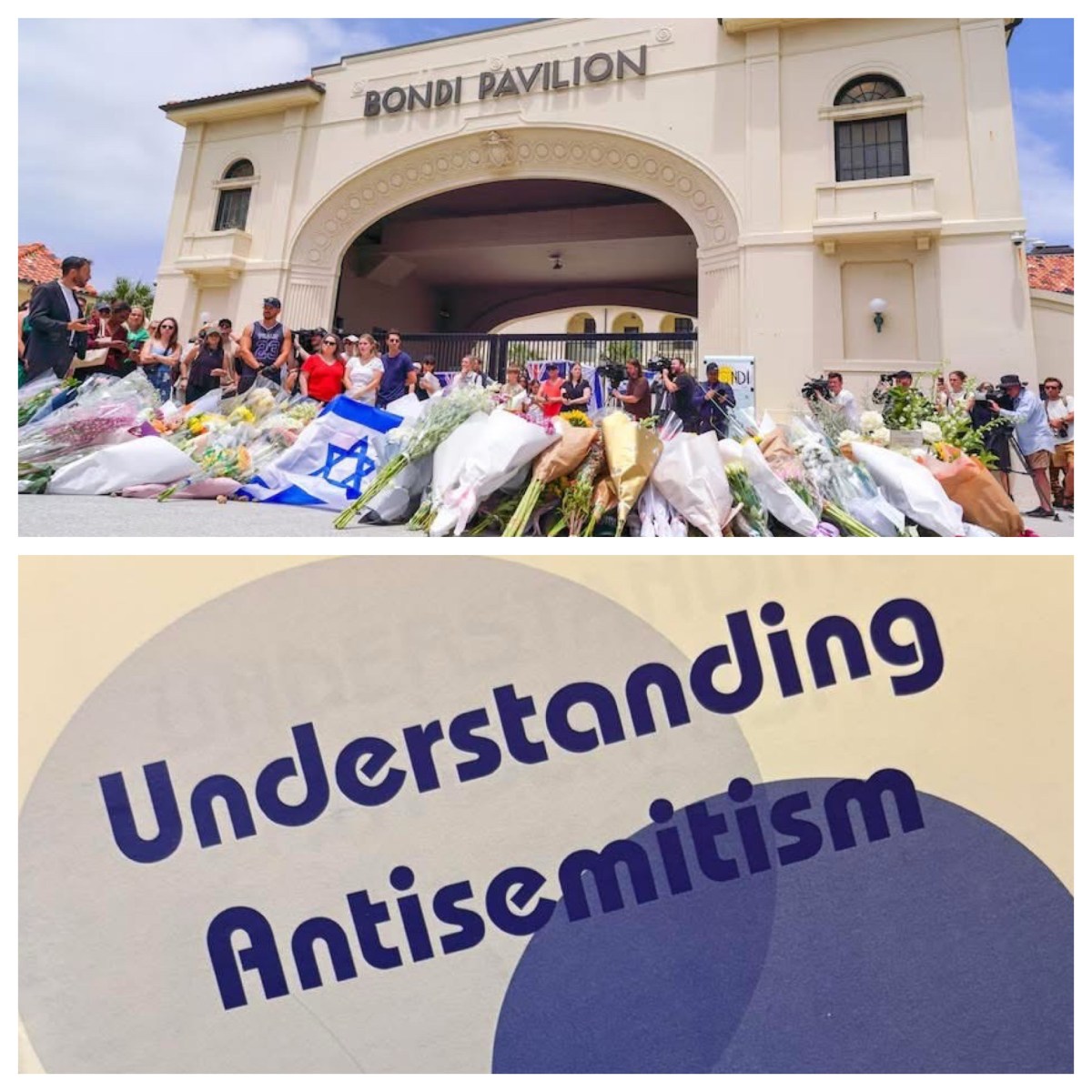
The recent tragedy at Bondi Beach is another such example of hope. Whilst the event itself was shocking, and driven by fanatical ideology, from the catastrophic events arose a phoenix of hope, with many heroes tackling gunmen, sheltering others, and running right into the fray to help when every fright, flight and fight instinct probably called for flight. These heroes came from different faiths and different walks of life, but put others before themselves by their self sacrificing actions. In the aftermath, people came together to mourn those who died and show unity, not hatred, in their grief and distress. They showed that in a very broken world, there are always signs of hope.

The nativity too is a sign of hope in a broken and troubled world. Like Joseph, who decided that love was a greater righteousness than law, and who trusted his dream enough to marry Mary and raise the child in spite of the potential social consequences, we too are called to act in trust, and embrace the creative life of God, no matter the consequence. The world is not yet filled with peace and goodwill.

The Reign of God remains hidden and seemingly impotent against the forces of violent power, extravagant wealth and corporate & political corruption in our world. Yet, if we can find the courage, like Joseph in the story, to live out God’s dream for us in small, determined daily actions of creativity and life-sharing, we will know God’s presence is with us, and we will see the dream’s fulfilment in our hearts, even as we wait for its fulfilment in our world.

Let us not lose heart. Let us never fall into believing that the death and destruction we see around us have the final word. Let us pray for the courage and the faith to be captured by God’s dream of shalom and to seek to live it out — for our own sakes, and for the sake of our world — no matter how hard it may be.

Give us your dream, O Holy One. Guide us and give us courage, like Joseph, to live toward your dream’s fulfillment. Amen.

Antisemitism: yes, it’s about legislation—but more, it’s about our culture

It’s less than a week since the tragic mass shooting at Bondi Beach. In the days since then, we have seen very public displays of shock, grief, fear, anger, blame, rage, and other strong emotions. So many comments rip over into recrimination and dehumanisation. It’s been savage. Alongside all of this, there has also been a deep admiration for those who attempted to stop the shooting by intervening—at the cost of their lives, in one instance, and incurring significant wounds, in another case. 

There have been all manner of suggestions about what should be done to address the reasons for this happening—even as the relevant authorities undertake their careful, methodical work of investigating who, how, and why this came to pass. The Federal Government has already flagged changes to the gun laws in force around the country, and more recently has signalled that legislation will be introduced to tighten the application of “hate speech” laws. These responses are important, and good. We can only hope that the parliaments concerned—Federal and State—all work cohesively to adopt them expeditiously.

But I don’t believe that a legislative response—as important, and necessary, as that is—will address the root cause of the issue that everyone is regarding as the villain in the situation. It’s about more than what our laws say. Laws are important; they set the bounds beyond which words and actions are deemed to be unacceptable in our society. Laws, put into place by legislation which parliaments enact, provide the outer framework of society. Our laws signal who we are as a society: what we value, what we disdain, what we will not tolerate. (That’s why politicians are necessary; they staff the parliaments that do this essential work on our behalf.)

But there is more to be said. Addressing antisemitism is not just a matter of legislation, or politics. It is a matter of culture; the features of our common life which are deeply embedded in who we are, and which are expressed in our attitudes, our words, and our actions. It is our culture which needs addressing.

1

We have heard widespread public rhetoric about “antisemitism”. It has, indeed, been a growing refrain since the events of 7 October 2023 in Gaza and Israel, but has been almost at saturation point since the tragic event at Bondi Beach on 14 December 2025. It is quite clear that there has been a significant rise in the number of antisemitic events since October 2023, culminating in the death of 15 Jews and significant injuries to another 40 or so at Bondi. 

A lot of that rhetoric seems to assume that the upsurge of antisemitism over the past two years has caught us by surprise; it is a shock, a terrible result of protests about what has been happening in Gaza in recent times, an unprecedented feature of Australian society as the politics of far away have infiltrated and impacted our domestic scene. But that is not the case. Whilst the number of intensity of these antisemitic events has indeed risen in that time, this is not a new experience for Jewish people in Australia.

 Antisemitism has been present in Australian society for decades. For 12 years I was part of the Uniting Church National Dialogue with the Jewish Community (2000–2012). Elizabeth joined me as a member for the last six of those years. For some time, I was the UCA co-chair of the Dialogue. The Jewish co-chair was usually the late Jeremy Jones, a renowned advocate for Jews in Australia. See https://uniting.church/an-introduction-to-the-uca-jewish-dialogue/

Every six months when we met, Jeremy would report on the rates of antisemitic incidents. It was constant, distressing, and unacceptable. He had begun collating such incidents in 1989. In 2004, he published an article, entitled “Confronting Reality: Anti-Semitism in Australia Today”, in the Jewish Political Studies Review (vol.16 no.3/4, Fall 2004, pp.89–103). The thesis he developed was clear; despite the view that Australia has been “not only accepting but welcoming of Jews … In recent years, however, there has been a growing acknowledgment both of the presence of anti-Semitism in Australia, and that it is the responsibility of political and moral leadership to confront it.” See https://www.jstor.org/stable/25834606

A decade later, in a 2013 report on “Antisemitism in Australia” published by the Executive Council of Australian Jewry, he noted that “During the twelve months ending September 30, 2013, 657 reports were recorded of incidents defined by the Human Rights and Equal Opportunity Commission (now the Australian Human Rights Commission) as ‘racist violence’ against Jewish Australians.” The kinds of incidents that he tabulated “included physical assault, vandalism – including through arson attacks – threatening telephone calls, hate mail, graffiti, leaflets, posters and abusive and intimidatory electronic mail”. 

There can be no doubt that antisemitism was firmly ingrained in Australian society at that time. Indeed, as Jeremy Jones noted, the figures reflected “a twenty one per cent increase over the previous twelve month period, and sixty-nine percent above the average of the previous 23 years.” See https://www.ecaj.org.au/wordpress/wp-content/uploads/2019/03/2013-ECAJ-Antisemitism-Report.pdf

Indeed, I well recall what security measures were in place on those occasions when I visited a Jewish synagogue in the Eastern Suburbs of Sydney, starting almost 30 years ago. I was teaching a course entitled “The Partings of the Ways”, exploring how Christianity separated from Judaism. One element in the course was to attend Jewish worship, and meet with the rabbi for a question-and-answer session. Rabbi Jeffrey Kamins of Temple Emanuel was always very amenable to spending time with the class in this way. (He also came to North Parramatta to give a guest lecture in the class each year.)

Entry into the synagogue was through a security gate at the front, in the middle of a high, strong security fence that surrounded the building and grounds. A security guard checked each of us before permitting entry. Once inside, we received wonderfully warm hospitality; but the first impression was rather chilling. The reason for that, even back in the 1990s, was that Jewish synagogues recognised that they needed to implement these security measures to ensure the safety of worshippers. Antisemitic incidents—angry words, slogans painted on walls, and physical attacks—were being experienced by Jews on a regular basis. Antisemitism was, unfortunately, alive and well.

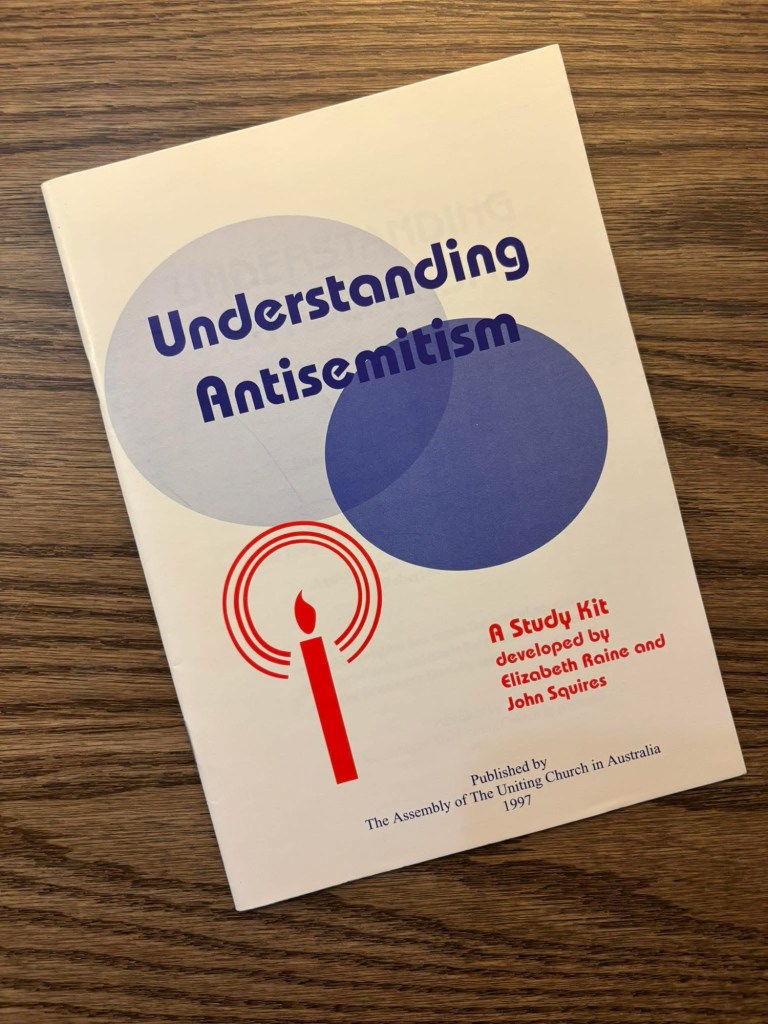
In fact, in 1997, the Uniting Church National Assembly had adopted a statement about our relationships with Jewish people, which explicitly included a rejection of antisemitism and encouraged church members to become informed about such matters.

In the course of preparing that statement, Elizabeth and I were charged with preparing a resource, which the Assembly published as a study with ten sessions, and which was disseminated across the church.

I wonder how many congregations made use of this resource? We certainly used many elements of it in our regular teaching over the years.

The resource is available online at https://illuminate.recollect.net.au/nodes/view/11763?

2

Some voices now, in 2025, are placing the responsibility for what happened at Bondi firmly on the shoulders of the Federal Government, arguing that they knew about the dangers of antisemitism but “did nothing”. Albanese should resign, they say. It was his fault that this tragedy happened. He has blood on his hands. It’s strong stuff.

I wonder. We have had many Prime Ministers over the past 25 years, since I first started hearing those regular reports about antisemitism from Jeremy Jones.  I wonder why other PMs have not been equally accused of inaction, like Albanese. What did John Howard do? Or Kevin Rudd? Or Julia Gillard? Or Tony Abbott? Or Malcolm Turnbull? Or Scott Morrison? 

All of these Prime Ministers did, in fact, the same as Albanese: recognising that antisemitism existed, they supported low level anti-racism programmes, and blithely went on with their political business of elections, budgets, legislation, and the argy-bargy of Question Time. Little has changed over all that time. Antisemitic incidents have continued to take place. And how many of the people now making loud noises about the Bondi Beach event had actually been agitating five, ten, or twenty years ago about antisemitism?

And it is not entirely clear that it was, in fact, antisemitism which fuelled the terrible events at Bondi Beach. Carrick Ryan, who spent years working as a Federal Agent from the NSW Joint Counter Terrorism Team, has written that he sees this as “an act of terrorism perpetrated by mad men possessed by a dangerous ideology”. 

His view is that “Jihadists do not have a political goal. They are inspired by a toxic interpretation of their faith that encourages them to die in an act of violence against any perceived enemy of their faith.” He argues that “it is simply absurd to suggest they have been influenced by pro-Palestinian university protesters, Greens politicians, or even ‘anti-Zionist’ conspiracy theorists.”

“The men who conducted these attacks”, he maintains, “would have despised those activists as much as anyone on the political right, and as I have tried to explain to many activists who have attempted to romanticise Hamas as heroic freedom fighters, the future they are aspiring to is very different.” It’s not about antisemitism, so much as it is it an expression of religious fanaticism.

See https://www.facebook.com/100045908673621/posts/pfbid0aiSGrfYkvvq9v9wznY71nwac3z3ep88T7XdVLvLfrTzVi7kRAvAEfWRqCkpfJ4fyl/

3

However, it is not only antisemitism which has been growing. Islamophobic incidents have increased consistently as the Muslim population of Australia has grown. Deakin and Monash Universities are collaborating to compile an annual Islamophobia Report, documenting such incidents since 2014. The latest report notes that the number of Islamophobic incidents has increased significantly since 7 October 2023. You can read the reports at https://islamophobia.com.au

There are numerous other incidents involving First Nations people, Afghanis, Asians, Sudanese, and all manner of diverse ethnic minorities which have all continued in the same period, spiking in numbers at particular times, with the same minimalist level of government response.  All Together Now is an independent not-for-profit organisation and registered charity, founded in 2010, that holds to a vision of a “racially equitable Australia”. They work towards this vision “by imagining and delivering innovative and evidence based projects that promote racial equity”. Their website declares “we are community driven, we utilise partnered approaches, and our work is intersectional”.

As All Together Now draws together a range of studies, it reports that “40% of children experience racism in schools … 43% of non-white Australian employees commonly experience racism at work …there is still a culture of systemic racism in Australian sports … studies have exposed systemic and structural forms of racism in policing, the justice system and child protection, leading to discrimination, violence and death of people of colour and First Nations People”. All the studies they cite are referenced and hyperlinked on their website at https://alltogethernow.org.au/racism/racism-in-australia/

Our society has fostered far too many intolerant, aggressively-hostile individuals who feel they have a right to speak and act in these ways.

4

The Bondi event and its repercussions are not simply a partisan political matter, as so many loud voices are currently proclaiming. It is a cultural phenomenon; the “right” to criticise, slander, marginalise, and attack Jews … and Muslims … and First Peoples … and other minorities … has been taken for granted by an increasing proportion of the population. They have, of course, been egged on by extremist politicians who seize every opportunity to foster racism.

Antisemitism, and Islamophobia, and all forms of racism, together form a deeply-embedded cultural phenomenon, for which we are all responsible. Politicians have a role to play (and wouldn’t it be good if a bipartisan approach could be consistently made) but all of us have things we can, and should, do, each and every day.

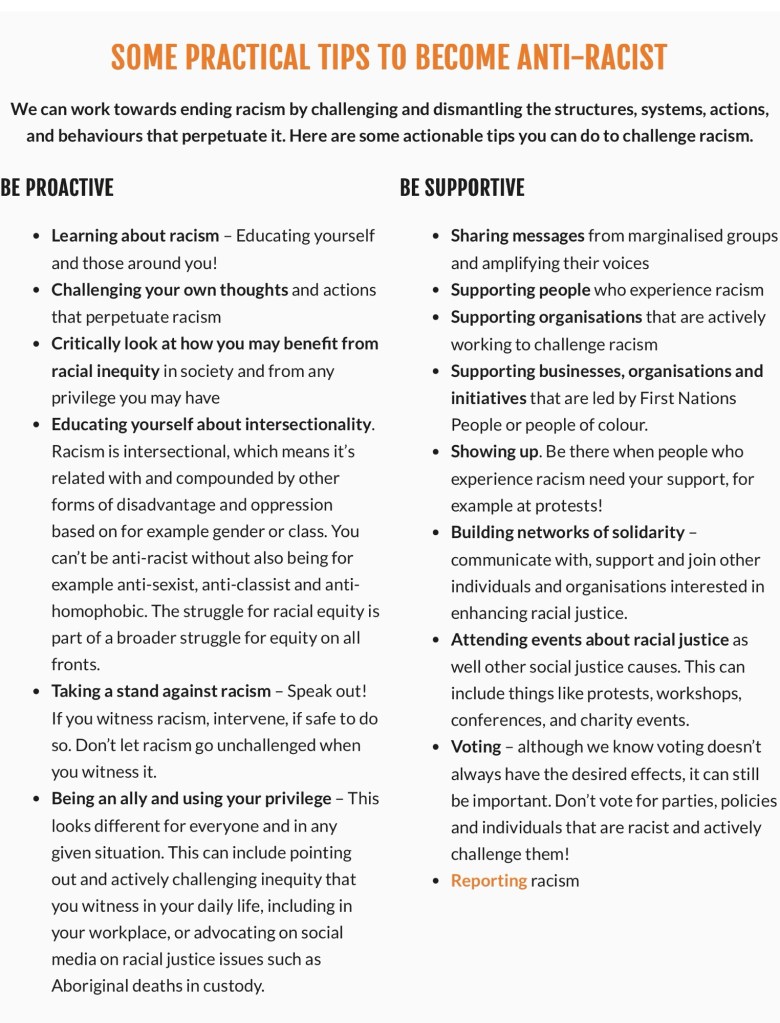
Calling out racist, islamophobic, or antisemitic language is one thing we could aim for. Intervening in low-level incidents is another, when it appears safe to do so. Supporting the education of children and young people with programmes which inculcate social responsibility, ethical behaviour, and respectful interactions with others is important. Joining groups which are advocating for justice for minority groups which are marginalised is something that people could do. Writing to state and federal members of parliament about issues of concern in these areas is also something that people could do. 

All Together Now has a helpful collection of “Practical Tips to Become Anti-Racist” as well as a useful guide with links to further resources. We would all do well to read, ponder, and implement the kinds of things that they advocate.

https://alltogethernow.org.au/wp-content/uploads/2023/09/Free-Resource-How-to-become-an-anti-racist.pdf

*****

For my earlier reflections on this tragic event, “They are part of the whole of us”, see

They are part of the whole of us

What has happened at Bondi Beach is a tragedy. Many are grieving, many are injured; many will be traumatised, many will be more anxious and more afraid of life in Australian society. Amongst other things, it might give us pause to consider who we are, together, as a society.

The black-clad figure on the bridge at Bondi Beach
in Sydney, Australia, shooting into Archer Park,
where a Hanukkah celebration was taking place

Jewish people are an integral part of contemporary Australian society. There was a handful of Jews on the ships of the First Fleet (estimates range from eight to sixteen people), arriving here in 1788. A Jewish burial society (Chevra Kadisha) was established in 1817. The first Jewish marriage took place in 1832. Jews have served as members of parliament, as justices in various courts, as Governor-Generals, as military officers, as surgeons and nurses and police officers, as actors and artists and journalists and business people, indeed in all areas of society. They have contributed in so many ways to making our society what it is today: diverse, welcoming, hardworking, tolerant. 

Muslims people are an integral part of contemporary Australian society. Muslims from Makassar (Sulawesi, Indonesia) had traded with the First Peoples of the northern part of the Australian continent for centuries before 1788. Some married First peoples and over time the Macassars contributed to the developing culture of the First Peoples. Muslims sailors and convicts came on ships in the early decades of British colonisation onwards. Muslims later came from India and Pakistan to provide transport, labour, and support in the building of essential infrastructure in the vast inland desert area of the continent like the Overland Telegraph Line and the Ghan Railway. Later Muslim migration occurred especially from Albania, Bosnia, Lebanon, Afghanistan, Iraq, Sudan, and Somalia. They have all brought their vibrant cultures with them and become an important part of contemporary Australian society.

I have known many Jews through my ministry in the eastern suburbs of Sydney and participation in the Uniting Church’s dialogue with the Jewish community. I have also known some Muslims through the relationships built between United Theological College and ISRA, the Islamic Studies organisation that, like UTC, is now an integrated part of Charles Sturt University. All of these Muslim people and these Jewish people are honest, ethical, law-abiding, dedicated, creative, intelligent, compassionate people. They would each be horrified at what has taken place at Bondi Beach yesterday. 

I know a number of Jewish people who are horrified at the policies of the current Israeli government, and who are working in various ways to find peace with justice in the fraught environment of Gaza, the West Bank, and the illegal settlements. What is happening in the Middle East is the result of distorted extremist fundamentalist views that are not held by the vast majority of Jews living in Israel, or Jews living in Diaspora around the world. Israeli government actions do not represent general Jewish viewpoints.

The best of who we are today as a society is because, in part, of the persistent, faithful, dedicated contribution of both Jews and Muslims over the centuries. They are part of the whole of us, and we are all interrelated to and interdependent on Jews and Muslims in so many positive ways. We should not let the scare tactics and dog whistling of marginal voices in our society blight our minds and lead us to snap judgements about “all Muslims” or “all Jews”. We would do best to stand with those who grieve and commit to working to ensure peace, safety, and respect in Australian society.


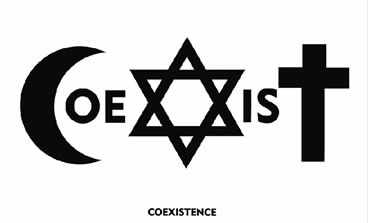
The Coexist image was created
by Polish graphic designer
Piotr Młodożeniec in 2000

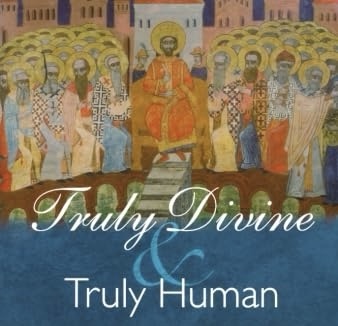
Truly God and truly human: the reason for the season

The Chalcedonian Creed was adopted at the Council of Chalcedon in 451 in Asia Minor as a response to certain heretical views concerning the nature of Christ. It sets forth a complex philosophical understanding of Jesus as incarnate Word of God, “truly God and truly [hu]man”.

This expression of the nature of Jesus, two-wrapped-into-one, is the theological understanding that underlies the story that is told and retold each Christmas season. This is the real “reason for the season”, surely.

In the light of this creed, and the clear admonitions that it offers, I present my contribution to Christmas caroling—to be sung to a very familiar tune, Hark the herald angels sing  (7.7.7.7.D and refrain). Perhaps if we sing this regularly, the complex concepts of orthodox theology might be more widely known??

1

God the Word, Lord Jesus Christ,

Perfect in the Godhead, he;

Truly God and truly human,

perfect in humanity.

Reasonable in body and soul,

consubstantial, present, whole:

First Begotten as Godhead,

now with us in faithfulness:

God, the Word, Lord Jesus Christ,

This is the one whom we confess.

2

Inconfusedly he came, 

pure, unchangeable, was he.

Indivisible he lives, 

quite inseparable is he.

Whilst distinct, his natures stand,

for each nature does retain

each their property unique;

mystery of God, filioque!

Both concur in one Person, 

One Subsistence, in the Son.

3

As the prophets have declared,

as the holy fathers say,

as the Lord himself has taught us,

so we faithfully do say:

God the Word, Lord Jesus Christ,

Perfect in the Godhead, thrice,

Truly God and truly man,

Perfect in humanity.

These two natures do concur,

One Subsistence, in the Son.

*** *** *** ***

Sing it, sisters and brothers!!

For another light-hearted take on the Chalcedonian theology, see 

The text of the Chalcedonian Creed (in English translation, reflecting the original gendered language, typical of the time) reads as follows:

We, then, following the holy Fathers, all with one consent, teach men to confess one and the same Son, our Lord Jesus Christ, the same perfect in Godhead and also perfect in manhood; truly God and truly man, of a reasonable soul and body; consubstantial with us according to the manhood; in all things like unto us, without sin; begotten before all ages of the Father according to the Godhead, and in these latter days, for us and for our salvation, born of the virgin Mary, the mother of God, according to the manhood; one and the same Christ, Son, Lord, Only-begotten, to be acknowledged in two natures, inconfusedly, unchangeably, indivisibly, inseparably; the distinction of natures being by no means taken away by the union, but rather the property of each nature being preserved, and concurring in one Person and one Subsistence, not parted or divided into two persons, but one and the same Son, and only begotten, God the Word, the Lord Jesus Christ, as the prophets from the beginning have declared concerning him, and the Lord Jesus Christ himself taught us, and the Creed of the holy Fathers has handed down to us. 

Expectations: a key theme for Advent

What follows is a piece that I wrote a few weeks back for Ruminations, the quarterly journal of Saltbush, which is a ministry that resources rural and regional Uniting Churches in the Synod of NSW and the ACT. I wrote it just at the time when “expectations” were swirling around the church; I’m publishing it now as the theme of Expectations seems to be most appropriate for the season of Advent.

*****

The Synod of NSW.ACT has recently met, and given consideration to “The Presbytery Project”, which has the subtitle “Future Directions for the People of God on the Way”. The expectations surrounding the move to the Three Presbyteries Model are no doubt clear: sharing of resources, mobilising of personnel, collaboration of teams, hope for the future.

Just after that meeting, the Synod of Victoria and Tasmania met and adopted their vision for the future, entitled the “Faithful Futures Project”. It is setting expectations in that Synod; it aims “to prepare the Uniting Church in Victoria and Tasmania for the next 10 to 15 years”. And, of course, right across Australia, the church has been pondering the outcomes of the 2024 Assembly, when the Act2 Project was received and its proposals adopted. Already newly-constituted Commissions are meeting, planning the steps ahead in their respective areas. No doubt they have expectations about what they will achieve.

Indeed, even in my small rural church, we have had a recent process in which people have shared “what I hope for this church”, learning about better ways to be welcoming, and setting out steps for mission in the local community. And the Presbytery in which I live has a neat slogan on its website, declaring that it seeks to “Live by Faith, be Known by Love, and be a Voice of Hope”.

Expectations abound at every level!

Jesus was no stranger to the basic human element of “expectations”. He didn’t know about the anticipatory joy of an expectant parent, looking to the birth of their child. He presumably was a stranger to the bubbling internal expectations that mount when you have just two months before you start that “dream job” that you have just been offered. And I am not sure that he ever took part in a day-long, facilitated workshop of setting forth the “purpose, mission, and values” of a faith community!

But Jesus knew about expectations. The earliest account of his adult life tells us that his first words in public were words of expectation: “the time is fulfilled, and the kingdom of God has come near” (Mark 1:15). In another account of his life, he is reported as saying “the kingdom of God is not coming with things that can be observed; … in fact, the kingdom of God is among you” ( Luke 17:20-21). That surely must have set his followers agog as they scurried to determine just how this expectation of the coming kingdom was, in fact, now present among them.

Indeed, Jesus lived at a time when expectations were running high amongst his people. This was not a new thing. In the foundational story of the Exodus from Egypt, it is said that Moses offered words of expectation to the people: “Do not be afraid, stand firm, and see the deliverance that the Lord will accomplish for you today; for the Egyptians whom you see today you shall never see again” (Exod 14:13).

The scrolls containing the words of the prophets, which faithful Jews would have known quite well, were full of words of expectation: “the days are coming when all that is in your house will be carried off to Babylon”, announced Isaiah (Isa 39:16); “the days are surely coming, says the Lord, when I will make a new covenant with the house of Israel and the house of Judah”, said Jeremiah, during that exile (Jer 31:31); “I am coming to gather all nations and tongues”, declared an anonymous prophet after the people had returned from Babylon (Isa 66:18). Each important step in the story of Israel had been prophetically signalled by a word of expectation. 

And by the time of Jesus, after centuries of continuing foreign rule, and after a series of uprisings, defeats, compromises, and plots to regain control, expectations continued to run amok amongst the Jewish population. For some, the expectation was that they would someday regain political control of their land (the zealots and political revolutionaries of the day). For others, the expectation took shape in a vision of “the sons of light” waging a final cataclysmic battle against “the sons of darkness” (as in one of the Dead Sea Scrolls). Still others held to the word of the Lord, “I am sending my messenger to prepare the way before me, and the Lord whom you seek will suddenly come to his temple” (Mal 3:1). 

It was this latter expectation that had gripped John, as he carried out his programme of calling people to repentance and baptising them in the river. And as he did so, the man from Nazareth came and submitted himself for baptism. “Behold the Lamb of God, who takes away the sin of the world!” one later writer claimed that he said (John 1:20).  His expectations had come to pass in ways that perhaps even he had not thought possible.

The followers of Jesus certainly had expectations about him. “Are you the one who is to come?”—the question that John had sent his followers to ask of Jesus (Matt 11:3; Luke 7:19)—soon became their question. Expectations about what Jesus would achieve abounded. “We had hoped that he was the one to redeem Israel”, two of his followers mused, soon after he had been put to death (Luke 24:21). That was some expectation, to be sure! 

Some of those not as enchanted by the way of Jesus also had expectations about him. “How long will you keep us in suspense? If you are the Messiah, tell us plainly”, they taunted him (John 10:24). Hovering somewhere around Jesus was the expectation that he might in fact be the figure long hoped-for, come to redeem Israel. And even as he hung in the cross, he was again mocked and taunted: “He saved others; he cannot save himself. Let the Messiah, the King of Israel, come down from the cross now, so that we may see and believe” (Mark 15:31–32). Again, that expectation that he was someone significant—or that he thought he was someone significant—is in play. Just what might we expect from this Galilean stirrer? 

The path that Jesus trod both met expectations, but also failed to meet expectations. He did achieve something significant; but he did not do so in the way that was most surely expected. He would redeem Israel; but only by giving his life. He would be shown to be Messiah; but not on the clouds of glory—rather, on a rough wooden cross. “Truly this man was God’s Son!”, the Roman soldier is claimed to have said as he witnessed this cruel death (Mark 15:39).

Perhaps Judas had unreasonably  high expectations about Jesus; he was one of the inner group that travelled with him, ate with him, learnt from him, and began to carry out the mission that Jesus had given them (Luke 9:1–6). And yet his expectations took a sharp turn; we don’t know what drove him to betray Jesus with a kiss, nor do we know what expectations he had about what would eventuate from that. His sad end (Matt 27:3–6; compare Acts 1:18–19) perhaps reflects his recognition—tragically, too late—that his expectations regarding Jesus were doomed to fail.

And let’s not get too caught up in the complexities of the apocalyptic expectations that swirled around at the time—expectations that Jesus addressed, and redefined, in one of his longer teaching sessions (Mark 13:5–37). On the one hand, he is clear that something unexpected and yet long yearned-for will indeed take place (“they will see ‘the Son of Man coming in clouds’ with great power”, Mark 13:26). The expectations people held in relation to him were justified, it would seem.

And yet, he warns his followers to “beware that no one leads you astray” with specific timetables (13:5), advising them that chaotic times of cosmic upheaval are nothing “but the beginning of the birth pangs” (13:8), there will be suffering that will need to be faced and endured (13:19), and insisting that “about that day or hour no one knows” (13:32), that “you do not know when the time will come” (13:33, 35). Expectations may be raised, hopes may be high; but resolution is not easily attained.

So how do we deal with expectations? “Managing expectations” has entered the language both of business practice and of personal psychology. We need to be wary of setting expectations too high. Thinking about how all nations will flock to Jerusalem is setting expectations too high. They didn’t, and they won’t (especially today, in the fiery political landscape of Israel and Palestine). So too is expecting that everyone will see clearly that Jesus, the Messiah, is the Son of God who is the one to perform miracles at will and the one to redeem all of Israel and all of the nations—that, too, is unrealistic. We haven’t seen this, and he hasn’t redeemed everyone at all. Life continues on despite the failure to meet such high expectations.

And in similar fashion, setting expectations too low is something we should avoid. The young adult comes home from their first attempt at sitting for a drivers license, and proudly announces “I got it!” Dad looks up, amazed, and responds, “Wow! I really didn’t think you’d get it this time”. The expectation was set low, the triumph evaporates all-so-quickly. We need to manage our expectations: not too high, not too low.

And what of expectations we might have for our church community? Have you talked together in your congregation or faith community about what you hope for? what you would love to see happen? what you could work together to try to achieve? what you can pray for, bringing reason and knowledge into your words of hope and expectation to God? 

We should have expectations; we should talk about our expectations; and most importantly, we should be working together to see how we might achieve those expectations, and make them become a reality. Sometimes that can be a hard thing to do. Nevertheless, it is central to our life together.

As for expectations in our own personal spiritual life: that’s another area to consider carefully. We all have our familiar daily or weekly practices. They may be shaped by years of loving care and devoted repetition; we may be growing into a particular spiritual practice as we return to it consistently over time; or we may be now just “trying something new” in our spiritual life. Whatever the case may be, we have expectations about what that spiritual practice will do for us, and how it will help nurture our life of discipleship. We should identify our personal expectations and see how we are moving towards achieving them.

At the end of three of the Gospels, there are words that Jesus is reported as saying as he appeared, after his resurrection, to his followers. These words set the expectations for his followers. Matthew reports his words, “make disciples of all nations, baptizing them in the name of the Father and of the Son and of the Holy Spirit, and teaching them to obey everything that I have commanded you” (Matt 28:19–20). In these words, Jesus offers a clear set of expectations. 

Luke reports that he said “you are witnesses of these things”, of all that he has told them, so he offers them a command which contains an expectation: “stay here in the city until you have been clothed with power from on high” (Luke 24:48–49). In the subsequent volume written by Luke, the expectation and the charge is clear: “you will receive power when the Holy Spirit has come upon you; and you will be my witnesses in Jerusalem, in all Judea and Samaria, and to the ends of the earth” (Acts 1:8).

Most simply of all, John has Jesus say to the disciples, “peace be with you … as the Father has sent me, so I send you … receive the Holy Spirit” (John 20:21–22). Whichever Gospel account we prioritise for ourselves, the charge is clear—and the sense of expectation is strong. And so may it be for us,  day after day, as we walk the way of Jesus, full of expectation!

Justice rolling down like waters, righteousness like an ever-flowing stream (Amos 1, 5; Narrative Lectionary for Pentecost 22)

Discussion of the Narrative Lectionary passage from Amos

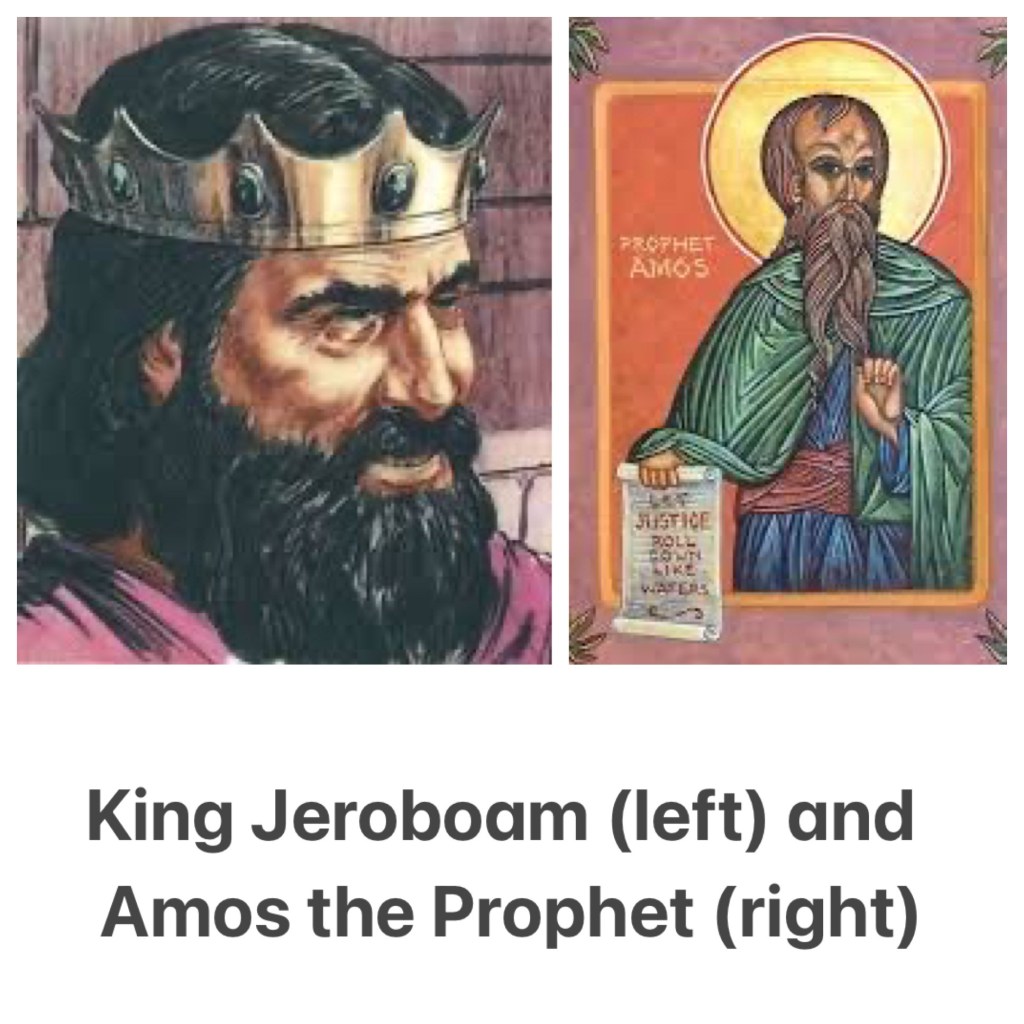
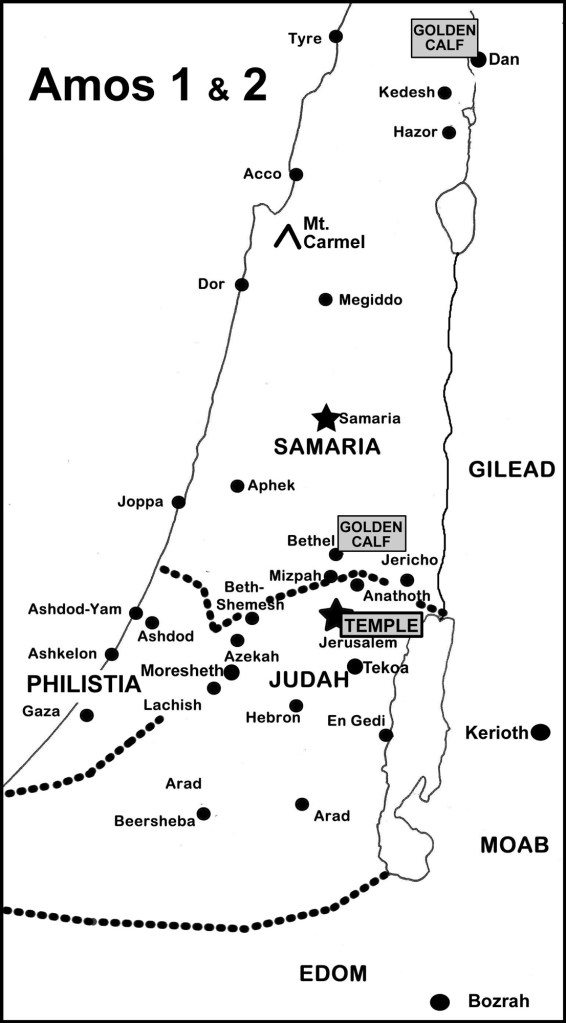
The prophet Amos lived in the northern kingdom of Israel during the reign of Jeroboam II, the thirteenth king of Israel, who reigned for four decades (786–746 BCE; see Amos 7:10). It was a time of prosperity, built on the trading of olive oil and wine with the neighbouring nations of Assyria to the north and Egypt to the south. Jeroboam, however, is remembered as a king who oversaw multiple acts of sinfulness during his years on the throne. 

Most infamously, he replicated the sin of Aaron, who oversaw the creation of a golden calf during the time that the people of Israel were awaiting the return of Moses from his time on the top of Mount Sinai (Exod 32). Jeroboam had the city of Shechem built, as a direct challenge to the centrality of Jerusalem; and he had two golden claves built and installed, one at Bethel, the other at Dan (1 Ki 12:25–30). 

For these and other persistent sins during his 22 years as king, reported at 1 Ki 12:31–33 and 13:33–34, Jerobaom incurred the divine wrath, such that God determined that “ the house of Jeroboam [was to be] cut it off and destroyed from the face of the earth” (1 Ki 13:34). Later passages in this book refer to “the sins of Jeroboam” (1 Ki 14:16; 15:30; 16:2, 19, 31; 2 Ki 10:29, 31; 13:2, 6, 11; 14:24; 15:9, 18, 24, 28; 17:22) and “the way of Jeroboam … and the sins that he caused Israel to commit, provoking the Lord, the God of Israel, to anger by their idols” (1 Ki 16:26).

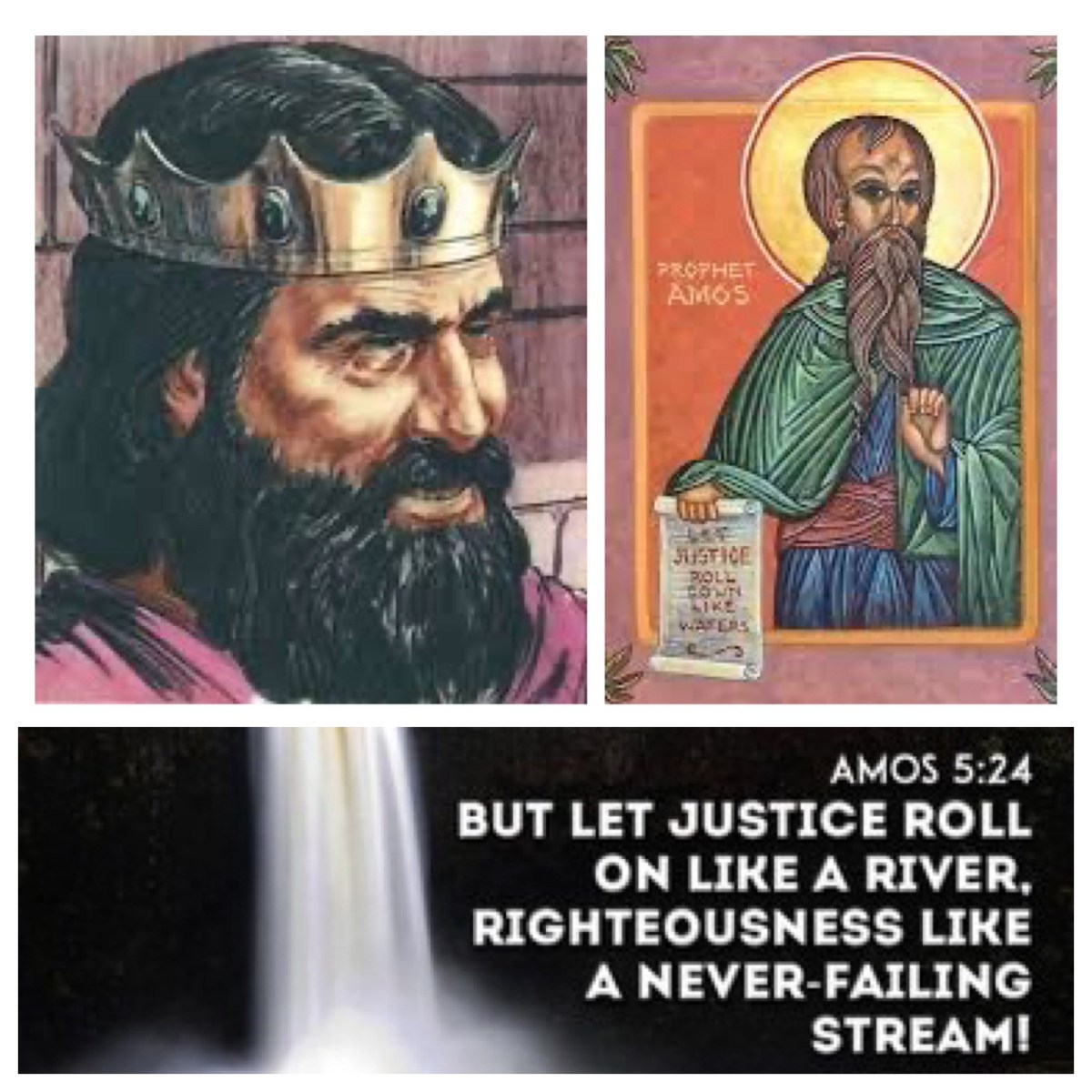
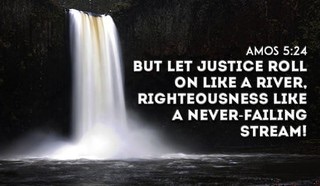
So although the Temple in Jerusalem was the focus for religious activity in the southern kingdom (Judah), Jeroboam had established a number of religious sites in the northern kingdom. Amos warns about the sites at Dan, Bethel, Gilgal and Beersheba (Amos 5:5; 8:14). At these places, not only was the Lord God worshipped, but idolatrous images were used in worship services (5:26). Amos is trenchant in his criticism of the worship that the people offer (5:21–27); embedded in this crisis is a doublet of poetry, words most often associated with Amos: “let justice roll down like waters, and righteousness like an ever-flowing stream” (5:24).

Indeed, it is the perpetration of social inequity within Israel that most causes him to convey the anger of divine displeasure. He admonishes the rich for the way that they mistreat the poor: “they sell the righteous for silver, and the needy for a pair of sandals—they who trample the head of the poor into the dust of the earth and push the afflicted out of the way” (2:6–7); “you trample on the poor and take from them levies of grain” (5:11). 

Again, Amos rails: “you trample on the needy and bring to ruin the poor of the land … buying the poor for silver and the needy for a pair of sandals, and selling the sweepings of the wheat” (8:4, 6). In a biting oracle, he criticises the “cows of Bashan who are on Mount Samaria” for the way they “oppress the poor, crush the needy” (4:1). 

Bashan was the mountainous area to the northeast of Israel (Ps 68:15), which rejoiced in majestic oaks (Isa 2:13) and extensive pasture lands (1 Chron 5:16). The luxurious lifestyle of these people can well be imagined. The reference to “winter houses … summer houses … houses of ivory … and great houses” (3:15) is telling. Luxury and opulence is evident amongst the wealthy.

So,  too, is the description of “those who lie on beds of ivory, and lounge on their couches, and eat lambs from the flock, and calves from the stall; who sing idle songs to the sound of the harp, and like David improvise on instruments of music; who drink wine from bowls, and anoint themselves with the finest oils” (6:4–6). The extravagance of the wealthy is obvious, juxtaposed against the plight of the poor, as we have noted.

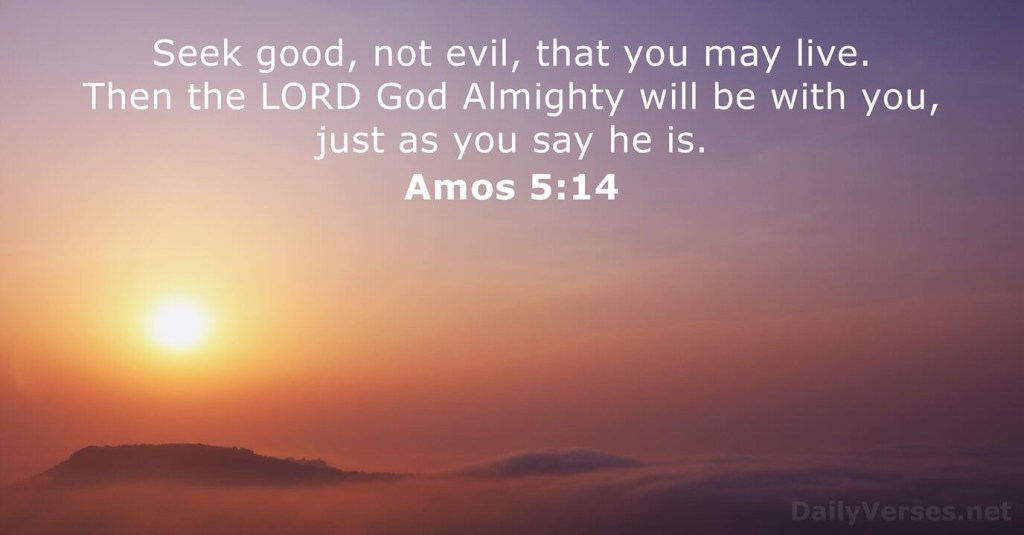
Amos indicates that God had given Israel a number of opportunities to repent, “yet you did not return to me” (4:6, 8, 9, 10, 11). God pleads for Israel to “seek me and live” (5:4), “seek the Lord and live” (5:6), “seek good and not evil, that you may live” (5:14).

But this is all in vain; ultimately, the prophet insists, the Lord God will bring on the day of the Lord—a day of “darkness, not light, and gloom with no brightness in it” (5:18–20). God is determined; “the great house shall be shattered to bits, and the little house to pieces” (6:11); later, he insists again, “the dead bodies shall be many, cast out in every place” (8:3). 

In so many reports of prophetic activity, it is justice which is the heart of their message—God’s justice; the justice which God desires for the people of God; the justice which God speaks through the voice of the prophets; the justice that God calls for in Israel; the justice that provides the measure against which Israel will be judged, and saved, or condemned.

Moses himself was charged with ensuring that justice was in place in Israelite society. One story told of the time after the Israelites had escaped from Egypt places Moses as a judge. Whilst in the wilderness of Sin, being visited by his father-in-law Jethro, we learn that “Moses sat as judge for the people, while the people stood around him from morning until evening” (Exod 18:13). 

Noticing that Moses was overwhelmed by the volume of matters requiring adjudgment, Jethro suggested—and Moses adopted—a system whereby appointed men who “judged the people at all times; hard cases they brought to Moses, but any minor case they decided themselves” (Exod 18:14–16). The charge given to these men is clear: they are to give a fair hearing to every member of the community, and they “must not be partial in judging: hear out the small and the great alike; [do] not be intimidated by anyone, for the judgment is God’s” (Deut 1:16–17). 

Prophets coming after Moses thus inherited this responsibility to ensure that justice was upheld within society. The most famous prophetic word of Amos is, as we have noted, his call for “justice and righteousness” (Amos 5:22). Micah asks the question, “what does the Lord require of you but to do justice?” (Mic 6:8), while through the prophet Hosea, the Lord God promises to Israel, “I will take you for my wife in righteousness and in justice, in steadfast love, and in mercy” (Hos 2:19).

Isaiah ends his famous love-song of of the vineyard by declaring that God “expected justice” (Isa 5:7) and he tells the rebellious people of his day, “the Lord is a God of justice; blessed are all those who wait for him” (Isa 30:18). He proclaims God’s judgement on those who “turn aside the needy from justice … and rob the poor of my people, that widows may be your spoil, and that you may make the orphans your prey!” (Isa 10:1–2). 

Other prophets join their voices to Isaiah’s declaration. Ezekiel laments that “the sojourner suffers extortion in your midst; the fatherless and the widow are wronged in you” (Ezek 22:7). Jeremiah encourages the people of Jerusalem with a promise that God will allow them to continue to dwell in their land if they “do not oppress the sojourner, the fatherless, or the widow” (Jer 7:5–7). 

Second Isaiah foresees that the coming Servant “will bring forth justice to the nations” (Isa 42:1) and knows that God’s justice will be “a light to the peoples” (Isa 51:4). The words of Third Isaiah continue in this prophetic stream, for this anonymous prophet begins his words with a direct declaration, “maintain justice, and do what is right” (Isa 56:1). He goes on to articulate his mission as being “to bring good news to the oppressed, to bind up the brokenhearted, to proclaim liberty to the captives, and release to the prisoners” (Isa 61:1), thereby demonstrating that “I the Lord love justice” (Isa 62:8).

This commitment of Amos and many of the prophets resonates also with the psalmist, who praises “the God of Jacob … who executes justice for the oppressed; who gives food to the hungry … [who] sets the prisoners free, [who] opens the eyes of the blind, [who] lifts up those who are bowed down [and] loves the righteous, [who] watches over the strangers [and] upholds the orphan and the widow” (Ps 146:5, 7–9). See 

https://johntsquires.com/2023/05/14/father-of-orphans-and-protector-of-widows-psalm-68-easter-7a/

On remembering, celebrating, and contextualising (Halloween, All Saints, and All Souls) … and Samhain.

Today, 31 October, begins a special sequence of days, which in traditional Roman Catholic piety form a triduum (simply meaning, “three days”). There is one set of three days that is very well-known: the Great Three Days of Easter (Good Friday—Holy Saturday—Easter Sunday). This current sequence of three days is the “other” three days—standing in the shadow of those other three days. Whilst the three days of Easter celebrate new life (the Triduum of Life), this “other” set of three days has been called the Triduum of Death.

Why, death? Well, the explanation lies in the three particular days that are included: All Hallows’ Eve, All Saints’ Day, and All Souls’ Day. All three have to do with life beyond this life as we know it, in one form or another—that is, they are dealing with death and those who have died.
All Hallows’ Eve is best known to us as Halloween; it falls, every year, on 31 October, round about six months after Easter Sunday. Unlike Easter, however, this is not a “moveable feast”, following the pattern of the lunar cycle (which does not lineup with our solar-based calendar). Halloween falls, each and every year, on the very last day of October.
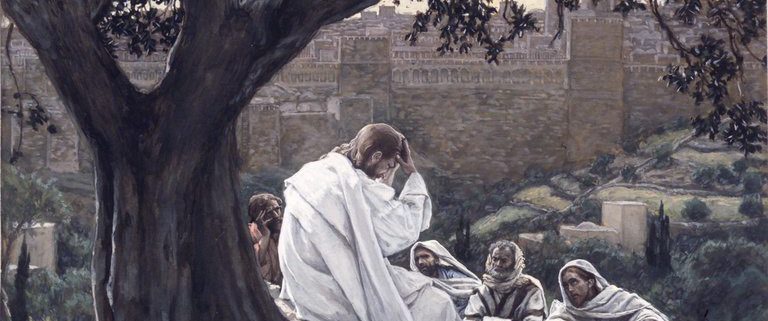

It needs to be said that the contemporary commercialised celebration of Halloween is a long way from its origins in medieval Christian piety. And so it also needs to be emphasised that Halloween is not a pagan festival. It has its origins deep in Christian history and tradition.

The English word ‘Halloween’ is a shortening of All Hallows’ Eve(n), which long ago began this series of three holy days, designed to enable the faithful to remember the saints of old (All Saints’ Day on 1 November) and the faithful who have died, “the souls of the faithful departed” (All Souls’ Day on 2 November). These three days, Halloween—All Saints’ Day—All Souls’ Day, belong together—as the “other” Christian triduum (like Good Friday—Holy Saturday—Easter Sunday).

How long ago this sequence began is not clear, as local customs varied. There is evidence that some days had been identified as the time to remember individual saints or groups of saints in some locations in the 7th to 9th centuries. By around 800, churches in Northumbria and Ireland apparently remembered “all saints” on 1 November.

In the online resources of the Northumbria Community, there is a good statement about the significance of this time: “The old belief was that there was danger and vulnerability at this time of transition, which was neither in one year nor the next. Spiritual barriers could be dissolved. Inevitably, looking back led to the remembrance of those who had died and gone before; and, as the dark, cold days were awaited, protection was sought against the evil spirits that were bound to be abroad until spring returned. These old beliefs were never quite eradicated by the coming of Christianity, but lingered as a persistent superstition, a residual folk memory.” See

https://www.northumbriacommunity.org/saints/celtic-new-year-all-hallows-eve-and-all-saints-tide-october-31stnovember-1st/

By the 12th century, All Saints’ and All Souls’ had become holy days of obligation in the medieval churches, and various rituals developed for each day. Baking and sharing cakes for the souls of baptised people is evidenced in some European countries in the 15th century; this may be the origins of trick-or-treat. Lighting candles in homes on these days was done in Ireland in the 19th century—another element which is reflected in current Halloween practices.

The Forerunners of Christ with Saints and Martyrs
by Fra Angelico (1395–1455)

I have had the experience, in churches today, of being caught up in a grand worship experience for All Saints’ Day, the middle of the three days (a number of these were memorable experiences where my wife Elizabeth Raine created and presided at the liturgy). We surrounded ourselves with the memory of saints of ancient and more recent times, and recalled with gratitude saints of the present times, particularly those important to the immediate locality or congregation.

In those times of worship, we joined in singing “for all the saints who from their labour rest—alleluia! alleluia!” (from a hymn by William Walsham How), and then “a world without saints forgets how to praise; in loving, in living, they prove it is true— their way of self-giving, Lord, leads us to you” (from a hymn by Jacob Friedrich).

It is sometimes claimed that Halloween originated as a response to existing pagan rituals—but we need some considered nuance as we reflect on this. A number of the current practices involved in Halloween certainly do show the strong influence of folk customs with pagan origins in a number of Celtic countries.

This is especially so in relation to Samhain in Ireland, marking the start of winter with a festival from sundown on 31 October to sundown on 1 November. This was a liminal time when the boundary between this world and the world beyond was thinned; at this time, it was thought, the spirits could more easily enter this world. The connection with the Christian days of All Saints’ and All Souls’ is thus clear to see.

However, this does not mean that we can simply (and simplistically) conclude that these days have pagan origins; rather, what we ought to recognise is that, like other Christian festivals, there has been a blurring of customs and practices and a linking of Christian patterns with pagan festivities.

This blurring and linking is a natural tendency that has taken place time after time in place after place. This is what historians and scholars of religion call syncretism—the merging and assimilating of traditions that were originally discrete, with separate origins. It can also be called eclecticism; but I prefer to see this more accurately as contextualisation, the shaping of a tradition in the light of the immediate social and cultural context.

For that is what Halloween did in the mists of the time when it was being created and shaped—existing practices of pagan neighbours were co-opted and adapted by faithful Christians. Then, the practices were extended with the introduction of days to remember All Saints and All Souls. (The same dynamic was at work in the ways that Easter was shaped, drawing on northern hemisphere Spring practices, and the way that Christmas also developed, drawing on northern hemisphere Winter Solstice practices—but these are stories for other times of the year!)

The same perspective can be applied to the ways that Halloween, in particular, is commemorated each year. Lamenting the commercialisation of a festival that was originally Christian is a poor strategy. (And, as noted, this commercialisation has already happened with Christmas—which is now peak selling period for so many businesses and peak holiday period for many families—and in a different way with Easter—which is now a second peak holiday period for so many families.)

This kind of commercialisation (Jack-o’-Lantern pumpkins, bright lanterns, all manner of costumes, the proliferation of sweets for Halloween, trick-or-treat, and more) is now well underway with Halloween. We won’t turn the clock back. People of faith can simply hold to Christian understandings and practices in the midst of the increasing changes being made in broader society. As we observe what is taking place around us, the best strategy, surely, is to inform ourselves of the origins of, and reasons for, the season, and to reflect on those matters that take us to the heart of our faith.

*****

To close, here is my poetic musing on this season in the life of the church:

Every year in the church we remember,

we remember the saints of old;

those who kept silence, those who spoke clearly,

monks and ascetics, sisters and nurses,

teachers and preachers, writers and poets,

mystics and prophets, all serving faithfully;

saints who were blessed in their lives,

saints who blessed others through their lives.

Every year in the church we remember,

we remember those souls now departed;

family, friends, acquaintances, strangers,

known and remembered, hallowed in death.

To commemorate all the faithful departed,

we mark this time as All Souls’ Day.

And the evening before All Saints’ Day,

it is best known as “Halloween”.

Hallowed, sanctified, sainted in memory,

recalled in remembrance, all saints and all souls.

Once in each year, that is our focus;

once in each year, year after year.