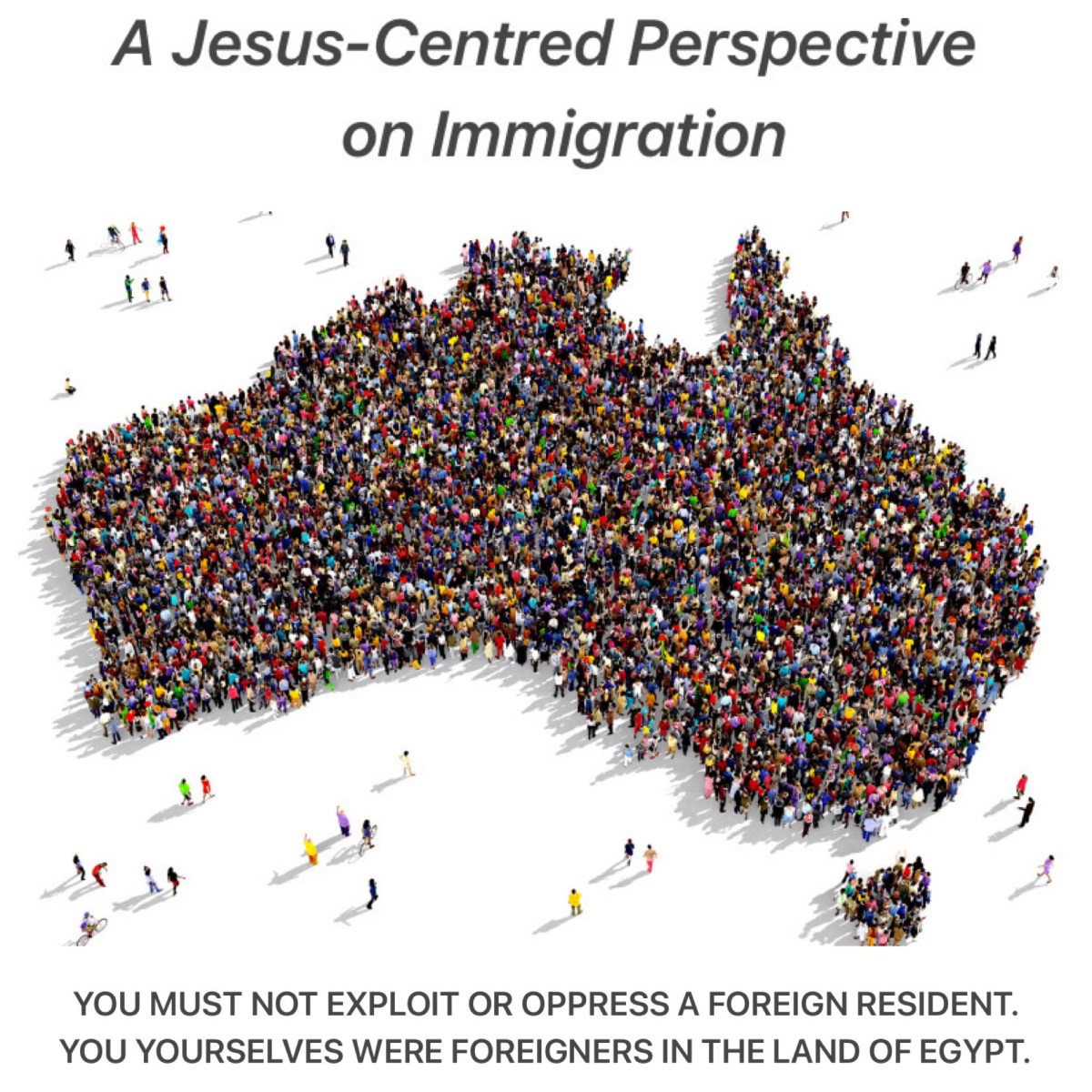
A Jesus-Centred Perspective on Immigration

This is a blog written by a guest blogger, the Rev. Pablo Nunez. Pablo is minister of the Ballina Uniting Church and Moderator-Elect of the NSW.ACT Synod of the Uniting Church in Australia. It is particularly pertinent for today, when xenophobic fascists are trying to mobilise people to “protest against immigration” in Australia. Thanks to Pablo for permission to reproduce his words here.

If you pause for a moment and look around Australia, what do you see? Beaches that take your breath away. Red dirt that stains your shoes and stretches your imagination. Cities alive with languages, smells, and flavours from all over the world. And at the heart of it all, the world’s oldest continuous culture, Aboriginal and Torres Strait Islander peoples, who have lived here, cared for this land, and told its stories for thousands of years.

That’s the starting point. Before we speak about immigration, we need to say out loud: every single non-Indigenous person in Australia is here because of migration. Some of us came by ship generations ago, some by plane more recently. Some came fleeing war, some chasing opportunity, some brought by chains, others by choice. But none of us, apart from our First Nations brothers and sisters, can truly call ourselves original to this land.

And if that’s true, then the way we talk about migration in Australia has to begin with humility.

*****

Jesus Was a Migrant

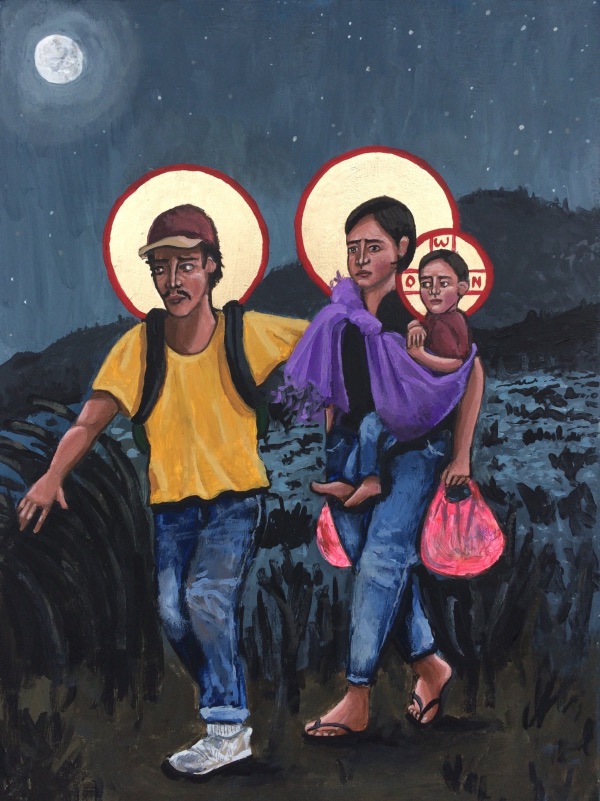
The story of Jesus is not a neat, polished tale of a man who lived in one safe place his whole life. From the beginning, his life was marked by displacement. Born in Bethlehem, raised in Nazareth, taken as a refugee to Egypt because a violent ruler wanted him dead. Jesus knew what it meant to live in a strange land. He knew what it was to flee under the cover of night, to live with uncertainty, to depend on the hospitality of others.


La Sagrada Familia by Kelly Latimore

Later, as an adult, Jesus would walk dusty roads from village to village, never truly at home, saying: “Foxes have dens and birds have nests, but the Son of Man has no place to lay his head” (Luke 9:58). He was, in every sense, a migrant—on the move, without fixed security, dependent on God and others.

So when Christians think about immigration, we don’t start with politics or economics. We start with Jesus. And Jesus says something radical: when you welcome the stranger, you welcome me (Matthew 25:35).

*****

Migration Is in Our Blood

Sometimes in Australia we talk about immigration as if it’s something unusual or threatening. But migration is the story of us all. Think about it:

  • The Irish came during the potato famine.
  • The Chinese came during the gold rush.
  • Italians and Greeks came after the war, bringing pasta, olives, and coffee that changed our food culture forever.
  • Pacific Islanders have brought love for family, music, faith and more than a few sports’ stars.
  • Vietnamese families arrived in the 1970s, rebuilding their lives after war and giving us the joy of pho and banh mi.
  • More recently, African communities have brought strength, music, and resilience born from hard journeys.
  • Latin Americans, like myself, came in different waves, some fleeing dictatorships, some chasing new opportunities, and we bring rhythms, faith, and fire for life.

Australia today is richer—economically, socially, culturally, spiritually—because of migrants. We wouldn’t be who we are without them. And the truth is, most of our favourite things—our food, our music, our sport—carry a migrant story. Even Vegemite was invented by a man whose parents came from Switzerland.

Migration is not an interruption to the Australian story—it is an essential part of the Australian story.

*****

The Gift of the Stranger

Here’s the thing about migrants: they don’t just bring their skills, their recipes, and their music. They also bring gifts we desperately need but often overlook.
Migrants remind us of courage—because leaving your homeland is never easy. They remind us of resilience—because starting again from scratch takes grit. They remind us of generosity—because most migrants know what it’s like to have little, and so they share what they have.

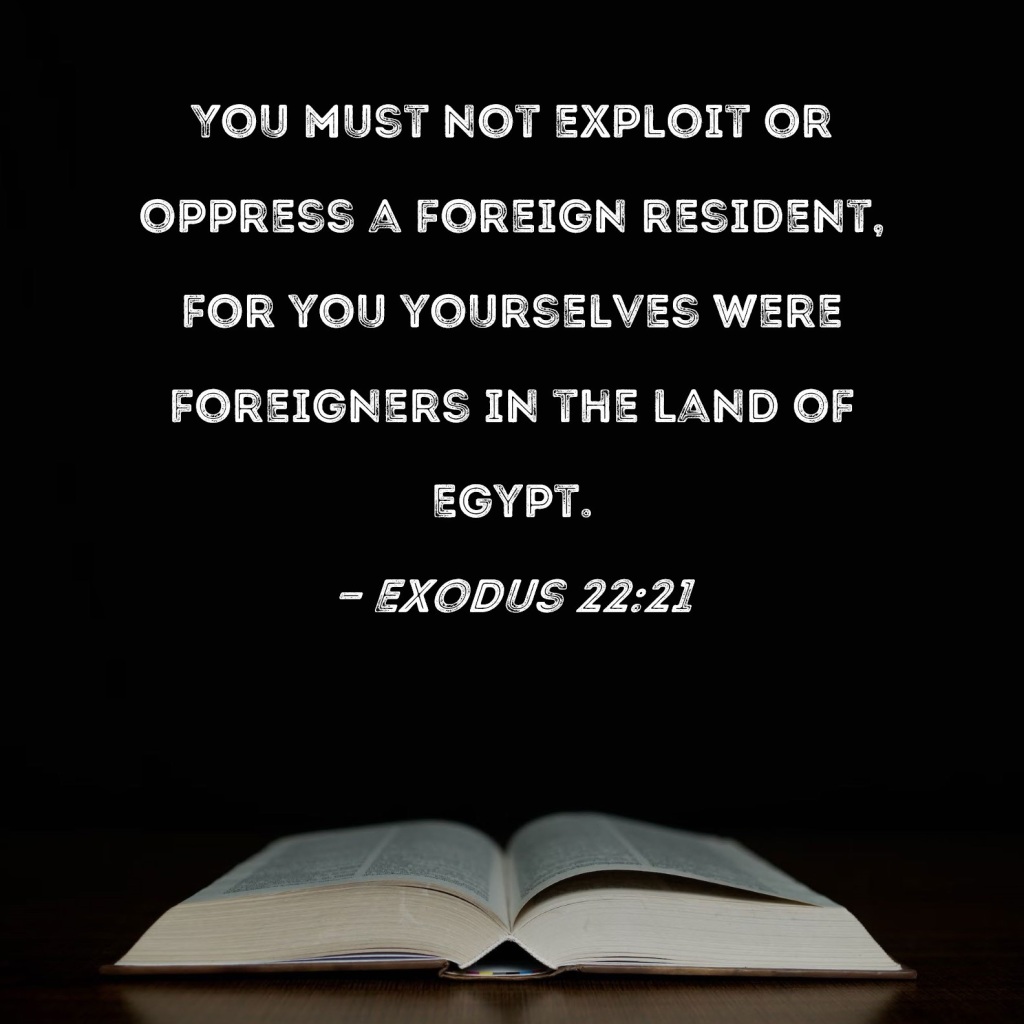
And, most profoundly, migrants remind us of God. Over and over in Scripture, God appears through the stranger. Abraham entertains three mysterious travellers and realises he’s been hosting God (Genesis 18). The Israelites are told: “Do not oppress the foreigner, because you yourselves were foreigners in Egypt” (Exodus 22:21). And then Jesus himself comes as the refugee child.

To welcome the stranger is to make room for God.

*****

A Personal Word

I carry this personally. I wasn’t born in Australia. My family story, like many of yours, is one of packing up, crossing borders, learning a new language, and trying to fit into a place where you don’t always feel you belong.

And yet, what I’ve discovered is that this tension—this experience of not quite belonging—actually brings me closer to the heart of God. Because faith is, at its core, a migrant journey. Hebrews 11 describes all the great heroes of faith as “foreigners and strangers on earth, longing for a better country—a heavenly one.”

In that sense, migration is not only Australia’s story, it’s the Christian story. We are all on the move, walking toward God’s promised future.

*****

A Challenge for the Church

But here’s the challenge: in Australia, conversations about immigration often get reduced to fear. Fear of boats. Fear of “the other.” Fear that there won’t be enough jobs or houses or space.

Jesus calls us to a different way. If every person is made in the image of God, then every migrant is not a threat but a gift. If Jesus himself was a refugee, then to reject the refugee is, in some sense, to reject Jesus. And if the Spirit of God is at work in every culture, then immigration is not about us “helping them,” but about recognising the Spirit who comes to us through them.

This means the Church in Australia has a prophetic role: to remind our nation of its migrant story, to model hospitality, and to show that love is bigger than fear.

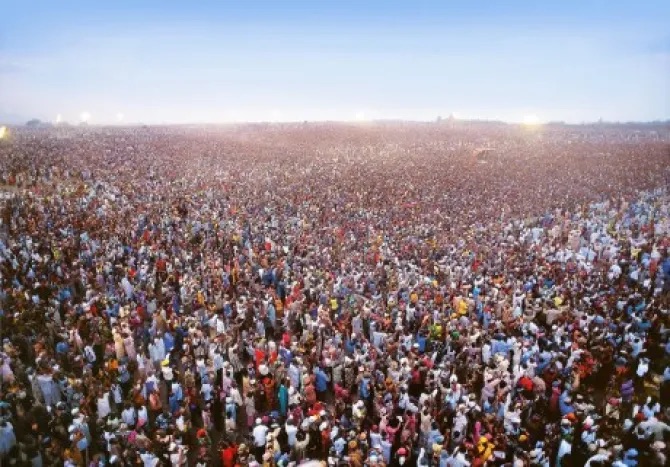
What if every church treated migrants not as projects, but as partners? What if we saw multicultural worship not as a challenge, but as a glimpse of Revelation 7:9—a great multitude from every nation, tribe, people, and language worshipping before the throne? What if we stopped seeing immigration as a “problem” and started seeing it as a mirror of the kingdom of God?

*****

Building Our Legacy

Friends, Australia is at its best when it remembers its migrant heart. Our legacy will not be built on shutting doors, but on opening tables. On meals shared. On friendships made. On seeing the image of God in one another.

And the Church must lead the way. Because when we welcome the migrant, we are not only welcoming a neighbour—we are welcoming Christ into our lives in new perspectives and possibilities. A new life. A better life.
So let’s be people who celebrate our heritage, acknowledge our debt to First Nations peoples, and embrace the truth that every migrant—past, present, and future—brings a gift from God.

Australia’s modern story is migration. The Church’s story is migration. The Gospel’s story is migration. And in all of it, Jesus is the one who walks with us, the migrant Messiah, calling us to follow him into a kingdom where every tribe and tongue has a place at the table.

The Rev. Pablo Nunez, Moderator-Elect,
Synod of NSW.ACT, Uniting Church in Australia

The Bruyns of Brown Street (1): Establishing the Town of Dungog

A little over five years ago, Elizabeth and I bought land in Dungog. It was a half-acre block in the centre of the town; the block which has the house that we are have been living in, now, for just over 18 months. It turns out that we are just the latest in a line of people who have owned this particular block.

We know the names of the previous owners of this block from the legal documentation that came with the title to the land. And we have been able to find something about each of these owners—from the person who was originally granted the land in 1842, right up to the people who bought the house and land in 1969, from whose deceased estate we bought the house and land a few years back. We have found this through searching the internet and sifting the material we have found.

The block of land in Brown St was part of the original area of land in the town that was made available in 1838 to settlers by the Governor of the Colony of New South Wales, Sir George Gipps. Of course, this land and the surrounding region (like all land that had been granted to the invading British colonisers) had been the land of the Indigenous people of the area for millennia.

As I have done with each move of recent times, I have taken some time to investigate a little of what is known about the First Peoples of the area to which we have moved. I have been exploring the stories about contact between the invading British colonisers and the First Peoples who have cared for the land from time immemorial.

The First Peoples of this area are the Gringai. The traditional lands of the Gringai include an area centred on the place where the town of Dungog is situated, next to the Williams River. It is thought that the name Dungog is derived from a word meaning “clear hills” in the Gringai language. I have explored what we know of the Gringai and this area in my earlier blogs

Once the British government started sending convicts to this continent, and began the process of claiming the land from the Indigenous people, the British system of law, and of land and property, became dominant as new settlements were opened up for the incoming settlers.

(In the following four paragraphs, I am quoting from https://mhnsw.au/guides/land-grants-guide-1788-1856/)

“In 1825 the sale of land by private tender began (Instructions to Governor Brisbane, 17 July 1825, HRA 1.12.107-125). There were still to be grants without purchase but they were not to exceed 2,560 acres or be less than 320 acres unless in the immediate vicinity of a town or village.

“On 5 September 1826, a Government order allowed Governor Darling to create the limits of location. Settlers were only permitted to take up land within this area. A further Government order of 14 October 1829 extended these boundaries to an area defined as the Nineteen Counties.

“In a despatch dated 9 January 1831, Viscount Goderich instructed that no more free grants (except those already promised) be given. All land was thenceforth to be sold at public auction (HRA 1.16.22) and revenue from the sale of land was to go toward the immigration of labourers.

“Following this, land was sold by public auction without restrictions being placed on the area to be acquired. After 1831 the only land that could be made available for sale was within the Nineteen Counties. This restriction was brought about to reduce the cost of administration and to stem the flow of settlers to the outer areas.”

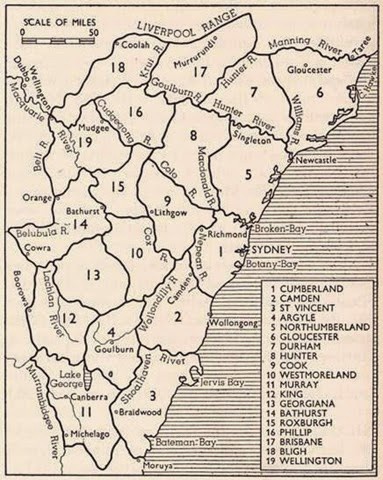
The Nineteen Counties in which settlement by British colonists was permitted as from 1829. Squatters, however, soon began “squatting” on lands outside the Nineteen Counties.

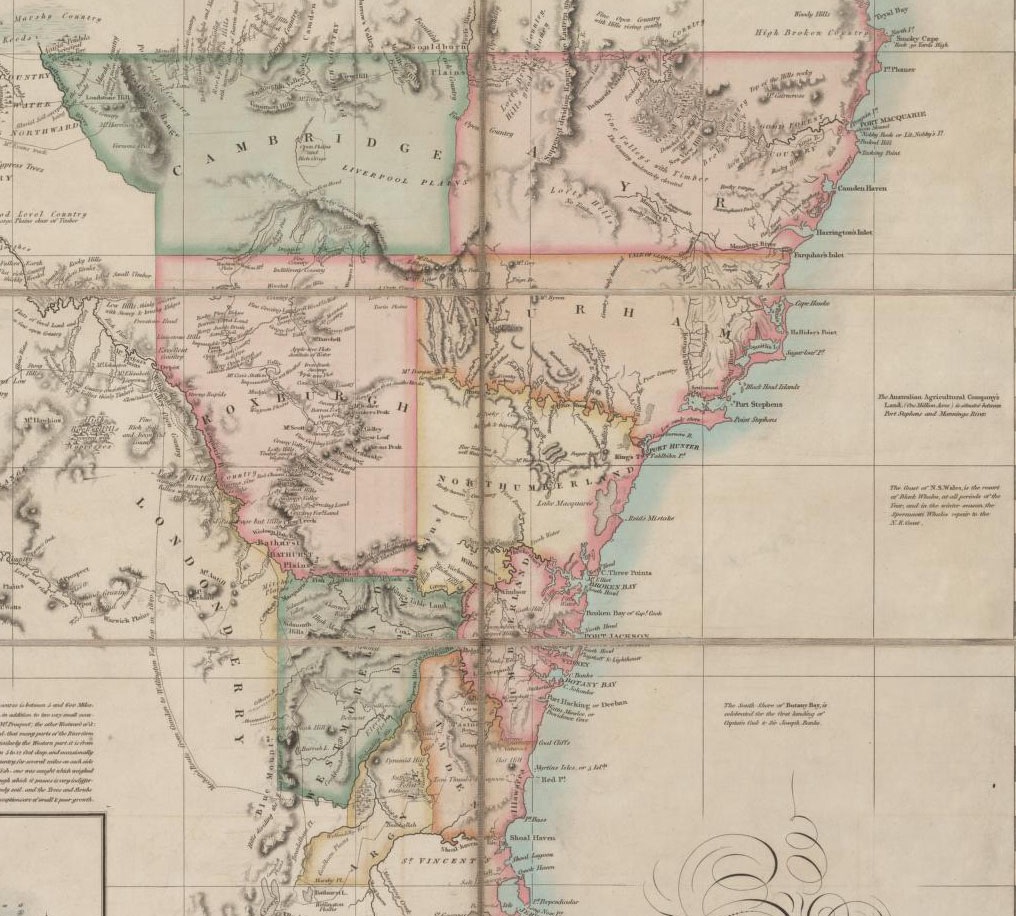
The first county, Cumberland, had been established soon after the British colony was established, in June 1788. a second county, Northumberland, was proclaimed in 1804. By 1820, nine counties had been established: Roxburgh, Northumberland, Durham, Westmoreland, Cumberland, Argyle, Camden, Ayr and Cambridge. The town of Dungog would be established in the Durham County, named after John George Lambton, First Earl of Durham (1792–1840).

The nine counties in 1832

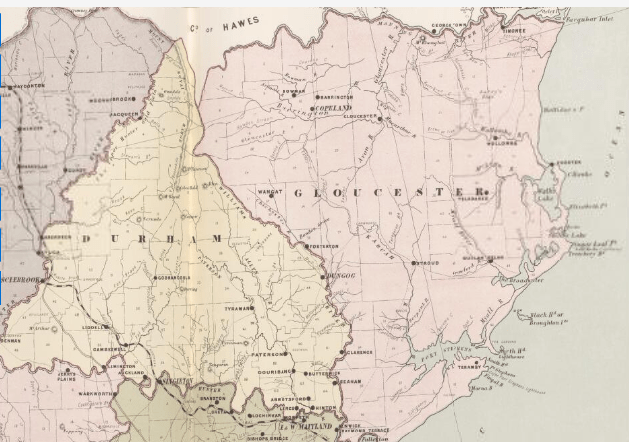
In 1829, when the establishment of the nineteen counties was decreed to be the limits of settlement, the original Durham County was divided into two, with Gloucester County taking the eastern half of the original county. The dividing boundary was the Williams River, with Dungog lying just to the west of the river in County Durham. (Durham County in the UK was the place where Elizabeth’s family, the Raine family, had originated.)

Durham and Gloucester counties in 1886

The Census of 1857 indicated that Dungog village had 25 houses and a population of 126 people. By 1861 the population had grown to 458 people. The town had begun some decades earlier, in 1838, when a fully surveyed plan of land for sale in Dungog was advertised in the Sydney Gazette. Initially, land was sold at a “Minimum price” of “£2 sterling per acre”. In 1839, a further parcel of half acre and other sized allotments were offered for sale at £4 per acre.

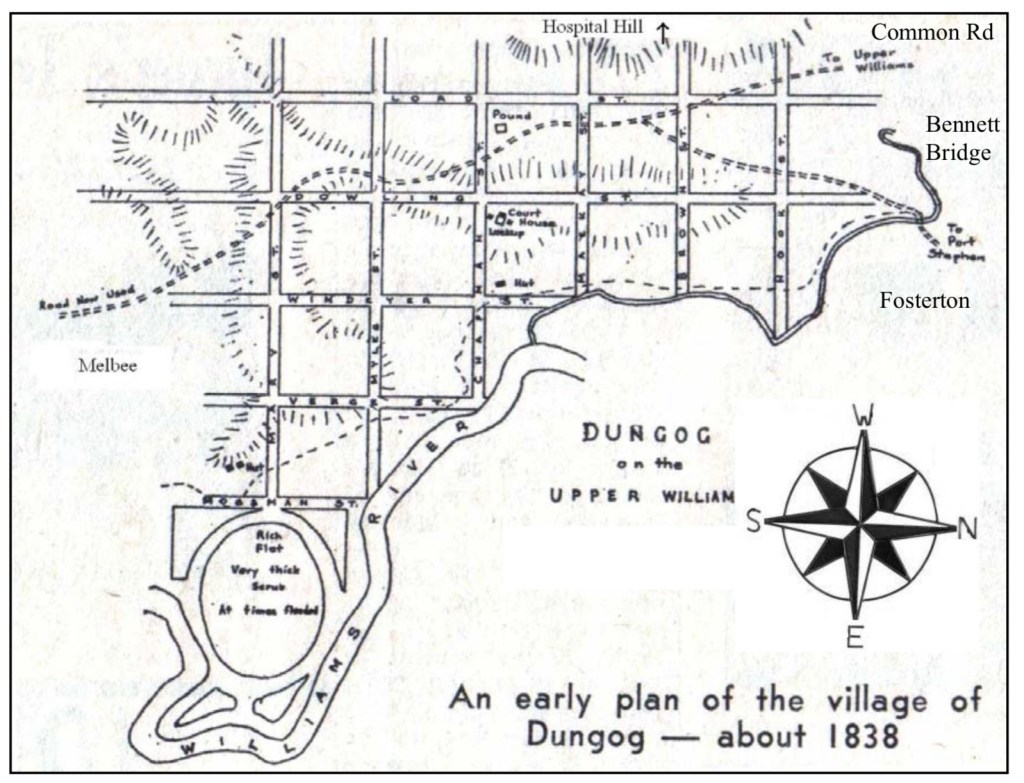
The 1838 plan can be seen as an example of the early colonial government’s attempts to create an English-style model of small villages and surrounding estates. The central area of the village was divided into a number of sections, each separated by a street. The first grant of land in the area had been made a decade earlier, to John Hooke, of Parramatta, in July 1828.

Map of the 1838 plan for Dungog, reproduced from Ah! Dungog

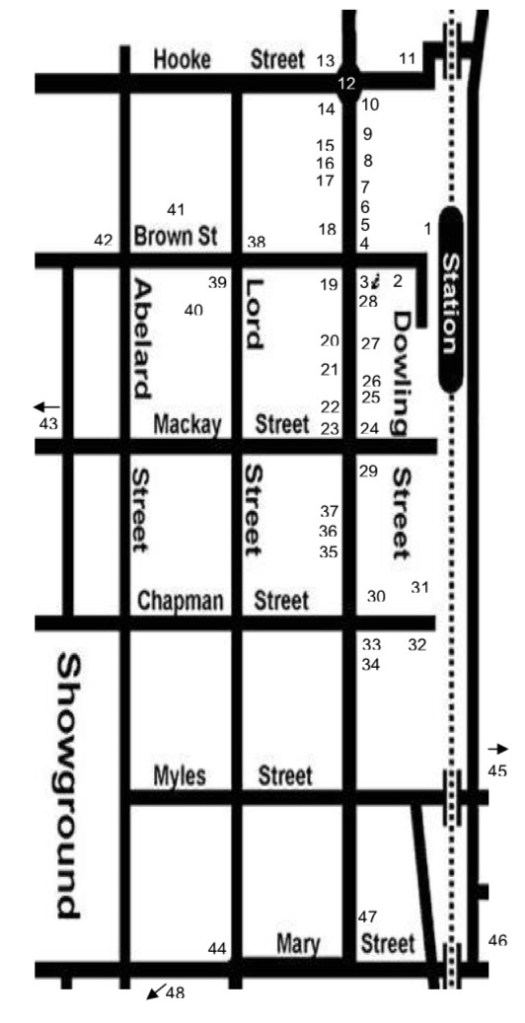
The block of land which we recently bought was originally bought under the system of colonial landholding by James Fawell on 9 May 1842. It cost him £4.0.0. The legal documentation identifies it as “Lot No. Seven Section No. Five in the Town of Dungog”. Section Five is the block bounded by Dowling, Brown, Lord, and Mackay Streets. Dowling St runs along the ridge beside the Williams River, and it developed early into the street of commerce for the town.

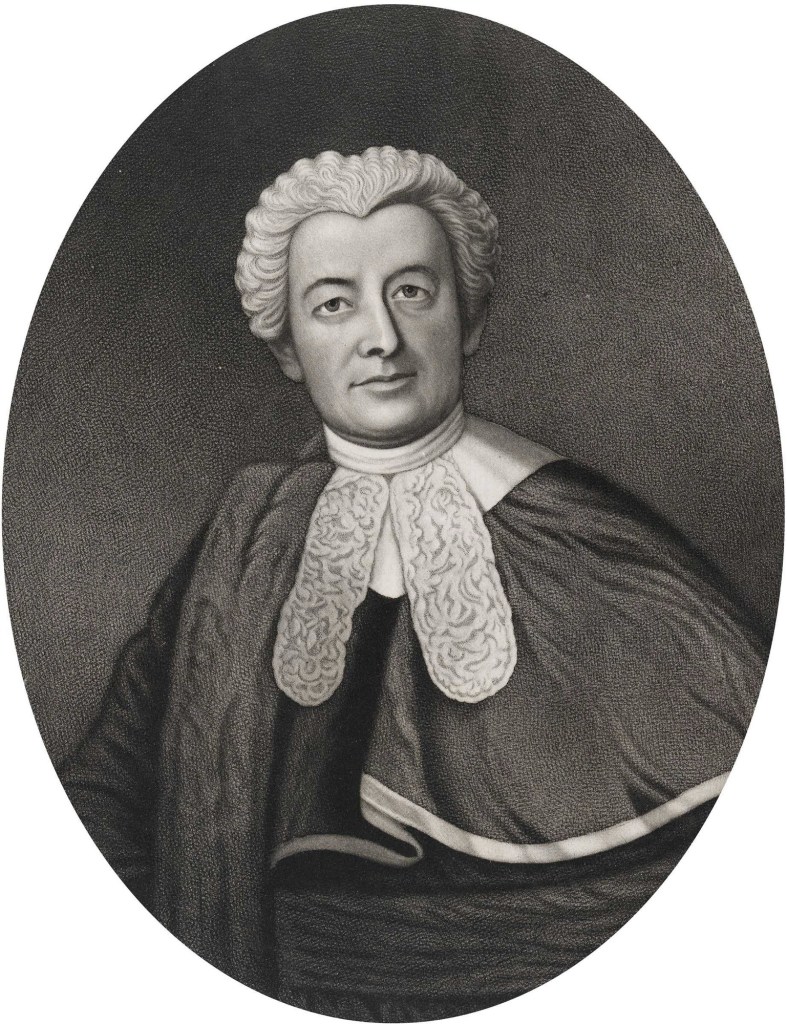
All four streets are named after early British settlers in the town. Dowling St bears the name of James Dowling, who was granted land in 1828. Dowling became the second Chief Justice of NSW, serving from 29 August 1837 to 27 September 1844, the day of his death.


The Hon. Sir James Dowling;
engraving by Henry Samuel Sade, c. 1860

Mackay St is named after D.F. Mackay, whose grant of 640 acres was made in 1829. Mackay took up the position of Superintendent of Prisoners and Public Works in Newcastle.

Lord St carries the name of John Lord, whose land (2560 acres) had been designated, in 1829, to be granted to Archibald Mosman; in 1836 it was re-allocated to John Lord. (Mosman did purchase land in the area in 1837, but sold it a year later and moved to Glen Innes.)

Streets in the central area of the “grid” for the Town of Dungog. Taken from a Tourist Pamphlet (the numbers refer to key buildings) at https://williamsvalleyhistory.org/epub_docs/Tourist%20pamphlet%20-%20A3%20June%202012.pdf

Brown Street, it seems, carries the name of one Crawford Logan Brown, a Scotsman who in 1829 had been granted 1280 acres at Dungog by the then Governor, Sir Ralph Darling.

Brown’s estate was named Cairnsmore. In 1836 he added to his grant with a purchase of 640 acres at a cost of £160. In addition to Cairnsmore at Williams River, Crawford L. Brown also owned land at Patrick Plains known as Blackford. He exemplifies the expansionary style of those privileged to obtain grants—and to have convict labour assigned to them—under the British colonial system.

Crawford Logan Brown served as a Magistrate at Dungog from 1845 until his death on 13th December 1859 in Dungog. An interesting—and startling—anecdote known about him is that in January 1846, whilst serving as Magistrate, he sentenced his own assigned servant Thomas Fry to two years in irons. This sentence was punishment for an assault that Fry had made on Brown himself!

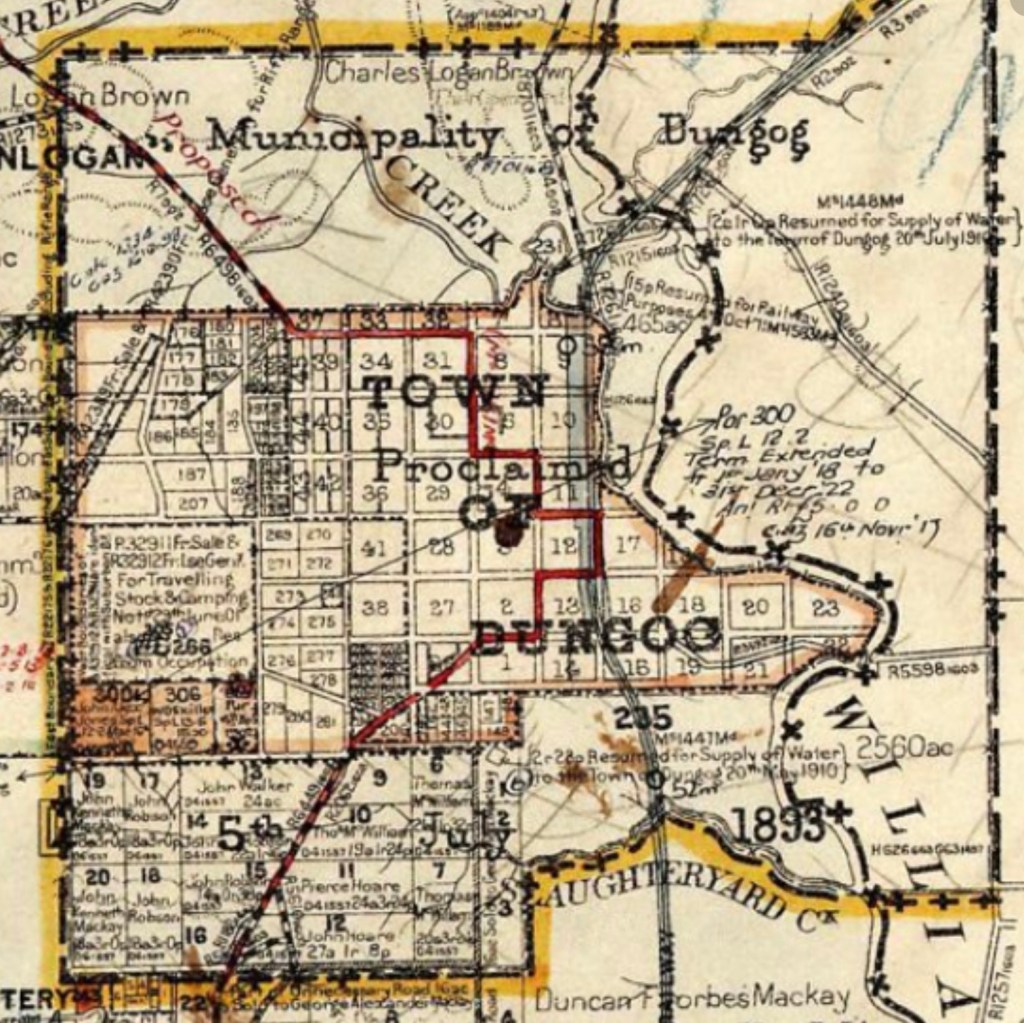
An extract from a late 19th century survey map
of the Parish of Dungog, showing the grid plan
and numbered Lots in the Town of Dungog.

There will be more of the story told in a series of blogs to follow, focussing in on the history of the people, the land, and the house on the property that we currently occupy … … …

*****

See subsequent blogs at

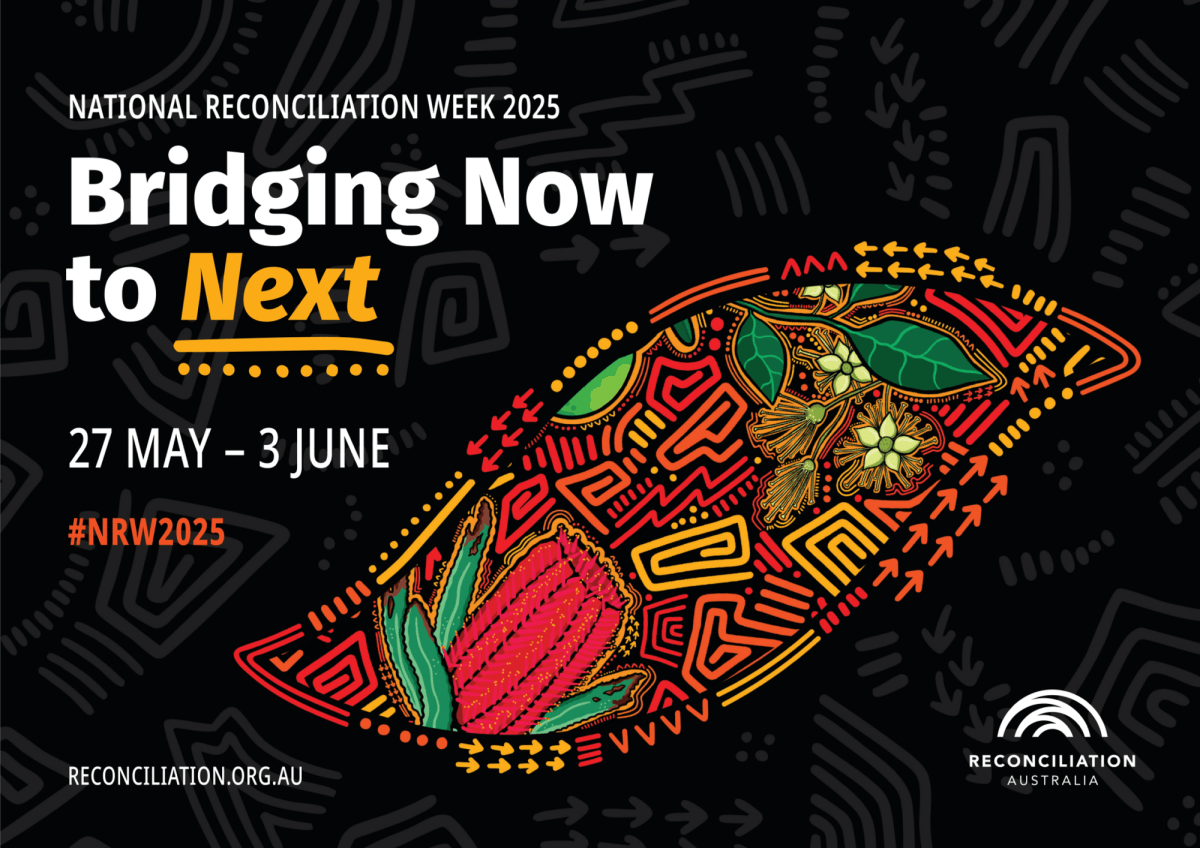
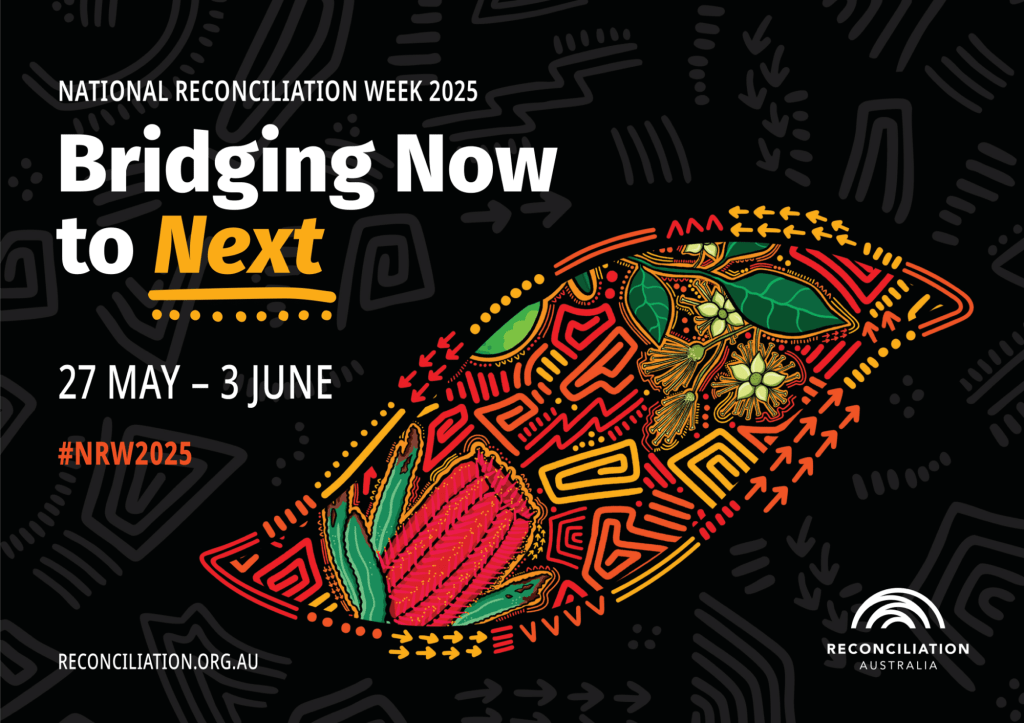
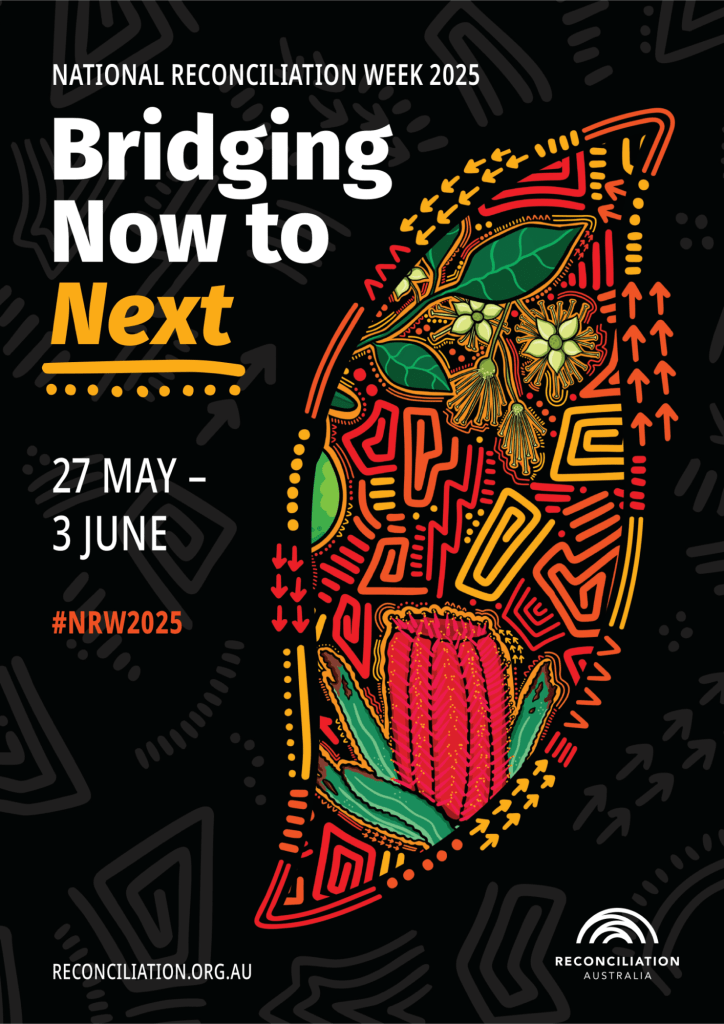
Reconciliation Week 2025: Bridging Now to Next

National Reconciliation Week runs each year from 27 May to 3 June. 27 May is the anniversary of the 1967 referendum which recognised the indigenous peoples of Australia and gave them the right to vote. 3 June is the day in 1992 that the legal case brought by Eddie (Koiki) Mabo was decided and the lie of terra nullius was laid bare by Koiki in the Australian High Court.

The theme for this year is Bridging Now to Next. This theme reflects the ongoing connection between past, present, and future, urging us to look ahead and continue the push forward as past lessons guide us.

Australia had an opportunity to take an important step forward in 2023, with the proposal that our Constitution incorporate recognition of the first inhabitants of the nation, who have cared for the countries of this continent for millennia. Unfortunately, the reluctance of conservative elements in our political leadership to embrace this proposal meant that the proposal failed.

That does not mean that everything to do with Indigenous matters is now on the back burner, as I have (unfortunately) heard a number of times since the 2023 referendum. Indeed, there is a need to press on ahead with the reconciliation journey that we really do need to undertake in this country. 

Elizabeth and I have been pleased to find in Dungog a group dedicated precisely to to that purpose; Reconciliation Dungog, a group of people which aims “to support, educate and inspire our community to engage in reconciliation activities”.

See https://reconciliationdungog.square.site

Artwork relating to the theme of Bridging Now to Next has been created by Kalkadoon woman Bree Buttenshawn. She is a Kalkadoon woman (in the Mount Isa region of Queensland) who is currently living on  Quandamooka Country (in the Moreton Bay region, near Brisbane). She works as a digital artist under the artist pseudonym of Little Butten and seeks to integrate her Aboriginal culture with a contemporary digital approach. 

The website of Reconciliation Australia states that “the artwork features native plants − known for regenerating after fire and thriving through adversity − [which] symbolise our collective strength and the possibilities of renewal.”

The website continues, “This is a time for growth, reflection, and commitment to walking together. Reconciliation must live in the hearts, minds and actions of all Australians as we move forward, creating a nation strengthened by respectful relationships between the wider Australian community, and Aboriginal and Torres Strait Islander peoples.”

National Reconciliation Week began as the Week of Prayer for Reconciliation in 1993 (the International Year of the World’s Indigenous Peoples). It was supported by Australia’s major faith communities: Christian, Jewish, Muslim, and others. In 1996, the Council for Aboriginal Reconciliation launched Australia’s first National Reconciliation Week
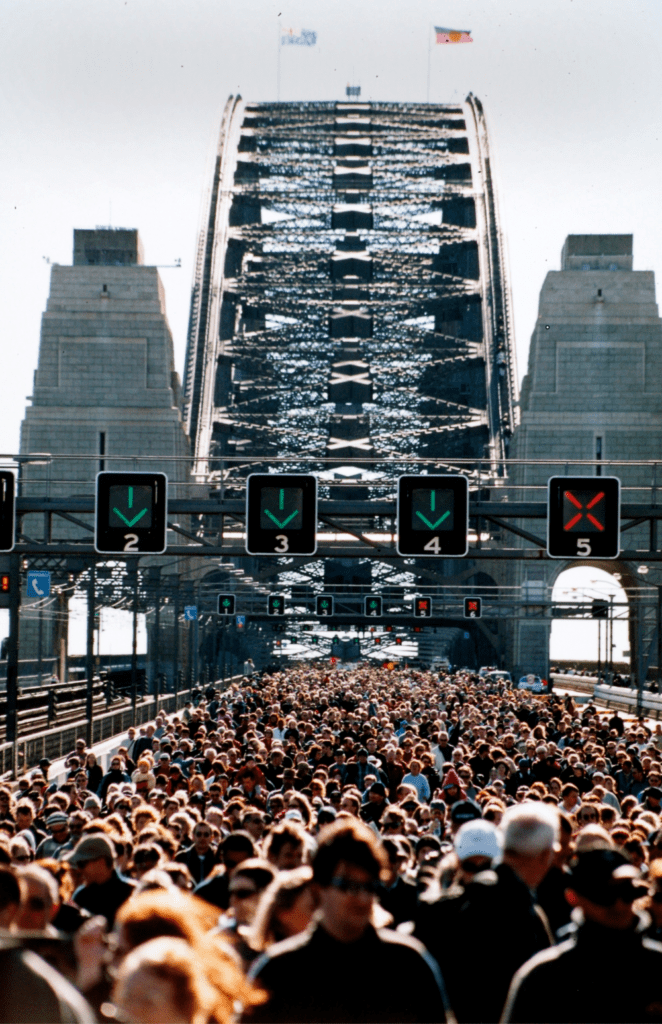
In the year 2000, hundreds of thousands of Australians walked across Sydney Harbour Bridge (see image above), and other bridges around Australia, to show support for Aboriginal and Torres Strait Islander aspirations. A few months before that, the Council for Aboriginal Reconciliation had presented its final reports to the Australian people, The Australian Declaration towards Reconciliation and The Roadmap for Reconciliation, at the Corroboree 2000 event in Sydney in May 2000. 

Then, in 2001, Reconciliation Australia was established to continue to provide national leadership on reconciliation. This week (#NRW) has been held each year since then. It is celebrated in workplaces, schools and early learning services, community organisations and groups, and by many individuals Australia-wide. The #NRW2025 theme, Bridging Now to Next, was created in collaboration with Little Rocket, a First Nations owned and operated marketing and creative agency.

See 

https://littlebutten.com/pages/artist-portfolio

See also

What’s in our character? For “Australia Day”, 26 January (part 2)

Today, 27 January, is the day after Australia Day, 26 January. But because that day fell, this year, on a Sunday, all state and territory governments have gazetted today as a public holiday. Because, you know, we neeeeeed that end-of-January long weekend!!

I have previously considered the use of the term “Australia” and thought about the names we use. See 

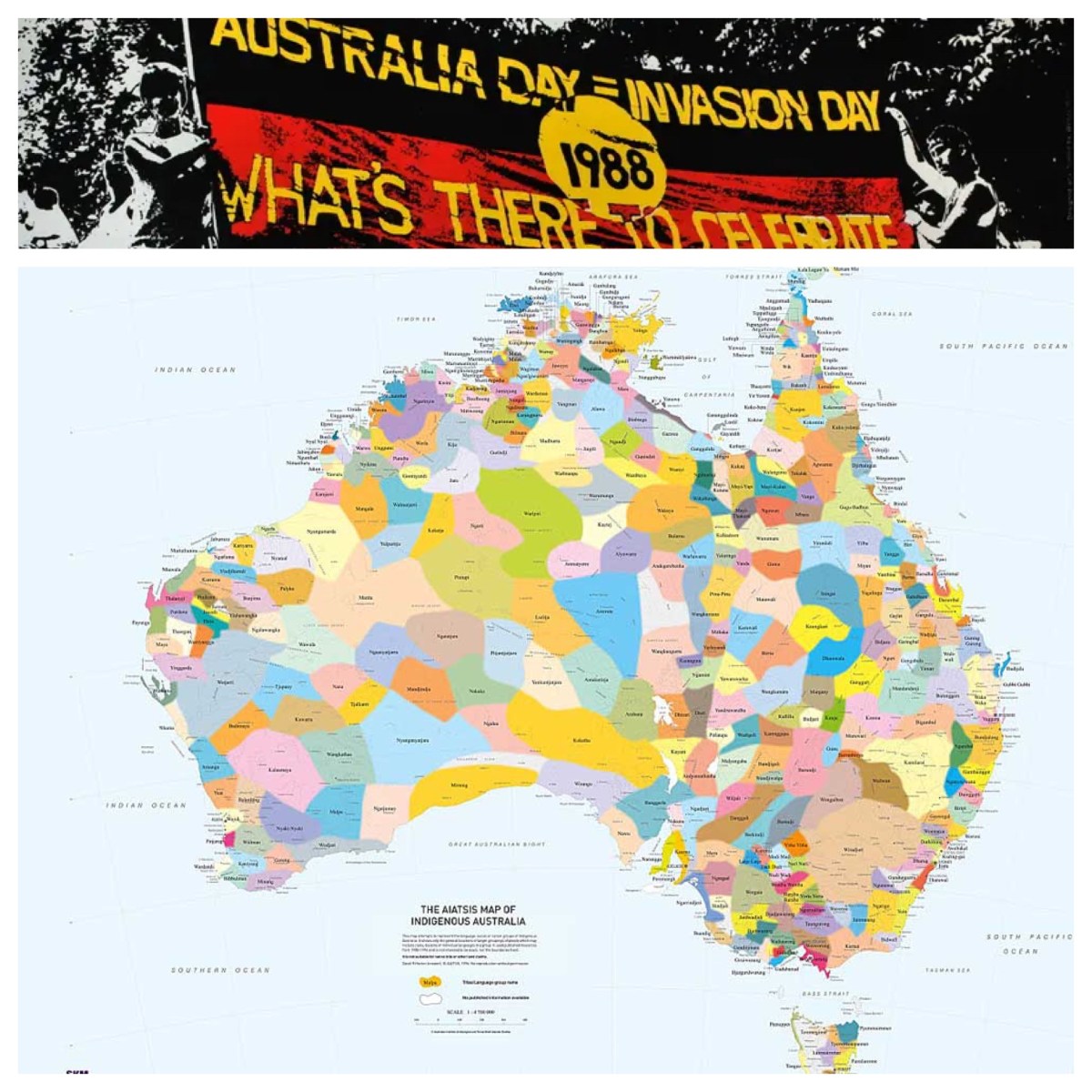
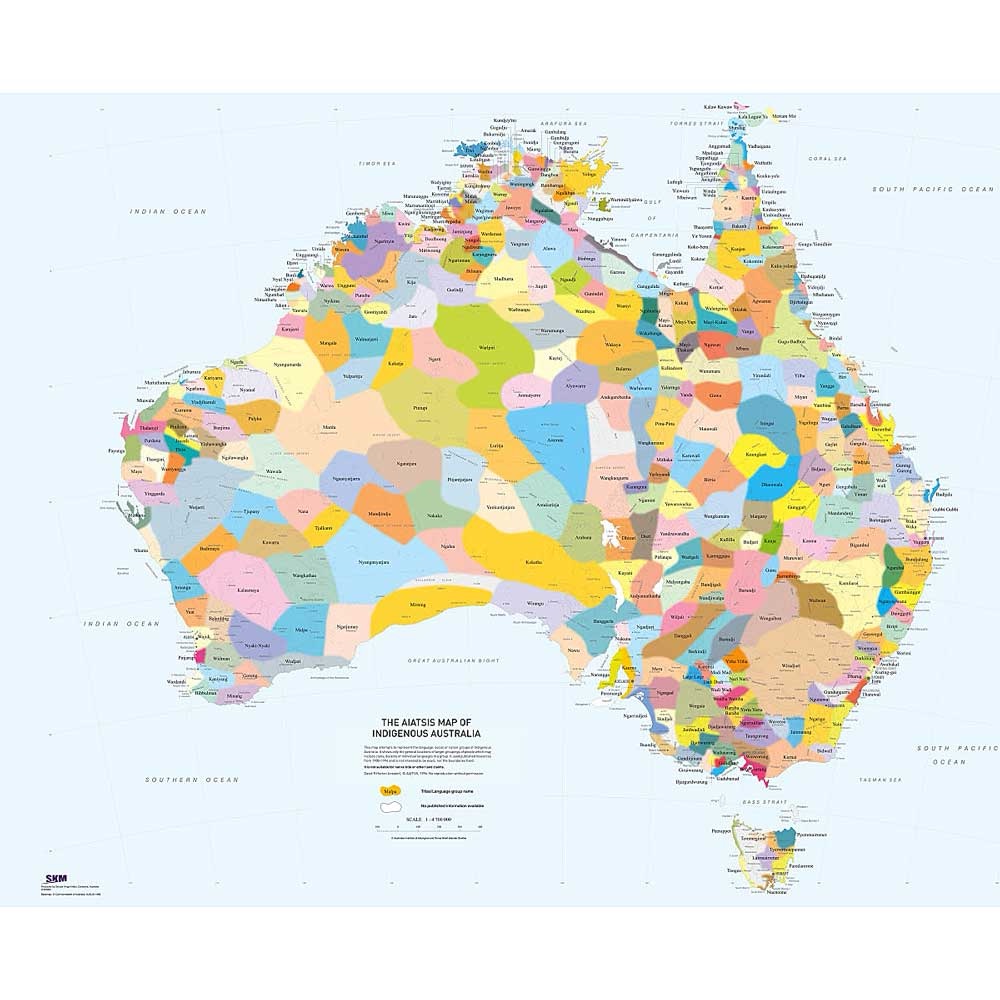
Before 1788, there was no single name for the whole island continent. Some have claimed that the word bandaiyan was a name that referred to the entire continent of Australia. However, this is a Ngarinyin word,  from the Kimberley region. It was not necessarily used by, or known to, any of the speakers of the 250 or more languages that were spoken (in what is now thought to be around 800 dialects) by others living on the continent.

It is estimated that there were 750,000 people living in the 500 or so First Nations located across this large island continent—and on many of the smaller islands associated with the larger continental landmass. Each of these language groups had their own terms for the country where they lived, on the land they had cared for since time immemorial. 

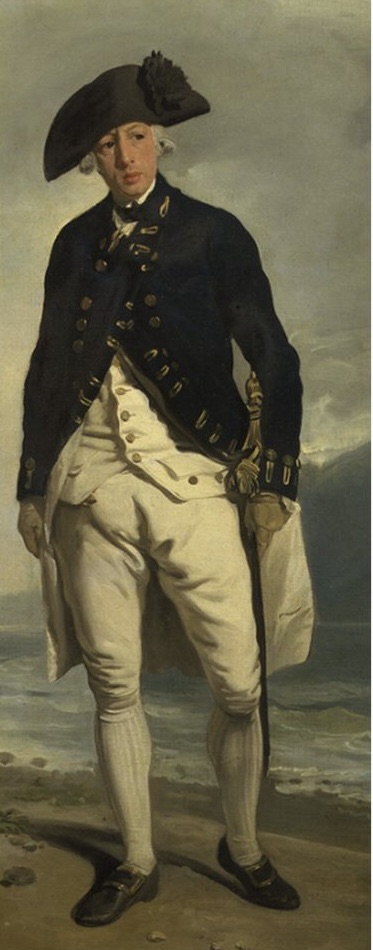
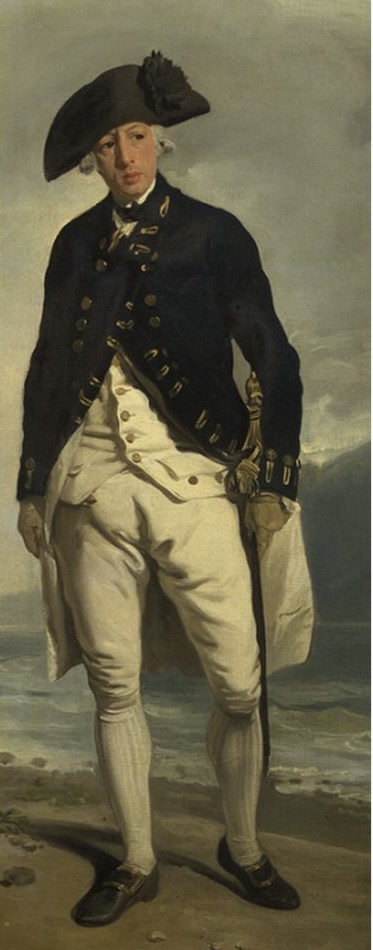
Arthur Philip, in a July 1788 letter to William Petty, wrote: “It has been my determination from the time I landed, never to fire on the Natives, but in a case of absolute necessity, & I have been so fortunate as to have avoided it hitherto. I think they deserve a better Character than what they will receive from Monsr. La Perouse, who was under the disagreable  necessity of firing on them. I think better of them from having been more with them. they do not in my opinion want personal Courage, they very readily place a confidence & are, I believe, strictly honest amongst themselves.  most of the Men wanting the Right front tooth in the Upper Jaw, & most of the Women wanting the first & second joints of the little finger of the left hand, are circumstances not observed in Capt. Cooks Voyage.”
Governor Arthur Philip

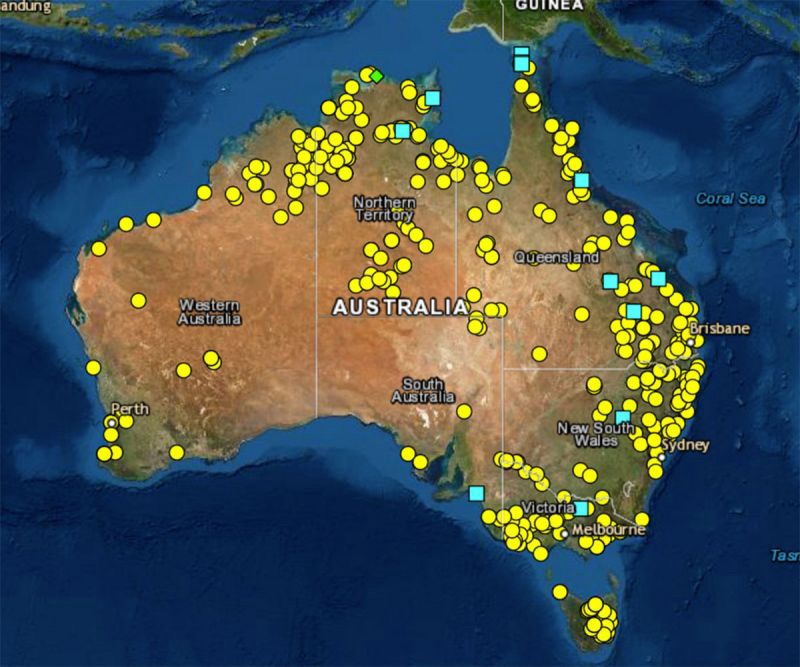
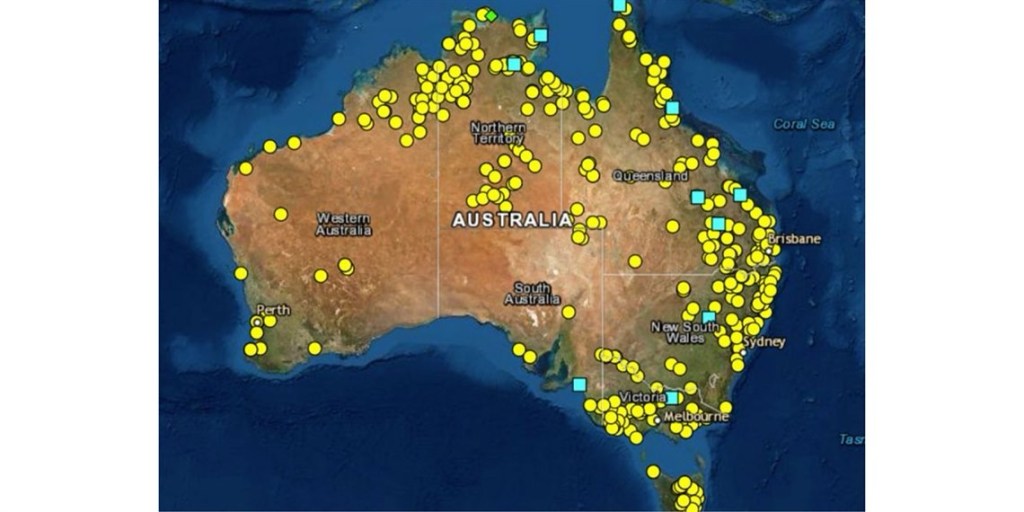
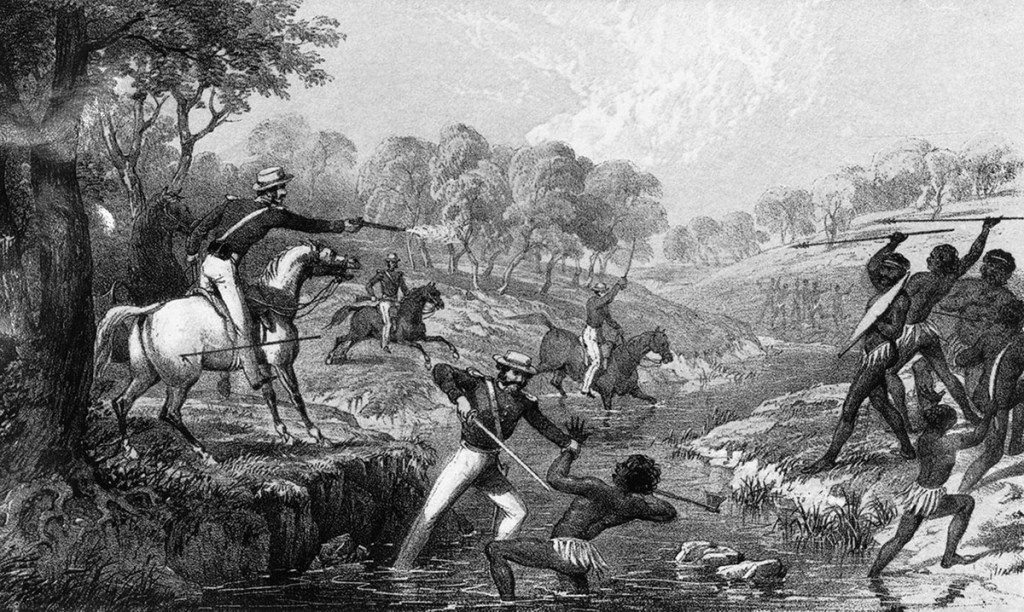
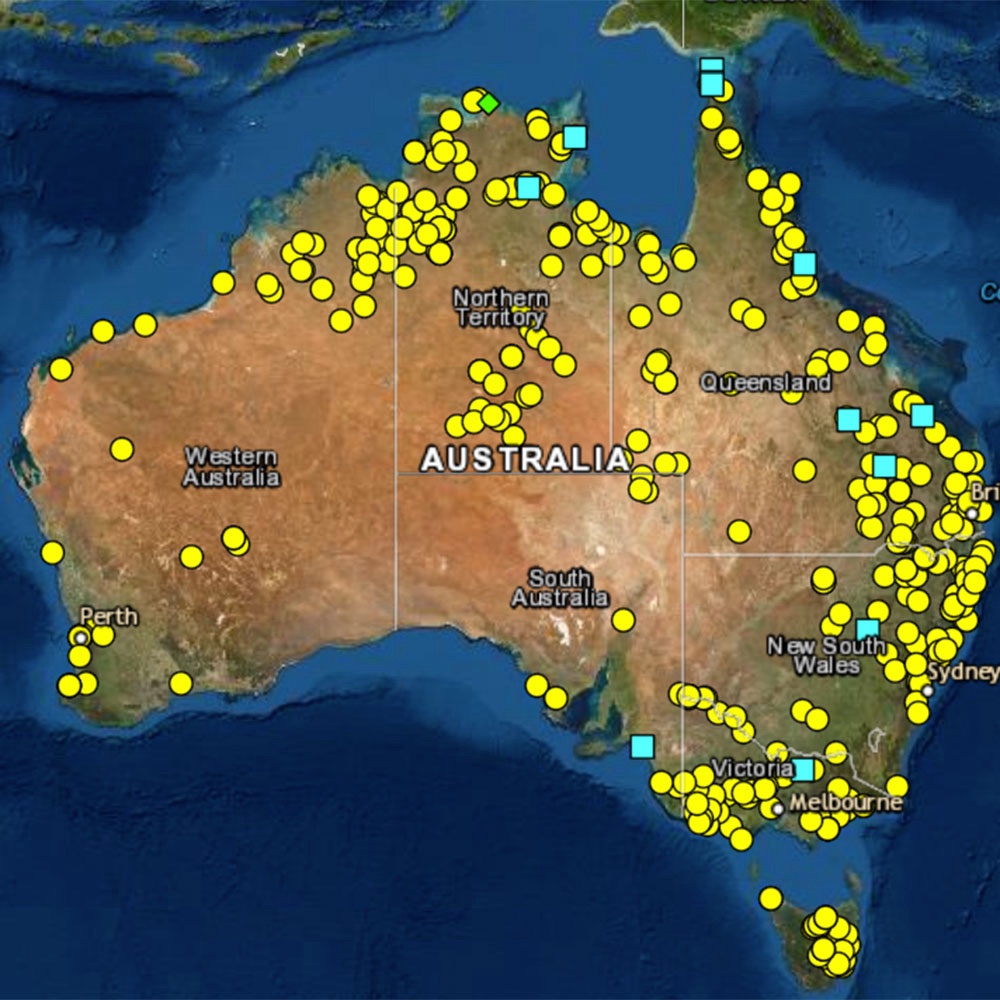
It is a tragedy that this irenic form of relationship did not continue through the early years of the Colony; and certainly, the string of massacres that took place throughout the 19th century, and into the 20th century, reflect the arrogant, imperialising mentality of the invading colonisers. “The Natives”, when they stood in the way of land acquisitions, were simply to be disposed of. The project in the University of Newcastle, led by Prof. Lyndal Ryan,  currently identifies 438 seperate massacres of First Peoples, where a massacre involved the death of six or more people who were unable to defend themselves.

Each yellow dot represents the location of a massacre
documented by the University of Newcastle project.

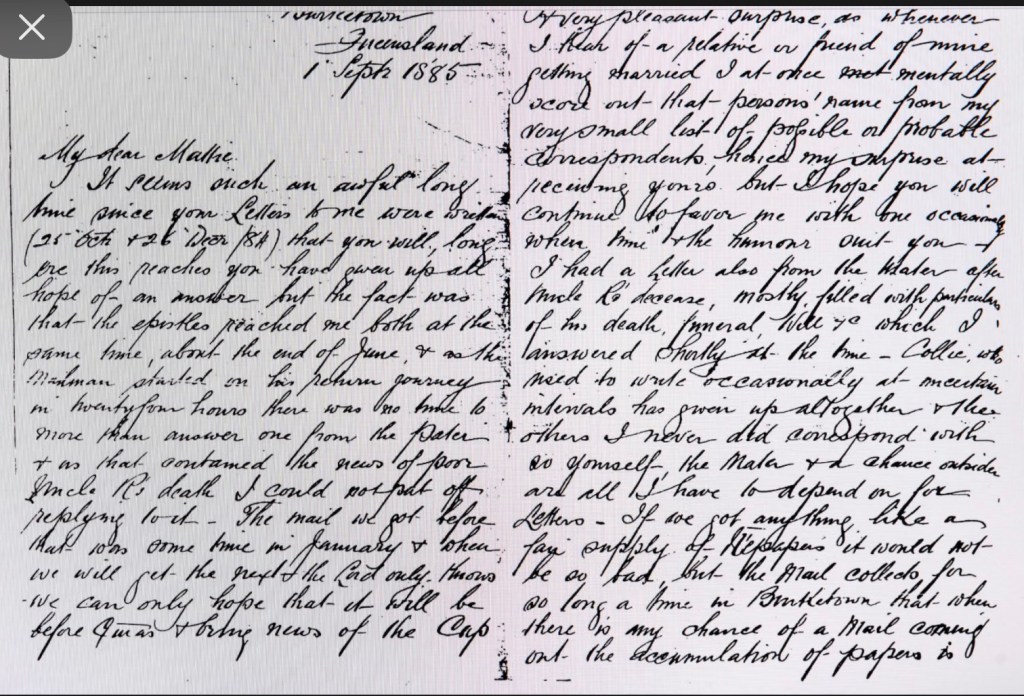
This project currently lists over 10,000 deaths in total, but of course, as the stories of more sites are discovered, that number will grow. In an 1885 letter discovered during this research, a Bob McCracken writes about the Calvert Downs massacre of,earlier that year, stating that “killing odd ones or even twos or threes is no good, they are never missed and nothing but wholesale slaughter will do any good.”

Bob McCracken’s 1885 letter to his sister,
which details the Calvert Downs massacre.

These massacres form a massive collective stain on the consciences of modern white Australians who can trace their ancestors back onto those early decades of the Colony. How much do they signal,what is unfortunately increasingly evident in the Australian on the 2020s: we are less tolerant of “outsiders”, more likely to,turn our attacks (verbal, and physical), on “foreigners”, ready at times to shout “go back to where you came from” to people who look or sound different—even if they happen to have been born on this land! Is that an expression of our national character? I hope not.

We should reflect on these issues deeply this day, and each day, as we enjoy the benefits of our contemporary lifestyle.

I have consulted the following websites for this blog:

https://firstfleetfellowship.org.au/events/letter-from-governor-arthur-phillip/

https://c21ch.newcastle.edu.au/colonialmassacres/statistics.php

https://www.theguardian.com/australia-news/2022/mar/16/attempted-aboriginal-massacres-took-place-as-recently-as-1981-historian-says

https://c21ch.newcastle.edu.au/colonialmassacres/detail.php?r=1040

What’s in a name? For “Australia Day”, 26 January (part 1)

Today, 26 January, is Australia Day, by official government decree. It remembers the landfall on the eastern shores of this continent made by the British-appointed Governor Arthur Philip, his troops, and the convicts of what we now call The First Fleet. Prior to his departure from Britain, Phillip had received Instructions (composed by Lord Sydney) from King George III, “with the advice of his Privy Council”. These Instructions included Phillip’s Commission as Captain-General and Governor-in-Chief of New South Wales. 

Governor Arthur Philip

Despite extensive searching, these Instructions cannot be located in any library or state records office in Australia, nor in Britain. (Philip obviously had an inefficient PA !!) There is an amended Commission, located with the Public Record Office in London, dated 25 April 1787. This document designated the territory of New South Wales as including “all the islands adjacent in the Pacific Ocean” as well as the mainland mass running westward to the 135th meridian, that is, about mid-way through the continent. Such was the way of British imperialism.

We don’t know exactly what Philip said on 26 January 1788. He subsequently wrote a letter on 3 July that year to William Petty, 1st Marquess of Lansdowne and 2nd Earl of Shelburne, in which he explained that “Port Jackson … I have preferd to Botany bay as affording a more eligible Situation for the Colony, & being with out exception the finest Harbour in the World” and notes that “this Country will hereafter be a most Valuable acquisition to Great Brittain from its situation.”

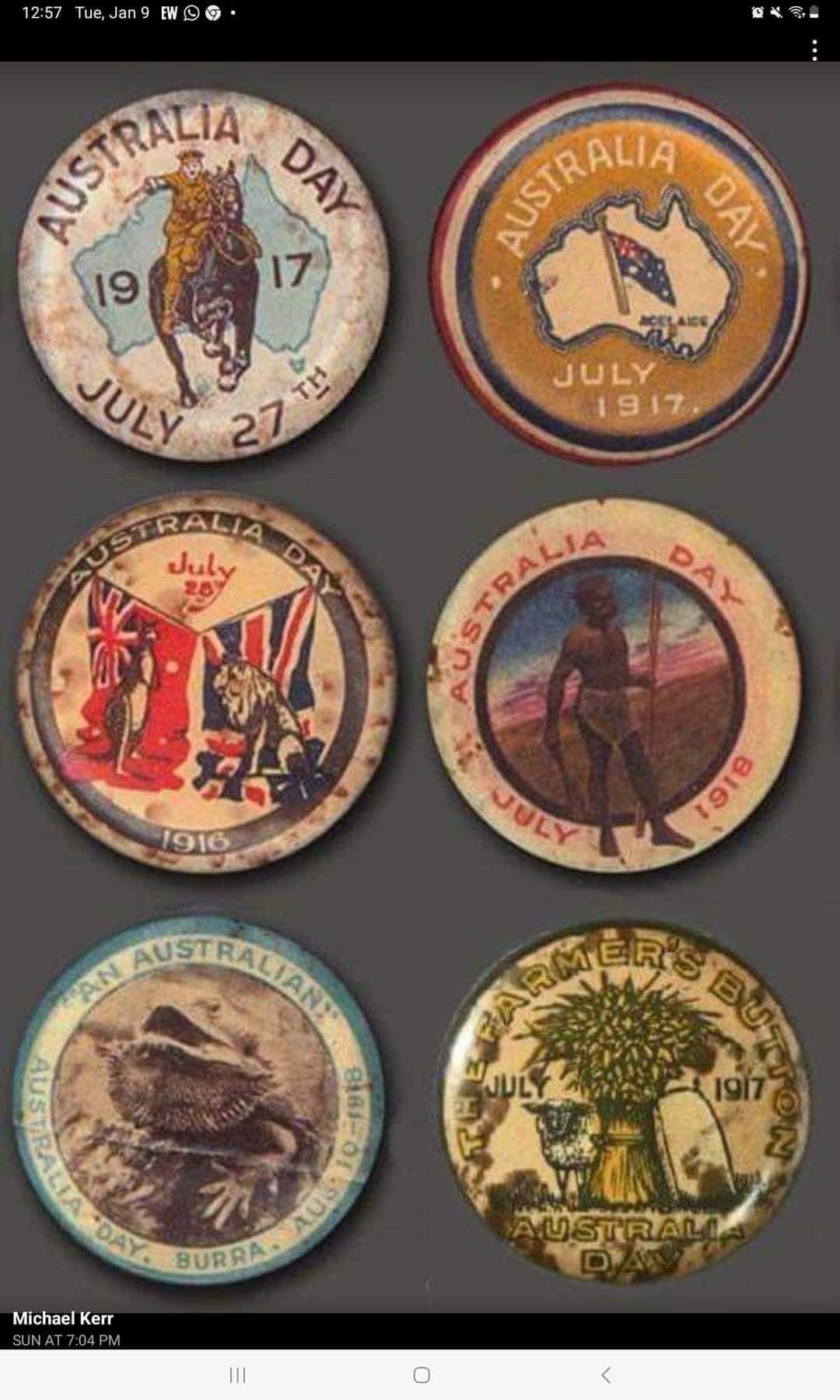
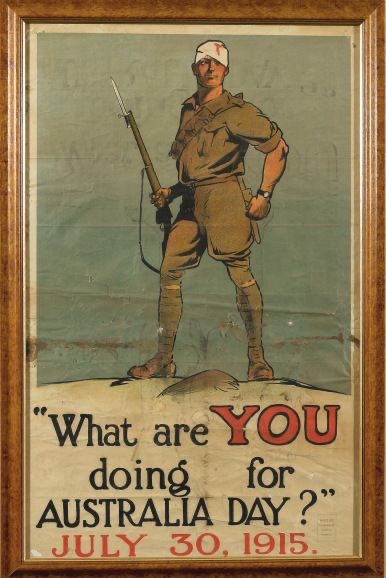
That’s what we remember on Australia Day. This day has, of course, been celebrated on other days in the past. In 1915, it was held on 30 July. The Australian War Memorial notes that it was suggested to the Premier of NSW that “an ‘Australia Day’ [be held] as a way of drawing on the pride of Australians in their soldiers’ recent achievements at Gallipoli”. The next year, the Australia Day committee that had formed in 1915 to organise the war effort fundraising determined that it would be held on 28 July.

In NSW, since the time of Governor Lachlan Macquarie, 26 January had been commemorated as “Anniversary Day” or “Founders Day”. There are records from as early as 1808 of ex-convicts participating in “drinking and merriment” on the evening of 25 January to celebrate their new home. In Tasmania, by contrast, “Hobart Regatta Day” was established on 1 December 1838, to commemorate the anniversary of Abel Tasman’s discovery of the island he named Van Diemen’s Land, in 1642. In 1879 it was moved to be earlier in the year, in January or February.

The name “Australia” was further entrenched in the (un)imaginatively-named Western Australia. Overwest, “Foundation Day” has long been held on the first Monday in June, to commemorate the founding of the Swan River Colony in 1829. In the equally (un)imaginatively-named South Australia, “Proclamation Day” celebrated the date the government was established in South Australia as a British province, on 28 December 1836. It was when South Australia held its “founding day” celebrations for decades, until they unified with other states to celebrate “Australia Day” on 26 January.  But there are still celebrations for “Proclamation Day” each year on 28 December.

By 1935, celebrations were held in all states on 26 January, although it was still known as “Anniversary Day” in NSW, and “Foundation Day” in other areas. The Sesquicentenary (150th anniversary) of British colonisation of Australia was widely celebrated in all state capitals in 1938. A significant protest took place on this day in 1938, when the Australian Natives Association held a “Day of Mourning”. The main celebrations were held in Sydney, but newspapers from others states show that the language of “Anniversary Day” had been adopted there for 26 January, recognising it to be a national date of significance. Its place in national life was, despite Indigenous protests, now settled.

In 1946, the Federal Government and all state governments agreed to unify all the state-based Australia Day celebrations and celebrate on 26 January as a country. The “Australia Day” public holiday was taken on the Monday closest to the 26th, giving the traditional “long weekend” in late January, which for many signalled the end of summer, the return to school and work. 

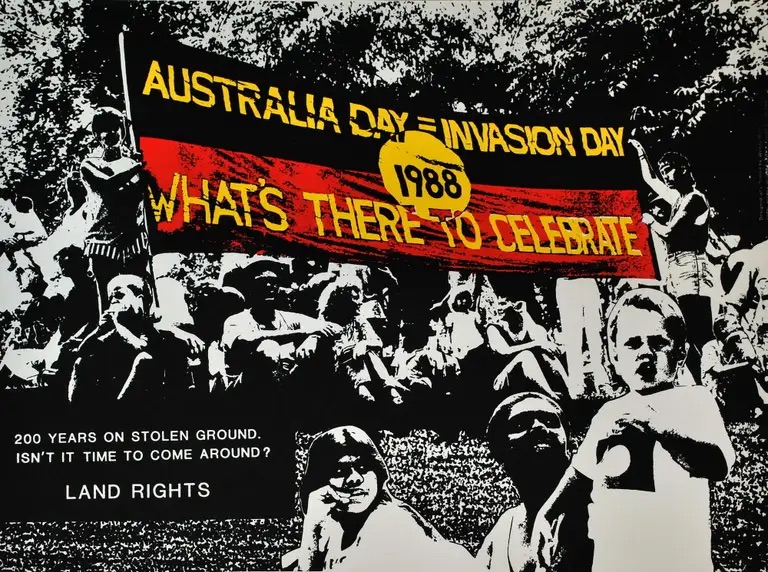
Questioning of the celebratory status of Australia Day gained impetus during the 1988 Bicentenary, when many protests were staged across Australia, involving both Indigenous and non-Indigenous people. They wanted Australia Day to become a commemoration rather than a celebration of Australia’s history.

However, in 1994 the conservative Federal Government decided that the public holiday would be on the actual day of 26 January itself. And so it has been, for 31 years. (So that’s tomorrow: enjoy!)

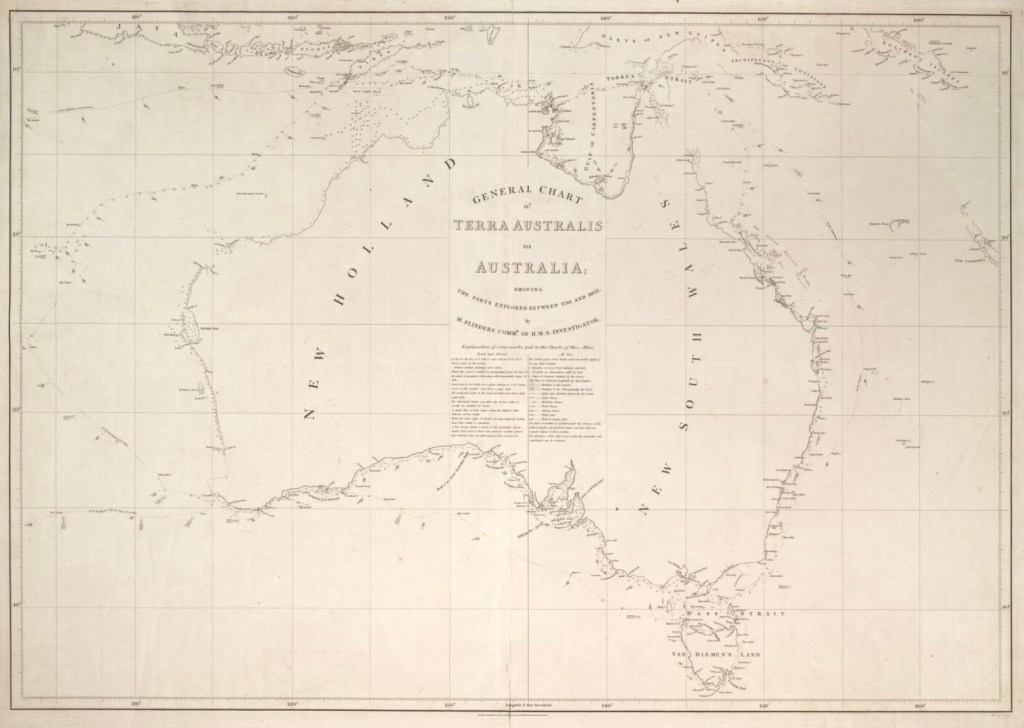
For many centuries Europeans believed there must be a vast land in the southern hemisphere, which they called Terra Australis Incognita, a Latin phrase for “the Unknown South Land”. (In Latin, austral means “south”.) A few decades after the 1788 British invasion and colonisation of the lands around Port Jackson (Sydney Harbour), Matthew Flinders circumnavigated the continent in 1803. Flinders used the name “Australia” to describe the continent on a hand drawn map in 1804. That map was published in 1814 and the continent was named “Terra Australis”.

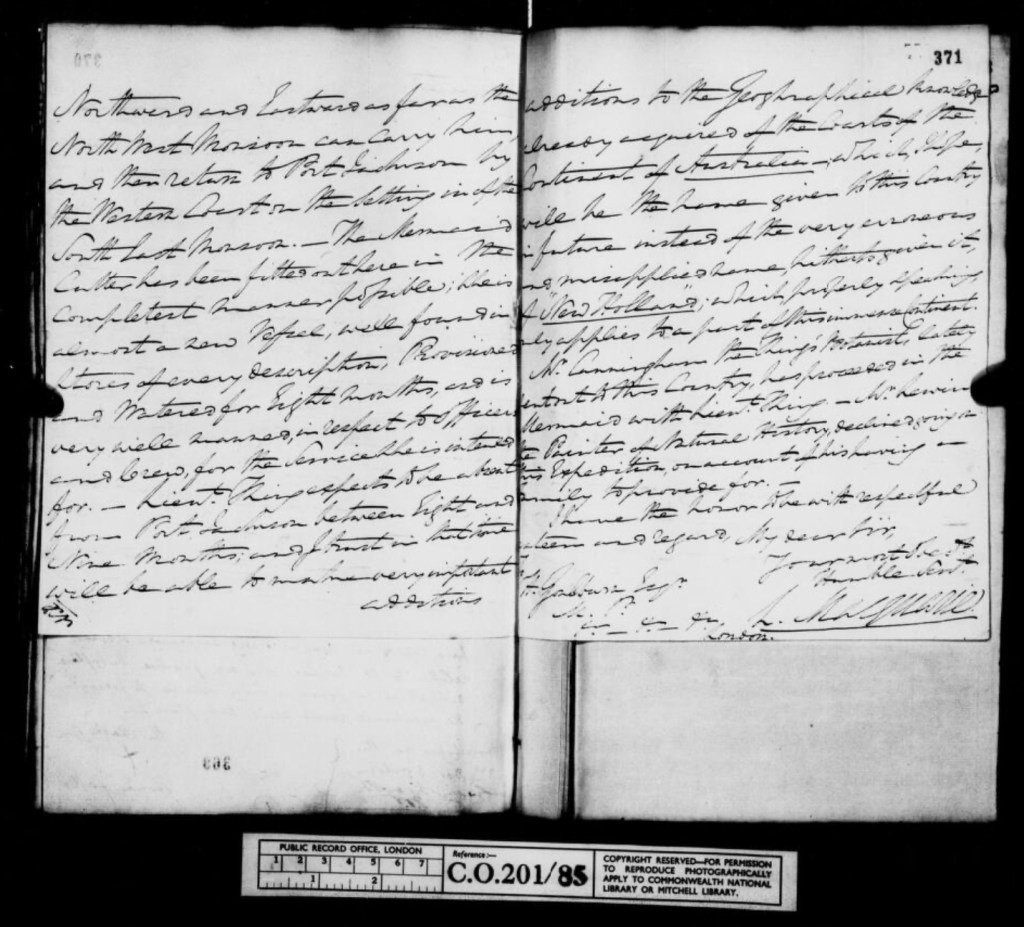
Dutch explorers had been referring to the continent as “New Holland” since the 17th century. On colonising the region, the British had initially named the Colony “New South Wales”, and that name, of course, has continued to be used to apply to various eastern parts of the continent. In 1817, however, Governor Lachlan Macquarie endorsed the name “Australia” to replace “New Holland” in a dispatch to the Colonial Office in London; over time, this name came into common local usage. 

By 1824 the British Admiralty started to officially use the name, and the term “Australia” was first used in British legislation which decreed that British law was to apply to the two colonies of “New South Wales” (named in reminiscence of a region in Britain that the landscape allegedly reflected) and Van Diemen’s Land (named after its Dutch “discoverer”). Other state names that came later managed to reference the main name of “Australia” (South, or Western), as well as Victoria (in the state of the same name), the long-reigning British monarch (reflected in Queensand).

More to come tomorrow (on the public holiday), reflecting further on what it is that we “celebrate” on this day …

*****

I have consulted the following websites for this blog:

https://www.library.gov.au/research/research-guides-0/where-name-australia-came

https://www.sbs.com.au/voices/article/the-many-different-dates-weve-celebrated-australia-day/vuhb3ar1c

https://www.abc.net.au/news/2025-01-24/australia-day-public-holiday-janaury-26-sunday/104837212

https://www.foundingdocs.gov.au/item-did-35.html

https://firstfleetfellowship.org.au/events/letter-from-governor-arthur-phillip/

Because of the connection with the arrival of British imperial colonizers and their subsequent expanding “settlement”, do we need to change the date? For a fun discussion of “change the date”, see  


A Reflection for the Day of Mourning (19 January 2025)

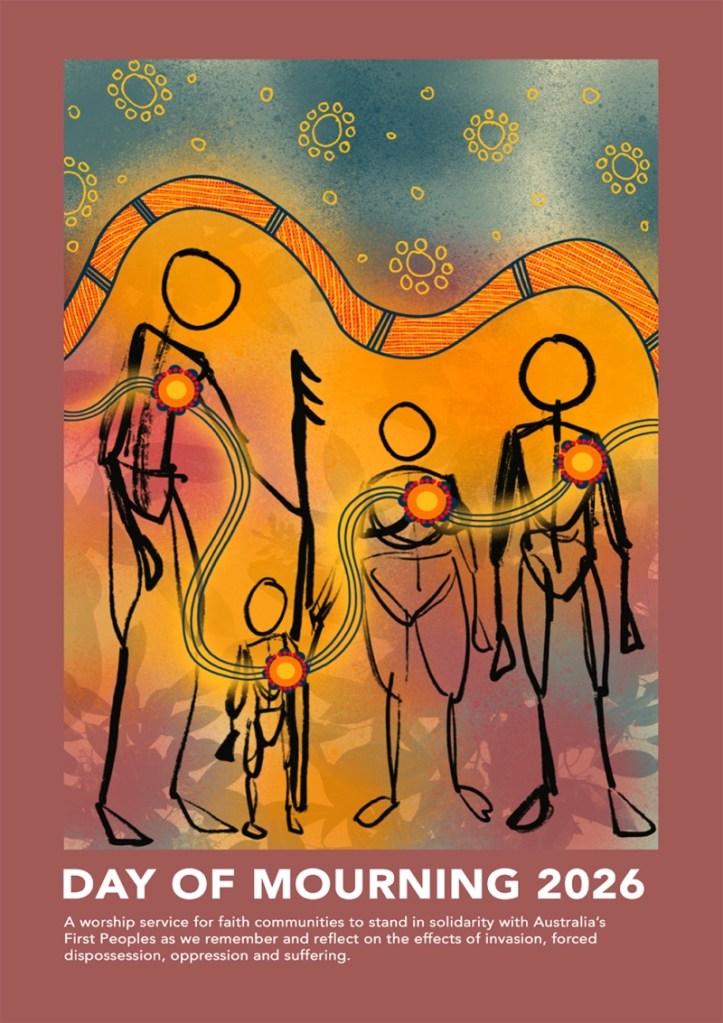
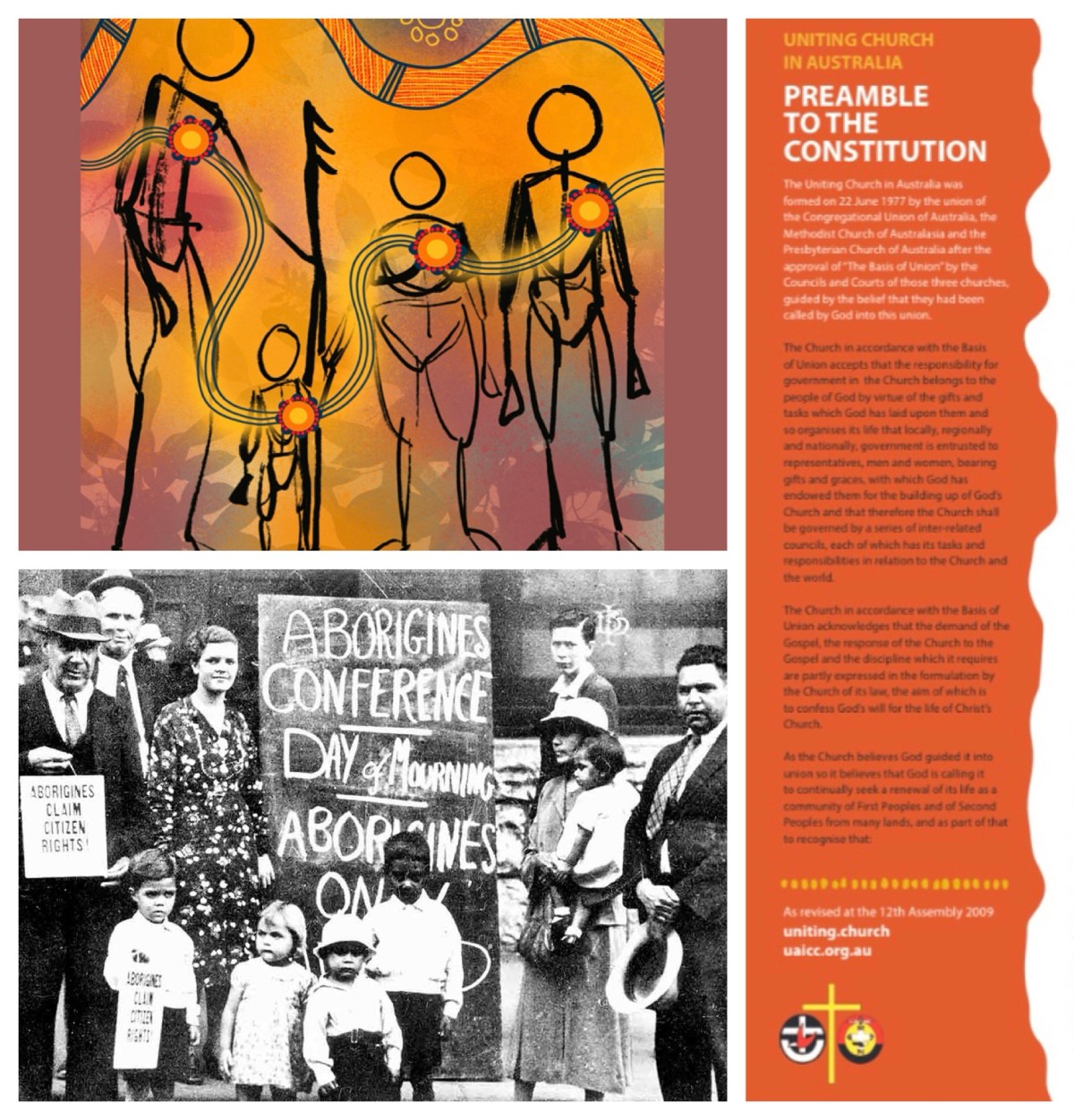
Since 2019 the Uniting Church has marked a Day of Mourning on the Sunday before 26 January to reflect on the dispossession and ongoing injustices faced by Australia’s First Peoples, acknowledge our shared history and renew our commitment to justice and healing. The Uniting Church has acknowledged our nation’s history through its Preamble to the Constitution, Covenanting Statements, and at many other times through its covenanting journey.

I will be giving this reflection on Sunday 19 January 2025 at the Dungog Uniting Church.

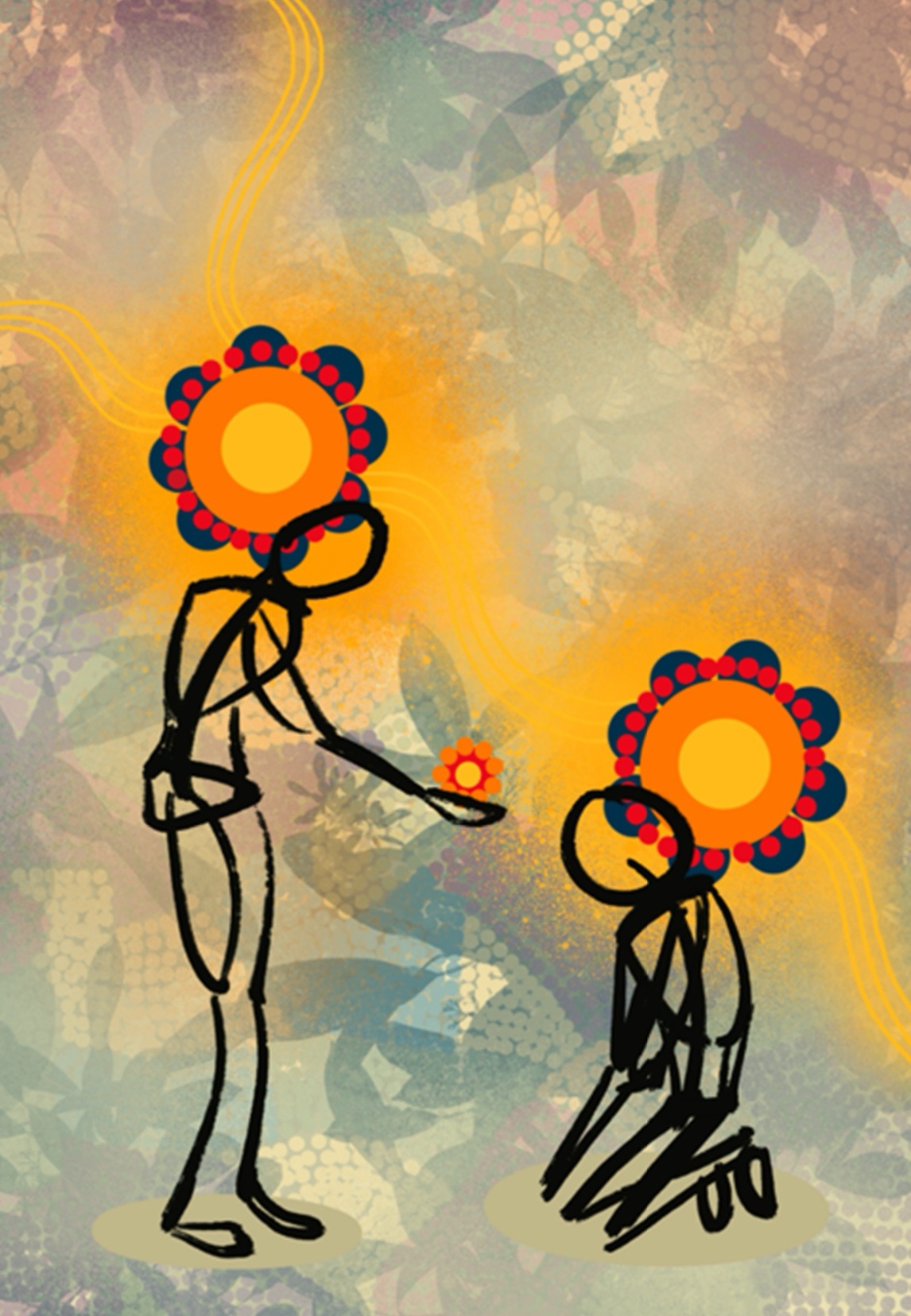
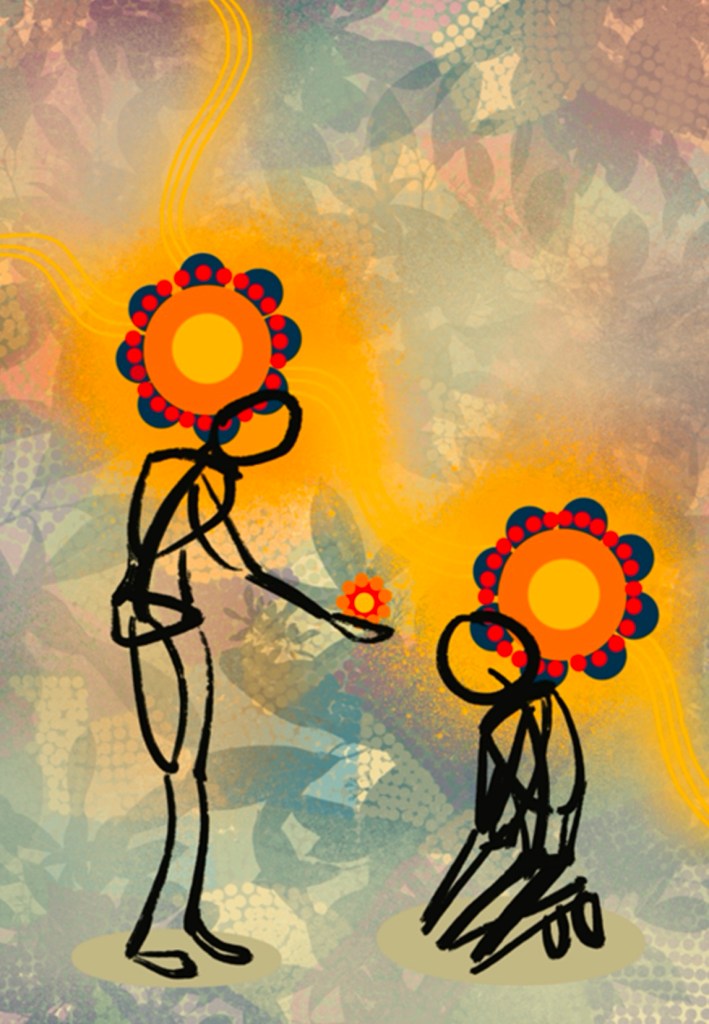
Artwork by Zoe Belle, Guwa Koa and Kuku Yalanji woman

Prayer of Confession

Merciful God, as Second Peoples of this land, whose ancestors travelled and settled in Australia, we acknowledge with sorrow the injustice and abuse that has so often marked the treatment of the First Peoples of this land.

We acknowledge with sorrow the way in which their land was taken from them; the way their their language, culture and spirituality was suppressed.

We acknowledge with sorrow that the Christian church was so often not only complicit in this process but actively involved in it.

We acknowledge with sorrow that in our own time the injustice and abuse has continued.

We have been indifferent when we should have been outraged, we have been apathetic when we should have been active, we have been silent when we should have spoken out.

Gracious God, forgive us for our failures, past and present. By your Spirit, transform our minds and hearts so that we may boldly speak your truth and courageously do your will. Through Jesus Christ our Lord. Amen.

Reading Isaiah 62:1–5

For Zion’s sake I will not keep silent,
and for Jerusalem’s sake I will not rest,
until her vindication shines out like the dawn,
and her salvation like a burning torch.
The nations shall see your vindication,
and all the kings your glory;
and you shall be called by a new name
that the mouth of the LORD will give.
You shall be a crown of beauty in the hand of the LORD,
and a royal diadem in the hand of your God.
You shall no more be termed Forsaken,
and your land shall no more be termed Desolate;
but you shall be called My Delight Is in Her,
and your land Married;
for the LORD delights in you,
and your land shall be married.
For as a young man marries a young woman,
so shall your builder marry you,
and as the bridegroom rejoices over the bride,
so shall your God rejoice over you.

Reflection

We all know, I expect, what it feels like to be deeply disappointed; let down, betrayed, forsaken, abandoned. The emotions felt at such a time—emotions of despair and desolation—are named in the reading from Isaiah 62 which we have heard today. 

This part of Isaiah comes from the time when the exiles from Israel were returning to their land, leaving behind the difficulties they experienced during their five decades of exile in the foreign land of Babylon. They had returned to a devastated city; it probably looked like the images we have seen on our TVs, from bombed residential areas in Syria and Gaza, to the devastation of mass destruction of buildings from tornadoes in Florida and Louisiana and fires in Los Angeles. 

In just such a setting, as the people laboured day and night to rebuild and restore their beloved city, an unnamed prophet speaks out, bringing a word of hope: “You shall no more be termed Forsaken, and your land shall no more be termed Desolate, but you shall be called My Delight Is in Her and your land Married.” The hope that the prophet offers is of a time when desolation is left behind, when the sense of being forsaken has been replaced by loving acceptance and care and belonging; the language of a marriage provides a good analogy.

There are people in our midst, in this town, across this country, who know that sense of desolation and being forsaken. Today we remember them, especially, on a day which the Uniting Church now names as the annual Day of Mourning. On this day, we remember that First Peoples, custodians of this land since time immemorial, caring for creation in their respectful lifestyle and customs, were invaded, colonised, massacred, marginalised, and demonised.

The massacres across the country that took place from the early years of British settlement into the second decade of the 20th century, and the shattering of families by the removal of the stolen children, which lasted well into the 1960s, have given the Gringai, Worimi, Biripi, Wonnarua, and many other peoples cause for ongoing lament and despair. Many still alive today remember what was done to them or to their parents and grandparents. The pain is live.

So on this Day of Mourning, we commit to standing with the First Peoples, acknowledging their pain, sharing their distress (to the extent that we can), treating them respectfully, and committing to work for justice for the First Peoples today. We should know that their pain is still real, present, and powerful. 

The referendum held last year offered a ray of hope across the country; fuelled by a campaign of disinformation that played on fears and prejudices, that hope was shattered. The Uniting Church had joined with many other Christian denominations, and leaders of a number of faith communities, to advocate a Yes vote. We have shared in the disappointment of First Peoples, and the sense that this is yet another hurt that they have to bear.

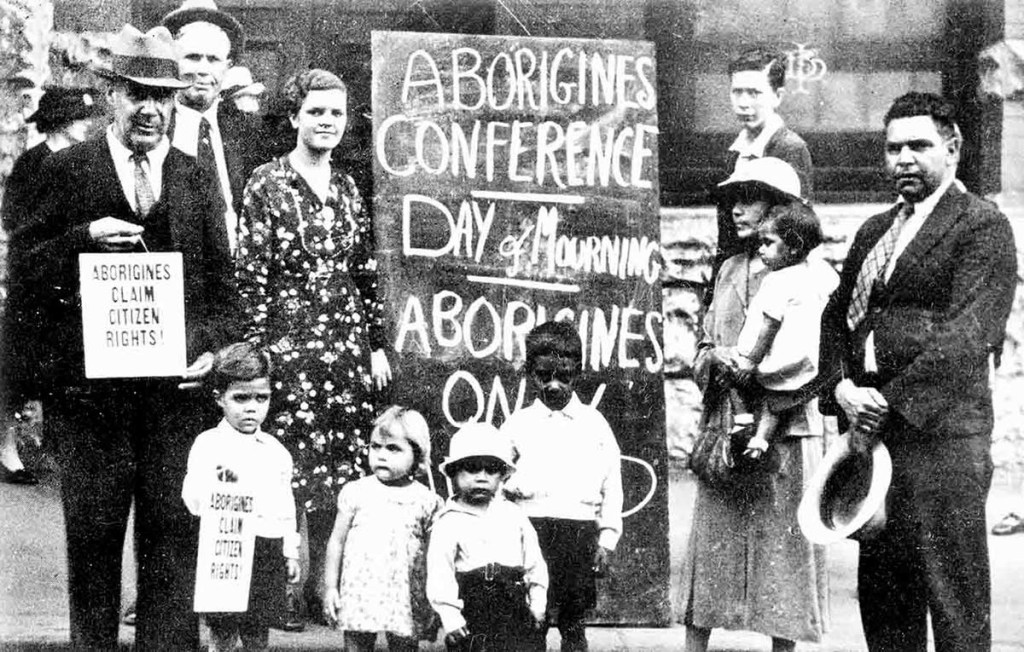
On Australia Day in 1938, a large group of protestors marched through the streets of Sydney, followed by a congress attended by over a thousand people. One of the first major civil rights gatherings in the world—decades before Martin Luther King Jr led massive rallies in the USA—it was known as the Day of Mourning. Following the congress, a deputation led by William Cooper presented Prime Minister Joseph Lyons with a proposed national policy for Aboriginal people. Unfortunately, this was rejected because the Government did not hold constitutional powers in relation to Aboriginal people. That changed in 1967.

From 1940 until 1955, the Day of Mourning was held annually on the Sunday before Australia Day and was known as Aborigines Day. In 1955 Aborigines Day was shifted to the first Sunday in July after it was decided the day should become not simply a protest day but also a celebration of Aboriginal culture. This led to the formation of the National Aborigines Day Observance Committee (NADOC), which later then became NAIDOC, the week in July focussed on remembering Aboriginal people and their heritage.

In 2018, At the Uniting Church Assembly in Melbourne—which Elizabeth and I attended—it was decided to reinstate an annual Day of Mounring on the Sunday before Australia Day. So we stand in a grand tradition, and we stand in solidarity with our brothers and sisters, people who have cared for this land over millennia—many, many thousands of years. 

This year, President Charissa Suli and Congress chairperson Mark Kickett invite us “to listen deeply and learn humbly, and bear one another’s burdens; to receive the outstretched hand of friendship offered in grace and hope, and to trust in Jesus, whose reconciling love continues to mend the brokenness within and among us.”

They remind us that “the same ancient Spirit of God which has always been present in these lands has given us ‘a destiny together’ as the body of Christ in this time and place”, and so invite us “to celebrate the immense gift we have in each other [as First and Second Peoples], giving thanks for the transformative and boundless love of Christ which holds us.”

Let us pray.

Gracious God, we know that reconciliation between First and Second Peoples is a challenge. We sense that this must begin with reconciling ourselves in truth and humility with you, our God.

We know that is then that we can do the work of being peacemakers and justice seekers.

So help us to act responsibly and respectfully, to care for one another and to support one another. Amen.

We sing The Aboriginal Lord’s Prayer

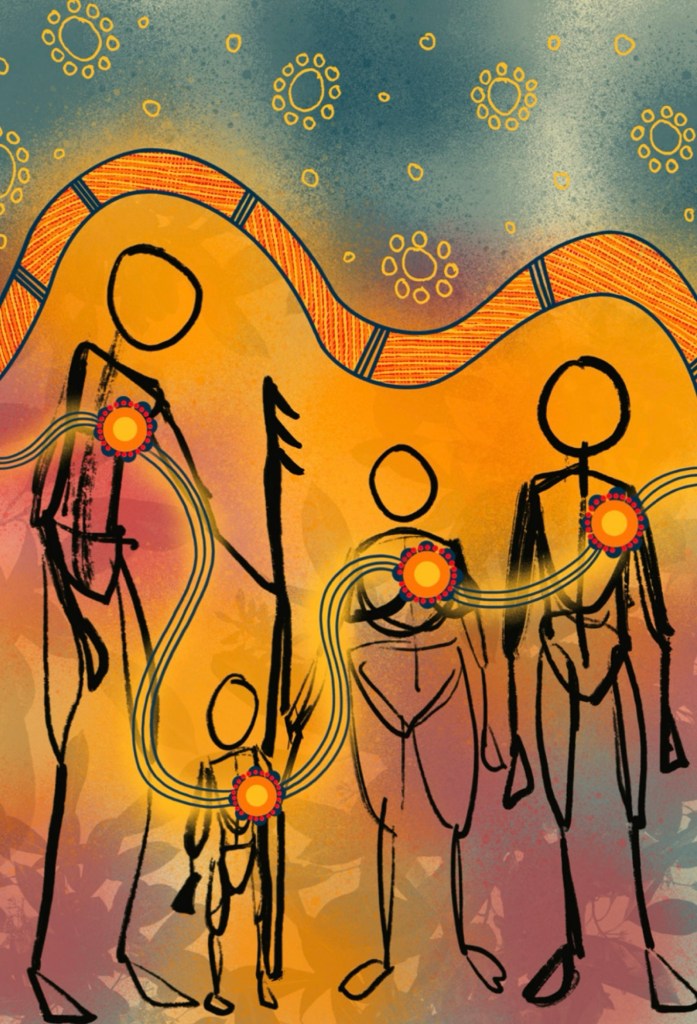
Artwork by Zoe Belle, Guwa Koa and Kuku Yalanji woman

Prayers adapted from the resources for the Day of Mourning 2025, https://uniting.church/wp-content/uploads/2024/12/Day-of-Mourning-2025_Final.pdf

Artwork by Zoe Belle, Guwa Koa and Kuku Yalanji woman. “The artworks depict the story of Christ’s presence being amongst First Peoples of these lands of his creation for generations. His teachings have long been displayed within the stories, songs, dances and ceremony First Peoples have used them to connect with God as great Creator and teacher for our communities.”

Uniting Church reflections during NAIDOC Week 2024: thirty years of covenanting (1994), fifteen years recognising truth (2009)

Every July, NAIDOC Week takes place. It runs from the first Sunday in July (this year, 7July) until the following Sunday (this year, 14 July). The week has a focus on the First Peoples of this continent and its surrounding islands—the Aboriginal and Torres Strait Islanders from the more than 250 nations that existed on this continent and its surrounding islands before the invasion of 1788.

NAIDOC Week has been held for over 50 years, under the auspices of the National Aborigines and Islanders Day Observance Committee (which forms the acronym NAIDOC). The origins of this week are attributed to Aboriginal Christian leader, William Cooper, who called churches to recognise and celebrate Aboriginal and Torres Strait Islander communities in worship services. For many years, congregations across the Uniting Church have recognised and celebrated NAIDOC Week in worship services.

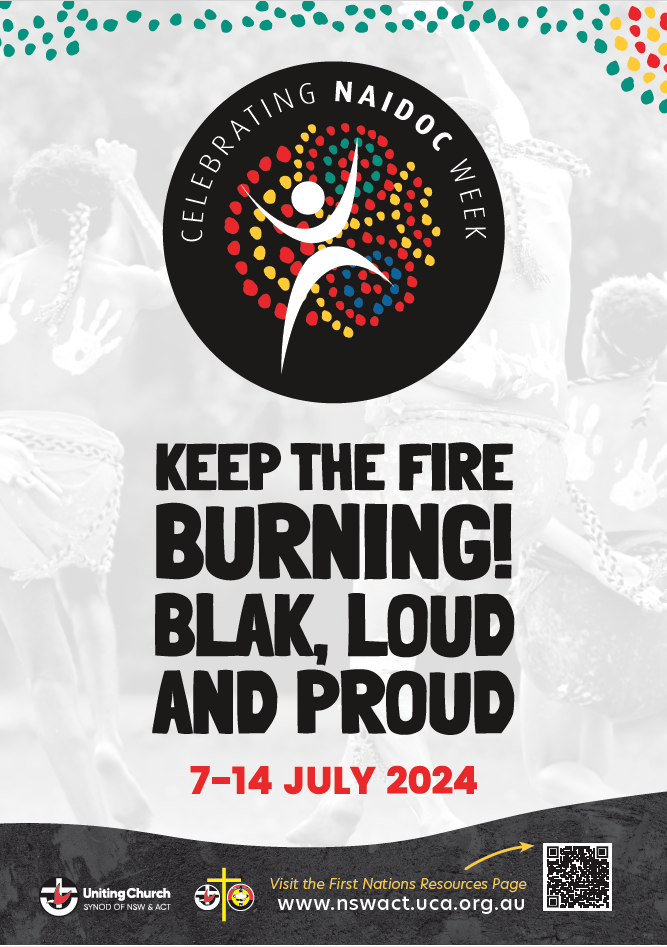
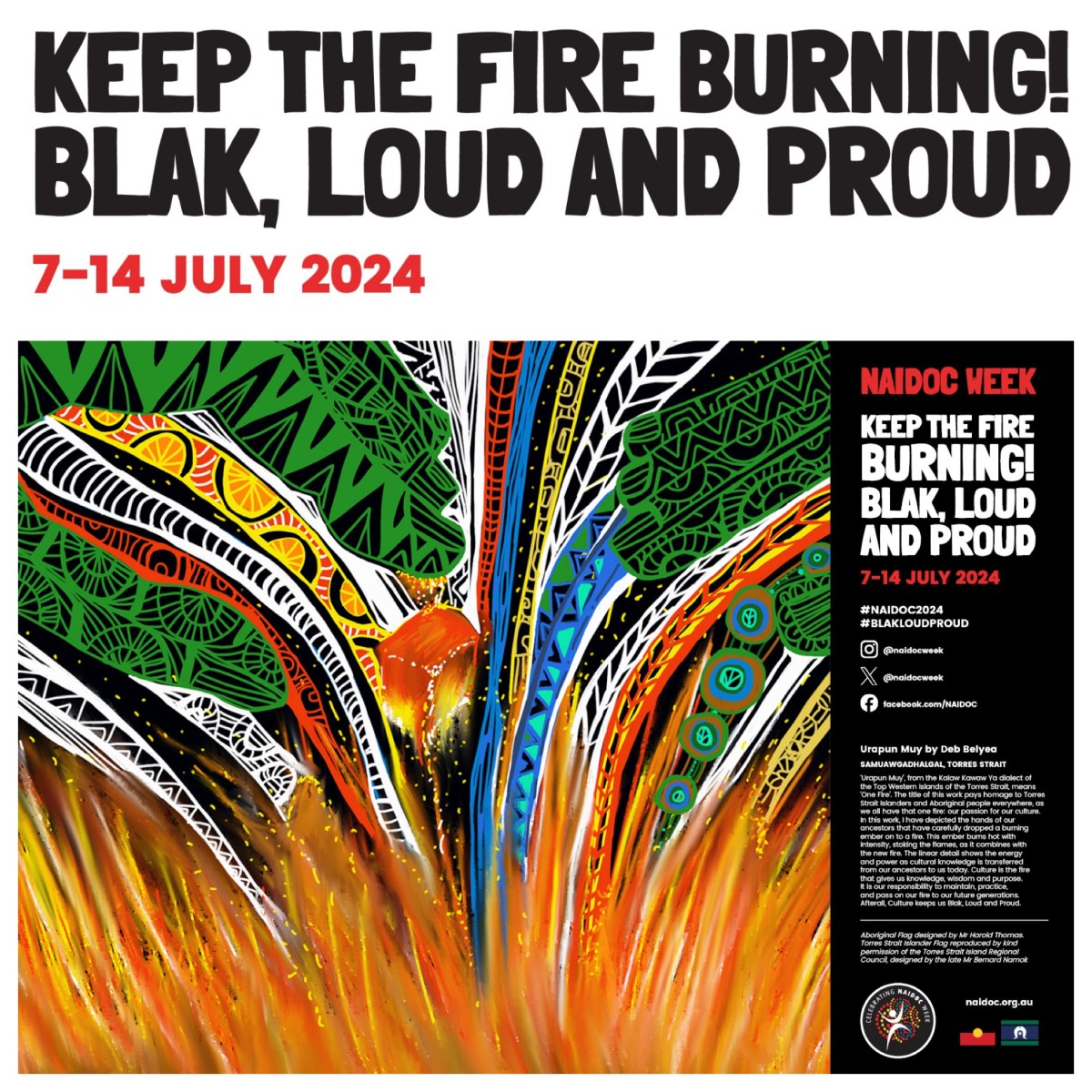
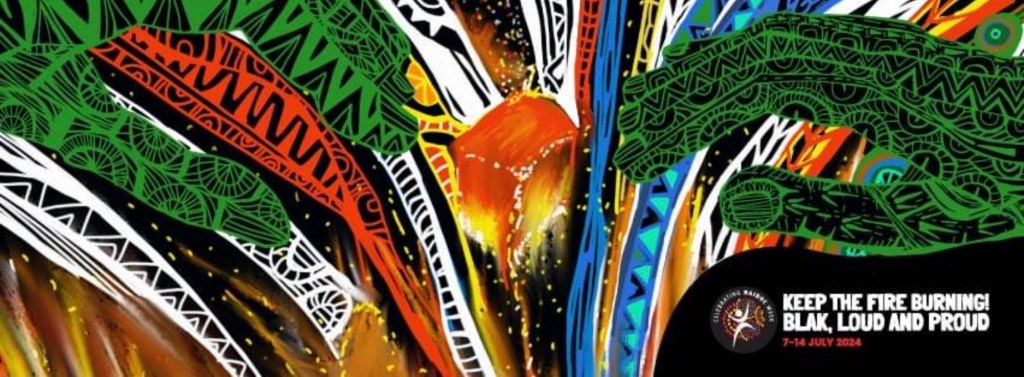
The theme for 2024 is Keep the Fire Burning! Blak, Loud and Proud.

The NAIDOC WEEK website explains the theme:

“This year’s theme celebrates the unyielding spirit of our communities and invites all to stand in solidarity, amplifying the voices that have long been silenced.

“The fire represents the enduring strength and vitality of Indigenous cultures, passed down through generations despite the challenges faced. It is a symbol of connection to the land, to each other, and to the rich tapestry of traditions that define Aboriginal and Torres Strait Islander peoples. As we honour this flame, we kindle the sparks of pride and unity, igniting a renewed commitment to acknowledging, preserving, and sharing the cultural heritage that enriches our nation.

Blak, Loud and Proud encapsulates the unapologetic celebration of Indigenous identity, empowering us to stand tall in our heritage and assert our place in the modern world. This theme calls for a reclamation of narratives, an amplification of voices, and an unwavering commitment to justice and equality. It invites all Australians to listen, learn, and engage in meaningful dialogue, fostering a society where the wisdom and contributions of Indigenous peoples are fully valued and respected.

“Through our collective efforts, we can forge a future where the stories, traditions, and achievements of Aboriginal and Torres Strait Islander communities are cherished and celebrated, enriching the fabric of the nation with the oldest living culture in the world.”

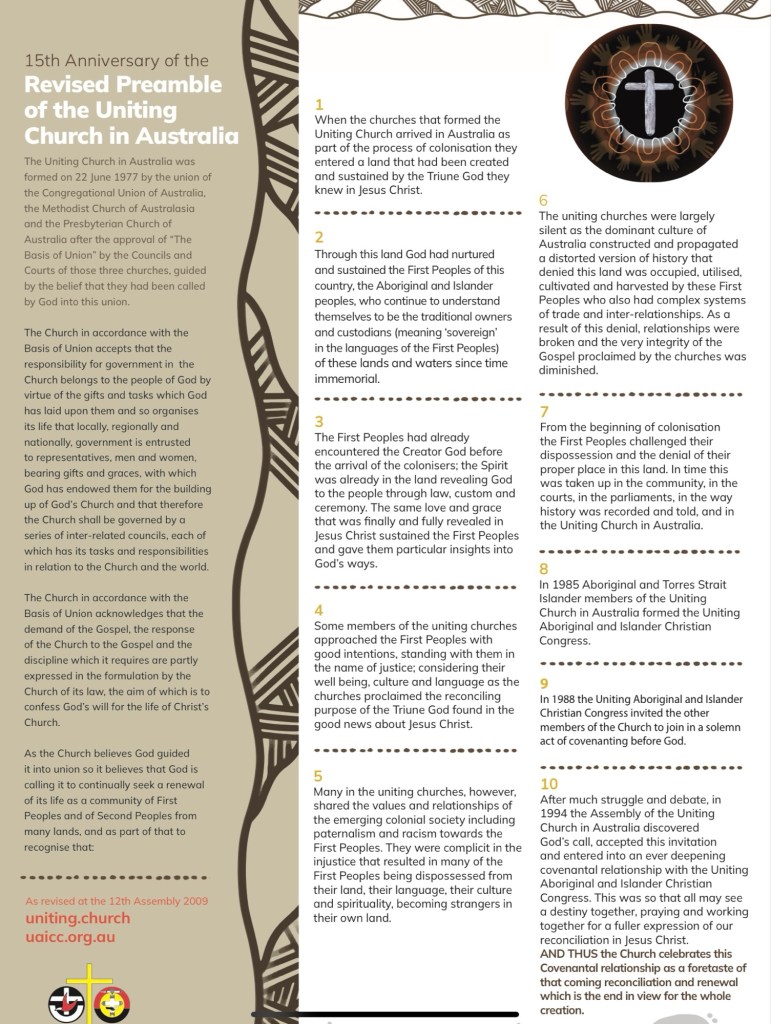
This July during NAIDOC Week the Uniting Church will be marking two significant anniversaries in the life of the church and our relationship with First Peoples. 10 July marks the 30th anniversary of the Covenant between the Uniting Aboriginal and Islander Christian Congress (UAICC) and the Uniting Church in Australia, while mid-July marks the 15th Anniversary of the revised Preamble to the Uniting Church Constitution

The Covenant with the UAICC (Congress) was a result of years of discernment and planning from Aboriginal Christian leaders within the Uniting Church who held a prophetic vision for a more just and healed future. In the Christian faith, the term “covenant” is used to signal a commitment of two parties to each other. In the Bible, a covenant is initially made by the Lord God with Noah, “with you and your descendants after you, and with every living creature that is with you, the birds, the domestic animals, and every animal of the earth with you, as many as came out of the ark” (Gen 9:9–10).

The same covenant is then renewed with Abraham (Gen 17:1–7, 15–16), where Abraham is identified as “the ancestor of a multitude of nations” (Gen 17:4) who would then be party to that covenant in subsequent generations. The covenant is then renewed with Abraham’s son, Isaac (Gen 17:19, 21) and then with Jacob (Israel) (Gen 35:9–15). Later, it is extended to Moses and the whole people (Exod 19:1–4) and sealed in a ceremony involving “the blood of the covenant” (Exod 24:1–8).

Many centuries later, a prophet during the Exile proclaimed that God was promising, “this is the covenant that I will make with the house of Israel after those days, says the Lord: I will put my law within them, and I will write it on their hearts; and I will be their God, and they shall be my people” (Jer 31:31).

That renewed covenant is what Christians believe was enacted by Jesus, when he submitted to death on a cross; dying as a sacrifice, he shed “the blood of the covenant” (Mark 14:24; Matt 26:28; Luke 22:20; 1 Cor 11:25) and is recognised as “the mediator of a better covenant” (Heb 8:6) or “the mediator of a new covenant” (Heb 9:15; 12:24)—even though in terms of the declaration made by Jeremiah, this was actually yet another renewal of the one covenant that God had made and renewed with God’s people over the millennia.

So entering into a covenant in our current time reflects this strong biblical understanding of what a genuine partnership looks like; it is an expression of an intentional promise to seek mutual understanding, to listening and to serve together within a shared life. 

The Assembly of the Uniting Church has offered a reminder of the importance of what took place 30 years ago. The next few paragraphs come from that piece, “Save the Date: 30th Anniversary of the Covenant”, at https://uniting.church/save-the-date-covenant-anniversary/

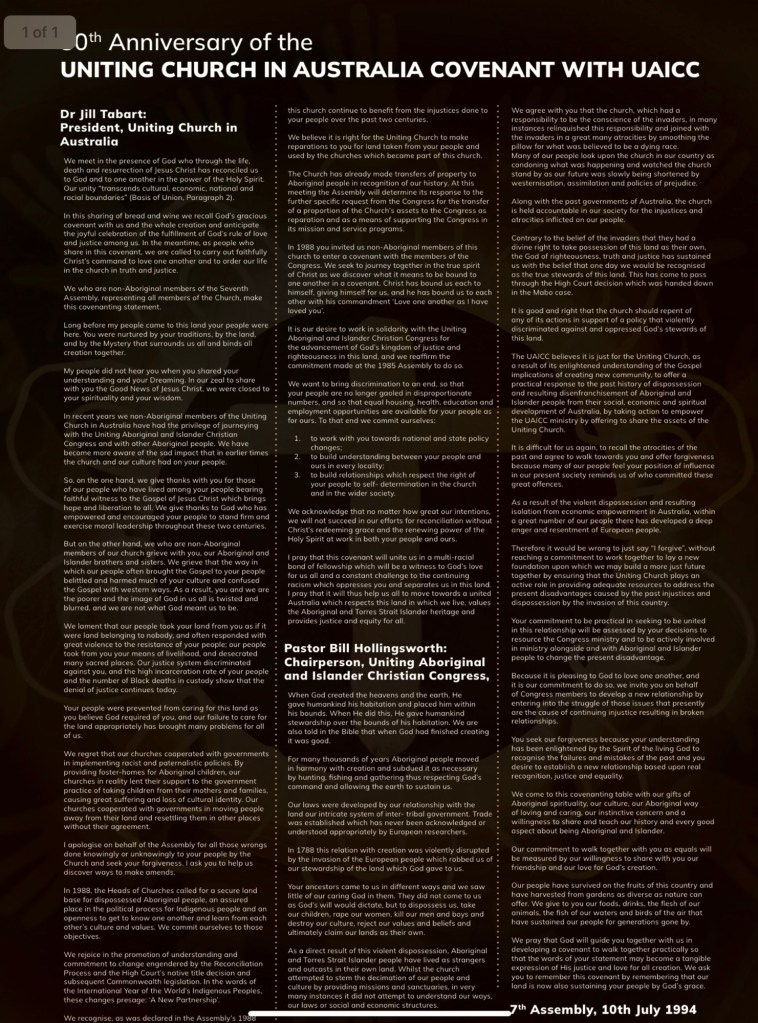
First, it recalls that in May 1988 when the 5th Assembly met, Rev Charles Harris and Rev Dr Djiniyini Gondarra with other UAICC leaders called for a Covenant to bind the UCA and the UAICC together in relationship. This was endorsed by the full Assembly by acclamation. Six years later, the Covenanting Statement was formally signed at the 7th Assembly, on 10 July 1994.

In the Covenanting Statement read at the meeting, then President Dr Jill Tabart formally apologised for the church’s role in colonisation and dispossession of Australia’s First Peoples and committed the church to a new relationship. In response Pastor Bill Hollingsworth, then National Chair of UAICC, offered an inspiring challenge to the church to honour this commitment. (The full text of both speeches is below.)

The statement continues to serve as a formational part of the Uniting Church’s commitments to walking together as First and Second Peoples and to self-determination for First Peoples. 

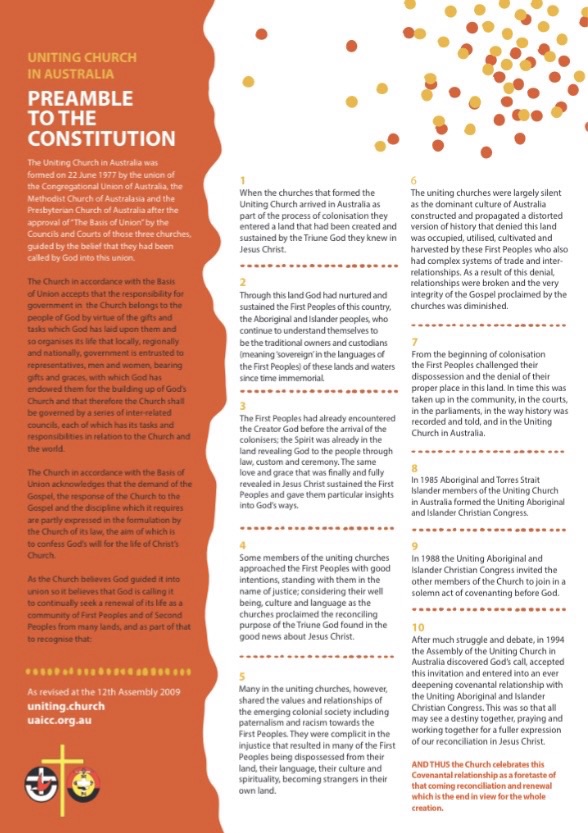
In a significant milestone in the covenant journey, the Uniting Church’s Constitution was revised to include a revised Preamble at the 12th Assembly (15–21 July 2009). The first half of this revised Preamble contains a number of significant statements of truth about the experience of the First Peoples over the past 240 years. (The full text of the revised Preamble is below.)

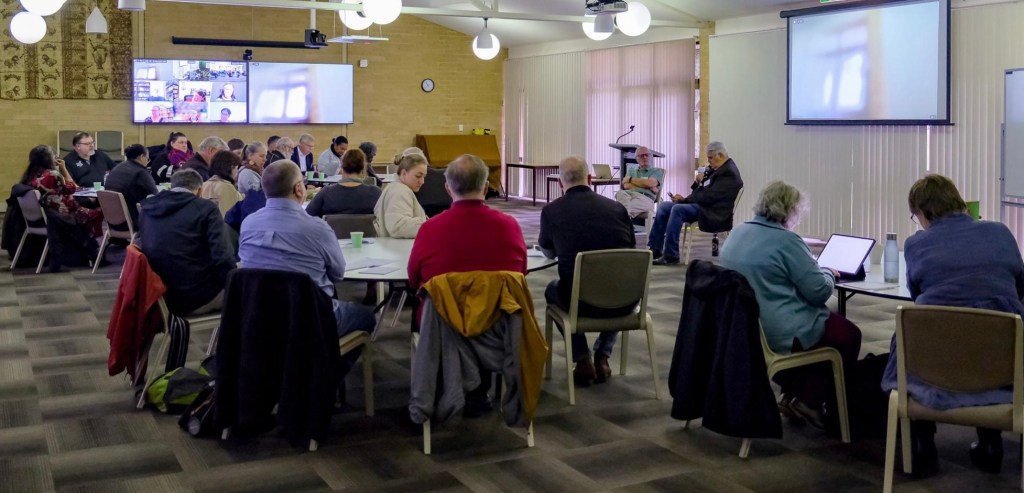
Significantly, the revised Preamble affirms that “The First Peoples had already encountered the Creator God before the arrival of the colonisers; the Spirit was already in the land revealing God to the people through law, custom and ceremony” (Preamble, para. 3). A conference reflecting on the Preamble has just been held in Sydney.

The declaration made in paragraph 3 of the revised Preamble provides a fundamental theological affirmation which undergirds both our present respect for First Peoples, and our understanding that a relationship with and an understanding of God are not limited to western Christian perceptions of the divine.

This has been an important step for the Uniting Church to take, moving out from the concept that God’s covenant love is offered to a narrow group of people with a particular way of expressing their commitment to God through Jesus (mediated by Western culture, Enlightenment thinking, and Protestant ethic), and that rather this covenant love is offered with grace and hope to people of all times, in all places, in many and varied ways, reflecting the wide diversity of human identities and experiences.

And so, just as we have accepted within Christianity that the God we know in Jesus was active in relationship with human beings for many centuries before the time of Jesus—through the covenant with the people of Israel, as the Hebrew Scriptures attest—so we can agree that God was in relationship with the peoples of the continent we call Australia and the islands which surround it, “in time beyond our dreaming”, in Daramoolen … in Tjukurrpa … in Alcheringa. This is the truth that we now recognise and affirm—and it’s an important affirmation to make!

The NSW.ACT Synod has various resources relating to NAIDOC WEEK 2024 at https://www.nswact.uca.org.au/resources/naidoc-week-resources-for-your-church/

For my thoughts from two years ago about the resonances between “Uniting Church theology” and the themes of NAIDOC WEEK over the years, see

Reflecting this ANZAC Day on wars and conflicts: frontiers abroad … and at home

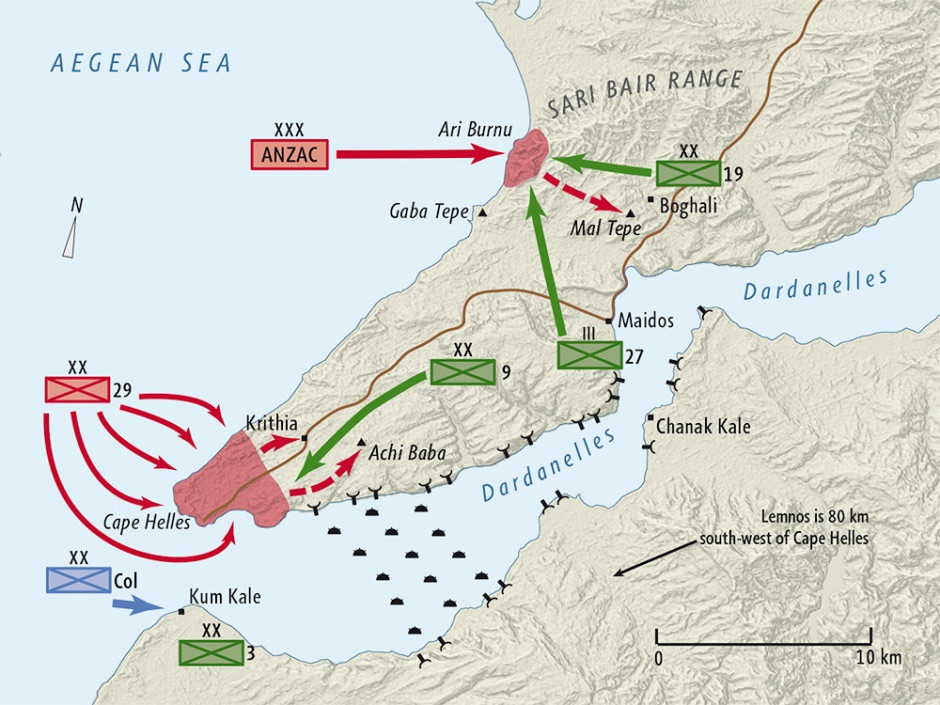
Today is ANZAC Day. It is an annual commemoration that has been held since 1916, which was the first anniversary of the landing of Australian and New Zealand troops on the Gallipoli Peninsula during the early stages of World War I. These troops were the first of approximately 70,000 Allied soldiers whose service included time at Gallipoli; more than 20,000 of these troops were Australian and New Zealand soldiers.

The website of the Australian War Memorial states: “The Australian and New Zealand forces landed on Gallipoli on 25 April, meeting fierce resistance from the Ottoman Turkish defenders. What had been planned as a bold stroke to knock Turkey out of the war quickly became a stalemate, and the campaign dragged on for eight months.

“At the end of 1915 the allied forces were evacuated from the peninsula, with both sides having suffered heavy casualties and endured great hardships. More than 8,000 Australian soldiers had died in the campaign. Gallipoli had a profound impact on Australians at home, and 25 April soon became the day on which Australians remembered the sacrifice of those who died in the war.” See

https://www.awm.gov.au/commemoration/anzac-day/traditions

The first ANZAC Day was observed in 1916 in Australia, New Zealand and England and by troops in Egypt. That year, 25 April was officially named ‘Anzac Day’ by the Acting Australian Prime Minister, George Pearce. It has been held every year since then on the same date, 25 April. It has become, in Australia, a day that commemorates the roles played by Australian servicemen and servicewomen in many arenas of conflict beyond World War I.

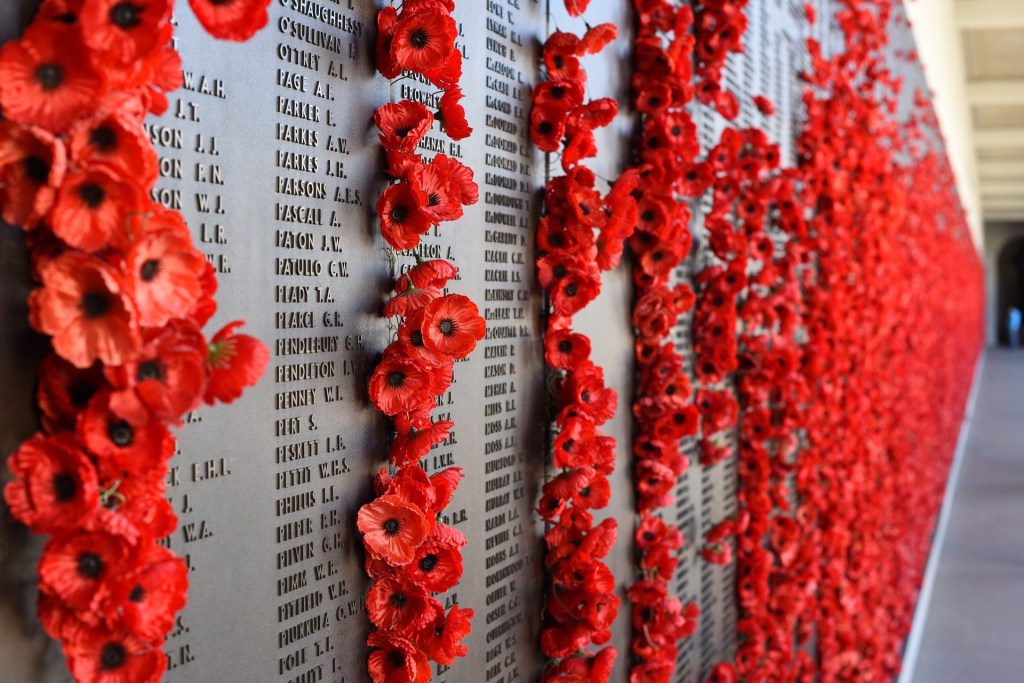
So we rightly pause, today, to remember all that is involved warfare: the contributions of these service people, but also the many victims of war, those who lost their lives, those who lost their health and livelihood, those who lost their loved ones, those who lost all hope.

War has many consequences. It damages individuals, communities, societies, and nations. It has many more innocent victims than the casualty lists of enrolled personnel indicate. And there is abundant evidence that one war might resolve one issue, but often will cause other complications which will lead to another war. Look at the outcome of the Armistice at the end of World War One: we can trace a direct sequence of events that led from World War One to World War Two.

In recent years, in ANZAC Day ceremonies, there has at last been due recognition given to Indigenous men who enlisted in our armed services. The War Memorial has an educational programme on this topic for schoolchildren; see

https://www.awm.gov.au/visit/schools/programs/indigenous-service

For many years, the Australian War Memorial insisted that its concern is solely with “Australians serving overseas in peacekeeping operations or in war”. A decade ago, a previous Director, Dr Brendan Nelson, infamously asserted that “the Australian War Memorial is concerned with the story of Australians deployed in war overseas on behalf of Australia, not with a war within Australia between colonial militia, British forces, and Indigenous Australians.” See

https://www.theguardian.com/world/2013/sep/12/australian-war-memorial-ignores-frontier-war

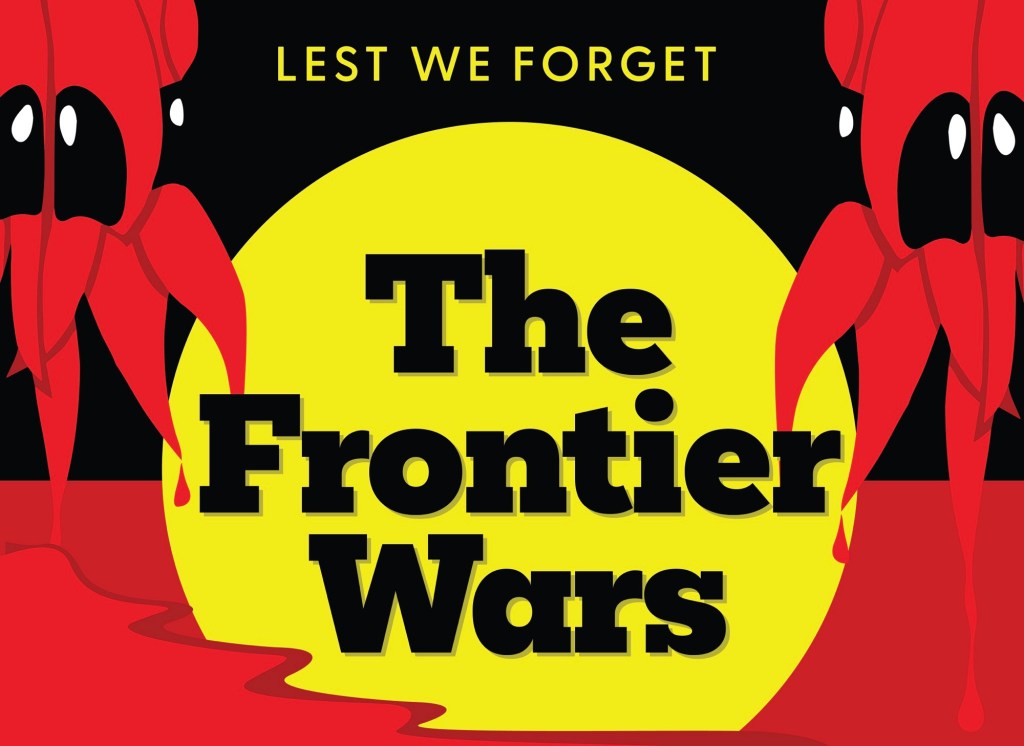
This means that the War Memorial does not include any memory of the thousands of indigenous people who were killed on Australian soil over many decades, in The Frontier Wars (nor, indeed, those white colonials who also died in these encounters). You can read more about this at https://www.awm.gov.au/blog/2013/12/17/response-question-about-frontier-conflicts/

More recently, in 2023, the recently-appointed chair of the War Memorial, Kim Beazley, says he supports “proper recognition of the frontier conflict” as part of the institution’s $500m expansion, questioning how the institution can “have a history of Australian wars without that”. See https://www.theguardian.com/australia-news/australian-war-memorial

Studies have indicated that, over those decades, more indigenous people died here, in Australia, at the hands of the colonisers, than the 60,000+ Australians who died in 1915—1919 on foreign soil, fighting a European war at the behest of our imperial overlords.

[Raymond Evans and Robert Ørsted-Jensen used statistical modelling to hypothesize that total fatalities suffered during Queensland’s frontier wars were no less than 66,680. See http://treatyrepublic.net/content/researcher-calls-recognition-frontier-wars]

The Australian War Memorial blog cited above states, “The ‘Frontier Wars’ were a series of actions that were carried out by British colonial forces stationed in Australia, by the police, and by local settlers. It is important to note that the state police forces used Indigenous Australians to hunt down and kill other Indigenous Australians; but the Memorial has found no substantial evidence that home-grown military units, whether state colonial forces or post-Federation Australian military units, ever fought against the Indigenous population of this country.”

The myth that there was no official, state-sponsored military force which was charged with the task of dealing with “the troublesome natives” (or however else they were described in derogatory terms), is, however, punctured by this Wikipedia note: that on 3 October 1831, Governor Stirling appointed Edward Barrett Lennard as Commanding Officer of the Yeomanry of the Middle Swan, a citizens militia to pursue and capture Aboriginal offenders, with Henry Bull appointed as Commander of the Upper Swan.

The orders were that on being called out, the Yeomanry were “to cause the offending tribe to be instantly pursued, and if practicable captured and brought in at all hazard, and take such further decisive steps for bringing them to Punishment as the Circumstances of the Case may admit.” [Wikipedia here quotes from Michael J. Bourke (1987). On the Swan: a History of the Swan District of Western Australia. Nedlands, WA: University of Western Australia Press.]

The evidence is clear: Australian servicemen have been party to an officially-organised programme to attack First Nations people. And the evidence is also clear, that across the continent over many decades, thousands upon thousands of Indigenous people have been massacred by the invading British settlers and troopers. See the careful historical work of the late Prof. Lyndall Ryan and her team in the Centre for 21st Century Humanities in the Newcastle University, at

https://c21ch.newcastle.edu.au/colonialmassacres/map.php

So today, as we remember those who served in war and the many victims of war, let us remember also the victims of The Frontier Wars, indigenous and white alike … especially the many thousands of First Nations people who died in these wars.

See more at

Learning from the land (7): the Gringai of the northern Hunter area (part two)

Continuing my explorations of the First Peoples of the area which has been cared for by the Gringai people for millennia. The traditional lands of the Gringai include an area centred on the place where the town of Dungog is situated, next to the Williams River. It is thought that the name Dungog is derived from a word meaning “clear hills” in the Gringai language.

It seems that in Gringai land (as elsewhere), contact with whites led to a decline in the numbers of Indigenous peoples in the area within a relatively short time. It is estimated that around 500 Gringai people would have lived in the area in the late 18th century. However, interactions with the invading settlers soon reduced this number. Syphilis contracted from convicts, and other introduced diseases, contributed to this decline in numbers. By 1847, thirty Gringai children had died of measles.

In 1845, Dr McKinlay, a Dungog-based doctor, had reported that the ‘District of Dungog’ (which he described as ‘from Clarence Town to Underbank’), had 63 Aboriginal inhabitants, made up of 46 ‘men and boys’, 14 women, and three children.

Dr Ellar McKellar McKinlay (1816–1889),
the first white medical practitioner in Dungog

There is a short article about Dr McKinlay at https://www.dungogchronicle.com.au/story/7378123/history-dungogs-first-doctor/

McKinlay also estimated that this was only half the number of Aboriginal people living there ten years earlier, which he attributed to “diseases which affected the women and children in particular”. Although typical of its time, this explanation offered an easy way for the invading settlers to excuse their dominating colonising activities, which included poisoning and shooting “the natives”.

The well-to-do British settlers had high status within the developing society of the Colony. Many deployed their assigned convicts to the work of clearing land and building houses around the district. By the early 1830s the centre of the district was a small settlement first known as Upper William. A Court of Petty Sessions was established in 1833; in 1836, John M’Gibbons was appointed to be the Watch-house Keeper, and Thomas Brown, holding a Ticket-of-Leave, to be Constable at Dungog.

There is a most informative website, History in the Williams Valley, which provides further details. It notes that “Tenders were called in 1837 for the erection of a Mounted Police Barracks and the Police Magistrate was transferred from Port Stephens to Dungog. The first courthouse and lockup was on land now occupied by Dungog Public School and St Andrews Presbyterian Church. The barracks were placed on another hill dominating the town which, after the withdrawal of the troopers, was converted into a new courthouse that continues to operate today.”

See https://williamsvalleyhistory.org/law-order/

It is courtesy of the records of this local court house that two individuals of the Gringai are known by name, because of their arrests and trials. Wong-ko-bi-kan (Jackey) and Charley were both arrested within a year or so of each other in the 1830s.

Dungog early in the period of white settlement

On 3 April 1834, Jackey (Wong-ko-bi-Kan) was judged guilty and sentenced to be transported to Van Diemen’s Land for manslaughter, after he had speared and killed the settler John Flynn. Flynn had been a member of an armed troop of nine settlers who went to the Gringai camp at the Williams River at dawn to arrest some of them for culling sheep on their land.

From another perspective, of course, Wong-ko-bi-kan could be said to have been defending the native camp from armed intruders. True justice would have been to uphold his rights to his ancestral land—but in this instance, as with thousands of similar cases, the justice that was meted out favoured the recent invading colonisers, not the longterm inhabitants of the land.

It was said that Wong-ko-bi-kan’s case elicited some sympathy from the presiding judge and several observers, because of the way the settlers had approached the native camp with aggression. Wong-ko-bi-kan did not spend much time in Van Diemen’s Land; he died there in prison in October 1834. A sad end to a sorry tale.

The current Court House in Dungog
(built some decades after the original building)

Another Gringai man, known only as Charley, was arrested in May 1835, soon after the incident with Wong-ko-bi-kan. In August of that year, he was deemed responsible for the death of five convict shepherds who were working for Robert Mackenzie (who would later become Premier of Queensland). Mackenzie had a property at Rawden Vale, 26 miles west of Gloucester.

Charley’s interpreter in the course case was Lancelot Threlkeld, a missionary who had been appointed by the London Missionary Society (LMS) to teach Aboriginal people European agricultural and carpentry skills, and to establish a school for children. The LMS also required Threlkeld to learn the local language, for this was seen to be a precursor which would open the way for successful Christian conversions amongst the Aboriginal people.

Threlkeld reported Charley’s defence, that he had acted after an Englishman had stolen a sacred object, a talisman called a muramai. The man showed the muramai to a native woman with whom he was cohabitating. Charley’s actions were thus in accord with his tribal law, consistent with a decision had been made by the elders.

Charley was sentenced to be hung in public as a warning to other Gringai; this took place in Dungog. Local historian Michael Williams comments that “Charley … was both an enforcer of one law and the victim of the enforcement of another set of laws.” One later story, recounted in 1922 in the Wingham Chronicle, suggests that a raiding party set out to enforce the verdict by hunting other Gringai, managing to round some up and push them all over a cliff at Barrington.

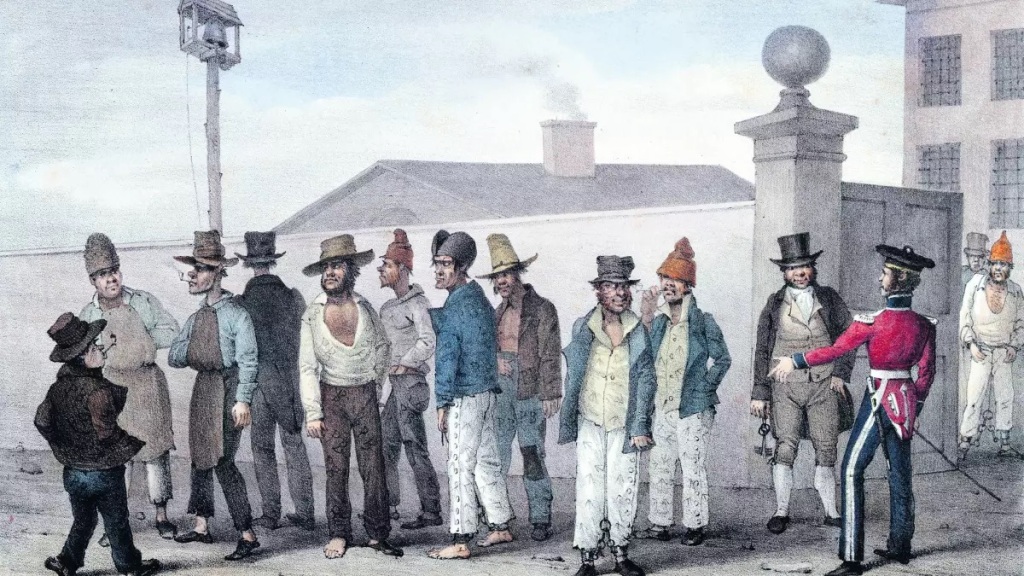
An impression of a government convict gang in the 1830s

A report in the Sydney Gazette for 27 June 1835 that relates to the Dungog area refers to “the insolence and outrage of Convicts who in the service of gentleman squatters … and out of the reach almost of a magistrate, offend and ill-treat the poor blacks with impunity.” The next year, settler Lawrence Myles, J.P., requested assistance from mounted police because of intelligence he had received “that the Blacks are becoming more troublesome” (from the Dungog Magistrates’ Letterbook of 15 May 1836).

Nevertheless, in 1838 the Police Magistrate, Mr Cook, wrote to the Colonial Secretary that “the conduct of all the Blacks in this neighbourhood has been quiet and praiseworthy during the last two years”. Cook noted this in his Return on Natives taken at blanket distribution for 1838. In this region, as elsewhere in the Colony, the annual report of blankets distributed gives an idea of the numbers of Aboriginal people who were in contact with the British colony.

From the records of blanket distribution, names of some Gringai people are known today: Mereding, known as King Bobby, who had two wives; Dangoon, or Old Bungarry; Tondot, known as Jackey; as well as some men from the Wangat group. The report for 1837 lists 144 “natives”; undoubtedly there were more living in the area not identified in the report. Men named Fulham Derby and Pirrson are identified in a legal process of the same year, for instance, as noted in the Dungog Magistrates’ Letterbook for 14 December 1837.

In the Maitland Mercury for 18 July 1846 (p.2), a visitor to Dungog reported, “On the skirts of the brushwood, we came upon some tribes of blacks, encamped. They are a very fine race here, being chiefly natives of Port Stephens and its neighbourhood. A princely-looking savage, almost hid in glossy curls of dark rich hair, calling himself “Boomerang Jackey,” smiled and bowed most gracefully, saying, “bacco, massa? any bacco?” Some chiefs, with shields, and badges of honour on their breasts, sat silently by the fire with some very young natives, who were going to a “wombat,” or “grand corrobbaree,” when the moon got up.”

Later that same year, the Maitland Mercury (2 Dec 1848, p.2) reported that some farmers in the Paterson area were employing local natives—the price demanded by white labourers was considered too high. “They have certainly exhibited an industry, perseverance, and skill in the execution of their task which cannot be surpassed by Celt or Saxon”, said one farmer. Another noted, “they have done their work very creditably; but unfortunately their habits of industry are not of long duration, and they could not be kept long enough at work to make themselves really valuable.”

The Williams Valley Historical site then notes that “In the last quarter for the 19th century there was an increasing consciousness of severe Aboriginal population decline, the attitude to which was mixed. Many were indifferent; some welcomed it as removing a problem, while a few looked on with pity and made efforts to assist the survivors.”

This site also notes that a number of the settlers exhibited “an interest in tribal habits and customs … of a scientific and anthropological nature … thus James Boydell compiled lists of Aboriginal words, and Dr McKinlay and others made various observations, many of which were used by Howitt. Howitt [also] compiled a study based upon information elicited from many locations, including the Dungog area.” (Howitt, Alfred William, The native tribes of south-east Australia.)

A photograph of a group of Aboriginal children
(date and place unknown) under the care
of the Aborigines Protection Board

By the 1880s, across the Colony, a paternalistic approach to dealing with Aboriginal people had gained hold. A “Protector of Aborigines” was appointed, then replaced with the “Aborigines Protection Board”. The Board disapproved of “the system of issuing Government rations to able bodied aboriginals, as it tends to encourage idleness in a large degree”, and maintained that “a supply of flour, suet, and raisins sufficient to make a pudding can be issued to the aged, young and helpless, and those unable to earn a living through bodily infirmity, for Christmas Day”. (Maitland Mercury, 23 July 1887, p.13)

Numbers reported in ensuing years varied, but those noted in various locations were inevitably small. A man named “Brandy” was tagged as “The Last of the Gringai” by writers in the area—but, as is always the case (witness the famous case of Triganini, in Tasmania), this claim ignores the reality of the forced movement and relocation, as we as the continued intermarriage of Gringai with nearby Worimi and Wonnarua peoples. People of Gringai heritage are found today across many parts of The Hunter region, and in Sydney.

After the passing of the Native Title Act in 1993, a group of local Indigenous people worked to make a claim for an area of roughly 9,500 square kilometres (3,700 sq mi). The claim included the towns of Singleton, Muswellbrook, Dungog, Maitland, and the shire council lands of the Upper Hunter.

The claim was made on behalf of the Plains Clans of the Wonnarua People by Scott Franks and Anor, on 19 August 2013. The claim was registered in January 2015 and referred to the Federal Court to deliberate over the claim and to make a determination. However, it was ultimately discontinued and removed from the register of native title claims on 2 March 2020.

The discontinuance appears to have been the result of disputes with other Aboriginal people who claimed native title in the area. These disputes led to an independent anthropologist, Dr Lee Sackett, being appointed by the Court to prepare a report to resolve the different views of native title in the area. Dr Sackett’s conclusions were to the effect that key details of the claim’s structure were not supported by the evidence.

See

Learning from the land (6): the Gringai of the northern Hunter area

Late last year, Elizabeth and I moved to Dungog, a rural town with a population of a little over 2,000, nestled amidst the rolling hills beside the Williams River, one of the tributaries that flows into the Hunter River. (The other major tributaries include Moonan Brook, Stewarts Brook, Pages Creek, Pages River, Paterson River, Goulburn River, and Wollombi Brook.)

The town has one picture theatre, one high school, two primary schools, three pubs, five active churches, five sports clubs, and six tennis courts. It is the place where Test cricketer Douglas Walters was born (in 1945) and later married, and where indigenous boxer Dave Sands died, aged 26, in a road accident in 1952.

The traditional lands of the Gringai include an area centred on the place where the town of Dungog is situated, next to the Williams River. It is often said that the name Dungog is derived from a word meaning “clear hills” or “thinly wooded hills” in Gathung, the language spoken by the Gringai . 

However, this is disputed by historians of the area, who maintain that this was most likely an incorrect explanation introduced in the 1920s. In an attempt to generate a growth in tourism to the town, the then Mayor of Dungog was looking for a perhaps slightly more ‘poetic’ meaning for the name of his town. The Mayor offered a prize through the “Daily Telegraph News Pictorial” for the person establishing the meaning of “Dungog”.

The Dungog Chronicle of 24 May 1927 (see above) reported that “Mr W.W. Thorpe of the Australian Museum, Sydney” declared that the original native name for the district of Dungog was “Dunkok” meaning “Clear Hills”.

There are, however, references from the 1830s which offers a different explanation. On page 145 of The New South Wales calendar and general post office directory, 1832, there is a detailed description of the route of travel north from Sydney along the road to Wallarobba to what was then known as Upper William, the original name for the British village of Dungog. 

In this directory we are told that at a mile past the Melbee Estate comes the point where “the Myall Creek joins the William’s River”, at which is a “village reserve” called, not Dungog, but Wihurghully. The road then continues “following the course of the Myall, along its western bank” for another mile and a half, when it comes to “Dungog, a high hill, part of the range, dividing the waters of the William and Myall”. So the word was originally the name of a specific location, a high hill, to the east of where the town now sits.

As I have done with each move of recent times, I have taken some time to investigate a little of what is known about the First Peoples of the area to which we have moved. I have been exploring the stories about contact between the invading British colonisers and the First Peoples who have cared for the land from time immemorial.

In years past, I have found stories about people in the places where Elizabeth and I have lived: the Eora peoples of Sydney, where I grew up and lived for decades; the Biripi peoples, on the mid north coast of NSW; and the Noongyar peoples, of Perth, WA. More recently, I have read and learnt about the Ngunnawal, Ngarigo, and Ngambri peoples, whose lands overlapped in the southern of Canberra, where we were living. It is always an enriching process. You can find the link to my blogs about these peoples and their lands at the end of this blog.

This time, the task of investigating and reporting has been somewhat more difficult. The land council for the area where the Gringai lived is based in Karuah, where the Karuah River flows into Port Stephens. As far as I can tell, there are very few people who claim Gringai heritage today in the area. The invading British colonisers, in their insatiable search for land to settle in the early 19th century, were quite thorough, it would seem, in removing from that land those Indigenous people who had lived on it for millennia.

There are scattered references to the Gringai people in the writings of the settlers from the late 19th century. (I am indebted to Noel Downs, who provided me with links to this material.) And it seems that there has been some debate about the precise scope of the lands of the Gringai, and their relationship to the neighbouring nations of the Wonnarua and the Biripi.

A local history site refers to “two major tribal groups of the broader Hunter River Valley and coastal region; the Wonnarua of the Hunter Valley and the Worimi of the Port Stephens coast area” and claims that “the Gringai were not a separate tribe but a sub-group of one of the two region’s tribes, though which one is in some doubt, with perhaps the Wonnarua being the more likely.” See

Working from “land borders” is a very western way of operating; we want to identify and demarcate the lands of one people from another by drawing a clear, precise border. We erect fences around houses, draw lines to mark off states and set up different time zones according to those lines, and have stern staff at the borders of the country to ensure that “undesireables” don’t enter the country. It’s all very precise.

However, Indigenous life was not so squared-off and precise. I remember an Aunty in Wauchope telling us about land not far from where we lived, that was in Biripi country but was considered Dunghutti land, as that was where the two groups of people would meet and yarn and trade—and also where marriages were arranged. This is something that jars to western ears—how can both sets of people “own” the same land?

A better way to go is to be guided by the markers which linguists make from their study of what we know of the languages of the peoples of the First Nations. Linguist Amanda Lissarrague has researched and published A grammar and dictionary of Gathang, in which she explores the links between “the languages of the Birrbay, Guringay and Warrimay peoples”.

These languages, spoken on the northern side of the Hunter River, she identifies as the Lower North Coast (LNC) language also known as Katang, or Guthang. This is distinguished from the Darkinjung and Wanaruah, on the south of the Hunter River, who speak the Lake Macquarie (HRLM) language. 

[Lissarrague’s argument for linking the three groups into the LNC language is technical: “The evidence for linking Wonnarua (M, F), Awabakal (T), Kuringgai (L) and ‘Cammeray’ (M2) is found when one compares verbal inflections and pronoun forms, including bound pronouns, from different sources.” ]

In 1788, Britain established a penal colony at a place that was named Sydney Cove, after Thomas Townshend, the 1st Viscount Sydney. Early in the colonial era, the invading settlers began moving into the region north of Sydney, building on land and claiming the use of that land, citing the grant of land from the British Governor in support of that activity. That inevitably brought them into conflict with the local pIndigenous peoples, who had cared for this land from time immemorial. We now know that this relationship with the land has stretched back at least 60,000 years—perhaps even longer.

The first exploration of the Hunter, Williams and Paterson Rivers by those invading British colonisers had already commenced just 13 years after that initial settlement in Sydney. Convict timber cutters were sent into the area from 1804 onwards, and small land grants at Paterson were made from 1812, and at Clarence Town from 1825.

The Williams River near Dungog

By 1825 most of the prime alluvial land along the lower reaches of the Paterson River had been granted to the settlers amongst the British colonists who prosecuted the increasing invasion of Aboriginal land. This scale of settlement drastically reduced the hunting areas of the Indigenous people, restricted their supply of game and materials, and further exposed them to diseases brought by the British, against which they had little or no immunity.

In 1825, Robert Dawson named the Barrington area after the British Lord Barrington (who had never travelled downunder, of course, to this area). Two young Welshmen, George Townshend (1798–1872) and Charles Boydell (1808–1869), arrived in Australia on 22 March 1826 to take up land grants in the region. They named the Allyn River, the locality of Gresford, and their homesteads, Trevallyn and Camyr Allyn, after places near their homes in Wales.

In 1827, surveyor Thomas Florance named the Chichester River after the city of that name in England. Then, in 1829, George Boyle White explored the sources of the Allyn and Williams rivers. (The origins of the name for the Williams River is uncertain; see the excellent discussion at https://williamsvalleyhistory.org/williams-river-origin/)

Land grants along the Williams River were made to a number of men, including Duncan Mackay, John Verge, and James Dowling (after whom the main street of Dungog is named). Dowling was later to become the second Chief Justice of NSW, serving from 29 August 1837 to 27 September 1844, the day of his death.

The practice of obliterating the Indigenous names by imposing English names is evident in a number of names in the region. The river known as Coqun, meaning “fresh water”, was renamed the Hunter River, after Vice-Admiral John Hunter, the second Governor of NSW (1795–1800). The river known as Yimmang is now known as the Paterson River, named after Colonel William Paterson, who surveyed the area beside the river in 1801. Erringi, meaning “black duck”, was renamed Clarence Town in 1832, after the Duke of Clarence, who had been crowned King William IV in 1830—who, of course, never came to the colonies!

Some Gringai words are retained in the names of the Wangat River and the rural locations of Wallarobba (“rainy gully”), Dingadee (“place for playing games”), Wirragulla (“place of little sticks”), Mindarabbah (“hunter”), and Bolwarra (“high place”).

See https://trove.nla.gov.au/newspaper/article/134093649

See also

https://www.patersonhistory.org.au/museumaboriginal.pdf