On the mount of the Lord it shall be provided (Genesis 21–22; Narrative Lectionary for Pentecost 14)

Discussion of the passages from Genesis 21–22 for the Narrative Lectionary.

The pair of passages from Genesis proposed by the Narrative Lectionary for this coming Sunday contain a paradox. On the one hand, after years of Abraham and Sarah yearning in vain for a son, “the Lord did for Sarah as he had promised; Sarah conceived and bore Abraham a son in his old age” (Gen 21:1–2). The son was named Isaac, meaning laughter; as Sarah, aged 100, declares, “God has brought laughter for me; everyone who hears will laugh with me” (21:6).

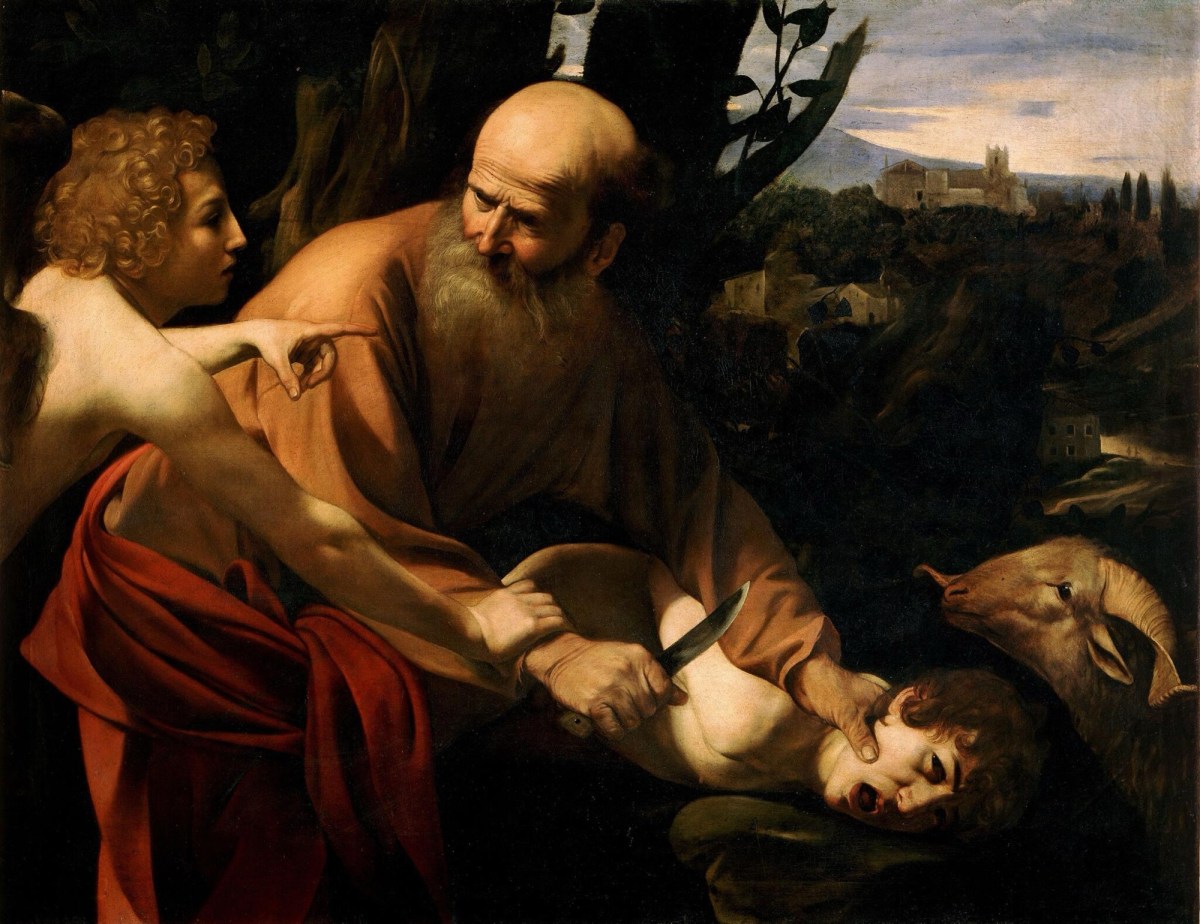
Yet in the second passage offered by the lectionary, we read some chilling words: “Abraham reached out his hand and took the knife to kill his son” (Gen 22:10). How does this relate to the joy seen at the birth of Isaac? There is no laughter in this story. It’s a horrifying story. How is this edifying material for hearing in worship?
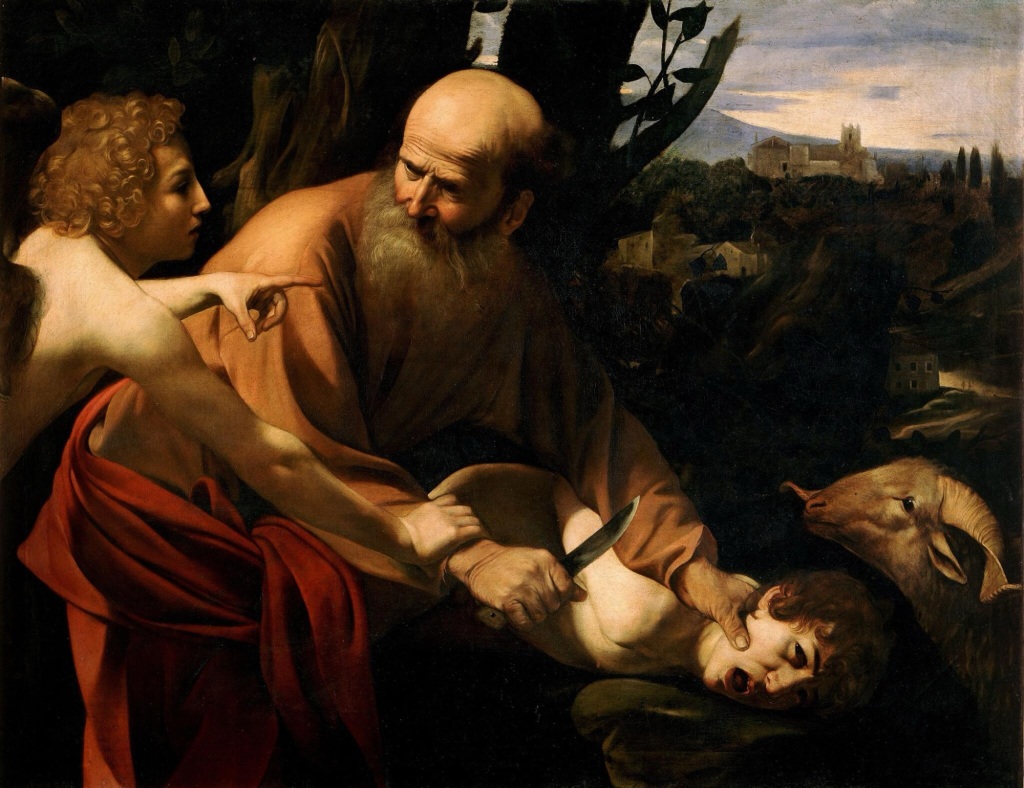
Questions abound. Who is this God who calls Abraham to take his “only son” up the mountain and “offer him there as a burnt offering” (22:2)? Where is the God who, it is said, has shown “steadfast love” to the people of Israel (Exod 15:13), and before that to Joseph (Gen 39:21), to Jacob (Gen 32:9–19), and indeed to Abraham himself (Gen 24:27)? Why has God acted in a way that Is seemingly so out of character in this incident in Gen 22? Or is this the real nature of God, and these later displays of “steadfast love” are simply for show?

This story is indeed troubling: it presents a God who demands a father to kill his beloved son, with no questions asked. It is not just the knife in Abraham’s hand which is raised (22:10)—there are many questions raised by this seemingly callous story. 

My wife, Elizabeth Raine, has a cracker of a sermon in which she compares this story with the account of Jephthah and his daughter (Judg 11:29–40). Whilst the Lord commands Abraham to kill his son as a burnt offering, it is the vow made by Jephthah to sacrifice “whoever comes out of the doors of my house to meet me, when I return victorious from the Ammonites” as a burnt offering (Judg 11:30).

And whilst the Lord intervenes in what Abraham is planning to do at the very last moment, sending an angel to command him, “do not lay your hand on the boy or do anything to him” (Gen 22:11–12), Jephthah is held to the vow he has made—by his very own daughter, who knows that she will be the victim of this vow (Judg 11:39). There is no divine intervention in this story. 

And worse, whilst Abraham had carefully prepared for the sacrifice, taking his donkey, two servants, and the wood for the fire up the mountain with him (Gen 22:3–6), Jephthah’s vow was made on the spur of the moment (Judg 11:30–31), and when his daughter insisted that he must carry through with this vow, he gives her, as requested, two full months for her to spend with her companions before he sacrificed her (Judg 11:37–39). Surely he might have had time in those two months to reconsider his vow and turn away from sacrificing his daughter?

It would seem, then, that the daughter was dispensable; the son, the much loved only son of Sarah and Abraham, was clearly indispensable. That would clearly reflect the values of the patriarchal society of the day, in which “sons are indeed a heritage from the Lord, the fruit of the womb a reward” (Ps 127:3). 

And Abraham would have followed the same pathway, sacrificing his only son, had not the Lord intervened. Neither father is looking very appealing in these two stories! Which makes it hard to see how the story of the sacrifice told in Judg 11, and the story of the almost-sacrifice told in Gen 22, can be “the word of the Lord” for us, today, in the 21st century. Indeed, the story of Abraham and Isaac comes perilously close to being a story of child abuser—if not physical abuse, by the end of the story, at least emotional and spiritual abuse.

Situations of abuse destroy trust. After such an experience, how could Isaac ever trust his father again? And as we hear the story, how can we trust God? How could we ever believe that his commands to us are what we should follow?—if he follows the pattern of this story, and changes his mind at the last minute, after pushing us to the very brink of existence? How could we trust a God like this?

Or, if the story involving poor Isaac is really about God providing, as Abraham intimates early on (22:8), and then concludes at the end (22:14), then it is a rather malicious way for God to go about showing how he is able to “provide”. Provision, and providence, should be something positive—not perilous and threatening, as in this story.

Or yet again, if the story is about testing Abraham’s faith, as many interpreters conclude, then it is a particularly nasty and confronting way for God to do this—and that points to a nasty streak in the character of God. Is this really what we want to sit with? Was there not some other way for God to push Abraham to test his faith? 

What do we do with such a story within our shared sacred scriptures?

The Jewish site, My Jewish Learning, states that “although the story itself is quite troubling, it does contain a message of hope for Rosh Hashanah. In the liturgy we ask God to “remember us for life.”  The binding of Isaac concludes with his life being spared, and he too is “remembered for life.”  Abraham’s devotion results in hope for life.”

How does the message of hope for life emerge from this story? Clearly, the life of Isaac is spared; but this is a terrible way to teach that message!

James Goodman, writing in My Jewish Learning, explains how he was taught to understand this story. “I learned that the story was God’s way of proclaiming his opposition to human sacrifice”, Goodman writes. 

He refers to the way his Hebrew-school teacher explained this story: “God had brought Abraham to a new land. A good and fertile land, where it was common for pagan tribes, hoping to keep the crops and flocks coming, to sacrifice first-born sons to God. Then one day, God commanded Abraham to sacrifice Isaac, the beloved son of his old age. 

“Abraham set out to do it, and was about to, when God stopped him. He sacrificed a ram instead. In the end, Abraham had ‘demonstrated his—and the Jews’—heroic willingness to accept God and His law,’ and God had ‘proclaimed’ that ‘He could not accept human blood, that He rejected all human sacrifices’.”

See https://www.myjewishlearning.com/2013/09/11/understanding-genesis-22-god-and-child-sacrifice/

Setting the story in the broader context of the practice of child sacrifice is a way of accepting that this terrible story might indeed have some value. Seeing the story is a dramatised version of God’s command not to sacrifice children can be a way to deal with it. “Do not lay your hand on the boy or do anything to him”, the angel says; so Abraham obeys, finds a ram, offers the ram as a burnt offering (22:12–13). And so, the name of the place is given: “the Lord will provide”(22:14).

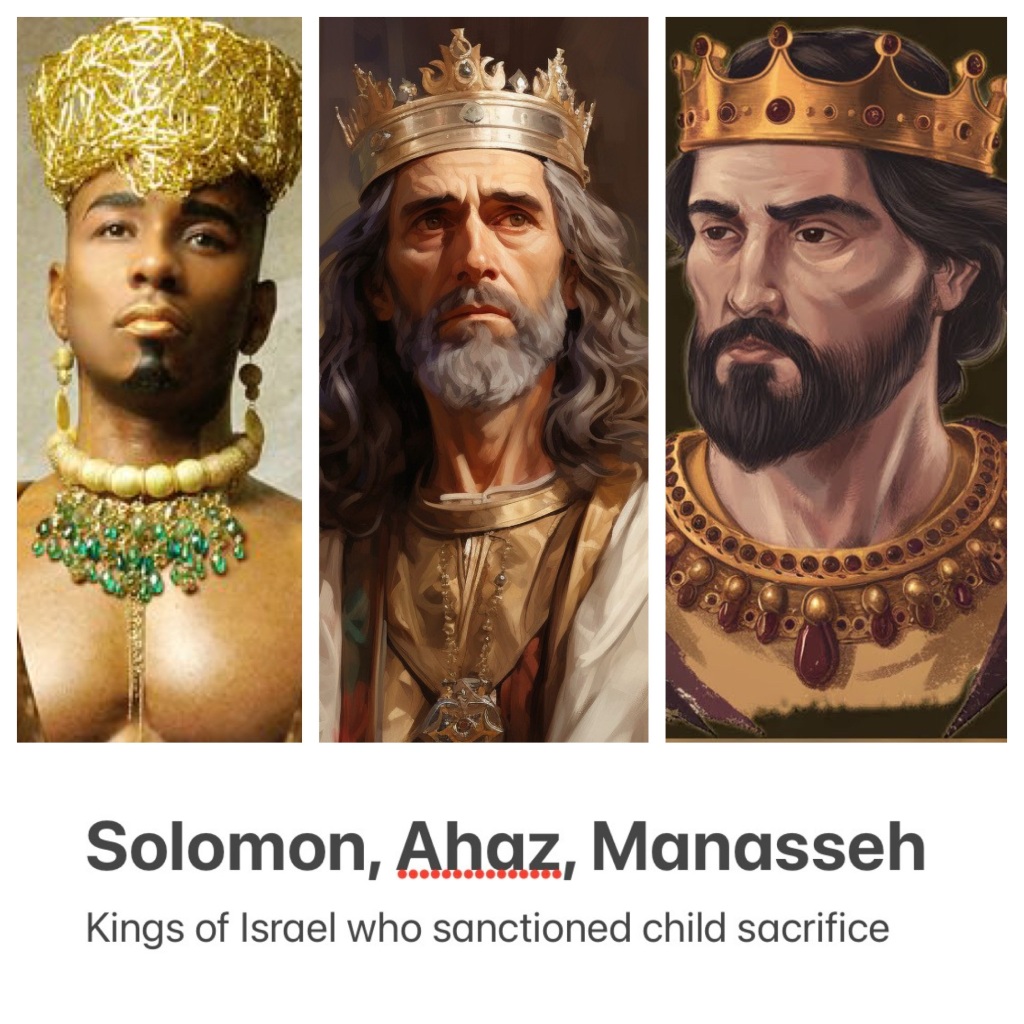
Three kings of Israel, at different times in the history of Israel, are said to have practised child sacrifice, as they turned to practices found in nations other than Israel. Solomon in his old age is said to have turned to the worship of Molech (1 Ki 11:7); this practice was subsequently adopted by Ahaz, who “made offerings in the valley of the son of Hinnom, and made his sons pass through fire, according to the abominable practices of the nations whom the Lord drove out before the people of Israel” (2 Chron 28:3). Likewise, Manasseh “made his son pass through fire; he practiced soothsaying and augury, and dealt with mediums and with wizards” (2 Ki 21:6). 
Direct commands not to sacrifice children are found in two books of Torah in the scriptural texts. Most direct is “you shall not give any of your offspring to sacrifice them to Molech, and so profane the name of your God: I am the Lord” (Lev 20:18). In Deuteronomy, other nations are condemned as they “burn their sons and their daughters in the fire to their gods” (Deut 12:31), so the command is “no one shall be found among you who makes a son or daughter pass through fire” (Deut 18:10). The prophet Jeremiah also asserts that this practice is not something that the Lord God had thought of (Jer 7:31). 

So the passage we have in the lectionary responds to this practice by telling a tale which has, as its punchline, the command “do not lay your hand on the boy or do anything to him” (22:12). Might this be the one redeeming feature of this passage? 

But if that is the case, the story belongs back in the days when child sacrifice was, apparently, widely practised. What, then, does it say to us today??
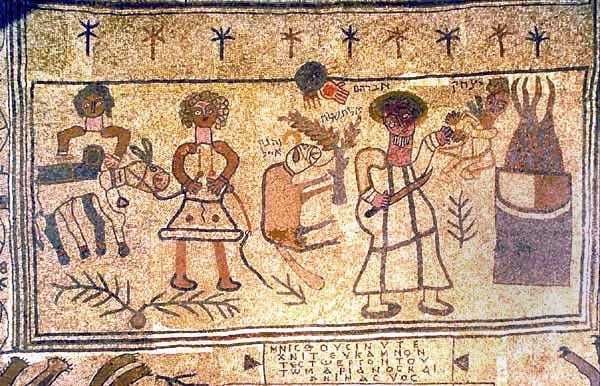

A sixth-century CE floor mosaic from the Beth Alpha synagogue, in Israel’s Jezreel Valley. The mosaic lay near the door, so that anyone who entered was confronted by the scene. In this mosaic, Abraham and Isaac are identified in Hebrew. The hand of God extends from heaven to prevent Abraham from proceeding. Below the hand are the Hebrew words, “Lay not [your hand].” Next to the ram are the words, “Behold a ram.”

I am a potter shaping evil against you (Jer 18; Pentecost 13C) 

The passage from Jeremiah proposed by the lectionary for this coming Sunday (Jer 18:1–11) is the third in a series of eight passages, taken from various sections of the work, that we read and hear during this long season “after Pentecost”. It’s a well-known passage because of the way it uses the common figure of a potter working his clay to form a vessel for domestic use. The potter spoils his work, so he starts again and works another vessel (vv.1–4). 

The image of a potter is used elsewhere in Hebrew Scripture. It appears in an oracle by the prophet Isaiah (Isa 29:13–16). He poses a question to God: “You turn things upside down! Shall the potter be regarded as the clay?” (29:16). This is the very oracle whose words are used by Paul in his words to the Corinthians: “the wisdom of their wise shall perish, and the discernment of the discerning shall be hidden” (Isa 29:13; 1 Cor 1:18–19).

Paul also uses the clay element of the imagery when he later tells the Corinthians that “we have this treasure in clay jars, so that it may be made clear that this extraordinary power belongs to God and does not come from us” (2 Cor 4:7). Paul is referring to his preaching of the message about Jesus, who gives “the light of the knowledge of the glory of God” in his face (2 Cor 4:6).

We also find the potter—clay imagery used by the later unnamed prophet whose words are included in the second section of the book of Isaiah. He speaks of “the one coming from the north” who “shall trample on rulers as on mortar, as the potter treads clay” (Isa 41:21–29, see v.25). He later instructs the people not to question the intentions of God. Those who do so should remember they are “earthen vessels with the potter”; he warns them, “does the clay say to the one who fashions it, ‘What are you making’? or ‘your work has no handles’?” (45:9–13, see v.9). The image of the potter represents the sovereign power of God to act as God wishes and intends. That’s how Paul also understands it in 1 Cor 1.

In the passage offered to us for this coming Sunday, the prophet Jeremiah uses this image specifically to warn Israel that, since the people have become, in effect, “spoiled goods” because of their entrenched idolatry (Jer 18:8), the Lord God can be of a mind to discard them as unwanted. As the potter, God has unfettered freedom to mould and shape the clay exactly how he wills.

Mixing metaphors, Jeremiah then turns to the horticultural imagery employed in the opening scene of the book (“I appoint you over nations and over kingdoms, to pluck up and to pull down, to destroy and to overthrow, to build and to plant”, 1:10). So, he declares, God can decide to “pluck up and break down and destroy” the sinful nation (18:7), just as God may decide on another occasion to “build and plant” a nation (18:9).

In both instances, however, the Lord God retains the sovereign right to exercise a change of mind. If an evil nation repents, “I will change my mind about the disaster that I intended to bring on it” (18:8). Conversely, if a faithful nation, planted by God, turns to evil, “I will change my mind about the good that I had intended to do to it” (18:10). Although Christians have been taught to think of God as unchangeable, eternally the same—under the influence of the stark declaration of Heb 13:8—the testimony of Hebrew Scripture is actually that God can, and did, and will, change God’s mind.

See 

So the message for Israel is clear: “I am a potter shaping evil against you and devising a plan against you”, says God; and so the plea to the people is “turn now, all of you from your evil way, and amend your ways and your doings” (18:11). The notion that God can act with evil intent is perhaps a claim that later Christian theology reacts against; after all, don’t we have the devil, Satan himself, to be responsible for all that is evil intent the world? 

Yet in the world of ancient Israel, a near-contemporary of Jeremiah articulates the twofold nature of God’s sovereign actions. It comes with the territory of claiming that the Lord God is the only God—the beginnings of monotheism. “I am the Lord, and there is no other; besides me there is no god”, says the unnamed prophet of Second Isaiah. As a consequence, he reports the claim of God: “I form light and create darkness, I make weal and create woe; I the Lord do all these things” (Isa 45:5–7). There is no hiding behind Satan as the instigator of evil; for this prophet, as for Jeremiah, the Lord himself is able to act with evil intent. 

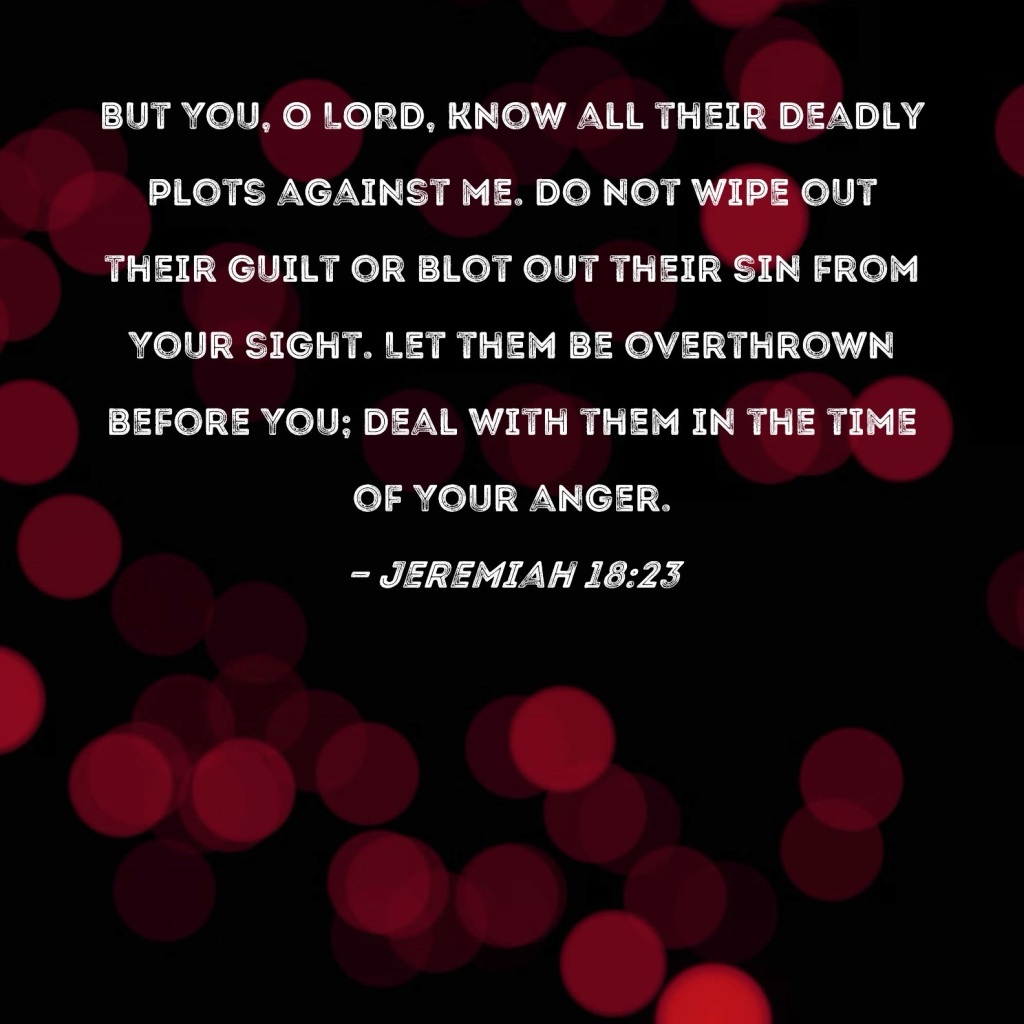
Yet God does call for Israel to repent (Jer 18:11). However, their stubborn refusal to repent (18:12) leads to more recriminations from God (18:13–17), and their plotting against the prophet (18:18) leads him to plead with God (18:19–23), culminating in his strident words, “Do not forgive their iniquity, do not blot out their sin from your sight; let them be tripped up before you; deal with them while you are angry” (18:23). 

The prophet’s anger matches—and perhaps even inflames—the divine wrath. So God commands the prophet to “buy a potter’s earthenware jug …. go out to the valley of the son of Hinnom at the entry of the Potsherd Gate … break the jug in the sight of those who go with you … [and declare] so will I break this people and this city, as one breaks a potter’s vessel, so that it can never be mended” (19:1–13). In this way the Lord God stands resolute against the sinful nation, who have “stiffened their necks, refusing to hear my words” (19:15). And so the scene that has begun with a command to go to the potter’s house ends with a smashed pot and wrathful words of vengeance.

On the thread of divine wrath running through scripture, see

and

A good question to ponder, though, is this: God calls Israel to repent. They need to remain faithful to the covenant. Yet Israel refuses to repent. They depart from their covenant commitment. So God acts as God has promised, to bring punishment upon them. Is this acting in an “evil” way? Or is God simply being good to God’s word?

Writing about this passage and others offered on other days this week in the daily Bible study guide, With Love to the World, the Rev. Dr Anthony Rees, Associate Professor of Old Testament in the School of Theology, Charles Sturt University, comments that “the readings this week demonstrate something of the complexity inherent in reading Jeremiah. Emerging from a chaotic, traumatic world, the texts shows the wounds of that experience, so that hope and hopelessness exist side by side. Chronology breaks down, suggestive of the challenge presented by the trauma of being unable to ‘think straight’”.

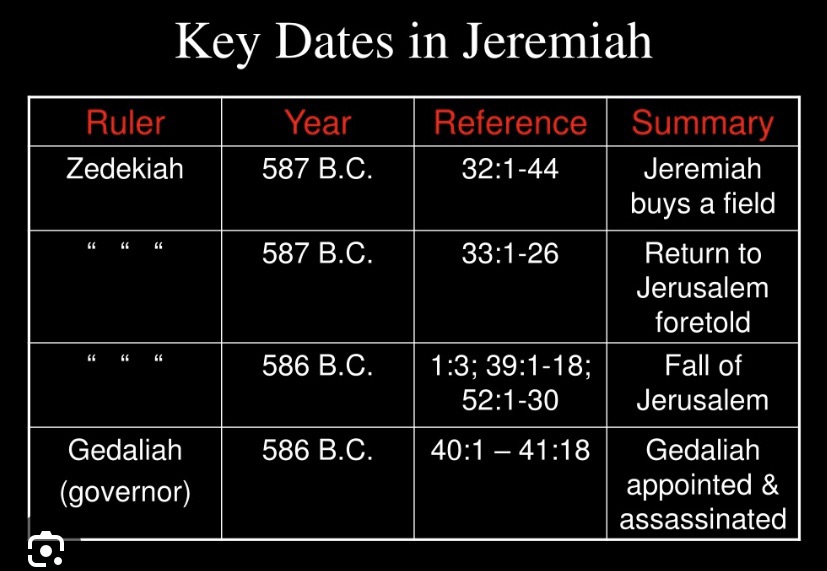
The disrupted nature of this book as a whole is well-documented. The chronological disjunctures throughout the 52 chapters can be seen when we trace the references to various kings of Judah: in order, we have Josiah in 627 BCE (Jer 1:2), jumping later to Zedekiah in 587 BCE (21:1), then back earlier to Shallum (i.e. Jehoahaz) in 609 BCE (22:11), Jehoiakim from 609 to 598 BCE (22:18), and Jeconiah in 597 BCE (22:24).

The book then returns to Zedekiah in 597 BCE (24:8), then back even earlier to Jehoiakim in April 604 BCE, “the first year of King Nebuchadrezzar of Babylon” (25:1)—and then further haphazard leaps between Zedekiah (chs. 27, 32-34, 37–38, and 51:59) and Jehoiakim (chs. 26, 35, 45) as well as the period in 587 after the fall of Jerusalem when Gedaliah was Governor (chs. 40–44). It is certainly an erratic trajectory if we plot the historical landmarks!

Rather than a straightforward chronological progression, the arrangement of the book is more topical, since oracles on the same topic are grouped together even though they may have been delivered at different times. This topical arrangement is easy to trace: 25 chapters of prophecies in poetic form about Israel, 20 chapters of narrative prose, and six chapters of prophecies against foreign nations. 

Early in the opening chapters, as Jeremiah prophesies against Israel, he reports that God muses, “you have played the whore with many lovers; and would you return to me?” (3:1). The idolatry and injustices practised by the people of Israel have caused God concern. Throughout the poetry of the prophetic oracles in chapters 1—25, God cajoles, encourages, warns, and threatens the people. The passage proposed for this Sunday sits within this opening section of oracles.

There are various theories as to how the book was put together; most scholars believe that someone after the lifetime of Jeremiah has brought together material from collections that were originally separate.

Indeed, A.R. Pete Diamond concludes that “like it or not, we have no direct access to the historical figure of Jeremiah or his cultural matrix”; we have “interpretative representations rather than raw cultural transcripts”, and thus he argues that the way we read this book should be informed by insights from contemporary literary theory, and especially by reading this book alongside the book of Deuteronomy, as it offers a counterpoint to the Deuteronomic view of “the myth of Israel and its patron deity, Yahweh” (Jeremiah, pp. 544–545 in the Eerdman’s Commentary on the Bible, 2003). 

So whereas Deuteronomy advocates a nationalistic God, Jeremiah conceives of an international involvement of Israel’s God. Commenting on this, Anthony Rees observes: “In this famous passage the covenant obligations which govern Judah’s relationship with God are given a broader understanding. Any nation can avoid divine punishment by turning from evil. Likewise, a nation that turns to evil stands condemned by God.”

Prof. Rees then draws an interesting conclusion. “Perhaps this relativizes Judah’s relationship with their God”, he proposes. “However, they maintain something the other nations lack: knowledge. Repeatedly God affirms that they are the only people amongst the nations who have been known by God and know God.”

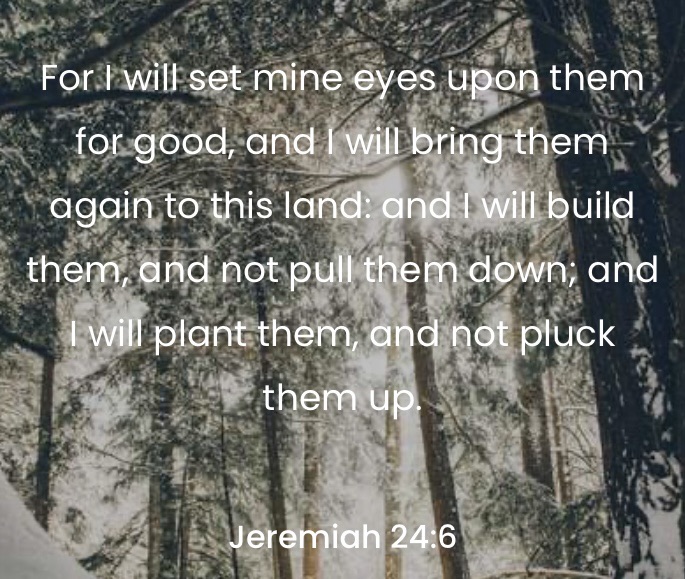
In a later oracle, when God is considering to bring Israel back out of exile, into their land, he says, using familiar imagery, “I will build them up, and not tear them down; I will plant them, and not pluck them up” (Jer 24:6).

He continues, “I will give them a heart to know that I am the Lord; and they shall be my people and I will be their God, for they shall return to me with their whole heart” (24:7). This is the fruit of knowledge: to be completely faithful to the Lord God.

And then, in yet another oracle—and this one so well-known because of how it is used in the New Testament—the prophet reports God’s intention to make “a new covenant” and to “put my law within them and … write it on their heart”. In this situation, “no longer shall they teach one another, or say to each other, ‘Know the Lord’, for they shall all know me, from the least of them to the greatest” (Jer 31:31–34). This knowledge is at the heart of the covenant. As the psalmist sings, “this I know, that God is for me” (Ps 56:9b). Or, as the Sunday school song goes, “Jesus loves me, this I know”.

So Prof. Rees concludes: “This is the great tragedy of [Israel’s] failure, and our own, that we know, and yet still follow our own plans that run contrary to the desires of God. Still, here we have the prophetic call to turn, to amend our ways and to live into that which, and whom, we know.” It is a call that stands, still, in our own time. How do we respond?

Screenshot

Seven days and one pair: and God saw that it was good (Genesis 1; Narrative Lectionary for Pentecost 13)

Discussion of Gen 1:1–2:4a for the Narrative Lectionary

The lectionary Gospel reading for the first Sunday in this fourth year of the Narrative Lectionary cycle takes us back to the very beginning of the Bible, to the poetic priestly account of the creation of the world (Gen 1:1—2:4a). There is so much to say about this foundational text; I will be selective!

The story serves as an origin story—for ancient Israel, for the canon of scripture, for Christian thinkers. Words used in origin stories like this have a particular power—and origin stories are always created with care and deliberation, and passed on with love as explaining the essence of being. Each element reflects something of significance in the experience of ancient Israel, and indeed of contemporary humanity.

The first two verses introduce the key characters: God, first described as the one who creates; a formless void, which is how the earth is first described; darkness, an entity in and of itself (not defined in any further way); and the breath of God, sweeping over the waters of the void. 

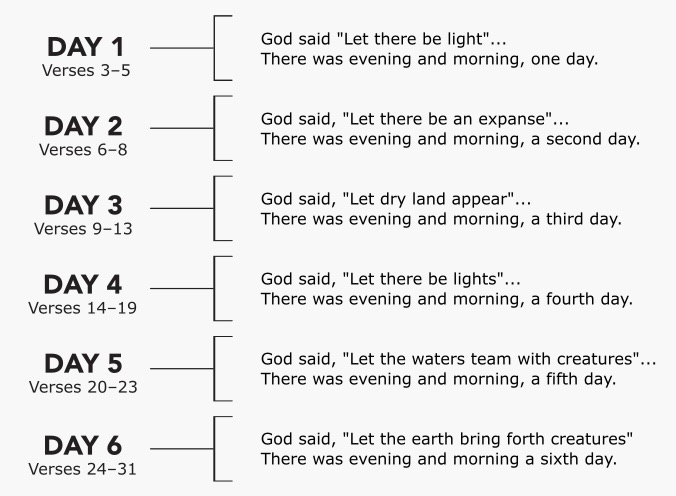
The story that follows in Gen 1 places the creation of light, the first act of creation, at the head of the story. All that happens after that is bathed in the light of God’s creation. Telling of the creation of light (1:3–5) establishes a pattern which is then repeated, five more times, for each of the various elements whose creation is noted in this narrative: the dome, or firmament, separating the waters (1:6–8); waters and dry land, with vegetation (1:9–13); lights in the sky and seasons (1:14–19); swarms of living creatures in sea and sky (1:20–23); living creatures on the earth (1:24–25); and humankind, male and female, in the image of God (1:26–31).

The third verse introduces light, which comes into existence through a single word of command. Then God said, “Let there be light”; and there was light (1:3). Light is the key entity in the creation story, signalling the creative process which then ensues. Each subsequent creative action results from something that God said (verses 6, 9, 11, 14, 20, 24, 26). And each creation is affirmed with the phrase, and it was so (verses 7, 9, 11, 15, 24, and then verse 30).

The fourth verse tells of God’s approval of what had been created: And God saw that the light was good (1:4). Likewise, God then affirms as good the creation of earth and seas (1:10), vegetation (1:12), the sun for the day and the moon for the night (1:18), all living creatures in the seas and in the sky (1:21), then the living creatures on the earth (1:25). Finally, after the creation of humanity in the image of God, there comes the climactic approval: God saw everything that he had made, and indeed, it was very good (1:31).

In a number of the six main sections of the narrative, God explicitly names what has been created: he called the light Day, and the darkness he called Night (1:5), then God called the dome Sky (1:8), God called the dry land Earth, and the waters that were gathered together he called Seas (1:10), followed by plants yielding seed of every kind, and trees of every kind bearing fruit with the seed in it (1:12), and the greater light to rule the day and the lesser light to rule the night—and the stars (1:16). 

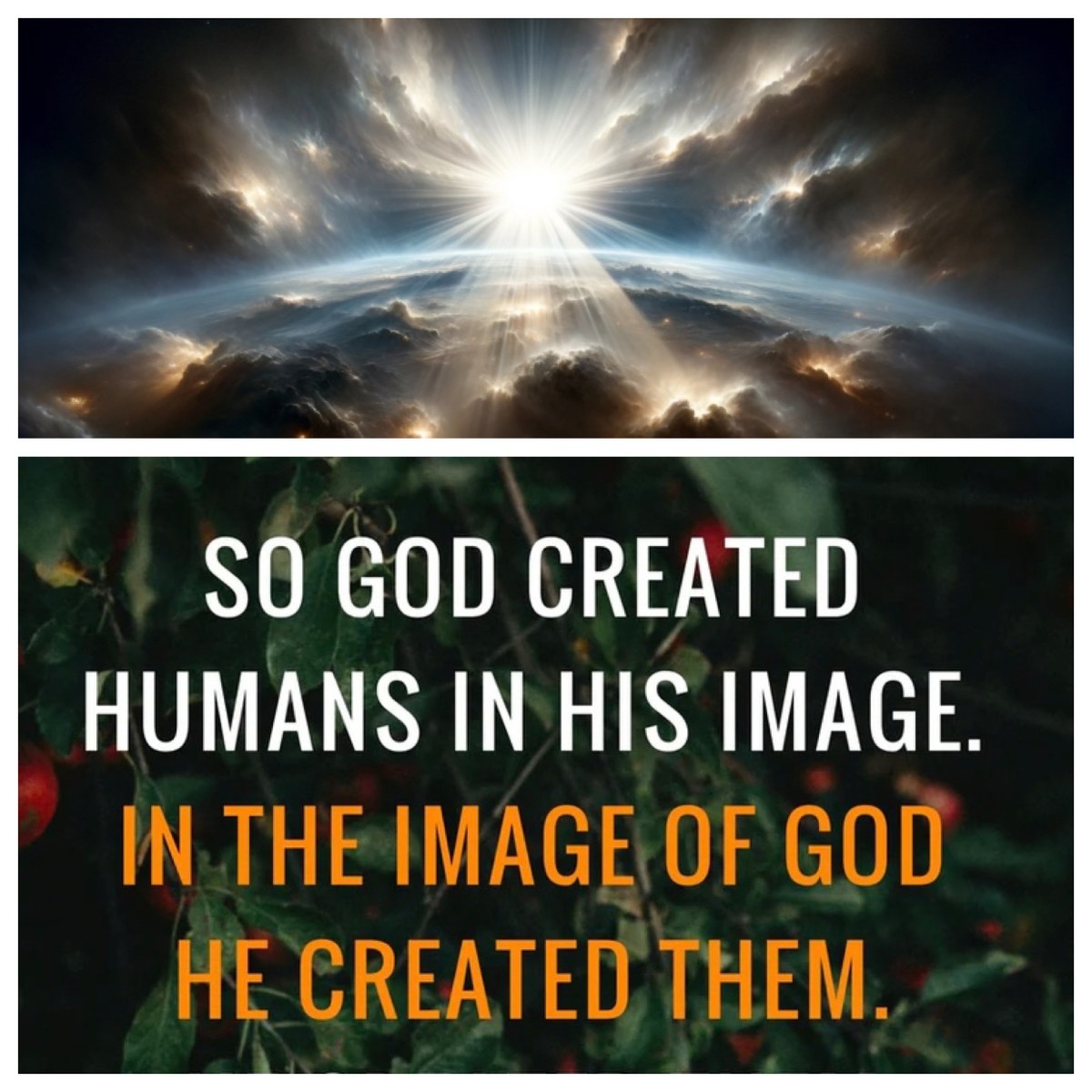
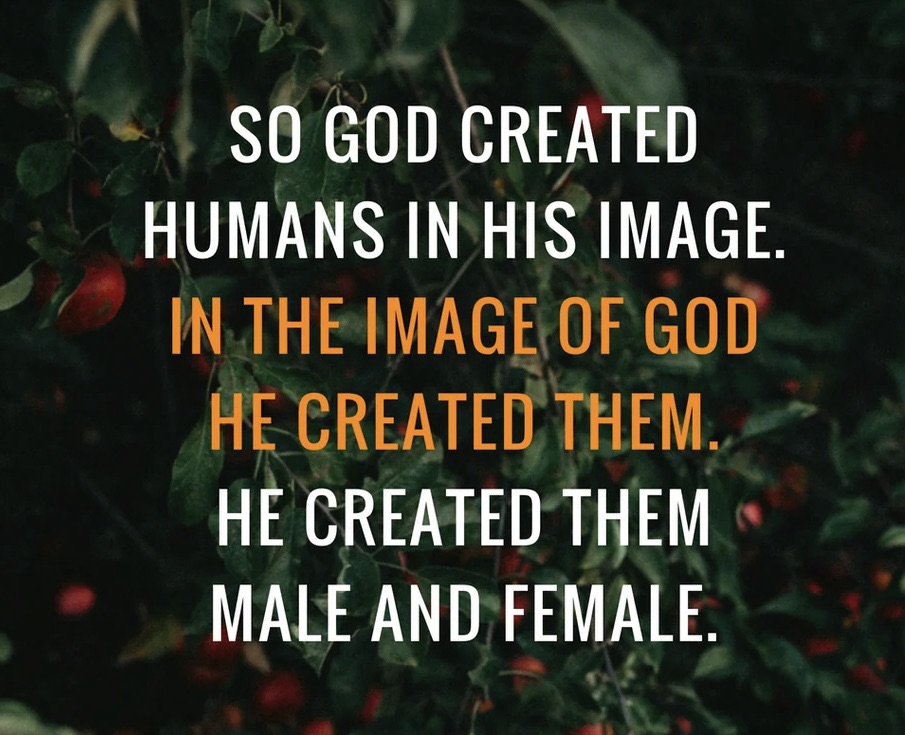
After this, the categories of living creatures are identified (1:21, 25), before the climax of creation is identified: “So God created humankind in his image, in the image of God he created them; male and female he created them” (1:27), and then God’s blessing is narrated (1:28).

Finally, each section concludes with another formulaic note: and there was evening and there was morning, the first day (1:5; likewise, at verses 8, 13, 19, 23, 31), before the whole narrative draws to a close with the note that on the seventh day God finished the work that he had done, and he rested on the seventh day from all the work that he had done (2:2). Of course, it is from this demarcation of the sections of the creative process as “days” that there came the traditional notion that “creation took place over seven days”. 

The notation of “days”, however, is simply to give the story a shape that we can appreciate—they are not literal 24-hour periods, but a literary technique for the story, much like we find that some jokes, some children’s songs, and some fairy stories are constructed around threes (“three men went into a pub …”, or “three blind mice”, or “Goldilocks and the three bears”, etc).

The story is thus told with a set of simple, repetitive phrases, but arranged with sufficient variation to give aesthetic pleasure, and with a growing sense of building towards a climax, to shape the narrative arc towards the culmination of creation (humanity, 1:26) and the completion of the creative task (sabbath rest, 2:2–3).

*****

One verse in this stylised poetic account of creation has attracted much attention over the decades. It is a verse that is most famously quoted by Jesus in an encounter he has with some Pharisees—and so it forms a foundational idea for Christians, as well as Jews. And it is a verse that has particular relevance and importance in the immediate contemporary context, when matters of gender identity and sexuality are regularly in the public discourse.

The story told in Mark 10:2–16 reports this encounter; as they debate the matter of divorce, Jesus offers the Pharisees a quote from a key verse in Genesis, “from the beginning of creation, ‘God made them male and female’” (Gen 1:27).

This verse needs attention; here I want to notes the rabbinic exploration of this text and associated matters. A warning in advance: this will lead to the conclusion that the strict binary understanding of human gender is inadequate. The rabbis clearly understood that not everyone fits these categories. That has important implications for our current understandings of human sexuality and gender.

The quotation from Genesis made by Jesus, that God made human beings as male and female, sounds like a definitive declaration: this is the reality, this is who we are, there is nothing more to debate! Certainly, that’s the way this verse has been used in the “gender wars” that have swirled through western societies in recent times. “God made male and female” became “God made Adam and Eve, not Adam and Steve”, in an early salvo against the emerging number of people who were “outing” themselves as same-gender attracted. “Not so” was the sloganeers’ reply; two genders, each attracted to the opposite, is who we are. Definitively. Resolutely. Absolutely.

It’s worth noting some aspects of this statement in its original context in Genesis. What the priestly authors of the creation story wrote was “God created humankind in his image, in the image of God he created them; male and female he created them” (Gen 1:27). The emphasis is not so much on defining who we are are gendered people—but rather, the verse is reflecting on the amazing feature that, within humanity, signs of divinity are reflected. And in association with that, the statement indicates that the two genders familiar from humanity are somehow reflected in the very nature of God. 

As God’s creatures, we are images of that creating being. The Hebrew word used, tselem (image), indicates a striking, detailed correlation between the human and the deity. This was the insight brought by the authors of this passage, perhaps shaped and honed over generations of telling and retelling the story, passing on through the oral tradition the insights of older generations.

My sense is that these ancients were not so much making a definite declaration about the nature of humanity—an early dogmatic assertion, if you like—as they were actually reflecting on their experience. They sensed that there was something within humanity that reaches out, beyond the material, into the unknown, beyond the tangible, into “the spiritual”. They surely knew the kind of experience that Celtic mystics have known, of coming to a place where “heaven meets earth”—what they call “a thin place”, where God can be sensed in the ordinariness of life. Indeed, such a “thin place” might well be being described in Gen 28:10–22, where Jacob comes to the realisation that “surely, the Lord is in this place” (Gen 28:16).

Indeed, as Jewish tradition developed over time, this fundamental duality of human gender—male and female—was questioned, probed, explored, and developed. Rabbis of late antiquity and the early medieval period (using the standard Western terminology) actually identified six genders.

The first move takes place in the Mishnah (early 3rd century). Tractate Bikkurim 4.1 contains the assertion, “an Androginus (a hermaphrodite, who has both male and female reproductive organs) is similar to men in some ways and to women in other ways, in some ways to both and in some ways to neither”.

It is interesting that the term androginus, a Greek term, is simply transliterated in this Aramaic work, as אדדוגינוס. That’s a sign that the consideration of this issue encompassed more than just rabbinic scholars, as they were drawing on insights and the term androginus from the hellenised world.

The text of Bikkurim goes on to offer indications of the ways that an androginus person is similar to, and dissimilar to, each gender (4.2–3). Another passage in the Mishnah identifies people known as a saris, סריס (Yevamot 8.4). These are people we identify as eunuchs; whether these are “eunuchs who have been so from birth … eunuchs who have been made eunuchs by others … [or] eunuchs who have made themselves eunuchs” (as Matthew reports Jesus saying, Matt 19:12) is not relevant in this context.

Presumably, the rabbis refer to males with arrested sexual development who are unable to procreate.  The female term for such people is given as aiylonit, אילונית. The discussion that follows makes it clear that these people are women with arrested sexual development who cannot bear children.

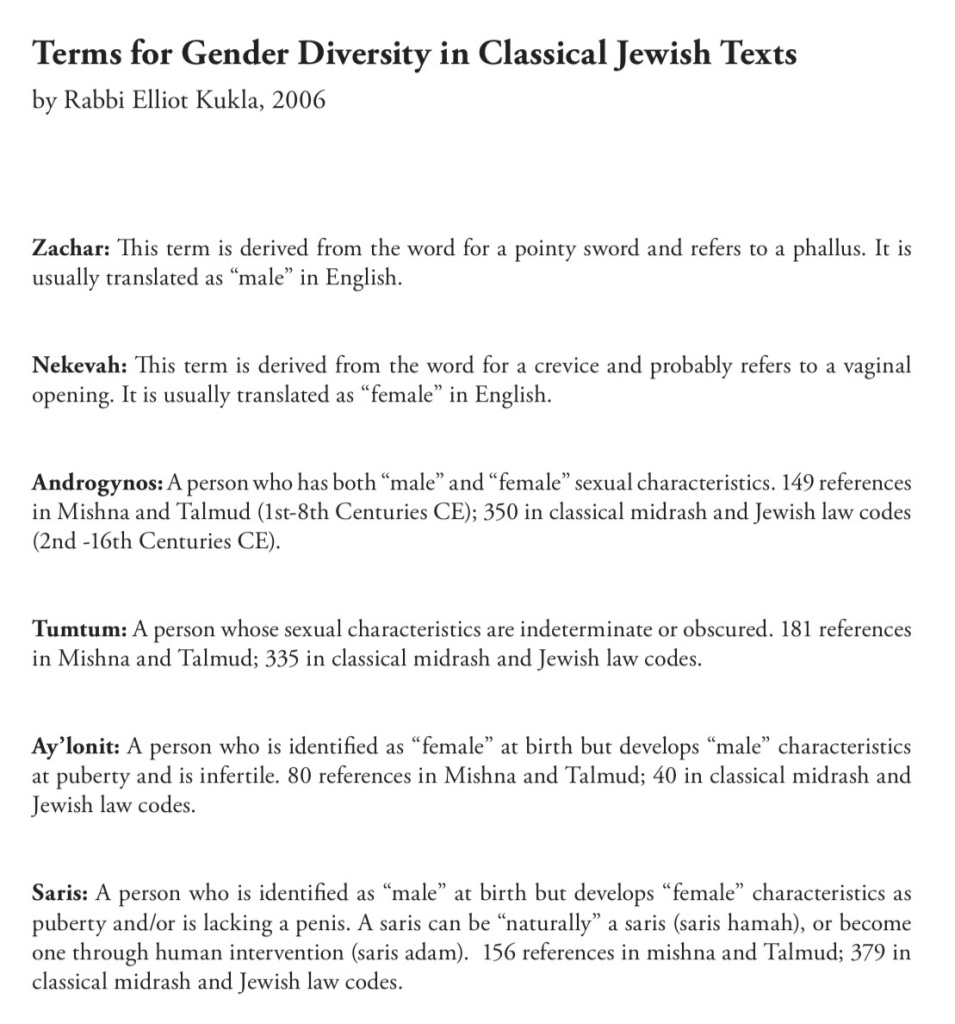
So this means that rabbis recognised four genders: male, female, androgyne, and eunuch (saris). In the Babylonian Talmud (sixth century CE), Rabbi Ammi is quoted as stating that “Abraham and Sarah were originally tumtumim” (טומטמין). Here we find another gender identity term; this time, describing people a person whose sex was unknown because their genitalia were hidden, undeveloped, or difficult to determine. (Tumtum means “hidden”.)

Thus, Abraham and Sarah lived most of their life as infertile, as their sex was not clear; and then, in Rabbi Ammi’s explanation, miraculously turned into a fertile husband and wife in their old age. The Rabbi points to Isa 51:1–2, saying that the instruction to “look to the rock from where you were hewn, and to the hole of the pit from where you were dug […] look to Abraham your father and to Sarah who bore you” explains their genitals being uncovered and miraculously remade.

(Explaining one scripture passage by drawing on another passage, however distantly related—often through their sharing a common word or phrase—was a common rabbinic mode of scripture interpretation.)

Today, we would explain the phenomenon of a tumtum as being an intersex person, born with both male and female characteristics, including genitalia—although modern science would not go so far as to accept a miraculous reversal of the condition, as Rabbi Ammi proposed. 

There’s a quite accessible discussion of these issues in an article by Dr Rachel Scheinerman, entitled “The Eight Genders in the Talmud”, in the My Jewish Learning online resource.

The title reflects the fact that Dr Scheinerman divides both aylonit and saris into two, on the basis of birth identification. So she lists: (1) zachar, male; (2) nekevah, female; (3) androgynos, having both male and female characteristics; (4) tumtum, lacking sexual characteristics; (5) aylonit hamah, identified female at birth but later naturally developing male characteristics; (6) aylonit adam, identified female at birth but later developing male characteristics through human intervention; (7) saris hamah, identified male at birth but later naturally developing female characteristics; and (8) saris adam, identified male at birth and later developing female characteristics through human intervention.

Dr Scheinerman concludes, “In recent decades, queer Jews and allies have sought to reinterpret these eight genders of the Talmud as a way of reclaiming a positive space for nonbinary Jews in the tradition. The starting point is that while it is true that the Talmud understands gender to largely operate on a binary axis, the rabbis clearly understood that not everyone fits these categories.”

https://www.myjewishlearning.com/article/the-eight-genders-in-the-talmud/

Dr. Charlotte Elisheva Fonrobert, a Talmudic scholar in the Department of Religious Studies at Stanford University, California, has provided a much more detailed and technical discussion of the matter of gender identity, in the online resource the Jewish Women’s Archive. See 

https://jwa.org/encyclopedia/article/gender-identity-in-halakhic-discourse

The abstract of this article reads, “Jewish law is based on an assumption of gender duality, and fundamental mishnaic texts indicate that this halakhic duality is not conceived symmetrically (as seen through the gendered exemptions of some commandments). Rabbinic halakhic discourse institutes a functional gender duality, anchored in the need of reproduction of the Jewish collective body. As such, it aims to enforce and normalize a congruence between sexed bodies and gendered identities. Furthermore, the semiotics of body surfaces produces other different and seemingly more ambiguous gender possibilities, and rabbinic discourse has widely discussed the halakhic implications of these ambiguities.”

What that means, I think, is that whilst Torah prescriptions are based on a definite duality of gender (you are either male or female), later rabbinic discussions entertained the possibility of a range of gender identifications. In this regard, the rabbinic discussions prefigured the move in contemporary society to recognise the full spectrum of diversity amongst human beings: some men are gay, some women are lesbian; some people are bisexual, attracted to both genders, while others are asexual, having no sexual-attraction feelings at all. 

Biologically, we know that some are born intersex, with both male and female physical characteristics; whilst psychologically, some people are born into a body that is clearly one gender have an internal energy that leads them to identify with the opposite gender, and so they undergo a medical transition to that gender, and we identify them as transgender people. And so we have the now-widespread “alphabet soup” of LGBTIQA+ (where the plus sign indicates there may well be other permutations within this widely diverse spectrum).

So we would do well not to remain in a static state of assertion that the Genesis text is a prescription for how human beings should be identified (and a definition for marriage). I think it is preferable to add into the discussion both the rabbinic understandings,  contemporary medical understandings, and psychological insights that reveal a wide spectrum of gender identities; a dazzling kaleidoscope of “letters”, as it were. For this is how we human beings are made, in an image that reflects the diversity and all-encompassing nature of God. 

I believe it is important that, rather than misusing the Genesis/Mark text as a club to batter people into submission, we ought to rejoice in the diversity we see amongst humanity, and affirm that, no matter whether L or G, whether B or A, whether T or I, all people who are Q, and all who are straight, are “fearfully and wonderfully made” (Ps 139:14).

There is a helpful collection of the Jewish texts relating to this matter in the online resource, Sefaria, entitled “More Than Just Male and Female: The Six Genders in Ancient Jewish Thought”, collated by Rabbi Sarah Freidson of Temple Beth Shalom in Mahopac, NY, USA. See

https://www.sefaria.org/sheets/37225?lang=bi

And so, in the end, given the rabbinic midrashic exploration and exposition of this crucial text, I hope we can come to the same conclusion as the ancient priestly writers: “God saw everything that he had made [including the diversity of gender expressions within humanity], and indeed, it was very good”.


You defiled my land and made my heritage an abomination (Jer 2; Pentecost 12C)

Last week we began reading and hearing sections of the long book of Jeremiah. Of the first three major prophets, First Isaiah (the actual Isaiah the prophet) fills 39 chapters. The book of the exilic prophet Ezekiel is 48 chapters long; Jeremiah’s book has a mammoth 52 chapters. (The only book longer is Psalms, with an unbeatable 150 chapters.)

Jeremiah makes a most substantial contribution to Israelite society and Hebrew Scripture. It is good, I believe, that we have eight consecutive weeks, no less, to consider what he had to say. (And in the middle of that, the lectionary inserts Lamentations—a work traditionally associated with Jeremiah, even if not actually written by him.)

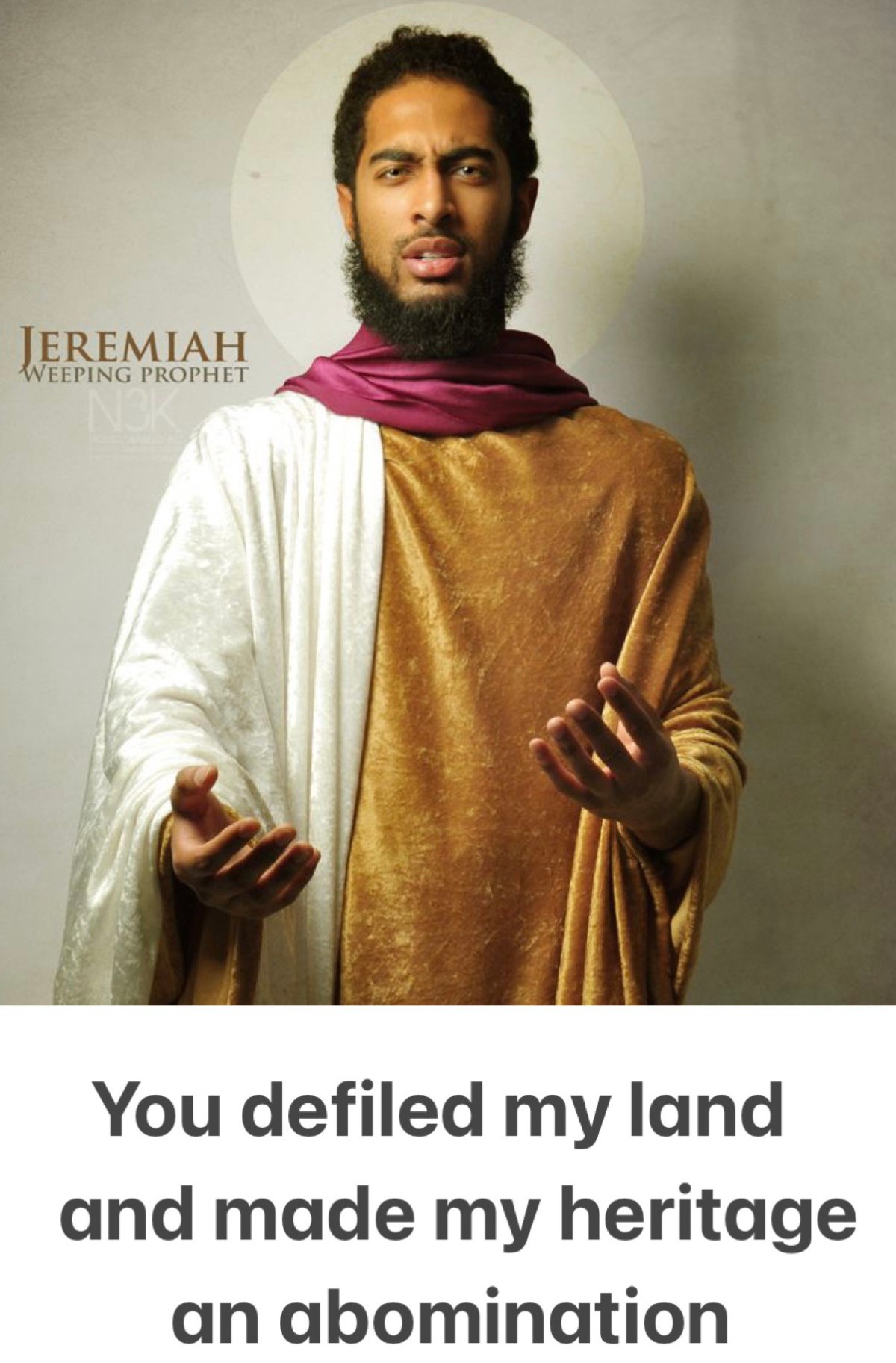
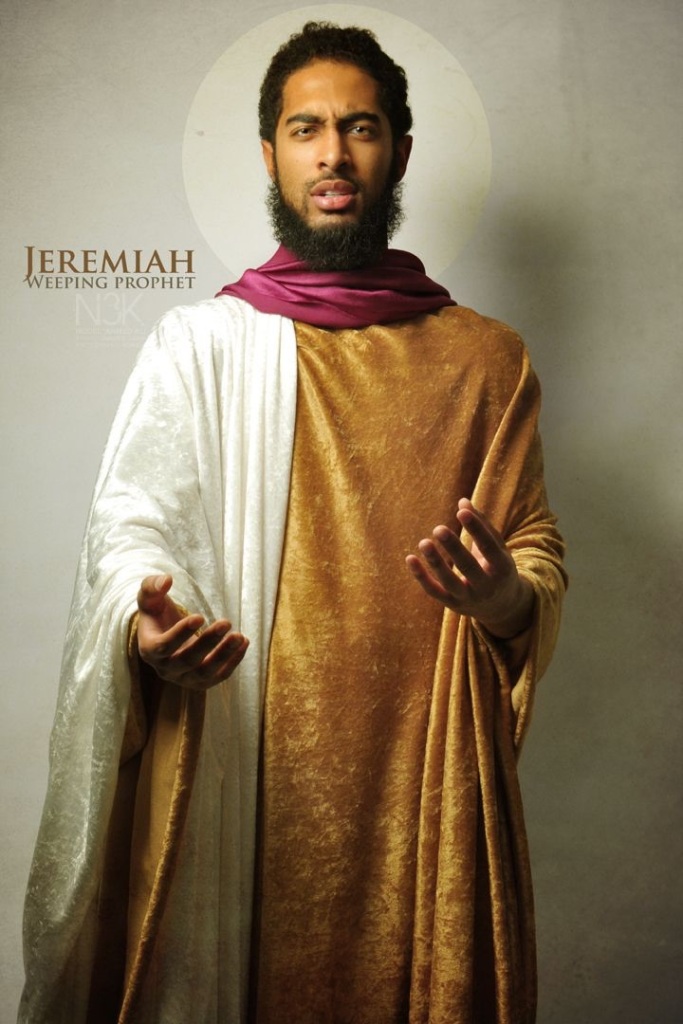
A depiction of the prophet Jeremiah, from the Icons of the Bible collection by photographer James C. Lewis
see https://elizabethokoh.com/in-conversation-with-james-c-lewis-international-photographer-awakening-a-generation/

We need to allow Jeremiah and his fellow prophets to speak their prophetic words without rushing all-too-quickly to say that they are “predicting Jesus” in what they say (a common misuse of Hebrew Scripture texts); or, indeed, that we say something like, “well that’s how it was back then, but things changed when Jesus came, and it’s now all different—we don’t need these texts any more”. That is the bad heresy of supercessionism (which the church, sadly, has perpetrate and advocated for at various times in its history).

On supercessionism, see https://johntsquires.com/tag/supersessionism/

So it’s best that we hear each passage, week by week, and seek to understand each of them in their own own integrity, paying due attention to the particular historical, cultural, religious, and sociological contexts in which it was first spoken and/or written. So my commentary on each Jeremiah passage will seek to focus in this way as we explore what is offered by the lectionary.

Jeremiah 2 comes immediately after the narrative of the call of the young Jeremiah (1:4–10) and the initial words of the Lord that he hears, pointing to the disaster that is looming as the Assyrians press down from the north onto the kingdom of Israel (1:11–19). Jeremiah reports the stern condemnation of the Lord God, who makes note of “all their wickedness in forsaking me”; he cites, in particular, making offerings to other gods and worshipping idols (“the works of their own hands”) (1:16).

Into this situation, the prophet is commanded to speak three oracles (2:1–3; 4–9; 10–13), perhaps originating at different times, but brought together here for a strongly theological purpose. The lectionary chooses to offer just the second and the third oracles; the first, a brief reminiscence of how disaster has come upon the once-faithful nation (2:1–3), sets the scene for the fiercer words of the following two oracles.

“I remember the devotion of your youth, your love as a bride”, the Lord God has sung (2:2); yet “your ancestors … went far from me”, he accuses, noting that “they went after worthless things, and became worthless themselves” (2:2, 5). Israel has not exhibited the fidelity expected; they have not kept the marital vow to “love and cherish”, in our modern terms. 

So in this second oracle (2:4–9), the Lord condemns Israel in the strongest of terms; even though he brought them “into a plentiful land to eat its fruits and its good things”, their transgressions were such that, as he declares, “you defiled my land, and made my heritage an abomination” (2:7). An abomination!—strong words, indeed.

For more on “abominations” in Hebrew Scripture, see

All knowledge of the Law which was given to guide the people has been lost (2:8). There is, it seems, no longer any hope that the people can maintain their part of the covenant agreement. Their lives are lived in disdain and rejection of all God has hoped for them—all that their ancestors had committed to in the covenant.

We might well infer, then, that judgement is inevitable. The stridency of punishment for such an “abomination” is reminiscent of the punishments promised when the “abominations” of sexual misconduct are canvassed in Torah (see Lev 18:1–23). There, any such actions will have the result that “the land will vomit you out for defiling it” (18:28) and “whoever commits any of these abominations shall be cut off from their people” (18:29).

In these two results—the loss of the land and disconnection from the people—we see the severing of two of the foundational promises recorded in the ancestral saga, when Abraham was promised both a land, and a great nation, in response to his obedience (Gen 12:1–2).

With no land, and a fractured people, this ancestral promise is in tatters. For many more verses, words of condemnation of the idolatrous state of Israel pour forth: “have you not brought this upon yourself by forsaking the Lord your God, while he led you in the way?” (2:17); “on every high hill and under every green tree you sprawled and played the whore” (2:20); “where are your gods that you made for yourself?” (2:28); “on your skirts is found the lifeblood of the innocent poor” (2:34); “you have played the whore with many lovers” (3:1); “you have the forehead of a whore, you refuse to be ashamed” (3:3). The Lord God is incessant in his denunciations.

Yet God does not wish for this situation to continue. At the end of this lengthy tirade, the prophet poses the question of God: “will he be angry forever, will he be indignant to the end?” (3:5). The answer to this comes in the very next oracle: a call for repentance, with the divine assurance that “I will not look on you in anger, for I am merciful, says the Lord; I will not be angry forever” (3:12), followed by the promise that “I will give you shepherds after my own heart, who will feed you with knowledge and understanding” (3:15). The lengthy oracle of judgment does indeed lead to the possibility of forgiveness and restoration (3:15–18). 

And so the fundamental dynamic of the whole long book of oracles spoken by Jeremiah is set forth. Intense, persistent, excoriating condemnation; followed by soothing, loving assurances of grace. For chapter after chapter. Decade after decade. Through all manner of trials. Until the prophet words of the prophet cease (Jer 51:64). 

By offering this passage for preachers in the 21st century, the lectionary invites us to consider how these ancient words from so long ago, in such a different cultural context, might yet still speak to us as “the word of the Lord”. In writing in With Love to the World about the passages from Jeremiah in the lectionary, the Rev. Dr Monica Melanchthon, Associate Professor of Hebrew Bible at Pilgrim Theological College in the University of Divinity, asks some pertinent questions:

How do you go about applying the role of the ancient Israelite prophet to your own life and experience? 

What aspects of Jeremiah’s call speak to you the most? Why?

How might the sins of the Israelites in Jeremiah 2 be parallel to modern day Christian living?

and then, How might this text guide your reactions to prophetic warnings in the current world?

Elisha and Naaman (2 Kings 5; Pentecost 4C)

During the long season after Pentecost in Year C, the lectionary includes a range of stories and oracles from the prophetic texts of Hebrew Scripture. The first three come from the books bearing the title of Kings—although the contents of these two books canvass more than the kings of Israel; prophets figure prominently at key points in the story. 

Two of these passages are well-known because Jesus refers to them in the sermon he delivered at Nazareth: Elijah and the widow at Zarephath, and Elisha and the Syrian army commander, Naaman. Elijah is sent to a faithful woman, who perhaps typically remains unnamed; Elisha is sent to faithful man, identified by name as Naaman (Luke 4:25–27). 

Both characters demonstrate trust in the stories told about them. The woman trusted Elijah when he said, “first make me a little cake of it and bring it to me, and afterwards make something for yourself and your son” (1 Ki 17:13). She did this, and there was enough for her and her son, and for Elijah “for many days … the jar of meal was not emptied, neither did the jug of oil fail” (2 Ki 17:15–16).

The army commander (eventually) trusted Elisha when he said, “go, wash in the Jordan seven times, and your flesh shall be restored and you shall be clean” (2 Ki 5:10). After an initial reluctance, Naaman did as the prophet said, and he was healed; “his flesh was restored like the flesh of a young boy, and he was clean” (2 Ki 5:14).

The woman, who was not an Israelite (Zarephath is in Sidon, a Gentile territory) is of low social status; the army commander, of course, is a high status person, even if he is a foreigner, as a Syrian. Jesus alienates his audience in Nazareth by focussing his attention on God’s merciful care for foreigners like the widow of Sidon and the soldier of Syria, regardless of their social status—and on the way each one of these foreigners modelled trusting obedience. As Luke reports, his audience was not impressed! 

See more at 

We hear the second of these stories this coming Sunday: the encounter between the prophet Elisha and the general Naaman is what is in the Hebrew Scriptures passage proposed by the lectionary. The story comes after Elisha has taken on the role of prophet in the kingdom of Israel, following on from Elijah. Elisha asked Elijah to grant him a double share of his spirit (2 Ki 2:9); Elijah agreed, and after Elijah departed, a company of prophets declared “the spirit of Elijah rests on Elisha” (2:15).

So, as I noted in last week’s blog post, Elisha performs miracles that replicate those performed earlier by Elijah; but he does more than Elijah, with an abundance of miraculous deeds. This particular miracle is given more space than any other miracle that either prophet performs.

The early and substantive miracle of Elijah, his reviving the widow ‘s son (1 Ki 17), is told in eight verses; the story of Elisha and Naaman (2 Ki 5) takes up fourteen verses, but the story continues for another thirteen verses, detailing the consequences for Elisha’s servant Gehazi after his intervention into the sequence of events. 

The lectionary, of course, does not offer all of the elements of this long narrative. We hear, firstly, the opening two verses which introduce Naaman and his situation; we then skip to verse 6, to hear the course of events leading to the healing of Naaman. Whilst verse 2 also introduces a young Israelite girl who had been taken captive to serve Naaman’s wife, we do not hear her role in the narrative offered by the lectionary (vv.3–5). The lectionary, unfortunately, is good at minimising or informing female characters in the stories it includes.

As for Naaman, we learn much and observe much during the course of events. Naaman is introduced in a distinctive way. He is a “mighty warrior”, a commander “of the army of the king of Aram”—that is, a foreigner—who was “in high favour with his master, because by him the Lord had given victory to Aram” (5:1). Aram was a province in Syria, to the northeast of Israel, with Damascus as a key city. The province is perhaps best known through the fact that its name forms the basis of the language which came to be the dominant tongue across the Middle East: Aramaic. 

See https://www.biblicalarchaeology.org/daily/ancient-cultures/ancient-near-eastern-world/what-is-aramaic/#gf_1

In the days of Israel’s kings and prophets, foreigners were inevitably regarded as enemies, to be fought, subdued, and held captive. The regular battles recorded throughout the books of Samuel and Kings attest to this, and many psalms also reflect this deep-seated antagonism.

One psalmist sings “rise up, O Lord, in your anger; lift yourself up against the fury of my enemies” (Ps 7:9), another affirms that “surely God is my helper … he will repay my enemies for their evil” (Ps54:4–5), while yet another celebrates at length: “you made my enemies turn their backs to me, and those who hated me I destroyed. They cried for help, but there was no one to save them … I beat them fine, like dust before the wind; I cast them out like the mire of the streets” (Ps 18:40–42). 

In the NRSV, no less than ten psalms have been given titles which include the words “Deliverance from Enemies” (Pss 4, 5,  10, 13, 31, 35, 59, 70, 140, 143). It was a standard element, it would seem, that was to be found in temple worship and in the prayers of faithful people, as these psalms attest.

This is one factor that helps explain the intractability of national relationships in the Middle East today; centuries of antagonism and conflict have led to hatred and demonising of the “other”. There is no clear and simple way back from this deeply-ingrained perspective, held by Jew and Arab alike.

In the context provided by these psalms, the celebration of Naaman as a military commander whose victory was enabled by the Lord God of Israel is striking. Whether Naaman was an historical person or not cannot be determined; his actual existence is as secure, or as fragile, as the existence of any other figure in the narratives found in the grand saga of Israel in these biblical books. There are no known references to him in sources outside the biblical texts.

To be sure, the story, first told by storytellers and then passed on through the growing oral tradition, would have struck a distinctive note in ancient Israel, given this ingrained antagonism towards foreigners—especially those in military service. By the time the Deuteronomic History was compiled and published, the Israelites had already experienced the beneficence of Cyrus, King of Persia. Under Cyrus—declared by the Lord in Second Isaiah to be “my shepherd [who] shall carry out all my purpose” as the Lord’s anointed (Isa 44:28, 45:1)—Israel had experienced a positive action by a foreign ruler. Naaman’s victory, empowered by the Lord God, would have had a resonance with that experience for this who heard, or read, his story.

But Naaman is also introduced as a mezora, a person affected by the skin disease tzaraath  (2 Ki 5:1). This latter term is traditionally rendered as “leprosy”, but it is clear that it was not at all what today we know as Hansen’s disease, a highly-contagious disease in which a bacterial infection can damage some or all of a person’s skin, nerves, eyes, and their respiratory tract. Biblical leprosy was, rather, a disfiguration of a person’s skin—usually manifested in white patches of skin—which rendered a person ritually unclean. There are a range of prescriptions for dealing with this disease in Lev 13–14.

Naaman’s condition renders him unclean in Israelite society. It is his his slave girl (taken into service from her home in Israel) who suggests to him that he might visit “the prophet who is in Samaria”, for “he would cure him of his leprosy” (5:3). Naaman goes to Elisha with the blessing of his king, whose army had previously been at war with the Israelite army (1 Ki 20, 22); now, however, Israel was battling the Moabites to the south (2 Ki3), so Aram was a beneficent neighbour.

The process that Elisha sets for Naaman to follow is symbolically rich and practically powerful. “Go, wash in the Jordan seven times, and your flesh shall be restored and you shall be clean” (5:10), the prophet commands him. The “seven times” signals a perfect, completed process, typical of Israelite practices (“seven times” appears four times in the ritual of Lev 14, and another five times in other ritual elsewhere in Leviticus).

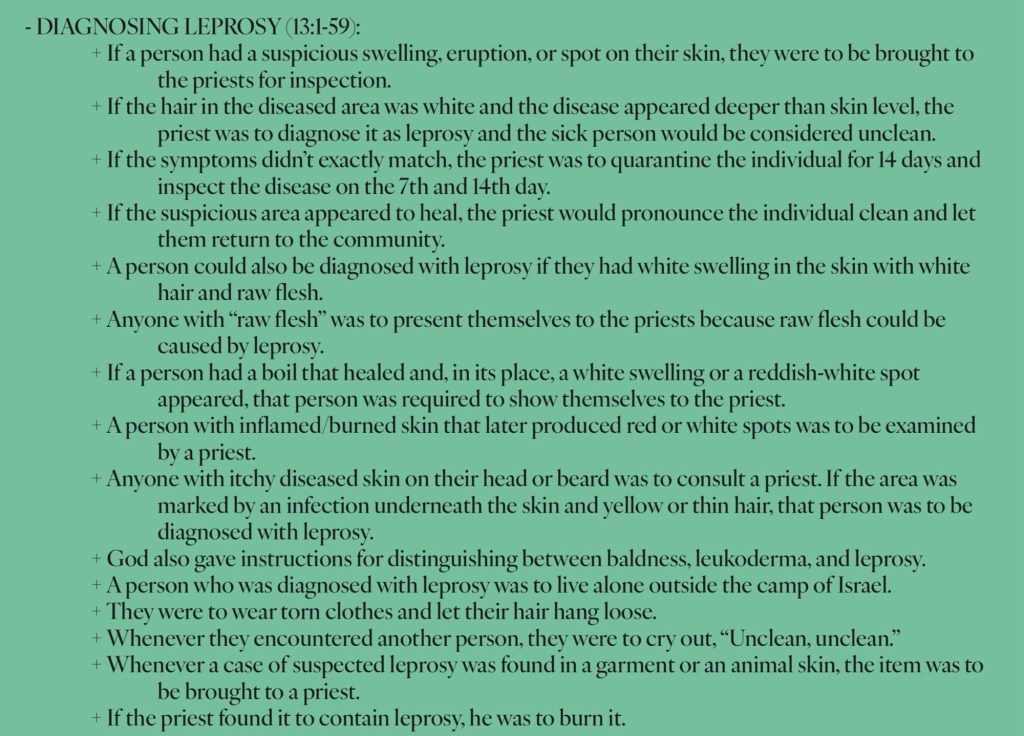
Summary of Lev 13, from https://www.2belikechrist.com/articles/leviticus-13-summary-in-5-minutes

This process is far simpler than the required ritual for Israelites: Leviticus prescribes a far more complex process. It begins with an investigation by the priest to determine whether the person is in fact unclean (Lev 13, with multiple options for consideration set out in the first 46 verses, and then 13 further verses relating to clothing and houses!)

If the disease is still active, a purification process then ensues in which  “two living clean birds and cedarwood and crimson yarn and hyssop” are to be brought to the priest, who will then slaughter one bird and “take the living bird with the cedarwood and the crimson yarn and the hyssop, and dip them and the living bird in the blood of the bird that was slaughtered over the fresh water” (Lev 14:4–6). This blood is then sprinkled seven times on the one who is to be cleansed of the leprous disease; “then he shall pronounce him clean, and he shall let the living bird go into the open field” (Lev 14:7).

A further process is then required, with the person to be healed washing, shaving, living apart for a week, shaving again, and then taking another collection of items for this ritual: “two male lambs without blemish, and one ewe lamb in its first year without blemish, and a grain offering of three-tenths of an ephah of choice flour mixed with oil, and one log of oil” (Lev 14:10). Another ritual of sacrifice follows, with detailed instructions given (Lev 14:11–20). It is complex! 

The response of Naaman, in the light of this complex process expected of Israelites, is striking. He is impatient! He had actually been expecting an instantaneous cure, and wondered why he could not simply was in a river closer to his home (2 Ki 5:12). In his anger, he dismisses Elisha as weak and ineffective (5:11–12). But after an intercession from his servants, he dutifully obeys, and the result (after seven immersions) is dramatic: “his flesh was restored like the flesh of a young boy, and he was clean” (5:14).  Naaman returns to Elisha, to praise the God who has enabled the prophet to heal him and to offer a gift (5:15). 

Why does the lectionary end the section of the text offered for this Sunday (5:1–14) before the following verse? Surely to end the section with the climactic confession, “I know that there is no God in all the earth except in Israel” would have been quite powerful! Perhaps it stops abruptly to avoid the apparently embarrassing words of Naaman, “please accept a present from your servant” (v.15b). This was to be expected in the patron—client society of antiquity; is it felt a little crass for modern ears, or does it unhelpfully suggest that grateful parishioners today should shower their ministers with gifts in gratitude? (That would be contrary to the Code of Ethics that I am bound to operate by.)

Or perhaps because the last part of this verse introduces a whole new act in the story of Naaman and Elisha? The suggestion of a gift for the prophet, his stern refusal (vv.16–18) and his final word of peace (v.19), all lead on into the final part of the long story told in this chapter. It takes us to Gehazi, the interfering servant of Elisha, and the consequences of his actions which are recounted in vv.20–27. Again, the lectionary ignores this part of the story; but its inclusion in the Deuteronomic History indicates that it had significance for the Israelites in subsequent years, and especially in the years after the Exile, when this lengthy document was put into a final form.

Elisha and his servant Gehazi

Elisha, in the end, is required to pronounce judgement over the miscreant servant. Gehazi intervenes, seeking additional money from Naaman—who willingly gives more than what is asked for. “Please give them a talent of silver and two changes of clothing”, the servant begs; Naaman responds by giving him “two talents of silver in two bags, with two changes of clothing” (5:22–23). So gratified was the Syrian for his healing that he gave in abundance.

But Elisha knows what his servant has done; “did I not go with you in spirit when someone left his chariot to meet you?”, he says (5:26). And so the story ends with a clear reversal: “the leprosy of Naaman shall cling to you, and to your descendants forever”, the prophet tells his servant (5:27). And so it does. The man who was once leprous is now healed, for “his flesh was restored like the flesh of a young boy, and he was clean” (5:14); whereas Gehazi now bears the stigma of Naaman’s leprosy, and as he departs from Elisha, “he left his presence leprous, as white as snow” (5:27). 

In later Jewish tradition, the figure of Gehazi serves as a type for those who are avaricious in their dealings with others, as Gehazi was. An article in the Jewish Encyclopedia describes how he is portrayed in the Babylonian Talmud: “When Naaman went to Elisha, the latter was studying the passage concerning the eight unclean “sheraẓim” (creeping things; comp. Shab. xiv. 1).

“Therefore when Gehazi returned after inducing Naaman to give him presents, Elisha, in his rebuke, enumerated eight precious things which Gehazi had taken, and told him that it was time for him to take the punishment prescribed for one who catches any of the eight sheraẓim, the punishment being in his case leprosy. The four lepers at the gate announcing Sennacherib’s defeat were Gehazi and his three sons (b.Soṭ 47a).”

Gehazi is also identified as one of four individuals who deny the resurrection of the dead and have no portion in the world to come (b.Sanh 90a). See https://www.jewishencyclopedia.com/articles/6557-gehazi

In a Christian context, we might also note that the dynamics of this story in 2 Kings 5 foreshadow the dynamics of true faith spoken of by a later teacher in Israel: “whoever wants to be first must be last of all and servant of all” (Mark 9:35); “the greatest among you must become like the youngest, and the leader like” (Luke 22:26); “blessed are you who are hungry now, for you will be filled; blessed are you who weep now, for you will laugh … woe to you who are full now, for you will be hungry; woe to you who are laughing now, for you will mourn and weep” (Luke 6:21,25). What a pity the lectionary has omitted this potent conclusion to a well-known story. 

See also


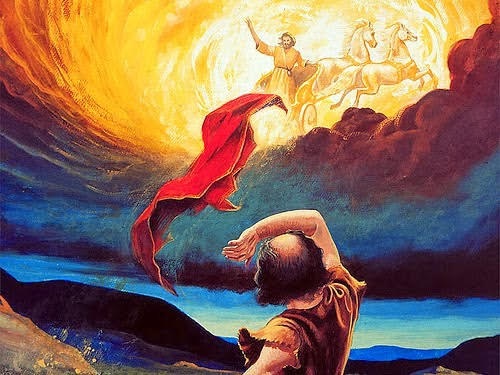
The spirit of Elijah rests on Elisha (2 Kings 2; Pentecost 3C)

In the Hebrew Scriptures passage that the lectionary sets before us this coming Sunday (in 2 Kings 2), we read about the transition from Elijah the prophet to Elisha the prophet. This is an important moment in the story, as it moves on from the words and deeds of Elijah the Tishbite, later remembered as the great “prophet like fire [whose] word burned like a torch” (Sirach 48:1) and as one who had “great zeal for the law” (1 Macc 2:58).

Whilst Elijah remained in his heavenly abode, it was considered that he would ultimately return from that place “before the great and terrible day of the Lord”; he would come “to turn the hearts of the people of Israel” so that the Lord God “will not come and strike the land with a curse” (Mal 4:5–6). But in the meantime, who would follow him in the earthly realm to declare the word of the Lord and to signal the power of the Lord God by performing miracles, as Elijah had done? This transition story offers the answer.

In the book we know as 1 Kings, the compiler of the Deuteronomic History reports many incidents which attest to the courage and power of Elijah. In his sermon in Nazareth, Jesus refers to the first miracle of Elijah, when he provided a widow in Zarephath with food and oil that “did not fail”, even though the land was in drought (1 Ki 17:1–16). In subsequent incidents in this book, he raises a dead son (17:17–24), confronts King Ahab (18:1–18) and famously stares down the prophets of Baal in a mountaintop showdown (18:19–40), leading to the breaking of the drought (18:41–46).

Elijah later condemns Ahab over his unjust seizure of the vineyard of Naboth (21:17–29) and then stands before Ahab’s son, King Ahaziah, to condemn him to death (2 Ki 1:2–16); a death “according to the words of of the Lord that Elijah had spoken” which is promptly reported (2 Ki 1:17). During the rule of Ahab, Elijah had also most famously heard the Lord God “not in the wind … not in the earthquake … not in the fire”—the standard elements involved in a theophany since the time of Moses (Exod 19:1–6)—but rather in “the sound of sheer silence” (1 Ki 19:11–12). Elijah was his own, distinctive man, with his own, distinctive encounter with God.

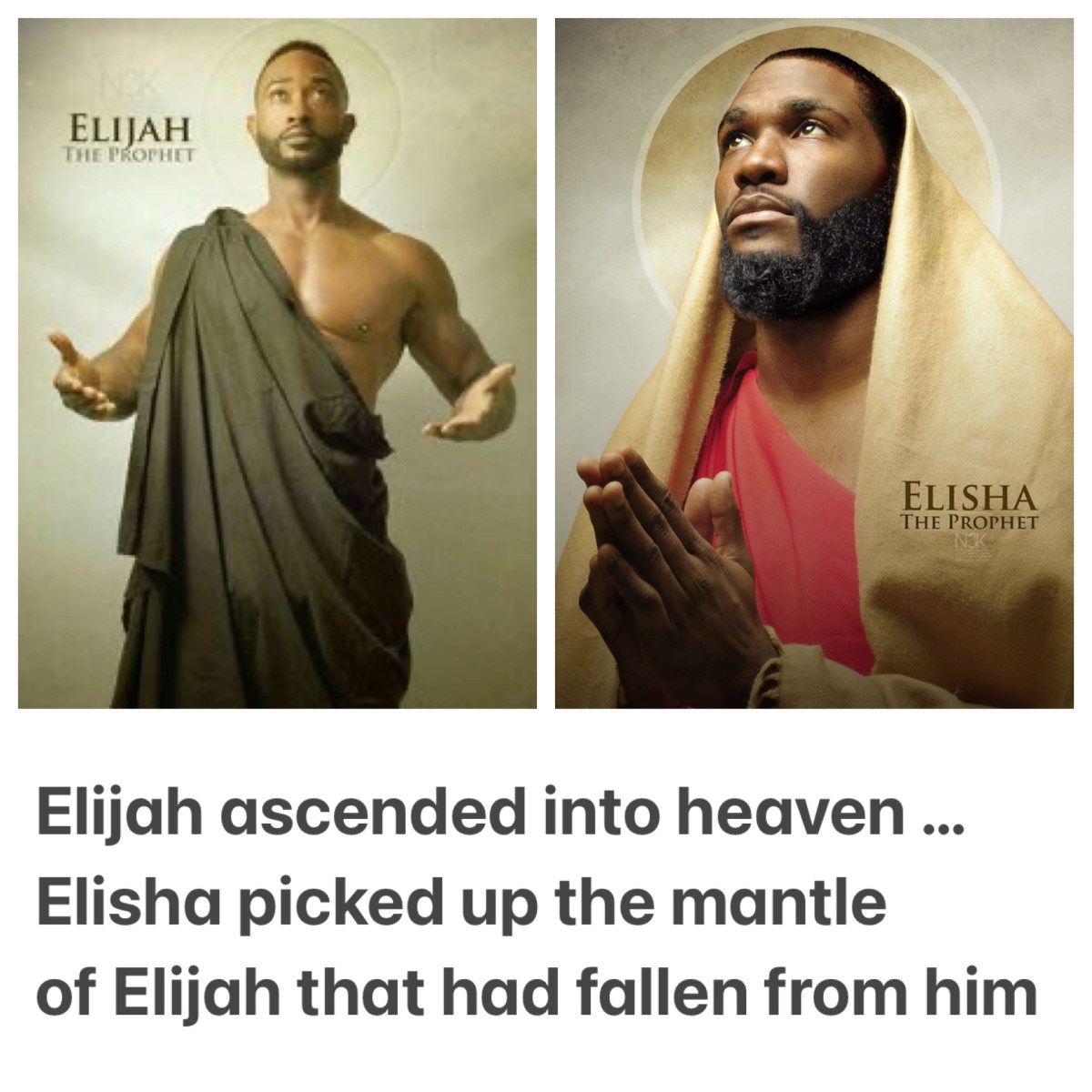
Then, immediately after that encounter, Elijah the Tishbite, from Gilead, called Elisha son of Shaphat, a farmer ploughing his fields, to be his chosen disciple (1 Ki 19:19–21). All of these stories serve as the background to the story that we face on this Sunday’s readings, when Elijah “ascended in a whirlwind into heaven” (2 Ki 2:11) and leaves behind his prophetic mantle, which Elisha then took as his own (2 Ki 2:12–14). From that moment, as “the company of prophets who were at Jericho” declared, “the spirit of Elijah rests on Elisha” (2 Ki 2:13–15).

Indeed, Elisha had rather brashly requested of Elijah, “please let me inherit a double share of your spirit” (2:9). Elijah had responded, “you have asked a hard thing; yet, if you see me as I am being taken from you, it will be granted you; if not, it will not” (2:10). Sure enough, as Elisha subsequently watches as “a chariot of fire and horses of fire” take Elijah and he ascends “in a whirlwind” (2:11), Elisha is watching, indeed crying out a description of the spectacle: “father, father! the chariots of Israel and its horsemen!” (2:12). He will surely be doubly blessed. The narrator makes sure we know that Elisha could see Elijah departing, commenting that “when he could no longer see him, he grasped his own clothes and tore them in two pieces” (2:12).

Elisha knows he had the blessing of Elijah when his first action after the departure of his mentor was to pick up the cloak (or mantle) that Elijah had left behind, and immediately uses it to enact a miracle (2:13–14)—replicating what Elijah had just done (2:8). It seems that a distinctive cloak, or mantle, was worn by prophets over the years; although cloaks were common garments—worn, for instance, by Ezra (Ez 9:5) and Job (Job 1:20)—it is thought the cloak or mantle worn by Samuel (1 Sam 15:27) and Elijah (1 Ki 19:13) was a sign of their prophetic role. That certainly seems the case with Elisha (2 Ki 2:8, 12).

Now, Elisha is not exactly my favourite prophet. After all, look at what he did when some small boys taunted him because of his distinctive hairline.  They jeered at him, calling him “bald head”; in response, he cursed them and, presumably to enact the curse, “two she-bears came out of the woods and mauled forty-two of the boys” (2 Kings 2:23–24). As a particularly alopecic person myself, this does not particularly endear this prophet to me. Why did his sensitivity about his follicularly-challenged head justify this incredibly excessive response to the games of children?

However, the compiler of the Deuteronomic History sees otherwise. Elisha is honoured as a prophet who is able to perform miracles, who confronts kings, and who declares the word of the Lord forthrightly and without fear. He replicated the last miracle of Elijah (2 Ki 2:8) by striking a steam of water with his newly-acquired mantle, so that “the water was parted to the one side and to the other” (2:13–14). He made good the bad water in Jericho (2:19–22), then spoke the word that made the water flow again in Judah (3:13–20), replicating another miracle of Elijah when he caused an earlier drought in Israel to end (1 Ki 18:41–45).

He later supplies an impecunious widow with an abundance of oil to save her from her debtors (2 Ki 4:1–7) and then raises from the dead the son of a Shunnamite woman (4:8–37). These two miracles replicate actions performed earlier by Elijah (1 Ki 17:8–16, 17–24). Elisha’s miraculous deeds continue as he supplies food to end a famine in Gilgal (2 Ki 4:38–41), feeds a hundred men (4:42–44), and then heals the Syrian army commander Naaman (5:1–19), a story that we will focus on in worship the Sunday after this coming one. And as Elijah had challenged the kings of his day, so Elisha confronts the king of his time (2 Ki 6).

Still more miracles are reported, before Elisha became ill and died (13:14–20). Yet even in death, his miraculous powers continued; the narrative reports that as the Moabites invade the land each spring, “as a man was being buried, a marauding band was seen and the man was thrown into the grave of Elisha; as soon as the man touched the bones of Elisha, he came to life and stood on his feet” (13:21). Whilst Elijah had not died—his ascension into heaven was most certainly while he was still alive (2 Ki 2:11–12)—Elisha had died, but his power to perform miracles lived on (2 Ki 13:21).

In his long “hymn in honour of our ancestors”,  Jesus, son of Sirach lavishes praise on Elisha. “When Elijah was enveloped in the whirlwind”, he writes, “Elisha was filled with his spirit. He performed twice as many signs, and marvels with every utterance of his mouth. Never in his lifetime did he tremble before any ruler, nor could anyone intimidate him at all. Nothing was too hard for him, and when he was dead, his body prophesied. In his life he did wonders, and in death his deeds were marvelous.” (Sirach 48:12–14). He was, by all accounts, a worthy successor to Elijah. I may have to allow him that, despite his hyper-sensitivity about his hairstyle.

See also 

In the sound of sheer silence (1 Kings 19; Pentecost 2C)

In the passage which the lectionary places before us this coming Sunday (from 1 Kings 19), we meet the first of a number of prophetic figures whose deeds are recounted in the books of the Kings or whose words are collected within the Hebrew Scriptures under the catch-all second section of Nevi’im (Prophets).

The first of these prophetic figures is the Elijah the Tishbite, who was introduced as coming from Tishbe in Gilead (1 Ki 17:1), a place whose precise location has occasioned some debate.  See https://www.biblegateway.com/resources/encyclopedia-of-the-bible/Tishbite

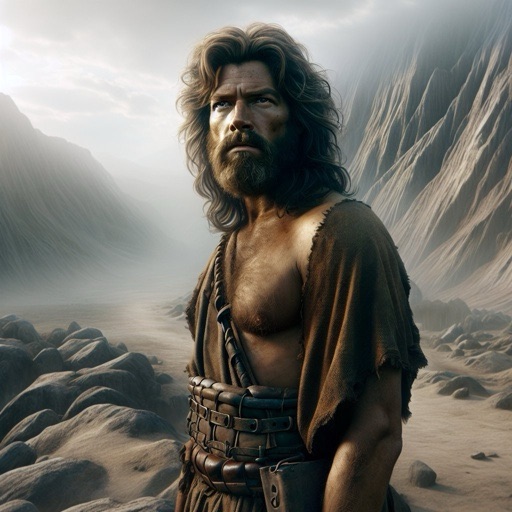
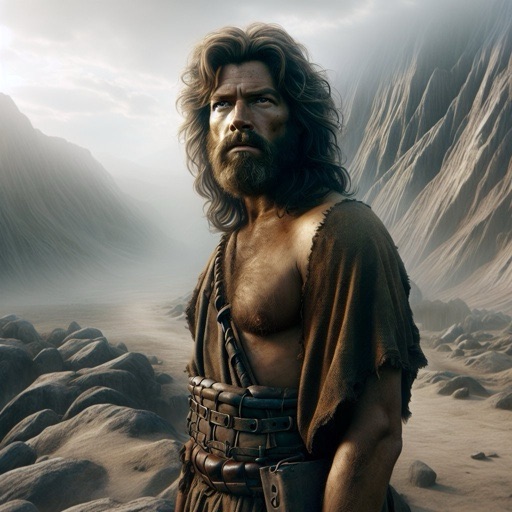
Elijah is later described as “a hairy man, with a leather belt around his waist” (2 Ki 1:8). This initial portrayal of Elijah is nested within the accounts of that long period of time when Israel was ruled by kings, when prophets functioned as the conscience of the king and the voice of integrity within society. The distinctive dress of Elijah perhaps sets him apart from the court of the kings, where a more “civilized” dress code was presumably operative. Nevertheless, Elijah does have some engagement with the kings who ruled at the time he was active: Ahab, and then Ahaziah. Indeed, his distinctive dress points to his emboldened attitude towards those kings.

Elijah operated during the period when Ahab ruled Israel; he figures in various incidents throughout the remainder of 1 Kings—most famously, in the conflict with the prophets of Baal which came to a showdown on Mount Carmel (1 Ki 18), and then later in his confrontation with Ahab and his wife Jezebel, over the matter of Naboth’s vineyard (1 Ki 21). Like Jesus, Elijah was no shrinking violet!

Elijah first appears in the narrative of the various kings, seemingly out of nowhere, just after King Ahab had taken as his wife Jezebel, daughter of King Ethbaal of the Sidonians, who presumably influenced him to begin his worship of Baal (1 Ki 17:31–33). In the same way, at the end of his time of prophetic activity, Elijah simply disappears from sight soon after Kong Ahaziah died. Elijah hands over his role to his successor, Elisha, and as “a chariot of fire and horses of fire separated the two of them”, Elijah ascends in a whirlwind into heaven (2 Ki 2:1–15).

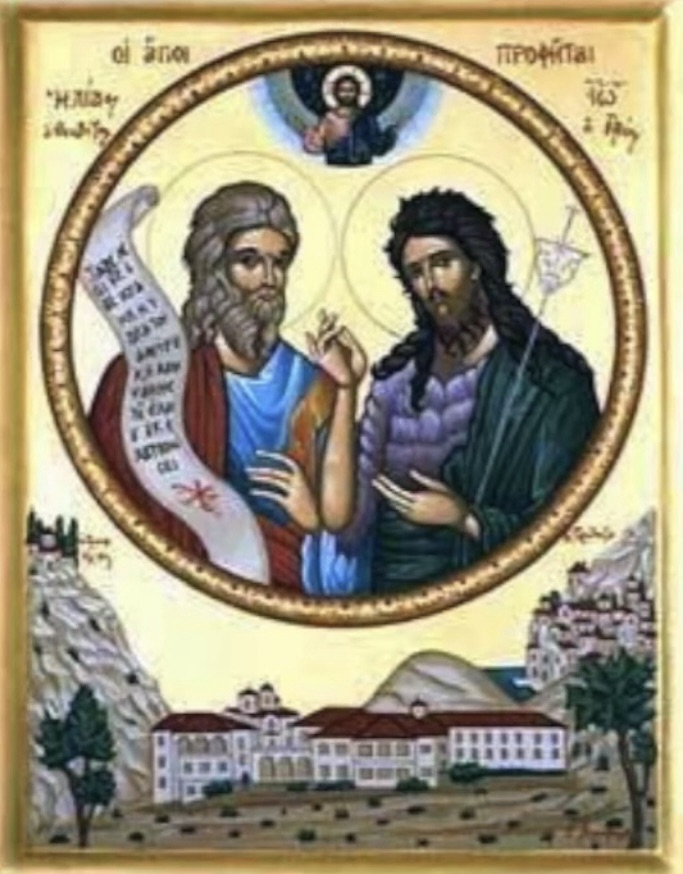
In the book we know as 1 Kings, the compiler of the Deuteronomic History reports many incidents which attest to the courage and power of Elijah. The boldness of Elijah is evident in the confrontations that he has with made clear, centuries later, to the followers of Jesus, in the earliest account of his life, when John the baptiser is depicted as a fiery desert preacher, calling for repentance, just as Elijah had called the kings to account (Mark 1:1–8). In a later account of Jesus, there is a clear inference connecting John with Elijah when Jesus notes, “Elijah is indeed coming and will restore all things; but I tell you that Elijah has already come, and they did not recognize him, but they did to him whatever they pleased” (Matt 17:11–12).

An icon of the Prophet Elijah and Saint John the Baptist from the Monastery of the Prophet Elias (Elijah) in Preveza, Greece

Then, in his sermon in Nazareth (Luke 4:16–30), Jesus refers to the first reported miracle of Elijah, when he provided a widow in Zarephath with food and oil that “did not fail”, even though the land was in drought (1 Ki 17:1–16). In subsequent incidents in 1 Kings, Elijah raises a dead son (17:17–24), directly confronts King Ahab with his sins (18:1–18), and famously stares down the prophets of Baal in a mountaintop showdown (18:19–40), leading to the breaking of the drought (18:41–46).

Elijah later condemns Ahab over his unjust seizure of the vineyard of Naboth (21:17–29) and then stands before Ahab’s son, King Ahaziah, to condemn him to death (2 Ki 1:2–16); a death “according to the words of of the Lord that Elijah had spoken” which is promptly reported (2 Ki 1:17). 

During the rule of Ahab, Elijah had also most famously heard the Lord God “not in the wind … not in the earthquake … not in the fire”—but rather in something else, which the NRSV renders as “the sound of sheer silence” (1 Ki 19:11–12). This incident is, as noted, the story set before us by the lectionary this coming Sunday. We need to ponder what is being conveyed through the symbols employed in this story. 

The three means by which God is said not to have appeared to Elijah reflect the very same means through which Moses, and the people of Israel, did experience the manifestation of the Lord God in their midst. When the escaping Israelites arrived at the Sea of Reeds, according to one version of this archetypal story, “the Lord God drove the sea back by a strong east wind all night, and turned the sea into dry land; and the waters were divided” (Exod 14:21). 

The people later celebrated the defeat of the Egyptians who were pursuing them: “you blew with your wind, the sea covered them; they sank like lead in the mighty waters” (Exod 15:10). The wind was a sign of God’s presence, and an agent of divine protection—indeed, it was the very same “wind from God” which “swept over the face of the waters” at the beginning of creation (Gen 1:2). But for Elijah, the Lord God was “not in the wind”.

Then, as they had travelled through the wilderness, the people were accompanied by a blazing fire, another sign of divine presence: “the Lord God went in front of them in a pillar of cloud by day, to lead them along the way, and in a pillar of fire by night, to give them light, so that they might travel by day and by night” (Exod 13:21). The fire signalled the divine presence.

Indeed, the very same flaming fire had been manifested to Moses when he was but a mere shepherd in Midian; “the angel of the Lord appeared to him in a flame of fire out of a bush; he looked, and the bush was blazing, yet it was not consumed” (Exod 3:2). What follows is the account of the call of Moses; God tells him “I will send you to Pharaoh to bring my people, the Israelites, out of Egypt” (Exod 3:10). The fire had been the assurance to Moses that it was the Lord God who was present.  But for Elijah, the Lord God was “not in the fire”.

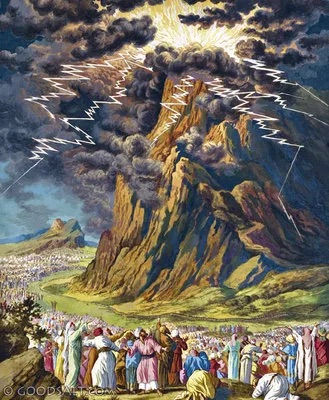
The same element of fire was present when Moses and the people ultimately arrived at Mount Sinai in the wilderness of Sinai (Exod 19:1–2). “Mount Sinai”, so the account goes, “was wrapped in smoke, because the Lord had descended upon it in fire; the smoke went up like the smoke of a kiln, while the whole mountain shook violently” (Exod 19:18). Associated with this there was “thunder and lightning, as well as a thick cloud on the mountain, and a blast of a trumpet so loud that all the people who were in the camp trembled” (Exod 19:16). 

The scene at Sinai surely reflects the experience of an earthquake; the same phenomenon that prophets would later interpret as a sign of divine presence—indeed, divine judgement. “You will be visited by the Lord of hosts”, Isaiah subsequently tells the people of his time, “with thunder and earthquake and great noise, with whirlwind and tempest, and the flame of a devouring fire” (Isa 29:6). 

Still later, Zechariah describes how “the Mount of Olives shall be split in two from east to west by a very wide valley”, and instructs the people, “you shall flee as you fled from the earthquake in the days of King Uzziah of Judah; then the Lord my God will come, and all the holy ones with him” (Zech 14:4–5).

Nahum reflects on the jealous and avenging nature of God, declaring that “his way is in whirlwind and storm, and the clouds are the dust of his feet; he rebukes the sea and makes it dry, and he dries up all the rivers; the mountains quake before him, and the hills melt; the earth heaves before him, the world and all who live in it” (Nah 1:2–5). 

This dramatic motif continues on into later apocalyptic writings (Isa 64:1; 1 Esdras   4:36; 2 Esdras 16:12). The prophets and their apocalyptic heirs  knew clearly that this whole dramatic constellation of events revolving around an earthquake was a sign of divine presence.  But for Elijah, the Lord God was “not in the earthquake”. He was heard in something quite different.

What did Elijah hear? The Hebrew phrase found in verse 12 is qol d’mamah daqqah.

The King James Version translated this as “still small voice”.  More recent translations have provided variants on how these words might be translated. Alternatives that are found include “the sound of a low whisper” (ESV), “a gentle whisper” (NIV, NLT), “a soft whisper” (CSB), or “the sound of a gentle blowing” (NASB). These reflect variations on the kind of nuance that the KJV was offering. 

However, the NRSV option of translating this phrase as “the sound of sheer silence” is more confronting: the presence of God is sensed in the absence of sound; any communication from the deity comes, not in audible sounds, but in the utter absence of any sound. It is a striking paradox!

And in the context of the developing story of 1 Kings, the paradox is strong. Earlier, the prophet had stood firm against the might of Baal, the foreign god whom Ahab and Jezebel had prioritized in the life of Israel (1 Ki 18:17–40). When “the four hundred and fifty prophets of Baal and the four hundred prophets of Asherah who eat at Jezebel’s table” gathered on Mount Carmel, they failed to obtain any response from their god, the god of storms. No matter how intensely they raised their frenzied pleas, all they heard was “no voice, no answer, no response” (18:29).

Elijah, by contrast, prays to the Lord God and the fire of his god fell on the sacrificial altar; it consumed “the burnt offering, the wood, the stones, and the dust, and even licked up the water that was in the trench” (18:38). The victory was absolute and complete; the storm god had been defeated. And yet, the deity who accomplished this would communicate most personally and intimately with his chosen prophet, “not in the wind … not in the earthquake … not in the fire”, but rather in “a sound of sheer silence” (19:11–12). What a deliciously powerful irony!

Elijah was his own, distinctive man, with his own, distinctive encounter with God. He experienced God in a way quite different from what was experienced by Moses and the people of Israel. He experienced God in a way that stood apart from his contemporaries who were priests and prophets of Baal. For that reason, whilst the Lord God of Elijah stands over and against the Baal of Ahab and Jezebel, so too Elijah stands alongside and apart from Moses as a different, but equally great, leader of the people.

The master worker beside the Lord: Wisdom at the time of creation (Sunday after Pentecost; Proverbs 8)

“When he established the heavens, I was there … when he marked out the foundations of the earth, I was beside [the Lord], like a master worker; and I was daily his delight, rejoicing before him always”. 

So Wisdom is described, in these verses in the second portion of Proverbs 8 which the lectionary offers us for this Sunday, the first Sunday after the festival of Pentecost (Prov 8:22–31). Of course, this day is identified in the liturgical calendar as Trinity Sunday, and this passage from Proverbs is one of a number of Scripture passages which, over three years, are proposed for this particular Sunday. 

The others are Genesis 1, where God, God’s word, and God’s spirit are to be found, and Isaiah 6, which includes the tripartite song “holy, holy, holy”; and Psalms 8, a song in praise of creation, and 29, singing of “the voice of the Lord”. None of them, of course, make any specific claim that can be seen to be articulating a “doctrine of the Trinity”. It is up to later Christian interpreters to “read back” into the passage any inferences regarding a triune God.

In this post I am not going to attempt any exegetical gymnastics, to find aspects of the threefold nature of God in what is said about Wisdom. In an earlier post, I have explored the importance of what is said about where Wisdom exercises her ministry (8:1–4). In this post, I turn to the the significance of the role that Wisdom plays in the creation of the world (8:22–31). These are themes that are inherent in the passage itself; as we attend to these matters, we don’t need to squeeze, distort, or manipulate the text to make it conform with a much later dogmatic theory. 

Perhaps there is a connection with the patristic Christian doctrine of the Trinity; we can see this if we trace a trajectory from the Jewish documents already noted, in the scriptural text of Proverbs, then following its development through the Intertestamental texts of the Wisdom of Solomon and Ben Sirach. These lead to some of the New Testament texts we have noted, where Jesus is described in terms drawn from these earlier scriptural passages (Col 1, Heb 1, and John 1).

In Proverbs 8, Wisdom herself is said to have declared that “ages ago I was set up, at the first, before the beginning of the earth … when [the Lord] established the heavens, I was there … when he marked out the foundations of the earth, then I was beside him, like a master worker” (Prov 8:22–31). In the Wisdom of Solomon, Wisdom is described as “the fashioner of all things” (Wisd Sol 7:22), “a breath of the power of God” who “pervades and penetrates all things”(7:24–25), who was “present when you [God] made the world” (9:9), whose “immortal spirit is in all things” (12:1). Som wisdom pre-exists all other elements of creation, and Wisdom herself participates with the deity in the creating of the world.

The importance of these Wisdom writings for what is stated about Jesus in Col 1:15–20, Heb 1:1–4, and John 1:1–18, cannot be overstated. In these New Testament passages, Jesus is identified as the one who has “first place in everything” (Col 1:18), the Word who was “in the beginning … with God” (John 1:1), the one who “sustains all things by his powerful word” (Heb 1:3). In this last book, this word is further described, in language drawn from the Wisdom traditions, as “the reflection of God’s glory and the exact imprint of God’s very being” (Heb 1:3).

In Prov 8, Wisdom herself declares that “before the mountains had been shaped, before the hills, I was brought forth—when [the Lord] had not yet made earth and fields, or the world’s first bits of soil” (Prov 8:25–26), just as the works of Wisdom can be traced “from the beginning of creation” (Wisdom Sol 6:22). Wisdom is described in Proverbs as being “set up, at the first, before the beginning of the earth” (Prov 8:30), taking part with the deity in the acts of creation. All that came into being was due to the creative contribution of Wisdom from the very start.

The poetry of this hymn builds through repetition and an ever-expanding circle of influence. So Wisdom declares that “when he established the heavens, I was there … when he drew a circle on the face of the deep, when he made firm the skies above, when he established the fountains of the deep, when he assigned to the sea its limit … when he marked out the foundations of the earth” (Prov 8:27–29). In all these acts of creation, Wisdom was beside the Lord, “daily his delight, rejoicing before him always, rejoicing in his inhabited world and delighting in the human race” (Prov 8:30–31).

This affirmation in Proverbs leads on to the subsequent claim that Wisdom “pervades and penetrates all things” (Wisd Sol 7:24) and “renews all things … [she] passes into holy souls and makes them friends of God, and prophets” (Wisd Sol 7:27). She “reaches mightily from one end of the earth to the other, and she orders all things well” (Wisd Sol 8:1). 

Likewise, Jesus son of Sirach writes in a song of Wisdom that she “came forth from the mouth of the Most High, and covered the earth like a mist” (Sir 24:3), expanding on this in a sequence of grand claims: “I dwelt in the highest heavens, and my throne was in a pillar of cloud. Alone I compassed the vault of heaven and traversed the depths of the abyss. Over waves of the sea, over all the earth, and over every people and nation I have held sway.” (Sir 24:6).

The all-encompassing work of Wisdom in this act of creation is emphasised through the places noted—the depths, the heavens, the sea, and the land. Her hymn of celebration reflects the joyous song sung by the psalmist in Psalm 95.

The depths of the earth were the place where sinful people went (Ps 63:9; Isa 14:15), following the lead of the Egyptians who pursued the Israelites and “went down into the depths like a stone” (Exod 15:4–5; Neh 9:11; Isa 63:11–13). There, in the depths, God’s anger burned (Deut 32:22). However, those banished to the depths were able to be brought back from the depths by God’s decree (Ps 68:22; 71:20; 86:13), so in one psalm we hear the cry, “out of the depths I cry to you, O Lord; Lord, hear my voice” (Ps 130:1), and the prophet Micah affirms that God “will cast all our sins into the depths of the sea” (Mic 7:19).

The heights are where the Lord God set the people once they had made their home in Israel, “atop the heights of the land … [where] he fed [them] with the produce of the land” (Deut 32:13; similarly, Isa 49:9; 58:14; Ezek 34:14). It is a place of security (2 Sam 22:34; Ps 18:33); indeed, “on the heights” is where Wisdom is to be found (Prov 8:2) and the Temple was built on the (relative) heights of Mount Zion, and so it is from “the holy height” that God looks down over the people (Ps 102:19).

Just as the depths and the heights were parts of God’s good creation, so too the sea was integral to God’s creative works: “yonder is the sea, great and wide, creeping things innumerable are there, living things both small and great” (Ps 104:25). Yet the sea was a threatening place for the people of Israel, accustomed to life on the land, planting grapevines and herding sheep in “the land of milk and honey”. The sea of reeds was the place of destruction for Egypt (Ps 114:1–8), although it was also the location of salvation for Israel, as is celebrated in David’s song of praise (2 Sam 22:1–4, repeated at Ps 18:6, 12–19). 

For sailors, however, the sea could be a place of great danger (Ps 107:23–31)—the story of Jonah attests to this (Jon 1:4–17), as does the final trip of Paul as he is taken as a prisoner to Rome (Acts 27:14–20). Yet the power of the roaring sea, as majestic as it is, pales into insignificance beside the majesty of the Lord on high (Ps 93:3–4).

Just as the sea was a place of danger, so the dry land was a place of safety—as evidenced by the way the story of crossing the sea of reeds is told (Exod 14:21; Neh 9:11; Ps 66:6) and when Jonah is vomited up onto dry land by the fish (Jon 2:10). However, when the Psalmist finds themselves in “a dry and weary land where there is no water”, a prayer is offered to God because “my soul thirsts for you; my flesh faints for you” (Ps 63:1). When linked with “the wilderness”, “the dry land” receives blessing from God, who will “make the wilderness a pool of water, and the dry land springs of water” (Isa 41:18) and “pour water on the thirsty land, and streams on the dry ground” (Isa 44:3).

So Wisdom has shared with the Lord God in the whole enterprise of bringing into being the whole creation. Her importance in this task cannot be minimised. And the wonders of the whole creation are in view in this passage from Proverbs, as Wisdom celebrates: “I was beside [the Lord], like a master worker, and I was daily his delight, rejoicing before him always, rejoicing in his inhabited world and delighting in the human race.”

See also

At the crossroads, beside the gates: Wisdom in the public places (Sunday after Pentecost; Proverbs 8)

“On the heights, beside the way, at the crossroads … beside the gates”. So Wisdom is located, in these opening verses of the section of Proverbs which the lectionary offers us for this Sunday, the first Sunday after the festival of Pentecost (Prov 8:1–4). Of course, this day is identified in the liturgical calendar as Trinity Sunday, and this passage from Proverbs is one of a number of Scripture passages which, over three years, are proposed for this particular Sunday. 

The others are Genesis 1, where God, God’s word, and God’s spirit are to be found, and Isaiah 6, which includes the tripartite song “holy, holy, holy”; and Psalms 8, a song in praise of creation, and 29, singing of “the voice of the Lord”. None of them, of course, make any specific claim that can be seen to be articulating a “doctrine of the Trinity”. It is up to later Christian interpreters to “read back” into the passage any inferences regarding a triune God.

In this post I am not going to attempt any exegetical gymnastics, to find aspects of the threefold nature of God in what is said about Wisdom. Rather, I want to highlight the importance of what is said about where Wisdom exercises her ministry (in this post) and the significance of the role that Wisdom plays in the creation of the world (in the following post). These are themes that are inherent in the passage itself; as we attend to these matters, we don’t need to squeeze, distort, or manipulate the text to make it conform with a much later dogmatic theory. 

Wisdom is positioned in the public places of her society—places where, normally, males would be found, transacting their business, arguing their views, maintaining the honour of their public status. Instead, in this poem, as also in the opening poem about Wisdom at 1:20–33, the female figure is placed firmly within those traditionally-male places. In the earlier poem, she was said to be crying out “in the street” (1:20), raising her voice “in the squares”, speaking forth “at the busiest corner” (1:20–21). 

The street is where the prophet Jeremiah is commissioned to proclaim his message in the pubic place of the streets (Jer 11:6); the squares are where this same prophet is to search, to see “if you can find one person who acts justly and seeks truth” (Jer 5:1). So here in Proverbs, Wisdom  is functioning in a very public place.

This claim is intensified with the further declaration that Wisdom takes her stand “at the crossroads” (8:2). This is reminiscent of the earlier assertion about Wisdom: “at the busiest corner she cries out; at the entrance of the city gates she speaks” (Prov 1:21). The street corner may well have been the location for public prayer by some, if the words of Jesus reflect the common practice of “the hypocrites [who] love to stand and pray in the synagogues and at the street corners, so that they may be seen by others” (Matt 6:5).

However, it is the mention of “the gates in front of the town” (8:3) that is most significant. The same claim, placing Wisdom “at the entrance of the city gates”, is made in the earlier poem (1:21). The gates were important parts of the protective structure surrounding towns and cities; built into the walls at strategic locations, they could be opened to allow for the coming and going of traders and visitors, or they could be closed to keep out enemies and invaders. “Fortress towns” are described in Deut 3:5 as having “high walls, double gates, and bars”. King Asa decreed “let us build these cities, and surround them with walls and towers, gates and bars” (2 Chron 14:7). 

In Jerusalem, the Chronicler claimed that it was the Levites who had responsibility for the gates, as Solomon appointed “gatekeepers in their divisions for the several gates” (2  Chron 8:14). When Judith calls out to be let into the city, the elders of the town “opened the gate and welcomed them, then they lit a fire to give light, and gathered around them” (Jud 13:12–13). Opening the gates is a clear sign of welcome to those acceptable to enter. 

Accordingly, the gates of the city became the place where various matters associated with the life of the city took place. When God’s angels arrived in Sodom, Lot was “sitting in the gateway,” apparently serving as a judge (Gen 19:1, 9). In association with the rape committed on Dinah, “Hamor and his son Shechem came to the gate of their city and spoke to the men of their city” (Gen 34:20). The “men of the city” are apparently often to be found in this location.

When David gathered his troops to fight against the uprising led by Absalom, “the king stood at the side of the gate, while all the army marched out by hundreds and by thousands” (2 Sam 18:4). After Absalom was killed, “the king got up and took his seat in the gate; the troops were all told, “See, the king is sitting in the gate”; and all the troops came before the king” (2 Sam 19:8). In a story from much later, Mordecai learned of plans to assassinate the king while “sitting at the king’s gate” (Esther 2:19).

Earlier in the narrative saga of Israel, when a soldier arrived at Shiloh and reported that Philistines had captured the ark of the covenant, Eli was sitting in the gate where “he had judged Israel forty years” (1 Sam 4:10–18). It was already known as a place for the judging of cases by the elders. That this took place at the city gates is clear from the story of Ruth, for Boaz went to the town gate to settle legal matters regarding his marriage to Ruth (Ruth 4:1–11). 

Moses instructs Israel to “appoint judges and officials throughout your tribes, in all your gates that the Lord your God is giving you, and they shall render just decisions for the people” (Deut 16:18). One of the laws decrees that parents of a rebellious son who would not submit to their discipline were to “take hold of him and bring him out to the elders of his town at the gate of that place” and there “all the men of the town shall stone him to death; so you shall purge the evil from your midst” (Deut 21:18–21). Such was the nature of justice rendered “ at the gates”.


What the city gates may have looked like:
a place of entry, a meeting place

So finding Wisdom “beside the gates in front of the town, at the entrance of the portals” (Prov 8:3) is striking. This is the place where the men of the city would gather, debate, and render justice. In the normal course of events, women would not be found at the gates; their domain was inside the houses with their families. The acrostic poem at the end of the book of Proverbs clearly locates the “woman of valour” in the house, from daybreak, when “she rises while it is still night and provides food for her household and tasks for her servant-girls” (Prov 31:15), through the day as “she girds herself with strength, and makes her arms strong” (31:17) to complete the many tasks listed in this poem, right until the darkness comes, when “her lamp does not go out at night” (31:18b). See

See also

Beginning Lent with a message of belonging: shaping the identity of a people of faith (Deut 26; Lent 1C)

During Lent, the lectionary sets before us a string of passages that canvass key theological elements in the story of Israel. These stories, of course, also resonate also with the story of Jesus and his followers (and that is largely why they have been selected, I assume). We begin this coming Sunday with the promise of the land (Deut 26), and then follows passages focussed on the covenant with Israel (Gen 15), the provisions of God for the people (Isa 55), the renewing moment at Gilgal (Josh 5), the promise of “a new thing” (Isa 43), and the gift of The Servant (Isa 50). It is a stirring and inspiring sequence!

There is much debate amongst Christian thinkers, these days, about what comes first as we invite people to be a part of the church. Do we say, “this is what we believe, expressing our fundamental understanding of life; do you want to sign up to show you have the same beliefs?” Or do we say, “this is how we behave, guided by our fundamental ethical principles; would you like to act the same way and join us?” Or perhaps the invitation is simply, “come along, join in with us, see what we believe, what we are on about, and soon you’ll feel like you belong”?

Is it believe first? Or behave? Or simply, belong? The tendency to put a creed at the forefront of our invitations—to show that we are a people who believe, first and foremost—is widespread and deeply ingrained. Whether it be affirming The Apostles Creed in baptism, or saying The Believer’s Prayer at conversion, or working out a new Mission Statement for the Congregation, giving priority to belief is a very familiar pattern for us. We tend to think that, whatever formula we are repeating, that is exactly what declares and confirms our identity as people of faith.

So it’s no surprise that when we read Deuteronomy 26 (the Hebrew Scripture passage in next Sunday’s lectionary), we gravitate to the middle part of the passage, and lay claim to what looks to be an early affirmation of faith that sets out the identity of the people of Israel: “A wandering Aramean was my ancestor; he went down into Egypt and lived there as an alien, few in number, and there he became a great nation, mighty and populous” (Deut 26:5). This affirmation seems to go right back to the start, affirming what sets the people of Israel apart as a distinctive entity.

This way of reading this passage gained influence from the analysis of Gerhard von Rad, a German scholar of the 20th century. Von Rad claimed that the credal statement in verses 5 following was most likely a formula much older than the era when the book of Deuteronomy was written. And the origins of this creed, he claims, most likely lay in ancient cultic remembrances of the origins of the people. The wandering Aramean (Jacob, grandson of Abraham of Aramn) and the time in Egypt (leading up to Moses) reflect those times of origin.

*****

But the whole of this “creed” is not actually a “statement of faith”. It is more a narrative that tells a story. Such was the way of the ancient world; central beliefs were not articulated in crisp propositional statements (for this is the way of the post-Enlightenment western world); rather, a story was told, in the course of which key events pointed to central affirmations for the people. The ancients were story-tellers, more concerned to tell the story than state the faith. This is the story of the people; it is their saga.

God is important in the story that is told, nevertheless. God is the one who “heard our voice and saw our affliction, our toil, and our oppression … who brought us out of Egypt with a mighty hand and an outstretched arm, with a terrifying display of power, and with signs and wonders” (26:7–8). The rescue of the people by their powerful God is central to the story. This, of course, if the story of the Exodus, which stands at the heart of Israelite identity and later Jewish identity. It is the central story of the people of Israel.

More than this, God is the one who “brought us into this place and gave us this land, a land flowing with milk and honey” (26:9). The land of Israel is the second aspect of ancient Israelite life that is central and fundamental; and so it continues to be, in the 20th and 21st centuries, in which the land of Israel has been one of the most contested pieces of land in the world.

The story is told, however, for a purpose. Not just to remember—although remembering is important, for it recurs as a regular refrain in the book of Deuteronomy (7:18: 8:2, 18: 9:7, 27; 11:2; 15:15; 16:12; 24:9, 18, 22; 25:17; 32:7). The story is told, also, to inculcate the ethos, the values, the very identity of the people. And central to that ethos, taking prime place amongst the things that were seen to be important to affirm about who the people of Israel were, is this: giving back to God the first fruits produced by the land.

“So now I bring the first of the fruit of the ground that you, O LORD, have given me”, are the words that the people are to say, each time a harvest is produced. “You shall set it down before the LORD your God and bow down before the LORD your God”, the instruction declares (26:10). Gratitude is to the fore; gifting back the beginnings of “the fruit of the ground” to the God who gave the people the land to grow this fruit.

*****

Of course, there is a dark story submerged, for the most part, underneath that celebratory action. The land was “given” by God over the resistance of the people who were already IN the land, producing fruit, settled and content with their lot in life. The battles recounted in the book of Joshua—most likely not actual historical events, but reflecting a reality of submission to the Hebrews who took control of the land—reflect this dark story.

This dark story does not figure in the “received tradition” and “authorised affirmation” that we read in Deut 26. Nor do we find this in the affirmation of Deut 6:20–24, which begins “we were Pharaoh’s slaves in Egypt, but the Lord brought us out …”. Mention of the Exodus jumps straight across to life in the land—no mention of the conquest that (in other biblical texts) is reported in detail.

This conquest is part, by contrast, of the larger recitation of Josh 24:2–13, “I brought you out of Egypt … and I handed the Amorites over to you, and you took possession of their land, and I destroyed them before you … and also the Amorites, the Perizzites, the Canaanites, the Hittites, the Girgashites, the Hivites, and the Jebusites; and I handed them over to you … I gave you a land on which you had not labored, and towns that you had not built, and you live in them; you eat the fruit of vineyards and oliveyards that you did not plant.” At least this version of the affirmation is honest about the cost to the earlier inhabitants, and the benefits enjoyed with relative ease by the invading Hebrews.

*****

Yet the affirmation of Deut 26 highlights the central importance of gratitude for the gift of the land; and not only that, for it especially indicates the importance of making this celebration inclusive: “you, together with the Levites and the aliens [or, sojourners] who reside among you, shall celebrate with all the bounty that the LORD your God has given to you and to your house” (26:11). So the instructions for the annual festival of the first fruits provide.

The inclusion of the aliens in this annual festival reflected a gracious openness to others in the developing people of Israel. These texts differ from the xenophobic antagonism of earlier texts, recounting the conquest of Israel. They reflect a later understanding of the identity of the people, as they were collated during and after the Exile, centuries after the formation of Israel. People designated as aliens (non-Israelites), sojourners in the land, were welcome to bring offerings to the Lord (Lev 22:18), to adhere to Israelite food prescriptions (Lev 17:12), to keep the Sabbath (Exod 20:8–11; 23:12), to have gleaning rights (Lev 23:22), and to join in the annual process of atonement (Lev 16:29–31; Num 15:29).

The foundational Passover narrative indicates that aliens, or sojourners, were able to join (under certain conditions) in the Passover celebrations (Exod 12:47–49); a second narrative (Num 9:14) is much less restrictive. Aliens were to be subject to the same laws regarding murder (Lev 24:17–22), able to have right of access to cities of refuge (Num 35:13–15), and indeed to enter into the covenant at the annual covenant renewal ceremony (Deut 29:10–13; see also 31:10–13). The voice of the alien even sounds appreciation for the Law: “I live as an alien in the land; do not hide your commandments from me” (Ps 119:19).

Because Israelites were once “an alien residing in the land” of Egypt, the people were instructed, “you shall not abhor any of the Edomites, for they are your kin; you shall not abhor any of the Egyptians” (Deut 23:7); by the third generation, the children of aliens “may be admitted to the assembly of the Lord” (Deut 23:8).

This meant that “the alien who resides with you shall be to you as the citizen among you; you shall love the alien as yourself, for you were aliens in the land of Egypt: I am the LORD your God” (Lev 19:34; a similar affirmation is made at Num 15:14–16).

The principle of equality is clear: “you shall not deprive a resident alien or an orphan of justice; you shall not take a widow’s garment in pledge” (Deut 24:17; see also Jer 7:5–7; 23:5–7; Zech 7:9–10; Mal 3:5). The alien, or sojourner, deserves the same measure of justice as all residents of Israel.

Accordingly, amongst the curses at the end of Deuteronomy, we read, “cursed be anyone who deprives the alien, the orphan, and the widow of justice. All the people shall say, ‘Amen!'” (Deut 27:19). The curse outlines the negative consequences from not adhering to the positive principle of welcoming and including those sojourning for a time innIsrael, the “alien”. That is integral to the celebrations each year, when the harvest produces its fruit from the land.

Gratitude. Belonging. Celebration. Inclusion. All of this is embedded in the story; and all of this comes before believing, repeating doctrinal claims, affirming credal statements. We are a people of welcome, including, belonging. This much is embedded in the ancient Hebrew tradition. This much should be living, still, in Christianity today.

See also