Now that we have finished the sequence of passages from Romans, as the Epistle reading offered each week by the lectionary, I thought it might be helpful to post this collection of posts about this letter.
Back in the days when I regularly taught “Exegesis of Paul’s Letters” in a theological college (seminary), I would begin the section on Romans in chapter 1, as might reasonably be expected. In characteristically Pauline style, the qualities for which he gives thanks in his opening prayer (1:8–14), as well as the way in which he introduces himself to the believers in Rome (1:1–7), signal a number of the key matters to which he will address himself later in this letter. So that seemed a logical place to start.
However, once we got to 1:16–17, the apparent “theme of the letter”, I would jump over to 15:14–33, and explore what Paul wrote about the intentions that he had, to visit “God’s beloved in Rome, who are called to be saints” (1:7), before pressing on to Spain. Why did he tell them this? It seems to be relevant to what was in Paul’s mind as he wrote his longest, and most theologically complex, letter.
But then, we would continue on, to look at chapter 16, which provides a long list of names of people in Rome to whom Paul sent greetings, as well as those who were with him, who added their greetings to those of Paul. More grist for the mill for understanding Paul’s circumstances, and thus also feeding into his rationale for writing. But also helpful, I believe, for getting an understanding of the situation in Rome, to which Paul was addressing his words. What he indicates about “God’s beloved in Rome, who are called to be saints” in that final chapter, is entirely relevant to our understanding of the letter as a whole.
After that, we would revert to chapter 1, and trace through the theological argumentation of this rhetorically-effusive, doctrinally-loaded stream of words, from 1:16, the thematic declaration of the gospel, which Paul describes as “the power of God for salvation to everyone who has faith, to the Jew first and also to the Greek”, in which “the righteousness of God is revealed through faith for faith”, all the way through to 15:33, the closing blessing, “the God of peace be with all of you. Amen.”
Had I been even braver, before we looked at chapters 1–11, I would have made the class work through the so-called “ethical section” of the letter (12:1–15:33), for what Paul says there has direct and immediate application to the situation in Rome which he sketches in those opening and closing sections. The “ethical exhortations” in this section do reveal more of the dynamics at play within that community, as I have argued over the last two weeks. Understanding that brings even more appreciation of the specific theological argument that is advanced and developed in “the body of the letter” (1:18—11:36).
However, I wasn’t quite brave enough to do that. And besides, the lectionary we are now using in worship has followed the letter through in the order in which it appears in our Bibles, beginning with chapter 1 back in Epiphany, then picking up from chapter 4 after Trinity Sunday. So it is only now, after many weeks of excerpts throughout Pentecost, that we have arrived at the final part of that ethical section. (And sadly, chapter 16 does not get a look-in in the lectionary offerings.)
And so, here we are in chapter 14 of Romans, with a passage that will be our last chance to consider this letter (Rom 14:1–12). Clearly, the quarrels that Paul had heard about in Rome (13:13) and which he here describes (14:1–3) had resulted in some judging others (14:4). The difficulties that this would have created in the community can be imagined; and I have already explored how some earlier teaching of Paul (12:9–21) could be seen to be a corrective to this problematic situation. I have also written about how the Gentile perception of Jews and the relevance, or otherwise, of the Jewish law for followers of Jesus might have exacerbated this situation (13:8–10).
In this section of Romans, Paul provides ethical instruction which is undergirded by his understanding of what Jesus has done for those who believe, and what this means in terms of how to behave. “We do not live to ourselves”, Paul asserts (14:7), and then immediately asserts in the same breath, ““we do not die to ourselves”. The reason he gives for this is straightforward: “whether we live or whether we die, we are the Lord’s—for to this end Christ died and lived again, so that he might be Lord of both the dead and the living” (14:9).
Paul draws no distinction between the living and the dead, insofar as he considers that the death and resurrection of Jesus took place for all people, whether alive or dead. Because he affirms that “we will all stand before the judgment seat of God” (14:10), he then asserts that “each of us will be accountable to God” (14:12). The level of accountability is consistent across all people. And that accountability is, first and foremost, to God.
The situation that has drawn this statement from Paul is one of “quarrelling over opinions” (14:1). Some—later identified as “we who are strong” (15:1)—are those who “believe in eating anything”, while others—here labelled as “the weak” will be more discriminatory, and “eat only vegetables” (14:2). This terminology appears to reflect the same disagreement that is dealt with in more detail in 1 Cor 8—10.
In that context, “the weak” is regularly interpreted to be how Gentile believers perceived the Jews within the Corinthian faith community–they are weak because they refrain from eating meat that had previously been offered to idols and then sold on in the marketplace. “The strong” would thus be the Gentile self-description of those who are not troubled by this, since they know that “no idol in the world really exists” since “there is no God but one” (1 Cor 8:4).
If that is how these terms are to be understood in the context of the various communities of faith that existed in Rome, then the dynamic at work parallels that which Paul knew well in Corinth. In that letter, he admonishes the Corinthians to “build up the church” (1 Cor 14:4), to “strive to excel in [spiritual gifts] for building up the church” (14:12), and to “let all things be done for building up” (14:26).
In writing to the Romans, he offers similar advice: “welcome those who are weak in faith” (Rom 14:1), to “no longer pass judgment on one another, but resolve instead never to put a stumbling block or hindrance in the way of another” (14:13), to “pursue what makes for peace and for mutual upbuilding” (14:19), and to “welcome one another, therefore, just as Christ has welcomed you, for the glory of God” (15:7).
These exhortations are firmly grounded on Paul’s understanding of what God has already done in Jesus. In the extended discussion that follows the passage in view this coming Sunday, he makes it clear that his instruction to the Romans, “each of us must please our neighbour for the good purpose of building up the neighbour”, is based on the understanding that “Christ did not please himself” (15:2–3). This, in turn, is grounded in the word of the psalmist which he cites, “the I nsults of those who insult you have fallen on me” (Ps 69:9b).
The behaviour of believers is to be modelled on the example of Jesus, whose sacrificial offering paved the way for the inclusive community that Paul desires to see in Rome, and elsewhere: “Christ has become a servant of the circumcised on behalf of the truth of God in order that he might confirm the promises given to the patriarchs, and in order that the Gentiles might glorify God for his mercy” (15:8–9).
Once again, this is grounded in ancient scriptural affirmations. To undergird this view, Paul cites a string of texts, each making reference to the goyim (the nations, or the Gentiles): v.9 cites Ps 18:49, v.10 quotes Deut 32:42, v.11 draws on Ps 117:1, and v.12 draws on the statement about “the root of Jesse” in Isa 11:10.
So the pattern of behaviour that is required in Rome is clear: “if your brother or sister is being injured by what you eat, you are no longer walking in love”, leading to the direct practical application into the Roman situation, “do not let what you eat cause the ruin of one for whom Christ died” (14:15).
And in in the section of Romans that we will hear this Sunday, Paul has undergirded this advocacy of mutual care and concern with a deeper theological rationale, again based on the example of Jesus: “if we live, we live to the Lord, and if we die, we die to the Lord; so then, whether we live or whether we die, we are the Lord’s” (14:8).
Paul concludes this affirmation with the use of a phrase that came to be used by other early Christian writers, pointing to the universal dominion of God: “for to this end Christ died and lived again, so that he might be Lord of both the dead and the living” (14:9; compare “the God of the living and the dead” at Acts 10:42; 2 Tim 4:1; 1 Pet 4:5; and perhaps Rev 1:18).
And so it is that Paul asserts that “we will all stand before the judgment seat of Gods (14:10), a conclusion that he once again supports with reference to scripture—lit is written, ‘As I live, says the Lord, every knee shall bow to me, and every tongue shall give praise to God’” (14:11, quoting Isa 45:23). So then, he concludes, “each of us will be accountable to God” (Rom 14:12).
“Love is the fulfilling of the law”, Paul asserts in the passage that we are offered by the lectionary for consideration this coming Sunday (Rom 13:8–14). “Christ is the end of the law”, he has boldly asserted in an early part of the letter (Rom 10:4). How do these two seemingly contradictory statements stand alongside each other? What is the status of the law—the Torah, the foundation of Jewish life and faith—for Christians?
In making his statement about Christ and the Law (10:4), Paul has used an important Greek word: telos. This is regularly translated as “Christ is the end of the Law”; but we might well ask, what is the sense of the word “end” in this verse? On the one hand, this word might does infer a meaning of “the end as and abolition”, doing away with the Law. Apart from the fact that this directly contradicts what Jesus said about his intention not to abolish any single part of the Law (Matt 5:17–18), it is a most an unsatisfactory supercessionist reading, which completely does away with all the Old Testament.
On the other hand, there is the sense (which I prefer) that this means “the end as in bringing to the height of fulfilment”. In which case, Christ is bringing the Law to its logical and natural end, or goal: the complete expression of the Law through love. In other places where the word telos is used, it has this sense of bringing to fulfilment or bringing to perfection.
Indeed, this latter sense accords with the use of the term in other Pauline texts, where it is used to refer to those with spiritual maturity. He encourages the Corinthians, “in your thinking, be adult (teleioi)” (1 Cor 14:20). He confesses to the Philippians, “not that I have already obtained this or have already reached the goal (teteleiōmenoi)” (Phil 3:12) and exhorts “those of us then who are mature [to] be of the same mind” (Phil 3:15).
In later letter claiming Paul as author, the term signifies those “mature in Christ (teleioi en Christō)” (Col 1:28; see also Eph 4:13). It is perhaps similar to the meaning in Hebrews, which makes the claim that Jesus is the means of offering a perfect sacrifice (Heb 2:10; 5:9) through which “by a single offering he has perfected (teteleiōken)for all time those who are sanctified” (Heb 10:14).
Of course, the idea of being perfect is integral to the appreciation of God that is expressed at various places in Hebrew Scripture. “This God—his way is perfect”, the psalmist sings (Ps 18:30; echoed also at Deut 32:4; 2 Sam 22:31; Job 37:16), and in another psalm, “the law of the Lord is perfect, reviving the soul” (Ps 19:7).
So the temple that Solomon built was to be perfect (1 Ki 6:22), the sacrifice of wellbeing to be offered there, “to be acceptable it must be perfect, there shall be no blemish in it” (Lev 22:21), and no person with a blemish is able to serve as a priest (Lev 21:16–24).
Perhaps this is the sense of telos, perfection, complete fulfillment, that sits underneath the use of this word by Paul at Rom 10:4? That would mean that he is proposing that Christ brings the Law to a state of perfection in which it is filled to overflowing with God’s goodness.
Certainly, this would explain why Paul is able to affirm that “the whole law is summed up in a single commandment, ‘You shall love your neighbour as yourself’” (Gal 5:14). Law and love are here seen in close interrelationship with one another, not in opposition to one another. Love is the essence of the Law, bringing fulfillment what the Law set forth.
And that would also explain the words we have in this coming Sunday’s reading from Rom 13, that “the one who loves another has fulfilled the law” and so “love is the fulfilling of the law” (Rom 13:8, 10).
The key words used in Rom 13:8–10 are equally strong with regard to the ongoing validity and relevance of the Law, for Paul. He uses two words derived from the verb plēroō, meaning “to fill up”, and thus, “to fulfill”. In 13:8, he says that “love has fulfilled the law”, using the perfect form of the verb, peplērōken. The perfect has the sense of an action completed in the past which has consequences which continue on into the present time. So the fulfilling of the Law in the past by deeds of love has ongoing consequences—that Law, those acts of love, impinge on the present time.
Then, in 13:10, Paul reiterates that “love is the fulfilling of the law”, using a noun formed from this verb, plērōma. That conveys the idea that the Law has been filled right up to overflowing, fully and completely, by acts of love. The Law remains relevant and potent, because of those fulfilling acts of love.
Alongside these two words, Paul uses another word to make a similarly strong statement. Quoting for of the Ten Commandments, he affirms that these laws are “summed up” in another set of words, taken from Hebrew Scripture itself: “love your neighbour as yourself” (13:9, quoting Lev 19:18). The verb translated “summed up” is anakephalaioutai, a compound word combining the idea of “the head” (kephalē) and “brought up to” (the preposition ana).
This word contains the sense, then, that everything is gathered together and taken up into the head; obedience to each and every one of the commandments of the Law is gathered together and taken up into the head, that is, in the act of loving the neighbour.
Paul could not be clearer, and could not be stating things more strongly: the Law is filled to overflowing in love. The Law continues to have power. It is not abandoned as irrelevant or outdated.
Paul’s attitude to the Law, however, is quite complex. He trained as a Pharisee, and he notes at he was “far more zealous for the traditions of my ancestors” (Gal 1:14), and so he has a “delight in the law of God in my inmost self” (Rom 7:22). He affirms that he upholds the Law (Rom 3:31), alluding to various commands in The Ten Words which he insists are worth obeying (2:17–22), and affirming that, in its essential character, “the law is holy, and the commandment is holy and just and good” (7:12).
Yet his calling to be “apostle to the Gentiles” (Rom 11:23; Gal 2:8) led to his experience of eating at table with Jews and Gentiles together, in breach of kosher food laws (Gal 2:11–13)—an issue that is clearly in view decades later, as Luke writes his account of the early years of the Jesus movement, siding with Paul in the view that God has set aside the requirement for separate foods and separate tables (Acts 10:1–11:18; 15:19–20, 28–29).
This, in turn, leads Paul to his missionary goal of bridging the gap between Jews and Gentiles in practical ways (Rom 15:25–27), undergirded by the message that he preaches, affirming that salvation is offered “to everyone who has faith, to the Jew first and also to the Greek” (Rom 1:16; see also 2:10; 10:12; Gal 3:28; and the post-Pauline development in Eph 2:11–22). He is driven by the scriptural claim that “God shows no partiality” (Rom 2:11; Deut 16:19–20; 2 Chron 19:7; Sir 35:15–16).
So his letter to the Romans is a long and complex argument in which he explains how he understands that the good news is that “the righteous-justice of God [is] through faith in Jesus Christ for all who believe” (3:22), that there is “justification and life for all” (5:18). The argument builds and develops, demonstrating how God has chosen to make righteous-justice available to all human beings, through Abraham as through Jesus, by means of the indwelling Spirit.
So this leads Paul to write in negative terms about the Law. Although he maintains that having faith in Jesus does not “overthrow the law”, and he insists that “we uphold the law” (3:31), he goes on to note that “the law brings wrath” (4:14), for where “the law came in … the trespass multiplied” (5:20). “If it had not been for the law”, he asserts, “I would not have known sin” (7:7), and so “I am a slave to the law of sin” (7:25), and in Jesus, “God has done what the law, weakened by the flesh, could not do” (8:3).
Accordingly, “Israel, who did strive for the righteousness that is based on the law, did not succeed in fulfilling that law” (9:31). Or, as he portrays things in writing to the Galatians, “a person is justified not by the works of the law but through faith in Jesus Christ” (Gal 2:16), “through the law I died to the law” (2:19), “if justification comes through the law, then Christ died for nothing” (2:21), “no one is justified before God by the law” (3:11), and even, “if you are led by the Spirit, you are not subject to the law” (5:18).
However, to the proposition that he poses, “Is the law then opposed to the promises of God?”, Paul immediately replies, “Certainly not!” (3:21), and then argues that “the law was our disciplinarian until Christ came, so that we might be justified by faith” (3:24). This looks like Paul is ready to contend that the Law is superseded, and should be put aside. But not so fast; “I testify to every man who lets himself be circumcised that he is obliged to obey the entire law” (5:3). He is not prepared to let it go entirely. The Law still stands for Jews—but not for Gentiles.
Indeed, in the most complex midrashic section of his letter to the Romans, Paul plunges into a complex reading of scriptural texts in order to sanction the claim that God’s sovereign mercy offers a universal righteous-justice, both to Jews and to Gentiles alike (Rom 9:1–11:32).
This section of the letter contains the greatest concentration of scripture citations and allusions of the whole of this letter to the Romans—and, indeed, of all of the seven authentic letters of Paul. In the argument that is advanced by a Paul, whilst he signals the limits and inadequacies of the Law, he holds fast with the view that the Law is not rendered obsolete, but rather is brought to fulfilment (10:4; see the discussion above).
Paul,asks pointed questions: “does this mean that “the word of God had failed”? (9:6) and “has God rejected his people?” (11:1). “By no means!” is once again the Pauline riposte. “Through the stumbling [of Israel] salvation has come to the Gentiles, so as to make Israel jealous” (11:11), yet “as regards election they are beloved, for the sake of their ancestors; for the gifts and the calling of God are irrevocable” (11:28–29).
The complex midrashic argumentation of these three chapters comes to a climax in a string of joyously prayerful affirmations concerning God’s “riches and wisdom and knowledge”, leading to the attribution of glory to God forever (11:33–36). This is the ultimate response to the singular grace of God’s gift of righteous-justice to all human beings. And that gracious gift fulfils, or brings to culmination, the Law that Israel was given.
Last week we saw Paul pivoting from complex theological argumentation into encouraging ethical instruction (Rom 12:1–8). This week, the lectionary offers us a section of Romans (12:9–21) in which all of the convoluted syntactical constructions and flowery rhetorical declarations of those preceding 11 chapters have faded into the distance. In this passage, we have a sequence of twenty-one short, precise, punchy phrases through which Paul offers advice and guidance to the believers in Rome.
Paul never lost an opportunity to provide advice and instruction to people in the churches to whom he wrote letters. In many of those letters, there are sections where he peppers his communications with short, sharp, direct instructions. In 1 Thess 5:12–22, he shoots off a string of seventeen mostly staccato-short instructions: “admonish the idlers, encourage the fainthearted, help the weak, be patient …”.
In Phil 4:8–9 he encourages the Philippians to “think about” the eight qualities that he lists in rapid-fire order: “whatever is true, whatever is honorable, whatever is just, whatever is pure, whatever is pleasing, whatever is commendable, if there is any excellence, if there is anything worthy of praise”.
In his letter to the believers in Galatia, he gives both a list of fifteen “works of the flesh” and then of nine qualities that comprise “the fruit of the Spirit” (Gal 5:16–26), while near the end of his first letter to the Corinthians, he provides a more modest list of five commands: “keep alert, stand firm, be courageous, be strong, let all you do be done in love” (1 Cor 16:13–14).
Here in Romans 12, he excels himself, with a sequence of twenty commands, the first of which (“let love be genuine”, v.9) stands as a heading for the section; and the last of which (“never avenge yourselves”, v.19) is extended into a brief excursus about “the wrath of God”, before a final two-part concluding instruction, “do not be overcome by evil, but overcome evil with good” (v.21).
The go-to commentaries on my bookshelf which deal with Romans are the two-volume (976 pages) Word Commentary by James D.G. Dunn, and the even larger (1140 pages) Hermeneia Commentary by Robert Jewett. I had the privilege of spending a sabbatical year at Durham in the UK while Jimmy Dunn was Professor there (he was supervising the doctoral research into Matthew’s Gospel being undertaken by my wife, Elizabeth Raine) and also of being one of the respondents to the commentary of Jewett when he was a visiting scholar at Macquarie University in Sydney, Australia.
Dunn follows the typical scholarly description of this passage as “the most loosely constructed of all the paragraphs, consisting mainly of individual exhortations (stringing pearls) held together in part by particular words and thematic links (especially love … bad … and good)” (Romans, Word, p.737). Jewett demurs, arguing that this passage “is artfully constructed for rhetorical impact and closely related to the tensions between Christian groups in Rome” (Romans, Hermeneia, p.756).
I can see that the links suggested by Jewett are evident in the words that Dunn has suggested. “Let love be genuine” (v.9) functions as a heading; the motif is repeated with “love one another with mutual affection” (v.10) and then explained in a series of practical instructions: “contribute to the needs of the saints; extend hospitality to strangers; bless those who persecute you; bless and do not curse them; rejoice with those who rejoice, weep with those who weep; live in harmony with one another; do not be haughty, but associate with the lowly; do not claim to be wiser than you are” (vv.12–16).
These words apply directly, it would seem, to the situation in Rome, where tensions between groups are evident. The points of view that are reflected in the phrases “those who are weak in faith” (14:1) and those who “believe in eating anything” (14:2), for instance, appear to reflect the same disagreement that is dealt with in more detail in 1 Cor 8—10.
In that context, “the weak” is regularly interpreted to be a Gentile portrayal of Jews within the Roman conglomerate of faith communities, who refrain from eating meat that had previously been offered to idols and then sold on in the marketplace. “The strong” would thus be the Gentile self-description of those who are not troubled by this, since they know that “no idol in the world really exists” since “there is no God but one” (1 Cor 8:4).
*****
Could a similar dynamic be at work regarding the same issue in Rome? It seems to me to be a reasonable line of interpretation—in which case, the exhortations grouped together under the heading of love (Rom 12:9–10, 13–17) would undergird the later teachings about love as “the fulfilling of the law” (13:8–10) and the direct command to “welcome one another” (15:7). They would also,seem to relate to the specific directions that the believers “no longer pass judgement on one another” (14:13, drawing together all of 14:1–23) and the clear admonition that “each of us must please our neighbour for the good purpose of building up the neighbour” (15:2, summing up 15:1–13).
Indeed, I find myself strongly persuaded by a line of scholarship which Jewett summarises and develops in his hugely-detailed Hermeneia commentary, which sees the list of names to whom Paul sends greetings in Rom 16:3–16 offers clear indications of different “house church” groups which were meeting in Rome. Phrases such as “the church in their house” (v.5), “the family of Aristobulus” (v.10), “those in the Lord who belong to the family of Narcissus” (v.11), “the brothers and sisters who are with them” (v.14), and “all the saints who are with them” (v.15) indicate various potential groupings.
Jewett distinguishes three types of people being addressed—close personal friends and coworkers of Paul, leaders of house churches known only by hearsay (since Paul had not yet visited Rome when he wrote this letter), and five house or tenement churches (identified by some of those phrases already noted in the previous paragraph). The rhetorical function of this closing section of the letter is, in part, to strengthen “emotional and affectional bonds … across barriers erected by previous conflicts”. (See Jewett, Romans, Hermeneia, pp.952–954).
In similar fashion, the instructions “hate what is evil, hold fast to what is good” (v.9) and “do not be overcome by evil, but overcome evil with good” (v.21) enclose the passage as markers of a related key theme, in which the opposites of evil (bad) and good are in view. In this regard, the instruction, “do not repay anyone evil for evil, but take thought for what is noble in the sight of all” (v.17) is also related, and it shows the connection with the “love” motif already noted. It is yet another indication that the cohesiveness of the community is what Paul has in mind as he writes.
What follows immediately after that instruction adds to this theme: “if it is possible, so far as it depends on you, live peaceably with all” (v.18) is clearly aimed at ensuring mutual respect amongst those drawn together by their common faith in Jesus as “the righteousness of God”. And perhaps, then, the mention of God’s wrath (v.19a) and the following instructions (vv.19b—20) fit within this framework. God’s vengeance (noted in the short quote from Deut 32:25) requires behaviour that is ethical and other-oriented. That is how to live as those who have been “transformed by the renewing of your minds” (Rom 12:2).
That behaviour—feeding the hungry, giving a drink to the thirsty—points quite directly to the teaching of Jesus, which we find expressed in the succinct word, “whoever gives you a cup of water to drink because you bear the name of Christ will by no means lose the reward” (Mark 10:41) and embedded in the more extended parable of the final judgement (Matt 25:31–46).
In like fashion, the exhortation to “bless those who persecute you; bless and do not curse them; rejoice with those who rejoice, weep with those who weep” (Rom 12:14–15) resonates with the blessing offered by Jesus to those who weep (Luke 6:21b) and the subsequent exhortation to “do good to those who hate you, bless those who curse you, pray for those who abuse you” (Luke 6:27b—28).
*****
That Paul was aware of the ethical stance of Jesus, and indeed of some of his specific teachings, may well be indicated by his clear referencing of them in these words at this point in his letter to the Romans. Dunn certainly believes this to be the case; “the probability that the Pauline paraenesis does reflect the exhortation of Jesus must be judged to be very strong” (Dunn, Romans, Word, p.745).
Jewett takes a broader view, noting “close Hebraic parallels to this exhortation concerning emotional responsiveness”, citing Sir 7:34 (“do not withdraw yourself from weepers—mourn with the weepers”) as well Testament of Joseph 17:7–8 (“their life was my life, all their suffering was my suffering, all their sickness was my infirmity … my land was all their land, and their counsel my counsel”).
Jewett also references a Greek maxim by Menander (“return grief for grief, and more than love for love”, Sent. Byz. 448), and a dictum by Epictetus (“where a man rejoices with good reason, there others may rejoice with him”, Diss. 2.5.23). (See Jewett, Romans, Hermeneia, p.767.)
So the wider existence of this ethical stance needs to be noted; Paul—and indeed Jesus—was not alone in recognising the virtue of fostering a sympathetic understanding of others, and of working collaboratively towards a cohesive and cordial communal life. Indeed, it can be no accident that this string of ethical exhortations which Paul collected in 12:9–21 follows immediately after his use of the image of the body as a metaphor for the interconnected and interdependent life of the community, in 12:3–8.
So the various injunctions collected in this passage—“live in harmony with one another”, “contribute to the needs of the saints”, even “extend hospitality to strangers” and indeed “live peaceably with all”—stand as important guides for the communities of faith in Rome, and indeed prove to be wise guides for life in any community, at any time, through into the present day. Faith calls us into relationship with others, and those relationships are to be marked by respect and integrity. May it be so!
We are being offered a veritable feast by the lectionary during the season of Lent, through Hebrew Scripture passages which recall key moments in the story of Israel (Abraham, Moses, David, return after exile) as well as in Gospel narratives telling of the transformative encounters which Jesus had with a range of people (a Pharisee and a Samaritan woman, a man born blind and two sisters of a dead man).
Alongside this, the lectionary offers us a set of readings from Paul’s longest and most richly-developed theological letter, that which he wrote to “all God’s beloved in Rome, who are called to be saints” (Rom 1:7). After exploring the rationale for human sinfulness (Rom 5:12–19, Lent 1A), we have read of Paul’s use of Abraham as a model to explain how God “reckons us to be righteous” (Rom 4:1–5, 13–17, Lent 2A).
Today we are offered another passage replete with fundamental theological affirmations (Rom 5:1–11, Lent 3A) and in two more weeks we will hear yet another “purple passage” from Romans (Rom 8:6–11, Lent 5A). In the intervening week we are diverted in Ephesians, most likely because the passage illuminates the Gospel story of Jesus enabling the man born blind to see (John 9).
Whilst Romans 4 exhibits many signs of the diatribe style, as we have noted, Paul seems to set this to one side for a time. He will pick up the pattern of apostrophe (posing questions to a hypothetical listener) and speech-in-character (providing answers to those questions from an imaginary person) in the next chapter: “What then are we to say? Should we continue in sin in order that grace may abound? By no means! How can we who died to sin go on living in it?” (Rom 6:1–3).
He will extend that through the agonising of the following chapter: “What then should we say? That the law is sin? By no means! Yet, if it had not been for the law, I would not have known sin.” (Rom 7:7). He will pick this up again at the end of his lengthy argument begun in 5:1 when he exclaims: “What then are we to say about these things? If God is for us, who is against us? He who did not withhold his own Son, but gave him up for all of us, will he not with him also give us everything else? Who will bring any charge against God’s elect? It is God who justifies.” (Rom 8:31–34).
Paul uses these techniques because he is, in the depths of his being, what we would call a “pastoral practitioner”. He is a good theological thinker, but he is oriented at every point to the pastoral engagement that he has with people in the churches which (mostly) he has founded—the church in Rome being a key exception to this, since he writes to a community that he has not yet visited.
Paul tells the Thessalonians that he seeks to operate “like a father with his children” (1 Thess 2:11), “like a nurse tenderly caring for her own children” (1 Thess 2:7). He tells the Philippians “how I long for all of you with the compassion of Christ Jesus” (Phil 1:8), and the Corinthians that “I wrote you out of much distress and anguish of heart and with many tears, not to cause you pain, but to let you know the abundant love that I have for you” (2 Cor 2:4). And he assures the Romans that he prays that “by God’s will I may come to you with joy and be refreshed in your company” (Rom 15:32).
Amidst all the harsh rhetoric, direct intervention, and controlling instructions that pepper all the letters of Paul, this kind, compassionate, caring heart can be glimpsed. Paul does what he does for the sake of the people whom he serves. Rabbinic midrash and rhetorical diatribe a pre pressed into the service of compassionate care for his people.
The opening of Paul’s letter to the Romans, from an early fourth century papyrus (p10)
*****
But for the passage from Romans which we are offered this coming Sunday (Rom 5:1–11), the style changes. Rather than the diatribe style of question—response, shaped by the Pharisaic midrashic pattern of exploring key scripture passages, Paul seems to switch, to become a doctrinal pedagogue much as we find in later patriotic, medieval, and reformed writers.
In just eleven verses, Paul identifies and names a sequence of ten key theological claims—perhaps the closest he ever gets to becoming what we know as a “systematic theologian”. Paul mentions, in turn, justification by faith, peace with God, access to God’s grace, the glory of God, the place of sufferings, endurance, and hope, the gift of the Holy Spirit, the function of the death of Christ and the process of being justified by his blood, salvation from God’s wrath, and finally, reconciliation with God. They are each worth pondering.
Being justified by faith—or, in another English translation, being made righteous by faith—is the first concept which has pride of place in this passage—and, indeed, forms the basis for the theological argument that is developed throughout this Gospel. Paul’s opening statement is that, in the Gospel, “the righteousness of God is revealed through faith for faith”, quoting a scripture passage to provide the basis for his assertion (Rom 1:17); that righteousness is explained at length through the ensuing chapters, canvassing a range of matters in the process.
Righteousness, of course, has its origins deep in the Hebrew Scriptures. Abram had been given promises by God but he expresses doubt that these promises would come to pass (15:2-3). God provides further reassurance; the multitude of stars in the sky is testimony to that (15:5). Abraham’s resulting affirmation of faith leads to the famous phrase, so central to Paul’s later argument about righteousness: “he believed the Lord; and the Lord reckoned it to him as righteousness” (15:6; see Rom 4:3,9,22).
The psalmists regularly thank God for God’s righteousness (Ps 5:8; 7:17; 9:8; 33:5; 35:24, 28; 36:6; 50:6; etc) and note the importance of humans living in that way for righteousness (Ps 18:20, 24; 85:10–13; 106:3, 31; 112:1–3, 9), whilst the book of Proverbs advises that the wisdom it offers is “for gaining instruction in wise dealing, righteousness, justice, and equity” (Prov 1:3) and the prophets consistently advocated for Israel to live in accordance with righteousness (Hos 10:12; Amos 5:24; Isa 1:22; 5:7; 28:17; 32:16–17; 54:14; Jer 22:3; Ezek 18:19–29; Dan 9:24; 12:3; Zeph 2:3; Mal 4:1–3; Hab 2:1–4).
So “being made righteous with God” (Rom 5:1) is both a central element of Paul’s theology, and a strong thread running from Hebrew scriptural texts into the life of the early church.
Peace with God is the second element in this section. Paul regularly commences his letters with the formulaic “grace and peace to you” (Rom 1:7; 1 Cor 1:3; 2 Cor 1:2; Gal 1:3; Phil 1:2; 1 Thess 1:1; Phlm 3), but the peace spoken of at 5:1 goes deeper than this formula. God is “the God of peace” (1 Thess 5:23) who offers peace “which surpasses all understanding” (Phil 4:7). “God is a God not of disorder but of peace” (1 Cor 14:33) so believers are urged to live in peace (2 Cor 13:11). The Galatians are told that of the fruits of the Spirit is peace (Gal 5:22); the Philippians are informed that “the peace of God, which surpasses all understanding, will guard your hearts and your minds in Christ Jesus” (Phil 4:7).
Such peace is grounded in the understanding of God expressed in Hebrew Scriptures. The Psalmist prays, “may the Lord bless his people with peace” (Ps 29:11), celebrates that God “will speak peace to his people, to his faithful, to those who turn to him in their hearts”, such that “steadfast love and faithfulness will meet; righteousness and peace will kiss each other” (Ps 84:8, 10), and gives thanks that God “grants peace within [Jerusalem’s] borders” (Ps 147:4).
The vision of peaceful co-existence amongst all creatures is declared. by various prophets (Isa 2:2–5; Mic 4:1–5; Isa 52:7; 57:19; 60:17; 65:25) and amongst the names of the one whom Isaiah foresees as the hope for Israel’s future is “Prince of Peace” (Isa 9:2). Both Ezekiel (Ezek 13:8–16) and Jeremiah (Jer 14:13–22) decry those who cry out “peace when there is no peace”. Ezekiel states that God promises, “I will make a covenant of peace with them; it shall be an everlasting covenant with them” (Ezek 37:26; also 34:25, and Zech 8:12).
*****
This being-made-righteous and the consequent gift of peace comes, according to Paul’s comments later in this passage, through the death of Jesus on the cross. He uses a number of phrases to describe this death, and its “benefits” for believers. In verse 6, he notes that “Christ died for the ungodly”, and in verse 8, “while we still were sinners, Christ died for us”.
“Christ died for us” is a common phrase in Paul’s letters—so much so that it is regarded as a formulaic statement (an early credal affirmation?) which appears in various forms (Rom 6:10; 8:34; 14:9; 1 Cor 8:11; 2 Cor 5:14–15; 1 Thess 5:9–10; see also Gal 1:4; 2:20; Rom 7:4; 1 Thess 4:14; and the later formula of 1 Tim 2:5–6). Specifically relating the death of Christ to dealing with sin is also addressed by Paul in some detail earlier in this letter (Rom 3:9–26; 5:15–21; 6:5–14) as well more briefly as in other letters (1 Cor 15:56–57; 2 Cor 5:21; Gal 3:22).
To explain how this death deals with our sins, Paul here specifies that “we have been made righteous by his blood” (Rom 5:9). This clearly relates to the practice of faithful Jews, who for centuries brought their sacrifice to the Temple, so that the priests could kill the animals brought as offerings to God. Shedding blood was integral to this process.
The Torah specifies that the priests should receive “a bull of the herd” as a sin offering, and “the bull shall be slaughtered before the Lord; the anointed priest shall take some of the blood of the bull and bring it into the tent of the meeting … and dip his finger in the blood and sprinkle some of the blood seven times before the Lord” (Lev 4:3–6). Some of the blood is also placed on the horns of the altar and the rest “he shall pour out at the base of the altar of burnt offering” (Lev 4:7).
Likewise, the priest was to “slaughter the guilt offering, and its blood shall be dashed against all sides of the altar” (Lev 7:2); to purify a leper, two lambs are offered, and the priest “shall slaughter the lamb … and take some of the blood of the guilt offering and put it on the lobe of the right ear of the one to be cleansed [the leper] and on the thumb of the right hand and on the big toe of the right foot” (Lev 14:13–14; so also 14:25).
So likewise for the bull on the Day of Atonement: “Aaron … shall slaughter bull as a sin offering for himself … and sprinkle the blood with his finger on the front of the mercy seat … seven times” (Lev 16:11, 14), and then do the same with “the goat of the sin offering” (Lev 16:15–19), before then releasing a live goat (the “scapegoat”) or “bear all their iniquities to a barren region, and the goat shall be set free in the wilderness” (Lev 16:22).
The significance of the shedding of blood is clearly and strikingly articulated in the Torah: “the life of the flesh is in the blood; and I have given it to you for making atonement for your lives on the altar; for, as life, it is the blood that makes atonement” (Lev 7:11). When the blood of the animal is shed, that life is given as an offering to effect atonement. So, too, when the blood of Jesus was shed, his life functioned as an atoning offering for human beings.
The slaughter of animals and the sprinkling of blood thus signifies the sacrificial offering of a gift to God, seeking cleansing or forgiveness. Applying this common practice to Jesus makes sense in the context of the time—but it is an image which is far more difficult for us to accept and appreciate in the modern world, where we might feel that we have moved beyond such “primitive practices”, as some callously call those ancient practices.
What we can take from this language, perhaps, is the observation that sacrifice for sin, seeking to remove the tarnish of that sinfulness and find restoration and wholeness, was a dynamic signalled elsewhere in Hebrew Scripture—most clearly in that famous fourth Servant Song in Second Isaiah, which refers to the servant as the one who “has borne our infirmities and carried our diseases … wounded for our transgressions, crushed for our iniquities; upon him was the punishment that made us whole, and by his bruises we are healed” (Isa 53:4–5). As “the Lord has laid on him the iniquity of us all”, so “it was the will of the Lord to crush him with pain [to] make his life an offering for sin” (Isa 53:6, 10).
That same dynamic is at work every year in Australia, as those military people who have died in battle over the past century are remembered each ANZAC Day for their sacrifice and thanked for what they have bequeathed to our society. It is the same dynamic of sacrifices offered by some to ensure the safety of the many.
So, Paul is able to affirm that when Jesus died, it was to assure us of forgiveness, to deal with our sinfulness, and to restore us to the original state of goodness (Gen 1:26–31) that was God’s gift and intention for humankind.
This passage is so beloved within the church, and was so highly regarded by the creators of the lectionary, that it appears again, slightly reduced in length, in the readings for the Third Sunday after Pentecost, later in this year (5:1–8), as well as in an even shorter form in the readings for Trinity Sunday in Year C (5:1–5). So I am going to reserve my comments on the remainder of the elements I have identified in this passage until it returns, later this year, in the readings for the Third Sunday after Pentecost! I will leave you, simply, with Paul’s clear affirmation that, “since we are made righteous through faith, we have peace with God through our Lord Jesus Christ” (5:1).
In a previous post, I explored the first half of Romans 4, sections of which are offered by the lectionary as the Epistle reading for this coming Sunday, the Second Sunday in Lent (Rom 4:1–5, 13–17). See
There we noted that Paul quotes scripture texts, poses questions, and provides immediate answers to those questions, as he develops his argument. In this post, I will explore the origins of this style of developing an argument and continue on with an analysis of Paul’s argument in Romans 4.
What we see at work in the rhetorical style that Paul utilises in this letter is that he is not only functioning as a Pharisee, schooled in the methods of midrashic treatment of scriptural texts; but that, as a hellenised Jew (educated in Jerusalem, yes, but living in Tarsus in the diaspora, according to Acts 22:3), he utilises the rhetorical techniques of the diatribe. This was a way of speaking in public that had been created by Bion of Borysthenes in the 4th century BCE, and then developed and refined amongst Greek rhetoricians and utilised particularly by Cynic philosophers in the ensuing centuries.
We know that diatribes were well-known in Ancient Greece; the 4th century playwright Euripides commented that “the peculiarity of the diatribe as distinct from other forms of popular moralizing lies in the assumed presence of an opponent. He is not permitted to reply, but his position is indicated by statements or rhetorical questions put into his mouth by the speaker, and thus the introduction of an objection in the form of a question becomes one of the characteristic features of the diatribe.” It is clear that this is a development of the dialogue form, so its origin is usually traced to the dialogues of Plato.
The popularity of the long-used form of diatribe is well attested into the Common Era in the work entitled Diatribes (more commonly translated as Discourses), published in the early 2nd century CE by Arrian, reporting the diatribes of Epictetus, a first century slave who studied Stoic philosophy and, after he gained his freedom, taught in Rome until Domitian banished all philosophers from Rome in 93CE. (Epictetus moved to Nicopolis and established a school there where he continued to teach Stoic philosophy.)
This demonstrates the enduring character and the widespread know,edge of this particular form of rhetorical argumentation. That Paul was using it quite extensively and to good effect in his letter to Rome (and also at places in other letters he wrote, it must be said) cannot be gainsaid.
Biblical scholars have explored how Paul adapts and utilises the diatribe method. Stanley Stowers pioneered this analysis in his book A Rereading Romans: Justice, Jews, and Gentiles (Yale, 1997), and Douglas Campbell has developed this approach most extensively in The Deliverance of God: an Apocalyptic Rereading of Justification in Paul (Eerdmans, 2009).
Campbell offers a clear explanation of the style: “Ancient diatribe is essentially a distinctive mode of discourse built largely with apostrophe [addressing a fictitious person as if they were present] and speech-in-character (a figure of speech in which an absent or imaginary person is represented as speaking; the technical name for this is prosopopoeia].”
Campbell explains that “A constructed character is generally addressed by the discourse’s central protagonist—who is a broadly Socratic figure—by means of the literary technique of apostrophe, so much of the discourse unfolds through the use of second person singular grammar. And that interlocutor then responds, whether in brief or at length, through the literary technique of speech-in-character, so here the author puts words in this character’s mouth.”
Campbell concludes, “The result is a dramatic discourse mimicking the to and fro of debate and conversation, although slipping were necessary into more extended speeches by one or the other party.” (Campbell, The Deliverance of God, p.535)
We can see the resemblance of Paul’s style of argumentation in Romans, to this rhetorical strategy.
*****
In the second section of Romans 4, then, after having established the universal scope of God’s providential grace—for this is how God meets the universal spread of sinfulness amongst human beings—Paul focusses on the faith that Abraham showed, and it’s importance for believers in Rome( and elsewhere). The thesis for this part of the argument is immediately posed: the promise to Abraham (which he was given in Gen 12:1–3) was “not through the law but through the righteousness of faith” (4:13).
First, Paul indicates that the promise cannot be fulfilled only through “the adherents of the law”, for “the law brings wrath” (4:14–15; he expands on this in chapter 7). Then, he asserts that the promise must rest on faith, both to those who adhere to the law but also “to those who share the faith of Abraham” (4:16). Abraham is here described as “the father of all of us”, drawing on yet another scripture citation (Gen 17:5; Paul uses the same argument at Gal 3:15–18, and the phrase is also at play in the debate reported in John 8:41–59).
Then follows further explication of this scripture (Gen 17:5), particularly explaining how Abraham, “hoping against hope”, became “the father of many nations” (4:17b—21). Despite the barrenness of Sarah’s womb (4:19), Abraham “was fully convinced that God was able to do what he had promised” (4:21). To conclude this exegetical foray, Paul quotes, for the third time, the foundational text: “his faith ‘was reckoned to him as righteousness’” (4:22, quoting Gen 15:6).
Paul then explains that these words describe not only the situation of Abraham, long in the last, but also the situation of those to whom he writes (4:23–24). This is a foundational aspect of Paul’s hermeneutic; he restates it at Rom 15:4, declaring that the scripture “written in former days was written for our instruction”. See
And so the argument draws to a close, moving back into the heart of Paul’s concern, to expound the Gospel concerning God “who raised Jesus Christ from the dead” (4:24–25). The final verse is most likely a traditional formulaic expression; we find a similar pattern at 1 Cor 15:3–4, a midrashic-style reflection on this pattern at 1 Cor 15:42–44, a variant form at 2 Cor 5:14–15, and extended discussion using the pattern of Christ, dead and raised, as the model for believers, “buried with him by baptism into death, so that, just as Christ was raised from the dead by the glory of the Father, so we too might walk in newness of life” (Rom 6:4). Paul provides a fuller discussion of this paradigm at 6:3–11, and there is a similar discussion, albeit varied for the different context, at Col 3:11–15.
The extended argument of this chapter (represented, unfortunately, by truncated excerpts in the lectionary offering) takes us from an initial question about Abraham, through an exploration of the story of Abraham, and Sarah, to a conclusion about the life of those who place their trust in what God has done through Jesus Christ; namely, that God “will justify [or, reckon as righteous] the circumcised on the ground of faith and the uncircumcised through that same faith” (3:30), and so, in like manner, “it will be reckoned to us who believe in him who raised Jesus our Lord from the dead” (4:24). It is all about being reckoned as righteous on the basis of faith.
For the next two Sundays, the Epistle reading offered by the lectionary comes from the longest and most theologically weighty letter written by Paul—that addressed “to all God’s beloved in Rome, who are called to be saints” (Rom 1:7). Although it has this specific, localised audience in view, the letter has become a declaration heard and taken up and studied carefully by Christians right around the world, across millennia of years.
It is generally regarded as the most explicit and detailed exposition of the theological commitments which had energised Saul of Tarsus to spend years of his life “to be a minister of Christ Jesus to the Gentiles in the priestly service of the gospel of God, so that the offering of the Gentiles may be acceptable, sanctified by the Holy Spirit” (Rom 15:16). For this enterprise, he is well-known as the “Apostle to the Gentiles”.
The passages on offer this coming Sunday (Rom 4:1–5, 13–17) and the following Sunday (Rom 5:1–11) come from the heart of the letter, the long section often described as presenting Paul’s key theological understanding of the grace of God by which people of faith are justified (reckoned as righteous, or put right with God). This theological understanding is set forth, initially, through a quotation from a short book in Hebrew Scripture, that of the prophet Habakkuk.
Habakkuk is a shadowy figure, known, really, for only one statement—just half of one verse. That is the short statement, “the righteous live by their faith [or faithfulness]” (2:4b), which stands as the text upon which Paul developed his important theological statement in Romans: “in it [the gospel] the righteousness of God is revealed through faith for faith; as it is written, ‘the one who is righteous will live by faith’” (Rom 1:17). As well, Paul quotes this verse in his letter to the Galatians (Gal 3:11) and the verse is cited in the “word of exhortation” sent to the Hebrews (Heb 10:38). So it appears in significant writings of the early Christian movement.
In the context of Habakkuk’s prophetic activity, the affirmation that “the righteous live by their faith [or faithfulness]” (2:4b) is the word that God gives to the prophet, responding to his complaints about what sufferings are taking place. Habakkuk’s complaints come because God is “rousing the Chaldeans, that fierce and impetuous nation, who march through the breadth of the earth to seize dwellings not their own” (1:6), and through their dreadful and fearsome activities, God is “destroying nations without mercy” (1:17).
That God is using foreigners to deal with Israel is a striking theological development—one that is at odds with the traditions that emphasise Israel as a chosen nation, holy and set apart, dedicated to the Lord; the nation alone through whom the Lord God works. That this God will use foreigners is a theme found also in the later writings of Deutero-Isaiah (Isa 40–55), where Cyrus, the Persian ruler, is acclaimed as the one chosen by God, the Messiah, to allow the people of Judah to return to their land (Isa 44:24–45:13).
That God is at work amongst people who are not of Israel resonates, of course, with the activity that Paul and his fellow-workers had been undertaking amongst the Gentiles (those not of the people of Israel)—although Paul is not working in a context of oppression and threatening invasion. So this brief citation from Habakkuk is entirely apposite for Paul’s work and his writings. And as the later chapters of Roman clearly show, God has indeed been at work amongst the Gentiles in Rome.
Paul quotes a string of scriptures to demonstrate “that the Gentiles might glorify God for his mercy” (Rom 15:9–12); he writes of his goal “to win obedience from the Gentiles, by word and deed, by the power of signs and wonders, by the power of the Spirit of God” (Rom 15:18–19); and he affirms “all the churches of the Gentiles” (Rom 16:4). The letter concludes with a prayer of thanks (although most likely not from the hand of Paul), celebrating that “the revelation of the mystery that was kept secret for long ages but is now disclosed, and through the prophetic writings is made known to all the Gentiles” (Rom 16:25–26).
Habakkuk laments and complains about the situation in Israel of his time (the years immediately before the Babylonian invasion of 587 BC). God instructs him to “look at the proud—their spirit is not right in them”, and to be assured that “the righteous live by their faith” (2:4). The theme of the faith of the righteous that is signalled here by the prophet is a central motif in Hebrew Scriptures. It appears in the ancestral stories concerning the key figures of Abraham (Gen 15:6), Saul (1 Sam 26:23), David (2 Sam 22:21–26; 1 Ki 3:6), and Solomon (1 Ki 10:9). It is the motif that Paul takes up for his magnum opus, his theological bequest to later believers.
*****
The theme articulated in Rom 1:17—the claim that it is in the Gospel that “the righteousness of God is revealed through faith for faith”—is set forth in more detail at 3:21–26. Paul declares that “the righteousness of God has been disclosed, and is attested by the law and the prophets, the righteousness of God through faith in Jesus Christ for all who believe”, and proceeds to explain that “they are now justified by his grace as a gift, through the redemption that is in Christ Jesus, whom God put forward as a sacrifice of atonement by his blood, effective through faith”. This was evident in the past (in the story of Israel), and is further evident in Paul’s time, demonstrating that God “himself is righteous and that he justifies the one who has faith in Jesus”.
This explanation is dense, compressed, and complex. Interestingly, the lectionary completely avoids this seminal theological passage, which has been so important for the development of the classic doctrine of the Atonement! (By contrast, portions of chapter 5 appear in the lectionary on four different occasions, and parts of chapter 8 on seven occasions.) There are many key theological terms in 3:21–26 which require unpacking and explanation. Paul proceeds to offer that in the chapters that follow.
Chapters 5–8 have classically been regarded as an extended exposition of what 3:21–26 has set out, climaxing in the doxology of 8:31-39 as the climactic moment of the letter (“[nothing] will be able to separate us from the love of God in Christ Jesus our Lord”). In more recent interpretation, chapters 9–11 have been seen, not as an addendum (as earlier interpreters argued), but as a flourishing of the argument set out from 3:21 onwards, heading steadfastly to the doxological prayer of 11:33–36 (“O the depth of the riches and wisdom and knowledge of God … to him be the glory forever. Amen.”)
My own reading is consistent with this latter line of interpretation. See
Before all of this, however, Paul starts with the example of Abraham—for in Paul’s mind, the words written about Abraham in Genesis 15, ‘it was reckoned to him as righteousness’, “were written not for his sake alone, but for ours also” (Rom 4:23–24; the citation is from Gen 15:6).
The argument develops—unsurprisingly—in typical Pharisaic/rabbinic midrashic style—by posing questions, drawing on biblical texts, exploring details, and concluding with the text that draws the argument together—Abraham’s faith “was reckoned to him as righteousness” (Gen 15:6).
So we find the argument containing, first a general reference to Abraham (4:1–2), set forth as a rhetorical question which Paul nevertheless processes to answer! He does this by first quoting the key verse in his argument (4:3, quoting Gen 15:6)—introduced with a second rhetorical question—and then discussing what it means to “reckon” or to “justify the ungodly” (4:4–5).
Next, a quotation from the Psalms, beginning “blessed are those whose iniquities are forgiven” (4:6–8, citing Ps 32:1–2), which occasions a third question, posed in order to be immediately explored: exactly who is forgiven (4:9a)? Is this blessedness only for those circumcised (Jews), or does it encompass those beyond (Gentiles)?
Gen 15:6 is cited, for a second time, at 4:9b, opening the way for a discussion of when Abraham was “reckoned as righteous”—was it before he was circumcised, or after? This matter is stated in two short rhetorical questions (4:10a), followed immediately by the answer (4:10). The answer is obvious from a straightforward reading of the Genesis narrative; it was after Abraham was blessed by Melchizedek (Gen 14:7–15:6), before he was circumcised, after the birth of Ishmael (Gen 16:15–17:27). Circumcision, says Paul, is “a seal of the righteousness that he had by faith” (4:11), thereby making Abraham “the ancestor of all who believe without being circumcised” (4:11), as well as “the ancestor of the circumcised” (4:12).
This conclusion will prove to be foundational for Paul’s subsequent argument in the letter, which he has already flagged in earlier chapters: the Gospel is “the power of God for salvation to everyone who has faith, to the Jew first and also to the Greek” (1:16), and then, “all, both Jews and Greeks, are under the power of sin” (3:9), and finally, “the righteousness of God [is available] through faith in [or, the faith of] Jesus Christ for all who believe” (3:22).
Accordingly, he declares (in typical style, with questions driving to the obvious answer), “is God the God of Jews only? is he not the God of Gentiles also? Yes, of Gentiles also, since God is one” (3:29–30). The universal scope of God’s providential grace is clear; this is how God meets the universal spread of sinfulness amongst human beings.
In a following post, I will explore the origins of this style of developing an argument (quoting sources, posing questions, immediately providing answers) and continue on with an analysis of Paul’s argument in Romans 4.
In one of his most memorable sayings, repeated by many in the centuries since he wrote his letter to the Romans, Paul declares that “God proves his love for us in that while we still were sinners Christ died for us” (Rom 5:8). In the following verses, he goes on to discuss precisely how Jesus deals with sinfulness by drawing on his understanding of the second creation story (Gen 2:4b—3:24). Paul places Jesus alongside Adam, declaring that “just as one man’s trespass led to condemnation for all, so one man’s act of righteousness leads to justification and life for all” (Rom 5:18).
The argument forms the basis of the Epistle reading for this coming Sunday, the First Sunday in Lent (Rom 5:12–19).
Paul then restates this equation in the following paired affirmation, “just as by the one man’s disobedience the many were made sinners, so by the one man’s obedience the many will be made righteous” (Rom 5:19), before he concludes, “where sin increased, grace abounded all the more, so that, just as sin exercised dominion in death, so grace might also exercise dominion through justification leading to eternal life through Jesus Christ our Lord” (Rom 5:20b—21).
The reality of sinful behaviours amongst human beings cannot be denied. Throughout history, people have always experienced the selfishness, greed, manipulation, abuse, and hatred manifested by others (as well, of course, as loving, selfless, caring, supportive and encouraging behaviours and ways of relating). That this sinfulness needs to be addressed and dealt with cannot be ignored. That God, in Hebrew Scriptures, stands firm for justice and calls for covenant fidelity, is important. That Jesus, in turn, calls out unjust actions and invites sinful people to repent, is consistent with this earlier witness. As a society, we need to function in healthy ways that foster co-operation. Dealing with sin, which impedes this healthy functioning, is vitally important.
Where many people come unstuck in relation to sin, however, is when we consider the origin of that sinfulness. Are human beings born innately sinful? Or is this a way of behaving and relating to others that we learn as we grow and develop? Or, to put it in explicitly theological terms: are we human beings all caught in the grip of original sin?
*****
That is a view that was advocated centuries ago by Augustine of Hippo, and which has come to dominate theological understanding in the church of he ensuing centuries. Augustine read Paul’s words in Romans as a clear statement that every human being is born already scarred by sin. His view was that Paul understood the story in the early chapters of Genesis to be an explanation of this incontrovertible reality. As a result, Augustine declared that “the deliberate sin of the first man is the cause of original sin” (On Marriage and Concupisence, book 2, 26.43).
(Concupisence has a Latin origin: the root term is cupid, meaning desire or passion; it is given a suffix, –escere, used to change a noun into a verb and to signify entering into a particular state of being; and a prefix, con-, which serves to intensify the compound word. As a whole, it means “to desire strongly”; in theological usage, it usually refers to the innate tendency within human beings to sinfulness.)
Augustine based his view on a particular way of reading on Romans 5:12. The NRSV renders this verse as “just as sin came into the world through one man, and death came through sin, and so death spread to all because all have sinned”. A fair warning needs to be given: the argument about this verse is rather technical, because it depends on how we translate just two small words in the Greek original of this verse.
The two words in question are the preposition, epi, and the personal pronoun, ho, which comes immediately after it. Because the pronoun starts with an h sound (a “hard breathing” in Greek) and the preposition ends with a vowel, the natural inclination in Greek is that the preposition is modified so that it slides seamlessly into the pronoun. So epi hobecomes eph’ho.
But how to translate this short and seemingly simply phrase? Here’s where it really gets complicated! We need to take into account the phrase which comes before it, about sin, death, and one man, as well as the words which follow immediately after it, which are hugely significant: “all have sinned” (which of course goes to the heart of the idea of original sin).
Augustine wanted to read this text as stating that sin entered the world through Adam. Technically, he reads the Greek, eph’ho, as referring to the man, Adam. But scholars of Paul’s Greek have seen the problem with this interpretation: eph’ho [(ἐφ’ ᾧ)] as a reference to Adam is “both grammatically and exegetically impossible”, one says.
Rather, “eph’hopanteshemarton [(ἐφ’ ᾧ πάντες ἥμαρτον)], can be safely interpreted as modifying the word, thanatos [(θάνατος)], which precedes it, and which grammatically is the only word which fits the context.” Each time the grammatical construction of the preposition epi [(ἐπί)] with the dative is used by Paul, it is always used as a relative pronoun which modifies a preceding noun (Rom 9:33; 10:19; 15:12; 2 Cor 5:4; Rom 6:21) or phrase (Phil 4:10).
So eph’ho [(ἐφ’ ᾧ)] is understood to modify thanatos [(θάνατος)]—kai houtos eis pantas anthropous ho thanatos dielthen eph’ho (thanato) pantes hemarton [(καὶ οὕτως εἰς πάντας ἀνθρώπους ὁ θάνατος διῆλθεν, ἐφ’ ᾧ (θάνατο) πάντες ἥμαρτον)]—”because of which” (death), or “on the basis of which” (death), or “for which (death) all have sinned.”
Augustine bases his claim about original sin on his reading of the story of Genesis 2–3 (some of which appears in the lectionary for this coming Sunday, the First Sunday in Lent), which depicts the fall of Adam, from which all humans inherited innate sinfulness (original sin).
However, the problem is that the Genesis 1 account of creation which precedes this story (and which we read later in the year, on Trinity Sunday) makes it quite clear that the original state of humanity was that human beings, like all that God created, “was good”—indeed, that as the final act of that sequence of creation, humanity was “very good” (Gen 1:31). So much for original sin; humanity, according to this narrative, was part of a “very good” creation.
Indeed, Augustine was reading the sequence of early chapters in Genesis as historical narrative, and his understanding was that the consequences of “the fall” in Gen 3 was that every person born after Adam inherited that fallen state from the first human being. However, we know from a careful application of literary criticism, that the Adam story is myth which has an aetiological purpose, and that it is not an historical account.
That is, it does not give a realistic account of “things as they happened”, but rather, it is an imaginative story which tells of the reasons for the origin of things. It doesn’t answer the question, “what happened?”; rather, it responds to the question, “why are things like this?” So the Genesis story as a whole explains the good original state of humanity, before any decline or corruption took place. It is descriptive of how we find things, not prescriptive for how things should be.
In fact, we can see this nature of the story in the names given to these mythical first two human beings: the man, Adam (adam) was created “from the dust of the earth” (ha–adamah), and so his name signifies “the earth person” (Gen 2:7), whilst the woman, Eve (havah) was to be “the mother of all living creatures” (hay), and thus her name signifies “the giver of life” (Gen 3:20).
It’s not the case that what “occurs” with Adam and Eve has been passed on through human beings ever since; but, rather, it is the case that how we experience humanity has led to the creation of a story about Adam (the earth person) and Eve (the giver of life) as an explanation for the way that we experience ourselves, and other people on this earth.
*****
Augustine’s distinctive interpretation was his own initiative; most patristic writers prior to him who addressed this topic (Barnabas, Hermas, Justin Martyr, Origen of Alexandria, Clement of Rome, Ignatius of Antioch, Cyril of Jerusalem) offered explicitly different interpretations of the human state. By contrast, Clement of Alexandria accepted that sin was inherited from Adam, and Cyprian of Carthage argued for the necessity of infant baptism on the basis of a belief that humans were born sinful.
Augustine had developed his views in opposition to the view of his contemporary, Pelagius; the debates continued on into the medieval period, with significant contributions being made by the great theologians Anselm of Canterbury and Thomas Aquinas, as well as Franciscans such as Duns Scotus and William of Ockham. The Reformers, Martin Luther and Jean Calvin, adopted and developed the Augustinian view, which has held sway in the Western Church over subsequent centuries. Eastern Orthodoxy, by contrast, attributes the origin of sin to the Devil; what we humans have inherited from Adam is our mortality, but not any innate sinfulness.
This is all a long way, then, from prophetic fulminations against foolish, stupid, evil Israelites, caught in the error of their sinful ways, or the grace-filled encounters that Jesus had with sinners as he called “not the righteous but sinners”, or the formulaic affirmation of the first letter to Timothy, that “Christ Jesus came into the world to save sinners”, which has become the bedrock of certain contemporary theologies.
Whilst a recognition of sin is inherent in each of those texts, there is no indication in any way that such sinfulness is innate, inherited from birth, of the very essence of our human nature. The doctrine of original sin is not a biblical idea; it’s not something that we should be maintaining in our theological discourse and spiritual understanding.
But I think we are stuck with the scenario that Jesus ben Sirach described when he wrote his book, “pertaining to instruction and wisdom, so that … those who love learning might make even greater progress in living according to the law” (prelude to Sirach). He admonished his readers, “do not say, ‘His mercy is great, he will forgive the multitude of my sins,’ for both mercy and wrath are with him, and his anger will rest on sinners” (Sirach 5:6). That’s the paradox that sits, unresolved, throughout scripture, that we still need to grapple with for ourselves, when we think about human sinfulness.
In recent weeks, we have traced the argument in the opening chapters of what we know as Paul’s first letter to the Corinthians. The letter itself is positioned as a joint enterprise, written by Sosthenes, one of the leaders of the synagogue in Corinth (Acts 18:17), and Paul, a Pharisee who was well-trained in understanding Torah (Phil 3:5) and was known for being “advanced in Judaism” and “zealous for the traditions of my ancestors” (Gal 1:14).
So it should be no surprise that in this letter, they make regular use of scriptures drawn from their Jewish traditions and terms already familiar from their occurrence in the Hebrew Scriptures (at least, in the Greek translations that were available, such as the Septuagint). In fact, each section of the opening argument is shaped around Hebrew Scripture texts, as we have seen.
The opening message about “the word of the cross” (1 Cor 1:18–31) begins with scripture (1:19, citing Isa 29:14) and ends with scripture (1:31, quoting Jer 9:22–23). The second section with the declaration about “know nothing but Jesus Christ and him crucified” (2:1–16) cites Isa 64:4 (at 2:9) and later concludes with a quotation from Isa 40:13 (at 2:16). In both instances, the concluding quotation is the lynchpin for the argument—delayed, in typical rabbinic style, to provide the “proof text” that draws the whole rhetorical sequence to a head.
A similar kind of structure appears in chapter 3 of the letter, although sadly the lectionary has severed the start from the end. This coming Sunday, Epiphany 6, we are offered 1 Cor 3:1–9, a discussion about the leaders of the groups that had developed within the community, fracturing the unity that was desired (see 1 Cor 1:10–17). In that early section, Paul had identified Cephas, Apollos, himself, and indeed Christ, as the leaders of four different factions. He returns to two of those names, Apollos and his own, in this section of the letter (see 3:4–6, 22).
In addressing that sorry situation at the start of the letter, Paul and Sosthenes affirm that their mission was “to proclaim the gospel, and not with eloquent wisdom, so that the cross of Christ might not be emptied of its power” (1:17). The irony, of course, is that the letter uses precisely the finely-honed tools of rhetoric to convey that gospel truth; see my analysis at
Sadly, the second part of the argument in chapter 3, where the writers build on what has been stated in the earlier part, is allocated by the lectionary to Epiphany 7 (1 Cor 3:10–23); but in the current year, when Easter falls relatively early, there is no Epiphany 7. So a strict following of the lectionary means that we miss the concluding section, and the punchline, of this third extended argument.
The argument of this third chapter comes to a head with the quotation of two scripture texts: Job 5:12 (at 3:19) and then Psalm 94:11 (at 3:20). Both texts puncture any claim to importance or priority amongst “the wise”—the heart of the argument that has been advanced since the initial scripture quotation, of Isa 29:14, at 1 Cor 1:19. So the conclusion.
Whilst the beginning of the argument in chapter 3 has no explicit scripture quotation, nor even any defined allusion, to scriptural texts, there are elements that bear on Hebrew Scripture. The imagery of planting and watering, and fruit growing (3:6) would surely have been evocative to those familiar with the agricultural history of Israel. A common symbol for the people, the nation, was the vineyard (Exod 15:17; Psalm 80:8–15; Isa 5:1–7; 60:21; Jer 2:21; Ezek 17:5–10; 19:10; Amos 9:15). As was reiterated in these scriptural passages, God planted the nation, and God gave growth to the people as “the vine”—an affirmation that the letter to the Corinthians firmly maintains: “God gave the growth” (3:7).
The imagery of building (3:9–15) also has scriptural resonances. Hebrew Scripture contains a long history-like multi-book saga of Israel that the Deuteronomist constructed, drawing on various sources, to narrate the story of the creation and flourishing of the kingdom of Israel (including both Israel and Judah). There can be no doubt that a high point in this saga was reached with the construction of “a building” on Mount Zion. The house of the Lord was the pinnacle of the nation which had been promised (in Genesis), created (in the other books of Torah, and then in Joshua and Judges), and established (in the narratives of Samuel and Kings).
This building was the work of perhaps the greatest of all Kings of Israel, Solomon (see 1 Kings 3—8). It was the fulfilment of a promise made to David (2 Sam 7, especially verse 13). The house built was to the the Temple, where the Lord God dwelt in the Holy of Holies (Exod 24—27). The centrality of the Temple, the house of God, in the religious, political, and social life of the people of Israel was clear.
Paul and Sosthenes use these scriptural references to good effect in addressing the difficulties of the situation in Corinth. They affirm that they, together with others active in planting and nurturing communities of faith, as well as the people in Corinth who participate in such communities, are indeed “God’s field, God’s building” (3:9).
The imagery of plants in the field, watered and nurtured, growing together (3:6–8) both draws on the Israelite language of Israel as the vineyard, but also counters the situation of division and discord in Corinth. Rather than claiming “I belong to XX”, as was noted previously (1:12) and is repeated here (3:4), the Corinthians are challenged to look for a “common purpose” (3:8) and to be “God’s servants, working together” (3:9).
The language of a building (3:10–11) points to the central building structure in the kingdom of Israel, the Temple, and reminds the Corinthians that they have been carefully and deliberately placed on a form foundation, and “that foundation is Jesus Christ” (3:11). The language here recalls the central focus articulated earlier in the letter: “the message about the cross” (1:18), the singular focus on “Jesus Christ and him crucified” (2:2). The wisdom that God offers through this follow of crucifixion is what will build up the community (3:12–13).
So the conclusion is drawn with a typical rhetorical question: “do you not know that you are God’s temple?” (3:16), followed by a strengthening affirmation, “God’s temple is holy, and you are that temple” (3:17). The introduction of the age-old Israelite notion of holiness here thus sets up the argument for what follows in subsequent chapters, as instances of unholy behaviour are addressed.
The argument of this chapter draws to a familiar close, with two scripture citations that underline the power of divine weakness (if that is what the crucifixion of Jesus might have shown), the folly of divine wisdom (again made evident through the cross). The advice is clear: “if you think you are wise … you should become fools” (3:18); and then, “let no one boast about human leaders” (3:21).
To substantiate this, the word of Job is first cited (Job 3:15 at 1 Cor 3:19)—God “catches the wise in their craftiness”—followed by the words of the psalmist, “the Lord knows the thoughts of the wise, that they are futile” (Ps 94:11 at 1 Cor 3:20). The argument proposed in principle at 1:18–25 comes to its culmination here through its application to the Corinthians. Wisdom is folly, power is weakness; yet in God’s weakness, power is manifested, and in God’s foolishness, wisdom is declared.
The cross is the benchmark for understanding how believers are to behave, how they are to relate to one another, and how the community that they form is to be described. This is the thesis that Paul and Sosthenes propose near the start of their lengthy letter to “the church of God that is in Corinth, to those who are sanctified in Christ Jesus, called to be saints” (1 Cor 1:1–2), and also to “all those who in every place call on the name of our Lord Jesus Christ” (1:2).
As we have already noted, “the word of the cross” features prominently in the authentic letters of Paul. See
It also shapes the way that Sosthenes and Paul begin to work their way through the many issues that have been festering within the community in Corinth—issues which apparently have been brought to their attention by “Chloe’s people” (1:11) and which may well have been further developed in discussions in person with Stephanas, Fortunatus, and Achaicus, when they came to Ephesus (16:17). We have explored this initial argument (in 1:18–31) at
The thesis concerning “the word of the cross” continues to be advanced in the following section of the letter (2:1–16), which is offered by the lectionary as the Epistle for this coming Sunday. It is worth reading right through to the end of the chapter in v.16, rather than stopping at v.13, as the lectionary suggests, since (in my view) v.16 provides the capstone of the argument of the whole two chapters, with its citation of yet another scriptural text, from the prophet Isaiah (1 Cor 2:16, citing Isa 40:13).
It is, after all, only “Jesus Christ, and him crucified” (2:2), which is at the heart of the preaching undertaken by Paul, who “did not come proclaiming the mystery of God to you in lofty words or wisdom” (2:1), who preached not trusting in his own strength, but “with a demonstration of the Spirit and of power” (2:4). Paul is concerned to ensure that the faith of the Corinthians “might rest not on human wisdom but on the power of God” (2:5).
It is “Jesus Christ, and him crucified” who provides the foundation, also, for the letter which Paul writes in association with Sosthenes, in which they set out “the message of the cross” (1:18). The two authors expound this central message through a sequence of clearly-shaped sections (1:18–31; 2:1–12; 3:1–20). The part of the argument as presented by Sosthenes and Paul in this chapter (2:1–12) both continues in the rhetorically-shaped form that we have seen in 1:18–31, and follows the rabbinic pattern of drawing from scripture in the argument (2:9, citing Isa 64:4), finishing with a climactic quotation that “proves” the point (Isa 40:13 at 2:16).
The rhetorical shaping is evident particularly in the oppositions that are proposed in the letter in a sequence of antithetical parallelisms. First, the Corinthians hear the declaration, “I did not come to you … in lofty words or wisdom … [rather] I came to you in weakness and in fear and in much trembling” (2:1, 3). Then follows, “my speech and my proclamation were not with plausible words of wisdom, but with a demonstration of the Spirit and of power” (2:4).
The writers declare that they speak wisdom, “not a wisdom of this age or of the rulers of this age … [but rather] God’s wisdom, secret and hidden, which God decreed before the ages for our glory” (2:6–7). They continue, “we have received not the spirit of the world, but the Spirit that is from God” (2:12), and then, “we speak of these things in words not taught by human wisdom but taught by the Spirit” (2:13).
Finally, the argument draws towards its conclusion with this striking application to the Corinthian situation: “those who are unspiritual do not receive the gifts of God’s Spirit … [rather] those who are spiritual discern all things” (2:14–15). The antithetical parallelisms (not … but …, regularly repeated) have functioned throughout to throw the emphasis always on the second half of the pairing, for that is the point of each statement.
So the first half of each anthesis sets up the expectation with an offering that is negated, before the second half affirms what is actually being proposed by the letter-writers: they bring a demonstration of the Spirit, God’s wisdom, being taught by the Spirit, the Spirit from God, and able to discern all things through the Spirit. That’s really the short-hand summary of what the argument is, stripped of its rhetorical finesse.
*****
Sosthenes, we presume, was one of the leaders of the synagogue in Corinth (Acts 18:17). Paul had been well-trained in understanding Torah (Phil 3:5) and was known for being “advanced in Judaism” and “zealous for the traditions of my ancestors” (Gal 1:14). So it should be no surprise that in this letter, they make regular use of scriptures drawn from their Jewish traditions—and follow traditional rabbinic patternsin the way they use these passages.
The two prophetic citations they make in this chapter were spoken by prophets whose names we do not know. Their oracles were included in the scroll that bears the name of the eighth century BCE prophet, Isaiah, who provided advice to kings in Judah in the decades prior to the people being taken into exile in Babylon. These later oracles may well have been shaped by prophets who traced their allegiance to Isaiah, who may well have been trained within an ongoing “school of Isaiah”. Such a school is hypothesised on the basis of Isaiah’s instructions to “bind up the testimony, seal the teaching among my disciples” (Isa 8:4).
The first oracle cited in 1 Corinthians 2 comes from the time when Israel had been in exile in Babylon for some time, and was looking with hope to the promised return to the land (Isaiah 40–55). The second oracle cited was from an earlier time, when Israel was seeking to re-establish itself as a functioning nation in a land and city that had been devastated by the destruction of invasion some decades earlier (Isaiah 55–66).
The first text, cited earlier in the argument as the subsidiary passage, is “what no eye has seen, nor ear heard, nor the human heart conceived, what God has prepared for those who love him” (Isa 64:4). These words were spoken during a prayer of petition in which the unknown prophet at the time of restoration urges God to act: “O that you would tear open the heavens and come down … to make your name known to your adversaries, so that the nations might tremble at your presence!” (Isa 64:1–2).
This prophet confesses that “we are the clay, and you are our potter; we are all the work of your hand” and pleads, “do not be exceedingly angry, O Lord, and do not remember iniquity forever” (Isa 64:8–9), observing that “your holy cities have become a wilderness, Zion has become a wilderness, Jerusalem a desolation” (Isa 64:10). The prophet’s faith is expressed in the final phrase of the cited text, in that the Lord “works for those who wait for him” (Isa 64:4). It is this faith which is referenced during the argument of 1 Corinthians 2.
The second text, which provides the climax to the argument to the Corinthians, comes from the other unknown prophet, still in exile, who offers his people words of comfort, asking God to “speak tenderly to Jerusalem, and cry to her that she has served her term, that her penalty is paid, that she has received from the Lord’s hand double for all her sins” (Isa 40:2).
As the voice cries out in the wilderness to “prepare the way of the Lord, make straight a highway” 40:3) and to “lift up your voice with strength, O Jerusalem, herald of good tidings, lift it up, do not fear” (40:9), he prepares his people to receive the restorative presence of God, who “gives power to the faint, and strengthens the powerless” (40:29).
The oracle identifies the mystery of the way that the Lord works, pondering: “Who has directed the spirit of the Lord, or as his counselor has instructed him? Whom did he consult for his enlightenment, and who taught him the path of justice? Who taught him knowledge, and showed him the way of understanding?” (40:13–14).
This is the part of the text that Sosthenes and Paul deploy as their concluding “proof text”, as they remind the Corinthians that any claim to have access to “the depths of God” (1 Cor 2:10), to comprehend “what is truly God’s” (2:11), needs to be measured by “the gifts bestowed on us by God” (2:12), the “things God has revealed to us through the Spirit” (2:10), which is what is communicated through “the message about the cross” (1:18), the proclamation of “Christ crucified” (1:23; 2:2).
So the argument in this section strengthens the polemic that was already present in the critique of “the world” in 1:18-31. In that section, the criticism was levelled against “the wisdom of the world” (1:20-21, 25, 27) and also against worldly power (1:24-25). In this section, the positive contribution of the Spirit to God’s wisdom is set forth; and the way that the Spirit operates is through the foolishness of the cross, which is indeed a clear insight into “the mind of the Lord”.
In this way, the letter writers articulate “the message of the cross”, consistent with Paul’s decision to “know nothing among you except Jesus Christ, and him crucified”.




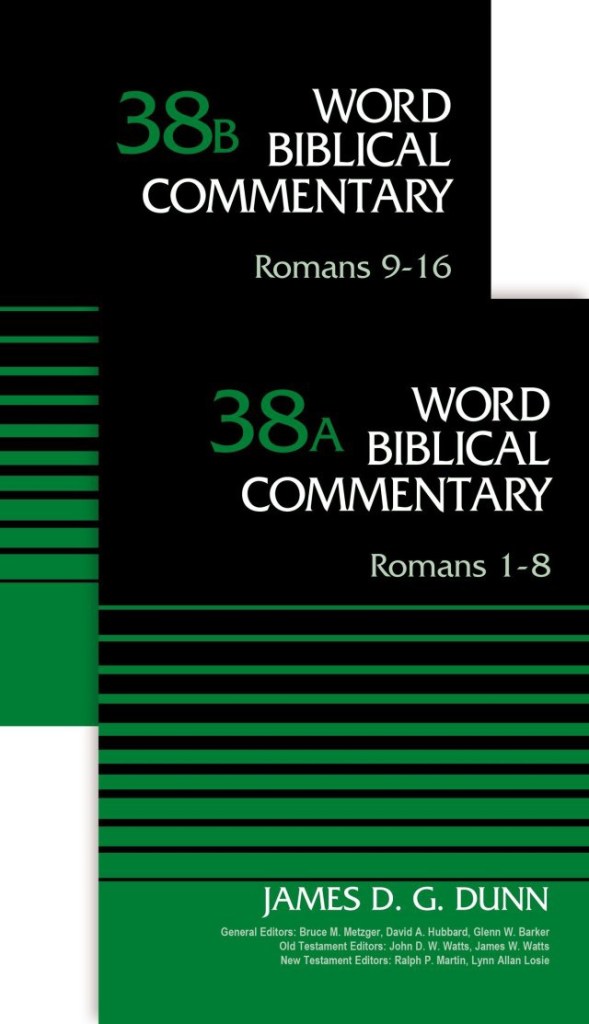


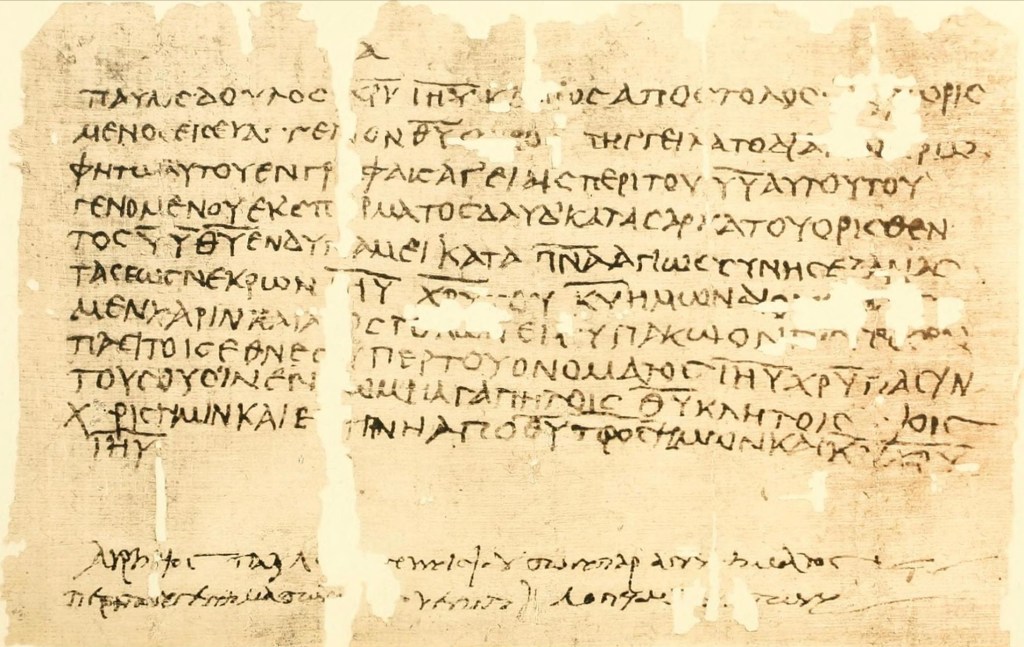

 An Informed Faith