The next issue of With Love to the World is currently being distributed to subscribers across Australia, and overseas. The issue provides resources for personal use, as well as in church groups, for thirteen weeks, starting with the week that leads to Pentecost, in mid-May, and stretching through to mid-August.
With Love to the World is a resource published by the Uniting Church in Australia, although it is used by many UCA people as well as people from many denominations in a number of countries. I have been editing it for three years, now. It is based on the Revised Common Lectionary that is used in churches around the world. It is a resource which exhibits a core commitment of the Uniting Church: to present “an informed faith”.
This commitment was articulated in the Basis of Union for the UCA, which “gives thanks for the knowledge of God’s ways with humanity which are open to an informed faith” and thus commits the church “to sharpen its understanding of the will and purpose of God by contact with contemporary thought” (para. 13).
Each contributor to With Love to the World offers a reflection on daily biblical passage which is informed by their theological training as well as their engagement in pastoral ministry. The resource seeks to assist worshippers to come to Sunday worship with an awareness of the Bible passages they will hear read and proclaimed.
With Love to the World also seeks to be faithful to the UCA commitment to diversity in our common life, and especially to shape “a destiny together” with the First Nations Peoples of Australia. The period covered in this issue includes a week of commentaries by a First Nations person, as well as people with Tongan, Korean, and Anglo heritages.
The President-Elect, the Rev. Charissa Suli, has written the commentaries for the week leading to Trinity Sunday. For the first time, this issue of With Love to the World will include a week of commentaries from a South Sudanese Uniting Church minister, the Rev. Amel Manyon.
There is a succinct article on “Ten Things about Pentecost”, and an introduction to the sequence of Hebrew Scripture passages from Samuel and Kings that will be read and explored each week during this issue. The striking cover image for this issue is a photo taken by one of the contributors, Michael Brown, during a series of day-long walks that he recently undertook along the full extent of the south coast of New South Wales.
Michael reflects on the way that the image, a long-fallen tree in the Seven Mile Beach National Park between Gerroa and Shoalhaven Heads, signals a central dynamic of the biblical story: “In its death this log supports a vast network of life: mosses, small plants, fungi, insects, and small animals. Most of these lives would not have happened without the tree dying. They in turn will die, and in death will support further life.”
You can subscribe to With Love to the World on your phone or iPad via an App, for a subscription of $28 per year; just search for With Love to the World on the App Store, or UCA—With Love to the World on Google Play. For the printed hard copy resource, for just $28 for a year’s subscription, email Trevor at wlwuca@bigpond.com or phone +61 (2) 9747-1369. Or I am happy to supply a complimentary copy if you would like to sample the resource; send me your details by direct message.
The Gospel passage that the lectionary designates for reading this coming Sunday (John 15:9–17) continues from the passage we heard last Sunday, where Jesus uses traditional imagery (the vine and the branches) to describe the relationship he has with his disciples (John 15:1–8).
Jesus then continues with the instruction to his disciples, “as the Father has loved me, so I have loved you; abide in my love” (15:9), continuing with the injunction, “if you keep my commandments, you will abide in my love, just as I have kept my Father’s commandments and abide in his love” (15:10).
This references the earlier words of Jesus, where he gave his followers “a new commandment”, namely, “that you love one another” (13:34). This command to “love one another” is a striking element in this Gospel. It is one of the very few places where Jesus gives direct instructions about the kind of behaviour that is expected of his followers.
Unlike what we find in the Synoptic Gospels, in this Gospel there is very little in the way of explicit ethical instruction. The focus is much more on the revelatory task that Jesus undertakes, as “the one who comes from heaven” (3:31; 6:38) to declare “the truth” (8:45; 14:6; 18:37), to “speak plainly of the Father” (16:25), to “make known everything that I have heard from my Father” (15:15), to glorify the Father (17:1–5).
The task of Jesus is to teach the people (7:14–16; 8:2) and so he is regularly addressed as Teacher (1:38; 3:2; 8:4; 11:28; 13:13–14; 20:16). Indeed, in this Gospel, Jesus is no less than The Authoritative Teacher, revealing God to those who have already been chosen (13:18; 15:19).
Consequently, the basic position with regard to ethics is that those who know Jesus, will do as God wills (13:35; 14:7). As for those who do not know him, they are condemned to the darkness (3:19; 12:35). As a result, it would seem that there is no urgency about instructing believers how to behave; for they will surely know what to do.
Rather than providing believers with guidelines and resources for living faithfully in the world, the Johannine Jesus assures his followers, “I have chosen you out of the world” (15:19). They will know how they are to live, what they are to do, because they have been chosen by him and consequently equipped by him.
John offers a number of images which offer glimpses into how the central quality of love is made possible. One of these is the image of the vine and the branches (15:1–11). Here, Jesus portrays the foundations of ethical awareness; because believers abide in the Son, he is then able to bear fruit in their lives and “become my disciples” (15:8). So, love is made possible for those who believe, because they abide in the love of Jesus (15:10).
The commandment is repeated in verse 12: “this is my commandment, that you love one another as I have loved you”, and then is further explained with reference to Jesus’ own act of self-sacrifice: “no one has greater love than this, to lay down one’s life for one’s friends” (15:13). The commandment is then repeated once more at the end of this section: “I am giving you these commands so that you may love one another” (15:17).
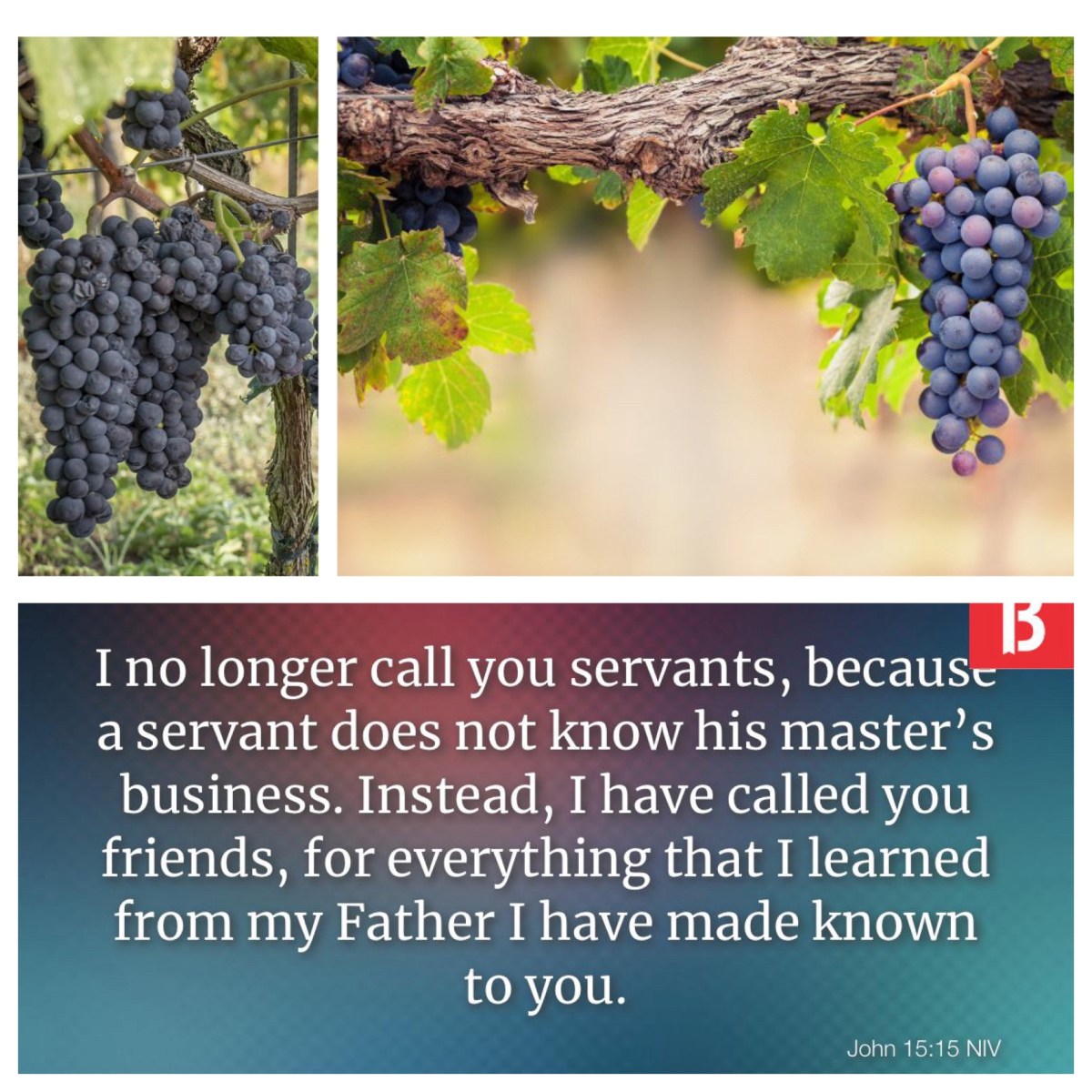
“You are my friends”, Jesus says, “if you do what I command you” (15:14). He tells his disciples, “I do not call you servants any longer, because the servant does not know what the master is doing; but I have called you friends” (15:15). Where does this valuing of friendship come from?
Friendship is in view in only fleeting scenes throughout the Law and the Prophets. More important is the sense of being bound to the covenant which God has made with the people of Israel. In the Wisdom literature, however, friendship is highly valued. “Some friends play at friendship”, one of the proverbs begins, “but a true friend sticks closer than one’s nearest kin” (Prov 18:24).
Solomon is attributed with these words in one of his hymns in praise of Wisdom: “in every generation she [Wisdom] passes into holy souls and makes them friends of God, and prophets; for God loves nothing so much as the person who lives with wisdom” (Wisd Sol 7:27–28). Perhaps these words have somehow influenced the author of John’s Gospel, moving him to shape the words he attributes to Jesus in this part of his farewell discourse?
Ben Sirach offers praise to true friends: “Faithful friends are a sturdy shelter; whoever finds one has found a treasure. Faithful friends are beyond price; no amount can balance their worth. Faithful friends are life-saving medicine; and those who fear the Lord will find them.” (Sir 6:14–16). In subsequent Jewish literature written during the Hellenistic period, when Greek culture and language was dominant, friendship is referenced far more often (35 times in 1–2 Maccabees, 13 times in 3–4 Maccabees, 7 times in 1–2 Esdras).
This could well be because, in Greek literature stretching back many centuries, friendship is highly valued. Two traditional Greek proverbs about friendship, “friends have one soul” and “the goods of friends are common property”, had appeared in Greek writings since the time of Aristotle (Aristotle, NicomedianEthics 9.8.2; Cicero, De officiis 1.16.51; Plutarch, On Brotherly Love 490E, How to Tell a Flatterer 65A and On Having Many Friends 96E; Iamblichus, Life of Pythagoras 65A; Dio Chrysostom Oration 34.20; Diogenes Laertius Lives of Eminent Philosophers 5.20, 8.10).
The Jewish monastic community of Essenes were described in a similar way by Philo, Every Good Man is Free 85, and Josephus, Jewish War 2 §122. It was a common trope, known to hellenised Jews. Various scholars throughout the 20th century have proposed that there are a number of signs of hellenistic influence on the final author of John’s Gospel—who was not the beloved disciple of Jesus, John, but a person writing late in the first century in a community where Greek was spoken.
And so this writer’s attribution to Jesus, the Jewish prophet, of a concept highly valued in the hellenised world, is not surprising. It’s one of many signs of the contextualisation of the Gospel that was taking place even within the earliest documents in the first century of the Common Era.
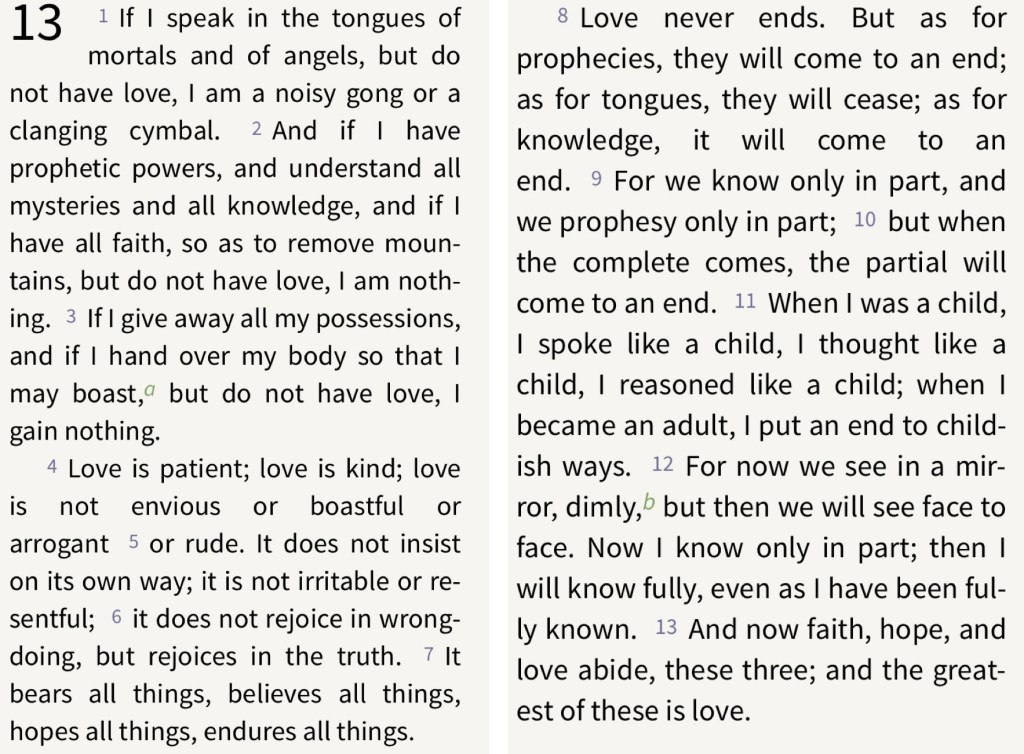
For the passage to be read and heard this coming Sunday, the Narrative Lectionary has proposed what is perhaps the most well-known part of Paul’s first letter to the Corinthians: the chapter on love (1 Cor 13:1–13). Paul waxes lyrical about love, telling the Corinthians that love “bears all things, believes all things, hopes all things, endures all things; love never ends” (13:7–8), and builds to a wonderful rhetorical climax in which he affirms that “faith, hope, and love abide, these three; and the greatest of these is love” (13:13).
As well as being a rhetorical tour de force, and the most beloved part of this letter of Paul, this chapter is also, in my view, the most misunderstood and misused chapter of this letter—as I will attempt to explain below.
It is clear from Paul’s description that, when the community in Corinth gathered for worship, there was a high degree of disorder manifested. Paul devotes four chapters to this issue (11:1—14:40). Throughout this section of the letter, Paul writes with a single focus in mind; he writes to bring order and decency to this situation (14:40).
He begins his consideration of the disorder evident in the community by asserting the importance of maintaining “the traditions just as I handed them on to you” (11:2), reminding them of words that “I received from the Lord” and duly “handed on to you” (11:23). He instructs the Corinthians to seek to speak to others in worship “for their upbuilding and encouragement and consolation” (14:3).
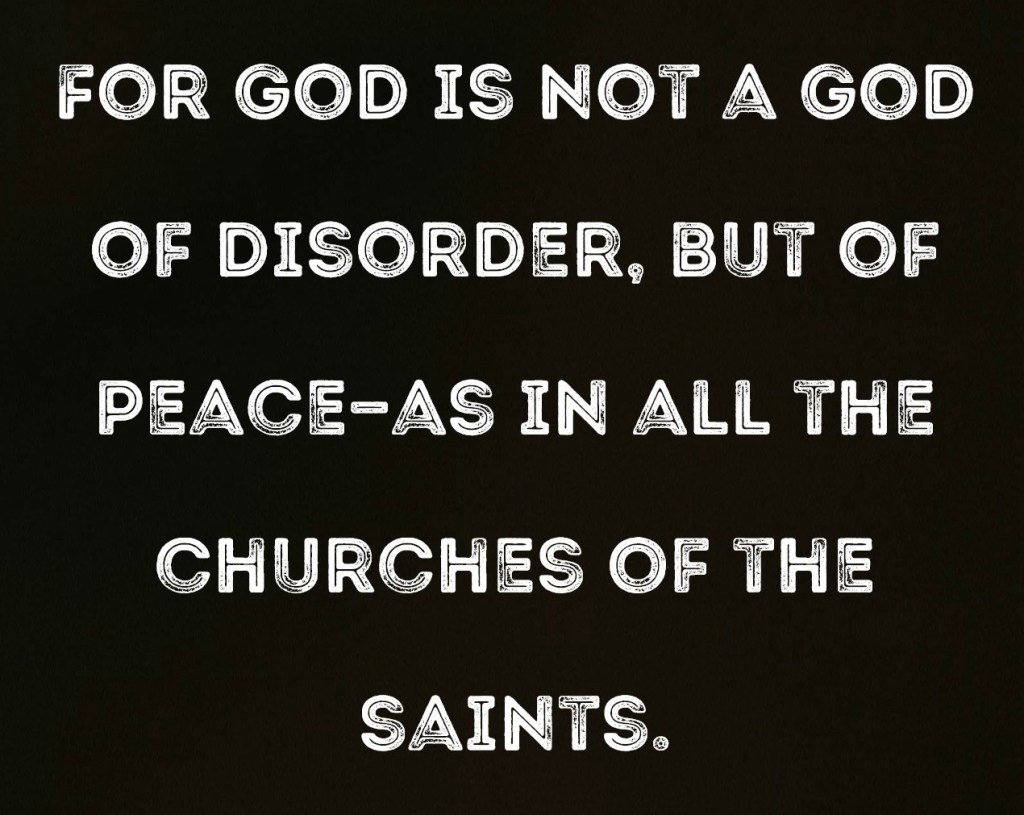
He advises them to exercise their spiritual gifts appropriately; to “strive to excel in them for building up the church” (14:12), to “not be children in your thinking … but in thinking be adults” (14:20). He advises them, “let all things be done for building up” (14:26), noting that “all things should be done decently and in order” (14:40), for “God is a God not of disorder but of peace” (14:33).
The hymn in chapter 13 is an integral part of that overarching purpose. As well as his reminder of “the traditions just as I handed them on to you” (11:1), Paul asserts that they must acknowledge that “what I am writing to you is a command of the Lord” (14:37). He happily draws from various authorities; he alludes to scriptural ideas (11:3, 7–9, 10; 14:4), directly cites Hebrew scripture (14:21, 25), refers to the words of Jesus (11:24–25), claims the precedent of nature (11:14) and church custom (11:16), and in a controversial passage, refers to what takes place “in all the churches of the saints” (14:33b–34).
Chapter 12 contains an adaptation of an image which was extensively used in political discussions about the city state (“the body is one and has many members”, 12:12) as well as what may be a reference to a developing baptismal liturgy within the early church (“we were all baptised into one body”, 12:13) and a very early creedal statement (“Jesus is Lord”, 12:3).
Throughout these chapters, those who are inclined to diverge from Paul’s commands are portrayed in negative terms: they are “contentious” (11:16), showing “contempt” (11:22), acting “in an unworthy manner” (11:27) and with “dissension” (12:25); their behaviour conveys dishonour (12:22–26) and shame (14:35).
The selfish behaviour of some at the common meal warrants their condemnation (11:32) and justifies the illness and death that has occurred within the community (11:30). The individualistic participation of others in communal worship builds up themselves, but not others (14:4, 17); they are not intelligible in speech (14:9), but are unproductive in their minds (14:14) and childish in their thinking (14:20), leaving themselves open to the risk, “will they not say that you are out of your mind? (14:23).
In the centre of this section stands the famous “hymn to love” (12:31–13:13), now often treated in isolation and over-romanticised. In context, the passage provides a sharp, pointed polemic against the Corinthian community. The qualities they possess are consistently inadequate when measured against love.
The speech of the Corinthians is like “a noisy gong or a clanging cymbal” (13:1), an allusion to the mayhem brought about by speaking in tongues in worship (1:5; 12:10, 28–30; 14:6–8). Whilst they readily express their “prophetic powers” in worship (11:4–5; 12:10, 28–30; 14:1, 4–5, 23–24, 29–32, 37, 39), for Paul, these abilities are nothing without love (13:2).
Likewise, they claim that they are able to understand mysteries (2:7; 4:1; 14:2, 23) and have knowledge (1:5; 8:1–3, 7, 10, 11; 12:8; 14:6) as well as faith (2:5; 12:9; 15:14, 17; 16:13); but Paul insists that all of these are nothing in isolation from love (13:2).
Elsewhere in his letter, Paul directly accuses the Corinthians that they are precisely what love is not. Love does not boast (13:4), but Paul regards the the Corinthians as being boastful (1:29; 3:21; 4:7; 5:6). Love is not arrogant (13:4), but in Paul’s eyes the Corinthians are arrogant or “puffed up” (translating the same Greek word in 4:6, 18–19; 5:2; 8:1).
Love does not rejoice in wrongdoing (13:6), but Paul berates the Corinthians for taking fellow-believers to court to seek redress for wrongs; indeed, “you yourselves wrong and defraud—and believers at that” (6:7–8). Love means that people do not insist on their own way (13:5), but Paul considers that the way that some behave in relation to meat offered to idols in the marketplace advantage; “do not seek your own advantage”, he advises them, “but that of the other” (10:24).
In like manner, when they gather to celebrate the supper of the Lord, “when the time comes to eat, each of you goes ahead with your own supper, and one goes hungry and another becomes drunk” (11:21). Selfishness and acting without regard for the other characterises their common life.
Love “hopes all things” (13:7), but some in the community at Corinth are accused of failing to share in the hope of the resurrection (15:12–19). The assertion that “we know only in part” (13:9–10) is directed squarely against the Corinthian claim to have full knowledge (8:1, 10–12) whilst the image of the child, not yet adult (13:11), reflects Paul’s criticism of the Corinthians as infants, not yet ready for solid food (3:1–2; 14:20).
So the hymn alleged to be in praise of love is, more accurately, a polemical censure of the Corinthians’ shortcomings, in which every word used and every phrase shaped by Paul cuts to the heart of the inadequacies of the Corinthian community. Try preaching that at a wedding!!
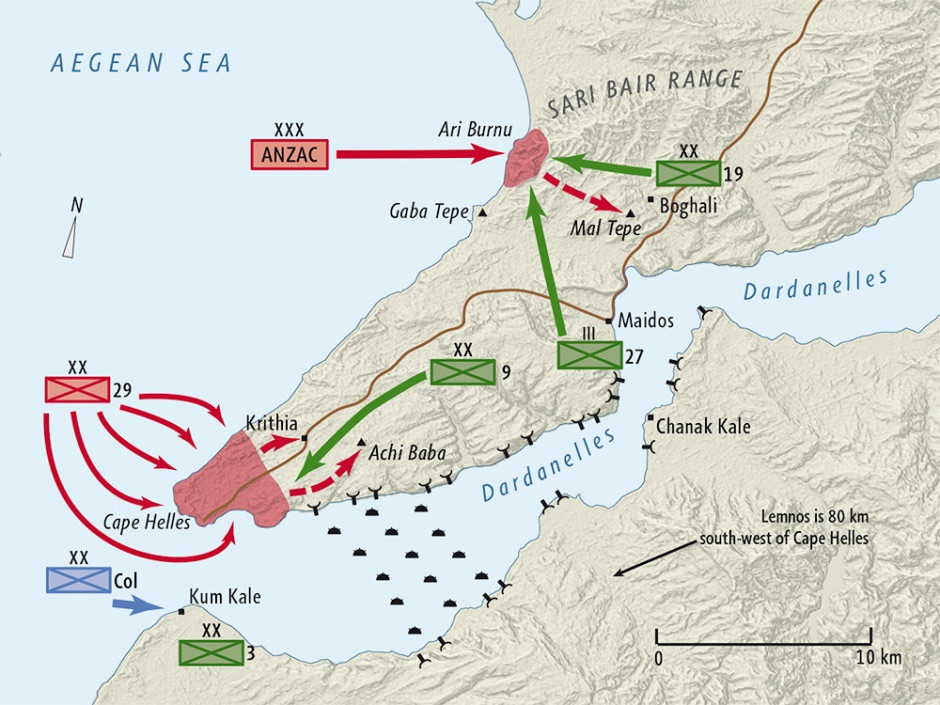
Today is ANZAC Day. It is an annual commemoration that has been held since 1916, which was the first anniversary of the landing of Australian and New Zealand troops on the Gallipoli Peninsula during the early stages of World War I. These troops were the first of approximately 70,000 Allied soldiers whose service included time at Gallipoli; more than 20,000 of these troops were Australian and New Zealand soldiers.
The website of the Australian War Memorial states: “The Australian and New Zealand forces landed on Gallipoli on 25 April, meeting fierce resistance from the Ottoman Turkish defenders. What had been planned as a bold stroke to knock Turkey out of the war quickly became a stalemate, and the campaign dragged on for eight months.
“At the end of 1915 the allied forces were evacuated from the peninsula, with both sides having suffered heavy casualties and endured great hardships. More than 8,000 Australian soldiers had died in the campaign. Gallipoli had a profound impact on Australians at home, and 25 April soon became the day on which Australians remembered the sacrifice of those who died in the war.” See
The first ANZAC Day was observed in 1916 in Australia, New Zealand and England and by troops in Egypt. That year, 25 April was officially named ‘Anzac Day’ by the Acting Australian Prime Minister, George Pearce. It has been held every year since then on the same date, 25 April. It has become, in Australia, a day that commemorates the roles played by Australian servicemen and servicewomen in many arenas of conflict beyond World War I.
So we rightly pause, today, to remember all that is involved warfare: the contributions of these service people, but also the many victims of war, those who lost their lives, those who lost their health and livelihood, those who lost their loved ones, those who lost all hope.
War has many consequences. It damages individuals, communities, societies, and nations. It has many more innocent victims than the casualty lists of enrolled personnel indicate. And there is abundant evidence that one war might resolve one issue, but often will cause other complications which will lead to another war. Look at the outcome of the Armistice at the end of World War One: we can trace a direct sequence of events that led from World War One to World War Two.
In recent years, in ANZAC Day ceremonies, there has at last been due recognition given to Indigenous men who enlisted in our armed services. The War Memorial has an educational programme on this topic for schoolchildren; see
For many years, the Australian War Memorial insisted that its concern is solely with “Australians serving overseas in peacekeeping operations or in war”. A decade ago, a previous Director, Dr Brendan Nelson, infamously asserted that “the Australian War Memorial is concerned with the story of Australians deployed in war overseas on behalf of Australia, not with a war within Australia between colonial militia, British forces, and Indigenous Australians.” See
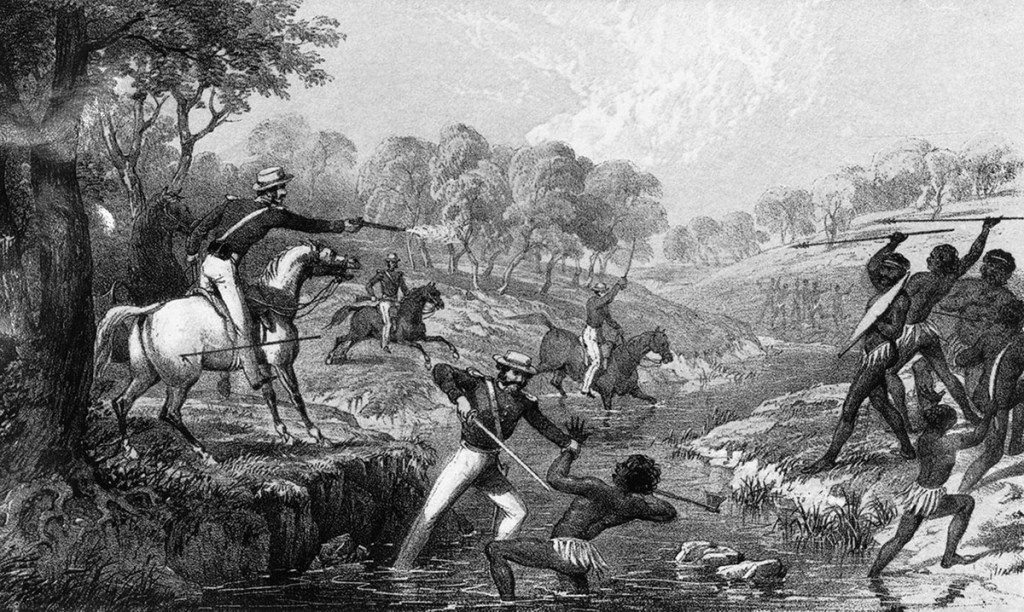
This means that the War Memorial does not include any memory of the thousands of indigenous people who were killed on Australian soil over many decades, in The Frontier Wars (nor, indeed, those white colonials who also died in these encounters). You can read more about this at https://www.awm.gov.au/blog/2013/12/17/response-question-about-frontier-conflicts/
More recently, in 2023, the recently-appointed chair of the War Memorial, Kim Beazley, says he supports “proper recognition of the frontier conflict” as part of the institution’s $500m expansion, questioning how the institution can “have a history of Australian wars without that”. See https://www.theguardian.com/australia-news/australian-war-memorial
Studies have indicated that, over those decades, more indigenous people died here, in Australia, at the hands of the colonisers, than the 60,000+ Australians who died in 1915—1919 on foreign soil, fighting a European war at the behest of our imperial overlords.
The Australian War Memorial blog cited above states, “The ‘Frontier Wars’ were a series of actions that were carried out by British colonial forces stationed in Australia, by the police, and by local settlers. It is important to note that the state police forces used Indigenous Australians to hunt down and kill other Indigenous Australians; but the Memorial has found no substantial evidence that home-grown military units, whether state colonial forces or post-Federation Australian military units, ever fought against the Indigenous population of this country.”
The myth that there was no official, state-sponsored military force which was charged with the task of dealing with “the troublesome natives” (or however else they were described in derogatory terms), is, however, punctured by this Wikipedia note: that on 3 October 1831, Governor Stirling appointed Edward Barrett Lennard as Commanding Officer of the Yeomanry of the Middle Swan, a citizens militia to pursue and capture Aboriginal offenders, with Henry Bull appointed as Commander of the Upper Swan.
The orders were that on being called out, the Yeomanry were “to cause the offending tribe to be instantly pursued, and if practicable captured and brought in at all hazard, and take such further decisive steps for bringing them to Punishment as the Circumstances of the Case may admit.” [Wikipedia here quotes from Michael J. Bourke (1987). On the Swan: a History of the Swan District of Western Australia. Nedlands, WA: University of Western Australia Press.]
The evidence is clear: Australian servicemen have been party to an officially-organised programme to attack First Nations people. And the evidence is also clear, that across the continent over many decades, thousands upon thousands of Indigenous people have been massacred by the invading British settlers and troopers. See the careful historical work of the late Prof. Lyndall Ryan and her team in the Centre for 21st Century Humanities in the Newcastle University, at
So today, as we remember those who served in war and the many victims of war, let us remember also the victims of The Frontier Wars, indigenous and white alike … especially the many thousands of First Nations people who died in these wars.
The Gospel passage that the lectionary designates for reading this coming Sunday opens with the statement by Jesus, “I am the true vine, and my Father is the vinegrower” (15:1). In a later verse, the statement is reworked: “I am the vine, you are the branches” (15:5).
“I am the vine” is the last in a series of seven I AM statements found within the book of signs, the Gospel we attribute to John. “I am the bread of life” (6:48) is the first such instance in this series. The others are “the light of the world” (8:12), “the door of the sheep” (10:7, 9), “the good shepherd” (10:11, 14), “the resurrection and the life” (11:25), “the way, the truth, and the life” (14:6), and “the true vine” (16:1).
The vine, of course, was a standard image for Israel. The psalmist sings, “you brought a vine out of Egypt; you drove out the nations and planted it; you cleared the ground for it; it took deep root and filled the land; the mountains were covered with its shade, the mighty cedars with its branches; it sent out its branches to the sea, and its shoots to the River” (Ps 80:8–10). The prophet Hosea reflects a similar understanding, declaring, “Israel is a luxuriant vine that yields its fruit; the more his fruit increased, the more altars he built; as his country improved, he improved his pillars” (Hosea 10:1–2).
In the book of Judges, Jotham, the youngest son of Jerubbaal, tells a parable in which the trees seek a king, asking first the olive tree and the fig tree, before approaching to the vine, saying, “You come and reign over us”. However, the vine replied, “Shall I stop producing my wine
that cheers gods and mortals, and go to sway over the trees?”, before the bramble ultimately accepted the role (Judg 9:8–15).
Various prophets portray Israel as a vine. Isaiah sings God’s “love-song for my beloved … concerning his vineyard”, in which Israel is portrayed as the vineyard. He ends it by declaring that God “expected justice, but saw bloodshed; righteousness, but heard a cry!” (Isa 5:1–7).
In similar vein, Jeremiah laments the state of Israel, conveying God’s plea, “I planted you as a choice vine, from the purest stock. How then did you turn degenerate and become a wild vine?” (Jer 2:21). In a later oracle, the lament continues: “I wanted to gather them, says the Lord, there are no grapes on the vine, nor figs on the fig tree; even the leaves are withered, and what I gave them has passed away from them” (Jer 8:13).
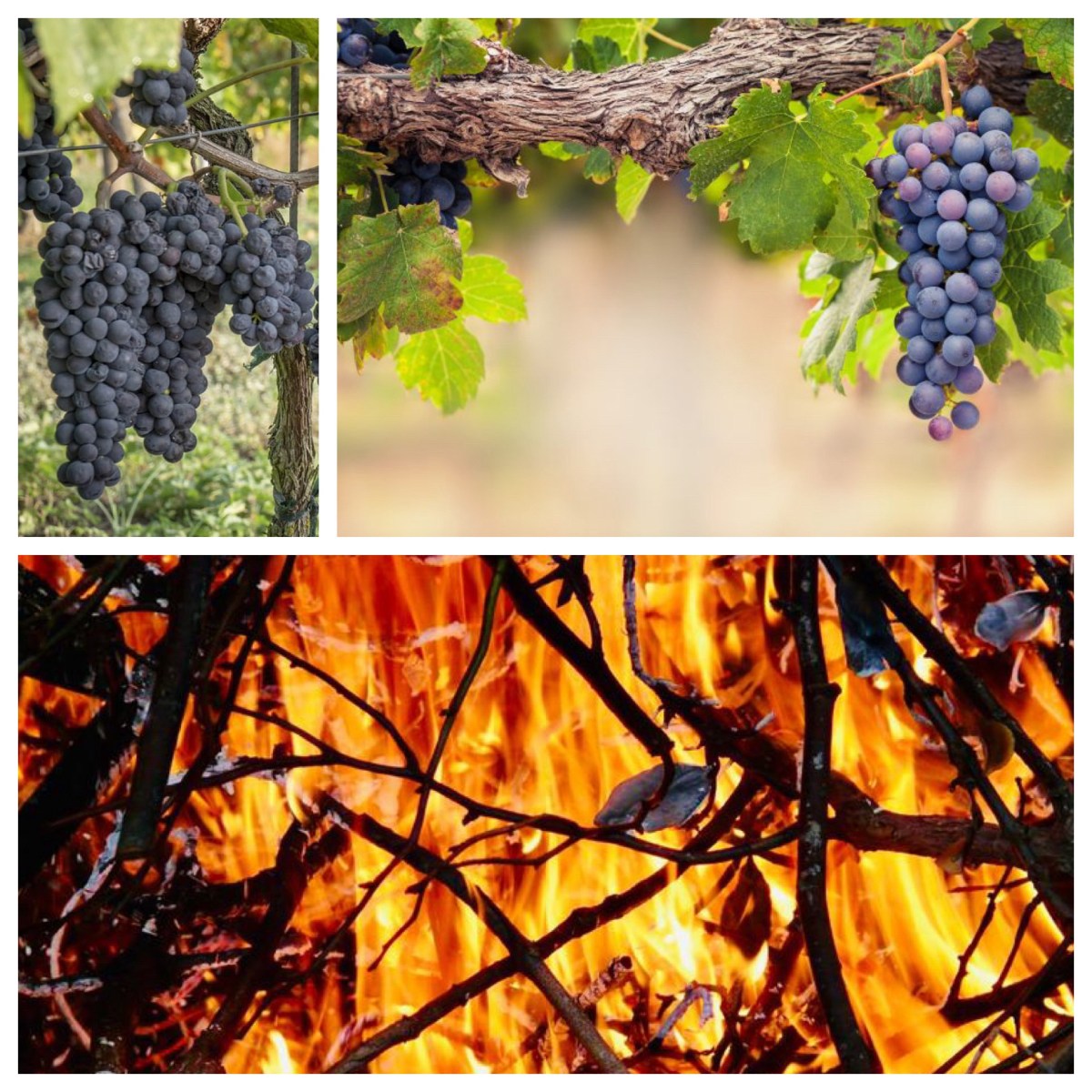
Fellow prophet Ezekiel also utilises the imagery of the vine as a way to berate Israel for its sinful state. He reflects on the uselessness “the vine branch that is among the trees of the forest”—nothing useful is made from it, it simply provides wood for the fire (Ezek 15:1–8). The prophet draws the pointed comparison: “thus says the Lord God: like the wood of the vine among the trees of the forest, which I have given to the fire for fuel, so I will give up the inhabitants of Jerusalem; I will set my face against them” (Ezek 15:7–8).
Another parable told by Ezekiel involves a vine, planted and flourishing; it bore fruit and became a noble vine (Ezek 17:3–19). The parable ends with the rhetorical questions, “Will it prosper? Will he not pull up its roots, cause its fruit to rot and wither, its fresh sprouting leaves to fade? No strong arm or mighty army will be needed to pull it from its roots” (Ezek 17:9). Regarding the king who presides over this situation, God declares, “I will surely return upon his head my oath that he despised, and my covenant that he broke. I will spread my net over him, and he shall be caught in my snare; I will bring him to Babylon and enter into judgment with him there … all the pick of his troops shall fall by the sword, and the survivors shall be scattered to every wind” (Ezek 17:19–21).
A third use of the image begins positively, as Ezekiel speaks to the people, “Your mother was like a vine in a vineyard transplanted by the water, fruitful and full of branches from abundant water. Its strongest stem became a ruler’s sceptre; it towered aloft among the thick boughs; it stood out in its height with its mass of branches” (Ezek 18:10–11). But the sins of the people meant that God plucked out the vine and burnt it in fury, “so that there remains in it no strong stem, no sceptre for ruling” (Ezek 18:12–14).
In developing this parabolic image, Jesus applies it to his followers, both positively and negatively. The negative application comes directly from the way the prophets used this image in their parables and oracles; Jesus declares that “whoever does not abide in me is thrown away like a branch and withers; such branches are gathered, thrown into the fire, and burned” (John 15:6).
The more positive dimension of the imagery receives a more extended treatment by Jesus, both in this chapter and in other places in John’s Gospel. “Those who abide in me and I in them bear much fruit, because apart from me you can do nothing”, says Jesus (John 15:5b). “If you abide in me, and my words abide in you, ask for whatever you wish, and it will be done for you”, he continues (15:7).
The close relationship of the vine and the branches thus provides significant statements about the mutual indwelling of the Son with the disciples, in these verses. This is a theme that runs throughout John’s Gospel. “Abide in me as I abide in you. Just as the branch cannot bear fruit by itself unless it abides in the vine, neither can you unless you abide in me. I am the vine, you are the branches.” (15:4–5a).
The sense of “abiding in” is a mysterious inner connection that binds followers to their master; but because that master has likewise been bound with the Father, the intimacy of connection between Father, Son, and disciples is clear. In an earlier chapter, where the saying “I am the bread of life” is prominent, the Johannine Jesus had introduced this theme in relation to Eucharistic practice: “those who eat my flesh and drink my blood have eternal life, and I will raise them up on the last day … those who eat my flesh and drink my blood abide in me, and I in them” (6:54, 56).
Thus, in the extended explanation that Jesus had provided in response to the request of Philip, “Lord, show us the Father” (14:8), he affirms that “you will know that I am in my Father, and you in me, and I in you” (14:20). Those who are linked inextricably with the Son, who abide in him, are linked through his intimate connection with the Father, as he abides in the Father. Father, Son, and Disciples: this is what I refer to as the Johannine version of the trinity; it comes to full fruition in the chapter that provides the Gospel,passage for the Sunday after this coming Sunday (John 17).
On the way that this three-part unity of Father, Son, and Disciples is developed in John’s Gospel, see more detail at
The passage from Acts that was proposed for last Sunday (Acts 17) and that proposed for this coming Sunday (Acts 18) come from the third main section of Acts, where the narrative tells of how Paul and various co-workers established messianic communities in towns throughout Asia Minor and around the Aegean Sea.
These communities contain many elements of the pattern of community life which has become evident in the earlier sections of Acts. In particular, this section consolidates the inclusive character of the community, for each newly-established assembly comprises Gentiles as well as Jews. In this way the section particularly builds on what has been established in the previous section.
In Corinth this week, as in Thessalonica last week, the tensions that exist between Jews and Gentiles in this community are evident. Paul had been travelling with Timothy and Silas, as we saw last week in Thessalonica; they had left him in Beroea (Acts 17:14) while he went on to Athens (17:16–34) and then to Corinth (18:1). Corinth was just 60km from Athens; it was a strategic trading city because of its two ports, one on each side of the isthmus. The old city had been sacked by the Romans in 146 BCE; they rebuilt it and declared it a colony in 44 BCE.
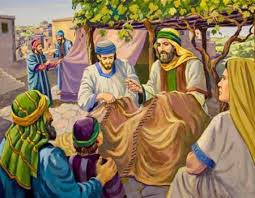
Whilst in Corinth, Paul meets with a new set of co-workers, Aquila and Priscilla (18:2). This married couple is well-known from Paul’s letters, where the mention of the female, in the shortened form, Prisca, in first place ahead of Aquila, is noteworthy (Rom 16:3; 2 Tim 4:19; see also 1 Cor 16:19). Luke notes that they are Jews who had recently moved from Italy to Corinth, as a result of the expulsion of Jews from Rome under Claudius (18:2); this probably took place in 49 CE (Suetonius, Claudius 25.4).
They work as tentmakers (18:3), an occupation often considered to indicate significant means (however, an alternative reading, that tentmakers were craftspeople of lower social status, is offered by some interpreters). This shared trade means that they can provide both hospitality and a place for Paul to carry out his trade whilst he is in Corinth. When Paul travels on, they accompany him to Syria (18:18) and Ephesus (18:19), where they remain while Paul continues on further; in Ephesus they instruct Apollos (18:26).
Paul’s familiar pattern (18:1–6) is evident as he argues in the synagogue on the sabbath, in an attempt to persuade his audience (18:4). As Paul here bears witness (18:5), a typical activity of his (20:21), he fulfils the promise made by Jesus (1:8), as also did Peter (2:32; 5:32). Paul’s message is the familiar refrain: “the Messiah, he is Jesus” (18:5; see 9:22; 17:3). Just as this claim provided the foundations for the community in Jerusalem (2:36), so in Corinth the declaration that Jesus is Messiah will form the basis for the Corinthian assembly.
Paul collaborated in the writing of many of his letters—of the seven agreed authentic letters, only two are written by Paul alone. The others are written in association with Timothy (2 Cor, Phil, 1 Thess and Phlm), Silvanus (1 Thess), and Sosthenes (1 Cor). It is an excerpt from this latter letter that the creators of the lectionary, in their wisdom, have offered us for this coming Sunday (1 Cor 1:10–18), alongside the short report (Acts 18:1–4) of Paul’s visit to Corinth.
Sosthenes and Paul tell the Corinthians that they write to “give thanks” (1 Thess 1:4) and also to “appeal to you” (1:10); and later, to “admonish you as my beloved children” (4:14). The constructive approach that they bring is made clear in the opening prayer of thanksgiving (1:4–9).
In the passage we hear this Sunday (1 Cor 1:10–18), there is an unequivocal statement about what undergirds the constructive intention that Sosthenes and Paul bring as they write. It is “the cross of Christ” (1:18) that shapes the discussion and directions that Paul will present to the believers in Corinth in the ensuing 16 chapters. (This letter is longer than all other Pauline letters, except for Romans—also 16 chapters in length.)
Acts reports that Paul left Corinth in company with Priscilla and Aquila (Acts 18:18), moving to Ephesus, in which city the letter to Corinth was written (1 Cor 16:8). There is no further mention of Sosthenes, although the co-authorship of 1 Corinthians might suggest that Sosthenes also left his home town of Corinth—at least for a time, to escape the persecution he had experienced there.
Sosthenes, like Crispus, would have been high-status in the Jewish community in Corinth. Sosthenes and Paul indicate that they have received other high-status visitors from Corinth, travelling to Ephesus: Stephanas, Fortunatus, and Achaicus (16:17), as well as “the people from Chloe” (1:11)—were they, perhaps, slaves from the household in which Chloe was patron? Female patrons, of course, were known at the time—witness Phoebe (Rom 16:1–2), and see the excellent overview of Marg Mowczko at https://margmowczko.com/new-testament-women-church-leaders/
So Paul and Sosthenes were well-informed as they write this letter to the Corinthians. There are problems aplenty in Corinth. In the few verses set for this coming Sunday, they write about division and the quarrels that have resulted. They plead for agreement and unity. They remind the Corinthians about baptism.
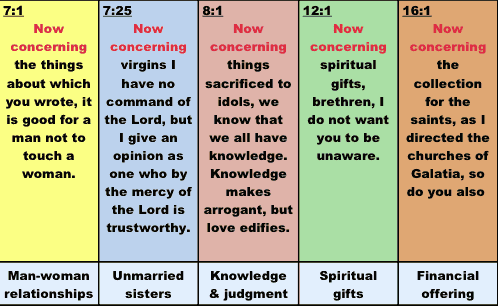
In subsequent chapters, they will range over a long list of matters, often introducing them with the formulaic “now concerning …” (7:1, 25; 8:1; 12:1; 16:1, 12). That formula may suggest they are responding to specific information brought by their visitors. It certainly points to vigorous discussions about a number of matters where there were divergent opinions amongst the Corinthians.
So, in verse 18, the last verse of the selection offered for this Sunday, Sosthenes and Paul sound out the key theme of this letter, which is about the cross of Christ: “foolishness to those who are perishing, but to us who are being saved it is the power of God” (1 Cor 1:18). The verses immediately following develop this motif of the paradox inherent in the cross with rhetorical finesse.
Given the reference to an earlier letter to the Corinthians (1 Cor 5:9), there may already have been discussion of the cross of Christ—either in that letter, or in a presumed response from the Corinthians, or in personal discussions and sermons during the period that Paul and others were in Corinth. Acts 18 indicates that Paul was there for 18 months, along with Aquila and Priscilla, Silas and Timothy, as well Titus Justus, a godfearer and Crispus, the leader of the synagogue (archisynagogos), and also Sosthenes, also identified as a leader of the synagogue (archisynagogos) who was seized and beaten in the presence of Gallio, the proconsul (Acts 18:17). Was the cross the focus of any of his preaching during this 18 months? It seems quite a plausible speculation.
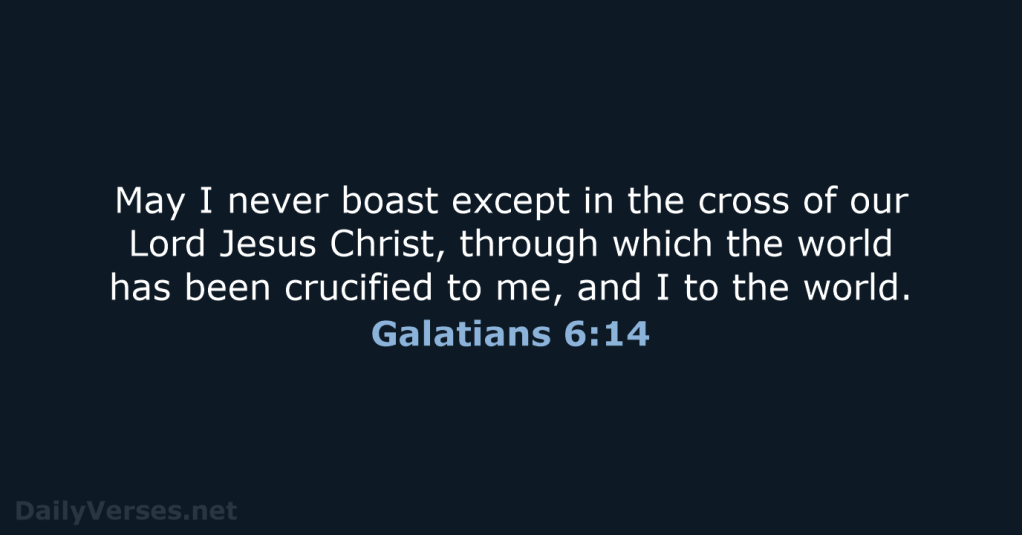
“The cross” is certainly a theme that was sounded by Paul in his preaching and his writing. He had written to the Galatians, “may I never boast of anything except the cross of our Lord Jesus Christ, by which the world has been crucified to me, and I to the world” (Gal 6:14).
He had written to the Philippians, urging them to “have the same mind” as Christ Jesus, who “humbled himself and became obedient to the point of death—even death on a cross” (Phil 2:8), and warning them that those who opposed Paul’s preaching were “enemies of the cross” (Phil 3:18).
He would later inform the Corinthians that he models his own ministry on that of Christ; “he was crucified in weakness, but lives by the power of God; for we are weak in him, but in dealing with you we will live with him by the power of God” (2 Cor 13:4)—just as he had told the Galatians that “I have been crucified with Christ; and it is no longer I who live, but it is Christ who lives in me” (Gal 2:19–20).
He would also later exhort the believers in Rome to see their baptism as the means by which they were linked with Jesus in his death and resurrection, instructing them that “our old self was crucified with him so that the body of sin might be destroyed, and we might no longer be enslaved to sin” (Rom 6:3–6). In the central theological argumentation of this important letter, Paul places the cross as the means by which the good news is known: “God proves his love for us in that while we still were sinners Christ died for us” (Rom 5:8).
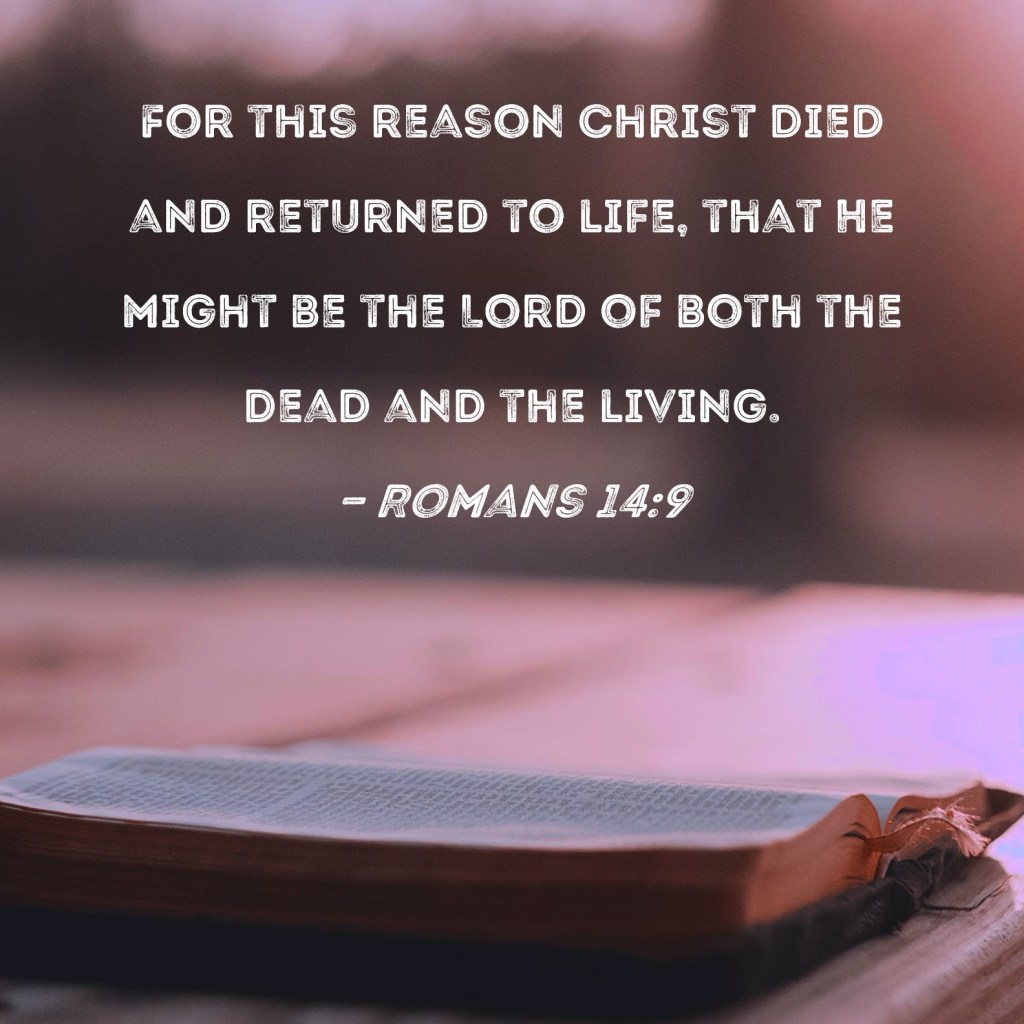
He would remind them that “Christ died and lived again, so that he might be Lord of both the dead and the living” (Rom 14:9), and he deals with the conflict in Rome between weak and strong by proposing that the quarrelling parties follow the pattern established by Christ, who “did not please himself; but, as it is written, ‘The insults of those who insult you have fallen on me’” (Rom 15:3). The cross informed his instructions to the Romans for their daily living.
The same process is employed in the earlier letter to the Corinthians. The cross is the benchmark for understanding how believers are to behave, how they are to relate to one another, and how the community that they form is to be described. All of this is worked out in the first two chapters of the letter (1 Cor 1:18–31; 2:1–12).
There, Paul will remind the Corinthians that “we proclaim Christ crucified, a stumbling block to Jews and foolishness to Gentiles” (1:23), that “I decided to know nothing among you except Jesus Christ, and him crucified” (2:2), and that the paradoxical wisdom that is at the heart of the story of Jesus, “none of the rulers of this age understood this; for if they had, they would not have crucified the Lord of glory” (2:8).
For this passage, however, the message is focussed on the centrality of the cross, as the way that God (in Paul’s mind) has chosen to communicate with the people of his time.
Each year, on the fourth Sunday of the season of Easter, the Revised Common Lectionary provides a section of John 10 as the Gospel reading for the Sunday. That chapter is where Jesus teaches about his role as “the good shepherd” who lays down his life for the sheep. The chapter is divided over the three years: 10:1–10 in Year A, then 10:11–18 in Year B, and 10:22–30 in Year C. For this reason, this particular Sunday is sometimes called the Good Shepherd Sunday.
The section offered in Year A concludes with the classic claim of Jesus, “I came that they may have life, and have it abundantly” (10:10). The passage set for Year B, this year, begins with the famous affirmation, “I am the good shepherd; the good shepherd lays down his life for the sheep” (10:14-15).
Both passages develop the image of Jesus as the shepherd of the sheep, in intimate relationship with the sheep; the shepherd knows his own (10:15), calls them by name (10:3), shows them the way of salvation (10:9), and lays down his life for the sheep (10:11, 15, 17–18).
These two sections of this chapter (10:1–10, 11–18) follow on from the story of the man born blind (9:1–41), which itself has emerged out of the conflicts between Jesus and Jewish authorities (7:10—8:59), reported as taking place in Jerusalem during the Festival of Booths (7:2). That sequence of conflicts had culminated with the Jewish authorities picking up stones to throw at Jesus (8:59).
The story told in chapter 9, like the whole Gospel, reflects the situation of a group of followers of Jesus towards the end of the first century CE, inheriting the richness of the Jewish faith, convinced that they have found The Teacher of the way that God requires, in Jesus of Nazareth. As a result, they have encountered opposition, argumentation, and expulsion from their familiar faith community, and through this they have engaged in verbal warfare with those who have pushed them out.
Retelling the story of the man born blind, who encounters Jesus and claims faith in him, validates their perspective on life and faith. The story reveals what God intends and desires, through the way that an unknown member of their community has constructed this narrative. The story reinforces the views that have been developed by members of the community, as they hope that others might “come to believe that Jesus is the Messiah, the Son of God, and that through believing [they] may have life in his name” (20:31).
John’s Gospel is known for its series of I AM statements. In the first offering from John 10 (verses 1–10), Jesus has said, “I am the gate” (v.9)—the avenue for entry into the sheepfold, which was a place of care and protection for the sheep.
But “I am the gate” makes sense only because of what goes before it; the gatekeeper, who opens the gate for the sheep (v.3). This image then morphs into the more familiar image of the shepherd of the sheep (vv.11, 14)—the one who knows the sheep, calls them by name, and guides them in the paths that they should follow.
In fact, Jesus refers to his followers as “sheep” 13 times throughout the chapter. This draws on the common description of the people of Israel as sheep, found in a number of psalms. The exodus from Egypt is described as the time when “he led out his people like sheep, and guided them in the wilderness like a flock; he led them in safety, so that they were not afraid” (Ps 78:52–53).
The psalmist encourages the people to sing with joy, for “he is our God, and we are the people of his pasture, and the sheep of his hand” (Ps 95:7). The people rejoice that it is this God who “made us, and we are his; we are his people, and the sheep of his pasture” (Ps 100:3; see also Ps 44:11, 22; 74:1).
Alongside this, in Hebrew Scripture, God is explicitly identified as a shepherd; the psalmist declares that God is the “Shepherd of Israel, who lead[s] Joseph like a flock” (Ps 80:1). Elsewhere, the opening line of perhaps the best-known psalm is simply, “the Lord is my shepherd” (Ps 23:1).
But many other passages contain mentions of shepherds. As he was dying, with his sons gathered around him, Jacob spoke to his son Joseph, praying, “the God before whom my ancestors Abraham and Isaac walked, the God who has been my shepherd all my life to this day … bless the boys [Ephraim and Manasseh]” (Gen 48:15–16).
Later, Jacob indicated that Joseph’s strength came “by the hands of the Mighty One of Jacob, by the name of the Shepherd, the Rock of Israel, by the God of your father, who will help you, by the Almighty who will bless you” (Gen 49:24–25). Then, when David was anointed as king, Samuel said to him “it is you who shall be shepherd of my people Israel, you who shall be ruler over Israel” (2 Sam 5:2; 1 Chron 11:2).
Subsequent rulers in Israel were accorded this title; yet key prophets during the exile lamented that there had been “stupid shepherds” with “no understanding” (Jer 10:21; Isa 56:11) and had done evil (Jer 12:10–13; 23:1–2; 50:6–7; Ezek 34:1–10). Some prophets in the Exile then looked beyond this to a better kind of shepherd-leader.
The anonymous exilic figure we know as Second Isaiah declared that the Lord God “will feed his flock like a shepherd; he will gather the lambs in his arms, and carry them in his bosom, and gently lead the mother sheep” (Isa 40:11). Later, he declares that Cyrus, king of Persia, would be anointed as Messiah, to carry out God’s purpose (Isa 44:28–45:1). He is the one of whom the Lord says, “he is my shepherd and he shall carry out all my purpose” (Isa 45:28). That is a striking extension of the strong scriptural imagery of the shepherd, normally applied to the God of Israel or rulers within Israel, which is now placed onto a foreign ruler.
Also during the exile, the prophet Jeremiah looked to the time when God would restore “shepherds after my own heart” in their midst (Jer 3:15) and Ezekiel prophesied God’s intentions: “I myself will search for my sheep, and will seek them out. As shepherds seek out their flocks when they are among their scattered sheep, so I will seek out my sheep. I will rescue them from all the places to which they have been scattered on a day of clouds and thick darkness.” (Ezek 34:12). Ezekiel then extends this role to the king when he reports God’s words: “my servant David shall be king over them; and they shall all have one shepherd” (Ezek 37:24).
This is the scriptural heritage that Jesus draws on in his famous statement, “I am the good shepherd” (John 10:11, 14). Jesus refers to his followers as “sheep” 13 times throughout the chapter, drawing on the equally common description of the people of Israel as sheep, found in a number of psalms (Ps 44:11, 22; 74:1; 78:52; 95:7; 100:3).
Jews would have recognised immediately the claim that he was making for himself—and the way that he has intensified it by noting that “the good shepherd lays down his life for the sheep” (John 10:11; see also v.15). The passage thus looks forward to the death he will suffer on the cross—the example supreme of “the good shepherd”.
The readings from Acts that are proposed for this Sunday (Acts 17) and the following Sunday (Acts 18) come from the third main section of Acts, where the narrative tells of how Paul and various co-workers established messianic communities in towns throughout Asia Minor and around the Aegean Sea.
These communities contain many elements of the pattern of community life which has become evident in the earlier sections of Acts, in Jerusalem (1:12—6:7) and in the household of Cornelius (10:1—11:18). In particular, this section consolidates the inclusive character of the community, for each newly-established assembly comprises Gentiles as well as Jews. In this way the section particularly builds on what has been established in the previous section.
Thessalonica, the capital of the Roman province of Macedonia, was a port city strategically situated on the Egnatian Way, the main transport link between Rome and the eastern part of the empire. It was an important trading post in Greece, second only to Corinth.
Evidence of its cosmopolitan nature includes an Egyptian settlement, a strong Jewish presence, and a Samaritan community in the city. Religion was a part of everyday life, and so worship of all manner of gods and goddesses thrived. There were also schools to learn philosophy, travelling preachers, and synagogues for worshipping Yahweh.
Paul, Silas and Timothy arrived in Thessalonica in the year 50 CE. The account in Acts 17 indicates that they went to the synagogue, as was Paul’s custom (17:1–2) where Paul declared that the Jewish scriptures pointed to Jesus as Messiah (Acts 17:2–3). In Thessalonica, the tensions that exist between Jews and Gentiles in this community are evident. Arguing with the synagogue attenders (17:2) was a practice in evidence in Paul’s subsequent synagogue visits (17:17; 18:4,19; 19:8) as well as in the assembly in Troas (20:7,9) and when he is before Felix (24:25).
Paul bases his argument in the Hebrew scriptures (17:2), as was done earlier by Philip (8:35), Peter (2:25–31) and Paul himself (13:33–37). Paul’s message contains elements which are familiar, not only from his own speeches, but also from those of Peter and Jesus. First of all, he states that “the Messiah must suffer” (17:3; see 3:18) “and be raised from the dead” (17:3; see 5:30, 10:40). Then, Paul defines the Messiah as “Jesus whom I proclaim to you” (17:3; see 2:36). The author of Acts thus shapes Paul’s message so that it stands in clear continuity with the message that has been proclaimed from Pentecost onwards, reported in the preceding chapters of Acts.
This message brings success amongst the devout Greeks and leading women, who believe (17:4). Success amongst godfearers has already occurred in Antioch (13:43,50) and Philippi (16:14), and will occur in Athens (17:17) and Corinth (18:7). Women of high social status become believers in Antioch (13:50), Philippi (the description of Lydia’s trade in 16:14 infers such high status) and Beroea (17:12). Again, the author of Acts shapes the narrative to reflect consistency of method and result.
However, a pattern of divided response (see 13:4–12) continues, for opposition is stirred up by Jews who exhibit jealousy (17:5), like those who were similarly antagonistic in Jerusalem (5:17) and Antioch (13:45), and like Paul himself when he was a persecutor (22:3–4). Paul and Silas are brought before the politarchs (17:6); Luke accurately employs an uncommon term which inscriptional evidence suggests was reserved for city authorities in Macedonia only.
A long list of such historical accuracies in Acts 13—28 can be cited (the most comprehensive list is provided in Colin Hemer’s 1989 work, The Book of Acts in the Setting of Hellenistic History). This does not, however, remove concerns about Luke’s inaccuracies at times (see 5:36–37 for a most obvious anachronistic reference), nor does it negate the claim that Luke’s own interests shape the way that he presents and interprets events in his narrative. Thus, the accusations levelled against Paul and Silas reflect Lukan motifs.
In particular, “turning the world upside down” (17:6) has been a common theme in Luke’s story of Jesus (Luke 1:46–55; 6:20–26; 9:23–24;13:30; 14:7–11; 16:19–31; 18:9–14; 22:25–26). Acting contrary to Roman practice (17:7) was a charge levelled against Paul and Silas in Philippi (16:20–21); Paul later defends himself against this charge in Caesarea (25:8).
Paul’s own description of his time in Thessalonica refers to the “distress and persecution” which he experienced (1 Thess 3:7); this appears to concur with Luke’s account of opposition there. By contrast, Paul comments that the Thessalonian converts “turned to God from idols” (1 Thess 1:9) and uncharacteristically fails to quote from Hebrew Scripture in his letter to them, suggesting that they were a wholly gentile community of believers. This differs from Luke’s account of the community’s origins from the synagogue.
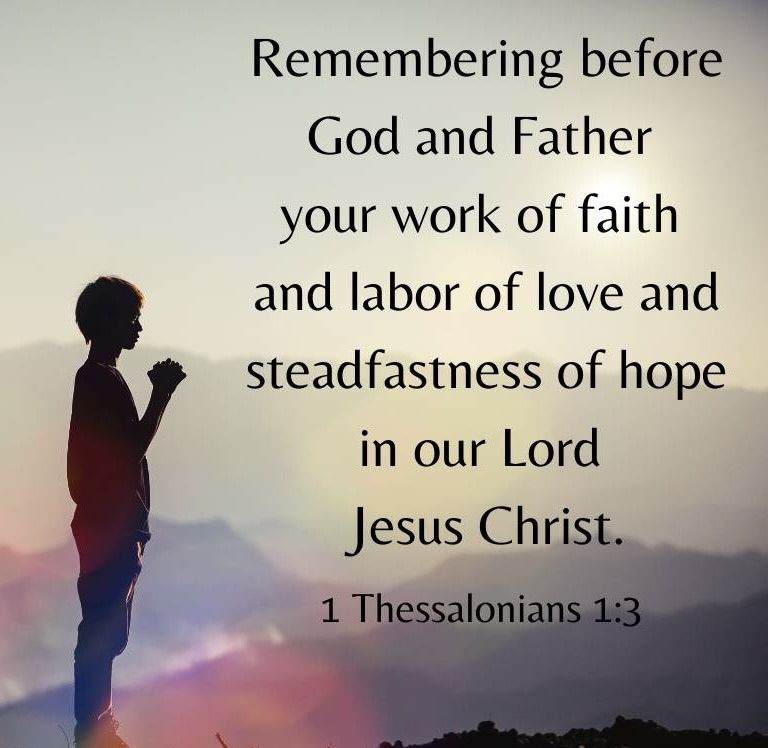
In the opening thanksgiving of this letter (1:1–8), Paul characterizes the Thessalonians as undertaking a “work of faith and labour of love and steadfastness of hope in our Lord Jesus Christ” (1:8). These terms summarise the key issues to be addressed later in that letter; all three return at 1 Thess 5:8, where Paul exhorts the Thessalonians to “be sober, and put on the breastplate of faith and love, and for a helmet the hope of salvation”.
Paul writes more about the faith of the Thessalonians at 3:1–10; he commends them for their love at 3:6 and 4:9–10, and prays for it to increase at 3:12. He strengthens them in their hope at 2:19 and 4:13–18. Also in the thanksgiving, he affirmed them for being “imitators of us and of the Lord” (1:6)—a central motif in Paul’s theology (see 1 Cor 4:16; 11:1; Gal 4:12; Phil 1:7; 3:13–15; 2 Thess 3:7; 2 Tim 1:13).
The language which Paul uses in this letter (and especially in chapter 2) is reminiscent of discussions of rhetoricians and philosophers of the time, a number of whom were accused of having base motives, an interest in self-promotion and a desire for immediate financial rewards!
In particular, Paul’s itinerant way of life could easily leave him open to such a criticism. How he defends himself is similar to the way that the better class of philosophers and rhetoricians of the day tried to defend themselves. My own doktorvater, Prof. Abraham Malherbe, demonstrated how there are many resonances, for instance, with Oration 32 by the second century writer, Dio of Prusa (nicknamed Chrysostom, “golden mouthed”, for his own skill in oratory).
This Sunday, the lectionary proposes a selection of verses from Acts 3, containing most (but not all) of a speech by Peter (Acts 3:12–19). That speech (3:12–26) follows an account of how Peter heals a lame man (3:1–11); a miracle that provides a specific instance of the “many wonders and signs” which the apostles performed (2:43). In this blog, I will range beyond these explore the speech in its context.
As this particular healing takes place in the grounds of the temple (3:2), the heart of the Jewish capital, Jerusalem. Peter and John come to the temple to pray (3:1), in keeping with both the community practice of prayer (2:42) and of regularly attending the temple (2:46). The temple remained a focal point for prayer until its destruction in 70 CE.
The juxtaposition of the lame man and the temple setting is striking. Lame animals were decreed to be unsuitable as offerings to God (Deut 15:21; Mal 1:8,13) and lame people were amongst those forbidden from drawing near to offer sacrifice in the temple (Lev 21:18; 2 Sam 5:8). Yet amongst the prophets, the lame are included among the outcasts gathered by God as the faithful remnant (Jer 31:8; Mic 4:6-7; Zeph 3:19), and the vision of the return of the redeemed to Zion (Isa 35:1–10) includes the assertion that “the lame shall leap like a deer” (Isa 35:6).
Jesus has followed in this prophetic tradition by healing the various categories of outcast; by his activity, “the blind receive their sight, the lame walk, the lepers are cleansed, the deaf hear, the dead are raised, the poor have good news preached to them” (Luke 7:22, par Matt 11:5; see also Luke 4:18; Matt 15:30–31; 21:14).
In parables told only by the Lukan Jesus, the lame are included in the outcasts invited to the banquets (Luke 14:13,21). This compares with the account of how Mephibosheth, the lame grandson of Saul, son of Jonathan, ate regularly at the table of King David (2 Sam 4:4; 9:1–13).
Although no account of a specific healing of a lame person is found in Luke’s Gospel (cf. John 5:1–9), the healing of this lame man (the first specific healing incident in Acts) places the apostles in continuity with Jesus who heals the lame (Luke 7:22). A similar healing is later performed by Paul (14:8–10), whilst Philip is described as healing “many others who were paralysed or lame” (8:7).
The lame man’s expectation that he would receive alms (3:2–3) is reasonable. Caring for the needy was integral to Jewish piety (Deut 15:7–11). By the hellenistic period, almsgiving had become highly valued as a religious duty (Sir 3:30; 7:10; 29:9–12; 40:24; Tob 4:7–11,16; 12:8–10; 14:8–11; cf. Matt 6:2–4). The Lukan Jesus commended almsgiving (Luke 11:41; 12:33) and subsequent characters in Acts practice almsgiving—notably, Cornelius (Acts 10:2,4,31) and Paul (24:17).
However, as Peter and John “look intensely” at the man (3:4; on such intense scrutiny, see 14:9), they sidestep this responsibility, for the focus in this account is to be on their exercise of divine power. Peter commands the man to stand, revealing that his power comes from “the name of the Messiah, Jesus of Nazareth” (3:6).
This name has already been declared as the source of salvation (2:21) and forgiveness (2:38); “the name” remains a constant emphasis in the ensuing scenes (3:16; 4:7,10,12,17–18,30; 5:40-41) and appears subsequently in connection with proclamation (8:12; 9:15–16,27–28; 10:43; 15:14,17; 21:13), baptism (8:16; 10:48; 19:5; 22:16) and exorcism (16:18; 19:13,17).
As Peter raises up the lame man (3:7), he is healed and strengthened, and enters the temple (3:8). The healed man immediately recognises the source of this miracle, for he is portrayed as “praising God” (3:8,9). The man joins himself with the community members whose regular life is typified by an attitude of praise towards God (2:47). Seeing this healing, the people show “wonder” (3:10), a questioning attitude also displayed towards Jesus (Luke 4:36; 5:9), and “amazement” (3:10), a more insightful appreciation of the incident, as also displayed towards Jesus (Luke 5:26).
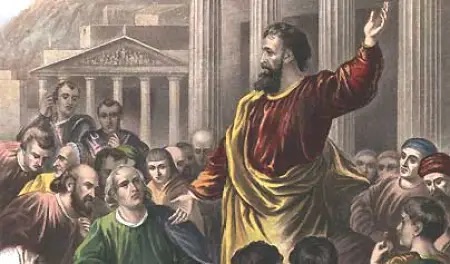
Having reported the healing, Luke shifts his focus to Peter, who addresses the people, providing an interpretation of what has taken place, just as he did on the day of Pentecost. Peter’s third speech (3:12–26) begins by accusing the people of thinking “as if by our own power or piety we have made him walk” (3:12). Peter asserts that it is God—“the God of Abraham and Isaac and Jacob, the God of our ancestors” (3:13)—who has enabled the miracle.
The speech echoes key elements of Peter’s Pentecost speech. The healing took place in the name of “the Messiah, Jesus of Nazareth” (3:6; see 2:36). Jesus is the one whom God glorified (3:13) and God raised (3:15; see 2:24); he is the one of whom the apostles are witnesses (3:15; see 2:32) for of him they “see and know” (3:16).
Peter also says that Jesus is the suffering Messiah, in fulfilment of “what God announced beforehand through the mouth of all the prophets” (3:18). This extends the fulfilment of prophecy from Jesus’ resurrection (2:25–31) and exaltation (2:34–35) to his crucifixion. Paul makes the same affirmation, that the suffering of the Messiah fulfils scripture, at 26:23. So the speech both reprises and develops the explicit things said about Jesus in 2:22–36, as well as the prophetic and apostolic witness which characterises the apostolic proclamation.
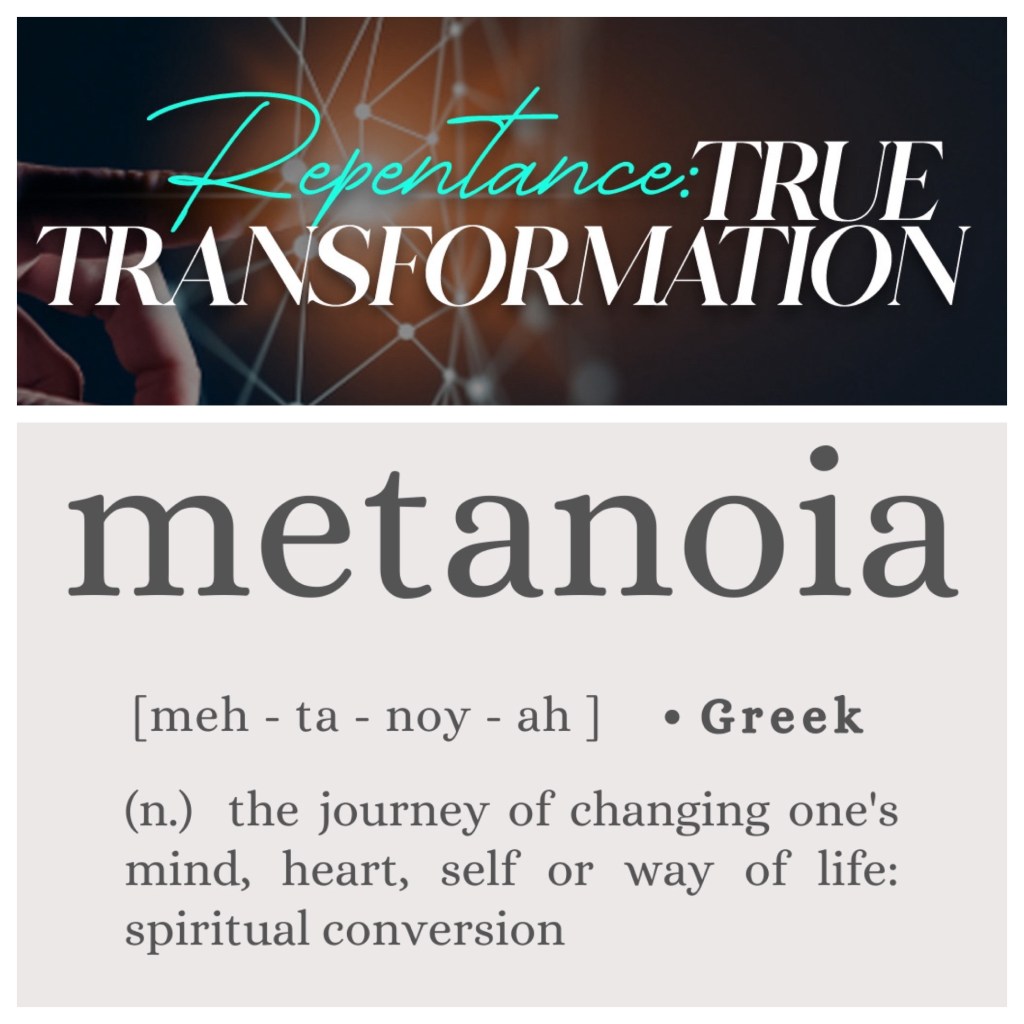
Luke has Peter call for a response of repentance (3:19), as he did at 2:37–39. Repentance is an integral element in the eschatological scenario. The eschatological hope for the coming times had often been proclaimed by Jesus (Luke 4:43; 9:26-27; 10:1–16; 12:49–56; 13:22–30; 17:20–37; 19:11–27; 21:5–36). This continues as an essential element in the apostolic proclamation.
Luke reports Peter as describing this future time in some detail (3:19–21). God is in control of this process: God will wipe out sins (3:19b) because people will have already repented and turned to God (3:19a); “times of refreshing” will come “from the presence of the Lord” (3:20a); and God will then send the appointed Messiah (3:20b).
After this, during an interim period, the ascended Jesus remains in heaven (cf. 1:11; 2:33), awaiting “the time of universal restoration” which will implement what God has long ago promised (3:21). The delay occasioned by this waiting does not mean that God has lost control of events, however. Jesus remains in heaven by divine decree; the word “must”, 3:21, indicates this.
The “times of refreshing” may refer to Jesus’ teaching that “the Lord will cut short the end” (Mark 13:20, but omitted in Luke 21); the sense of “refreshing” is of a breathing space before the next event in sequence takes place (see Exod 8:15). The “time of universal restoration” transcends the earlier question of the disciples concerning the restoration of the kingdom to Israel (1:6); here, restoration has a universal scope. This is the broadest expression of eschatological hope in all of Acts.
This time of restoration may thus correlate with the eschatological events which Peter has already reported at 2:17-21 (citing Joel 2:28-32; see also Mal 4:5-6); and which is later mention in Peter’s Caesarea speech (10:42) and in Paul’s Areopagus speech (17:31). On these occasions, however, the description of that time is limited to noting the role that Jesus will perform, as the one “ordained” (10:42) or “appointed” (17:31; cf. 3:20) to carry out God’s judgement. This speech thus provides the most detailed look into the promised future time of judgement and redemption.
The time of universal restoration which Peter declares is that which “God spoke through the mouth of his holy prophets” (3:21; cf. Luke 1:70). The way that Peter here expresses the future role of Jesus evokes the prophetic words of Mary (Luke 1:54–55) and Zechariah (Luke 1:68–75). Justice and salvation will come about at this time.
It is this still-awaited future act of God which provides the springboard for Peter’s demand for repentance (3:19). Peter concludes his speech by urging the people to “turn, each one, from your sins because God raised up his son and sent him as a blessing to you” (3:26, as a fulfilment of the promise to Abraham cited in 3:25).
Conflict erupts, however, when the authorities object that Peter is teaching the people, primarily (in their eyes) about the resurrection of the dead (4:2). Luke has already documented the opposition of the Sadducees to this idea (Luke 20:27-40). Here, they join with the priests and the temple police, the same group which Luke noted as having plotted against Jesus (Luke 22:4) and arrested him (Luke 22:52).
Together, they initiate the arrest of Peter and John (4:1-3). This is the first of many scenes of judicial conflict in Acts; the pattern has already been established in the story of Jesus (Luke 22:47-23:25). A very brief second summary description of the community (4:4) follows, picking up from 2:41 the motif of increasing numbers within the messianic community.
The story of the empty tomb, early in the morning of Easter Sunday, is well known. The story of the appearance of Jesus as a stranger, walking alongside the couple who were heading out of Jerusalem towards the village of Emmaus, is also very well known.
What happened after that? Did the disciples huddle in fear in their house in Jerusalem (as John reports, John 20:19–31)? Did they head north to Galilee, as the young man in the empty tomb had instructed the women to do (Mark 16:7)? Was it in Galilee, on a mountain, that Jesus delivered his “Great Commission” to the eleven (Matt 28:16–20)? Or beside the Sea of Galilee, where some of the disciples had returned, disheartened and focussed on getting back to life as they once knew it, fishing for a living once again, when Jesus surprised them by the fire (John 21:1–14)?
The author of Luke’s Gospel offers us the first two stories in his Gospel: the empty tomb (Luke 24:1–12) and the road to Emmaus (24:13–35). But he does not report any of the subsequent stories we have in these other Gospels. In his narrative, the disciples remain in Jerusalem, forming a community of believers who had gathered in the room where the travellers to Emmaus had returned and were sharing “what had happened on the road” (24:35).
It is noteworthy that in the Lukan narrative, there is no change of scene, no change of characters, no breathing space at all between the return of the Emmaus travellers and the appearance of the risen Jesus. Luke’s narrative simply pushes on immediately to report that “while they were talking about this, Jesus himself stood among them” (v.36).
It is what ensues in this scene that forms the passage proposed by the lectionary for this coming Sunday, the Third Sunday of Easter (Luke 24:36–48). This scene is notable for a series of words which Jesus speaks to the group of those who were gathered together at that time—not just “the eleven and their companions” (v.33), but also the travellers returning from Emmaus (v.35).
In this post I will highlight seven words of Jesus that the author of this narrative reports in this final scene of his Gospel. In these seven words, the author of this Gospel both draws together threads from the preceding narrative, bringing this work to a climax, and brings us to the point of anticipating what will follow in the second volume that he writes.
“Peace be with you” (v.36). Peace (Hebrew shalom) was the standard Jewish greeting, as seen in the words of the old Ephraimite man (Judg 19:20), Eli’s word to Hannah (1 Sam1:17), Jonathan’s word to David (1 Sam 20:42), David’s instruction to his messengers to Nabal (1 Sam 25:5–6), and the song of Amasai (1 Chron 12:18).
The blessing of peace is encouraged by the psalmists (Ps 122:8;128:6) and the prophets (Isa 52:7; Nah 1:15), although Jeremiah warns of its abuse by false prophets in his day (Jer 6:14; 8:11–15; 14:13). Paul, of course, incorporates this traditional Hebraic greeting into the start of each of his letters, in the formulaic “grace to you and peace” (Rom 1:7; 1 Cor 1:3; 2 Cor 1:2; Gal1:3; Phil 1:2; 1Thess 1:1; Phlm 3).
Given this widespread usage, it would seem therefore the natural thing for Jesus to say to his friends when he came to them in that room: “peace be with you”.
More than that, Jesus speaking a greeting of peace in the Lukan narrative evokes the double offering of peace in John’s narrative of what may well be seen as the same scene (John 20:19–21). The second word, “Touch me and see” (v.39a), also evokes the scene in John 20, where Jesus showed the ten disciples his hands and his side (John 20:20) and then, a week later, said to Thomas “put your finger here and see my hands; reach out your hand and put it in my side” (John 20:27).
Both Luke and John provide an apologetic demonstration that the resurrection of Jesus involves his earthly body, with Luke providing the clarity of the claim, “a ghost does not have flesh and bones as you see that I have” (Luke 24:39b). This line of argument differs from that found in Paul’s extended discussion of the resurrection, where he notes that whilst a person is “sown a physical body, it is raised a spiritual body” (1 Cor 15:44) and then claims that “flesh and blood cannot inherit the kingdom of God, nor does the perishable inherit the imperishable” (1 Cor 15:50).
The implication of Paul’s line of argument is that the resurrection body of Jesus, whilst it bears the marks of the cross, will nevertheless be in a transformed state—and so will the bodies of believers be, after they are raised to be with Jesus. He states this explicitly in another letter: “he will transform the body of our humiliation that it may be conformed to the body of his glory” (Phil 3:21). That quasi-Platonic contrast between the earthly body of humiliation and the heavenly body of glory seems quite different to the understanding conveyed by Luke.
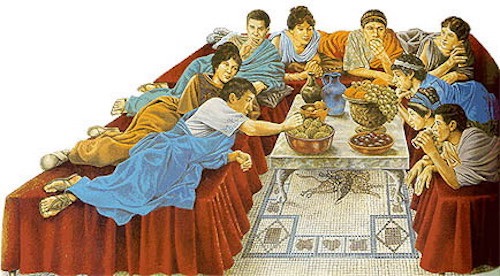
“Have you anything here to eat?” (v.41) is the third word of the risen Jesus. Only in Luke’s account does the risen Jesus show any interest in consuming food. That is not surprising, since Luke locates the earthly Jesus at table, sharing in a meal, more often than the other evangelists.
Mark tells us that as Jesus sat at dinner (or more accurately, reclined beside then table, leaning on his elbow) in Levi’s house, “many tax collectors and sinners were also sitting with Jesus and his disciples” (Mark 2:15–16; in Matthew’s account, he is renamed as Matthew, Matt 9:10–11).
In Luke’s narrative, this scene is replicated (Luke 5:29–31); yet Jesus also eats with with a Pharisee and a sinful woman (7:36–50); with Pharisees, a lawyer, and scribes (11:37–54); and with tax collectors and sinners (15:1–32; verses 1–2 infer the additional presence of Pharisees and scribes). After he shares a final meal with his closest followers (22:14–38), the risen Jesus then shares a meal with his fellow travellers on arrival in Emmaus (24:30). So this request should not be a surprise!
“Everything written about me must be fulfilled” (v.44) then follows as the fourth word. The fulfilment of prophecy in what is taking place during the lifetime of Jesus is a common claim in all four Gospel narratives, sounding forth from the baptism of Jesus (Mark 1:2 and pars) to the arrest of Jesus (Mark 14:49; Matt 26:53–56) and the events that follow (Luke 22:37; John 19:24, 36–37).
Indeed, the author of Luke’s Gospel has set the whole story of Jesus in relation to Hebrew Scripture, beginning with numerous scriptural allusions in the songs sung by Mary (Luke 1:46–55), Zechariah (1:68–79), and Simeon (2:29–32) and highlighting this in the words that Jesus spoke in his hometown synagogue (4:16–21) and in later sayings (6:20–26; 8:10; 12:52–53; 20:17–18, 41–44). The note of fulfillment sounded in the closing scene of the Gospel (24:44) gathers these threads into a cohesive climax.
For the fifth word, Jesus declares that “repentance and forgiveness of sins” are to be “proclaimed … to all nations, beginning from Jerusalem” (v.47). The activity of proclamation that he undertook during his life (Luke 4:43) was a charge that he gave his followers (9:2, 60;10:8–11). Throughout Acts, those followers continue to proclaim this message (Acts 5:42; 8:5, 35, 40; 9:20; 13:5, 38; 14:21; 15:35–36; 16:10; 17:13, 23).
The message of repentance, sounded both by John the baptiser (Luke 3:3, 8) and by Jesus (Luke 5:32; 13:1–5), is continued by Peter (Acts 2:38; 3:19), Philip (8:32), and by Paul (17:30; 26:19–20). In like manner, Jesus preaches forgiveness (Luke 5:24; 6:37; 7:47–48; 17:3–4), exhorts this as central to prayer (11:4), and exemplifies it even in his dying hour (23:34).23:34). Then, in Acts, forgiveness is indeed proclaimed by Peter (Acts 2:38; 5:31; 8:22; 10:43) and by Paul (13:38; 26:18).
The sixth word of the risen Jesus in Luke’s narrative sounds yet another key Lukan theme. “You are witnesses of these things” (v.48), Jesus tells his followers. The author then begins the second volume of his account by repeating and expanding this commission which Jesus gave his followers: “you will be my witnesses in Jerusalem, in all Judea and Samaria, and to the ends of the earth” (Acts 1:8). The missionary impulse is clear.
Jesus foresees the “opportunity to testify” that his followers will have in the times of trial when they are persecuted, arrested, and “brought before kings and governors because of my name” (Luke 21:12–13). The book of Acts then reports on that testimony is given about Jesus at many places, in the witness offered by Peter (Acts 1:22; 2:32; 3:15; 5:32; 10:39–42) and by Paul (13:31; 20:24; 22:15; 23:11; 26:16).
“I am sending upon you what my Father promised” (v.49). This seventh and final word stands at the end of the Gospel, but does not provide full “closure” to that narrative. Rather, it takes us to the brink, as we anticipate the departure of Jesus (narrated at vv.50–51) and the ongoing work of bearing witness, for which the disciples have just been commissioned (v.48). The author would have us look immediately for the sequel to this Gospel.
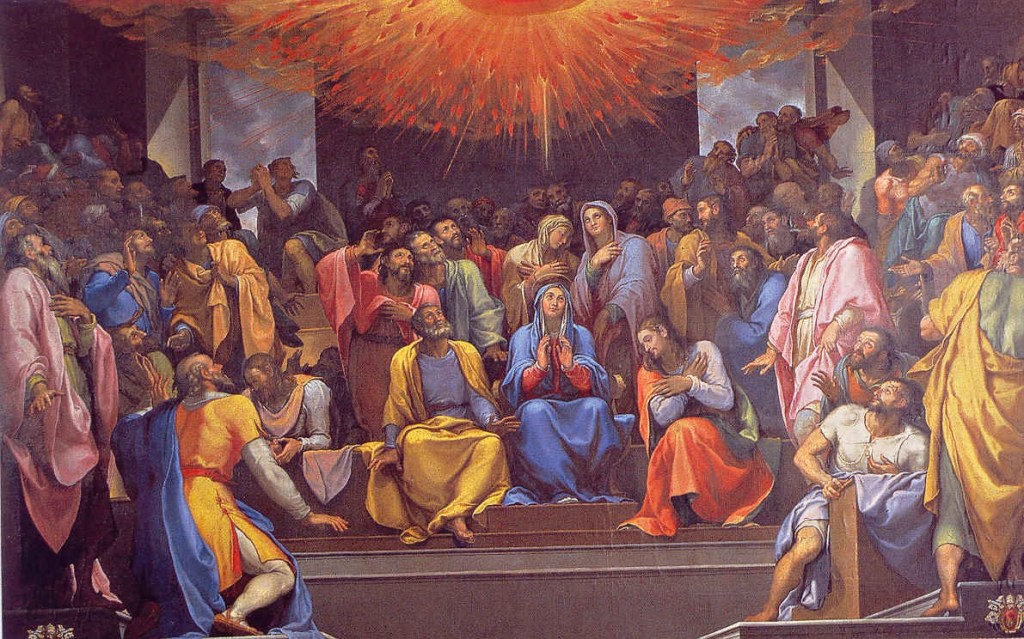
And, indeed, the promise is subsequently seen to come to fruition when “the day of Pentecost had been filled to completion, when they were all together in one place” (Acts 2:1, my translation). The promise is fulfilled a second time in the house of Cornelius, when “the gift of the Holy Spirit [was] poured out even on the Gentiles” (Acts 10:45), and Peter rejoices that “God gave them [the Gentiles] the same gift that he gave us [Jews] when we believed in the Lord Jesus Christ” (Acts 11:17).
The Spirit continues as an active presence within all that the followers of Jesus do throughout much of Acts (4:8, 31; 6:10; 7:55; 8:29, 39; 9:17, 31; 10:19, 44–48; 11:12, 15, 24, 28; 13:2, 4, 9, 52; 15:8, 28;16:6–10; 19:6, 21; 20:22–23, 28; 21:4, 11). It is not without reason that some have proposed that “The Acts of the Apostles” would be more accurately named “The Acts of the Holy Spirit”.
Together, then, these seven words of the risen Jesus draw together key strands in the Gospel, anticipate important aspects of Acts, and provide a pivot point from the first volume to its sequel. It is a very rich passage.



















![I am the good shepherd [who] lays down his life for the sheep (John 10; Easter 4B)](https://johntsquires.com/wp-content/uploads/2024/04/img_4491-1.jpg?w=1200)










 An Informed Faith