

We are in the season of Lent, a 40-day season in the Christian calendar when the focus is firmly on the pathway that Jesus trod as he walked towards Jerusalem, where he would meet his fate. The Gospel passages offered by the lectionary include the baptism and testing of Jesus at the start of his ministry (Mark 1), his prediction about what awaits him in Jerusalem (Mark 8), the incident in the temple (in the version told in John 2), his saying about a grain of wheat falling into the ground and dying (John 12), and ultimately his entry into the city to the acclamation of the crowd (Mark 11).
These passages, rightly, attract the attention of preachers during the season of Lent. And each Sunday, a psalm is offered to accompany and often complement the particular Gospel reading for that Sunday. These psalms offer reflections on the nature of God and God’s covenant relationship with the people of God. I have been offering weekly blogposts reflecting on the Gospel and the Psalm for each Sunday.
However, the sequence of Hebrew Scripture passages proposed by the lectionary during Lent also merit our consideration. At this midpoint of the season, it is appropriate to pause and reflect somewhat on the passages that are designated by the lectionary. For this past Sunday, the Ten Words that God gave to Moses (Exodus 20:1–17) were the Hebrew Scriptures passage. These words set out the requirements of the people as they commit to the covenant with the Lord God. I have reflected on this when the passage occurred last year during the season after Pentecost; see
This sequence of passages began with two excerpts from Genesis, in which that covenant is described in passages. In the first passage (Gen 9:8–17), the covenant is made with Noah, “with you and your descendants after you, and with every living creature that is with you, the birds, the domestic animals, and every animal of the earth with you, as many as came out of the ark” (Gen 9:9–10). It is striking that this is not just a covenant with a select group of human beings, but a covenant with the whole of creation—humans and other creatures, “every living creature of all flesh” (Gen 9:15–17).
The Hebrew word translated as “creature” is nephesh, which is a highly significant word. being. In Hebrew, nephesh has a unified, whole-of-person reference, quite separate from the dualism that dominates a Greek way of thinking. It is used to refer to the whole of a human being.
Nephesh appears in the second creation story, where it describes how God formed a man from the dust of the earth and breathed the breath of life into him, and “the man became a living being (nephesh hayah)” (Gen 2:7). It appears also a number of times in the first creation story in Hebrew scripture, where it refers to “living creatures” in the seas (Gen 1:20, 21), on the earth (Gen 1:24), and to “every beast of the earth, and to every bird of the air, and to everything that creeps on the earth, everything that has the breath of life (nephesh hayah)” (Gen 1:30).
The claim that each living creature is a nephesh is reiterated in the Holiness Code (Lev 11:10, 46; 17:11). The fact that all living creatures are nephesh signals the inherent interconnectedness of all creation. The covenant forged in Gen 9 is one that has a cosmic scope.
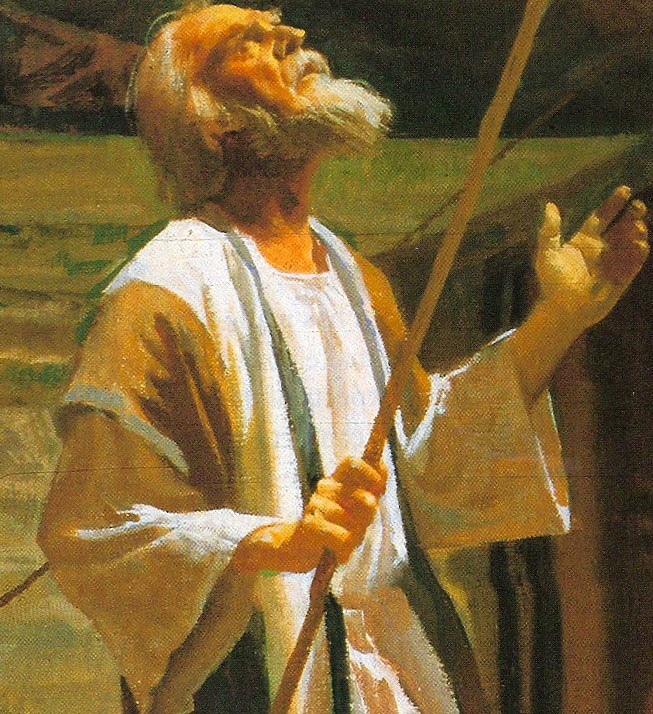
In the second passage (Gen 17:1–7, 15–16), the covenant is made, or perhaps renewed, with Abraham as “the ancestor of a multitude of nations” (Gen 17:4). The Lord God declares that this covenant relationship is “between me and you, and your offspring after you throughout their generations, for an everlasting covenant, to be God to you and to your offspring after you” (Gen 17:7).
The means for sealing this covenant is circumcision (Gen 17:10–14). The lectionary skips over these verses, which have been critical for Israelites and Jews through the centuries, as circumcision has been one of the central identity markers for those who adhere to the Torah given by God through Moses.
The covenant had been made with Abraham after his meeting with Melchizedek (Gen 15:18), with the cutting of animals to signify this covenant (Gen 15:9–10). In this passage, however, it is the circumcising of all males which confirms this covenant relationship. And the passage makes it clear that it is not Ishmael, the son of Abraham through Hagar (Gen 16:15–16) who will provide the line through which the covenant continues; it will be a son born to Sarai who will provide that continuity (Gen 17:16).
That same covenant is then renewed with that son, Isaac (Gen 17:19, 21) and then with Jacob (Israel) (Gen 35), and later is extended to Moses and the whole people (Exod 19), which is where the Ten Words are given, articulating the terms and conditions of that covenant. Later still, the promise that this covenant is to be renewed with the people again is articulated by Jeremiah (Jer 31).
For my consideration of the covenant with Abraham, see
The passages that follow after this Sunday’s focus on the Ten Words (Exod 20:1–17) continue the theme of covenant. The story of the impatience of the people, in the wilderness after they had left Mount Hor (Num 21:4–9), offers both a warning to those who would breach the covenant—they will die (v.6)—and also a reaffirmation of the centrality of the covenant relationship between Israel and God.
The people recognise that they have sinned (v.7) and thus the punishment has been merited. However, Moses stands as intermediary between the people and the Lord God (v.7), and a reminder of the commitments that the people had made is raised before them (vv.8–9). And as the psalmist sings, it is because of the steadfast love of the Lord (Ps 107:1, 21) that they are healed and saved (vv.19–20). This is the love that undergirds the covenant and drives the relationship of the Lord God with regard to Israel. See
On the following Sunday, the lectionary offers a visit to a familiar and widely-cited passage from the prophet Jeremiah, in which the “new covenant” is canvassed (Jer 31:31–34). In this covenant, God promises that “I will put my law within them, and I will write it on their hearts” (v.33); the blessings continue to be that “I will forgive their iniquity, and remember their sin no more” (v.34).
These terms and conditions reflects the initial covenant, the words of which the people are to “write on the doorposts of your house and on your gates” (Deut 6:9), and which likewise promised that God will forgive iniquity (Num 14:18–20). It seems that what Jeremiah is speaking about is not a new covenant, per se, but a renewal of the covenant made earlier with Noah, Abraham, and then Moses. See
Finally, the Hebrew Scripture passage for the sixth Sunday in Lent (Isa 50:4–9a) is one of the well-known Servant Songs from the second main section of Isaiah (Isa 40—55). There are four Songs of the Servant—three relatively brief (42:1–9; 49:1–7; 50:4–11); and the fourth, best-known within Christian circles, a longer description of the servant who “was despised and rejected by others; a man of suffering and acquainted with infirmity” (Isa 52:13–53:12).
In the second of these songs, Isaiah had looked for “my servant … my chosen … [who] will bring forth justice to the nations … he will faithfully bring forth justice … [he will] establish justice in the earth” (Isa 42:1–4). In this third song, the Servant is described as a teacher, “that I may know how to sustain the weary with a word” (v.4), who would stand up to his adversaries (v.8). So he declares, “I have set my face like flint, and I know that I shall not be put to shame” (v.7), exuding confidence because “he who vindicates me is near” (v.8).
The song provides a firm assurance that the justice for which the Servant is working will, indeed, eventuate. That Servant fulfils the word announced at the start of this prophet’s work; of “the voice … crying in the wilderness” (40:4, 6), the prophet poses the rhetorical,question, “who. did he consult for his enlightenment, and who taught him the path of justice? who taught him knowledge, and showed him the way of understanding?” (40:14).
It is, of course, the Lord God who so instructs the voice in the wilderness (40:9–11, 22–23). And it is the Servant who brings to fulfilment the promises articulated by the prophet, and whom Christians see as being brought to fruition in Jesus of Nazareth—which makes this a most appropriate Hebrew Scripture passage to conclude this sequence of passages offered throughout Lent.
As we look over these passages, we need to remember that we are to be very careful in how we speak about these passages. We do well to remember that we are taking passages from scriptures that are sacred to people of another faith, which existed long before the Christian faith came into being as a system of belief; indeed, long before Jesus himself was born.
We know “in our heads” that Christianity emerged from the Jewish faith—but often we act as if this newly-formed religious system now stands in the place of Judaism, as the body of belief to which the Lord God, the ancient of days, now relates and responds; and that Judaism itself is now obsolete, no longer relevant, superseded. Presenting readings from Hebrew Scripture as if they speak directly and clearly about Jesus, and about us as followers of Jesus, without any reference to what came before him, continues such an attitude.
Judaism is not, of course obsolete; there are still millions of people holding the beliefs of Judaism and keeping the practices of Judaism around the world—in Israel, in the United States, in Australia, and in any other countries. The Jewish faith has not ended; Christian believers have not superceded Jews as God’s chosen people.
God’s covenant with Jewish people continues; as Paul declared so clearly, “God has not rejected God’s people” (Rom 11:1), “the gifts and the calling of God [to Israel] are irrevocable” (Rom 11:29). The covenant traced through these Lenten passages flows on, into the story of Jesus and then of his followers. And whilst “salvation has come to the Gentiles” (Rom 11:11), even so, Paul asserts, “all Israel will be saved” (Rom 11:26), for “as regards election, they are beloved” (Rom 11:28). See more at
https://johntsquires.com/2020/08/10/god-has-not-rejected-his-people-all-israel-will-be-saved-rom-11/
Indeed, there is much in common amongst these two faith. Jews and Christians each orient our belief towards the same God, the God of Abraham and Sarah, of Isaac and Rebekah, the God of Moses, Aaron, and Miriam—those who first entered into covenant with the Lord God. Christians believe that this God is the same as the God of Mary and Jesus, of Peter and Paul, of Priscilla and Phoebe, and the God in whom we believe; and so, that ancient covenant continues on today, not only amongst Jews, but also amongst Christian’s. We need to give due acknowledgement of that reality in our worship and preaching.

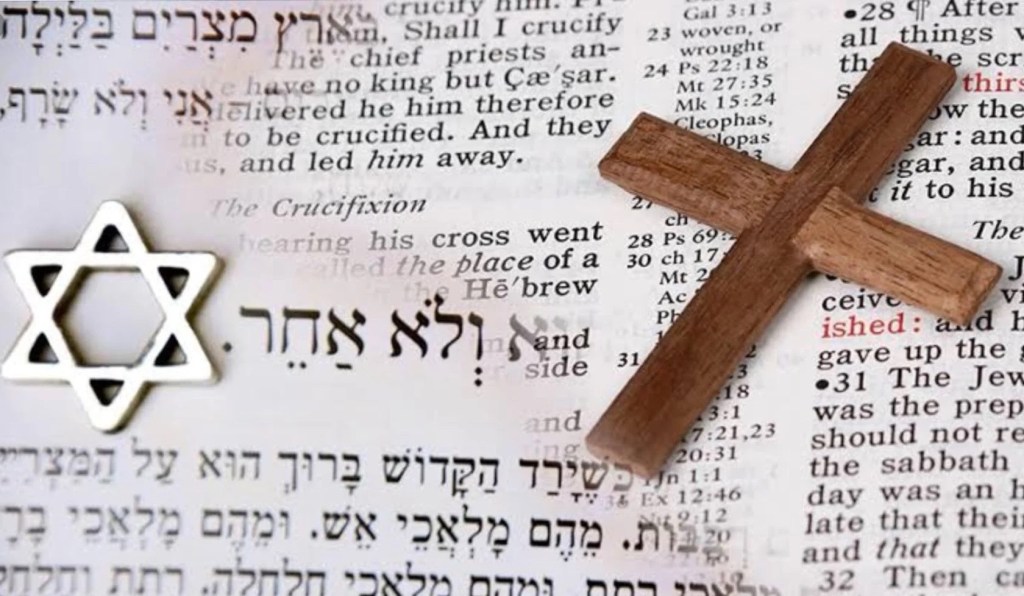
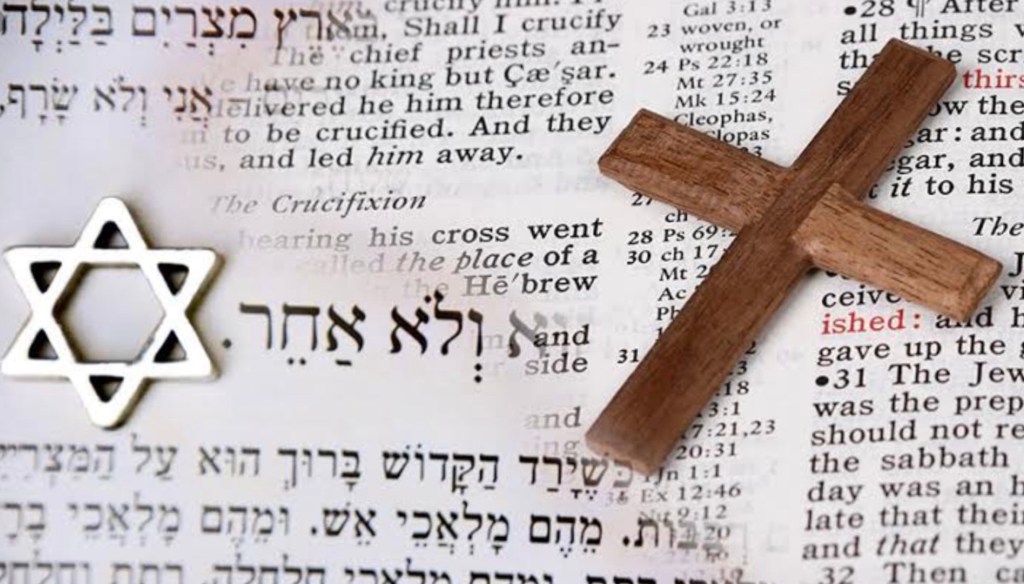
Supersessionism is a term used to describe the way that the Church, through the centuries, has simply taken over Jewish elements (such as scripture, the covenant, the Ten Commandments, Pentecost, the Passover Seder—and these specific passages that we are hearing this Lent). We have “baptised” them so that believers have the view that these are Christian elements, without any sense of their Jewish origins—and their continuing place in contemporary Jewish life.
The church to which I belong, the Uniting Church in Australia, adopted a Statement on Jews and Judaism in 2009 (I was on the working group that developed initial material for this) which offered guidance about our theology, exegesis, and preaching. It is in the same vein as many other statements issued by various enlightened denominations around the world, ever since the lead was taken by the Roman Catholic Church in promulgating Nostra Aetate in 1965.
This document repudiated the centuries-old “deicide” charge against all Jews, stressed the religious bond shared by Jews and Catholics, reaffirmed the eternal covenant between God and the People of Israel, and dismissed church interest in trying to baptize Jews. It called for Catholics and Jews to engage in friendly dialogue and biblical and theological discussions to better understand each other’s faith.
The 2009 Uniting Church Statement declares that “The Uniting Church acknowledges with repentance a history of interpretation of New Testament texts which has often failed to appreciate the context from which these texts emerged, viz. the growing separation of Christianity and Judaism with attendant bitterness and antagonism, resulting in deeply rooted anti-Jewish misunderstandings” (para. 9). See https://assembly.uca.org.au/resources/key-papers-reports/item/1704-jews-and-judaism
That’s a key guiding principle for me, as I read and interpret the Gospels—particularly those attributed to John and Matthew, for these books contain texts which have been grossly and inventively distorted and misused by the Church over many centuries, to fuel the false doctrine of supersessionism and thus the hatred of antisemitism. They do provide evidence for the growing separation between Judaism and Christianity, but they should not be used in a supersessionism way or to fuel antisemitism.
The Uniting Church Statement offers concise definitions of supersessionism (“the belief that Christians have replaced Jews in the love and purpose of God”) and antisemitism (“a term coined in imperial Germany during the 1870s by propagandists who did not wish Jews to enjoy equal rights with Christians. Its true political meaning is ‘I am against the Jews’.”). We should take care not to reflect either of these in our interpretation of scripture, during this Lent, or at any time.















 An Informed Faith