Swearing allegiance or reaffirming reality? (1)

When Charles III is crowned as King Charles III, people across the United Kingdom and in Commonwealth countries across the world will be invited to cry out and swear their allegiance to the new King.

I won’t be doing that. There are two key reasons for this. The first relates to the relationship between Australia and the UK. The second arises from my own faith commitments. In this blog, I will address the first issue.

In the funeral of Elizabeth II last year, prayers were offered for the new King, with the person who holds the office of Garter Principal King of Arms praying to God, “we humbly beseech Almighty God to bless with long life, health and honour, and all worldly happiness the Most High, Most Mighty and Most Excellent Monarch, our Sovereign Lord, Charles III, now, by the Grace of God, of the United Kingdom of Great Britain and Northern Ireland and of His other Realms and Territories King, Head of the Commonwealth, Defender of the Faith, and Sovereign of the Most Noble Order of the Garter”.

Charles has many other titles, as well as that of King. In Scotland, Charles continues to be known also as “His Royal Highness The Duke of Rothesay”. In England, he likewise continues as “His Royal Highness The Duke of Cornwall”. The hegemony of the royals must continue to be buttressed by the arcane titles, it seems. In Wales, whilst he used to be “His Royal Highness The Prince of Wales”, as the heir apparent to the throne, that title moved from him on the death of his mother, to rest on his eldest son, William Prince of Wales. All of this titular profligacy relates to the history of the peoples of the UK over the past millennia. That’s their business, and they need to deal with all of that.

In Australia, on the death of his mother, the former Prince of Wales became “His Majesty Charles the Third, by the Grace of God, King of Australia and His other Realms and Territories, Head of the Commonwealth”. That claim, King of Australia, is based on the claims for the land made long before in the “secret instructions” given to James Cook in 1768, before he set off for his trip to the south that included a time of sailing along the eastern coastline of the continent we now call Australia.

*****

Those instructions specified that Lieutenant Cook, in the event that he found the Continent, should chart its coasts, obtain information about its people, cultivate their friendship and alliance, and annex any convenient trading posts in the King’s name. Cook went one step further: on behalf of the King (an ancestor of Charles III), he laid claim to the lands he had sighted as a British possession.

Cook had navigated along the coast of New Zealand, before he turned west, reaching the southern coast of New South Wales on 20 April 1770.—the day that now is remembered each year as “when Captain Cook discovered Australia”—a statement that contains two central historical inaccuracies! Cook was then only a Lieutenant; he was promoted to Captain at a later date.

See https://www.smh.com.au/national/we-are-all-at-sea-describing-captain-cook-with-a-rank-he-never-had-20180920-p5053j.html#

Further, James Cook did not “discover” the land—other European sailors had charted the western coast in years before, and the continent itself had been home to Indigenous peoples for millennia before then.

Lieutenant Cook sailed north, landing at Botany Bay one week later, before continuing to chart the Australian coast all the way north to the tip of Queensland. There, on Possession Island, just before sunset on Wednesday 22 August 1770, he declared the land to be a British possession:

“Notwithstand[ing] I had in the Name of His Majesty taken possession of several places upon this coast, I now once more hoisted English Coulers and in the Name of His Majesty King George the Third took possession of the whole Eastern Coast . . . by the name New South Wales, together with all the Bays, Harbours Rivers and Islands situate upon the said coast, after which we fired three Volleys of small Arms which were Answerd by the like number from the Ship.”

Cook had recorded signs that the coast was inhabited during the voyage north, had met a number of the Aboriginal inhabitants, and here he noted as he returned to the ship the great number of fires on all the land and islands about them, “a certain sign they are Inhabited”. But he still pressed ahead with his report that he had claimed all the lands for the British Crown. This was done, despite the fact that he knew there were inhabitants in the land.

Cook planted the British flag on the continent of Australia. He demonstrated how the imperial colonising power operated: the land, and the people, were to be subsumed under imperial rule, simply because the imperial power wished that to be so. The people already living in those places were simply to bend in obedience to this greater power. And, as we know, if they resisted, they would be met with force, violence, and murder.

See more at

*****

All of this was enforcing the pattern that had been proposed centuries earlier by a papal decree that established the Doctrine of Discovery—something that all the Christian nations in Europe had willingly followed. There was a long-standing understanding amongst these European trading powers, that they had every right—indeed, a divine right—to explore, invade, colonise, and convert the “natives” of distant lands.

On the Doctrine of Discovery, see https://www.creativespirits.info/aboriginalculture/land/how-was-aboriginal-land-ownership-lost-to-invaders and my reflections at

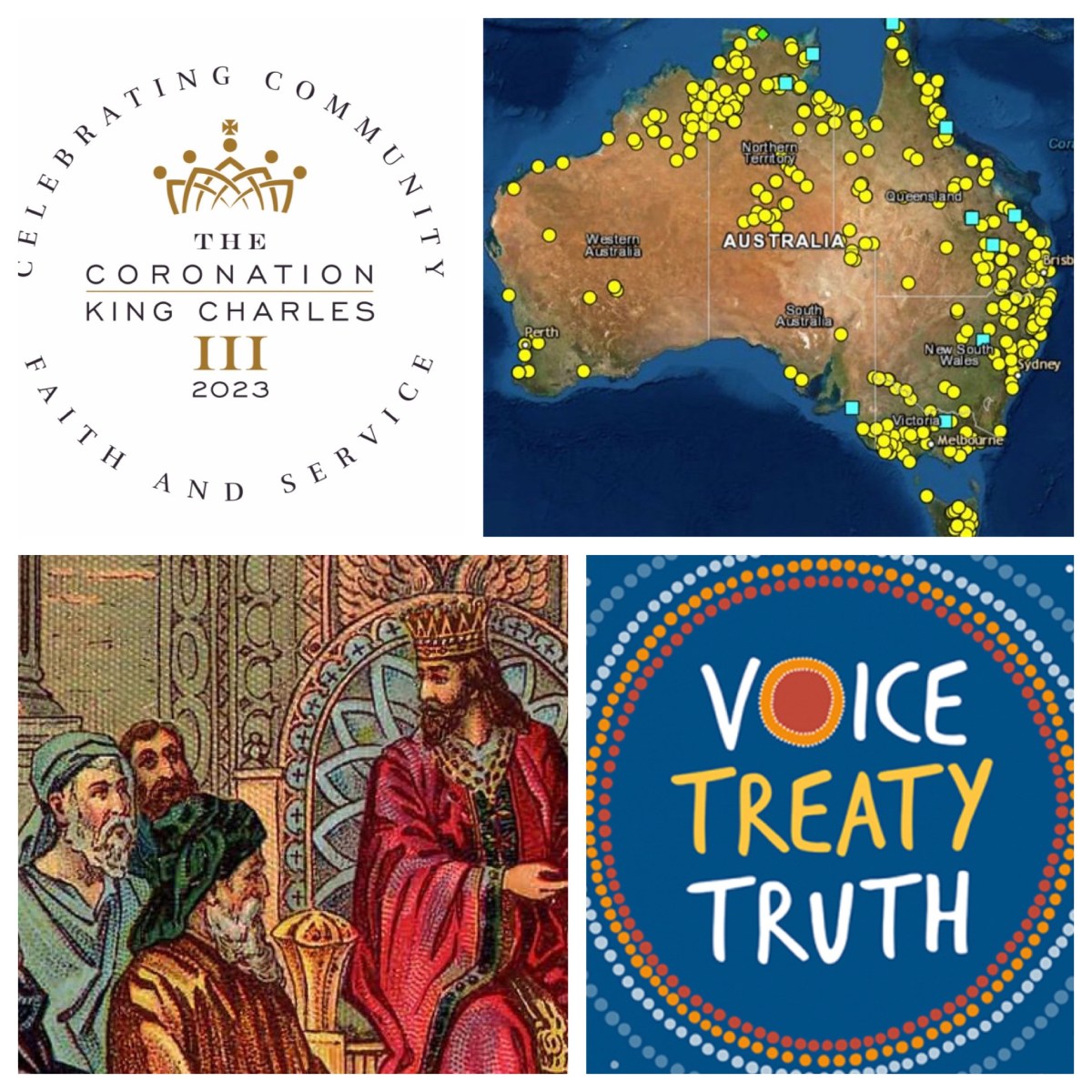
The imposition of British rule was not without cost for the people who were already inhabiting the land when the colonisers arrived in 1788. A recent venture based in the University of Newcastle has been charting the many massacres that took place across the continent, from the early years of the British Invasion, through into the early 20th century.

University of Newcastle map of sites where massacres
of Indigenous Peoples took place since 1788

We perpetuate the hurt by continuing with 26 January as our “national day”, as well as by continuing with a system of constitutional government that places the UK monarch at the top of the hierarchy, as the Head of State of Australia. A foreign hereditary ruler as the Head of State in Australia? That is an absurd arrangement for our times.

So I won’t be crying out my allegiance to the newly-crowned King; rather, I will be quietly reaffirming the reality of Australia at this point in time. That reality is well-encapsulated by the three words, Voice—Treaty—Truth.

Drawing on the experience of First Peoples, we need to tell the Truth and name the settlement of this continent as a colonising movement, generated by foreign imperialism, manifesting in violent invasion and genocidal massacres, spread from north to south, from east to west, of this continent. We must continue to prioritise this commitment to tell the truth. This truth is that the 18th century British crown oversaw and approved of that terrible genocidal colonising invasion. See

Alongside that, I think we need to repudiate the Doctrine of Discovery, that medieval theological foundation upon which the worldwide invasion and colonisation of lands was based—including the invasion and colonisation of Terra Australis. King George III, who was the monarch of the day, was following the Doctrine of Discovery by sending Cook to the southern seas. Repudiating this doctrine is part of our commitment to tell the truth. My own church, the Uniting Church in Australia, agreed to repudiate that doctrine in 2015. See

Furthermore, we need to be committed to talking Treaty. We need to see the formalisation of treaties with the various nations of Peoples who have inhabited, nurtured and cared for this land since time immemorial. This commitment is based on a recognition of the Sovereignty of each of those nations, sovereignty over the land that the people have inhabited, nurtured, and cared for over those many millennia.

See https://www.insights.uca.org.au/hear-the-statement-from-the-heart/

Sovereignty, as articulated in the Statement from the Heart of 2017, is understood by the First Peoples as a spiritual notion, reflecting the ancestral tie between the land and the First Peoples. See

Finally—and most topical of all—we need to support the Voice that will be the subject of a referendum later this year. The Voice to Parliament will ensure that the needs and concerns of First Peoples are always given due consideration in the policy-making processes of our federal government. See

Voice, Treaty, Truth—that’s the threefold commitment that I consider to be important on this coronation weekend. Not swearing allegiance to a highly-privileged hereditary foreigner, but reaffirming the reality of what we need to do to honour the First People of this land.

*****

See also
A living stone, for a spiritual house (1 Peter 2; Easter 5A)

For the last few weeks, we have been reading through the letter known as 1 Peter during the Easter season. We have read parts of chapters 1 and 2 so far. This Sunday, however, the lectionary does something strange: it takes us back before the passage we heard last week, to a section of chapter 2 that focusses on the way that holiness is to be understood.

The theme of holiness has already been sounded earlier in the letter. The people who are receiving this letter are “the exiles of the Dispersion” (v.1), people of Israel living in other nations. For such people, holiness was an important idea. The fundamental charge of this letter was sounded earlier: “as he who called you is holy, be holy yourselves in all your conduct” (v.15). This is supported by a quotation from scripture (Lev 11:44), which was a foundational text for the people of Israel.

Holiness characterized Israel; those who ministered to God within the Temple, as priests, were to be especially concerned about holiness in their daily life and their regular activities in the Temple (Exod 28-29; Lev 8-9). The priests oversaw the implementation of the Holiness Code, a large section of Leviticus (chapters 17–26), which explained the various applications of the word to Israel, that “you shall be holy, for I the Lord your God am holy” (Lev 19:2; also 20:7,26).

Holiness was also a concern of the Pharisees. The scribes and the Pharisees devoted their lives to teaching and explaining each of the 613 commandments and ordinances that were included within the books of Torah (the books of the Law—the first five books of Hebrew Scriptures), and showing the common people how they could live in holiness, as they followed each of those commandments. Holiness was at the heart of the Law, so adhering to each commandment ensured holiness.

And holiness characterised the followers of Jesus, for he was leader of a holiness movement in a holiness society. Jesus debated often with the scribes and Pharisees. He seems to share much in common with them. They were all committed to living in accordance with the commandments of Torah, although they had differing interpretations of how to do this. Jesus advocated for the living out of holiness in daily life, as did the scribes and Pharisees. His teachings also focussed on adhering to God’s will, maintaining the justice-righteousness that God required, in all of life. He teaches his followers to adhere to that way in order the take part in the kingdom that God has planned for all.

Holiness, to all of these groups, meant being consecrated, dedicated, set apart for a designated purpose. It is often (mis)understood as signalling a superior status, an exalted place—”up there” above the unholy ones, just as God is “up there” above the earth. Of course, that old worldview is now obsolete. And the sense of elitism in “holiness” is also obsolete.

Further, whilst a holy person is to be an ethical person, overtones of morality are not the first and last aspect of holiness. To be holy is to be dedicated to the task, following Jesus with the whole of our lives, sensing the eternal in the moments of the present, experiencing the divine in the midst of human life. Excitedly, joyously (v.6), all this is to be shared with others who have not yet “caught the vision”.

There are many references to, and quotations from, the scriptures of the Hebrew people in chapter 2 of this letter. That makes sense, for—as we have seen—it was sent to “the exiles of the Dispersion” (1:1). These were their familiar scriptures. To live according to holiness (Lev 11:44) is the key principle (1 Pet 1:15).

In 2:4–10, part of the lectionary passage for this Sunday, we learn what that means, as the writer plays with a series of texts from the psalms and Isaiah. Each text contains a reference to “stone”, and relates an understanding of holiness to those hearing the letter.

The first reference point for “stone” is to Jesus, the “living stone” who is the cornerstone of the whole building. That slips quickly into applying “stones” to the people of faith who are hearing this letter: as “living stones” they are to be built into the structure as integral parts of the whole. Then, to reinforce that affirmation, a verse from Hosea 2 is quoted to emphasize how intimately and enduringly the people are connected with God.

Echoing still more scriptural terms, they are described as “chosen” (Deut 7:6), “a royal priesthood” (Exod 19:6), “holy” (Lev 20:7), and God’s own people (Hos 2:23) who are “a light to the nations” (Isa 42:6). Many passages are rolled into one sentence!

Later sections of the letter provide specific guidance as to how we are to live in that condition of holiness; what behaviours and actions are appropriate for being “living stones” in a “spiritual house”. The challenge for us, this week, as we hear and preach on this particular passage, is to help people to grasp the relevance of these important theological terms for ourselves today.

*****

See also

Informed, Collaborative, Diverse: With Love to the World

The next issue of With Love to the World, which I edit, is currently being distributed. The issue covers half of the season of Pentecost, from mid-May through until mid-August. There are commentaries on biblical passages for each day (with the four “lectionary passages” included), along with a prayer, a song, a psalm, and a discussion question for each passage.

The resource is published by the Uniting Church in Australia, but is used by people of many denominations in a number of countries. As always, the resource exhibits a core commitment of the Uniting Church: to present “an informed faith”. This commitment was articulated in the Basis of Union for the UCA. Each contributor offers a reflection on the daily passage which is informed by their theological training as well as their engagement in pastoral ministry. The resource seeks to assist worshippers to come to Sunday worship with an awareness of the Bible passages they will hear read and proclaimed.

With Love to the World also seeks to be faithful to the UCA commitment to shape “a destiny together” with the First Nations Peoples of Australia. The period covered in this issue includes Reconciliation Week (in late May) and NAIDOC Week (in late June—early July), so the commentaries for those weeks are by a number of First Nations People, reflecting on the interplay between their cultural heritage and the Christian faith.

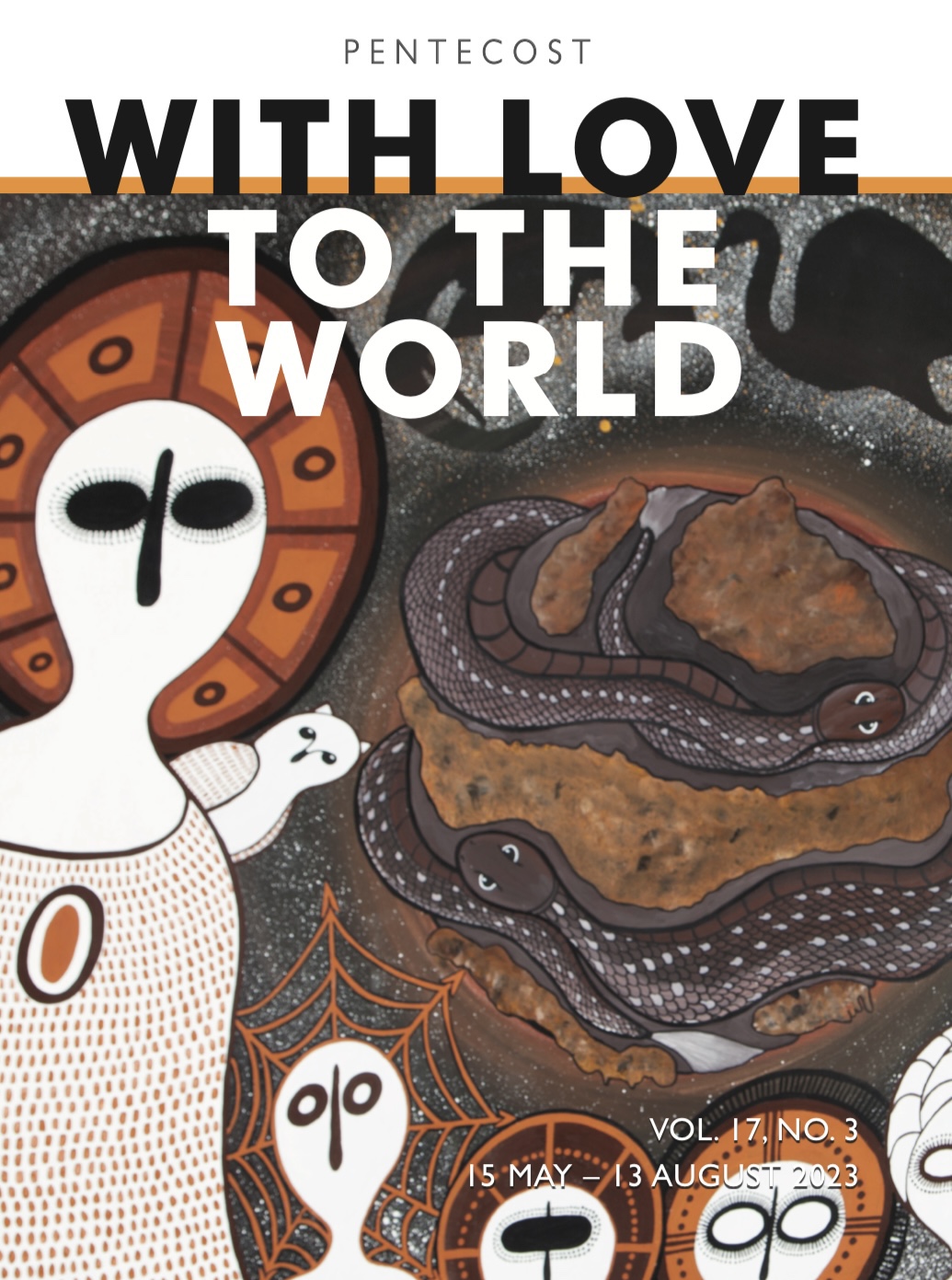
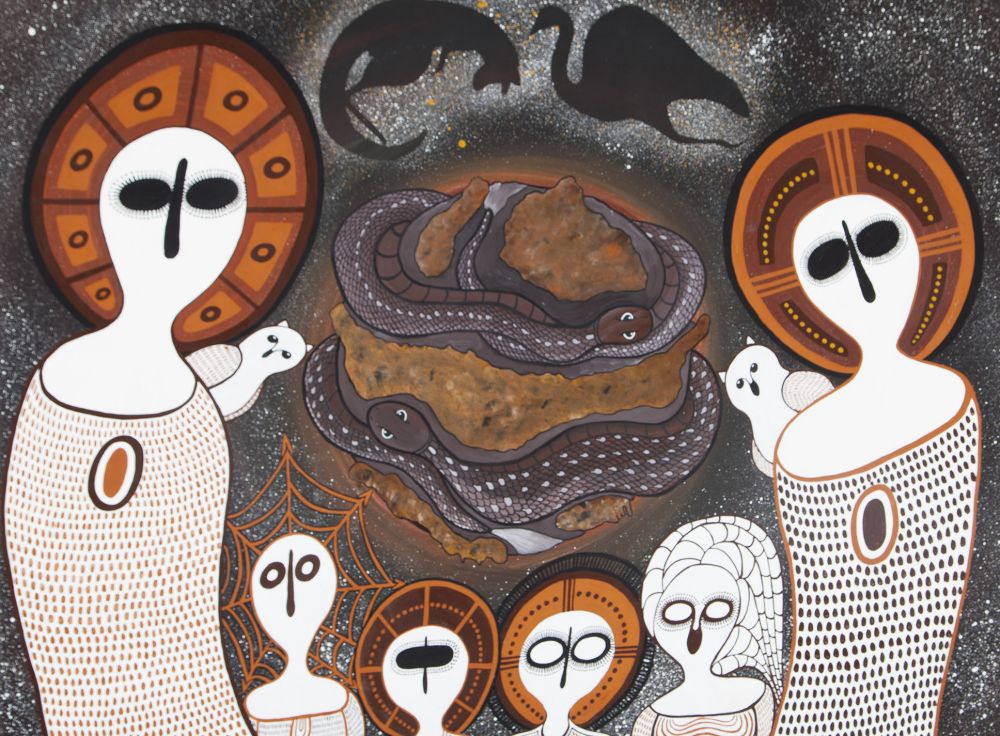
The striking cover of the issue is from a painting by one of those contributors, Kirsty Burgu, from Mowanjum in WA, who offers an interpretation of the artwork in her commentaries. There is also a powerful reflection on Mother Earth, from a First Peoples’ perspective, by Alison Overeem, from Muwinina country in Tasmania.

The other commentaries in this issue of the resource are provided largely by Australian Uniting Church people with Asian heritage, who know at first hand the complexities of living as a Christian in Australia with awareness of their own heritage. There are Korean, Filipino, Indonesian, Chinese, Sri Lankan, and Malaysian Chinese voices which can be heard and considered in this issue. This reflects the commitment made by the Uniting Church in 1985, to be “a multicultural church”.

In the following issue, which will have a Creation focus, each week will begin with a psalm which brings a creation focus. The writers in this issue will largely be Australians with a Pasifika heritage, including contributors from Fiji, Samoa, Tonga, Niue, and Tuvalu. As with the Asian-focussed issue, they have each been asked to invite readers into an exploration of the biblical passages from their distinctive cultural perspectives. We can expect many new insights to be offered!

Finally, the contributors to this issue—as, now, with each issue—include equal numbers of male and female writers, reflecting also the UCA ethos that the Spirit has gifted all people and that women and men equally take their place in ministry and leadership within the church.

With Love to the World can be ordered as a printed resource for just $28 for a year’s subscription (see http://www.withlovetotheworld.org.au/wp-content/uploads/2020/07/Ordering-and-paying-for-Website-7.vii_.2020.pdf). It can also be accessed on phones and iPads via an App, for a subscription of $24.49 per year (go to the App Store or Google Play).

If you are not a subscriber and would like to sample the resource, I can send you a copy of this issue; contact me at editorwlw@bigpond.com or text me on 0408 024 642, providing your postal address.

I am the gate for the sheep (John 10; Easter 4A)

Each year, in the Sundays which are early in the season of Easter, a similar pattern occurs in the lectionary. On the evening of Easter Sunday each year, the lectionary presents us with the well-known and much beloved Emmaus Road story (Luke 24:13–49). In this story, two followers of Jesus walk towards the village of Emmaus in conversation with a stranger, discussing the events of recent days. The identity of the stranger is revealed to them only when they share a meal at table—and immediately Jesus disappears from their midst!

See

For the Second Sunday in Easter each year, the lectionary offers the same scene, of the time when Jesus appears to his followers in Jerusalem, meeting behind closed doors “for fear of the Jewish authorities” (John 20:19–31). Although the narrator reports that Jesus appeared to “the disciples”, we subsequently learn that Thomas had not been present, so a second scene, a week later, is reported.

This second scene in Jerusalem is when Thomas expresses his doubt about the appearance of Jesus, and to his astonishment, Jesus appears again, to show him his wounds. Thomas then expresses his firm belief: “My Lord and my God!” (20:28). The importance of this scene, as with the Emmaus Road scene, is indicated by its appearance in each of the three years of the lectionary.

See

On the Third Sunday in Easter, three different scenes are offered across the three year cycle of the lectionary; each scene reports on a situation when the risen Jesus appeared to his followers. The appearance to two disciples on the Emmaus Road (Luke 24) is offered again in year A, the final Lukan scene of appearance and departure (Luke 24) in year B, and the scene beside the Sea of Tiberias, which includes the restoration of Peter (John 21), in year C. Each of these scenes extends the resurrection narrative into the life of the early church.

*****

That brings us to the Fourth Sunday in Easter—this coming Sunday. The lectionary offers much of John 10, where Jesus speaks at length about “the good shepherd”, spread over the three years: John 10:1–10 in year A, 10:11–18 in year B, and 10:22–30 in year C. It omits those parts of this chapter where the antagonism against Jesus is explicit (10:19–21 and 10:31–39), as well as the concluding observation that “many believed in him” (10:40–42). After this Sunday, parts of the farewell discourses of Jesus reported in John 13–16 occur in following weeks over all three years.

The overall construction of the season of Easter across all three years can be seen with this overview, but the pattern is not evident in the week-by-week progression of each Easter season. Nor is it evident that the full teaching of Jesus about “the good shepherd” is offered over the three years of the cycle.

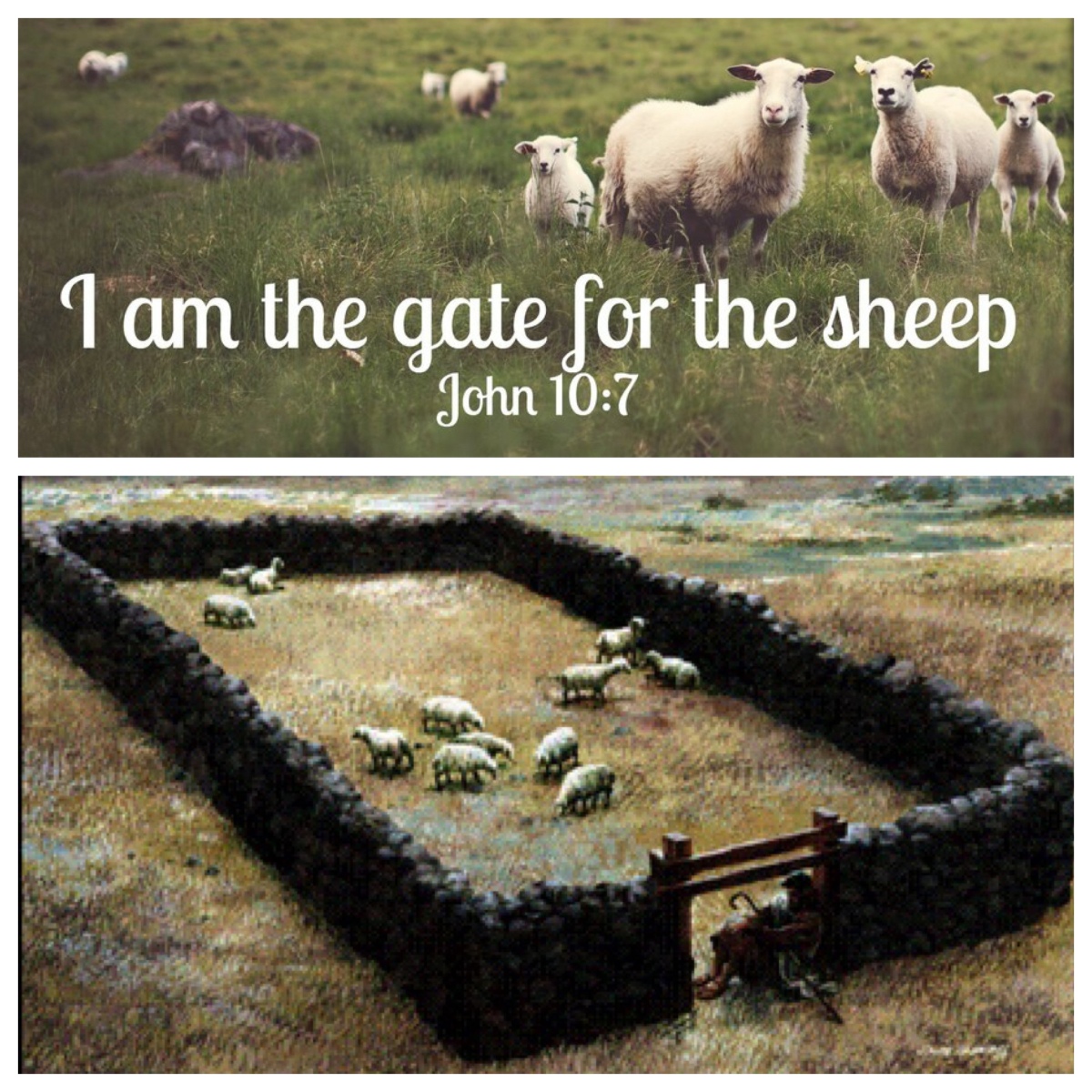
John’s Gospel is known for its series of I AM statements. In the first offering from John 10 (verses 1–10), we encounter one such claim by Jesus—but it is not quite what we expect. We expect him to say “I am the good shepherd”; and he does (but in v.11, which we will hear at this time next year!). Instead, he says, “I am the gate” (v.9)—the avenue for entry into the sheepfold, which was a place of care and protection for the sheep.

But “I am the gate” makes sense only because of what goes before it; the shepherd of the sheep is the one who knows the sheep, calls them by name, and guides them in the paths that they should follow.

In Hebrew Scripture, of course, God is identified as a shepherd; the best-known such reference is the opening phrase of Psalm 23, “The Lord is my shepherd”. As he was dying, with his sons gathered around him, Jacob spoke to his son Joseph, praying, “the God before whom my ancestors Abraham and Isaac walked, the God who has been my shepherd all my life to this day … bless the boys [Ephraim and Manasseh]” (Gen 48:15–16), amd later indicated that Joseph’s strength came “by the hands of the Mighty One of Jacob, by the name of the Shepherd, the Rock of Israel, by the God of your father, who will help you, by the Almighty who will bless you” (Gen 49:24–25).

When David was anointed as king, however, Samuel said to him “it is you who shall be shepherd of my people Israel, you who shall be ruler over Israel” (2 Sam 5:2; 1 Chron 11:2). Subsequent rulers in Israel were accorded this title; yet key prophets during the exile lamented that there had been “stupid shepherds” with “no understanding” (Jer 10:21; Isa 56:11) and had done evil (Jer 12:10–13; 23:1–2; 50:6–7; Ezek 34:1–10).

Second Isaiah declared that Cyrus, king of Persia, would be anointed as God’s shepherd, to carry out God’s purpose (Isa 44:28–45:1). Jeremiah looked to the time when God would restore “shepherds after my own heart” in their midst (Jer 3:15) and Ezekiel prophesied God’s intentions: “I myself will search for my sheep, and will seek them out. As shepherds seek out their flocks when they are among their scattered sheep, so I will seek out my sheep. I will rescue them from all the places to which they have been scattered on a day of clouds and thick darkness.” (Ezek 34:12).

The famous statement by Jesus, “I am the good shepherd” does not appear in the section of John 10 offered by the lectionary for this coming Sunday (10:1–10). It occurs twice in the second section (10:11–18) at verses 11 and 14, and Jesus refers to the “one shepherd” at 10:16. He refers to “the sheep” 13 times throughout the chapter. In the first section, by contrast, we find the striking statement that Jesus is “the gate for the sheep” (10:7). Sheep, of course, was a common description of the people of Israel as a whole in a number of psalms (see Ps 44:11, 22; 74:1; 78:52; 95:7; 100:3).

The implication of Jesus’s words in John 10:7 is that when Jesus refers to himself as “the gate for the sheep”, he has in mind the role of protecting the flock of sheep from those who would harm the sheep—thieves and wolves. If we interpret the sheep as being the disciples of Jesus (as in v.14), then they would have been in danger from persecuting Romans, hostile Pharisees, and bandits and robbers.

Gates were the means of protection for people within towns and cities, keeping at bay those who might attempt to attack from the outside (Deut 3:5; Ps 146:12–14); they were also the route by which faithful people could access the holy place of the Temple (Ps 24:9; 87:2; 100:4; 118:19; 122:2.

Certainly, there is a strand of antagonism coming towards Jesus (and his followers) from the Jewish authorities throughout the first half of the Gospel; in his farewell discourse, he warns his followers that “you do not belong to the world, but I have chosen you out of the world—therefore the world hates you” (John 15:19), and that “they will put you out of the synagogues. Indeed, an hour is coming when those who kill you will think that by doing so they are offering worship to God” (John 16:2).

See

Jesus performs the function of the good shepherds that were promised; by guarding the gate, he offers security, for he saves the sheep; indeed, he offers “life in abundance” (John 10:10) to those who follow him. As we follow Jesus today, we might well reflect, what does it mean to be offered ‘life in abundance’? What does it mean to be ‘saved’ by the good shepherd?

Christ suffered for you, leaving you an example (1 Peter 2; Easter 4A)

Another excerpt from the letter we know as 1 Peter is offered by the lectionary this coming Sunday (1 Peter 2:19–25). This letter as a whole envisages the community of faith in terms drawn from the household, and this particular passage sits within a section of the letter which is known as a “household table” (2:18–3:7).

Believers within the communities of faith which are addressed are said to comprise a “spiritual house” (2:5), the “household of God” (4:17), a “family of believers” (2:17) who are intimately related to their “brothers and sisters in all the world” (5:9). Hospitality is important (4:9), as was the case in all ancient societies. Both husbands and wives are “heirs of the gracious gift of life” (2:7); they are called to “inherit a blessing” (3:9) and have already been born into their inheritance (1:4).

As befits life in the patriarchal society of the day, there is also an emphasis on matters of honour and shame. Whilst honour is viewed as an eschatological goal, to be expected “when Jesus Christ is revealed” (1:7), it remains the benchmark for daily living, as the firm exhortations of 2:12 and 2:17, just before our chosen passage, clearly indicate. Shame is alien to the life of the believer (2:6) and even a husband must show honour to his wife (3:7)

These two features—the language of the household and the concepts of honour and shame— coalesce in the use that is made in this letter of the familiar household table, a form of ethical instruction which we have seen used in some of the debated letters of Paul. Here, the table is introduced with a programmatic statement about honour (2:12) and a series of general injunctions (2:13–17) which urge subordination to authority and the honouring of leaders.

The address then turns to slaves, but not masters (2:18–25), and then wives as well as husbands (3:1–7); however, it stops short of dealing with children and parents (which regularly figured in the typical household table form—see Col 3:18–4:1; Eph 5:21–6:9). The stance is clear: slaves are to “accept the authority of your masters” (2:18), just as wives likewise are to “accept the authority of your husbands” (3:1). Obedience is undoubtedly a quality to be emulated, both within the community of faith (5:5) as well as within society (2:13).

The people of Israel had maintained the daily offering of a lamb without blemish for centuries; each day, a lamb in the morning, another lamb in the evening (Exod 29:38–41). It sounds to us moderns like a terrible waste of good stock; to the ancients, however, it confirmed the covenant between the nation, Israel, and their God, the Lord (Exod 39:43–46). The writer of this letter can see Jesus taking the place of that daily sacrificial lamb, quoting from a well-known song (Isa 53:9) about his sinless nature.

For more on the way that the New Testament interprets the sacrificial death of Jesus as a means of atonement with God, see

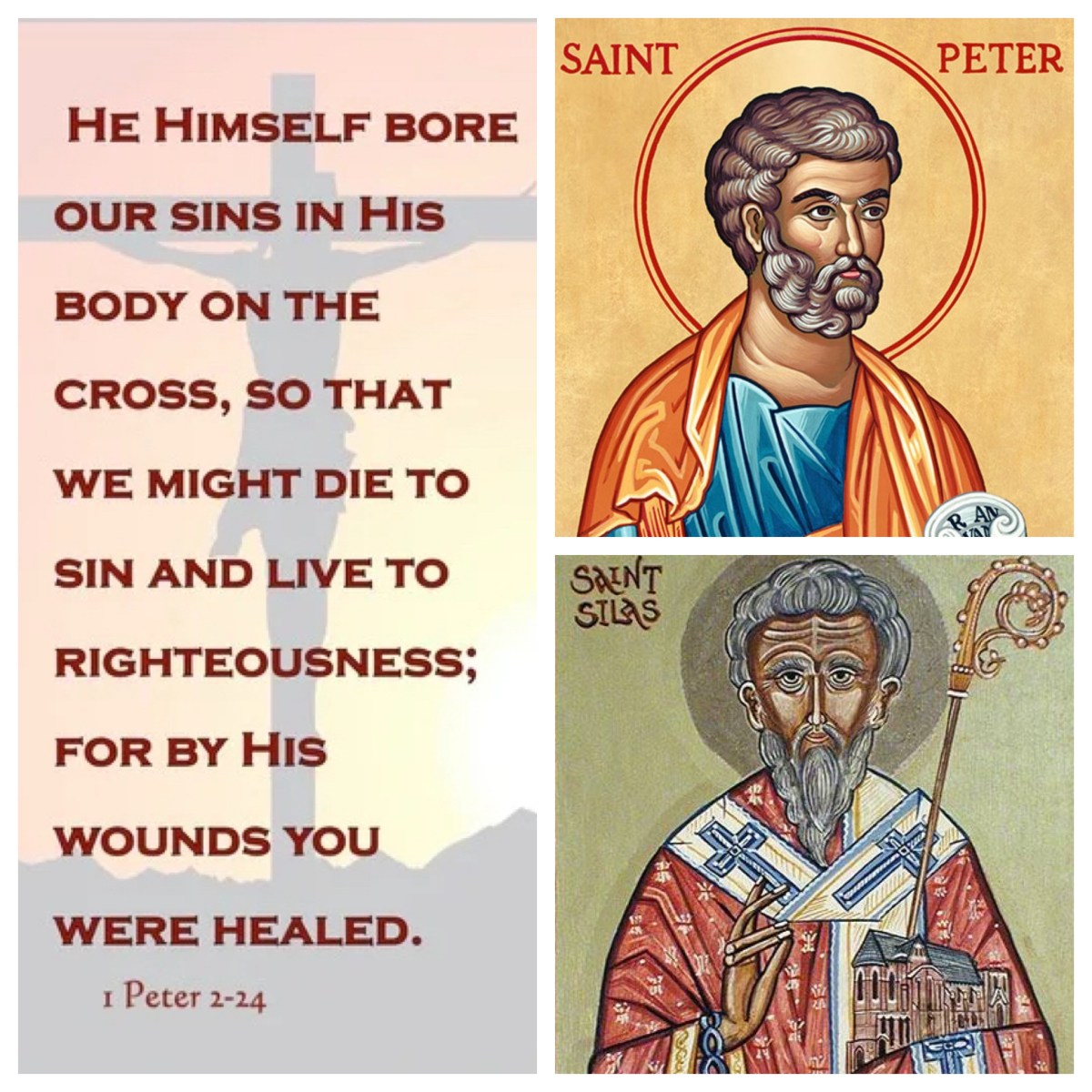
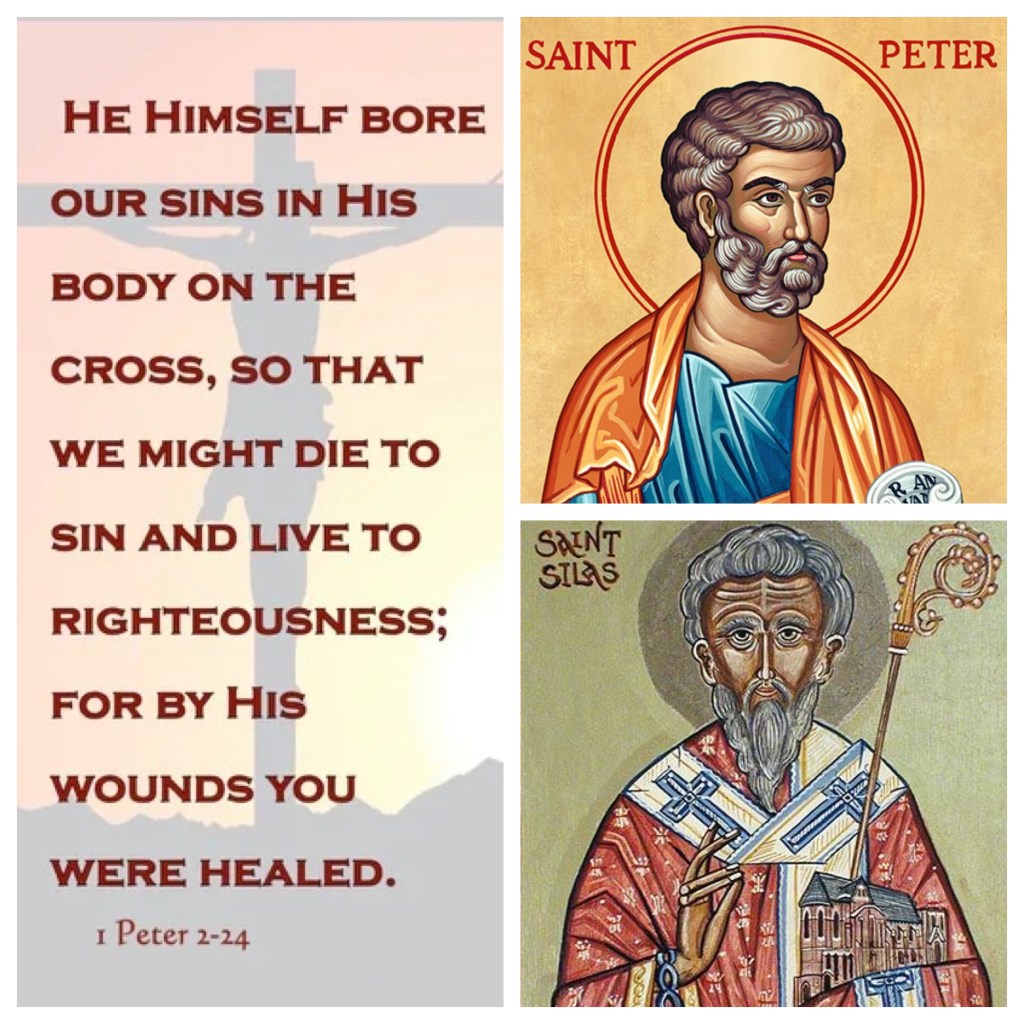
In the Gospel for this coming Sunday, Jesus speaks about the shepherd (John 10:1–10). In the excerpt from this letter which is offered on this coming Sunday (1 Pet 2:19–25), Jesus takes on the role of the lamb, offered up as a sacrificial victim: “he himself bore our sins in his body on the cross” (1 Pet 2:24).

The language and concepts used here relate to ancient practices of sacrifice. They also undergird later Christian understandings of the significance of Jesus and the process of atonement that, it is believed, he effected through his death.

The humility of submission to the violence of sacrificial slaughter is central to the story of the death of Jesus. The lamb is unable to fight back. Chosen for this role, as one who was perfect, without blemish, the lamb can do no other than submit. That humble submission, evident in the lamb, is the vehicle for effecting atonement of sins and a life in righteousness, when found in Jesus—this is the understanding of the cross that has held fast through centuries of theological debate about the death of Jesus. It is an ancient custom, addressing a contemporary need, speaking to current concerns about the proliferation of violence in our world.

So slaves are offered the positive example of Jesus as the model for their submission (2:21–25), in a manner which picks up the cultural and religious Jewish practices of the day and adapts them into the developing Christian context. It demonstrates an awareness of how traditions can be adopted and adapted into new understandings.

By contrast, the instructions to wives are grounded in a reading of scripture which is thoroughly traditional and patriarchal (3:1– 6). In reality, the instructions to wives are based on the expectations of Hellenistic society: reverence, modesty, a quiet spirit, subdued external adornment. They are declared to be “the weaker sex” (3:7) and twice commanded to “accept the authority of their husbands” (3:1, 5).

In fact, the ethics of this letter frequently draw from many elements familiar to Gentiles in the Hellenistic society. Despite the rhetoric of holiness already noted, the believers are not encouraged to live a completely separate life, isolated from wider society. Continued interaction with Gentiles is envisaged at 2:12; believers are to “be ready to make your defence to anyone who demands from you an accounting of the hope that is in you” (3:15). The behaviour of believers should be honourable, and not draw shame upon them; on the contrary, appropriate behaviour will result in the aggressive non-believers being shamed (3:15–16).

In contrast to the letter of James, the brother of Jesus, the specific teachings of Jesus are rarely in view in this letter attributed to Peter, a disciple of Jesus. For James, Jesus taught the righteousness of God and the need for the followers of Jesus to live in a distinctive manner; “true religion” required them “to care for orphans and widows in their distress, and to keep oneself unstained by the world” (James 1:27).

Rather, the ethics of 1 Peter reflect an ethos of temperate behaviour, moderated in a manner which is appropriate to the wider society: “Honour everyone. Love the family of believers. Fear God. Honour the emperor.” (2:7). Although there is a polemic against the base ways of the gentiles, a number of the positive characteristics which were valued within gentile society are also praised in this letter: discipline (1:13; 4:7; 5:7), obedience (1:14, 22; 2:8, 13–14; 3:1, 6) and reverence (3:2, 16).

In short, the ethics of 1 Peter reflect a process of adaptation, in which the Gospel has been accommodated to the cultural patterns of the Hellenistic world. It offers a useful insight into this process, which occurs in all places and all times, as received traditions are incorporated into the life of believers in varied cultural contexts. It is not something to be afraid of; it is something to be acknowledged, understood, and appreciated.

See also

‘Christ died for us’: reflections on sacrifice and atonement

Dealing with the sinful manifestations of human nature is at the heart of Christian doctrine, and theories of atonement regularly grapple with how this is effected. Many books within the New Testament indicate that their authors are grappling with how best to express the central claim of Christianity, that Jesus enables those who follow him to enter into a renewed relationship with God. The letter for this coming Sunday, the Fourth Sunday in Easter, does just this (1 Pet 1:19–25).

However, I can’t see that the New Testament, anywhere, sets forth a fully-developed, single-focussed theory of atonement. There are a range of metaphors used to describe the process, in various places, by various authors: sacrifice, atonement, ransom, expiation/propitiation, liberation/salvation, reconciliation, disarming the powers, and modelling humility, for instance.

In true systematic theology style, over the centuries, various theological writers have plucked verses from various places in the New Testament, and woven together, with little regard for their original context or intention, to form a developed theory that owes more to rationalist deductive argumentation, than it does to biblical texts. That’s the first thing that I distance myself from.

Paul notes that “Christ died for us”. That’s a short and simple way to describe the significance of the death of Jesus; we find it at Rom 5:6,8, 14:15; 1 Cor 8:11, 15:3; 2 Cor 5:14-15; Gal 2:21; and 1 Thess 5:10. That’s five of the seven authentic letters; the matter of the death of Jesus does not figure at all in what is being discussed in Philemon; and in Philippians, the death of Jesus serves to emphasise his humility and obedience (Phil 2:8), and Paul’s main interest is in his this death serves to effect a transformation in believers (Phil 3:21).

This affirmation, “Christ died for us”, forms the foundation for an intricate and complex system of sacrificial atonement theology which is developed beyond the time of the New Testament. These eight times when Paul says, “Christ died for us”, join with a number of other passing comments elsewhere in New Testament texts, to provide the basis for what would become, over time, a detailed understanding of the death of Jesus as a death made on behalf of, and in the place of, believers. An explanation is developed, drawing especially on the Jewish sacrificial system, in which the sacrifices of animals were understood to be the way by which the sins of people were forgiven.

This area of Christian theology—how to understand the death of Jesus—is known as soteriology (relating to “how we are saved”), with a strong emphasis being placed on atonement (that is, what is the mechanism for bringing us back into reconciled relationship with God). The atonement has become a debated and disputed arena. How do we understand this today?

One concern that is often expressed concerns the way that a religious system has a focus on a violent action at the centre of its belief system. Can it be a good thing to celebrate the way that God causes, or at least approves of, the putting to death of Jesus? We have every right to ask critical and penetrating questions about this aspect of our faith.

Another element of the debate is the claim that can be paraphrased as “Jesus died in my place, he was sacrificed for my sins, to save me from hell”. This is the classic way that I hear this view expressed, and it is often described as the substitutionary atonement theory. It depends on, but moves well beyond, the understanding that was inherent in the Jewish sacrificial system.

In my mind, there are a number of points at which this kind of statement about the death of Jesus (often referred to as Penal Substitutionary Atonement, or PSA), narrows the understanding of faith far too much.

For a start, it focuses intensely on a personal dimension, to the detriment of the wider relational, societal, and political dimensions. Easter faith, to me, is broader, more expansive, more encompassing, than just the focus on my personal eternal destiny. I find this communal orientation expressed very strongly in scripture, both in relation to the atonement as well as in many other broader ways. The narrow expression of atonement is based on an understanding of God who is a wrath-filled, vengeance-seeking God, seeking to impact individual lives in a highly judgemental way. I don’t find that perspective in scripture.

Then, the narrow understanding of atonement plays off the will of God over against the actions of a devil figure. This is a problematic element because it contradicts the idea of an all-loving, all-just God. Is all evil in the world to be attributed to a personified devil? What has the allegedly all-powerful and all-loving God done about this?

Such simplistic dualism is problematic, if we just leave it at this. Hebrew scripture steadfastly resists any temptation to sit in a dualistic worldview, and the New Testament continues in that vein, despite pressures from the Hellenistic worldview, as direct heir of the Platonic dualistic schema.

Appreciating the sacrificial dimension of the story of Jesus dying on the cross is important. Jesus went willingly to his death. He did, in the end, offer his life as a sacrifice. The key verse often cited for this understanding is Mark 10:45 (“the Son of Man came not to be served but to serve, and to give his life a ransom for many). Other verses that relate include Rom 3:25-26, Eph 5:2,1 John 2:1-2, 4:10, as well as the whole argument of Hebrews (see especially Heb 2:17, 9:23-28, 10:12, 13:12).

Understanding the death of Jesus as a sacrifice remains at the heart of our Christian faith. The option of taking up a violent path was rejected by Jesus. He did not stir up an uprising against the imperialist Roman overlords, despite opportunities to do so (on Palm Sunday, for instance). He did knowingly offer his life as a sacrifice. After an inner struggle about this matter (Mark 14:32-35 and parallels in the Synoptics), it appears that Jesus went willingly to his death (Mark 14:36, and reflected in the whole prayer that the evangelist crafts in John 17).

The preaching of Jesus in the period prior to his arrest offered a vision of a kingdom in which righteous-justice is dominant and peace is evident (Matt 6:33, 7:21, 21:43, 25:34-36; Mark 12:32-34; Luke 4:16-19, 6:20-21, 12:31-34, 18:24-25). In this preaching, he signalled his key commitments, which are instructive as we consider what he thought he was doing, when he submitted to death. We need to consider these words as we think about the significance of Jesus for our faith, and for how the sinfulness of humanity is dealt with.

The way that Jesus calls us into faithful discipleship is central to this approach. To enter the kingdom means to live in accord with the righteous-justice that Jesus advocates. The greater picture beyond the events of the cross is hugely significant. The cross, the event of the death of Jesus, points beyond to this greater vision. It is the whole life of Jesus, along with his death, which is crucial as we grapple with how Jesus transforms us from “sinful humanity” to “justified and saved” (to use the biblical terms that have become the catchcries in this debate).

His manner of death was consistent with this vision; the complete commitment of Jesus to this vision meant that his death, unjust and violent as it was, provides a glimpse into the way of faithfulness for each of us in our lives. Following the way of Jesus is treading this path of nonviolent affirmation of the greater vision.

*****

See more discussion of specific texts at

and a general overview at

I will offer a sacrifice and call on the name of the Lord (Psalm 116; Easter 3A)

This coming Sunday, the third Sunday in the season of Easter, the lectionary offers a series of verses from psalm 116 (1–4, 12–19). This psalm is one of six psalms, numbered from 113 to 118, which are known as Hallel psalms—from the Hebrew term hallelu-jah, meaning “praise the Lord”. That phrase starts psalm 113 and ends psalms 115, 116, and 117. These psalms were, and are, used in Jewish communities at times of festive celebration; so they are also most suitable in the current Christian season of Easter.

The opening section of this psalm celebrates a rescue from near death (v.8) and continuing in life (v.9), which is a relevant motif for the season of Easter—it evokes the story of Jesus we heard over the Easter weekend, recently. In verse 5, the psalmist identifies some central characteristics of God. That God is merciful and gracious is a recurring Israelite theme (Exod 34:6; 2 Chron 30:8–9; Neh 9:17, 32; Jonah 4:2; Joel 2:13; Ps 86:15; 103:8, 11; 111:4; 145:8–9).

That God is righteous is likewise declared in scripture (Deut 32:4; Ps 145:7; Job 34:17). The psalmists regularly thank God for God’s righteousness (Ps 5:8; 7:17; 9:8; 33:5; 35:24, 28; 36:6; 50:6; etc) and note the importance of humans living in that way for righteousness (Ps 18:20, 24; 85:10–13; 106:3, 31; 112:1–3, 9). The book of Proverbs advises that the wisdom it offers is “for gaining instruction in wise dealing, righteousness, justice, and equity” (Prov 1:3) and the prophets consistently advocated for Israel to live in accordance with righteousness (Hos 10:12; Amos 5:24; Isa 1:22; 5:7; 28:17; 32:16–17; 54:14; Jer 22:3; Ezek 18:19–29; Dan 9:24; 12:3; Zeph 2:3; Mal 4:1–3; Hab 2:1–4).

These recurring notes of the nature of God then form the basis for a Christian understanding of Jesus, who affirms mercy (Matt 23:23), teaches righteousness (Matt 5:6, 10, 20; 6:33), and exudes grace (John 1:14–18). This is an ancient Jewish psalm that we Christians can joyfully sing and affirm!

The second part of the psalm focusses on appropriate ways for the psalmist to respond to the experience of escaping death (see v.8). The psalmist affirms, “I will pay my vows”—not once (v.14), but twice (v.18). Other palms refer to paying vows before God (Ps 22:25; 50:14; 61:8; 65:1; 66:13; 76:11). The words of the psalmist are echoed by Eliphaz in one of his speeches to Job: “you will delight yourself in the Almighty, and lift up your face to God; you will pray to him, and he will hear you, and you will pay your vows” (Job 22:26–27).

Paying a vow is a public act, most likely undertaken in the Temple precincts, as v.19 indicates. The psalmist indicates two such public actions to “pay my vows”. First, the cup of salvation is to be lifted up (v.13). Perhaps this was the drink offering that was to be presented each year at the Festival of First Fruits (Lev 23:13), an expression of deep gratitude for God’s continuing care.

Then, because of the predominance of sacrifices within Israelite religion, offering “a thanksgiving sacrifice” is also an appropriate response (v.17). The regulations for this sacrifice (found in Lev 7:11–15; see also Ps 50:14) indicate that it can be made at any time during the year, as a regular expression of that gratitude for God’s care.

Jews today do not bring specific physical sacrifices, but understand the scriptural language about sacrifice to refer to a way of living. It is said that, on one occasion, as Rabbi Yochanan ben Zakkai and his disciple Rabbi Yehoshua were leaving Jerusalem, Rabbi Yehoshua looked at the ruins of the destroyed Temple and despaired, “Woe to us! The place where Israel obtained atonement for sins is in ruins!” Rabbi Yochanan said to him, “My son, be not distressed. We still have an atonement equally efficacious, and that is the practice of benevolence” (Aboth de Rabbi Nathan 4).

So this is how this ancient psalm functions in Judaism today: as a call to a way of life that is offered fully to God. This parallels the way that Christian writers developed a spiritualised understanding of sacrifices—both of the sacrifice of Jesus, and of the sacrifices to be offered by followers of Jesus.

The offering of his life on the cross by Jesus is understood by early Christian writers within the framework of the ancient Jewish system of sacrifices and offerings: “Christ loved us and gave himself up for us, a fragrant offering and sacrifice to God” (Eph 5:2); “he is the atoning sacrifice for our sins, and not for ours only but also for the sins of the whole world” (1 John 2:2).

In John’s Gospel, the time when Jesus dies is not the day after Passover (as in the Synoptics), but on “the Day of Preparation for the Passover” (John 19:14), as the Passover lambs were being slaughtered and prepared for the meal that evening. The symbolism is potent; Paul adopts this symbolic and spiritual understanding as he notes, “our paschal lamb, Christ, has been sacrificed” (1 Cor 5:7).

Those who follow Jesus are called to live in the same sacrificial mode, offering their lives to God. Paul refers to the gifts sent by the Philippians (most likely financial support for his mission) as “a fragrant offering, a sacrifice acceptable and pleasing to God” (Phil 4:18).

Most famously, he appeals to the Romans “to present your bodies as a living sacrifice, holy and acceptable to God, which is your spiritual worship” (Rom 12:1), and reinterprets the Exodus story as spiritualised symbolism, telling the Corinthians that “all were baptised into Moses in the cloud and in the sea, and all ate the same spiritual food, and all drank the same spiritual drink; for they drank from the spiritual rock that followed them, and the rock was Christ” (1 Cor 10:2–4).

Other letter-writers whose works were collected into the New Testament speak of “a spiritual circumcision … putting off the body of the flesh in the circumcision of Christ” (Col 2:11) and encourage believers to “let yourselves be built into a spiritual house, to be a holy priesthood, to offer spiritual sacrifices acceptable to God through Jesus Christ” (1 Pet 2:25).

So this psalm, and others like it, continue to hold a valued place in Christian spirituality, because of this process of reinterpretation that has taken place in Second Temple and Rabbinic Judaism, and in the early stages of the Jesus movement. The reference to the vows to be paid and the thanksgiving sacrifice to be offered can be understood as metaphors for the way that we are to live our lives as the offering of ourselves to God in obedience and gratitude.

The psalm ends with a joyful exclamation which picks up the key theme: hallelu-jah! praise the Lord! This encapsulates the joyful appreciation for God and God’s way that encompasses all of these psalms of Hallel. It is a fitting psalm for the Easter season.

The living and enduring word of God (1 Peter 1; Easter 3A)

A second excerpt from the letter we know as 1 Peter is offered by the lectionary this coming Sunday (1 Peter 1:17–23). We explored the letter as a whole through the first lectionary offering in this blog:

The recipients of this letter that is attributed to Peter appeared to reside in no less than five Roman provinces (1 Pet 1:1), indicating that the letter must have been composed as a general letter for a wide audience. It is not sent to a specific local community (as with Paul’s authentic letters) but is written for a generalised audience of believers (as with James, and probably also Ephesians).

The recipients are initially identified as “the exiles of the dispersion” (1:1) and later as “aliens and exiles” (2:11). “Dispersion” is a term drawn from Hebrew scripture (Ps 106:27; Isa 11:12; Jer 25:34; Ezek 12:15; 20:23; 22:15; 29:12; 30:23, 26; 36:19; Tob 4:4), as is the phrase “aliens and exiles” (Gen 23:4; each noun appears individually many times in scripture). This language has a primary reference to Jews living as non-citizens in a foreign land; there were many such individuals in many nations of the eastern Mediterranean in the first century.

Other terms used reflect the common Jewish discourse shared by author and recipients, such as “a chosen race, a royal priesthood, a holy nation, God’s own people” (2:9), and “living stones…a spiritual house…a holy priesthood” who offer “spiritual sacrifices” (2:5). Holiness, sacrifice, priesthood, royalty, and a spiritual house are all ideas found often in Hebrew Scripture. The description of the community of believers as “living stones” is supported by a string of scripture citations (Isa 28:16; Ps 117:22; Isa 8:14; quoted at 2:6–8), whilst the appellation of “God’s own people” is explained by a poetic allusion to the prophet Hosea (Hos 1:6, 9; 2:25; at 1 Pet 2:10).

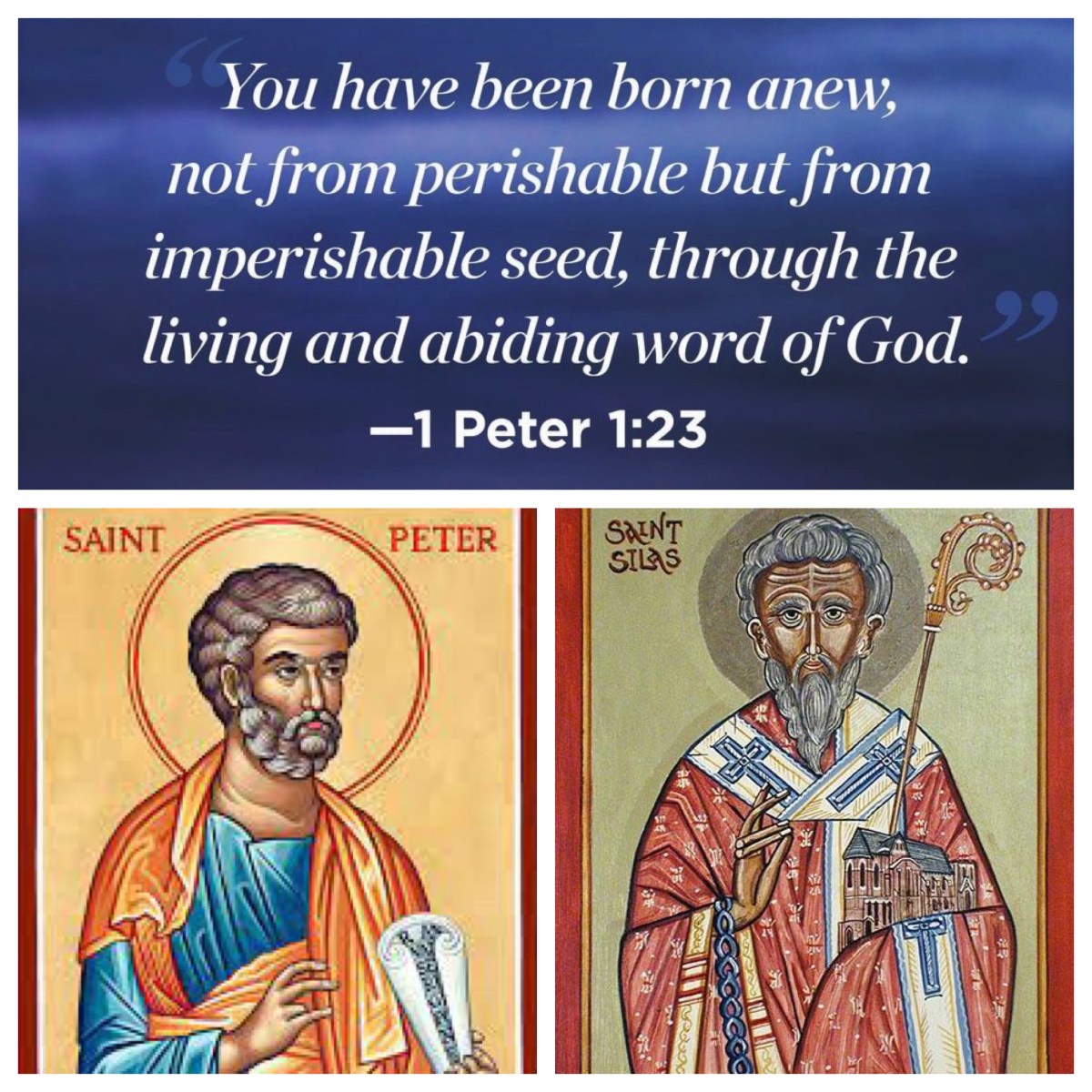
This Jewish scriptural focus is a prominent feature of this letter, which indicates a reverence for “the living and enduring word of God” (1:23). For the nominal author, Peter (and possibly also for his colleague, Silvanus; see 5:12), this must refer to the Hebrew Scriptures. The letter includes other scripture citations and scriptural imagery. The early focus of the letter on holy living, for instance, is supported by reference to Lev 11:44–45; 19:2 (quoted at 1:16). The role of “the word of God” is indicated by Isa 40:6–8 (quoted at 1:24–25).

The sacrificial suffering of Jesus is interpreted with reference to the fourth servant hymn of Isaiah 53. The direct citation of Isa 53:9 at 1 Pet 2:22 introduces a series of intertextual connections weaving together the death of Jesus with the servant song (2:23–25 refers to Isa 53:4, 5, 6 and 12).

The contrast between good and evil is expounded at one point by a long Psalm citation (Ps 34:13–17, quoted at 3:10–12) and later by drawing on a proverb (Prov 11:31, quoted at 4:18). Likewise, a proverb contrasting the proud and the humble is quoted as a justification for the exhortation, “humble yourselves” (5:5–6, citing Prov 3:34).

Other scriptural elements include an allusion to the “day of visitation” (2:12, referring to Isa 10:3); a proverbial phrase (4:8 quotes some words from Prov 10:12); a reference to the spirit of God (4:14 alludes to Isa 11:2); and a Christologically-expanded interpretation of the story of Noah and the flood (3:18–20, in reference to Gen 7). As this letter regularly intertwines Hebrew scripture with guidance about the way of Jesus, it surely reflects a continuing Jewish presence in the Jesus movement.

However, the key words “aliens and exiles” (2:11) also carry symbolic significance. They both derive from scriptural usage in the scrolls of Hebrew Scripture, collected into the books of the Old Testament. The purpose of the letter is to reinforce the identity of the community of believers as “aliens and exiles”, an especially important process because of the pressures which are being experienced by those members from the society in which they lived.

The language which is applied to them ought not to be taken purely at the literal level, for it is often metaphorical. This is obvious with regard to references to “newborn infants” and “spiritual milk” (2:2), “living stones” and the “spiritual house” (2:5), and being “born anew” (1:23). It applies also to the references to “aliens and exiles”; we cannot assume that all believers addressed were literally living in a foreign country. Rather, the force of the image is to describe the alienation that has taken place between the wider society and the group of believers who follow the way of Jesus.

Indeed, there are various indications that the recipients of the letter had previously been Gentiles living in sinful and idolatrous ways, but now were striving to live by standards which set them apart from others, and may at times have caused them intense difficulties. The author hints that they were “going astray like sheep” (2:25) and followed “futile ways” (1:18) which were characterised by “desires that you formerly had in ignorance” (1:14). These are spelled out as “malice…guile, insincerity, envy…slander” (2:1) and “living in licentiousness, passions, drunkenness, revels, carousing, and lawless idolatry” (4:3).

Coming to faith in Jesus was like being called out of darkness (2:9), being raised from the dead (1:21), being born anew (1:23). Such believers are to stand in a different relationship to the customs and practices in which they were raised: “now that you have purified your souls” (1:22), “do not be conformed” (1:14), “abstain from the desires of the flesh” (2:11), “live no longer by human desires” (4:2). People addressed in these terms by a Jew (such as Peter, the nominal author of the letter) could not have been Jews; they must have been Gentiles. Perhaps some of them were Godfearers, such as are identified in Acts?

At any rate, the language and ideas of Hebrew Scripture permeates this letter and undergirds its key ideas, whether the recipients were Jews, Godfearers, Gentiles, or a combination of all three. It is an enticing mixture, to be sure.

*****

See also

A new birth into a living hope (1 Peter 1; Easter 2A)

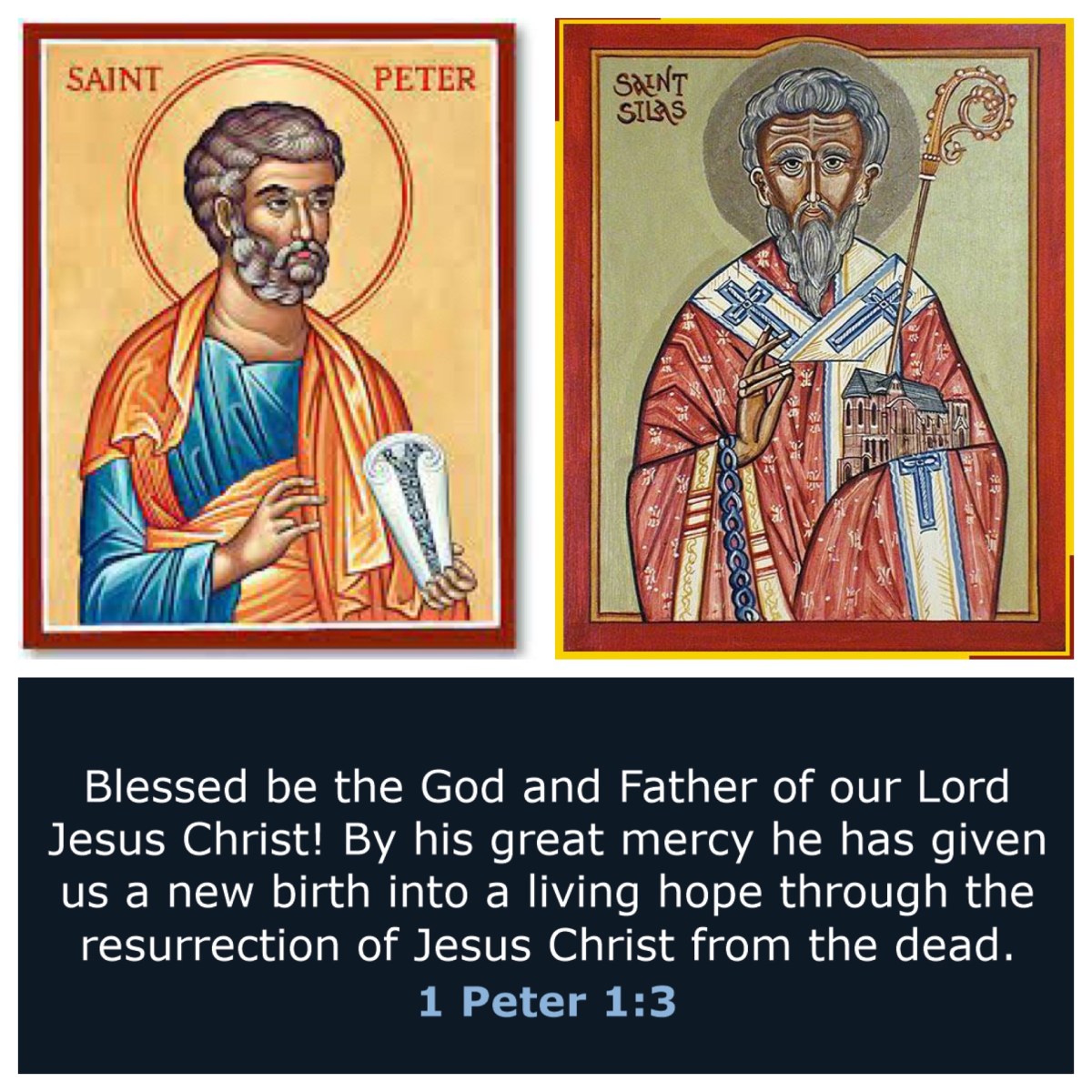
Excerpts from the letter which we know as 1 Peter are being offered in the coming Sundays throughout this season of Easter. The letter has a focus on joy in the midst of suffering, which might thus suit it well as an Easter series. For this coming Sunday, we will hear 1:3–9, an extended blessing offered to God, who “has given us a new birth into a living hope through the resurrection of Jesus Christ from the dead” (1:3)—a most suitable acclamation for the Easter season!

The letter has opened (in verses omitted by the lectionary) with the standard opening address of an ancient letter form: “Peter … to the exiles of the dispersion … grace and peace” (1:1–2). Instead of a thanksgiving, which usually opened an ancient Greek letter, in this case the letter launches into this blessing (1:3–12), which was a common Jewish feature (found also in 2 Cor 1:3–7 and Eph 1:3–14).

Unfortunately, the lectionary offers only verses 3 to 9, so we are somewhat shortchanged by this truncated passage. Ending the lectionary selection with “… you are receiving the outcome of your faith, the salvation of your souls” (v.9) does conclude a thought-sequence; but the next three verses (vv.10–12) expound the meaning of that salvation, as already having been revealed through the prophets. The author of this letter is thoroughly grounded in scripture; regular reference to the sacred texts of Israelite faith occur throughout this letter.

The main theme of the letter is declared after the blessing, in an initial exhortation (one of many in the letter) to “prepare your minds for action … do not be conformed to the desires that you formerly had in ignorance … be holy yourselves in all your conduct” (1:13–15). Curiously, the lectionary also overlooks this passage; the passage offered on Sunday week (Easter 3) starts at verse 17, “if you invoke as Father the one who judges all people impartially according to their deeds …”.

Once again, in true Jewish style, this exhortation is grounded in a central scriptural text, the Levitical call to holiness (Lev 11:44; 19:2). The emphasis throughout the letter is on living faithfully as God’s chosen people. A closing comment reinforces that the purpose of the letter is “to encourage you and to testify that this is the true grace of God” (5:12). Then follow some closing greetings and a short benediction (5:12–14). Unusually amongst the New Testament books not by Paul which are usually identified as letters (those attributed to James, Peter, John, and Jude, and the anonymous work to the Hebrews), this document is indeed a true letter.

The author is announced simply as “Peter, an apostle of Jesus Christ” (1:1). This would suggest a letter from a writer with close personal links with Jesus. The substance of the letter sits uneasily with this claim. The letter’s refined style of language, and especially the use of a number of classical Greek words, is rather unexpected for a Galilean fisherman.

There are a number of references to the suffering of Jesus (1:11; 2:4, 21, 24; 3:18; 4:1, 13; 5:1), but no other indication that the author knew anything of the earthly ministry of Jesus. Instead, the letter reflects the Christology of the developing movement, interpreting the death of Jesus in sacrificial terms (1:18–19; 2:24; 3:18) and attesting to him as the one who is risen (1:3; 3:21), a mediator with God (2:5), to be acknowledged as Lord (3:15), now dwelling with God in glory (3:22; 5:10), whose future return is awaited (1:7–8, 13; 4:13; 5:4).

The author claims to have been “a witness of the sufferings of Christ” (5:1)—a curious claim to be made by Peter, if the accounts of his denial and desertion of Jesus, found in the canonical gospels, are to be believed! He also describes himself as an “elder” (5:1), which we would not expect to be a term to be adopted by Peter. The word indicates the author’s leadership role within the developing community of faith.

The identification of this community as being “in Babylon” (5:13) is frequently interpreted as being code for Rome, drawing on the same tradition found in Revelation 17:1–18:24. The link with Mark (5:13) has been taken as a further indication of Roman origins, as Mark was alleged to have been in Rome with Peter. However, these connections are faint, revealing nothing of substance about the nature or purpose of the letter.

The close of the letter indicates that it has been written “through Silvanus” (5:12), leading some interpreters to suggest that Silvanus, as secretary, placed a more educated and polished mark on the letter as he transcribed the author’s thoughts. But an alternative translation of this verse is possible, by which Silvanus is designated as the one who delivers the letter, rather than being involved in its writing.

This Silvanus may well be a different person from the Silvanus who is known as a fellow-worker with Paul (2 Cor 1:19; Acts 15:40) and is called the co-author, with Paul, of both letters to Thessalonica. As he was a member of the Pauline group, we would expect more Pauline influence to be evident in 1 Peter if he was involved in its creation.

In fact, this letter shows more similarity to the “pastoral” letters attributed to Paul—which have some similarities with Paul’s thinking, but demonstrate a clear development in ideas, language, and theology, most likely reflecting a different (layer) context. Like them, it is more feasible that this letter was written after the death of the apostle, in his name, in order to encourage and guide believers in what appears to have been a time of increased suffering. Jesus is invoked as the guide and example for believers in this situation.

See also