The resurrection calls us to pay attention to this life (Easter Sunday)

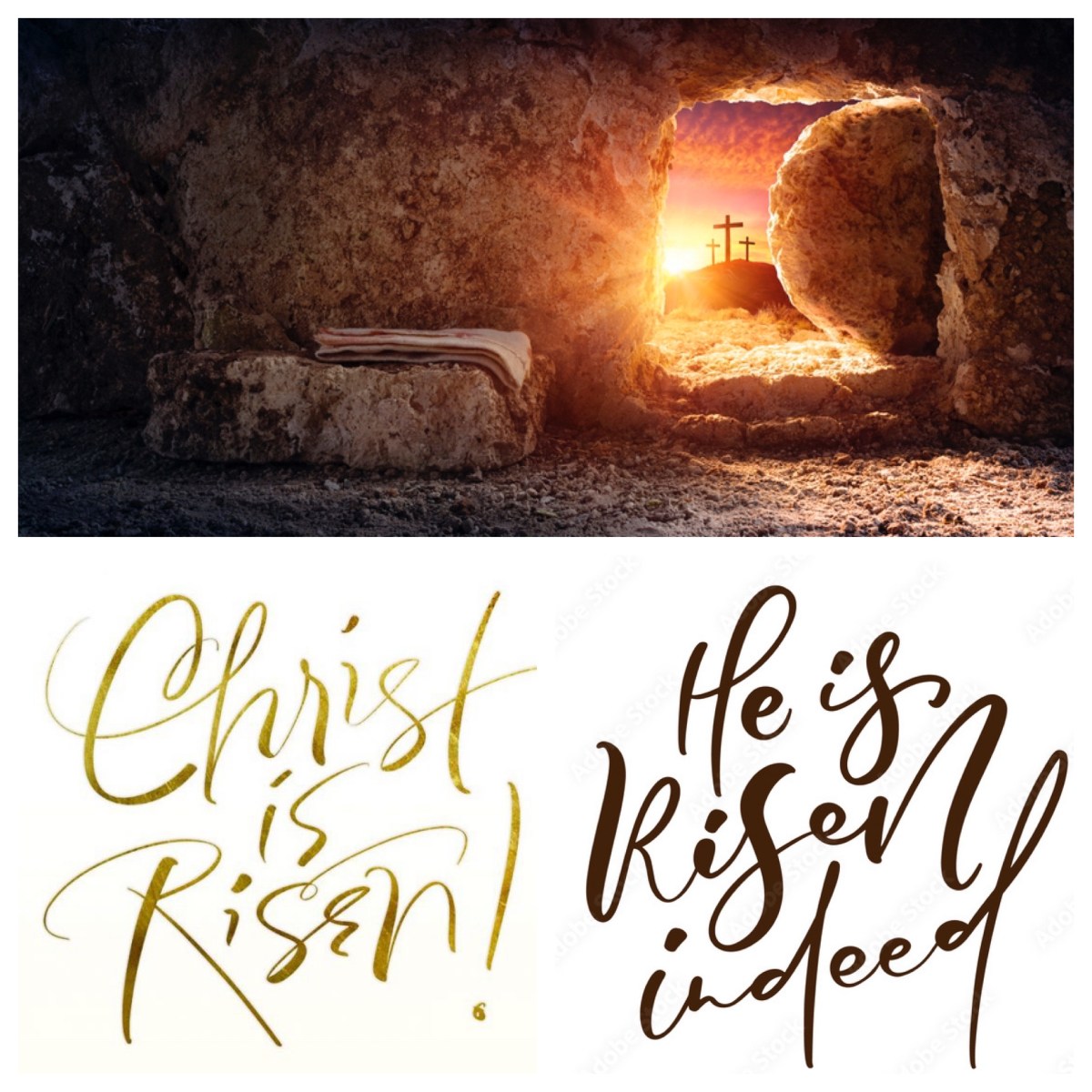
On Easter Sunday, all attention is rightly on Jesus, risen from the dead. “Christ is risen”, we greet each other, with the expected reply, “he is risen indeed”. Risen, to new life; risen, as a sign of the future life we are promised; risen, soon to ascend, to be “seated at the right hand of the Father” in heaven. Alleluias are rightly sung on this Easter day, and in this Easter season!
So our attention is, in effect, directed away from here, on earth, towards the heavenly realm. Indeed, the Gospel for Easter Sunday this year appears to point us in that direction, as Jesus speaks to Mary Magdalene in the garden: “Do not hold on to me, because I have not yet ascended to the Father; but go to my brothers and say to them, ‘I am ascending to my Father and your Father, to my God and your God’”(John 20:17).

The same orientation is found in the story of the walk to Emmaus, where Jesus says to those walking on the road with him, “was it not necessary that the Messiah should suffer these things and then enter into his glory?” (Luke 24:26). “Going to glory”, of course, is a popular euphemism for dying—going to heaven; even in biblical usage, entering into glory is to be in the direct presence of God (Exod 40:35; 2 Chron 7:2; Isa 2:10, 19–21; 1 Cor 15:42–43; 2 Cor 3:7–18). And that is where Jesus goes.

A popular (mis)understanding of Christianity is that it is about using this life as preparation for the life to come in the future. Faith, in this view, is about repentance now and obedience in all we do on this earth, so that when we die, our souls will rise to heaven, we will be commended as a “good and faithful servant”, and invited to “enter the kingdom of God”—or, in the common popular perception, step through the pearly gates into a heaven filled with angels, playing their harps and singing their songs of eternal praise and adoration.

That’s the popular view; and some small part of this rests on some verses found in scripture. But most of it is romanticised populist thinking, far away from Christian doctrine. Sure, there are the apocalyptic sections in the Bible that look to the coming of a new creation—but if you understand them in the way that I believe they were intended, they are actually providing encouragement to believers about the present, rather than predicting what the future will be. And they are not about the new heavens and new earth of the future, up in the sky somewhere, but rather about “the new Jerusalem, coming down out of heaven from God”, onto earth (see Rev 21:2).

See my discussion of the function of biblical apocalyptic passages at

So the question stands, during this Easter moment—and throughout the Easter season that stretches ahead of us: where do we focus our attention? Three Gospels provide a very clear answer as they recount the appearances of the risen Jesus. In Luke’s story about the appearance of the risen Jesus to his followers in Jerusalem, he says to them, “look at my hands and my feet; see that it is I myself; touch me and see; for a ghost does not have flesh and bones as you see that I have” (Luke 24:39). The physicality of Jesus is to the fore.
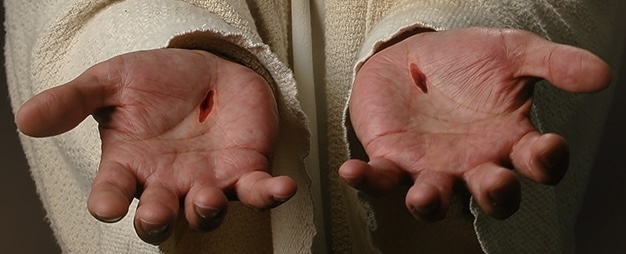
In John’s account of that scene, there is also a physicality in the encounter—with an emphasis on the fact that Jesus shows them “the mark of the nails in his hands and … the mark of the nails … in his side” (John 20:25). Not only the physicality, but the carrying of the wounds of the cross into the next phase of life, is to the fore for John.

And then, when Matthew recounts the first appearance of Jesus, to the women fleeing the tomb in the early morning (and this encounter is told only in Matthew’s Gospel), he makes a point of noting that the (presumably prostrate) women “took hold of his feet and worshipped him” (Matt 28:9). All three Gospels focus on the material present rather than an imagined heavenly future.

Not only that, but each of the three Gospels that narrate appearances of the risen Jesus orient the stories to the future in the known realm of the earth, rather than the future in some heavenly realm. In John’s Gospel, Jesus commissions the disciples, gathered in the room behind locked doors, for the task of bearing witness to him: “as the Father has sent me, so I send you” (John 20:2). This is language that is used often in this Gospel for the mission that Jesus is undertaking: he is sent by the Father, God is “the one who sent me” (4:34; 5:24, 30, 37; 6:38–39, 44; 7:33; 8:16–18, 26, 29; 9:4; 12:44–45, 49; 13:20; 14:24; 15:21; 16:5); and so he now sends his followers in similar fashion. This is language that is very focussed on this earth, this life.

That task of witnessing is also articulated in the clear declaration placed on the lips of the risen Jesus in Luke’s Gospel: “you are witnesses of these things” (Luke 24:48). This turns into a fully-fledged evangelistic manifesto when the scene is recounted again in Acts: “you will be my witnesses in Jerusalem, in all Judea and Samaria, and to the ends of the earth” (Acts 1:8).

Both Luke and John connect this charge to the disciples with the giving of the Spirit: “you will receive power when the Holy Spirit has come upon you” (Acts 1:8); “receive the Holy Spirit” (John 20:22). There is no mention of Spirit in the final scene reported in Matthew’s Gospel (Matt 28:16–20); however, there is a clear commission in this narrative—the famous “Great Commission”. The emphasis here, as in the other two Gospels, is on the work to be done by the followers of Jesus in the period after he has left them. It is a this-worldly emphasis in these narratives.

The words used in the Great Commission in Matthew’s Gospel (28:19–20) need to be read carefully. There are four key verbs (doing words) in these two verses: go, teach, baptise, teach. In strict syntactical analysis, the main verb is the one in the imperative (expressing a command): “make disciples”. Subsidiary to that are the other three verbs, each of which is in a participial form (indicating an action that is related to, or consequent from, that main verb). So making disciples is the key factor in this commission.
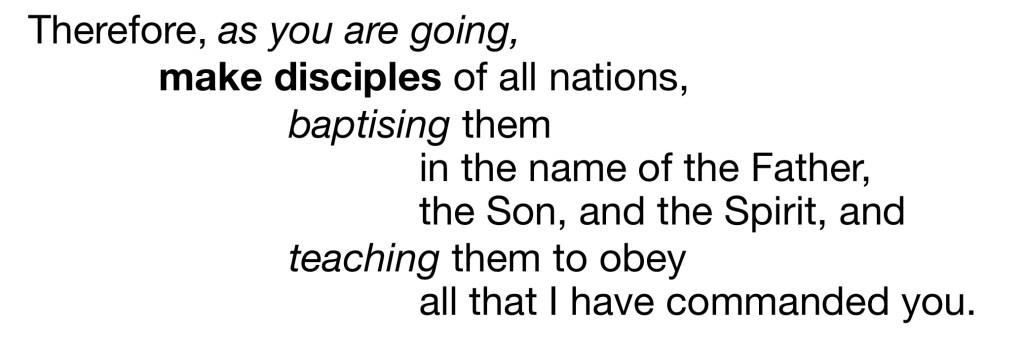
Matt 28:19–20a
(my translation and formatting)

The act of making disciples is directed towards “the nations”—that is, to anyone with whom the followers of Jesus come into contact. It is to be expressed through two activities: baptising, and teaching. The act of making disciples is also to take place “as you are going”, that is, as followers of Jesus are making their way through the world in the days ahead.

Teaching orients the focus of the disciples back to the time that they spent with Jesus; they are to teach the people of the nations “to obey everything that I have commanded you”. As Matthew has taken great care to compile and collate the teachings of Jesus into five clear sections of his Gospel (chs. 5–7, 10, 13, 18, 23–25), the guidelines provided by Jesus are evident. What he has taught in his time with the disciples is to be passed on (in good rabbinic style) to those whom they then instruct. Teaching is an activity for life in this world, very clearly.

Baptising orients the focus of the disciples to the life of the church in the future. Belonging to Jesus involves submitting to the ritual of immersion into water, signalling the new life that is taken on through faith. The formula used in Matt 28:19 is, in fact, something that emerges only later in the life of the church (probably not until the time of Constantine, as far as we can tell from other Christian literature). Once again, life in community on this earth is the focus. There is no sense of being baptised (“christened” in the old language) in order to “get into heaven”.

So the accounts of Jesus departing from his disciples offer no sense of, “I am going away, you will join me soon, we shall see each other in heaven”. Rather, the focus is on what the disciples need to do in the earthly life that stretches ahead of them: bear witness, make disciples, teach and baptise, continue out amongst “the nations” the mission that Jesus has been undertaking amongst “the lost sheep of the house of Israel”.

(The resurrection appearances at the end of Mark’s Gospel are in endings that were added centuries after the original was written, to bring it into consistency with the others, so they don’t figure in my discussion at this point.)

Two other factors point in the same direction, oriented to life on this earth, and not to a heavenly realm beyond. First, the Revised Common Lectionary (admittedly a creation from many centuries after Jesus!) offers stories from the life of those early followers—the church in Jerusalem and beyond—in passages from Acts during the season of Easter. That is to say, the structure of the lectionary reminds us that, after the resurrection of Jesus, the life of faithful followers is lived and worked out in amongst the other people of this earth. It is a grounded discipleship that is to the fore.

Finally, going right back to the lips of Jesus himself in the first century, in the words of the Lord’s Prayer, we are instructed to pray “your kingdom come, your will be done on earth as in heaven” (Matt 6:10). That final phrase is central to all that Jesus proclaimed in his teachings and parables: what God is willing “in heaven” is to be made manifest here in our midst, “on earth”.

See

That is the immanent, present, realised, immediate vision that Jesus has for his followers; and that is what the resurrection narratives point us to, time and again. The resurrection calls us to pay attention to this life.

Do not hold on to me: Mary’s early-morning encounter (John 20; Easter Sunday Year A)

A sermon written by the Rev. Elizabeth Raine for the celebration of Easter Sunday, 9 April 2023, at the Tuggeranong Uniting Church

*****

All four Gospels tell of women, coming to the tomb where Jesus had been lain, early in the morning. In this more intimate narrative of John’s Gospel (John 20:1–18), Mary Magdalene comes alone to the tomb in the dark, not bearing myrrh, not expecting anything. The presence she encounters in the garden is not what she has previously experienced or understood.

When Mary realises that it is Jesus she sees in the garden, she instinctively reaches out to him, only to be rebuffed by the words ‘Do not hold on to me’. 

It is both a tender and painful moment that sits between intimacy and distance, love and loss. It reminds us of how it was at the beginning of the pandemic, where the normal, natural instinct to reach out to touch and hold one another became a potential source of danger.

But there was no pandemic in Jerusalem when Mary heard her name being spoken in the unmistakable tones of her beloved teacher and friend, whom she had thought was lost to her forever. Mary’s seeking to touch Jesus would have been the most natural form of greeting in any circumstances, never mind in this extraordinary moment. So why does Jesus respond with what must have felt like a hurtful rejection?

We have the sense that the Gospel is picking up that Mary had a hard time letting go of the physical Jesus. It is no wonder. We all feel like this in our grief. Yet, Jesus is pointing to the broader context of God’s liberating power at work in the Easter story.

John is making the point that the risen Jesus is not a return to the ‘old normal’ but the start of something new. Life is not going to continue as before, whatever Mary’s initial hopes may have been.

The ‘new normal’, which John’s readers were already having to live, did not include Jesus’ physical presence in a recognisable, huggable human body. For a short time, resurrection appearances would convince the disciples that he was, indeed, alive, but the message was that they must not become dependent on him.

*****

“Do not hold onto to me”. Like much of John’s gospel, there is a deeper meaning to the words. John is advising us. Do not cling to the holy as you once knew the holy. The time is here for you to learn, see, hear and perceive anew. Open your consciousness and awake to the dawn of something entirely transformed and transforming.  

We can also pick out the events of Simon Peter’s dash towards the tomb with the ‘other disciple’, and the events that unfolded there, as worthy of thinking about. When they entered the space, only the linen was there. We are told that the other disciple “saw and believed”. This is an interesting comment. What did he believe? What exactly did he see that turned his heart from despair to hope? What belief exactly did he come to?

We are told that the disciples still did not understand the scriptures in relation to Jesus’resurrection, yet something clearly happened in their understanding as they left transformed by the encounter.

Surely transformation sits at the core of the mystery of resurrection. It is not a magical replacement of the old with something new, but an innovating change from deep within. We are reminded in this story of the first Easter that God’s action often takes place in the liminal spaces—on the edges of things, at the boundary points between ‘this and that’: despair and hope, hate and love, death and life.

William Brodrick, in a thoughtful reflection used by the Northumbria community, notes that the faithful have to be like candles, “burning between hope and despair, faith and doubt, life and death” and that this is the “disquieting place where people must always find us.”

We need people like Mary who will blunder through the garden blinded by tears but also with a willingness to be curious and open to the impossible. We need people like the male disciples to wonder out loud, stay present in the moment and take risks rather than living life in fear. We need people who somehow generate more hope than we believed could be possible.

While Easter morning brings joy and hope, and a fresh start after grief and brokenness, it also encourages us to be those candles shining brightly between hope and despair in our world. It encourages us to transform and to recognise that the world cannot be the same either in a post-covid era or indeed, a post-resurrection one.

May we not cling on to things that we imagine will keep us safe: may we learn instead to let go in order to findour true selves; and die in order to rise to newness of life.

The desert waits … the city beckons (Lent Year A)

The period of Lent is forty days—although it actually takes 46 days to get from Ash Wednesday to Easter Sunday. The reason for this is that Lent is reckoned by omitting the six Sundays in this period, since Sundays are not counted in the season of Lent itself. An explanation for this was given in a statement from the Second Vatican Council (1962–1965), reflecting on ancient practice: “The Lord’s Day is the original feast day.… Other celebrations, unless they be truly of greatest importance shall not take precedence over the Sunday which is the foundation and kernel of the whole liturgical year” (Sacrosanctum Concilium, No. 106).

As the forty days draw to a close, I am reflecting on how the experience has been this year. There is always a lot of focus at the end of Lent, for it is then that we move into the high season of Easter, filled with the emotions of Good Friday, the liminal space of Holy Saturday, and the joyful celebrations of Easter Sunday. There is also a focus, somewhat less, at the start of Lent, with Shrove Tuesday—the original Mardi Gras (meaning “Fat Tuesday”) followed by the solemn Ash Wednesday rituals.

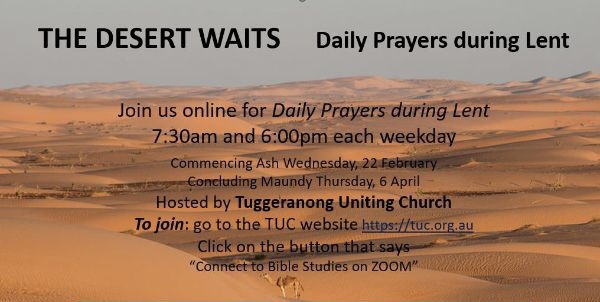
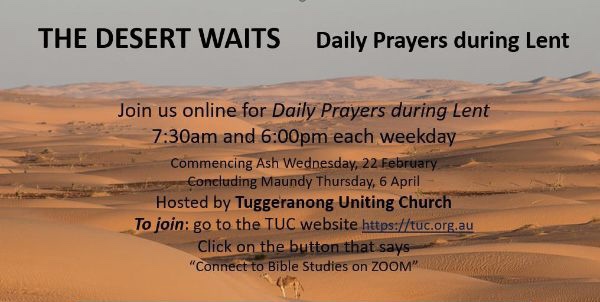
These reflections explain how Lent has been held within the Congregation where I am a member: Tuggeranong Uniting Church, in the southern suburbs of Canberra, in the Australian Capital Territory. Each weekday during Lent, first thing in the morning and then again at the end of the working day, before evening sets in, a group of people from the Congregation, and some beyond, gather online for a brief (8–12 minutes) of prayer and reflection. It is a way of marking the season in a distinctive fashion.

At each gathering, there is an opening prayer, taken from a prayer by Ruth Burgess, published in the Iona liturgical resources: the desert waits. It is a theme that invites us to pause, slow down, listen, and pray. So we hear a short scripture reading, a brief reflection in response, and then listen to a psalm. (There are many wonderful videos of psalms being sung by contemporary artists—the Sons of Korah, Francesca LaRosa, Poor Bishop Hooper, The Psalms Project, Jason Silver, and more). The session ends with a closing prayer and blessing.

The desert waits is also a theme that resonates with a key New Testament story—that of Jesus, in the wilderness for forty days, tested by the devil and sustained by angels. By tradition, it is the Gospel reading for the First Sunday in Lent every year (this year, we heard Matt 4:1–11).

That story, of course, draws deeper from the wells of Hebrew Scripture, where many stories include the time frame of forty days, or forty years. Rain fell during the flood for “forty days and forty nights” (Gen 7:4); then Noah waited for forty days after the tops of mountains were seen after the flood, before releasing a raven (Gen 8:6–7). The people wandered in the wilderness for forty years, to “suffer for their faithlessness” (Num 14:33) at the decree of the Lord, “until all the generation that had done evil in the sight of the Lord had disappeared” (Num 32:13). The spies which Moses sent into the land returned to report to Moses after forty days (Num 13:25).

Moses was said to have spent three consecutive periods of “forty days and forty nights” on Mount Sinai; first, to receive the Torah (Deut 9:9–11), then to beg forgiveness on behalf of the people (Deut 9:25–29), and for a third time seek again God’s forgiveness (Deut 10:10–11). A number of leaders in Israel were said to have reigned for forty years: Eli (1 Sam 4:18), Saul (Acts 13:21), David (2 Sam 5:4), and Solomon (1 Kings 11:42). The prophet Elijah walked for forty days to Mount Horeb, where he meets God “in the sound of sheer silence” (1 Kings 19:12).

All of this indicates that the period of forty days or years was a rounded-out way of describing “a long period of time”—not an accurate reporting of precise days or years, but an indication that whatever was being described was an extended, lengthy period of time. It was a story-teller’s phrase, not an historian’s precise chronicling.

During the extended period of this current Lent, in the online daily prayers each morning being hosted by Tuggeranong Uniting Church, we have traced the theme of wilderness, through a series of readings that commenced in the stories of the ancestors: Abraham and Hagar (Gen 16:7), Hagar and Ishmael (Gen 21:14, 20–21); and Moses on Mount Horeb where he saw the burning bush (Exod 3:1–7).

After that, we spent a week hearing of the travails of the Israelites in the wilderness (Exodus 13–17) and then passages which indicated the extent of the land that was promised to them (Exod 23:31–32; Deut 32:8–10; Joshua 5:6–9; and Joshua 20:7–9) before ending the week with a song about the power of God, seen in creation (Psalm 29:5–11). These stories each morning were coupled each evening with a psalm which was read and then sung, during which our personal reflections were voted.

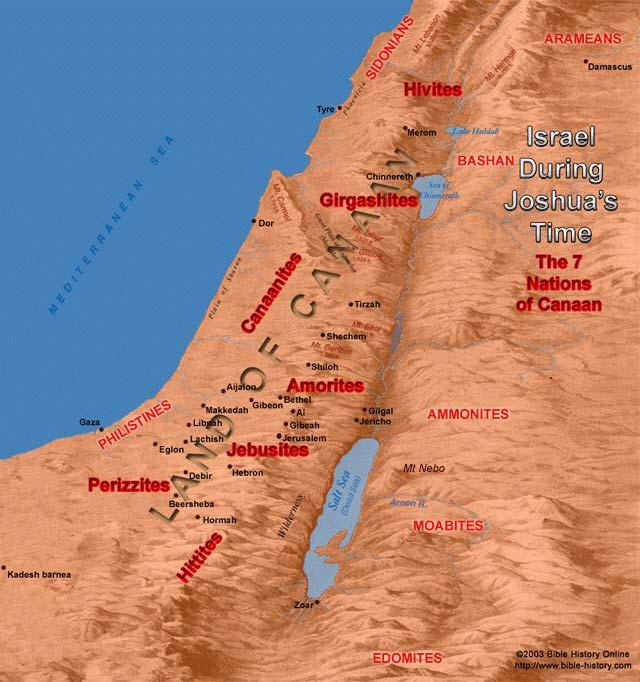
Following that, the focus of morning prayers was on hearing the names of the people who already lived in the land that had been promised to Israel from the time of Abraham onwards: “the Kenites, Kenizzites, Kadmonites, Hittites, Perizzites, Rephaim, Amorites, Canaanites, Girgashites, and Jebusites.

We heard the genealogical list of the descendants of Canaan, the grandson of Noah (Gen 10:1–20), then the promise to Abraham (Gen 18:1, 18–20) and then to Moses (Exod 3:7–10), the instructions given through Moses to “make no covenant with them and show them no mercy” (Deut 20:1–5), and the list of “the kings of the land whom Joshua and the Israelites defeated” (Joshua 12:7–8). Each time, a list of these original peoples was given. Again, a psalm for reflection was matched with these passages.

This list of people already inhabiting the land, but confronted by—and in some cases annihilated by—the invading Israelites, is sobering. For each day during this week, we viewed, firstly, the map of peoples in Canaan, and then the map of peoples on the continent of Australia that we know were here before the British invasion and colonisation of 1788 onwards.

There were many more nations in Australia than there were in Canaan, which is of course understandable since the land mass of the continent is far, far larger than that of Canaan. However, there are very strong resonances between the fate of the First Peoples of Australia and the fate of many of the peoples of Canaan. (The graphic description provided in the battle scenes of Joshua and Judges were not read during the daily prayers; these are available in our Bibles for people to read and reflect on individually.)

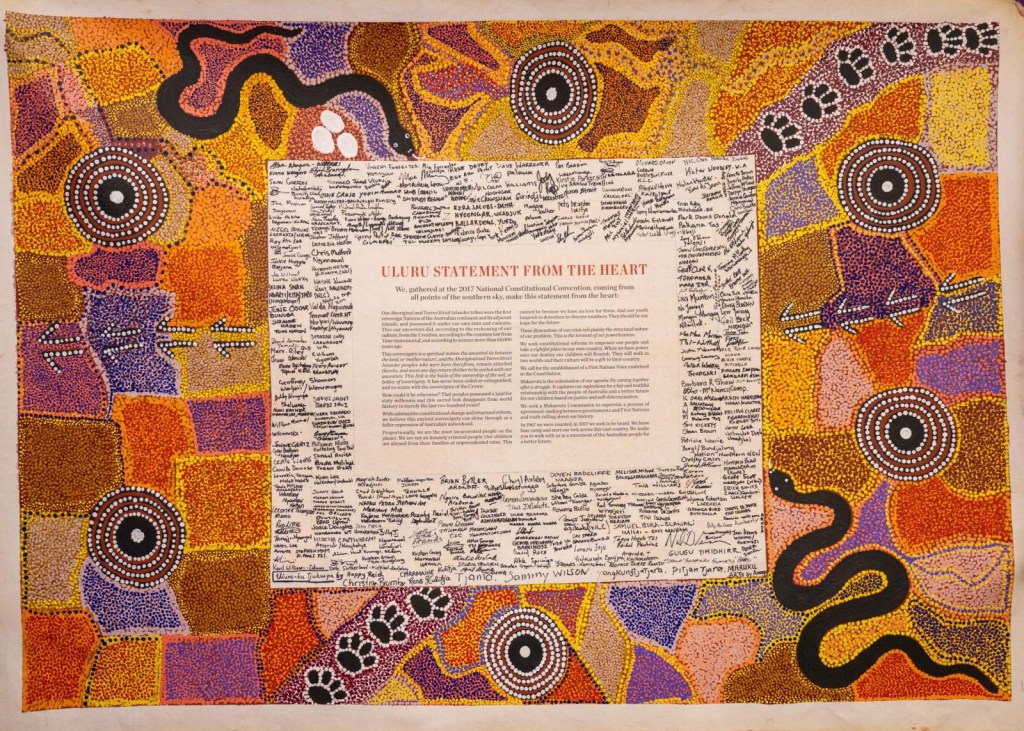
So alongside the map of those First Nations, we began to reflect on the experience of those peoples. We heard how the Uniting Church has described this period of history in the opening clauses of the Revised Preamble to the Constitution of the UCA (adopted in 2009 by the National Assembly). We listened, each day, to Aboriginal singers, singing both in their own languages as well as in English: the late Dr. G. Yunupingu (known as Gurrumul), Frank Yamma, Archie Roach, the group Wildflower, and then Yothu Yindi, singing their key song, “Treaty”. And we heard sentences from the 2017 Statement to the Nation read each day.

After this week of listening to the voices of the indigenous people in the morning prayers, the following week offered a series of reflections with a different psalm sung each day, drawn from the quieter, reflective psalms in which the psalmist reaches out to God to seek support and healing. It is as if these psalms might be sung by the First Peoples, in the light of their experiences of invasion and colonisation, the many massacres that took place, and the intergenerational trauma that resulted.

As we heard these psalms sung, we began also to listen to the series of psalms known as the “Psalms of Ascent”. They are so called because it is believed they were sung by faithful Israelites as they made their pilgrimage to Jerusalem on one of the three annual festivals—the Feast of Unleavened Bread (Passover), the Feast of Weeks (Pentecost), and the Feast of Tabernacles (as listed in Deut 16:16). They begin “in my distress I cry to the Lord” (Ps 120:1), moving on to “I lift up my eyes to the hills” (Ps 121:1), as the outline of the city on Mount Zion appears in the far distance.

We can imagine the pilgrims drawing closer to the walls of the city as the psalmist sings, “I was glad when they said to me, ‘Let us go to the house of the Lord!’l (Ps 122:1), then offers an expression of trust in God (Ps 124:8; 125:1–2) and confidence in God’s house (Ps 127:1). I imagine that, entering the city, the psalmist offers to a heartfelt cry to God from “out of the depths” (Ps 130:1), and as the Temple comes into view, sings, “Let us go to his dwelling place, let us worship at his footstool” (Ps 132:7).

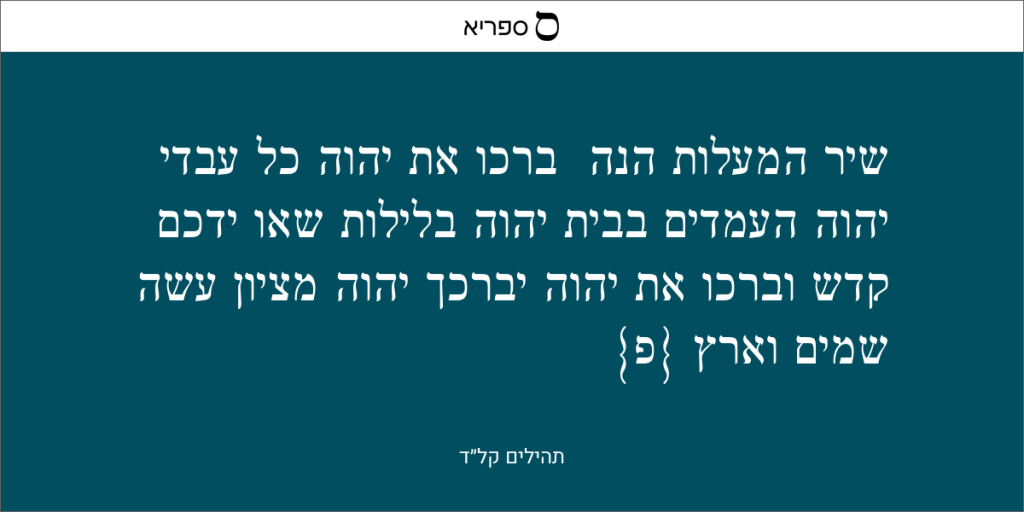
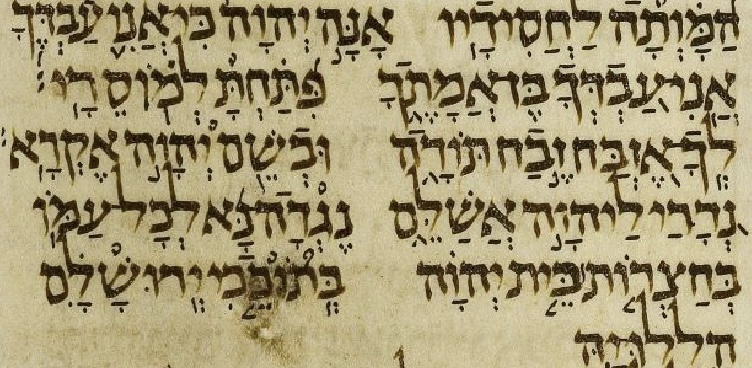
Psalm 134 in Hebrew

As our daily prayers continue, we hear the shortest of all the Psalms of Ascent, with the pilgrims “stand[ing] by night in the house of the Lord”, concluding with the prayer, “may the Lord, maker of heaven and earth, bless you from Zion” (Ps 134:3). As the season of Lent had begun with the theme “the desert waits”, so as we draw near to the end of the season, “the city beckons”. It is in the city that the pilgrims of long ago offered their sacrifices and praised their God. It is in the city that the story of Jesus, recalled especially in the days of Holy Week, reaches its climax.

This brings us to readings which recollect the entry of Jesus himself into the city of Jerusalem (Matt 21:1–11), the week of scenes in the Temple precincts (Matt 21:12—23:39) and nearby (Matt 24:1—26:2), and the hatching of the plot to arrest him (Matt 26:3–5) which would lead to his death, which is recalled as Good Friday ends the period of Lent.

We end daily prayers during Holy Week, on the morning of Maundy Thursday, with a section of Psalm 22. We know this psalm best from the fact that Jesus was said to have begun to say it, as he hung on the cross (Mark 15:34; Matt 27:46). Whether he intended only to speak the first verse, or whether his waning strength meant he could get no further than this, we do not know.

We cannot know whether Jesus intended to end with the words of praise from the later part of the psalm (vv.21b to 31), with an exultant “praise in the great congregation”, proclaiming “his deliverance to a people yet unborn”, as some scholars speculate. More likely, in my thinking, he was content to stay in the despair and agony of the opening section (vv.1–21a), feeling forsaken, his prayers going unanswered, one scorned and mocked, “poured out like water, all of my bones out of joint, my heart like wax, melted within my breast “ (v.14).

The psalm portrays a man, completely human, utterly defeated, with no hope, crushed by events. Both Mark and Matthew report that this is how he ended his life. The end of our Lenten journey takes us to this place of abandonment. It will be the work of Easter to process the powerful emotions generated by this devastating state of being, and move through the testimony offered about the ensuing moments, to come through the tunnel of darkness, into “deliverance [for] a people yet unborn” (v.31). Those days are still ahead.
This is the day: let us be glad and rejoice! (Psalm 118; Easter Sunday A)

Psalm 118 is one of the Hallel Psalms—six psalms (113 to 118) which are sung or recited on high festival days, such as Passover (Pesach), the Festival of Weeks (Shavuot), and the Festival of Booths (Sukkot), as well as Hanukkah and the beginning of each new month. This final Hallel Psalm, like the other five, is intended to be an uplifting, celebratory song, suitable for the congregation to hear and to sing as a way to inspire and rejoice.

It is no surprise that this psalm is offered by the lectionary for this coming Sunday, Easter Sunday (Ps 118:1–2, 14–24), for this is a day which celebrates with joy the raising of Jesus from the dead (Matt 28:1–10). This psalm is very suited to the celebrations that take place in churches on this high holy day.

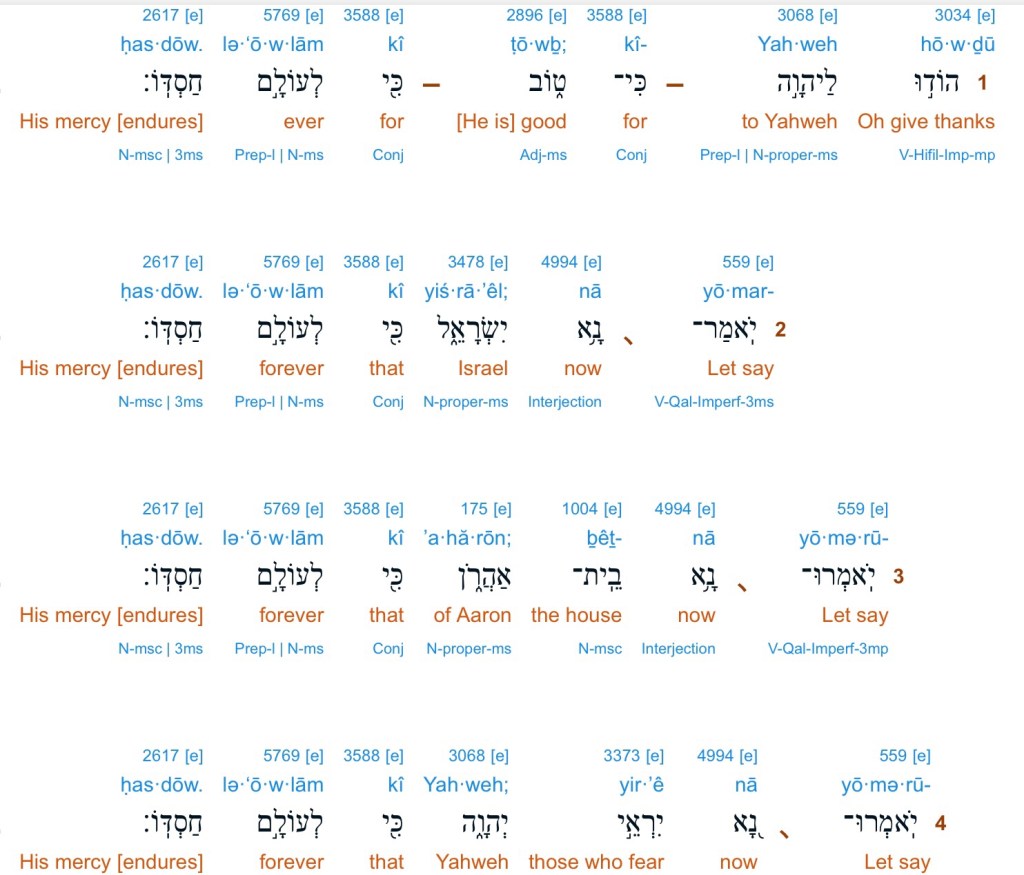
The psalm begins with a call to “give thanks” and an affirmation of the “steadfast love” of the Lord (vv.1-2). The next two verses, following the same pattern are omitted by the lectionary. However, I am thinking that the pattern of the first four verses, calling people to join in the affirmation, “his steadfast love endures forever”, could well be extended from “Israel … the house of Aaron … those who fear the Lord”, to include “let those who know the risen Lord Jesus say, “his steadfast love endures forever”.

God’s steadfast love is a recurrent theme throughout Hebrew Scripture, which often sings praises for “a God merciful and gracious, slow to anger and abounding in steadfast love and faithfulness” (Exod 34:6; 2 Chron 30:8–9; Neh 9:17, 32; Jonah 4:2; Joel 2:13; Ps 86:15; 103:8, 11; 111:4; 145:8–9).

Affirmations of “[God’s] steadfast love” (v.2) are found in psalms (Ps 5:7; 6:4; 13:5; 17:7; 18:50; 21:7; 25:6–7; 25:10; 26:3; and another 100 times) and various narratives (Gen 24:12–14, 27; 32:10; 39:21; Exod 15:13; 20:6; 34:6–7; Num 4:18–19; Deut 5:10; 2 Sam 2:6; 7:15; 15:20; 22:51; 1 Ki 3:6; 8:23; 1 Chron 16:34, 41; 17:13; 2 Chron 1:8; 5:13; 6:14; 6:42; 7:3, 6; Ezra 3:11; 7:28; 9:9; Neh 1:5; 9:17, 32; 13:22).

Many prophets speak about God’s “steadfast love” (Isa 16:5; 54:10; 55:3; 63:7; Jer 9:24; 16:5; 32:18; 33:11; Lam 3:22, 33; Dan 9:4; Hos 2:19; 6:6; 10:12; Joel 2:13; Jonah 4:2; Micah 7:18), and Job also refers to it (Job 10:12).

The pervasive presence of this theme indicates just how central it was to ancient Israelite thought and how integral it was to how God was understood. The idea carries on into New Testament writings through the love that God expresses in Jesus (John 15:9; Rom 8:39; Eph 2:4–7; 1 John 3:1; 4:9) and is manifest through the Spirit (Rom 5:5; Gal 5:22).

However, we should never imagine that the God of love is simply “a New Testament idea”, in contrast to a perceived (completely inaccurate) view of “the God of wrath” in the Old Testament. The idea of divine love is shared in equal measure amongst both testaments. (So, too, we find the idea of divine judgement in both testaments—but that is another story!)

*****

In the selection of verses offered by the lectionary (vv.1–2, 14–24), we encounter some other well-known concepts. The reference to “the chief cornerstone” (v.22) appears also in an oracle of Isaiah, “see, I am laying in Zion a foundation stone, a tested stone, a precious cornerstone, a sure foundation” (Isa 28:16), which continues, “I will make justice the line, and righteousness the plummet” (Isa 28:17).

It is found also in Zechariah’s strident oracle against the shepherds, of whom the prophet says, “of them shall come the cornerstone, out of them the tent peg, out of them the battle bow, out of them every commander. Together they shall be like warriors in battle, trampling the foe in the mud of the streets; they shall fight, for the Lord is with them, and they shall put to shame the riders on horses” (Zech 10:4–5). Clearly, the “cornerstone” (along with “the tent peg” and “the battle bow”) offers a somewhat cryptic reference to an anticipated future leader in Israel.

The “cornerstone” has then been picked up in the New Testament, where it is interpreted as referring to Jesus; in a speech attributed to Peter when he and John were before the Council in Jerusalem because of a “good deed done to someone who was sick” (Acts 4:9), namely, the healing of a man lame from birth (Acts 3:1–10). “This man is standing before you in good health by the name of Jesus Christ of Nazareth, whom you crucified, whom God raised from the dead”, Peter is reported as saying; “this Jesus is ‘the stone that was rejected by you, the builders; it has become the cornerstone.’ There is salvation in no one else, for there is no other name under heaven given among mortals by which we must be saved” (Acts 4:11). This is a critical theological statement placed on the lips of Peter.

In like manner—although less directly, in a more allusive fashion—Jesus equates himself with this “cornerstone” when draws to a close his parable about the vineyard and the tenants who killed all who were sent to them by the master, culminating in the master’s son; at that point in the parable, Jesus curtly concludes, “have you not read this scripture: ‘The stone that the builders rejected has become the cornerstone; this was the Lord’s doing, and it is amazing in our eyes’?” (Mark 12:10–11; Matt 21:42; Luke 20:17). In this citation of the psalm, Jesus has extended to include the following verse, about “the Lord’s doing”, which is a cause for amazement.

We hear that affirmation on Easter Sunday, in the psalm: “this is the Lord’s doing; it is marvellous in our eyes” (Ps 118:23). When included in a Christian liturgy, these words seem very readily to reflect the experience of the first Easter—a marvellous deed, indeed.

The psalm then continues in an upbeat manner, with “this is the day that the Lord has made; let us rejoice and be glad in it” (Ps 118:24), echoing once more an oracle of Isaiah, “Lo, this is our God; we have waited for him, so that he might save us; this is the Lord for whom we have waited; let us be glad and rejoice in his salvation” (Isa 25:9). That oracle includes three elements included in this section of the psalm: joy, at the chosen time, with knowledge of salvation.

The linking of “be glad” with “rejoice” is also common throughout Hebrew Scriptures (1 Chron 16:31; Ps 14:7; 32:11; 40:16; 48:11; 53:6; 70:4; 90:14; 96:11; 97:1; 149:2; Prov 23:24–25; 24:17; Isa 35:1; 65:18; 66:10; Lam 4:21; Joel 2:21, 23; Zech 10:7). The people of Israel were called to joyous praise quite often.

The celebration of the means of salvation is certainly a theme that is relevant to Easter Sunday, when this psalm is offered in the lectionary. It is worth singing and celebrating on this day!

*****

On Hallel psalms, see

It’s Holy Week again: a week set apart, in a time set apart

Today we begin Holy Week. This is the final part of a longer period leading up to Easter, called Lent. We do this every year, as part of the annual cycle. It is a familiar and comforting ritual for many people of Christian faith.

Holy Week culminates the season of Lent, which is an ancient practice for a Christian people. It lasts for 40 days, serving as a time of preparation for Easter. But whereas Lent is an ancient tradition, Holy Week is a more recent development. Designating the week leading up to Easter as Holy Week most probably comes from the narration of chapters 11 and 12 of Mark’s Gospel, in which Jesus is understood as being in Jerusalem from a Sunday until his last meal on a Thursday.

We can see those time markers embedded in Mark’s account of Jesus’ final days:
Sunday – “when they were approaching Jerusalem …” [Mark 11:1]
Monday – “on the following day …” [Mark 11:12]
Tuesday – “In the morning …” [Mark 11:20]
Wednesday – “It was two days before Passover …” [Mark 14:1]
Thursday – “On the first day of Unleavened Bread …” [Mark 14:12]
Friday – “As soon as it was morning …” [Mark 15:1]
Saturday – “When the Sabbath was over …” [Mark 16:1]
Sunday – “Early on the first day of the week …” [Mark 16:2]”
(Thanks to Greg Jenks for setting this out so clearly in his blog.)

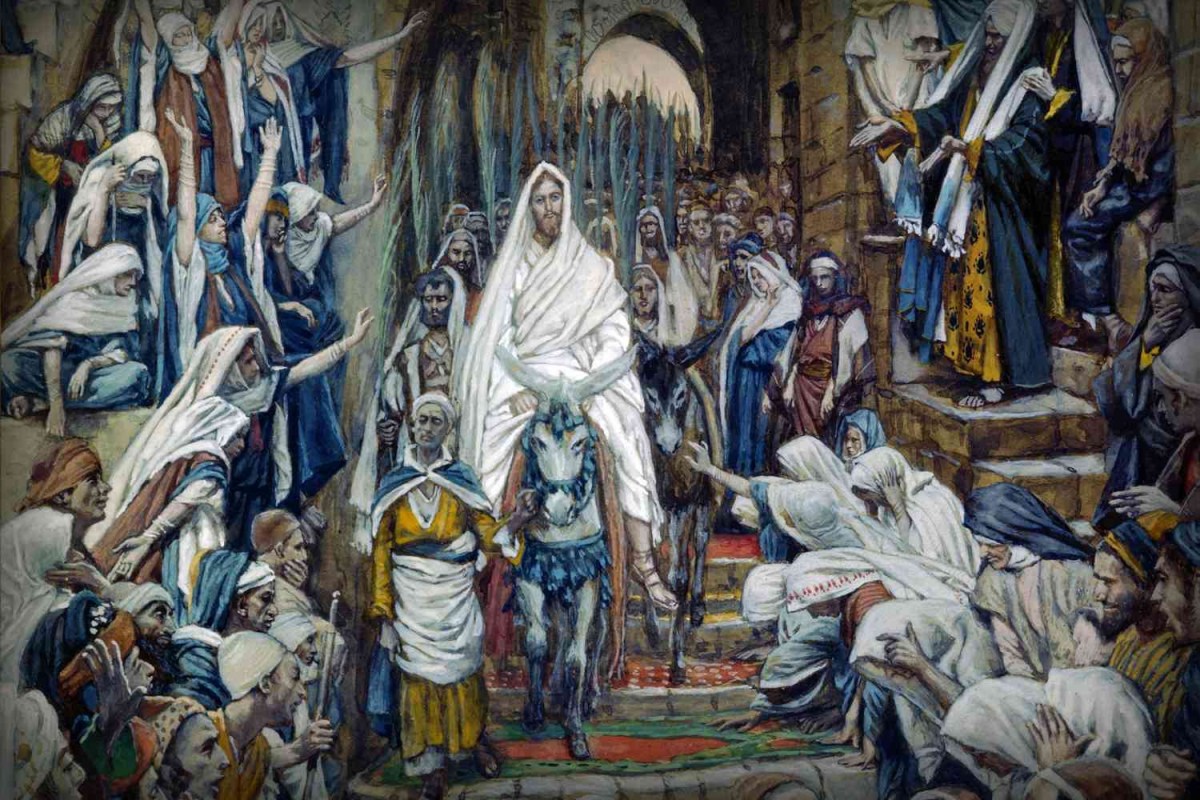
The week starts with Palm Sunday, when Christians remember Jesus entering Jerusalem and the crowds waving palm leaves as he enters the city. Jesus stays near to the city for the remainder of the week. On this day, we remember that event with festive processions and cheerful hymns.

Each day during Holy Week, from Monday to Thursday, many churches hold daily prayers that are pertinent to the week.

On Maundy Thursday, Christians remember Jesus washing his disciples’ feet. His words are recorded in John 13:34, “A new command I give you: Love one another. As I have loved you, so you must love one another.” This gives rise to the name for the day. The Latin for “commandment” is mandatum—hence the name of the day, Maundy.

Some people believe that Lent officially ends at sundown on Maundy Thursday, so they celebrate that with Holy Communion, or with a meal known as an agapé or a “love feast”. It is a remembrance of the last meal that Jesus shared with his followers. Others maintain that Lent continues through into Easter Saturday, until the end of the day just before the empty tomb is discovered.

After Maundy Thursday comes Good Friday, remembering when Jesus was crucified. Why is this day called Good? It comes from the theological evaluation that, on this Friday, Jesus died on the cross “for our sins”, thereby securing our redemption. This is the basis for the “good news” which the Church has proclaimed for centuries.

Churches all around the world normally hold various rituals for people to attend. Roman Catholics have the Adoration of the Cross, the Mass of the Pre-Sanctified, the Stations of the Cross, and Evening Prayers. Anglicans have a three-hour service with reflections on the Last Words of Christ. Many people come for these times of gathering together.

The Stations of the Cross are focused around the events of Good Friday, recalling the various events which took place as Jesus made his way from his trial to his death on the cross. These Stations have been appropriated, in art or through personal creative responses, as ways of moving attention from the story as a singular ‘history’, to the significance of the story and the resonance of the events with universal human experiences.

Next comes Holy Saturday or Easter Eve—a day of vigil, when believers watch, wait and pray. This is an in-between time, a day when time can be spent reflecting back on the traumatic events that have just taken place, and looking forward with hope to the new possibilities that might emerge from those event.

After Holy Saturday, the celebration of Easter Sunday bursts through the gloom and despair with a vibrant message: Jesus is risen, Jesus has conquered death. Counting inclusively, as was done at the time, beginning from Friday, means that Sunday is the third day. So the traditional affirmation is that Jesus rose “on the third day”. This leads into an expression of joy, that the trauma and grief, the uncertainty and fear, are now passed. Life is different; hope is renewed; the future, even if it looks different, will still be viable.

For the next period of time, the Church moves into a new season—the season of Easter, 40 days when the celebration of resurrection continues. And so the cycle continues, death turning into life, despair breaking out into hope, frustration moving into promise.

Easter itself emerged out of the Jewish festival of Passover, for this is the setting of the story about the arrest, trial, and crucifixion of Jesus that is reported in the Gospels (Mark 14:1–25; John 13:1; 18:28; 19:14).

There is a meme that circulates every year at this time, claiming that Waster was originally a pagan celebration, focussed on the fertility goddess Eostre—but this has no basis in fact. It derives from what seemed, to him, to be an educated guess made by the 8th century scholar, Bede, but this is completely incorrect.

See https://www.christianitytoday.com/history/2009/april/was-easter-borrowed-from-pagan-holiday.html

Save us, we beseech you: singing a Hallel psalm (Psalm 118; Lent 6A, Palm Sunday)

“Save us, we beseech you, O Lord!” This is the cry we hear in the psalm which is offered by the lectionary for this coming Sunday, Palm Sunday, the Sunday in Lent. Psalm 118 is one of the Hallel Psalms—six psalms (113 to 118) which are sung or recited on high festival days, such as Passover (Pesach), the Festival of Weeks (Shavuot), and the Festival of Booths (Sukkot), as well as Hanukkah and the beginning of each new month. This final Hallel Psalm, like the other five, is intended to be an uplifting, celebratory song, suitable for the congregation to hear and to sing as a way to inspire and rejoice.

See

It is no surprise that this psalm is offered by the lectionary for this coming Sunday, Palm Sunday—because the Gospel story for this day, of Jesus entering the city of Jerusalem to the acclaim of the crowd (Matt 21:1–11), is certainly one of celebration and joy. It is also, equally unsurprisingly, offered as the psalm for a week later, on Easter Sunday, which celebrates something much greater and more enduring: the raising of Jesus from the dead (Matt 28:1–10).

But clearly the psalm has a good fit with the Palm Sunday story that we will hear on Sunday; indeed, the Gospel writers report that the crowd cheering Jesus was singing, “Blessed is the one who comes in the name of the Lord”—which is, of course, a verse from the final Hallel Psalm (Ps 118:26).

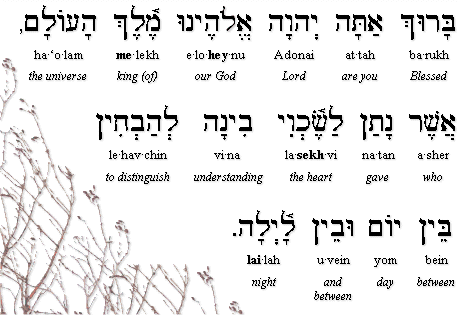
Blessing God is a favourite Jewish activity—indeed, so many prayers still used by Jews today begin with a phrase of blessing: “Blessed are you, O Lord our God …”. Blessed are You, O Lord our God, Ruler of the universe, Who brings forth bread from the earth is prayed before a meal. Blessed are You, O Lord our God, Ruler of the universe, who creates the fruit of the vine is prayed before drinking wine. And a favourite blessing which I learnt from Jews is Blessed are you, O Lord our God, Ruler of the Universe, who has kept us alive, sustained us, and brought us to this moment. It’s a prayer to mark momentous occasions in life.

All of these prayers of blessing begin with the Hebrew words, Baruch atah Adonai Elohenu melekh ha’olam, the same formula of approaching, acknowledging, and blessing God.

We can see that formula used in blessings spoken by David (1 Chron 29:19 and the psalmist (Ps 119:12), as well as in later Jewish texts such as Tobit 3:11; 8:5, 15–17; Judith 13:17; 14:7; the Prayer of Azariah (six times), and 1 Maccabees 4:20. It appears also in New Testament texts such as Luke 1:68; Rom 9:5; 2 Cor 1:3; Eph 1:3; and 1 Pet 1:3.

More familiar, perhaps, is when Jesus uses a prayer of blessing, but speaks it to human beings; “blessed are you, Simon son of Jonah” (Matt 16:17), or “blessed are the eyes that see what you see”, to his disciples (Luke 10:23), or “blessed are those who have not seen and yet have come to believe” (John 20:29), and most famously of all, in a set of blessings spoken to a crowd on a level place (Luke 6:20–22) or to his disciples on a mountain top (Matt 5:3–12).

So the cry of the crowd as Jesus enters Jerusalem, “Blessed is the one who comes in the name of the Lord” (Ps 118:26) is a typical Jewish exclamation at a moment of joyful celebration.

*****

A further reason for linking this psalm with the Gospel narrative might well be that the cry of the crowd, “Hosanna!” (Mark 11:9–10; Matt 21:9; John 12:13). The word transliterated as “Hosanna” might actually be better translated as “save us”—another quote from the previous verse in that same psalm (Ps 118:25). The Hebrew comprises two words: hosha, which is from the verb “to save”, and then the word na, meaning “us”. Hosanna is not, in the first instance, a cry of celebration; rather, it is a cry of help, reaching out to God, pleading for assistance—and yet with the underlying confidence that God will, indeed, save, for “his steadfast love endures forever” (vv.1, 29).

See

Whilst the psalm, overall, sounds thanks for a victory that has been achieved, the petition, “save us” (v. 25) lies behind the first substantial section of this psalm (vv.5–14), which is largely omitted by the lectionary offering for this coming Sunday (which is Ps 118:1–2, 14–24). That section begins “out of my distress I called on the Lord” (v.5), claims that “the Lord is on my side to help me” (v.7), and concludes with rejoicing, “I was pushed hard, so that I was falling, but the Lord helped me; the Lord is my strength and my might; he has become my salvation” (vv.13–14).

Save us” is a prayer offered in other psalms (Ps 54:1; 80:2; 106:47); the petition appears more often in the singular, “save me” (Ps 7:1; 22:21; 31:16; 54:1; 55:16; 59:2; 69:1; 71:2; 109:26; 119:94, 146; 142:6; 143:9). “Save us” when faced with danger is the prayer of the elders of Israel as they faced the Philistine army (1 Sam 4:3) and the all the people a little later (1 Sam 7:8), David when the ark was put in place in Jerusalem (1 Chron 16:35), Hezekiah when Judah was being threatened by the Assyrians (2 Ki 19:19), as well as the prophet Isaiah at the same time (Isa 25:9; 33:22; 37:20).

This prayer in the context of festive celebrations—the context for which Psalm 118 appears to have been written—expresses the firm confidence of the people, trusting in the power of their God. That viewpoint is perfectly applicable to the Palm Sunday story (and even more so to the Easter Sunday narrative!).

But this psalm is not only a prayer of celebration; it is also a strong statement about the resilience and trust of the people, expressing their belief that God will give them redemption, even in the face of their Roman overlords, who had held political and military power for many decades. If this is what the crowd intended with their cry as Jesus enters the city—and I have no reason to see otherwise—then this is a striking, courageous political cry embedded in the story! It is a cry that affirms that salvation is at hand.

*****

Salvation is what is in the mind of the people as they cry, “save us” (v.25) and the earlier affirmation, “I thank you that you have answered me and have become my salvation” (v.21). As we have noted, “save us” was a recurring cry amongst the Israelites. In the song sung after the Exodus, the people acclaim God, singing “the Lord is my strength and my might, and he has become my salvation” (Exod 15:2). In his song of thanksgiving after battles with the Philistines, David praises God as “my rock, my shield and the horn of my salvation” (2 Sam 22:3; also vv.36, 47, 51; and 1 Chron 16:23, 35).

The same language, of salvation, appears in the psalms (Ps 13:5; 18:2, 35, 46; 24:5; 25:5; and another 40 times) and the prophets (Isa 12:2–3; 25:9; 33:2, 6; 45:8, 17; 46:13; 51:5–6; 52:7, 10; 56:1; 59:11; 61:10; 62:11; Mer 3:23; Mic 7:7; Hab 3:18). From the psalms, we remember “the Lord is my light and my salvation” (Ps 27:1); from Isaiah, “I will give you as a light to the nations, that my salvation may reach to the end of the earth” (Is 49:6).

There are a dozen occasions in Hebrew Scripture when God is identified as Saviour (2 Sam 22:3; Ps 17:7; 106:21; Isa 43:3, 11; 45:15, 21; 49:26; 60:16; 63:8; Jer 14:8); as the Lord God declares through Hosea, “I have been the Lord your God ever since the land of Egypt; you know no God but me, and besides me there is no Saviour” (Hos 14:4).

Salvation is linked with righteousness; “the salvation of the righteous is from the Lord … he rescues them from the wicked and saves them” (Ps 37:39–40). Being righteous is a quality of the Lord God (Ps 11:7; 35:28; 50:6; 71:16; 85:10; 89:16; 97:2, 6; 103:17; 111:3; 116:5; 119:137, 152; 129:4; Isa 45:21; Jer 23:6; 33:16; Dan 9:16; Zeph 3:5) which is thus desired of those in covenant with God (Gen 18:19; 1 Sam 26:23; 2 Sam 22:21, 25; 1 Ki 10:9; 2 Chron 9:8; Job 29:14; Ps 5:8; 9:8; 11:7; 33:5; Prov 1:3; Isa 1:27; 5:7; 28:17; 42:6; 61:11; Jer 22:3; Ezek 18:5–9; Hos 10:12; Amos 5:24; Zeph 2:3; Mal 3:3).

It is no surprise, then, that this psalm celebrates that “[God] has become my salvation” (Ps 118:21) by holding a “festal procession with branches” (v.27), entering through “the gates of righteousness” (v.19) and proceeding all the way “up to the horns of the altar” (v.27), singing “save us, Lord” (v.25) and “blessed is the one who comes in the name of the Lord” (v.26). This is a high celebratory moment!

So the closing verses take us back to the opening refrain, “O give thanks to the Lord, for he is good, for his steadfast love endures forever” (v.29; see also vv.1–4). The celebration is lifted to the highest level, with praise and thanksgiving abounding. And that makes this a perfect psalm for Palm Sunday!

****(

On the indications of the political nature of the Palm Sunday scene, see

The end of the Assembly of Confessing Congregations and, hopefully, their aggressive apologetic antagonism

Another step in the story of evangelical fundamentalism in the Uniting Church has come to a close. The Assembly of Confessing Congregations (ACC) has recently decided to close. It brings to an end a long process of various evangelical organisations within the life of the Uniting Church which have attempted to “correct” the theology and practice of the Uniting Church, since it was established in 1977. They said they were evangelical; I heard little of the Gospel in their words and saw only dogmatic fundamentalism in what they did.

The ACC has existed as an entity within the UCA since 2006. It took its name from the Confessing Church that formed in Nazi Germany in the 1930s—a name that has also been adopted by other conservative groups around the world, staking their claim for “the true Gospel”. Of course, looking back to the 1930s and 1940s, we can see that the German Confessing Church in Hitler’s Germany did, indeed, hold fast to the principles of the Gospel. For other movements that later took that name, making their stand over other issues does not appear to be as clear cut. At least, that is my take on them.

The ACC is the child of the Reforming Alliance (RA), which had been formed in 2003—the RA was a relatively short-lived entity, as it soon morphed into the ACC in 2006. RA itself was a child of the Evangelical Members of the Uniting Church (EMU), making the ACC the grandchild of EMU. EMU had been formed early in the life of the Uniting Church.

Each of these conservative splinter groups sought to enforce their narrow and retrograde understanding of matters pertaining particularly to sexuality on the whole UCA—with persistent, and increasing, failure. They each, in turn, failed in that enterprise.

The proponents of the conservative theological perspective articulated by these splinter organisations buttressed their claims with a particular way of reading scripture, and with a particular mode of theological argumentation that slots well into the field called Apologetics. That’s the name given to a way of arguing that sets out a collection of beliefs that are held by a certain group and advocates that this cluster of beliefs represents “right doctrine”, “the true faith”, “what Bible-believing Christians hold to”, or some other catchphrase that revolves around being right.

Apologetics at its best the craft of arguing your case, putting forward your point of view, in a way that engages constructively with the listener. It can be done in an irenic and reasoned way. But the way the ACC and its precursors argued was anything but irenic and reasoned. The implication from much of what they said has been that those who hold different viewpoints to the one they are proposing are just plain wrong. It’s a style of speaking and writing that often, in these kinds of situations, takes on a hard edge—moving from assertions about beliefs, to a much more aggressive manner of apologetic argumentation. We can see that throughout the years that these groups were in existence.

*****

Evangelical Members of the Uniting Church started as Evangelical Ministers of the Uniting Church, formed in South Australia out of a concern about the so-called “liberal” tendencies dominant in the newly-formed Uniting Church. Over time, the SA group grew with branches formed in other Synods, and then a national organisation emerged.

In the early years of the church, various evangelical members and ministers had opposed the church’s commitment to equality and mutuality, specifically arguing against female ministers. In my first parish, for instance, in 1981–1983, I worked hard to engage with members of my own parish, as well as members of other nearby UCA congregations, who held to that retrograde view and argued that the UCA was doing the wrong thing by ordaining women. They argued apologetically against me, and others. I think their apologetics were misguided.

I was a member of a Synod working group later in the 1980s that produced resources addressing the issue of mutuality in ministry, and the ordination of women, in direct response to evangelical members pushing the counter position. I know that women in ministry in the UCA have continued to experience discrimination and marginalisation into the 21st century. I have both heard from others, and witnessed for myself, some horror stories, unfortunately.

EMU was strongly focused on the issue of biblical authority. (This stance has been used to undergird the claim that the Bible does not support the ordination of women). The doctrinal statement crafted by EMU had strong resonances with the general conservative evangelical assertion that the Bible was inerrant, infallible, and completely authoritative, even though the founding documents of the UCA had explicitly not included such terminology. It’s almost fundamentalist, I think.

For a summary of the doctrinal position taken by EMU, see http://www.confessingcongregations.com/emusite/All%20About%20emu/Doctrinal%20Statement.pdf

*****

Already in the 1980s the Assembly had established a Task Group on Sexuality, exploring the issues raised by EMU and then RA. There is a good summary of the work of this group, and the ensuing two decades of discussion of sexuality, at https://assembly.uca.org.au/images/PDF/SexualityandLeadership_DocumentingtheHistory.pdf

The Reforming Alliance was established in response to the 10th Assembly’s decision in 2003, not to make a statement opposing the ordination of people who are in a same-gender relationship.

RA had fought against the reasoned articulation of “an informed faith” in relation to scripture and sexuality. Its apologetic line was to advocate a conservative, perhaps even fundamentalist, approach to scripture, which although it had been the dominant paradigm in some denominations, had never been the way that the UCA had approached biblical interpretation.

The push by RA to have a ban placed on ordaining candidates who expressed an attraction to people of the same gender, whether or not they were in an active relationship of not, has failed spectacularly—there are now scores of ordained people who live in same gender relationships and, since 2019, have been married to a person of the same gender.

For a summary of the doctrinal position taken by the Reforming Alliance, see http://www.confessingcongregations.com/resources/reforming-alliance/

After the decision of the Assembly in 2003, there was a resurgence in rhetoric warning that the church would die, that this latest decision would mark the end of the Uniting Church. The rhetoric was steadily inflated. The apologetic took on an angry, aggressive tone. The strategy seemed to be to induce guilt about the future of the church, with the hope that this would result in an overturning of the decision. It did not. Some people left the UCA. Some congregations split. Ministry and Mission continued apace. The UCA continued on.

*****

After the 11th Assembly in 2006, a special summit of the remnants of EMU and the relatively new Reforming Alliance met, to establish a new organisation, the Assembly of Confessing Congregations (ACC) within the Uniting Church. The marriage was purely on the basis of sex—or, at least, on a common negative view of sexuality and a shared desire to combat anything that was perceived to be accepting of same-gender attracted people in ministry, and accepting also of same-gender relationships.

The battle waged by the ACC has continued into the present time. The appologetic rhetoric has continued, and intensified, as the obvious lack of impact in the strategy became more evident. The focus became narrower and narrower; more discriminatory, more homophobic. The furious attempts to generate guilt and build opposition was magnified, but to no avail. The move,ent began to dwindle. Meanwhile, the Uniting Church has continued on the path it has set years ago: a path of welcome and inclusion, and the valuing of all people.

So, what we have seen in recent years is playing out the four decades of the UCA where disenchanted conservative evangelical pietistic fundamentalists have resisted the moves towards “an informed faith” which thinking Methodists, Congregationalists, and Presbyterians all saw as a key commitment within the Uniting Church. The ACC has been waging an ongoing battle against this position for 15 years, but the majority of the UCA has always been engaged with the processes of critical thinking and fresh words and deeds which the Basis of Union holds as a key value.

In the last few years, the ACC has swerved even more to the hard right; it spoke in tones even harsher and unflinching, compared to RA and EMU. The extremes of the theological position of the ACC can be seen on their webpage at

http://www.confessingcongregations.com/uploads/acc027_confess_a5_ncov_imp_hr.pdf

and also in a statement expressing its hard line about sexuality, at

http://www.confessingcongregations.com/uploads/acc027_sexuality_a5_new_cov_lr.pdf

*****

It has only been in recent days that the ACC has “seen the light” and realised that continuing this battle is futile. An attempt earlier this year (2023) to negotiate a way for ACC congregations to leave the Uniting Church, but maintain the use of the property they inhabited and continue to use the funds they had accumulated, got nowhere.

Because the Uniting Church was set up with a structure in which the property is legally owned by the legal entity, the UCA Property Trust, established by law in each state and territory, no local congregation has legal ownership of their property. Each congregation enjoys “beneficial stewardship” of the property—they can use it, and look after it, but they do not own it in the strict legal sense. That has been the case for all of the 46 years during which the Uniting Church has been in existence.

So, after the ACC pitch for an amenable parting of the ways got nowhere—and after some key leaders of the ACC had their recognition as Uniting Church Ministers removed—the ACC national executive saw the writing on the wall, prepared a proposal to close the organisation, and then last week the national membership of the ACC voted to close.

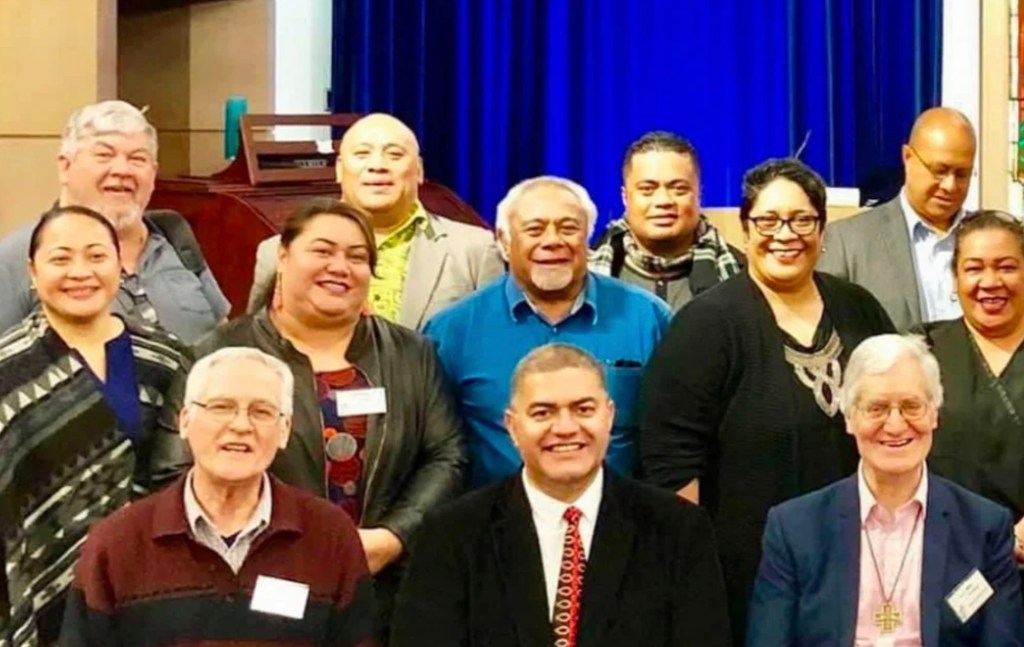
A recent group of ACC leaders

It has been a sad and sorry saga; not because we have come to a sad end result (on the contrary!), but because of the turmoil caused and the damage inflicted by rabid members of the ACC and their predecessors over the last four decades. The constant badgering of councils of the church to address matters which they saw as of primary importance—but which did not figure in most people’s view as warranting that amount of attention—has been frustrating, annoying, and counter-productive. The Gospel has actually been hindered by these tactics.

The regular antagonism, the growing negativity in rhetoric, and the incidences of specific vitriolic attacks on individuals within the church—undertaken by members of the ACC and their predecessors, and targeted largely at gay, lesbian, and transgender people—has been utterly shameful. I don’t know how many times I have heard people from within the LGBTIQA+ community recount how terribly they have been treated within church circles—including, but not limited to, the Uniting Church. And as far as I can tell, any ACC leader who was called to account for such behaviour failed to acknowledge any remorse, or show any compassion over such behaviour.

The regular response I have heard and read is that they are “standing up for the Gospel”, “declaring the truth to an apostate church”, and suchlike. There is no compassion, no empathy, no understanding—simply an aggressive prosecution of a rigid dogmatic line. I know this to be the case across the board; I know it especially since Elizabeth and I have each been targeted by a rogue ACC member, who is completely without understanding and completely without compassion in the way he goes about things. I don’t think he is an exception; I have heard and seen other instances of the same behaviour.

It is a well-known fact that members of the LGBTIQA+ community are much more likely to have suicidal ideation and at times to act on that, and also to develop other negative coping mechanisms that impinge upon their mental and physical health—simply because of the way that they are treated, the terrible negative comments and brutal attacks that they have to endure, simply because of who they are. That is completely unacceptable. The words and deeds of the ACC have fed into this dynamic; ACC leaders have fostered this negativity, persecution, and even irrational hatred. It is completely unChristian.

So that is why this has been a sad and sorry saga. I rejoice at the conclusion of the ACC. I lament that it did not come years early. I am sad that there was ever felt a need to create EMU, or RA, or ACC. I rejoice that the Uniting Church is committed to providing safe spaces for members of the LGBTIQA+ community, just as much as for straight people. We are all welcome, all included, all valued, and all honoured for being faithful followers of Jesus, across a wonderfully varied spectrum of identities.

*****

Today is a good day to reflect on these matters. Today is the Trans Day of Visibility—an annual international celebration of trans pride and awareness, recognising trans- and gender-diverse experiences and achievements. Gender diverse people right around Australia gather on this day to share stories, engaged in conversations, and attend trans-focusses events.

Trans Day of Visibility was started by activist Rachel Crandall in 2009 as a reaction to the lack of recognition of trans people, noting that the only well known gender-diversity centered day at that time was the Trans Day of Mourning, a day of mourning, on 20 November. So the j was created as a counterpoint to this; a day to acknowledge and celebrate living members of the transgender community. International Transgender Day of Visibility has been held on March 31 ever since.

In our current context in society, when trans people are the object of vitriolic verbal abuse as well as physical assault—simply for identifying as transgender—it is important for people of goodwill to speak out in support of trans people. Undergoing that journey in your life is a significant and challenging process; adding verbal and physical negativity on top of the challenges of the process is most unfair.

I have been blessed in recent years to get to know a number of trans people personally. In each case, they are people of integrity, who have quite a story to tell, who are committed to expressing in public “who they feel they really are, deep down”. It’s a journey and a commitment that I feel I have no right to criticise—I feel I should only be honouring them for their chosen pathway in life. Indeed, being true to yourself has been a virtue since the classical period of Greece and Rome, millennia ago.

We should honour and value those people in our midst who, facing a large challenge, knowing that they are walking into the active dislike and fear that other people have, still choose to walk the way of absolute inner integrity and complete honesty. That’s what this day offers us: we see trans people, we hear them, we honour them. They are valued.

*****

My previous posts on the various evangelical/fundamentalist groups in the UCA are at

See also my post on the United Methodist Church at

For the various affirmations that the Assembly has made that led the church to agree to the marriage of people of the same gender, see

See also

From the Statement from the Heart to the Voice to advise Parliament and Government

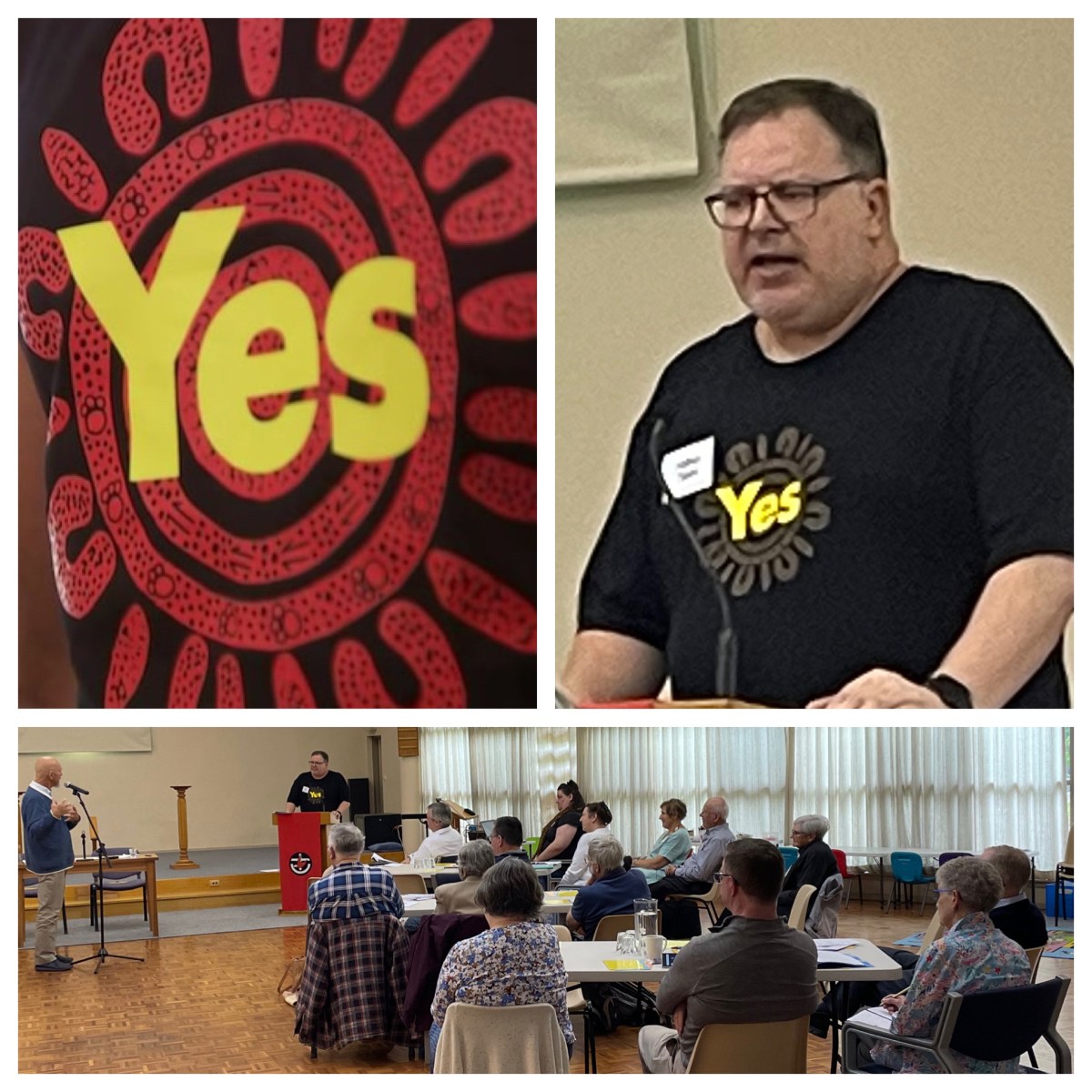
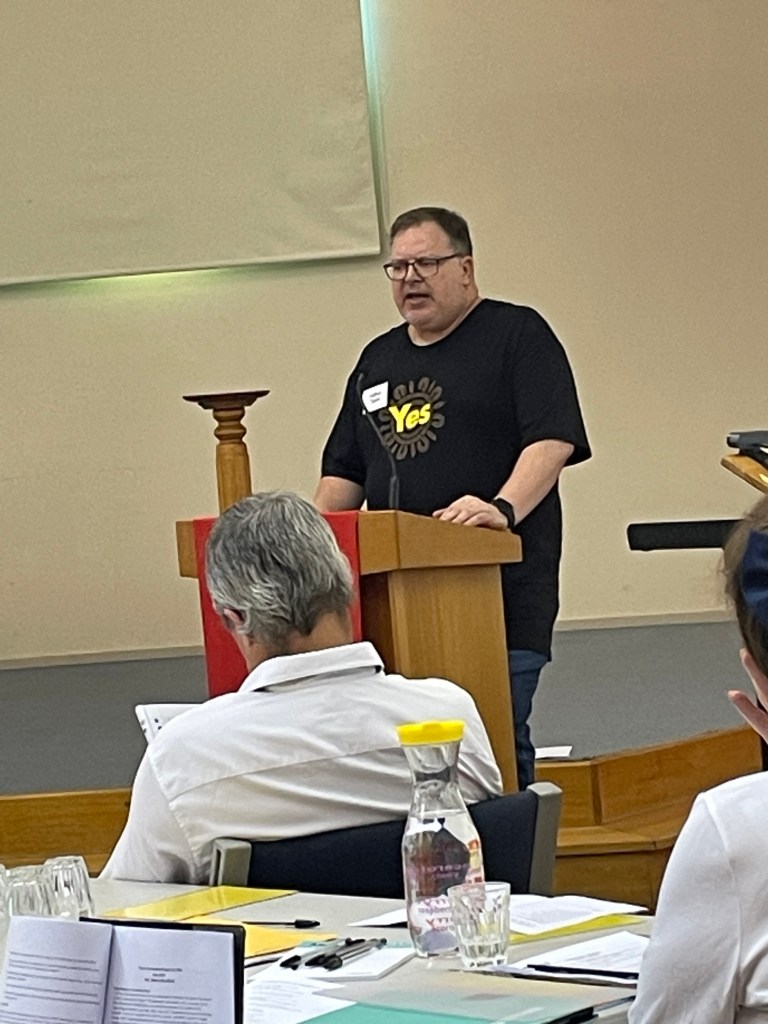
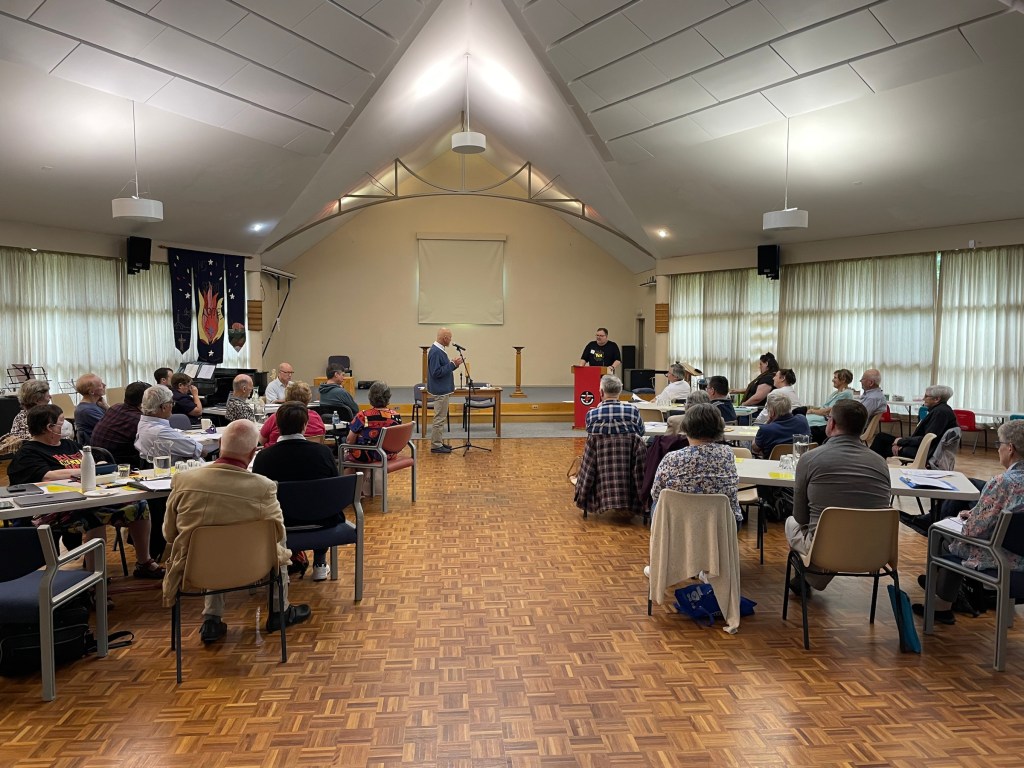
At a meeting of the Canberra Region Presbytery of the Uniting Church, held at North Belconnen Uniting Church on Saturday 25 March 2023, Nathan Tyson was invited to address the Presbytery on issues relating to the upcoming referendum proposal to establish a Voice to advise the Federal Parliament and the Executive Government. There was a full house as Nathan spoke and then responded to questions from those present.

The Rev. Ivan Roberts introduced Nathan Tyson. Ivan has worked with Nathan in Synod roles since 2017. Nathan is currently the Manager, First Peoples Strategy and Engagement with the Uniting Church in Australia’s Synod of NSW and the ACT. He is an Aboriginal man of Anaiwon/Gomeroi descent, who has lived most of his life in Sydney.

Nathan Tyson addressing the Presbytery

Nathan is a lawyer and long time advocate for the rights of Aboriginal peoples, having worked for organisations such as the NSW Ombudsman, the ICAC, the Australian Securities and Investments Commission, Western Sydney University, and Uniting, before commencing his role with the Synod in May this year. Nathan is currently undertaking a Graduate Diploma in Theology.

Nathan spoke to the Presbytery about the Statement from the Heart, and matters promoted in that Statement, namely, Truth, Treaty, and Voice.

The Statement from the Heart, 2017

The Statement emerged after twelve regional dialogues, relating particularly to constitutional recognition, had occurred. The process drew together many conversations that had taken place amongst First Peoples in the previous decade. The Statement was crafted during a gathering at Yulara, close to Uluṟu in the heart of the continent of Australia. There was a diversity of views at the gathering, including a group that left the gathering before the Statement was finalised. This diversity reflects the reality of society in Australia, and of Aboriginal and Islander peoples.

Truth, Treaty, Voice

The Statement calls for a Makarrata Commission, following a model used in Canada. There needs to be a recognition of the terrible things that did take place in Australia in the past; Truth means acknowledging that history, and the impact that it has had on our society. There is no need for personal guilt amongst those of us living today; rather, it is simply acknowledging the Truth about that history.

The Statement asks for the Commission to oversee a process of forming Treaties with the First Peoples. (There would need to be multiple treaties, as there are multiple First Nations in Australia.) Such treaties exist in all the other Commonwealth countries; Australia is the only nation without such a Treaty. Having a Treaty—or Treaties—in place would enable constructive ways of addressing the past and its impacts into the present.

The Synod has supported Truth, Treaty, and Voice. (See the link below.) All three are equally important; they each need to be implemented, they each need to be in place. (The Assembly is likewise strongly supportive, have agreed to the repudiation of the Doctrine of Discovery in 2015 and recognised the prior sovereignty of First Nations in 2018. Again, see the links below.)

The Presbytery discussing the presentation by Nathan Tyson

The Voice

The question for the referendum has been made public. It is a straightforward proposition. There are key principles underpinning the proposal. There are also key criticisms that have been made in recent times.

Opponents to “Voice before Treaty” claim that this will cede the sovereignty of First Peoples. This is not the case. As a lawyer, Nathan recognises that any ceding of sovereignty would need to involve the free, prior, and informed consent of the First Nations people. Sovereignty will be addressed through the process relating to Treaty.

A second criticism relates to the order of things. “Treaty should come before Voice” is the claim. Applying the doctrine of terra nullius in 1788 meant that a Treaty was not required. Now that the Mabo decision has declared terra nullius null and void, a Treaty process is required. Nathan compared the situation in Australia with what is the case in New Zealand. There was never, here, any opportunity to cede sovereignty, as there has been in New Zealand.

A third area of criticism is, quite simply, “we don’t trust government”. The Stolen Generations feeds this, and there are legitimate concerns here. However, the present government does want to move things forward. It is a once in a lifetime opportunity. This is an opening we need to take. If not now, how long will we have to wait?

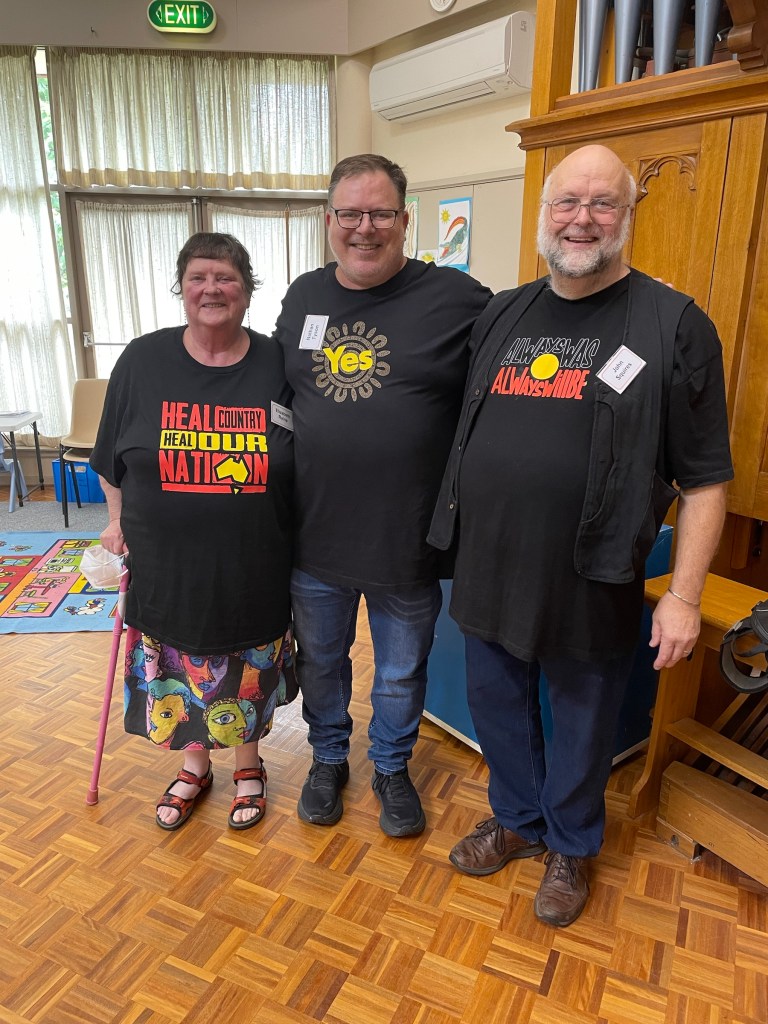
Solidarity through tshirts!!

The process is a legislative process—the politicians will be responsible for creating the detail of this matter as it is prepared, debated, and decided upon in the Federal Parliament. To say “we don’t have enough detail” is disingenuous, as those critics will be sitting in Parliament, deciding those details!

Nathan quoted from the documents already released which explain how The Voice will work. It will make representations to Parliament and the Executive Government; it can research, propose, and advocate through these representations. Membership will be by elected members, representative, and with fixed term limitations. Membership will rely on the three-part test that has been applied since 1983 (a person identifies as Aboriginal, is recognised by their community, and is Aboriginal by descent). It will have gender, age, and geographical diversity. Members will reflect the wishes of their communities.

A key task for the Voice will be to address the current situation of inequity experienced in Aboriginal communities, with direct access to advise and advocate. It will be accountable and transparent, subject to the usual processes of all governmental bodies. It will work alongside existing First Peoples organisations. It will not deliver services; it is only advisory. It will not be a third body in the parliamentary structures, despite what a former Prime Minister (mistakenly) claimed.

What is the point of a body that does not make decisions? Is that not creating a body with no power? Article 19 of the UN’s Declaration on the Rights of Indigenous Peoples provides that Indigenous peoples have the right not to consent to decisions that may impact on them. That is not reflected in the Voice. However, the advice provided to the Voice will be made public, for all to see. If the advice is counter to proposed legislation, that will be public. There is a level of public accountability, and the Voice will certainly have power within the current system. It will not be a powerless body.

Nathan suggested that it may be helpful to see the new Voice as an Indigenous lobby group, akin to the ACTU, the Business Council of Australia, the Farmers Federation, and other lobby groups. He then responded to a series of questions which sought further clarifications, and comments which expressed support for the case he had put.

In making a proposal to thank Nathan Tyson for his presentation, Presbytery Secretary Robbie Tulip noted that the UCA Assembly and the UAICC National body has supported a YES vote, as has the Board of Uniting and five of the six Synods of the UCA.

In response to the substantive matters in Robbie’s proposal, the Presbytery agreed by consensus that it would support advocacy for a YES vote in the referendum in the coming months; encourage Church Councils to consider the issues involved in the Voice and to facilitate local conversations about this issue; and to encourage all members of the church to give serious consideration to the way that they vote in that referendum.

(In the Uniting Church way of doing things, a consensus decision means that all who took part in the deliberation and decision process agreed to the proposal, and nobody participating in that indicated that they were unsure of, or opposed to, the decision.)

*****

For resources relating to First Nations people that Nathan Tyson has collected and developed, go to https://nswact.uca.org.au/first-nations-resources/

For Uniting Church decisions, see my reflections at

On relevant themes in recent years, see

Cuthbert: monk, prior, bishop, hermit, miracle-worker, and saint (20 March)

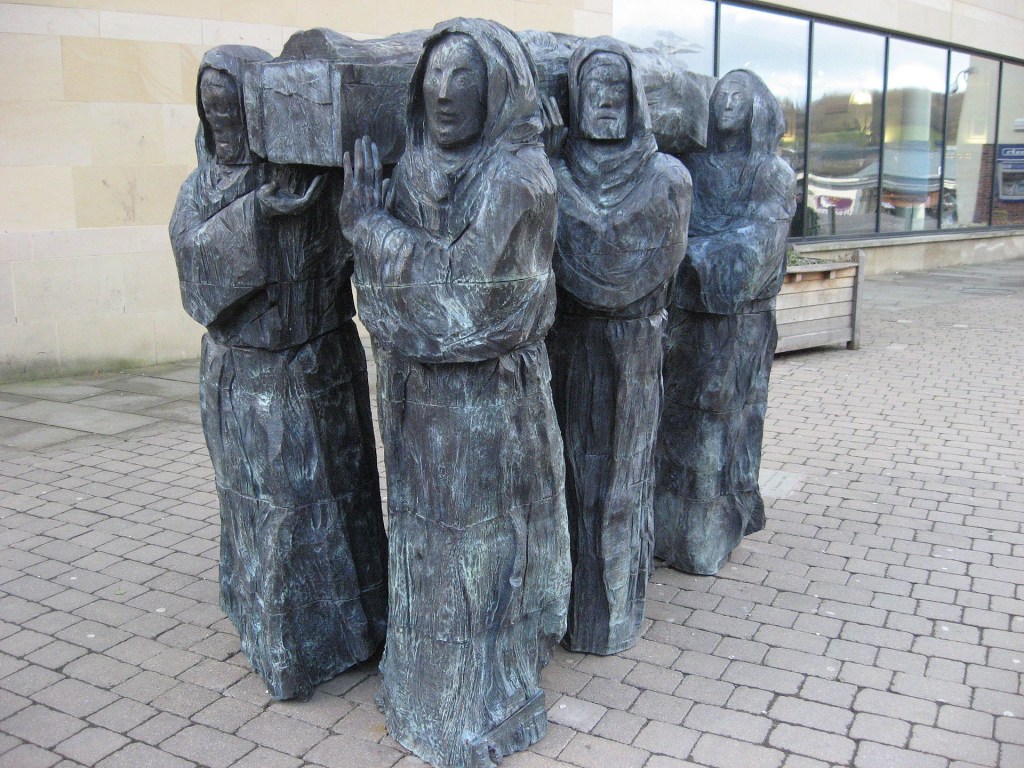
In the Uniting Church’s resource provided for worship leaders, Uniting in Worship, there is a Calendar of Commemorations, based on the cycle of annual feast days for saints in the Anglican, Catholic, and Orthodox churches—but broadened out to be much wider than this. Many days of the year are designated to remember specific people. Today (20 March) is the day to remember three Celtic pioneers, Cuthbert, Aidan, and Bede. Cuthbert of Lindisfarne is remembered as monk, prior, bishop, hermit, and miracle-worker—and, eventually, as saint.

Born in Northumbria into a noble family in the mid-630s, Cuthbert was raised in a Christian society, as King Edwin of Northumbria had recently converted to Christianity and (as was the way) brought that faith across the society. Accounts of the life of Cuthbert, written in the later medieval period, claim that there were miracles taking place even in his childhood. The historicity of these claims is highly dubious.

We do know that Cuthbert had quite a career: he was, in turn, monk, prior, bishop, and hermit, before his death. Matching the miracles claimed during his childhood and into his adult life, there are many claims of multiple miracles which allegedly took place after the death of Cuthbert on 20 March 687.

We can’t, of course, substantiate those miracles—the most striking of which relates to Alfred the Great, King of Wessex, further to the south (Wessex was the southernmost part of the Anglo-Saxon Kingdom). Alfred was apparently inspired by a vision of Cuthbert, encouraging in his struggles against the invading Danes. (A saint supporting military action … hmmmm.) He won, of course! The fact that a southern king admired a northern cleric meant that Cuthbert came to be regarded as a focus of reconciliation across the kingdom.

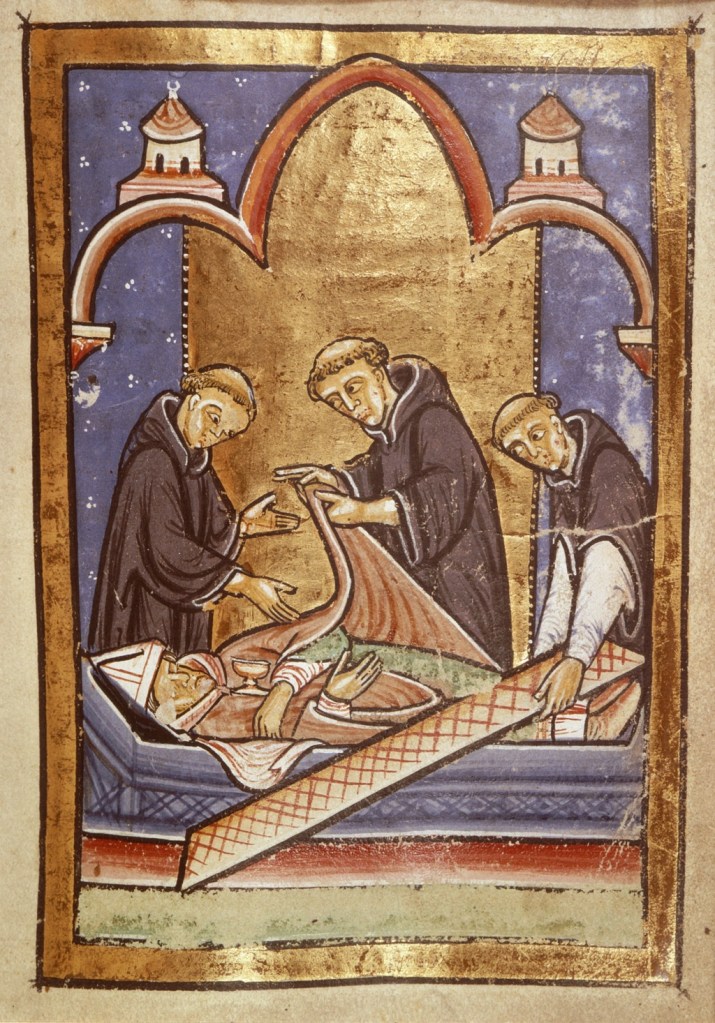
We do know that the body of Cuthbert, originally buried at Lindisfarne on the day that died, was removed and placed into a decorated oak coffin, and reburied in 698. The eleven-year-old corpse was, it was claimed, completely preserved-the first of the post-mortem miracles associated with Cuthbert. We know this from the 8th century account of Cuthbert written by the Venerable Bede, a scholar-monk at Jarrow, who wrote extensively covering science, history, biography, scriptural commentaries, and theology. (Bede is also remembered today in the UCA Calendar of Commemorations.)

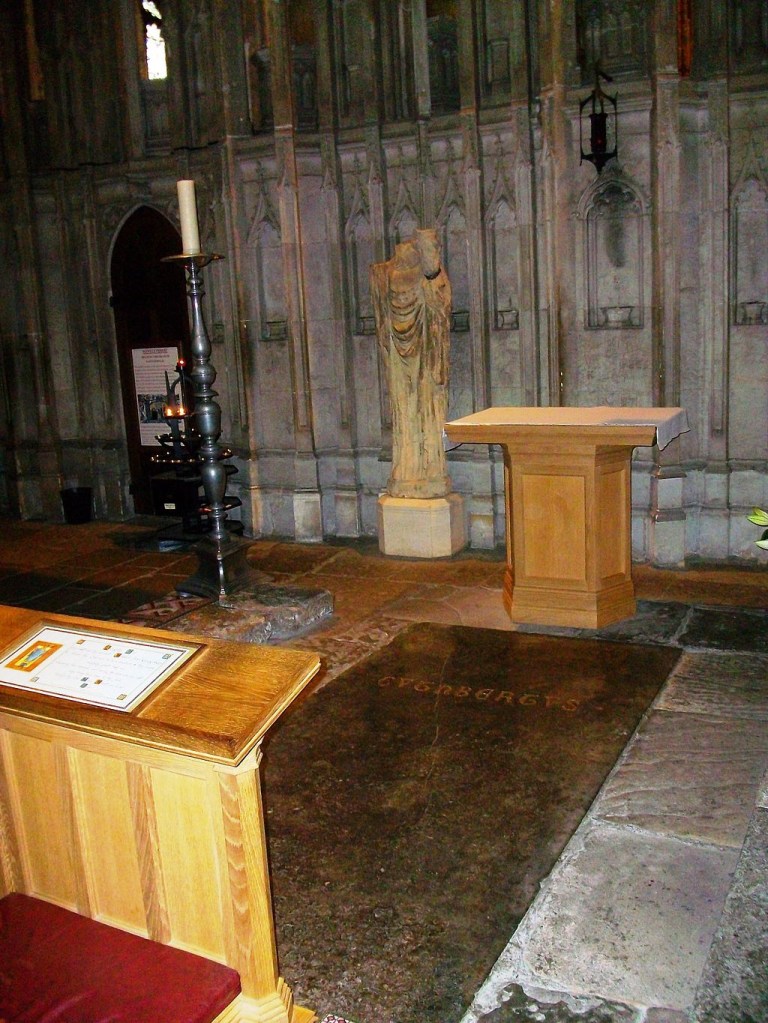
Three centuries after his reburial at Lindisfarne, the body of Cuthbert was taken by wagon to Durham, where it was buried again. However, before that, it had been exhumed when Danes overtook the monastery at Lindisfarne in 875, and taken by the monks with them as they wandered the northern countryside. It is now located in Durham Cathedral, where it is said that it is buried (bizzarely) with the head of Oswald, King of Northumbria, who died some decades before Cuthbert’s life.

The life of Cuthbert included various phases. Although raised in a noble household, Cuthbert was attracted to the ascetic life. He had a period of military life, but then in 651 he joined the monastery at Melrose Abbey, an offshoot of Lindisfarne Priory, where Boisil was Prior. Lindisfarne had been founded in 634 by Aidan (who is also remembered today in the UCA Calendar of Commemorations). When Boisil died in 661, Cuthbert was appointed as Prior. He was subsequently invited to become guest master at a new monastery at Ripon, but soon he returned to Melrose as a monk. He became Prior once again in 664.

Cuthbert participated in the Synod of Whitby in that year; this was the Synod that decided to leave behind the Celtic form of Christianity that had been prevalent in much of Northumbria, led from the Abbey at Iona. The specific issue was the way that the date of Easter was calculated. The Synod adopted the Roman custom of dating, and looked to Rome, rather than Iona, for leadership. Cuthbert adhered to this decision and introduced Roman practices at Lindisfarne, where he became Prior in 665, the year after the Synod of Whitby.

Cuthbert continued his ascetic lifestyle as Prior through the ensuing decades, preaching as he travelled through towns and villages; it is said that he preached also to nobles and to royalty, and also that he performed various miracles during this period, as a result of which he later became known as “the wonder worker of Britain”. He maintained his simple lifestyle, with few material needs, as he travelled, and on into the next phases of his life.
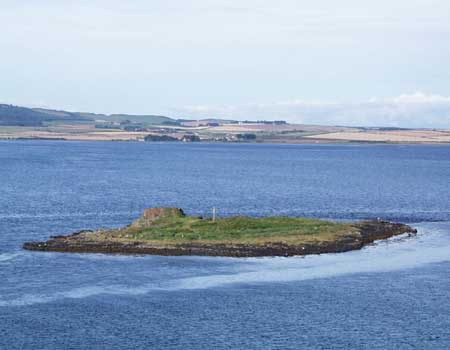
Cuthbert moved to what today is called St Cuthbert’s Island, near Lindisfarne, and then soon after to Inner Farne Island, further south, wher he established his abode in a cell in a cave. Elizabeth and I have visited the Farne Islands, as well as Lindisfarne. The northeast coast of Britain is exposed to strong, icy winds blowing across from the Arctic; “living rough”, as we might describe the conditions of Cuthbert’s life, required a strong constitution and a determined mindset. Cuthbert obviously had this.

On this island, Cuthbert befriended the eider ducks and instituted laws to protect the ducks and other seabirds that made their nests on the Farne Islands. As well as his strong environmental credentials, for which we give thanks, Cuthbert is also remembered for his strong misogynistic attitude, for which we lament.

At the west end of Durham Cathedral, a thick black line, made of marble, has been inserted into the flooring. The line (still visible when we were there in 1997) marked the furthest into the Cathedral that women were permitted to step. The reason for this was the belief that Cuthbert would be offended if women came too close to him. This was deduced on the basis of the rules that he introduced in the monastery at Coldingham, where the “improper familiarity” of monks and nuns led to the monastery being consumed by fire—a result interpreted as an act of God!

When Bishop, Cuthbert ensured that there was rigorous separation of the genders in all places where monks and nuns lived throughout the diocese. This meant that women (nuns) were unable to visit the holy sites at Lindisfarne, Inner Farne, and Durham Cathedral. Subsequent to his earthly life, Cuthbert was believed to have acted to punish females who transgressed relevant boundaries—some struck dead, one other driven to dementia and killing herself. And that is the basis for the story (fact? or fiction?) about the line in the floor at Durham Cathedral.

Cuthbert was elected as Bishop of Hexham in 684, but was reluctant to leave his hermit’s cave; he was persuaded to take up the appointment as Bishop of Lindisfarne instead. He was consecrated in March 685 but late the next year, he resigned from his episcopal office and returned to his hermitage. This short tenure as Bishop of Lindisfarne explains why he is remembered as “Cuthbert of Lindisfarne”. He died two decades later, in March 687, aged in his mid 50s.

As already noted, numerous miracles after the death of Cuthbert are attributed to his intercessory powers; accordingly, he is honoured as a Saint. He became closely associated with the powerful Bishop of Durham from the 11th century onwards; the people of the region were known as “the people of the saint” (that is, Cuthbert). In the Battle of Neville’s Cross (just up the hill from where we lived in Durham in 1997), a vision of the saint inspired the Prior of Durham Abbey to raise the banner of Cuthbert, thereby ensuring their protection and victory in that battle.

That same banner was carried by Northumbrians in their battles against the Scots, and the shrine of Cuthbert behind the altar in Durham Cathedral (where the body was interred in 1104) was a pilgrimage site through the medieval period (for males—but not, as explained, for females).

So, to the above list—Cuthbert of Lindisfarne, monk, prior, bishop, hermit, miracle-worker, and saint—we add environmentalist, and misogynist. And we remember him, today.

The resting place of Cuthbert in Durham Cathedral