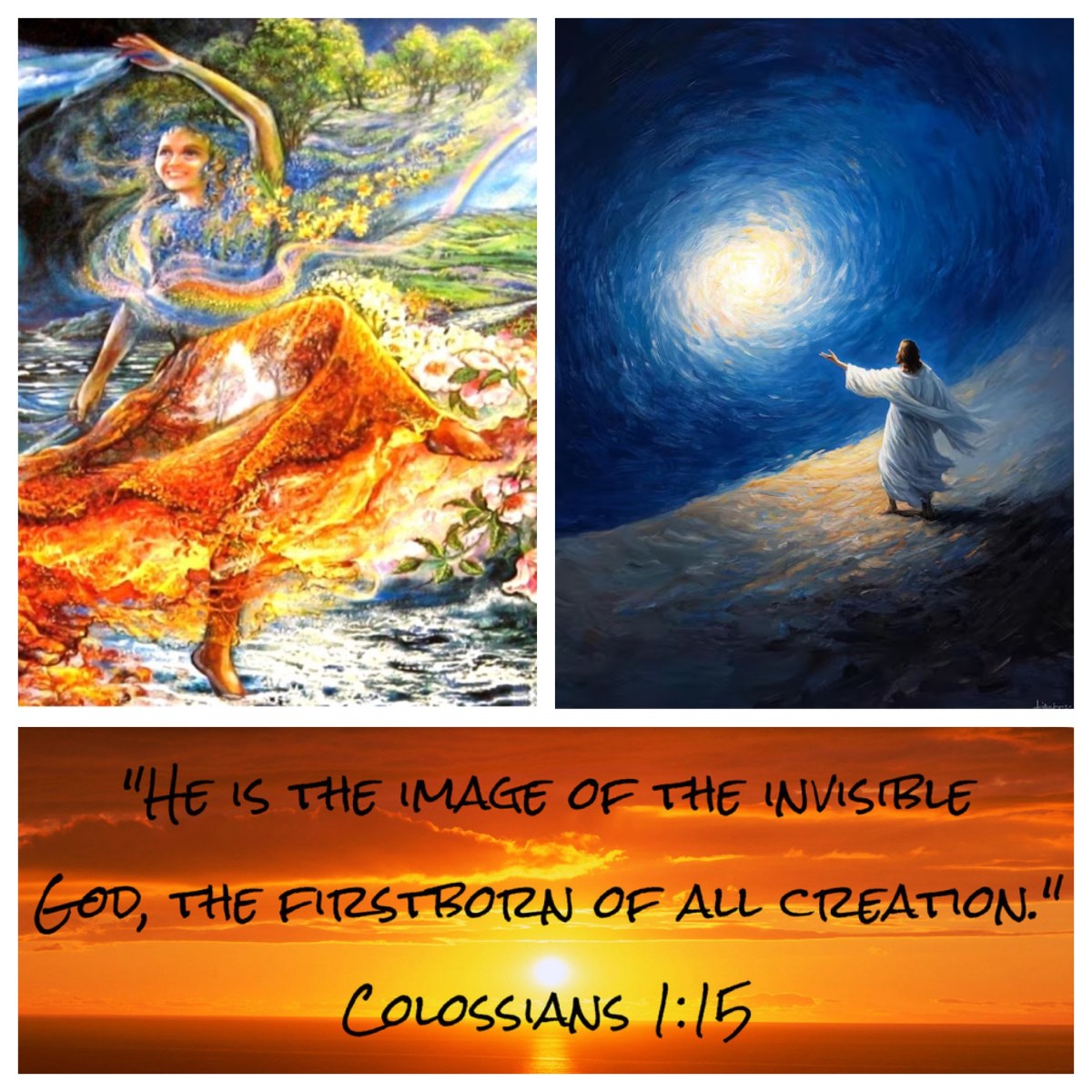
Image of the invisible God, firstborn of creation (Pentecost 6C; Col 1)

The lectionary continues to offer us passages from epistles attributed to Paul. After working our way through Galatians—which Paul, I believe, most definitely did write—this coming Sunday we continue the sequence of passages from Colossians, which I am not convinced was written by Paul, even though the letter claims that it was written by Paul (Col 1:1).

The passage for this coming Sunday (1:15–28) is one of the places in this letter where there are significant theological developments beyond the theology found in the seven “authentic” letters of Paul: Romans, 1 & 2 Corinthians, Galatians, Philippians, 1 Thessalonians, and Philemon (this order, by the way, moves from the longest to the shortest of these letters).

The letter has begun with the expected words of greeting (1:1–2) and prayer of thanksgiving (1:3–8). The prayer morphs into a prayer of intercession for the Colossians (1:9–12), cycling back into an expression of thanks to “the Father” (1:12) for what he has done through “his beloved Son” (1:13–14). All of this adheres to the pattern that is found in most of Paul’s letters (although Galatians has omitted any thanksgiving from the beginning of the letter—Paul is too angry with them!).

This thanksgiving for the Son then morphs seamlessly (in the original Greek, there is no sentence break) into an extended affirmation about Jesus, “the image of the invisible God, the firstborn of all creation … the head of the body, the church … the beginning, the firstborn from the dead …[in whom] all the fullness of God was pleased to dwell” (1:15–20).

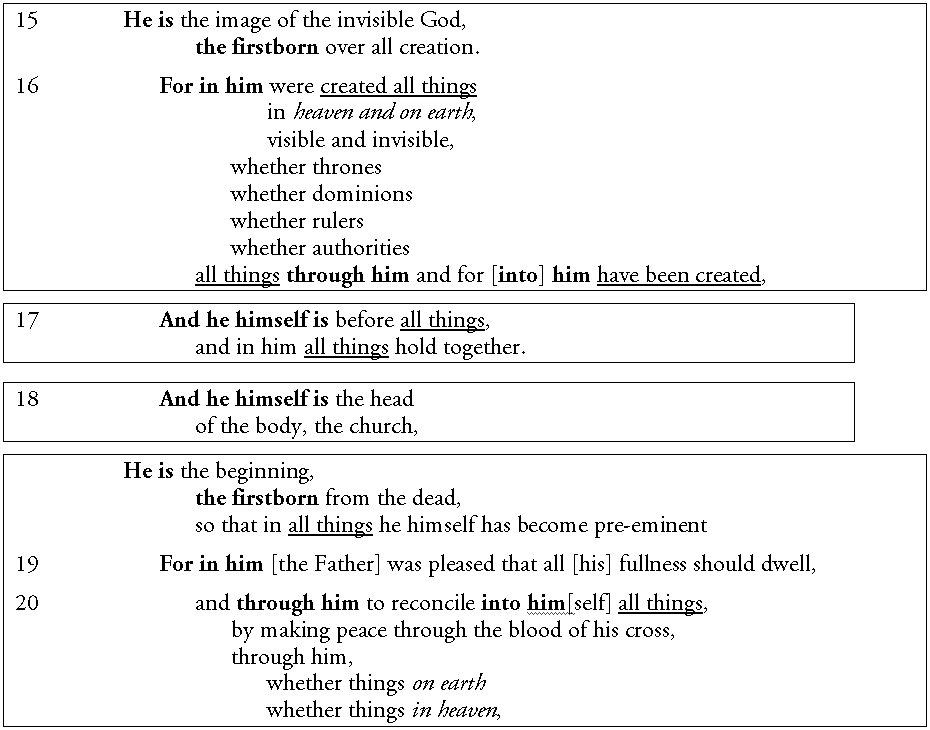
This is quite an extension to the expression of thanks; the sentence in Greek actually begins in v.9 and continues through multiple subordinate clauses to v.20! It has a lovely structure beauty, which is clearly evident in the Greek text; not so much, unfortunately, in most English translations. (Indeed, it is nigh-impossible to convey the structure in a poetic manner in a language other than the original.) The best structure exposition I have found of it looks like this:

The structure of Col 1:15–20, as outlined by Andrew Fountain
in “The song hidden in Colossians”, Newlife Church Toronto;
see https://nlife.ca/audio/colossians-pt4

This poetic passage also stands as significant theological affirmation. It offers a relatively early consideration of “the person and work of Jesus Christ”, a crucial theme which later systematic theology writers would explore and develop, using this and other passages of scripture as foundations for a complex and intricate affirmation of this key element of Christian faith.

The main thrust of this passage can best be understood by giving consideration to the way this it draws on Jewish elements—specifically, the Wisdom material found in parts of Hebrew Scripture. Jesus is portrayed very much in the manner of Lady Wisdom, as we encounter her in scripture in Proverbs 8, and then in the deuterocanonical works of Ben Sirach (Ecclesiaticus) and the Wisdom of Solomon. In Colossians, of course, the attributes of the female Wisdom are applied directly to the male Jesus.

Jesus is here described as the agent of God’s creative powers: “in him all things in heaven and on earth were created … all things have been created through him and for him” (Col 1:16). In the same way, in Proverbs Wisdom herself is said to have declared that “ages ago I was set up, at the first, before the beginning of the earth … when [the Lord] established the heavens, I was there … when he marked out the foundations of the earth, then I was beside him, like a master worker” (Prov 8:22–31). 

The creative power of Wisdom

In the Wisdom of Solomon, Wisdom is described as “the fashioner of all things” (Wisd Sol 7:22), “a breath of the power of God” who “pervades and penetrates all things”(7:24–25), who was “present when you [God] made the world” (9:9), whose “immortal spirit is in all things” (12:1). 

Jesus, son of Sirach, declares that “Wisdom was created before all other things” (Sir 1:4), that at the very first she “came forth from the mouth of the Most High, and covered the earth like a mist” (Sir 24:3), and “compassed the vault of heaven and traversed the depths of the abyss” (24:5) as she undertook her creative works, distinguishing one day from another and appointing “the different seasons and festivals” (33:7–8).

Jesus Christ, as the one who is “before all things” (Col 1:17), reiterates what Wisdom declared, that “before the mountains had been shaped, before the hills, I was brought forth—when [the Lord] had not yet made earth and fields, or the world’s first bits of soil” (Prov 8:25–26).

So Jesus is the one who has “first place in everything” (Col 1:18), just as the works of Wisdom can be traced “from the beginning of creation” (Wisdom Sol 6:22). The importance of these Wisdom writings for what is stated in Col 1 is clear. (The same writings underpin the theological affirmations made about Jesus in Heb 1:1–4 and John 1:1–18.)

The passage in Colossians also indicates that believers are “transferred … into the kingdom of [God’s] beloved son” (Col 1:13); they are rescued (1:13) and redeemed (1:14) by the work of Jesus. In similar fashion, the Wisdom of Solomon contains a long section praising Wisdom who was actively involved in human affairs from when “she delivered him [Adam] from his transgression” (Wisd Sol 10:1), saved the people at the Exodus, and guided the Conquest and settlement in the land. It was Wisdom who punished the Canaanites (12:3–11), sinful Israelites (12:19–22), and the Egyptians (12:23–27), as well as all idolators (13:1—14:31). A similarly lengthy poem praising the works of Wisdom occurs in chapters 44 to 50 of Sirach, extending all to the way to Simon, son of Onias (high priest in the early C3rd BCE). 

So Jesus brings to a high point much of what had been hoped for, and spoken about, in the figure of Wisdom. All of this is now seen to reside in him, “the image of the invisible God, the firstborn of all creation … the head of the body, the church … the beginning, the firstborn from the dead …[in whom] all the fullness of God was pleased to dwell” (1:15–20). It’s a remarkable testimony.

Wisdom, by Sara Beth Baca

This year we are to celebrate 1700 years since the Nicene Creed was created. The development in theological understanding of Jesus that is found in these verses in Colossians, drawing from Hebrew scriptures of past centuries, continues apace in the ensuing centuries, as Christian writers draw more and more from neo-platonic philosophy to develop what eventually becomes a full suite of Christian doctrines—including a series of affirmations about Jesus.

It is worth noting that, just as the creative work of Jesus is noted in the Nicene Creed (“through him all things were made”), so his salvific work is also briefly described (“for us [all] and for our salvation he came down from heaven“). These fleeting references draw on the way in which scripture has used the Wisdom literature— although, of course, all four Gospels and many Epistles note the forgiving, saving, delivering work of Jesus. Colossians plays its part in attesting to this. It is, in fact, part of the bedrock of the developing patristic theology which emerged over the centuries between the New Testament and the early Ecumenical Councils. 

I’m planning to write some more blogs about credal affirmations found within scripture, and how they inform (or not) the Nicene Creed, in the context of this global celebration of 1700 years since Nicaea. Stay tuned!

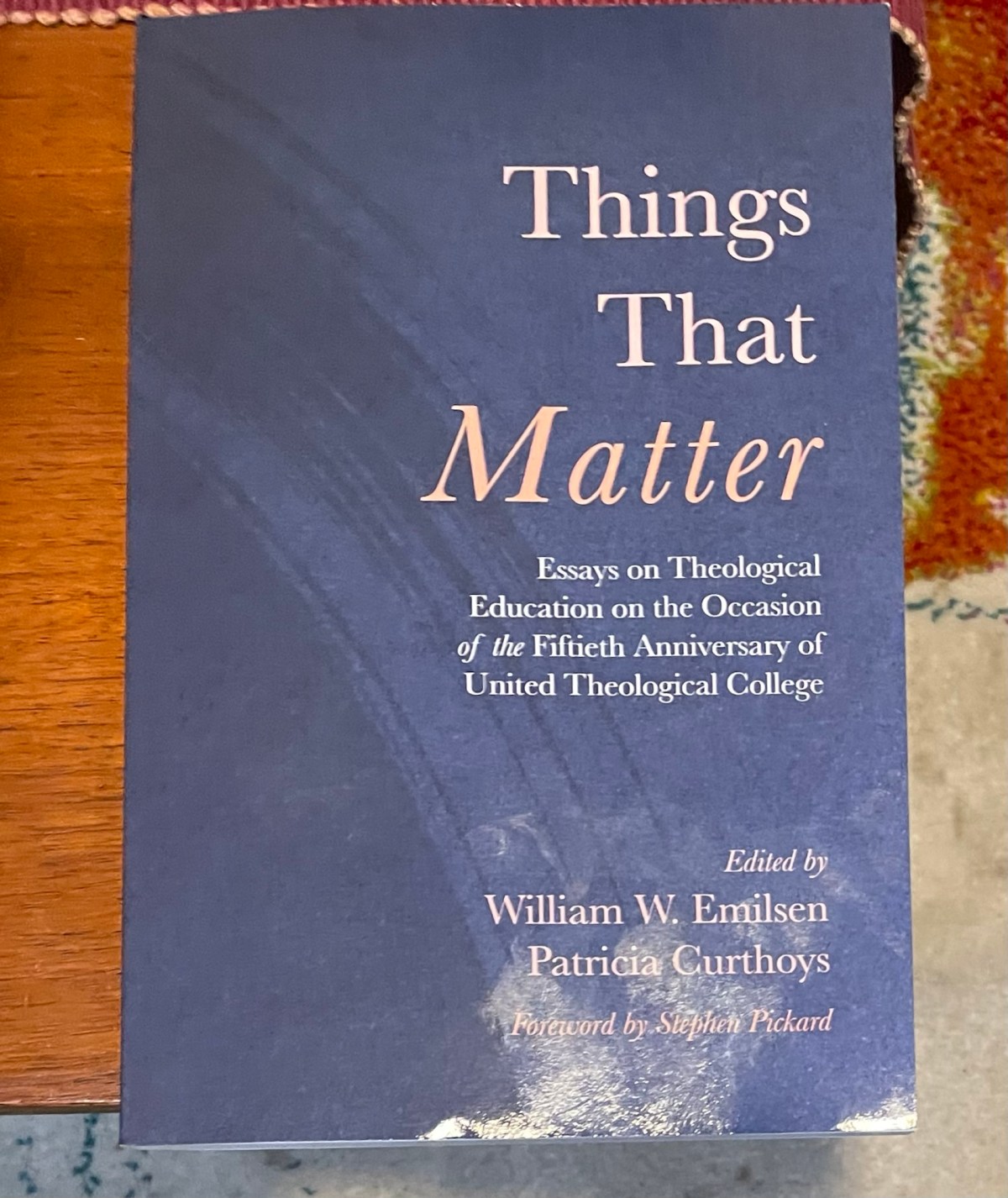
Things That Matter: for the Fiftieth Anniversary of United Theological College (2025)

I’ve just received my copy of Things That Matter: Essays on Theological Education on the Occasion of the Fiftieth Anniversary of United Theological College. The college (UTC) was where I trained for ministry in the latter years of the 1970s, was a visiting lecturer in the later 1980s, and taught as a member of the Faculty from 1990 to 2010.

It is edited by my friend and colleague, William W. Emilsen (whom I’ve known since he was also a student at UTC in the 1970s) and  Patricia Curthoys. Both are historians of some repute within the Australian church and beyond, each having written and published a number of significant historical works, as well as collaborating on earlier historical volumes.

The UTC campus in North Parramatta, Sydney, NSW

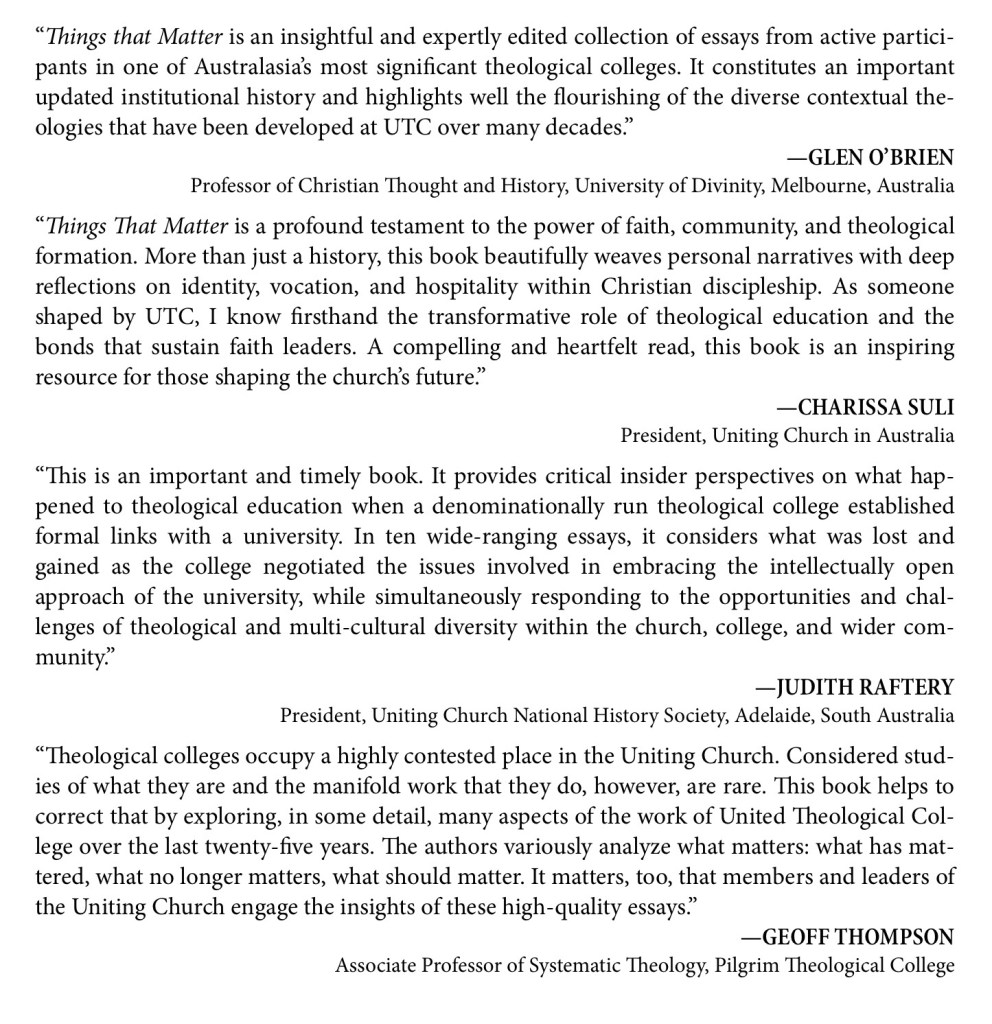
Prof. Glen O’Brien says that the book “highlights well the flourishing of the diverse contextual theologies that have been developed at UTC over many decades.” Assoc. Prof. Geoff Thompson, reflecting the title of the book, appreciates that the book explores “what has mattered, what no longer matters, what should matter.” And the President of the Uniting Church, the Rev. Charissa Suli (herself a graduate of UTC) offers appreciation for the way the book “beautifully weaves personal narratives with deep reflections on identity, vocation, and hospitality within Christian discipleship.”

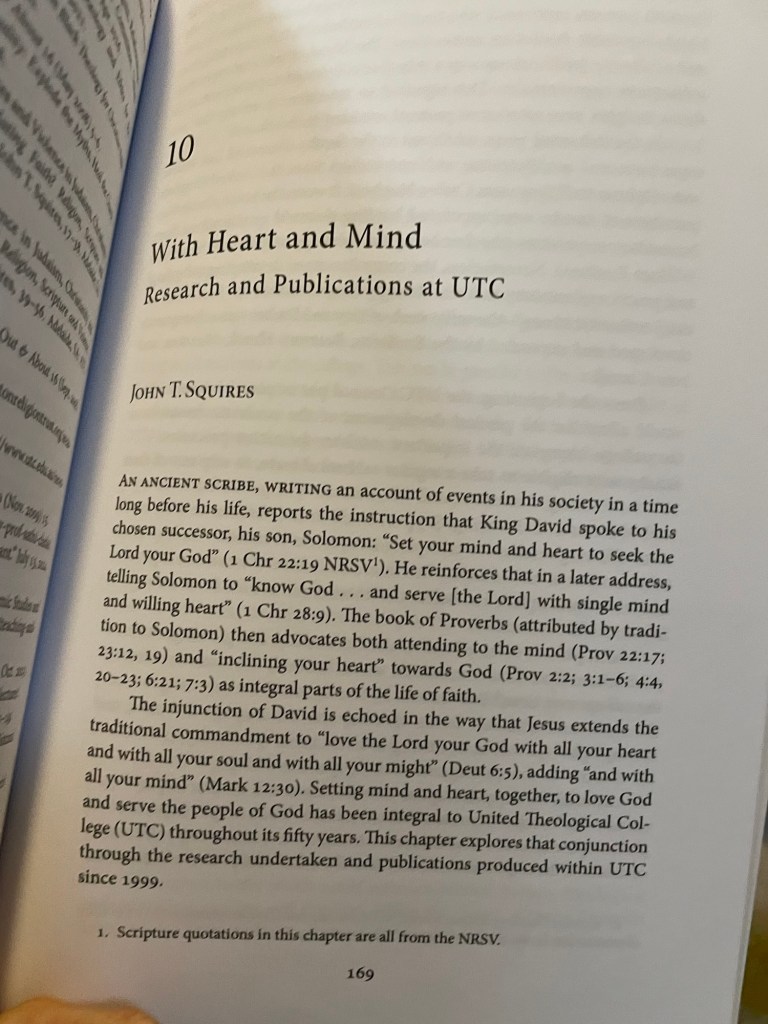
There are ten chapters in the book, each written by a different author. I was pleased to be able to contribute the final chapter, “With Heart and Mind”, exploring the research output produced within the college over the last 25 years—both publications by members of Faculty as well as the many doctoral dissertations that they supervised during those years. 

I’d had early involvement in the development of the research culture of the College when we offered bachelor and masters degrees through the Sydney College of Divinity in the 1990s. In those days we had a Research and Publications Committee, which I convened, and a regular masters-level seminar. It is most pleasing to see how from those early steps a strong research and publications culture has developed, with scores of doctoral dissertations having been produced in the first 25 years of this century, supported by the regular Friday postgraduate seminar where ideas are presented, critiqued, and refined.

In the end, my chapter in this book ran to twenty-two pages with 114 footnotes, followed by a bibliography of works published by Faculty and PhD dissertations completed under their supervision, which added another 8 pages. So it was quite a piece of work: variously fascinating, illuminating, daunting, and finally: achieved!

There are many reasons why I am looking forward to reading this book. In an opening chapter, Ross Chambers explores the relationship of the College (and through it, the Church) to the University of which we became a part, in the School of Theology of Charles Sturt University. This is a substantial reason that underlies the flourishing research culture that I wrote about; government funding to the University meant that the college gained financial contributions for each faculty publication and for supervision of research students.

Ross was instrumental in negotiating the involvement of UTC in CSU; he saw the value of bringing into the School a Faculty where each member themselves had a quality doctoral qualification as well as a growing experience in research supervision. (And, of course, this would undoubtedly look good for the University!) Ross is both a former Vice-Chancellor of CSU and a Chair of the UTC Council (which in earlier years, when I was then secretary of this council, was chaired by two previous Vic-Chancellors of Macquarie University: Bruce Mansfield and then Barry Leal).

There are chapters in this book which explore ministerial formation, the centrality of community, the varying approaches to teaching from those responsible for Systematic Theology, the wonderful Camden Theological Library under the brilliantly entrepreneurial stewardship of Moira Bryant, and the opportunities for continuing education (especially through the presence of overseas visiting scholars) for those already engaged in ministry.

There’s a chapter on the intersection between multiculturalism (a key commitment of the Uniting Church) and theological learning, as well as a chapter each devoted to the experiences of the many Korean students of UTC, and the equally numerous Pasifika students, many of whom have produced doctoral work that develops and extends the theology of their native countries (Tonga, Samoan, Fiji, Tuvalu, the Cook Islands, and more). 

It’s a delight to know that my co-contributors to this book are both those alongside whom I taught for many years, as well as some whom I had taught in their foundational theological studies. It augurs well for the College and the Church that the current Faculty includes UTC graduates Peter Walker (Principal), Sef Carroll (Cross Cultural Ministry and Theology) and Bec Lindsay (Hebrew Scripture/Old Testament). A number of previous faculty members (myself included) had also begun their theological studies at UTC. Whilst there is certainly value in having teachers from beyond this circle—indeed, in some cases, from beyond the Uniting Church—on the faculty, it’s important to have “home-grown” scholars-ministers as well.

As I say, I am looking forward to reading the other chapters. I understand that the publication of the book will be recognised at the forthcoming meeting of the NSW.ACT Synod, and then there will be a formal public launch on 12 September at UTC in North Parramatta.

The book is published by Wipf & Stock and is available to order at https://wipfandstock.com/9798385218813/things-that-matter/


Poor Politics, Poorer Theology (part one): The Conflict between the Trump Administration and The Vatican on Immigration and Mass Deportation 

This essay and the one which follows it in a subsequent blog is written by my friend and colleague, the Rev. Dr Geoff Dornan, offering a Christian ethical perspective on a recent controversy (one of so, so many) in the United States of America. Geoff has a PhD in Philosophy, Theology & Ethics from Boston University, USA. He is currently serving as Minister in Placement at Wesley Uniting Church in Canberra, ACT.

1. INTRODUCTION: JD VANCE ON ORDO AMORIS

In an interview by Fox News’ Sean Hannity, on January 30th this year, the U.S. Vice President. J.D. Vance offered a theological and moral defence of the Trump Administration’s policy of forced mass deportations.

This policy revokes the temporary legal status of potentially hundreds of thousands of people without due process, in defiance of the fifth and fourteenth amendments of the American constitution.

In the discussion, Vance declared that “the far left” in the United States tend to have “more compassion” for people residing in the country “illegally” (my apostrophes), including those who have committed crimes, than they do for American citizens. He opined that compassion should first be directed to fellow citizens, adding that this does not mean that people from outside of one’s borders, should be hated, but that one’s priority should be for those within.

Vance and Hannity

In support of his contention, Vance said:

“But there’s this old-school [concept] – and I think a very Christian concept, by the way – that you love your family, and then you love your neighbour, and then you love your community, and then you love your fellow citizens in your own country, and then after that you can focus and prioritize the rest of the world.”

The idea to which Vance referred was that of St Thomas Aquinas, commentated upon in his great body of work, the Summa Theologica, known as ordo amoris – “rightly ordered love”.

Later that evening Vance responded on social media to a British professor and former conservative politician, Rory Stewart, who criticized Vance’s comments as a “bizarre take on John 15:12–13” and as “less Christian and more pagan tribal.” (The Bible verse referenced by Stewart reads “This is my commandment, that you love one another as I have loved you.”). 

Stewart’s reference to this verse, and its relevance to the point he was labouring to make, was not and is not altogether clear. Perhaps because of that fact, he then referred to the parable of the Good Samaritan (Luke 10:25–37), applying the story as a legitimation of foreign aid.

Vance curtly responded to Stewart’s confusing comments with, “just google ordo amoris”!

The reaction that has flowed from these two interviews has been discordant. On the one hand, there has been some approval, a positive nodding of the heads from some theological and political circles.

On the other there has been clear disapproval from the Catholic leadership. Some responses have on the other hand fallen in between, seeking to qualify Vance’s response. 

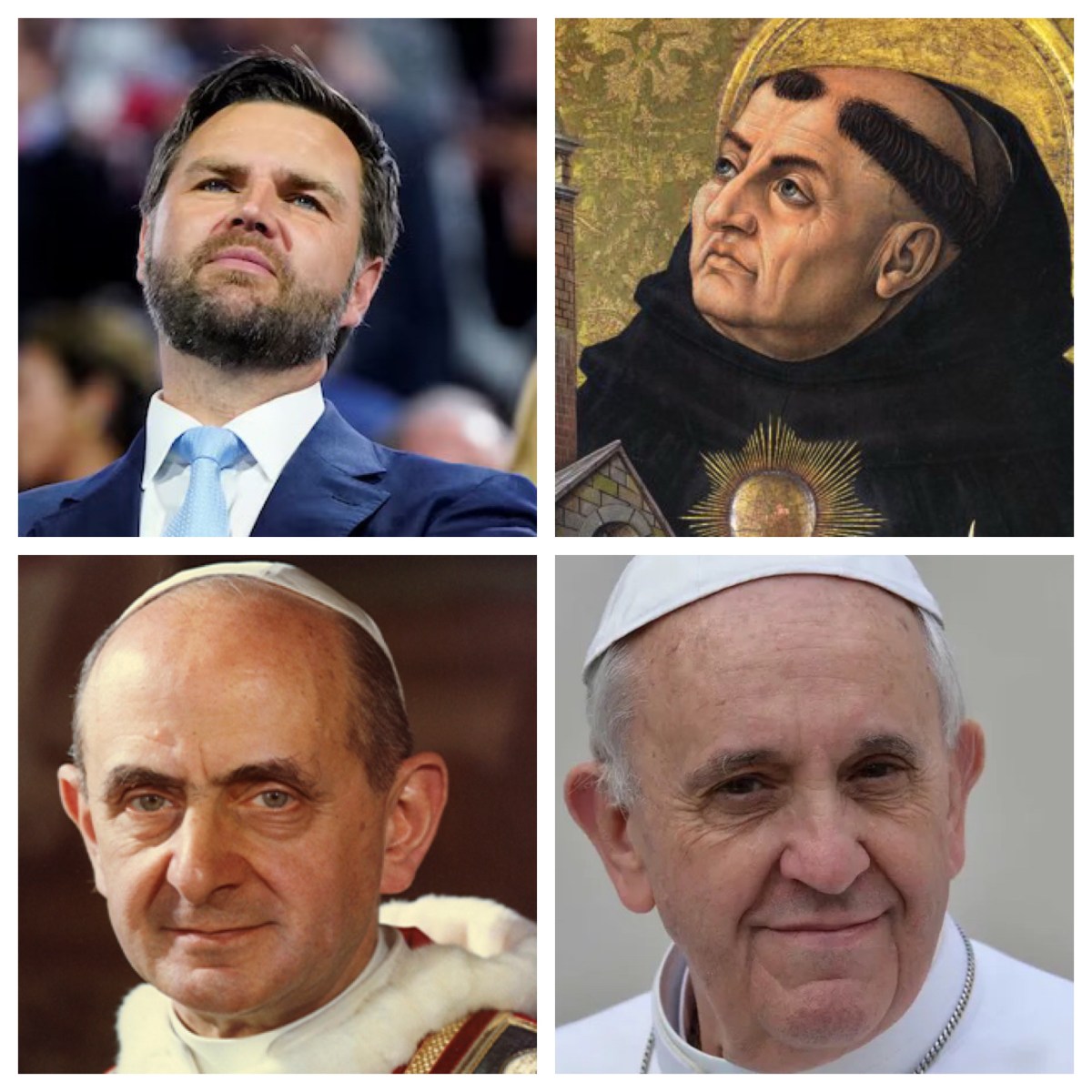
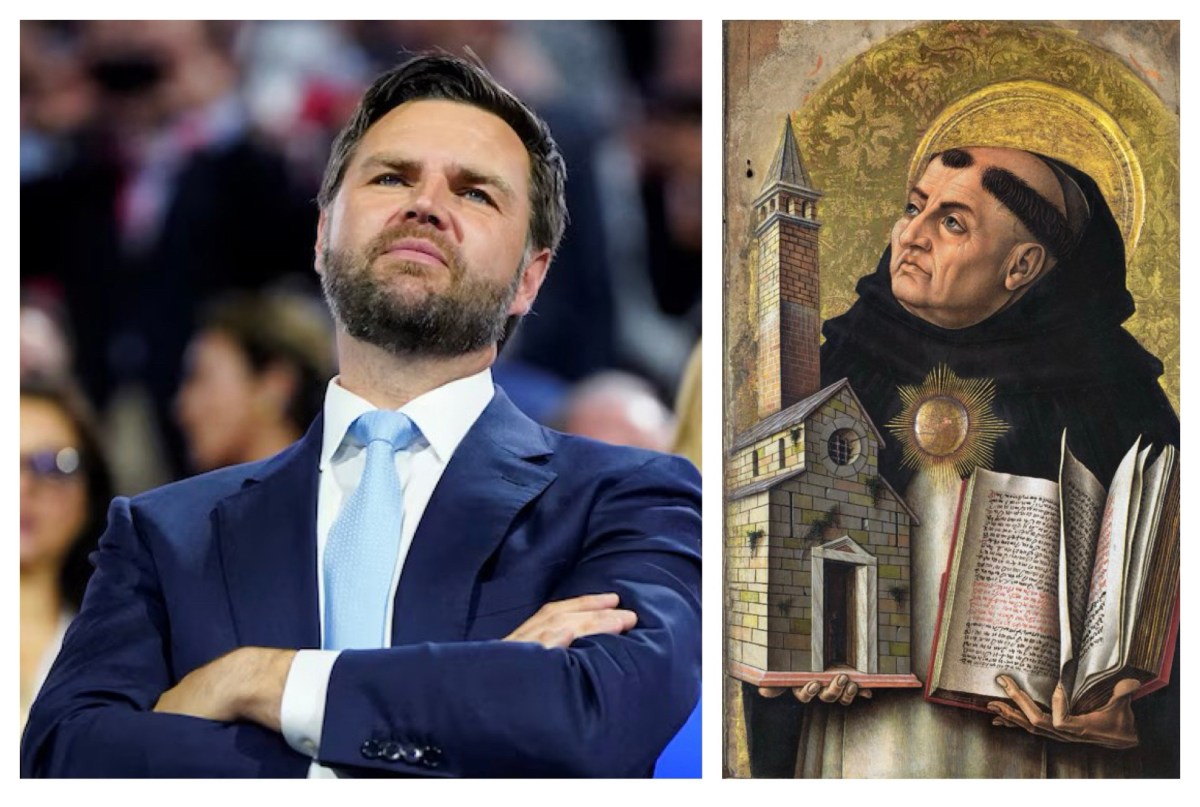
J.D. Vance, Vice-President of the USA

Regarding the first, the theological publication First Things included an article entitled “JD Vance States the Obvious about Ordo Amoris” by James Orr, Associate Professor of Religion at Cambridge, and notably, UK Chair of the conservative Edmund Burke Foundation. Orr argued that Stewart’s appropriation of the Good Samaritan was mistaken, in as much as its message is not that  one should help all victims wherever they may be, but that we must care for those who fall within the compass of our practical concern. 

In keeping with this take, he points out the Greek word for neighbour in the New Testament is πλησίον (plēsion), which is derived directly from πλησίος (plēsios), meaning “near” or “close by.” Apparently then, according to Orr, it is proximity that makes neighbours our objects of care and attention. 

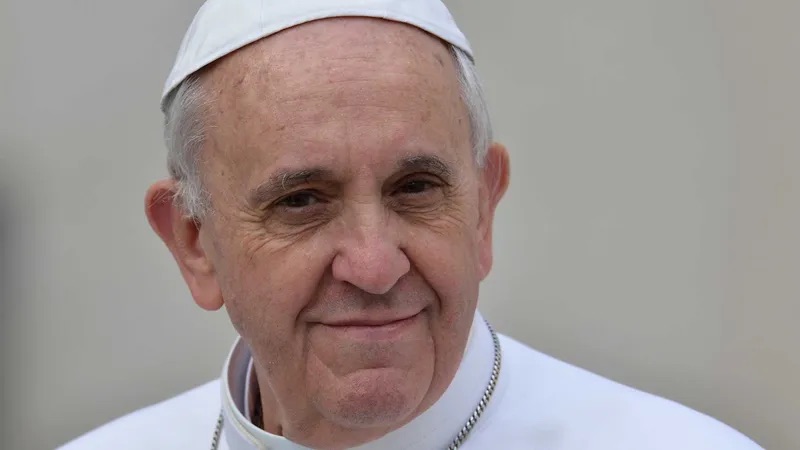
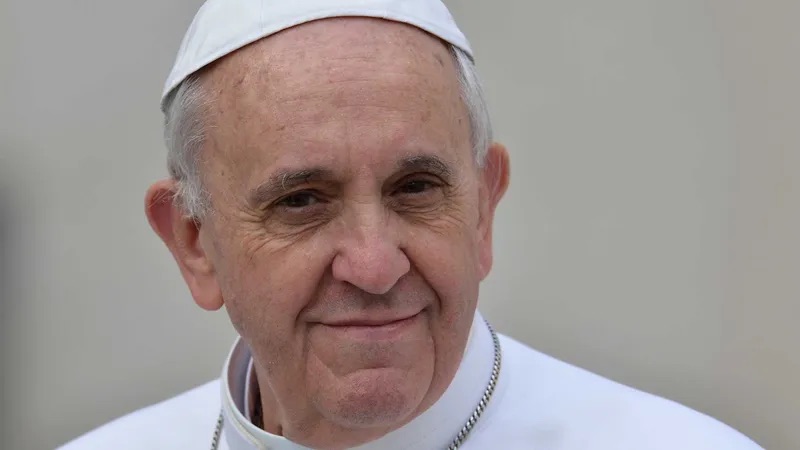
In contrast to Orr, the Catholic leadership has shown notable dissatisfaction with Vance’s interpretation. Pope Francis, attributing Vance’s motivation and appropriation of Ordo Amoris to the Trump Administration’s defensive armoury for deportation of non-citizens without due process, said to the US bishops on February 10th that “an authentic rule of law is verified precisely in the dignified treatment that all people deserve, especially the poorest and most marginalized”. He averred that such policy and practice “does not impede the development of a policy that regulates orderly and legal migration”. 

Pope Francis

In other words, good policy can and must include dignity for such people. Targeting Vance’s take on Aquinas within the context of Christian social ethics, he continued that “Christian love is not a concentric expansion of interests that little by little extend to other persons and groups. He proffered, “the human person is not just a mere individual, relatively expansive, with some philanthropic feelings”. As if to ensure the point could not be missed, he added, that the “true ordo amoris that must be promoted is that which we discover by meditating constantly on the parable of the ‘Good Samaritan’… that is, by meditating on the love that builds fraternity open to all without exception”. 

Pressing the point further, it is widely understood that Cardinal Pietro Parolin, the Vatican Secretary of State and confidant of Francis, was later tasked with speaking to Vance to ensure that there could be no ambiguity or misunderstanding as to the Holy Pontiff’s point. Moreover, Cardinal Robert Prevost, prior to his recent election as pope, posted a tweet on February 13th, sharing several links to articles critical of Vance’s take on Ordo Amoris. Prevost, now Pope Leo XIV, has had a long history of working among the poor in northern Peru, passionately supporting the rights of those who seek lives of dignity.

2. THINKING THROUGH THE CATHOLIC TRADITION

So, what to make of this?

On the one hand, the US administration lays hold of the writings of Thomas Aquinas, Doctor of the Catholic Church (referred to hereafter simply as Thomas, in keeping with Catholic academic tradition).

The US Administration took hold of the words of Thomas for its own purposes, seeking to legitimise its policy and practices regarding immigrants deemed illegals, while the Catholic leadership expresses its annoyance at what it considers the abuse of Church teaching, pressed intoservice in an attack upon the vulnerable. 

In the following paragraphs, I shall examine two things: first, Thomas’ theology: setting it in context, explaining its strengths and limitations. Second, I shall set out the developments in Catholic instruction since Thomas: the movement from neo-Thomism to modern Catholic theology, and particularly the Social Teachings of the Catholic Church, of which Vance seems unaware, despite their more recent genesis in Western theological and moral discussion.

A. THE WORLD VIEW OF THOMAS AQUINAS, 1225–1274: SOCIAL AND POLITICAL ETHICS AS A ‘RIGHT ORDERING’

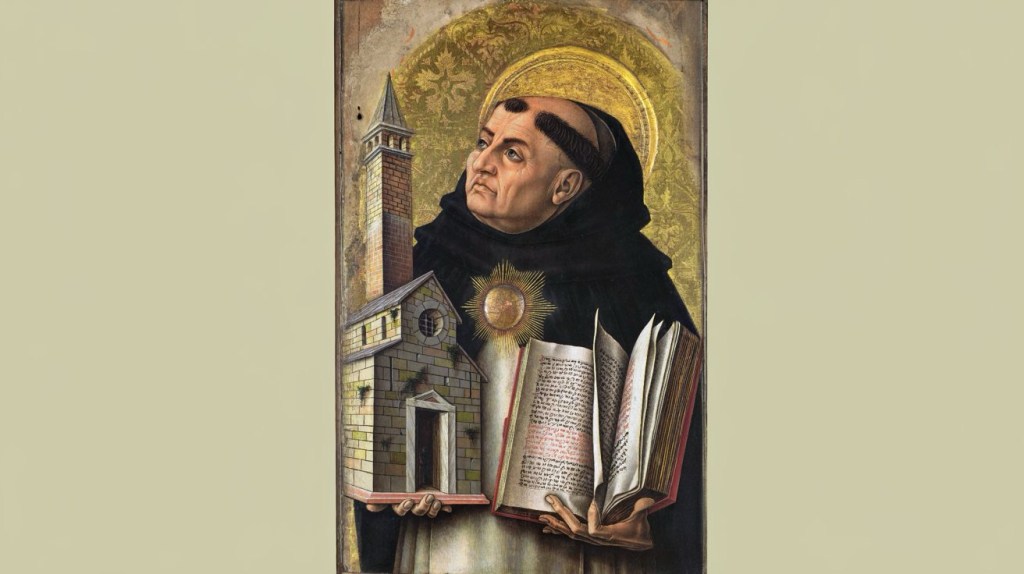
Thomas Aquinas (1225—1274), Dominican friar who was canonized in 1323, depicted in the panel of an altarpiece
from Ascoli Piceno in Italy, by Carlo Crivelli (15th century)

Thomas Aquinas’ world view unsurprisingly reflects the mediaeval age in which he lived but builds upon it in unique ways. His thinking was one of the greatest attempts of Mediaeval Scholasticism after the fall of the Roman Empire to unite in one body knowledge and revelation, philosophy and theology.

For Thomas, the human being is by nature a social animal. In speaking in this way, hedraws from the inspiration of Aristotle, most of whose writings had only been rediscovered by the western church a little earlier, between 1150 and 1250, stimulating an explosion of intellectual energy. Additional to Thomas’ appreciation of the social nature of the human being, he holds a view of society as firmly ordered and hierarchical; and this, according to his understanding of the Divine plan. The whole structure of things reflects what Thomas considered the natural order of humanity as created by God.

Ernst Troeltsch, an early sociologist of religion, in his classic Social Teaching of the Christian Churches (1911), interpreted Thomas’ way of seeing things – what we call the ‘Thomist ethic’ – as the ultimate expression of an “ecclesiastical unity of civilization”. Thomas’ ethic touched every element of mediaeval life, framed by its division between nature and supernature. It furnished a theoretical justification for social hierarchy, insisting upon an ethical purpose for each social role and place.

In essence, the church with its treasury of merit and sacraments, provided the means of grace through which the temporal life gained eternal meaning. From a sociological point of view, as J. Philip Wogaman puts it, “the system made it possible for there to be a unity of civilization (my italics), encompassing not only ‘ordinary’ Christians whose faith was inevitably corrupted by the world, but also those who sought the purer morality and spirituality of monastic life.” 

But was this social ethic, this hierarchy of living, a strict top-down affair, that ‘softly’legitimized injustice? On this question, opinion is split. Some subscribe to the view that Thomas’ ethic was a distinct advance upon hitherto mediaeval arrangements.

To the extent that all aspects of society served specified ends – the highest ranks serving those beneath them, and the lowest serving their superiors – a basic form of mutuality was envisaged, grounded in the common good. Such an arrangement it is argued, relieved the mediaeval system of its worst features. 

Others, however, subscribe to the opposite view: that Thomas does little more than defend the pattern of living of thirteenth century Europe, holding that pattern as proper for all societies and times. Both sides are probably correct. Thomas was no social radical, although he was a man of great intellectual acumen, as he created a synthesis of thought of the pagan philosopher Aristotle and the early Church Father, Augustine

Turning to Thomas’ political ethic, Thomas sees the state or political community as a “perfect” society, in the sense that it has all the means necessary to fulfil its appointed purpose of the common good, by which he means material development and the pursuit of virtue. It must be added that this includes coercive force to restrain vice and evil, to ensure the peace of the whole. 

But let us be clear about the power of state coercion! For Thomas is no simple authoritarian.

He pragmatically understands that not all vices can be expungedwithout at times generating more problems. As such, he holds that the state must never attempt to do what cannot be done effectively.

So, overall, both Thomas’ social and political ethics are grounded in a special ordering;certainly conservative when contrasted with western modernity, nevertheless, moderate in that Thomas sees that the state has its limits.

B. ORDO AMORIS: THE RIGHT ORDERING OF LOVE?

On the one hand, the US administration lays hold of the writing of Thomas Aquinas, Doctor of the Catholic Church, for its own purposes, seeking to legitimise its policy and practices regarding immigrants deemed illegals, while the Catholic leadership expresses its annoyance at what it considers the abuse of Church teaching, pressed intoservice in an attack upon the vulnerable. 

In the following paragraphs, I shall examine two things: first, Thomas’ theology: setting it in context, explaining its strengths and limitations. Second, I shall set out the developments in Catholic instruction since Thomas: the movement from neo-Thomism to modern Catholic theology, and particularly the Social Teachings of the Catholic Church, of which Vance seems unaware, despite their more recent genesis in Western theological and moral discussion.

And so, to Ordo Amoris, the right ordering of love within Thomas’ social and political ethics! The problem as I see it, is that his attempt to affirm this principle has its difficulties. In large part, this is so, because of his approach in assuming a hierarchy of obligation. Let us explore this.

For Thomas, love of and for God stands above all else in the hierarchy of love. From there in Ordo Amoris, Thomas orders or grades all other loves based on the just claims that a person may make upon another’s love for them. Here lies the seed for the idea that we owe a debt of love to those in closest proximity to us, for they are entitled to such an expectation. 

For Thomas, to neglect those nearest to us, on the pretext of loving more broadly and generously those who are afar, is not to really exercise love at all. As V.J. Tarantino explains through the story of Lazarus in the Gospel of Luke, “To skip over Lazarus on the doorstep [in order] to volunteer at the charity auction, is at least to some degree a matter of self-satisfaction”, [rather than love]”.

But what is the difficulty here? Let us name it! The point is that Thomas’ undertaking to establish theoretical rules for whom we are to prioritize in love, is tricky. Yes, Thomas does indeed maintain that a man should love his fellow citizens before the stranger; his father before his mother; both parents before his wife and children; and, before all non-family outsiders, his civic ruler. 

However, this rule-bound way of operating appears to be deficient: first as mentioned earlier, because love is explained in terms of what is owed, but second because his thought is so mechanistic, so duty driven, ignoring the very nature of human love, which is altogether a more spontaneous, impromptu, Spirit led thing.

Joseph Ratzinger, better known as Pope Benedict XVI (2005–2013) in his stand-out encyclical Deus Caritas Est (God is Love) makes exactly this point: that love is not about duty bound commandments, imposed from outside of the human person, but rather a freely bestowed experience beginning with God, which by its very character drives us to share itintuitively with others. 

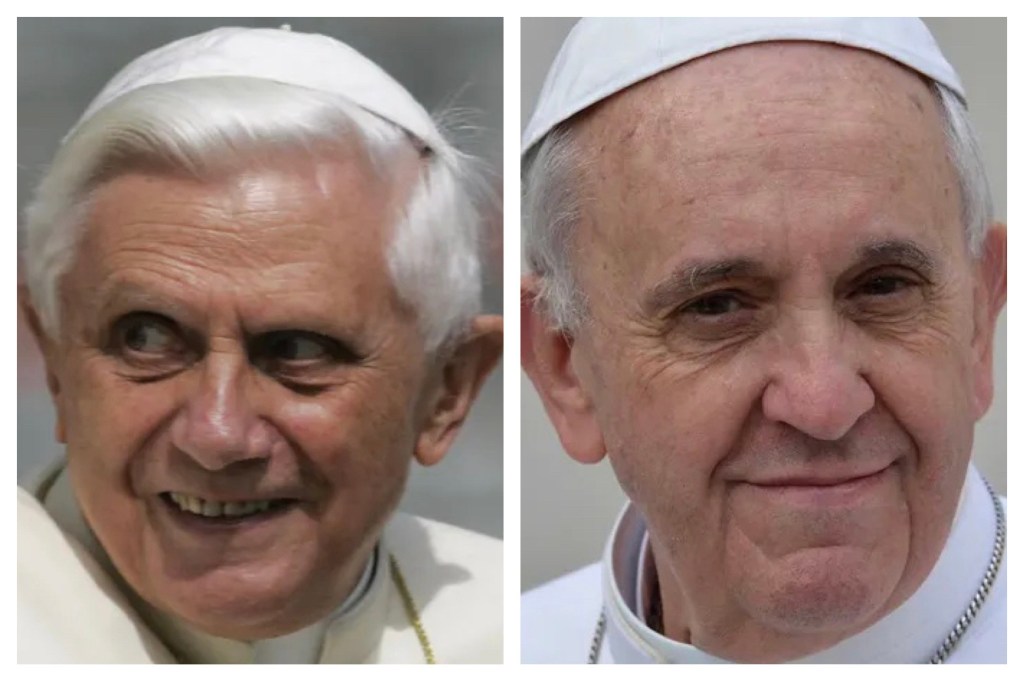
Pope Benedict XVI (left) and his successor Pope Francis (right)

Pope Francis (2013–2025) says something similar by way of application of Benedict’s insight. In his encyclical Fratelli Tutti (On Fraternity and Social Friendship), as he writes about the story of the Good Samaritan, he emphasizes that the priest and the Levite were most concerned with their duties as religious professionals.

Their structured social roles and their structured ethics, which determined who would enjoy a higher place as beneficiaries of their love, blinded them to the distraction of the man on the roadside, who simply did not fit. Love, as they understood it, was a duty owed to specific groups, not something to be freely, graciously, injudiciously lived out.

3. THOMAS: A TRIAL BALANCE

What then may we conclude about Thomas’ approach to the ethics of love? While love of and for God remains the genesis of everything, nevertheless the ordering of love which follows from it, is bound to and limited by the social and political structures of which Thomas was a part.

On the other hand, there is no sense in Thomas that love is simply a limited quantity that is to be parcelled out to those close to us, with little or nothing left for those in need; that there is only so much that can go around. He does understand order – after all he was a systematic theologian and carries his systematization into everything he writes – but to assume, as Vance does, that he would give his blessing to mass deportation, and this without legal due process, goes too far. 

So, is there anything missing in Thomas? I think there is: the extraordinary liberality, largesse, the remarkable prodigality of the Gospel. In the broad scheme of things, Thomas does not manage to reflect the richness of the Good News. Tarantino puts it so well: “the erring sheep…preferred to the ninety-nine obedient sheep; the worker who commences at the final hour…compensated in equal measure to the one who laboured from daybreak; the tax collectors and the prostitutes…entering Heaven; the last [being] first; and God himself [giving] his only Son”.

4. BACK TO J.D. VANCE AND HIS APPROPRIATION OF THOMAS

In this paper I have sought to answer the question whether the American Vice President J.D. Vance is justified in harnessing Thomas’ ordo amoris for his political purposes: namely forced mass deportations of people without due process from U.S. territory. 

My conclusion is that Thomas does not deliver such justification, but nor is Ordo Amoris adequate in and of itself to provide a definitive answer one way or the other for modern Christian ethics. Rather, to answer the question, one needs to turn to more recent moral theology of the Catholic tradition. I refer to Catholic Social Teachings, which I shall examine in the next essay.

Elisha and Naaman (2 Kings 5; Pentecost 4C)

During the long season after Pentecost in Year C, the lectionary includes a range of stories and oracles from the prophetic texts of Hebrew Scripture. The first three come from the books bearing the title of Kings—although the contents of these two books canvass more than the kings of Israel; prophets figure prominently at key points in the story. 

Two of these passages are well-known because Jesus refers to them in the sermon he delivered at Nazareth: Elijah and the widow at Zarephath, and Elisha and the Syrian army commander, Naaman. Elijah is sent to a faithful woman, who perhaps typically remains unnamed; Elisha is sent to faithful man, identified by name as Naaman (Luke 4:25–27). 

Both characters demonstrate trust in the stories told about them. The woman trusted Elijah when he said, “first make me a little cake of it and bring it to me, and afterwards make something for yourself and your son” (1 Ki 17:13). She did this, and there was enough for her and her son, and for Elijah “for many days … the jar of meal was not emptied, neither did the jug of oil fail” (2 Ki 17:15–16).

The army commander (eventually) trusted Elisha when he said, “go, wash in the Jordan seven times, and your flesh shall be restored and you shall be clean” (2 Ki 5:10). After an initial reluctance, Naaman did as the prophet said, and he was healed; “his flesh was restored like the flesh of a young boy, and he was clean” (2 Ki 5:14).

The woman, who was not an Israelite (Zarephath is in Sidon, a Gentile territory) is of low social status; the army commander, of course, is a high status person, even if he is a foreigner, as a Syrian. Jesus alienates his audience in Nazareth by focussing his attention on God’s merciful care for foreigners like the widow of Sidon and the soldier of Syria, regardless of their social status—and on the way each one of these foreigners modelled trusting obedience. As Luke reports, his audience was not impressed! 

See more at 

We hear the second of these stories this coming Sunday: the encounter between the prophet Elisha and the general Naaman is what is in the Hebrew Scriptures passage proposed by the lectionary. The story comes after Elisha has taken on the role of prophet in the kingdom of Israel, following on from Elijah. Elisha asked Elijah to grant him a double share of his spirit (2 Ki 2:9); Elijah agreed, and after Elijah departed, a company of prophets declared “the spirit of Elijah rests on Elisha” (2:15).

So, as I noted in last week’s blog post, Elisha performs miracles that replicate those performed earlier by Elijah; but he does more than Elijah, with an abundance of miraculous deeds. This particular miracle is given more space than any other miracle that either prophet performs.

The early and substantive miracle of Elijah, his reviving the widow ‘s son (1 Ki 17), is told in eight verses; the story of Elisha and Naaman (2 Ki 5) takes up fourteen verses, but the story continues for another thirteen verses, detailing the consequences for Elisha’s servant Gehazi after his intervention into the sequence of events. 

The lectionary, of course, does not offer all of the elements of this long narrative. We hear, firstly, the opening two verses which introduce Naaman and his situation; we then skip to verse 6, to hear the course of events leading to the healing of Naaman. Whilst verse 2 also introduces a young Israelite girl who had been taken captive to serve Naaman’s wife, we do not hear her role in the narrative offered by the lectionary (vv.3–5). The lectionary, unfortunately, is good at minimising or informing female characters in the stories it includes.

As for Naaman, we learn much and observe much during the course of events. Naaman is introduced in a distinctive way. He is a “mighty warrior”, a commander “of the army of the king of Aram”—that is, a foreigner—who was “in high favour with his master, because by him the Lord had given victory to Aram” (5:1). Aram was a province in Syria, to the northeast of Israel, with Damascus as a key city. The province is perhaps best known through the fact that its name forms the basis of the language which came to be the dominant tongue across the Middle East: Aramaic. 

See https://www.biblicalarchaeology.org/daily/ancient-cultures/ancient-near-eastern-world/what-is-aramaic/#gf_1

In the days of Israel’s kings and prophets, foreigners were inevitably regarded as enemies, to be fought, subdued, and held captive. The regular battles recorded throughout the books of Samuel and Kings attest to this, and many psalms also reflect this deep-seated antagonism.

One psalmist sings “rise up, O Lord, in your anger; lift yourself up against the fury of my enemies” (Ps 7:9), another affirms that “surely God is my helper … he will repay my enemies for their evil” (Ps54:4–5), while yet another celebrates at length: “you made my enemies turn their backs to me, and those who hated me I destroyed. They cried for help, but there was no one to save them … I beat them fine, like dust before the wind; I cast them out like the mire of the streets” (Ps 18:40–42). 

In the NRSV, no less than ten psalms have been given titles which include the words “Deliverance from Enemies” (Pss 4, 5,  10, 13, 31, 35, 59, 70, 140, 143). It was a standard element, it would seem, that was to be found in temple worship and in the prayers of faithful people, as these psalms attest.

This is one factor that helps explain the intractability of national relationships in the Middle East today; centuries of antagonism and conflict have led to hatred and demonising of the “other”. There is no clear and simple way back from this deeply-ingrained perspective, held by Jew and Arab alike.

In the context provided by these psalms, the celebration of Naaman as a military commander whose victory was enabled by the Lord God of Israel is striking. Whether Naaman was an historical person or not cannot be determined; his actual existence is as secure, or as fragile, as the existence of any other figure in the narratives found in the grand saga of Israel in these biblical books. There are no known references to him in sources outside the biblical texts.

To be sure, the story, first told by storytellers and then passed on through the growing oral tradition, would have struck a distinctive note in ancient Israel, given this ingrained antagonism towards foreigners—especially those in military service. By the time the Deuteronomic History was compiled and published, the Israelites had already experienced the beneficence of Cyrus, King of Persia. Under Cyrus—declared by the Lord in Second Isaiah to be “my shepherd [who] shall carry out all my purpose” as the Lord’s anointed (Isa 44:28, 45:1)—Israel had experienced a positive action by a foreign ruler. Naaman’s victory, empowered by the Lord God, would have had a resonance with that experience for this who heard, or read, his story.

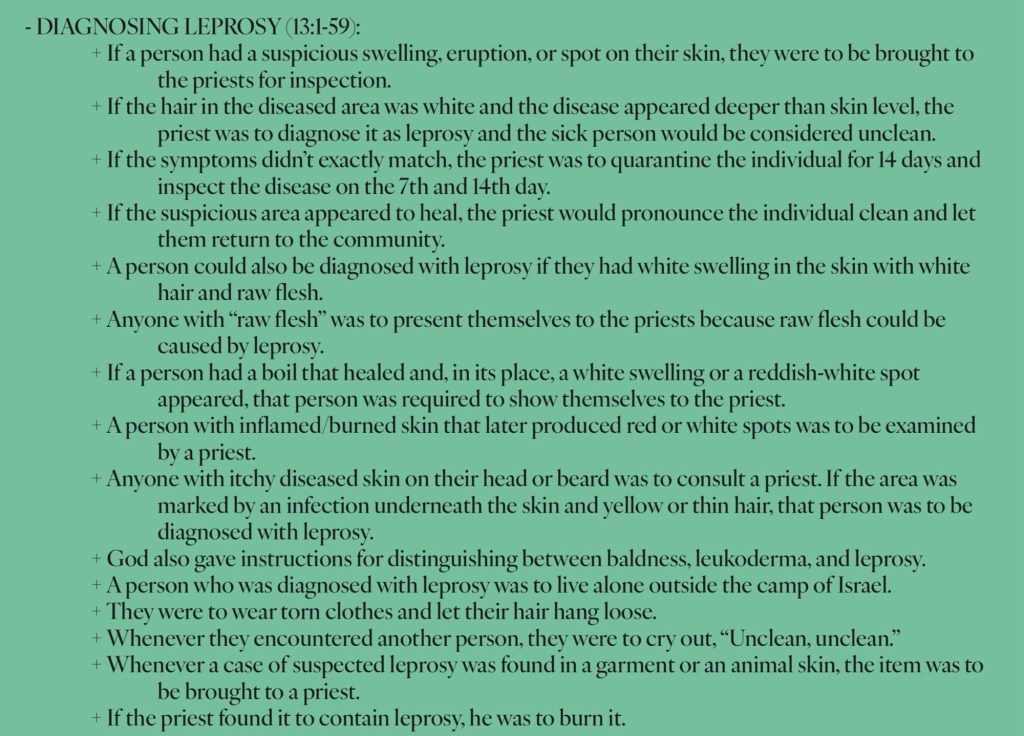
But Naaman is also introduced as a mezora, a person affected by the skin disease tzaraath  (2 Ki 5:1). This latter term is traditionally rendered as “leprosy”, but it is clear that it was not at all what today we know as Hansen’s disease, a highly-contagious disease in which a bacterial infection can damage some or all of a person’s skin, nerves, eyes, and their respiratory tract. Biblical leprosy was, rather, a disfiguration of a person’s skin—usually manifested in white patches of skin—which rendered a person ritually unclean. There are a range of prescriptions for dealing with this disease in Lev 13–14.

Naaman’s condition renders him unclean in Israelite society. It is his his slave girl (taken into service from her home in Israel) who suggests to him that he might visit “the prophet who is in Samaria”, for “he would cure him of his leprosy” (5:3). Naaman goes to Elisha with the blessing of his king, whose army had previously been at war with the Israelite army (1 Ki 20, 22); now, however, Israel was battling the Moabites to the south (2 Ki3), so Aram was a beneficent neighbour.

The process that Elisha sets for Naaman to follow is symbolically rich and practically powerful. “Go, wash in the Jordan seven times, and your flesh shall be restored and you shall be clean” (5:10), the prophet commands him. The “seven times” signals a perfect, completed process, typical of Israelite practices (“seven times” appears four times in the ritual of Lev 14, and another five times in other ritual elsewhere in Leviticus).

Summary of Lev 13, from https://www.2belikechrist.com/articles/leviticus-13-summary-in-5-minutes

This process is far simpler than the required ritual for Israelites: Leviticus prescribes a far more complex process. It begins with an investigation by the priest to determine whether the person is in fact unclean (Lev 13, with multiple options for consideration set out in the first 46 verses, and then 13 further verses relating to clothing and houses!)

If the disease is still active, a purification process then ensues in which  “two living clean birds and cedarwood and crimson yarn and hyssop” are to be brought to the priest, who will then slaughter one bird and “take the living bird with the cedarwood and the crimson yarn and the hyssop, and dip them and the living bird in the blood of the bird that was slaughtered over the fresh water” (Lev 14:4–6). This blood is then sprinkled seven times on the one who is to be cleansed of the leprous disease; “then he shall pronounce him clean, and he shall let the living bird go into the open field” (Lev 14:7).

A further process is then required, with the person to be healed washing, shaving, living apart for a week, shaving again, and then taking another collection of items for this ritual: “two male lambs without blemish, and one ewe lamb in its first year without blemish, and a grain offering of three-tenths of an ephah of choice flour mixed with oil, and one log of oil” (Lev 14:10). Another ritual of sacrifice follows, with detailed instructions given (Lev 14:11–20). It is complex! 

The response of Naaman, in the light of this complex process expected of Israelites, is striking. He is impatient! He had actually been expecting an instantaneous cure, and wondered why he could not simply was in a river closer to his home (2 Ki 5:12). In his anger, he dismisses Elisha as weak and ineffective (5:11–12). But after an intercession from his servants, he dutifully obeys, and the result (after seven immersions) is dramatic: “his flesh was restored like the flesh of a young boy, and he was clean” (5:14).  Naaman returns to Elisha, to praise the God who has enabled the prophet to heal him and to offer a gift (5:15). 

Why does the lectionary end the section of the text offered for this Sunday (5:1–14) before the following verse? Surely to end the section with the climactic confession, “I know that there is no God in all the earth except in Israel” would have been quite powerful! Perhaps it stops abruptly to avoid the apparently embarrassing words of Naaman, “please accept a present from your servant” (v.15b). This was to be expected in the patron—client society of antiquity; is it felt a little crass for modern ears, or does it unhelpfully suggest that grateful parishioners today should shower their ministers with gifts in gratitude? (That would be contrary to the Code of Ethics that I am bound to operate by.)

Or perhaps because the last part of this verse introduces a whole new act in the story of Naaman and Elisha? The suggestion of a gift for the prophet, his stern refusal (vv.16–18) and his final word of peace (v.19), all lead on into the final part of the long story told in this chapter. It takes us to Gehazi, the interfering servant of Elisha, and the consequences of his actions which are recounted in vv.20–27. Again, the lectionary ignores this part of the story; but its inclusion in the Deuteronomic History indicates that it had significance for the Israelites in subsequent years, and especially in the years after the Exile, when this lengthy document was put into a final form.

Elisha and his servant Gehazi

Elisha, in the end, is required to pronounce judgement over the miscreant servant. Gehazi intervenes, seeking additional money from Naaman—who willingly gives more than what is asked for. “Please give them a talent of silver and two changes of clothing”, the servant begs; Naaman responds by giving him “two talents of silver in two bags, with two changes of clothing” (5:22–23). So gratified was the Syrian for his healing that he gave in abundance.

But Elisha knows what his servant has done; “did I not go with you in spirit when someone left his chariot to meet you?”, he says (5:26). And so the story ends with a clear reversal: “the leprosy of Naaman shall cling to you, and to your descendants forever”, the prophet tells his servant (5:27). And so it does. The man who was once leprous is now healed, for “his flesh was restored like the flesh of a young boy, and he was clean” (5:14); whereas Gehazi now bears the stigma of Naaman’s leprosy, and as he departs from Elisha, “he left his presence leprous, as white as snow” (5:27). 

In later Jewish tradition, the figure of Gehazi serves as a type for those who are avaricious in their dealings with others, as Gehazi was. An article in the Jewish Encyclopedia describes how he is portrayed in the Babylonian Talmud: “When Naaman went to Elisha, the latter was studying the passage concerning the eight unclean “sheraẓim” (creeping things; comp. Shab. xiv. 1).

“Therefore when Gehazi returned after inducing Naaman to give him presents, Elisha, in his rebuke, enumerated eight precious things which Gehazi had taken, and told him that it was time for him to take the punishment prescribed for one who catches any of the eight sheraẓim, the punishment being in his case leprosy. The four lepers at the gate announcing Sennacherib’s defeat were Gehazi and his three sons (b.Soṭ 47a).”

Gehazi is also identified as one of four individuals who deny the resurrection of the dead and have no portion in the world to come (b.Sanh 90a). See https://www.jewishencyclopedia.com/articles/6557-gehazi

In a Christian context, we might also note that the dynamics of this story in 2 Kings 5 foreshadow the dynamics of true faith spoken of by a later teacher in Israel: “whoever wants to be first must be last of all and servant of all” (Mark 9:35); “the greatest among you must become like the youngest, and the leader like” (Luke 22:26); “blessed are you who are hungry now, for you will be filled; blessed are you who weep now, for you will laugh … woe to you who are full now, for you will be hungry; woe to you who are laughing now, for you will mourn and weep” (Luke 6:21,25). What a pity the lectionary has omitted this potent conclusion to a well-known story. 

See also


The spirit of Elijah rests on Elisha (2 Kings 2; Pentecost 3C)

In the Hebrew Scriptures passage that the lectionary sets before us this coming Sunday (in 2 Kings 2), we read about the transition from Elijah the prophet to Elisha the prophet. This is an important moment in the story, as it moves on from the words and deeds of Elijah the Tishbite, later remembered as the great “prophet like fire [whose] word burned like a torch” (Sirach 48:1) and as one who had “great zeal for the law” (1 Macc 2:58).

Whilst Elijah remained in his heavenly abode, it was considered that he would ultimately return from that place “before the great and terrible day of the Lord”; he would come “to turn the hearts of the people of Israel” so that the Lord God “will not come and strike the land with a curse” (Mal 4:5–6). But in the meantime, who would follow him in the earthly realm to declare the word of the Lord and to signal the power of the Lord God by performing miracles, as Elijah had done? This transition story offers the answer.

In the book we know as 1 Kings, the compiler of the Deuteronomic History reports many incidents which attest to the courage and power of Elijah. In his sermon in Nazareth, Jesus refers to the first miracle of Elijah, when he provided a widow in Zarephath with food and oil that “did not fail”, even though the land was in drought (1 Ki 17:1–16). In subsequent incidents in this book, he raises a dead son (17:17–24), confronts King Ahab (18:1–18) and famously stares down the prophets of Baal in a mountaintop showdown (18:19–40), leading to the breaking of the drought (18:41–46).

Elijah later condemns Ahab over his unjust seizure of the vineyard of Naboth (21:17–29) and then stands before Ahab’s son, King Ahaziah, to condemn him to death (2 Ki 1:2–16); a death “according to the words of of the Lord that Elijah had spoken” which is promptly reported (2 Ki 1:17). During the rule of Ahab, Elijah had also most famously heard the Lord God “not in the wind … not in the earthquake … not in the fire”—the standard elements involved in a theophany since the time of Moses (Exod 19:1–6)—but rather in “the sound of sheer silence” (1 Ki 19:11–12). Elijah was his own, distinctive man, with his own, distinctive encounter with God.

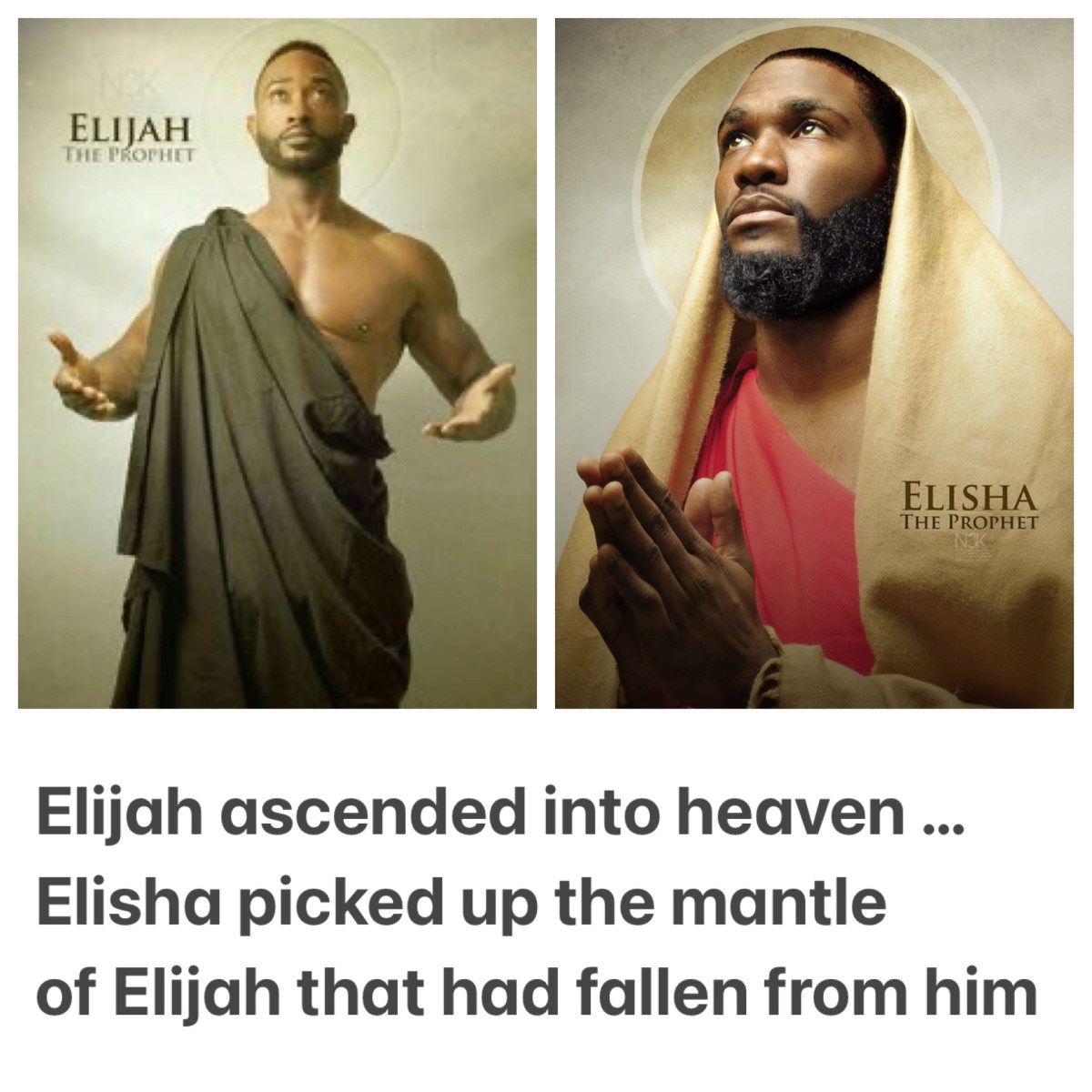
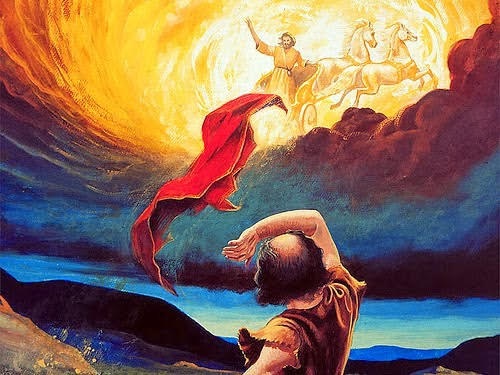
Then, immediately after that encounter, Elijah the Tishbite, from Gilead, called Elisha son of Shaphat, a farmer ploughing his fields, to be his chosen disciple (1 Ki 19:19–21). All of these stories serve as the background to the story that we face on this Sunday’s readings, when Elijah “ascended in a whirlwind into heaven” (2 Ki 2:11) and leaves behind his prophetic mantle, which Elisha then took as his own (2 Ki 2:12–14). From that moment, as “the company of prophets who were at Jericho” declared, “the spirit of Elijah rests on Elisha” (2 Ki 2:13–15).

Indeed, Elisha had rather brashly requested of Elijah, “please let me inherit a double share of your spirit” (2:9). Elijah had responded, “you have asked a hard thing; yet, if you see me as I am being taken from you, it will be granted you; if not, it will not” (2:10). Sure enough, as Elisha subsequently watches as “a chariot of fire and horses of fire” take Elijah and he ascends “in a whirlwind” (2:11), Elisha is watching, indeed crying out a description of the spectacle: “father, father! the chariots of Israel and its horsemen!” (2:12). He will surely be doubly blessed. The narrator makes sure we know that Elisha could see Elijah departing, commenting that “when he could no longer see him, he grasped his own clothes and tore them in two pieces” (2:12).

Elisha knows he had the blessing of Elijah when his first action after the departure of his mentor was to pick up the cloak (or mantle) that Elijah had left behind, and immediately uses it to enact a miracle (2:13–14)—replicating what Elijah had just done (2:8). It seems that a distinctive cloak, or mantle, was worn by prophets over the years; although cloaks were common garments—worn, for instance, by Ezra (Ez 9:5) and Job (Job 1:20)—it is thought the cloak or mantle worn by Samuel (1 Sam 15:27) and Elijah (1 Ki 19:13) was a sign of their prophetic role. That certainly seems the case with Elisha (2 Ki 2:8, 12).

Now, Elisha is not exactly my favourite prophet. After all, look at what he did when some small boys taunted him because of his distinctive hairline.  They jeered at him, calling him “bald head”; in response, he cursed them and, presumably to enact the curse, “two she-bears came out of the woods and mauled forty-two of the boys” (2 Kings 2:23–24). As a particularly alopecic person myself, this does not particularly endear this prophet to me. Why did his sensitivity about his follicularly-challenged head justify this incredibly excessive response to the games of children?

However, the compiler of the Deuteronomic History sees otherwise. Elisha is honoured as a prophet who is able to perform miracles, who confronts kings, and who declares the word of the Lord forthrightly and without fear. He replicated the last miracle of Elijah (2 Ki 2:8) by striking a steam of water with his newly-acquired mantle, so that “the water was parted to the one side and to the other” (2:13–14). He made good the bad water in Jericho (2:19–22), then spoke the word that made the water flow again in Judah (3:13–20), replicating another miracle of Elijah when he caused an earlier drought in Israel to end (1 Ki 18:41–45).

He later supplies an impecunious widow with an abundance of oil to save her from her debtors (2 Ki 4:1–7) and then raises from the dead the son of a Shunnamite woman (4:8–37). These two miracles replicate actions performed earlier by Elijah (1 Ki 17:8–16, 17–24). Elisha’s miraculous deeds continue as he supplies food to end a famine in Gilgal (2 Ki 4:38–41), feeds a hundred men (4:42–44), and then heals the Syrian army commander Naaman (5:1–19), a story that we will focus on in worship the Sunday after this coming one. And as Elijah had challenged the kings of his day, so Elisha confronts the king of his time (2 Ki 6).

Still more miracles are reported, before Elisha became ill and died (13:14–20). Yet even in death, his miraculous powers continued; the narrative reports that as the Moabites invade the land each spring, “as a man was being buried, a marauding band was seen and the man was thrown into the grave of Elisha; as soon as the man touched the bones of Elisha, he came to life and stood on his feet” (13:21). Whilst Elijah had not died—his ascension into heaven was most certainly while he was still alive (2 Ki 2:11–12)—Elisha had died, but his power to perform miracles lived on (2 Ki 13:21).

In his long “hymn in honour of our ancestors”,  Jesus, son of Sirach lavishes praise on Elisha. “When Elijah was enveloped in the whirlwind”, he writes, “Elisha was filled with his spirit. He performed twice as many signs, and marvels with every utterance of his mouth. Never in his lifetime did he tremble before any ruler, nor could anyone intimidate him at all. Nothing was too hard for him, and when he was dead, his body prophesied. In his life he did wonders, and in death his deeds were marvelous.” (Sirach 48:12–14). He was, by all accounts, a worthy successor to Elijah. I may have to allow him that, despite his hyper-sensitivity about his hairstyle.

See also 

In the sound of sheer silence (1 Kings 19; Pentecost 2C)

In the passage which the lectionary places before us this coming Sunday (from 1 Kings 19), we meet the first of a number of prophetic figures whose deeds are recounted in the books of the Kings or whose words are collected within the Hebrew Scriptures under the catch-all second section of Nevi’im (Prophets).

The first of these prophetic figures is the Elijah the Tishbite, who was introduced as coming from Tishbe in Gilead (1 Ki 17:1), a place whose precise location has occasioned some debate.  See https://www.biblegateway.com/resources/encyclopedia-of-the-bible/Tishbite

Elijah is later described as “a hairy man, with a leather belt around his waist” (2 Ki 1:8). This initial portrayal of Elijah is nested within the accounts of that long period of time when Israel was ruled by kings, when prophets functioned as the conscience of the king and the voice of integrity within society. The distinctive dress of Elijah perhaps sets him apart from the court of the kings, where a more “civilized” dress code was presumably operative. Nevertheless, Elijah does have some engagement with the kings who ruled at the time he was active: Ahab, and then Ahaziah. Indeed, his distinctive dress points to his emboldened attitude towards those kings.

Elijah operated during the period when Ahab ruled Israel; he figures in various incidents throughout the remainder of 1 Kings—most famously, in the conflict with the prophets of Baal which came to a showdown on Mount Carmel (1 Ki 18), and then later in his confrontation with Ahab and his wife Jezebel, over the matter of Naboth’s vineyard (1 Ki 21). Like Jesus, Elijah was no shrinking violet!

Elijah first appears in the narrative of the various kings, seemingly out of nowhere, just after King Ahab had taken as his wife Jezebel, daughter of King Ethbaal of the Sidonians, who presumably influenced him to begin his worship of Baal (1 Ki 17:31–33). In the same way, at the end of his time of prophetic activity, Elijah simply disappears from sight soon after Kong Ahaziah died. Elijah hands over his role to his successor, Elisha, and as “a chariot of fire and horses of fire separated the two of them”, Elijah ascends in a whirlwind into heaven (2 Ki 2:1–15).

In the book we know as 1 Kings, the compiler of the Deuteronomic History reports many incidents which attest to the courage and power of Elijah. The boldness of Elijah is evident in the confrontations that he has with made clear, centuries later, to the followers of Jesus, in the earliest account of his life, when John the baptiser is depicted as a fiery desert preacher, calling for repentance, just as Elijah had called the kings to account (Mark 1:1–8). In a later account of Jesus, there is a clear inference connecting John with Elijah when Jesus notes, “Elijah is indeed coming and will restore all things; but I tell you that Elijah has already come, and they did not recognize him, but they did to him whatever they pleased” (Matt 17:11–12).

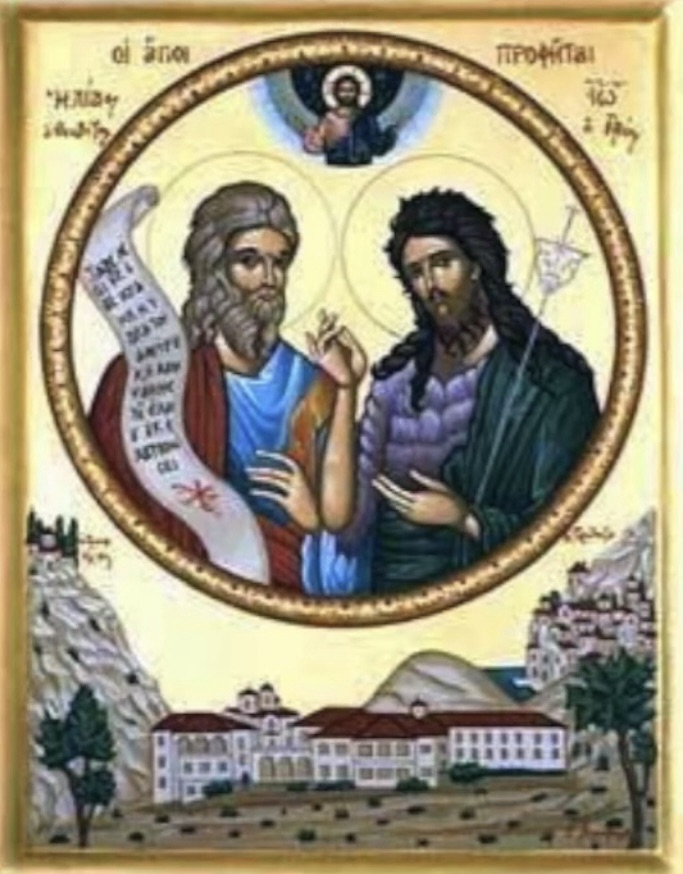
An icon of the Prophet Elijah and Saint John the Baptist from the Monastery of the Prophet Elias (Elijah) in Preveza, Greece

Then, in his sermon in Nazareth (Luke 4:16–30), Jesus refers to the first reported miracle of Elijah, when he provided a widow in Zarephath with food and oil that “did not fail”, even though the land was in drought (1 Ki 17:1–16). In subsequent incidents in 1 Kings, Elijah raises a dead son (17:17–24), directly confronts King Ahab with his sins (18:1–18), and famously stares down the prophets of Baal in a mountaintop showdown (18:19–40), leading to the breaking of the drought (18:41–46).

Elijah later condemns Ahab over his unjust seizure of the vineyard of Naboth (21:17–29) and then stands before Ahab’s son, King Ahaziah, to condemn him to death (2 Ki 1:2–16); a death “according to the words of of the Lord that Elijah had spoken” which is promptly reported (2 Ki 1:17). 

During the rule of Ahab, Elijah had also most famously heard the Lord God “not in the wind … not in the earthquake … not in the fire”—but rather in something else, which the NRSV renders as “the sound of sheer silence” (1 Ki 19:11–12). This incident is, as noted, the story set before us by the lectionary this coming Sunday. We need to ponder what is being conveyed through the symbols employed in this story. 

The three means by which God is said not to have appeared to Elijah reflect the very same means through which Moses, and the people of Israel, did experience the manifestation of the Lord God in their midst. When the escaping Israelites arrived at the Sea of Reeds, according to one version of this archetypal story, “the Lord God drove the sea back by a strong east wind all night, and turned the sea into dry land; and the waters were divided” (Exod 14:21). 

The people later celebrated the defeat of the Egyptians who were pursuing them: “you blew with your wind, the sea covered them; they sank like lead in the mighty waters” (Exod 15:10). The wind was a sign of God’s presence, and an agent of divine protection—indeed, it was the very same “wind from God” which “swept over the face of the waters” at the beginning of creation (Gen 1:2). But for Elijah, the Lord God was “not in the wind”.

Then, as they had travelled through the wilderness, the people were accompanied by a blazing fire, another sign of divine presence: “the Lord God went in front of them in a pillar of cloud by day, to lead them along the way, and in a pillar of fire by night, to give them light, so that they might travel by day and by night” (Exod 13:21). The fire signalled the divine presence.

Indeed, the very same flaming fire had been manifested to Moses when he was but a mere shepherd in Midian; “the angel of the Lord appeared to him in a flame of fire out of a bush; he looked, and the bush was blazing, yet it was not consumed” (Exod 3:2). What follows is the account of the call of Moses; God tells him “I will send you to Pharaoh to bring my people, the Israelites, out of Egypt” (Exod 3:10). The fire had been the assurance to Moses that it was the Lord God who was present.  But for Elijah, the Lord God was “not in the fire”.

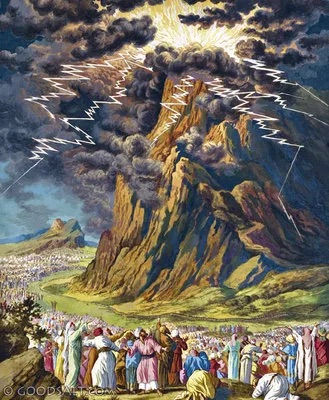
The same element of fire was present when Moses and the people ultimately arrived at Mount Sinai in the wilderness of Sinai (Exod 19:1–2). “Mount Sinai”, so the account goes, “was wrapped in smoke, because the Lord had descended upon it in fire; the smoke went up like the smoke of a kiln, while the whole mountain shook violently” (Exod 19:18). Associated with this there was “thunder and lightning, as well as a thick cloud on the mountain, and a blast of a trumpet so loud that all the people who were in the camp trembled” (Exod 19:16). 

The scene at Sinai surely reflects the experience of an earthquake; the same phenomenon that prophets would later interpret as a sign of divine presence—indeed, divine judgement. “You will be visited by the Lord of hosts”, Isaiah subsequently tells the people of his time, “with thunder and earthquake and great noise, with whirlwind and tempest, and the flame of a devouring fire” (Isa 29:6). 

Still later, Zechariah describes how “the Mount of Olives shall be split in two from east to west by a very wide valley”, and instructs the people, “you shall flee as you fled from the earthquake in the days of King Uzziah of Judah; then the Lord my God will come, and all the holy ones with him” (Zech 14:4–5).

Nahum reflects on the jealous and avenging nature of God, declaring that “his way is in whirlwind and storm, and the clouds are the dust of his feet; he rebukes the sea and makes it dry, and he dries up all the rivers; the mountains quake before him, and the hills melt; the earth heaves before him, the world and all who live in it” (Nah 1:2–5). 

This dramatic motif continues on into later apocalyptic writings (Isa 64:1; 1 Esdras   4:36; 2 Esdras 16:12). The prophets and their apocalyptic heirs  knew clearly that this whole dramatic constellation of events revolving around an earthquake was a sign of divine presence.  But for Elijah, the Lord God was “not in the earthquake”. He was heard in something quite different.

What did Elijah hear? The Hebrew phrase found in verse 12 is qol d’mamah daqqah.

The King James Version translated this as “still small voice”.  More recent translations have provided variants on how these words might be translated. Alternatives that are found include “the sound of a low whisper” (ESV), “a gentle whisper” (NIV, NLT), “a soft whisper” (CSB), or “the sound of a gentle blowing” (NASB). These reflect variations on the kind of nuance that the KJV was offering. 
However, the NRSV option of translating this phrase as “the sound of sheer silence” is more confronting: the presence of God is sensed in the absence of sound; any communication from the deity comes, not in audible sounds, but in the utter absence of any sound. It is a striking paradox!

And in the context of the developing story of 1 Kings, the paradox is strong. Earlier, the prophet had stood firm against the might of Baal, the foreign god whom Ahab and Jezebel had prioritized in the life of Israel (1 Ki 18:17–40). When “the four hundred and fifty prophets of Baal and the four hundred prophets of Asherah who eat at Jezebel’s table” gathered on Mount Carmel, they failed to obtain any response from their god, the god of storms. No matter how intensely they raised their frenzied pleas, all they heard was “no voice, no answer, no response” (18:29).

Elijah, by contrast, prays to the Lord God and the fire of his god fell on the sacrificial altar; it consumed “the burnt offering, the wood, the stones, and the dust, and even licked up the water that was in the trench” (18:38). The victory was absolute and complete; the storm god had been defeated. And yet, the deity who accomplished this would communicate most personally and intimately with his chosen prophet, “not in the wind … not in the earthquake … not in the fire”, but rather in “a sound of sheer silence” (19:11–12). What a deliciously powerful irony!

Elijah was his own, distinctive man, with his own, distinctive encounter with God. He experienced God in a way quite different from what was experienced by Moses and the people of Israel. He experienced God in a way that stood apart from his contemporaries who were priests and prophets of Baal. For that reason, whilst the Lord God of Elijah stands over and against the Baal of Ahab and Jezebel, so too Elijah stands alongside and apart from Moses as a different, but equally great, leader of the people.

The master worker beside the Lord: Wisdom at the time of creation (Sunday after Pentecost; Proverbs 8)

“When he established the heavens, I was there … when he marked out the foundations of the earth, I was beside [the Lord], like a master worker; and I was daily his delight, rejoicing before him always”. 

So Wisdom is described, in these verses in the second portion of Proverbs 8 which the lectionary offers us for this Sunday, the first Sunday after the festival of Pentecost (Prov 8:22–31). Of course, this day is identified in the liturgical calendar as Trinity Sunday, and this passage from Proverbs is one of a number of Scripture passages which, over three years, are proposed for this particular Sunday. 

The others are Genesis 1, where God, God’s word, and God’s spirit are to be found, and Isaiah 6, which includes the tripartite song “holy, holy, holy”; and Psalms 8, a song in praise of creation, and 29, singing of “the voice of the Lord”. None of them, of course, make any specific claim that can be seen to be articulating a “doctrine of the Trinity”. It is up to later Christian interpreters to “read back” into the passage any inferences regarding a triune God.

In this post I am not going to attempt any exegetical gymnastics, to find aspects of the threefold nature of God in what is said about Wisdom. In an earlier post, I have explored the importance of what is said about where Wisdom exercises her ministry (8:1–4). In this post, I turn to the the significance of the role that Wisdom plays in the creation of the world (8:22–31). These are themes that are inherent in the passage itself; as we attend to these matters, we don’t need to squeeze, distort, or manipulate the text to make it conform with a much later dogmatic theory. 

Perhaps there is a connection with the patristic Christian doctrine of the Trinity; we can see this if we trace a trajectory from the Jewish documents already noted, in the scriptural text of Proverbs, then following its development through the Intertestamental texts of the Wisdom of Solomon and Ben Sirach. These lead to some of the New Testament texts we have noted, where Jesus is described in terms drawn from these earlier scriptural passages (Col 1, Heb 1, and John 1).

In Proverbs 8, Wisdom herself is said to have declared that “ages ago I was set up, at the first, before the beginning of the earth … when [the Lord] established the heavens, I was there … when he marked out the foundations of the earth, then I was beside him, like a master worker” (Prov 8:22–31). In the Wisdom of Solomon, Wisdom is described as “the fashioner of all things” (Wisd Sol 7:22), “a breath of the power of God” who “pervades and penetrates all things”(7:24–25), who was “present when you [God] made the world” (9:9), whose “immortal spirit is in all things” (12:1). Som wisdom pre-exists all other elements of creation, and Wisdom herself participates with the deity in the creating of the world.

The importance of these Wisdom writings for what is stated about Jesus in Col 1:15–20, Heb 1:1–4, and John 1:1–18, cannot be overstated. In these New Testament passages, Jesus is identified as the one who has “first place in everything” (Col 1:18), the Word who was “in the beginning … with God” (John 1:1), the one who “sustains all things by his powerful word” (Heb 1:3). In this last book, this word is further described, in language drawn from the Wisdom traditions, as “the reflection of God’s glory and the exact imprint of God’s very being” (Heb 1:3).

In Prov 8, Wisdom herself declares that “before the mountains had been shaped, before the hills, I was brought forth—when [the Lord] had not yet made earth and fields, or the world’s first bits of soil” (Prov 8:25–26), just as the works of Wisdom can be traced “from the beginning of creation” (Wisdom Sol 6:22). Wisdom is described in Proverbs as being “set up, at the first, before the beginning of the earth” (Prov 8:30), taking part with the deity in the acts of creation. All that came into being was due to the creative contribution of Wisdom from the very start.

The poetry of this hymn builds through repetition and an ever-expanding circle of influence. So Wisdom declares that “when he established the heavens, I was there … when he drew a circle on the face of the deep, when he made firm the skies above, when he established the fountains of the deep, when he assigned to the sea its limit … when he marked out the foundations of the earth” (Prov 8:27–29). In all these acts of creation, Wisdom was beside the Lord, “daily his delight, rejoicing before him always, rejoicing in his inhabited world and delighting in the human race” (Prov 8:30–31).

This affirmation in Proverbs leads on to the subsequent claim that Wisdom “pervades and penetrates all things” (Wisd Sol 7:24) and “renews all things … [she] passes into holy souls and makes them friends of God, and prophets” (Wisd Sol 7:27). She “reaches mightily from one end of the earth to the other, and she orders all things well” (Wisd Sol 8:1). 

Likewise, Jesus son of Sirach writes in a song of Wisdom that she “came forth from the mouth of the Most High, and covered the earth like a mist” (Sir 24:3), expanding on this in a sequence of grand claims: “I dwelt in the highest heavens, and my throne was in a pillar of cloud. Alone I compassed the vault of heaven and traversed the depths of the abyss. Over waves of the sea, over all the earth, and over every people and nation I have held sway.” (Sir 24:6).

The all-encompassing work of Wisdom in this act of creation is emphasised through the places noted—the depths, the heavens, the sea, and the land. Her hymn of celebration reflects the joyous song sung by the psalmist in Psalm 95.

The depths of the earth were the place where sinful people went (Ps 63:9; Isa 14:15), following the lead of the Egyptians who pursued the Israelites and “went down into the depths like a stone” (Exod 15:4–5; Neh 9:11; Isa 63:11–13). There, in the depths, God’s anger burned (Deut 32:22). However, those banished to the depths were able to be brought back from the depths by God’s decree (Ps 68:22; 71:20; 86:13), so in one psalm we hear the cry, “out of the depths I cry to you, O Lord; Lord, hear my voice” (Ps 130:1), and the prophet Micah affirms that God “will cast all our sins into the depths of the sea” (Mic 7:19).

The heights are where the Lord God set the people once they had made their home in Israel, “atop the heights of the land … [where] he fed [them] with the produce of the land” (Deut 32:13; similarly, Isa 49:9; 58:14; Ezek 34:14). It is a place of security (2 Sam 22:34; Ps 18:33); indeed, “on the heights” is where Wisdom is to be found (Prov 8:2) and the Temple was built on the (relative) heights of Mount Zion, and so it is from “the holy height” that God looks down over the people (Ps 102:19).

Just as the depths and the heights were parts of God’s good creation, so too the sea was integral to God’s creative works: “yonder is the sea, great and wide, creeping things innumerable are there, living things both small and great” (Ps 104:25). Yet the sea was a threatening place for the people of Israel, accustomed to life on the land, planting grapevines and herding sheep in “the land of milk and honey”. The sea of reeds was the place of destruction for Egypt (Ps 114:1–8), although it was also the location of salvation for Israel, as is celebrated in David’s song of praise (2 Sam 22:1–4, repeated at Ps 18:6, 12–19). 

For sailors, however, the sea could be a place of great danger (Ps 107:23–31)—the story of Jonah attests to this (Jon 1:4–17), as does the final trip of Paul as he is taken as a prisoner to Rome (Acts 27:14–20). Yet the power of the roaring sea, as majestic as it is, pales into insignificance beside the majesty of the Lord on high (Ps 93:3–4).

Just as the sea was a place of danger, so the dry land was a place of safety—as evidenced by the way the story of crossing the sea of reeds is told (Exod 14:21; Neh 9:11; Ps 66:6) and when Jonah is vomited up onto dry land by the fish (Jon 2:10). However, when the Psalmist finds themselves in “a dry and weary land where there is no water”, a prayer is offered to God because “my soul thirsts for you; my flesh faints for you” (Ps 63:1). When linked with “the wilderness”, “the dry land” receives blessing from God, who will “make the wilderness a pool of water, and the dry land springs of water” (Isa 41:18) and “pour water on the thirsty land, and streams on the dry ground” (Isa 44:3).

So Wisdom has shared with the Lord God in the whole enterprise of bringing into being the whole creation. Her importance in this task cannot be minimised. And the wonders of the whole creation are in view in this passage from Proverbs, as Wisdom celebrates: “I was beside [the Lord], like a master worker, and I was daily his delight, rejoicing before him always, rejoicing in his inhabited world and delighting in the human race.”

See also