Bearing the mark of the divine: remembering with Families and Friends of Drug Law Reform

Every year in late October, the Families and Friends for Drug Law Reform hold a ceremony to remember loved ones who have died because of drugs. Since the ceremony was first held in 1996, it is estimated that over 20,000 people have died because of drug overdoses.
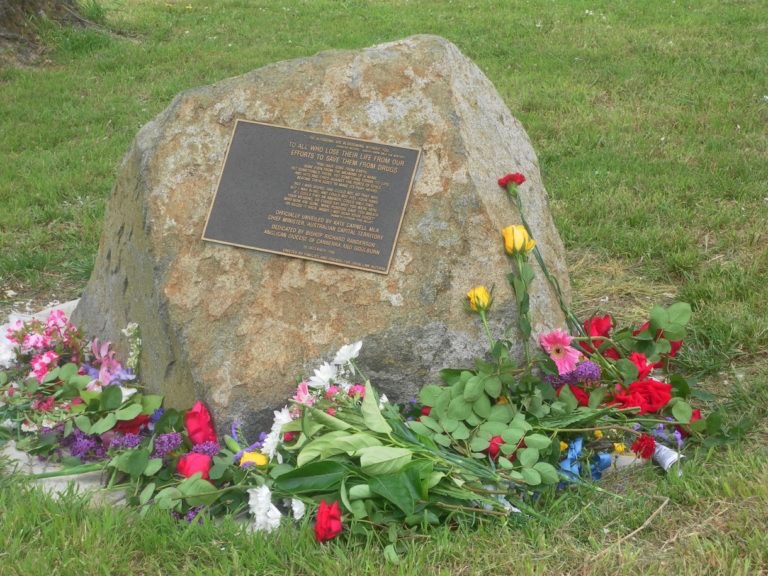
The ceremony takes place in springtime in beautiful Weston Park in Canberra. The location, beside a memorial on a stone under a locust tree (Robinia pseudoacacia), was chosen for the first ceremony in 1996, because of its particular associations for the family of one of the members of FFDLR, whose brother had died earlier that year.

The blossoming locus tree under which the memorial stone lies is a potent symbol for the event: an expression of hope in the midst of remembering and honouring those who have died.

Each spring, the locus tree is in blossom

Bill Bush, Chairperson of FFDLR, notes that “these avoidable deaths have ballooned out to at least 20,000 people since that first ceremony. Then, as now, opiate overdoses have been the main cause.”

“The make-up of those who have died”, Bill advises, “has changed from generally troubled young people trying to cope, pushing boundaries and risk-taking, as young people have always done, to include older Canberrans who, in desperate search for inadequately provided pain relief, have had recourse to illicit substances. There are those who in desperation to shed themselves from a dependency have taken their own life without the aid of any drugs.”

The ceremonies have brought out of the shadows the promise and worth of those who have died and enabled grieving families and friends to draw aside the curtain of shame and stigma with which an unfeeling society has shrouded their loved ones. You can read some of the addresses given over the years at https://www.ffdlr.org.au/remembrance/

Every year, a local politician speaks at the ceremony—this year it was Peter Cain, MLA for Ginnindera, who chairs the Select Committee considering the Decriminalisation Bill. In addition, a family member of someone who has died speaks—this year, Janine Haskins, whose 23 year old daughter, Brontë, was driven to believe that the only relief available to her was to take her own life. She bore witness to a tragic sequence of events leading to the death of Brontë.

This year, also, I was invited to preside over the roll call of names of people who are being remembered, and to speak as a representative of people of faith. Here’s the address that I gave.

*****

I thank you for the invitation to share some thoughts with you this day.

I acknowledge the Traditional owners of the land on which we are gathered, the Ngunnawal and Ngambri peoples, and I pay my respects to their elders, past and present, and to those emerging within community.

I also acknowledge those who have died and who we remember today and offer my condolences to those who loved them, particularly the newly bereaved.

(We then shared in a time of silent remembrance, as people recalled their loved one they were remembering.)

Today, as we remember, we recognise that we come to this ceremony from various walks of life, with various experiences, perspectives, and understandings. Our insights about life, our understandings of life in this realm and beyond, are varied. Some of us participate in rituals and in communities that help us to make sense of our lives, and of death, when it takes place. We recognise and value that diversity in our midst today. All are welcomed into this shared moment of remembering.

I join with you today as a representative of people of faith, for whom the loss of life of a loved one is a special moment. It stands as a moment for remembering, grieving, giving thanks for a life, mourning the loss of relationship and connection. No matter what faith tradition, each religion marks such a moment with a sensitive rite of passage, as the person deceased slips away from our reality, into another reality beyond. We gather to remember, grieve, recall with thanks, and comfort one another.

In this time of remembrance today, we mark again those moments of passage for our loved ones—those we have named, and countless others not here named—who have taken that pathway into the beyond. We bring out of the shadows the names and faces, the joys and griefs, the achievements and the unfulfilled hopes, of those who have gone from us.

I join with you as a Christian minister, from a faith community that holds firmly to the conviction that, whilst death is the end of mortal life, it marks a new beginning in our relationship with God. We do not know with clarity and assurance what form that new relationship takes; but we hold with hope to the belief that this life is not the totality of our human existence.

In this time of remembrance today, each of us, in terms of our own personal commitment of faith and hope, grieves the loss of a loved one, yet affirms our hope that their reality, now, has taken them away from the grip of whatever caught them, surrounded them, and led them to the point of death. Beyond those shadows, we hold to the belief that our loved ones live in the light.

And I join with you as a member of the Uniting Church, which has a commitment to stand in support of those who have been bereaved in this situation. In recent years, the Uniting Church has developed the Fair Treatment campaign, in which we join with over 60 partner organisations, and many concerned individuals, to affirm that our policies and our laws must not stigmatise and marginalise the most disadvantaged people in our community. This is a vitally important commitment. (See https://www.fairtreatment.org)

The man who shapes the perspective of the world that I adhere to and seek to follow in my life is the man from Nazareth who sat, befriended, listened, questioned, encouraged, challenged, enriched, expanded horizons. This man from Nazareth would not validate the harsh, uncaring, depersonalising course of action that many of your loved ones have experienced as they grappled with drug dependency, suicidal ideation, or the intensified pain that came with age and disability.

By trusting in the way of the man of Nazareth, I place my faith in the positive and hopeful dimension of humanity. That man, Jesus, affirmed what the sages of old had long declared: we human beings are made in the image of God. Our very beings “radiate the glory of God”, to use the ancient scriptural terminology.

At our own creation, the breath of God was breathed into us, infusing our being with all that God is, all that God offers. Our very beings contain within them the potential to be life-affirming, world-embracing, in hope-filled living, in loving relationships, in caring compassion. Each human being therefore needs to be accorded dignity and respect, as a person bearing the mark of the divine, with the breath of the divine inspiring and enabling our very being.

In my understanding, this high view of humanity undergirds the work of the Families and Friends for Drug Law Reform. A commitment to the value of each individual human life informs the advocacy, the research, the educational work, the relational support, and this annual remembering, of this so-important organisation. We are made in the image of God. We have within us the capacity to be our very best.

Let us continue to hope, to love, to work, to care; to advocate, to persuade, and to rejoice, in this work.

*****

*****

In 1999, the Rev. Gregor Henderson spoke at this event. He said then:

It is not right to treat drug users as criminals, as outcasts, as people who are beneath compassion and love.

It is not right that people die from drug dependency, in alleyways or parks, in living rooms or hospital casualty wards.

It is not right that people die from unintentional overdoses, from highly toxic mixtures of drugs, from shared needles.

It is not right that people die when new approaches and treatments are available but governments lack the courage to permit them.

It is not right that society has been unable to find better ways of caring for drug users and moving them towards rehabilitation.

It is not right that some, the real criminals, profit from the importation and sale of illicit drugs.

It is not right that people, especially young people, are exploited mercilessly by the Mr and Mrs Bigs of the drug trade.

It is not right that parents of young drug users have great difficulty in finding help for their sons and daughters who are using drugs and for themselves as they want desperately to help them.

It is not right that parents are forced to break the law by allowing their drug-using offspring to inject safely at home in preference to throwing them out on the streets.

Surely it is time for a much bigger dose of compassion in relation to illicit drugs.

The shame continues: SIEV X after 20 years

It was 20 years ago yesterday, on 18 October 2001, that a small, overcrowded fishing boat set sail from Sumatra, Indonesia. On board were well over 400 asylum seekers—far too many for the small boat—who had fled the terrors of life in Iraq and Afghanistan. The boat was headed for the Australian territory of Christmas Island, a few hundred kilometres away. Asylum seekers sought to reach Christmas Island so that they could then claim asylum in Australia.

This was completely in accord with the 1951 Convention relating to the Status of Refugees, which Australia accepted—and included in part within legislation adopted in the Migration Act 1958. See https://www.kaldorcentre.unsw.edu.au/publication/refugee-convention

Unfortunately the boat, which was seriously overloaded, sank the next day, 19 October 2001 (20 years ago today). This mean that 353 people drowned (146 children, 142 women and 65 men). The actual name of the boat is not known; it is known today as SIEV X. SIEV is the acronym used by the surveillance forces for a Suspected Illegal Entry Vessel Unknown. The Roman numeral X designates this as the tenth such boat so categorised by Australian authorities. The acronym dehumanises those on board the boat and generalises the tragedies of all those fleeing their homelands.

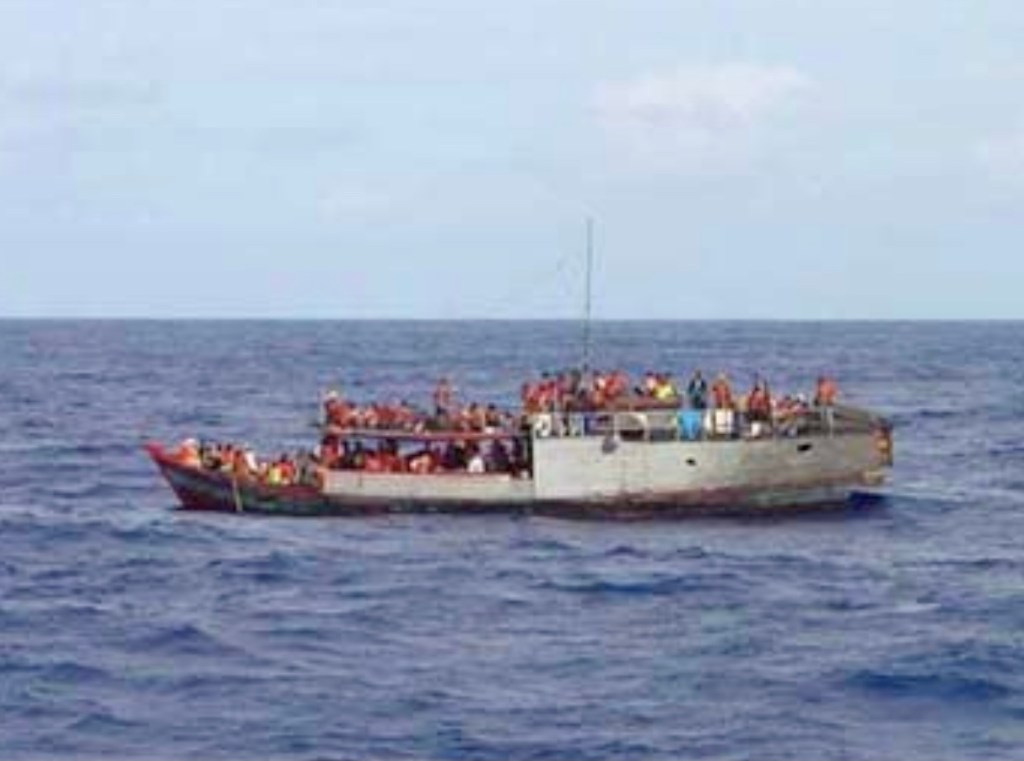
(This is not the vessel known as SIEV X. It is a photo of a boat filled with refugees, used as an example of the scenario on a SIEV X memorial page, https://www.safecom.org.au/sievx-memorial.htm)

According to survivors,more than 100 people remained alive in the water that night. Two vessels arrived and shone searchlights across the ocean, but they failed to rescue anyone. Some time later, 45 people were rescued by fishermen in the area.

The sinking and deaths occurred during an Australian federal election campaign, soon after the saga that involved the Palapa, another boat that sank, and the Tampa, the Norwegian vessel that rescued those on board the Palapa (see https://johntsquires.com/2021/08/26/20-years-on-and-the-shame-continues-the-palapa-the-tampa-and-children-overboard/) The Federal Government turned these two events into political footballs, tapping into the xenophobia and jingoism of some in the population—and won the election.

The shame that was generated by the callous and illegal actions of the Australian Government in events surrounding each of these incidents continues today, in the ever-worsening policies in our nation relating to refugees and asylum seekers. Whilst Australia has accepted around 190,000 migrants each year for the past few years (around three times the number admitted 25 years ago), there are only around 6,000 refugees admitted within that number each year. (I have taken these figures from a government publication, accessible at https://www.aph.gov.au/about_parliament/parliamentary_departments/parliamentary_library/pubs/rp/rp1617/refugeeresettlement#_Toc461022111)

In 2002, a Senate Select Committee had been established to investigate “A Certain Maritime Incident” (the “children overboard” incident in the whole Palapa—Tampa affair). The committee also investigated the SIEV-X sinking. It concluded that “… it [is] extraordinary that a major human disaster could occur in the vicinity of a theatre of intensive Australian operations and remain undetected until three days after the event, without any concern being raised within intelligence and decision making circles.” (See “Findings” under “SIEV X -Chapters 8 and 9” at https://www.aph.gov.au/Parliamentary_Business/Committees/Senate/Former_Committees/maritimeincident/report/a06)

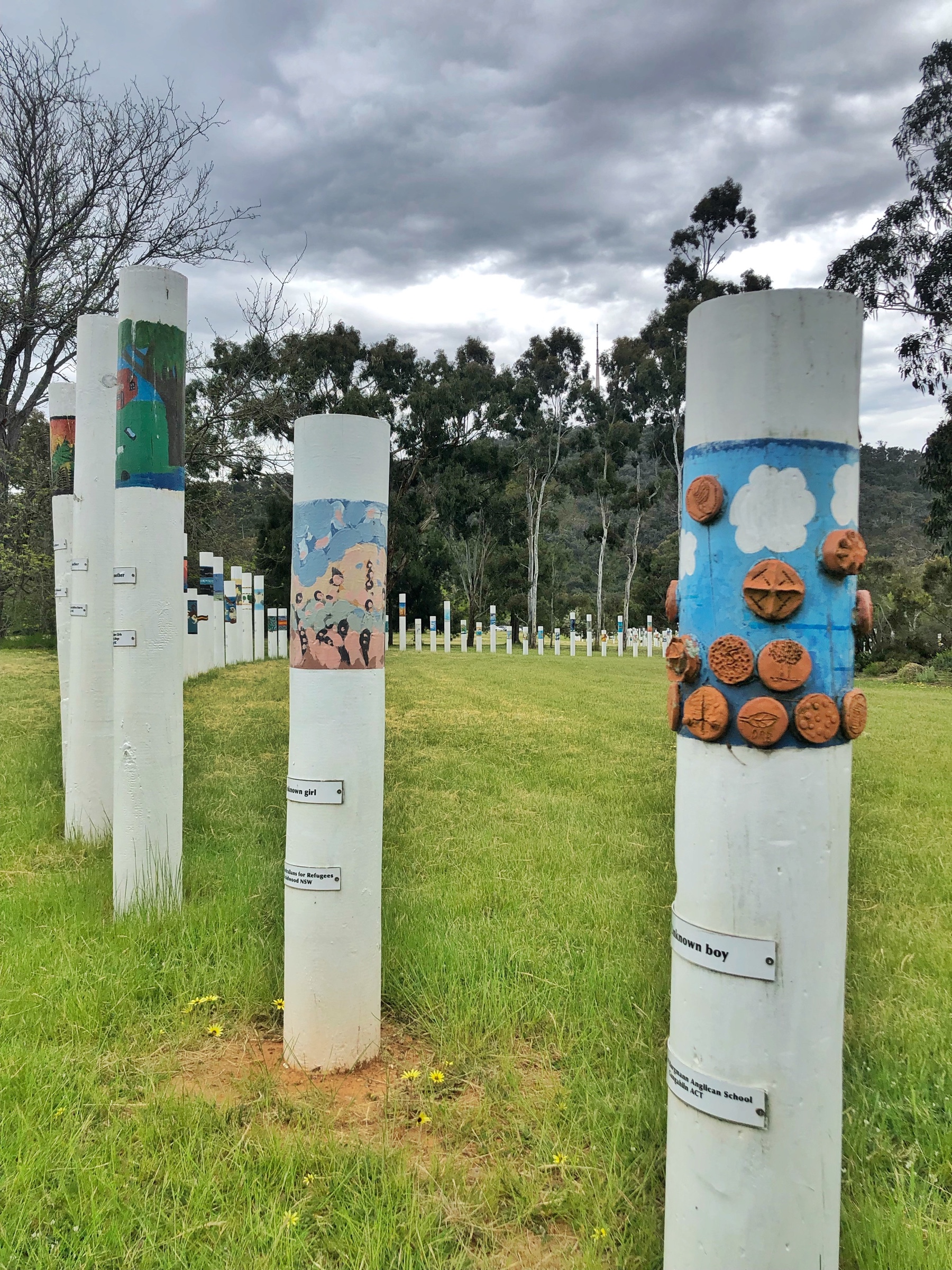
On the weekend almost five years after the sinking (15 September 2006), a memorial to the 353 people who died in that event was opened in Weston Park in Canberra, ACT. The memorial had 353 white poles, each of which had been decorated by a community group, a school group, or a church group, drawn from right around Australia. Each pole represented one of the deceased.

The Uniting Church has a strong connection with this memorial. The artwork for the 353 poles was gathered by a national competition. Pieces from this artwork competition were first displayed at Pitt St Uniting Church in Sydney, and then at Wesley Uniting Church in Melbourne, before being put on display in Canberra at the Canberra City Uniting Church. At that event in Canberra, the design for the memorial was announced—the poles were to be put into the ground in a design that represented the outline of the vessel, when viewed from above.

Overhead view of the memorial,
from https://www.sievxmemorial.com

The then Prime Minister indicated that the Federal Government was opposed to the project, but the ACT Chief Minister, John Stanhope, opened the project in 2006. Permission had not been granted to make the memorial permanent, so a crowd of people carried the poles into the places designated for them. The event received strong national coverage. Public opinion was galvanised against our inhuman national policy regarding refugees.

The next year, 2007, the memorial became permanent. It remains to this day as a reminder of the willingness of the Australian people to assist our neighbours in need; and the intransigence of our federal leadership (sadly, a bipartisan intransigence) when it comes to such matters.

The need to be a welcoming country to people who are rightly fleeing the persecution and violence being perpetrated against them in their homelands, is still an issue today, as the Christians United for Afghanistan project indicates. See https://www.unitedforafghanistan.com/#sign

The photos I have used were taken just recently (October 2021) by Willem Kok, a member of the Yarralumla Uniting Church, which is the Uniting Church Congregation that serves the area that includes Weston Park and the SIEV X memorial.

Celebrating creation: Job 38 and Psalm 104 (Pentecost 22B)

A sermon preached by the Rev. Elizabeth Raine at Tuggeranong Uniting Church on 17 October 2021

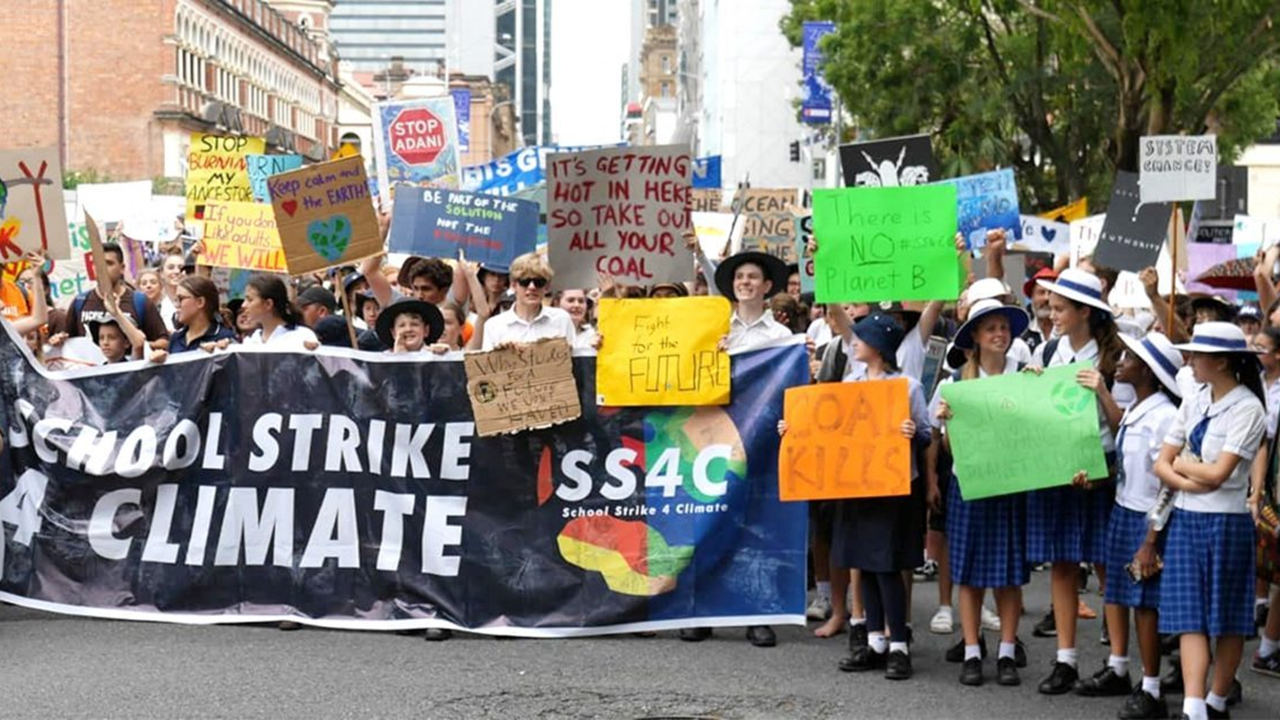
This week, there have been many school students striking around the world for something to be done about climate change. Young people are very concerned about the impacts of climate change, and the future of life on our planet.

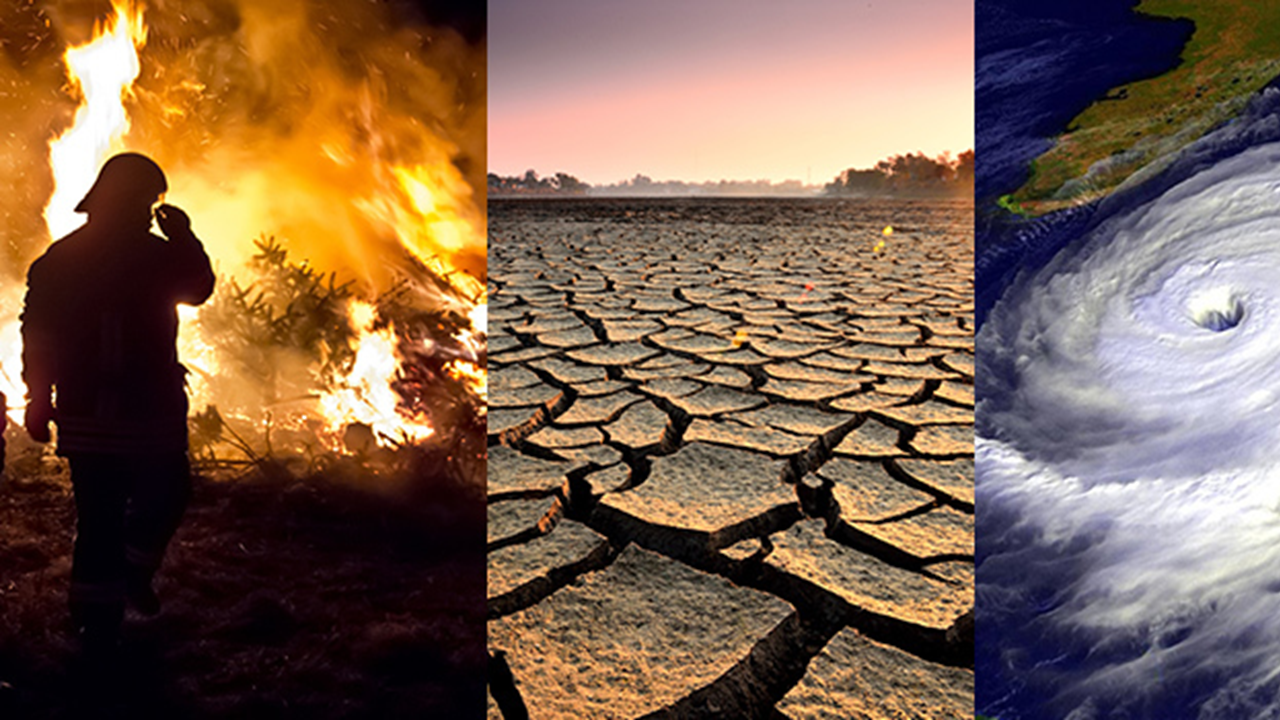
Despite the growing evidence of the consequences of climate change, such as huge fires, floods, rising seas and extreme weather events, many governments and corporations around the world continue to subsidise the fossil fuel industry, putting all of us at risk.

Young people (and many of the rest of us!) believe that if we don’t take action now and transition swiftly away from fossil fuels to 100% renewable energy, things are just going to get worse.

Climate change is the greatest challenge we have confronted as a human species. To stop emitting waste carbon dioxide completely within the next five or 10 years, we would need to radically reorient almost all human economic and social production, a task that while it looks almost impossible, really does need to happen if human and other mammalian life forms are to continue existing. It will demand an agreement and global coordination between nations on a scale never seen before.

Despite this, much of our world still pursues a decidedly unsustainable environmental course. Even worse, a disproportionate share of the consequences of climate change is borne by the very poor, those 40% of our fellow human beings who live in “poverty” (1.5 billion people) or “extreme poverty” (the 1 billion people who earn less than $2 a day).

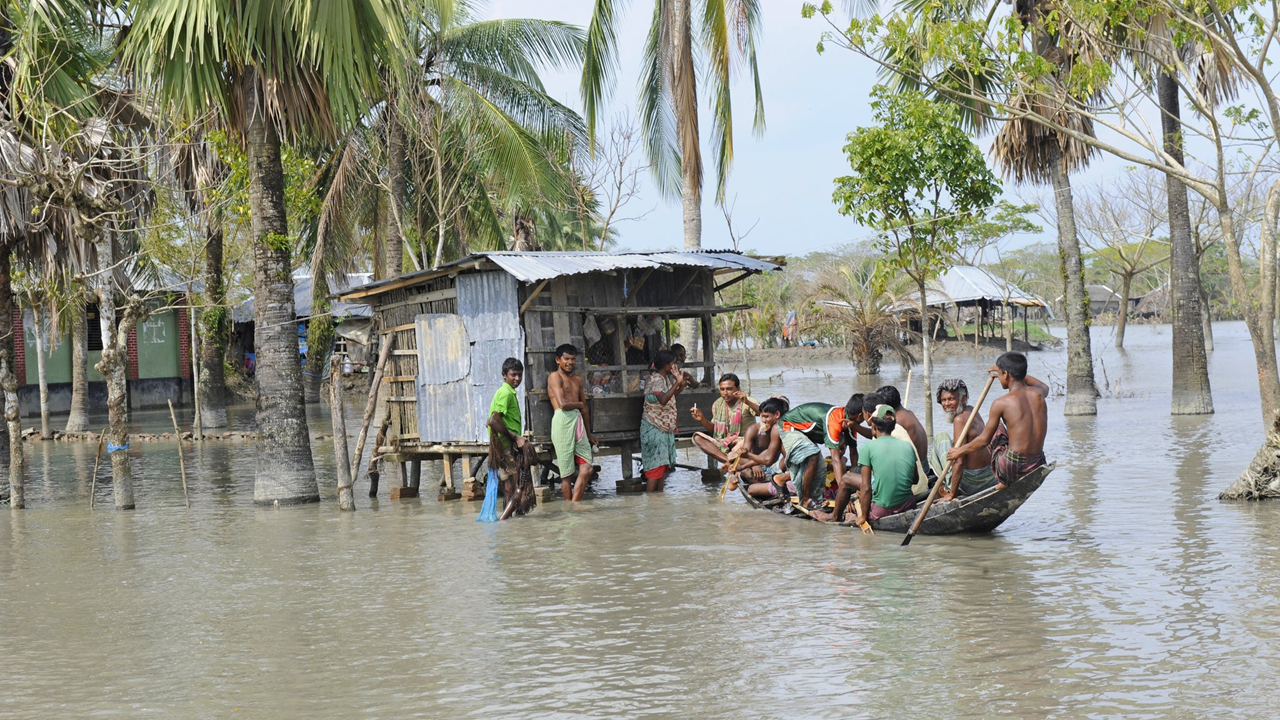
We have island nations that will be consumed by a rising sea, nations where subsidence farmers will no longer be able to grow food and climate refugees from places like Bangladesh who will see their land flooded and become uninhabitable. Without significant changes, planet earth will exact a heavy price for our choices.

But what does our scriptures have to say about this? Is there a faith imperative to act? There are many parts of the Hebrew bible that celebrate creation, and that emphasise that its gifts are God-given. In return for this gift, the human creature is meant to care for creation.

So as well as science and environmental expertise, our scriptural tradition is also informing our motives and choices. If God created the world and called it good, and then made a covenant after the flood narrative with every living creature, all life, and with the very earth itself, then surely we should be reaffirming our commitment to creation as its caring stewards.

Starting right at the beginning of our scripture with the creation narrative, we might note in Genesis that God states that God’s creation is “very good.” If the human creature is created in the image of God, and not only looking like God but having something of the character of God, then surely our purpose would not be to destroy the creation that God declared as ‘good’ but to keep it that way.

Two of the passages on the lectionary today take a different, but very important direction. Both Psalm 104 and Job put forward the notion that the human creature is but one among many creatures, and all are seen as equally important within the framework that is creation.

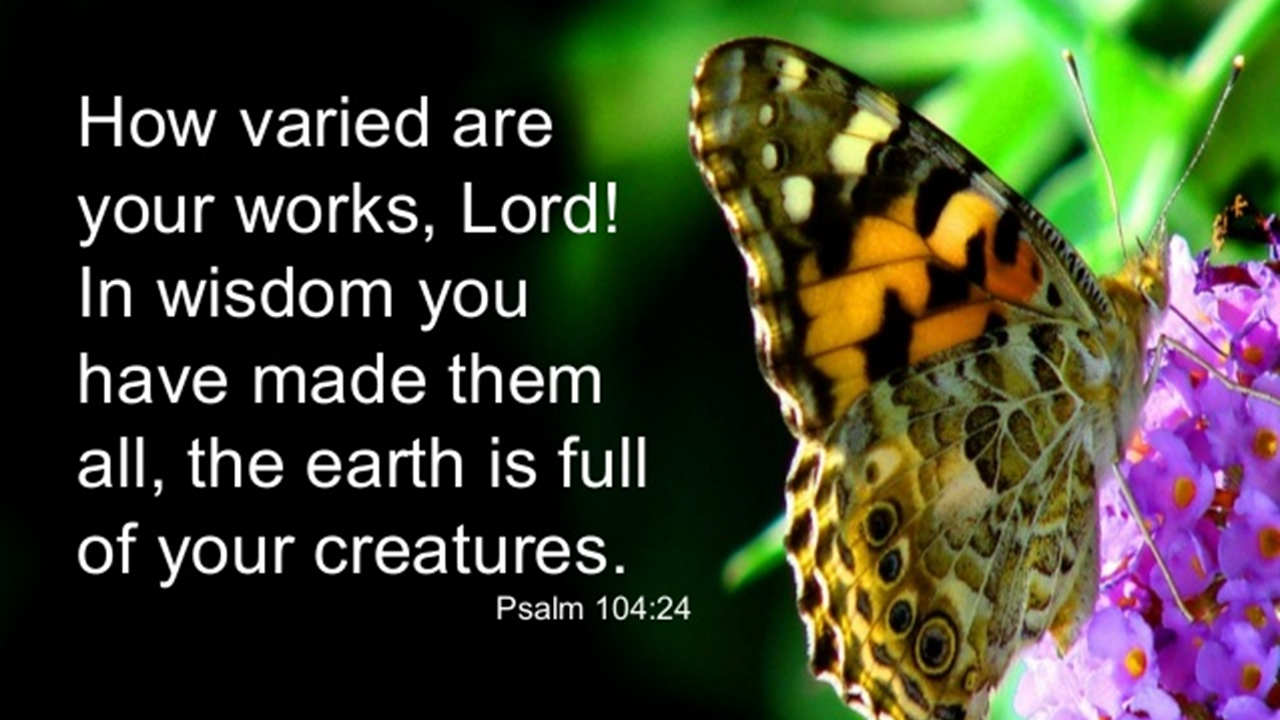
Psalm 104 makes it very clear that all creation is not only dependent on God, but there are many parts of it dependent on each other. God holds it all in balance, and each of the component parts interact with each other in necessary ways. Some would say it is a poetic way of describing an ecosystem. The creation is represented as a living, breathing entity, where all creatures are nephesh and filled with the breath or spirit of God. All have their place, none is more important than the other.

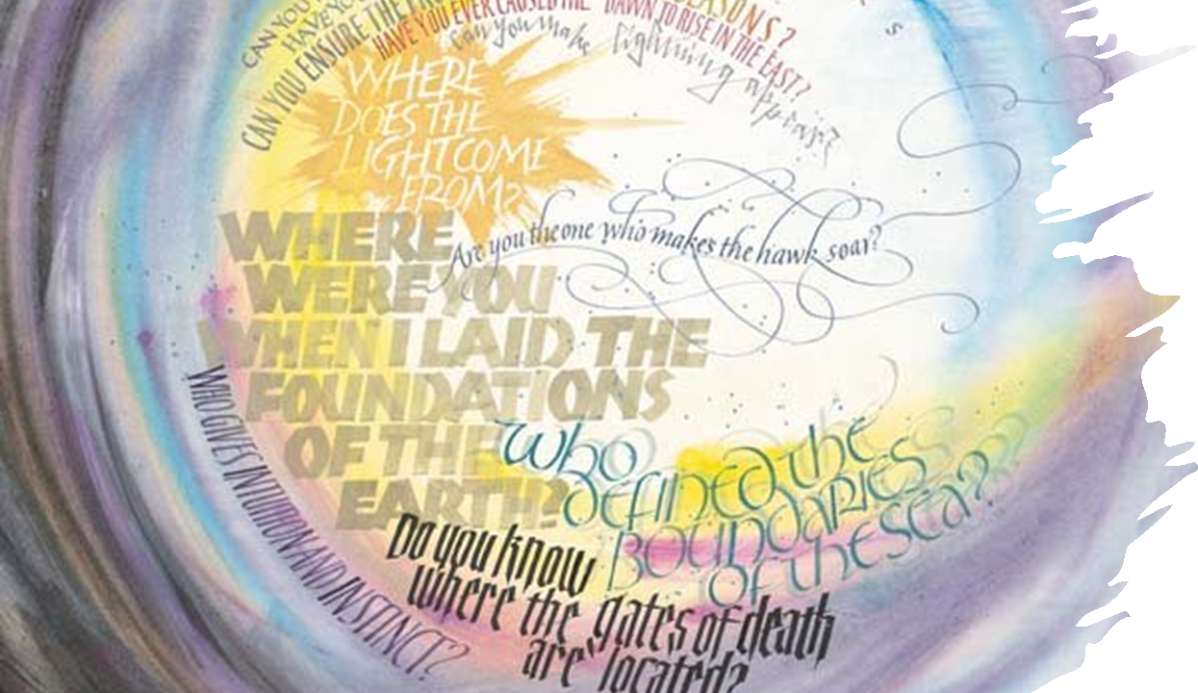
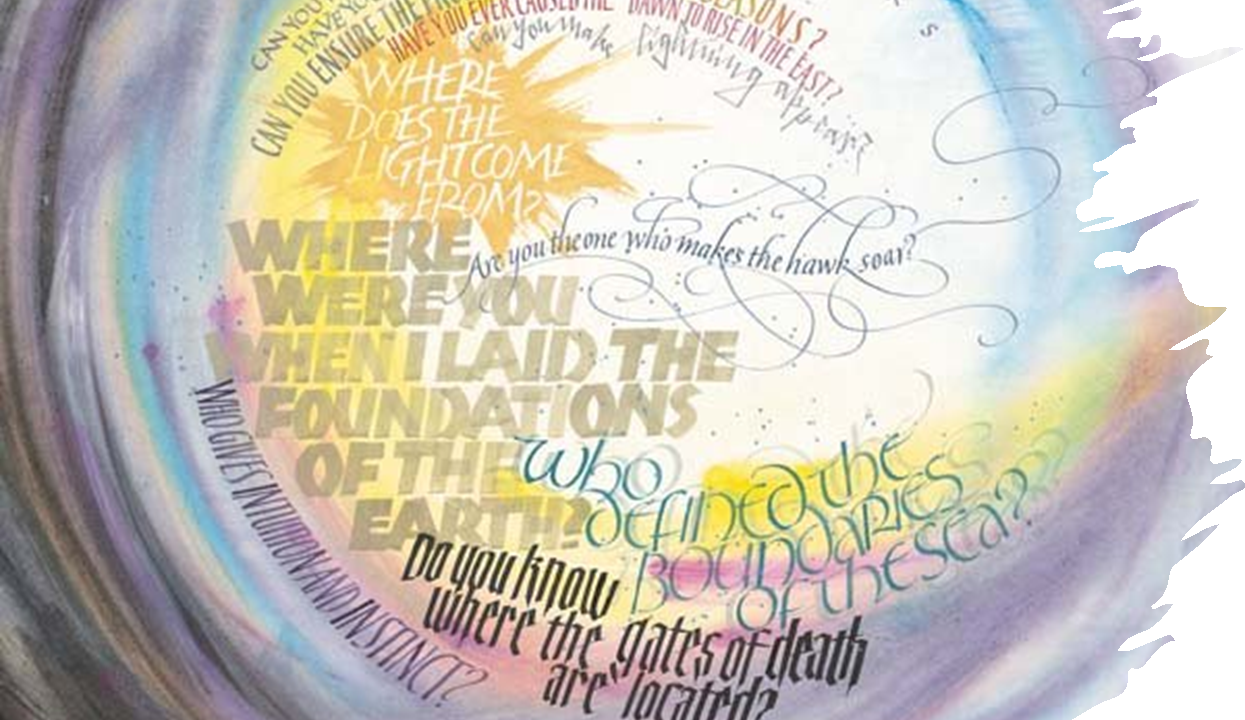
Our next reading from the book of Job describes creation as a delicately balanced system that God takes care of, including animals and isolated geographical areas, not just the human part of it. God provides food and shelter for wild animals that have nothing to do with humanity as such, and God causes it to rain in wild and desolate areas where humans are not.

This particular verse is very striking, as unlike Genesis, God is emphasising to Job that mortals like him are no more important in the creation than anything else. Everything is equal and all contribute to the goodness of the created. The book of Job has defined and marked the extent of things like rain, wind, snow and sunshine.

God in Job makes it clear that the creation of the earth and heavens runs on specific laws that allow the whole system to function for the benefit of everything. Therefore, the book of Job raises the question about whether it is advisable for humanity to irrevocably alter the creation as God has set it out. What will be the consequences if we do so?

Video: The Sixth Mass Extinction http://www.youtube.com/watch?v=p0aHPeqg2zI

So here we have two readings where humans are not the centre of God’s story and all creatures are — literally – created as our equals. The relationship appears to be non-exploitative, with all creatures secure in the place or habitat God has created for them.

Far from maintaining the delicate ecosystem balance set out by God that these writings imply, the earth’s capacity to sustain life is threatened by an ever-expanding human population and growing material demands. We are depleting earth’s nonrenewable resources and exceeding the environment’s capacity to absorb the pollutants we discard. This is particularly true of C02, the main gas driving climate change.

If nothing else, simple self-interest should remind us that all life remains fundamentally dependent upon being an integral part of a functioning ecosystem. Our fate is bound up with the fate of the planet.

Unless some miracle happens, the next 20 years are going to see increasingly chaotic global climate patterns, unpredictable biological adaptation and human responses that includes scapegoating and war over scarce resources. By the middle and later decades of this century — my grandchildren’s adult lives — this could look like a Mad Max story that should be filling us all with horror.

Our children and grandchildren will confront a range of outcomes that will be determined by the choices we make now. Whose voices will be heard the loudest? The fossil fuel industry and those whom it enriches? Or the voice of those who research the scientific evidence and those who are watching their homelands sink beneath the waves?

The worst outcomes of our consumptive lifestyles could be avoided if we did something concrete now. Are we willing to not only change our own habits, but to actively lobby our government to change theirs, and develop policies which will nurture and create life, rather than destroy and de-create it? Do we care enough to stop the sixth great extinction of species on the planet that God created and called “very good”?

The Christian Church has a particular calling to re-vision a much more holistic view of how we see and use God’s world, and how we look after the life that God has created on our planet. If we see the whole world and everything in it as the house of God, as the psalmist writes in Psalm 24, we may be more likely to treat everything and everyone with dignity and respect.

We need to value the things that cannot be counted, such as the beauty of a wilderness, river or forest. Consumer choices and economic growth should not be the only measure of good stewardship and well-being. Surely God intended us to treat our neighbours, including our fellow creatures, fairly and with love, and his creation with care. If members of God’s family continue to suffer because some of us are taking too much or many of God’s wild creatures continue to experience the threat of mass extinctions, we are not growing a more holistic household of God on our planet.

We are at a critical point in history, facing some considerable challenges including the damaging effects of human-induced climate change, the depletion of cheap abundant energy and a global food shortage. These challenges are global and they are connected to each other as both cause and consequence.

They are the results of social, political and economic systems that have come to do more harm than good; systems built on values of greed, power and materialism. We have developed a global economic system that is now diminishing, rather than improving our capacity to live sustainably on our planet.

The Christian life is not judged by comfort and prosperity and reward by God – especially not financially – but by suffering with the Christ and by the giving up of those things that distract or impede us. It is a challenging message. I hope that we, as the Uniting Church, can re-imagine a world where creation is treated with respect and all peoples are seen as equal.

And I hope that by doing so, we can tackle the cause of climate change appropriately and ensure the future of our planet and its fragile ecosystems for the grandchildren and great grand children of all the peoples of the earth.

See the source image
+

See also https://johntsquires.com/2021/10/02/living-through-lifes-problems-job-1-pentecost-19b/

Hope in a broken world (Job 23; Pentecost 20B)

https://johntsquires.com/2021/10/24/coping-with-chaos-and-death-the-wisdom-of-job-pentecost-22b/

Mental Health Day, 10 October

Every year in Australia, the month of October is designated as Mental Health Month. It encompasses World Mental Health Day, which is 10 October. This year, Mental Health Foundation Australia is running an Awareness Campaign with the very relevant theme of “Mental Health: Post Pandemic Recovery Challenges and Resilience”.

The focus for this month provides an opportunity to bring mental health out in the open, to improve understanding of mental health issues, and to remove the stigma associated with mental health. The aim is to showcase mental illness as a source of strength for people.

Each year 1 in 5 Australians experience a mental health issue. Approximately half of all individuals (45%) will experience issues with mental health in their lifetime. This could be anyone we know: a loved one, a family member, a friend, a colleague, a neighbour. It could well be ourselves.

People struggling with mental health issues often find themselves isolated, lonely and left to cope on their own. This month reminds us how important it is to reach out and support those in the community who suffer in silence. Simple things, like paying attention, listening carefully, and offering support, can mean much to someone having a mental health episode.

The best guidance for attending to someone struggling in this way is not to judge, not to dismiss their concerns as trivial, and not to try to cheer them up. Deep listening, quietly empathising, compassionate support, are the best things to offer such a person.

Curiously, recent data released by the Australian Bureau of Statistics indicates that suicide rates are the lowest they’ve been since 2016. This aligns with what is being observed in many countries around the world, reversing a climbing trend prior to COVID-19. It is thought that the pandemic has fostered a deeper sense of connectedness or shared societal worry about facing the pandemic together. Alongside that, the JobKeeper payment and other economic support measures provided by governments may well have had a protective effect.

A recent ABC report indicates that younger people have been disproportionately affected by many of the pandemic’s negative consequences, with declining mental health outcomes reported by an increasing number. They are more likely to be unemployed or in insecure work, given they account for a larger proportion of the casual or gig workforce. Younger people have also had to encounter mass upheavals to their education, social connection and future employment or study prospects. This trend was already evident before the pandemic. It has increased over the past 18 months.

The Black Dog Institute, in partnership with Mission Australia, reports that one in four young people reported experiencing psychological distress in 2020, with the prevalence of this twice as high for young women than young men.

We have known for a long time that more men take their life than women each year. However, the data indicates that women engage in self-harm at a higher rate and make more suicide attempts than men. While rates of suicide overall have declined in the 2020 data, sadly the number of Aboriginal and Torres Strait Islander people dying by suicide has increased in the past year.

Within the Uniting Church, we have a long partnership with Lifeline, which provides Australians experiencing emotional distress with access to 24 hour crisis support and suicide prevention services. In fact, Lifeline started as a ministry outreach from the Methodist Church, a precursor to the Uniting Church; it began in Sydney as an initiative of the late Alan Walker, superintendent minister of the then Central Methodist Mission. Lifeline (13 11 14) is always just a phone call away. See https://www.lifeline.org.au/

On their website, Lifeline states that when you ring them, you will talk with a person who will: “Listen without judgment — Provide a safe space to discuss your needs, worries or concerns — and Work with you to explore options for support”. That’s a model that we each can seek to implement in our own interactions with people we know who may be experience a mental health episode.

Miriam Parker-Lacey, Minister in placement at St Columba’s Braddon and Canberra City, and UCA Chaplain at ANU, is a Mental Health Matters trainer, and she has provided this training to people within the Presbytery in recent times. Being aware of how we can help friends or family who are facing the challenge of mental health is an important skill for us to learn.

The challenge of COVID-19 to Social Ethics as we know them

A guest blog by the Rev. Dr Geoff Dornan, minister with the Wesley Forrest Uniting Church Congregation in Canberra, ACT.

COVID-19 has turned the world upside down. Its impact upon the way we reason ethically has been immeasurable. There were the portentous signs in the first wave of infection of 2019-2020, especially in Italy, as clinical practice was tested as never before. I recall the Italian peak body for anaesthetics and critical care issuing a divisive guideline about the allocation of intensive care resources, suggesting an upper age limit for ventilator eligibility, the implicit condoning of ventilator withdrawal if necessary, and a ‘pragmatic’ focus upon maximizing clinical outcomes.

It could be said that there was little new in this. After all, much of it had been anticipated in longstanding clinical policy about the allocation of scarce healthcare resources, in what was known as the “fair innings” argument. The point, however, was not the clinical theory per se, but rather the shock of having to actually put such theory into practice on a wide scale.

Another clinical issue, as the virus spread across the world, was the relationship between patients and healthcare providers. Hospitals cancelled elective surgery to save on PPE supplies, beds, and human resources. Access to ICU level care was restricted and strict infection prevention controls were also put into place. Many patients faced prolonged precautionary isolation without the reprieve of visits from friends or family.

As if these challenges to clinical ethical practice, were not enough, COVID has also tested public health policy. As governments implemented biosecurity powers to ensure compliance with business closures and social distancing measures, available technologies were deployed to ensure adherence to new laws and contact tracing of those who contracted COVID-19. The use of phone metadata to locate and track individuals, occurred even in liberal democracies, as the seriousness of the pandemic intensified.

Phone applications were also introduced by governments in several countries to communicate with surrounding phones through Bluetooth, so as to record those with whom a person had been in close contact. In some cases, GPS tracking was also utilized: something generally restricted to police functions.[i] The public health emergency powers enacted in liberal democracies during the COVID-19 crisis have permitted to some extent a power imbalance between governments and citizens. Moreover, and most importantly, the framing of public health as a security issue, continues to allow exceptional actions to be taken, beyond what would be normally politically acceptable.[ii]

The Church’s Conundrum: Inclusion and Safety

While COVID-19 has ‘set the cat among the pigeons’ in the ethics of clinical practice and public health policy, the impact continues, raising new issues and challenges for many institutions, not least the church. Most recently, as countries open-up, and governments set policies which distinguish between the vaccinated and unvaccinated, denominations have made their own responses. Roman Catholic and Anglican leaders of Sydney have been quite clear about their reservations in following public policy.

The Roman Catholic Archbishop of Sydney, Anthony Fisher OP, in his message of September 9th, declared, “I would insist that ‘Jesus is Lord of all, and his gospel is a gospel for all. A ‘No Entry’ sign at the door of the church is wholly inconsistent with the Gospel preached inside.’ Race, gender, ethnicity, age, education, wealth or health status (including vaccination) must not be points of division within the Christian community or barriers to communion with Christ Jesus.”

The motivation for this stance is the high view that Catholicism harbours of the Church and the centrality of the Mass as the fundamental liturgical expression of being church. Moreover, speaking broadly, as evidenced in recent statements of ‘push-back’ from the Polish Catholic Bishops’ Conference, the Catholic Church is wary of the extension of state powers as a weakening of democracy and a slide into authoritarianism. Something we have seen as not entirely without foundation.[iii]

There have also been evangelical responses, such as the “Ezekiel Declaration” recently published by three pastors from Queensland, directed to the Prime Minister Scott Morrison, which states concern for those suffering mental and emotional stress from lockdowns, and which appeals to Morrison to resist the policy of vaccination passports on the basis that such a practice “risks creating an unethical two-tiered society”.

In spirit and mood, the declaration reflects not a high view of the Church in the Catholic sense, but a libertarian ethos with a strong inclination toward a priority for individual freedoms. More disturbingly, the document raises questions of soundness as it slides into a barely concealed ‘anti-vaxxer ethos’, and mistakenly implies that vaccination will be made mandatory. The declaration appears to be primarily ideological. [iv]

For the Uniting Church in Australia, thinking our way through the current challenge of the conundrum of the ‘vaccinated-unvaccinated’ as we prepare to ‘open up’ is confronting. Rather than seeing the issue in the singular terms of inclusion, for us, there is also the issue of safety.

Robert McFarlane has succinctly explained it, “The first principle of safety for the most vulnerable implies that people who are not fully vaccinated may need to be excluded for the safety of the vulnerable. The second principle of inclusion implies that we can’t turn anyone away”.[v] https://www.insights.uca.org.au/vaccination-inclusion-and-exclusion-the-ethics-of-regathering-for-worship-in-a-part-vaccinated-world/

John Squires, in an article ‘On Vaccinations, Restrictions and Fundamentalism”[vi] https://johntsquires.com/2021/09/20/on-vaccinations-restrictions-and-fundamentalism/, notes that there is a strong defence of the priority of vaccination, and by extension mandatory vaccination, plus the need for that priority to be exercised in deciding who attends worship and who does not. Of course, within the opinion piece, the author accepts that there may be good reasons for people not being vaccinated, especially underlying health issues.

He also argues for the continuation of on-line worship to serve the unvaccinated from the safety of their homes, so that the principle of inclusion can still be maintained in unison with that of safety. He concludes, “So, at the moment, I will advocate for complete adherence to government restrictions. My faith calls me to work for the common good, to care for the vulnerable, to love my neighbours, both near and far. Minimising risk of transmission as we gather is our first duty. Ministry takes place in many ways other than sitting in an enclosed space for an hour once a week!”

Considering the Problem through the Lens of our Ethical Traditions 

Given the various Christian responses, which range from a priority for unrestrained inclusion of all comers to a physical place of worship, to a priority for safety, limiting physical presence at worship to the vaccinated alone, at least until the danger of COVID subsides, I think we need some help. My suggestion is to appeal to and examine the three major ethical traditions which have shaped and continue to shape the way we moderns think about ethics. My question is simply this: what would each have to say to us about this problem?                                                                   

There are three traditions that I shall briefly examine: the Ethics of Duty, the Ethics of Consequence, and the Ethics of Virtue.

Ethics of Duty

The ethics of duty are not concerned with the consequences or results of actions, but rather their inherent rightness. The point is do the right thing, do it because it is the right thing to do, irrespective of the results; after all results or consequences cannot be entirely foreseen or controlled. The father of the ethics of duty was Immanuel Kant, whose august figure you can see below.

Within the ethics of duty there are what are called categorical imperatives, one of which you would already know: “act so as to treat people never only as a means, but always as an end”. There is another categorical imperative which you may not know. In it, Kant points out that you should not do something if it cannot be done by everybody. Put another way, “you ought not act according to any principle that cannot be universalized”.

A simple example has to do with cheating. What a cheat wants is not that everyone else should do what they do, but that an exception should be made in their case.

Turning to the issue of the vaccinated and unvaccinated, of course people have a right to remain unvaccinated as a question of individual conscience, but it does not end there. The question must be, what if everyone were to do the same, to remain unvaccinated? Clearly the results would be catastrophic, with immeasurably more sickness, substantially more deaths, the collapse of medical systems and glaring economic damage. Moreover, communities and organizations have the duty to protect people from such a scenario. Short of mandating vaccination, the ethics of duty would tell us that it is both reasonable and necessary that a community differentiate between the vaccinated and those who choose in conscience to remain unvaccinated; and this for reasons of the community’s wellbeing and safety. That said, such measures should always be taken treating people, all people – to quote Kant – as ends not just means.

Ethics of Consequence

The ethics of consequence think about ethical issues, as the name suggests, from the perspective of what results from an action. Utilitarianism, a school established and shaped by Jeremy Bentham and John Stuart Mill, the latter caricatured below, embrace this idea.  Central to its understanding is that good ethical policy should seek to maximize the good or utility in a society.

Bentham and Mill explained that good as “happiness”. In other words, the broader and greater the happiness, the better. This ethics that focuses upon results, correlates closely to the way Christianity thinks about ethical issues: for example, the Golden Rule – “do to others what you want them to do to you” (Matt 7:12, Luke 6:31).

As an ethics for maximizing happiness, the ethics of consequence is particularly important for thought and decision making about public welfare and social reform: pensions, benefits, health, education; fundamental dimensions of what we refer to as the common good. This idea of maximizing happiness through welfare, was significant in the post-World War II reconstruction of many societies, including the establishment of the welfare state.

In broad terms, the ethics of consequence which focus upon the welfare of a community, would support the comprehensive vaccination of a society as a means of protection for its members. On the other hand, it does not do especially well when considering the rights of minorities, simply because they are minorities. Because it focuses upon the bigger picture of collective gain, particular heed needs to be paid to what it is prone to ignore: as J.S. Mill put it, “the rights of freedom of expression”.

This deficit serves as a warning in our current circumstances, to understand that ethical policy and practice – to be ethical – requires a committed balancing of majority rights with those of a dissenting minority. In this sense, any church practice that brusquely favours safety over inclusion, meaning the ‘exclusion’ of the unvaccinated, needs to be rebalanced.                                        

Ethics of Virtue

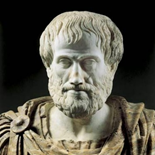
Virtue ethics is quite different to the ethics of duty or consequence in that they focus upon the individual character with the question, “what and who ought I be?” Going back to even before Aristotle – the gentleman we see below – virtue ethics dominated ethical thought for centuries. Thomas Aquinas was particularly important in developing a Christian ethics of virtue, in the light of his theology built upon the shoulders of Aristotelian thought.

In recent times there has been a return to virtue ethics as a way of completing the more modern approaches of rules-based ethics of duty and situational ethics of consequence. In a sense virtue ethics offers depth in that ethics are understood as a way of life.

Virtue ethics address two very human issues: the first, the emotions and the second, wisdom. In developing the virtues, the emotions are trained to serve the virtues, not undermine them. Likewise, in developing the virtues, practical wisdom (phronēsis) is cultivated, meaning that it is not sufficient to only do what a just person does, but to do it in a way that a just person does it. In other words, the emphasis lies with the how as much as the what.

Moreover, the content of the virtues changes depending upon the purpose (telos) that a person lives for. For the Christian, the primary virtues have been considered to be charity, patience and humility as pathways to living out the kingdom of God. For Aquinas, charity reigned supreme: “Charity is the form of all virtues”.

Finally, conscience constitutes a significant aspect of virtue and the moral knowledge entailed in living virtuously. That said, the virtue tradition insists that conscience can never be lazy, for we are bound to subject our conscientiously held views to rigorous analysis.

As we consider the question of how to proceed with the challenge of giving expression to the values of inclusion and safety in our services and liturgies, the ethics of virtue would counsel us to do so aware of the priority of charity and the need for an informed conscience.

Conclusions

What is it that these ethical traditions offer to us as we find ourselves on the horns of a dilemma, caught between two noble and necessary practices: inclusivity and safety?  All suggest, either explicitly or implicitly, that a good decision will likely need to include a balance of each.

Unconstrained inclusivity alone, will open congregations to the possibility of infection. Safety alone, will open congregations to excluding those for whom they love and care. After all what good is safety if it cuts us off from each other?  

Additionally, for those who refuse vaccination in conscience, the challenge is to ensure that their conscience is well informed, not determined by ideological bias or irrational partisanship.

Of course, there are multiple ways to balance these requirements. Each congregation, presbytery and synod will need to do just that, accessing and utilizing the knowledge of their specific contexts and the technologies to which they have access, keeping in mind that how we do things is every bit as critical as what we do.

Rev. Dr. Geoff Dornan, October 3rd, 2021

Geoff Dornan is minister in the Wesley Forrest Congregation in Canberra, ACT. He holds a PhD in Philosophy, Theology & Ethics from Boston University, USA.


[i] In March 2020, the government of Singapore, launched a smartphone application to assist in monitoring COVID-19 by enabling public health authorities to investigate infections and limit further transmission. In May 2020 the Australian government announced it would implement similar technology.

[ii] Kamradt-Scott, A., & McInnes C. (2012), The Securitization of Pandemic Influenza: Framing Security and Public Policy. Global Public Health, 7, 95-110, 106.

[iii] Jonathon Luxmoore, “Polish Archbishop criticizes anti-church Covid measures”, The Tablet, August 11th, 2021.

[iv] Timothy Grant, Matthew Littlefield, Warren McKenzie, The Ezekiel Declaration, https://caldronpool.com/ezekieldeclaration/

[v] McFarlane, R. “Vaccination, Inclusion and Exclusion: The Ethics of Regathering for Worship in a Part Vaccinated World”, Insights Magazine, September 17th, 2021.

[vi]  John T. Squires, “On Vaccinations, Restrictions and Fundamentalism”, blog at https://johntsquires.com/2021/09/20/on-vaccinations-restrictions-and-fundamentalism/

Affirming and inclusive passages from scripture

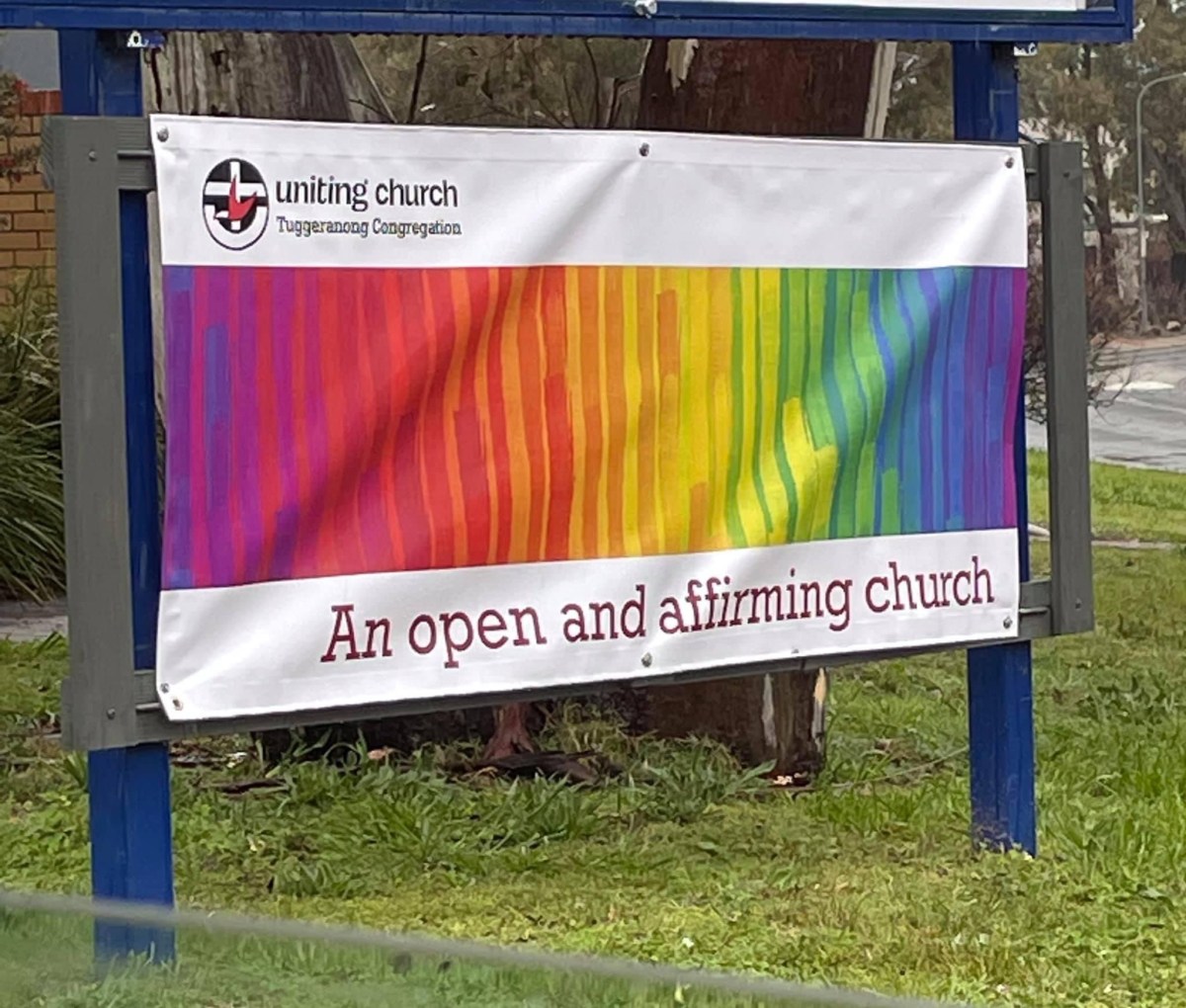
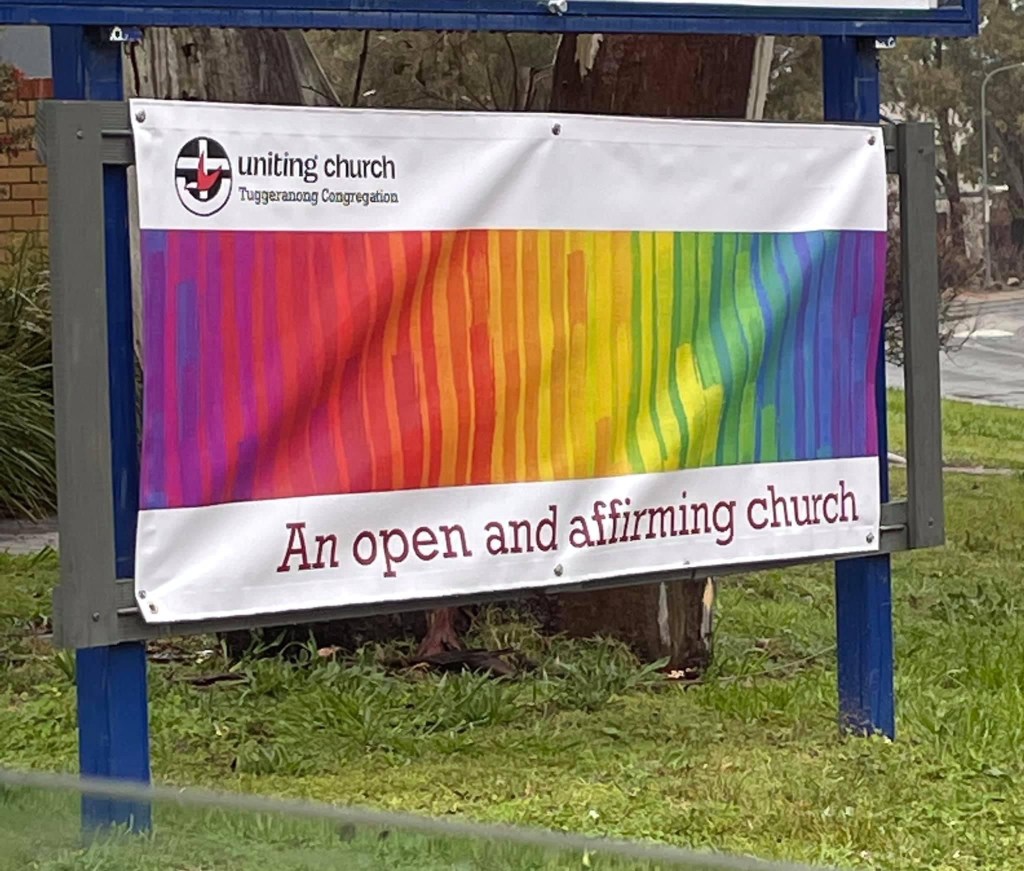
Tuggeranong Uniting Church, a Congregation within the Canberra Region Presbytery (and the Congregation where my membership is held) has a series of banners inside the building which signify and celebrate the commitments of the Congregation in ministry: acknowledging the First Peoples, committing to sustainable living through care for the environment, and ministry to rainbow people.

Outside the building, for some years now, a banner proclaiming that refugees are welcome has hung in public. This week, the Congregation has erected a larger banner declaring that they are an open and affirming church. It sits at the front entrance opposite the local regional shopping centre, where all who pass by can clearly see it.

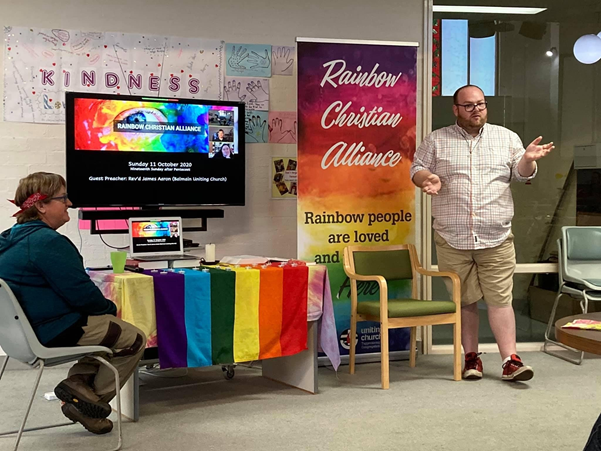
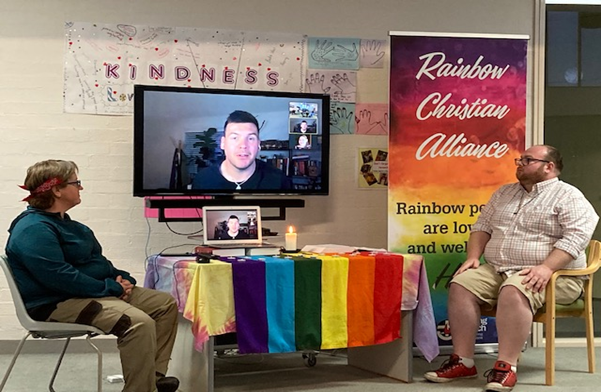
This commitment to an inclusive ministry which welcomes, values, and includes rainbow people (those who identify with one of the letters in LGBTIQA+) has been manifest in the Rainbow Christian Alliance, which was commenced six years ago by the minister and two members of the Congregation. (See https://johntsquires.com/2021/08/04/a-safe-place-for-rainbow-christians/)

That initiative in Tuggeranong, in the south of Canberra, has seeded another rainbow church in Goulburn: DARE Cage Church. It is a ministry that the Uniting Church has supported and fostered, both locally in these two faith communities, but more widely, in similar initiatives in cities and towns right across Australia. It is a ministry that is undergirded by strong and clear theological principles grounded in an informed understanding of scripture.

Scripture includes numerous passages that undergird an attitude of welcome, inclusion, and valuing of LGBTIQA+ people. None of the passage that follow address directly and unequivocally this issue; rather, they establish important and foundational claims about God and humanity, that enables us then to extrapolate and apply those claims to the situation of LGBTIQA+ people.

1) Genesis 1:26: “Let us create humankind in our image.”

In the Bible’s creation story, God makes clear that, out of all of creation, human beings are created in God’s image. That God is referred to in the plural in this passage could even suggest the idea of God containing a diversity of identities within God’s own mysterious and infinite self.

The assurance that all human beings are created in God’s image reminds us from the get-go that everyone is a sacred creation, and that God’s image is broader than our own experience and understanding. Someone may look — or love — differently than you do, and still, simply by being a human, reflect the image of God.

2) Acts 10:15: “What God has made clean, you must not call profane.”

In Acts 10, Peter has a dream in which he is commanded by God to consume food that is deemed “unclean” according to Jewish law. When Peter protests, God reminds him that God’s declaration of what is clean is above — and may even contradict — any command of the law.

This dream serves as a crucial instructive for Peter later in the passage, when he encounters Gentiles, which Jewish law would normally reject. This passage reminds us that God’s promise and beloved community are not defined by our own rules or boundaries, or even our own understanding of God’s law.

3) Mark 2:22: “And no one puts new wine into old wineskins; otherwise, the wine will burst the skins, and the wine is lost, and so are the skins; but one puts new wine into fresh wineskins.”

This passage recalls a time when Jesus is questioned as to why his disciples don’t rigidly obey the laws of their faith tradition. Jesus’ reply is very illuminating: “No one sews a piece of unshrunk cloth on an old cloak; otherwise, the patch pulls away from it, the new from the old, and a worse tear is made.”

Jesus reminds us that religion, tradition and belief are evolving concepts, and may require us to re-evaluate and reconsider our traditions and push at the boundaries.

4) Acts 8:26-40: “What is to prevent me from being baptized?”

This passage recounts Philip’s encounter with an Ethiopian eunuch, and is probably the most-cited biblical story by those seeking to affirm queer identity within Christian faith. Eunuchs in biblical times were othered and ostracized because of their failure to adhere to sexual norms.

Common cultural understanding of the time would have held that their status as eunuchs barred them from inclusion in God’s community. And yet, this eunuch seeks to follow the path of Christ even as he continues to live out his sexual otherness. And he is welcomed and joyfully baptized into Christ’s community. The eunuch’s question to Philip — “What is to prevent me from being baptized?” — underscores that his sexual status is not a barrier to inclusion in the eyes of God.

5) Isaiah 56:3-5: “For thus says the Lord: To the eunuchs who keep my sabbaths, who choose the things that please me and hold fast my covenant, I will give, in my house and within my walls, a monument and a name better than sons and daughters; I will give them an everlasting name that shall not be cut off.”

This text from Isaiah establishes that God’s love for those deemed “sexually other” — re-emphasized generations later in Philip’s encounter with the Ethiopian eunuch — in fact predates Jesus’ radical message of inclusion and love. God promises everlasting recognition and inclusion for all who honour God, regardless of whether they have been deemed outsiders.

6) Isaiah 43:1: “Do not fear, for I have redeemed you; I have called you by name, you are mine.”

This message from the prophet Isaiah emphasizes God’s steadfast love and protection for God’s people. This verse in particular reminds believers that we are loved and claimed by a God who redeems us and will always be with us — not out of our own achievement or deserving but out of God’s devotion.

For many who are queer and/or transgender, this passage can serve as a reminder that we, too, are called by name and do not need to be afraid.

7) Galatians 3:23-29: “There is no longer Jew or Greek, there is no longer slave or free, there is no longer male and female; for all of you are one in Christ Jesus.”

This well-known passage from Galatians is used in many contexts to sound the Christian call of unity in the face of division and difference. In fact, most of Galatians is an instruction to early Christians to embrace Gentile Christ-followers, even though they did not share in other early believers’ Jewish history, tradition, or laws.

Paul makes clear in these verses and elsewhere that Christ’s promise is abundant and available to all people, and that those divisions and prejudices that have historically kept groups of people apart or given some power to some over others have no place in Christ’s community. The particular phrase “there is no longer male and female” offers a challenge to traditional binary understandings of gender roles.

8) Matthew 22:37-40: “Love God … love your neighbour … On these two commandments hang all the law and the prophets.”

In Matthew’s Gospel, Jesus addresses the great number of Jewish laws and prophetic teachings — including those that many consider to condemn homosexuality — by making clear that the overarching command of a faithful life is love: love of God, and love of neighbor.

This command to love underpins any and all other commands. And so, pursuit of law-abiding faithfulness that does not first root itself in love fails to understand the true purpose of the law and the true call of faith.

9) Psalm 139: “For it was you who formed my inward parts; you knit me together in my mother’s womb. I praise you, for I am fearfully and wonderfully made.”

This beautiful, famous psalm sings of God’s intimate and intentional knowledge of each person. It suggests that every crucial part of our identity was known to God, crafted by God before we were born — and that, as beings made in such love, we are created good. This psalm also suggests that there is nowhere we can go that will remove us from God’s steadfast love and presence.

10) Matthew 15:21-28: “Yes, Lord, yet even the dogs eat the crumbs that fall from their masters’ tables.”

This story details Jesus’ encounter with a Canaanite woman. Her nationality makes her an outsider, and on this basis even Jesus rejects her when she comes seeking his help for her daughter. But the Canaanite woman challenges Jesus on his refusal, and Jesus praises her faith and heals her daughter after all.

This story demonstrates that God’s love is so expansive, it can surprise and stretch even Jesus Christ himself. It encourages Christians to be mindful of our own prejudices and understand that God’s love isn’t as restrictive as our own.

11) Romans 15:7: “Welcome one another, therefore, just as Christ has welcomed you, for the glory of God.”

This is not just a nice-sounding phrase that churches like to put on their walls. Paul is telling believers to fully accept and include other Christians in community with themselves, including those who disagree strongly about what is and is not permitted.

12) 1 John 4:7-8: “Beloved, let us love one another, because love is from God; everyone who loves is born of God and knows God.”

This passage from 1 John emphasizes the centrality of love. It suggests that love is always from God, and a reflection of God. Thus any genuine love, no matter what form it takes, comes from God and glorifies God. Anyone seeking to follow God must also seek to love others. We must trust that anyone who loves is also born of God.

Based on a study by Layton E. Williams (accessed 06/03/2019)
https://sojo.net/articles/10-bible-passages-teach-christian-perspective-homosexuality

See also https://johntsquires.com/2021/08/08/clobbering-the-clobber-passages/

The ‘word of exhortation’ that exults Jesus as superior (Hebrews 1; Pentecost 20B)

This week, the lectionary takes us into the book of Hebrews—by tradition, considered to be a letter to Jewish believers. Yet this book does not show any clear formal signs of being a letter until right at the very end. There is no opening address; throughout the work, neither author nor recipients are ever identified. The “letter” contains no thanksgiving, no sharing of news at its start, as letters normally did at that time.

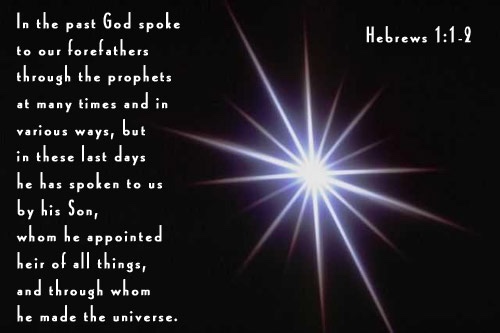
Instead, this book begins with a poetic preface, elegantly balancing a series of affirmations; first, about God (long ago God spoke … in these last days God has spoken), and then, about God’s Son (appointed heir … the reflection of God’s glory … the exact imprint of God’s very being). Each of these sections ends with a further affirmation about this Son (he is the agent of God’s creation … he sustains all things). The final section offers more about the Son (he made purification … he sat down at the right hand of the Most High … he became superior to the angels).

This poetic preface (1:1–4) provides a compact statement of the significance of Jesus. This is part of this Sunday’s lectionary passage (1:1–4, 2:5–12). It sets out the position of the author of this book quite clearly: the Son—soon to be identified with Jesus (2:9)—is superior to the angels, with a name more excellent than theirs (1:4). The motif of superiority and greater excellence permeates this work.

After this poetic opening, the work plunges into a didactic string of scripture citations (1:5–14), supporting the claim of the superiority of the Son. This is followed by the first of many direct exhortations (2:1–4), encouraging the readers to “pay greater attention to what we have heard” (2:1). The pattern of alternating teaching and exhortation continues for thirteen chapters, until the final appeal brings the work to an end with a benediction (13:20–21) and a rapid sequence of news, greetings and a final blessing (13:22–25). Finally, right at the very end, the work looks like a letter!

Like the “letter” of Jude, the “letter” to the Hebrews is actually much closer in form and function to a sermon; but it does not share the sectarian aggression of Jude. Like the “letter” of James, the “letter” to the Hebrews provides numerous exhortations and encouragements; indeed, at its end, its author identifies it simply as “a word of exhortation” (13:22).

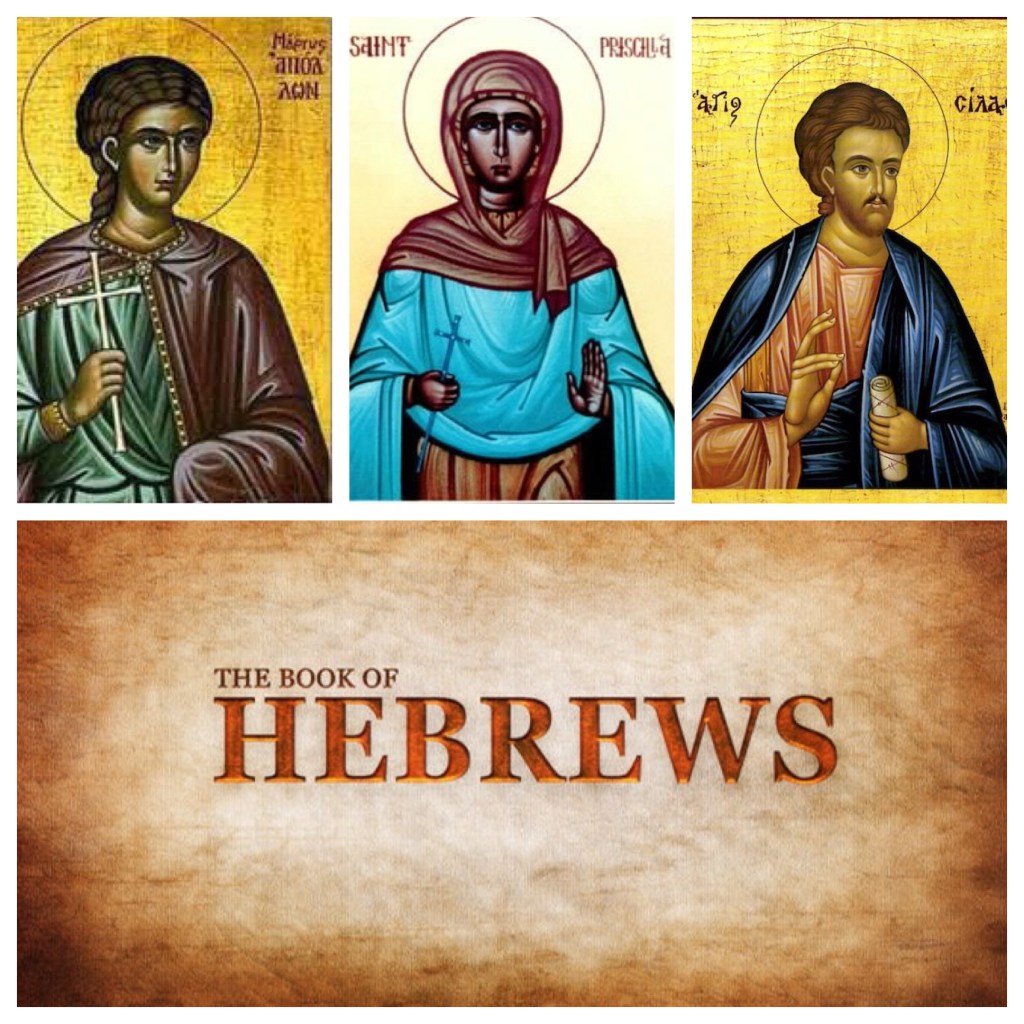
The author is most certainly not Paul, as some ancient church writers maintained. Despite claims that the work was written by various individuals mentioned in other New Testament books (Apollos? Priscilla? Silvanus?), it is not possible to be absolutely certain about the identity of the author. The single reference to a known individual, Timothy, in the closing greetings (13:23), does not guarantee that the work came from Paul, an associate of Paul, or even a Pauline circle.

Three suggestions for the author of the word of exhortation to the Hebrews: Apollos, Priscilla, and Silvanus. But none of them can be proven
to have been the author.

The use of a refined Greek style, the intense engagement with Hebrew scripture, and the use of typological interpretation (for instance, 8:1–7, 13; 10:1, 11–13) together suggest an educated Hellenistic Jew who had come to faith in Jesus as Messiah and was a powerful preacher of the Gospel.

Somebody like Apollos would be quite apposite to be named as author—he was “an eloquent man, well-versed in the scriptures … he spoke with burning enthusiasm and taught accurately the things concerning Jesus” (Acts 18:24–25). Indeed, we learn further that “he powerfully refuted the Jews in public, showing by the scriptures that the Messiah is Jesus” (Acts 18:28).

I would love for Apollos to be proven as the author of this word of exhortation. However, apart from the similarity of rhetorical style and interpretive method in Hebrews, there is nothing explicit that will allow us to pin the authorship on the powerful rhetorician, Apollos of Alexandria.

The writer of Hebrews, whoever they are, notes that the message of salvation was “declared at first through the Lord, [then] attested by those who heard him” (2:3), thus acknowledging a chain of tradition lying behind the work. This indicates that it was probably written towards the end of the first century (and thus, a few decades later than when Apollos was active). But by whom, exactly, remains speculation.

Likewise, the precise identity of the recipients cannot be known, although some things can be said about them in rather general terms. The reference to “city” (13:14) might suggest an urban context, whilst notes of the good works carried out by the recipients (10:34; 13:16) and a warning to avoid “the love of money” (13:5) might point to a group with a degree of wealth. But these are fragile links, which can’t be definitive in identifying the audience.

The author indicates that the recipients had experienced “a hard struggle with sufferings, sometimes being publicly exposed to abuse and persecution” (10:32–33)—although not to the point of sacrificing their lives (12:4). As a result of this, some may have “drifted away” (2:1) or “fallen away” (6:4–6) from their faith.

There are occasional flashes of scathing rhetoric in referring to these people: they are in danger of having an “evil, unbelieving heart” and “hardened by the deceitfulness of sin” (3:12–13), or they are “crucifying again the Son of God and are holding him up to contempt” (6:6), or they have “spurned the Son of God, profaned the blood of the covenant by which they were sanctified, and outraged the Spirit of grace” (10:29). This is powerful rhetoric.

Elsewhere, however, the author describes such people in more subdued tones, as being “dull in understanding” (5:11) and needing someone to teach them (5:12). This is the task that is undertaken in this word of exhortation.

So this anonymous work to the Hebrews, as we have noted, opens with a soaring poetic description which sets out the hermeneutical stance of the author, as well as the centrality of Jesus in the schema which is to be expounded (1:1–4). Images in these verses are drawn consistently from Hebrew Scripture.

The verses portray a continuing relationship between God and humanity, which has come to a point of fulfilment in “a Son”. What is claimed of this Son has an all-encompassing scope. A number of images are used, pointing to other sections of New Testament texts where traditional Jewish ideas are pressed into the service of proclaiming Jesus.

The imagery of word is central in 1:1–4; this image derives from the prophetic figure of Israel and from the seminal text of Gen 1, and is also prominent at John 1:1–18. Jesus is claimed to be God’s word “in these last days” who “sustains all things” (1:3). As God’s word, Jesus is the one who “created the worlds”, in the same way that Wisdom is the co-worker with God in the process of creation in Proverbs 8, the Wisdom of Solomon, and Sirach 24.

A second image depicts the Son as reflecting the divine glory, the physical manifestation of God’s presence. This image hearkens back to wilderness stories in Exodus and Numbers and receives its clearest New Testament expression at Col 1:15–20. More than this, it is claimed that the Son is “the exact imprint of God’s very being” (1:3), terminology similar to that used in Jewish wisdom literature such as the Wisdom of Solomon 7.

A third term uses cultic imagery to assert that the Son has “made purification for sins” (1:3); the need for purity is familiar from Leviticus and Deuteronomy and runs through the ethical exhortations of Paul. The cultic dimension of understanding the role of Jesus will assume huge proportions as the word of exhortation develops. The image of Jesus as the great high priest will provide the dominant framework for understanding the person and work of Jesus.

A fourth image refers to the Son as having been “appointed heir of all things” (1:2). The language of inheritance reflects a concern of the patriarchal narratives of Genesis—where expected and surprising lines of inheritance are narrated—as well as language picked up by Paul at Rom 8:12–17.

Finally, the superiority of this Son is explicitly asserted, insofar as he has inherited a name “more excellent” than the names of the angels (1:4). He now rests at the right hand of God, a location recognised as a position of power in Exodus 15 and the Psalms, as well as in sayings of Jesus. This motif of superiority—indeed, even supercession—runs throughout the book, and provides both a central element of its theology, and a disturbing dimension of its rhetoric.

This collection of imagery strongly suggests that the author of this book was located within a strongly Jewish sector of the ongoing movement of the followers of Jesus. The arguments advanced in this book reflect the growing tensions and disagreements within the Jewish arena, as the followers of Jesus clash with the teachers of Judaism. We’ll explore those arguments in posts in subsequent weeks.

See also https://johntsquires.com/2021/10/05/a-great-high-priest-who-has-passed-through-the-heavens-hebrews-4-pentecost-20b/

A priest forever, “after the order of Melchizedek” (Hebrews 5; Pentecost 21B)

https://johntsquires.com/2021/10/27/the-perfect-high-priest-who-mediates-a-better-covenant-hebrews-9-pentecost-23b/

https://johntsquires.com/2021/11/02/the-superior-high-priest-who-provides-the-better-sacrifices-hebrews-9-pentecost-24b/

https://johntsquires.com/2021/11/08/the-assurance-of-hope-in-the-word-of-exhortation-hebrews-10-pentecost-25b/

We are buying more debt, pain, and death: a case against nuclear-powered submarines

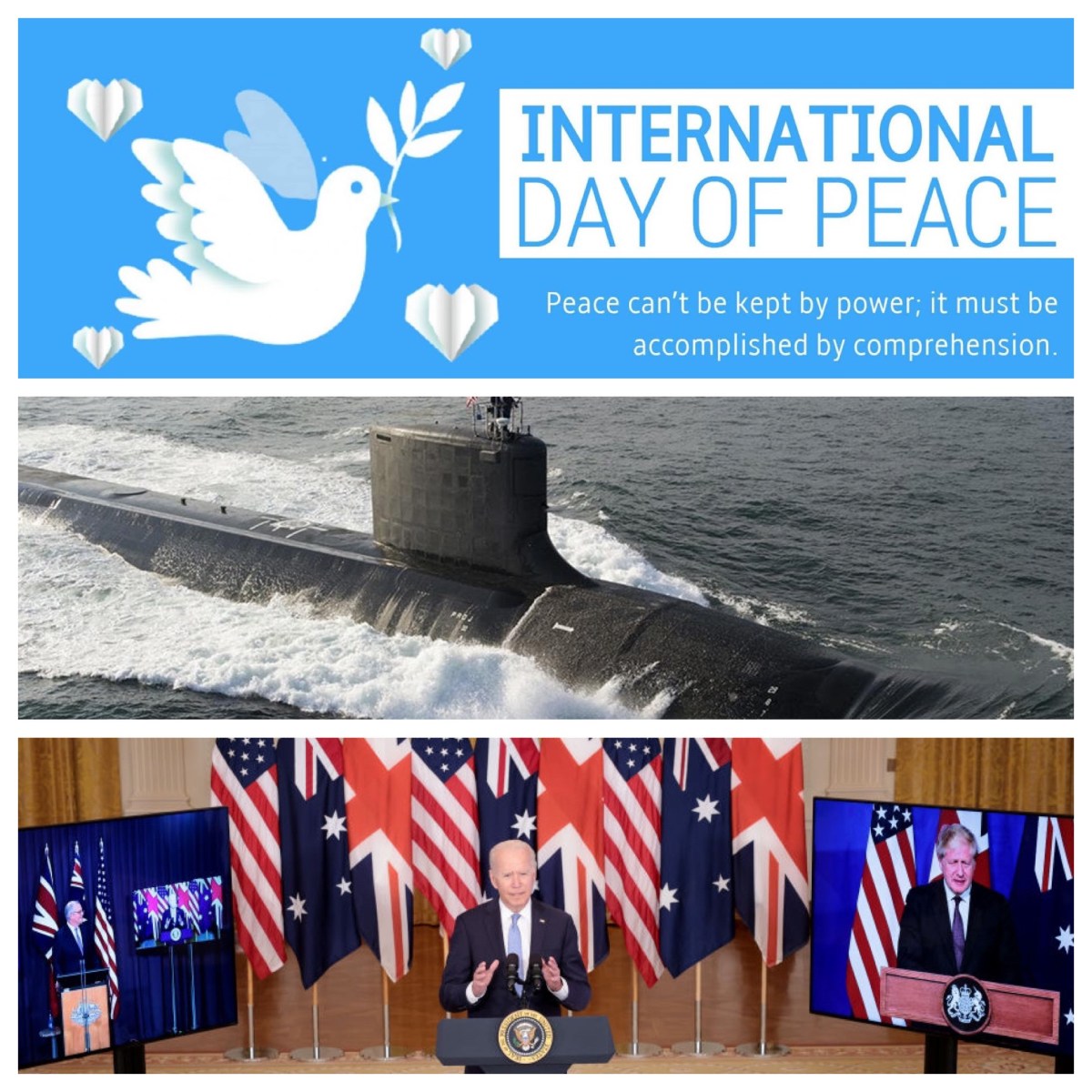
Today is the International Day of Peace. That is an appropriate time to reflect on the fact that, as a country, we have just scrapped a $90 billion contract with Naval Group of France for a new fleet of submarines—in favour of a currently proposed (a d as yet uncosted) deal with our American and UK allies to purchase nuclear-powered submarines. At least, in nothing I have read is the actual cost of this awkward AUKUS deal specified–it seems that is still to be negotiated.

It seems to me that, whatever the actual dollar cost of this new deal, it is outrageously expensive, and will prove to be incredibly costly. I believe we are buying, not only more debt, but also pain and death, for future generations. I am happy to leave the debate about the precise financial cost to the politicians, journalists, and defence pundits in the months and years ahead. What is perfectly clear to me, however, is that the cost to our country will indeed be large and invasive, penetrating deeply and impacting widely.

Allocating money in the federal budget to defence matters is a highly contested matter. By making this a high priority, other matters are pushed down the priority list. We hear regular pronouncements about the need to tighten our belts and reduce the deficit in our federal budget. But we rarely if ever hear considered reflections

about the impact of this on essential elements of our federal spending which are essential to our lifestyle—social security, Medicare and health care, education and training, and veterans’ affairs.

What will it mean for future federal budgets, to have massive and increasing commitments to defence spending, such that these other areas will need to be limited or even reduced? Allocating a large amount of the limited funds available to the Federal Government to this deal will mean less money for other areas. That will impact on the everyday lives of all Australians.

But it is not the financial costs that concern me. Nuclear-powered submarines have the simple function of contributing to efforts to defend our coastline—something that has been a high priority for the current federal government. But they also have the capacity to go on the attack (and against China, of all countries—what are we thinking?). They are agents of warfare, dedicated to be at our disposal to wage war.

At the moment, there is no country in the world with a repository to dispose of high-level nuclear waste. There is only one repository in the world capable of disposing of intermediate-level nuclear waste, in New Mexico (USA), and it was shut for three years (2014–2017) because of a chemical explosion. How are we planning to dispose responsibly of our nuclear waste?

And further: do we really want nuclear-powered weapons to be involved in any future war? The environmental impact of a nuclear blast is serious. We have seen the scale of illness and death from nuclear explosions, in the 1945 bombings of Japan, the Chernobyl explosion in 1986, and the Fukushima accident in 2011.

An incident involving a nuclear-powered element in current times would be even more potent and damaging. Most worryingly, the ABC has reported that nuclear-powered submarines “have a ‘long history’ of involvement in accidents across the globe”. See https://www.abc.net.au/news/2021-09-17/nuclear-submarines-prompt-environmental-and-conflict-concern/100470362

Alongside these concerns, we know that there are costs associated with warfare other than the finance required to train troops and provide weapons for the battle—costs that go deep into people’s lives and spread wide across society. War means injury and death, to our own troops, and to the troops of those we are fighting against. Every death means a family and a local community that is grieving. There is great emotional cost just in one death, let alone the thousands and thousands that wars incur.

Every person injured in waging war experiences suffering, anxiety, and pain, with their loved ones looking on, suffering with them, and with the medical and hospital system having to devote resources to their healing.

I have a friend who has served with pride in the Australian Navy, in the troubled region of the Persian Gulf. He and his mates have returned home after their service, and they are living “regular” lives in society, with families, jobs, friends. Yet I know from my friend just how costly his service was. Psychological trauma and emotional scarring place heavy burdens on an apparently healthy man in his “regular” life. Those burdens ripple out in unhealthy ways to those around him–both family and friends. It is another cost of war, that is multiplied time and time again by the numbers of people who have served in the military.

But these are the expected, observable costs of war. War also brings “collateral damage”, in that terrible, dehumanising phrase first used by the US military during the Vietnam conflict. It is a euphemistic way of referring to “civilian casualties of a military operation”. But the reality is much starker than what this smooth phrase conveys. Countrysides are invaded, villages and towns are looted, women are raped, civilian women and men are injured or killed, buildings are destroyed, and people can be forced to seek refuge in another place.

We see these consequences of war again and again on our screens, in so many places around the world. Whilst we might enter into a war in order to resolve an immediate problem, the reality is that it is usually a short-term “fix”. War never fully resolves a conflict or solves a problem; war inevitably generates further conflict and raises more problems. The history of Afghanistan in the last 43 years testifies to this—the 1978 Saur Revolution, the 1979 Soviet Invasion, the guerilla war of the 1980s, the rise of the Mujaheedin, civil war from 1989, the rise of the Taliban, the American Invasion of 2001 and the war which has run on for two decades through into this current year. At every point, warfare has generated yet more conflict.

As people of the Uniting Church, we are committed to being a peacemaking people, firmly working for the cause of peace in our world. We are also a church which sees the problems inherent in the use of nuclear power—and especially, the use of nuclear power in waging war.

We should be totally opposed to this latest deal signalled by the Federal Government. It is not simply a matter of purchasing new nuclear-powered submarines. We are buying more debt, pain, and death, for future generations of Australians. We should be pressing our political representatives to urge the government to back away from this deal.

In 1979, the Uniting Church Assembly received a statement advocating opposition to the mining and export of uranium; see https://assembly.uca.org.au/news/item/3137-a-world-free-of-nuclear-weapons

In 1982, the Uniting Church Assembly declared that “affirm that the Uniting Church is committed to be a peacemaking body, seeking to follow the Lord of the Church by encouraging political authorities to resolve political tensions by peaceful means”, in a statement on Militarism and Disarmament, at https://www.unitingjustice.org.au/uniting-for-peace/uca-statements/item/500-militarism-and-disarmament

In 1988, the Uniting Church Assembly adopted a comprehensive statement relating to nuclear power and the nuclear arms race. See https://www.unitingjustice.org.au/uniting-for-peace/uca-statements/item/499-nuclear-deterrence-disarmament-and-peace

The same year, the Assembly adopted the Statement to the Nation: Australian Bicentennial Year, 1988, in which it describes itself as a church which had “engaged constructively with the peoples of Asia, the Pacific and the rest of the world as peacemaker.” See https://assembly.uca.org.au/resources/introduction/item/133-statement-to-the-nation-australian-bicentennial-year-1988

In 2003, the Uniting Church Assembly declared once more that “the Church is committed to be a peacemaking body” and adopted the Statement, Uniting for Peace; see https://www.unitingjustice.org.au/uniting-for-peace/uca-statements/item/497-uniting-for-peace

The Uniting Church has supported the International Campaign to Abolish Nuclear Weapons (ICAN), a coalition of non-governmental organisations in one hundred countries, promoting adherence to and implementation of the United Nations Treaty on the Prohibition of Nuclear Weapons. Canberra Region Presbytery signed a letter of support for this campaign in 2020, on the 75th anniversary year of the Hiroshima and Nagasaki bombings. See https://www.icanw.org/australia
See also a fine blog on this topic by Chris Walker at https://revdrchriswalker.wordpress.com/2021/09/21/nuclear-submarines/

and an address for International Day of Peace by the Moderator of the UCA in NSW.ACT, Simon Hansford, at https://talbragar.net/2021/09/21/when-peace-is-not-peace/

On vaccinations, restrictions, and fundamentalism

I have never before been tempted to be a fundamentalist. As a child, I had the good fortune to attend a Sunday School and then a worshipping Congregation where fundamentalism was given a wide berth. Thinking about our faith, learning the essentials of Christianity and pondering how they related to the world we live in, was my spiritual bread and butter.

As a teenager and young adult, I was encouraged to question and explore. As a theological student, I was expected to question and explore! As a minister, I regularly and consistently encouraged people not to be content with the status quo, but always to explore and investigate for themselves. Always for the sake of deepening their faith, gaining better insight into how we are to live as faithful disciples in this world.
But recently, I have begun to wonder. Am I turning into a fundamentalist? Have I succumbed to the lure of absolute certainty? Have I lost the nuances and shading that I have so enjoyed over the decades of exploration, research, discussion, and debate?

It’s that blessed pandemic that has done this to me. Before early 2020, I would never, ever have considered myself to be a fundamentalist. But now, eighteen months down the track, I feel myself sliding into the assured convictions, the absolute dogmatic certainty, and the hardline declarations of a fundamentalist.

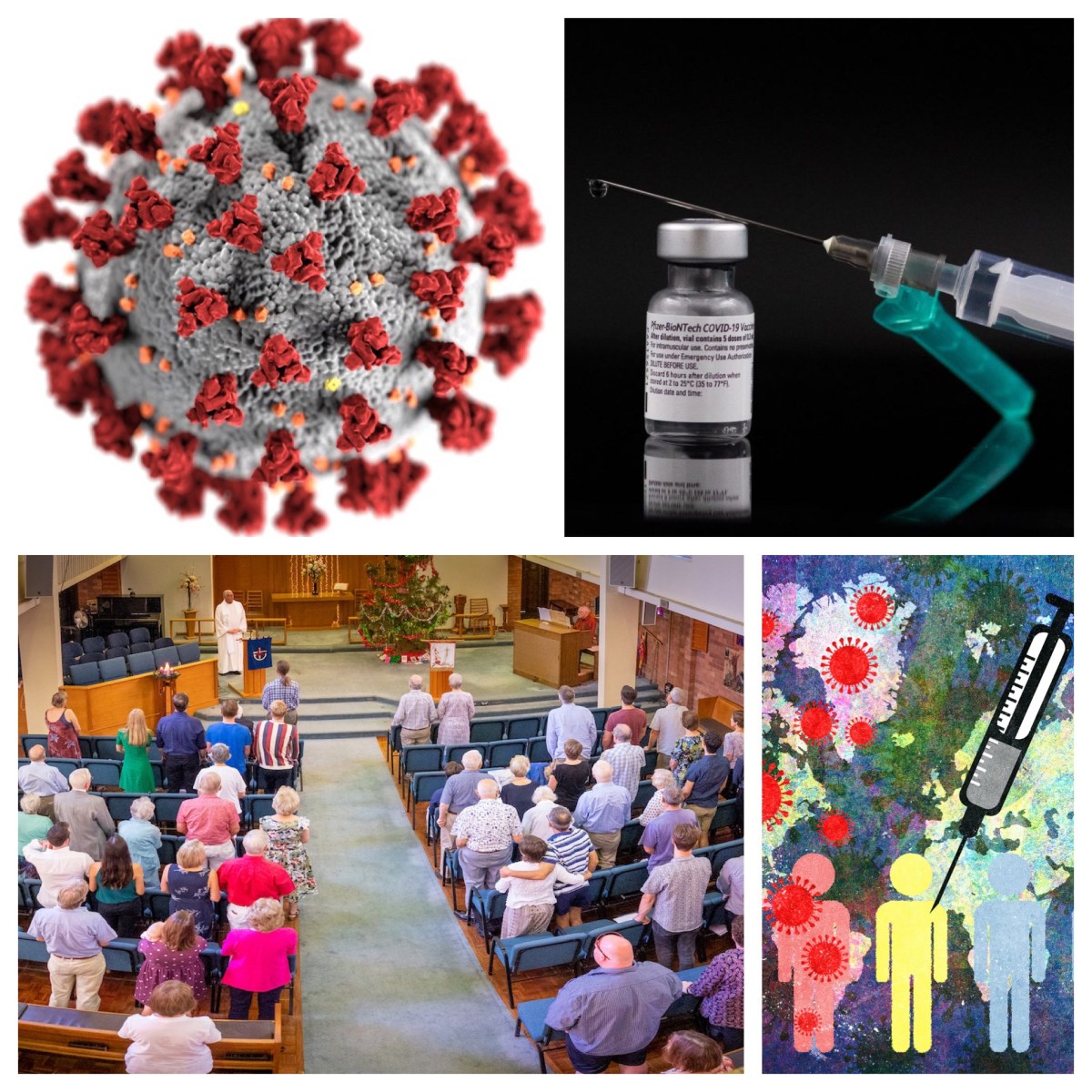
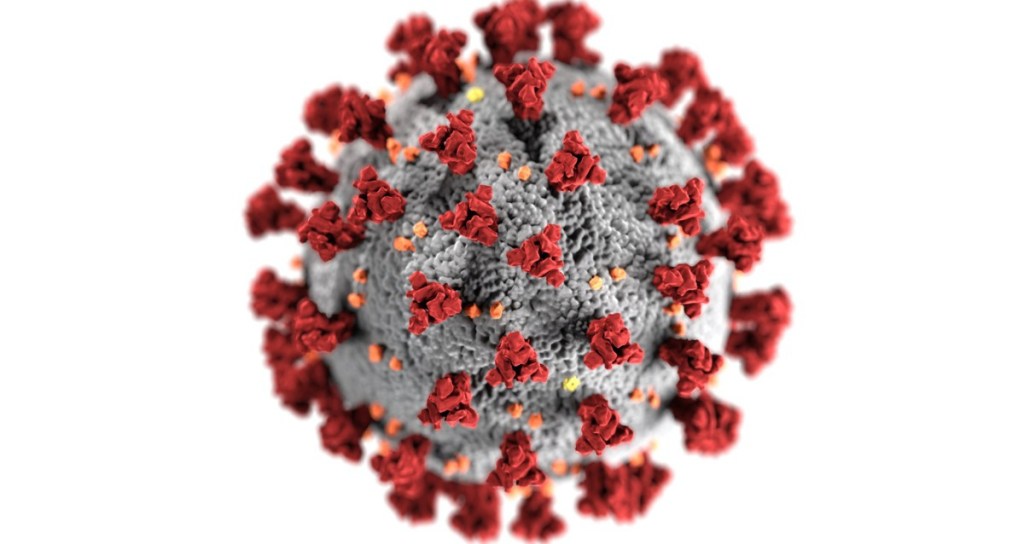
Well, it’s not the pandemic as such. It’s the way that people are responding to the pandemic—or, more particularly, to the restrictions that have been put into place because of the pandemic that SARS-CoV-2 has brought to the world. Or, to be even more specific, it’s the matter of vaccinations and the role that they play in our response to the pandemic.

Yes, it is true: I am now a vaccination fundamentalist. Now, perhaps some people might have observed that over the period of my ministry, I have been something of an inclusivist fundamentalist. I have always believed that the church should be open, welcoming, inviting, incorporating diversity, valuing people no matter what they bring into the community of faith.

But that quasi-fundamentalist viewpoint has been shaken, and rather stirred up, by some of my experiences of the past few years—and particularly in very recent times. So much so, that it now allows me to claim my real fundamentalism: on vaccinations.

I believe, first and foremost, that everybody should get vaccinated. Well—everyone who can safely and legitimately get vaccinated, should. I’ve been vaccinated. I think everyone else who can, should be vaccinated.

Of course, there are exceptions. We know that some people are being advised not to get vaccinated, because they have an impaired immune system, or for other legitimate and serious medical reasons. And, in addition, we know that there is currently no vaccination that has been developed for children under the age of 12.

And more than this, we know that there are people in regional areas and in poorer communities who have not yet been able to access a vaccination centre. There are structural flaws in the way that the vaccine has been rolled out, meaning that there are inequities—not everyone has equal ease of access to being vaccinated, just yet.

So, with those caveats, I believe that everyone who can safely get vaccinated, should get vaccinated. Vaccines have a number of benefits. Being vaccinated lessens the time that a person who becomes infected, remains infected. Being vaccinated lessens the likelihood that an infected person would be hospitalised, or even die, if their situation became serious.

A person who is vaccinated carries the viral load for less days than an unvaccinated person. A person who is vaccinated does not get as unwell as an unvaccinated person. And it may well be (this is an assumption—it has not yet been rigorously tested) that a vaccinated person does not suffer as many of the problems that Long Covid brings, compared to an unvaccinated person. Let us hope that turns out to be a valid assumption.

As well as benefits for the individual who is vaccinated, there are benefits for the community as a whole. In general, being vaccinated reduces the likelihood that an infected person will infect other people with whom they come into contact. Being vaccinated lessens the rate of spread of the virus through the community. It’s a positive contribution, not just to an individual’s health, but to the health and wellbeing of the community of which that person is a part.

A really important reason for getting vaccinated is that this course of action lessens the likelihood that a variant strain will develop and spread through the community—and beyond. High rates of vaccination will reduce the pool of people amongst whom a new variant of the virus can develop, and then spread. It is a contribution to the common good.

Now, I am not so much of a fundamentalist, that I don’t recognise that there are limits on vaccination. I accept that being vaccinated doesn’t guarantee that I won’t get infected. I still could. And if I do get infected, I can still become symptomatic and infectious and spread the virus to others. Being vaccinated doesn’t guarantee that I am completely safe from all of that; it doesn’t guarantee that I wouldn’t be a spreader in the community. It just reduces this likelihood.

So being vaccinated doesn’t mean that a community can “get back to normal” without any restrictions. There are still all the usual precautions that need to be followed, even when vaccinated. We know them because they are regularly promoted: wear a mask, practise good hygiene, wash your hands, sanitise with alcohol-based hand rubs, maintain social distancing. (And we should continue to practise some of the less-publicised means: don’t touch your face; cover your mouth or nose with your arm, not your hand, when you cough or sneeze; close the toilet lid before flushing.) A person who is vaccinated, and infected, will still be infectious to others, whether they are symptomatic or asymptomatic. They will just pose a lower risk to other people.

So getting vaccinated isn’t a magical fix. It is a sensible, reasonable way to respond to the pandemic. Which is why, I believe, it is entirely reasonable for governments to require people to be vaccinated before they enter places of business, or hotels and clubs, or other places where people are gathering. Including churches. Especially, in my mind, churches. (At least, this requirement for churches is being mooted by the NSW Government for a few weeks’ time. Not yet in the ACT, where I live.)

What we do in church—in worship services, to be specific—is high risk behaviour. Perhaps the highest risk behaviour. We come into one building from all sorts of different locations. We sit close to each other. In “normal times”, people will hug one another or shake hands quite freely as they “pass the peace”, at least in many (if not all) churches. We used to be quite unaware of how readily we were passing “bugs” to each other week after week.

And most strikingly of all, we sit and listen to people talking towards us (praying, reading, preaching), projecting their breath towards us. And, of course, we sing together, indeed, we may sing heartily and joyfully—that is, we use the force of breath from our lungs to expel air, droplets carried through the air from the force of that breath. That expelled air mingles amongst us all. We all breathe it in.

We drink coffee and eat morning tea, sometimes after we have shared a plate of bread and some wine or grapejuice earlier in the gathering. (Lots more touching went on there, back in the “normal times”.) We do lots of things that are high risk for passing the virus from one person to the next.

So it makes sense for churches to adhere to the government directive that only people who are vaccinated can be permitted to enter and participate in worship. I agree with that. I agree absolutely. To be honest, this is actually my point of absolute fundamentalism.

We can only have vaccinated people in worship services because we are committed to making church a Safe Place for everyone who participates. We already require church leaders to have undertaken a compliance check (a Working With Children Check in NSW, or Working With Vulnerable People in the ACT). We already have a requirement that a Person of Concern can only attend worship services or other church activities if they have signed a Safety Agreement. We already adhere to the government requirement that everyone attending worship will first check in using a QR Code to register their presence.

We can only have vaccinated people in worship services because we are committed to prioritising the vulnerable, making sure that their needs are given clear attention and the highest priority in the way we operate. That’s why we have had check-in codes, hand sanitisers, socially distanced seating, and no “free-for-all” morning teas at worship services, when we are meeting in person, over the past year. And, of course, when we resume services in person, we will need to continue with wearing masks, not singing, not having a collection plate, not handing out hymn books or orders of service, and we will need to follow appropriate food handling protocols.

We can only have vaccinated people in worship services because this is one of a number of restrictions we operate by, that are designed to reduce the risk of transmission of the virus, should there be an infected person present amongst the worshippers. And if unvaccinated people do attend and participate in worship, then they are placing themselves at great potential risk, as well as possibly exposing others to greater risk, if there is anyone present who is infected.

So I can’t understand those church leaders who, even before we are able to gather in person, are already claiming that they will exercise civil disobedience, that they will not turn away anyone who has not been vaccinated. My newly-found inner fundamentalist says, “No: you must turn them away”—as much as that goes against the grain in a church that prides itself at being open, welcoming, inclusive. Because it is the loving thing to do. Because it is the responsible thing to do. Because it is the Christian thing to do.

And what we have learnt over the last 18 months, is that we can actually include people in community, even when they are not able (or now, not permitted) to participate in person. The various online options for communal worship—Facebook, YouTube, ZOOM—as well as the multiple means of one-on-one communications—telephone, email, FaceTime, GoogleDuo, and even AusPost—and group communications—WhatsApp, Facebook groups, Snapchat, and many more—have demonstrated that there are multiple means for maintaining (and even, I have learnt, expanding) community connections as the body of Christ.

So forbidding the physical presence of a person in worship (because they are not vaccinated) does not mean that we are giving up our connection with them, or that they are no longer a part of our faith community. Those connections, that sense of belonging, can be nurtured in many other ways. We can continue to be an open, welcoming, inclusive—and safe—community for everyone.

I recently came across this quote, which sums it up for me: “Given the nature of churches — places where children and adults closely intermingle, where seniors and the immunocompromised regularly gather, where diverse groups share food, sing together, and meet in often small, old, poorly ventilated buildings — wouldn’t a mandatory vaccination policy make sense? Wouldn’t it be the Christian thing to do?” ( John van Sloten, pastor at Marda Loop Christian Reformed Church in Calgary, Alberta, Canada)

So at the moment, I will advocate for complete adherence to government restrictions. My faith calls me to work for the common good, to care for the vulnerable, to love my neighbours, both near and far. Minimising risk of transmission as we gather is our first duty. Ministry takes place in many ways other than sitting in an enclosed space for an hour once a week!

*****

My friend and colleague Rob McFarlane has written a most helpful and measured consideration of the ethical issues involved at https://www.insights.uca.org.au/vaccination-inclusion-and-exclusion-the-ethics-of-regathering-for-worship-in-a-part-vaccinated-world/

*****

Appendix: in further conversation, I have clarified my thinking. I maintain my overarching commitment to be an inclusive church. I believe that we can do this by (a) ensuring that any in-person worship service is as safe as it can be for as many as are able safely to attend, and (b) ensuring that those who cannot gather in person—because they are vulnerable to infection or because their medical condition prohibits vaccination or because they have chosen not to be vaccinated—are welcomed and included and valued in the regular weekly online worship that is offered alongside of the in person worship.

Remembering John Shelby Spong (1931–2021)

Bishop John Shelby Spong has died, at the end of his ninth decade of life. He has been an extraordinary figure in the life of the church in the 20th century. His legacy is large. Whilst a bishop in the Episcopalian Church in the USA, his influence has been across denominations and across continents, with countless thousands of thinking, exploring Christian believers, questioning received doctrines, exploring new ways of understanding what it means to be a person of faith, living out their discipleship in fresh and innovative ways.

Bishop Spong had his critics during his lifetime; every new book that he authored drew critical words from those who felt he had betrayed the Christian faith. He was regularly accused of hypocrisy, drawing a stipend from the Church yet speaking out against the beliefs of the Church. That kind of criticism is now being levelled once again against Bishop Spong, so soon after his death.

Critics of Spong should know that he advocated nothing that had not already been proposed and debated within biblical scholarship of the mid to later 20th century. Unlike many of the academics who in engaged in scholarly debate about details of exegesis and theology through articles and footnotes, Spong had the gift of speaking in ways that the headlines and opening paragraphs of newspaper articles could handle. He popularised a widespread and deeply debated series of discussions amongst academics.

Spong himself attributed great significance to the scholarly work of New Testament scholar Rudolph Bultmann and theologian Paul Tillich. We can’t avoid grappling with the important ideas that these scholars advocated and explained. Both demythologisation (Bultmann’s key idea) and existentialist theology (Tillich’s central contribution) need to be engaged with, explored, and critiqued—not just dismissively brushed aside with slogans and stereotypes.

Personally, I haven’t agreed with everything that Spong has published, either in written or spoken form. I have clearly benefitted from close reading and careful thinking about many of the issues that Spong himself has canvassed—both in terms of Spong’s publications and, more extensively, in the academic discussions about those issues in monographs and journal articles. His stimulus has been particularly important in the more popular arena.

Many people of faith who hold to what is called a “progressive theology” point to Spong as the person who first opened up their understanding about faith. He drew new visions, offered different understandings, provided viable options for people to hold to their faith in the increasingly complex and secularised world of the later 20th century. The miracles of Jesus, the resurrection of Jesus (and of believers), the Virgin Birth, the inerrancy of scripture—these, and more, he explained in his books in ways that “the ordinary believer” could understand.

Many then went on to discover, and rejoice in, the work of Dominic Crossan, Marcus Borg, the Jesus Seminar (to which both of these scholars belonged)—and locally, Australian voices such as Val Webb, Rex Hunt, and Greg Jenks. Many across the church have been enriched by the articulate, faithful writings and speaking of such people. Spong opened the door for them to experience a wider audience.

Bishop Spong visited Australia with his wife, Christine, in 2007. He spoke at the inaugural Common Dreams conference in Sydney and visited churches in a number of other cities whist downunder. His influence on the Progressive Christianity movement in Australia has been very significant. A number of my colleagues have testified that “Spong and his ideas helped my find my place (or recover my place) in the church”. We can be grateful for these testimonies.

Not only people with progressive viewpoints are in the debt of Spong. There are many evangelical scholars who have benefitted from the spadework done by more progressive scholars—adopting historical criticism, using it to illuminate the biblical text, and eventually enhancing understandings of scripture amongst evangelicals, even conservatives, and not just more progressive folks.

I think of the work of Don Carson, I. Howard Marshall, Ben Witherington, N.T. Wright, and many more—conservative biblical scholars who have faithfully grappled with the challenges posed by more progressive points of view, who have utilised the methods developed within so-called “liberal” circles of scholarship. Our academic understanding, and from this our practice of discipleship across the church, has been enhanced by this conversation, taking place in ways that reach across the stereotypes of separated schools of thought.

Spong played some part in that. Not a huge amount in the academic discussions, per se; but a very large role in the public discussions about faith. It is the faithfully determined work of people such as Spong that has shaped the articulation of academic discussions in ways that are understandable to the public, that communicate to ordinary people of faith.

At the end of his life, let’s acknowledge the fine work that John Shelby Spong did in popularising and making widely known an extensive set of insights about what it means to have an informed faith that “makes sense” in the contemporary world; and let’s give thanks for his ministry of deepening and broadening the whole Christian exploration of scripture, faith, and discipleship.