Receiving and passing on a living tradition (1 Cor 15; Epiphany 5C)

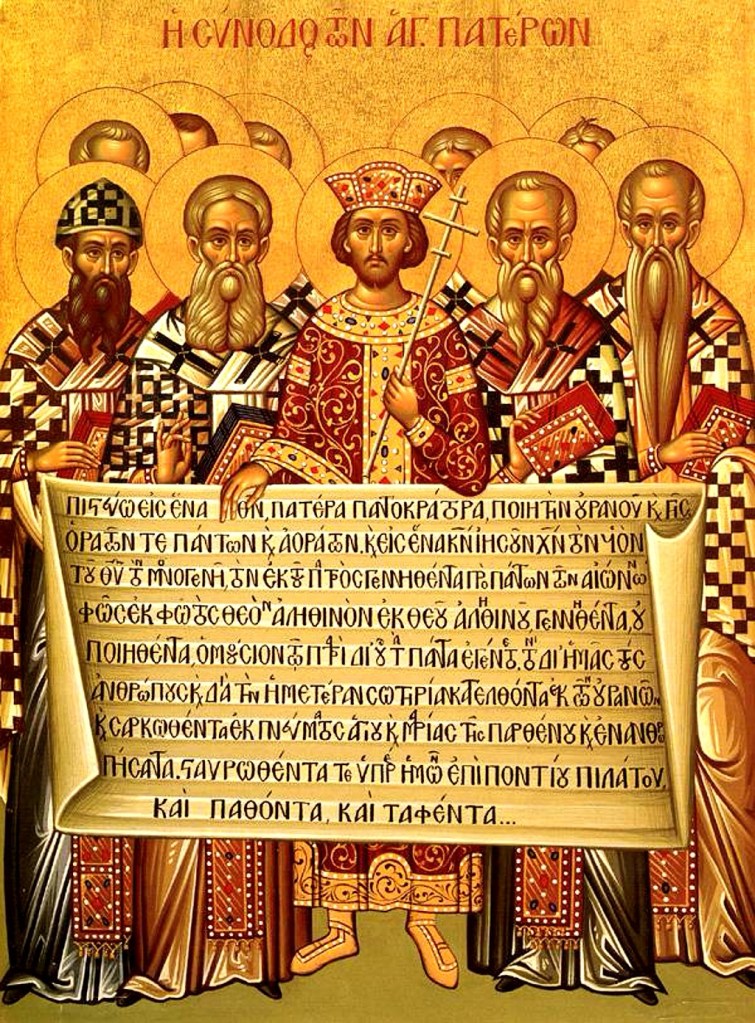
In the verses proposed by the lectionary for this coming Sunday, we come to a central claim of Christian faith. As the fourth century Apostles Creed puts it: we believe in Jesus Christ … who suffered under Pontius Pilate, was crucified, died, and buried, descended into hell, rose again on the third day, ascended into heaven, and is seated at the right hand of God. Four of those claims (crucified, died, buried, rose again) are articulated in the passage from this first letter to the Corinthians that we will hear on Sunday (1 Cor 15:1–11).

What is the nature of the confessional affirmation that Paul and Sosthenes offer in this passage? The previous chapters of 1 Corinthians have alerted us to the disorganised ethos of the community in the cosmopolitan port city of Corinth. Those earlier chapters have indicated a number of problems that existed within the community of followers of Jesus. There was factionalism (chs.1–4), immorality (ch.5), resorting to civil lawsuits (ch.6), and dissension regarding marriage, celibacy, and sexuality (ch.7). There were differing attitudes towards consuming meat bought in the marketplace after it had been offered to idols (chs.8–10), and multiple issues that manifested in their gatherings for worship (chs.11–14). 

The letter proceeds by addressing each of these matters in turn, all undertaken with the same intention, to bring about order in the midst of the chaos that existed in Corinth. His words in the midst of the lengthy discussion about marriage, celibacy, and sexuality state his purpose with clarity: “I say this for your own benefit, not to put any restraint upon you, but to promote good order and unhindered devotion to the Lord” (7:35).

The disorder and chaos evident in worship, in particular, led Paul and Sosthenes, in the chapter immediately preceding this passage, to advise the Corinthians to seek to speak to others in worship “for their upbuilding and encouragement and consolation” (14:3). The letter writers advise them to exercise their spiritual gifts appropriately; to “strive to excel in them for building up the church” (14:12), to “not be children in your thinking … but in thinking be adults” (14:20). Their advice is, “let all things be done for building up” (14:26), noting that “all things should be done decently and in order” (14:40), for “God is a God not of disorder but of peace” (14:33). 

People speaking over the top of each other in worship, not attending to important words of prophecy and tongues, reflected the disordered chaos of the apparently quite libertine community. The infamous words ordering women to “keep silent” (14:33b—36), along with the adjacent commands to “keep silent” while one interprets tongues that are spoken (14:27–28) and “keep silent” to those seeking to offer a word of prophecy while others are still prophesying (14:29–31), are included in this letter precisely to address this chaotic disorder. And not for the first time in this letter, Paul invokes his higher authority to support his directions: “[you] must acknowledge that what I am writing to you is a command of the Lord” (14:37; see also 5:3–4; 7:40; 10:20–22; 11:27–28; 16:10; and cf. 7:25).

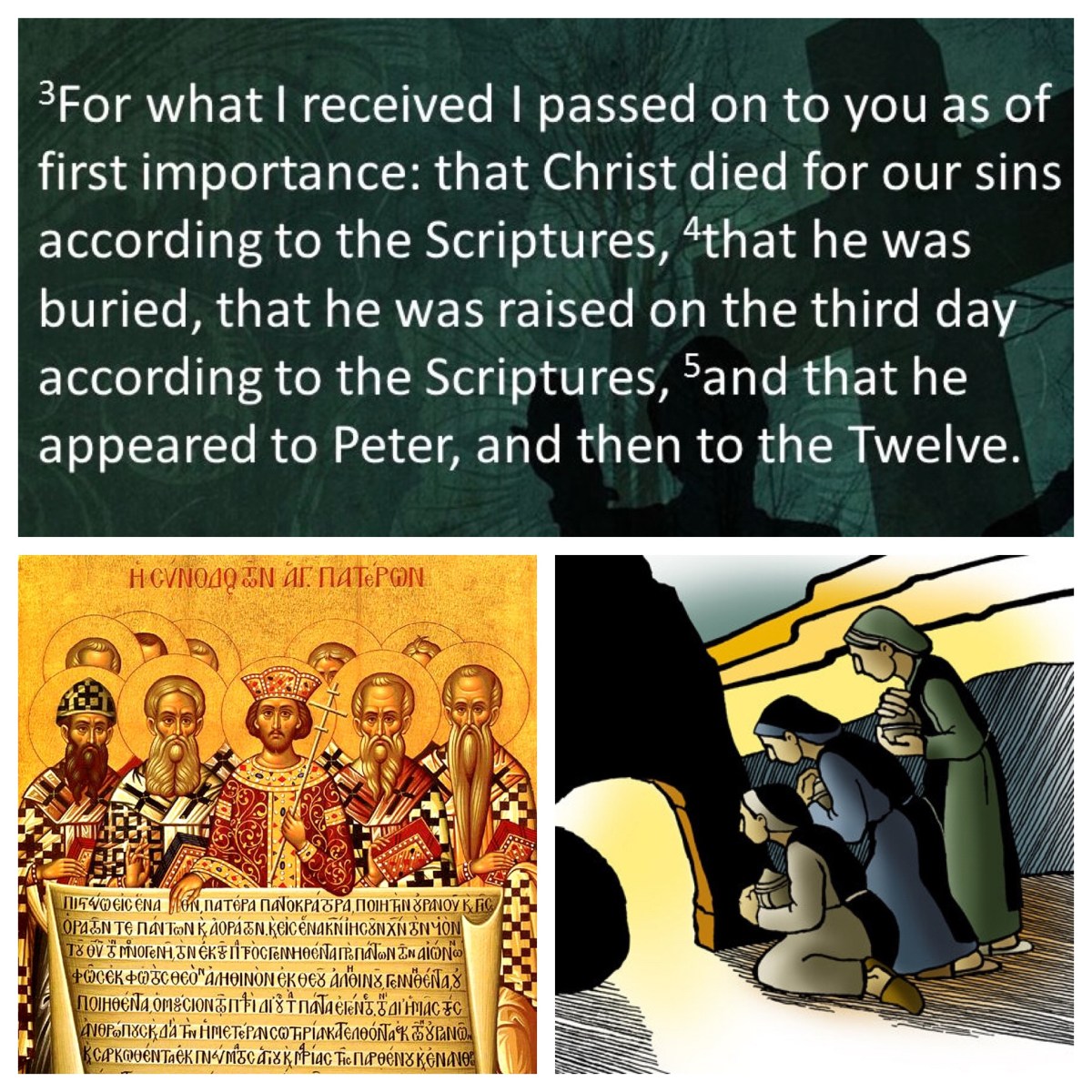
Immediately after this extensive discussion about worship, Paul and Sosthenes turn to the foundational message about Jesus, in a four-part statement: Christ died—was buried—was raised—and then appeared to various people (15:3–5). He uses terms that denote the passing on of traditions: “I received … I handed on … which you received … in which you stand” (15:1); and he insists on the importance of what he passes on: “you are being saved, if you hold firmly to the message that I proclaimed to you” (15:2). These two verses provide a strong, insistent introduction to what follows in the ensuing verses.

We see this dynamic also in an earlier chapter, in the familiar words associated with the Last Supper: “I received from the Lord what I also handed on to you” (1 Cor 11:23), as well as in the commendation of the Corinthians as they “maintain the traditions just as I handed them on to you” (11:2).

The core tradition that Paul and Sosthenes cite is the fourfold declaration that Jesus died, was buried, was raised, and appeared (vv.3–5). It may have already have been an existing formula; we know that Paul, in this letter that he wrote with Sosthenes, as well as in other letters, was willing to make use of very short credal-like statements that it is likely had already been developed by others, some of which he cites in order to refute, such as: “is well for a man not to touch a woman” (7:1), “all of us possess knowledge” (8:1), “all things are lawful” (10:23), and “how can some of you say there is no resurrection of the dead?” (15:12).

There are other succinct sayings which appear as the basis for further developments in the argument being made, such as “I decided to know nothing among you except Jesus Christ, and him crucified” (2:2), “knowledge puffs up, but love builds up” (8:1), “there is no God but one” (8:4), and “all things are lawful, but not all things build up” (10:24). The discussion of factions in chs.1–4 is built off “I belong to Paul … I belong to Apollos … [but] what then is Apollos? what is Paul?” (3:4–5), while Paul’s lengthy discussion of spiritual gifts (12:4—14:40) jumps off from the unspiritual “Jesus be cursed!” and the spirit-inspired response, “Jesus is Lord” (12:3).

Furthermore, Paul writes a number of longer credal-like statements, some of which seem shaped for liturgical usage: the words which became the “words of institution” in the church’s eucharistic practice (1 Cor 11:23–26), and others such as Rom 8:28; 2 Cor 4:14; Gal 1:3–5; Phil 2:6–11. The writers in the school of Paul who later wrote letters claiming to have his authority ( the “pastoral epistles”) followed this practice (see 1 Tim 2:5–6; 3:16; 2 Tim 2:11–13; Titus 2:11–14).

Two clauses in this tradition-based affirmation of 1 Cor 15:3–5 are buttressed by reference to scripture, another voice of authority alongside “the tradition”. What the specific scripture passages are, Paul and Sosthenes do not state; this has left open the door for speculation by later interpreters. 

Supporting arguments by reference to scripture is not unknown in Paul’s writings; as a Pharisee, he had attained a good awareness of Torah and its application to life (see Gal 1:14; Phil 3:5–6). He bases his magnum opus, Romans, on a scripture citation (Rom 1:17, citing Hab 2:4) and there is barely a chapter of this letter that does not contain scripture quotations and allusions in abundance. 

Key moments in 1 Corinthians are likewise supported by verses from Hebrew Scripture (1 Cor 1:19, 31; 2:9, 16; 3:19–20; 14:21; 15:54–55), and the well-known “words of institution” themselves (11:23–26) reference the tradition which emerges in later decades in the Synoptic Gospels, recording the words of Jesus himself at the last supper (Mark 14:22–25; Matt 26:26–29; Luke 22:14–20).

By using the terminology of traditions being received and handed on, Paul and Sosthenes are reining in the wayward Corinthians, recalling them to the fundamentals of their faith. So he sets out the dynamic of died—buried—raised—appeared (15:3–5) as the foundation for then discussing, in the remainder of the chapter, issues associated with the resurrection of Jesus (15:6–58).

Who saw the risen Jesus? First, Paul and Sosthenes tell of an appearance to the early leaders, Cephas (Peter) (v.5) and James (v.7)—although none of these appearances are reported in any Gospel.

Then, they indicate that Jesus appeared to “the twelve” (v.5) and “all the apostles” (v.8)—apparently alluding to narratives found in the later texts of three Gospels Matt 28:16–20, Luke 24:33–48; John 20:19–23, 24–29; 21:1–14. (The appearances narrated in the shorter and longer endings of Mark, added after 16:8, are not relevant; these are later patristic additions based on the other three Gospels, designed to harmonise the ending of Mark with these others.) Acts 1:6–11 might also be relevant here.

An interesting question is, how did he distinguish between these two groups—“the twelve” on the one hand, and “all the apostles” on the other. Indeed, these terms appear to be inherited by the letter writers from earlier traditions. This is the only place in all Pauline letters which refer to “the twelve”; and besides, the Gospel narratives noted above do not have Jesus appearing to “the twelve”, as Judas was absent from all of them, and so was Thomas in John 20:19–23. 

As far as the word “apostle” is concerned, in 16 of the 18 occurrences in the Pauline corpus (including those not authentic to Paul) Paul explicitly apply the term to himself. Paul acknowledges others as apostles: James (Gal 1:19), Peter (Gal 2:8), perhaps Barnabas (1 Cor 9:1, 5–6), an unspecified number of believers who were given gifts to be apostles (1 Cor 12:28–29; see also Eph 4:11), and most strikingly, Andronicus, a male, with Junia, a female (Rom 16:7). Are these the people that Paul has in mind at 1 Cor 15:8? Or is this simply a phrase inherited from the tradition, which Paul has repeated?

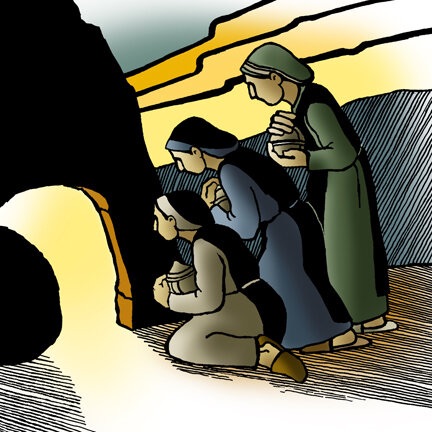
Next, Paul and Sosthenes identify an appearance to “more than five hundred brothers and sisters at one time” (v.6), which again has no place in any Gospel account. Last, Jesus appears to Paul himself (v.8), which he briefly reports at 1 Cor 9:1 and Gal 1:1. Strikingly absent from his list is the empty tomb and the appearances to Mary in the garden (John 20:14), to the women as they left the tomb (Matt 28:9–10), to the two travellers to Emmaus (Luke 24:15), or to the seven fishing by the Sea of Tiberias (John 21:1–4). What a perplexing inconsistency between the various testimonies to these appearances!!

This is an early collection of “witnesses to the resurrection”; Paul and Sosthenes wrote to the Corinthians in the mid 50s. But there is no mention of what was important to all four evangelists, writing in later decades: the women at the empty tomb and the role that women played in bearing testimony to the risen one. Is this accidental? or deliberate? Given what we have noted about 1 Corinthians as a whole—and especially what ch.14 reveals about the disorderly behaviour of Corinthian women—we might well wonder, are Paul and Sosthenes shaping the received tradition to “fit the context” already at this early stage? It is a tantalising suggestion.

There is a wonderful quote that is pertinent to this issue, which is attributed to Gustav Mahler, the late 19th century Austro—Bohemian composer: “Tradition is not the worship of ashes, but the preservation of fire.” These words indicate that if tradition stands still, it will run out of momentum and fizzle out of energy. Tradition always needs to be reinvigorated and renewed, in the way that fire sizzles and snaps as it continually changes its shape and form. 

And that’s a fine thought for us to have as we consider the resurrection of Jesus. As the Apostles Creed affirms, echoing 1 Cor 15:3–5, we believe in Jesus Christ … who was crucified, died, and was buried … who rose again from the dead on the third day. We need to renew and rekindle that tradition, to find fresh ways to understand and proclaim that mysterious happening, which sits at the heart of classic Christian confessions.

I’ve offered my own initial reflections on precisely that task in this blog:

See also


Appropriating prophetic passages in the season of Epiphany (Epiphany 4C to 7C)

Every Sunday throughout the Christian year (save for the six Sundays in the season of Easter), the Revised Common Lectionary provides a passage from Hebrew Scripture as the First Reading in the set of four readings for that Sunday. (During Easter, a passage from Acts stands as the First Reading, providing stories from the early years of the movement which Jesus founded.)

Each year, during the season of Epiphany, the First Readings relate to the prophetic figures of ancient Israel. In Year C (this year), they are drawn from the books of Isaiah and Jeremiah. I think we need to be wary how we hear and interpret these prophetic passages. There is often a temptation to hearvthesemoldermreadings and argue that, because of what the Gospel passage says, they have now been “ fulfilled” in Jesus. 

That’s a danger that we should work carefully to avoid—for if we simply take Hebrew Scriptures as providing the “set up” which is being “fulfilled” in Jesus, we are running the risk of an inappropriate appropriation of the older texts. It’s a path that can lead us to a supercessionist attitude towards Hebrew Scriptures and, by extension, to Judaism. (By supercessionism I mean “the belief that Christians have replaced Jews in the love and purpose of God”.) This post is designed to steer us in a different direction.

Each year, the Feast of Epiphany includes Isaiah 60:1–6 as the First Reading. In this passage, the prophet foresees that “nations shall come to your light, and kings to the brightness of your dawn” (Isa 60:3); he specifies that when they come to the light of the Lord, “they shall bring gold and frankincense, and shall proclaim the praise of the Lord” (Isa 60:6). The reason for reading this on Epiphany is obvious—it correlates well with the story in Matthew of when the magi came to visit Jesus, and “they offered him gifts of gold, frankincense, and myrrh” (Matt 2:11).

The first Sunday after the Feast of Epiphany is always the day on which the Baptism of Jesus is recalled. One year (Year B) places the beginnings of the priestly creation account (Gen 1:1–5) alongside this Gospel story. In the other two years, passages from Second Isaiah are offered; for this year, Year C, this is Isaiah 43:1–7, which includes the affirmation, “do not fear, for I have redeemed you; I have called you by name, you are mine; when you pass through the waters, I will be with you” (Isa 43:1b—2). The presence of water in both of these passages seems to be the reason for their linking with the baptism of Jesus.

The sequence of passages will continue with selections from Third Isaiah (Isa 62:1–5, Epiphany 2C), First Isaiah (Isa 6:1–13, Epiphany 5C), and two excerpts from Jeremiah (Jer 1:4–10, Epiphany 4C, and Jer 17:5–10, Epiphany 6C). A section of Nehemiah 8 is offered on Epiphany 3C, while the sequence concludes with a story recounting the moment when Joseph revealed himself to his brothers when they had come to Egypt (in Gen 45) on Epiphany 7C.

I think it is noteworthy that two of these passages relate specifically to “call”. For Epiphany 4C, the call of the young prophet Jeremiah is placed alongside the Lukan account of the reception accorded to the young(ish) Jesus when he spoke at the synagogue in his home town.  Jeremiah is told by the Lord that the message he will speak to his people will be about “to pluck up and to pull down, to destroy and to overthrow, to build and to plant” (Jer 1:10). It won’t be a straightforward task for Jeremiah—as the rest of the book reporting his oracles confirms.

In like manner, Jesus is initially met with amazement “at the gracious words that came from his mouth” (Luke 4:22). However, after he recounts older stories in which he commends the faith of outsiders (a widow of Zarephath, a leper of Syria), the people turn on him, “drove him out of the town, and led him to the brow of the hill on which their town was built, so that they might hurl him off the cliff” (Luke 4:29). The duality of positive and negative responses, evident throughout the ministry of Jesus, is signalled in this early, programmatic incident.

For Epiphany 5C, when the Gospel moves on the recount the call of Simon Peter and those who were fishing with him (Luke 5:1–11), the Hebrew Scripture passage placed alongside this is the narrative of the call of Isaiah (Isa 6:1–13). Simon and his fellow fishermen were beside the lake of Genessaret, while Isaiah was in the Temple in Jerusalem.  Both men, however, recognize that they are in the presence of an awesome power. Isaiah cries out, “Woe is me! I am lost, for I am a man of unclean lips, and I live among a people of unclean lips; yet my eyes have seen the King, the Lord of hosts!” (Isa 6:5). Simon Peter “fell down at Jesus’ knees, saying, ‘Go away from me, Lord, for I am a sinful man!’” (Luke 5:8). 

Isaiah’s commissioning alerts him to the reality that those to whom he speaks will be struck with incomprehension; they will “not look with their eyes, and listen with their ears, and comprehend with their minds, and turn and be healed” (Isa 6:10). His role will be to call for repentance from a sinful people. Simon Peter is given the charge, “from now on you will be catching people” (Luke 5:10).  That imagery also refers to the reality that in the prophetic rhetoric of years past, the metaphor of fishing for a human being has indicated the means of carrying out the judgement of God (Jer 16:16–18; Hab 1:14–17; Ezek 29:4–5). See 

The two Hebrew Scripture call narratives thus inform and enrich the Gospel passages that are heard alongside them on those days. A similar dynamic is at work on Epiphany 6C, when the Gospel offers a set of blessings and curses spoken by Jesus (Luke 6:20–26). Alongside this is a pair of sayings, a curse and a blessing, that Jeremiah spoke  to Israel: “cursed are those who trust in mere mortals … blessed are those who trust in the Lord” (Jer 17:5–8). Both Jeremiah and Jesus address their contemporaries with a challenge through their words. The challenge is to meet the testing of the Lord (Jer 17:10) and to receive the “great reward” awaiting in heaven (Luke 6:23).

And perhaps the tale of reconciliation told in Genesis 45 dramatically illustrates the central theme of the words of Jesus which are offered on Epiphany 7C: “love your enemies, do good, and lend, expecting nothing in return … be merciful, just as your Father is merciful” (Luke 6:35–36). Joseph exemplifies what Jesus teaches.

As I noted above,  I think there is always a temptation to hear a passage from the older scriptures, inherited from the ancient stories of Israel, as being “fulfilled” in a story told in the later scriptures, formed by the early Church. This pattern draws on a flat reading of the statement by Jesus that “everything written about me in the law of Moses, the prophets, and the psalms must be fulfilled” (Luke 24:44). It fosters a perspective that sees everything in Hebrew Scriptures as material that Jesus “brought to fulfilment”. It contains an implicit ideology that anything that took place in Judaism was “incomplete” and “in need of fulfilment”. The pathway into supercessionism is clear. For further discussion of supercessionism, see https://johntsquires.com/tag/supercessionism/

By contrast, I think that each of these paired passages can be read in a way that accords greater value to the Hebrew Scripture texts. I am reminded of what Richard B. Hays has written about in his book Echoes of Scripture in the Gospels (Baylor, 2017). Hays describes what he labels as figural reading, which is to read back from the Gospel into the older texts and see patterns and figures at work that may not have been evident at the time they were created.

The later texts in the New Testament can throw light on the passages in Hebrew Scripture, without insisting that hey “predict Jesus” and are “fulfilled” in Jesus. We can notice, not only how the NT writers shaped their words in ways that drew from Hebrew Scripture passages, but also how the internal dynamics in the later texts both utilise and illuminate those earlier passages, drawing forth from them new levels of meaning.

As the blurb for this book states, “He shows how each Gospel artfully uses scriptural echoes to re-narrate Israel’s story [and] to assert that Jesus is the embodiment of Israel’s God.” I think that is a really helpful way to think about how the paired passages work together, informing and enlightening each other. And that’s an appropriate thing to be looking for in those season of Epiphany—mutual understanding and enlightenment!

The greatest of these is love (1 Cor 13; Epiphany 4C)

For the passage to be read and heard this coming Sunday, the Lectionary has proposed what is perhaps the most well-known part of the first letter to the Corinthians that Paul wrote together with Sosthenes: the chapter on love (1 Cor 13:1–13). Paul and Sosthenes wax lyrical about love, telling the Corinthians that love “bears all things, believes all things, hopes all things, endures all things; love never ends” (13:7–8), and builds to a wonderful rhetorical climax in which he affirms that “faith, hope, and love abide, these three; and the greatest of these is love” (13:13).

As well as being a rhetorical tour de force, and the most beloved part of this letter of Paul, this chapter is also, in my view, the most misunderstood and misused chapter of this letter—as I will attempt to explain below.

It is clear from the description that is offered by Sosthenes and Paul that, when the community in Corinth gathered for worship, there was a high degree of disorder manifested. They devote four chapters of their letter to this issue (11:1—14:40). Throughout this section of the letter, Paul and Sosthenes write with a single focus in mind; they write to bring order and decency to this situation (14:40). 

The two letter writers begin their consideration of the disorder evident in the community by asserting the importance of maintaining “the traditions just as I handed them on to you” (11:2), reminding them of words that “I received from the Lord” and duly “handed on to you” (11:23). They instruct the Corinthians to seek to speak to others in worship “for their upbuilding and encouragement and consolation” (14:3). 

They advise them to exercise their spiritual gifts appropriately; to “strive to excel in them for building up the church” (14:12), to “not be children in your thinking … but in thinking be adults” (14:20). They continue, “let all things be done for building up” (14:26), noting that “all things should be done decently and in order” (14:40), for “God is a God not of disorder but of peace” (14:33). 

The hymn in chapter 13 is an integral part of that overarching purpose. As well as his reminder of “the traditions just as I handed them on to you” (11:1), Sosthenes and Paul assert that they must acknowledge that “what I am writing to you is a command of the Lord” (14:37). Drawing from various authorities, they allude to scriptural ideas (11:3, 7–9, 10; 14:4), directly cite Hebrew scripture (14:21, 25), refer to the words of Jesus (11:24–25), claim the precedent of nature (11:14) and church custom (11:16), and in a controversial passage, they refer to what takes place “in all the churches of the saints” (14:33b–34). 

Chapter 12 contains an adaptation of an image which was extensively used in political discussions about the city state (“the body is one and has many members”, 12:12) as well as what may be a reference to a developing baptismal liturgy within the early church (“we were all baptised into one body”, 12:13) and a very early creedal statement (“Jesus is Lord”, 12:3).


Throughout these chapters, those who are inclined to diverge from the commands given by Sosthenes and Paul are portrayed in negative terms: they are “contentious” (11:16), showing “contempt” (11:22), acting “in an unworthy manner” (11:27) and with “dissension” (12:25); their behaviour conveys dishonour (12:22–26) and shame (14:35). 

The selfish behaviour of some at the common meal warrants their condemnation (11:32) and justifies the illness and death that has occurred within the community (11:30). The individualistic participation of others in communal worship builds up themselves, but not others (14:4, 17); they are not intelligible in speech (14:9), but are unproductive in their minds (14:14) and childish in their thinking (14:20), leaving themselves open to the risk, “will they not say that you are out of your mind? (14:23).

In the centre of this section stands the famous “hymn to love” (12:31–13:13), now often treated in isolation and over-romanticised. In context, the passage provides a sharp, pointed polemic against the Corinthian community. The qualities they possess are consistently inadequate when measured against love. 

The speech of the Corinthians is like “a noisy gong or a clanging cymbal” (13:1), an allusion to the mayhem brought about by speaking in tongues in worship (1:5; 12:10, 28–30; 14:6–8). Whilst they readily express their “prophetic powers” in worship (11:4–5; 12:10, 28–30; 14:1, 4–5, 23–24, 29–32, 37, 39), for Paul and Sosthenes, these abilities are nothing without love (13:2). 

Likewise, they claim that they are able to understand mysteries (2:7; 4:1; 14:2, 23) and have knowledge (1:5; 8:1–3, 7, 10, 11; 12:8; 14:6) as well as faith (2:5; 12:9; 15:14, 17; 16:13); but Paul and Sosthenes insist that all of these are nothing in isolation from love (13:2). 

Elsewhere in this letter there are direct accusations to the Corinthians that they are precisely what love is not. Love does not boast (13:4), but the Corinthians are regarded as being boastful (1:29; 3:21; 4:7; 5:6). Love is not arrogant (13:4), but in the eyes of Sosthenes and Paul the Corinthians are arrogant or “puffed up” (translating the same Greek word in 4:6, 18–19; 5:2; 8:1). 

Love does not rejoice in wrongdoing (13:6), but Paul and Sosthenes berate the Corinthians for taking fellow-believers to court to seek redress for wrongs; indeed, “you yourselves wrong and defraud—and believers at that” (6:7–8). Love means that people do not insist on their own way (13:5), but they consider that the way that some behave in relation to meat offered to idols in the marketplace advantage; “do not seek your own advantage”, they advise them, “but that of the other” (10:24). 

In like manner, when they gather to celebrate the supper of the Lord, “when the time comes to eat, each of you goes ahead with your own supper, and one goes hungry and another becomes drunk” (11:21). Selfishness and acting without regard for the other characterises their common life. 

Love “hopes all things” (13:7), but some in the community at Corinth are accused of failing to share in the hope of the resurrection (15:12–19). The assertion that “we know only in part” (13:9–10) is directed squarely against the Corinthian claim to have full knowledge (8:1, 10–12) whilst the image of the child, not yet adult (13:11), reflects criticism levelled by Sosthenes and Paul against the Corinthians, whom they see as infants, not yet ready for solid food (3:1–2; 14:20). 

So the hymn alleged to be in praise of love is, more accurately, a polemical censure of the Corinthians’ shortcomings, in which every word used and every phrase shaped by Paul and his co-writer Sosthenes cuts to the heart of the inadequacies of the Corinthian community. Try preaching that at a wedding!!


What’s in our character? For “Australia Day”, 26 January (part 2)

Today, 27 January, is the day after Australia Day, 26 January. But because that day fell, this year, on a Sunday, all state and territory governments have gazetted today as a public holiday. Because, you know, we neeeeeed that end-of-January long weekend!!

I have previously considered the use of the term “Australia” and thought about the names we use. See 

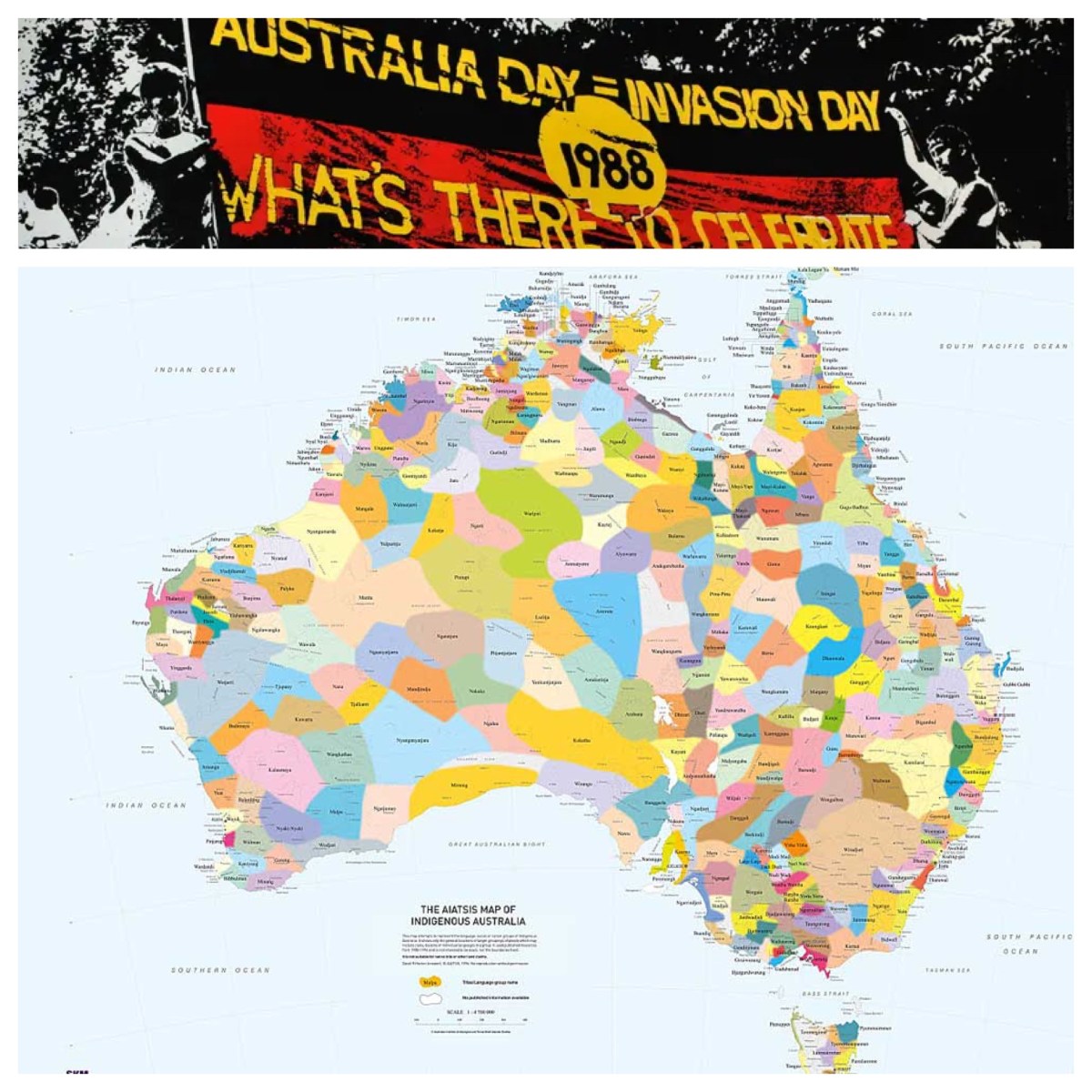
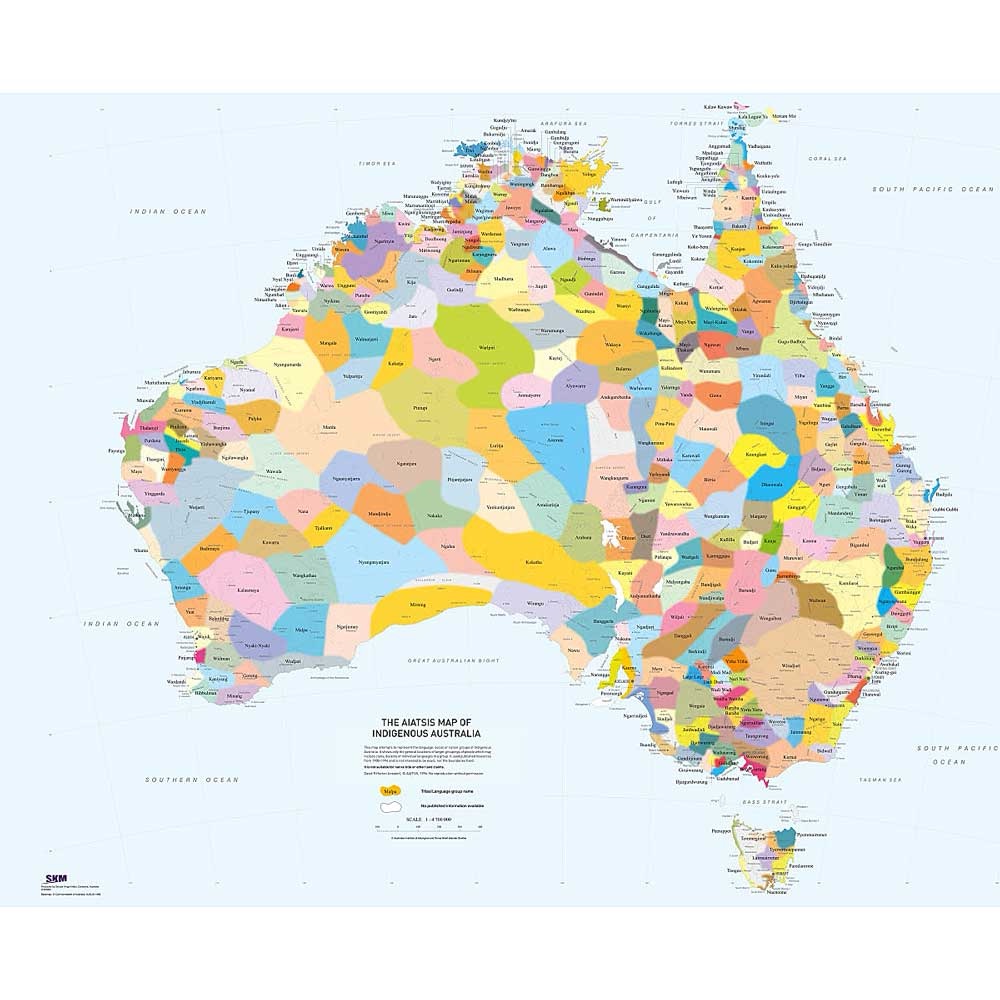
Before 1788, there was no single name for the whole island continent. Some have claimed that the word bandaiyan was a name that referred to the entire continent of Australia. However, this is a Ngarinyin word,  from the Kimberley region. It was not necessarily used by, or known to, any of the speakers of the 250 or more languages that were spoken (in what is now thought to be around 800 dialects) by others living on the continent.

It is estimated that there were 750,000 people living in the 500 or so First Nations located across this large island continent—and on many of the smaller islands associated with the larger continental landmass. Each of these language groups had their own terms for the country where they lived, on the land they had cared for since time immemorial. 

Arthur Philip, in a July 1788 letter to William Petty, wrote: “It has been my determination from the time I landed, never to fire on the Natives, but in a case of absolute necessity, & I have been so fortunate as to have avoided it hitherto. I think they deserve a better Character than what they will receive from Monsr. La Perouse, who was under the disagreable  necessity of firing on them. I think better of them from having been more with them. they do not in my opinion want personal Courage, they very readily place a confidence & are, I believe, strictly honest amongst themselves.  most of the Men wanting the Right front tooth in the Upper Jaw, & most of the Women wanting the first & second joints of the little finger of the left hand, are circumstances not observed in Capt. Cooks Voyage.”

Governor Arthur Philip

It is a tragedy that this irenic form of relationship did not continue through the early years of the Colony; and certainly, the string of massacres that took place throughout the 19th century, and into the 20th century, reflect the arrogant, imperialising mentality of the invading colonisers. “The Natives”, when they stood in the way of land acquisitions, were simply to be disposed of. The project in the University of Newcastle, led by Prof. Lyndal Ryan,  currently identifies 438 seperate massacres of First Peoples, where a massacre involved the death of six or more people who were unable to defend themselves.

Each yellow dot represents the location of a massacre
documented by the University of Newcastle project.

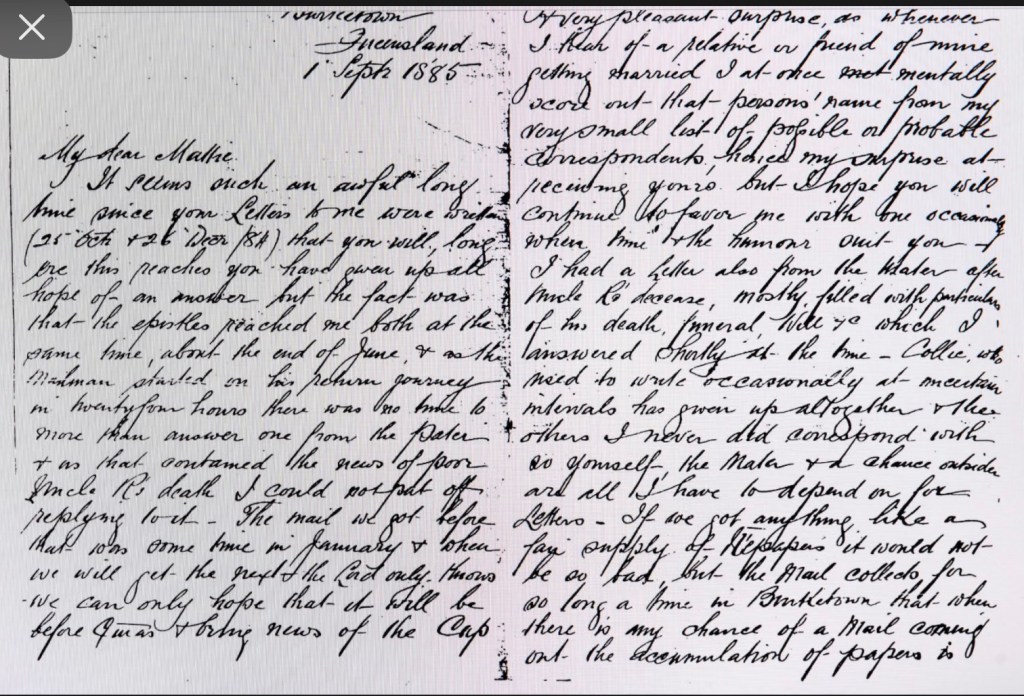
This project currently lists over 10,000 deaths in total, but of course, as the stories of more sites are discovered, that number will grow. In an 1885 letter discovered during this research, a Bob McCracken writes about the Calvert Downs massacre of,earlier that year, stating that “killing odd ones or even twos or threes is no good, they are never missed and nothing but wholesale slaughter will do any good.”

Bob McCracken’s 1885 letter to his sister,
which details the Calvert Downs massacre.

These massacres form a massive collective stain on the consciences of modern white Australians who can trace their ancestors back onto those early decades of the Colony. How much do they signal,what is unfortunately increasingly evident in the Australian on the 2020s: we are less tolerant of “outsiders”, more likely to,turn our attacks (verbal, and physical), on “foreigners”, ready at times to shout “go back to where you came from” to people who look or sound different—even if they happen to have been born on this land! Is that an expression of our national character? I hope not.

We should reflect on these issues deeply this day, and each day, as we enjoy the benefits of our contemporary lifestyle.

I have consulted the following websites for this blog:

https://firstfleetfellowship.org.au/events/letter-from-governor-arthur-phillip/

https://c21ch.newcastle.edu.au/colonialmassacres/statistics.php

https://www.theguardian.com/australia-news/2022/mar/16/attempted-aboriginal-massacres-took-place-as-recently-as-1981-historian-says

https://c21ch.newcastle.edu.au/colonialmassacres/detail.php?r=1040

What’s in a name? For “Australia Day”, 26 January (part 1)

Today, 26 January, is Australia Day, by official government decree. It remembers the landfall on the eastern shores of this continent made by the British-appointed Governor Arthur Philip, his troops, and the convicts of what we now call The First Fleet. Prior to his departure from Britain, Phillip had received Instructions (composed by Lord Sydney) from King George III, “with the advice of his Privy Council”. These Instructions included Phillip’s Commission as Captain-General and Governor-in-Chief of New South Wales. 

Governor Arthur Philip

Despite extensive searching, these Instructions cannot be located in any library or state records office in Australia, nor in Britain. (Philip obviously had an inefficient PA !!) There is an amended Commission, located with the Public Record Office in London, dated 25 April 1787. This document designated the territory of New South Wales as including “all the islands adjacent in the Pacific Ocean” as well as the mainland mass running westward to the 135th meridian, that is, about mid-way through the continent. Such was the way of British imperialism.

We don’t know exactly what Philip said on 26 January 1788. He subsequently wrote a letter on 3 July that year to William Petty, 1st Marquess of Lansdowne and 2nd Earl of Shelburne, in which he explained that “Port Jackson … I have preferd to Botany bay as affording a more eligible Situation for the Colony, & being with out exception the finest Harbour in the World” and notes that “this Country will hereafter be a most Valuable acquisition to Great Brittain from its situation.”

That’s what we remember on Australia Day. This day has, of course, been celebrated on other days in the past. In 1915, it was held on 30 July. The Australian War Memorial notes that it was suggested to the Premier of NSW that “an ‘Australia Day’ [be held] as a way of drawing on the pride of Australians in their soldiers’ recent achievements at Gallipoli”. The next year, the Australia Day committee that had formed in 1915 to organise the war effort fundraising determined that it would be held on 28 July.

In NSW, since the time of Governor Lachlan Macquarie, 26 January had been commemorated as “Anniversary Day” or “Founders Day”. There are records from as early as 1808 of ex-convicts participating in “drinking and merriment” on the evening of 25 January to celebrate their new home. In Tasmania, by contrast, “Hobart Regatta Day” was established on 1 December 1838, to commemorate the anniversary of Abel Tasman’s discovery of the island he named Van Diemen’s Land, in 1642. In 1879 it was moved to be earlier in the year, in January or February.

The name “Australia” was further entrenched in the (un)imaginatively-named Western Australia. Overwest, “Foundation Day” has long been held on the first Monday in June, to commemorate the founding of the Swan River Colony in 1829. In the equally (un)imaginatively-named South Australia, “Proclamation Day” celebrated the date the government was established in South Australia as a British province, on 28 December 1836. It was when South Australia held its “founding day” celebrations for decades, until they unified with other states to celebrate “Australia Day” on 26 January.  But there are still celebrations for “Proclamation Day” each year on 28 December.

By 1935, celebrations were held in all states on 26 January, although it was still known as “Anniversary Day” in NSW, and “Foundation Day” in other areas. The Sesquicentenary (150th anniversary) of British colonisation of Australia was widely celebrated in all state capitals in 1938. A significant protest took place on this day in 1938, when the Australian Natives Association held a “Day of Mourning”. The main celebrations were held in Sydney, but newspapers from others states show that the language of “Anniversary Day” had been adopted there for 26 January, recognising it to be a national date of significance. Its place in national life was, despite Indigenous protests, now settled.

In 1946, the Federal Government and all state governments agreed to unify all the state-based Australia Day celebrations and celebrate on 26 January as a country. The “Australia Day” public holiday was taken on the Monday closest to the 26th, giving the traditional “long weekend” in late January, which for many signalled the end of summer, the return to school and work. 

Questioning of the celebratory status of Australia Day gained impetus during the 1988 Bicentenary, when many protests were staged across Australia, involving both Indigenous and non-Indigenous people. They wanted Australia Day to become a commemoration rather than a celebration of Australia’s history.

However, in 1994 the conservative Federal Government decided that the public holiday would be on the actual day of 26 January itself. And so it has been, for 31 years. (So that’s tomorrow: enjoy!)

For many centuries Europeans believed there must be a vast land in the southern hemisphere, which they called Terra Australis Incognita, a Latin phrase for “the Unknown South Land”. (In Latin, austral means “south”.) A few decades after the 1788 British invasion and colonisation of the lands around Port Jackson (Sydney Harbour), Matthew Flinders circumnavigated the continent in 1803. Flinders used the name “Australia” to describe the continent on a hand drawn map in 1804. That map was published in 1814 and the continent was named “Terra Australis”.

Dutch explorers had been referring to the continent as “New Holland” since the 17th century. On colonising the region, the British had initially named the Colony “New South Wales”, and that name, of course, has continued to be used to apply to various eastern parts of the continent. In 1817, however, Governor Lachlan Macquarie endorsed the name “Australia” to replace “New Holland” in a dispatch to the Colonial Office in London; over time, this name came into common local usage. 
By 1824 the British Admiralty started to officially use the name, and the term “Australia” was first used in British legislation which decreed that British law was to apply to the two colonies of “New South Wales” (named in reminiscence of a region in Britain that the landscape allegedly reflected) and Van Diemen’s Land (named after its Dutch “discoverer”). Other state names that came later managed to reference the main name of “Australia” (South, or Western), as well as Victoria (in the state of the same name), the long-reigning British monarch (reflected in Queensand).

More to come tomorrow (on the public holiday), reflecting further on what it is that we “celebrate” on this day …

*****

I have consulted the following websites for this blog:

https://www.library.gov.au/research/research-guides-0/where-name-australia-came

https://www.sbs.com.au/voices/article/the-many-different-dates-weve-celebrated-australia-day/vuhb3ar1c

https://www.abc.net.au/news/2025-01-24/australia-day-public-holiday-janaury-26-sunday/104837212

https://www.foundingdocs.gov.au/item-did-35.html

https://firstfleetfellowship.org.au/events/letter-from-governor-arthur-phillip/

Because of the connection with the arrival of British imperial colonizers and their subsequent expanding “settlement”, do we need to change the date? For a fun discussion of “change the date”, see