

It’s not over until it’s over. And at the moment, it’s not over.

Where is “the fat lady”? We know that, as the saying goes, “it’s not over until the fat lady sings”. So where is “the fat lady”? And has she sung?

Our state and federal leaders appear to think that she has been centre stage, singing her heart out. They are acting as if it is, indeed, over—that the passing of the virus through community spread has diminished, so that we can get back to “business as usual”. (Business being the operative word in government considerations about this matter—business, not health, not wellbeing, but business.)

“It’s not over until the fat lady sings”. It’s a terrible saying, actually, playing on unhelpful stereotypes about body shape and body size. The saying originated, it is often claimed, as a reference to the large-sized women who sang lead parts in operas. (Perhaps the large body size relates to the large lung capacity that is required to perform operatic arias?)

Wikipedia helpfully refers to Wagner’s grand opera cycle, Der Ring Des Nibelungen, and specifically, the last part of that long cycle, Götterdämmerung. It hypothesises that “the ‘fat lady’ is thus the Valkyrie Brünnhilde, who was traditionally presented as a very buxom lady. Her farewell scene lasts almost twenty minutes and leads directly to the finale of the whole Ring Cycle. As Götterdämmerung is about the end of the world (or at least the world of the Norse gods), in a very significant way ‘it is [all] over when the fat lady sings’.”

Others claim that it was a saying first uttered by an American sports commentator, who used the phrase at the end of a university athletics meeting in 1976; or at the end of a 1978 NBA playoff. Or perhaps it is a variant form of the phrase, “It ain’t over till it’s over”, attributed to the famous baseball player, Yogi Berra, at a baseball game in 1973.

Whatever the origin, the saying (in its various forms) is widely known. And, as far as I am concerned, it is very relevant to our current time. For we are now at a point when many people are acting, in relation to the COVID pandemic, as if “it’s over”. I hear this in what people say; I see it in how people behave—low levels of mask wearing, low levels of social distancing, less attention to ensuring that physical contact is minimised, less attention to diligent hand washing and to sneezing into your elbows, and high levels of assuming that we are back to “business as usual”. Goodness, now there is even no requirement that people stay at home when they are sick; saying that people “just need to self-regulate” is a recipe for disaster, especially amongst people who rely on the income they get each week to ensure that they “make ends meet”.

The plain truth is that it’s not over—and that it won’t be over for quite some time. And the costs of the continuing impact of the virus are many. First, we should not forget that deaths from COVID are continuing; they take place at an unacceptable rate; the latest figures show that 323 people across Australia died as a result of COVID in the week ended 21 September—that’s 46 each and every day. A week later, and the number of deaths was slightly lower, at 282, but still at a high level—that is still just over 40 people still dying each week; or 6 a day; or one every four hours.
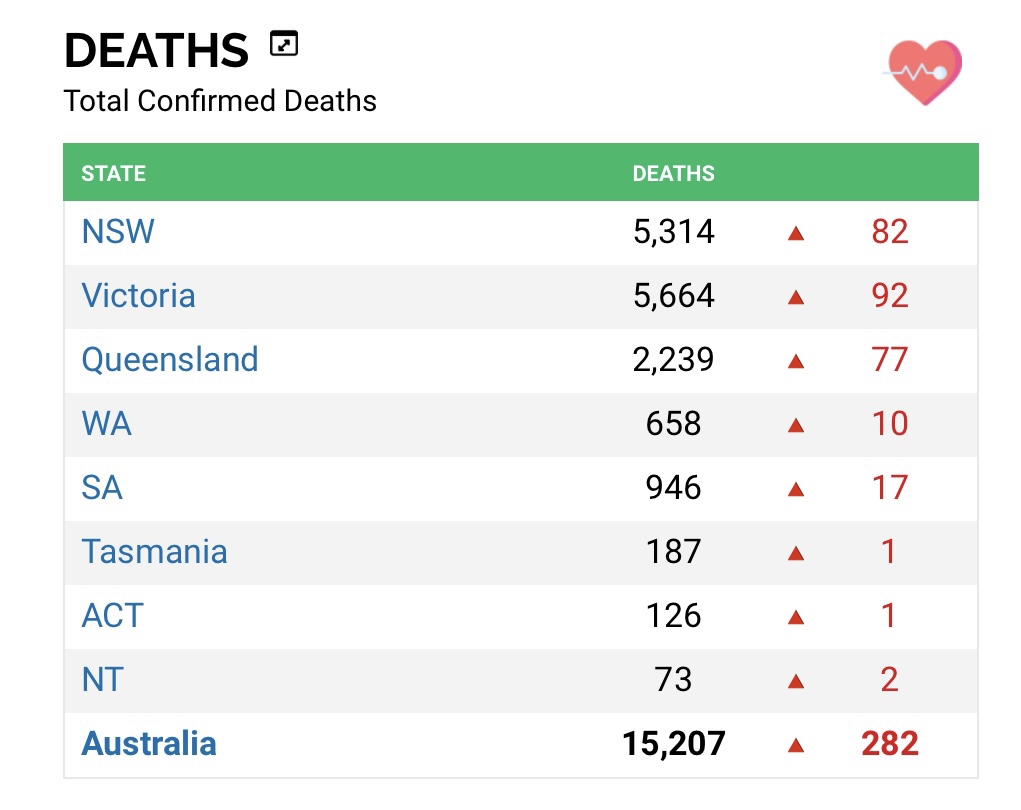
Deaths in Australia due to COVID-19
Week ending 28 September 2022

One person dying every four hours. Think about that. All Ministers and lay people who conduct funerals and provide follow-up support to bereaved families know the deep and enduring emotional impacts that the death of one loved one can incur, spreading across the wider family, friends, and others connected with them through their life. That’s already a significant cost, both in terms of lives taken as well as in terms of ongoing emotional impacts, for one death. Imagine that recurring every four hours, constantly, without pause, day after day. That’s a huge cost in emotional, psychological, and thus medical ways. A huge cost for society.

You can access statistics relating to COVID since early 2020 at https://covidlive.com.au/nt

Second, the consequences of Long COVID continue to be documented as medical studies take place; the Mayo Clinic notes that the long-term effects of “post-COVID 19 syndrome” include “fatigue, fever, respiratory symptoms, including difficulty breathing or shortness of breath and cough, neurological symptoms or mental health conditions, including difficulty thinking or concentrating, headache, sleep problems, dizziness when you stand, pins-and-needles feeling, loss of smell or taste, and depression or anxiety, joint or muscle pain, heart symptoms or conditions, including chest pain and fast or pounding heartbeat, digestive symptoms, including diarrhea and stomach pain! blood clots and blood vessel (vascular) issues, including a blood clot that travels to the lungs from deep veins in the legs and blocks blood flow to the lungs (pulmonary embolism), and other symptoms, such as a rash and changes in the menstrual cycle”.

https://www.mayoclinic.org/diseases-conditions/coronavirus/in-depth/coronavirus-long-term-effects/art-20490351

That’s a wide range of issues which can each be very significant, causing longterm difficulties, and in some cases, contributing to an early death. That’s a second major cost.

Third, rates of absenteeism provide a striking indicator that the impacts of the pandemic are still with us. In February, the Australian Bureau of Statistics reported that “more than one in five (22 per cent) employing businesses had staff who were unavailable to work due to issues related to COVID-19”

https://www.abs.gov.au/media-centre/media-releases/staff-absent-22-businesses-due-covid-19

In April, the Australian Financial Review reported that “absenteeism rates sitting 33 per cent higher than long-term averages, analysis of MYOB’s payroll data reveals”.

https://www.afr.com/work-and-careers/workplace/havoc-as-absentee-rates-surge-by-a-third-20220408-p5ac52

By July this year, this had grown to “absences already running at 50 per cent above average levels, as the highly contagious BA.4 and BA.5 variants drive a new wave of infections and hospitalisation”.

https://www.afr.com/policy/health-and-education/bosses-brace-for-a-month-of-record-sick-leave-20220710-p5b0h9

The media delighted in showing lengthy lines at airports because of staff shortages; perhaps many of us have experienced slow service at local cafes because of the same reason. The cost of extra sick leave payments is just one component of the cost in this regard. It is said that during pre-pandemic times, the “regular rates of absenteeism” cost Australian businesses around $32.5 billion a year. With increased rates of absenteeism, that cost has surely risen.

Of course, now that the requirement to isolate at home whenever a person is symptomatic has been removed, we will surely see further disruption to business enterprises—since people dependent on their wage will go to work when “just a little bit off”, and if infected with the virus, they may be infectious, and thus may well spread illness to their fellow workers—thus resulting in more people off, more time lost. I can see this. Why can’t our leaders see this?

All of which leads me to the conclusion that “it’s not over until it’s not over”—and clearly, “it’s not yet over”. We need to ensure ongoing protection from the virus in our day to day life. Of course, one hugely important way to provide strengthened protection against the COVID-19 virus is to be vaccinated— and to have each of the “booster doses” as they become available. It’s clear that widespread vaccination has contributed to a slowing of the spread of the virus.

Sadly, however, the rate of deaths due to COVID continues to be of concern. That’s simply because people who are more at risk of infection—the elderly, those with compromised immune systems, those with multiple medical conditions, and Aboriginal and Torres Strait Islanders—are thereby more likely to have a bad response to the virus, with more medical complications, and higher death rates.

I’ve found a recent study which sought to compare the efficacy of vaccination amongst healthy people with the efficacy amongst immunocompromised people. It measured the level of seroconversion, which is the capacity of the system to repel the virus. The study concluded that “the immune response to the influenza vaccine might not be as strong in immunocompromised patients, yet they appear to derive some benefit from vaccination. These findings reflect what is now being experienced with covid-19 and vaccination.”

See “Efficacy of covid-19 vaccines in immunocompromised patients: systematic review and meta-analysis”, https://www.bmj.com/content/376/bmj-2021-068632

All of which means that vaccination is a wise move, but it in no way guarantees that a person once vaccinated will definitely not suffer ill effects; and a person with medical vulnerabilities, such as having an immuno-compromised system, will still be vulnerable to illness, serious medical,complications, and death.

Which means that we need to continue all those precautions that we learnt in early 2020: wear a mask; practise good hygiene; wash your hands; sanitise with alcohol-based hand rubs; maintain social distancing; don’t touch your face; cover your mouth or nose with your arm, not your hand, when you cough or sneeze; stay t home when you are sick; close the toilet lid before flushing. All of these things, even though they are not “mandated”. All of these things, because it is just common sense to continue to take great care. Because it’s not over. Not by a long shot. There is no fat lady, not yet. It’s not over.

Lent

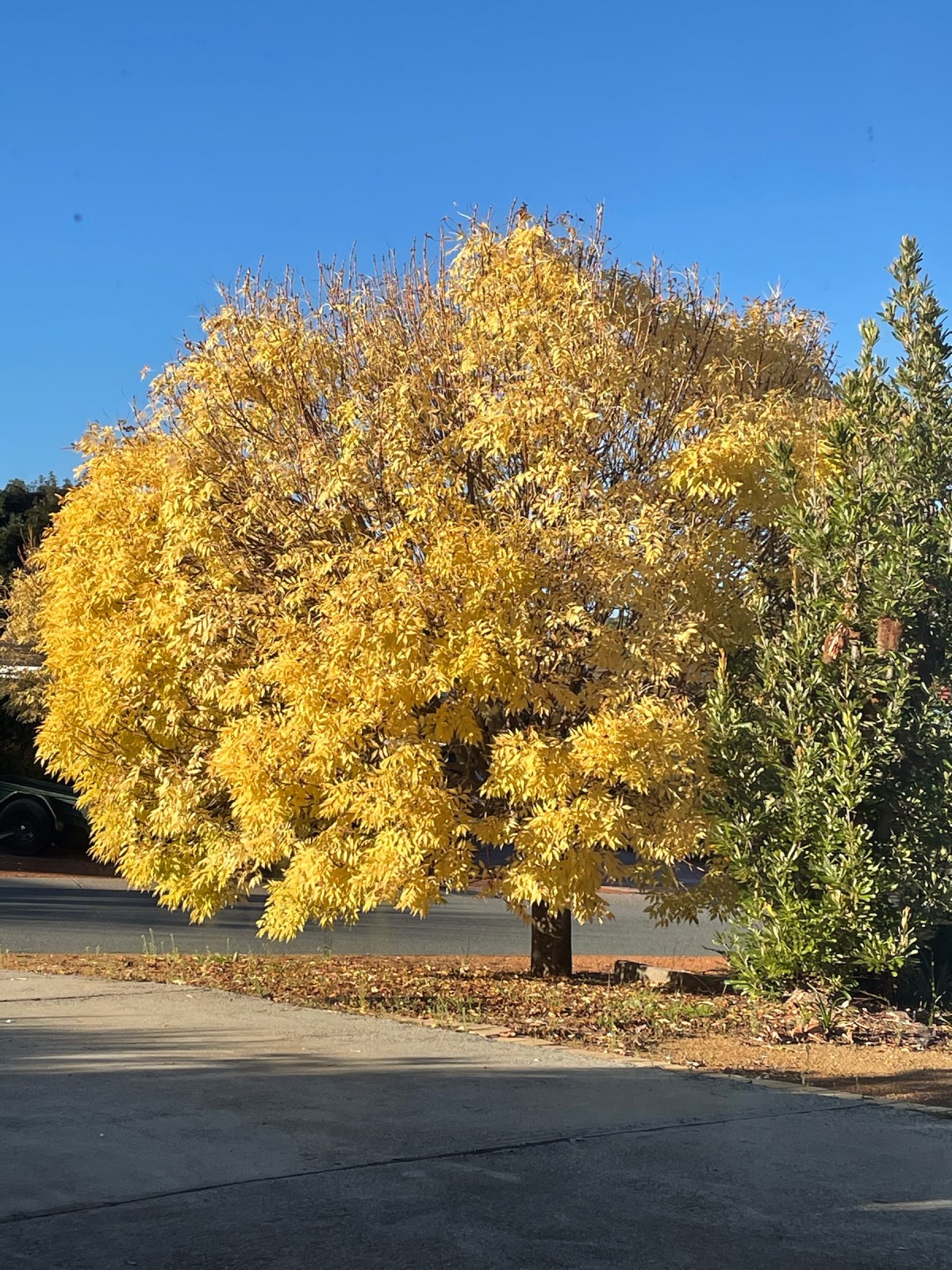
A guest blog … a poem for the season, by the Rev. Jean Shannon, Uniting Church Minister serving on the Sapphire Coast in southern NSW.

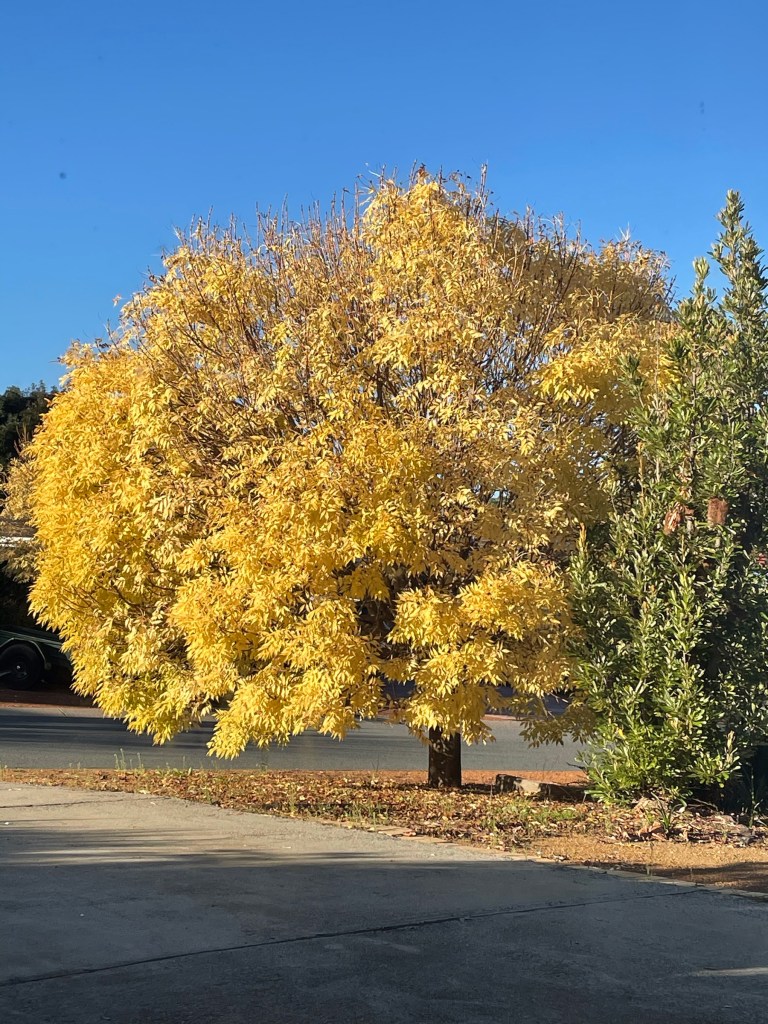
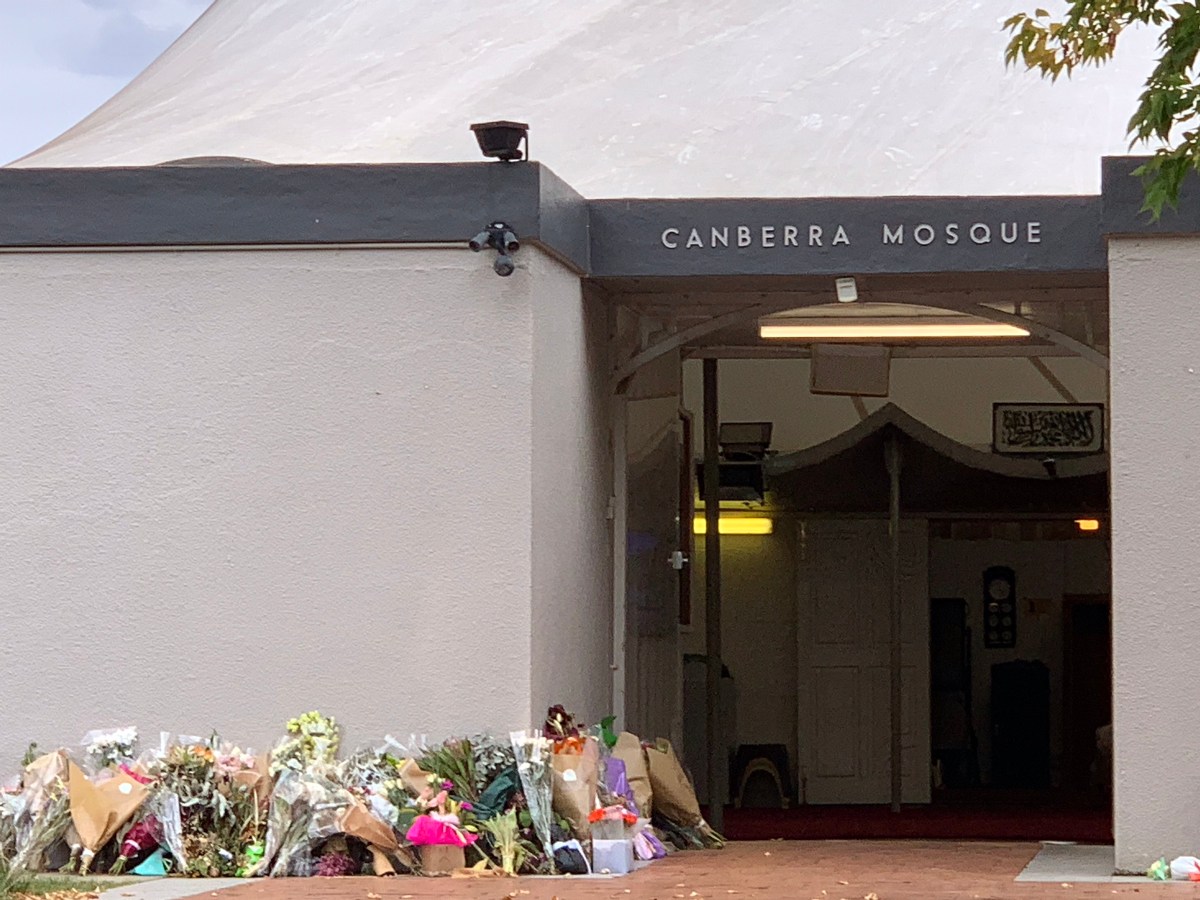
(The scene from my front door in Canberra)

The sun warms my knees
while puffs of cool air 
tell me winter is
waiting in the wings. 
Holding her breath: 
a sharp intake of awe 
to the turning leaves – foreign but loving…
and the eucalypt speak suddenly silver or 
more blue than green.

The trees whisper softly of what will come. 
There is a smell that is cleanly autumn: 
of soil and nutmeg and some grounded spice. 
The air moves differently and tells a story – 
that leaves will fall and icy wind invade. 
Earth’s almanac predicting death and resurrection. 

How much life must die, 
turn cold
and pull the earth over them like linen.
Who will love them deep in their graves
and who will wait for emergence…so very far away? 
The earth cries for our patience. 
God’s time is so different from mine. 

But how I love the autumn with its golden light
slanted across long afternoons,
scented in the air,
expectant of the night. 
These days betray nature’s secret
a ritual of discovery and revival.  

Would I change a thing?

Jean Shannon, Lent 2021

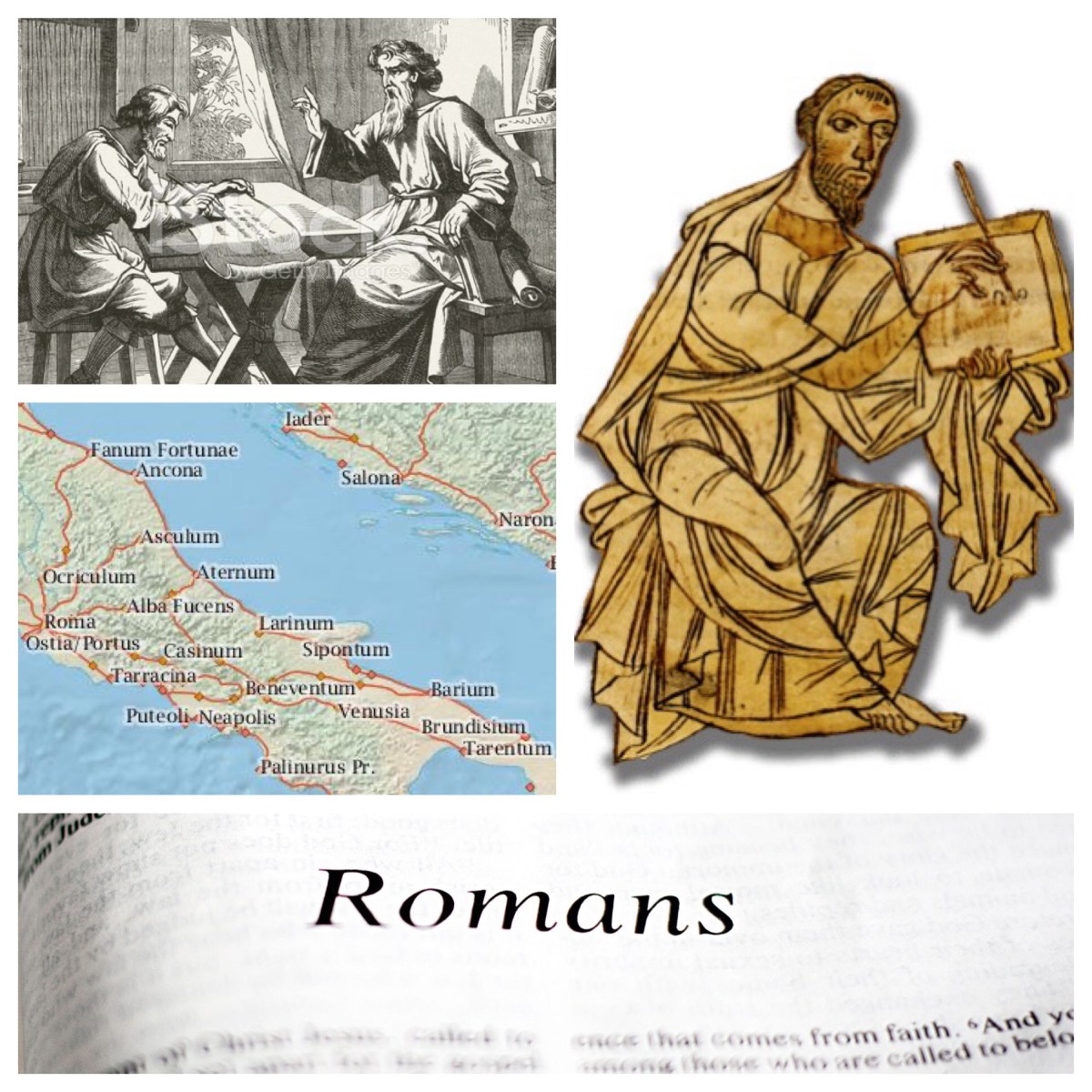
The righteous-justice of God, a gift to all humanity (Romans; Year A)

Paul’s letter to the Romans is his longest letter, and is widely regarded as the pinnacle of his theological expression. It is closely related to the letter to the Galatians in its central theological concern for righteous-justice, law and faith. We have been hearing excerpts from this letter in worship in recent weeks, and that will continue for some weeks into the future.

The overall structure of this letter is very clear: after the usual introductory formulae (1:1–7) and thanksgiving (1:8–15), Paul declares his theme by means of a scripture citation (1:16–17) which he then expounds in a series of inter–related sections (1:18–3:20; 3:21–4:25; 5:1–7:25; 8:1–39), climaxing in his extended discussion of Israel and the Gentiles (9:1–11:36). Paul then conveys various ethical exhortations (12:1–13:14; 14:1–15:13) before drawing to a close with personal news and a direct appeal to the Romans (15:14–33), an exchange of greetings (16:1–23[24]) and a final doxology (16:25–27).

The opening verses (1:1–7) identify the author and the audience as well as offering a typically Pauline blessing of grace and peace (1:7b). This piece of writing is a contextual enterprise. It is not an abstract or theoretical undertaking. Paul offers words shaped for the situation he is addressing. (See my comments on this at https://johntsquires.com/2020/07/11/the-best-theology-is-contextual-learning-from-pauls-letter-to-the-romans/)

This opening is followed by a thanksgiving for the Roman saints (1:8–15), in another typically Pauline pattern. As Paul reports that he gives thanks for their faith and prays that he may be enabled to visit them, he introduces key elements of the argument. His prayer is oriented firmly towards what he knows of the believers in Rome.

In the body of the letter, Paul expounds a theology of universal righteous-justice, focussing particularly on its implications for Israel and the Gentiles (1:18– 11:32). The relation of Jews and Gentiles was a critical factor in the situation in Rome, as Paul is well aware.

First, he explores the nature of the human condition (1:18–3:20). This is based on keen observation and reinforced by a string of scripture citations (3:10–18).

Next, he considers the roles played by Jesus and the Spirit in making the righteous-justice of God available (3:21–8:30). The argument builds and develops, demonstrating how God has chosen to make righteous-justice available to all human beings, through Abraham as through Jesus, by means of the indwelling Spirit.

This was a critical issue for the diverse communities of believers in Ancient Rome—a city with inhabitants from all points of the Empire which had been conquered by the powerful Roman army, and which lived under the imposition of Roman governance. Many traders, artisans, merchants, and slaves in the city had come, willingly or by force, to this city. The gatherings of believers in the city reflected this diversity. The claim that the righteous-justice of God was available to all these people was an important aspect of the early Christian gatherings.

So, to conclude this section, in the midst of a string of climactic rhetorical questions, Paul erupts into a poetic acclamation of “the love of God in Christ Jesus our Lord” (8:31–39). That was indeed good news for all those in Rome who heard this message.

Immediately, Paul plunges into a complex reading of scriptural texts in order to sanction the claim that God’s sovereign mercy offers a universal righteous-justice, both to Jews and to Gentiles alike (9:1–11:32). This section, again, is contextually relevant, as the names of believers of Rome to whom Paul sends greetings, in chapter 16, reflect both Jewish and Gentile people.

This critical section comes to another fulsome doxological climax in the joyously prayerful affirmations concerning God’s “riches and wisdom and knowledge”, leading to the attribution of glory to God forever (11:33–36). This is the ultimate response to the singular grace of God’s gift of righteous-justice to all human beings. All those I; the house churches of Rome who heard this section of the letter would surely have rejoiced in the extravagant abundance of God’s grace towards them!

The subsequent consideration of ethical matters (12:1–15:33) covers a range of issues, introduced with a general statement about the need to live in accord with the will of God (12:1–2). Much of the first part of this section (12:1–13:14) contains traditional ethical teaching: a string of pithy proverbs (12:9–21) and short reflections on loving one another (13:8–10) and living honourably (13:11– 14); a truncated reflection on the image of the community of faith as a body (12:3–8); and discussion of responsibilities towards the governing authorities (13:1–7). This last section seems particularly pertinent for the city which was the administrative centre of the dominant empire of the time, at least in the Mediterranean region.

This ethical section continues (14:1–15:13) with an extended reflection on the ethical dilemmas posed by differing views in the community about what foods should be eaten. Once again, this section of the letter is strongly contextual: it reflects the situation in the city, and for the people of the various groups of house churches, for whom this was a live issue. There were different points of view; the believers needed to show respect to one another in the midst of these different views.

This section climaxes with a clear call to inclusiveness (15:2, 5–6, 7) supported by a string of scripture citations (15:9–12). Paul concludes this section of his letter with a reminder of his planned visit to Rome (15:14–29) and one last exhortation (15:30–32), before offering a brief blessing of peace (15:33). Once again, the contextual nature of the letter is clear.

The letter ends with an exchange of greetings, in the course of which Paul identifies quite a number of the believers in the various house churches that existed in a Rome, before he reiterates some last–minute instructions (16:1–23).

Then Paul offers a further blessing (16:20a; and some ancient versions added another blessing as verse 24). The letter concludes in high liturgical style with an exalted doxological formula (16:25–27), an ending most likely added by a later editor of the letter, in which some, at least, of the central motifs of the letter are reiterated.

From this survey of the contents and the form of the letter, we can see how focussed the argument is on the righteous-justice of God, a central element in how Paul understands the Gospel, and how relevant that message was for the diverse groupings of people who had come to recognise Jesus as Lord and who were committed to following him as faithful,disciples in their daily lives.

As God’s gift to humanity, this righteous-justice invites and enables all people to enter into covenant relationship with God, and thus to shape relationships with each other that are accepting and hopeful. That message was powerful in the ancient Roman context. It retains that potency in the contemporary world, where diversity can fuel tension and conflict. In this context, the good news offers hope and invites reconciliation, in celebration of God’s wide expanse of gracious inclusion.

See also https://johntsquires.com/2018/12/07/to-articulate-faith-contextually/

Acting for Peace—through the Christmas Bowl

My Christmas Morning Reflection in worship on 25 December 2019 at Queanbeyan Uniting Church.


Each week during Advent, as a congregation, we have been preparing for the celebration of this day. On each of the four Sundays in the season of Advent, we have affirmed our faith, and rejoiced in what Christmas means to people of faith. We have been oriented steadfastly towards this day; this day on which we recall and celebrate the birth of Jesus.

So, today, Christmas Day, we pause and ponder:

what does it mean, that Christ has come?

what does Christmas mean, for us, today?


1       At Christmas, we give presents to those we love.

You have no doubt experienced the delightful look of sheer joy on the face of the young child, receiving first one, then another, and then many, presents, one after another. If it is more blessed to give than to receive, it is surely deeply rewarding to look at the sheer joy on the face of the young child, receiving.

And at Christmas, we give in abundance, with generosity, to those we love. 

However, at Christmas we should not forget those who have received nothing, who have nothing, who exist on very little, who survive each day with little or no means of support.

Each year, during Advent, we recall the story of John the Baptist, who came as the messenger, to prepare the way, to announce the coming of the one chosen by God. In announcing the coming of Jesus, John the Baptist told us what God was asking of us. “If you have two coats”, he said, “give one to the person who asks you for it.”

This message, of giving to those in need from the abundance which we enjoy, has been a standard part of Christmas for churches like ours, over the past 70 years. It was that long ago that the idea of the Christmas Bowl originated, in the family celebrations in the Melbourne home of the Rev. Frank Byatt.

Over time, the simple bowl on the middle of the Christmas dinner table has become an organisation that is supported by all the major Christian denominations, as listed on the screen. This is the organisation that provides presents to people living in poverty, in temporary shelter, in areas ravaged by natural disasters, because of the giving of people like us, who have the capacity to give.

This Christmas, we are challenged to think about what we might be able to give away, and who it is that might benefit from our gift. The Christmas Bowl provides a simple and easy way for us to share the abundance that we are enjoying this day, with someone who has not been so blessed.


2       At Christmas, we enjoy feasting with those we love.

The table will no doubt be laden high, this day: overflowing with seafood, with turkey and ham, with vegetables; with Christmas cake, with mince pies, and Christmas pudding; with lollies and sweets in abundance.

When Elizabeth and I lived in England, we came to appreciate the way that the Christmas Dinner, in full northern hemisphere tradition, had developed. On the shortest day of the year, amidst cold, rain, perhaps even snow, with dusk falling at 3.00pm, then it just made perfect sense, after a late morning church service, to enjoy a big roast, with hearty servings, washed down with more-than-adequate glasses of liquid refreshment.

Australian Christmas dinners are different, in the heat and humidity of summer; glasses of wine are more often than not replaced with stubbies of beer—although we often continue some of the other inherited traditions. But whatever hemisphere we are in, we eat, and drink, and enjoy.

Christmas should mean that we do not forget those who have no food to eat. One of the things that the Christmas Bowl does, is provide food rations. It is doing this, right now, for Syrian refugees who have fled to Jordan, and Iraqis who have been displaced and are homeless; for refugees from Myanmar on the border with Thailand, and for the Rohinga families who have fled from violence and persecution into the camps of Bangladesh.

But the Christmas Bowl also provides the means for people to grow and harvest their own food locally. Act for Peace’s partner in Zimbabwe, Christian Care, works with farmers in drought-prone areas in southern Zimbabwe, where about 1,200 farmers are now directly benefiting from the conservation farming program that has been introduced. They have increased crop yields, which has dramatically improved the ability of these 1,200 men and women to meet their households’ food needs, as well as to unite farming communities around a productive development program, while at the same time improving the sustainability of the land.

But we do not need to go to Zimbabwe, or Bangladesh, or Iraq, or Jordan, to find hungry people. Every week, in this town, people from this church and other churches provide food for the hungry, friendship for the lonely, and a place of safety for those whose lives are fraught, just across the road, at St Benedict’s. And this important ministry to the local community ensures that people do not need to go without food, any day, any week.


3       At Christmas, we tell the story of the baby born in a manger, because there was no room in the inn; and then, the story reports that this family hurriedly fled to another country, seeking safety until the threat was over.

Christmas cards, and Christmas carols, have tended to encourage us to romanticise and sentimentalise this part of the story. We sing so easily about the scene that Luke recounts in his Gospel: the baby lying peacefully asleep in the manger, the adoring mother and doting father, the shepherds who come from the fields to worship. It all sounds so peaceful, so relaxed, so comfortable, so ideal.

As we sing all of this, I suspect that we forget that the newborn infant was born in the area that was shared with the animals; there were no homely comforts, but there would have been the sights and sounds and smells of the barnyard, all around. This was not the plan; this was a temporary, unforeseen situation, basic and crude.

The account that we find in the Gospel of Matthew, of the rapid flight that the family took, heading away from Herod, fleeing into the safety of Egypt, sets out very clearly that this was not a plan, worked out methodically in advance. Rather, this was a rapid response to an emergency situation, a hurried seeking of refuge.

Christmas, for us, challenges us to think about those who have no shelter; and especially, to think about those who have nowhere safe to shelter because their homes are beset by warfare, their lives are constrained by oppression, their families have been decimated by murders, their houses have been bombed or shelled.

This is going on in so many places around the globe. There are 70.8 million people around the world who have been forcibly displaced from their homes—that is almost three times the population of Australia.

There are currently 25.9 million people officially classified as refugees, meaning that they have a well-placed fear of persecution if they return to their homes. That is the category that Mary, Joseph and Jesus would have been in, had there been a United Nations High Commissioner for refugees in the first century.

The Christmas Bowl is working with the 100,000 Tamils who have fled Sri Lanka, precisely because of this fear of persecution. There are people today who still experience trials and persecution in far too many countries around the globe. The Christmas Bowl is one practical way that we can show we care, that we want to help such people.

4 Finally, at Christmas, let us remember the most unsavoury part of the story; the part we rarely hear on this day, this morning celebration: the part of the story that tells of a king who used his power to squash out what he saw as a threat to his power.

Herod was a tyrant, fearful of any pretender to his throne. Matthew tells that he decreed that all infant males should be killed, to ensure that the baby Jesus would not vie for his throne, or contest his power. That is the fundamental reason why the family of Jesus fled to another country.

Deep at the heart of the Christmas story, then, is the message that we should not repeat the errors of using violence to enforce power. As followers of Jesus, we seek the way of the one born to bring peace to the world. How can we sing “peace on earth, and mercy mild”, unless we work for peace in our world today?

Jesus was committed to the way of peace; the story of his adult life bears this out, and the end of the story is an account of submission to violence, of turning the other cheek and allowing his own life to be taken, rather than to respond with force, violence, and power.

The organisation which administers the Christmas Bowl is called Act for Peace. It is committed to actions which ensure that, as justice is enacted, so peace might become a reality, for countless thousands of people around the world. One of the projects that the Christmas Bowl supports is a peace-building initiative in the Philippines, where workers are educating Indigenous people on their rights, training local leaders and engaging grassroots organisations to monitor and report on human rights violations.

So, today, as we sing “Hail the heaven-born Prince of Peace!”, let us work for peace in the world.  As we carol, “All glory be to God on high, and to the world be peace; goodwill henceforth from heaven to earth begin and never cease,” let us support organizations which advocate peace with justice and strive to bring that reality from heaven, here, on to earth. And as we join with those herald angels, who “sing glory to the new-born King, peace on earth, and mercy mild”, may we always act for peace in the world. And as we sing, may the Christ child come.

See also https://johntsquires.com/2019/12/24/on-the-move-a-reflection-on-christmas/


Report on Queanbeyan Intentional Interim Ministry to Congregational Meeting on 24 November 2019

The Intentional Interim Ministry (IIM) placement at Queanbeyan Uniting Church (QUC) was established by Presbytery in consultation with QUC, for 2019, to address this time of transition in ministry and enable QUC to discern and embrace positive future ministry. IIM is a short term placement to address the Five Developmental Tasks of the Congregation:

A. Coming to terms with the Congregation’s history

B. Discerning the Congregation’s purpose and identity

C. Supporting leadership change and development

D. Reaffirming and strengthening denominational links

E. Committing to new leadership and new ministry

There are various matters that I have been involved with during the year: meetings with individuals, committee meetings, preaching and leading worship, leading study groups, convening workshops for the whole Congregation, reflecting intentionally on the process with skilled people, overseeing the process of discernment, nomination and election of new leaders, and participating in the wider life of the church (as is expected of all ministers in placement).

I have identified some key themes that have run throughout the course of this year.

In the liminal space

QUC had been in a transitional mode for some time before the IIM commenced. I saw my role in the early stages as naming this transitional space and providing ways for people to think about the experience and work towards hopeful outcomes through the process. Both studies and sermons throughout Lent and Holy Week related specifically to this. I have occasionally referred back to the idea of the liminal space, the transitional mode, in subsequent months; this sense will continue on into the period when new leadership develops and a new minister is placed into Queanbeyan.

The importance of story

Listening to the stories that people have told me, about “how it has been for me”, formed an important element in the earlier stage. Telling stories about our experiences is a fundamental need that every person has. Being validated for our views and our experiences is necessary. Talking things through so that we are able to identify, understand, appreciate, and let go, is a valuable process. That, too, will need to continue into the future across the congregation.

However, the stories that we tell each other, now, need to be, not only reflections of the past, but also projections into the future. So talking about our hopes for the future, the plans we would like to come to fruition, the dreams we have and the strategies we need to see those dreams become a reality—these also need to be part of the stories that we tell each other.

The centrality of core beliefs

We had a workshop that encouraged us to identify our core values and key commitments. Out of that process, we identified a commitment to being a Good Neighbour Church and alongside that a willingness to live as a Good News Church that was actively Discipling people. That vision is what the congregation needs to keep to the fore and work towards into the future.

Considering how we operate in conflict

In a second workshop led by Elizabeth Raine, we explored the ways that we operate when we find ourselves in conflict. We learnt the importance of understanding the various ways that people operate, and adjusting our own way of operating in the light of that. The challenge from such a workshop is taking up such new behaviours and bedding them down in the way that we operate. That’s also an ongoing process.

Identifying future possibilities

In the third workshop, we mapped our assets and began to explore how we might best utilise those assets. This work still stands ahead of the congregation. Knowing that we have a group of people with commitment and dedication, a suite of buildings on a prime location within the town, and an intention to reach out as good neighbours with a message of good news, needs to inform and shape all future planning.

A weakness that I can see at the present time is that we have not pushed through to specific planning and working for the kind of future that we hope for and envisage.

Strengthening leadership capacity for the future

The process of discernment, nominations, elections, and commissioning (still to come) of new leaders has pointed to the strengths and commitments that are alive within the Congregation. We need to find ways of working together that will leverage off these strengths and that will build a strong future. The formation of a Joint Nominating Committee (JNC) and conversations with prospective ministers still lies ahead.

The task of equipping and supporting lay leaders for the tasks of ministry continues on, as the interim period between longer placements continues. Lay people are needed to provide leadership within the Congregation, lead worship, look after the property, provide pastoral care, explore missional opportunities, continue existing viable ministries, pursue planning for Plan Agora, and relate intentionally to organisations and groups in the neighbourhood with a view to future collaboration. The multiple challenges and opportunities of ministry and mission continue!

The key moments throughout the year include:

Induction into placement in February 2019

Listening process over initial months

Lent-Holy Week-Easter journey, worship and study groups on Wilderness Journey

Working with Transition Team to explore History and Identity of the Congregation

19 May Service celebrating, letting go, looking forward

Second round of studies with two small groups

23 June Workshop I on “what sort of church are we?”

Sermons regarding Good Neighbour Church, Good News/Discipleship Church

Pastoral involvements with individuals, BS Group

4-7 July Synod meeting

6 August Workshop II on Constructive Conversations that transform relationships

8 September Workshop III on Mission Planning and Strategic Directions for QUC

Membership within QUC: position paper

29 September Membership commitment Service

Working with Plan Agora planning group

Leadership within QUC: consideration of future ministry configuration and future lay leadership

Nominations for leadership roles in September and conversations with people nominated

Discernment and Elections on 24 November

Commissioning new leadership group on 8 December

JNC and Profile, for seeking a minister in 2020

Conclusion of placement in February 2020

In addition, throughout this period, I have been involved in:

Monthly Church Council meeting, weekly meetings with Pastor Amy, preaching and leading Sunday worship on a 75% basis

My ongoing reflection on QUC situation with Transition Team, Reference Group, Professional Supervisor

John Squires, November 2019

See also https://johntsquires.com/2019/07/17/report-on-queanbeyan-intentional-interim-ministry-to-congregational-meeting-14-july-2019/

Report on Queanbeyan Intentional Interim Ministry, to Congregational Meeting, 14 July 2019

Canberra Region Presbytery (CRP), in consultation with the Queanbeyan Uniting Church (QUC), have implemented an Intentional Interim Ministry (IIM) placement at Queanbeyan, at 75% for 2019.

IIM placements are established by Presbytery in consultation with Congregations to address times of transition in ministry and enable Congregations to discern and embrace positive future ministry. They are short term placements and they follow a particular process addressing the Five Developmental Tasks of the Congregation:

  1. Coming to terms with the Congregation’s history
  2. Discerning the Congregation’s purpose and identity
  3. Supporting leadership change and development
  4. Reaffirming and strengthening denominational links
  5. Committing to new leadership and new ministry

For the July Congregational Meeting, I am reporting on what has occurred thus far, and what is planned for the coming months.

1. Key moments completed February to July

Induction in February

Listening process over initial months

Lent-Holy Week-Easter journey, worship and study groups on Wilderness Journey

Working with Transition Team to explore History and Identity of the Congregation

19 May Service of celebrating, letting go and looking forward

Second round of studies with two small groups

23 June Workshop on “what sort of church are we?” (core values, key commitments)

Sermons regarding Good Neighbour Church, Good News/Discipleship Church

Preparation of resources for ongoing life of congregation

Pastoral involvements, meetings with specific individuals, BS Group

Monthly Church Council meetings

My ongoing continuing education and regular reflection on QUC situation with Transition Team, Reference Group, Professional Supervisor

July Synod meeting

2. Key moments anticipated for July to December

6 August Workshop on Constructive Conversations that transform relationships

8 September Workshop on Mission Planning and Strategic Directions for QUC

Future studies on discipleship for the life of the Congregation

Plan Agora anticipations and deliberations

Membership within QUC: position paper for consideration by Congregation

Leadership within QUC: consideration of future ministry configuration and future lay leadership

Nominations for leadership roles open in late September

Discernment and Elections in November, establishing a new leadership group into 2020

JNC and Profile, process of seeking a minister for 2020 onwards

Monthly Church Council meetings

Worship in Advent and Christmas

My ongoing reflection with Transition Team, Reference Group, Professional Supervisor

Conclusion of placement in January 2020

QUC

QUC is a church in transition. Our membership and our leadership is changing. We are not alone in this, however. We are in transition, like so many of our fellow-believers across the Western world. In our lifetimes, we have seen the growth of a diverse multifaith mix in society. We know that we live in an increasingly vocal secularised or anti-faith environment, where the church is both smaller than in its heyday, and also occupying a very different place in (or on the edges of) society. We are all in a context of transition.

I recently spent a week with a cohort of ministers who are undertaking training in the Foundations of Transitional Ministry, with a view to being accredited as an Intentional Interim Ministry (IIM). I was there as a co-teacher in the course, along with my wife Elizabeth Raine, an experienced IIM practitioner, and Rob McFarlane, a colleague who has taught this course now for almost two decades. It was a rich experience of learning in community.

The course (in two parts—this is the second part of the course) seeks to equip ministers for transitional ministry; ministry in contexts where changes are afoot (or need to be afoot!), where transitions are taking place, where the ground seems to be shifting under our feet as we walk the pathway ahead of us.

And that might well refer to almost every ministry context these days in our post-Christendom context. We are all in a context of transition.

One of the prayers included in the training resources offered these words: eternal God, lead me now out of the familiar setting of my doubts and fears, beyond my pride and my need to be secure, into a strange and graceful ease with my true proportions and yours …

May that be our prayer, also.

John Squires, July 2019

A prayer for Mother’s Day

One of the delights of the worship that takes place each week in my current placement, is that the Prayers of the People are led by a range of people from within the Congregation. This provides prayers which are “grounded” as well as reflecting the diversity of perspectives found within the people.

Today, Mother’s Day, Marg Cotton led with this thoughtful prayer. I share it with her permission.

******

Creator God, as we come to you in prayer help us to pray in your spirit and truly enter into a time of stillness and simplicity.  Give us courage to be open to your unfathomable goodness, and imponderable light.  While we cannot ever know the depths of your being help us to see enough of what is truly mysterious to break down our pride and recognise that we need to rely on your grace and mercy.

We have much to be thankful for.  Living in freedom in this land.  Having access to education and health care, food and water, warmth and friendship.  Being able to worship in peace and security.  We give thanks for the many blessings you have given to us and the many people who have been part of our lives.

On this Mothers Day we particularly acknowledge the role that those who nurture us have had in our lives.  For some of us we have fond and happy thoughts about our mothers: their love and support, sacrifice and hard work, compassion and teaching.

For others, perhaps our experiences and memories are not so sweet.  The difficult mother or embarrassing mother, the times when our mums could not cope, the absent mother, the one who was addicted self obsessed, or struggling with mental illness.  

As we think of our mother on mothers day let us show her the respect of acknowledging that she was always more than we ever understood.  Like the God we worship she came before us and she labored to bring us into this world.  Let us acknowledge in the words from Deuteronomy 32:18 “You were unmindful of the Rock that bore you, and you forgot the God who gave you birth.”  

In the same way we have been often been unmindful of the women who gave us birth and of those other nurturing figures who supported us in many steps in our lives. Help us to acknowledge appropriately those who have helped make us who we are.

But as we acknowledge this help us not be complacent.  Help us to see that some of our own struggles may have come in part from our upbringing and our expectations.  Help us to turn to you and see that our lives can be transformed and made more whole as we seek a path of hope and reconciliation.

We are aware that there is much darkness in our world.  We hear every day of terrible injustices, of violence, of hatred, of feuds, of greed. We see this both at the personal level, at the political level and at the global level.  Break through our complacency and help us see when we are jealous or spiteful, not prepared reconsider our own prejudices, not able to acknowledge the hurt we caused. 

Help us to be aware of the needs of others and take our part in caring for those who are facing difficulties.  We know that there are some people in our midst who struggle to find hope and justice in our community.  For people living with illness or disability, let us ensure that our health system and the NDIS are available to provide the best kind of help available.

For those struggling to find employment let them not be disheartened by the complex structures that sometimes make a secure job seem unattainable.  

For people who are seeking to exercise leadership.  Please grant clarity of thought and honesty of purpose as to all who are involved in important decisions.

For the forgotten people who toil without recognition or thanks.  May we sometimes notice and give thanks for their work and commitment.

As we join together and to share praying the Lord’s prayer I invite those of you who would like to acknowledge the non-gendered divinity of our God to begin this prayer

Our Mother in heaven….

Hallowed be your name,

Your kingdom come,

Your will be done,

on earth as in heaven.

Give us today our daily bread.

Forgive us our sins,

as we forgive those who sin against us.

Save us from the time of trial

and deliver us from evil.

For the Kingdom, the power, and the glory are yours 

now and forever. Amen


Friendship in the presence of difference: a Gospel call in a world of intolerance and hatred


In recent weeks, we have seen Muslims murdered as they gather for Friday prayers; Jews murdered as they meet for Sabbath prayers; and Christians murdered as they congregate for Easter worship. These tragic events point to the intolerance, even hatred, held by individuals who identify with a faith “other” than the one where people have been killed. They indicate that, even in this contemporary world where we recognise that there are people of different ethnicities, nationalities, and religions, this intolerance and hatred remains strong and incessant.

The Uniting Church has been advocating for some decades, now, that as we live in a multicultural society, we need to recognise and engage constructively with people of other faiths. There are some keynote resources that deserve our attention and ongoing reflection.

The Ninth Assembly (2000) adopted a statement prepared by the Doctrine Working Group, entitled Living with the Neighbour who is Different: Christian Vocation in Multi-faith Australia.

It set out the following theological affirmations as the basis for the way that we are to relate to people of other faiths:

God is calling us to engage in conversation with people of other faiths. The development of hospitable and respectful relationships with those of other faiths is a proper response to Christ” who “calls us to live in harmony with all other people and so contribute to a world of peace, justice and hospitality.

Christians are called to love the neighbour who is different. The movement from exclusion to the embrace of neighbours who are different is of the essence of the gospel of Jesus Christ. Christians discover the will and power to enact this gracious embrace of the neighbour as they become more deeply immersed in the indiscriminate love of God.

God has placed the contemporary church in an ideal situation to engage in genuine dialogue with those of other faiths. We no longer relate to those of other faiths from a position of assumed political and social superiority. From nearer to the margin of society we are free to relate to other people as servants of the unifying, reconciling purposes of God revealed and embodied in Jesus.

God delights in diversity and seeks unity. Diversity, woven into the heart of creation, is a gift of God. The unity God intends for humanity does not destroy difference but weaves difference into a single human mat.

The Spirit is present in all of life. No part of life, no person is without the influence of the Holy Spirit…the Holy Spirit is present through the whole fabric of the world, yet is uniquely present in Christ and in the fellowship of Jesus’ disciples. It does not follow, however, that the life and work of Jesus exhaust the work of the Spirit or exclude the presence of the Spirit in other faiths.

The Centrality of Jesus Christ in Christian believing is not to be compromised when we engage in interfaith dialogue. Christ is the foundation of Christian believing and living. We live “in Christ” and our way of being with others should be consistent with the way pioneered by Jesus.

In 2010 the Relations with Other Faiths Working Group commissioned Keith Rowe to write an updated statement. The title of this statement, Friendship in the presence of difference, is carefully chosen. Real differences do exist in humanity. The gospel imperative calls us to live in friendship.

Individual and corporate friendship robs difference of its power to divide, to foster distrust or to sanction violence. Friendship in the presence of difference is a gift greatly needed both in the Christian community and within the human family as a whole.

The word ‘friendship’ is chosen because it includes a sense of growing relationship, empathy, warmth and care for others. While we may rejoice in similarities among the affirmations and wisdom of the various religions we do not want to deny the existence of very real and important differences. World religions differ in their understanding of the Divine dimension within life, the purpose of our living, the nature of human fulfilment and what it means to live together in a world of many faiths.

Our Christian uneasiness in the presence of difference is something we need to recognise and address. Rabbi Jonathan Sacks puts it well: “In our interconnected world, we must learn to feel enlarged, not threatened, by difference”. (The Dignity of Difference, Continuum, 2003, p. vii). The possibility of the religions and people of religion being able to contribute to peace rather than conflict in our world depends on the capacity to relinquish the desire for uniformity based on what serves our comfort or power.

The Thirteenth Assembly (2012) adopted a statement prepared by the Working Group on Relations with Other Faiths, entitled Friendship in the Presence of Difference: Christian Witness in Multifaith Australia.

In introducing this theme, the statement said:

Friendship in the presence of difference is regarded as being a central Christian attitude and value. Engagement with those of other faiths is welcomed as a pathway on which we may rediscover the heart of the Christian way while also being enriched by wisdom others have to share. Distortions that have crept into Christian living and believing often become apparent in informed conversation with those who believe differently. Friendship in the presence of difference can be a significant doorway into the renewal of Christian discipleship and theology.

It offered the following Conclusion:

As a church we are grateful for our developing friendship with those of other faiths. Christians have deepened their understanding of God and of the tasks we face together in our divided world in friendship and conversation with people of other faiths. We look forward to developing deeper friendships and discovering ways we can live together generously and work together for the common good.

We encourage politicians, decision makers and opinion shapers in commerce, industry and the media to grow in sensitive and accurate knowledge of the faiths within our society. Where religious beliefs contribute to conflict and division, we ask our national leaders to strive for understanding and reconciliation among those whose beliefs differ. We believe that lasting peace in our world is not possible unless the religious dimension of life is recognised.

Each part of the Uniting Church is invited to make the building of friendship in the presence of religious and cultural difference a priority missional objective. Whatever theological or spiritual stream of the church’s life we belong to we all have a positive role to play. Trusting in Jesus Christ as Lord and in the power of the Holy Spirit, the Uniting Church commits itself to cultivating friendship in the presence of difference.

Clearly, the call that the Gospel places before us at this time, is to offer and receive friendship in the presence of difference.

See https://assembly.uca.org.au/images/Ministries/ROF/images/stories/theology/livingsummary.pdf

https://assembly.uca.org.au/rof/about/theology/item/1876-study-guides-for-living-with-the-neighbour-who-is-different

https://assembly.uca.org.au/fipd

https://assembly.uca.org.au/images/Ministries/ROF/images/stories/resources/appendix_1_-_Friendship_in_the_Presence_of_Difference-Christian_witness_in_Multifaith_Australia.pdf

https://johntsquires.wordpress.com/2019/03/22/hello-thank-you-we-are-with-you-we-support-you/

Hello. Thank you. We are with you. We support you.

Hello.

Thank you.

Salaam.

Thank you for being here.

Simple words. Everyday words. But words which were filled with emotion and sated with meaning, in the context in which they were spoken.

Everyday people. Everyday words. People going about their normal, everyday business.

They have been to work. They have driven their cars, parked along the verge. They are walking along the street; walking with intent, heading with purpose, to the place of prayer.

Hello. Thank you. Everyday words. Accompanied by smiles. Sometimes, by handshakes. Or by a hand held to the heart; no words, just a signal, that this was appreciated. Deeply appreciated.

In a curving street on a gently-sloping hill in a Canberra suburb, twenty of us were gathered, standing on the footpath, greeting worshippers as they arrived for prayer.

We were Christians. They were Muslims. We were white. They were, mostly, Middle Eastern, or Southeast Asian. They were coming to pray. We, too, would gather to pray; but not today.

Our day of prayer is Sunday. Their day of prayer is Friday. Today is Friday. It is their day of prayer.

So this Friday, we stood outside the mosque, a silent witness of support and solidarity. Smiling, bowing, shaking hands, offering a greeting; not speaking further unless we were engaged in conversation; simply, standing in solidarity.

This is what it is, to be a human being. This is what it is, to relate to our fellow human beings. Hello. Thank you. You are welcome. You are us. We are with you. We support you.

Simple words, short phrases; but deep emotion, and profound meaning. Just in these simple acts and words of human interaction.

Some conversations were longer. We discussed the issues, the personalities. We could see, and hear, and feel, the emotion.

It could have been people like these. It could have been these people. Ordinary people. Coming from work. Gathering to pray. People of faith. Ordinary people, committed people, people who share their lives with us each and every day.

They serve us in shops. They answer our phone calls. They draft our legislation. They clean our homes. They install and service our utilities. They collect our fares and drive our taxis. They are everywhere. They are people of prayer. They are people of peace. They are us. We are them.

What happened a week ago in New Zealand, at the Al Noor Mosque and the Linwood Islamic Centre … and what has happened in Quebec City, and Kembe in the Central African Republic, and the Dar Al-Farooq Islamic Center in Minnesota, and in countless interpersonal interactions involving Muslims as victims … what has happened in far too many places, on far too many occasions, is a cause for deep distress.

We weep. We pray. And we stand, quietly, supportively, in solidarity.

Hello.

Thank you.

Salaam.

Thank you for being here.

Further reflections on the tragic events in Christchurch:

https://canberra.uca.org.au/uca-news/uca-statement-christchurch/

https://revdocgeek.com/2019/03/16/prayer-for-christchurch/

https://www.eternitynews.com.au/world/aussie-church-leaders-respond-to-christchurch-massacre/

https://www.eternitynews.com.au/world/dont-give-nz-terrorist-what-he-wants/

On the threshold, in a liminal space

Over recent months, Elizabeth and I have occupied what might be called a liminal space. Liminal spaces are the places of transition, from one place to another.

We have moved states—indeed, we have travelled the length of the continent, relocating from a Perth suburb just a few kilometres inland from the Indian Ocean, to a suburb in Canberra, in the anonymous territory that is hiding in the midst of the undifferentiated eastern states (at least, that’s how the sandgropers of WA view them).

We have moved house, to a residence that the church has recently purchased. That meant packing everything into boxes in WA, then waiting for delivery to the ACT, where we then unpacked everything and found new places for each item, each book, each piece of furniture.

We have also changed jobs, in association with this domestic move. We have each ended the work that we have been doing in Western Australia in recent times—for Elizabeth, a year-long Intentional Interim Ministry in a Congregation, and some months of resourcing of the Presbytery Pastoral Relations Committee; for myself, two years of restructuring and rebuilding the educational offerings and formation processes within the Synod. That has meant a series of farewells with colleagues in WA.

We are now both settled into congregational ministry—for Elizabeth, in a regular placement, and for myself, as an Intentional Interim Ministry in a Congregation which has experienced a series of challenges in recent times. That means introductions, getting to know new people, and sussing out the key issues in each place. This is a challenging place for us each to be!

And this week, we are both “trainers-in-training” at a course on The Fundamentals of Transitional Ministry. This is part one of a two-part course, auspices by the Interim Ministry Network (based in the USA, but taught with an Australian accent for the Australian context by our colleague, Rob McFarlane). You can see more about this network at http://imnedu.org/

Part One of the course is subtitled The Work of the People. Part Two (scheduled for June) is subtitled The Work of the Leader. The two courses complement and inform each other.

The Basis of Union of the Uniting Church articulates a commitment to this process of change and transition. Obviously the motif of “a pilgrim people on the way” (para 3, also para 18) is a key motif, and the Basis refers explicitly to persevering through the “changes of history” that we experience (para 4). There is great encouragement for us to develop creative new expressions of church in another obvious phrase, referring to “fresh words and deeds” (para 11). So this should be fundamental to the way we operate as a church.

It is clear that Ministers undergo a process of change and transition in moving from one placement to another: moving through ending in one community, and leaving behind the ministry exercised there; to joining a new community and coming to understand and appreciate the context within which ministry now takes place. (And then, of course, exiting the community at the end of the period of ministry.) As well as all of the learnings, adjustments, developments, readjustments, further learnings, reshaping and continuing developments that are inevitable within the course of a good ministry placement.

Alongside this, the Congregation or faith community has work to do, and this is recognised in the second course. This work entails a series of tasks, which the Intentional Interim Minister is charged with overseeing and stimulating. These are summarised quite succinctly as dealing with understanding heritage, refreshing leadership, relational connections beyond the community, developing missional identity, and committing to the agreed future. That’s quite a lot of work!

So, all of these changes that we have experienced in recent times—changes in jobs, changes in residence, changes in location, and changes in the faith community to which we are connected—all bring challenges with them. We are in what anthropologists and sociologists call, a liminal space.

The word liminal comes from the Latin word līmen, which means “a threshold”. Technically, that is the place that marks off one space from another. Its origin was the strip of wood or stone at the bottom of a doorway, which was crossed in entering a house or room.

The thresh is the place where one treads as one enters a room. So the threshold, is where you put your foot as you walk into a new room or new place.

So, we are on the threshold, in a liminal space.

Anthropologists define liminality as “the quality of ambiguity or disorientation that occurs in the middle stage of a ritual”. It is the moment when participants no longer hold their preritual status but have not yet begun the transition to the status they will hold when the rite is complete.

During a rite’s liminal stage, participants “stand at the threshold” between their previous way of structuring their identity, time, or community, and a new way, which completing the rite establishes.

The concept of liminality was developed in the early twentieth century sociologists. It was applied particularly to religious rituals marking the movement of a person from one stage to another. We can see this in the traditions of the church: for instance, Confirmation as a move into adulthood, Marriage as a move into long term partnership, and, of course, Baptism as the movement into life outside the womb, in the world as we know it, and Funerals as the move into life beyond death, life in the world beyond that as we currently know it. These are liminal moments for all human beings.

More recently, usage of the term has broadened to the political and cultural arena, alongside the religious or faith area. So it is a useful concept to be applied to the places where we are ministering and the changes that are among place, or need to take place, within those communities.

During liminal periods of all kinds, the experts tell us, “social hierarchies may be reversed or temporarily dissolved, continuity of tradition may become uncertain, and future outcomes once taken for granted may be thrown into doubt. The dissolution of order during liminality creates a fluid, malleable situation that enables new institutions and customs to become established.”

[I found this on Wikipedia, which references the source as Agnes Horvath, Bjørn Thomassen, and Harald Wydra, Introduction: Liminality and Cultures of Change (International Political Anthropology 2009). Accessed 18 March 2019.]

That means, then, that we are facing opportunities at this moment, in the liminal space—opportunities to dissolve traditions, opportunities to reshape practices, opportunities to cast doubt over long term certainties, opportunities to lay down new patterns of functioning that will be healthy, life giving, and resilient in the longer term. Now that’s a set of challenges to be met!!!